




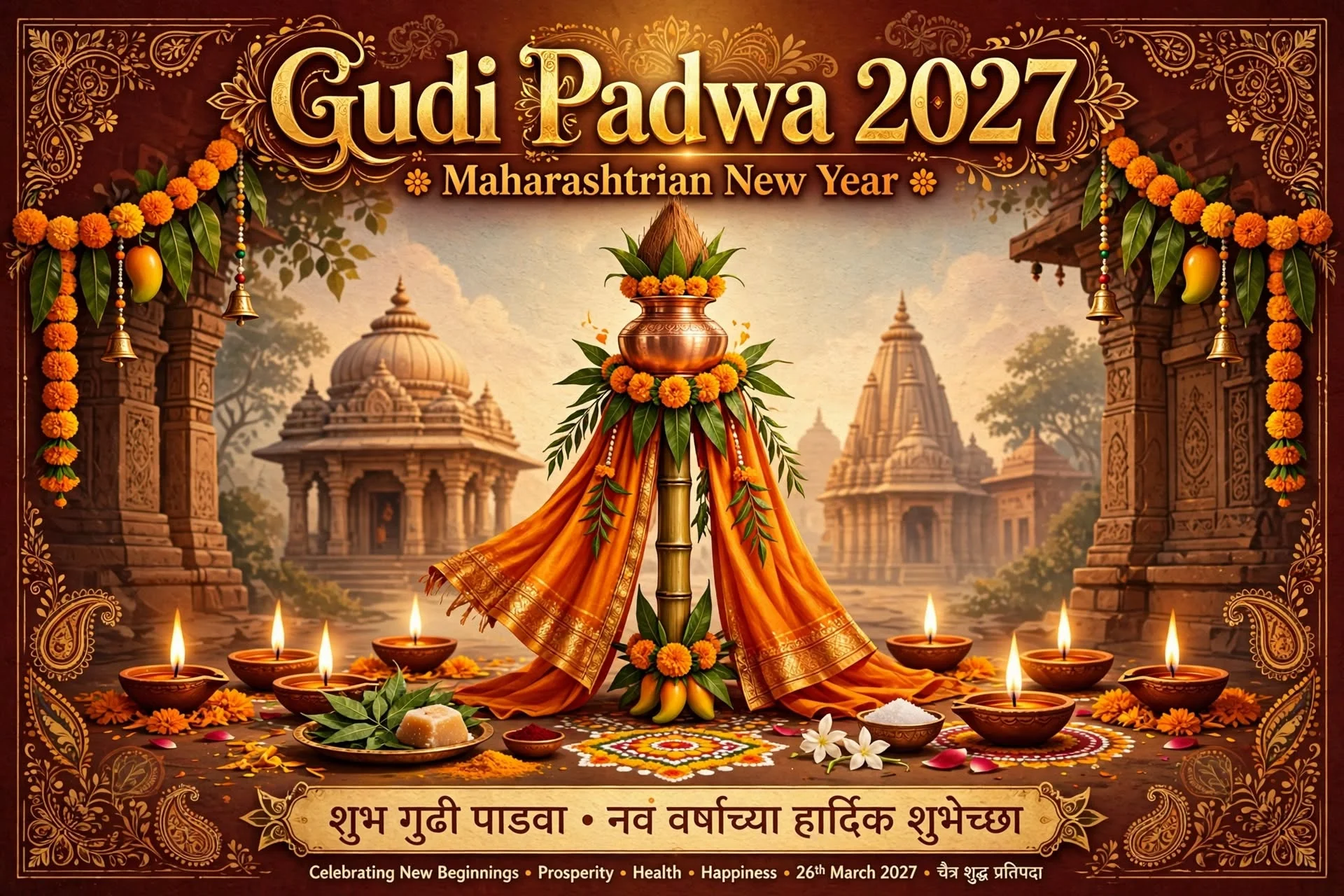
Gudi Padwa marks the grand celebration of the Marathi and Konkani New Year, observed on the first day of the bright fortnight (Shukla Paksha Pratipada) in the sacred month of Chaitra. Celebrated with tremendous cultural pride and spiritual fervor across Maharashtra, Goa, and adjoining regions, this vibrant festival heralds the arrival of spring (Vasanta Ritu) and commemorates the cosmic dawn of creation initiated by Lord Brahma.
Gudi Padwa 2027: Date, Puja Timings, Rituals & Stories
Gudi Padwa Timings & Panchang
Important festival dates and auspicious timings
Usha Arghya (Sunrise)
06:05 am
Sandhya Arghya (Sunset)
06:42 pm
Start Date
Wednesday, 7 Apr 2027
Puja Muhurat
05:21 am – 04:28 am
Gudi Padwa
The hallmark of this festival is the hoisting of the sacred 'Gudi'—an auspicious victory emblem erected outside households on balconies, windows, and main doorways. Crafted from a bamboo staff draped in opulent green or saffron silk, adorned with fresh neem leaves, mango foliage, fragrant red flower garlands, and a garland of sugar crystals (Gathi), it is crowned with an inverted brass, copper, or silver vessel (Kalash). The Gudi acts as a spiritual beacon that wards off negative energies and invites divine prosperity, health, and auspiciousness into the home.
Historically and culturally, Gudi Padwa is synonymous with righteousness, resilience, and victorious heritage. It commemorates Lord Rama's triumphant return to Ayodhya, King Shalivahana's heroic defeat of oppressive forces, and the legendary victories of the Maratha Empire under Chhatrapati Shivaji Maharaj. Devotees celebrate with magnificent early morning street processions (Shobha Yatras), pulsating Dhol-Tasha rhythms, traditional Lezim dances, and mouthwatering culinary feasts featuring Puran Poli and Shrikhand.
Why is Gudi Padwa Celebrated?
Gudi Padwa is celebrated to mark the beginning of the traditional Marathi lunar year, commemorate the inception of cosmic creation by Lord Brahma, and honor the historical victories of dharma over tyranny. Hoisting the triumphant Gudi serves as a daily reminder of valor, divine protection, and moral victory for every household.
- Victory of Dharma: Commemorates the return of Lord Rama to Ayodhya after vanquishing Ravana and liberating the world from injustice.
- Emperor Shalivahana's Triumph: Honors the legendary King Shalivahana who rallied ordinary farmers and potters to vanquish the invading Sakas.
- Cosmic Creation Day: Revering the moment when Lord Brahma created the planets, the flow of time, and the universe.
- Biological and Seasonal Renewal: Celebrating the blossoming of nature in spring and welcoming the rabi harvest with wholesome festive feasts.
Historical Foundations & The Legend of Shalivahana
Lord Rama's Coronation and the Victory Flags
According to regional lore connected with the Ramayana, when Lord Rama vanquished Ravana, rescued Mother Sita, and returned to Ayodhya after fourteen years of exile, the jubilant citizens hoisted victory banners (Dhwajas) across every rooftop. These victory flags came to be known as Gudis, symbolizing the re-establishment of Ramrajya.
Furthermore, it is believed that on this exact day, Lord Rama liberated the kingdom of Kishkindha from the tyranny of Vali, prompting Sugriva and the Vanara army to celebrate with vibrant flags of righteous liberation.
King Shalivahana and the Earthen Soldiers
Historical accounts celebrate King Shalivahana (Gautamiputra Satakarni) of Paithan, who successfully defended his homeland against massive foreign Saka invasions in 78 CE. Legend tells that Shalivahana miraculously infused clay warrior figurines with life-force to build a formidable popular army.
Upon achieving glorious victory on Chaitra Pratipada, the sovereign instituted the Shalivahana Shaka era. His subjects erected celebratory Gudis outside their houses to honor their freedom, an enduring custom upheld to this day.
Source: Brahma Purana, Ramayana & Maharashtrian Chronicles
Metaphysical Symbolism of the Sacred Gudi
Anatomy of the Auspicious Gudi
Every element of the Gudi carries profound spiritual symbolism. The long bamboo pole represents the human spinal column (Sushumna Nadi). The vibrant silk cloth signifies the protective divine grace of Mother Adishakti. The tender neem leaves and mango sprigs symbolize medicinal purification and vitality.
The sugar candy garland (Gathi) represents the sweetness of life, while the inverted copper or silver pot (Kalash) at the summit symbolizes the human intellect (Sahasrara Chakra) receiving divine cosmic energy and abundance from the heavens.
The Wisdom of Neem and Jaggery Prasad
Consuming a mixture of crushed neem leaves, cumin, jaggery, and black pepper on Gudi Padwa is an ancient Ayurvedic mandate. The bitter neem cleanses bodily toxins and wards off seasonal infectious ailments, while jaggery nourishes the tissues.
Philosophically, this ritual teaches devotees to accept both life's sorrows (bitterness) and blessings (sweetness) with equanimity and unwavering faith in God.
Rituals & Festive Observances of Gudi Padwa
Morning Snana, Rangoli, and Gudi Installation
Devotees awake before sunrise, massage their bodies with fragrant sesame or mustard oil, and take a purifying bath with warm water. The front courtyard is swept clean, smeared with cow dung in rural areas, and adorned with vibrant traditional rangoli motifs featuring floral and geometric designs.
The Gudi is assembled with precision and hoisted on the right side of the main entrance or on the balcony just after sunrise during the auspicious Choghadiya. Prayers are offered to Lord Brahma and Lord Rama with flowers, unbroken rice, and incense.
Shobha Yatras and Traditional Banquets
Across cities and towns, men dress in pristine Kurta-Pajamas with saffron turbans (Phetas), while women don exquisite nine-yard Nauvari sarees and traditional gold jewelry to lead grand cultural street parades known as Shobha Yatras. These parades showcase vibrant folk music, martial arts, and Dhol-Tasha troupes.
The afternoon is spent sharing a royal festive feast consisting of freshly rolled Puran Poli (sweet flatbread with lentil stuffing), fragrant Shrikhand, hot puris, Batata Bhaji, and spiced buttermilk with family and neighbors.
Gudi Padwa Puja Vidhi (Step by Step)
- 1
Mangala Snan & Abhyanga
Wake before dawn, perform whole-body oil massage (Abhyanga) with sesame oil, and take a purifying bath infused with sacred neem leaves.
- 2
Rangoli & Entrance Alankara
Cleanse the front threshold, hang fresh mango-leaf torans, and draw intricate colorful rangoli motifs at the entrance to welcome prosperity.
- 3
Nutan Vastra Dharana
Dress in traditional festive attire, such as a traditional Nauvari saree for women and Kurta with saffron Pheta for men.
- 4
Gudi Assembly
Tie a yellow or green silk cloth to the tip of a tall bamboo pole, attach fresh neem sprigs, mango leaves, red flowers, and a sugar candy garland (Gathi).
- 5
Kalash Placement on Gudi
Invert a polished copper, brass, or silver Kalash (embellished with a swastika drawn in vermilion) securely over the crest of the bamboo pole.
Gudi Padwa Puja Samagri List
Gudi Construction & Hoisting Materials
All structural and sacred elements needed to construct and erect the auspicious Gudi.
- Straight bamboo pole of about 5 to 7 feet in length
- Bright new silk or zari cloth (green, yellow, or saffron)
- Polished copper, brass, or silver Kalash (Lota)
- Sugar candy crystal garland (Batasha/Gathi) and fresh red flower garland
- Fresh neem leaves with tender stems and fresh mango leaf sprigs
Altar & Worship Offerings
Sacred ritual powders, lamps, and offerings for consecrating the Gudi.
- Kumkum (vermilion), Haldi (turmeric), and unbroken raw rice (Akshata)
- Pure cow-ghee brass lamp, cotton wicks, and aromatic camphor
- Fragrant sandalwood paste and dhoop sticks
- Sacred red Moli thread and betel leaves with supari
Prasad & Festive Banquet Ingredients
Traditional culinary ingredients for preparing the sacred prasad and celebratory feast.
- Fresh bitter neem leaves, organic jaggery, cumin seeds, and black pepper
- Chana dal, jaggery, wheat flour, cardamom, nutmeg, and ghee for Puran Poli
Mantras and Prayers for Gudi Padwa
Gudi Padwa Vrat Rules and Fasting Guidelines
Observance Code for Gudi Padwa
Specific cultural and spiritual guidelines to ensure the correct celebration of Gudi Padwa.
- Morning Hoisting: The Gudi must be erected immediately after sunrise and before midday during auspicious Choghadiya.
- Elevated Position: Place the Gudi on the right side of the entrance at a clearly visible elevated position.
- Mandatory Neem Prasad: Partake in the neem and jaggery mixture before consuming sweet delicacies or meals.
- Evening Visarjan: Lower the Gudi respectfully before sunset after offering flowers and evening prayers.
Dos and Don'ts of Gudi Padwa
Good Practices (Do's)
- Wake early, bathe, and hoist the auspicious Gudi on the right side of your house entrance.
- Draw vibrant rangolis with swastika or lotus motifs at the doorway.
- Consume the bitter-sweet neem and jaggery prasad as the first intake of the year.
- Lower the Gudi reverently before sunset after evening prayers.
Things to Avoid (Don'ts)
Gudi Padwa Across Regions
| Region | Local Name |
|---|---|
| Maharashtra | Gudi Padwa |
| Goa & Konkan Coast | Sanvsar Padvo |
| Central India & Malwa | Gudi Padwa |
Gudi Padwa FAQs
What is Gudi Padwa?
Gudi Padwa is the traditional Marathi and Konkani New Year celebrated on Chaitra Shukla Pratipada, marking the start of the Shalivahana Shaka calendar.
What does the Gudi symbolize?
The Gudi symbolizes victory of righteousness over evil, Lord Rama's return to Ayodhya, King Shalivahana's triumph, and welcomes prosperity into the home.
Why is an inverted pot placed on top of the Gudi?
The inverted copper or silver Kalash represents the cosmic vessel of abundance, human intellect, and victory, channeling positive spiritual vibrations.
What are Shobha Yatras?
Upcoming Festivals
View All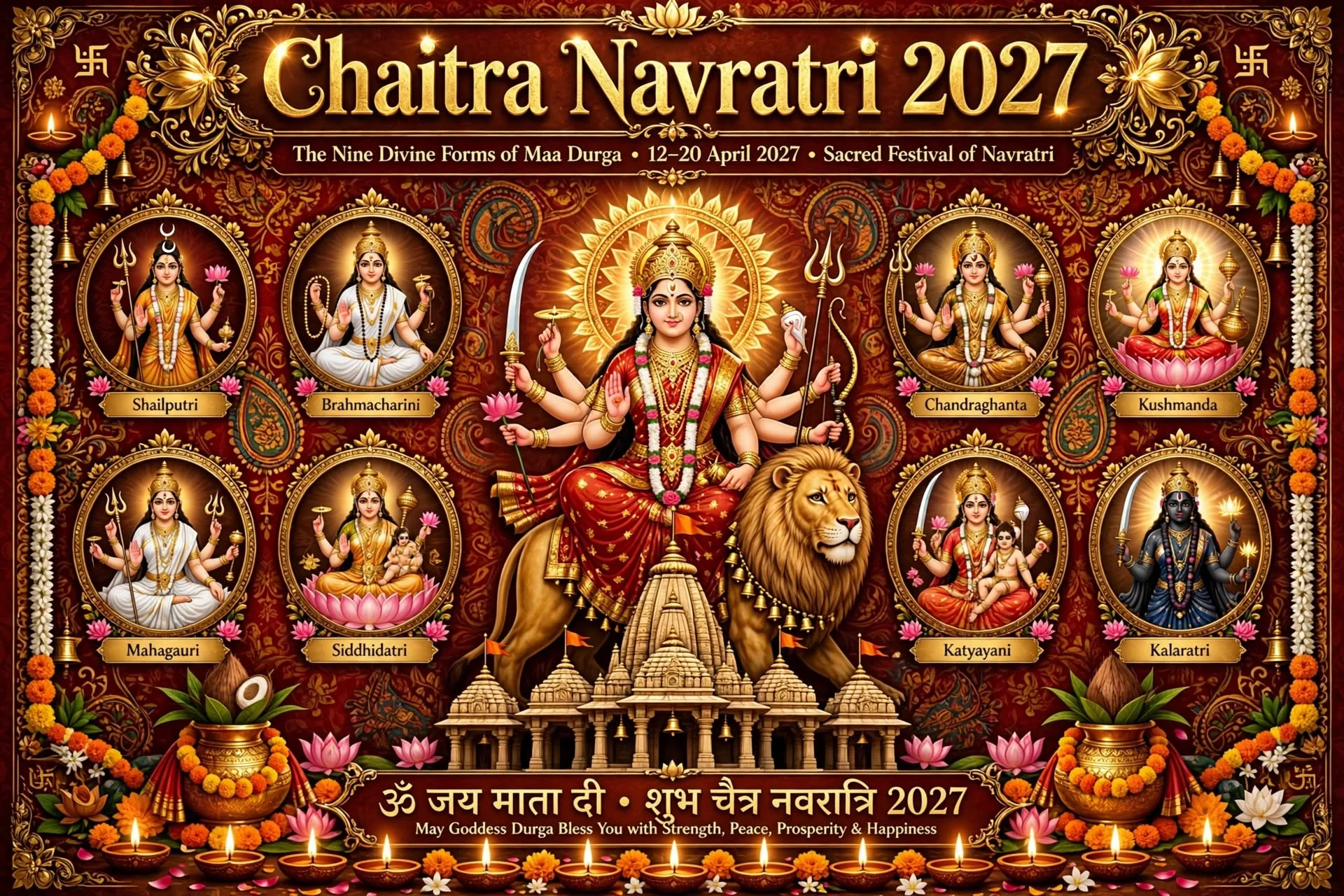
Wednesday, Apr 7, 2027
Chaitra Navratri
Chaitra Navratri, also reverently known as Vasanta Navratri, is a sacred nine-night festival dedicated to the worship of Goddess Durga and her nine supreme manifestations (Navadurga). Commencing on the first day of the bright fortnight (Shukla Paksha Pratipada) in the month of Chaitra, it coincides with the advent of the Hindu New Year and culminates on Rama Navami, the appearance day of Lord Rama. Celebrated during the vibrant transition into spring, it signifies spiritual rejuvenation, maternal cosmic protection, and the triumph of divine righteousness.
View Festival Guide

Wednesday, Apr 7, 2027
Ishti
Ishti is a foundational Vedic ritual observance appearing prominently in Hindu Panchangs on the Pratipada tithi (the first lunar day) following either Amavasya (new moon) or Purnima (full moon), marking the prescribed performance day for the fortnightly Vedic Darsha-Purnamasa sacrifices.
View Festival Guide

Wednesday, Apr 7, 2027
Ugadi
Ugadi, derived from the Sanskrit terms 'Yuga' (era) and 'Aadi' (beginning), marks the glorious commencement of the New Year for the people of Andhra Pradesh, Telangana, and Karnataka. Celebrated on the first day of the waxing moon (Shukla Paksha Pratipada) in the sacred month of Chaitra, it heralds the advent of the new astronomical cycle, the arrival of the rejuvenating spring season (Vasanta Ritu), and the eternal rhythm of cosmic creation inaugurated by Lord Brahma.
View Festival Guide

Wednesday, Apr 7, 2027
Nutan Varsh Prarambha
Nutan Varsh Prarambha marks the glorious beginning of the Hindu New Year on the first day of the waxing moon (Shukla Paksha Pratipada) in the month of Chaitra. Celebrated across India under diverse regional names such as Ugadi, Gudi Padwa, and Cheti Chand, this sacred dawn signifies not merely a calendar shift, but the cosmic anniversary of creation itself. According to Vedic tradition, it was on this radiant morning that Lord Brahma initiated the cosmic cycle of time, creation, and mortal existence.
View Festival Guide

Thursday, Apr 8, 2027
Chandra Darshana
Chandra Darshana is a revered monthly Hindu observance dedicated to sighting, venerating, and offering oblation to the delicate waxing crescent Moon immediately following the new moon (Amavasya), typically occurring during the twilight of Shukla Paksha Pratipada or Dwitiya.
View Festival Guide
Friday, Apr 9, 2027
Gangaur (Gauri Tritiya)
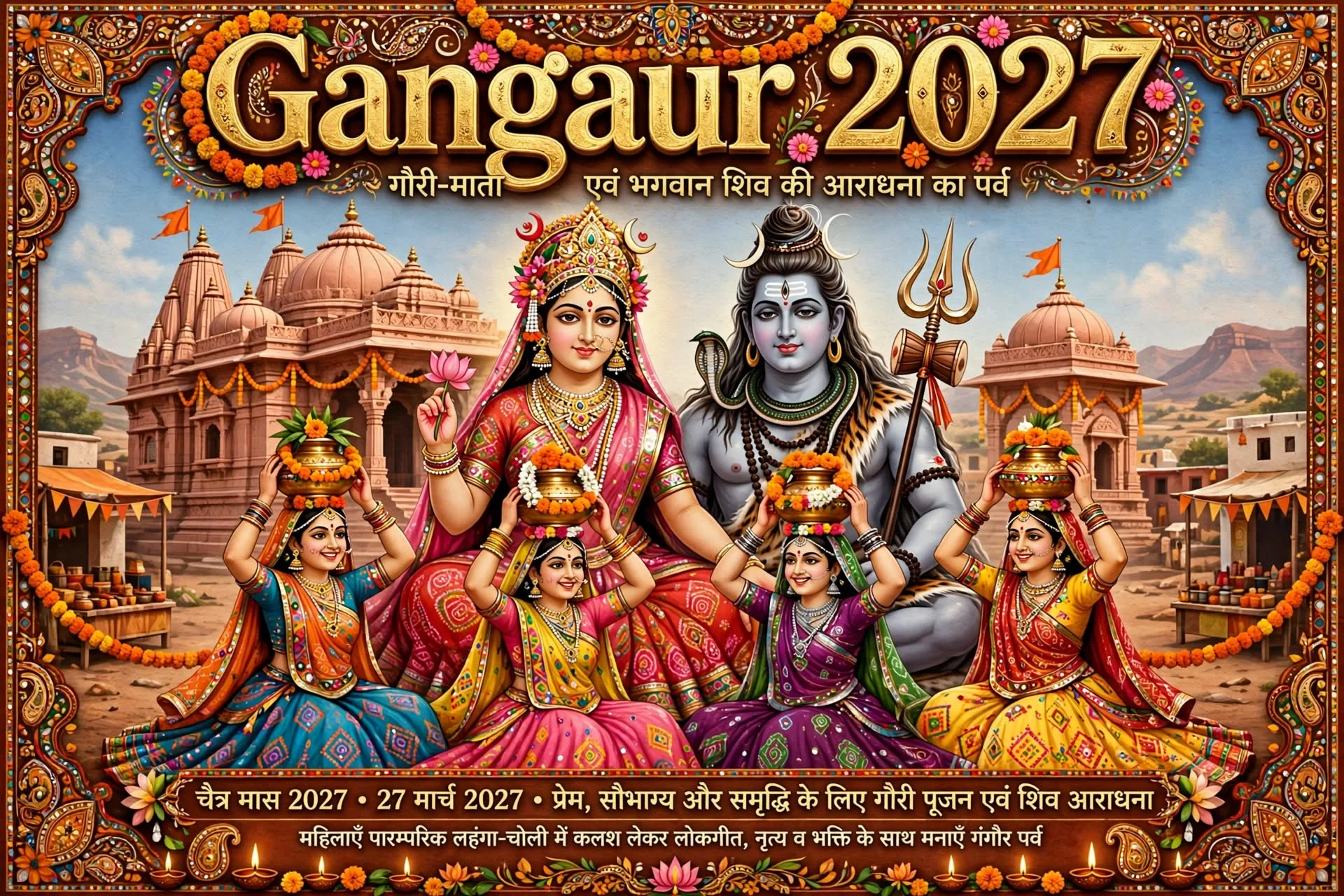
Gangaur is one of the most vibrant, emotionally poignant, and culturally majestic festivals of Rajasthan, celebrated also with great enthusiasm in parts of Gujarat, Madhya Pradesh (Malwa), and Haryana. The word 'Gangaur' is a compound of 'Gana' (a title of Lord Shiva) and 'Gaur' (Goddess Gauri or Parvati). Commencing immediately following Holika Dahan on the first day of Chaitra Krishna Paksha, this elaborate celebration spans eighteen days, reaching its glorious zenith on the third day of Chaitra Shukla Paksha (Tritiya).
View Festival Guide
Friday, Apr 9, 2027
Gauri Puja
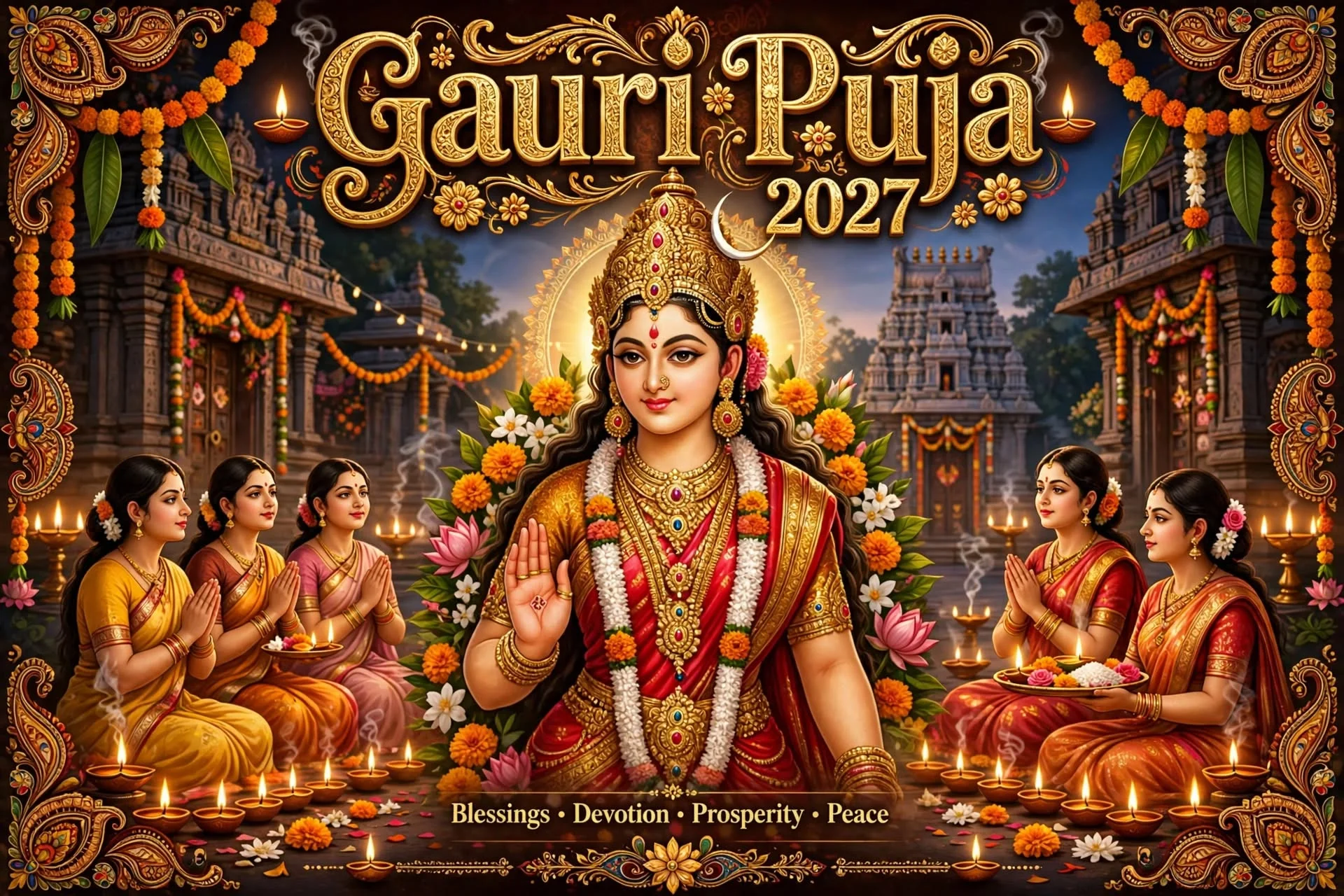
Gauri Puja, celebrated with profound devotion on the third day of the waxing moon (Shukla Paksha Tritiya) in the sacred month of Chaitra, is a revered festival dedicated to Goddess Gauri, the compassionate and radiant consort of Lord Shiva. Also celebrated as Sowbhagya Tritiya or Gauri Tritiya during the vibrant spring season of Chaitra Navratri, this sacred day invokes the maternal benevolence of the Divine Mother to bestow marital longevity, domestic harmony, and boundless prosperity.
View Festival Guide

Friday, Apr 9, 2027
Matsya Jayanti
Matsya Jayanti commemorates the auspicious appearance day of Lord Vishnu in his foundational first incarnation—the Matsya Avatar (the divine horned fish). Celebrated on the third lunar day of the bright fortnight (Shukla Paksha Tritiya) in the sacred month of Chaitra, this holy observance honors the cosmic savior who rescued the sacred Vedas, safeguarded the progenitors of humanity, and preserved the seeds of all living organisms during the catastrophic cosmic deluge (Pralaya).
View Festival Guide