




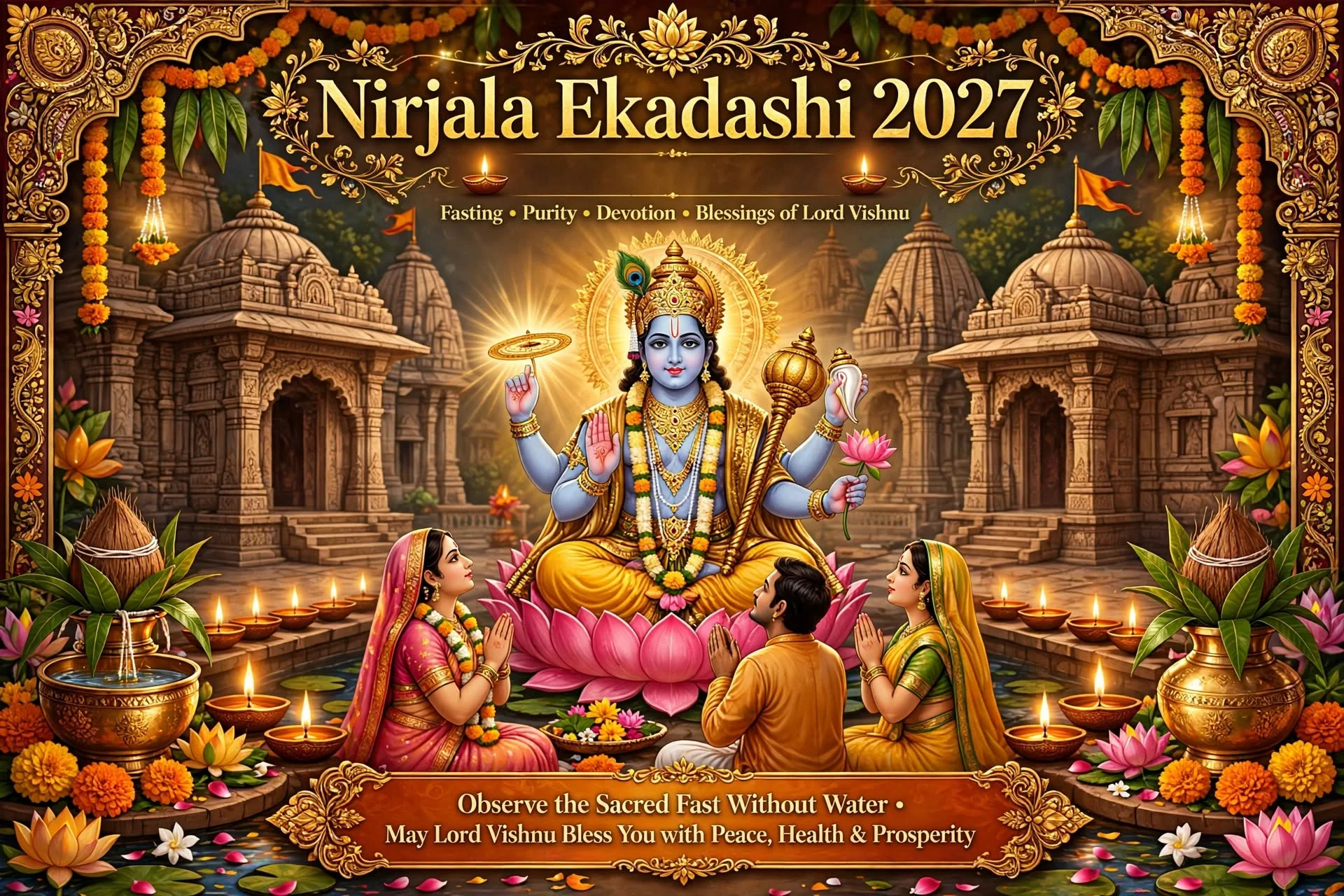
Nirjala Ekadashi is one of the most significant Ekadashi observances in Hindu tradition. It falls on the Shukla Paksha Ekadashi, the eleventh lunar day of the waxing fortnight, in the Hindu month of Jyeshtha. The word Nirjala means without water, referring to the traditional practice of observing a strict fast without consuming food or water.
Nirjala Ekadashi 2027: Date, Puja Timings, Rituals & Stories
Nirjala Ekadashi Timings & Panchang
Important festival dates and auspicious timings
Usha Arghya (Sunrise)
05:23 am
Sandhya Arghya (Sunset)
07:20 pm
Start Date
Monday, 14 Jun 2027
Puja Muhurat
02:12 am – 02:08 am
Nirjala Ekadashi
The festival is dedicated to Lord Vishnu, who is worshipped as the preserver and protector of the universe. Devotees observe the day through Vishnu Puja, mantra recitation, meditation, listening to the Nirjala Ekadashi Vrat Katha and charitable activities. The observance is traditionally associated with self-discipline, devotion and spiritual purification.
Nirjala Ekadashi is also known as Bhimseni Ekadashi and Pandava Ekadashi because of its association with Bhima, the second of the five Pandava brothers. According to the traditional Vrat Katha, Bhima found it difficult to observe the regular Ekadashi fasts because of his strong appetite. He approached Maharishi Vyasa and requested a way to obtain the spiritual merit associated with Ekadashi through a single annual observance.
Maharishi Vyasa advised Bhima to observe the Jyeshtha Shukla Ekadashi fast without food or water. The traditional account states that the merit of observing this single fast is equivalent to that of observing all Ekadashis throughout the year. Bhima followed the instruction, and the day became associated with his name.
Because Nirjala Ekadashi occurs during the hot summer season, donating water is an important charitable practice associated with the festival. Devotees distribute drinking water, offer water-filled earthen pots, provide food and help travellers and people in need. Donations of umbrellas, footwear and other summer necessities are also customary in several regions.
The observance continues into Dwadashi, the twelfth lunar day, when devotees perform the prescribed concluding rituals and break their fast during the appropriate Parana period. The exact Parana time depends on the local Panchang and the Ekadashi tithi.
Why is Nirjala Ekadashi Celebrated?
Nirjala Ekadashi is celebrated to worship Lord Vishnu and honour the spiritual discipline associated with Ekadashi fasting. Its traditional significance comes from the story of Bhima and Maharishi Vyasa, in which Bhima is advised to observe the Jyeshtha Shukla Ekadashi without food or water. The observance is believed to carry the spiritual merit associated with all Ekadashis of the year.
The festival also emphasises water charity. Since it falls during the hot Jyeshtha season, devotees are encouraged to provide drinking water, food and other necessities to people and animals. Worship, restraint and charity together form the central practices of this sacred day.
- To worship Lord Vishnu and seek his blessings for spiritual progress and liberation.
- To commemorate the traditional observance of Bhima, who followed Maharishi Vyasa's instruction to observe a strict Ekadashi fast.
- To honour the belief that the spiritual merit of Nirjala Ekadashi is equivalent to that of all Ekadashi fasts in the year.
- To practise self-discipline, devotion, meditation and control over personal desires.
- To listen to or read the Nirjala Ekadashi Vrat Katha and remember the teachings associated with Bhima and Vyasa.
- To perform Vishnu Puja, chant sacred names and recite devotional prayers.
- To donate water, food, earthen pots, umbrellas, footwear and other useful items to people in need.
- To encourage compassion towards travellers, workers, animals and people affected by summer heat.
- To conclude the observance through Dwadashi Parana and charitable activities.
The History and Sacred Legend of Nirjala Ekadashi
Nirjala Ekadashi is rooted in the Hindu tradition of observing Ekadashi, the eleventh lunar day of each fortnight. Ekadashi is traditionally dedicated to Lord Vishnu and is observed through fasting, prayer, devotion and restraint. Among the Ekadashi observances, Nirjala Ekadashi is especially associated with the strict waterless fast and the story of Bhima.
The observance falls during Jyeshtha Shukla Paksha. Its traditional narrative explains why Bhima, who found it difficult to observe the regular Ekadashi fasts, undertook this particular vrata after receiving guidance from Maharishi Vyasa.
The Story of Bhima and Maharishi Vyasa
According to the traditional Nirjala Ekadashi Vrat Katha, the Pandavas, their mother Kunti and Draupadi regularly observed Ekadashi fasts with devotion. Bhima, however, struggled to follow the same practice. He was known for his enormous physical strength and appetite, and he found it difficult to remain without food for an entire day.
Bhima was devoted to Lord Vishnu but felt troubled because he could not observe every Ekadashi like the other members of his family. He believed that his inability to fast regularly prevented him from receiving the spiritual merit associated with the observance.
Seeking a solution, Bhima approached Maharishi Vyasa, who was revered by the Pandavas as a great sage and spiritual guide. Bhima explained his difficulty and requested a method through which he could receive the spiritual benefit of the Ekadashi observances without having to fast twice every month.
Maharishi Vyasa explained the importance of Ekadashi and advised Bhima to observe the Shukla Paksha Ekadashi of Jyeshtha month. He instructed him to undertake a strict fast without food or water. According to the traditional account, observing this one vrata with devotion would grant the merit associated with all Ekadashis of the year.
Bhima accepted the instruction and observed the Nirjala fast with determination. The observance became known as Bhimseni Ekadashi because of his association with it. It is also called Pandava Ekadashi in remembrance of the Pandava family.
Spiritual Significance of Nirjala Ekadashi
Nirjala Ekadashi represents devotion to Lord Vishnu, spiritual discipline and compassion towards living beings. Its traditional observance combines fasting, prayer, meditation and charity. Devotees regard the day as an opportunity to purify their thoughts, strengthen their faith and develop greater control over their desires.
Devotion to Lord Vishnu
Lord Vishnu is the principal deity worshipped on Nirjala Ekadashi. Devotees remember him as the protector of the universe and the source of divine grace. Worship may include offering Tulsi leaves, flowers, sandalwood paste, incense, a lamp and fruits.
The recitation of Vishnu's sacred names and prayers helps devotees focus their attention on the divine. Through devotion, they seek forgiveness, inner peace and spiritual progress.
The Importance of Self-Discipline
The traditional waterless fast symbolises restraint and determination. Devotees who follow the strict form of the vrata understand it as an expression of their commitment to spiritual discipline.
The deeper teaching of restraint is not limited to food and water. It also encourages control over anger, greed, jealousy, harmful speech and unnecessary desires. The observance reminds individuals to develop patience and a balanced approach to everyday life.
The Lesson from Bhima's Devotion
Bhima's story demonstrates that devotion and personal limitations can coexist. Rather than hiding his difficulty, Bhima openly approached Maharishi Vyasa and asked for guidance.
The story encourages devotees to recognise their limitations honestly and seek appropriate guidance. It also teaches that sincere spiritual effort should be accompanied by humility and commitment.
The Spiritual Importance of Water Donation
How Nirjala Ekadashi Is Celebrated
Nirjala Ekadashi is celebrated through the worship of Lord Vishnu, recitation of sacred mantras, listening to the Vrat Katha, meditation and charitable activities. Devotees who follow the traditional strict vrata abstain from food and water for the prescribed period, while others observe a modified fast according to their health and family customs.
The observance begins on Ekadashi and concludes with Parana on Dwadashi. Donations of drinking water and summer necessities are especially encouraged because the festival falls during the hot Jyeshtha season.
Early Morning Bath and Preparation
Devotees traditionally wake up early and take a bath before beginning their worship. They wear clean clothes and prepare a clean place for Lord Vishnu's puja. The worship area is decorated with flowers, and the necessary puja materials are arranged in advance.
Devotees who follow a fasting tradition take their sankalpa according to their family or sampradaya customs. A strict waterless fast should not be undertaken by people for whom it is medically unsafe.
Sankalpa for the Ekadashi Vrat
After preparing for worship, devotees take a sankalpa expressing their intention to observe Nirjala Ekadashi with devotion. They remember Lord Vishnu and pray for spiritual discipline, purification and guidance.
The sankalpa may be performed in simple language or through a traditional Sanskrit formula according to the devotee's family practice.
Worship of Lord Vishnu
An image or idol of Lord Vishnu, Narayana or another accepted form of the deity is placed in the prayer area. Devotees offer water, Tulsi leaves, yellow flowers, sandalwood paste, incense and a lighted lamp.
Fruits and simple vegetarian preparations are offered as naivedya according to the family's observance. Devotees pray for the blessings of Lord Vishnu and seek forgiveness for mistakes made knowingly or unknowingly.
Nirjala Ekadashi Puja Vidhi (Step by Step)
- 1
Wake Up Early and Prepare for Worship
Wake up early on Ekadashi, take a bath and wear clean clothes. Clean the prayer area and prepare a suitable place for Lord Vishnu's worship. Arrange the puja materials before beginning the rituals.
- 2
Prepare the Vishnu Puja Area
Place an image or idol of Lord Vishnu, Narayana or another accepted form of Vishnu on a clean platform. Decorate the area with flowers and arrange a lamp, incense, sandalwood paste, Tulsi leaves and other offerings.
- 3
Take the Vrat Sankalpa
Sit before Lord Vishnu and take a sankalpa to observe Nirjala Ekadashi according to your capacity and tradition. Pray for devotion, self-discipline and spiritual purification. Do not undertake a waterless fast if it is medically unsafe.
- 4
Invoke Lord Vishnu
Fold your hands and remember Lord Vishnu with devotion. Chant 'Om Namo Bhagavate Vasudevaya' or 'Om Namo Narayanaya' while praying for divine blessings and guidance.
- 5
Offer Water and Flowers
Nirjala Ekadashi Puja Samagri List
Lord Vishnu Worship Essentials
These materials are used to prepare the worship area and perform the puja of Lord Vishnu.
- Image or idol of Lord Vishnu
- Clean puja cloth
- Kalash or water vessel
- Fresh yellow or other suitable flowers
- Tulsi leaves
- Sandalwood paste
- Akshata (unbroken rice grains)
- Kumkum
- Turmeric
- Panchapatra and spoon
Diya and Aarti Materials
These items are used for offering light and fragrance during Vishnu Puja.
- Ghee or oil diya
- Cotton wicks
- Incense sticks
- Camphor
- Aarti thali
- Bell
- Matchbox or lighter
Naivedya and Prasad
Simple vegetarian offerings may be prepared according to the family's Ekadashi customs.
Mantras and Prayers for Nirjala Ekadashi
Nirjala Ekadashi Vrat Rules and Fasting Guidelines
Preparation for the Ekadashi Vrat
Devotees traditionally prepare for Nirjala Ekadashi through cleanliness, prayer and a sincere sankalpa.
- Wake up early and take a bath.
- Wear clean clothes during worship.
- Keep the puja area clean.
- Prepare the necessary puja materials in advance.
- Take a sankalpa according to your family or spiritual tradition.
- Begin the day with prayers to Lord Vishnu.
Traditional Nirjala Fasting Practice
The traditional strict form of Nirjala Ekadashi involves abstaining from both food and water during the prescribed fasting period. It is regarded as a demanding observance, especially during the hot Jyeshtha season. This practice is a religious tradition, not a medically suitable fast for everyone.
- Understand the traditional rules before deciding how to observe the vrata.
- Follow the fasting practice prescribed by your family or sampradaya.
- Do not attempt a waterless fast if you have a medical condition or are at risk of dehydration.
- People who are ill, elderly, pregnant, breastfeeding or taking medication should not undertake a strict waterless fast without appropriate medical guidance.
- Children should not be expected to observe a waterless fast.
- A modified fast with water or suitable food is preferable when a strict fast is unsafe.
Dos and Don'ts of Nirjala Ekadashi
Good Practices (Do's)
- Begin the day with cleanliness, prayer and devotion to Lord Vishnu.
- Observe the fast according to your health and family tradition.
- Recite Vishnu mantras and listen to the Nirjala Ekadashi Vrat Katha.
- Offer Tulsi leaves, flowers and other customary items to Lord Vishnu.
- Spend time in meditation, prayer and spiritual reflection.
- Donate clean drinking water to people in need.
Nirjala Ekadashi Across Regions
| Region | Local Name |
|---|---|
| North India | Nirjala Ekadashi / Bhimseni Ekadashi |
| Uttar Pradesh | Nirjala Ekadashi |
| Rajasthan | Nirjala Ekadashi / Bhimseni Ekadashi |
| Madhya Pradesh | Nirjala Ekadashi |
| Bihar | Nirjala Ekadashi |
| Delhi and Haryana | Nirjala Ekadashi / Pandava Ekadashi |
| Gujarat | Nirjala Ekadashi |
| Maharashtra | Nirjala Ekadashi / Bhimseni Ekadashi |
| Karnataka | Nirjala Ekadashi |
| Andhra Pradesh and Telangana | Nirjala Ekadashi |
| Tamil Nadu | Nirjala Ekadashi |
| Odisha |
Nirjala Ekadashi FAQs
What is Nirjala Ekadashi?
Nirjala Ekadashi is a Hindu fasting observance dedicated to Lord Vishnu. It falls on Jyeshtha Shukla Ekadashi and is traditionally associated with abstaining from food and water. Devotees also perform Vishnu Puja, mantra recitation and water charity.
Why is Nirjala Ekadashi called Bhimseni Ekadashi?
It is called Bhimseni Ekadashi because of the traditional story of Bhima, who found it difficult to observe regular Ekadashi fasts. Maharishi Vyasa advised him to observe the Jyeshtha Shukla Ekadashi without food or water.
When is Nirjala Ekadashi observed?
Nirjala Ekadashi is observed on the Shukla Paksha Ekadashi of Jyeshtha month. The Gregorian date changes every year according to the Hindu lunar calendar.
Upcoming Festivals
View All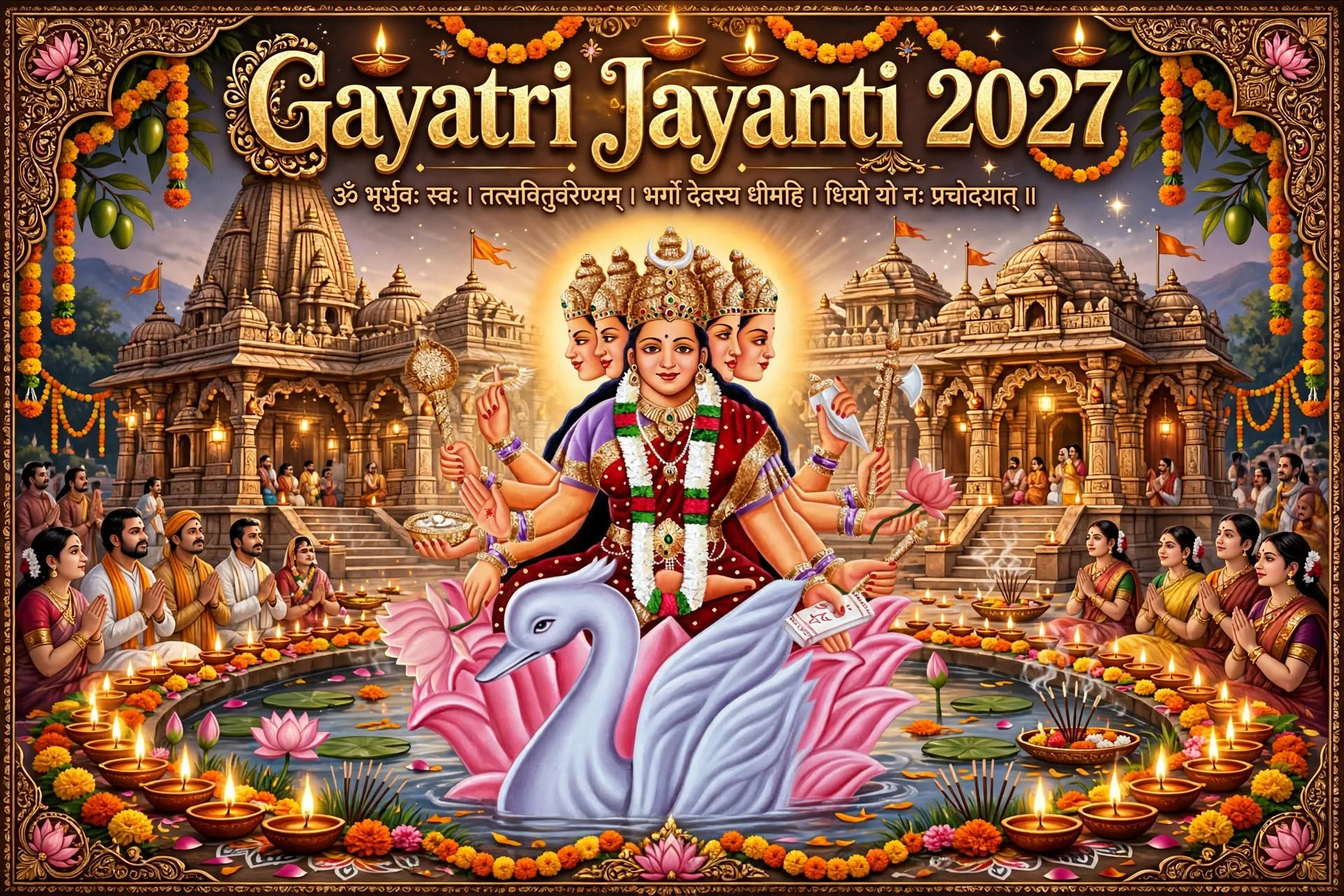
Monday, Jun 14, 2027
Gayatri Jayanti
Gayatri Jayanti is a sacred Hindu festival dedicated to Goddess Gayatri, revered as Ved Mata, the Mother of the Vedas. She represents divine wisdom, spiritual illumination, purity and the power of sacred knowledge. Devotees worship her as the personification of the Gayatri Mantra, one of the most revered prayers in the Vedic tradition.
View Festival Guide
Tuesday, Jun 15, 2027
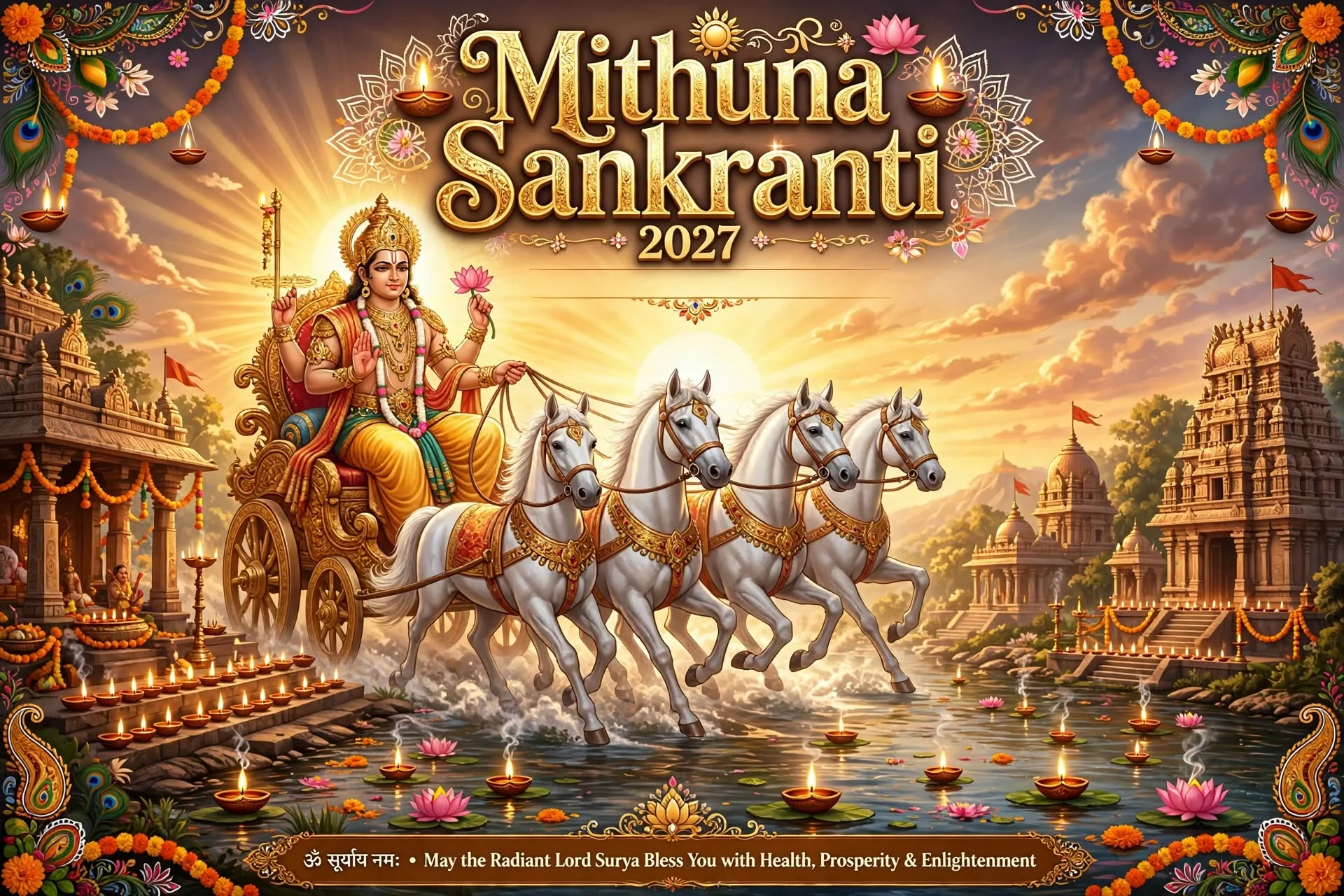
Mithuna Sankranti
Mithuna Sankranti is an important Hindu solar observance that marks the Sun's transition from Vrishabha Rashi (Taurus) into Mithuna Rashi (Gemini). This transition signals the beginning of the third month in the traditional Hindu solar calendar. It generally occurs around 14 or 15 June, although the exact date and time depend on the astronomical calculation of the Sun's entry into Gemini.
View Festival Guide
Wednesday, Jun 16, 2027
Budha Pradosh Vrat
Budha Pradosh Vrat, also known as Saumya Vara Pradosham, is a sacred bimonthly Hindu observance occurring when the Trayodashi tithi (thirteenth lunar day) coincides with a Wednesday (Budhavara) during the Pradosha Kaal twilight period.
View Festival Guide
Friday, Jun 18, 2027
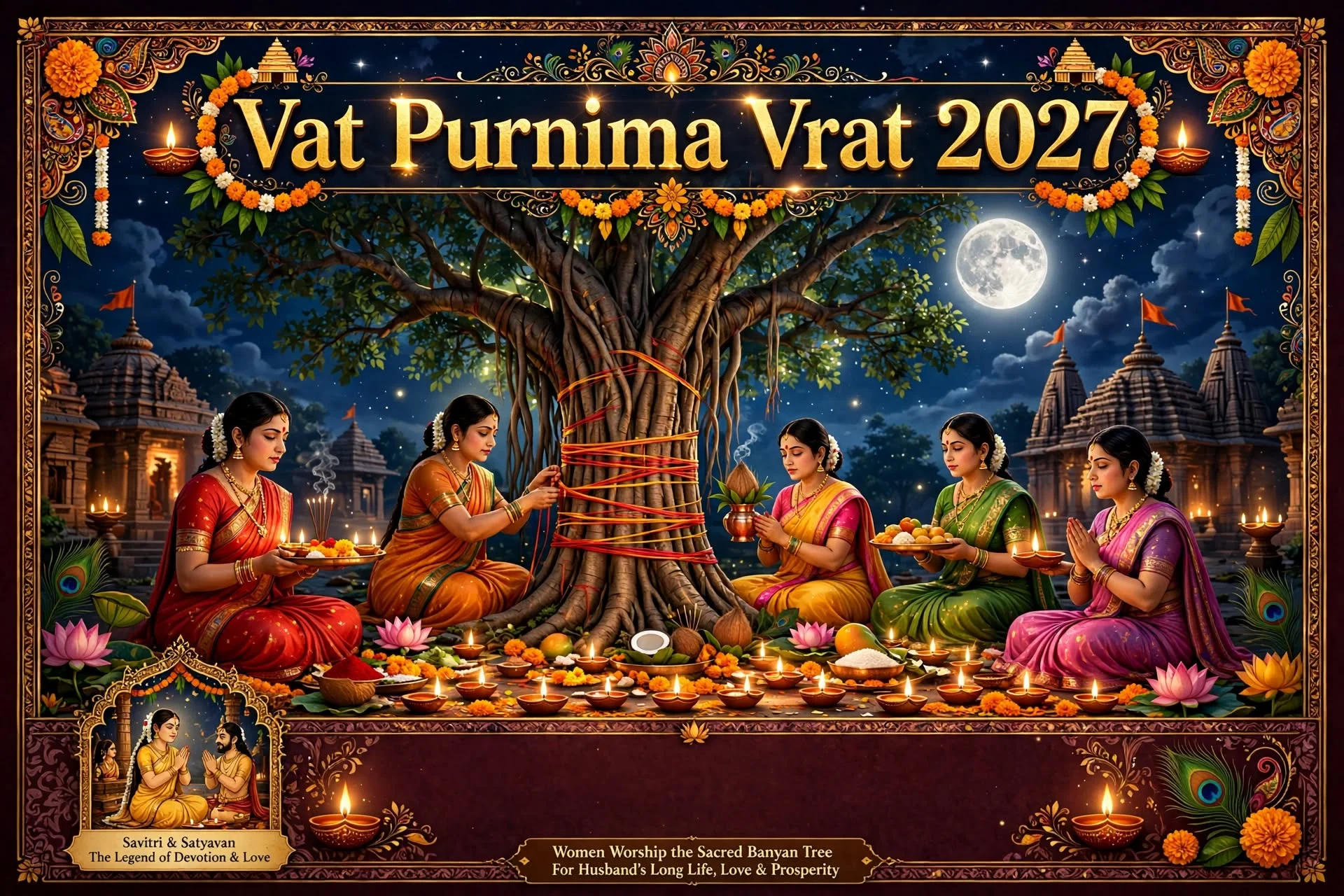
Vat Purnima Vrat
Vat Purnima Vrat, also known as Vat Savitri Purnima or Vata Pournima, is a traditional Hindu observance celebrated on Jyeshtha Shukla Purnima, the full-moon day of the Jyeshtha month. It is especially popular in Maharashtra, Gujarat, Goa and the Konkan region. The festival is associated with the devotion of Goddess Savitri towards her husband Satyavan and her encounter with Yama, the god of death.
View Festival Guide
Friday, Jun 18, 2027
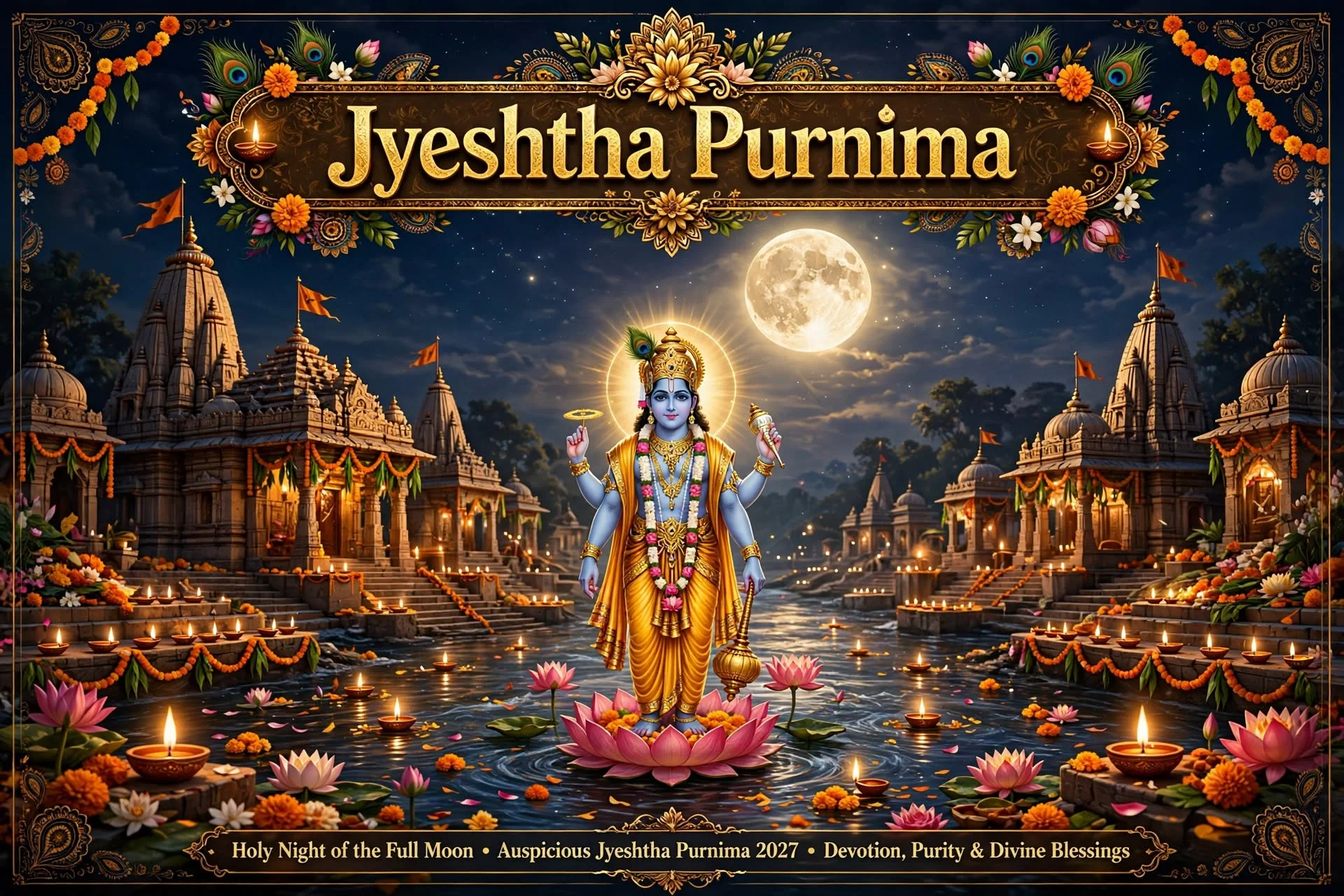
Jyeshtha Purnima
Jyeshtha Purnima is the sacred full-moon day that marks the conclusion of Shukla Paksha in the Hindu month of Jyeshtha. It generally falls during May or June in the Gregorian calendar and is considered an important occasion for worship, fasting, holy bathing, charity and spiritual reflection. The word Purnima refers to the full-moon tithi, while Jyeshtha identifies the lunar month in which it occurs.
View Festival Guide

Friday, Jun 18, 2027
Anvadhan
Anvadhan (अन्वाधान) is an ancient, highly revered Vedic ritual and spiritual observance in Sanatana Dharma performed on the day immediately preceding the New Moon (Amavasya) or Full Moon (Purnima). Rooted in the pristine traditions of the Shrauta and Grihya Sutras, Anvadhan literally translates to 'the solemn placing and replenishment of sacred fuel wood into the consecrated Vedic fires'. In traditional Vedic ritualism, householders (Grihasthas) and priests who maintain the sacred Agnihotra fires perform Anvadhan to prepare the sacrificial altars for the grand Darsha Yajna (New Moon sacrifice) or Paurnamasa Yajna (Full Moon sacrifice) scheduled for the following day.
View Festival Guide

Saturday, Jun 19, 2027
Ishti
Ishti is a foundational Vedic ritual observance appearing prominently in Hindu Panchangs on the Pratipada tithi (the first lunar day) following either Amavasya (new moon) or Purnima (full moon), marking the prescribed performance day for the fortnightly Vedic Darsha-Purnamasa sacrifices.
View Festival Guide
Tuesday, Jun 22, 2027
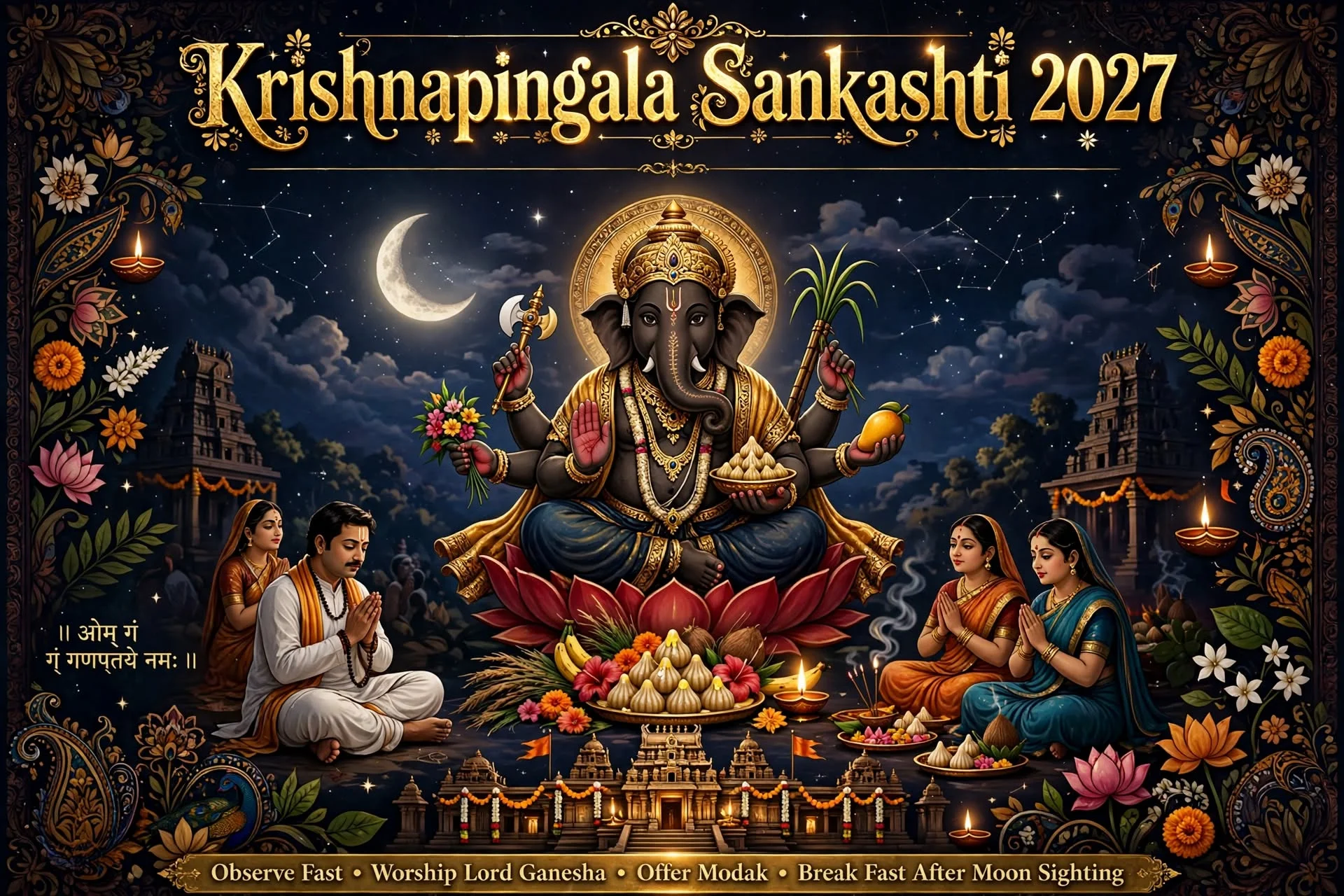
Krishnapingala Sankashti Chaturthi
Krishnapingala Sankashti Chaturthi is a sacred Hindu vrata dedicated to Lord Ganesha, observed on Krishna Paksha Chaturthi of the Jyeshtha month according to the Amanta Hindu calendar. In the Purnimanta calendar, the same lunar observance falls in Ashadha Krishna Paksha. It is one of the monthly Sankashti Chaturthi observances and is associated with the worship of Lord Ganesha in his Krishnapingala form.
View Festival Guide