




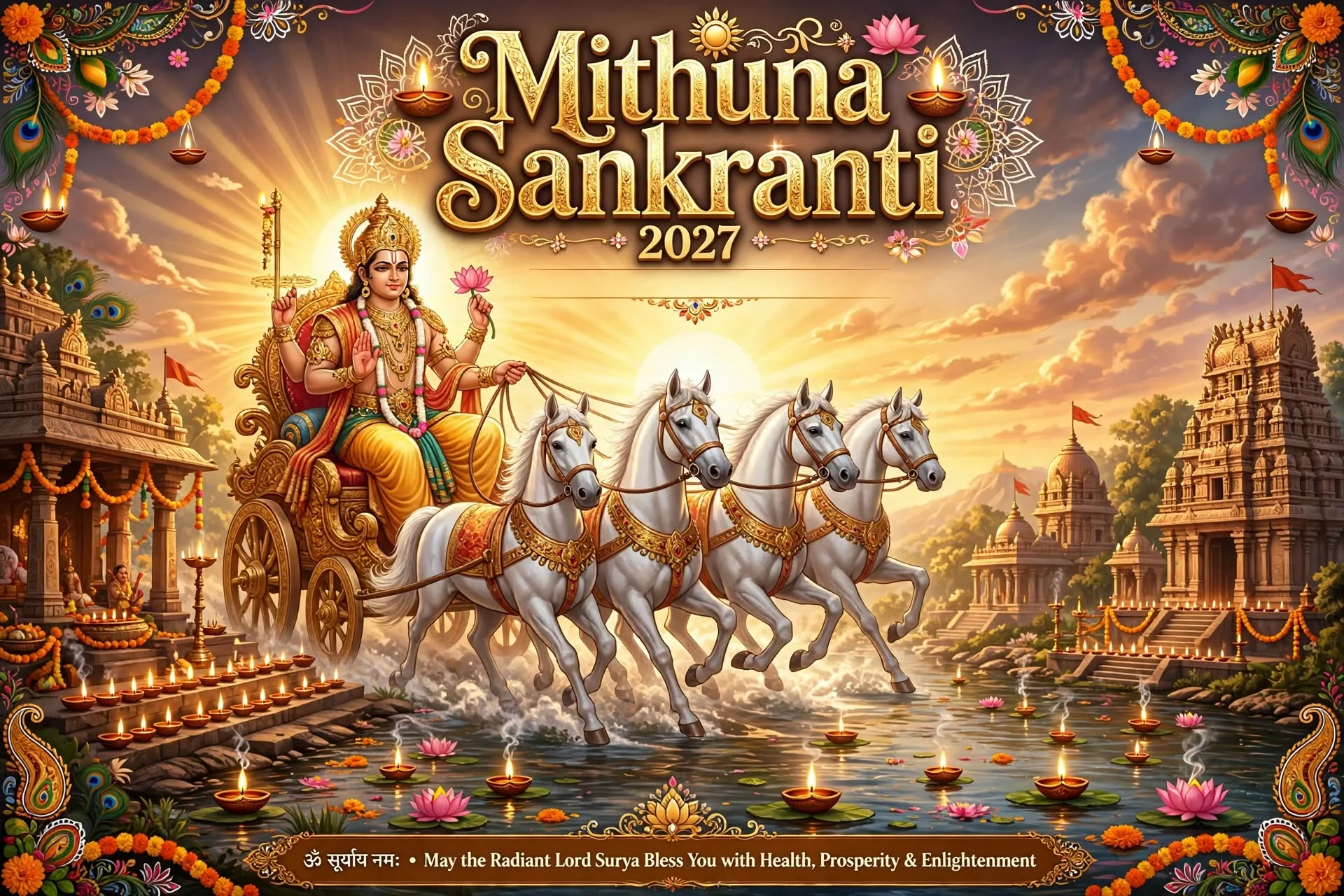
Mithuna Sankranti is an important Hindu solar observance that marks the Sun's transition from Vrishabha Rashi (Taurus) into Mithuna Rashi (Gemini). This transition signals the beginning of the third month in the traditional Hindu solar calendar. It generally occurs around 14 or 15 June, although the exact date and time depend on the astronomical calculation of the Sun's entry into Gemini.
Mithuna Sankranti 2027: Date, Puja Timings, Rituals & Stories
Mithuna Sankranti Timings & Panchang
Important festival dates and auspicious timings
Usha Arghya (Sunrise)
05:23 am
Sandhya Arghya (Sunset)
07:20 pm
Start Date
Tuesday, 15 Jun 2027
Puja Muhurat
02:08 am – 02:31 am
Mithuna Sankranti
The word Sankranti refers to the movement or transition of the Sun from one zodiac sign to another. Mithuna is the Sanskrit name for Gemini, the third sign of the zodiac. The occasion is therefore associated with the Sun's entry into Mithuna Rashi and the beginning of the corresponding solar month.
Mithuna Sankranti is also known as Mithuna Sankramanam in several South Indian traditions. It is one of the twelve annual Sankrantis, each of which marks a solar transition and is traditionally considered suitable for religious activities, prayers and charitable donations.
The festival is particularly significant for Surya worship and Dan-Punya, the practice of performing charity during an auspicious period. Devotees traditionally take a holy bath, offer Arghya to the rising Sun, recite Surya mantras and donate clothes, food, grains and other necessities to people in need.
Mithuna Sankranti has a special cultural connection with Odisha, where it coincides with the famous Raja Parba celebrations. Raja Parba is a seasonal festival associated with Mother Earth, fertility, womanhood and the arrival of the monsoon. The festival celebrates the Earth's symbolic period of rest and renewal before the agricultural season.
Raja Parba is especially known for traditional swings, folk songs, festive clothing and regional delicacies such as Poda Pitha. Young girls and women participate in celebrations, while agricultural activities are traditionally suspended during the festival period as a symbolic expression of respect for Mother Earth.
Why is Mithuna Sankranti Celebrated?
Mithuna Sankranti is celebrated to mark the Sun's entry into Mithuna Rashi and the beginning of the third month of the Hindu solar calendar. The transition is traditionally considered an auspicious occasion for worship, bathing, prayer and charitable activities.
The festival also carries seasonal and agricultural importance. In Odisha, the occasion is closely associated with Raja Parba, which celebrates the fertility of the Earth, womanhood and the arrival of the monsoon. The festival encourages gratitude towards nature and recognition of the agricultural cycle.
- To mark the Sun's transition from Vrishabha Rashi into Mithuna Rashi.
- To welcome the beginning of the third month in the Hindu solar calendar.
- To worship Lord Surya and express gratitude for sunlight, energy and life.
- To perform Dan-Punya during the auspicious Sankranti period.
- To donate clothes, food, grains and other useful necessities to people in need.
- To take holy baths and perform traditional prayers for purification and well-being.
- To celebrate the seasonal transition and the approaching monsoon.
- To honour Mother Earth and agricultural fertility through the regional Raja Parba celebrations of Odisha.
- To celebrate womanhood, nature and renewal through traditional community festivities.
- To pray for prosperity, good health, agricultural abundance and harmony.
History and Traditional Significance of Mithuna Sankranti
Mithuna Sankranti is part of the traditional Hindu system of twelve annual solar transitions. These transitions occur when the Sun moves from one zodiac sign into the next. Each Sankranti marks the beginning of a new solar month and is traditionally associated with religious observances, charity and seasonal changes.
The word Sankranti comes from the Sanskrit concept of transition or movement. Mithuna Sankranti specifically identifies the Sun's entry into Mithuna Rashi, corresponding to Gemini in the zodiac system. Its observance connects astronomical calculations with the traditional Hindu calendar.
The Tradition of Twelve Sankrantis
The Hindu solar calendar recognises twelve Sankrantis during the year. Each one marks the Sun's movement into a different zodiac sign: Mesha, Vrishabha, Mithuna, Karka, Simha, Kanya, Tula, Vrishchika, Dhanu, Makara, Kumbha and Meena.
Mithuna Sankranti is the third of these annual transitions. It follows Vrishabha Sankranti and precedes Karka Sankranti. The solar month beginning with this transition is associated with Mithuna Rashi.
Sankranti observances have historically been connected with religious bathing, worship of the Sun, offerings to deities and charitable donations. The exact rituals and recommended donations differ according to the particular Sankranti and regional tradition.
The Significance of Surya Worship
The Sun occupies an important position in Hindu religious and philosophical traditions. Surya is worshipped as the visible source of light, energy and life. The Sun's movement through the zodiac is therefore observed through prayers and rituals on Sankranti days.
On Mithuna Sankranti, devotees traditionally offer Arghya to the rising Sun and recite Surya mantras. These practices express gratitude for the light and energy that sustain life. Some devotees also recite the Aditya Hridayam and perform Surya Namaskar according to their daily spiritual routine.
Spiritual Significance of Mithuna Sankranti
Mithuna Sankranti represents the relationship between cosmic movement, spiritual discipline and the natural world. The Sun's transition into Mithuna Rashi marks a new solar month and provides an occasion for prayer, charity and reflection.
The festival encourages devotees to express gratitude for the Sun's life-giving energy, practise generosity and recognise the importance of nature and seasonal renewal.
Worship of Lord Surya
Surya is the principal deity associated with the solar transition. In Hindu traditions, the Sun is revered as the source of light, warmth and energy. Devotees offer Arghya to the rising Sun and recite prayers to express gratitude for the blessings of nature.
Surya worship also represents the search for knowledge, clarity and spiritual illumination. Devotees pray for good health, strength, discipline and the removal of ignorance.
The Importance of Dan-Punya
Charity is an important spiritual practice associated with Mithuna Sankranti. Traditional observances particularly emphasise donations of clothes and food during the auspicious Sankranti period.
Giving to people in need is considered an expression of compassion and responsibility. The practice reminds devotees that prosperity becomes more meaningful when it is shared with others.
Respect for Nature and Mother Earth
The connection between Mithuna Sankranti and Odisha's Raja Parba highlights the spiritual importance of the natural world. The symbolic rest of Mother Earth represents the need to respect the land and recognise its cycles of renewal.
The festival encourages people to value agricultural resources, soil fertility, rainfall and the environment. It also preserves traditional practices that connect human communities with the rhythms of nature.
How Mithuna Sankranti Is Celebrated
Mithuna Sankranti is celebrated through Surya worship, holy bathing, prayer and charitable activities. Devotees observe the Sankranti period by offering Arghya to the rising Sun, reciting Surya mantras and donating food and clothes.
In Odisha, the occasion is also associated with Raja Parba, a multi-day cultural celebration involving swings, traditional clothing, folk songs and regional delicacies. The exact customs differ across regions and families.
Early Morning Bath and Preparation
Devotees traditionally wake up early, take a bath and wear clean clothes. Some prefer to bathe in a sacred river or visit a nearby temple during the auspicious Sankranti period.
After bathing, they prepare the worship area and arrange water, flowers, a lamp and other items required for Surya Puja.
Offering Arghya to the Rising Sun
Offering Arghya to Lord Surya is one of the main devotional practices associated with Sankranti. Devotees stand facing the rising Sun and offer clean water from a small vessel while reciting Surya mantras or prayers.
The ritual expresses gratitude for the Sun's light and energy. Some devotees also offer red flowers and perform Surya Namaskar according to their daily worship routine.
Performing Surya Puja
After offering Arghya, devotees may perform a simple Surya Puja. They light a diya, offer flowers and recite prayers dedicated to Lord Surya.
Devotional texts such as the Aditya Hridayam and Surya Ashtakam may be recited. Some households also worship Lord Vishnu or their family deity on the occasion.
Taking Sankalpa and Offering Prayers
Mithuna Sankranti Puja Vidhi (Step by Step)
- 1
Wake Up Early and Take a Holy Bath
Wake up early on Mithuna Sankranti and take a bath. Devotees who have access to a sacred river may perform a traditional holy bath. Otherwise, a clean bath at home followed by prayers is suitable.
- 2
Wear Clean Clothes and Prepare the Puja Area
Wear clean clothes and prepare a clean place for worship. Arrange a water vessel, flowers, diya, incense and other items required for Surya Puja.
- 3
Take a Sankalpa
Sit peacefully and take a simple sankalpa to observe Mithuna Sankranti through worship, charity and good conduct. Pray for health, prosperity, family welfare and spiritual progress.
- 4
Offer Arghya to Lord Surya
At sunrise or during the appropriate Sankranti observance, stand facing the Sun and offer clean water from a small vessel. Recite 'Om Suryaya Namah' or another traditional Surya prayer.
- 5
Offer Flowers to Surya
Offer red or other suitable flowers while remembering Lord Surya. The offering expresses devotion and gratitude for the Sun's life-giving energy.
Mithuna Sankranti Puja Samagri List
Surya Puja Essentials
These items can be arranged for offering prayers to Lord Surya during Mithuna Sankranti.
- Image or representation of Lord Surya
- Clean puja cloth
- Copper or other suitable water vessel
- Clean water for Arghya
- Red or other suitable flowers
- Akshata (unbroken rice grains)
- Kumkum
- Sandalwood paste
- Turmeric
- Fresh fruits
Diya and Aarti Materials
These materials are used for lighting the lamp and completing the worship.
- Ghee or oil diya
- Cotton wicks
- Incense sticks
- Camphor
- Aarti plate
- Bell
- Matchbox or lighter
Naivedya and Prasad
Mantras and Prayers for Mithuna Sankranti
Mithuna Sankranti Vrat Rules and Fasting Guidelines
Preparation for Mithuna Sankranti
Devotees traditionally prepare for the observance through cleanliness, prayer and arrangements for charity.
- Wake up early and take a bath.
- Wear clean clothes for worship.
- Prepare the puja area and arrange the required materials.
- Check the local Panchang for the Sankranti moment and Punya Kaal.
- Plan charitable donations according to your capacity.
- Begin the day with prayers to Lord Surya.
Surya Worship and Prayer
Surya worship is an important practice associated with Mithuna Sankranti. Devotees offer Arghya and recite prayers according to their family customs.
- Offer clean water to the rising Sun.
- Chant Om Suryaya Namah.
- Offer flowers and perform a simple Surya Puja.
- Recite Aditya Hridayam or other Surya prayers if desired.
- Maintain a peaceful and devotional atmosphere.
Sankranti Punya Kaal Observance
The auspicious period associated with Sankranti is known as Punya Kaal. Traditional customs recommend performing bathing, worship and charity during the applicable period calculated from the solar ingress.
Dos and Don'ts of Mithuna Sankranti
Good Practices (Do's)
- Wake up early and take a bath before beginning worship.
- Offer Arghya to Lord Surya according to your tradition.
- Recite Surya mantras and prayers with devotion.
- Check the local Panchang for the Sankranti moment and Punya Kaal.
- Donate clothes, food grains and meals to people in need.
- Perform charitable activities with sincerity and respect.
Mithuna Sankranti Across Regions
| Region | Local Name |
|---|---|
| Odisha | Raja Parba / Raja Sankranti |
| Andhra Pradesh | Mithuna Sankramanam |
| Telangana | Mithuna Sankramanam |
| Karnataka | Mithuna Sankramana |
| Tamil Nadu | Mithuna Sankramanam |
| Kerala | Mithuna Sankranti |
| Maharashtra | Mithuna Sankranti |
| Gujarat | Mithuna Sankranti |
| Rajasthan | Mithuna Sankranti |
| Uttar Pradesh | Mithuna Sankranti |
| Bihar | Mithuna Sankranti |
| West Bengal | Mithuna Sankranti |
Mithuna Sankranti FAQs
What is Mithuna Sankranti?
Mithuna Sankranti is a Hindu solar festival that marks the Sun's transition from Vrishabha Rashi (Taurus) into Mithuna Rashi (Gemini). It marks the beginning of the third month in the Hindu solar calendar and is associated with Surya worship and charity.
When is Mithuna Sankranti celebrated?
Mithuna Sankranti generally occurs around 14 or 15 June each year. The exact date and time depend on the Sun's astronomical transition into Mithuna Rashi.
Which deity is worshipped on Mithuna Sankranti?
Lord Surya is especially worshipped because Mithuna Sankranti marks a solar transition. Devotees may also worship Lord Vishnu and their family deities according to their traditions.
Upcoming Festivals
View AllWednesday, Jun 16, 2027
Budha Pradosh Vrat
Budha Pradosh Vrat, also known as Saumya Vara Pradosham, is a sacred bimonthly Hindu observance occurring when the Trayodashi tithi (thirteenth lunar day) coincides with a Wednesday (Budhavara) during the Pradosha Kaal twilight period.
View Festival Guide

Friday, Jun 18, 2027
Jyeshtha Purnima
Jyeshtha Purnima is the sacred full-moon day that marks the conclusion of Shukla Paksha in the Hindu month of Jyeshtha. It generally falls during May or June in the Gregorian calendar and is considered an important occasion for worship, fasting, holy bathing, charity and spiritual reflection. The word Purnima refers to the full-moon tithi, while Jyeshtha identifies the lunar month in which it occurs.
View Festival Guide

Friday, Jun 18, 2027
Anvadhan
Anvadhan (अन्वाधान) is an ancient, highly revered Vedic ritual and spiritual observance in Sanatana Dharma performed on the day immediately preceding the New Moon (Amavasya) or Full Moon (Purnima). Rooted in the pristine traditions of the Shrauta and Grihya Sutras, Anvadhan literally translates to 'the solemn placing and replenishment of sacred fuel wood into the consecrated Vedic fires'. In traditional Vedic ritualism, householders (Grihasthas) and priests who maintain the sacred Agnihotra fires perform Anvadhan to prepare the sacrificial altars for the grand Darsha Yajna (New Moon sacrifice) or Paurnamasa Yajna (Full Moon sacrifice) scheduled for the following day.
View Festival Guide

Friday, Jun 18, 2027
Vat Purnima Vrat
Vat Purnima Vrat, also known as Vat Savitri Purnima or Vata Pournima, is a traditional Hindu observance celebrated on Jyeshtha Shukla Purnima, the full-moon day of the Jyeshtha month. It is especially popular in Maharashtra, Gujarat, Goa and the Konkan region. The festival is associated with the devotion of Goddess Savitri towards her husband Satyavan and her encounter with Yama, the god of death.
View Festival Guide

Saturday, Jun 19, 2027
Ishti
Ishti is a foundational Vedic ritual observance appearing prominently in Hindu Panchangs on the Pratipada tithi (the first lunar day) following either Amavasya (new moon) or Purnima (full moon), marking the prescribed performance day for the fortnightly Vedic Darsha-Purnamasa sacrifices.
View Festival Guide
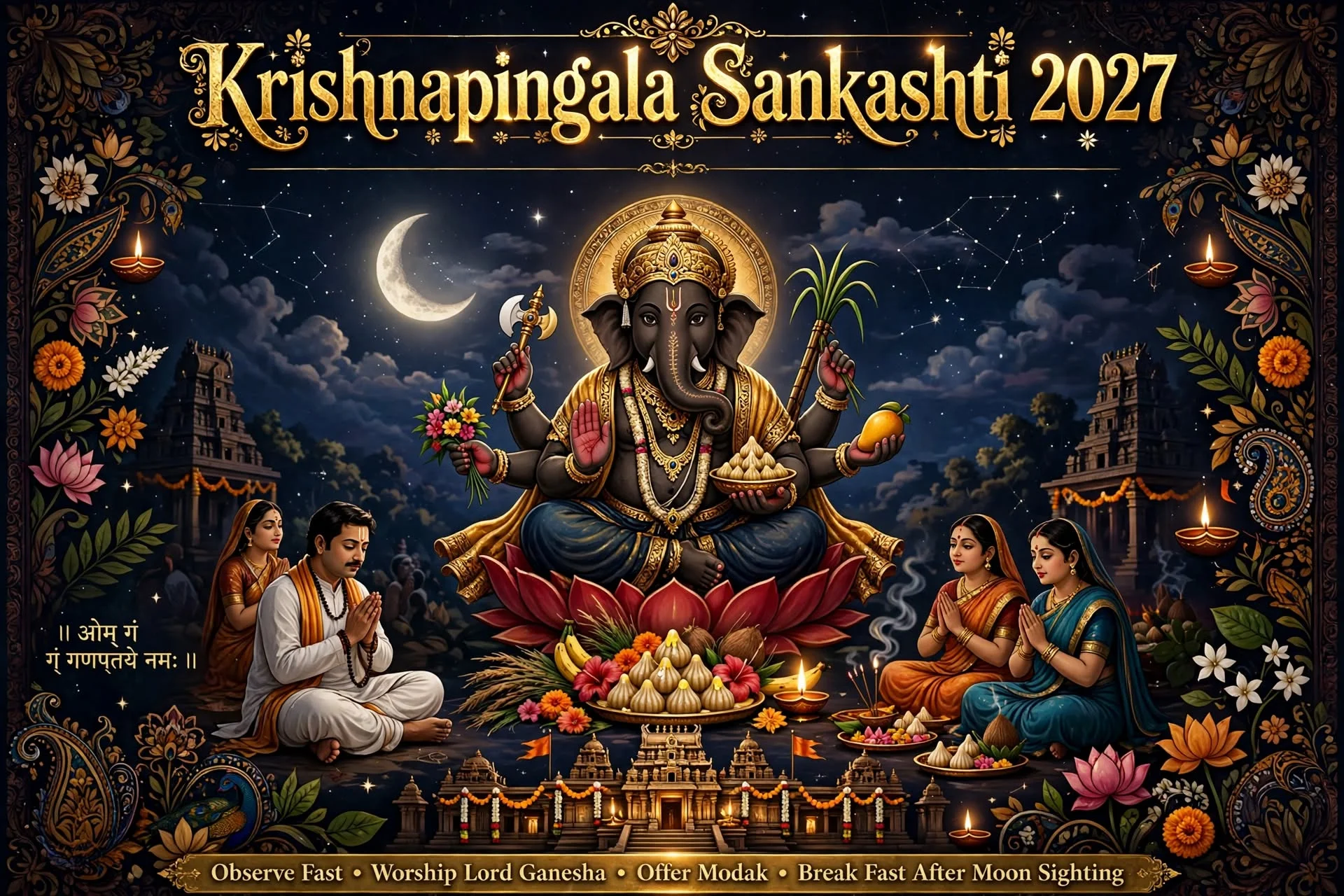
Tuesday, Jun 22, 2027
Krishnapingala Sankashti Chaturthi
Krishnapingala Sankashti Chaturthi is a sacred Hindu vrata dedicated to Lord Ganesha, observed on Krishna Paksha Chaturthi of the Jyeshtha month according to the Amanta Hindu calendar. In the Purnimanta calendar, the same lunar observance falls in Ashadha Krishna Paksha. It is one of the monthly Sankashti Chaturthi observances and is associated with the worship of Lord Ganesha in his Krishnapingala form.
View Festival Guide
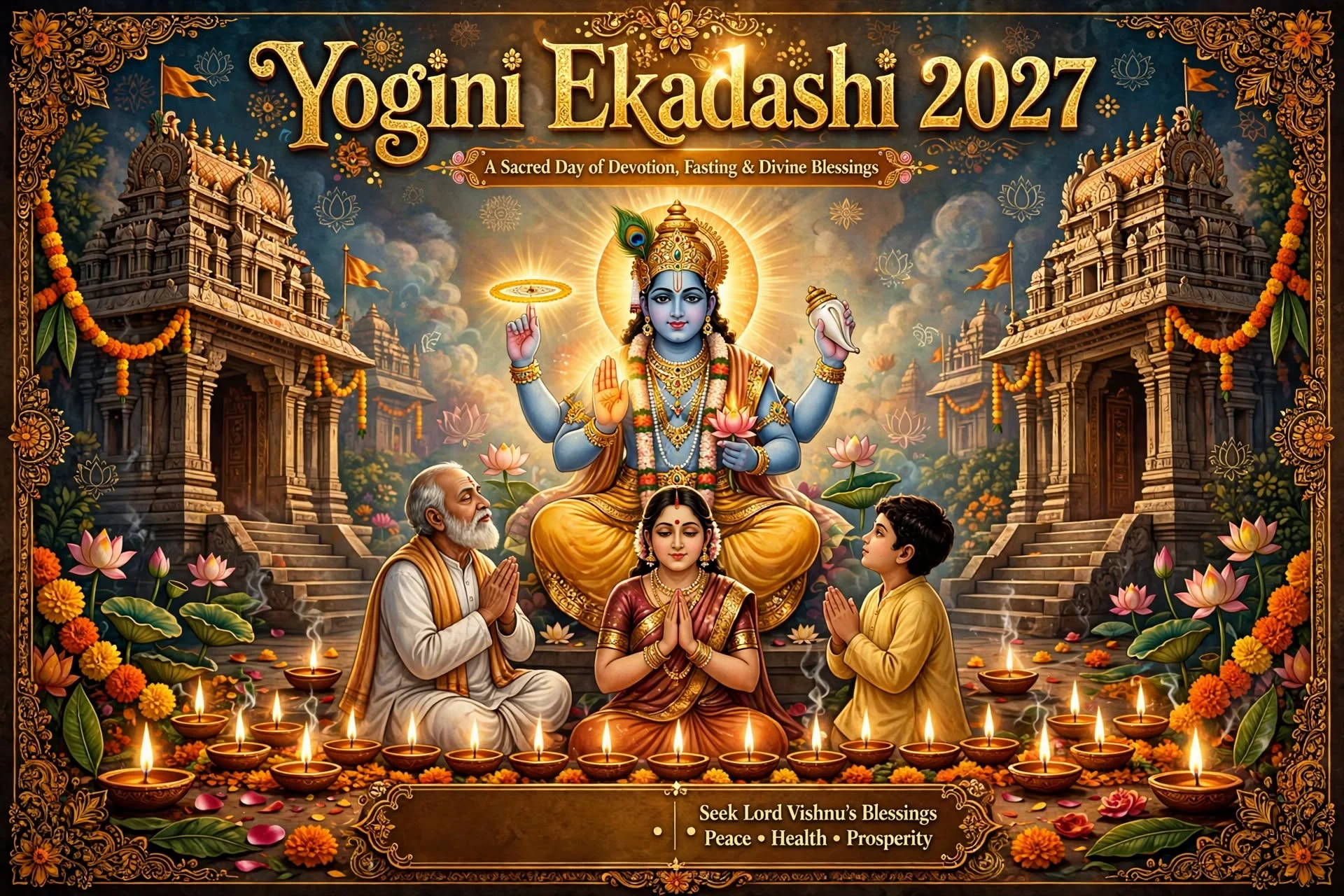
Wednesday, Jun 30, 2027
Yogini Ekadashi
Yogini Ekadashi is an important Hindu fasting observance dedicated to Lord Vishnu. It falls on the Ekadashi tithi, the eleventh lunar day of the Krishna Paksha of Ashadha month according to the Purnimanta calendar. In the Amanta calendar, the same observance is known as Jyeshtha Krishna Ekadashi. It occurs between Nirjala Ekadashi and Devshayani Ekadashi in the annual cycle of Ekadashi observances.
View Festival Guide
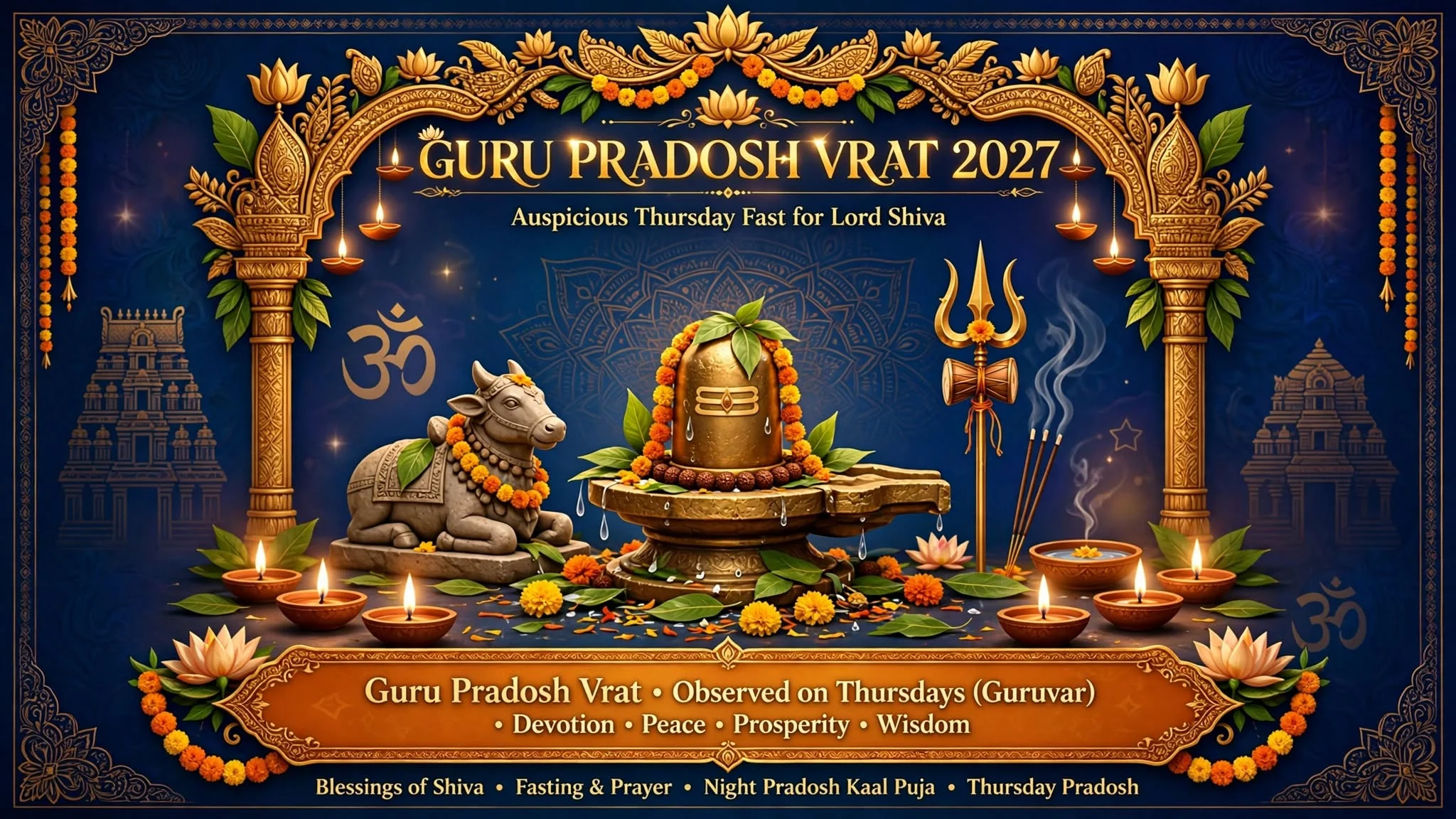
Thursday, Jul 1, 2027
Guru Pradosh Vrat
Guru Pradosh Vrat, also known as Guruvara Pradosham or Brihaspati Pradosham, is a sacred bimonthly Hindu fasting observance occurring when the Trayodashi tithi (thirteenth lunar day) coincides with a Thursday (Guruvara) during the twilight Pradosha Kaal period.
View Festival Guide