




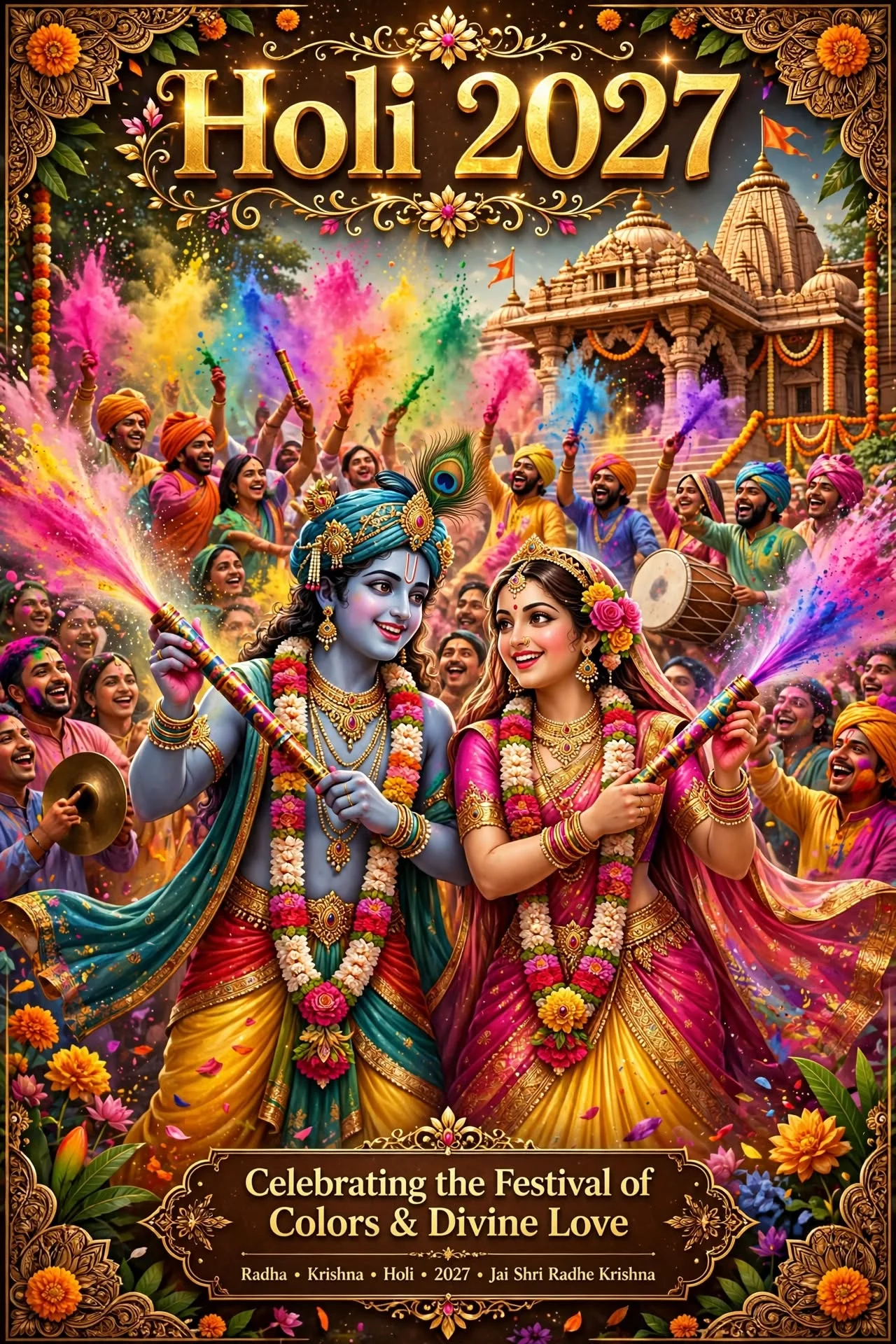
Holi, celebrated with incomparable exuberance, color, and spiritual fraternity, is one of the most ancient, glorious, and universally beloved festivals in Sanatana Dharma. Celebrated on the first day (Pratipada tithi) of the Krishna Paksha in the holy month of Chaitra according to the traditional Hindu calendar (occurring immediately after the night of Holika Dahan), this grand festival of colors—affectionately known as Dhulandi, Dhuleti, Rangwali Holi, and Vasantotsava—marks the triumphant arrival of spring (Rituraj Vasant), the rebirth of nature's vibrant beauty, and the profound social and spiritual renewal of human hearts.
Holi 2027: Date, Puja Timings, Rituals & Stories
Holi Timings & Panchang
Important festival dates and auspicious timings
Usha Arghya (Sunrise)
06:22 am
Sandhya Arghya (Sunset)
06:34 pm
Start Date
Tuesday, 23 Mar 2027
Puja Muhurat
04:13 pm – 02:28 pm
Holi
The antiquity and religious sanction of Holi are deeply enshrined in Vedic, Puranic, and classical Sanskrit literature. References to the festival as 'Holaka' appear in the Jaimini Mimamsa Sutras and the Kathaka Grihya Sutras dating back to the pre-Christian era. The festival is extensively extolled in the Bhavishya Purana, the Garga Samhita, the Harivamsha, and the Padma Purana. Furthermore, historic descriptions by Emperor Harsha in the 7th-century drama 'Ratnavali' and stone bas-reliefs in ancient temples like Hampi (Vijayanagara) illustrate that Holi has been celebrated across royal courts, rural villages, and holy ashrams for millennia.
The metaphysical and emotional core of Holi is inextricably intertwined with the divine pastimes of Bhagavan Sri Krishna and Sri Radha Rani in the sacred bower of Braj (Vrindavan, Mathura, Barsana, and Nandgaon). Legend recounts that the young Krishna, conscious of His dark complexion compared to Radha Rani's fair golden beauty, playfully complained to His mother Yashoda. Yashoda lovingly advised Him to apply colors onto Radha's face. When Krishna playfully colored Radha with fragrant herbal gulal, the celestial pastime blossomed into the eternal festival of colors, transforming the playing of Holi into an exalted expression of divine love (Prema Bhakti) and egalitarian oneness where all distinctions of caste, wealth, gender, and status dissolve into a kaleidoscope of shared joy.
Devotees observe Holi by rising at dawn, offering initial prayers and dry organic colors (Abir and Gulal) at the lotus feet of the household deities, seeking the blessings of family elders, and then celebrating outdoors with friends and community members. People playfully smear brightly colored powders, splash natural floral waters, dance to the rhythmic beats of the dholak, and embrace one another in the time-honored tradition of 'Holi Milan'—forgiving past enmities and renewing friendships. The joyous celebration culminates in grand festive feasts featuring crispy Gujiya, sweet Puran Poli, savory Dahi Vada, Malpua, and cooling Thandai.
Why is Holi Celebrated?
Holi is celebrated to welcome the glorious arrival of spring (Vasantotsava), celebrating nature's triumphant rebirth with blooming flowers, fertile harvests, and joyful human spirits.
The festival commemorates the celestial pastimes of Sri Radha and Lord Krishna playing Holi in the enchanted groves of Vrindavan, elevating human joy into the realm of pure divine love (Prema Bhakti).
It celebrates the morning of triumph following the incineration of the demoness Holika, marking the complete annihilation of evil, pride, and persecution, and the vindication of true faith.
Holi serves as a profound societal unifying force through 'Holi Milan'—breaking down all barriers of caste, age, economic status, and past animosities, fostering universal brotherhood, forgiveness, and renewal.
Scriptural Chronicles and Sacred Lore of Holi
The Divine Pastimes of Radha-Krishna in Braj Bhoomi
The most cherished devotional origin of Holi is expounded in the Garga Samhita (Vrindavana Khanda) and the Brahma Vaivarta Purana (Krishna Janma Khanda). In the idyllic pastoral groves of Gokula and Vrindavan, the young, dark-complexioned Lord Sri Krishna playfully complained to Mother Yashoda: 'Why is Radha Rani so fair and golden, while my complexion is dark like the monsoon cloud?'
Smiling tenderly, Mother Yashoda replied: 'O Kanhaiya, take whatever colorful powders you like and smear them upon Radha's smiling face; then both of you will look equally charming.' Delighted by this counsel, Lord Krishna, accompanied by His cowherd friends (Gopas), secretly marched to the village of Barsana and mischievously smeared colorful herbal powders on Radha Rani and Her Gopi companions.
Rather than becoming offended, Radha and the Gopis responded with jubilant laughter, chasing Krishna with colorful water and fragrant Palash flower essences. This playful pastime established the immortal tradition of Rangotsav in Braj, where colors symbolize the multi-hued radiance of divine spiritual bliss that unites the human soul (Jivatman) with the Supreme Lord (Paramatman).
The Morning After Prahlada's Deliverance
In the Srimad Bhagavatam and Vishnu Purana, following the miraculous preservation of the child-saint Bhakta Prahlada and the burning of the demoness Holika in the pyre on Purnima night, the citizens of Hiranyakashipu's capital woke up at dawn on Pratipada with overwhelming joy and relief.
Realizing that the demonic tyranny was broken and the saintly child was alive, the citizens celebrated by smearing the sanctified ashes (Bhasma) and vibrant natural colors upon one another, singing songs of praise to Lord Vishnu. This exuberant morning celebration became codified into the annual festival of Dhulandi and Rangwali Holi.
The Revival of Kamadeva and the Chaitra Vasantotsava
In the Shiva Purana and the Bhavishya Purana, Holi marks the day when Lord Shiva, pleased by the intense penance and grief of Kamadeva's wife Rati, granted rebirth to Kamadeva as 'Ananga' (the bodiless spirit of cosmic affection and attraction).
Esoteric, Social, and Psychological Dimensions of Holi
Universal Equality and Dissolution of the Ego (Samatvam)
Underneath the colored powders of Holi, all physical markers of caste, wealth, lineage, education, and social prestige disappear completely. The king and the laborer, the elder and the child, appear identical in their multi-hued attire.
This serves as a profound metaphysical reminder of the Advaitic truth: that beneath the external diversities of names and forms (Nama-Rupa), the same singular divine consciousness dwells within every living entity.
Holi Milan: The Sacred Power of Forgiveness (Kshama)
A foundational spiritual pillar of Holi is 'Holi Milan'—the traditional post-celebration embrace. Ancient custom mandates that individuals visit the homes of relatives, neighbors, and estranged acquaintances, apply sweet gulal, and embrace warmly, declaring: 'Bura na mano, Holi hai' (Let past offenses be forgotten, it is Holi).
This conscious act of releasing chronic grudges and emotional resentments cleanses the heart, restoring harmony within communities.
Ayurvedic Health Benefits of Natural Spring Colors
Traditional Holi colors are derived strictly from therapeutic herbs: yellow from turmeric (Haldi), red from madder and sandalwood, orange from boiled Palash (Tesu) blossoms, and green from dried neem leaves.
These herbs possess potent antibacterial, antifungal, and cooling properties that soothe the skin, strengthen the immune system against seasonal fever, and balance the body's internal humors during the warm spring transition.
Psychological Catharsis and Joyful Renewal (Ananda)
Winter often breeds physical lethargy, isolation, and psychological heaviness. Holi provides a powerful collective catharsis through laughter, singing, rhythmic dancing, and outdoor play.
Comprehensive Celebration Protocol and Guide for Holi
Dawn Sanctification and Deva Puja
Wake early at dawn, take a purificatory bath with clean water, and don clean white or light-colored cotton clothes. Clean the household altar thoroughly.
Before playing colors with anyone outside, offer prayers to Lord Sri Radha-Krishna, Lord Shiva, and Lord Ganesha. Place a pinch of dry organic Gulal or Abir at the lotus feet of the deities, seeking their divine grace for joy, health, and peace.
Seeking Elders' Blessings and Applying Tilak
Approach parents, grandparents, and household elders with humility. Touch their feet in reverent prostration (Pranam) and gently apply a respectful tilak of fragrant sandalwood or red gulal onto their feet and brows.
Elders shower blessings of long life, prosperity, and joy upon the younger generation, reinforcing intergenerational affection.
Outdoor Rangotsav (Playing with Colors)
Step outdoors into the courtyard, streets, or community parks to celebrate with friends, family, and neighbors. Use only safe, natural, skin-friendly herbal colors made from turmeric, cornstarch, rose petals, and Palash flower water.
Playfully smear dry gulal on faces, spray fragrant water from water syringes (Pichkaris), sing traditional folk songs, and dance to the energetic beats of the dholak with mutual respect and joy.
Afternoon Cleansing, Holi Milan, and Festive Feasting
Conclude color play by midday. Bathe with warm water and natural herbal soaps, washing away all colors, and dress in fresh, clean traditional festive attire.
Visit the homes of friends, relatives, and neighbors for 'Holi Milan'. Embrace with affection, exchange festive greetings, and savor traditional homemade delicacies: crispy Gujiya, sweet Malpua, savory Dahi Vada, Puran Poli, and refreshing almond Thandai.
Holi Puja Vidhi (Step by Step)
- 1
Pratah Jagaran and Morning Snana
Wake at dawn on Chaitra Krishna Pratipada. Meditate upon Sri Radha-Krishna and take a refreshing bath in clean water, wearing fresh, clean white or light-colored traditional cotton attire.
- 2
Altar Cleansing and Deepa Prajvalan
Thoroughly clean the home mandir. Light a pure cow-ghee lamp on the altar and burn sweet sandalwood or rose incense, creating an uplifting, fragrant atmosphere.
- 3
Achamana and Deva Vandana
Perform Achamana by ceremonially sipping consecrated water thrice with the names of Lord Vishnu ('Om Achyutaya Namah, Om Anantaya Namah, Om Govindaya Namah') and wash your hands.
- 4
Initial Gulal Samarpan to Lord Ganesha
Offer unbroken white rice (akshata), a fragrant flower, and a pinch of sacred red Kumkum or Gulal at the lotus feet of Lord Ganesha, praying for the removal of all obstacles and domestic discord.
- 5
Shri Radha-Krishna Rangotsav Seva
Holi Puja Samagri List
Natural Colors and Fragrances
Herbal, skin-friendly colors and aromatics required for deity puja and safe play.
- Pure herbal Gulal (pink, yellow, green, and red) made from cornstarch and flower extracts
- Fragrant white Abir powder for deity worship
- Dried Tesu / Palash flowers (boiled in water for natural saffron color)
- Pure sandalwood paste (Chandan) and natural rose attar (perfume)
- Clean copper lota and pure holy Gangajal bottle
Altar Worship and Illuminants
Essentials for morning household mandir worship.
- Pure cow ghee lamp and long cotton wicks
- Bhimseni camphor for aarti and sandalwood incense sticks
- Fresh marigold and rose flower garlands for Radha-Krishna
- Fresh Tulsi leaves (harvested beforehand)
- Unbroken white rice (Akshata) and Kumkum
Festive Naivedya and Feast Items
Traditional sweets and refreshments shared during Holi Milan.
- Freshly prepared crisp Gujiya (stuffed with mawa, dry fruits, and coconut)
- Traditional Malpua and sweet Puran Poli
Mantras and Prayers for Holi
Holi Vrat Rules and Fasting Guidelines
Color Usage and Safety Rules
Mandatory safety and ethical guidelines for playing Holi:
- Use only pure, certified organic herbal colors (Gulal) made from cornstarch, turmeric, and flower extracts.
- Never use industrial chemical paints, toxic metallic dyes, grease, tar, or mud, which cause severe eye and skin damage.
- Do not throw water balloons at strangers, moving vehicles, street vendors, or stray animals.
- Respect the wishes of individuals who choose not to play; never force colors upon unwilling persons.
Ethical and Behavioral Injunctions
Spiritual decorum and social etiquette during the festival:
- Maintain pure devotional joy, refraining from vulgarity, inappropriate conduct, and offensive language.
- Avoid intoxicating substances, heavy drugs, and drunkenness; celebrate in full, joyful awareness.
- Touch the feet of elders and seek their blessings before venturing out to celebrate with peers.
- Practice 'Holi Milan' by visiting neighbors and relatives, forgiving past misunderstandings with a pure heart.
Post-Celebration Cleansing and Food Sharing
Guidelines for concluding the day:
- Conclude outdoor play by midday, wash thoroughly with natural soaps, and wear fresh clean clothing.
Dos and Don'ts of Holi
Good Practices (Do's)
- Wake early, bathe, and offer initial dry organic Gulal at the feet of your household deities.
- Touch the feet of parents and family elders, seeking their blessings before playing colors.
- Use only safe, skin-friendly herbal colors made from turmeric, flowers, and cornstarch.
- Celebrate with genuine joy, embracing friends and neighbors in the spirit of 'Holi Milan'.
- Prepare and share traditional festive delicacies: Gujiya, Malpua, Dahi Vada, and Thandai.
Holi Across Regions
| Region | Local Name |
|---|---|
| Braj Bhoomi (Barsana, Nandgaon, Vrindavan, Mathura) | Lathmar Holi & Phoolon Ki Holi |
| West Bengal and Odisha | Basanta Utsav & Dol Jatra |
| Maharashtra and Goa | Rang Panchami & Shigmo |
| Punjab (Anandpur Sahib) | Hola Mohalla |
Holi FAQs
What is Holi and when is it celebrated?
Holi is the grand Hindu festival of colors and spring, celebrated on the Pratipada tithi of Krishna Paksha in Chaitra month, on the morning immediately following the sacred bonfire night of Holika Dahan.
Why is Holi called the 'Festival of Colors'?
Holi celebrates the vibrant blossoming of spring (Vasant) and commemorates Lord Krishna playfully coloring Sri Radha Rani and the Gopis with fragrant natural flower powders in the groves of Vrindavan.
What is 'Holi Milan'?
'Holi Milan' is the cherished post-color tradition where people bathe, wear clean traditional clothes, visit neighbors and relatives, apply sweet gulal, embrace warmly, and forgive all past misunderstandings.
Upcoming Festivals
View All
Monday, Mar 22, 2027
Anvadhan
Anvadhan (अन्वाधान) is an ancient, highly revered Vedic ritual and spiritual observance in Sanatana Dharma performed on the day immediately preceding the New Moon (Amavasya) or Full Moon (Purnima). Rooted in the pristine traditions of the Shrauta and Grihya Sutras, Anvadhan literally translates to 'the solemn placing and replenishment of sacred fuel wood into the consecrated Vedic fires'. In traditional Vedic ritualism, householders (Grihasthas) and priests who maintain the sacred Agnihotra fires perform Anvadhan to prepare the sacrificial altars for the grand Darsha Yajna (New Moon sacrifice) or Paurnamasa Yajna (Full Moon sacrifice) scheduled for the following day.
View Festival Guide
Monday, Mar 22, 2027
Phalguna Purnima
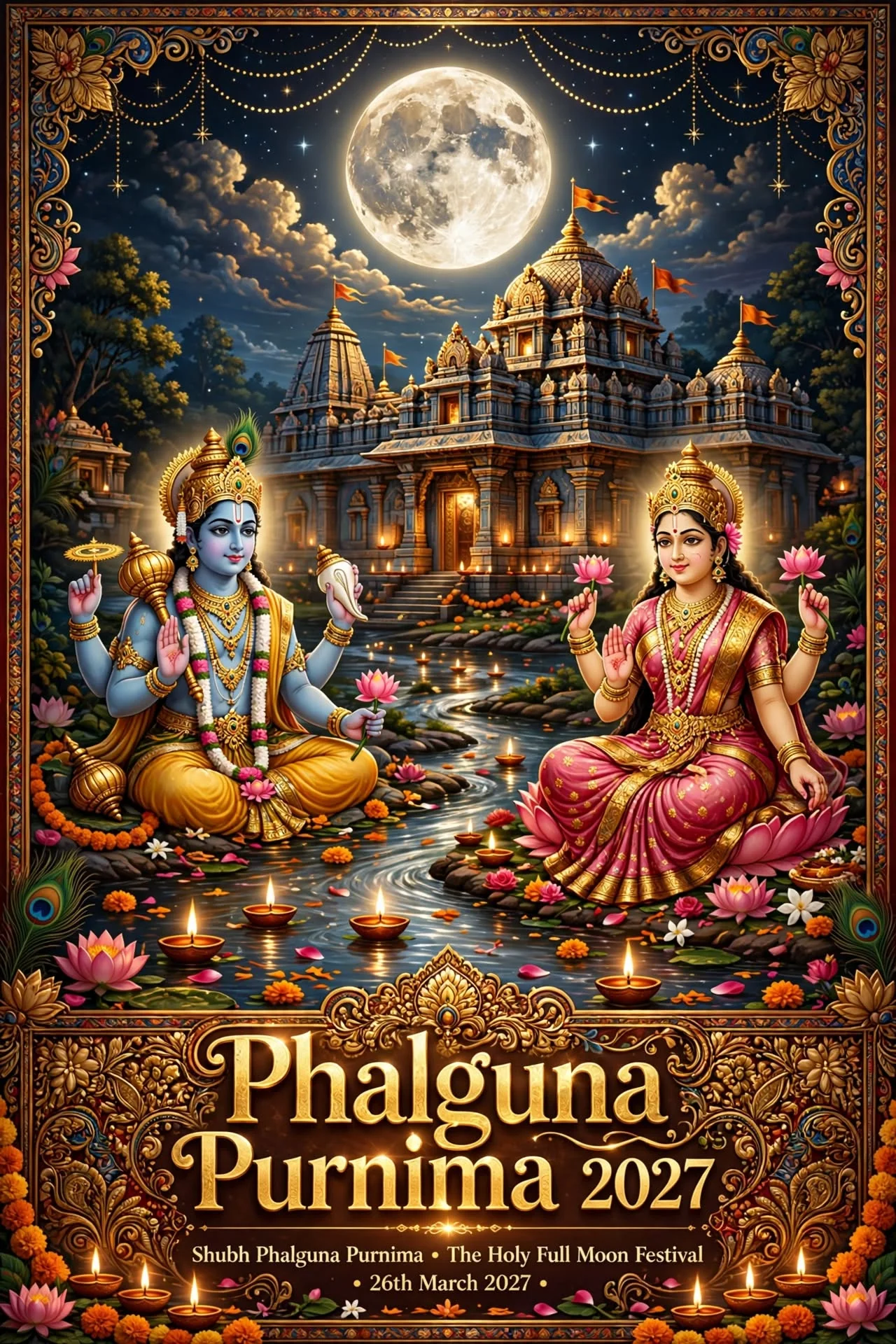
Phalguna Purnima is one of the most spiritually multifaceted, sacred, and joyously celebrated full moon days in the Hindu calendar, marking the magnificent culmination of the holy lunar month of Phalguna. Occurring on the final day of the Phalguna month in the Purnimanta calendar, this momentous full moon represents the harmonious convergence of several monumental religious observances: the sacred bonfire night of Holika Dahan, the divine advent day of Sri Chaitanya Mahaprabhu (Gaura Purnima), the glorious appearance day of Goddess Lakshmi (Lakshmi Jayanti), and the vibrant swing festivals (Dolotsava) celebrated across India.
View Festival Guide
Monday, Mar 22, 2027
Vasanta Purnima
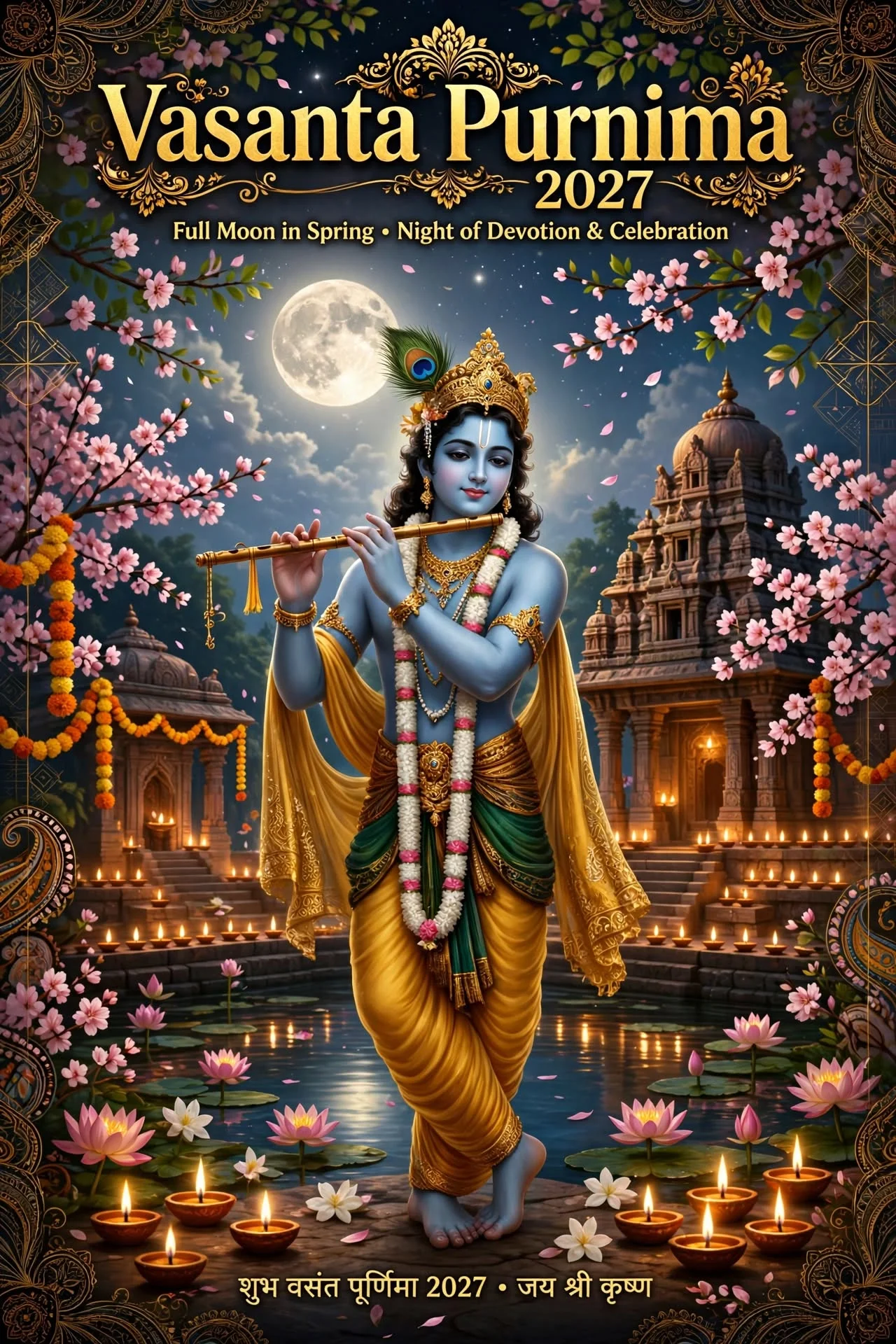
Vasanta Purnima (also known as Vasantotsava Purnima or the Spring Full Moon) is an extraordinarily radiant, culturally celebrated, and spiritually elevating Hindu festival observed on the full moon day (Purnima tithi) of the lunar month of Phalguna according to the traditional Hindu calendar. Coinciding with the peak of the spring season (Rituraj Vasant), this glorious night represents the full flowering of natural beauty, romantic affection, aesthetic grace, and sublime divine devotion (Prema Bhakti) across Sanatana Dharma. Celebrated as the eve of the vibrant festival of colors and the sacred night of Holika Dahan, Vasanta Purnima serves as the crowning jewel of the spring festival cycle.
View Festival Guide

Tuesday, Mar 23, 2027
Ishti
Ishti is a foundational Vedic ritual observance appearing prominently in Hindu Panchangs on the Pratipada tithi (the first lunar day) following either Amavasya (new moon) or Purnima (full moon), marking the prescribed performance day for the fortnightly Vedic Darsha-Purnamasa sacrifices.
View Festival Guide
Wednesday, Mar 24, 2027
Bhai Dooj (Yama Dwitiya / Bhai Tika)
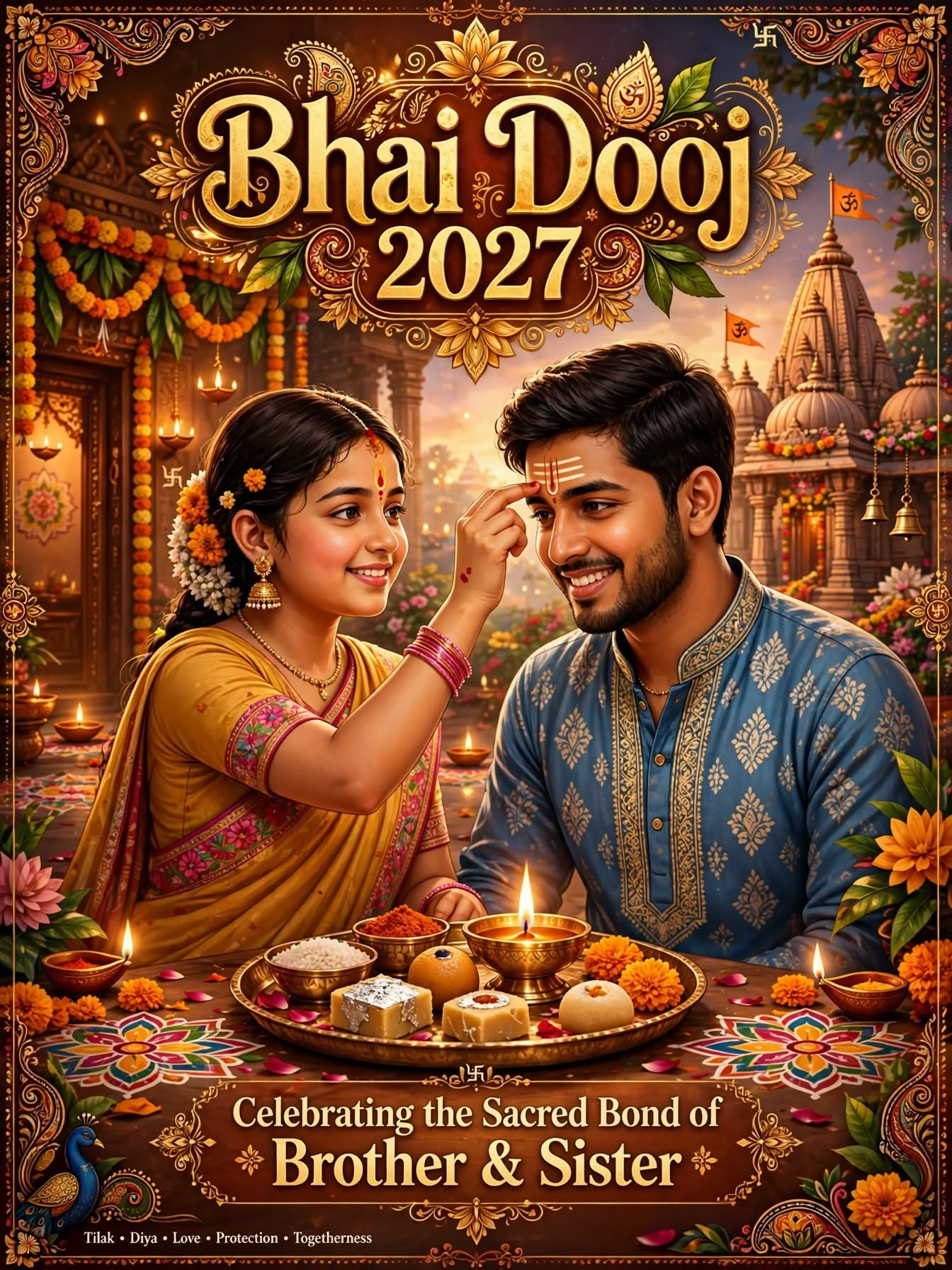
Bhai Dooj (also lovingly known as Holi Bhai Dooj or Chaitra Bhai Dooj) is an intensely affectionate, culturally sacred, and spiritually protective Hindu festival observed on the second day (Dwitiya tithi) of the Krishna Paksha in the month of Chaitra according to the traditional Hindu calendar. Occurring on the second day immediately following the vibrant festival of colors (Holi), this sacred observance mirrors the post-Diwali Bhai Dooj, serving to reaffirm, sanctify, and celebrate the pure, unconditional bond of love and protection between brothers and sisters across Sanatana Dharma.
View Festival Guide
Wednesday, Mar 24, 2027
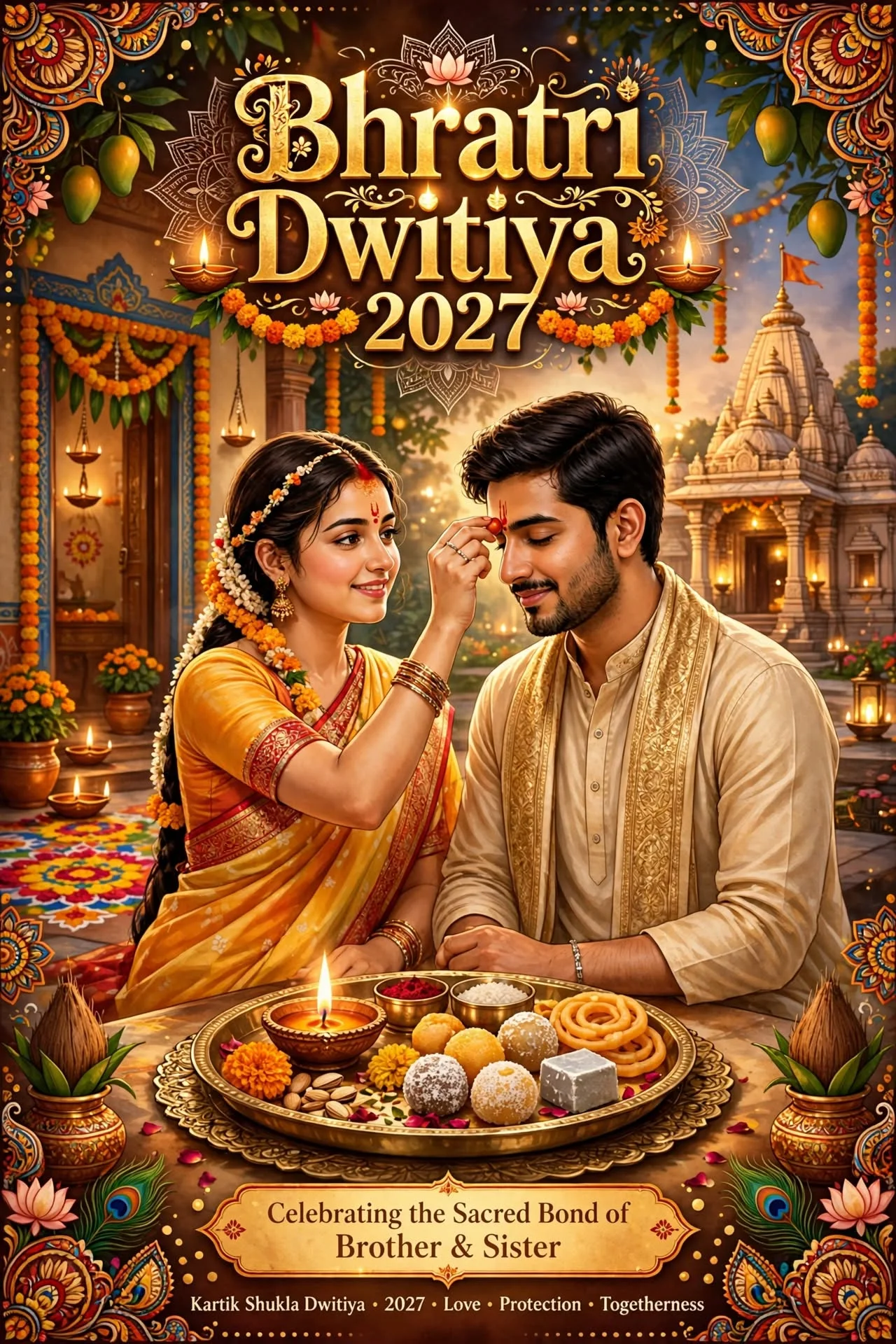
Bhratri Dwitiya
Bhratri Dwitiya (भ्रातृ द्वितीया), linguistically derived from the Sanskrit terms 'Bhratri' (brother) and 'Dwitiya' (the second lunar tithi), is a time-honored, deeply venerable, and emotionally uplifting Hindu festival that sanctifies and celebrates the sacred bond between brothers and sisters. Observed on the second day (Dwitiya tithi) of the lunar fortnight—most prominently celebrated following Holi in the month of Chaitra as well as following Diwali in the month of Kartika—Bhratri Dwitiya represents the classical, scriptural manifestation of the pan-Indian sibling festival known in regional vernaculars as Bhai Dooj, Bhai Phota (in Bengal), and Bhav Bij (in Maharashtra).
View Festival Guide
Thursday, Mar 25, 2027
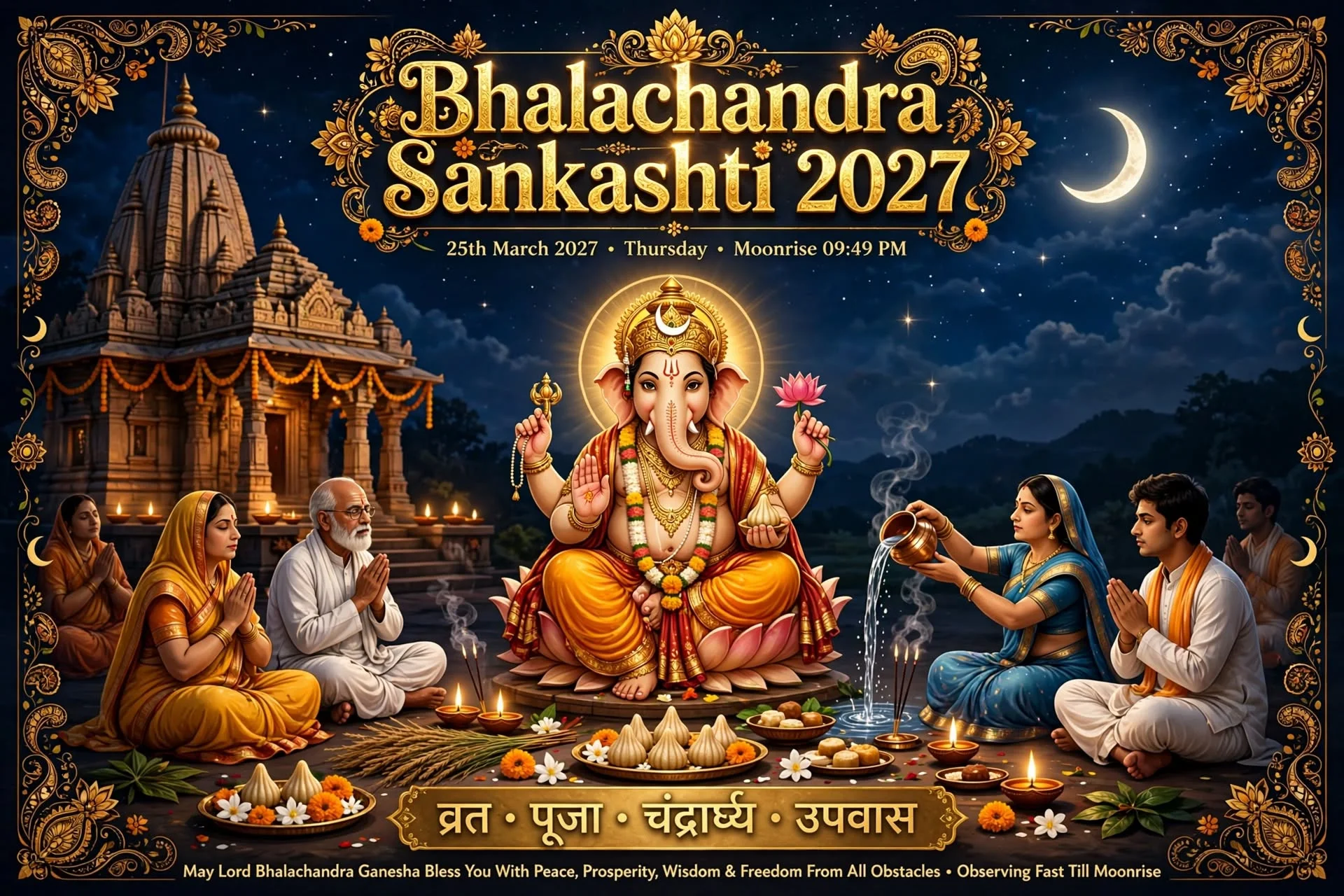
Bhalachandra Sankashti
Bhalachandra Sankashti Chaturthi is an intensely sacred, spiritually liberating, and astrologically protective monthly Hindu fasting observance dedicated to Lord Ganesha, celebrated on the fourth day (Chaturthi tithi) of the Krishna Paksha (waning moon fortnight) during the lunar month of Chaitra according to the North Indian Purnimanta calendar (corresponding to Phalguna Krishna Chaturthi in the Amanta calendar followed in Maharashtra, Gujarat, Karnataka, Andhra Pradesh, and Tamil Nadu). The presiding divine manifestation venerated on this holy day is Bhalachandra Maha Ganapati—the 7th of the celebrated thirty-two classical iconographic forms of Lord Ganesha described in the sacred Mudgala Purana, and the 2nd of the legendary Ashta Vinayaka pilgrimage shrines situated at Pali in Maharashtra (Ballaleshwar / Bhalachandra).
View Festival Guide
Saturday, Mar 27, 2027
Bhalachandra Sankashti
Bhalachandra Sankashti Chaturthi is an intensely sacred, spiritually liberating, and astrologically protective monthly Hindu fasting observance dedicated to Lord Ganesha, celebrated on the fourth day (Chaturthi tithi) of the Krishna Paksha (waning moon fortnight) during the lunar month of Chaitra according to the North Indian Purnimanta calendar (corresponding to Phalguna Krishna Chaturthi in the Amanta calendar followed in Maharashtra, Gujarat, Karnataka, Andhra Pradesh, and Tamil Nadu). The presiding divine manifestation venerated on this holy day is Bhalachandra Maha Ganapati—the 7th of the celebrated thirty-two classical iconographic forms of Lord Ganesha described in the sacred Mudgala Purana, and the 2nd of the legendary Ashta Vinayaka pilgrimage shrines situated at Pali in Maharashtra (Ballaleshwar / Bhalachandra).
View Festival Guide