




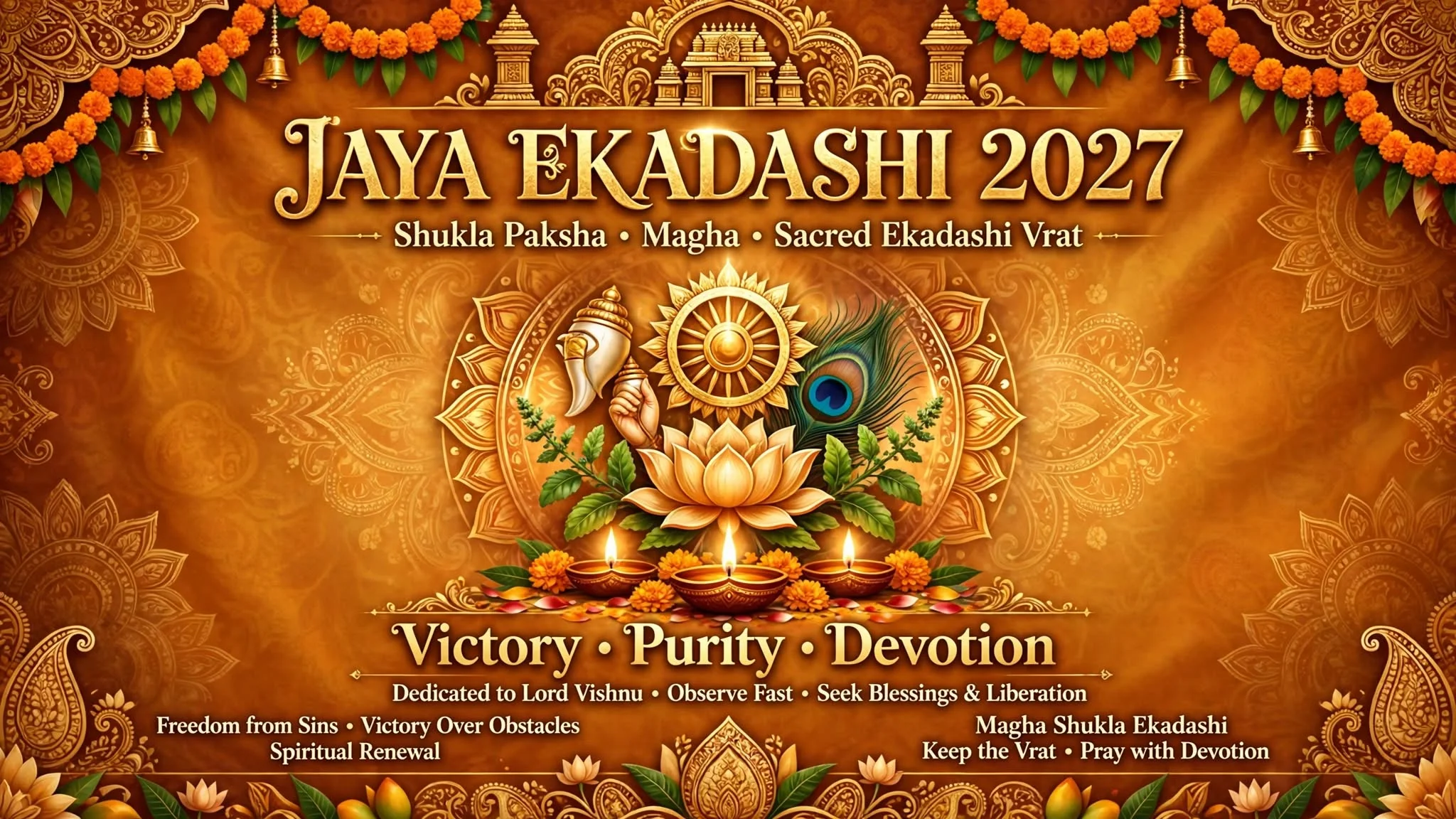
Jaya Ekadashi, also revered as Bhaimi Ekadashi, is a celebrated Vaishnava fasting festival observed on the Ekadashi tithi (eleventh lunar day) of Shukla Paksha in the month of Magha (January–February).
Jaya Ekadashi 2027: Date, Puja Timings, Rituals & Stories
Jaya Ekadashi Timings & Panchang
Important festival dates and auspicious timings
Usha Arghya (Sunrise)
06:58 am
Sandhya Arghya (Sunset)
06:12 pm
Start Date
Wednesday, 17 Feb 2027
Puja Muhurat
08:19 pm – 05:32 pm
Jaya Ekadashi
Dedicated to Lord Vishnu (worshiped particularly in His compassionate form as Lord Madhava or Sri Krishna), Jaya Ekadashi is celebrated as one of the most spiritually liberating days in the Hindu liturgical calendar, possessing the divine power to eradicate heinous sins and prevent rebirth in demonic or ghostly realms (Pishacha Yoni).
The word 'Jaya' signifies 'victory'—specifically the victory of spiritual consciousness over animalistic urges, sensual enslavement, and base karmic lower realms.
Devotees observe a strict day-long fast (ranging from complete waterless fasting to light fruit diets), maintain an all-night devotional vigil (Ratri Jagaran) filled with devotional singing, perform early morning Panchamrit abhishekam of the Shaligram, and conclude with Parana on Dwadashi.
Why is Jaya Ekadashi Celebrated?
Jaya Ekadashi is celebrated to seek liberation from the deepest karmic debilities, especially the dread of degenerating into ghostly, demonic, or tormented disembodied existences (Preta or Pishacha Yoni) after death.
According to the Bhavishya Purana and the Padma Purana, a single sincere observance of Jaya Ekadashi confers the combined spiritual merit of performing thousands of sacrificial horse ceremonies (Ashvamedha Yajnas) and giving vast donations of gold and cows.
- To earn the divine grace and eternal refuge of Lord Vishnu (Madhava).
- To obtain absolute liberation from ghostly curses, demonic rebirths, and hellish torments.
- To practice supreme sensory mastery, detoxifying the body and mental faculties through fasting.
- To observe the holy nocturnal vigil (Ratri Jagaran) chanting the thousand names of Vishnu.
- To accumulate inexhaustible spiritual merit and ensure ancestral liberation across generations.
Scriptural Roots and Sacred Legends of Jaya Ekadashi
Dialogue Between Lord Krishna and King Yudhishthira
The legend of Jaya Ekadashi is chronicled in the Bhavishya Purana and the Padma Purana (Uttara Khanda) as a divine dialogue between Lord Sri Krishna and King Yudhishthira. Inquiring with folded hands, Yudhishthira asked: 'O Janardana, what is the name of the Ekadashi that occurs during the waxing fortnight of the month of Magha, and by what ritual process is it observed? Please narrate its glories.'
Lord Krishna replied: 'O righteous King, this Ekadashi is named Jaya Ekadashi. It purges all sins, bestows victory in all noble undertakings, and rescues even the most degraded souls from demonic suffering. Listen attentively to the ancient history of this sacred day.'
The Legend of Malyavan and Pushpavati
In the celestial city of Amaravati, King Indra was enjoying music and dance in his celestial garden, Nandanavana. Among the performers were the Gandharva singer Malyavan and the exquisitely beautiful Apsara Pushpavati. Smitten by mutual infatuation, their performance faltered; Malyavan lost his musical rhythm and Pushpavati missed her dance steps, disrupting the assembly.
Infuriated by their blatant disrespect and lack of decorum, Indra pronounced a severe curse: 'You both have acted like base, shameless creatures in this divine court. Fall immediately from heaven down to the mortal Earth, assume the hideous forms of flesh-eating Pishachas (goblins), and suffer agonizing misery together!'
Banished to the freezing heights of the Himalayas, the two former celestial beings were encased in deformed, hideous bodies. They suffered agonizing cold, biting winds, and gnawing hunger, unable to sleep or find solace, constantly weeping over their tragic fall.
The Inadvertent Vrata and Divine Deliverance
By divine providence, on the day of Magha Shukla Ekadashi, the freezing blizzard intensified so violently that Malyavan and Pushpavati could neither gather food nor hunt. Shivering uncontrollably, they huddled together beneath the roots of a sacred Peepal tree without consuming a single drop of water or morsel of food.
Philosophical, Karmic, and Devotional Foundations
The Allegory of the Pishacha (Demonic Consciousness)
In Hindu esoteric thought, the state of a 'Pishacha' (ghoul or goblin) represents human consciousness enslaved by obsessive desires, uncontrolled lust, and base animal instincts. When the higher intellect (Buddhi) is abandoned for reckless sense gratification, the soul suffers internal coldness, emptiness, and torment.
Jaya Ekadashi demonstrates that voluntary spiritual austerity (Tapas), fasting, and surrender to Lord Vishnu hold the alchemical power to shatter even the darkest psychological and karmic complexes, returning the fallen soul to its original divine state.
The Biology and Metaphysics of Ekadashi Fasting
On the eleventh day of the lunar fortnight, atmospheric pressure and gravitational pulls from the Moon cause water retention and restlessness in human physiology. Refraining from grains, pulses, and excess water calms digestive fire, purifies the bloodstream, and allows the mind to enter deep contemplative meditation.
Grains are scripturally avoided because negative cosmic influences and impurities (Papa-Purusha) are symbolically believed to reside in food grains on Ekadashi.
Cultivating Devotional Steadfastness
- Attainment of complete victory (Jaya) over internal vices: lust, anger, greed, attachment, pride, and envy.
- Eradication of ancestral suffering and delivery of departed kin from lower realms.
- Awakening of unalloyed devotional love (Shuddha Bhakti) toward Sri Krishna.
Practical Observance, Fasting Regimen, and Parana Protocol
Dashami Preparations and The Evening Pre-Fast Discipline
Observance begins on the evening of Dashami (the tenth day). Devotees take a simple, light vegetarian meal before sunset, avoiding grains, honey, and heavy spices, and maintain celibacy.
The domestic altar is thoroughly cleaned, and the practitioner resolves mentally to dedicate the entire forthcoming Ekadashi day to uninterrupted contemplation of Lord Vishnu.
Ekadashi Day Regimen and Ratri Jagaran
On the morning of Ekadashi, devotees wake during Brahma Muhurta, take a purificatory bath with Gangajal, and recite the solemn Ekadashi Sankalpa before Lord Vishnu or a Shaligram Shila.
Throughout the day, practitioners abstain from all grains, beans, onions, garlic, and non-vegetarian foods. Devotees may observe a complete waterless fast (Nirjala) or consume light fruit and milk (Phalahari). In the evening, the family conducts Ratri Jagaran—singing devotional kirtans, reciting the Bhagavad Gita or Vishnu Sahasranama, and keeping an oil lamp lit throughout the night.
Dwadashi Morning Parana and Breaking the Fast
On the morning of Dwadashi (the twelfth day), devotees take a fresh bath, perform morning prayers, and offer food and dakshina to Brahmins, spiritual seekers, or cows.
The fast is broken strictly within the prescribed 'Parana' window specified by the local Panchang (before Dwadashi tithi expires and avoiding Hari Vasara) by sipping holy Charanamrit and consuming a simple sattvic grain meal.
Jaya Ekadashi Puja Vidhi (Step by Step)
- 1
Brahma Muhurta Jagaran and Shuddhikaran (Purificatory Bath)
Wake before sunrise during Brahma Muhurta. Clean the home, take a purificatory bath using clean water infused with sacred Gangajal, and dress in clean traditional yellow or white cotton garments. Sprinkle Gangajal across the altar.
- 2
Jaya Ekadashi Vrata Sankalpa (Solemn Fasting Vow)
Sit on a clean wool or kusha asana facing East. Take water, unbroken rice (Akshata), a yellow flower, and a Tulsi leaf in your right palm. Recite the classical Ekadashi vow: 'Ekadashyam Niraharah Sthitvahamparehani, Bhokshyami Pundarikaksha Sharanam Me Bhavachyuta' (O lotus-eyed Lord Achyuta, fasting on this Ekadashi, I shall take food only on the following day; please be my eternal refuge).
- 3
Altar Preparation and Deity Installation
Place a clean wooden chauki draped with an unstitched yellow cloth. Install an idol of Lord Sri Krishna, Lord Madhava, or a sacred Shaligram Shila. Light a pure cow ghee lamp on the right side and fragrant incense sticks on the left.
- 4
Panchamrit Abhishekam (Holy Bathing of Lord Vishnu)
Gently bathe the Shaligram or deity with Panchamrit (raw cow milk, fresh curd, pure desi ghee, honey, and powdered rock sugar), followed by a continuous stream of pure water infused with Tulsi leaves and rosewater while chanting the Purusha Sukta or 'Om Namo Bhagavate Vasudevaya'.
Jaya Ekadashi Puja Samagri List
Altar and Abhisheka Essentials
Specific sacred items required for the bathing and installation of Lord Vishnu on Jaya Ekadashi.
- Consecrated Shaligram Shila, Lord Vishnu idol, or Sri Krishna deity
- Clean wooden platform (Chauki) draped in unstitched yellow cloth
- Pure holy water (Gangajal) and copper vessel (Arghya lota)
- Raw unboiled cow milk, fresh curd, pure desi ghee, honey, and jaggery (Panchamrit)
- Yellow sandalwood paste (Hari Chandan) and saffron (Kesar)
Botanicals and Sacred Adornments
Auspicious botanical offerings and vestments dear to Lord Vishnu.
- Fresh, unblemished Tulsi leaves and Tulsi Manjari (harvested on Dashami, not on Ekadashi)
- Fresh yellow marigold flowers, yellow roses, and white lotus blossoms
- Yellow unstitched cotton cloth (Pitambara) and sacred thread (Janeu)
- Pure natural sandalwood or rose attar (perfume)
Lighting, Incense, and Japa Materials
- Brass lamps (Diyas) fueled with pure desi cow ghee and cotton wicks
- Natural herbal sandalwood and guggulu incense sticks (Agarbatti / Dhoop)
- Pure edible camphor tablets (Bhimseni Karpoor)
Mantras and Prayers for Jaya Ekadashi
Jaya Ekadashi Vrat Rules and Fasting Guidelines
Strict Fasting Injunctions on Ekadashi
Fasting on Jaya Ekadashi is subject to well-established scriptural protocols spanning three days (Dashami, Ekadashi, and Dwadashi):
- Strictly avoid all food grains (rice, wheat, barley, maize, oats) and lentils/pulses on Ekadashi day.
- Devotees may observe Nirjala (waterless), Sajala (water only), or Phalahari (fresh fruits, milk, and nuts) according to physical health.
- Do not consume common sea salt; if an evening phalahari meal is taken, use rock salt (sendha namak) sparingly.
- Strictly avoid meat, fish, eggs, alcohol, tobacco, onions, garlic, and cooked foods from non-devotee kitchens.
Behavioral Conduct and Tulsi Regulations
- Do not pluck fresh Tulsi leaves on Ekadashi day; gather leaves with reverence on Dashami afternoon.
- Maintain complete celibacy (Brahmacharya) and emotional stillness, avoiding anger, gossip, lies, and disputes.
- Do not sleep during the daytime on Ekadashi, as it dissipates spiritual merit.
- Participate in the night vigil (Ratri Jagaran) chanting the holy names of Sri Krishna.
Dwadashi Parana Timing (Breaking the Fast)
The fast must be broken on Dwadashi morning strictly within the Parana time window indicated in the local Panchang. Breaking the fast after Dwadashi tithi expires or during the forbidden 'Hari Vasara' (the first quarter of Dwadashi) nullifies the merit of the fast. Sip Charanamrit, feed a cow or donate food to a Brahmin, and break the fast with a simple sattvic grain meal.
Dos and Don'ts of Jaya Ekadashi
Good Practices (Do's)
- Wake early during Brahma Muhurta, bathe, and make a sincere mental Sankalpa to observe the Ekadashi fast.
- Chant the holy names of Lord Vishnu ('Om Namo Bhagavate Vasudevaya') using a Tulsi rosary.
- Offer fresh Tulsi leaves (harvested on Dashami) and yellow flowers at the lotus feet of Lord Krishna.
- Keep an oil lamp lit throughout the night and observe the devotional night vigil (Ratri Jagaran).
- Break the fast (Parana) strictly within the prescribed auspicious window on Dwadashi morning.
Jaya Ekadashi Across Regions
| Region | Local Name |
|---|---|
| Vrindavan and Mathura (Braj Region) | Jaya Ekadashi Vrata & Parikrama |
| Maharashtra and Western India (Pandharpur) | Bhaimi Ekadashi Varkari Yatra |
| South India (Tamil Nadu, Karnataka, Andhra Pradesh) | Jaya Ekadasi Vratam |
| North India (Uttar Pradesh, Bihar, Rajasthan) | Jaya Gyaras / Ekadashi |
Jaya Ekadashi FAQs
What is Jaya Ekadashi, and when is it observed?
Jaya Ekadashi is a sacred Vaishnava fasting observance occurring on the Shukla Paksha Ekadashi (eleventh day of the waxing moon) in the Hindu month of Magha (January–February), dedicated to Lord Vishnu.
What is the primary spiritual benefit of observing Jaya Ekadashi?
Observing Jaya Ekadashi cleanses the soul of past sins, prevents rebirth into demonic, ghostly, or suffering states of existence (Pishacha Yoni), and grants victory over worldly and spiritual impediments.
Why are grains, especially rice, prohibited on Ekadashi?
Scriptures describe that negative cosmic impurities reside in food grains on Ekadashi. Physiologically, abstaining from grains prevents water retention, balances the digestive fire, and clears the mind for meditation.
Upcoming Festivals
View All
Thursday, Feb 18, 2027
Guru Pradosh Vrat
Guru Pradosh Vrat, also known as Guruvara Pradosham or Brihaspati Pradosham, is a sacred bimonthly Hindu fasting observance occurring when the Trayodashi tithi (thirteenth lunar day) coincides with a Thursday (Guruvara) during the twilight Pradosha Kaal period.
View Festival Guide

Saturday, Feb 20, 2027
Magha Purnima
Magha Purnima, widely celebrated as Maghi Purnima or Maha Maghi, is the culminating and most spiritually radiant full moon festival in the Hindu liturgical calendar, falling in the holy month of Magha (January–February).
View Festival Guide

Sunday, Feb 21, 2027
Ishti
Ishti is a foundational Vedic ritual observance appearing prominently in Hindu Panchangs on the Pratipada tithi (the first lunar day) following either Amavasya (new moon) or Purnima (full moon), marking the prescribed performance day for the fortnightly Vedic Darsha-Purnamasa sacrifices.
View Festival Guide
Sunday, Feb 21, 2027
Chandra Grahan
Chandra Grahan (Lunar Eclipse) is a sacred cosmic and spiritual juncture (Parva Kaal) in Sanatana Dharma occurring exclusively on Purnima (the full moon day) when the Earth moves directly between the Sun and the Moon, casting its conical shadow across the lunar orb. In Vedic philosophy and Jyotisha, the Moon presides over the mind, subconscious emotions, and water elements (Chandrama Manaso Jatah - Rigveda Purusha Sukta). The temporary obscuration of the Moon by the shadowy nodes Rahu or Ketu induces profound subtle energetic shifts across terrestrial nature and human consciousness.
View Festival Guide
Wednesday, Feb 24, 2027
Dwijapriya Sankashti
Dwijapriya Sankashti Chaturthi is an auspicious monthly Hindu fasting observance dedicated to Lord Ganesha, celebrated on the fourth day (Chaturthi tithi) of the Krishna Paksha (waning moon phase) during the month of Phalguna according to the North Indian Purnimanta calendar (corresponding to Magha Krishna Paksha in the Amanta calendar followed in Maharashtra, Gujarat, Karnataka, Andhra Pradesh, and Tamil Nadu).
View Festival Guide
Thursday, Mar 4, 2027
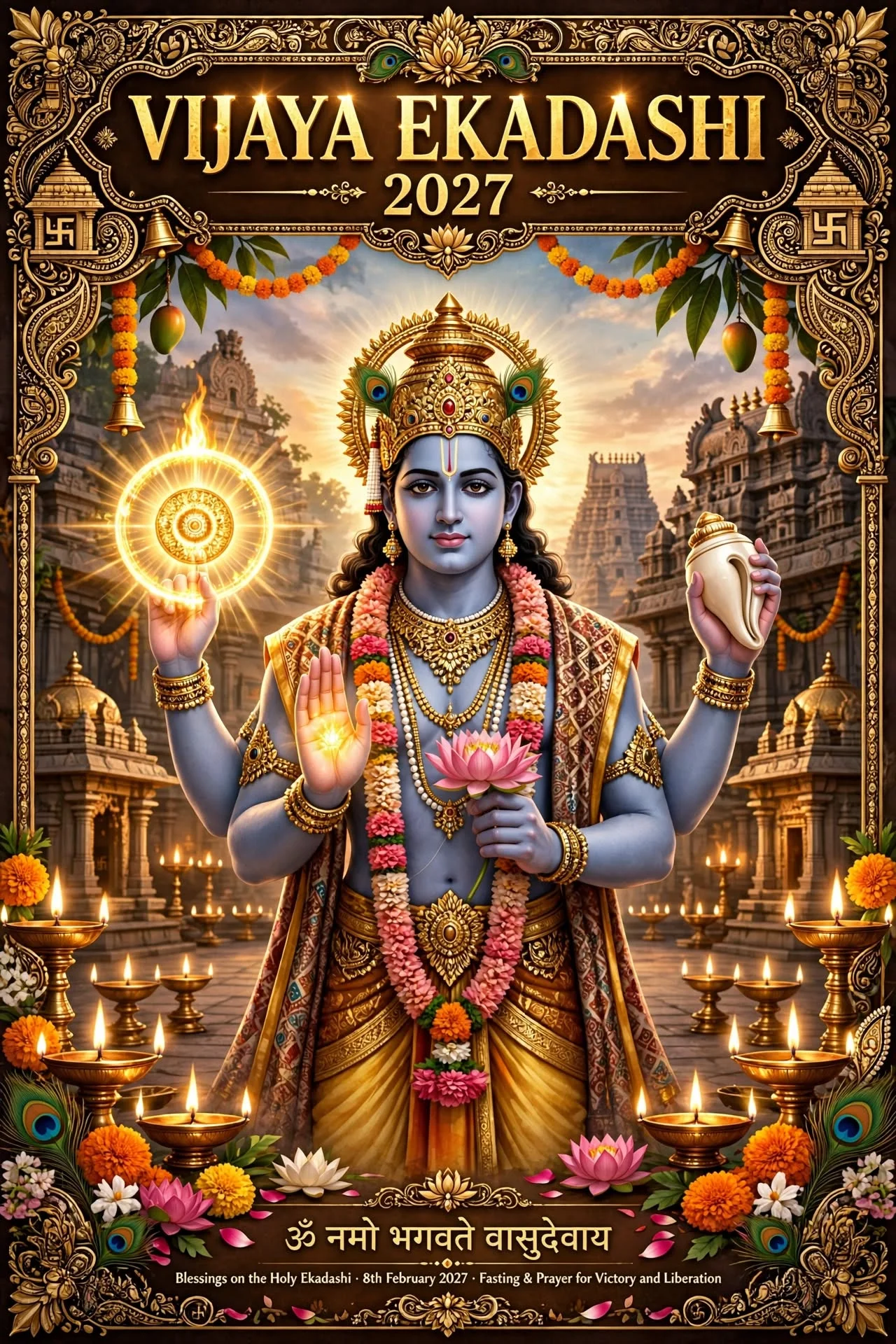
Vijaya Ekadashi
Vijaya Ekadashi is an eminently sacred Hindu fasting observance celebrated on the eleventh day (Ekadashi tithi) of the Krishna Paksha (waning moon fortnight) during the lunar month of Phalguna according to the North Indian Purnimanta calendar (corresponding to Magha Krishna Paksha in the Amanta calendar followed in southern and western India). The word 'Vijaya' signifies unconquerable triumph, victory, and overcoming formidable adversaries. Dedicated to Lord Vishnu in His venerable manifestation as Sri Narayana, this holy Ekadashi is revered across Sanatana Dharma as the supreme vow for eradicating insurmountable hurdles, dissolving profound karmic obstacles, and ensuring definitive triumph in righteous endeavors.
View Festival Guide
Friday, Mar 5, 2027
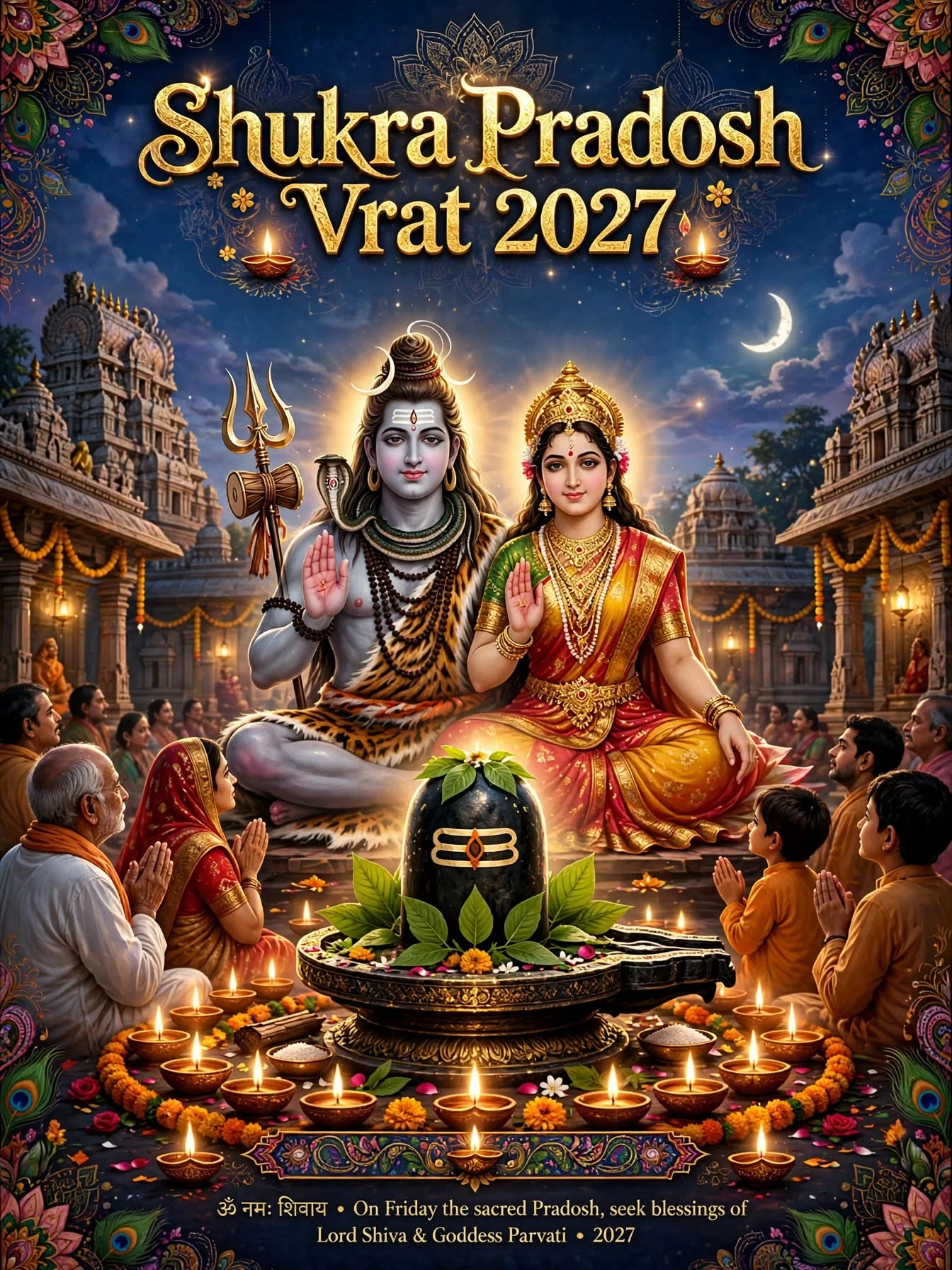
Shukra Pradosh Vrat
Shukra Pradosh Vrat is an exceedingly auspicious and spiritually elevating bi-monthly Hindu fasting observance dedicated to Lord Shiva and Goddess Parvati. Occurring on the thirteenth day (Trayodashi tithi) of either the waxing (Shukla) or waning (Krishna) lunar fortnight when it coincides with a Friday (Shukravara), this sacred vow is lauded in Vedic and Puranic literature for bestowing conjugal harmony, material abundance, refined artistic faculties, and liberation from deep-seated planetary afflictions.
View Festival Guide
Saturday, Mar 6, 2027
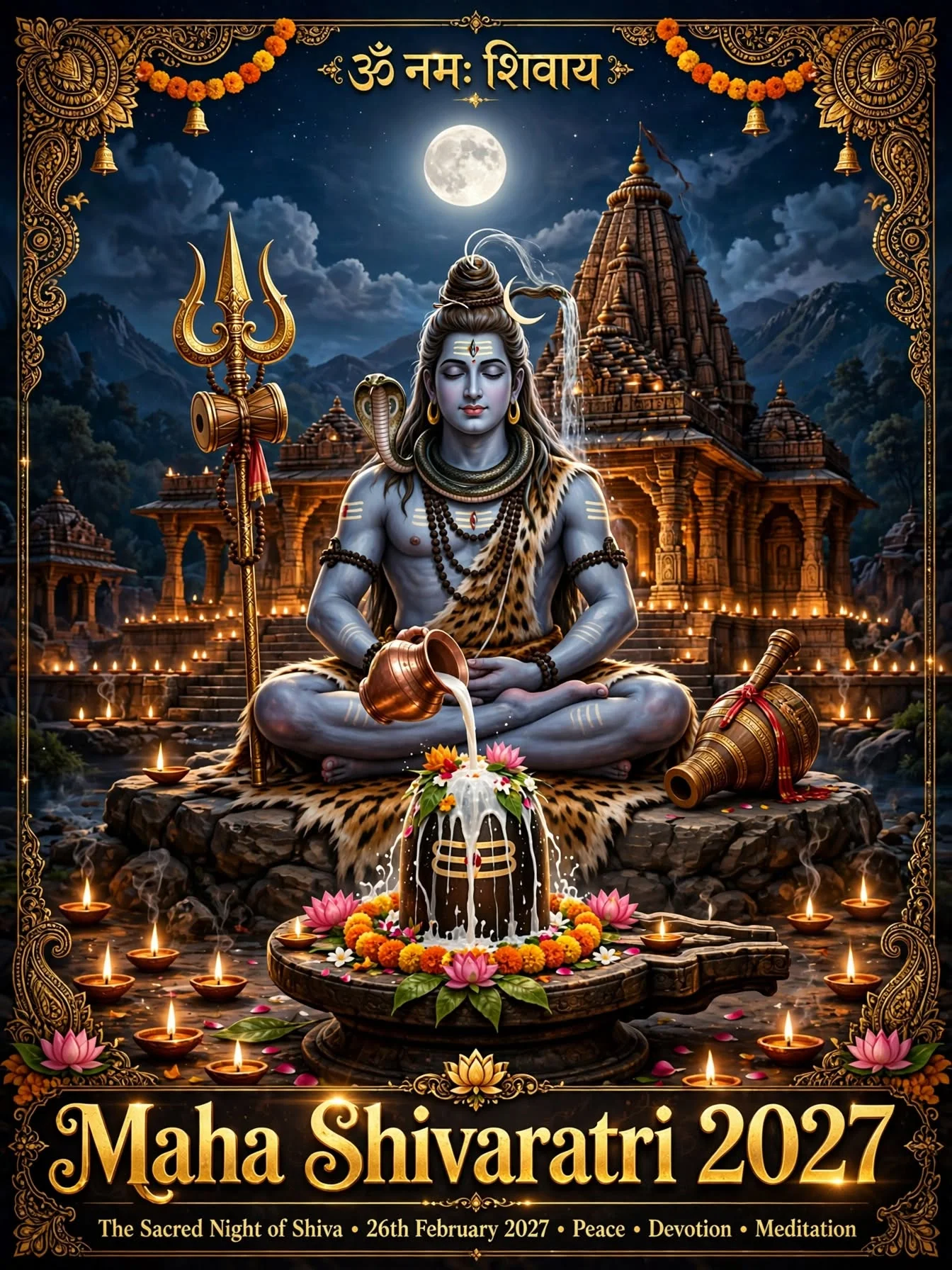
Maha Shivaratri
Maha Shivaratri, literally translated as 'The Great Night of Shiva', is the paramount and most spiritually profound festival dedicated to Lord Shiva in Sanatana Dharma. Celebrated on the fourteenth day (Chaturdashi tithi) of the Krishna Paksha (waning moon fortnight) during the lunar month of Phalguna according to the North Indian Purnimanta calendar (corresponding to Magha Krishna Chaturdashi in the South Indian and Western Indian Amanta calendar), this sacred night represents the pinnacle of Shaivite spiritual devotion, cosmic alignment, and yogic transformation.
View Festival Guide