




Kamada Ekadashi holds a uniquely exalted position in the Hindu spiritual calendar as the very first Ekadashi of the new Hindu lunar year. Falling on the eleventh day of the waxing moon (Shukla Paksha Ekadashi) in the sacred month of Chaitra, this divine observance is celebrated as the supreme fulfiller of all righteous desires. The Sanskrit word 'Kamada' literally signifies 'the granter of cherished aspirations' (Kama meaning desire, and Da meaning giver), possessing the extraordinary spiritual power to dissolve the deepest karmic stains and liberate souls from severe curses.
Kamada Ekadashi 2027: Date, Puja Timings, Rituals & Stories
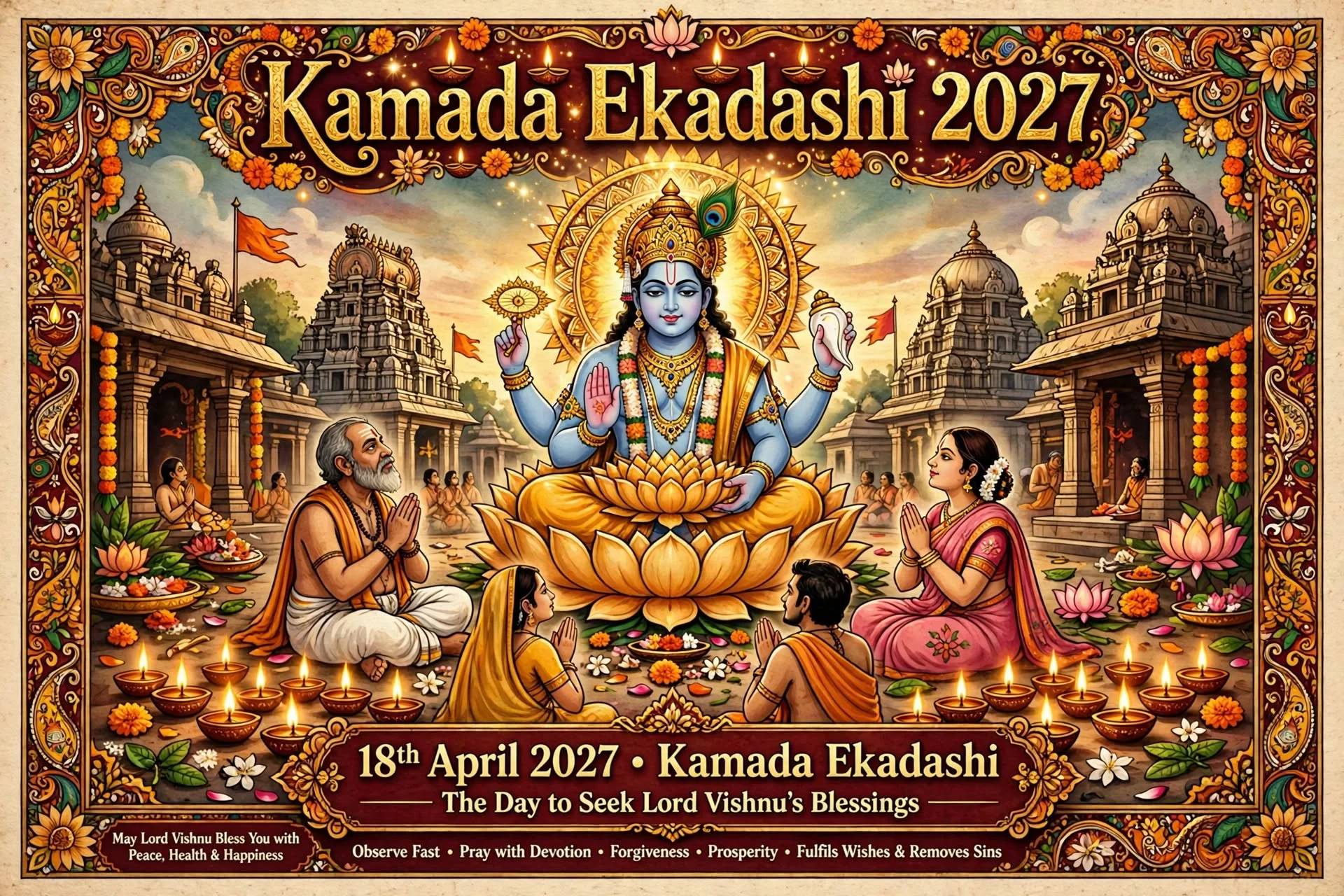
Kamada Ekadashi Timings & Panchang
Important festival dates and auspicious timings
Usha Arghya (Sunrise)
05:54 am
Sandhya Arghya (Sunset)
06:48 pm
Start Date
Saturday, 17 Apr 2027
Puja Muhurat
11:22 am – 09:28 am
Kamada Ekadashi
The glorious history and spiritual potency of Kamada Ekadashi are narrated in the sacred Varaha Purana and the Mahabharata, where Lord Krishna explains its profound significance to King Yudhishthira, citing an ancient dialogue between Sage Vasishtha and King Dilipa. The narrative recounts the miraculous redemption of the celestial singer Lalit, a Gandharva transformed into a monstrous, cannibalistic demon (Rakshasa) due to a royal curse. His devoted wife, Lalita, observed the Kamada Ekadashi fast under the guidance of Sage Shringi and transferred its spiritual merit to her husband, instantly restoring him to his radiant celestial form.
Devotees observe Kamada Ekadashi with rigorous fasting, dedicated meditation on the four-armed cosmic form of Lord Vishnu (Vasudeva), and nocturnal vigils (Ratri Jagaran). Chanting the sacred Vishnu Sahasranama, offering fragrant yellow marigolds, holy Tulsi leaves, and seasonal fruits, worshippers pray for liberation from accumulated sins, inner peace, and divine ascension to the supreme abode of Vaikuntha.
Why is Kamada Ekadashi Celebrated?
Kamada Ekadashi is celebrated as the inaugural Ekadashi of the new lunar year, offering spiritual seekers an immaculate opportunity to set a pure, sin-free foundation for the incoming year. By surrendering all worldly attachments and observing disciplined fasting, devotees invoke Lord Vishnu's grace to burn away past karmic debts and fulfill their highest spiritual and material goals.
- Fulfillment of Righteous Desires: Divinely empowered to bestow cherished blessings of health, virtuous family, and spiritual wisdom.
- Liberation from Curses and Negative Karma: Scriptural chronicles illustrate how even grave demonic curses were completely eradicated by its merit.
- Inaugural Year Cleansing: Serving as the first Ekadashi of the Chaitra New Year, it cleanses the soul's energetic slate for the year ahead.
- Attainment of Moksha: Dedicated practice guarantees freedom from the cyclic ocean of rebirth and grants eternal residence in Vaikuntha Loka.
Puranic Origin & The Chronicle of Lalit and Lalita
The Gandharva Lalit and King Pundarika's Curse
In the ancient celestial city of Ratnapura, ruled by the opulent King Pundarika, lived a talented Gandharva singer named Lalit and his supremely beautiful wife Lalita. They were bound by deep conjugal devotion. One day, while performing in the royal court, Lalit's mind became overwhelmed with thoughts of his beloved wife, causing him to falter in the musical rhythm (Taala) and melody.
Noticing the distraction, an envious courtier pointed it out to King Pundarika. Infuriated by the perceived disrespect, the monarch cursed Lalit: 'O foolish singer, overcome by passion, you have broken the celestial rhythm! Become immediately a hideous, cannibalistic Rakshasa!' Instantly, Lalit transformed into a terrifying demon with blazing eyes and a gigantic deformed body.
Redemption Through the Merit of Kamada Ekadashi
Devastated by her husband's tragic plight, Lalita followed the demon through dense forests, weeping in sorrow. Upon reaching the hermitage of the enlightened Sage Shringi atop the Vindhyachal mountains, she fell at his feet, pleading for a spiritual remedy to save her husband.
Moved by her unwavering fidelity, Sage Shringi instructed her to observe the upcoming fast of Kamada Ekadashi in the month of Chaitra. Lalita observed the vow with flawless austerity, and on Dwadashi morning, in front of Lord Vasudeva, declared: 'May whatever merit I have earned from this Kamada Ekadashi fast be transferred to my husband!' Miraculously, Lalit was instantly liberated from the monstrous form, regained his celestial beauty, and the reunited couple ascended to the heavenly realms aboard a celestial chariot.
Source: Varaha Purana & Bhavishya Uttara Purana
The Inner Meaning of Desire and Surrender
Transforming Selfish Desires into Divine Will
In spiritual psychology, human suffering arises when sensory desires (Kama) become compulsive, blinding the intellect and leading to spiritual degradation (symbolized by Lalit becoming a demon). Kamada Ekadashi demonstrates that uncontrolled desire brings degeneration, whereas desire offered to God becomes a vehicle of salvation.
Fasting on this sacred day trains the mind to conquer sensory hunger and direct its desires toward selfless love, spiritual knowledge, and cosmic service, aligning the individual will with the divine will of Lord Narayana.
The Power of Vicarious Merit (Punya Sankramana)
The legend of Lalita transferring her spiritual merit to Lalit illuminates the profound Vedic concept of Punya Sankramana—the spiritual law that selfless love and dedication can transfer positive karma to heal and liberate loved ones from suffering.
Observing Kamada Ekadashi not only purifies the devotee but also radiates healing spiritual vibrations that benefit ancestors, family members, and the broader community.
Ritual Protocol & Fasting Observance for Kamada Ekadashi
Dashami Preparation and Altar Consecration
Devotees prepare for the fast on Dashami evening by consuming a single light sattvic vegetarian meal, observing complete celibacy, and maintaining quiet mental composure. Grains, lentils, onion, and garlic are completely abstained from.
On Ekadashi morning, after a purifying bath during Brahma Muhurta, the devotee establishes an altar dedicated to Lord Vasudeva, dressed in yellow silk and decorated with fresh fragrant flowers, incense, and lamps. A solemn vow (Sankalpa) of fasting is undertaken.
Nocturnal Vigil (Jagaran) and Dwadashi Parana
Devotees spend the day and night singing devotional bhajans, chanting the Vishnu Sahasranama, and reading the sacred Kamada Ekadashi Vrat Katha, observing an unbroken nocturnal vigil. Sleeping during the daytime or night of Ekadashi is avoided.
On Dwadashi morning, after sunrise and before the expiry of the Dwadashi tithi (avoiding Hari Vasara), devotees worship Lord Vishnu, feed Brahmins and the needy, and conclude the fast by taking pure sattvic food.
Kamada Ekadashi Puja Vidhi (Step by Step)
- 1
Brahma Muhurta Snana
Rise before dawn during Brahma Muhurta and bathe with clean water infused with Gangajal and holy Tulsi leaves while reciting Vishnu mantras.
- 2
Kamada Ekadashi Sankalpa
Wear clean yellow traditional clothes, face east before the altar, hold water, Akshata, and yellow flowers in the right palm, and state the solemn vow of fasting.
- 3
Altar & Peetha Sthapana
Cover a clean wooden chauki with fresh yellow silk cloth, draw an ashtadal lotus with rice flour, and place the idol or picture of Lord Vishnu.
- 4
Kalash Sthapana
Establish a sacred copper Kalash filled with holy water, betel nut, silver coin, and mango leaves, placing an unbroken coconut wrapped in red thread on top.
- 5
Dhyan & Avahana
Invoke the divine four-armed presence of Lord Vasudeva holding the conch, discus, mace, and lotus, offering sincere Vedic prayers of welcome.
Kamada Ekadashi Puja Samagri List
Altar Consecration & Deity Materials
Sacred articles required to establish the sanctum and prepare the deity altar.
- Idol or sacred picture of Lord Vishnu and Goddess Lakshmi
- Yellow altar cloth (Pitamvara) and clean wooden chauki
- Copper or brass Kalash, whole coconut, and fresh mango leaves
- Gangajal, raw cow milk, curd, honey, cow ghee, and sugar for Panchamrit
Botanical Offerings & Fragrances
Fragrances, sacred threads, and floral offerings beloved by Lord Vasudeva.
- Fragrant yellow sandalwood paste (Chandan), Kumkum, and unbroken rice (Akshata)
- Fresh yellow marigold garlands, lotus flowers, and sacred Tulsi leaves
- Yajnopavita (sacred thread) and yellow silk cloth
- Pure cow-ghee brass lamps, cotton wicks, aromatic camphor, and dhoop sticks
Naivedya & Charitable Offerings
Sattvic food offerings and daan items to be distributed to Brahmins and seekers.
- Pure milk kheer, mawa sweets, fresh seasonal fruits, and soaked dry fruits
- Paan (betel leaves) with betel nuts, cloves, and cardamom
- Fasting grains for phalahari meals: buckwheat flour (Kuttu) and water chestnut (Singhara)
Mantras and Prayers for Kamada Ekadashi
Kamada Ekadashi Vrat Rules and Fasting Guidelines
Observance Guidelines for Kamada Ekadashi
Specific spiritual rules and dietary disciplines to observe during the fast.
- Strict Dietary Restraint: Abstain from all grains, wheat, rice, pulses, beans, onion, and garlic. Complete Nirjala or Phalahari fast is recommended.
- Nocturnal Vigil: Stay awake during the night of Ekadashi (Jagaran), singing hymns and reading scriptures rather than sleeping.
- Avoid Tulsi Plucking: Do not pluck Tulsi leaves on Ekadashi tithi; gather leaves on Dashami in advance for the worship.
- Dwadashi Parana: Break the fast during the prescribed Parana Muhurta on Dwadashi morning after sunrise, before Dwadashi tithi ends.
Dos and Don'ts of Kamada Ekadashi
Good Practices (Do's)
- Wake early during Brahma Muhurta, bathe, and wear clean yellow traditional clothes.
- Chant Om Namo Bhagavate Vasudevaya and the Vishnu Sahasranama.
- Offer yellow flowers, chandan, and sacred Tulsi leaves to Lord Vishnu.
- Conclude the fast strictly within the prescribed Dwadashi Parana window.
Things to Avoid (Don'ts)
Kamada Ekadashi Across Regions
| Region | Local Name |
|---|---|
| Northern India | Kamada Gyaras |
| Western India (Gujarat & Rajasthan) | Kamada Agiyaras |
| Southern India | Kamada Ekadashi |
Kamada Ekadashi FAQs
What is Kamada Ekadashi?
Kamada Ekadashi is the first Ekadashi of the Hindu lunar year, celebrated on Chaitra Shukla Ekadashi, dedicated to Lord Vishnu for fulfilling all noble desires.
What does the word 'Kamada' mean?
'Kamada' is a Sanskrit word meaning 'the fulfiller of desires', possessing the power to grant cherish aspirations and dissolve accumulated sins.
Who was Lalit in the Kamada Ekadashi katha?
Lalit was a celestial Gandharva singer who was cursed by King Pundarika to become a monstrous demon, and was restored by the merit of this fast.
Upcoming Festivals
View All
Sunday, Apr 18, 2027
Ravi Pradosh Vrat
Ravi Pradosh Vrat is an exceptionally sacred fasting day observed on the thirteenth lunar day (Trayodashi) that coincides with a Sunday (Ravivara). Dedicated to Lord Shiva, the cosmic dissolver of sorrow, this bimonthly vow unites the healing radiance of Surya Bhagavan with the boundless compassion of Mahadeva. Observed during the twilight Sandhya period, it is believed to banish physical ailments, clear karmic obstructions, and bestow vitality and longevity.
View Festival Guide

Tuesday, Apr 20, 2027
Anvadhan
Anvadhan (अन्वाधान) is an ancient, highly revered Vedic ritual and spiritual observance in Sanatana Dharma performed on the day immediately preceding the New Moon (Amavasya) or Full Moon (Purnima). Rooted in the pristine traditions of the Shrauta and Grihya Sutras, Anvadhan literally translates to 'the solemn placing and replenishment of sacred fuel wood into the consecrated Vedic fires'. In traditional Vedic ritualism, householders (Grihasthas) and priests who maintain the sacred Agnihotra fires perform Anvadhan to prepare the sacrificial altars for the grand Darsha Yajna (New Moon sacrifice) or Paurnamasa Yajna (Full Moon sacrifice) scheduled for the following day.
View Festival Guide
Tuesday, Apr 20, 2027
Hanuman Janmotsava
Hanuman Janmotsava marks the glorious birth celebration of Sri Hanuman, the immortal Rudra avatar of Lord Shiva and the supreme paragon of unalloyed devotion (Dasa Bhakti) to Lord Sri Rama. Celebrated with profound reverence on the full moon day (Purnima) of the sacred month of Chaitra, this divine occasion honors the eternal presence of Bajrangbali on earth. Traditional Vedic scholars and Vaishnava acharyas specifically designate this holy day as 'Janmotsava' (the celebration of birth) rather than 'Jayanti', because Sri Hanuman is one of the seven sacred Chiranjivis (deathless immortals) who eternally resides on earth wherever the holy name of Rama is chanted.
View Festival Guide
Tuesday, Apr 20, 2027
Chaitra Purnima
Chaitra Purnima, celebrated on the full moon day of the sacred month of Chaitra, holds an elevated position in the Hindu calendar as the inaugural full moon of the new lunar year. Characterized by the radiant illumination of the moon in the constellation of Chitra, this sacred tithi marks the arrival of the spring equinox's zenith and serves as a powerful spiritual vortex for holy river baths, Satyanarayana worship, ancestral prayers, and widespread charitable giving.
View Festival Guide
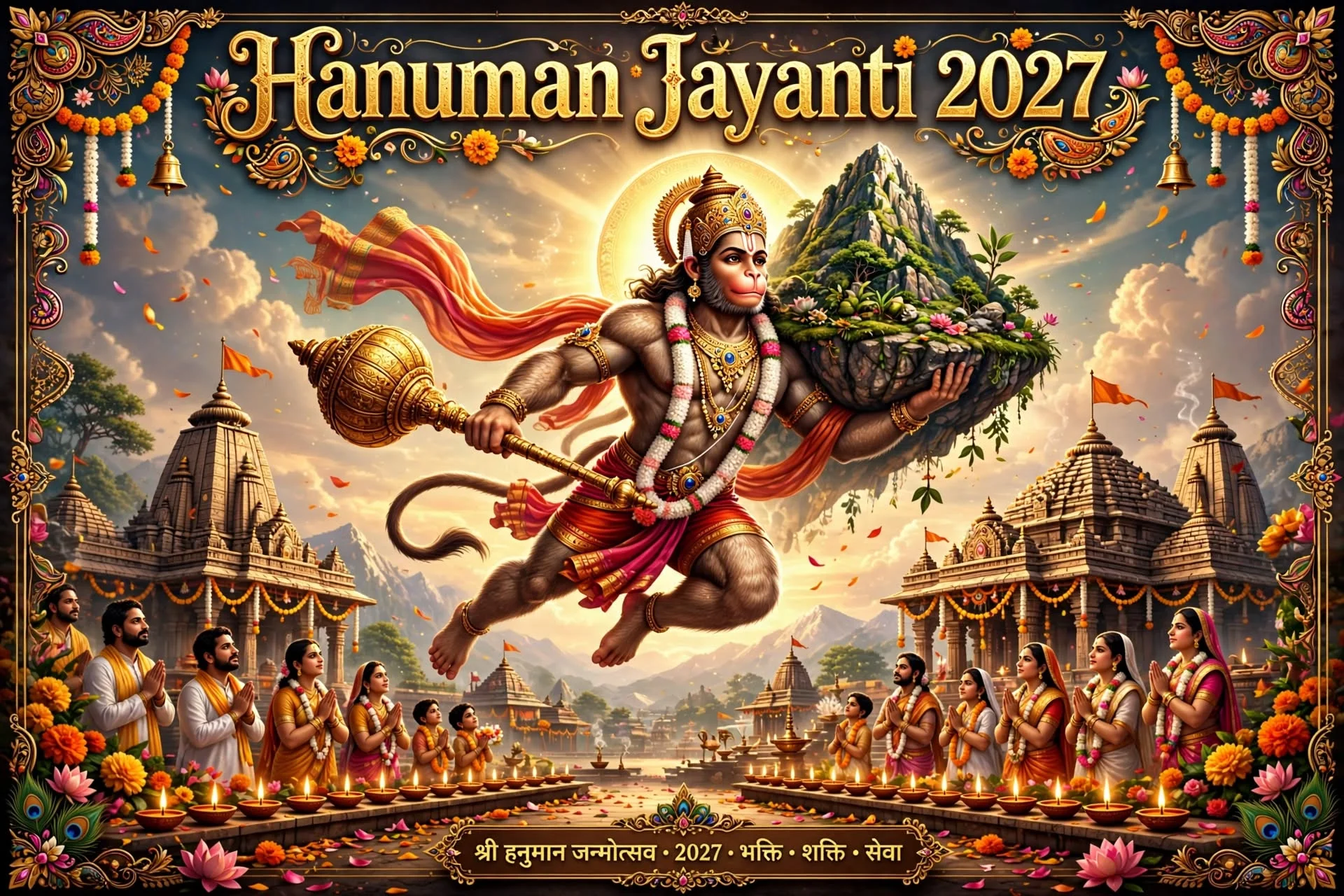
Tuesday, Apr 20, 2027
Hanuman Jayanti
Hanuman Jayanti marks the glorious appearance anniversary of Sri Hanuman, the Rudra avatar of Lord Shiva, the foremost servant of Lord Sri Rama, and the eternal epitome of selfless devotion (Seva), valor, and spiritual strength. Celebrated on the full moon day (Purnima) of the sacred month of Chaitra, this auspicious festival commemorates the auspicious moment when Lord Hanuman manifested on earth to assist Lord Rama in vanquishing the forces of evil and establishing the eternal kingdom of righteousness (Dharma).
View Festival Guide

Wednesday, Apr 21, 2027
Ishti
Ishti is a foundational Vedic ritual observance appearing prominently in Hindu Panchangs on the Pratipada tithi (the first lunar day) following either Amavasya (new moon) or Purnima (full moon), marking the prescribed performance day for the fortnightly Vedic Darsha-Purnamasa sacrifices.
View Festival Guide
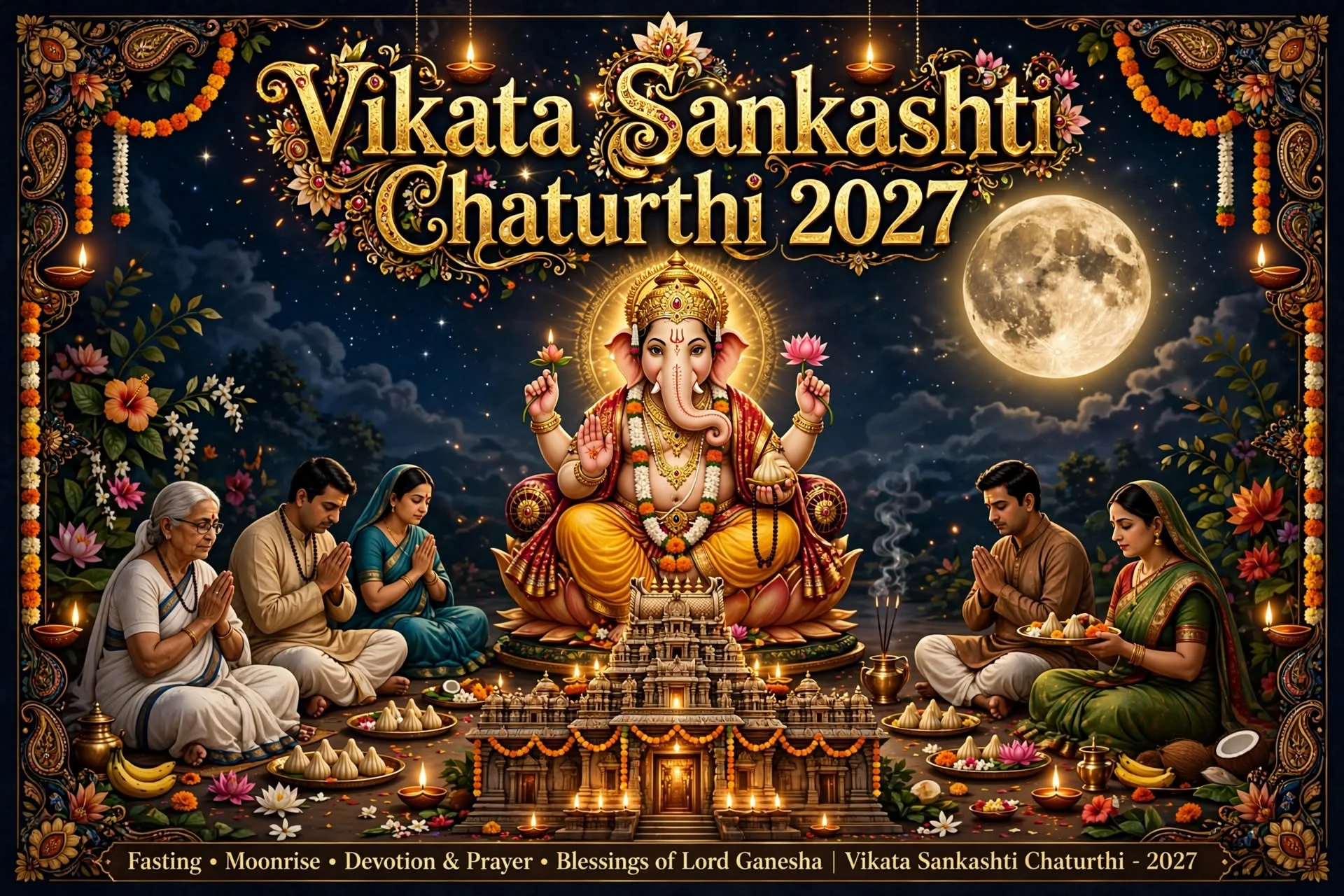
Saturday, Apr 24, 2027
Vikata Sankashti
Vikata Sankashti Chaturthi is an auspicious fasting day dedicated to Lord Ganesha, celebrated on the fourth lunar day of the waning moon (Krishna Paksha Chaturthi) following Chaitra Purnima. In the traditional Purnimanta calendar, this tithi falls in the month of Vaishakha, while in the Amanta calendar followed in Maharashtra, Gujarat, and southern India, it falls in the month of Chaitra. Dedicated to 'Vikata Ganapati'—the fierce, formidable, and obstacle-crushing form of Lord Ganesha—this sacred fast possesses the divine power to demolish the most insurmountable hardships and emotional turmoil.
View Festival Guide
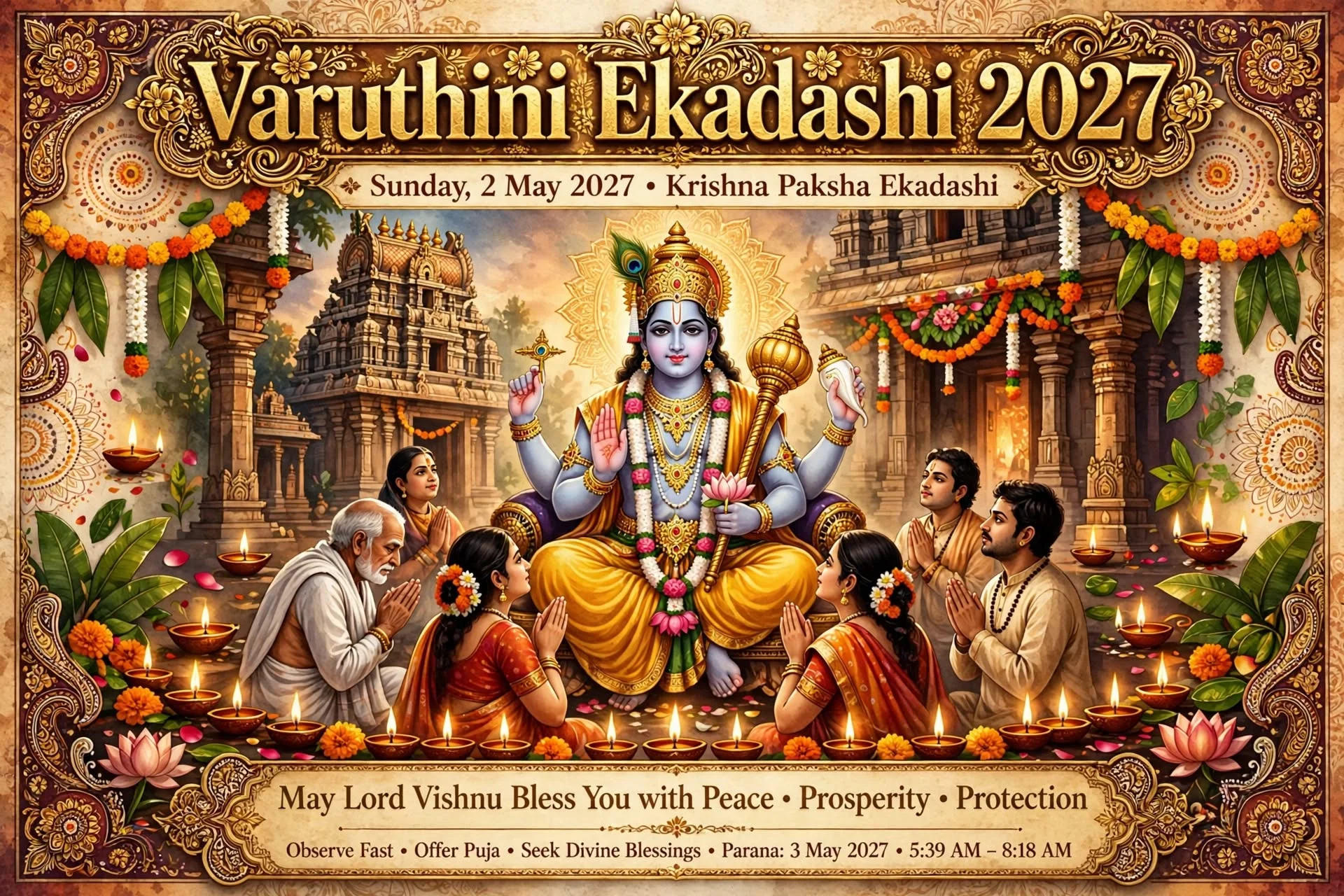
Sunday, May 2, 2027
Varuthini Ekadashi
Varuthini Ekadashi, also known as Baruthani Ekadashi or Varuthini Ekadashi Vrat, is an important Hindu fasting festival dedicated to Lord Vishnu. It is observed on the Krishna Paksha Ekadashi (eleventh lunar day of the waning moon) during the month of Vaishakha according to the North Indian Purnimanta calendar. In regions following the Amanta calendar, the same observance falls during Chaitra Krishna Paksha. The Sanskrit word Varuthini is associated with protection, armour, and divine safeguarding, symbolizing the protective grace of Lord Vishnu for devotees who observe this sacred vrata with faith and discipline.
View Festival Guide