




Krishna Janmashtami, also celebrated worldwide as Gokulashtami, Krishnashtami, Saatam-Aatham, or Janmashtami, is the supreme, ecstatic celebration marking the divine advent (Avatara Jayanti) of Bhagwan Sri Krishna—revered in the Srimad Bhagavatam as 'Krishnas Tu Bhagavan Svayam' (Sri Krishna is the Supreme Divine Personality of Godhead Himself in His complete, plenary fullness). Occurring on the eighth lunar day (Ashtami tithi) of the Krishna Paksha in the sacred monsoon month of Bhadrapada (or Shravana in the Amanta calendar) at the stroke of midnight under the auspicious Rohini Nakshatra, this festival commemorates the celestial moment when the dark midnight sky was illuminated by the birth of the cosmic protector.
Krishna Janmashtami 2027: Date, Puja Timings, Rituals & Stories
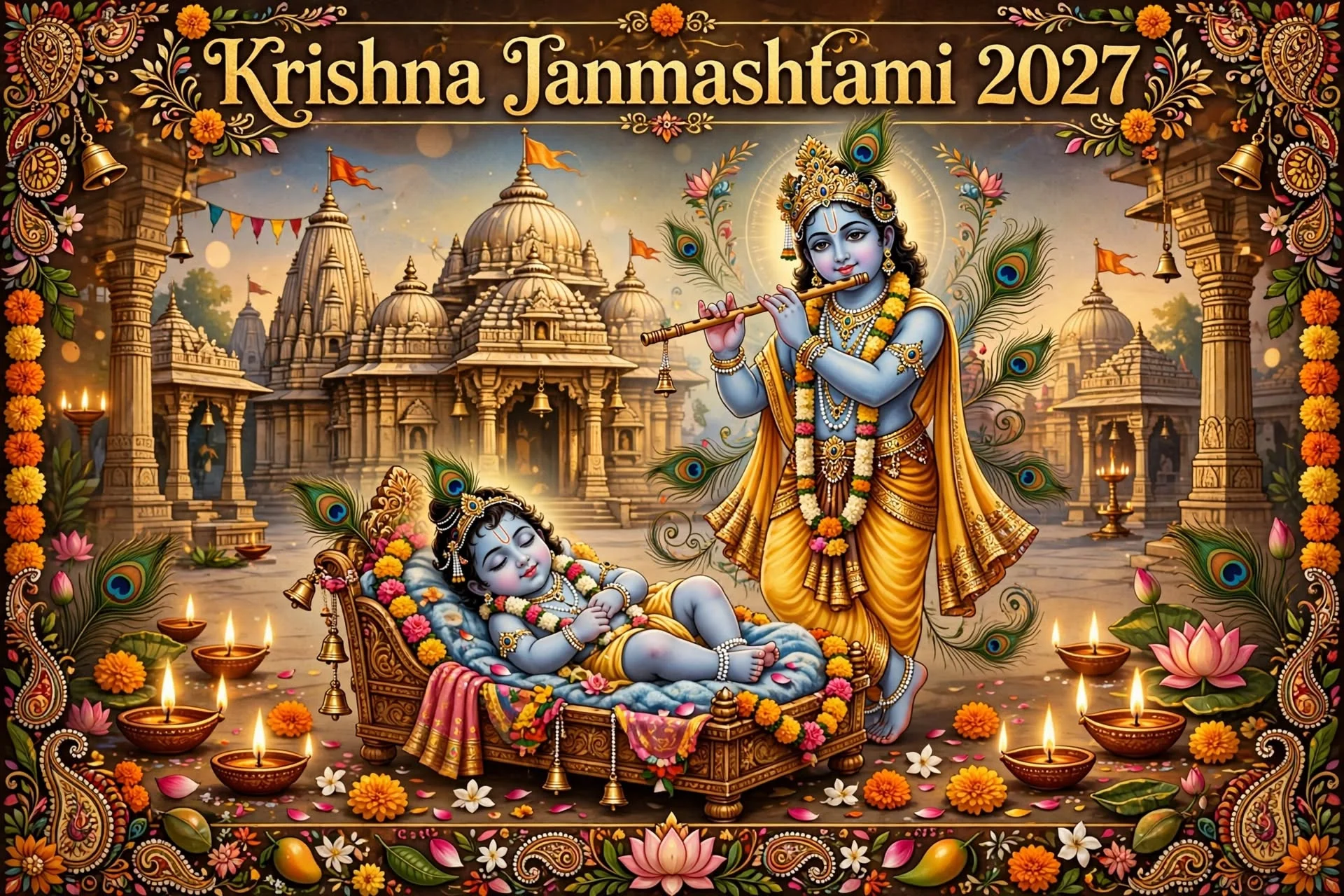
Krishna Janmashtami Timings & Panchang
Important festival dates and auspicious timings
Usha Arghya (Sunrise)
05:55 am
Sandhya Arghya (Sunset)
06:52 pm
Start Date
Tuesday, 24 Aug 2027
Puja Muhurat
08:53 pm – 08:25 pm
Krishna Janmashtami
Over five thousand years ago, during an era of unprecedented tyranny when the demonic king Kamsa oppressed the earth and imprisoned his sister Devaki and brother-in-law Vasudeva in the subterranean dungeons of Mathura, Lord Sri Krishna manifested in His transcendental four-armed Vishnu form before transforming into an enchanting infant. In a night of miracles, heavy iron chains shattered, stone gates swung open, royal guards fell into yogic slumber, and Vasudeva carried the baby across the raging, parted waters of the Yamuna River shielded beneath the hoods of the great serpent Adishesha to the loving pastoral sanctuary of Gokul, placing Him in the lap of Mother Yashoda.
Celebrated across every corner of India and throughout global Hindu communities with monumental devotion, Krishna Janmashtami is characterized by day-and-night fasting (Nirjala or Phalahari), the creation of intricate floral cradles (Jhulan), midnight Abhishekam with milk and honey, continuous chanting of the Mahamantra, reading of the Tenth Canto of the Bhagavatam, and vibrant theatrical enactments of His childhood pastimes (Raas Leela). In Maharashtra, the following day ignites the world-renowned Dahi Handi festival, where human pyramids rise to break earthen pots of curd and butter in joyous emulation of the divine Butter Thief.
Why is Krishna Janmashtami Celebrated?
Krishna Janmashtami is celebrated to commemorate the descent of the Supreme Personality of Godhead into the material world to destroy tyranny, restore righteousness (Dharma), and bestow transcendental joy upon all living beings.
As Lord Sri Krishna Himself declares in the Bhagavad Gita (4.8): 'Paritranaya sadhunam vinashaya cha dushkritam, dharma-samsthapanarthaya sambhavami yuge yuge' (To protect the virtuous, destroy the wicked, and firmly re-establish righteous living, I manifest Myself from age to age).
The festival celebrates unconditional divine love (Prema Bhakti), reminding humanity that God is not a distant, fearsome judge, but an intimate, playful, and loving companion—Makhan Chor (the Butter Thief), Govinda (the cowherd), and Parthasarathi (the charioteer of Arjuna).
- Commemorating the midnight birth of Bhagwan Sri Krishna in Mathura to Devaki and Vasudeva.
- Celebrating the victory of divine light, compassion, and justice over tyrannical darkness and ego.
- Performing the sacred midnight Abhishekam and swinging the infant Lord (Ladu Gopal) in decorated cradles.
- Reciting the Bhagavad Gita and the Tenth Canto of the Srimad Bhagavatam.
- Channeling community joy through bhajans, Raas Leela dances, and festive Prasad distribution.
Scriptural Chronicles from the Srimad Bhagavatam, Harivamsa, and Vishnu Purana
The Prophecy and the Prison of Mathura
In the Vishnu Purana and Srimad Bhagavatam, the narrative begins with the wedding of Princess Devaki to Vasudeva. As King Kamsa joyfully drove their royal chariot, a thunderous celestial voice echoed from the skies: 'O foolish Kamsa, the eighth child of this sister whom you escort shall be your slayer!' Terrified and enraged, Kamsa drew his sword to slaughter Devaki, but Vasudeva pleaded for her life, promising to surrender every newborn child to the king.
Kamsa imprisoned the royal couple in iron chains, mercilessly murdering their first six infants. The seventh child, Balarama, was miraculously transferred by Yogamaya to Rohini's womb in Gokul. When Devaki conceived her eighth child, her prison cell began to glow with blinding celestial effulgence, filling the gods with awe and Kamsa with restless dread.
The Midnight Advent and the Parting of the Yamuna
At the auspicious stroke of midnight, as the Ashtami tithi coincided with the brilliant Rohini Nakshatra, Bhagwan Sri Krishna manifested from Devaki's heart. He appeared first in His majestic four-armed Narayana form, bearing the conch, discus, mace, and lotus, adorned with the Kaustubha gem and dazzling silk garments. After receiving the awestruck prayers of Vasudeva and Devaki, the Lord assumed the form of an enchanting human baby and commanded Vasudeva to carry Him across the Yamuna to Gokul.
Miracles unfolded instantly: the heavy iron shackles fell from Vasudeva's limbs, the massive prison doors unlocked, and the fierce guards sank into deep slumber. Placing the divine infant in a wicker basket on his head, Vasudeva stepped out into torrential monsoon rains. The thousand-headed serpent Adishesha spread His hoods over the baby like an umbrella. When Vasudeva reached the swollen, roaring Yamuna River, the waters parted miraculously, allowing the father to walk safely across to the house of Nanda and Yashoda.
Gokul Celebrations and Nandotsav
Vasudeva quietly placed Krishna beside Mother Yashoda, who lay asleep after giving birth to a baby girl (Yogamaya), and carried the infant girl back to the prison cell. In the morning, when Nanda Maharaja announced the birth of a son, all of Gokul erupted in boundless ecstasy.
The Metaphysics of Divine Birth, Rohini Alignment, and Pure Love
Midnight Manifestation: Light in the Darkness
Lord Krishna appears at the darkest hour of the night (Nishita Kala) on the waning eighth day, symbolizing that divine grace manifests precisely when human helplessness is at its peak. The prison cell represents the material body bound by the shackles of ego, karma, and fear.
When the soul surrenders unconditionally to God, the chains of ignorance shatter, the gates of limitation open, and the consciousness traverses the turbulent river of worldly existence to reach spiritual bliss.
The Sweetness of Madhurya Rasa (Intimate Devotion)
Unlike other divine incarnations who display awe-inspiring majesty and distance, Sri Krishna reveals Himself in intimate, sweet relationships (Madhurya Rasa). He allows Mother Yashoda to bind Him with a rope of love, shares butter with village friends, and guides Arjuna as a loving friend and mentor.
Janmashtami invites every human soul to embrace God as an intimate beloved, cultivating pure, unmotivated devotion (Ahaituki Bhakti).
Fasting Regimen, Midnight Abhishekam, and Cradle Decoration
All-Day Fasting and Domestic Altar Preparation
Devotees observe a complete fast throughout the day and evening. The domestic shrine is transformed into an enchanting replica of Vrindavan, adorned with banana stalks, peacock feathers, fragrant flowers, and a miniature swing or cradle (Palana).
An idol of Bal Gopal (Ladu Gopal) is kept concealed behind a silk curtain until the midnight advent.
Midnight Maha Abhishekam and Aarti
At the stroke of midnight (12:00 AM), conches sound, bells peal, and the curtain is drawn. The infant Krishna is lovingly bathed in Panchamrita (milk, curd, honey, ghee, sugar water) and pure Gangajal from a silver conch shell.
He is dried with soft silk, dressed in radiant yellow garments (Pitambara), adorned with a peacock-feather crown (Mayur Pankh) and miniature flute (Bansuri), placed into the swing, and offered Makhan-Mishri and 56 delicacies (Chhappan Bhog) amidst ecstatic kirtan.
Krishna Janmashtami Puja Vidhi (Step by Step)
- 1
Brahma Muhurta Snana & Sankalpa
Wake early before sunrise, bathe in clean water mixed with sacred Gangajal, wear fresh yellow unstitched garments, and make the solemn Janmashtami Vrata Sankalpa.
- 2
Altar and Jhula (Swing) Decoration
Decorate the domestic temple with peacock feathers, yellow marigolds, kadamba blossoms, and install an ornate miniature swing (Palana) draped in silk.
- 3
Day-Long Japa and Kirtan
Spend the day chanting the Hare Krishna Maha Mantra or 'Om Namo Bhagavate Vasudevaya', reading the Tenth Canto of the Srimad Bhagavatam, and singing bhajans.
- 4
Nishita Kala (Midnight) Avahana
At the stroke of midnight (12:00 AM), blow the sacred conch shell (Shankha) and ring temple bells to announce the divine birth of Bhagwan Sri Krishna.
- 5
Panchamrita Maha Abhishekam
Bathe the idol of Bal Gopal (Ladu Gopal) with raw cow milk, curd, wild honey, pure desi cow ghee, and rock sugar, followed by fragrant rosewater and Gangajal.
Krishna Janmashtami Puja Samagri List
Deity and Cradle (Jhula) Essentials
- Idol of Bal Gopal (Ladu Gopal) made of brass, ashtadhatu, or silver
- Carved wooden, silver, or brass swing (Jhula/Palana) with silk pull-cord
- Yellow silk dress (Pitambara), miniature crown with natural peacock feather (Mayur Pankh)
- Silver or brass flute (Bansuri), pearl necklace, and miniature ornaments
- Large brass or silver tray (parat) for performing midnight Abhishekam
Panchamrita, Botanical, and Fragrant Items
- Fresh raw cow milk, fresh curd, wild honey, desi cow ghee, and rock sugar (Panchamrita)
- Abundant fresh holy Tulsi leaves and Manjari (plucked a day prior)
- Malayagiri yellow sandalwood paste, rolli, and Ashtagandha
- Fragrant yellow marigolds, red roses, jasmine strings, and lotus flowers
- Natural camphor tablets, guggulu dhoop, and brass five-wick cow-ghee lamp
Naivedyam and Traditional Bhog Offerings
- Freshly churned homemade white butter (Makhan) and rock sugar (Mishri)
- Dhaniya Panjiri (roasted ground coriander seeds with ghee, sugar, and dry fruits)
- Makhana Kheer, Rabri, Peda, and assorted milk delicacies
Mantras and Prayers for Krishna Janmashtami
Krishna Janmashtami Vrat Rules and Fasting Guidelines
Fasting Injunctions and Midnight Parana
Devotees observe a strict fast throughout the day until midnight. Those who can observe waterless fasting (Nirjala) do so; others consume only water, milk, and fresh fruits (Phalahari). All cereal grains, wheat, rice, pulses, onions, and garlic are completely prohibited.
- Fasting continues uninterrupted until midnight when the Lord manifests.
- Break the fast after midnight Abhishekam with Charnamrita and Makhan-Mishri.
- Strict avoidance of all grains, lentils, beans, onions, and garlic.
- Stay awake in joyful kirtan, japa, and scripture reading throughout the night.
Conduct and Mental Purity
Maintain a mood of boundless joy, forgiveness, and sweetness. Welcome guests warmly, share prasad generously, and contemplate the enchanting divine pastimes of Sri Krishna.
Dos and Don'ts of Krishna Janmashtami
Good Practices (Do's)
- Wake up early, bathe, and resolve to observe the holy Janmashtami fast.
- Decorate a beautiful swing (Jhula) and place Bal Gopal inside with peacock feathers.
- Perform the sacred midnight Abhishekam with Panchamrita and Gangajal.
- Offer freshly churned Makhan-Mishri and Dhaniya Panjiri with fresh Tulsi leaves.
- Sing the Hare Krishna Maha Mantra and read the Tenth Canto of the Srimad Bhagavatam.
Krishna Janmashtami Across Regions
| Region | Local Name |
|---|---|
| Braj Region (Mathura and Vrindavan) | Janmashtami Mahotsav |
| Maharashtra & Goa | Gokulashtami & Dahi Handi |
| Gujarat (Dwarka & Dakor) | Janmashtami |
| South India (Tamil Nadu, Kerala, Karnataka) | Gokulashtami / Sri Krishna Jayanti |
Krishna Janmashtami FAQs
Why is Krishna Janmashtami celebrated at midnight?
According to the Srimad Bhagavatam and Vishnu Purana, Lord Sri Krishna manifested precisely at midnight (Nishita Kala) under the Rohini Nakshatra on Ashtami tithi to dispel darkness and free the world from tyranny.
What is the significance of the Dahi Handi festival on the next day?
Dahi Handi reenacts Lord Krishna's playful childhood pastime of forming human pyramids with His cowherd friends to steal butter and curd suspended in earthen pots from the ceilings of Gokul homes.
Why is Makhan-Mishri the most beloved offering to Sri Krishna?
White butter (Makhan) represents the pure, churned essence of devotion free from the impurities of ego, while rock sugar (Mishri) symbolizes divine transcendental sweetness.
Upcoming Festivals
View All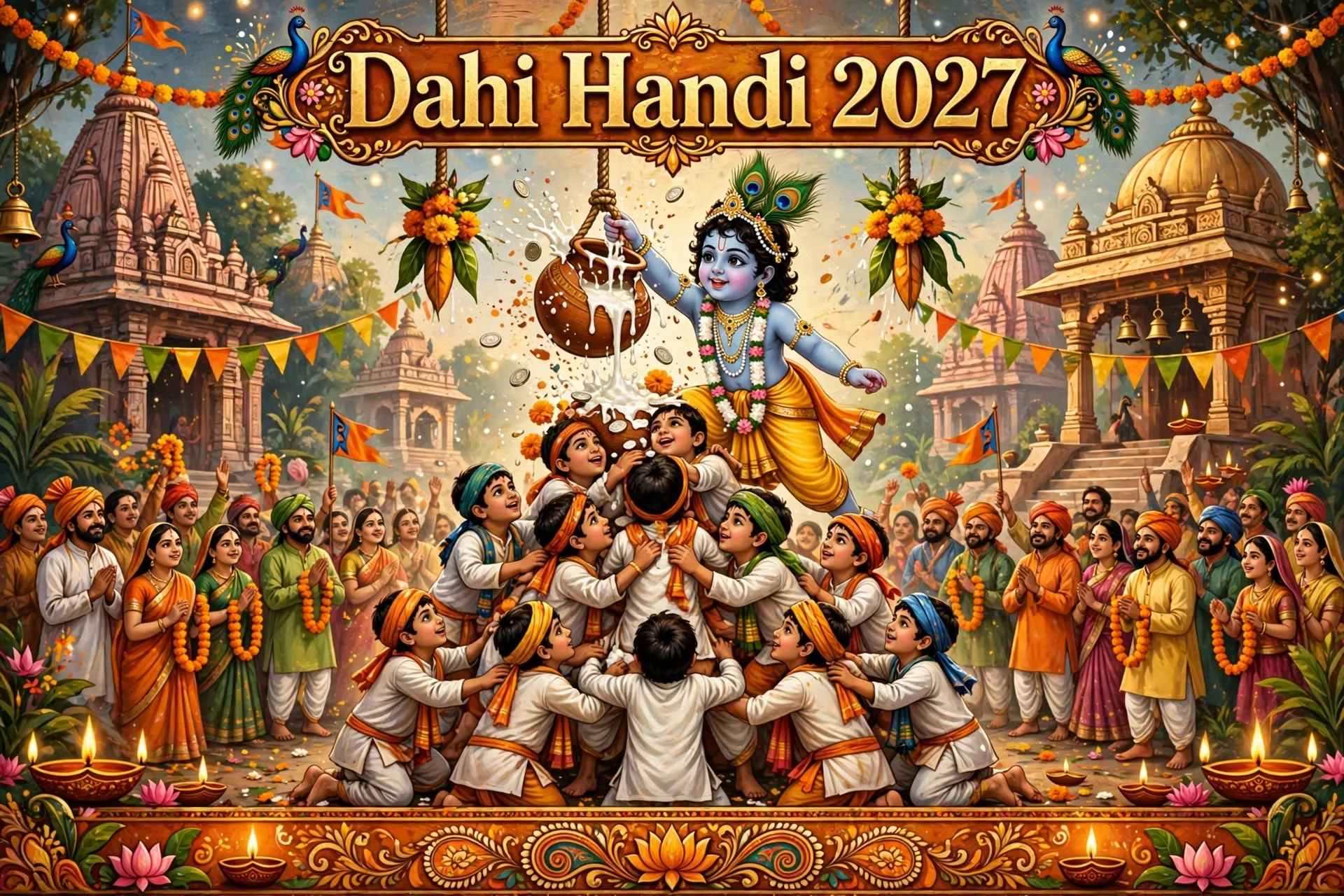
Thursday, Aug 26, 2027
Dahi Handi
Dahi Handi, also celebrated as Gopalakala, Utlotsavam, or the Curd Pot Festival, is an exuberant, high-energy festival celebrated on the Navami tithi (ninth lunar day) of Krishna Paksha in the sacred monsoon month of Bhadrapada (or Shravana in the Amanta calendar). Occurring on the morning immediately following Krishna Janmashtami, Dahi Handi commemorates the enchanting childhood pastimes (Baal Leelas) of Bhagwan Sri Krishna in the pastoral village of Gokul, where the young Lord and His cowherd companions (Gopas) formed ingenious human pyramids to reach and break earthen pots filled with freshly churned curd, butter, and milk hung from the high ceilings of gopis' houses.
View Festival Guide
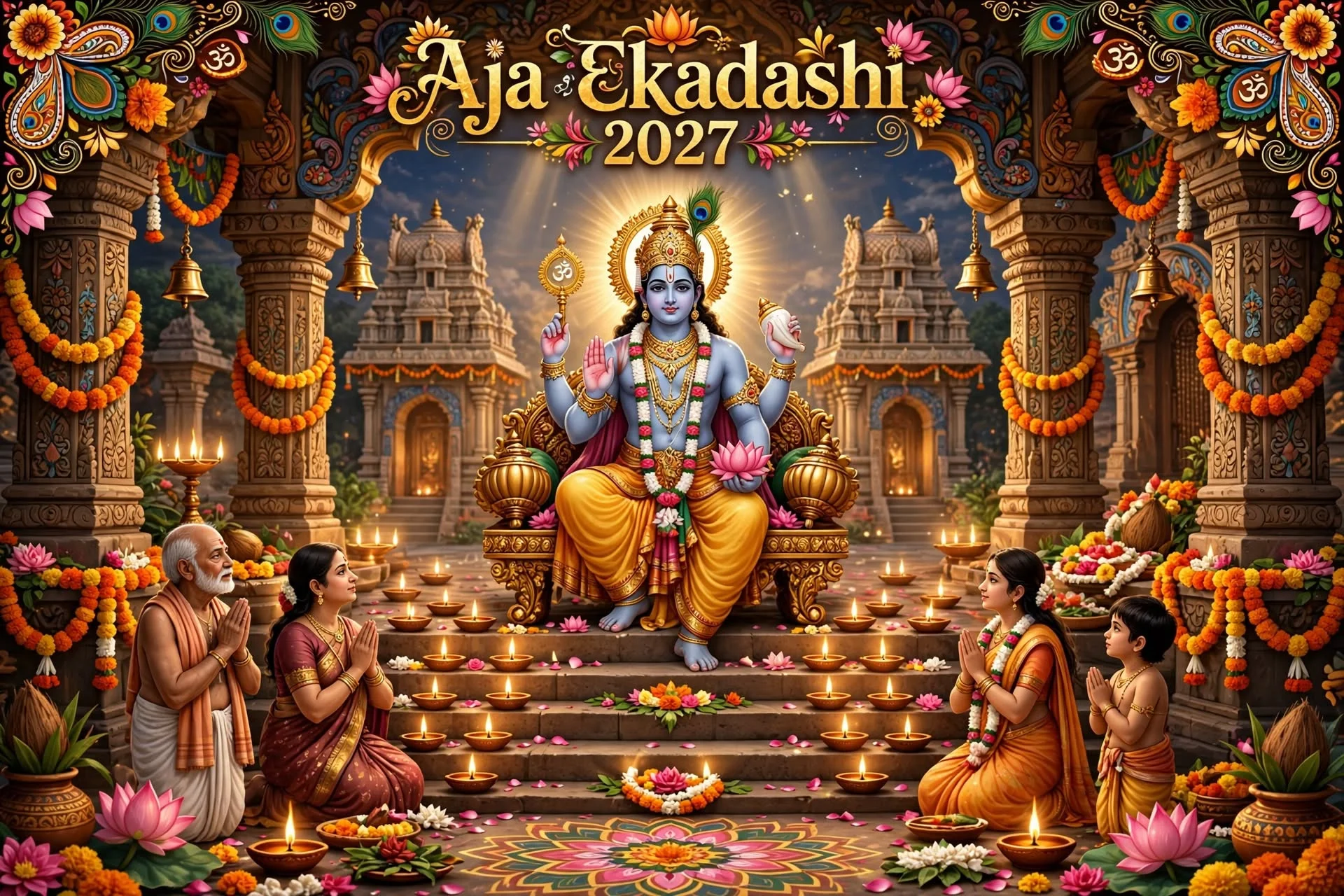
Saturday, Aug 28, 2027
Aja Ekadashi
Aja Ekadashi, also celebrated with immense spiritual reverence as Ananda Ekadashi, is observed on the eleventh lunar day (Ekadashi tithi) of the Krishna Paksha (dark waning fortnight) in the sacred monsoon month of Bhadrapada (or Shravana in the Amanta calendar). Dedicated to Bhagwan Vishnu in His divine form as Hrishikesha (the supreme master of the senses), this sanctified vrata is extolled in the Brahmavaivarta Purana and Padma Purana as an extraordinary spiritual penance capable of destroying all accumulated sins, reversing catastrophic worldly misfortunes, and bestowing liberation (Moksha).
View Festival Guide
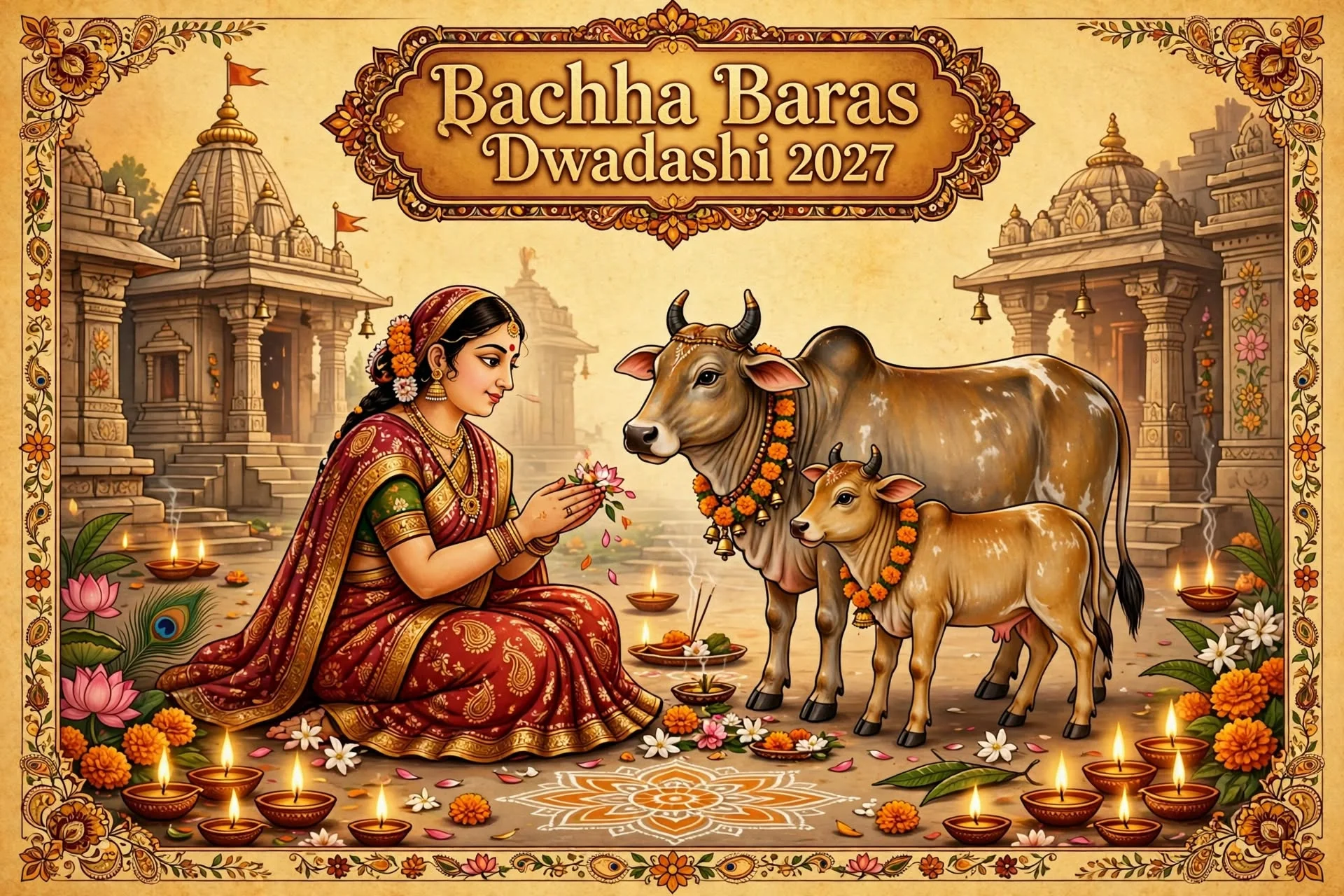
Saturday, Aug 28, 2027
Bachha Baras Dwadashi
Bachha Baras Dwadashi, also reverently celebrated as Govatsa Dwadashi, Vasu Baras, or Vatsa Dwadashi, is observed on the twelfth lunar day (Dwadashi tithi) of Krishna Paksha in the sacred monsoon month of Bhadrapada (or Shravana in the Amanta calendar scheme). Falling four days after Krishna Janmashtami, this heartwarming festival is dedicated exclusively to the adoration of Kamadhenu's celestial daughter, the divine cow Nandini, and her young suckling calf (Bachha / Vatsa), celebrating maternal devotion, rural cattle welfare, and the sacred spiritual bond between humanity and the animal kingdom.
View Festival Guide
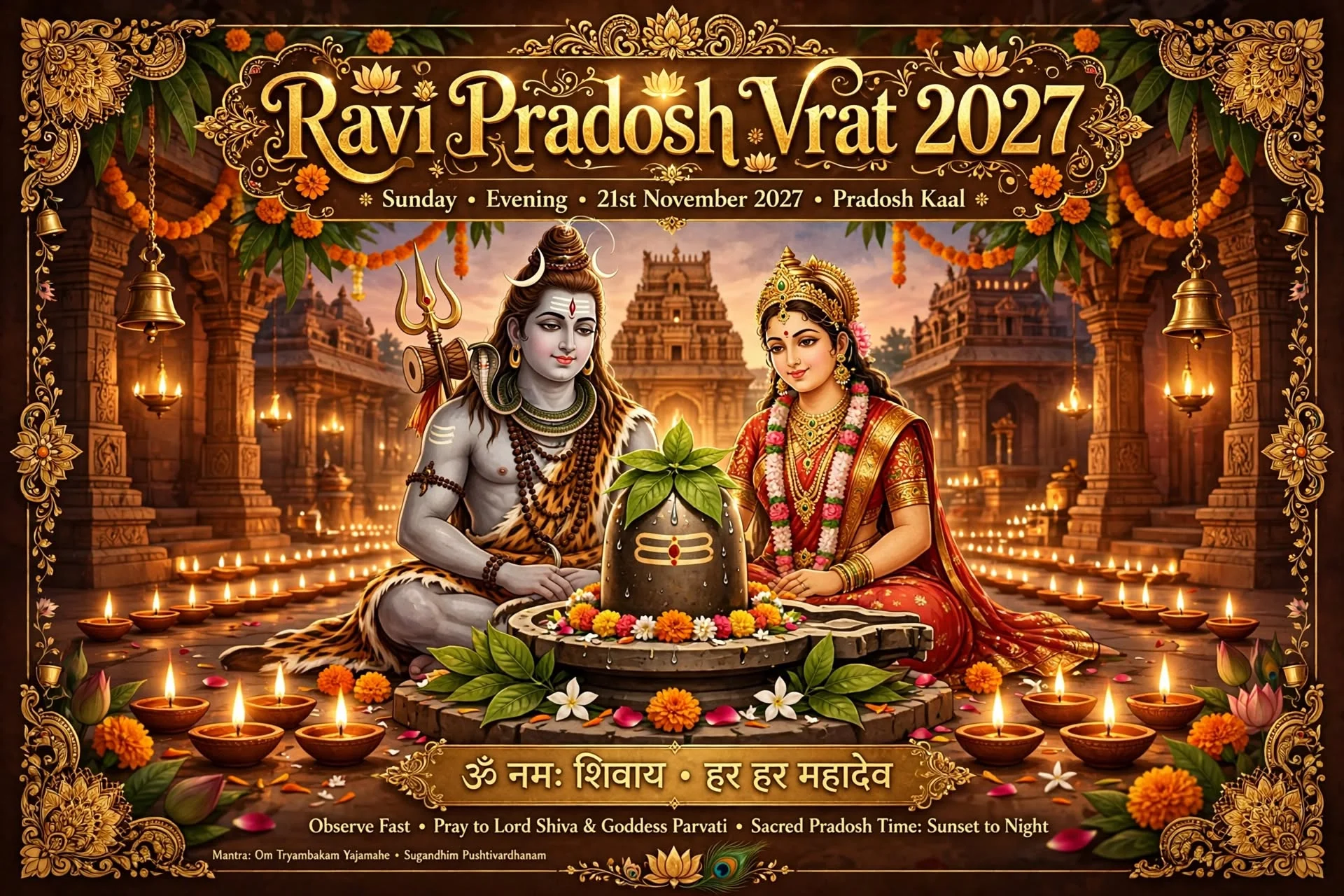
Sunday, Aug 29, 2027
Ravi Pradosh Vrat
Ravi Pradosh Vrat is an exceptionally sacred fasting day observed on the thirteenth lunar day (Trayodashi) that coincides with a Sunday (Ravivara). Dedicated to Lord Shiva, the cosmic dissolver of sorrow, this bimonthly vow unites the healing radiance of Surya Bhagavan with the boundless compassion of Mahadeva. Observed during the twilight Sandhya period, it is believed to banish physical ailments, clear karmic obstructions, and bestow vitality and longevity.
View Festival Guide
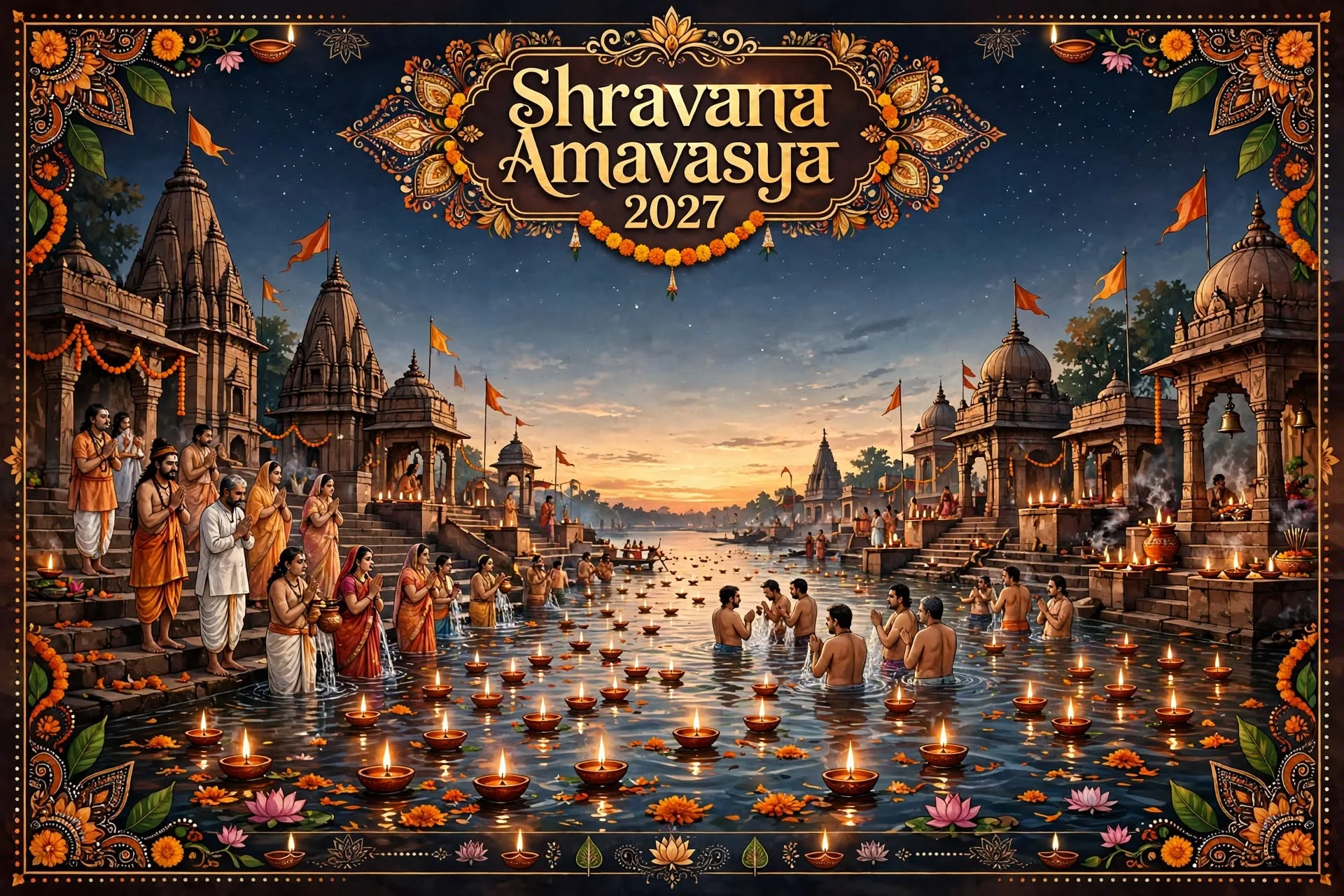
Tuesday, Aug 31, 2027
Shravana Amavasya
Shravana Amavasya, also known as Darsha Amavasya, Hariyali Amavasya, or Pola Amavasya, is the dark New Moon night marking the grand conclusion of the sacred, rejuvenating monsoon month of Shravana. Positioned at the pivotal threshold between the height of the rainy season and the onset of early autumn, this sanctified tithi holds monumental spiritual, ancestral, and ecological significance across the Indian subcontinent.
View Festival Guide
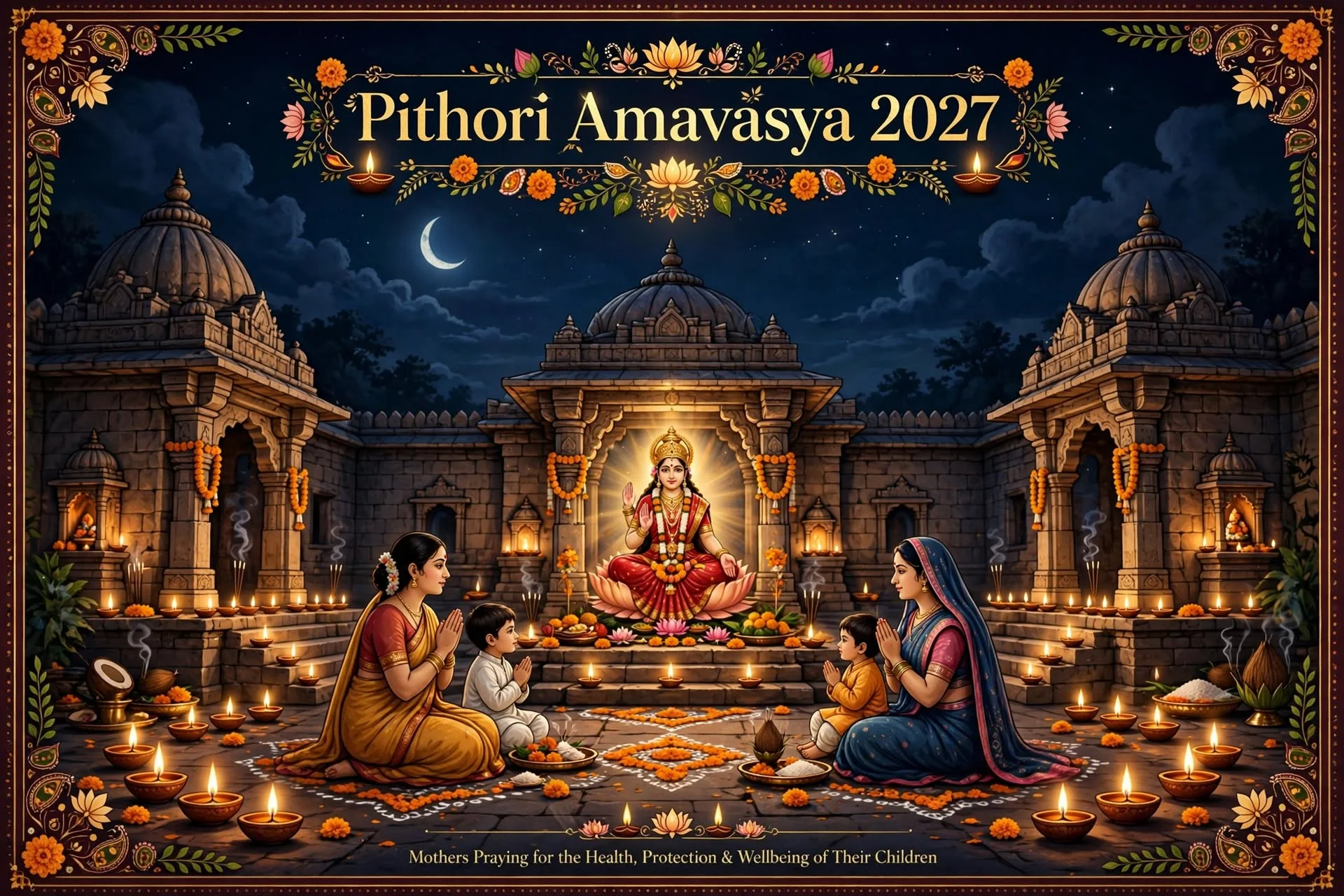
Tuesday, Aug 31, 2027
Pithori Amavasya
Pithori Amavasya, also reverently celebrated across India as Kushagrahani Amavasya, Pola Amavasya, or Pithori Vrat, is the sacred New Moon day concluding the holy monsoon month of Shravana (or Bhadrapada in the Purnimanta calendar scheme). Dedicated to Goddess Durga, Goddess Parvati, and the Sixty-Four Yoginis (Chausath Yogini), this ancient festival is celebrated with profound devotion by mothers for the longevity, health, moral strength, and spiritual protection of their children, as well as the pacification of ancestral souls (Pitrus).
View Festival Guide
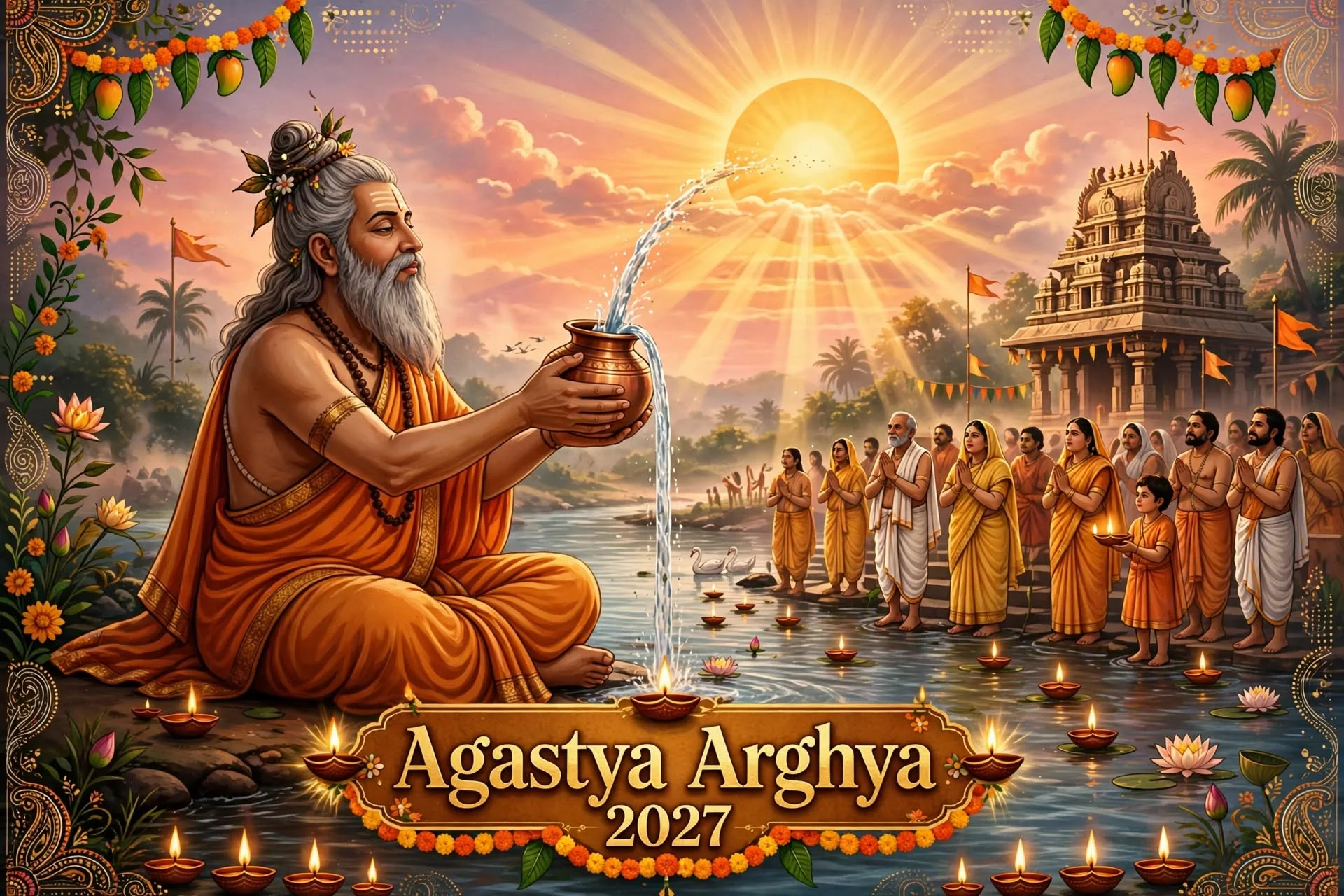
Tuesday, Aug 31, 2027
Agastya Arghya
Agastya Arghya, also known as Agastya Udaya Arghya, is a profound astronomical and Vedic ritual observed during the transition of late monsoon into early autumn (Sharad Ritu), when the celestial star Canopus (known in Sanskrit as the Agastya Nakshatra) first rises above the southern horizon at dawn. In ancient Indian astronomy (Surya Siddhanta) and Puranic literature, the dawn rising of Agastya is celebrated as an extraordinary cosmic event marking the physical and energetic purification of all terrestrial waters, the calming of turbulent monsoon rivers, and the pacification of atmospheric toxins.
View Festival Guide

Tuesday, Aug 31, 2027
Anvadhan
Anvadhan (अन्वाधान) is an ancient, highly revered Vedic ritual and spiritual observance in Sanatana Dharma performed on the day immediately preceding the New Moon (Amavasya) or Full Moon (Purnima). Rooted in the pristine traditions of the Shrauta and Grihya Sutras, Anvadhan literally translates to 'the solemn placing and replenishment of sacred fuel wood into the consecrated Vedic fires'. In traditional Vedic ritualism, householders (Grihasthas) and priests who maintain the sacred Agnihotra fires perform Anvadhan to prepare the sacrificial altars for the grand Darsha Yajna (New Moon sacrifice) or Paurnamasa Yajna (Full Moon sacrifice) scheduled for the following day.
View Festival Guide