




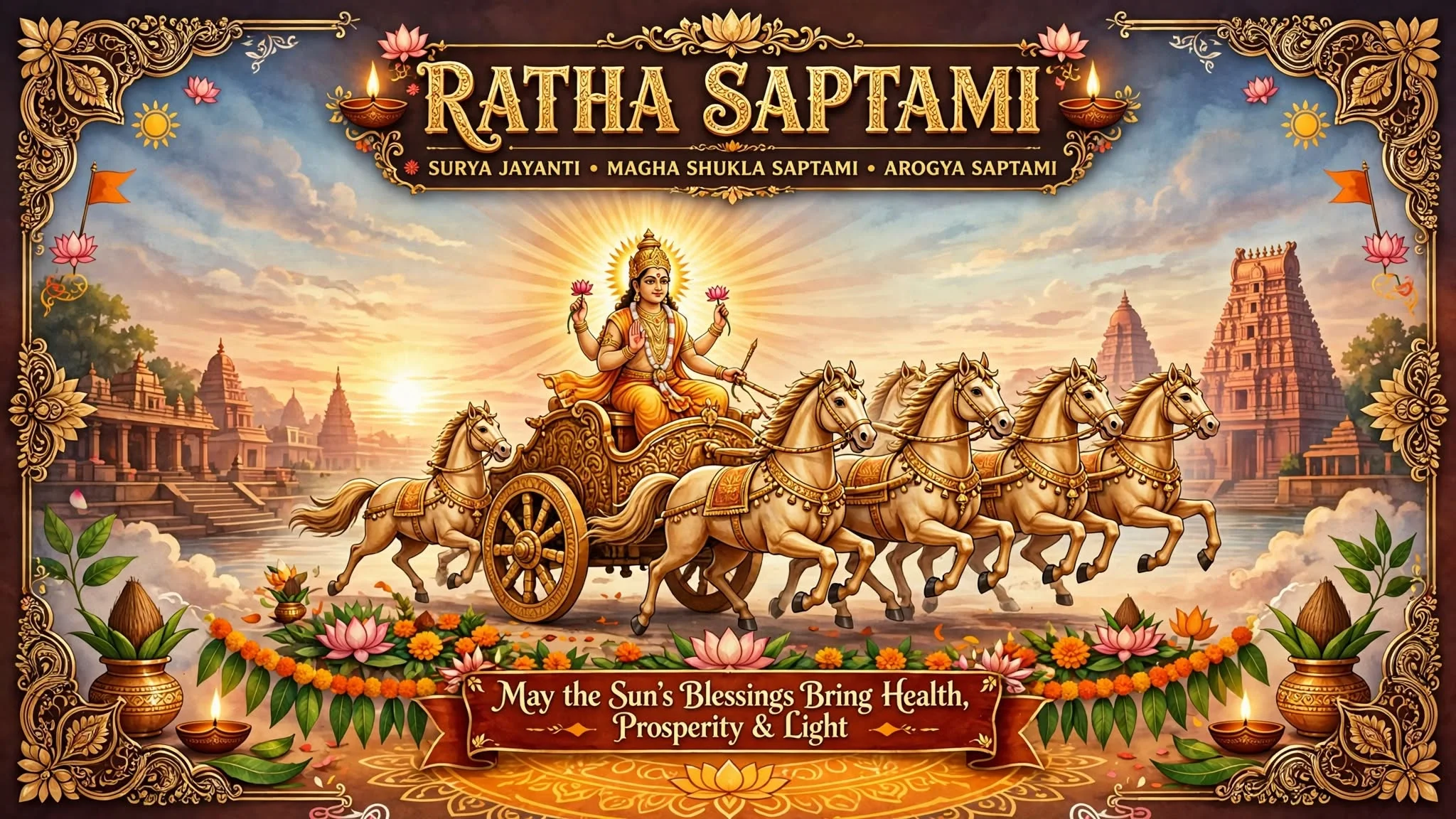
Ratha Saptami, also celebrated as Surya Jayanti, Magha Saptami, or Achala Saptami, is an exalted Hindu solar festival observed on the Saptami tithi (seventh lunar day) of Shukla Paksha in the month of Magha (January–February).
Ratha Saptami (Arogya Saptami / Surya Jayanti) 2027: Date, Puja Timings, Rituals & Stories
Ratha Saptami (Arogya Saptami / Surya Jayanti) Timings & Panchang
Important festival dates and auspicious timings
Usha Arghya (Sunrise)
07:02 am
Sandhya Arghya (Sunset)
06:10 pm
Start Date
Saturday, 13 Feb 2027
Puja Muhurat
02:59 am – 02:07 am
Ratha Saptami (Arogya Saptami / Surya Jayanti)
The festival commemorates the divine cosmic appearance (Jayanti) of Lord Surya (the Sun God) and symbolizes the monumental turning of His radiant golden chariot (Ratha), drawn by seven majestic horses and steered by the celestial charioteer Aruna, as He charts His northern trajectory (Uttarayana) across the heavens.
Ratha Saptami marks the transition of winter into spring and the commencement of renewed agricultural vitality, celebrated as the cosmic birthday of the Sun whose benevolent rays enlighten, warm, and sustain all living beings on Earth.
A hallmark ritual of Ratha Saptami is the sacred 'Arka Snana'—taking a purificatory bath at sunrise with seven Ekka (Calotropis gigantea / Arka) leaves placed upon the head and shoulders while chanting prayers—believed to eliminate ailments across seven lifetimes, followed by boiling sweet milk in the open sun, offering Surya Arghya, and performing charitable giving.
Why is Ratha Saptami (Arogya Saptami / Surya Jayanti) Celebrated?
Ratha Saptami is celebrated to venerate Lord Surya as the visual embodiment of the Supreme Divinity (Pratyaksha Parabrahma), offering heartfelt gratitude for the cosmic light, heat, and life-force (Prana) that sustains all terrestrial existence.
According to the Bhavishya Purana and Matsya Purana, observing the holy bath and solar rituals on this tithi purges sins committed across seven previous lifetimes (Saptajanma Papas) and bestows physical radiance, immunity from chronic diseases, longevity, and spiritual enlightenment.
- To commemorate the cosmic manifestation (Jayanti) of Lord Surya at the dawn of creation.
- To perform the purificatory Arka Snana with seven Calotropis leaves to eradicate physical ailments and mental distress.
- To offer water oblation (Arghya) and red floral tributes to the rising Sun God at the commencement of His northern journey.
- To boil sweet milk and rice in earthen vessels under direct sunlight in open courtyards, celebrating solar abundance.
- To draw traditional rangolis of the seven-horse solar chariot (Ratha) and worship Surya's charioteer Aruna.
Scriptural Roots and Sacred Legends of Ratha Saptami
The Chariot of the Sun in Puranic Astronomy
The Bhavishya Purana, Matsya Purana, and Vishnu Purana provide elaborate cosmological descriptions of Lord Surya's celestial chariot. The chariot possesses a single golden wheel (representing the annual solar cycle / Samvatsara) with twelve spokes representing the twelve months.
The chariot is drawn by seven divine horses named after the seven Vedic poetic meters: Gayatri, Trishtubh, Anushtubh, Jagati, Pankti, Brihati, and Ushnik. Driven by Aruna (the dawn deity who sits facing the Sun to shield Earth from overwhelming cosmic radiation), the chariot turns northward on Magha Shukla Saptami, dispelling the darkness of winter and inaugurating a season of agricultural fertility and vitality.
The Legend of King Yashovarma and the Cured Prince
A celebrated historical narrative recorded in the Bhavishya Purana relates the story of King Yashovarma of the Kambhoja kingdom. Blessed with wealth and valor, the king was heartbroken because his only son was born chronically diseased, crippled, and bedridden, unable to speak or sit.
Distraught, Yashovarma sought the counsel of a venerable traveling rishi. The sage explained that in his previous lifetime, the prince had been a wealthy merchant who amassed wealth through deceit and cruelty, never performing charity or bowing to the Sun God.
The sage advised: 'Have the prince observe the sacred fast of Ratha Saptami. Take him to a holy river at dawn, place seven Arka leaves upon his head and body, bathe him with holy waters, and let him offer Arghya to the rising Sun while chanting the Surya Ashtakam.'
The king dutifully followed the sage's counsel. As the holy waters infused with Arka leaves cascaded over the prince and the solar rays touched his forehead, the chronic paralysis dissolved instantly. The prince stood up entirely healed, endowed with immense physical vigor, beauty, and wisdom. He later governed the kingdom as an enlightened dharmic ruler, establishing the timeless efficacy of Ratha Saptami.
Source: Bhavishya Purana (Brahma Parva), Matsya Purana, and Padma Purana (Srishti Khanda)
Philosophical, Solar, and Physiological Foundations
The Seven Horses and the Spectrum of Consciousness
The seven horses yoked to Lord Surya's chariot symbolize both physical and spiritual realities: physically, they represent the seven colors of the optical spectrum (VIBGYOR) that constitute pure white solar light; spiritually, they represent the seven chakras (energy vortices) of the human subtle body and the seven Vedic meters.
When the spiritual seeker meditates on the Sun on Ratha Saptami, the seven chakras are harmonized, activating the dormant spiritual energy from Muladhara to Sahasrara and flooding the consciousness with vitality and clarity.
The Botanical Chemistry and Symbolism of Arka Leaves
The Calotropis gigantea plant (known in Sanskrit as Arka or Mandara) is botanically and spiritually sacred to Lord Surya. Its name 'Arka' is an ancient Vedic synonym for the Sun. Placing seven Arka leaves upon seven vital points of the body (head, two shoulders, two knees, and two feet) along with unbroken rice and cow dung cakes during the morning bath creates a powerful biological grounding.
The unique alkaloids of the plant, when activated by cold river water and morning ultraviolet sunlight, stimulate lymphatic drainage, soothe joint inflammation, and clear skin disorders.
Eradication of Sevenfold Karmic Impurities
- Purification of sins committed across seven previous lifetimes (Saptajanma Papas).
- Eradication of physical ailments, skin diseases, and sluggish metabolism through early morning solar absorption.
- Awakening of self-confidence, leadership qualities, and spiritual optimism governed by the astrological Sun.
Practical Protocol, Ritual Sequencing, and Community Traditions
The Pre-Dawn Arka Snana Ritual
Observance begins before dawn during Brahma Muhurta. Devotees collect seven fresh leaves of the Arka (Calotropis) plant, a piece of dried cow dung cake (Kanda), a small quantity of raw rice mixed with turmeric, and sacred Gangajal.
Standing in a flowing river or household bath facing East, the devotee places one leaf upon the head, two upon the shoulders, two on the knees, and two on the feet, pouring holy water over the head while reciting the Arka Snana mantra, praying that the solar day of Saptami eradicate all diseases and sorrow.
Solar Chariot Rangoli and Courtyard Milk Boiling
Upon bathing, clean yellow or red garments are worn. In front of the household courtyard or on the terrace, women create elaborate rangolis depicting Lord Surya's chariot with one wheel, seven horses, and the charioteer Aruna using rice flour and vibrant natural colors.
In a traditional earthen pot placed in the open courtyard facing the morning sun, sweet milk mixed with raw rice and jaggery is boiled over cow dung fuel. The overflowing of the boiling milk is joyously greeted by the family as a divine omen of overflowing prosperity.
Grand Temple Processions and Saptami Parana
In major South Indian Vaishnavite and Saivite shrines, most celebratedly at the Tirumala Venkateswara Temple, Ratha Saptami is celebrated as an extraordinary 'Mini Brahmotsavam' where Lord Malayappa Swamy is carried out on seven distinct vahanas (vehicles) from dawn to late night.
The fast is broken after offering sweet Pongal/kheer prasad and Surya Arghya, followed by distributing food, jaggery, and red cloth to the needy.
Ratha Saptami (Arogya Saptami / Surya Jayanti) Puja Vidhi (Step by Step)
- 1
Brahma Muhurta Jagaran and Collection of Arka Leaves
Wake before sunrise during Brahma Muhurta. Collect seven fresh, unblemished leaves of the sacred Arka (Calotropis gigantea) plant, along with unbroken raw rice grains (Akshata) and pure Gangajal.
- 2
Arka Snana (Sacred Seven-Leaf Purificatory Bath)
Stand facing East in a sacred river or home bathing area. Place one Arka leaf with a pinch of akshata on your head, one on each shoulder, one on each knee, and one on each foot. Pour holy water over yourself while reciting the sacred Arka Snana prayer: 'Yad yad janma kritam papam maya saptasu janmasu, Tanme rogam cha shokam cha makari hantu saptami'. Discard the leaves into flowing water or garden soil.
- 3
Surya Darshana and Prathama Namaskara
Don clean traditional yellow or red clothing. Step into the open courtyard or terrace as the golden orb of the Sun ascends the horizon. Offer twelve Surya Namaskaras (sun salutations) on a clean mat, harmonizing breath and movement with solar reverence.
- 4
Surya Arghya Samarpan (Offering Water to Lord Surya)
Fill a pure copper lota with fresh water, red sandalwood paste (Rakta Chandan), red hibiscus flowers, a pinch of akshata, and jaggery. Raise the lota above your forehead with both hands, slowly pouring the water in an uninterrupted stream towards the Sun while chanting the Surya Gayatri or 'Om Suryaya Namah'.
Ratha Saptami (Arogya Saptami / Surya Jayanti) Puja Samagri List
Arka Snana Essentials
Botanical and sacred articles required to perform the traditional health-conferring bath at sunrise.
- Seven fresh, green leaves of the Arka / Calotropis gigantea plant
- Pure holy water (Gangajal) mixed with clean freshwater
- A piece of clean dried cow dung cake (Kanda) to place on the head with the leaf
- Unbroken white rice (Akshata) mixed with turmeric
- Red sandalwood paste (Rakta Chandan)
Surya Arghya and Altar Articles
Vessels, powders, and flowers required for solar worship and the Ratha rangoli.
- Pure copper lota (vessel) dedicated to Surya Arghya
- Brass idol, copper plate, or consecrated portrait of Lord Surya
- Fresh red hibiscus flowers (Mandara / Gudhal) and red roses
- Fresh yellow marigold garlands and blossoms
- Red sacred cotton thread (Kalava / Moly) and unstitched red cloth
- Rice flour and natural mineral powders for drawing the solar chariot rangoli
Lighting, Incense, and Japa Materials
- Pure brass diyas fueled with desi cow ghee and cotton wicks
Mantras and Prayers for Ratha Saptami (Arogya Saptami / Surya Jayanti)
Ratha Saptami (Arogya Saptami / Surya Jayanti) Vrat Rules and Fasting Guidelines
Fasting Discipline and Conduct
On Ratha Saptami, householders observe fasting from sunrise until the conclusion of morning worship, Arka Snana, and charity:
- Bathe strictly during the twilight dawn (Arunodaya period) before the Sun fully rises.
- Maintain complete or partial fasting (Phalahari) until the sweet rice prasad is offered to the Sun God.
- Strictly avoid all non-vegetarian food, eggs, alcohol, tobacco, onions, garlic, and stale leftovers.
- Do not consume food prepared with common table salt during the daylight hours of the festival.
Arka Snana Injunctions
- Use only fresh, unblemished leaves of the Calotropis (Arka) plant.
- Men, women, and children can all perform the Arka Snana with reverence.
- Dispose of the used Arka leaves respectfully into flowing water or garden soil; do not step on them.
- Wear clean red or yellow clothes following the bath to align with solar vibrations.
Parana and Fast Completion
The fast is concluded after offering Arghya, reciting the Aditya Hridaya Stotra, and boiling the sweet milk rice (Pongal). The first food consumed must be the sun-blessed sweet rice prasad, followed by a wholesome, freshly prepared vegetarian meal seasoned with rock salt (sendha namak).
Dos and Don'ts of Ratha Saptami (Arogya Saptami / Surya Jayanti)
Good Practices (Do's)
- Wake early during Brahma Muhurta and take the purificatory Arka Snana with seven leaves at sunrise.
- Offer Arghya to the rising Sun God using a copper vessel filled with water, red sandalwood, and red flowers.
- Chant the Surya Gayatri Mantra, Aditya Hridaya Stotra, or Surya Beeja Mantra 108 times.
- Draw the auspicious rangoli of the solar chariot (Ratha) at the home entrance.
- Boil milk and rice in the open sun as an offering of gratitude for solar nourishment.
Ratha Saptami (Arogya Saptami / Surya Jayanti) Across Regions
| Region | Local Name |
|---|---|
| Andhra Pradesh (Tirumala Tirupati Devasthanams) | Tirumala Ratha Saptami Brahmotsavam |
| Tamil Nadu and Karnataka | Ratha Sapthami & Surya Pongal |
| Maharashtra and Gujarat | Ratha Saptami & Achala Saptami |
| Odisha (Konark Sun Temple & Chandrabhaga Beach) | Magha Saptami & Chandrabhaga Mela |
Ratha Saptami (Arogya Saptami / Surya Jayanti) FAQs
What is the primary spiritual significance of Ratha Saptami?
Ratha Saptami marks the appearance day of Lord Surya (Surya Jayanti) and the symbolic turning of His seven-horse golden chariot toward the northern hemisphere (Uttarayana), bringing warmth, agricultural fertility, and health to the Earth.
What is the Arka Snana ritual, and why is it performed?
Arka Snana is the purificatory bath taken at sunrise placing seven Calotropis (Arka) leaves on the head, shoulders, knees, and feet. It is believed to purge sins committed across seven previous lifetimes and alleviate chronic physical and skin ailments.
What do the seven horses of Lord Surya's chariot represent?
The seven horses represent the seven colors of the optical solar spectrum (VIBGYOR), the seven primary Vedic poetic meters (Gayatri, Trishtubh, etc.), and the seven subtle chakras of human consciousness energized by solar light.
Upcoming Festivals
View All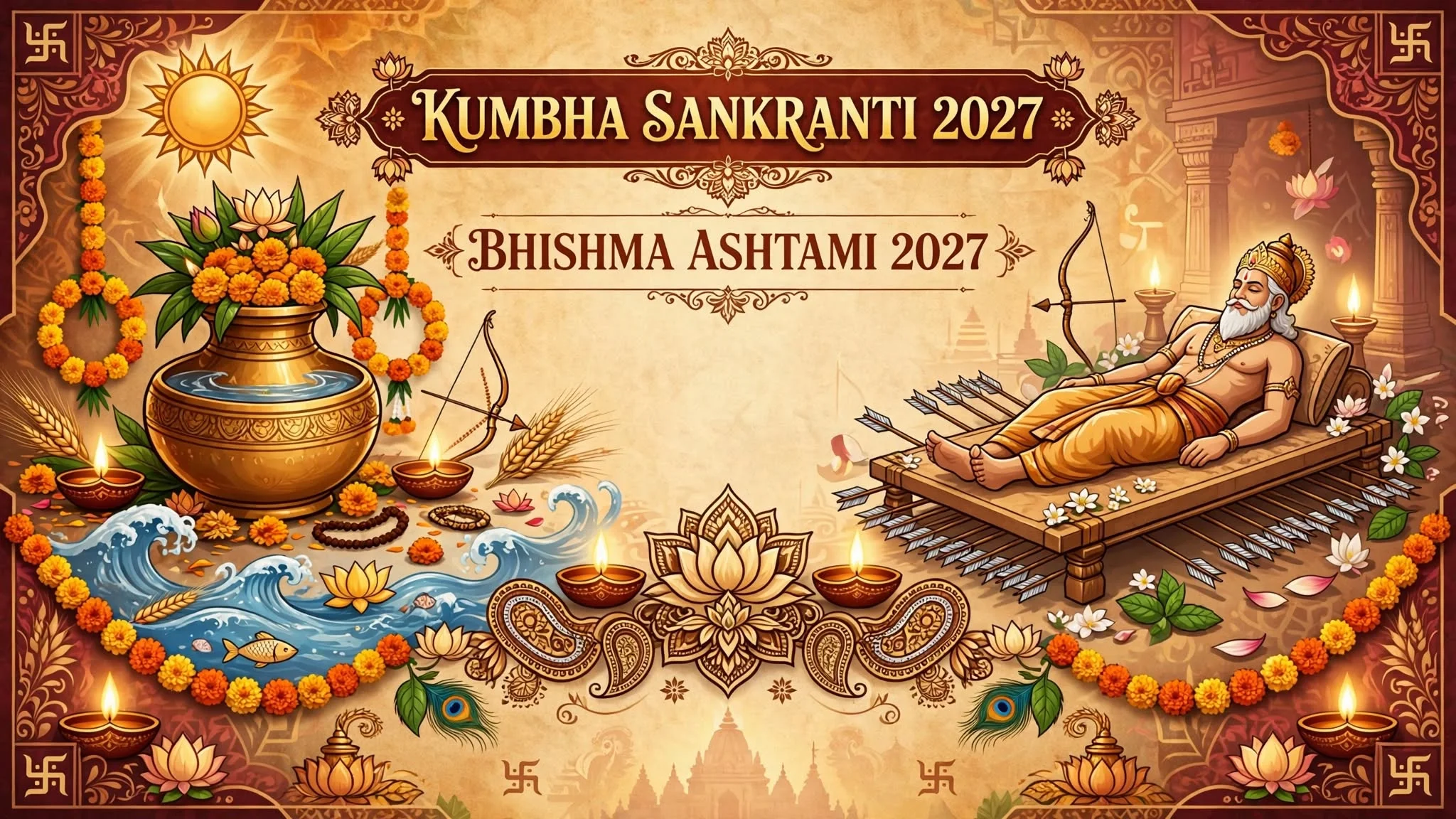
Saturday, Feb 13, 2027
Kumbha Sankranti
Kumbha Sankranti is a major astronomical and religious transit festival in the Vedic solar calendar, marking the precise moment when Lord Surya (the Sun God) transits from the sign of Makara (Capricorn) into Kumbha Rashi (Aquarius), the eleventh sign of the zodiac ruled by Shani Dev (Saturn).
View Festival Guide
Sunday, Feb 14, 2027
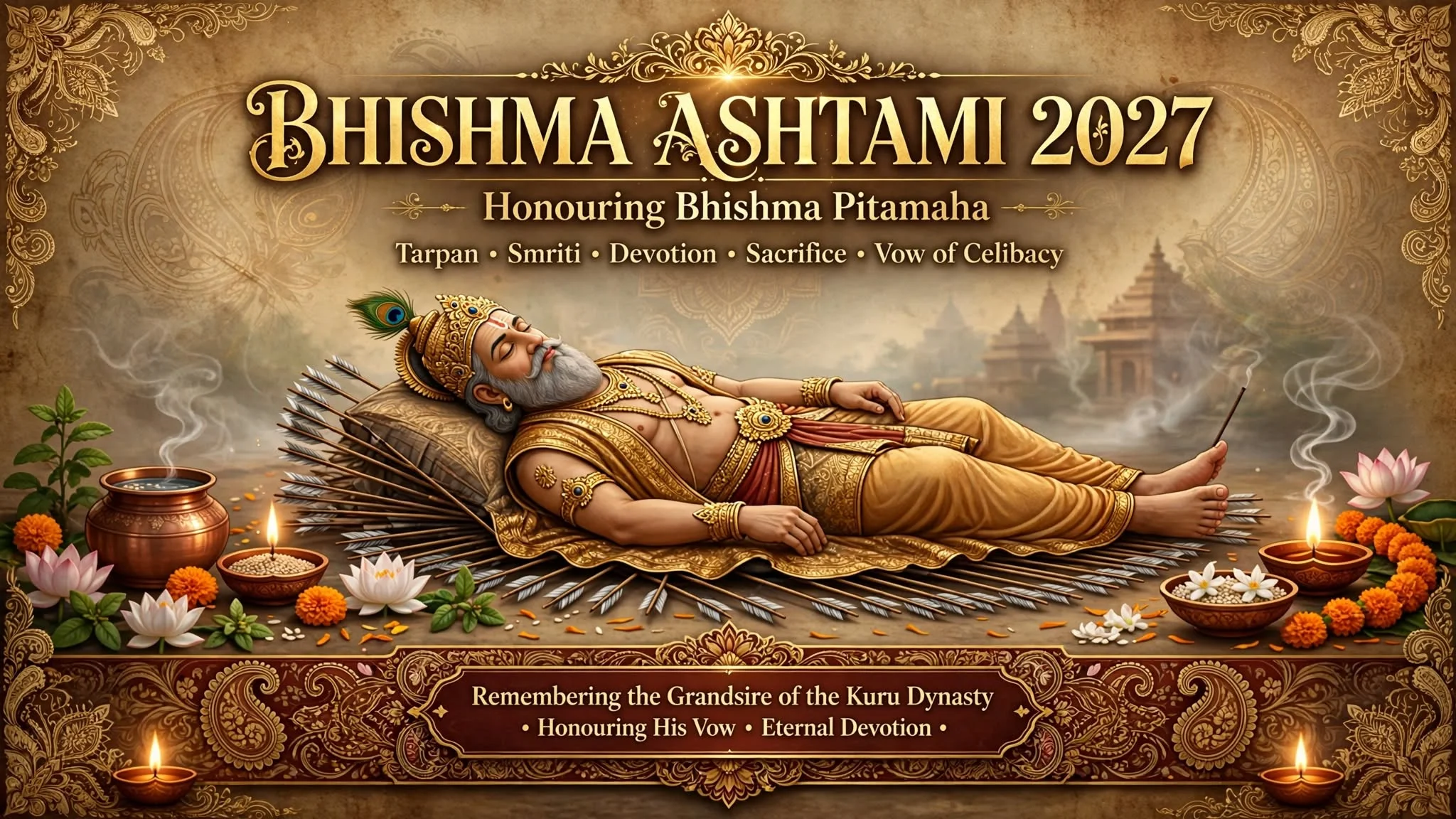
Bhishma Ashtami
Bhishma Ashtami is a deeply solemn and historically revered Hindu observance occurring on the Ashtami tithi (eighth lunar day) of Shukla Paksha in the month of Magha (January–February), commemorating the voluntary departure (Maha-Samadhi / Ichha-Mrityu) of Pitamaha Bhishma, the venerable patriarch of the Mahabharata.
View Festival Guide
Wednesday, Feb 17, 2027
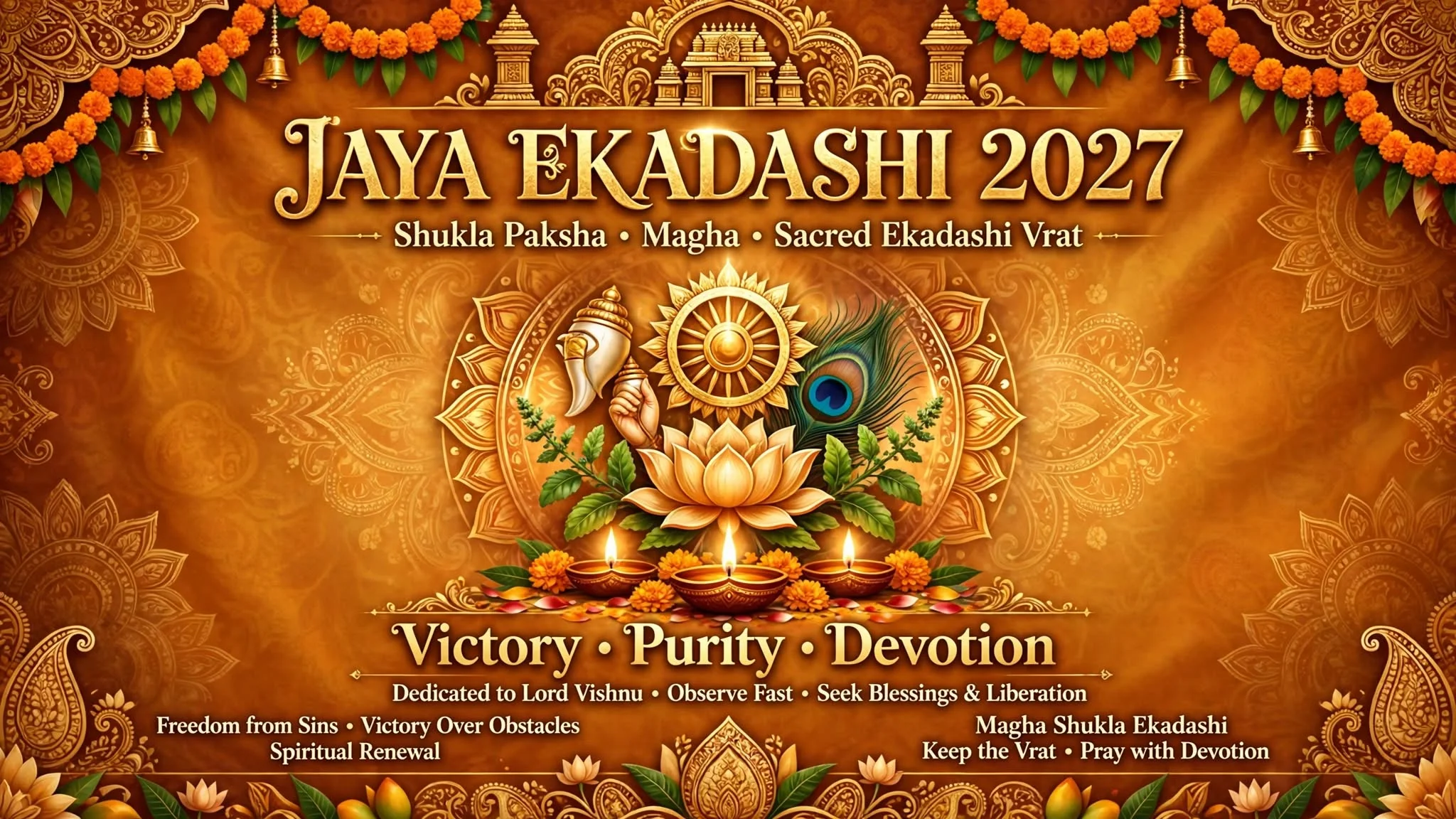
Jaya Ekadashi
Jaya Ekadashi, also revered as Bhaimi Ekadashi, is a celebrated Vaishnava fasting festival observed on the Ekadashi tithi (eleventh lunar day) of Shukla Paksha in the month of Magha (January–February).
View Festival Guide
Thursday, Feb 18, 2027
Guru Pradosh Vrat
Guru Pradosh Vrat, also known as Guruvara Pradosham or Brihaspati Pradosham, is a sacred bimonthly Hindu fasting observance occurring when the Trayodashi tithi (thirteenth lunar day) coincides with a Thursday (Guruvara) during the twilight Pradosha Kaal period.
View Festival Guide
Saturday, Feb 20, 2027
Magha Purnima
Magha Purnima, widely celebrated as Maghi Purnima or Maha Maghi, is the culminating and most spiritually radiant full moon festival in the Hindu liturgical calendar, falling in the holy month of Magha (January–February).
View Festival Guide

Sunday, Feb 21, 2027
Ishti
Ishti is a foundational Vedic ritual observance appearing prominently in Hindu Panchangs on the Pratipada tithi (the first lunar day) following either Amavasya (new moon) or Purnima (full moon), marking the prescribed performance day for the fortnightly Vedic Darsha-Purnamasa sacrifices.
View Festival Guide
Sunday, Feb 21, 2027
Chandra Grahan
Chandra Grahan (Lunar Eclipse) is a sacred cosmic and spiritual juncture (Parva Kaal) in Sanatana Dharma occurring exclusively on Purnima (the full moon day) when the Earth moves directly between the Sun and the Moon, casting its conical shadow across the lunar orb. In Vedic philosophy and Jyotisha, the Moon presides over the mind, subconscious emotions, and water elements (Chandrama Manaso Jatah - Rigveda Purusha Sukta). The temporary obscuration of the Moon by the shadowy nodes Rahu or Ketu induces profound subtle energetic shifts across terrestrial nature and human consciousness.
View Festival Guide
Wednesday, Feb 24, 2027
Dwijapriya Sankashti
Dwijapriya Sankashti Chaturthi is an auspicious monthly Hindu fasting observance dedicated to Lord Ganesha, celebrated on the fourth day (Chaturthi tithi) of the Krishna Paksha (waning moon phase) during the month of Phalguna according to the North Indian Purnimanta calendar (corresponding to Magha Krishna Paksha in the Amanta calendar followed in Maharashtra, Gujarat, Karnataka, Andhra Pradesh, and Tamil Nadu).
View Festival Guide