




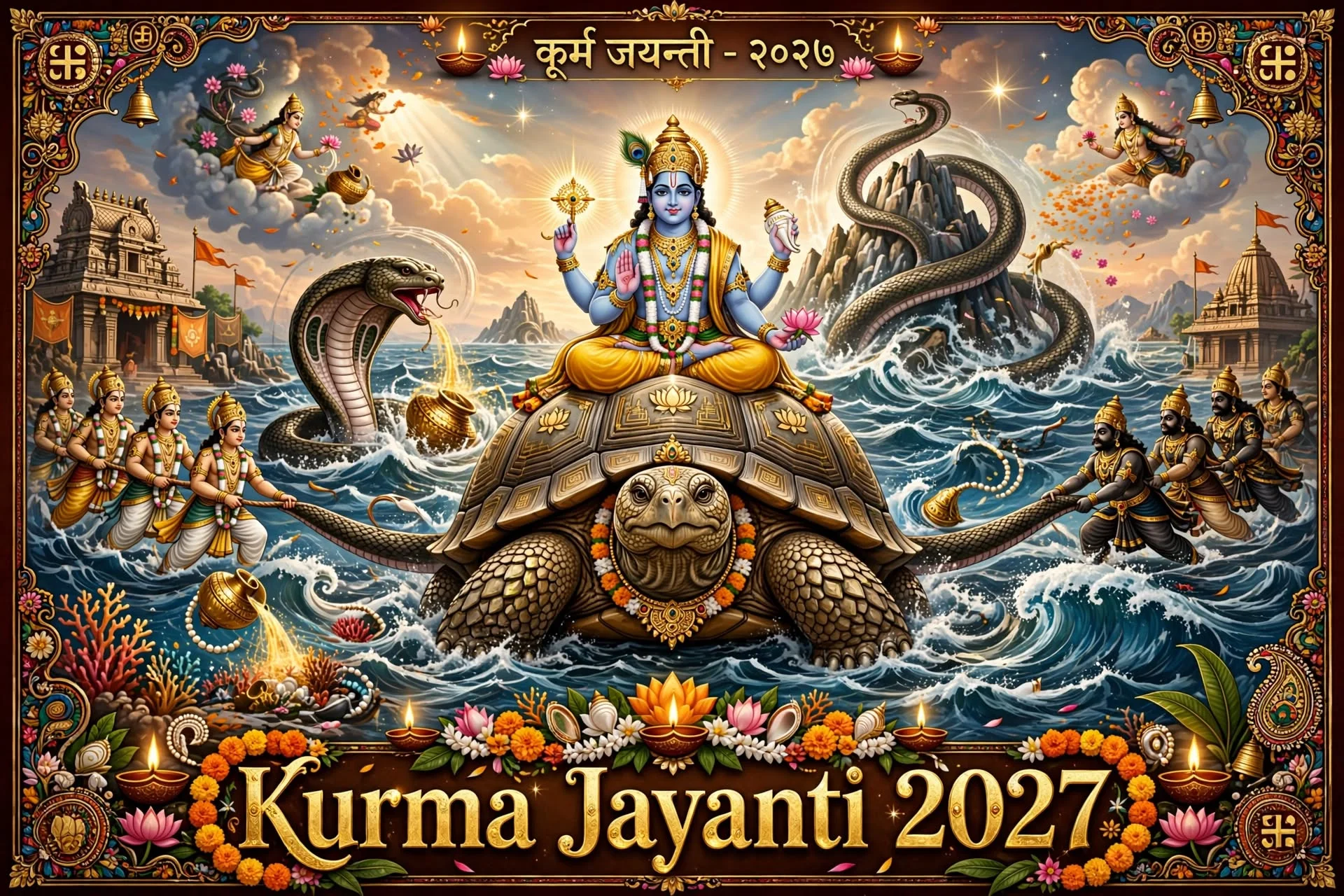
Kurma Jayanti marks the divine appearance anniversary of Bhagavan Kurma, the second divine incarnation (Avatar) of Lord Vishnu, manifesting in the form of a gigantic tortoise during the Satya Yuga on the auspicious tithi of Vaishakha Shukla Purnima (the full moon day of Vaishakha). Manifesting during the monumental cosmic churning of the celestial ocean (Samudra Manthan), Lord Kurma provided His massive, unyielding shell as the bedrock pivot to support the sinking Mount Mandara, saving the cosmic endeavor and enabling the extraction of the nectar of immortality (Amrita) and Goddess Mahalakshmi.
Kurma Jayanti 2027: Date, Puja Timings, Rituals & Stories
Kurma Jayanti Timings & Panchang
Important festival dates and auspicious timings
Usha Arghya (Sunrise)
05:28 am
Sandhya Arghya (Sunset)
07:08 pm
Start Date
Thursday, 20 May 2027
Puja Muhurat
04:03 pm – 04:28 pm
Kurma Jayanti
According to the Srimad Bhagavatam and Kurma Purana, when gods and demons attempted to churn the cosmic ocean using Mount Mandara as the churning rod and the serpent king Vasuki as the rope, the enormous mountain, having no solid foundation in the bottomless ocean floor, began sinking rapidly into the subterranean abysses. Responding to the desperate cries of the devas, Lord Vishnu assumed the gigantic form of a tortoise, entered the waters, and lifted the colossal mountain upon His back, effortlessly bearing its spinning friction for thousands of cosmic years.
Celebrated with deep devotion, particularly in ancient Kurma temples such as Sri Kurmam in Andhra Pradesh, Kurma Jayanti is observed with daytime fasting, recitations of the Vishnu Sahasranama and Kurma Stotra, and prayers for grounding stability, emotional equilibrium, patience, and the removal of foundational crises in human life.
Why is Kurma Jayanti Celebrated?
Kurma Jayanti is celebrated to honor the divine quality of selfless endurance, silent foundation, and supreme stability that sustains creation. Without Lord Kurma's willingness to bear the immense burden beneath the surface without seeking praise or visibility, the cosmic treasures—including Goddess Lakshmi, the Kamadhenu, the Parijata tree, and Amrita—could never have emerged.
It is also celebrated to cultivate the yogic virtue of Kurma-like sensory withdrawal (Pratyahara), teaching spiritual seekers to withdraw the outgoing senses away from materialistic distractions into the protective shell of inner meditation.
- Commemorates the descent of Lord Vishnu's second avatar, the cosmic tortoise Kurma.
- Honors the silent, selfless foundation that supported Mount Mandara during Samudra Manthan.
- Inspires unyielding patience, emotional grounding, and resilience amidst chaotic trials.
- Invokes blessings for stability in family life, architectural longevity (Vastu), and Moksha.
The Sinking of Mount Mandara and the Cosmic Bedrock
The Cosmic Churning and the Sinking Mountain
As narrated in the First and Eighth Cantos of the Srimad Bhagavatam and the Kurma Purana, the devas, cursed by Sage Durvasa to lose their celestial splendor, allied with the asuras to churn the ocean of milk to extract Amrita. They uprooted the colossal golden Mount Mandara to serve as the churning rod and persuaded the giant serpent Vasuki to serve as the rope.
However, as soon as the gods and demons began pulling the serpent back and forth with colossal force, the immense weight of the mountain caused it to plunge downwards through the soft bed of the ocean into the nether realms. Terror gripped both camps as the mountain threatened to shatter the earth's subterranean crust.
The Descent of the Cosmic Tortoise
Witnessing the impending catastrophe, Lord Vishnu expanded His form into an immense, awe-inspiring celestial tortoise measuring hundreds of thousands of yojanas in breadth. Diving into the unfathomable depths, He positioned Himself beneath the mountain and effortlessly lifted it upon His diamond-hard carapace (shell).
The continuous clockwise and counter-clockwise spinning of Mount Mandara acted as a delightful soothing massage on the Lord's massive back, putting Him into a state of divine slumber while creation continued to churn, ultimately bringing forth the divine physician Dhanvantari bearing the Amrita Kalasha.
Source: Srimad Bhagavata Purana, Skandha 8 & Kurma Purana, Purva Bhaga
The Art of Sensory Withdrawal and the Unseen Foundation
The Bhagavad Gita's Metaphor of the Tortoise
In Chapter 2, Verse 58 of the Bhagavad Gita, Lord Krishna gives the celebrated analogy: "Yada samharate chayam kurmonganiva sarvashah"—just as a tortoise withdraws its limbs safely inside its protective shell when danger approaches, a yogi who withdraws the five senses from worldly temptations achieves unbroken wisdom (Sthitaprajna). Lord Kurma represents the mastery of Pratyahara in Ashtanga Yoga.
Honoring the Unsung Foundation
In every noble endeavor, enterprise, family, or nation, there are visible actors pulling the ropes, but the entire structure rests upon quiet, steady individuals who silently bear the weight without demanding the spotlight. Kurma Jayanti pays homage to this profound virtue of steadfast, selfless endurance.
Observance Protocol, Altar Worship, and Vastu Pujan
Fasting and Altar Setup
Devotees observe a fast from sunrise on Purnima, waking up early and performing a sacred bath. A clean wooden altar is draped in yellow or blue cloth, upon which a brass, silver, or stone murti of Lord Kurma (or Shaligram shila with tortoise markings) is placed alongside Lord Vishnu.
Vastu Pujan and Temple Festivities
Because the tortoise represents foundational earth stability, this tithi is considered exceptionally auspicious for Vastu Shanti, laying foundation stones for homes, and worshiping tortoises at holy temple ponds. In Sri Kurmam temple in Srikakulam, thousands of pilgrims witness the divine Maha Abhishekam and chariot festival.
Kurma Jayanti Puja Vidhi (Step by Step)
- 1
Pratah Snana
Take an early morning bath with water consecrated with Gangajal, wearing clean yellow traditional clothing.
- 2
Sankalpa
Hold flowers, akshata, and pure water in the right hand, solemnly taking a vow to observe Kurma Jayanti with stability, patience, and devotion.
- 3
Altar Preparation
Prepare a clean wooden altar facing north or east, drape in yellow cloth, placing an idol or yantra of Lord Kurma / Vishnu in the center.
- 4
Deepa Sthapana and Dhoop
Light a pure cow ghee lamp representing divine illuminative consciousness and burn fragrant sandalwood incense.
- 5
Lord Kurma Avahana
Invoke the presence of Bhagavan Kurma with folded hands, meditating upon His divine form bearing Mount Mandara upon His back.
Kurma Jayanti Puja Samagri List
Deity Consecration and Altar Articles
Materials required for the ceremonial bath and decoration of Lord Kurma.
- Idol of Lord Kurma (metal/stone) or Shaligram
- Yellow or blue cloth for altar
- Panchamrita ingredients (milk, curd, honey, ghee, sugar)
- Gangajal in copper vessel
- Pure Malayagiri chandan and kumkum
- Sacred thread (Yajnopavita)
Floral and Aromatic Offerings
Botanicals and aromatics representing stability.
- Fresh Tulasi leaves and manjaris
- White lotus flowers and yellow marigolds
- Pure cow ghee lamp and cotton wicks
- Bhimseni camphor
- Natural sandalwood dhoop sticks
Naivedya and Prasadam Offerings
Sattvic food offerings acceptable for Kurma Jayanti.
- Kheer (sweet rice pudding) prepared in cow milk
- Fresh seasonal fruits (Melons, Bananas, Mangoes)
Mantras and Prayers for Kurma Jayanti
Kurma Jayanti Vrat Rules and Fasting Guidelines
Fasting and Mental Discipline
Devotees observing Kurma Jayanti fast maintain calmness, avoid rash words, and observe dietary simplicity.
- Fast begins at sunrise and continues until evening worship or moonrise
- Abstain from all non-sattvic food, grains, cereals, onion, and garlic
- Those observing partial fast may partake of milk, fruits, and light phalahar
Charity and Parana Regulations
Completing the vow requires honoring ancestors and giving to the needy.
- Feed cows, fish, and turtles in ponds with flour balls or green leaves
- Donate cooling earthen pots, grains, and footwear to poor laborers
- Break the fast in the evening after viewing the full moon and concluding aarti
Dos and Don'ts of Kurma Jayanti
Good Practices (Do's)
- Wake up early, bathe, and worship Lord Kurma alongside Lord Vishnu.
- Offer sandalwood paste, Tulasi leaves, white flowers, and milk kheer.
- Practice sensory control, patience, and non-reactivity in stressful situations.
- Feed turtles, fish, and birds with pure grain flour or puffed rice.
- Donate earthen water pots, grains, and footwear to the poor.
Kurma Jayanti Across Regions
| Region | Local Name |
|---|---|
| Andhra Pradesh (Sri Kurmam Temple, Srikakulam) | Sri Kurma Jayanthi Utsavam |
| Northern & Western India (Rajasthan, Gujarat, Madhya Pradesh) | Kurma Jayanti / Vastu Pujan Divas |
| Odisha & Bengal | Kurma Avatar Jayanti |
Kurma Jayanti FAQs
Why did Lord Vishnu take the form of a tortoise (Kurma)?
During the churning of the cosmic ocean (Samudra Manthan), Mount Mandara had no base and began sinking. Lord Vishnu assumed the gigantic, immovable form of a tortoise to support the mountain on His back.
Where is the most famous temple dedicated to Lord Kurma located?
The Sri Kurmam Temple, located in Srikakulam district of Andhra Pradesh, is the world's most famous and ancient temple dedicated exclusively to Lord Kurma, featuring a deity facing the western direction.
What is the connection between the tortoise and Vastu Shastra?
In Vastu Shastra, the tortoise symbolizes foundational strength, stability, and longevity. Keeping a sanctified metallic or crystal tortoise in the north of the home or office invites stability and prosperity.
Upcoming Festivals
View All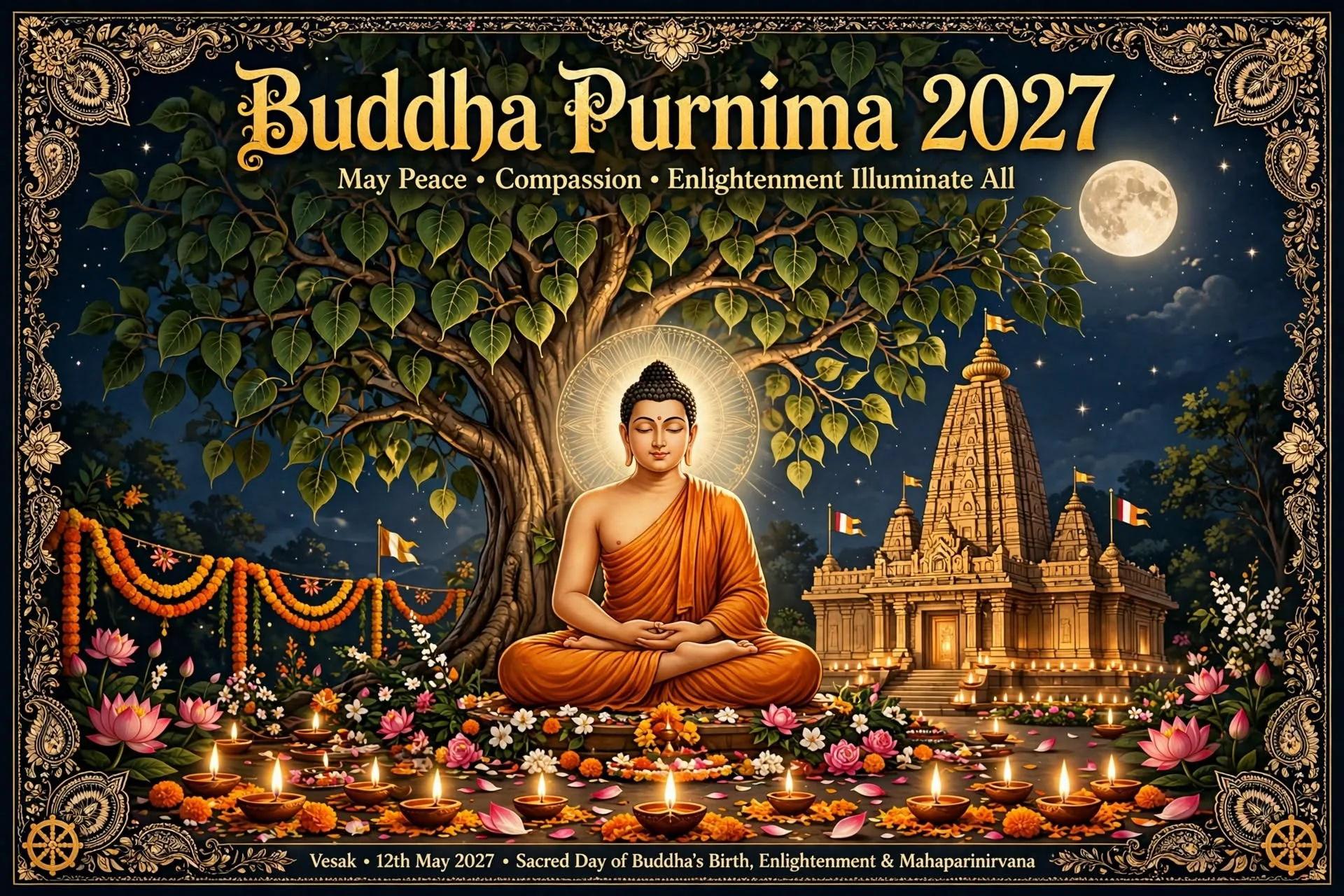
Thursday, May 20, 2027
Buddha Purnima
Buddha Purnima, internationally celebrated as Buddha Jayanti or Vesak, is one of the most sublime and universally revered spiritual festivals, falling on the sacred full moon day (Purnima) of the holy month of Vaishakha. This momentous tithi commemorates the thrice-blessed milestone (Thrice-Holy Vesak) in the life of Gautama Buddha: his miraculous birth as Prince Siddhartha in Lumbini, his supreme enlightenment (Bodhi) beneath the Bodhi tree in Bodh Gaya, and his ultimate transition into final liberation (Mahaparinirvana) in Kushinagar.
View Festival Guide

Thursday, May 20, 2027
Anvadhan
Anvadhan (अन्वाधान) is an ancient, highly revered Vedic ritual and spiritual observance in Sanatana Dharma performed on the day immediately preceding the New Moon (Amavasya) or Full Moon (Purnima). Rooted in the pristine traditions of the Shrauta and Grihya Sutras, Anvadhan literally translates to 'the solemn placing and replenishment of sacred fuel wood into the consecrated Vedic fires'. In traditional Vedic ritualism, householders (Grihasthas) and priests who maintain the sacred Agnihotra fires perform Anvadhan to prepare the sacrificial altars for the grand Darsha Yajna (New Moon sacrifice) or Paurnamasa Yajna (Full Moon sacrifice) scheduled for the following day.
View Festival Guide
Thursday, May 20, 2027
Vaishakha Purnima
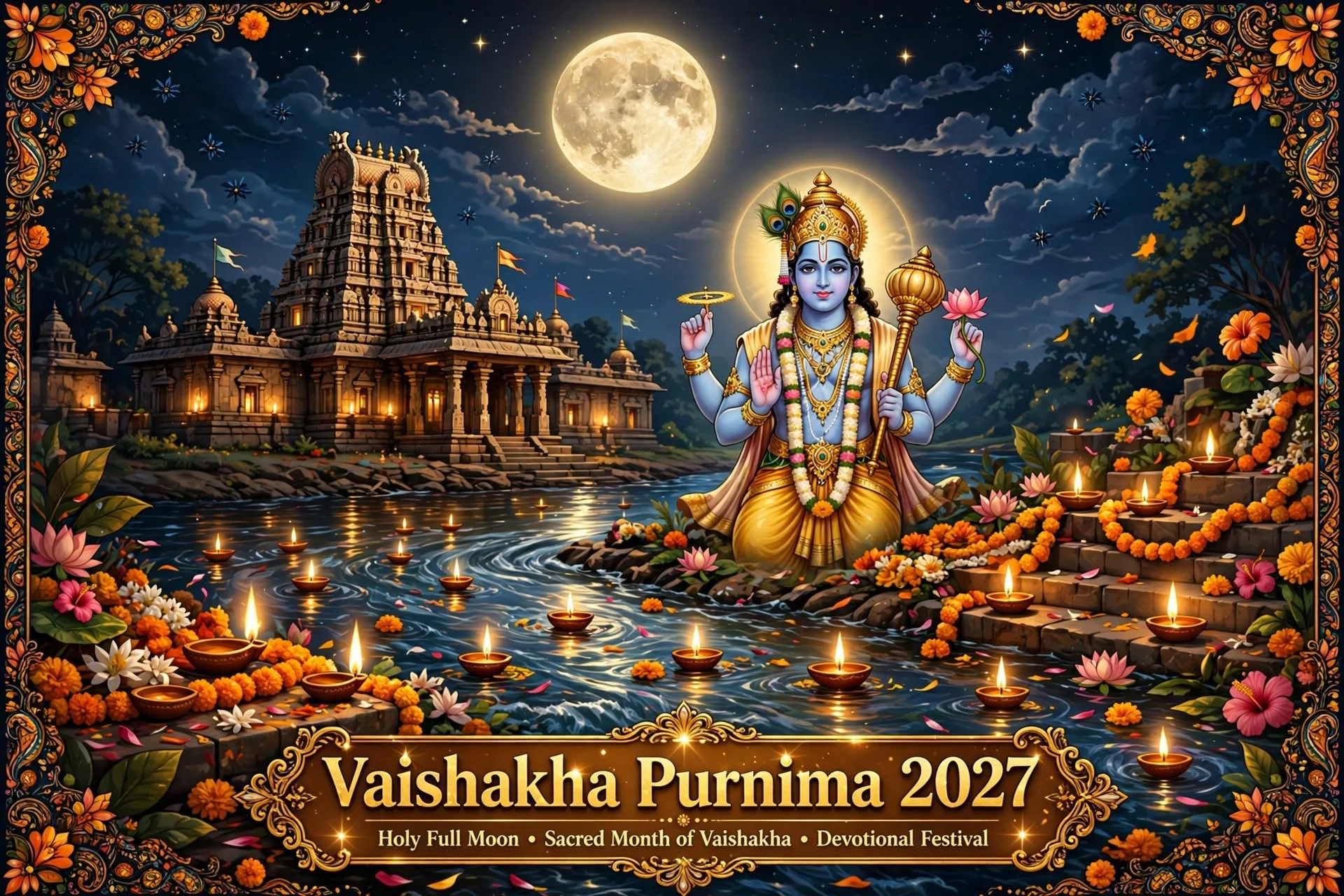
Vaishakha Purnima is the sacred full-moon day occurring on the Purnima Tithi of Shukla Paksha in the Hindu lunar month of Vaishakha. It is one of the spiritually significant Purnima observances in the Hindu calendar and is associated with sacred bathing, charity, worship of Lord Vishnu, remembrance of ancestors, and spiritual discipline. The word Purnima refers to the full-moon phase, symbolizing completeness, illumination, and the culmination of the lunar fortnight. Vaishakha is traditionally regarded as a particularly meritorious month for religious observances, making its concluding full moon an important occasion for devotees.
View Festival Guide
Friday, May 21, 2027
Narada Jayanti
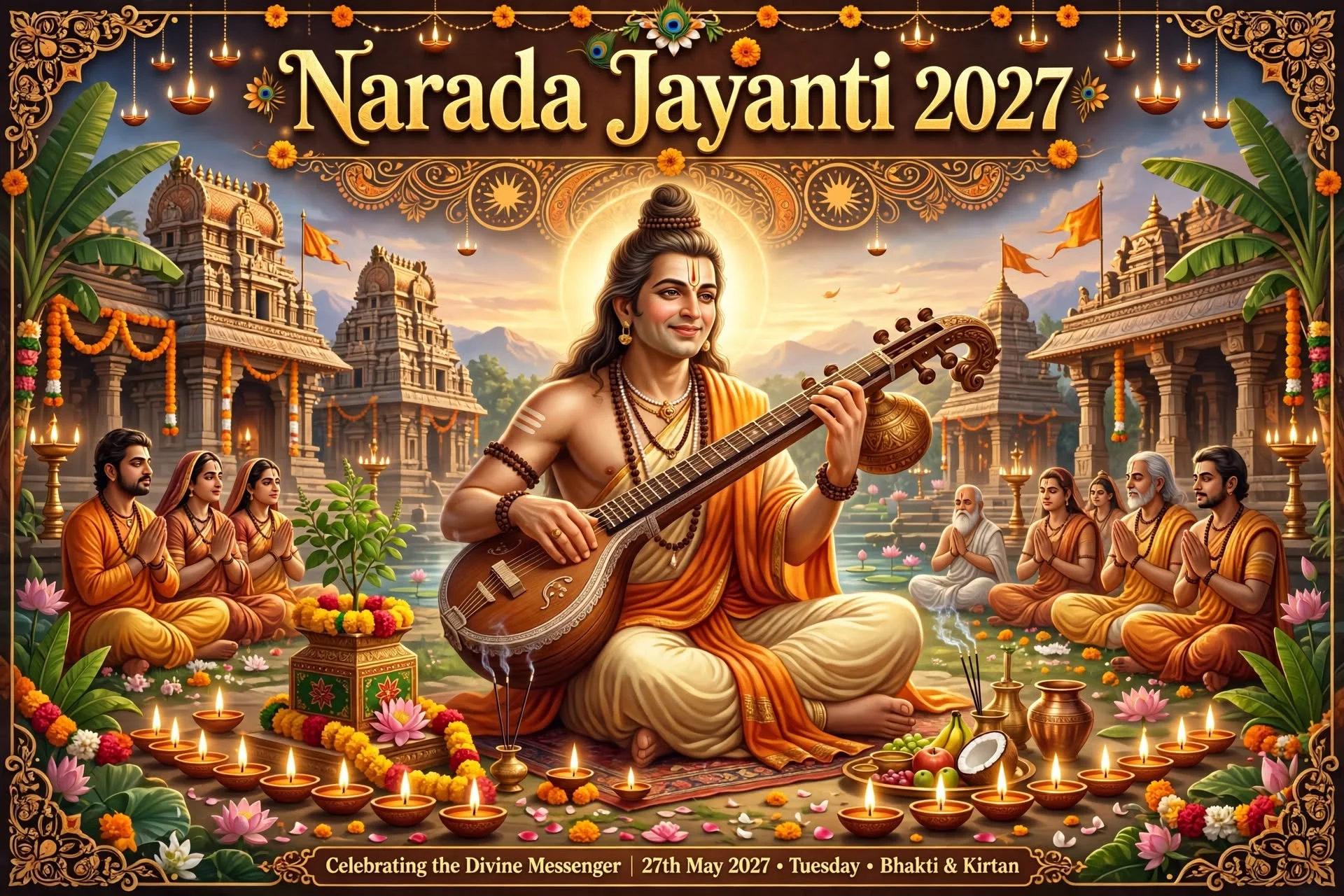
Narada Jayanti marks the appearance anniversary of Devarshi Narada, the supreme celestial sage, divine messenger of the cosmos, master of the Veena, and eternal pioneer of Harinama Sankirtana. Celebrated on the Pratipada tithi (first lunar day) of the Krishna Paksha directly following Vaishakha Purnima (in the month of Jyeshtha in the Purnimanta system, or Vaishakha Krishna Pratipada), this festival commemorates the appearance of the great Manasaputra (mind-born son) of Lord Brahma who traverses the three cosmic worlds unobstructed, singing the praises of Lord Narayana upon his celestial lute, the Mahati Veena.
View Festival Guide

Friday, May 21, 2027
Ishti
Ishti is a foundational Vedic ritual observance appearing prominently in Hindu Panchangs on the Pratipada tithi (the first lunar day) following either Amavasya (new moon) or Purnima (full moon), marking the prescribed performance day for the fortnightly Vedic Darsha-Purnamasa sacrifices.
View Festival Guide
Sunday, May 23, 2027
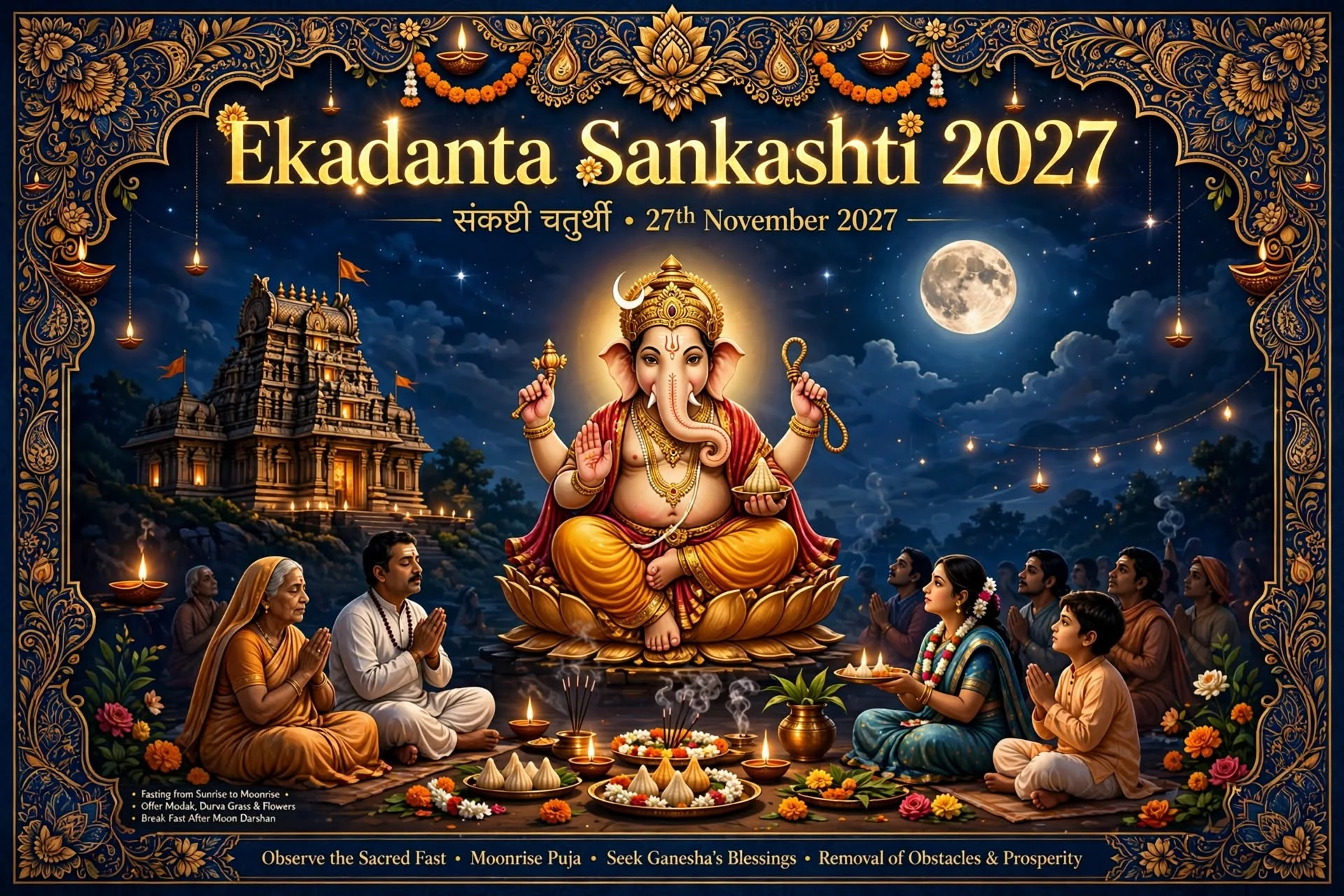
Ekadanta Sankashti
Ekadanta Sankashti Chaturthi, also celebrated as Ekadanta Sankashti Vrat, is a powerful monthly observance dedicated to Lord Ganesha, occurring during the Krishna Paksha (waning fortnight) on the fourth lunar day (Chaturthi tithi) of the Hindu lunar month of Vaishakha (or Jyeshtha in the Purnimanta system). The term "Sankashti" translates to "deliverance from distress or crisis" (Sankat-Nivaran), signifying that this sacred vrata removes formidable obstacles, clears karmic debts, and brings peace and success to the devotee's life.
View Festival Guide
Tuesday, Jun 1, 2027
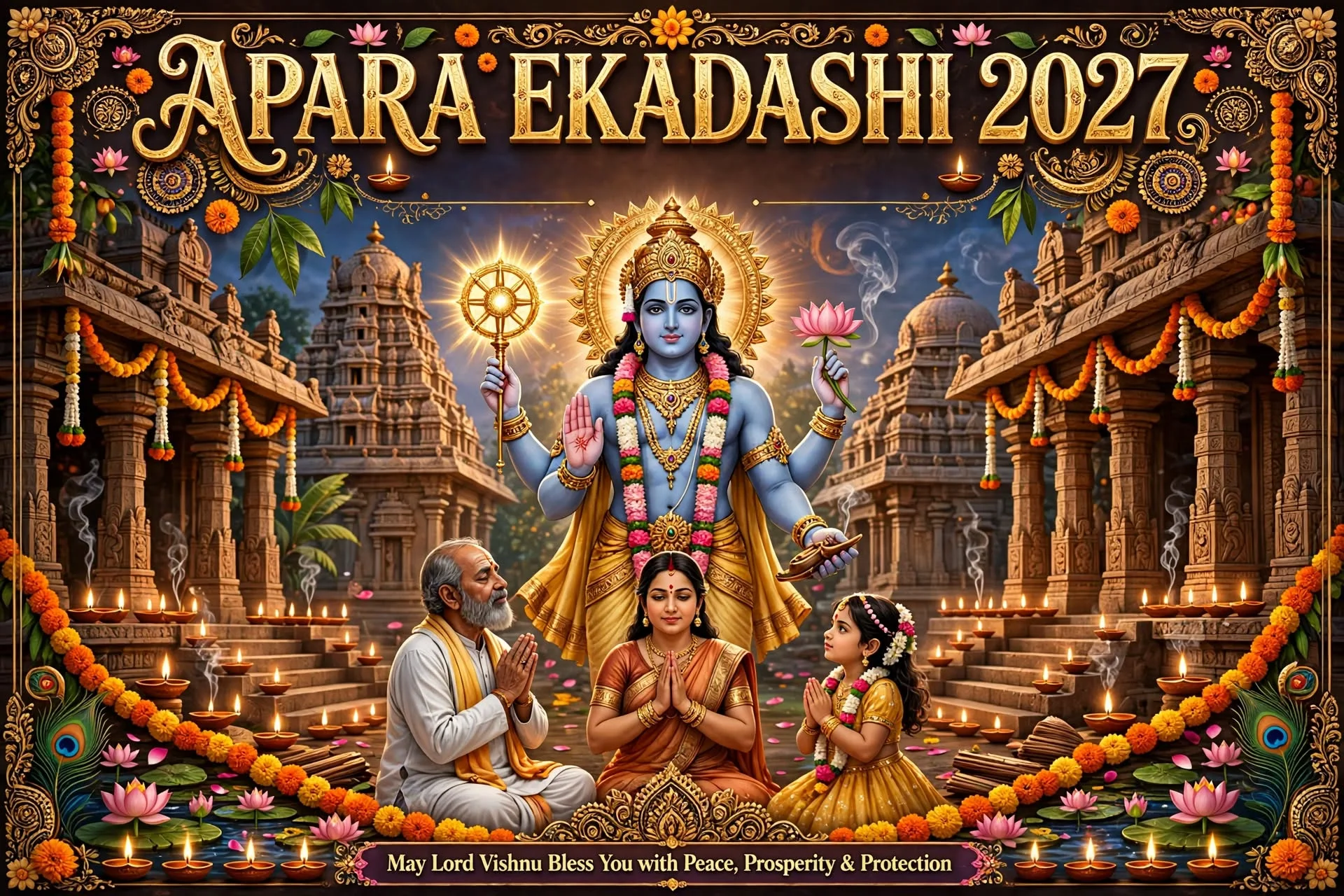
Apara Ekadashi
Apara Ekadashi, also known as Achala Ekadashi, is a sacred Hindu fasting observance dedicated to Lord Vishnu. It falls on the Ekadashi Tithi, the eleventh lunar day of Krishna Paksha in the month of Jyeshtha according to the Purnimanta calendar. In the Amanta calendar followed in several western and southern Indian regions, the same observance is associated with Vaishakha Krishna Paksha.
View Festival Guide
Wednesday, Jun 2, 2027
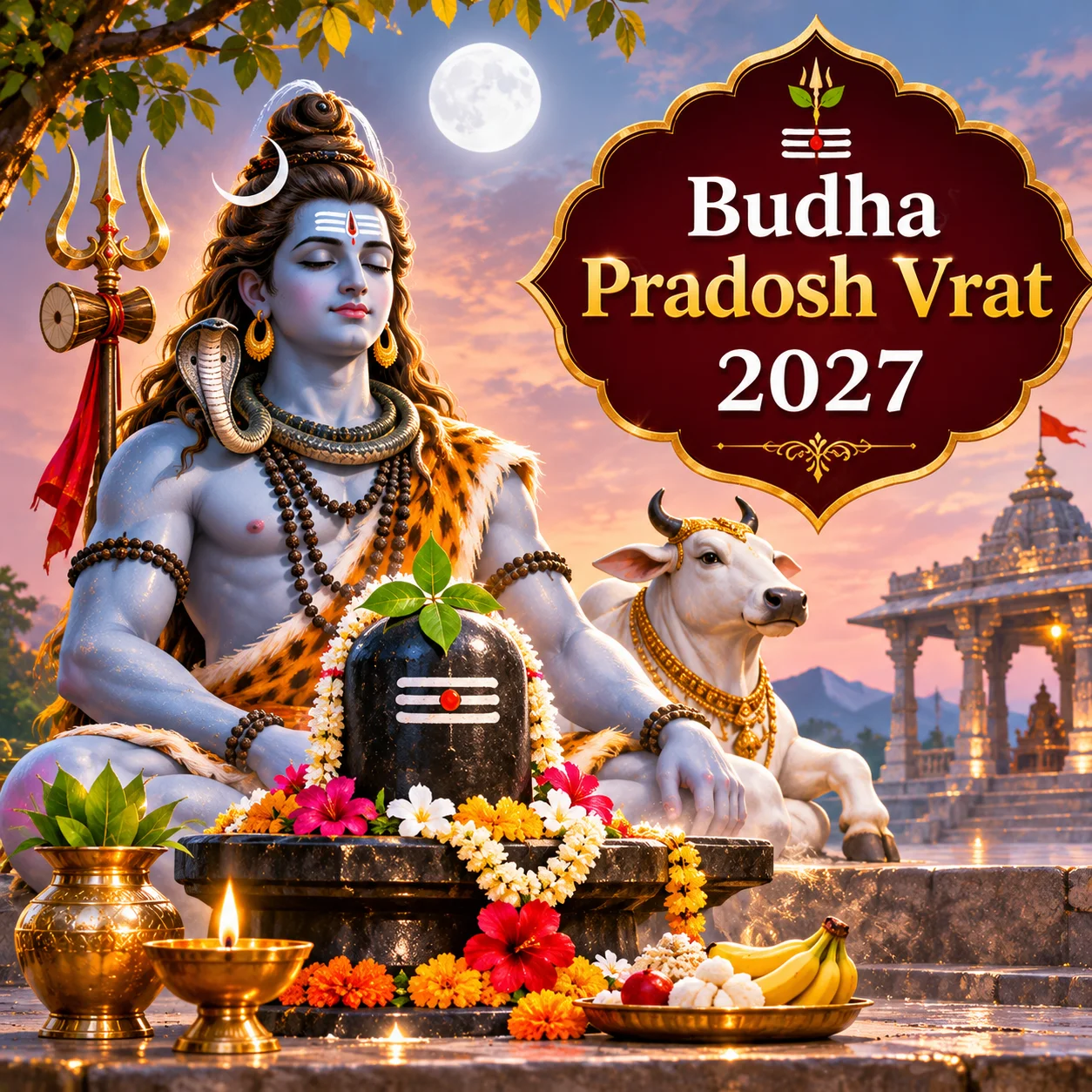
Budha Pradosh Vrat
Budha Pradosh Vrat, also known as Saumya Vara Pradosham, is a sacred bimonthly Hindu observance occurring when the Trayodashi tithi (thirteenth lunar day) coincides with a Wednesday (Budhavara) during the Pradosha Kaal twilight period.
View Festival Guide