




Shani Pradosh Vrat is an exceptionally potent, revered, and astrologically transformative bi-monthly Hindu fasting observance dedicated to Lord Shiva, Goddess Parvati, and Lord Shani Deva (the planetary deity of Saturn). Occurring on the thirteenth day (Trayodashi tithi) of either the waxing (Shukla) or waning (Krishna) lunar fortnight when it coincides with a Saturday (Shanivara), this sacred vow is lauded across Vedic and Puranic literature as the supreme, infallible spiritual remedy for dissolving chronic karmic impediments, neutralizing severe planetary afflictions, and securing profound peace and prosperity.
Shani Pradosh Vrat 2027: Date, Puja Timings, Rituals & Stories
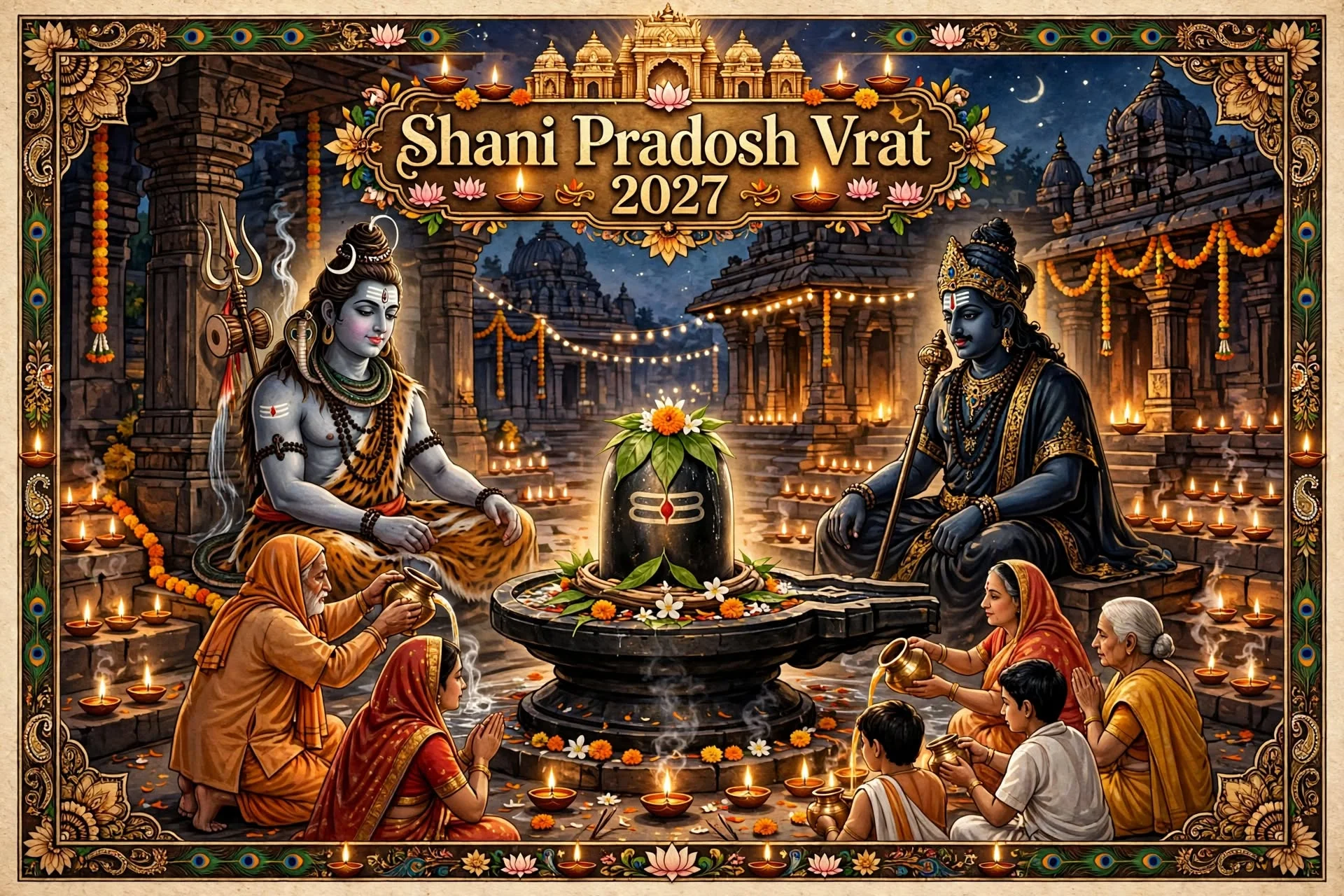
Shani Pradosh Vrat Timings & Panchang
Important festival dates and auspicious timings
Usha Arghya (Sunrise)
06:42 am
Sandhya Arghya (Sunset)
06:24 pm
Start Date
Saturday, 6 Mar 2027
Puja Muhurat
09:54 am – 12:03 pm
Shani Pradosh Vrat
The twilight window surrounding sunset—spanning approximately forty-five minutes before to forty-five minutes after sunset (totalling 1.5 hours or one Prahar)—is known as the sacred Pradosha Kaal. According to the Shiva Purana and the Skanda Purana, during this divine juncture, Lord Shiva performs the cosmic Ananda Tandava upon the summit of Mount Kailash, surrounded by the assembled celestial pantheon. Worshipping Mahadeva during this precise Sandhya interval dissolves impurities and grants profound inner peace.
In Vedic astrology (Jyotisha), Shani Deva (Saturn) is the divine dispenser of karmic justice (Karmaphala Data), governing discipline, patience, longevity, justice, and the fruits of past deeds. Lord Shani is an ardent devotee and disciple of Lord Shiva, having performed thousands of years of intense tapasya to attain his planetary status directly from Mahadeva. When Trayodashi falls on a Saturday, Lord Shiva's supreme compassionate grace merges with Lord Shani's restorative justice. Hence, Shani Pradosha is universally hailed as the paramount remedy for pacifying the malefic influences of Shani Sade Sati, Shani Dhaiya, Kantaka Shani, and Shani Mahadasha.
Devotees observe Shani Pradosh by maintaining an austere day-long fast, bathing in the late afternoon before sunset, and performing the Shodashopachara Abhishekam of the Shiva Linga using Panchamrita, pure water, Bilva leaves (Belpatra), sacred ash (Bhasma), and black sesame seeds (Kala Til). Simultaneously, devotees light an earthen or iron lamp filled with pure mustard oil beneath a sacred Peepal tree or before Shani Deva, reciting the Dasharatha Shani Stotra and Shiva Chalisa, concluding with a light sattvic meal (Parana).
Why is Shani Pradosh Vrat Celebrated?
Shani Pradosh Vrat is celebrated to propitiate Lord Shiva and Shani Deva during the sacred twilight Pradosha hour, neutralizing severe karmic debts and planetary afflictions.
The observance provides an infallible spiritual shield against the adverse astrological transits of Saturn, including Shani Sade Sati, Dhaiya, and challenging Dasha periods.
It commemorates the supreme devotion of Shani Deva toward Lord Shiva, demonstrating that sincere repentance and surrender to Mahadeva transform planetary hardships into spiritual wisdom and material stability.
Devotees observe this sacred day to attain longevity, overcome chronic physical ailments and court litigation, remove poverty, and secure the compassionate grace of Lord Mahadeva.
Scriptural Chronicles and Sacred Lore of Shani Pradosh Vrat
Shani Deva's Severe Penance and Boon from Lord Shiva
The profound scriptural lore of Shani Deva's connection to Lord Shiva is recorded in the Shiva Purana (Shatarudra Samhita) and the Skanda Purana (Kashi Khanda). Born as the son of Surya Deva (the Sun God) and Chhaya (Shadow), Shani Deva was disowned by his father due to his dark complexion. Deeply pained, Shani sought the shelter of Lord Shiva.
Shani traveled to the holy city of Kashi (Varanasi), installed a Shiva Linga with his own hands, and undertook thousands of years of severe, unmoving ascetic penance, meditating exclusively upon Mahadeva without food or water. Pleased with his unparalleled devotion, Lord Shiva manifested before him and declared: 'O Shani! Among all nine planets, you shall be the supreme judge of human karma (Karmaphala Data). Your glance shall humble kings, gods, and demons alike, and your transit shall awaken spiritual wisdom.'
Lord Shiva further decreed: 'Whoever worships Me with devotion on a Trayodashi falling on Saturday (Shani Pradosha) shall be completely shielded from your wrath, and you shall bestow upon them health, longevity, and royal honor.' Thus, Shani Pradosha became the eternal bridge of protection between Shani and Shiva.
King Dasharatha's Deliverance from Rohini Shakata Bhedana
In the Padma Purana (Uttara Khanda) and the Bhavishya Purana, an illustrious legend records that during the reign of King Dasharatha of Ayodhya, royal astrologers foresaw that Shani Deva was about to transit the constellation of Rohini (Rohini Shakata Bhedana)—an astronomical event that would trigger twelve consecutive years of catastrophic drought, famine, and destruction across earth.
Determined to save his citizens, King Dasharatha mounted his celestial chariot, flew into the planetary spheres, and challenged Shani Deva with his divine bow. Impressed by the king's courage and selflessness, Shani Deva agreed not to inflict the famine, provided Dasharatha composed and recited a hymn honoring him.
King Dasharatha composed the celebrated 'Dasharatha Shani Stotra' and observed worship of Lord Shiva on Shani Pradosha. Highly pleased, Shani Deva granted Dasharatha the boon that whoever recites this stotra and worships Lord Shiva on Saturday Pradosha will never suffer poverty, famine, or untimely death.
Esoteric, Astrological, and Karmic Dimensions of Shani Pradosh
The Supreme Antidote for Shani Sade Sati and Dhaiya
In Vedic astrology, Shani Sade Sati (the seven-and-a-half-year transit of Saturn) and Shani Dhaiya (the two-and-a-half-year transit) test an individual's character through delays, professional setbacks, financial constraints, and emotional isolation.
Observing Shani Pradosh aligns the practitioner's consciousness with Saturn's spiritual demands: humility, truthfulness, patience, and ego-surrender. Worshipping Lord Shiva—the master of Shani—neutralizes the punitive edge of Saturn's gaze, transforming suffering into profound spiritual maturation.
Purification through Black Sesame Seeds (Kala Til Tattva)
Black sesame seeds carry strong grounding, detoxifying, and sattvic energies linked both to Lord Vishnu's sweat and Lord Shani's planetary frequency. Offering black sesame seeds to the Shiva Linga and lighting sesame/mustard oil lamps absorbs dark karmic vibrations from the devotee's auric field.
This ancient ritual burns away accumulated negative psychic residues, releasing the mind from chronic depression, irrational fears, and lethargy.
The Mystical Alignment of Twilight (Sandhya Kaal)
Twilight on Saturday represents a powerful junction where the solar diurnal cycle yields to nocturnal planetary currents. During this window, Lord Shiva's Ananda Tandava establishes absolute cosmic balance.
Meditation and prayer executed during this twilight hour bypass ordinary intellectual resistance, connecting the devotee directly with universal consciousness and granting deep mental serenity.
Relief from Chronic Diseases, Debts, and Litigation
Saturn governs the skeletal system, nervous pathways, chronic lingering illnesses, and legal entanglements. Praying to Lord Mahadeva (the supreme physician, Vaidyanatha) on Shani Pradosha speeds recovery from chronic joint pains, paralysis, and nervous disorders, while dissolving long-standing court cases and debts.
Comprehensive Ritual Observance and Guide for Shani Pradosh
Dawn Purificatory Bath and Morning Sankalpa
Rise early during Brahma Muhurta, take a purifying bath in clean water mixed with holy Gangajal and black sesame seeds, and don clean traditional attire (preferably black, dark blue, or clean white).
Sit facing East or North before the Shiva altar and take the solemn Shani Pradosh Vrat Sankalpa holding water, black sesame, unbroken rice, and a coin, pledging unbroken fast until evening twilight worship.
Daytime Contemplation and Restraint
Maintain silent remembrance of Lord Shiva throughout the day. Devotees may observe complete waterless fasting (Nirjala) or take milk, water, and seasonal fruits (Phalahari) if physically required.
Avoid idle discussions, sleep during the afternoon, and loud social gatherings, dedicating the midday hours to reciting the Dasharatha Shani Stotra, Shiva Chalisa, or chanting the Mahamrityunjaya Mantra.
Pradosha Kaal Shiva Linga Abhisheka and Peepal Puja
Approximately 45 minutes before local sunset, take a second purificatory bath. Clean the puja room and establish the Shiva Linga on a clean brass or silver platform.
Perform elaborate Abhishekam using raw cow milk, curd, ghee, honey, water, and black sesame seeds. Apply sacred Vibhuti (Bhasma) and offer fresh three-leaflet Bilva leaves (Belpatra). Simultaneously, light an earthen or iron lamp filled with pure mustard oil beneath a sacred Peepal tree or before Shani Deva.
Evening Stotra Recitation, Aarti, and Parana
Recite the Shani Pradosh Vrat Katha, Shani Chalisa, and Shiva Tandava Stotra with deep reverence. Conclude with a grand Karpura Maha Aarti.
Distribute charity comprising black blankets, mustard oil, black sesame seeds, iron vessels, and footwear to impoverished persons. Partake of the sanctified Charanamrita and break your fast with a simple, sattvic evening meal cooked without heavy spices or common salt.
Shani Pradosh Vrat Puja Vidhi (Step by Step)
- 1
Brahma Muhurta Jagaran and Morning Snana
Wake before dawn during Brahma Muhurta. Meditate upon Lord Shiva and Shani Deva and take a purificatory bath in clean water mixed with holy Gangajal and black sesame seeds. Dress in clean traditional dark blue, purple, or white clothing.
- 2
Pratah Sankalpa (Morning Resolution)
Sit facing East upon a clean woolen or Kusha mat. Take clean water, black sesame seeds (Kala Til), white flowers, and a coin in your right palm and recite the formal vow to observe the Shani Pradosh Vrat for relief from planetary doshas and attainment of divine peace.
- 3
Daylong Fasting and Shiva-Shani Smaran
Maintain an austere fast throughout the day, refraining from cooked cereals and grains. Engage the mind in silent repetition of the Shiva Panchakshari Mantra: 'Om Namah Shivaya' and the Shani Beej Mantra.
- 4
Pradosha Sandhya Snana and Altar Preparation
Approximately 45 minutes before sunset, bathe again in fresh water. Thoroughly clean the worship space, drape a wooden chowki with a clean blue or white cloth, and install a consecrated Shiva Linga inside an Abhisheka tray.
- 5
Shani Pradosh Vrat Puja Samagri List
Shiva Abhisheka and Holy Waters
Liquid offerings and sacred substances for performing the Pradosha Kaal Linga Abhisheka.
- Pure unboiled cow milk (500 ml) and fresh curd (200 ml)
- Pure desi cow ghee (100 grams) and raw organic honey (50 grams)
- Pure holy Gangajal bottle in a copper or brass lota
- Black sesame seeds (Kala Til) - 250 grams for abhisheka and charity
- Sacred Vibhuti (Bhasma) packet and white sandalwood paste
Shani Deva Offerings and Sacred Flora
Botanical items and illuminants sacred to Lord Shiva and Shani Deva.
- Pure cold-pressed mustard oil (Sarson ka Tel) - 250 ml
- Earthen deepaks (clay lamps) with thick cotton wicks
- Fresh three-leaflet Bilva leaves (Belpatra) - at least 21 leaves
- Blue Aparajita flowers or dark blue/purple blossoms
- Dhatura fruit and flower - 2 pieces
- Bhimseni camphor for aarti and sandalwood incense sticks
Shani Dana (Charity) Items
Specific items donated to impoverished persons on Saturday Pradosha.
Mantras and Prayers for Shani Pradosh Vrat
Shani Pradosh Vrat Vrat Rules and Fasting Guidelines
Fasting Discipline and Timing
Mandatory fasting regulations observed on Shani Pradosh Vrat:
- The fast begins at dawn and continues until the completion of the Pradosha Kaal evening worship.
- Healthy adults observe either complete waterless (Nirjala) fasting or consume light fruits, milk, and tea (Phalahari).
- Cereals, grains, rice, wheat, pulses, onions, garlic, non-vegetarian food, and alcohol are strictly forbidden.
- Do not consume food prepared with common sea salt; sendha namak (rock salt) may be used if taking phalahar.
Twilight Worship and Shani Puja Rules
Injunctions governing the evening Pradosha and Shani worship:
- Worship must be conducted during the Pradosha Kaal (approx. 45 minutes before to 45 minutes after sunset).
- Devotees must take a fresh bath before the evening ritual and wear fresh, clean dark blue or white clothes.
- When praying before Shani Deva's murti, never look directly into His eyes; look reverently at His lotus feet.
- Light an earthen lamp with pure mustard oil beneath a Peepal tree or before Shani Deva, never blowing out the flame.
Conduct and Ethical Vows
Ethical and spiritual code of conduct during the fast:
- Observe celibacy (Brahmacharya) and practice patience, humility, truthfulness, and non-violence.
Dos and Don'ts of Shani Pradosh Vrat
Good Practices (Do's)
- Wake during Brahma Muhurta and take a purificatory bath with holy Gangajal and black sesame seeds.
- Observe a sincere day-long fast and maintain mental calm, humility, and patience.
- Bathe again in the late afternoon before sunset and perform Shiva puja during the exact Pradosha Kaal.
- Offer fresh three-leaflet Bilva leaves, raw cow milk, and black sesame seeds to the Shiva Linga.
- Light an earthen lamp filled with pure mustard oil and black sesame seeds beneath a sacred Peepal tree.
Shani Pradosh Vrat Across Regions
| Region | Local Name |
|---|---|
| Varanasi and Uttar Pradesh (North India) | Kashi Shani Pradosha Rudrabhishekam |
| Maharashtra (Shani Shingnapur) | Shani Shingnapur Tailabhishekam |
| Tamil Nadu (Thirunallar Saniswaran Temple) | Thirunallar Nala Teertha Snanam |
| Madhya Pradesh (Gwalior & Ujjain) | Shanishchara Mandir Parikrama |
Shani Pradosh Vrat FAQs
What is Shani Pradosh Vrat?
Shani Pradosh Vrat is the bi-monthly Hindu fasting observance dedicated to Lord Shiva and Shani Deva, observed on the Trayodashi tithi (thirteenth lunar day) when it falls on a Saturday (Shanivara).
Why is Shani Pradosh considered the supreme remedy for Shani Dosha?
Shani Deva is an ardent disciple of Lord Shiva and attained his planetary status through Shiva's blessings. Propitiating Lord Shiva on Saturday twilight pacifies Shani Sade Sati, Dhaiya, and planetary afflictions.
Why should one not look directly into Shani Deva's eyes?
Puranic lore states that Shani Deva received a curse that his direct gaze brings trials and hardship. Devotees out of humility and respect gaze at His lotus feet while praying, which bestows boundless blessings.
Upcoming Festivals
View All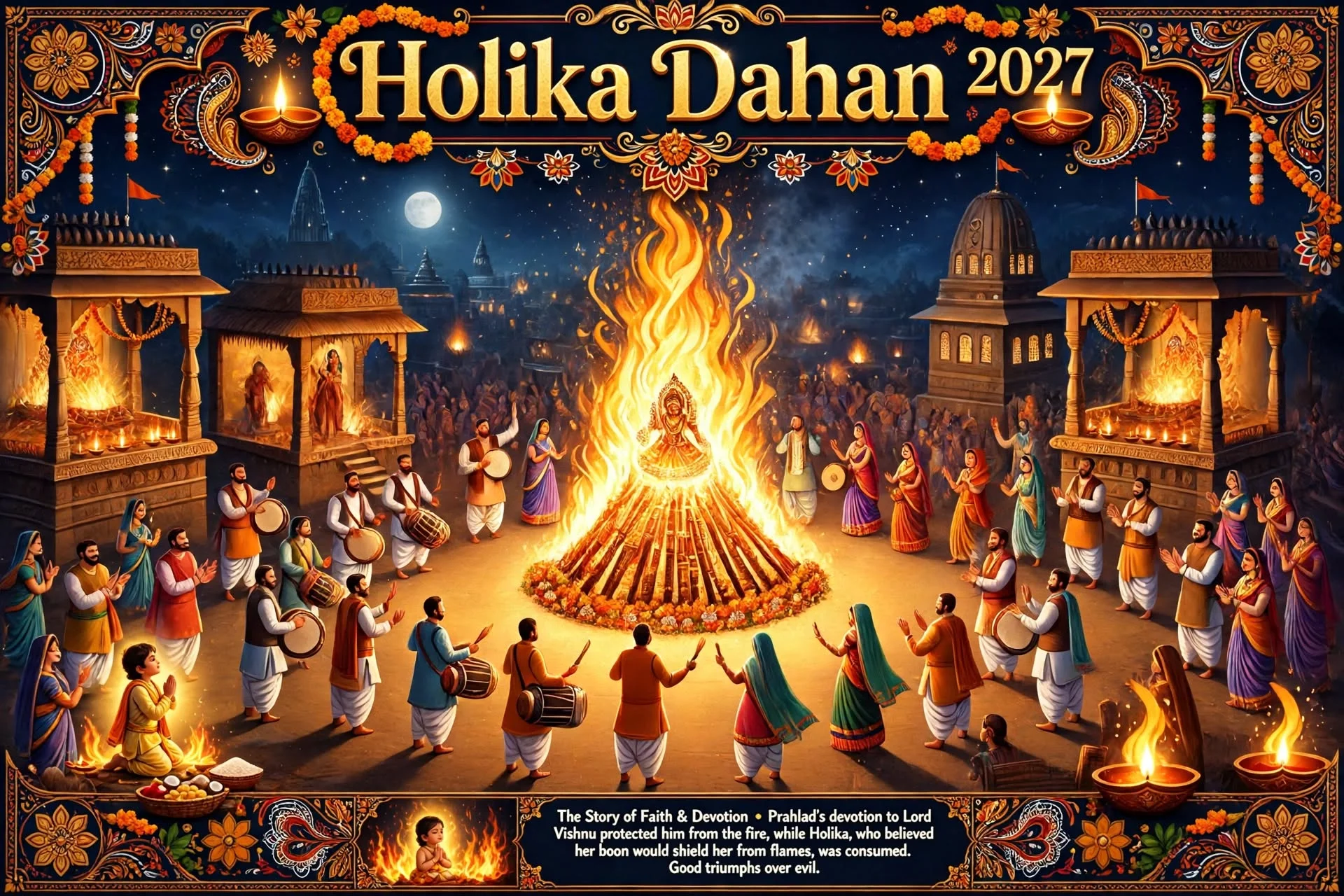
Sunday, Mar 21, 2027
Holika Dahan (Choti Holi)
Holika Dahan, affectionately celebrated as the sacred bonfire night of Holi, is an ancient, monumental, and deeply spiritual Vedic ritual performed on the full moon night (Purnima tithi) of the lunar month of Phalguna according to the Hindu calendar. Celebrated on the night preceding the exuberant festival of colors (Dhulandi or Rangwali Holi), Holika Dahan marks the ceremonial burning of the cosmic pyre, symbolizing the inevitable triumph of divine righteousness (Dharma), supreme devotion (Bhakti), and spiritual truth over demonic tyranny, pride, and persecution.
View Festival Guide

Sunday, Mar 21, 2027
Chhoti Holi
Chhoti Holi, celebrated with boundless excitement and devotion across North, Central, and Western India, is the auspicious festival observed on the fourteenth and fifteenth tithis (Chaturdashi merging into Purnima) of the Shukla Paksha in the month of Phalguna. Serving as the divine prelude to the grand festival of colors (Dhulandi or Badi Holi), Chhoti Holi is universally centered around the sacred ritual of assembling, consecrating, and lighting the community bonfire known as Holika Dahan. It commemorates the eternal victory of pure devotion, righteousness, and truth over demonic arrogance, persecution, and darkness.
View Festival Guide
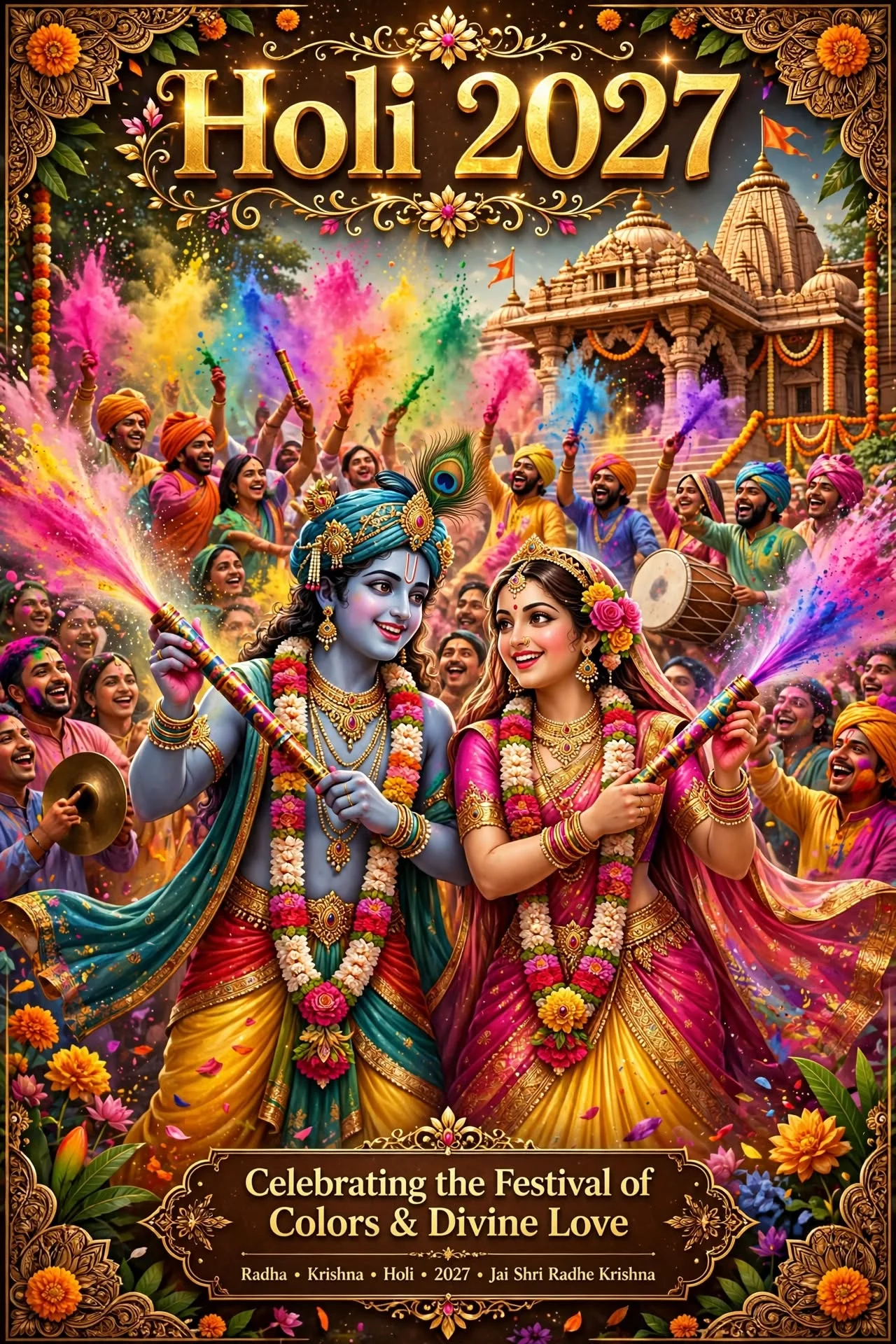
Monday, Mar 22, 2027
Holi
Holi, celebrated with incomparable exuberance, color, and spiritual fraternity, is one of the most ancient, glorious, and universally beloved festivals in Sanatana Dharma. Celebrated on the first day (Pratipada tithi) of the Krishna Paksha in the holy month of Chaitra according to the traditional Hindu calendar (occurring immediately after the night of Holika Dahan), this grand festival of colors—affectionately known as Dhulandi, Dhuleti, Rangwali Holi, and Vasantotsava—marks the triumphant arrival of spring (Rituraj Vasant), the rebirth of nature's vibrant beauty, and the profound social and spiritual renewal of human hearts.
View Festival Guide

Monday, Mar 22, 2027
Anvadhan
Anvadhan (अन्वाधान) is an ancient, highly revered Vedic ritual and spiritual observance in Sanatana Dharma performed on the day immediately preceding the New Moon (Amavasya) or Full Moon (Purnima). Rooted in the pristine traditions of the Shrauta and Grihya Sutras, Anvadhan literally translates to 'the solemn placing and replenishment of sacred fuel wood into the consecrated Vedic fires'. In traditional Vedic ritualism, householders (Grihasthas) and priests who maintain the sacred Agnihotra fires perform Anvadhan to prepare the sacrificial altars for the grand Darsha Yajna (New Moon sacrifice) or Paurnamasa Yajna (Full Moon sacrifice) scheduled for the following day.
View Festival Guide
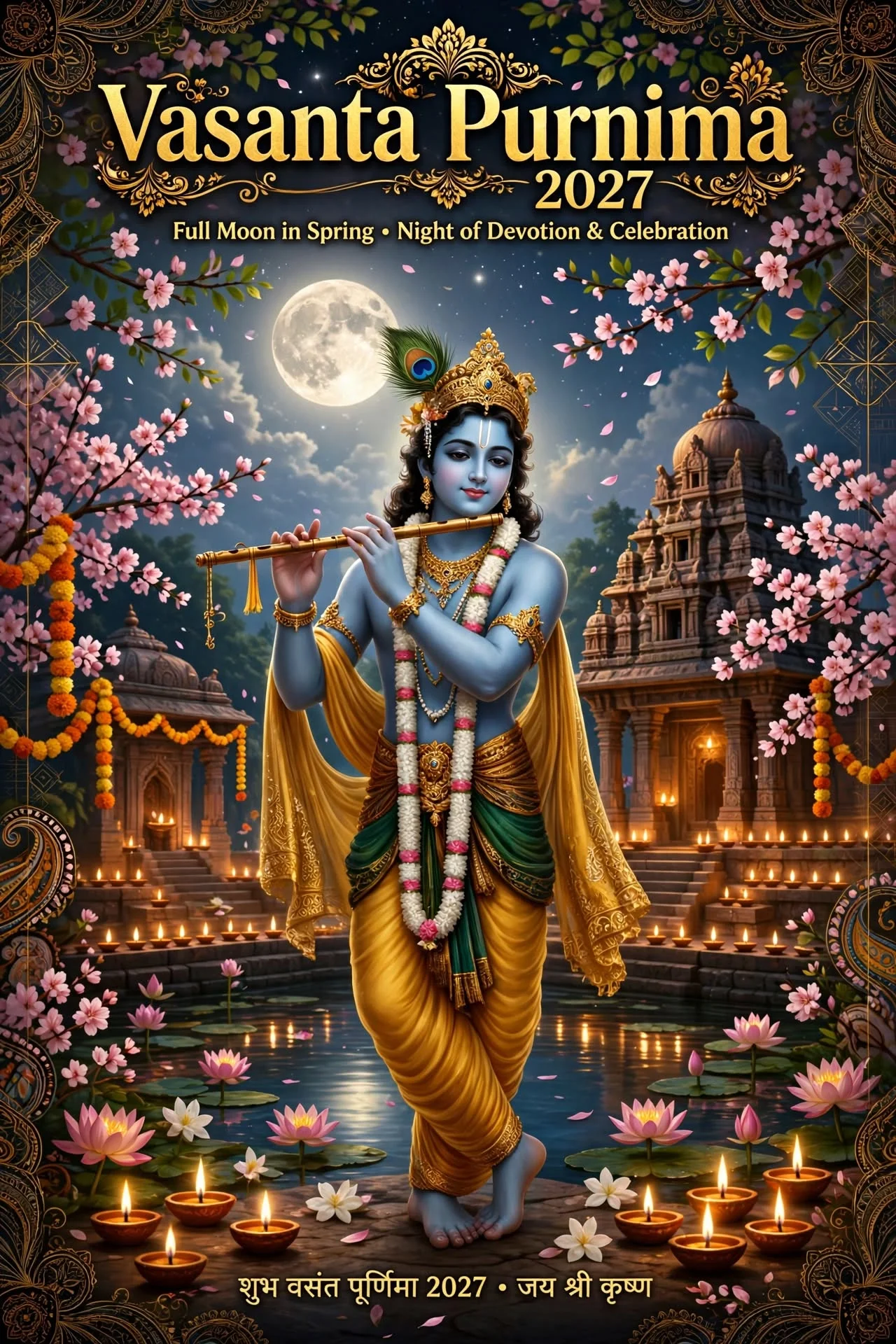
Monday, Mar 22, 2027
Vasanta Purnima
Vasanta Purnima (also known as Vasantotsava Purnima or the Spring Full Moon) is an extraordinarily radiant, culturally celebrated, and spiritually elevating Hindu festival observed on the full moon day (Purnima tithi) of the lunar month of Phalguna according to the traditional Hindu calendar. Coinciding with the peak of the spring season (Rituraj Vasant), this glorious night represents the full flowering of natural beauty, romantic affection, aesthetic grace, and sublime divine devotion (Prema Bhakti) across Sanatana Dharma. Celebrated as the eve of the vibrant festival of colors and the sacred night of Holika Dahan, Vasanta Purnima serves as the crowning jewel of the spring festival cycle.
View Festival Guide
Monday, Mar 22, 2027
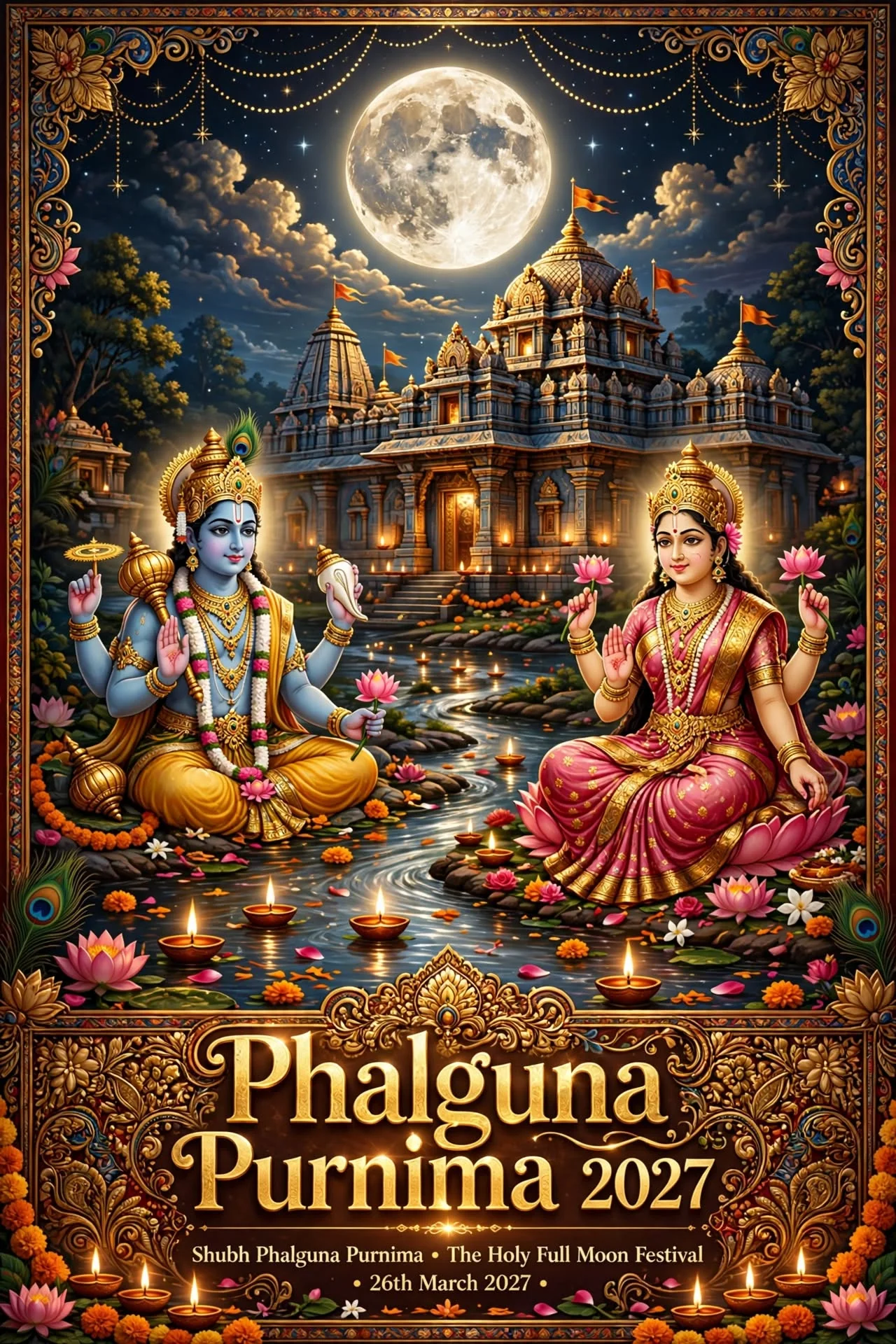
Phalguna Purnima
Phalguna Purnima is one of the most spiritually multifaceted, sacred, and joyously celebrated full moon days in the Hindu calendar, marking the magnificent culmination of the holy lunar month of Phalguna. Occurring on the final day of the Phalguna month in the Purnimanta calendar, this momentous full moon represents the harmonious convergence of several monumental religious observances: the sacred bonfire night of Holika Dahan, the divine advent day of Sri Chaitanya Mahaprabhu (Gaura Purnima), the glorious appearance day of Goddess Lakshmi (Lakshmi Jayanti), and the vibrant swing festivals (Dolotsava) celebrated across India.
View Festival Guide

Tuesday, Mar 23, 2027
Ishti
Ishti is a foundational Vedic ritual observance appearing prominently in Hindu Panchangs on the Pratipada tithi (the first lunar day) following either Amavasya (new moon) or Purnima (full moon), marking the prescribed performance day for the fortnightly Vedic Darsha-Purnamasa sacrifices.
View Festival Guide

Wednesday, Mar 24, 2027
Bhai Dooj (Yama Dwitiya / Bhai Tika)
Bhai Dooj (also lovingly known as Holi Bhai Dooj or Chaitra Bhai Dooj) is an intensely affectionate, culturally sacred, and spiritually protective Hindu festival observed on the second day (Dwitiya tithi) of the Krishna Paksha in the month of Chaitra according to the traditional Hindu calendar. Occurring on the second day immediately following the vibrant festival of colors (Holi), this sacred observance mirrors the post-Diwali Bhai Dooj, serving to reaffirm, sanctify, and celebrate the pure, unconditional bond of love and protection between brothers and sisters across Sanatana Dharma.
View Festival Guide