




Amalaki Ekadashi, also known as Amla Ekadashi, is a celebrated and spiritually illuminating Hindu fasting observance observed on the eleventh day (Ekadashi tithi) of the Shukla Paksha (waxing moon fortnight) in the auspicious month of Phalguna according to the traditional Hindu calendar. Occurring majestically between the great festivals of Maha Shivaratri and Holi, this sacred Ekadashi is uniquely consecrated to the veneration of the holy Amalaki tree (Indian Gooseberry - Phyllanthus emblica) and Lord Sri Hari Vishnu. In Vedic metaphysics and Ayurveda, the Amalaki tree is revered as the first botanical tree to manifest in the cosmos, imbued with the living divine presence of Lord Vishnu, Goddess Lakshmi, and the entire celestial pantheon.
Amalaki Ekadashi 2027: Date, Puja Timings, Rituals & Stories
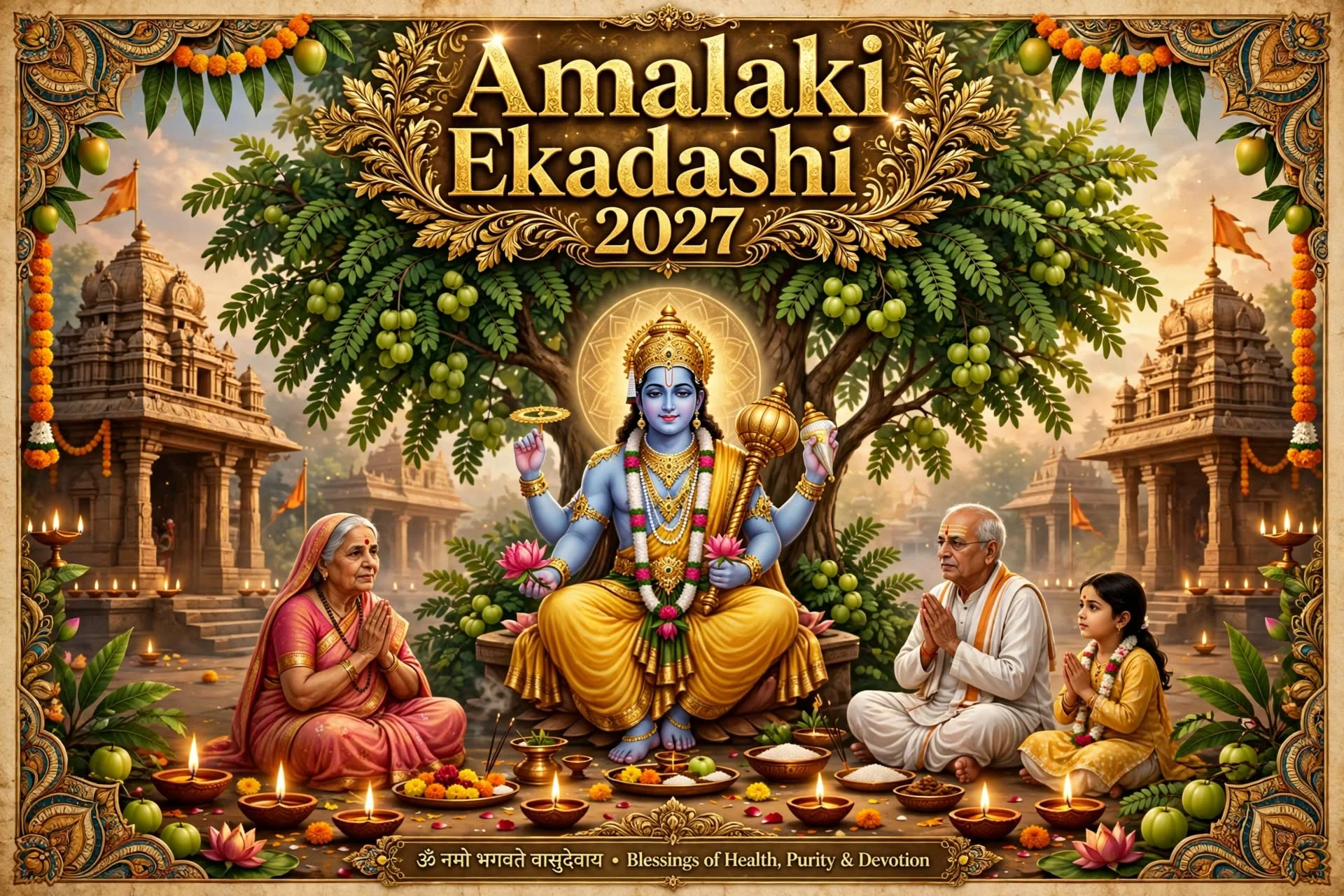
Amalaki Ekadashi Timings & Panchang
Important festival dates and auspicious timings
Usha Arghya (Sunrise)
06:28 am
Sandhya Arghya (Sunset)
06:31 pm
Start Date
Thursday, 18 Mar 2027
Puja Muhurat
06:43 am – 01:51 am
Amalaki Ekadashi
The divine origin and scriptural glories of Amalaki Ekadashi are recorded in the Brahmanda Purana (Ekadashi Mahatmya) and the Skanda Purana. In these holy texts, the venerable Sage Vasishtha enlightens King Mandhata (the illustrious ancestor of Lord Sri Rama) regarding the supreme merit of this vow. Sage Vasishtha reveals that observing a strict fast on Amalaki Ekadashi and worshipping the sacred Amla tree with a consecrated Kalash, fragrant sandalwood, and lamps bestows the spiritual fruits of donating one thousand healthy cows (Godana), demolishing lifetimes of accumulated sins, and granting final liberation in the supreme spiritual realm of Vaikuntha.
According to the Brahmanda Purana, the sacred Amalaki tree manifested directly from the divine teardrops of boundless bliss shed by Lord Vishnu during the dawn of cosmic creation, while in other Puranic accounts, it emerged from the tears of Lord Brahma while absorbed in deep tapasya. Because of this divine origin, every single leaf, flower, bark, and fruit of the Amalaki tree carries potent nectarine (Amrita) and rejuvenating qualities. Performing Shodashopachara puja beneath the shade of the Amla tree and circumambulating it on this Ekadashi purifies the gross and subtle bodies of the practitioner.
Devotees observe Amalaki Ekadashi by maintaining a strict day-long fast, rising early during Brahma Muhurta to take a purificatory holy bath, proceeding to a mature Amla tree to establish a consecrated Kalash draped in yellow silk, offering incense, lamps, and fresh fruits, and listening to the sacred Vrat Katha detailing the redemption of a hunter. The fast is broken on Dvadashi (the twelfth day) after worshipping Lord Vishnu and offering food and charity to pious Brahmins, ensuring spiritual vitality, longevity, and liberation.
Why is Amalaki Ekadashi Celebrated?
Amalaki Ekadashi is celebrated to honor the manifestation of the sacred Amalaki tree from the divine tears of Lord Vishnu and to invoke the combined blessings of Lord Narayana and Goddess Lakshmi.
The festival provides a consecrated window for devotees to cleanse physical and karmic impurities through day-long fasting, prayer, and the botanical healing energy of the Amla tree.
It commemorates the teachings of Sage Vasishtha to King Mandhata, demonstrating that even individuals weighed down by severe past karmas or sinful habits (exemplified by the hunter in the Puranic narrative) attain instant liberation through the grace of this vow.
Observing this Ekadashi and consuming sanctified Amla fruit on Dvadashi confers long life, robust physical immunity (Ojas), mental serenity, and eternal dwelling in Vaikuntha.
Scriptural Chronicles and Sacred Lore of Amalaki Ekadashi
Sage Vasishtha Enlightens King Mandhata in the Brahmanda Purana
The primary theological exposition of Amalaki Ekadashi is enshrined in the Brahmanda Purana (Ekadashi Mahatmya). The righteous Emperor Mandhata, sovereign of the Solar Dynasty, humbly approached his royal preceptor, Sage Vasishtha, saying: 'O venerable Gurudeva, please reveal that sacred vow which possesses the extraordinary power to liberate fallen souls and bestow the highest spiritual fruits.'
Sage Vasishtha smiled compassionately and replied: 'O King Mandhata, listen attentively to the glory of Phalguna Shukla Ekadashi, known as Amalaki Ekadashi. In ancient times, as Lord Brahma engaged in intense tapas to begin creation, tears of spiritual ecstasy fell from Lord Vishnu's eyes onto the earth. From these divine teardrops sprouted the first tree in the universe—the Amalaki tree. Lord Vishnu declared that all gods, sages, and tirthas would forever reside within its sacred branches, and whoever worships this tree on Phalguna Shukla Ekadashi achieves the merit of performing all Vedic sacrifices.'
The Legend of King Chaitraratha and the Auspicious Kingdom of Vaidisha
Sage Vasishtha narrated the ancient chronicle of King Chaitraratha, a noble monarch of the kingdom of Vaidisha. In his kingdom, all subjects were healthy, prosperous, truthful, and dedicated to the worship of Lord Vishnu. No person was poor or irreligious.
On the arrival of Amalaki Ekadashi, King Chaitraratha, accompanied by his royal family, priests, and citizens, proceeded to the banks of the sacred Chandrabhaga River. There, beside an ancient, sprawling Amalaki tree, the king established a gold-and-silver Kalash, filled it with fragrant water and five gems, draped it with fine yellow silk, and installed a golden idol of Lord Parashurama (an avatar of Lord Vishnu). The entire royal assembly observed complete fasting and an all-night devotional vigil (Ratri Jagaran) with singing and lamps beneath the sacred tree.
The Redemption of the Hunter (Unconscious Observance of the Vow)
During the midnight hours of the King's vigil, a wicked, hungry hunter who made his living by killing animals arrived at the riverbank seeking food. Seeing the grand assembly of people and glowing lamps, the hunter hid quietly behind the bushes near the Amalaki tree.
Esoteric, Ayurvedic, and Karmic Virtues of Amalaki Ekadashi
The Living Abode of the Holy Trinity and Celestial Gods
In sacred Puranic cosmology, the Amalaki tree is not merely flora; it is a living Chaitya (sacred shrine). Lord Vishnu resides in its trunk, Lord Shiva presides over its upper boughs, Lord Brahma abides at its roots, the twelve Adityas dwell in its branches, and the celestial Gandharvas and Rishis inhabit its leaves.
Venerating the tree with incense, water, and lamps on this sacred Ekadashi is spiritually equivalent to performing circumambulation around all sacred shrines of the universe simultaneously.
Ayurvedic Rejuvenation and Vital Life Essence (Rasayana & Ojas)
In classical Ayurveda (Charaka Samhita and Sushruta Samhita), Amla is lauded as the supreme 'Rasayana'—the master herbal adaptogen that balances all three doshas (Vata, Pitta, Kapha), strengthens digestion, builds vital immunity (Ojas), and retards aging.
Observing fasting on this day coupled with the ritual ingestion of Amla fruit on Dvadashi cleanses cellular tissues, eliminates metabolic toxins (Ama), and rejuvenates the human biological system for the coming spring and summer seasons.
The Power of Association (Sat-Sanga and Divine Environment)
The legend of the hunter illustrates the supreme theological truth of 'Ajnyata Sukriti'—merit accumulated unknowingly through holy association. Even without philosophical understanding, merely spending the night awake in the presence of the sacred tree and hearing holy vibrations liberated the hunter from animalistic karma.
This underscores the transformative power of divine environments and encourages seekers to immerse themselves in uplifting spiritual company.
Attainment of Vaikuntha and Destruction of Maha-Patakas
The Skanda Purana declares that sins committed across thousands of lifetimes—including theft, falsehood, and betrayal—dissolve completely when a devotee observes Amalaki Ekadashi with pure faith.
Comprehensive Worship Manual and Guide for Amalaki Ekadashi
Dawn Sanctification and Vrat Sankalpa
Rise early during Brahma Muhurta, take a purificatory bath in clean water mixed with holy Gangajal and Tulsi leaves, and don clean traditional yellow attire.
Sit facing East before the household altar and make a formal Sankalpa vow holding water, unbroken rice (akshata), flowers, and a coin, pledging to observe the Amalaki Ekadashi fast for the supreme pleasure of Lord Vishnu.
Consecration and Worship of the Sacred Amalaki Tree
Proceed to a mature Amla tree in your garden, courtyard, or local temple. Clean and sweep the earth around its base, sprinkling holy Gangajal and smearing it with cow dung paste or drawing an Ashtadala lotus with rice flour.
Establish a copper, brass, or clay Kalash filled with scented water, supari, and a coin, draped in yellow silk cloth. Place a copper plate with raw rice over the Kalash, installing an idol or portrait of Lord Vishnu (or Lord Parashurama) upon it.
Shodashopachara Seva and Deepa Dana
Pour fresh clean water mixed with raw milk at the base of the Amla tree. Apply fragrant yellow sandalwood paste (Gopi Chandan) and Kumkum to its trunk.
Offer fresh yellow flowers, Tulsi leaves, incense sticks, and light a pure cow-ghee lamp at its roots. Offer fresh Amla fruits, sweet batashas, and seasonal fruits as Naivedya, followed by reciting the Amalaki Ekadashi Vrat Katha.
Pradakshina, Ratri Jagaran, and Dvadashi Parana
Perform seven, eleven, or twenty-one clockwise circumambulations (Pradakshina) around the sacred Amla tree with devotion, praying for spiritual wisdom, health, and family prosperity.
Spend the night in devotional wakefulness (Ratri Jagaran) singing bhajans and chanting the Vishnu Sahasranama. On Dvadashi morning, bathe, worship Lord Vishnu, donate the consecrated Kalash and food grains to a Brahmin, and conclude your fast (Parana) by consuming sanctified Amla prasad followed by light sattvic food.
Amalaki Ekadashi Puja Vidhi (Step by Step)
- 1
Brahma Muhurta Jagaran and Morning Snana
Wake before dawn during Brahma Muhurta. Recite morning Vishnu shlokas and take a purificatory bath with clean water mixed with holy Gangajal, wearing fresh clean traditional yellow attire.
- 2
Pratah Sankalpa (Solemn Fasting Vow)
Sit facing East upon a clean woolen or Kusha mat. Take holy water, unbroken white rice (akshata), flower petals, and a coin in your right palm and recite the formal Sankalpa vow to observe the Amalaki Ekadashi Vrat with unwavering faith.
- 3
Proceeding to the Sacred Amalaki (Amla) Tree
Cleanse the ground beneath a mature Amla tree with clean water and Gangajal. If an Amla tree is not accessible, place an Amla sapling or an Amla fruit beside Lord Vishnu's murti on the household altar.
- 4
Establishment of the Sacred Kalash
Establish a clean copper or brass Kalash filled with scented water, a betel nut, a silver coin, and sacred herbs. Wrap the neck of the Kalash with red sacred thread (Mauli) and drape the pot in fresh unstitched yellow silk cloth.
- 5
Amalaki Ekadashi Puja Samagri List
Kalash Consecration and Amla Tree Items
Specific elements required for consecrating the Kalash and worshiping the Amla tree.
- Mature living Amalaki (Amla) tree (or potted Amla sapling)
- Clean copper, brass, or clay Kalash with lid and sacred red thread (Mauli)
- Five fresh mango or Ashoka leaves for the Kalash mouth
- Unstitched yellow silk cloth (1 meter) to drape the Kalash and altar
- Unbroken raw white rice (Akshata) and silver/copper coin
Deity Worship and Fragrance Essentials
Aromatics, garlands, and sacred herbs for Lord Vishnu.
- Metallic idol of Lord Vishnu or Lord Parashurama
- Pure Gopi Chandan paste, Kumkum, and natural rose attar
- Fresh Tulsi leaves (harvested on Dashami afternoon)
- Garland of fresh yellow marigolds and white fragrant flowers
- Pure cow ghee lamp, cotton wicks, and Bhimseni camphor for aarti
Naivedya, Fruits, and Dvadashi Dana Items
Offerings and charitable gifts for concluding the fast.
- Fresh raw Amalaki (Amla) fruits - at least 11 pieces
Mantras and Prayers for Amalaki Ekadashi
Amalaki Ekadashi Vrat Rules and Fasting Guidelines
Fasting Discipline and Dietary Rules
Mandatory fasting regulations observed on Amalaki Ekadashi:
- Devotees observe either complete waterless (Nirjala) fasting or take single servings of milk, water, and fruits (Phalahari).
- All grains, cereals, wheat, rice, pulses, beans, onions, garlic, and non-vegetarian food are strictly forbidden.
- Do not consume common sea salt; rock salt (Sendha Namak) may be taken sparingly in phalahari items if needed.
- Do not pluck fresh Tulsi leaves or Amla leaves on Ekadashi tithi; harvest required leaves on Dashami.
Conduct and All-Night Vigil
Behavioral guidelines during the twenty-four hours of Ekadashi:
- Observe celibacy (Brahmacharya) and cultivate truthful, gentle, and compassionate speech.
- Do not sleep during the daytime on Ekadashi, as sleeping dissipates accumulated spiritual energy.
- Observe Ratri Jagaran (night vigil) by singing bhajans, reading scriptures, and chanting the Vishnu Sahasranama.
- Avoid anger, disputes, gambling, and frivolous entertainment on this sacred day.
Dvadashi Parana Regulations
Rules for concluding the fast on Dvadashi:
- Parana must strictly be completed after sunrise during the prescribed Dvadashi Parana muhurat window.
Dos and Don'ts of Amalaki Ekadashi
Good Practices (Do's)
- Wake during Brahma Muhurta, take a purificatory bath with Gangajal, and make a sincere Sankalpa.
- Worship the living Amalaki (Amla) tree by offering water, raw milk, yellow sandalwood, and flowers.
- Consecrate a sacred Kalash draped in yellow silk beneath the Amla tree with an idol of Lord Vishnu atop it.
- Perform clockwise circumambulations (Pradakshina) around the Amla tree with devotion.
- Recite the sacred Vishnu Sahasranama and Amalaki Ekadashi Vrat Katha.
Amalaki Ekadashi Across Regions
| Region | Local Name |
|---|---|
| Varanasi and Uttar Pradesh (North India) | Rangbhari Ekadashi & Amla Puja |
| Braj Bhoomi (Vrindavan and Mathura) | Amla Ekadashi Parikrama |
| Gujarat and Western India | Amli Agiyaras |
| Maharashtra and South India | Amalaki Vrata & Vana Bhojan |
Amalaki Ekadashi FAQs
What is Amalaki Ekadashi?
Amalaki Ekadashi (also called Amla Ekadashi) is the sacred Hindu fasting day observed on Phalguna Shukla Ekadashi, dedicated to Lord Vishnu and the worship of the holy Amalaki (Indian Gooseberry) tree.
Why is the Amalaki (Amla) tree worshiped on this day?
In Puranic tradition, the Amalaki tree is the first tree created in the cosmos, born from the divine tears of Lord Vishnu. It is considered the living dwelling place of the Holy Trinity, Goddess Lakshmi, and all Devas.
What are the spiritual merits of observing Amalaki Ekadashi?
According to the Brahmanda Purana, observing this fast and worshipping the Amla tree confers the spiritual merit of donating a thousand cows, destroys chronic sins, and guarantees liberation in Vaikuntha.
Upcoming Festivals
View All
Saturday, Mar 20, 2027
Shani Pradosh Vrat
Shani Pradosh Vrat is an exceptionally potent, revered, and astrologically transformative bi-monthly Hindu fasting observance dedicated to Lord Shiva, Goddess Parvati, and Lord Shani Deva (the planetary deity of Saturn). Occurring on the thirteenth day (Trayodashi tithi) of either the waxing (Shukla) or waning (Krishna) lunar fortnight when it coincides with a Saturday (Shanivara), this sacred vow is lauded across Vedic and Puranic literature as the supreme, infallible spiritual remedy for dissolving chronic karmic impediments, neutralizing severe planetary afflictions, and securing profound peace and prosperity.
View Festival Guide

Sunday, Mar 21, 2027
Chhoti Holi
Chhoti Holi, celebrated with boundless excitement and devotion across North, Central, and Western India, is the auspicious festival observed on the fourteenth and fifteenth tithis (Chaturdashi merging into Purnima) of the Shukla Paksha in the month of Phalguna. Serving as the divine prelude to the grand festival of colors (Dhulandi or Badi Holi), Chhoti Holi is universally centered around the sacred ritual of assembling, consecrating, and lighting the community bonfire known as Holika Dahan. It commemorates the eternal victory of pure devotion, righteousness, and truth over demonic arrogance, persecution, and darkness.
View Festival Guide
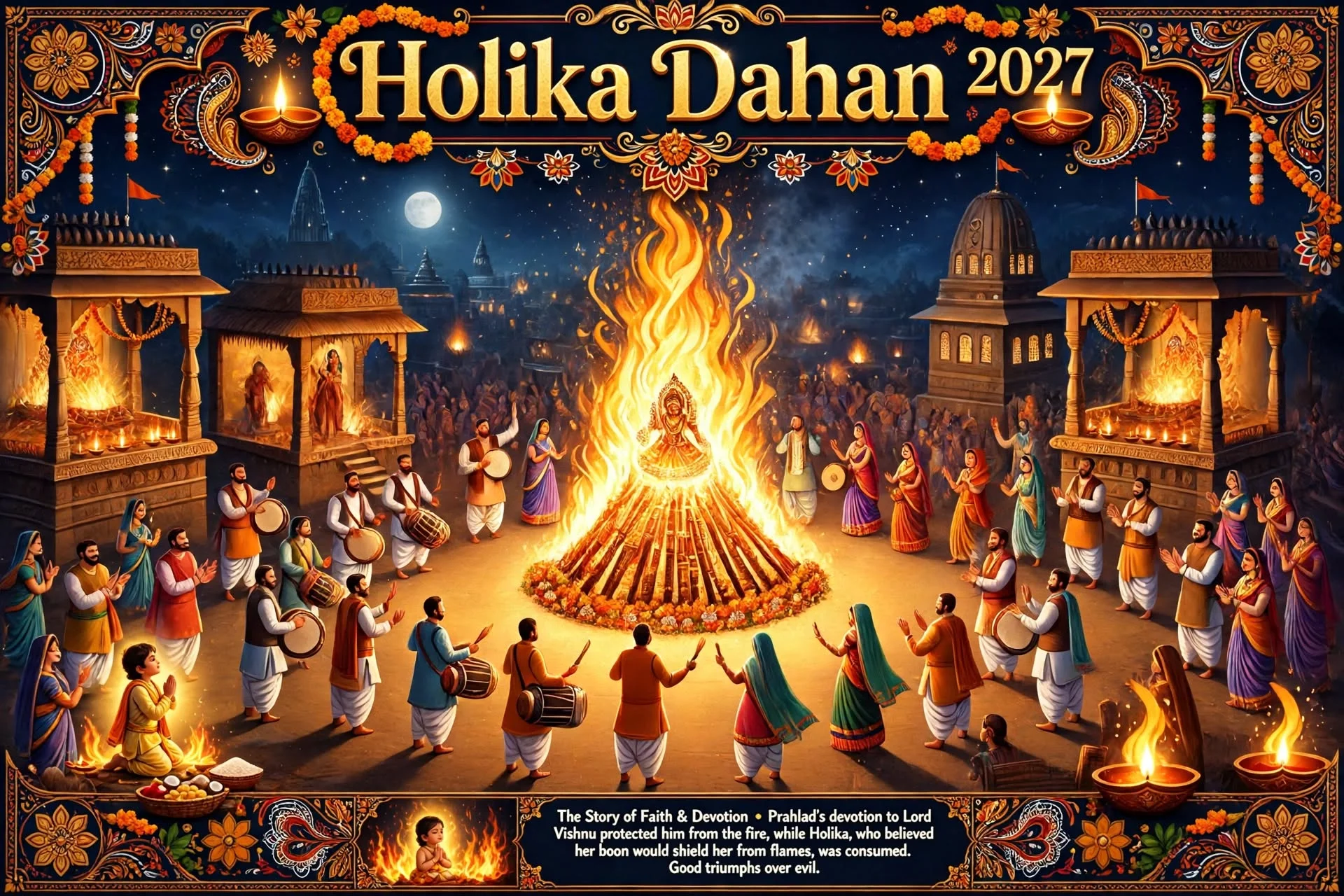
Sunday, Mar 21, 2027
Holika Dahan (Choti Holi)
Holika Dahan, affectionately celebrated as the sacred bonfire night of Holi, is an ancient, monumental, and deeply spiritual Vedic ritual performed on the full moon night (Purnima tithi) of the lunar month of Phalguna according to the Hindu calendar. Celebrated on the night preceding the exuberant festival of colors (Dhulandi or Rangwali Holi), Holika Dahan marks the ceremonial burning of the cosmic pyre, symbolizing the inevitable triumph of divine righteousness (Dharma), supreme devotion (Bhakti), and spiritual truth over demonic tyranny, pride, and persecution.
View Festival Guide

Monday, Mar 22, 2027
Holi
Holi, celebrated with incomparable exuberance, color, and spiritual fraternity, is one of the most ancient, glorious, and universally beloved festivals in Sanatana Dharma. Celebrated on the first day (Pratipada tithi) of the Krishna Paksha in the holy month of Chaitra according to the traditional Hindu calendar (occurring immediately after the night of Holika Dahan), this grand festival of colors—affectionately known as Dhulandi, Dhuleti, Rangwali Holi, and Vasantotsava—marks the triumphant arrival of spring (Rituraj Vasant), the rebirth of nature's vibrant beauty, and the profound social and spiritual renewal of human hearts.
View Festival Guide
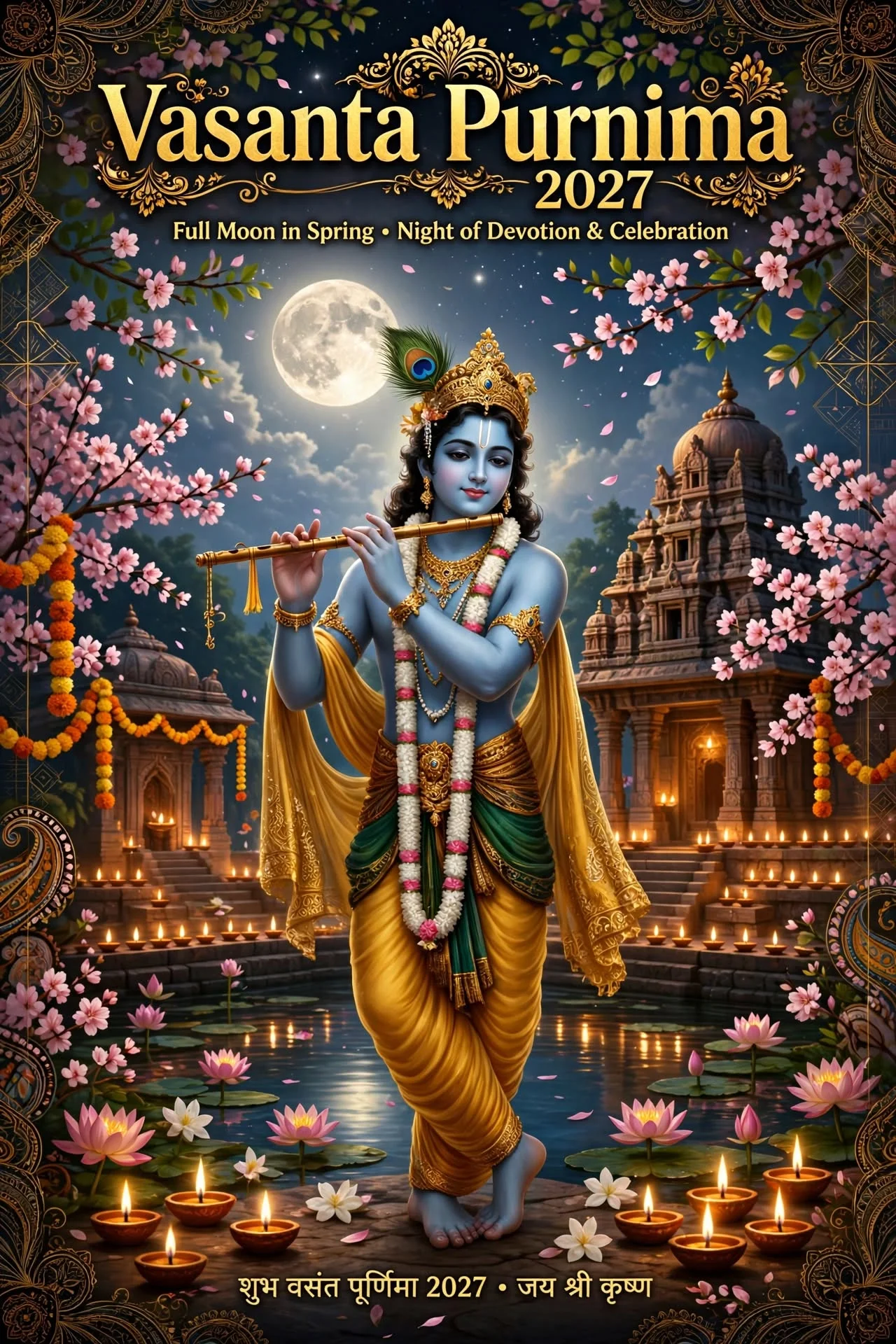
Monday, Mar 22, 2027
Vasanta Purnima
Vasanta Purnima (also known as Vasantotsava Purnima or the Spring Full Moon) is an extraordinarily radiant, culturally celebrated, and spiritually elevating Hindu festival observed on the full moon day (Purnima tithi) of the lunar month of Phalguna according to the traditional Hindu calendar. Coinciding with the peak of the spring season (Rituraj Vasant), this glorious night represents the full flowering of natural beauty, romantic affection, aesthetic grace, and sublime divine devotion (Prema Bhakti) across Sanatana Dharma. Celebrated as the eve of the vibrant festival of colors and the sacred night of Holika Dahan, Vasanta Purnima serves as the crowning jewel of the spring festival cycle.
View Festival Guide

Monday, Mar 22, 2027
Phalguna Purnima
Phalguna Purnima is one of the most spiritually multifaceted, sacred, and joyously celebrated full moon days in the Hindu calendar, marking the magnificent culmination of the holy lunar month of Phalguna. Occurring on the final day of the Phalguna month in the Purnimanta calendar, this momentous full moon represents the harmonious convergence of several monumental religious observances: the sacred bonfire night of Holika Dahan, the divine advent day of Sri Chaitanya Mahaprabhu (Gaura Purnima), the glorious appearance day of Goddess Lakshmi (Lakshmi Jayanti), and the vibrant swing festivals (Dolotsava) celebrated across India.
View Festival Guide

Monday, Mar 22, 2027
Anvadhan
Anvadhan (अन्वाधान) is an ancient, highly revered Vedic ritual and spiritual observance in Sanatana Dharma performed on the day immediately preceding the New Moon (Amavasya) or Full Moon (Purnima). Rooted in the pristine traditions of the Shrauta and Grihya Sutras, Anvadhan literally translates to 'the solemn placing and replenishment of sacred fuel wood into the consecrated Vedic fires'. In traditional Vedic ritualism, householders (Grihasthas) and priests who maintain the sacred Agnihotra fires perform Anvadhan to prepare the sacrificial altars for the grand Darsha Yajna (New Moon sacrifice) or Paurnamasa Yajna (Full Moon sacrifice) scheduled for the following day.
View Festival Guide

Tuesday, Mar 23, 2027
Ishti
Ishti is a foundational Vedic ritual observance appearing prominently in Hindu Panchangs on the Pratipada tithi (the first lunar day) following either Amavasya (new moon) or Purnima (full moon), marking the prescribed performance day for the fortnightly Vedic Darsha-Purnamasa sacrifices.
View Festival Guide