




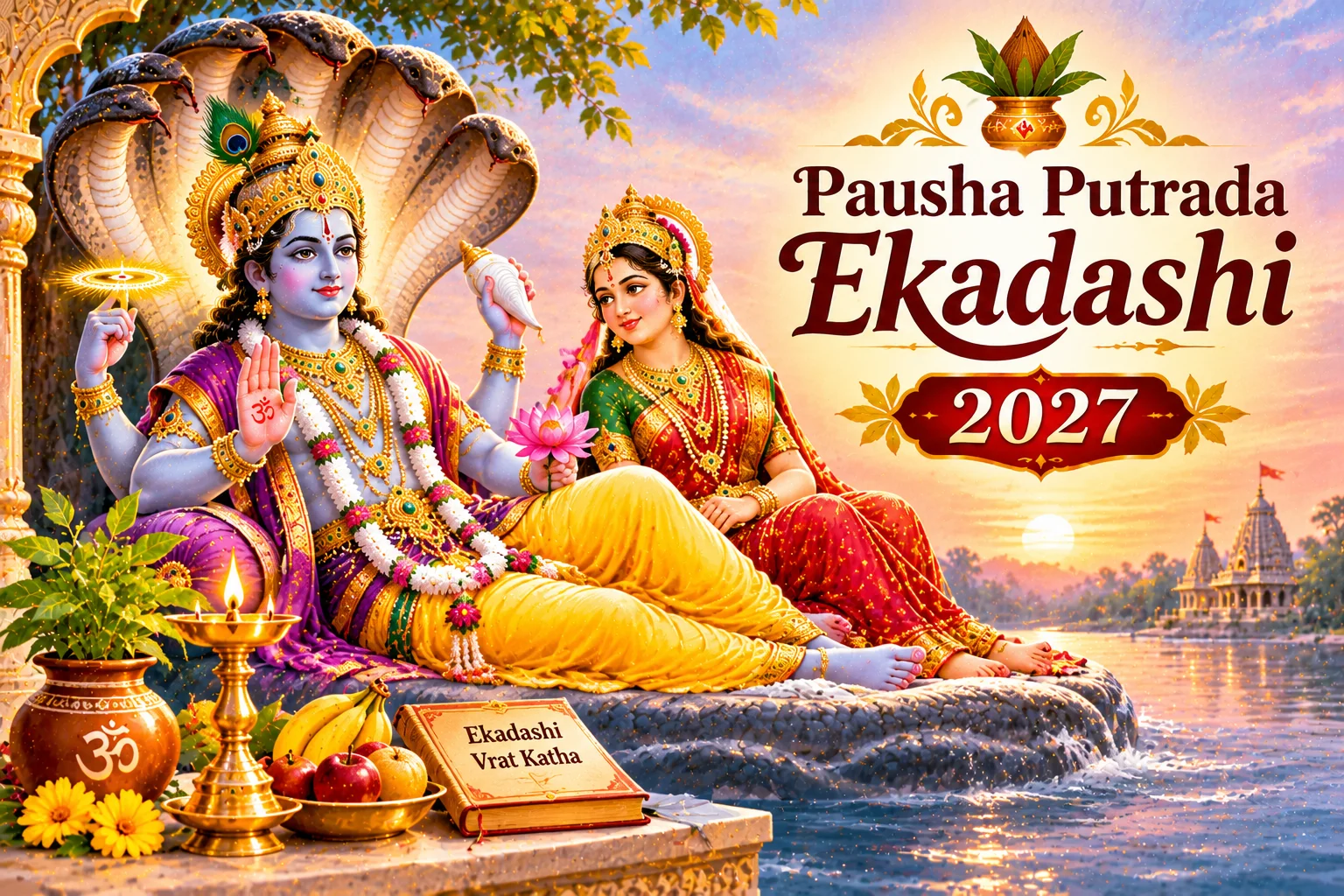
Pausha Putrada Ekadashi is a sacred Hindu fasting day observed on the Ekadashi, or eleventh lunar day, of the Shukla Paksha (waxing fortnight) in the Hindu month of Pausha. It is dedicated to Lord Vishnu and is traditionally associated with prayers for children, family well-being, prosperity, and spiritual blessings.
Pausha Putrada Ekadashi 2027: Date, Puja Timings, Rituals & Stories
Pausha Putrada Ekadashi Timings & Panchang
Important festival dates and auspicious timings
Usha Arghya (Sunrise)
07:14 am
Sandhya Arghya (Sunset)
05:49 pm
Start Date
Tuesday, 19 Jan 2027
Puja Muhurat
10:27 am – 07:49 am
Pausha Putrada Ekadashi
The word Putrada is derived from Putra, meaning child or offspring, and Da, meaning giver. Putrada Ekadashi is therefore traditionally understood as the Ekadashi that bestows the blessing of children. Couples who wish to have children may observe this vrata with devotion, while parents who already have children may also observe it for their children's health, happiness, good character, and prosperity.
The observance has a special place in Vaishnava traditions because Lord Vishnu is regarded as its presiding deity. Devotees worship Shri Hari with Tulsi leaves, flowers, incense, lamps, fruits, and prayers. Fasting, recitation of Vishnu's names, listening to the vrat katha, charity, and night-long remembrance of the Lord are traditional elements of the observance.
The principal legend of Pausha Putrada Ekadashi appears in the Uttara Khanda of the Padma Purana. It narrates the story of King Suketuman of Bhadravati and his queen, who were deeply distressed because they had no child. During a journey through the forest, the king encountered a group of sages known as the Vishvedevas. They explained the importance of Putrada Ekadashi and advised him to observe the sacred fast dedicated to Lord Vishnu. The king followed their guidance, and the queen later gave birth to a virtuous son.
This story gives the observance its traditional association with the blessing of children and the continuation of family responsibilities. Its spiritual message also extends beyond parenthood, emphasising devotion, patience, righteous conduct, gratitude, and faith in the divine.
Pausha Putrada Ekadashi should be distinguished from Shravana Putrada Ekadashi, another annual Ekadashi observed during the Shukla Paksha of the Hindu month of Shravana. Although both share the name Putrada and are associated with prayers for children, their traditional stories are different. The Pausha observance is associated with King Suketuman and the Vishvedevas, while the Shravana observance is associated with King Mahijit and the sage Lomasha.
Why is Pausha Putrada Ekadashi Celebrated?
Pausha Putrada Ekadashi is celebrated to worship Lord Vishnu and seek divine blessings for children, family happiness, prosperity, and spiritual progress. Traditionally, couples wishing to have children observe this vrata with faith and devotion. Parents may also pray for the health, protection, education, good character, and bright future of their children.
The observance is also a reminder that family life should be guided by responsibility, righteousness, compassion, and devotion. Through fasting, prayers, charity, and remembrance of Lord Vishnu, devotees seek inner purification and blessings for the well-being of their loved ones.
- To seek the blessing of children: Traditionally, couples who wish to become parents worship Lord Vishnu and observe the vrata with the hope of receiving the blessing of offspring.
- To pray for children's well-being: Parents observe the Ekadashi for the health, safety, happiness, education, and prosperity of their children.
- To worship Lord Vishnu: The day is dedicated to Shri Hari, who is regarded as the presiding deity of Pausha Putrada Ekadashi.
- To promote family happiness: Devotees pray for peace, understanding, harmony, and stability within the family.
- To continue righteous family traditions: The vrata symbolises the importance of raising children with good values, compassion, discipline, and devotion.
- To remember the story of King Suketuman: The traditional katha teaches faith, patience, devotion, and the importance of observing a vrata with sincerity.
- To practise self-discipline: Fasting, controlling the senses, avoiding harmful conduct, and remembering the divine encourage spiritual discipline.
- To seek prosperity and good fortune: Devotees worship Lord Vishnu for abundance, wisdom, peace, and the removal of difficulties.
History and Origins of Pausha Putrada Ekadashi
The Scriptural Tradition of Putrada Ekadashi
Pausha Putrada Ekadashi is described in the Uttara Khanda of the Padma Purana. Its significance is presented through a sacred conversation between King Yudhishthira and Lord Krishna.
Yudhishthira asks Lord Krishna about the Ekadashi occurring during the bright fortnight of Pausha, including its name, method of observance, and presiding deity. Lord Krishna identifies it as Putrada Ekadashi and explains its spiritual importance.
The narrative identifies Lord Vishnu as the deity worshipped on this day. It describes the vrata as an auspicious observance associated with the blessing of children, prosperity, and spiritual merit.
The chapter also narrates the story of King Suketuman and his queen, whose devotion and observance of Putrada Ekadashi are followed by the birth of a son.
King Suketuman and Queen Champaka
According to the traditional account, King Suketuman ruled the prosperous city of Bhadravati. He was a righteous ruler who cared for his kingdom and its people. His queen was named Champaka.
Although the king possessed royal wealth, a respected kingdom, loyal ministers, and many other comforts, he and his queen were deeply unhappy because they had no child.
The absence of an heir troubled the royal couple. The king worried about the continuation of his family line and the responsibilities associated with his ancestors. The queen also shared his sorrow.
The king believed that a child would bring happiness to the family and continue its righteous traditions. Despite his good conduct and religious activities, he remained distressed by the absence of an offspring.
His grief gradually affected his enjoyment of royal life. He found little happiness in his kingdom, wealth, relatives, friends, or royal possessions.
Spiritual Significance of Pausha Putrada Ekadashi
Worship of Lord Vishnu
Lord Vishnu is the presiding deity of Pausha Putrada Ekadashi. He is worshipped as the protector and sustainer of the universe, the source of divine grace, and the guardian of righteousness.
Devotees offer prayers to Shri Hari for family happiness, prosperity, protection, wisdom, and spiritual progress.
The observance encourages surrender to the divine and reminds devotees to approach their responsibilities with faith, humility, and compassion.
The Blessing of Children
The traditional significance of Putrada Ekadashi is closely connected with the blessing of children. Couples who wish to become parents may observe the vrata and pray to Lord Vishnu for the blessing of a child.
The observance is also followed by parents who pray for the health, safety, happiness, education, and good character of their children.
The deeper message extends beyond the birth of a child. It encourages the creation of a loving family environment in which children are raised with kindness, wisdom, discipline, and respect.
The traditional term Putra is interpreted in the context of offspring and descendants. The spiritual intention of the observance can therefore be understood as a prayer for the well-being of children of every gender.
Family Continuity and Ancestral Remembrance
The story of King Suketuman highlights the traditional importance of family continuity and ancestral remembrance.
The king's concern about his ancestors reflects the Hindu understanding that family members have responsibilities towards previous generations and should preserve meaningful traditions.
The observance encourages devotees to remember their ancestors with gratitude and to maintain ethical, spiritual, and cultural values within their families.
How Pausha Putrada Ekadashi Is Celebrated
Pausha Putrada Ekadashi is celebrated through fasting, worship of Lord Vishnu, recitation of sacred mantras, listening to the vrat katha, charity, and prayers for children's well-being. The exact procedure may vary according to regional traditions, family customs, and the devotee's capacity.
1. Prepare for the Ekadashi Fast
- Prepare for the observance on the preceding Dashami day.
- Clean the home and arrange the household prayer area.
- Keep suitable fasting foods and puja materials ready.
- Avoid overeating and follow the food restrictions observed by the family.
- Maintain a peaceful mindset and prepare to devote time to prayer and remembrance of Lord Vishnu.
2. Wake Up Early and Take a Bath
Devotees traditionally wake up early and take a bath before beginning the day's worship.
Wear clean clothes, preferably in traditional colours such as yellow or light shades if desired. Yellow is commonly associated with Lord Vishnu in popular devotional practice.
Clean the household shrine and arrange a picture or idol of Lord Vishnu, Narayana, or Bal Gopal.
3. Take the Vrat Sankalp
After completing the morning preparations, devotees take a sankalp, or sacred intention, to observe Pausha Putrada Ekadashi with devotion.
The sankalp may include prayers for the blessing of children, the health and happiness of existing children, family harmony, spiritual progress, and the grace of Lord Vishnu.
Pausha Putrada Ekadashi Puja Vidhi (Step by Step)
- 1
Clean the Home and Puja Area
Clean the household shrine and prepare a peaceful space for worship. Arrange an image or idol of Lord Vishnu, Narayana, or Bal Gopal on a clean altar.
- 2
Wake Up Early and Take a Bath
Wake up early, take a bath, and wear clean clothes. Begin the observance with a calm and devotional mindset.
- 3
Take the Ekadashi Sankalp
Take a sincere vow to observe Pausha Putrada Ekadashi according to your capacity. Pray to Lord Vishnu for children's well-being, family happiness, prosperity, and spiritual progress.
- 4
Prepare the Vishnu Altar
Place the idol or image of Lord Vishnu or Lakshmi-Narayana on a clean cloth. Decorate the altar with flowers and arrange the diya, incense, water, fruits, Tulsi leaves, and other puja materials.
- 5
Invoke Lord Vishnu
Offer a prayer to Lord Vishnu and remember Shri Hari with devotion. Chant Om Namo Bhagavate Vasudevaya or Om Namo Narayanaya while beginning the worship.
Pausha Putrada Ekadashi Puja Samagri List
Lord Vishnu Puja Samagri
- Idol or picture of Lord Vishnu
- Picture or idol of Lakshmi-Narayana
- Clean yellow or red puja cloth
- Fresh flowers
- Tulsi leaves
- Tulsi manjari where available
- Turmeric
- Kumkum
- Akshat (unbroken rice grains)
- Sandalwood paste
- Incense sticks
- Diya
- Cotton wicks
- Ghee or suitable diya oil
- Camphor
- Clean water
- Puja plate
Naivedya and Fruit Offerings
- Bananas
- Seasonal fruits
- Coconut
- Pomegranate
- Apples
Mantras and Prayers for Pausha Putrada Ekadashi
Pausha Putrada Ekadashi Vrat Rules and Fasting Guidelines
Preparation on Dashami
The observance traditionally begins with preparations on the preceding Dashami day. Devotees may eat a simple meal and avoid overeating, while preparing their home and puja materials for the Ekadashi fast.
- Eat a simple and suitable meal according to family tradition.
- Avoid excessive food and unnecessary indulgence.
- Maintain cleanliness and prepare the household shrine.
- Arrange the required puja materials.
- Cultivate a peaceful and devotional mindset.
- Avoid anger, dishonesty, and harmful behaviour.
Fasting on Pausha Putrada Ekadashi
Devotees traditionally observe a fast on Pausha Putrada Ekadashi as an expression of devotion to Lord Vishnu. The strictness of the fast varies according to family traditions, personal health, and individual capacity.
- Nirjala Vrat: A strict fast without food or water, followed only by devotees who are physically capable and accustomed to this practice.
- Nirahar Vrat: A fast without regular meals, with the exact restrictions determined by the devotee's tradition.
- Phalahar Vrat: A fruit-based fast that may include fruits, milk, and suitable fasting foods.
- Partial Vrat: A simpler observance in which devotees avoid grains and certain restricted foods while eating suitable meals.
A strict or waterless fast is not compulsory for everyone. Children, pregnant individuals, elderly people, people with diabetes or other medical conditions, and those taking regular medication should prioritise their health and seek medical guidance before undertaking restrictive fasting.
Dos and Don'ts of Pausha Putrada Ekadashi
Good Practices (Do's)
- Worship Lord Vishnu with sincerity and devotion.
- Offer Tulsi leaves, flowers, incense, and a diya according to household tradition.
- Read or listen to the story of King Suketuman and Queen Champaka.
- Chant Vishnu mantras and remember the names of Shri Hari.
- Pray for the health, happiness, safety, and prosperity of children.
- Observe fasting according to personal health and capacity.
Pausha Putrada Ekadashi Across Regions
| Region | Local Name |
|---|---|
| North India | Pausha Putrada Ekadashi |
| Uttar Pradesh | Putrada Ekadashi |
| Rajasthan | Pausha Putrada Ekadashi |
| Madhya Pradesh | Putrada Ekadashi |
| Bihar | Pausha Putrada Ekadashi |
| Jharkhand | Putrada Ekadashi |
| Gujarat | Pausha Putrada Ekadashi |
| Maharashtra | Putrada Ekadashi |
| Delhi | Pausha Putrada Ekadashi |
| Haryana | Putrada Ekadashi |
| Punjab | Pausha Putrada Ekadashi |
| Uttarakhand | Putrada Ekadashi |
Pausha Putrada Ekadashi FAQs
What is Pausha Putrada Ekadashi?
Pausha Putrada Ekadashi is a Hindu fasting day observed on the Shukla Paksha Ekadashi of the month of Pausha. It is dedicated to Lord Vishnu and is traditionally associated with prayers for children, family well-being, prosperity, and spiritual blessings.
Why is Pausha Putrada Ekadashi celebrated?
It is celebrated to worship Lord Vishnu and seek blessings for children, family happiness, prosperity, and spiritual progress. Couples who wish to have children may observe the vrata, while parents may pray for the health, protection, and good future of their children.
What does Putrada mean?
Putrada is commonly understood as the giver of children. The word combines Putra, meaning child or offspring, and Da, meaning giver. The observance is traditionally associated with prayers for the blessing and well-being of children.
Upcoming Festivals
View All
Tuesday, Jan 19, 2027
Gauna Pausha Putrada Ekadashi
Gauna Pausha Putrada Ekadashi is the alternate Vaishnava observance of Pausha Putrada Ekadashi, the sacred Ekadashi occurring during the Shukla Paksha of the Hindu month of Pausha. It is dedicated to Lord Vishnu and is traditionally associated with prayers for children, family happiness, prosperity, and spiritual well-being.
View Festival Guide
Wednesday, Jan 20, 2027
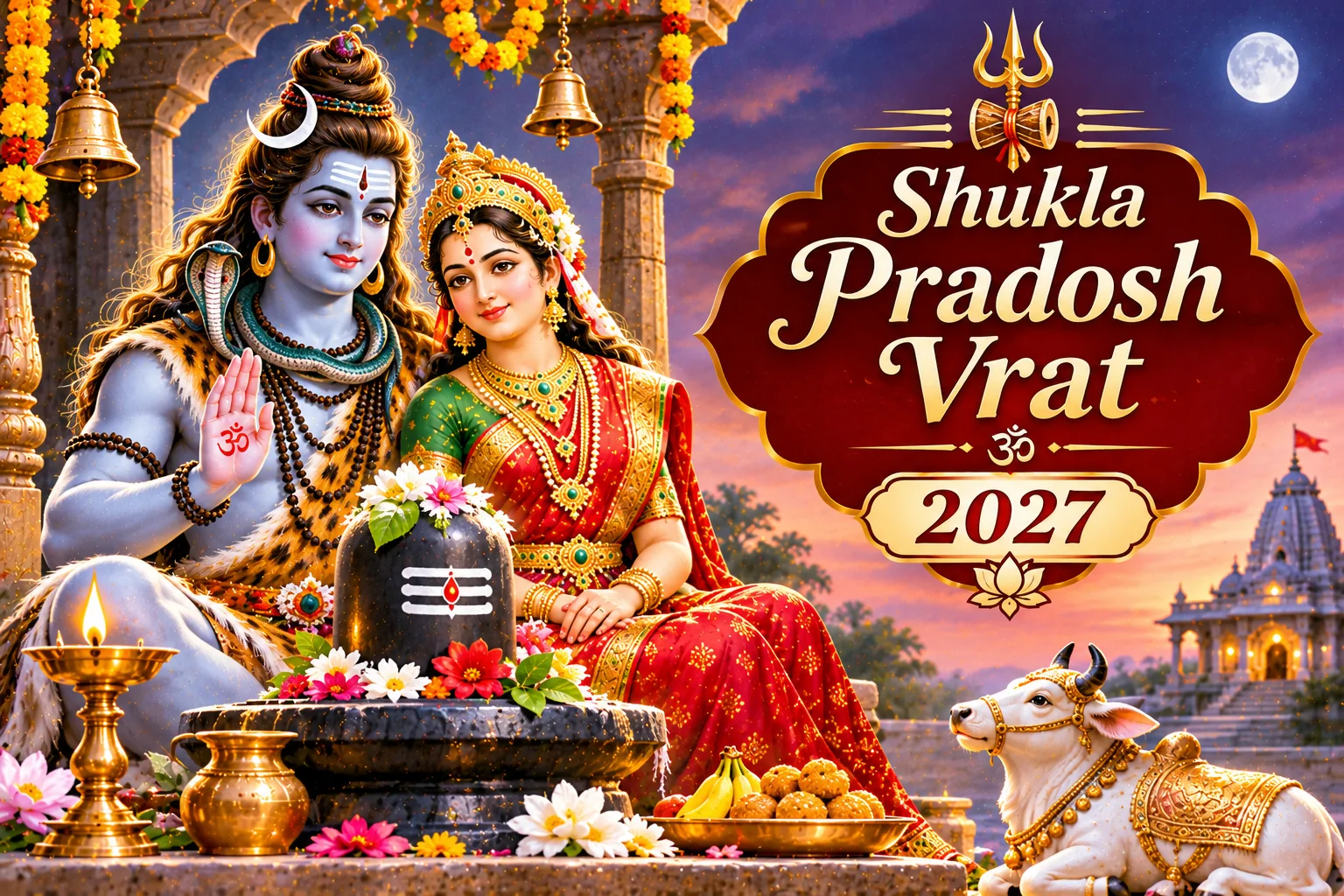
Shukla Pradosh Vrat
Shukla Pradosh Vrat is a sacred Hindu observance dedicated to Lord Shiva and Goddess Parvati. It is observed on the Trayodashi Tithi, the thirteenth lunar day of the Shukla Paksha, or waxing phase of the Moon.
View Festival Guide
Friday, Jan 22, 2027
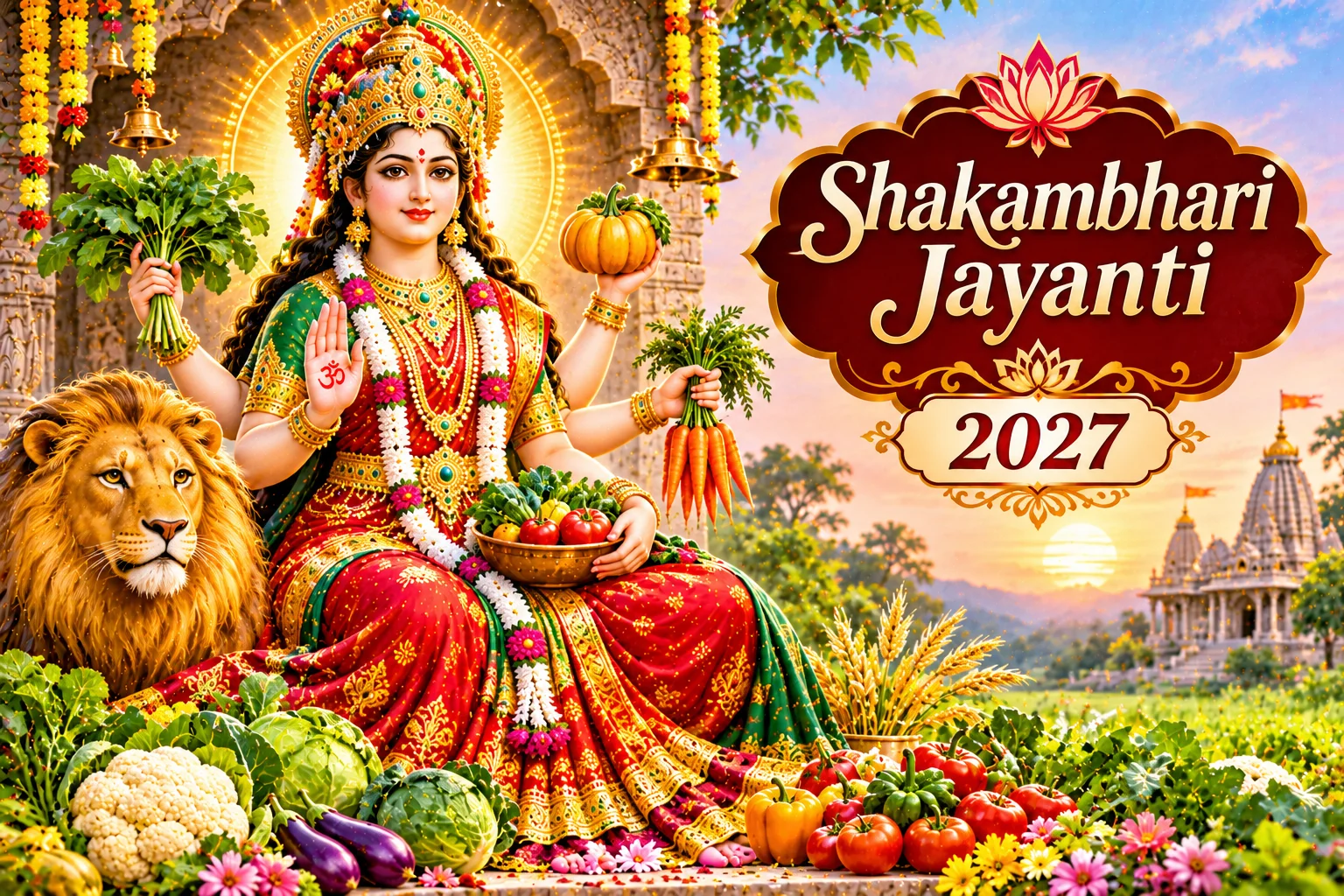
Shakambhari Jayanti
Shakambhari Jayanti is a sacred Hindu festival celebrating the divine appearance of Goddess Shakambhari, a compassionate manifestation of Goddess Durga and Adi Shakti. She is worshipped as the Goddess of vegetation, nourishment, food and the natural resources that sustain life.
View Festival Guide
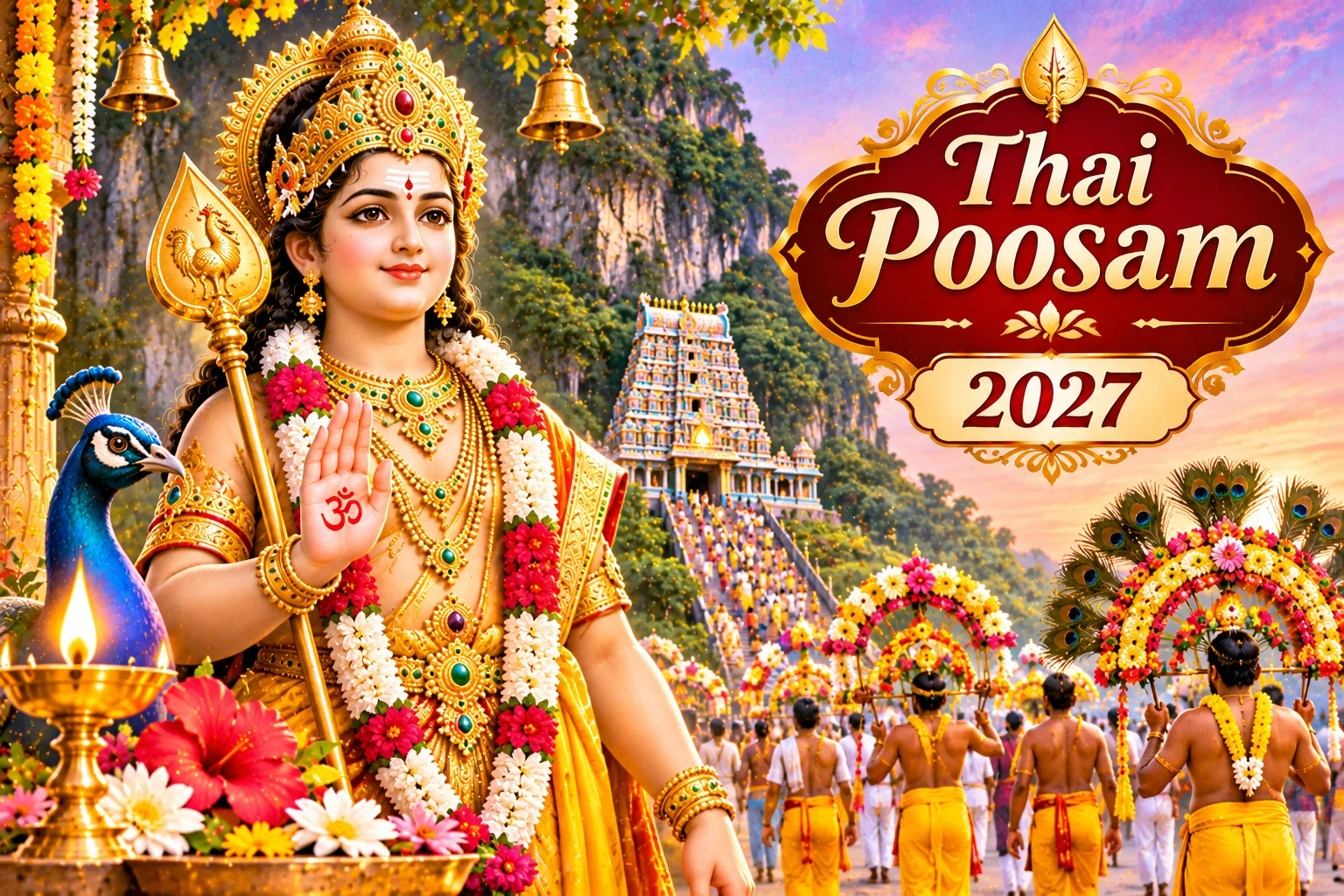
Friday, Jan 22, 2027
Thai Poosam
Thai Poosam, also known as Thaipusam or Thai Poosam Thiruvizha, is an important Hindu festival dedicated to Lord Murugan, the divine son of Lord Shiva and Goddess Parvati. It is celebrated with great devotion by Tamil Hindu communities in India and across the world.
View Festival Guide
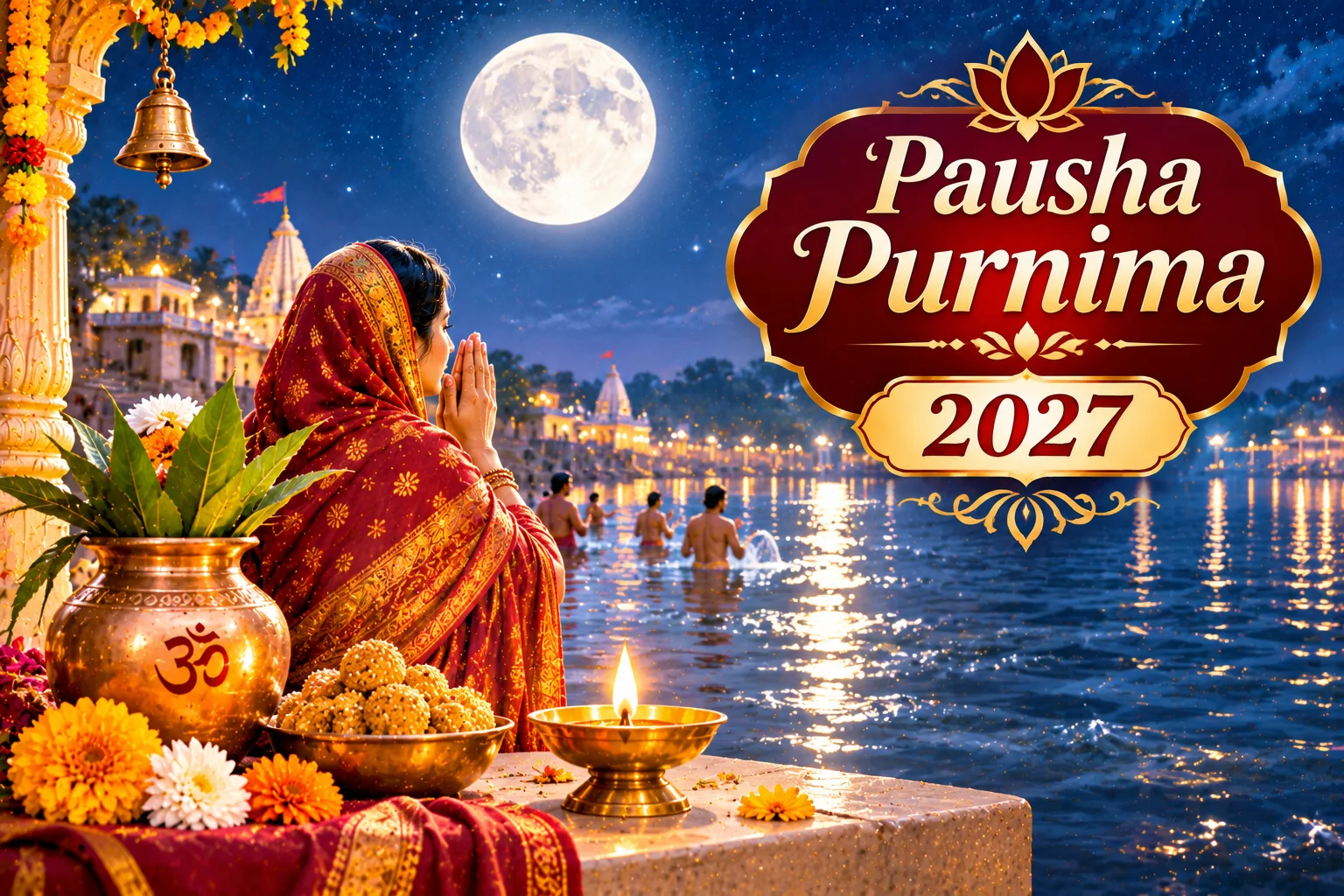
Friday, Jan 22, 2027
Pausha Purnima (Shakambhari Jayanti)
Pausha Purnima, also known as Paush Purnima, is an important Hindu observance celebrated on the full moon day of the Shukla Paksha in the lunar month of Pausha. It is traditionally associated with sacred bathing, fasting, charity, devotion and spiritual purification.
View Festival Guide
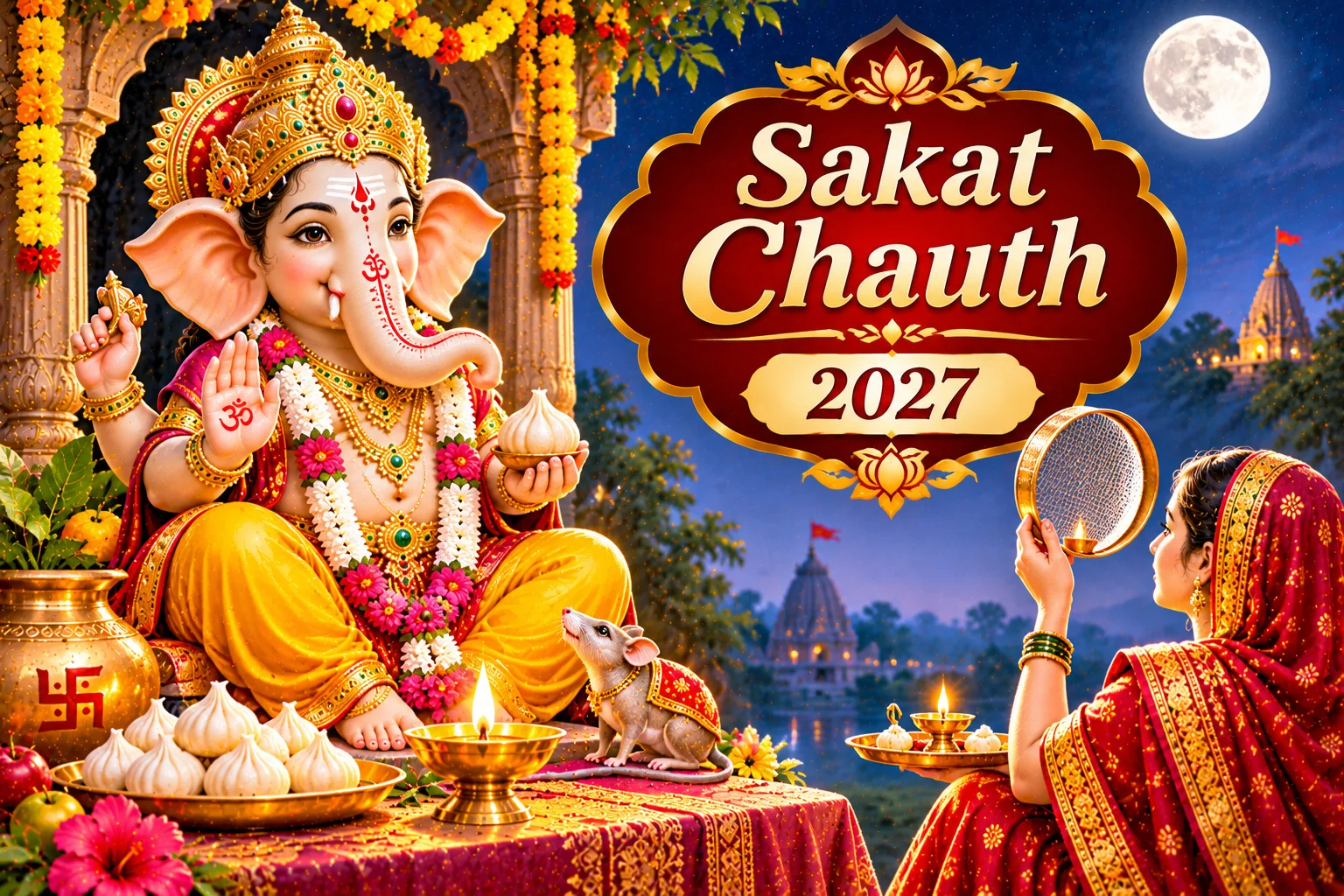
Monday, Jan 25, 2027
Sakat Chauth
Sakat Chauth is an important Hindu fasting festival dedicated primarily to Lord Ganesha and Goddess Sakat Mata. It is observed on Krishna Paksha Chaturthi, the fourth day of the waning lunar fortnight, during the month traditionally known as Magha in North Indian calendars.
View Festival Guide
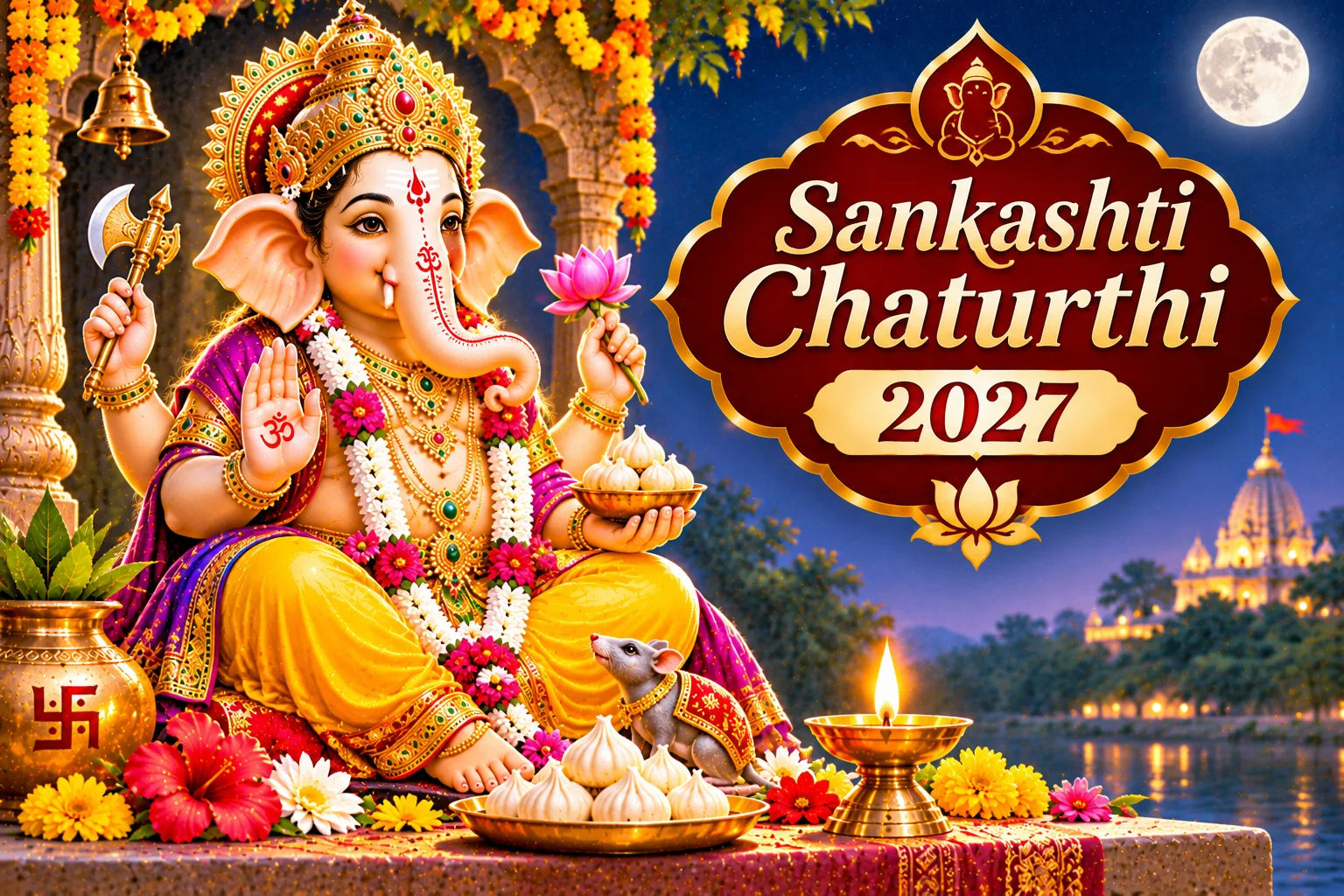
Monday, Jan 25, 2027
Sankashti Chaturthi
Sankashti Chaturthi is an important Hindu fasting observance dedicated to Lord Ganesha, the remover of obstacles and the giver of wisdom, prosperity and auspicious beginnings. It is observed on Chaturthi, the fourth lunar day of Krishna Paksha, the waning phase of the Moon, every month.
View Festival Guide
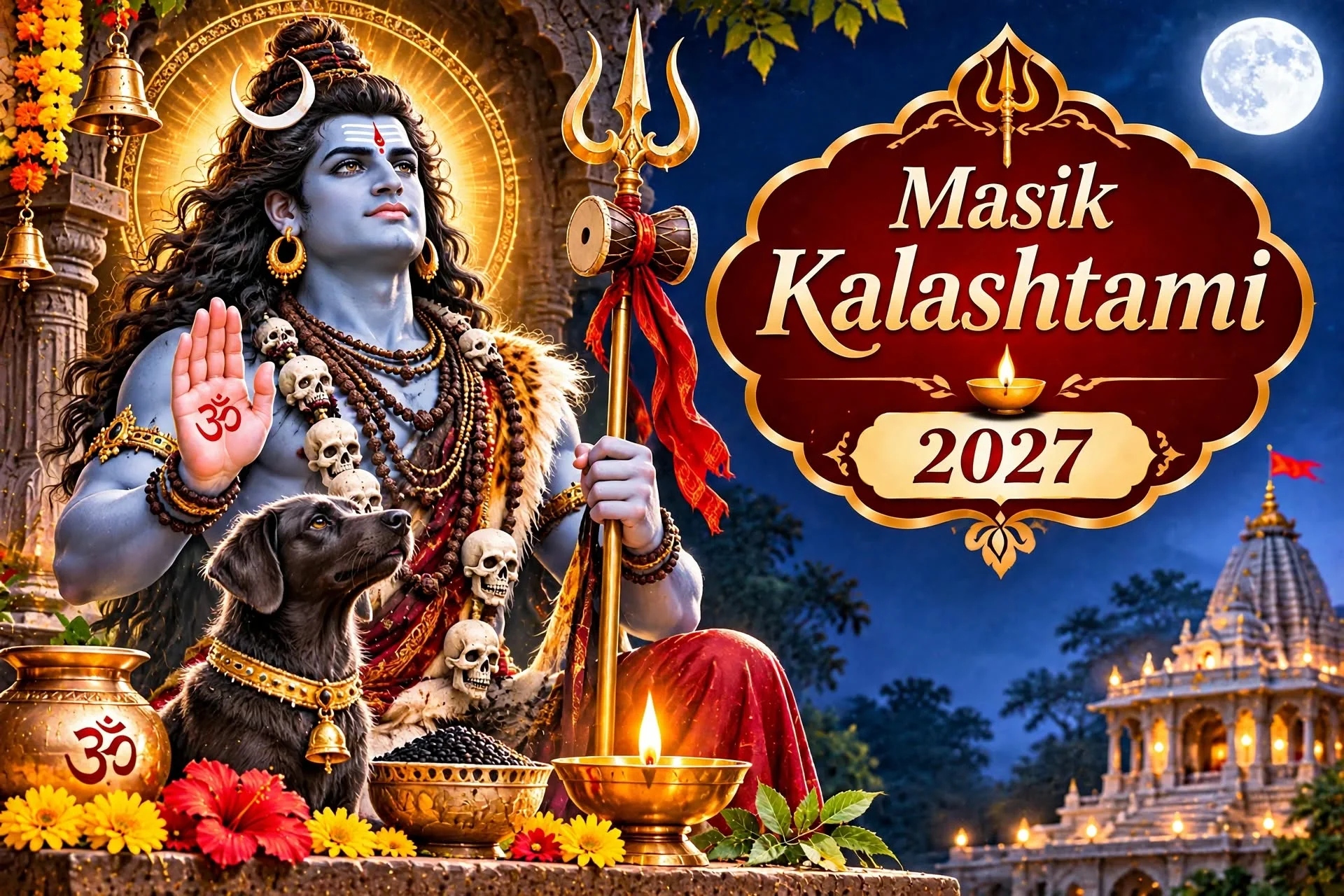
Friday, Jan 29, 2027
Masik Kalashtami
Masik Kalashtami, also known as Masik Kala Ashtami or Kala Ashtami, is a monthly Hindu observance dedicated to Lord Kala Bhairava, a fierce and protective manifestation of Lord Shiva. It is observed on Krishna Paksha Ashtami, the eighth lunar day of the waning fortnight.
View Festival Guide