




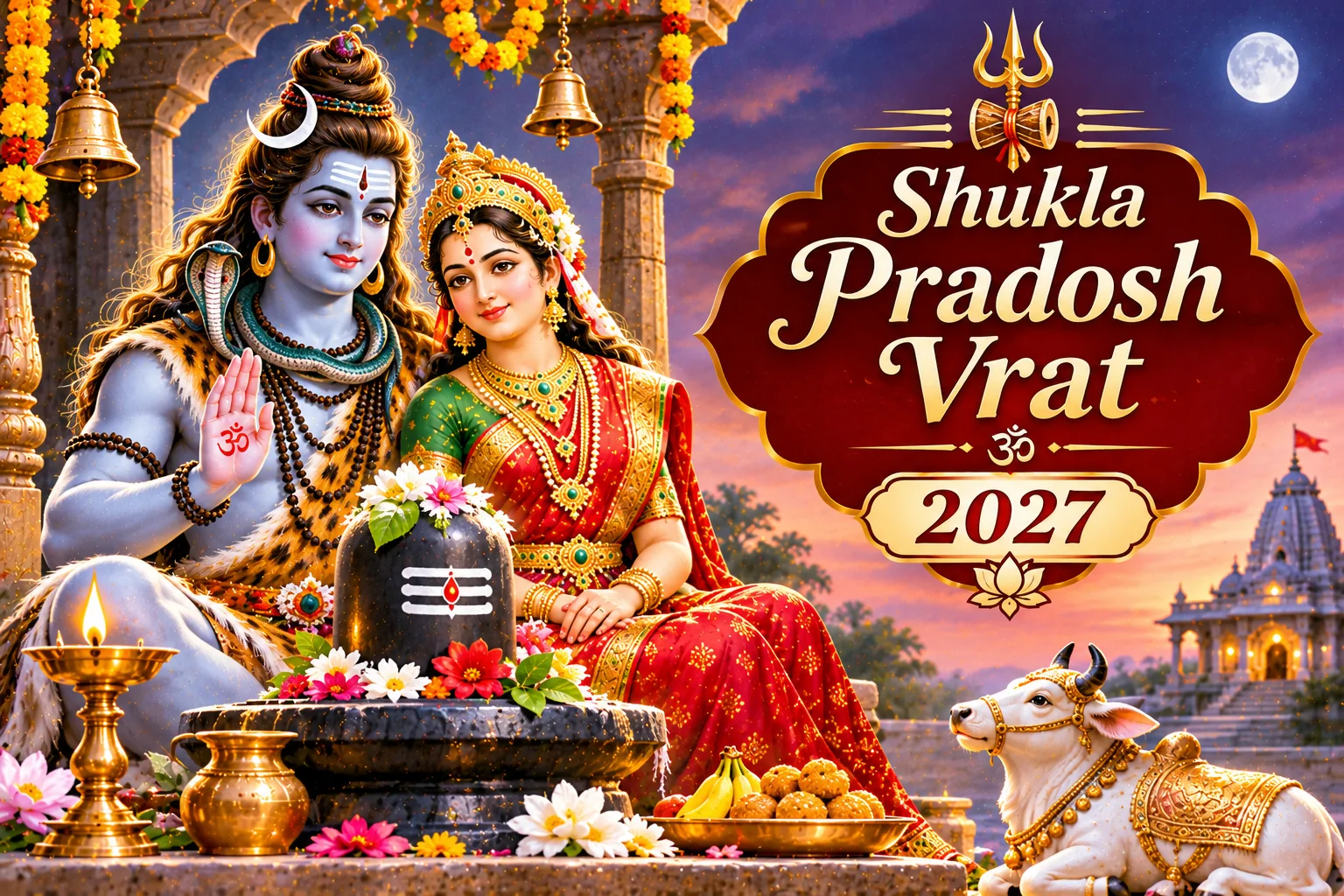
Shukla Pradosh Vrat is a sacred Hindu observance dedicated to Lord Shiva and Goddess Parvati. It is observed on the Trayodashi Tithi, the thirteenth lunar day of the Shukla Paksha, or waxing phase of the Moon.
Shukla Pradosh Vrat 2027: Date, Puja Timings, Rituals & Stories
Shukla Pradosh Vrat Timings & Panchang
Important festival dates and auspicious timings
Usha Arghya (Sunrise)
07:15 am
Sandhya Arghya (Sunset)
05:37 pm
Start Date
Monday, 4 Jan 2027
Puja Muhurat
04:08 pm – 06:16 pm
Shukla Pradosh Vrat
The word Pradosh refers to the evening twilight period, particularly the sacred time around sunset. Devotees observe a fast during the day and perform special Shiva Puja during Pradosh Kaal, seeking divine blessings, spiritual progress, peace, prosperity and freedom from difficulties.
Pradosh Vrat is observed twice during each lunar month: once on Shukla Paksha Trayodashi and once on Krishna Paksha Trayodashi. The Shukla Paksha observance is known as Shukla Pradosh Vrat, while the Krishna Paksha observance is known as Krishna Pradosh Vrat.
Lord Shiva is worshipped as the supreme source of transformation, compassion and liberation. Goddess Parvati is also honoured as His divine consort and the embodiment of Shakti. Devotees worship Shiva in the form of a Shiva Lingam, offer Bilva leaves, perform Abhishekam, chant sacred mantras and listen to the Pradosh Vrat Katha.
The evening worship is considered the central part of this observance. According to traditional belief, Lord Shiva performs His divine Tandava in Kailash during Pradosh, surrounded by the Devas who praise and worship Him.
The observance is followed by devotees across India, although the fasting practices, regional customs and preferred forms of worship may differ. The spiritual essence remains devotion to Lord Shiva, self-discipline, prayer and the cultivation of a peaceful mind.
Why is Shukla Pradosh Vrat Celebrated?
Shukla Pradosh Vrat is observed to worship Lord Shiva during the spiritually significant evening of Shukla Paksha Trayodashi. Devotees believe that sincere worship during Pradosh Kaal brings divine grace and helps overcome obstacles in personal, family and spiritual life.
The observance is associated with the protection and blessings of Lord Shiva. Devotees pray for good health, harmony, prosperity, success in righteous efforts and the removal of negative influences.
The Skanda Purana describes the greatness of Pradosh worship and explains that the Devas gather around Lord Shiva during this sacred evening. Shiva's divine dance at Kailash represents the cosmic rhythm of creation, preservation and transformation.
- To seek the blessings, protection and compassion of Lord Shiva and Goddess Parvati.
- To remove obstacles, difficulties, fear and negative tendencies from life.
- To pray for good health, family happiness, prosperity and peace.
- To develop self-discipline through fasting, prayer and control over the senses.
- To seek spiritual knowledge, inner purification and progress towards liberation.
- To express gratitude to Lord Shiva through Abhishekam, mantra chanting, devotional songs and charity.
- To cultivate patience, forgiveness, humility and compassion in everyday life.
History and Sacred Legend of Shukla Pradosh Vrat
Origin and Significance of Pradosh Worship
Pradosh worship is an ancient Shaiva observance associated with the Trayodashi Tithi and the evening twilight. In the traditional understanding of the Skanda Purana, the dusk of Trayodashi is regarded as an especially sacred period for worshipping Lord Shiva.
The sacred tradition describes Lord Shiva seated in His divine abode on Mount Kailash, performing His cosmic dance while the Devas gather around Him and offer prayers. Their presence symbolises the recognition of Shiva as the supreme divine principle.
The practice of worshipping Shiva during Pradosh Kaal became an important part of Shaiva devotional traditions. Devotees perform Puja, Japa, Stotra recitation and other forms of worship during this period.
The Story of Prince Dharmagupta and the Poor Brahmin Widow
A popular Pradosh Vrat Katha describes the devotion of a poor Brahmin widow and a young prince named Dharmagupta. The story is traditionally associated with the Pradosh Mahatmya of the Skanda Purana.
According to the legend, a Brahmin widow lived a difficult life with her young son. She earned her livelihood through alms and struggled to provide for her family. One day, while travelling with her son, she encountered a young boy who was alone, distressed and without protection.
The boy was Prince Dharmagupta, whose father, King Satyaratha of Vidarbha, had been killed during a conflict. His kingdom had been taken over by enemies, and the young prince had lost his royal position and family protection.
Moved by compassion, the widow took the orphaned prince home and raised him alongside her own son. Although she had very little, she treated both children with affection and care.
The Sage Shandilya Teaches the Pradosh Vrat
One day, the widow took both boys to a sacred place where they encountered Sage Shandilya. Through his spiritual insight, the sage recognised the prince and understood the difficulties he had experienced.
Spiritual Significance of Shukla Pradosh Vrat
Worship During the Sacred Twilight
Pradosh Kaal represents the transition between daylight and night. In Hindu spiritual traditions, transitional periods are often considered suitable for prayer, meditation and worship.
Shukla Pradosh provides an opportunity to pause from everyday activities and direct the mind towards Lord Shiva. Worship during this period encourages awareness, devotion and inner stillness.
The Grace of Lord Shiva
Lord Shiva is worshipped as Bholenath, the compassionate deity who responds to sincere devotion. He is also known as Mahadeva, Rudra, Shambhu and Maheshwara.
Devotees observe Shukla Pradosh to seek His blessings for protection, courage, wisdom and the removal of obstacles. The vrata reminds devotees that divine grace is sought through sincere devotion and righteous conduct rather than material possessions.
The Divine Union of Shiva and Shakti
Goddess Parvati represents Shakti, the divine energy inseparable from Lord Shiva. Their union symbolises the balance of consciousness and energy, stillness and action, and the complementary principles that sustain the universe.
Worshipping Shiva and Parvati together during Pradosh is traditionally associated with harmony in family life, mutual respect, marital well-being and emotional balance.
Purification of the Mind and Senses
Fasting and disciplined worship are intended to help devotees develop control over desires, unnecessary attachments and negative thoughts.
By observing the vrata with patience and self-restraint, devotees attempt to cultivate humility, compassion, forgiveness and a more focused mind. The purpose of fasting is not merely abstinence from food but also the purification of thoughts and actions.
How Shukla Pradosh Vrat Is Celebrated
Observing the Fast
Devotees generally begin the observance after bathing in the morning and making a personal resolve to worship Lord Shiva. The fast may continue until the evening Puja, after which devotees follow their customary method of concluding the fast.
Depending on personal health, family tradition and spiritual discipline, devotees may observe a complete fast, a fruit-based fast or a partial fast. Some devotees take a single simple meal while avoiding grains and certain foods.
The purpose of fasting is to practise self-control and devotion. A strict or waterless fast is not compulsory for everyone.
Morning Preparation and Sankalpa
Devotees wake early, bathe and wear clean clothes. They clean their Puja space and arrange the necessary worship materials.
A Sankalpa is made with devotion, expressing the intention to observe Shukla Pradosh Vrat and worship Lord Shiva. Devotees may also pray for family welfare, health, peace and spiritual progress.
Daytime Devotional Practices
- Chant Om Namah Shivaya or other Shiva mantras.
- Read or listen to the Pradosh Vrat Katha.
- Recite Shiva Chalisa, Rudrashtakam or other devotional hymns.
- Spend time in meditation and prayer.
- Practise truthfulness, patience, compassion and self-restraint.
- Offer food, clothes or other appropriate assistance to people in need.
Evening Shiva Puja During Pradosh Kaal
Shukla Pradosh Vrat Puja Vidhi (Step by Step)
- 1
Wake Up Early and Take a Holy Bath
Wake up early in the morning, bathe and wear clean clothes. Clean the place of worship and prepare the materials required for Lord Shiva's Puja. Maintain a peaceful and devotional atmosphere throughout the day.
- 2
Take the Vrat Sankalpa
Sit before Lord Shiva and make a sincere Sankalpa to observe Shukla Pradosh Vrat. Pray for His blessings, inner purification, family welfare and spiritual progress. The Sankalpa may be made in one's own words with devotion.
- 3
Observe the Fast
Observe the fast according to your health and family tradition. You may follow a complete fast, a fruit-based fast or a partial fast. Maintain self-discipline, avoid unnecessary arguments and spend time in prayer and meditation.
- 4
Prepare for Evening Worship
Before Pradosh Kaal, bathe or wash your hands and feet and wear clean clothes. Arrange a Shiva Lingam or image of Lord Shiva, a clean Puja platform, a lamp, incense, flowers, Bilva leaves, water and other offerings.
- 5
Shukla Pradosh Vrat Puja Samagri List
Main Puja Items
- Shiva Lingam or an image of Lord Shiva
- Image or idol of Goddess Parvati
- Nandi idol or image, if available
- Clean Puja Chowki or worship platform
- Clean cloth for the Puja area
- Gangajal or clean water
- Panchapatra and spoon
- Kalash filled with clean water
- Bell and Aarti plate
Abhishekam Materials
- Clean water
- Gangajal
- Milk
- Curd
- Honey
- Ghee
- Sugar
- Panchamrita
- Sandalwood paste
Panchamrita is traditionally prepared using milk, curd, honey, ghee and sugar. Devotees may perform a simple water Abhishekam if all ingredients are not available.
Flowers and Sacred Leaves
Mantras and Prayers for Shukla Pradosh Vrat
Shukla Pradosh Vrat Vrat Rules and Fasting Guidelines
Fasting Rules
Devotees observe Shukla Pradosh Vrat on Shukla Paksha Trayodashi. The fast is traditionally maintained during the day, with Shiva worship performed during the evening Pradosh period.
- A complete fast may be observed by those who are accustomed to it and medically fit.
- A Phalahar fast may include fruits, milk, nuts and other permitted foods.
- Some devotees follow a partial fast or take one simple meal according to family tradition.
- Avoid overeating and maintain moderation when concluding the fast.
- Do not force yourself to observe a waterless fast.
Purity and Self-Discipline
The spiritual purpose of the vrata includes purification of the mind and discipline in everyday conduct. Devotees are encouraged to maintain cleanliness, peaceful thoughts and respectful behaviour.
- Take a bath before beginning the main worship.
- Keep the Puja area clean and orderly.
- Speak truthfully and avoid unnecessary arguments.
- Practise patience, forgiveness and compassion.
- Avoid harmful actions and negative behaviour.
- Spend time in prayer, meditation and devotional reading.
Shiva Worship Rules
The evening Shiva Puja is the central ritual of Pradosh Vrat. Devotees worship the Shiva Lingam with devotion and follow the customs of their family or temple.
Dos and Don'ts of Shukla Pradosh Vrat
Good Practices (Do's)
- Begin the day with a bath and a sincere Sankalpa to worship Lord Shiva.
- Perform Shiva Puja during the appropriate Pradosh Kaal.
- Offer clean water, Bilva leaves and fresh flowers to the Shiva Lingam.
- Chant Om Namah Shivaya with devotion.
- Read or listen to the Pradosh Vrat Katha.
- Maintain cleanliness and peaceful behaviour throughout the observance.
Shukla Pradosh Vrat Across Regions
| Region | Local Name |
|---|---|
| North India | Pradosh Vrat |
| Uttar Pradesh and Bihar | Pradosh Vrat |
| Rajasthan | Pradosh Vrat |
| Maharashtra | Pradosh Vrat |
| Gujarat | Pradosh Vrat |
| Karnataka | Pradosha |
| Tamil Nadu | Pradosham |
| Andhra Pradesh and Telangana | Pradosha Vratam |
| Kerala | Pradosham |
| Nepal | Pradosh Vrat |
Shukla Pradosh Vrat FAQs
What is Shukla Pradosh Vrat?
Shukla Pradosh Vrat is a Hindu fasting and worship observance dedicated to Lord Shiva. It is observed on the Trayodashi Tithi of Shukla Paksha, the waxing phase of the Moon. The main worship is performed during the evening Pradosh period.
Who is worshipped during Shukla Pradosh Vrat?
Lord Shiva is the principal deity worshipped during Shukla Pradosh Vrat. Goddess Parvati is also honoured as His divine consort. Devotees may additionally offer prayers to Nandi, Lord Ganesha and other deities according to their family tradition.
When is Shukla Pradosh Vrat observed?
It is observed on the Trayodashi Tithi of Shukla Paksha in each lunar month. The applicable observance date is determined according to the local Panchang and the traditional rules for Trayodashi during Pradosh Kaal.
Upcoming Festivals
View All
Friday, Jan 22, 2027
Pausha Purnima (Shakambhari Jayanti)
Pausha Purnima, also known as Paush Purnima, is an important Hindu observance celebrated on the full moon day of the Shukla Paksha in the lunar month of Pausha. It is traditionally associated with sacred bathing, fasting, charity, devotion and spiritual purification.
View Festival Guide
Friday, Jan 22, 2027
Thai Poosam
Thai Poosam, also known as Thaipusam or Thai Poosam Thiruvizha, is an important Hindu festival dedicated to Lord Murugan, the divine son of Lord Shiva and Goddess Parvati. It is celebrated with great devotion by Tamil Hindu communities in India and across the world.
View Festival Guide
Friday, Jan 22, 2027
Shakambhari Jayanti
Shakambhari Jayanti is a sacred Hindu festival celebrating the divine appearance of Goddess Shakambhari, a compassionate manifestation of Goddess Durga and Adi Shakti. She is worshipped as the Goddess of vegetation, nourishment, food and the natural resources that sustain life.
View Festival Guide
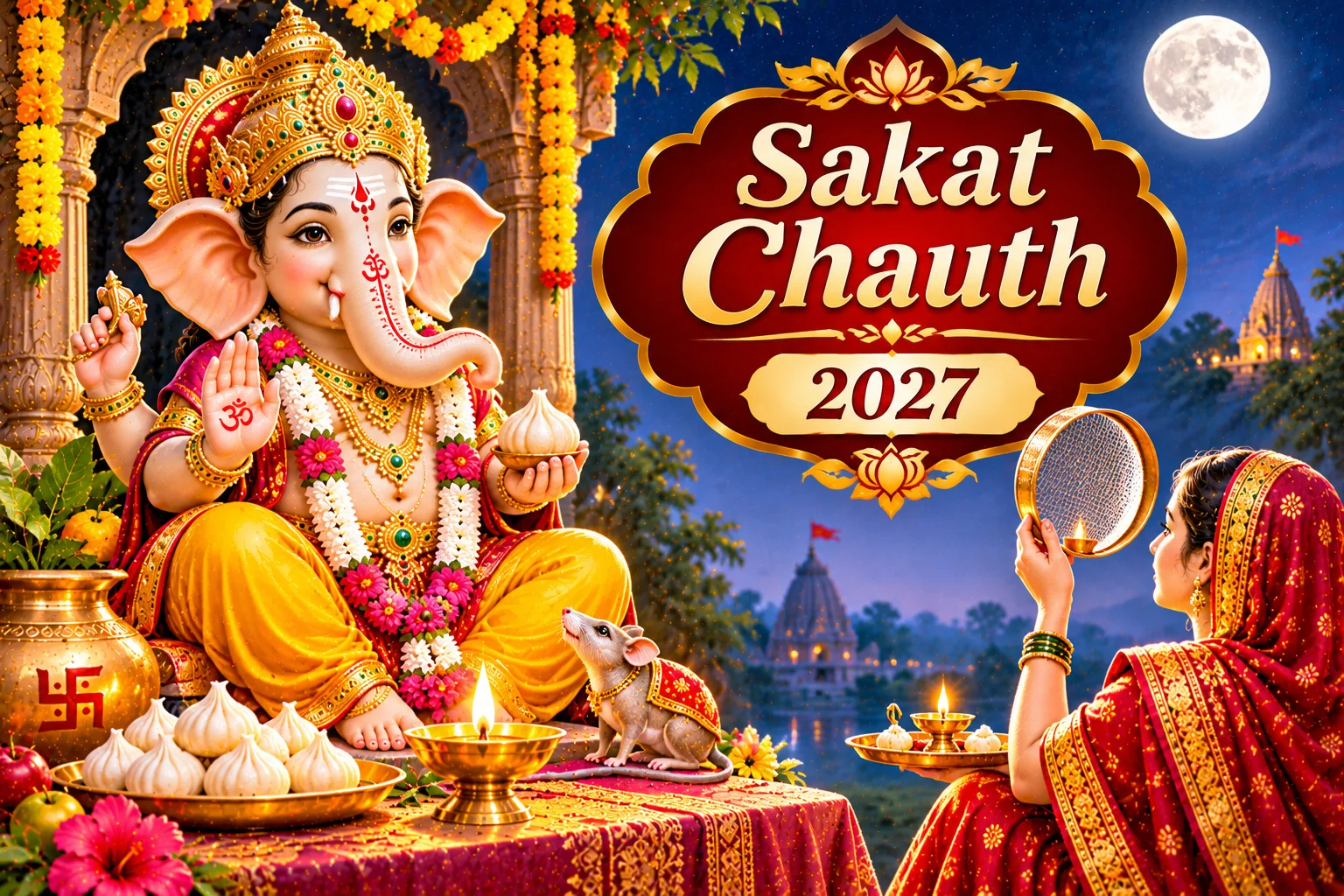
Monday, Jan 25, 2027
Sakat Chauth
Sakat Chauth is an important Hindu fasting festival dedicated primarily to Lord Ganesha and Goddess Sakat Mata. It is observed on Krishna Paksha Chaturthi, the fourth day of the waning lunar fortnight, during the month traditionally known as Magha in North Indian calendars.
View Festival Guide
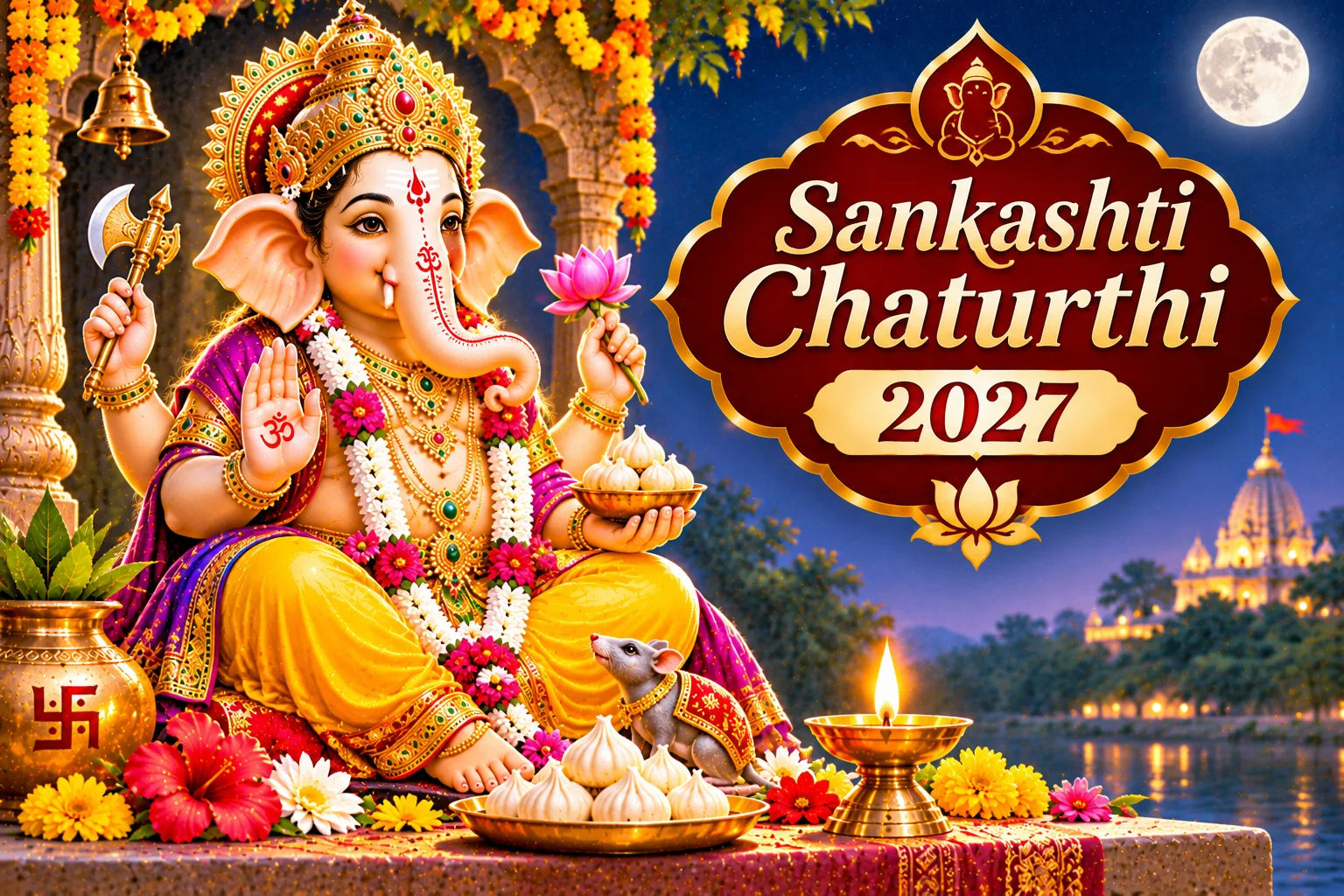
Monday, Jan 25, 2027
Sankashti Chaturthi
Sankashti Chaturthi is an important Hindu fasting observance dedicated to Lord Ganesha, the remover of obstacles and the giver of wisdom, prosperity and auspicious beginnings. It is observed on Chaturthi, the fourth lunar day of Krishna Paksha, the waning phase of the Moon, every month.
View Festival Guide
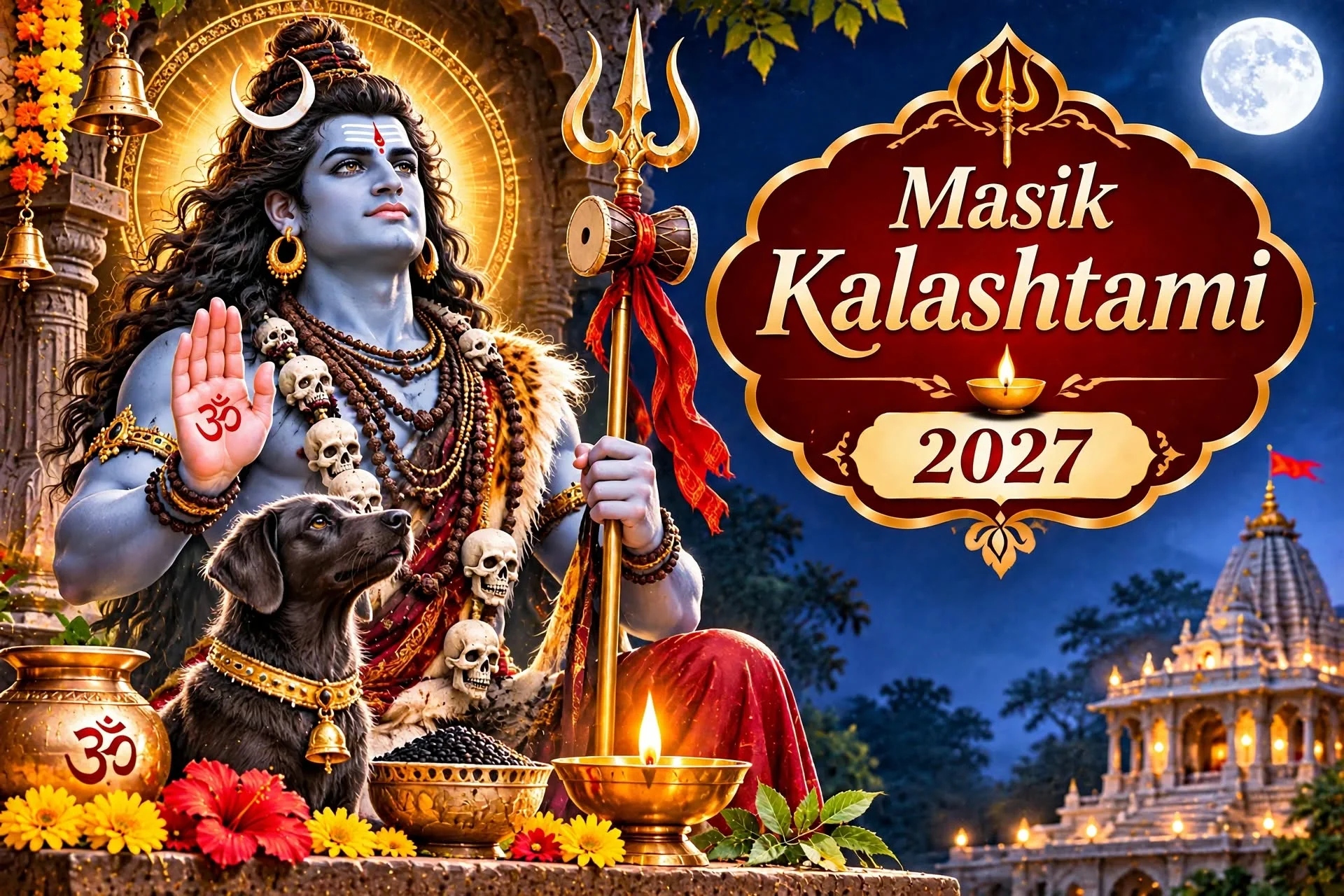
Friday, Jan 29, 2027
Masik Kalashtami
Masik Kalashtami, also known as Masik Kala Ashtami or Kala Ashtami, is a monthly Hindu observance dedicated to Lord Kala Bhairava, a fierce and protective manifestation of Lord Shiva. It is observed on Krishna Paksha Ashtami, the eighth lunar day of the waning fortnight.
View Festival Guide
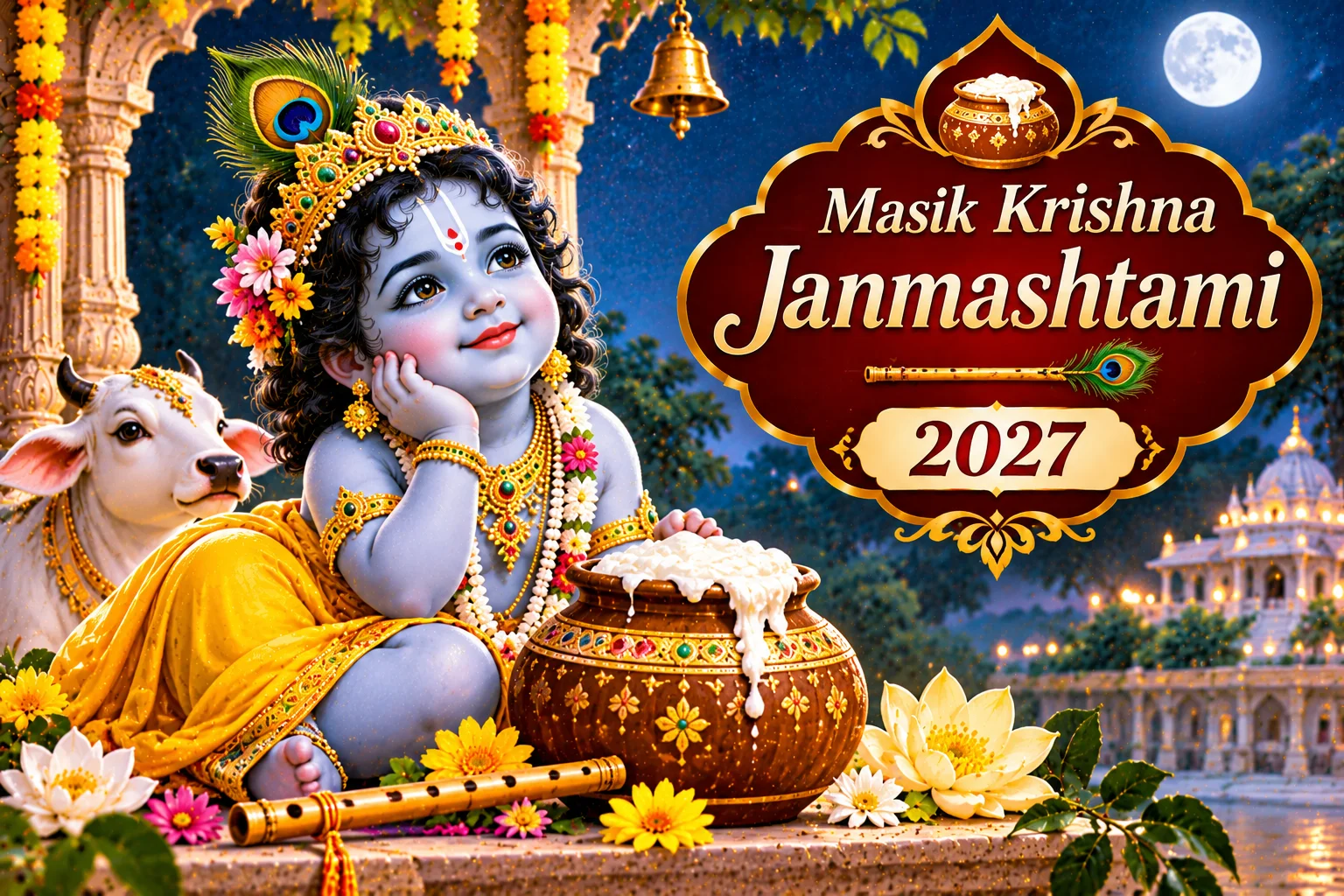
Friday, Jan 29, 2027
Masik Krishna Janmashtami
Masik Krishna Janmashtami, also known as Masik Janmashtami, Masik Krishnashtami and Krishna Ashtami Vrat, is a monthly Hindu observance dedicated to Lord Krishna. It is observed on Krishna Paksha Ashtami, the eighth lunar day of the waning fortnight, every lunar month.
View Festival Guide
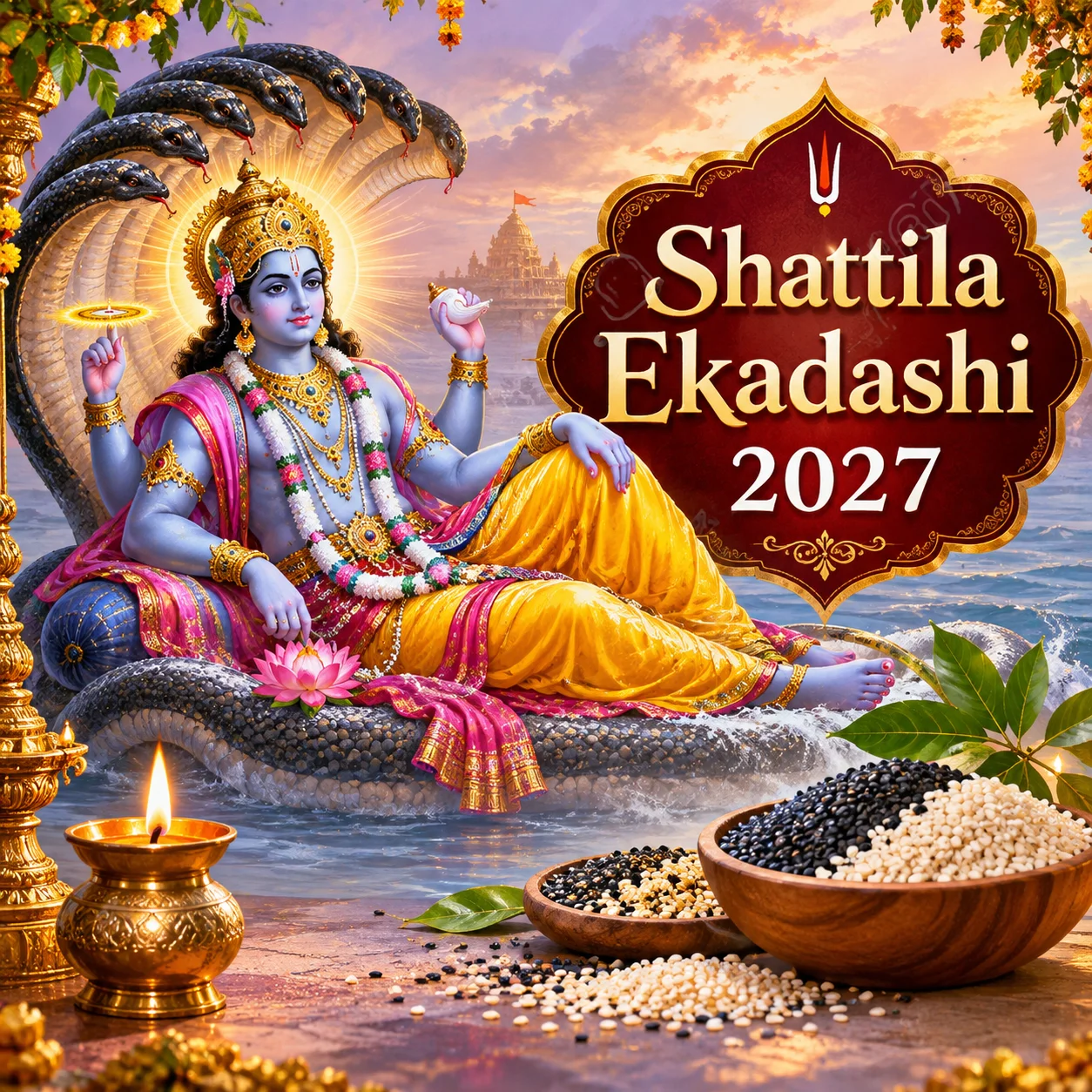
Tuesday, Feb 2, 2027
Shattila Ekadashi
Shattila Ekadashi, also known as Sat-Tila Ekadashi, is an important Hindu fasting festival dedicated to Lord Vishnu, observed on the Krishna Paksha Ekadashi (eleventh lunar day of the waning moon) during the month of Magha. The Sanskrit name Shattila is derived from two words: Shat, meaning six, and Tila, meaning sesame seeds. The festival emphasizes the spiritual importance of sesame seeds through six sacred practices associated with purification, worship, ancestral offerings, consumption, and charity.
View Festival Guide