




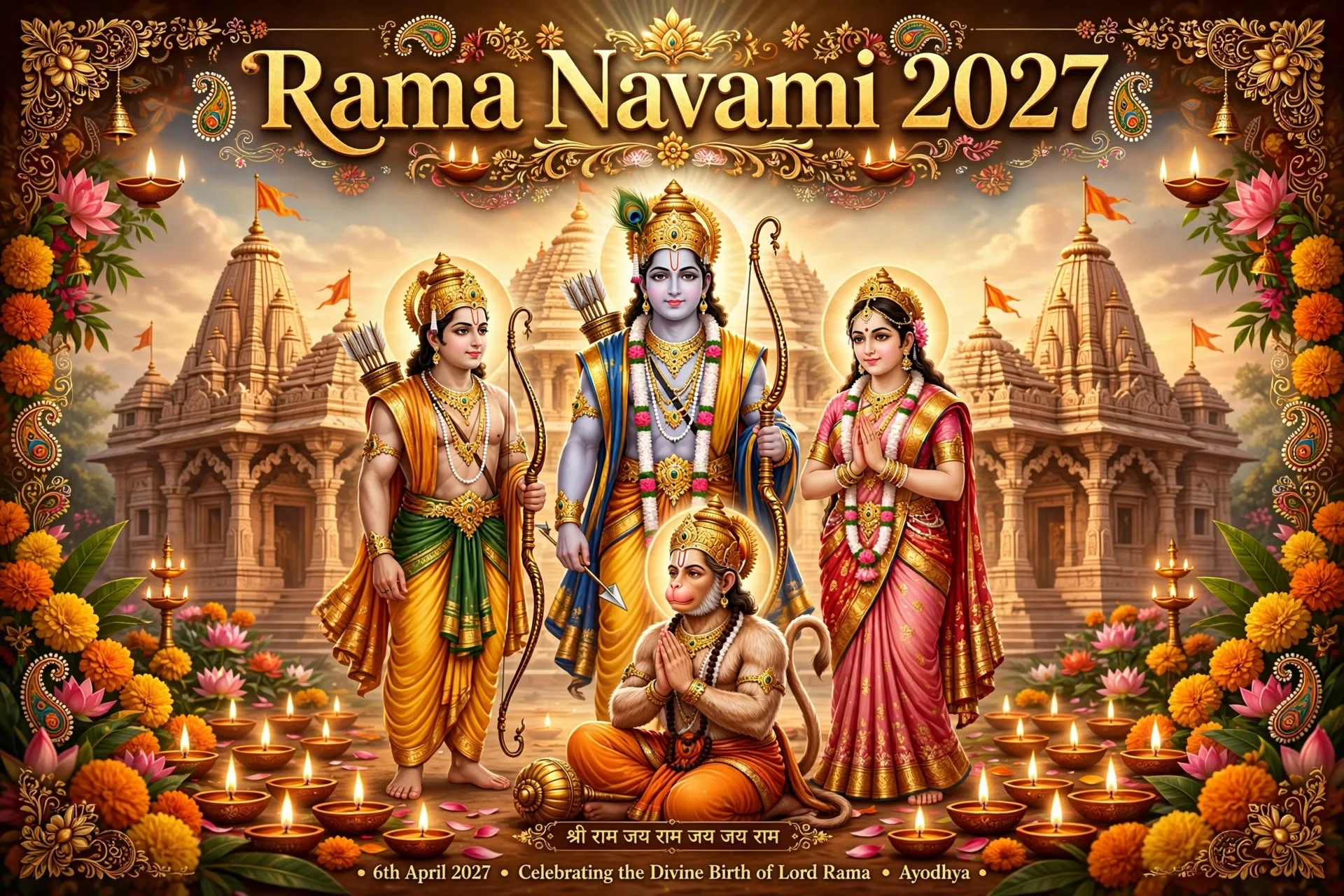
Rama Navami is one of the most sublime and universally revered festivals in Sanatana Dharma, celebrating the auspicious appearance (Janmotsav) of Maryada Purushottam Lord Sri Rama—the seventh incarnation of Lord Vishnu. Falling on the ninth day of the waxing moon (Shukla Paksha Navami) in the sacred month of Chaitra, it marks the grand culmination of the nine-day Chaitra Navratri festival. Born at high noon during the sacred Abhijit Muhurta in the ancient holy city of Ayodhya, Lord Rama incarnated to restore righteousness, establish exemplary moral standards (Dharma), and vanquish demonic forces across the earth.
Rama Navami 2027: Date, Puja Timings, Rituals & Stories
Rama Navami Timings & Panchang
Important festival dates and auspicious timings
Usha Arghya (Sunrise)
05:56 am
Sandhya Arghya (Sunset)
06:47 pm
Start Date
Thursday, 15 Apr 2027
Puja Muhurat
03:24 pm – 01:21 pm
Rama Navami
The glorious appearance of Lord Rama is celebrated across timeless scriptures, including the Valmiki Ramayana, the Srimad Bhagavata Purana, and Goswami Tulsidas's Sri Ramacharitmanas. King Dasharatha of the solar Ikshvaku dynasty had performed the sacred Putrakameshti Yajna under the guidance of Sage Rishyasringa. Queen Kausalya gave birth to Sri Rama when the planetary configuration was supremely exalted—with five planets in their exaltation signs and the constellation Punarvasu ascending—bathing creation in celestial peace and joy.
Devotees celebrate Rama Navami with unbroken fasting, continuous recitations of the Ramacharitmanas (Akhanda Patha), and vibrant temple ceremonies. At precisely 12:00 noon, temple bells chime, conches sound, and devotees joyously sing 'Bhaye Pragate Kripala Deendayala', unveiling the newborn baby Rama (Ram Lalla) in an ornate cradle (Jhoola). Processions (Rath Yatras) wind through holy cities like Ayodhya, Bhadrachalam, Janakpur, and Rameswaram, distributing fragrant Panjiri, Panchamrit, and cooling buttermilk to millions of devotees.
Why is Rama Navami Celebrated?
Rama Navami is celebrated to revere the birth of Lord Sri Rama, who embodies the highest ideals of truth, filial duty, marital fidelity, righteous governance (Ramrajya), and unconditional compassion. Celebrating this festival inspires humanity to uphold morality in daily conduct, conquer inner vices, and surrender to divine grace.
- Divine Incarnation of Lord Rama: Commemorates the appearance of the Supreme Lord as the prince of Ayodhya to establish righteousness.
- Culmination of Chaitra Navratri: Marks the glorious ninth day of the spring Navratri, combining the worship of Shakti with Sri Rama's appearance.
- Celebration of Dharma & Righteous Governance: Reveres Lord Rama as Maryada Purushottam, the eternal benchmark of ethical leadership and duty.
- Liberation from Karmic Bondage: Chanting the holy name of Rama (Rama Nama) burns away accrued sins and grants inner peace and liberation (Moksha).
Scriptural Chronicle of the Appearance of Sri Rama in Ayodhya
The Putrakameshti Yajna and Divine Payasa
King Dasharatha of Ayodhya, though sovereign of a prosperous kingdom, grieved deeply for lack of an heir to continue the noble Ikshvaku lineage. Guided by royal preceptor Sage Vasishtha, the king invited Sage Rishyasringa to conduct the sacred Putrakameshti Yajna. From the sacrificial fire, the divine Yajnapurusha emerged bearing a golden bowl of celestial nectar pudding (Payasa).
King Dasharatha divided the sacred offering among his three queens: Kausalya, Kaikeyi, and Sumitra. In due course, Queen Kausalya conceived the divine seed of Lord Vishnu, while Kaikeyi and Sumitra conceived his celestial expansions Bharata, Lakshmana, and Shatrughna.
The Cosmic Noon of Chaitra Navami
On the ninth day of the bright fortnight of Chaitra, when the sun stood directly overhead at high noon (Abhijit Muhurta), the season was mild and fragrant, rivers flowed with crystal waters, and cool breezes carried blossoms from the heavens. Sri Rama manifested in his four-armed divine form, adorned with conch, discus, mace, and lotus, before assuming the charming form of an infant child.
Overwhelmed with ecstatic devotion, Queen Kausalya wept tears of joy, praising the Lord with the celebrated hymn 'Bhaye Pragate Kripala Deendayala Kausalya Hitakari'. All Ayodhya erupted into music, dancing, and distribution of gems and sweets, inaugurating an eternal festival of joy.
Source: Valmiki Ramayana (Bala Kanda) & Ramacharitmanas
The Mystical Depth of the Rama Taraka Mantra
The Power of the Name 'Rama'
In the Shiva Purana and Padma Purana, Lord Shiva tells Goddess Parvati that the two-syllable name 'Ra-Ma' is equivalent to the entire Vishnu Sahasranama ('Shri Rama Rama Rameti Rame Rame Manorame'). In esoteric Sanskrit grammar, 'Ra' is extracted from the Ashtakshara mantra (Om Namo Narayanaya), and 'Ma' is extracted from the Panchakshara mantra (Om Namah Shivaya).
Together, they form the supreme Taraka Mantra that ferries the conditioned soul safely across the ocean of worldly existence (Samsara). Chanting Rama's name quietens the agitated mind, dissolves past karmas, and awakens pure devotion.
Maryada Purushottam as the Ideal Human
Unlike incarnations that display unrestrained cosmic power, Lord Rama lived as a mortal man bound by societal rules (Maryada). He was the ideal son who obeyed his father's command without question, the ideal brother, the ideal husband, and the ideal king who placed his subjects' welfare above his personal happiness.
Rama Navami calls upon every human being to embody these noble values, demonstrating that spiritual realization is not achieved through escapism, but through righteous and compassionate living in the world.
Festive Observances & Worship Protocol for Rama Navami
Dawn Snana, Fasting, and Ramacharitmanas Recitation
Devotees rise before dawn during Brahma Muhurta, take a ceremonial bath in sacred rivers (such as the Saryu in Ayodhya) or at home with water infused with Gangajal. An unbroken fast is maintained throughout the day, abstaining from grains and legumes.
In homes and temples, 24-hour non-stop recitations of the Ramacharitmanas (Akhanda Ramayana Patha) culminate in the morning, creating an intensely sanctified devotional atmosphere charged with Vedic vibrations.
Midday Janmotsav and Cradle Ceremony
At exactly 12:00 noon, the primary Janmotsav ritual begins. A small idol of infant Sri Rama (Ram Lalla) is bathed in Panchamrit and Gangajal, anointed with yellow sandalwood paste, dressed in vibrant yellow silk (Pitamvara), and placed in a gorgeously decorated cradle (Jhoola).
Devotees gently rock the cradle while singing celebratory folk sohar songs and chanting 'Jai Shri Ram'. Prasad consisting of sweet coriander Panjiri, Panchamrit, seasonal fruits, and pedas is joyfully distributed to everyone.
Rama Navami Puja Vidhi (Step by Step)
- 1
Brahma Muhurta Snana & Sankalpa
Wake before dawn, bathe with Gangajal-infused water, dress in pristine yellow traditional garments, and recite the formal vow for the Rama Navami fast.
- 2
Altar & Mandap Sthapana
Cleanse the family shrine, spread a rich yellow or red silk cloth over a wooden chauki, and arrange decorative flower garlands and mango leaves.
- 3
Ram Darbar Sthapana
Install the sacred idols of Lord Sri Rama, Mother Sita, Lakshmana, and Sri Hanuman (Ram Darbar), placing a small cradle for infant Ram Lalla.
- 4
Kalash Consecration
Establish a sacred copper Kalash filled with holy water, betel nut, silver coin, and mango leaves, placing an unbroken coconut wrapped in red thread on top.
- 5
Abhijit Muhurta Avahana (12:00 Noon)
At precisely 12:00 noon, blow the conch shell and ring bells, joyfully invoking the divine infant appearance of Lord Rama into the sanctum.
Rama Navami Puja Samagri List
Altar & Deity Consecration Materials
Sacred articles required to establish the Ram Darbar and baby Rama cradle.
- Idols or framed image of Ram Darbar (Sri Rama, Sita, Lakshmana, Hanuman)
- Small brass or silver idol of infant Sri Rama (Ram Lalla) and a decorative cradle (Jhoola)
- Yellow silk altar cloth, wooden chauki, and copper Kalash with coconut
- Gangajal, raw cow milk, fresh curd, pure honey, cow ghee, and sugar for Panchamrit
Botanical Offerings & Fragrances
Fragrances, sacred threads, and floral offerings beloved by Lord Sri Rama.
- Fragrant yellow sandalwood paste (Chandan), Kumkum, and unbroken rice (Akshata)
- Fresh yellow marigold garlands, blue lotus flowers, and sacred Tulsi leaves
- Yajnopavita (sacred thread) and yellow silk attire (Pitamvara)
- Pure cow-ghee brass lamp, cotton wicks, aromatic camphor, and dhoop sticks
Naivedya & Janmotsav Prasad Ingredients
Traditional culinary offerings prepared specifically for Sri Rama's birth celebration.
- Authentic Dhaniya Panjiri (roasted coriander seed powder, powdered sugar, dry fruits, and ghee)
- Panchamrit (milk, curd, honey, ghee, and sugar with Tulsi leaves)
Mantras and Prayers for Rama Navami
Rama Navami Vrat Rules and Fasting Guidelines
Observance Guidelines for Rama Navami
Specific devotional disciplines and fasting protocols for Rama Navami.
- Fasting Window: Observe an unbroken fast from dawn until noon (when the birth ceremony is conducted) or until sunset, taking only phalahari foods.
- Noon Appearance: Participate in the 12:00 noon Janmotsav ceremony, rocking the cradle of baby Rama with devotion.
- Rama Nama Japa: Chant the Rama Taraka Mantra or read chapters of the Ramacharitmanas throughout the day.
- Moral Rectitude: Practice absolute truthfulness, gentleness, humility, and service to elders, embodying the character of Lord Rama.
Dos and Don'ts of Rama Navami
Good Practices (Do's)
- Wake early during Brahma Muhurta, bathe, and wear clean yellow or white traditional clothes.
- Participate in the 12:00 noon Janmotsav ceremony and rock the cradle of infant Rama.
- Chant the holy name of Rama and recite the Ramacharitmanas with devotion.
- Distribute cooling drinks, Panjiri, Panchamrit, and food to pilgrims and the needy.
Things to Avoid (Don'ts)
Rama Navami Across Regions
| Region | Local Name |
|---|---|
| Ayodhya (Uttar Pradesh) | Ayodhya Rama Navami Mela |
| Bhadrachalam (Telangana) & Southern India | Sita Rama Kalyanam |
| Janakpur (Mithila, Nepal & Bihar) | Rama Navami Utsav |
Rama Navami FAQs
What is Rama Navami?
Rama Navami is the sacred birth celebration of Lord Sri Rama, the seventh avatar of Lord Vishnu, celebrated on Chaitra Shukla Navami at high noon.
Why is Lord Rama called Maryada Purushottam?
He is called Maryada Purushottam because He exemplified supreme righteousness, ethical discipline, and moral perfection within human boundaries throughout His life.
At what time of day was Lord Rama born?
Lord Rama was born precisely at high noon (12:00 PM) during the auspicious Abhijit Muhurta on Chaitra Shukla Navami.
What special prasad is offered on Rama Navami?
Upcoming Festivals
View All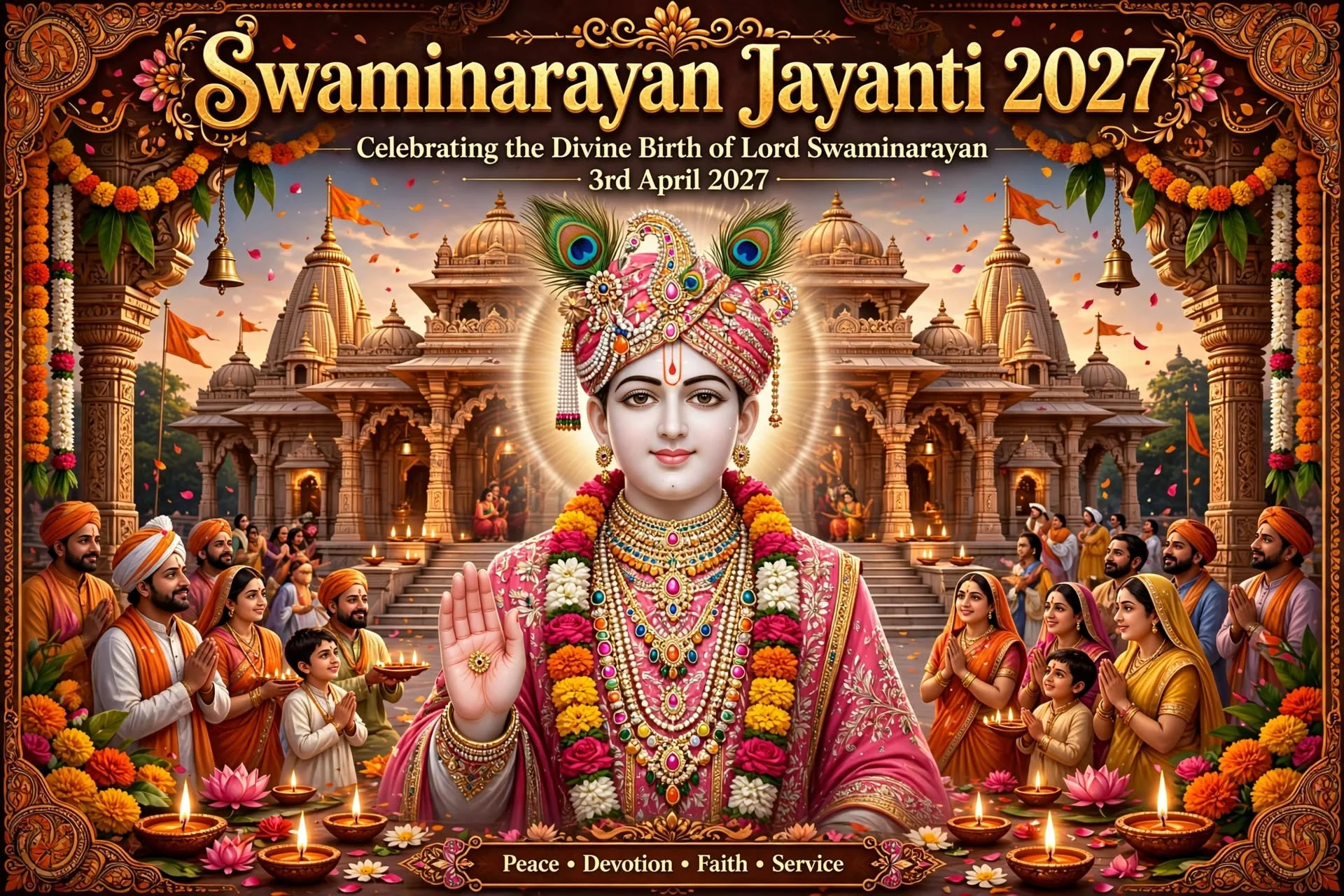
Thursday, Apr 15, 2027
Swaminarayan Jayanti
Swaminarayan Jayanti marks the auspicious birth anniversary of Bhagwan Swaminarayan (1781–1830 CE), the founder of the Swaminarayan Sampradaya and revered as a supreme divine manifestation in modern Sanatana Dharma. Celebrated on the ninth lunar day of the bright fortnight (Shukla Paksha Navami) in the month of Chaitra, this holy observance coincides precisely with Rama Navami. Manifesting at the sacred hour of 10:10 PM in the village of Chhapaiya near Ayodhya, Bhagwan Swaminarayan descended to establish moral rectitude, spiritual purity, social reform, and unconditional devotion to God.
View Festival Guide
Saturday, Apr 17, 2027
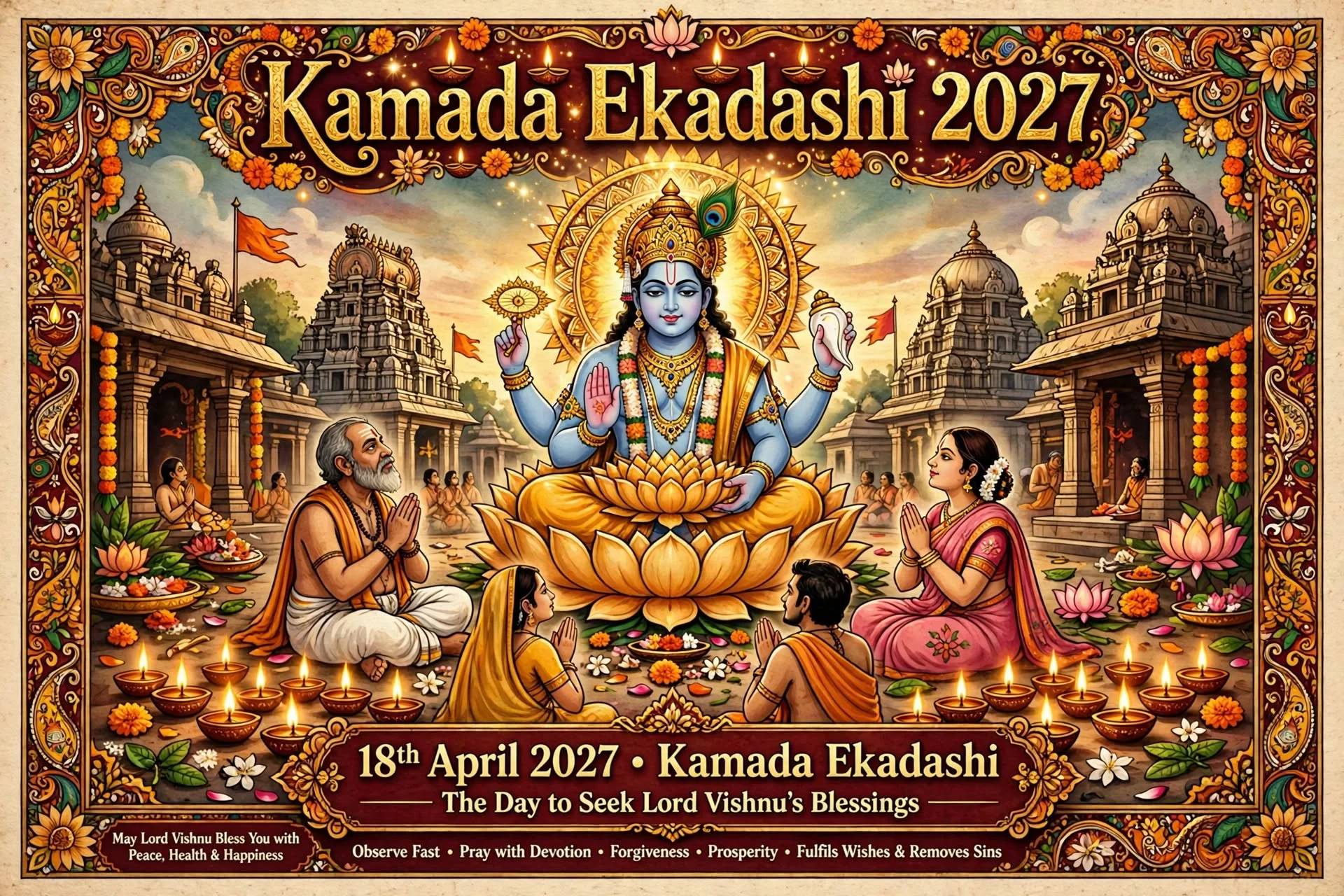
Kamada Ekadashi
Kamada Ekadashi holds a uniquely exalted position in the Hindu spiritual calendar as the very first Ekadashi of the new Hindu lunar year. Falling on the eleventh day of the waxing moon (Shukla Paksha Ekadashi) in the sacred month of Chaitra, this divine observance is celebrated as the supreme fulfiller of all righteous desires. The Sanskrit word 'Kamada' literally signifies 'the granter of cherished aspirations' (Kama meaning desire, and Da meaning giver), possessing the extraordinary spiritual power to dissolve the deepest karmic stains and liberate souls from severe curses.
View Festival Guide
Sunday, Apr 18, 2027
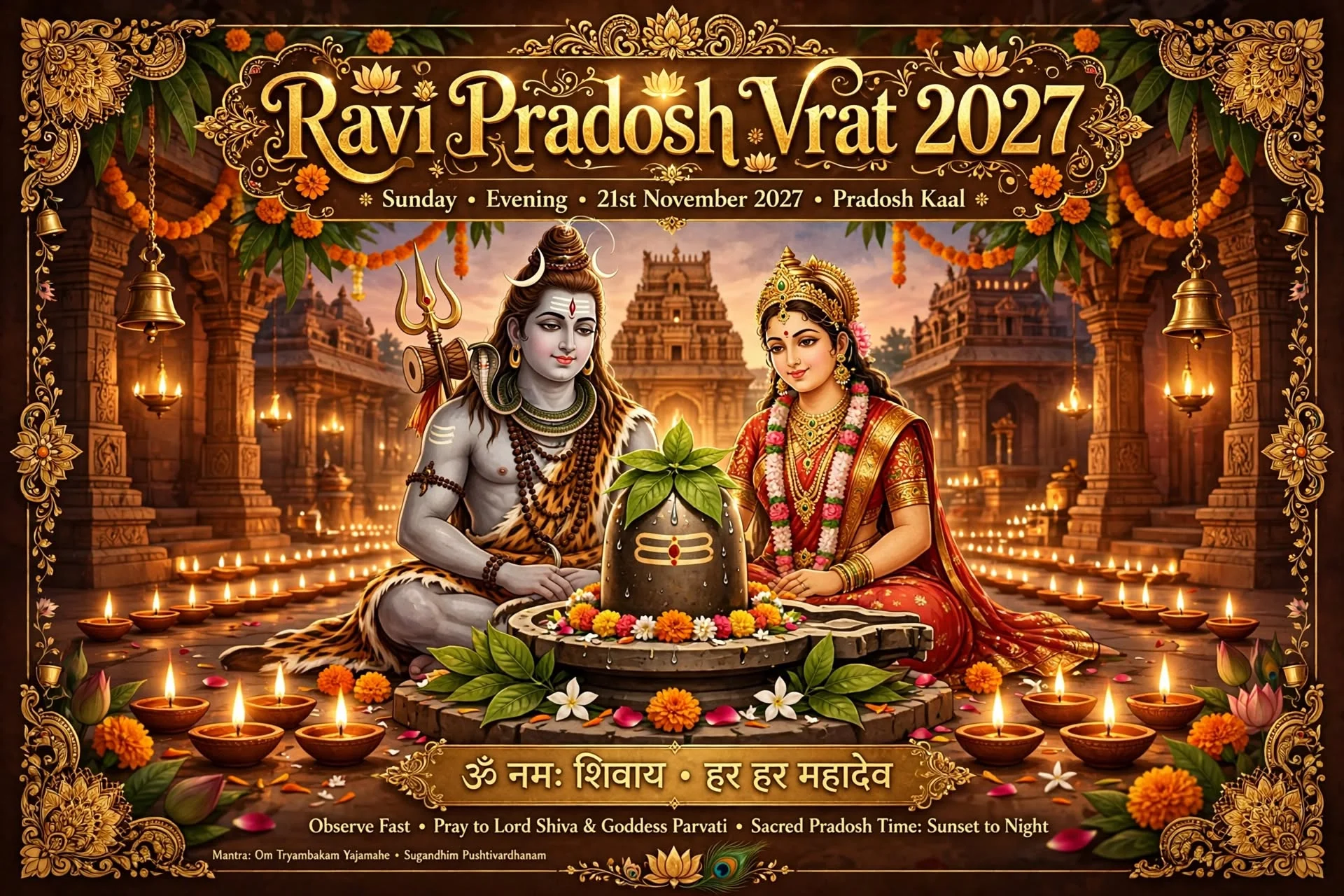
Ravi Pradosh Vrat
Ravi Pradosh Vrat is an exceptionally sacred fasting day observed on the thirteenth lunar day (Trayodashi) that coincides with a Sunday (Ravivara). Dedicated to Lord Shiva, the cosmic dissolver of sorrow, this bimonthly vow unites the healing radiance of Surya Bhagavan with the boundless compassion of Mahadeva. Observed during the twilight Sandhya period, it is believed to banish physical ailments, clear karmic obstructions, and bestow vitality and longevity.
View Festival Guide

Tuesday, Apr 20, 2027
Anvadhan
Anvadhan (अन्वाधान) is an ancient, highly revered Vedic ritual and spiritual observance in Sanatana Dharma performed on the day immediately preceding the New Moon (Amavasya) or Full Moon (Purnima). Rooted in the pristine traditions of the Shrauta and Grihya Sutras, Anvadhan literally translates to 'the solemn placing and replenishment of sacred fuel wood into the consecrated Vedic fires'. In traditional Vedic ritualism, householders (Grihasthas) and priests who maintain the sacred Agnihotra fires perform Anvadhan to prepare the sacrificial altars for the grand Darsha Yajna (New Moon sacrifice) or Paurnamasa Yajna (Full Moon sacrifice) scheduled for the following day.
View Festival Guide
Tuesday, Apr 20, 2027
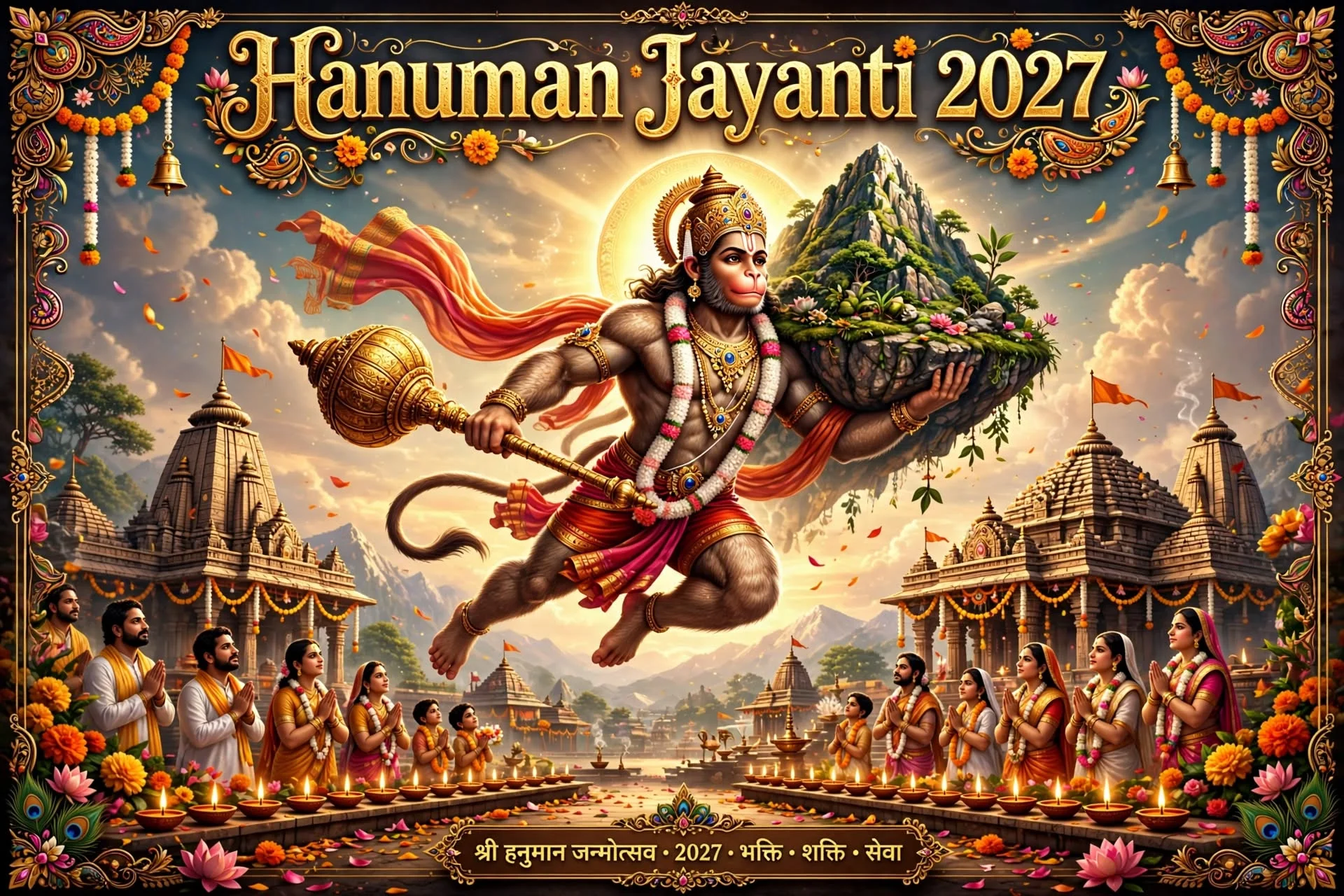
Hanuman Jayanti
Hanuman Jayanti marks the glorious appearance anniversary of Sri Hanuman, the Rudra avatar of Lord Shiva, the foremost servant of Lord Sri Rama, and the eternal epitome of selfless devotion (Seva), valor, and spiritual strength. Celebrated on the full moon day (Purnima) of the sacred month of Chaitra, this auspicious festival commemorates the auspicious moment when Lord Hanuman manifested on earth to assist Lord Rama in vanquishing the forces of evil and establishing the eternal kingdom of righteousness (Dharma).
View Festival Guide
Tuesday, Apr 20, 2027
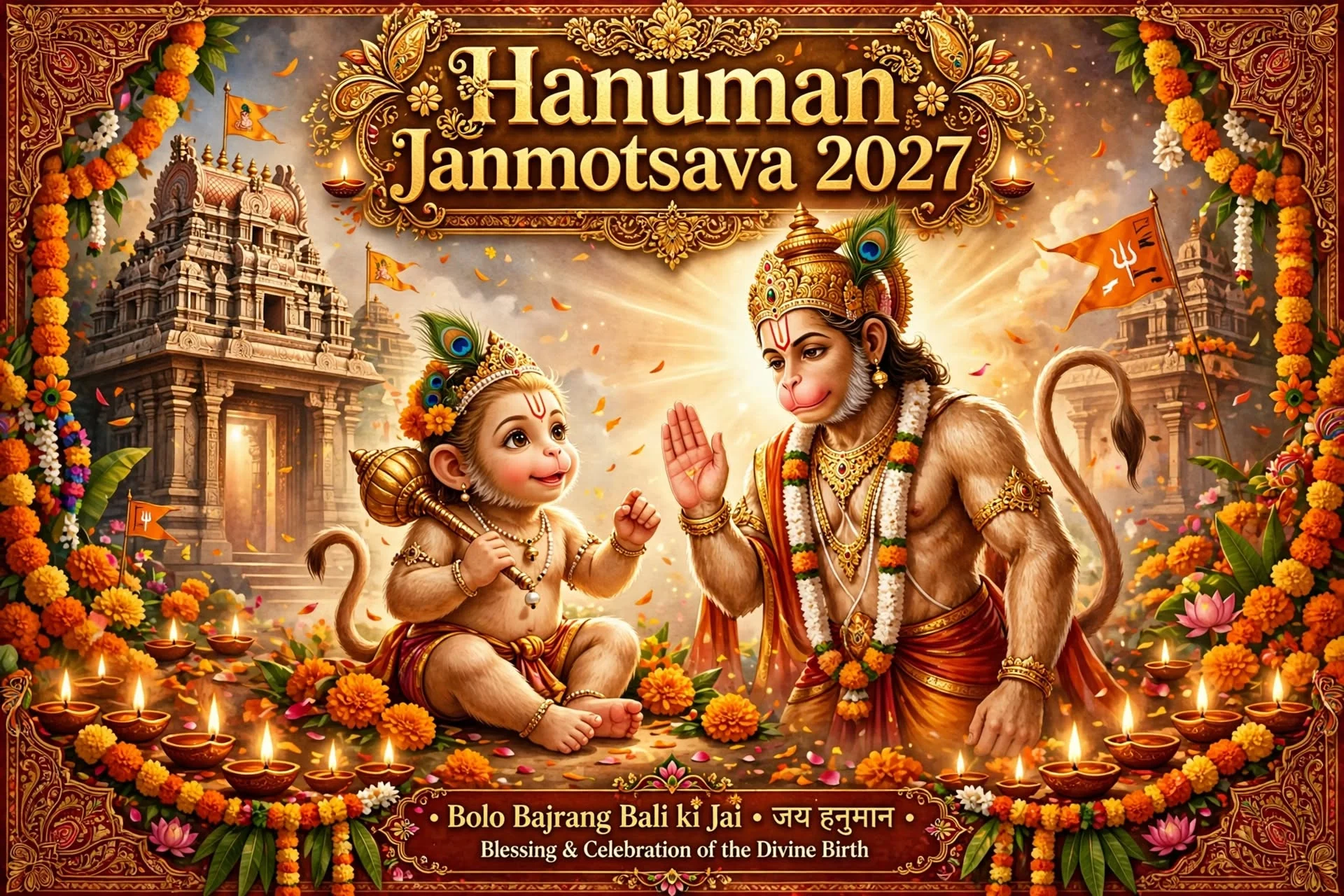
Hanuman Janmotsava
Hanuman Janmotsava marks the glorious birth celebration of Sri Hanuman, the immortal Rudra avatar of Lord Shiva and the supreme paragon of unalloyed devotion (Dasa Bhakti) to Lord Sri Rama. Celebrated with profound reverence on the full moon day (Purnima) of the sacred month of Chaitra, this divine occasion honors the eternal presence of Bajrangbali on earth. Traditional Vedic scholars and Vaishnava acharyas specifically designate this holy day as 'Janmotsava' (the celebration of birth) rather than 'Jayanti', because Sri Hanuman is one of the seven sacred Chiranjivis (deathless immortals) who eternally resides on earth wherever the holy name of Rama is chanted.
View Festival Guide
Tuesday, Apr 20, 2027
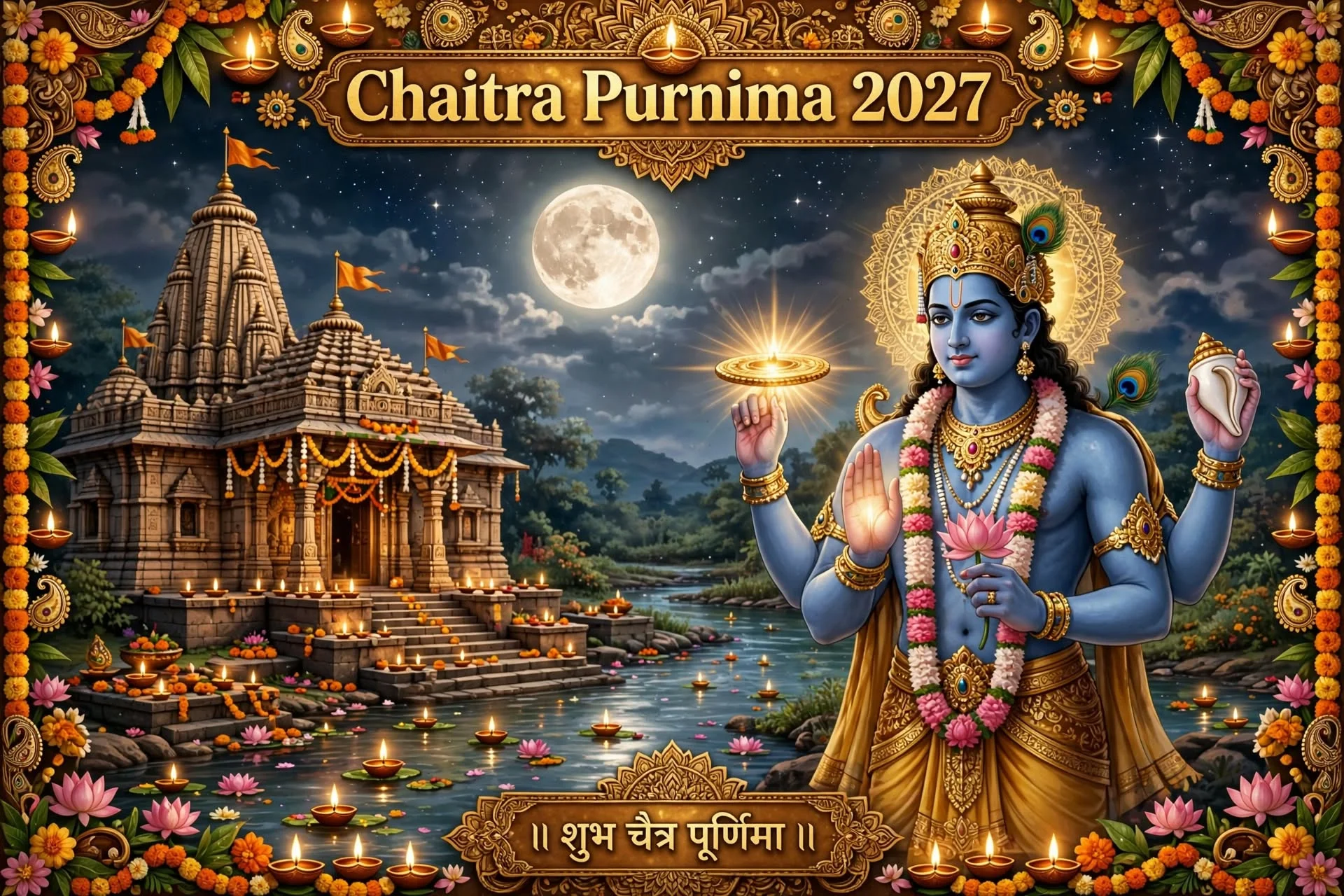
Chaitra Purnima
Chaitra Purnima, celebrated on the full moon day of the sacred month of Chaitra, holds an elevated position in the Hindu calendar as the inaugural full moon of the new lunar year. Characterized by the radiant illumination of the moon in the constellation of Chitra, this sacred tithi marks the arrival of the spring equinox's zenith and serves as a powerful spiritual vortex for holy river baths, Satyanarayana worship, ancestral prayers, and widespread charitable giving.
View Festival Guide

Wednesday, Apr 21, 2027
Ishti
Ishti is a foundational Vedic ritual observance appearing prominently in Hindu Panchangs on the Pratipada tithi (the first lunar day) following either Amavasya (new moon) or Purnima (full moon), marking the prescribed performance day for the fortnightly Vedic Darsha-Purnamasa sacrifices.
View Festival Guide