




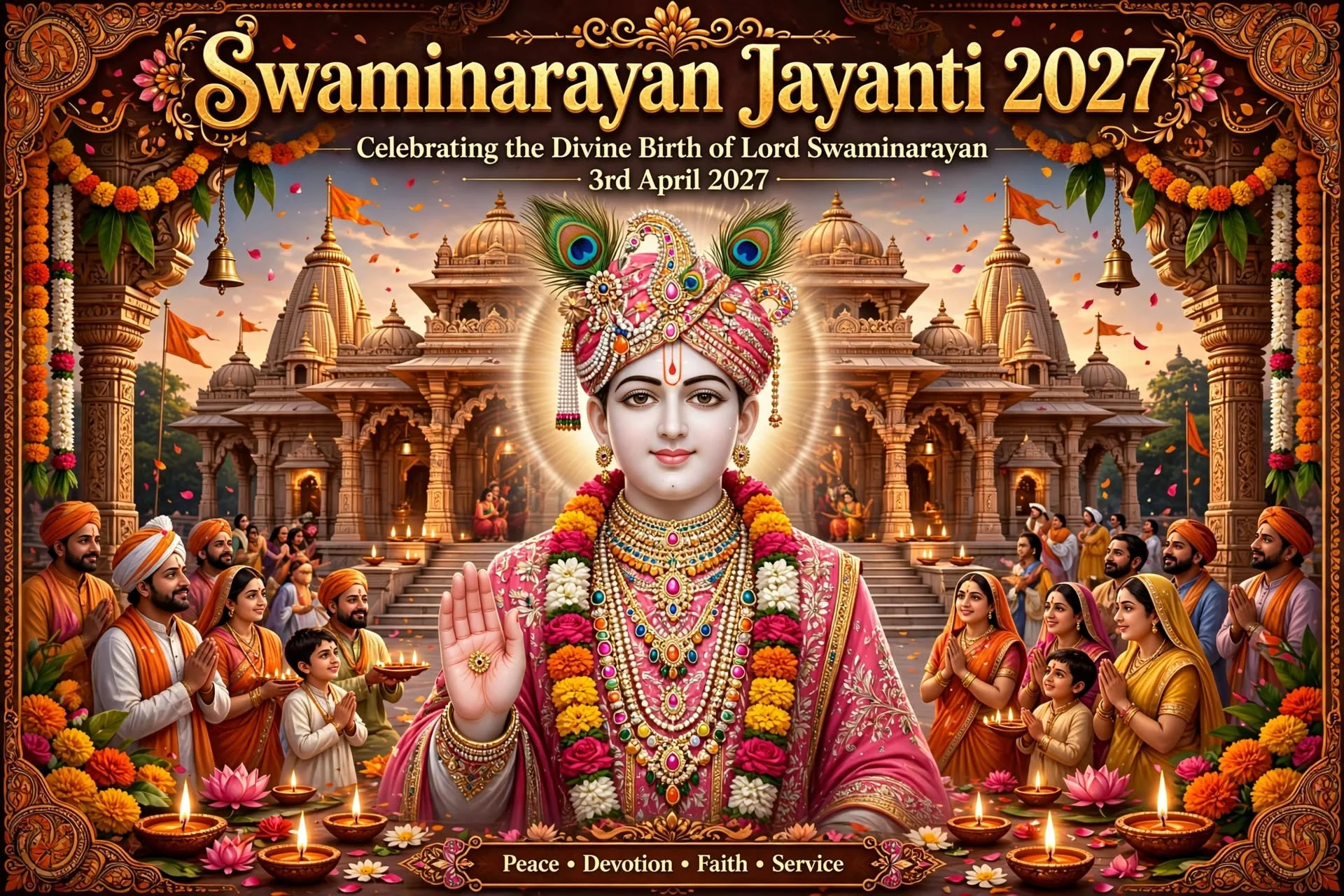
Swaminarayan Jayanti marks the auspicious birth anniversary of Bhagwan Swaminarayan (1781–1830 CE), the founder of the Swaminarayan Sampradaya and revered as a supreme divine manifestation in modern Sanatana Dharma. Celebrated on the ninth lunar day of the bright fortnight (Shukla Paksha Navami) in the month of Chaitra, this holy observance coincides precisely with Rama Navami. Manifesting at the sacred hour of 10:10 PM in the village of Chhapaiya near Ayodhya, Bhagwan Swaminarayan descended to establish moral rectitude, spiritual purity, social reform, and unconditional devotion to God.
Swaminarayan Jayanti 2027: Date, Puja Timings, Rituals & Stories
Swaminarayan Jayanti Timings & Panchang
Important festival dates and auspicious timings
Usha Arghya (Sunrise)
05:56 am
Sandhya Arghya (Sunset)
06:47 pm
Start Date
Thursday, 15 Apr 2027
Puja Muhurat
03:24 pm – 01:21 pm
Swaminarayan Jayanti
Born with the childhood name Ghanshyam Pande to devout parents Dharmadev and Bhaktimata, he renounced home at the tender age of eleven, embarking on an arduous seven-year barefoot pilgrimage across India as Nilkanth Varni. Mastering all systems of Yoga and Vedanta, he settled in Gujarat, succeeding Ramanand Swami as the spiritual leader of the Uddhav Sampradaya. Over three decades, he eradicated oppressive societal evils such as female infanticide and Sati, established magnificent shikharbaddha mandirs, composed the timeless moral code of the Shikshapatri, and initiated hundreds of saintly paramhansas committed to selfless service.
Devotees across the world observe Swaminarayan Jayanti with complete dawn-to-dusk fasting, devotional singing of kirtans, continuous recitations of the Vachanamrut and Bhaktachintamani, and spiritual discourses. At precisely 10:10 PM, temples (including grand Akshardham and BAPS shrines) erupt with jubilant celebrations, as devotees perform the Janmotsav Aarti, rock the golden cradle (Palna) of infant Ghanshyam Maharaj, and offer grand Annakut feasts of hundreds of vegetarian delicacies.
Why is Swaminarayan Jayanti Celebrated?
Swaminarayan Jayanti is celebrated to honor the life, spiritual teachings, and transformative social reforms of Bhagwan Swaminarayan. It serves as an annual spiritual renewal for devotees to reaffirm their commitment to the moral precepts of the Shikshapatri, practice non-violence and purity, and deepen their loving devotion toward God and the spiritual lineage.
- Divine Manifestation of Bhagwan Swaminarayan: Commemorates the appearance of Ghanshyam Maharaj in Chhapaiya to liberate souls from worldly delusion.
- Celebration of Social Reforms: Honors his historic eradication of Sati pratha, female infanticide, animal sacrifices, and caste discrimination.
- Reaffirmation of the Shikshapatri: Devotees reread and resolve to uphold the 212 moral aphorisms guiding daily ethical and spiritual life.
- Universal Compassion and Ahimsa: Inspires practitioners to lead lives of non-violence, vegetarianism, temperance, charity, and selfless service.
The Life of Ghanshyam Maharaj & The Spiritual Renaissance
Childhood in Chhapaiya and Divine Omens
Bhagwan Swaminarayan was born on Chaitra Shukla Navami, Samvat 1837 (April 2, 1781 CE) in Chhapaiya near Ayodhya. His father, Dharmadev, was an accomplished Vedic scholar, and his mother, Bhaktimata, was an epitome of maternal devotion. From infancy, miraculous signs surrounded the child.
In a celebrated test of his future nature, his parents placed a gold coin, a dagger, and a sacred scripture (the Bhagavad Gita) before the infant. Ghanshyam crawled past the gold and dagger, firmly grasping the sacred scripture, foretelling his divine mission of spiritual illumination and moral guidance.
Nilkanth Varni's Pilgrimage and Spiritual Leadership
At the age of eleven, following the passing of his parents, Ghanshyam renounced the world, assuming the ascetic name Nilkanth Varni. Wearing only a loincloth and carrying a water pot and small Shaligram deity, he walked barefoot across the Himalayas, Badrinath, Mansarovar, Jagannath Puri, Rameswaram, and Gujarat, covering over 12,000 kilometers over seven years.
In Gujarat, he met Sadguru Ramanand Swami, who recognized him as the Supreme Being and appointed him the leader of the fellowship. Bhagwan Swaminarayan introduced the sacred 'Swaminarayan' Mahamantra, established widespread humanitarian kitchens during famines, constructed magnificent marble and stone temples, and authored the Shikshapatri to guide devotees toward eternal peace in Akshardham.
Source: Bhaktachintamani, Satsangijivan & Harililamrut
The Core Philosophy of Akshar-Purushottam Darshana
The Five Eternal Realities
In his authoritative discourses recorded in the Vachanamrut, Bhagwan Swaminarayan revealed the Akshar-Purushottam Darshana, establishing five eternal and distinct entities: Jiva (individual soul), Ishvara (cosmic deities), Maya (the deluding material energy), Akshar (the divine abode and transcendental servant), and Parabrahman (the Supreme Lord Purushottam).
Spiritual liberation (Moksha) is achieved when the individual Jiva transcends Maya by associating with the manifest form of Aksharbrahman (the living Gunatit Guru), becoming spiritually pure (Brahmarupa), and serving Parabrahman eternally in Akshardham.
Ethical Purity as the Foundation of Devotion
Bhagwan Swaminarayan emphatically taught that devotion without morality is hypocritical and ineffective. He prescribed five foundational vows (Panch Vartaman) for householders: total abstinence from meat, alcohol, adultery, theft, and association with impurity.
By cultivating internal purity and loving kindness toward all beings, the seeker transforms everyday household life into an uninterrupted altar of divine communion.
Temple Traditions & Devotional Observances on Swaminarayan Jayanti
Nirjala / Sajala Fasting and Scripture Recitation
Devotees observe a strict day-long fast (Nirjala without water or Phalahari with milk and fruits), beginning the day with personal morning prayers (Pooja) and Tilak-Chandlo (applying a sandalwood U-shaped tilak with a red kumkum dot on the forehead).
Throughout the day, temples and domestic shrines resonate with continuous chanting (Dhun) of the Swaminarayan Mahamantra, musical kirtans composed by the Nand saints (Premanand Swami, Brahmanand Swami, Muktanand Swami), and readings from the Vachanamrut.
The 10:10 PM Janmotsav and Palna Utsav
In the evening, massive congregations gather in temples worldwide. At precisely 10:10 PM, the moment of Bhagwan Swaminarayan's birth, the lights dim, conches and bells reverberate, and the Janmotsav Aarti is performed before the radiant murti of infant Ghanshyam Maharaj.
Devotees take turns gently pulling the cords of the ornate golden cradle (Palna), singing touching lullabies, and rejoicing as festive prasad (Peda, Panchamrit, and Annakut sweets) is distributed to thousands of devotees.
Swaminarayan Jayanti Puja Vidhi (Step by Step)
- 1
Brahma Muhurta Snana & Nitya Pooja
Wake before dawn, bathe with Gangajal-infused water, apply the sacred Tilak-Chandlo with sandalwood and kumkum, and perform personal morning prayers.
- 2
Swaminarayan Jayanti Sankalpa
Hold holy water and unbroken rice in the right palm, face east, and take a solemn vow of fasting, devotion, and moral adherence for the sacred day.
- 3
Altar & Mandap Sthapana
Cleanse the home shrine, drape a clean white and gold silk cloth over the altar, and install the murtis of Bhagwan Swaminarayan and Aksharbrahman Gunatitanand Swami.
- 4
Ghanshyam Maharaj Cradle Setup
Prepare a beautifully decorated cradle (Palna) embellished with fresh flowers, velvet bedding, and ribbons to seat the infant murti of Ghanshyam Maharaj.
- 5
Kalash Sthapana
Establish a sacred brass or copper Kalash filled with pure water, betel nut, silver coin, and mango leaves, crowned by a coconut.
Swaminarayan Jayanti Puja Samagri List
Altar & Deity Consecration Materials
Sacred articles required to prepare the sanctum and infant cradle for Bhagwan Swaminarayan.
- Murti or framed image of Bhagwan Swaminarayan and Aksharbrahman Gunatitanand Swami
- Infant Ghanshyam Maharaj idol and a decorated golden cradle (Palna)
- Pure white or golden silk altar cloth and clean wooden chauki
- Gangajal, raw cow milk, curd, honey, cow ghee, and sugar for Panchamrit
- Brass or copper Kalash, whole coconut, and fresh mango leaves
Tilak & Worship Adornments
Traditional sectarian cosmetics, fragrances, and sacred floral offerings.
- Pure yellow sandalwood paste (Gopi Chandan) and Kumkum for Tilak-Chandlo
- Fresh fragrant rose petals, yellow marigold garlands, and Tulsi leaves
- Resplendent festive garments (Vagha / Jaga) and ornate crown (Mukut)
- Pure cow-ghee brass lamps, cotton wicks, and aromatic incense sticks
Naivedya & Annakut Feast Offerings
Sattvic vegetarian delicacies and festive sweets prepared for the Lord.
- Traditional mawa pedas, milk kheer, and shrikhand
Mantras and Prayers for Swaminarayan Jayanti
Swaminarayan Jayanti Vrat Rules and Fasting Guidelines
Observance Guidelines for Swaminarayan Jayanti
Specific devotional disciplines to be followed on the birth anniversary of Bhagwan Swaminarayan.
- Fasting Discipline: Observe an unbroken fast (Nirjala or Phalahari) until the culmination of the 10:10 PM Janmotsav ceremony.
- Recitation of Scriptures: Dedicate hours during the day to reading the Vachanamrut, Shikshapatri, and Bhaktachintamani.
- Continuous Mahamantra Japa: Chant the Swaminarayan Mahamantra on a Tulsi or Sandalwood mala throughout the day.
- Ethical Dedication: Reaffirm the five basic vows (Panch Vartaman)—abstinence from meat, alcohol, theft, adultery, and moral impurity.
Dos and Don'ts of Swaminarayan Jayanti
Good Practices (Do's)
- Wake early, bathe, apply the sacred Tilak-Chandlo, and perform morning prayers.
- Fast with devotion and chant the Swaminarayan Mahamantra continuously.
- Attend the 10:10 PM Janmotsav Aarti and rock the golden cradle of infant Ghanshyam.
- Read the Shikshapatri and resolve to live an ethical, compassionate, and pure life.
Things to Avoid (Don'ts)
Swaminarayan Jayanti Across Regions
| Region | Local Name |
|---|---|
| Gujarat & Western India | Swaminarayan Jayanti Utsav |
| Chhapaiya (Uttar Pradesh) | Janmabhumi Utsav |
| Global (BAPS & Swaminarayan Mandirs Worldwide) | Swaminarayan Janmotsav |
Swaminarayan Jayanti FAQs
What is Swaminarayan Jayanti?
Swaminarayan Jayanti is the birth anniversary of Bhagwan Swaminarayan, the founder of the Swaminarayan Sampradaya, celebrated on Chaitra Shukla Navami.
Which other major Hindu festival coincides with Swaminarayan Jayanti?
Rama Navami, the birth anniversary of Lord Sri Rama, falls on the exact same tithi of Chaitra Shukla Navami.
What was the childhood name of Bhagwan Swaminarayan?
His childhood name was Ghanshyam Pande, born in the village of Chhapaiya near Ayodhya in 1781 CE.
Upcoming Festivals
View All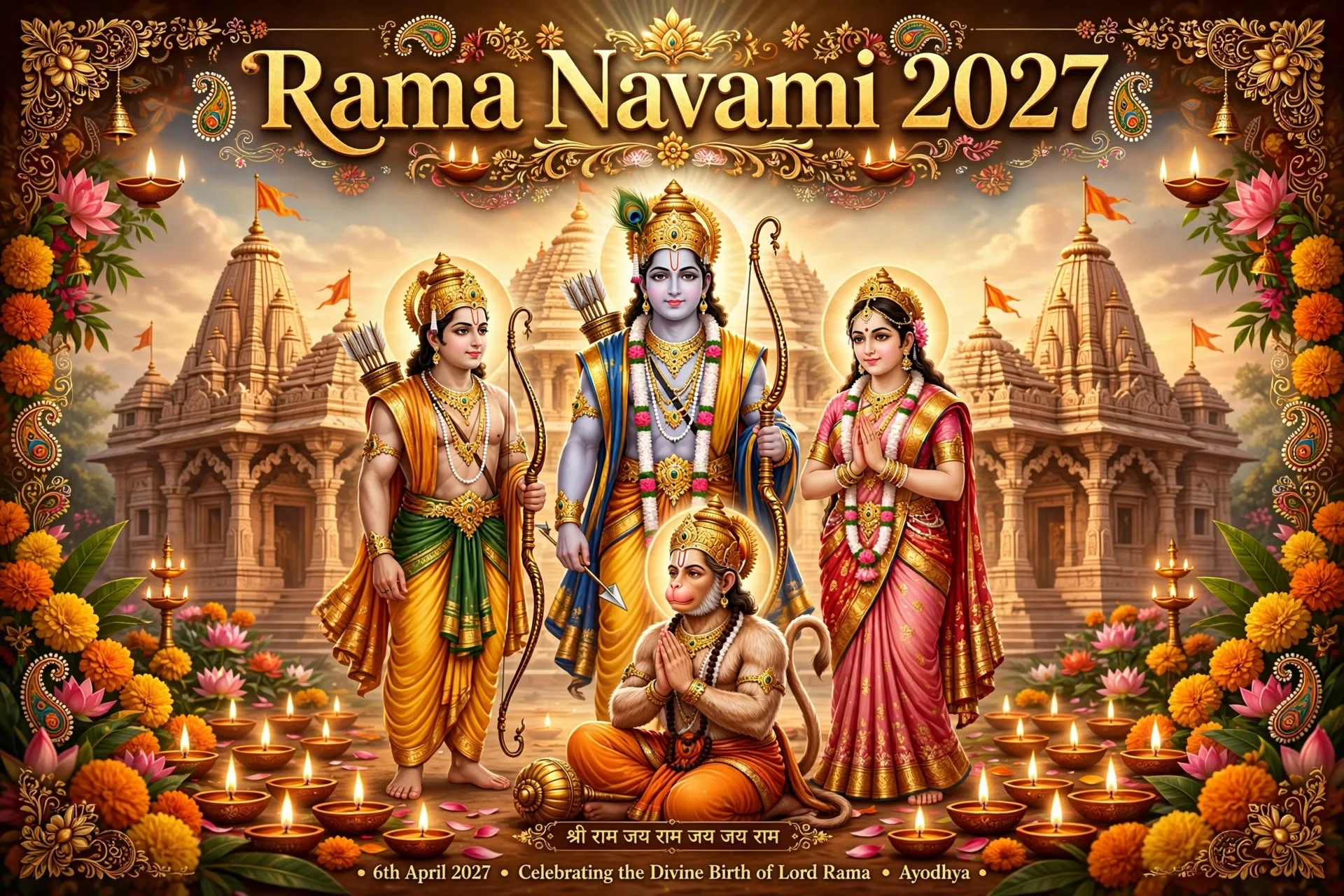
Thursday, Apr 15, 2027
Rama Navami
Rama Navami is one of the most sublime and universally revered festivals in Sanatana Dharma, celebrating the auspicious appearance (Janmotsav) of Maryada Purushottam Lord Sri Rama—the seventh incarnation of Lord Vishnu. Falling on the ninth day of the waxing moon (Shukla Paksha Navami) in the sacred month of Chaitra, it marks the grand culmination of the nine-day Chaitra Navratri festival. Born at high noon during the sacred Abhijit Muhurta in the ancient holy city of Ayodhya, Lord Rama incarnated to restore righteousness, establish exemplary moral standards (Dharma), and vanquish demonic forces across the earth.
View Festival Guide
Saturday, Apr 17, 2027
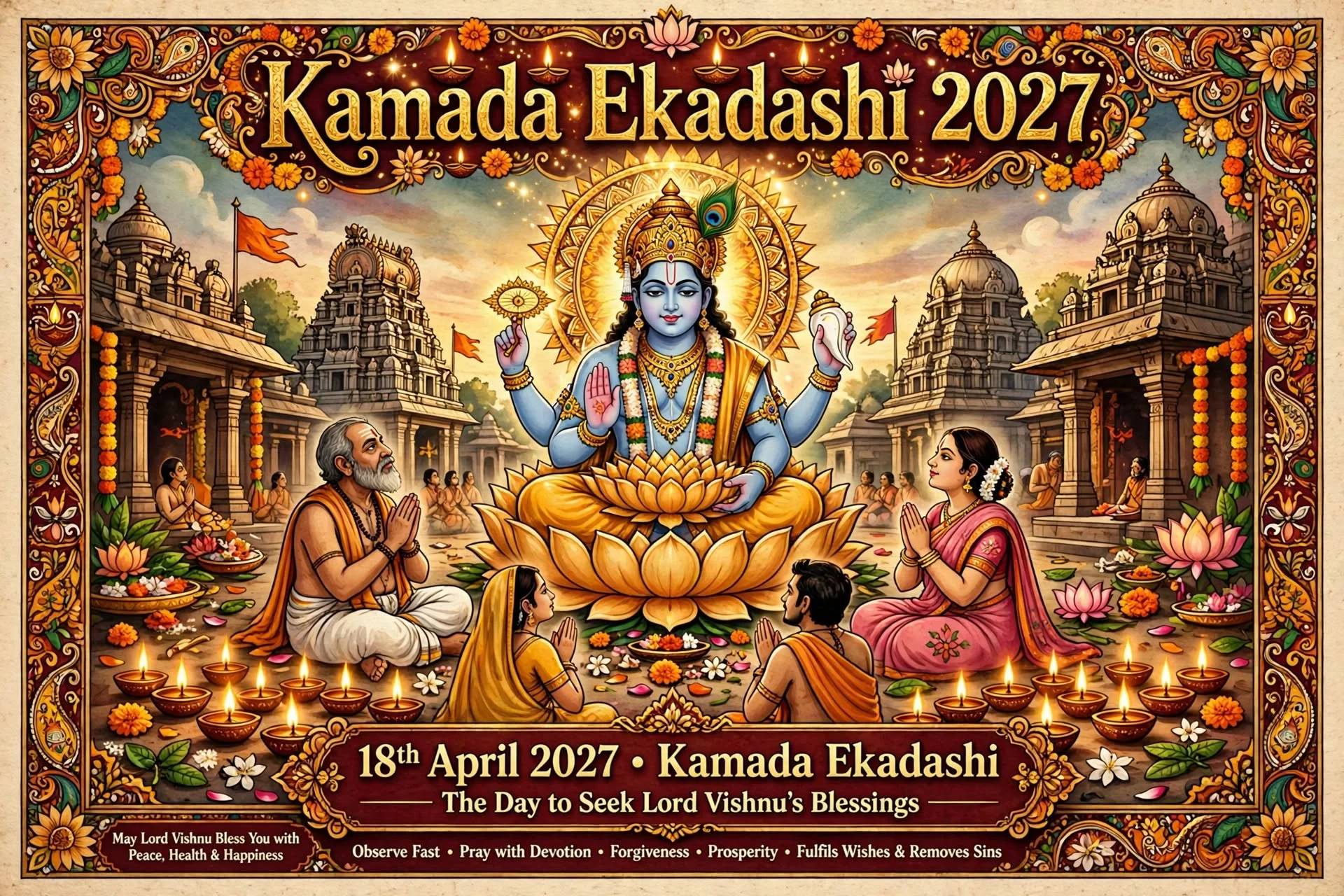
Kamada Ekadashi
Kamada Ekadashi holds a uniquely exalted position in the Hindu spiritual calendar as the very first Ekadashi of the new Hindu lunar year. Falling on the eleventh day of the waxing moon (Shukla Paksha Ekadashi) in the sacred month of Chaitra, this divine observance is celebrated as the supreme fulfiller of all righteous desires. The Sanskrit word 'Kamada' literally signifies 'the granter of cherished aspirations' (Kama meaning desire, and Da meaning giver), possessing the extraordinary spiritual power to dissolve the deepest karmic stains and liberate souls from severe curses.
View Festival Guide
Sunday, Apr 18, 2027
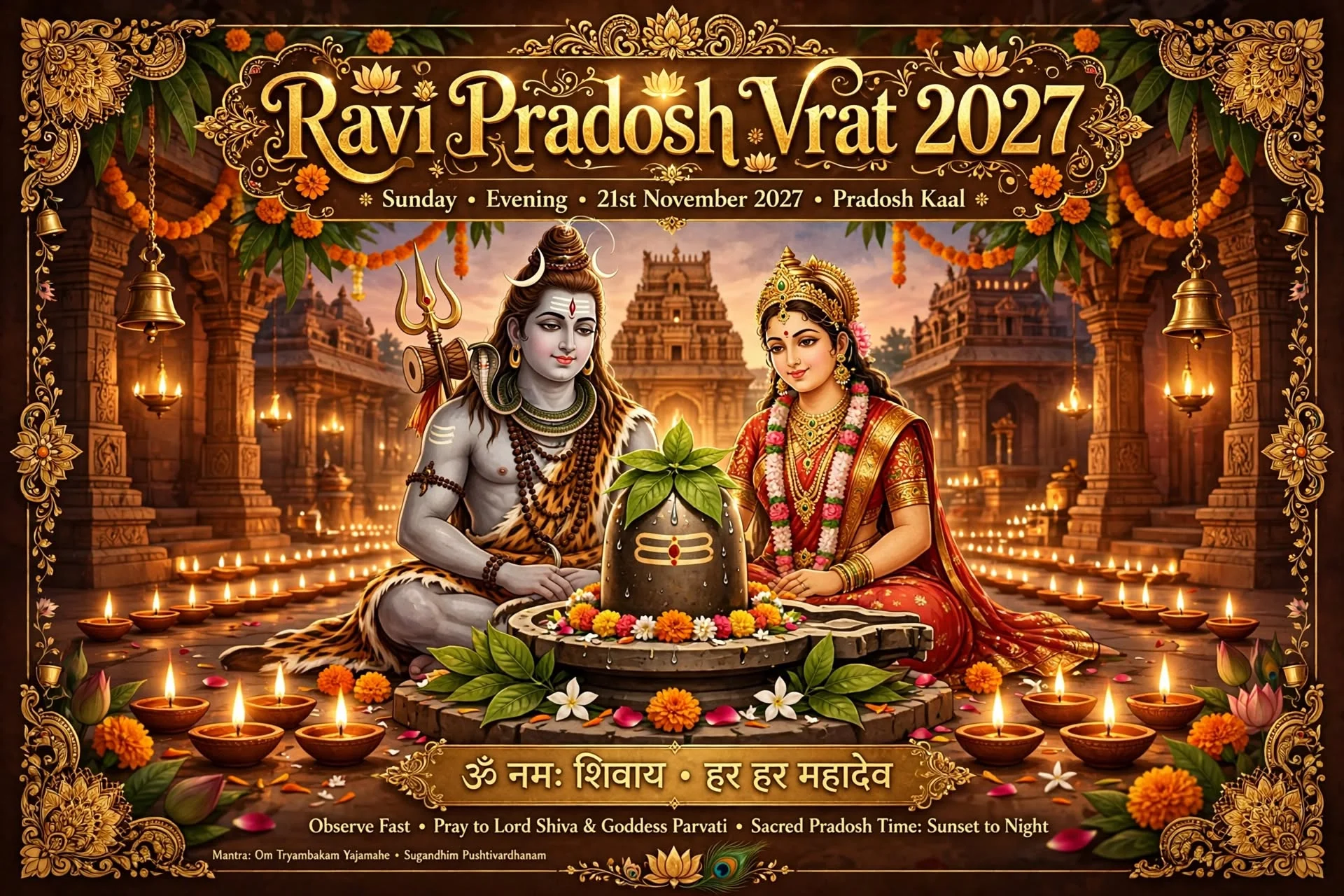
Ravi Pradosh Vrat
Ravi Pradosh Vrat is an exceptionally sacred fasting day observed on the thirteenth lunar day (Trayodashi) that coincides with a Sunday (Ravivara). Dedicated to Lord Shiva, the cosmic dissolver of sorrow, this bimonthly vow unites the healing radiance of Surya Bhagavan with the boundless compassion of Mahadeva. Observed during the twilight Sandhya period, it is believed to banish physical ailments, clear karmic obstructions, and bestow vitality and longevity.
View Festival Guide

Tuesday, Apr 20, 2027
Anvadhan
Anvadhan (अन्वाधान) is an ancient, highly revered Vedic ritual and spiritual observance in Sanatana Dharma performed on the day immediately preceding the New Moon (Amavasya) or Full Moon (Purnima). Rooted in the pristine traditions of the Shrauta and Grihya Sutras, Anvadhan literally translates to 'the solemn placing and replenishment of sacred fuel wood into the consecrated Vedic fires'. In traditional Vedic ritualism, householders (Grihasthas) and priests who maintain the sacred Agnihotra fires perform Anvadhan to prepare the sacrificial altars for the grand Darsha Yajna (New Moon sacrifice) or Paurnamasa Yajna (Full Moon sacrifice) scheduled for the following day.
View Festival Guide
Tuesday, Apr 20, 2027
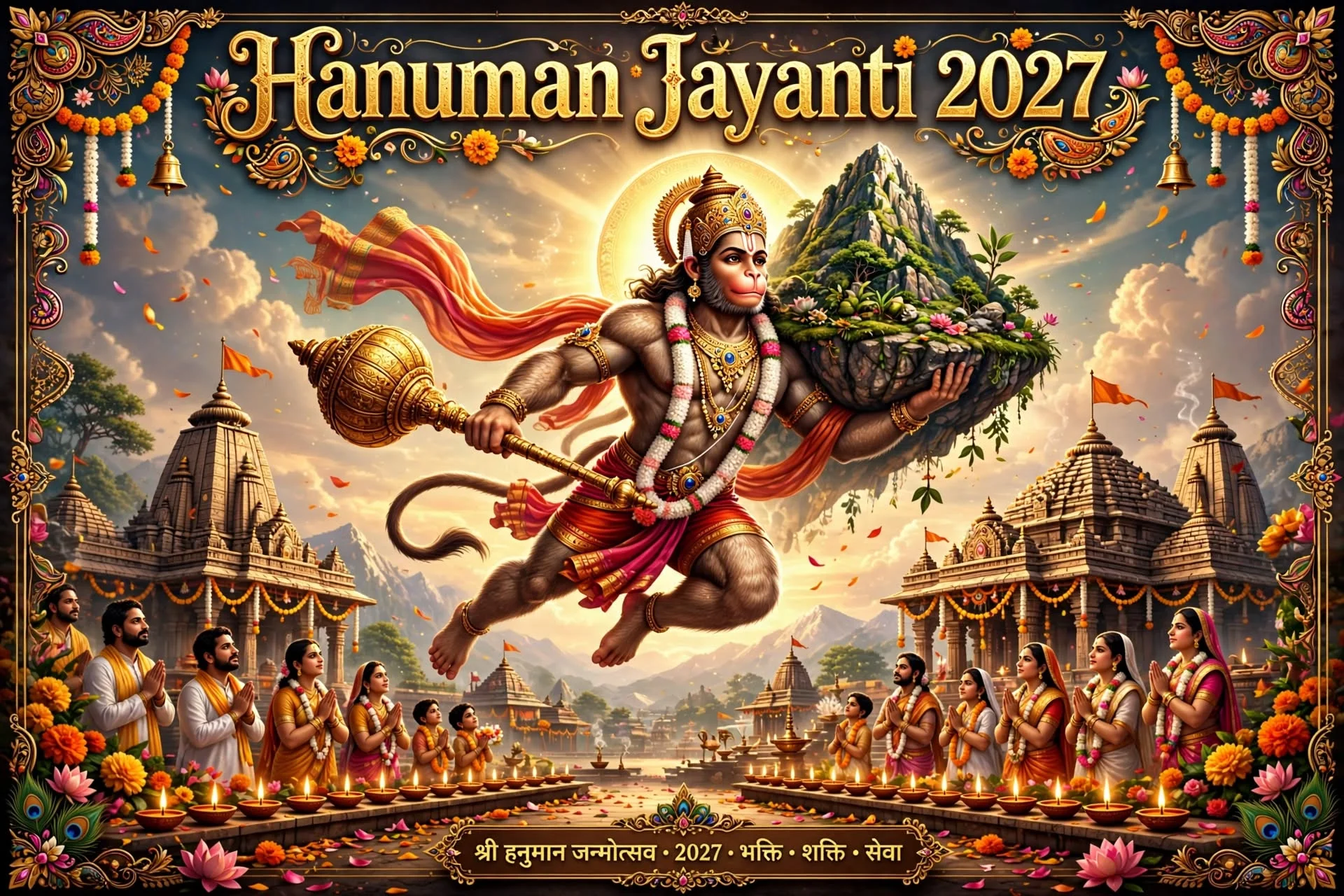
Hanuman Jayanti
Hanuman Jayanti marks the glorious appearance anniversary of Sri Hanuman, the Rudra avatar of Lord Shiva, the foremost servant of Lord Sri Rama, and the eternal epitome of selfless devotion (Seva), valor, and spiritual strength. Celebrated on the full moon day (Purnima) of the sacred month of Chaitra, this auspicious festival commemorates the auspicious moment when Lord Hanuman manifested on earth to assist Lord Rama in vanquishing the forces of evil and establishing the eternal kingdom of righteousness (Dharma).
View Festival Guide
Tuesday, Apr 20, 2027
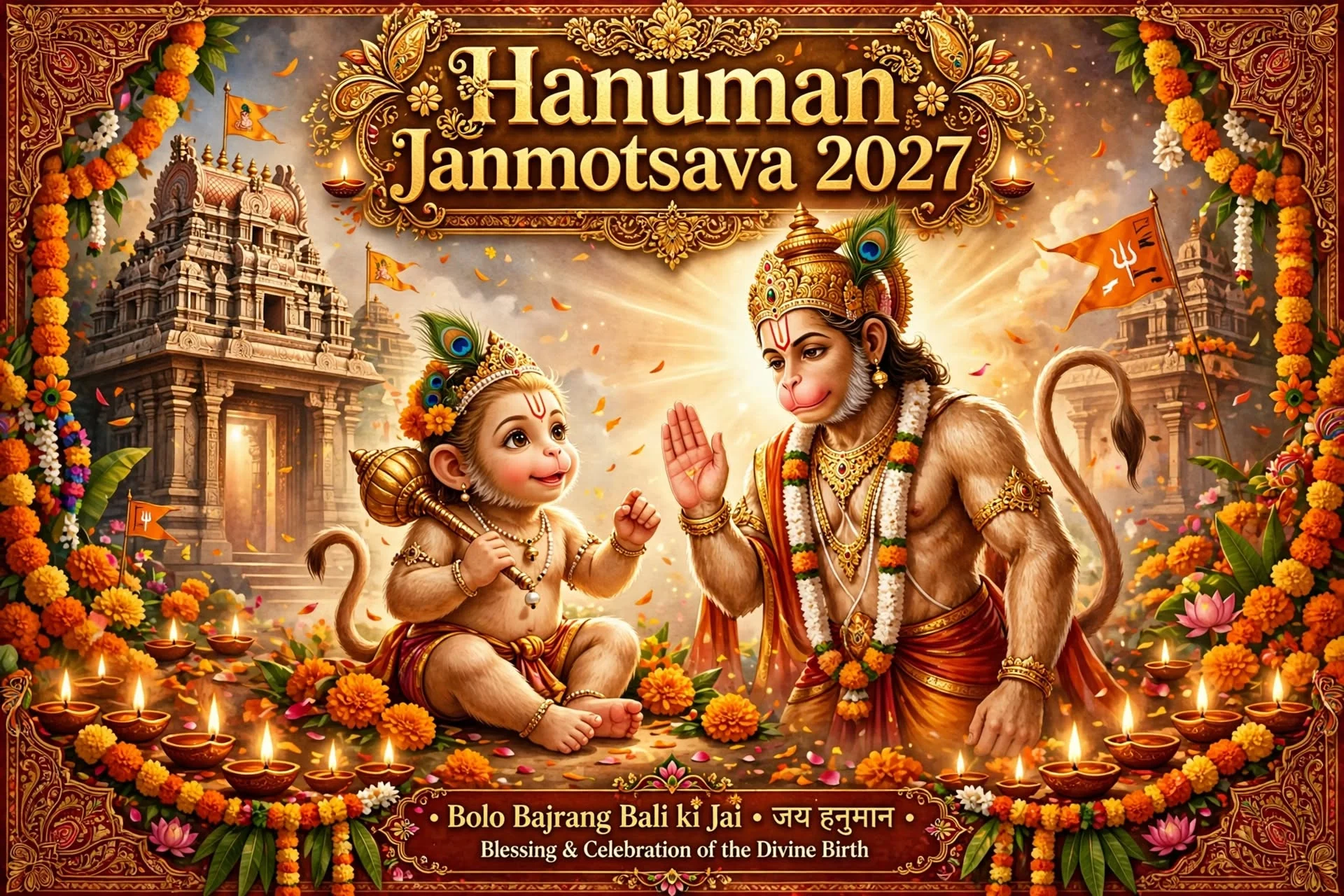
Hanuman Janmotsava
Hanuman Janmotsava marks the glorious birth celebration of Sri Hanuman, the immortal Rudra avatar of Lord Shiva and the supreme paragon of unalloyed devotion (Dasa Bhakti) to Lord Sri Rama. Celebrated with profound reverence on the full moon day (Purnima) of the sacred month of Chaitra, this divine occasion honors the eternal presence of Bajrangbali on earth. Traditional Vedic scholars and Vaishnava acharyas specifically designate this holy day as 'Janmotsava' (the celebration of birth) rather than 'Jayanti', because Sri Hanuman is one of the seven sacred Chiranjivis (deathless immortals) who eternally resides on earth wherever the holy name of Rama is chanted.
View Festival Guide
Tuesday, Apr 20, 2027
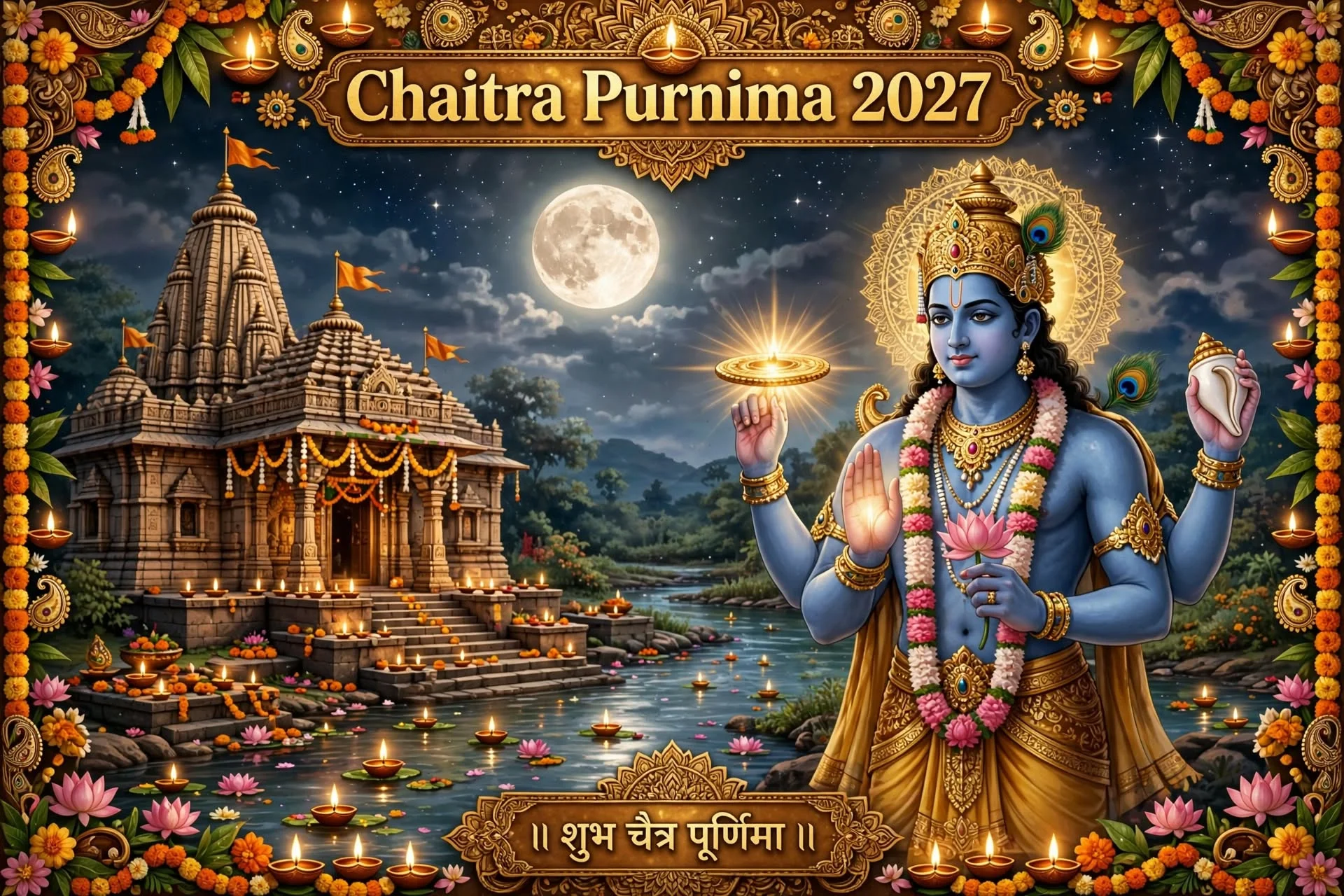
Chaitra Purnima
Chaitra Purnima, celebrated on the full moon day of the sacred month of Chaitra, holds an elevated position in the Hindu calendar as the inaugural full moon of the new lunar year. Characterized by the radiant illumination of the moon in the constellation of Chitra, this sacred tithi marks the arrival of the spring equinox's zenith and serves as a powerful spiritual vortex for holy river baths, Satyanarayana worship, ancestral prayers, and widespread charitable giving.
View Festival Guide

Wednesday, Apr 21, 2027
Ishti
Ishti is a foundational Vedic ritual observance appearing prominently in Hindu Panchangs on the Pratipada tithi (the first lunar day) following either Amavasya (new moon) or Purnima (full moon), marking the prescribed performance day for the fortnightly Vedic Darsha-Purnamasa sacrifices.
View Festival Guide