




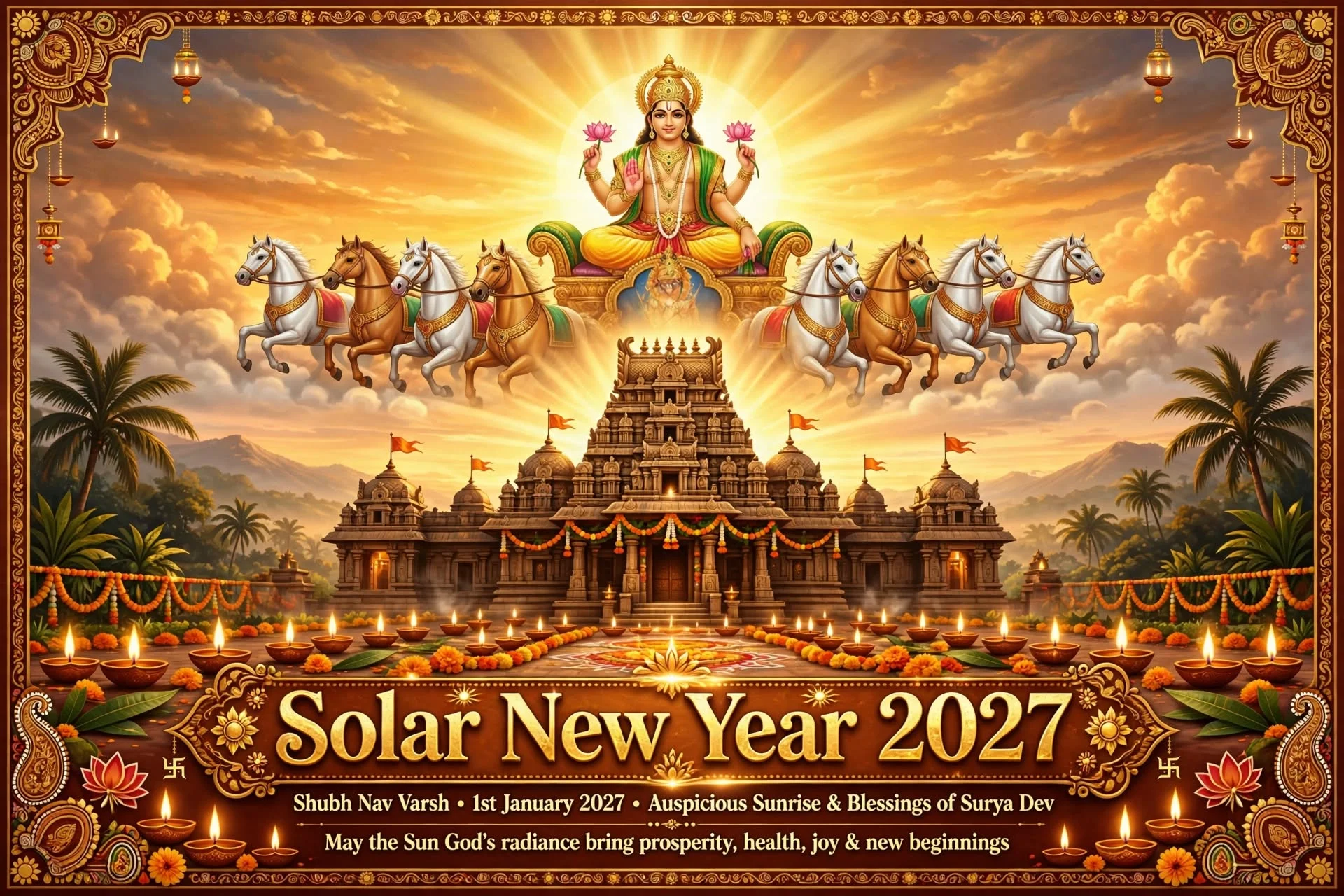
The Solar New Year (Maha Vishuba Sankranti or Mesha Sankranti) marks the grand beginning of the sidereal solar calendar across diverse states and cultures of India. Celebrated when the Sun God (Surya Bhagavan) enters Mesha Rashi (the zodiac sign of Aries) in mid-April, this pan-Indian festival is celebrated under glorious regional names: Puthandu in Tamil Nadu, Vishu in Kerala, Pohela Boishakh in Bengal, Pana Sankranti in Odisha, Bohag Bihu in Assam, and Baisakhi in Punjab.
Solar New Year 2027: Date, Puja Timings, Rituals & Stories
Solar New Year Timings & Panchang
Important festival dates and auspicious timings
Usha Arghya (Sunrise)
05:57 am
Sandhya Arghya (Sunset)
06:46 pm
Start Date
Wednesday, 14 Apr 2027
Puja Muhurat
05:29 pm – 03:24 pm
Solar New Year
Rooted in ancient Vedic astronomy, the Solar New Year represents the astronomical moment when the Sun crosses the celestial equator and enters his sign of supreme exaltation (Aries). In Vedic cosmology, this heralds the dawn of the cosmic year, revitalizing agricultural fields, signaling the harvest of winter crops, and infusing all living species with solar vitality, optimism, and warmth.
Across India, families inaugurate the Solar New Year with deeply symbolic rituals of renewal. In Kerala and Tamil Nadu, devotees wake to gaze upon the auspicious 'Kani' (a golden arrangement of flowers, fruits, gold, and mirrored icons); in Odisha, sweet herbal Bela Pana is consecrated; in Punjab and Assam, vibrant harvest dances (Bhangra and Bihu) reverberate through the fields. People wear pristine new garments, share festive delicacies combining diverse tastes, and seek elder blessings for enduring health and prosperity.
Why is Solar New Year Celebrated?
The Solar New Year is celebrated to welcome the astronomical dawn of the solar cycle, express deep gratitude to Lord Surya and Mother Earth for bountiful agricultural harvests, and begin a new cycle of personal growth, moral rectitude, and commercial enterprise with joy and cultural pride.
- Astronomical Ingress into Aries: Celebrates the Sun entering his exalted cardinal zodiac sign, initiating the 12-month sidereal solar journey.
- Pan-Indian Harvest Celebrations: Welcomes the bountiful harvest of rabi crops (wheat, mustard, barley, and mangoes) with joyful folk festivals.
- Auspicious Gazing Rituals (Kani): Gazing upon holy objects at dawn ensures that the entire year is filled with beauty, abundance, and auspiciousness.
- Cultural Rebirth & New Ledgers: Traders inaugurate fresh accounting books (Haalkhata), while families forgive past enmities and embrace unity.
Astronomical Foundations & The Legend of King Vikramaditya
The Surya Siddhanta and the Cardinal Equinox
The celebrated ancient astronomical treatise Surya Siddhanta establishes that the measurement of the solar year begins when the Sun enters the first point of Aries (Mesha). In classical antiquity, this corresponded closely with the vernal equinox, when day and night were of equal duration across the globe.
Ancient Indian astronomers and sages consecrated this cardinal ingress as the start of the solar calendar, instituting state celebrations across royal courts to pray for timely monsoon rains, agricultural abundance, and prosperous kingdoms.
Lord Krishna and the Vishu Kani Tradition
In southern traditions, particularly Kerala, the legend of Vishu is associated with Lord Sri Krishna slaying the demon Narakasura. It is believed that following the vanquishing of darkness, the radiant morning sun rose unobstructed, illuminating Lord Krishna adorned with golden ornaments and yellow Kani Konna (Cassia fistula) flowers.
To this day, the Vishu Kani is arranged around an idol of Lord Krishna, ensuring that the first visual impression of the New Year is the divine, compassionate form of the Supreme Lord.
Source: Surya Siddhanta, Brihat Samhita & Regional Chronicles
Metaphysical Wisdom of the Auspicious Beginning
The Science of Prathama Darshana (The First Sight)
The tradition of Vishu Kani in Kerala and Kanni in Tamil Nadu is rooted in the profound psychological and metaphysical principle that one's first sensory experience sets the vibrational blueprint for what follows. By arranging golden fruits, fresh grain, betel leaves, silver coins, yellow flowers, and sacred scriptures before a mirror reflecting the deity, the devotee views abundance and divinity simultaneously.
Looking into the mirror after viewing the deity reminds the individual of the Advaitic truth: that the divine spark of God resides within one's own conscious soul (Aham Brahmasmi).
Embracing the Balance of Life's Flavors
In Tamil Nadu, the preparation of 'Manga Pachadi' (combining sweet jaggery, bitter neem flowers, sour raw mango, and pungent chili) mirrors the philosophy of life's dualities. It teaches the seeker that true spiritual wisdom consists of welcoming joy, sorrow, success, and adversity with identical inner poise and contentment.
Diverse Regional Festivities of the Solar New Year
Vishu Kani, Vishukkaineetam, and Tamil Puthandu
In Kerala, the eldest matriarch prepares the Vishu Kani on the previous night in a traditional bronze Uruli. At dawn, family members are led blindfolded to open their eyes upon the golden sight of Lord Krishna, followed by elders gifting currency coins (Vishukkaineetam) to children.
In Tamil Nadu, homes are adorned with colorful Kolam patterns; families exchange greetings of 'Puthandu Vazhthukal', visit temples, and relish festive feasts of Vadai, Payasam, and Manga Pachadi.
Pohela Boishakh, Pana Sankranti, and Baisakhi
In Bengal, people celebrate Pohela Boishakh with colorful street carnivals (Mangal Shobhajatra), wearing white and red attire, and relishing traditional delicacies like Panta Ilish or Sandesh. In Odisha, people celebrate Pana Sankranti by drinking cooling Bela Pana (wood apple nectar) and hanging a leaking water pot over the Tulsi plant.
In Punjab, Baisakhi is celebrated with vibrant Bhangra and Gidda folk dances in wheat fields, holy dips at the Golden Temple in Amritsar, and commemorating the creation of the Khalsa Panth by Guru Gobind Singh Ji in 1699.
Solar New Year Puja Vidhi (Step by Step)
- 1
Brahma Muhurta Kani Darshanam
Wake before dawn with eyes closed, gently guided to open your eyes first upon the auspicious golden altar of fruits, flowers, and Lord Krishna.
- 2
Mangala Snana
Take a purifying morning bath with warm water infused with sacred Gangajal and fresh neem or tulsi leaves, washing away the past year's fatigue.
- 3
Nutan Vastra Dharana
Don newly purchased traditional festive garments (such as Kasavu mundu in Kerala, silk sarees in Tamil Nadu, or Dhoti-Kurta in Bengal).
- 4
Altar & Peetha Consecration
Cleanse the family shrine, spread a clean silk cloth, and place the consecrated idols of Lord Vishnu, Lord Surya, or Lord Krishna.
- 5
Kalash Sthapana
Establish a sacred brass or copper Kalash filled with holy water, betel nut, silver coin, and mango leaves, crowned by a coconut.
Solar New Year Puja Samagri List
Kani & Altar Decoration Materials
Auspicious golden articles and sacred objects needed to assemble the traditional New Year altar.
- Bronze vessel (Uruli) and brass handheld mirror (Valkannadi)
- Idol or framed picture of Lord Sri Krishna, Lord Surya, and Lord Vishnu
- Yellow Kani Konna flowers (Cassia fistula), lotus blossoms, and marigolds
- Golden-colored items: raw rice, golden cucumber (Kani Vellarikka), raw jackfruit, and betel leaves
- Gold or silver coins, new currency notes, and sacred holy scriptures (Bhagavad Gita)
Altar Worship & Lamp Offerings
Traditional lamps, perfumes, and sacred powders for Shodashopachara puja.
- Traditional brass standing lamp (Nilavilakku) and pure cow ghee / sesame oil
- Long cotton wicks, aromatic camphor (Karpura), and sandalwood incense sticks
- Sandalwood paste (Chandan), Kumkum, Haldi, and unbroken rice (Akshata)
- Pure Gangajal, copper Kalash, whole coconut, and fresh mango leaves
Festive Delicacies & Feast Ingredients
Ingredients for traditional regional festive dishes and prasad.
- Ingredients for Manga Pachadi: raw mango, jaggery, neem flowers, green chili, and salt
Mantras and Prayers for Solar New Year
Solar New Year Vrat Rules and Fasting Guidelines
Observance Guidelines for Solar New Year
Traditional customs and ethical disciplines for welcoming the Solar New Year.
- Auspicious First Sight: Ensure the first sight upon waking is an auspicious symbol (deity idol, holy lamp, mirror, gold, or holy book).
- Forgiveness & Harmony: Clear lingering grudges, speak gentle and encouraging words, and forgive debts or disputes where possible.
- Honoring Elders: Seek blessings from parents and elderly relatives, who traditionally gift token money (Kaineetam) to younger generations.
- Charity & Feasting: Share food generously with community members, neighbors, and less fortunate persons.
Dos and Don'ts of Solar New Year
Good Practices (Do's)
- Wake early, gaze upon auspicious holy items at dawn, and take a purifying bath.
- Wear clean traditional clothes and decorate the entrance with flowers or rangoli.
- Touch the feet of elders to seek their blessings and exchange warm festive greetings.
- Offer food, cooling drinks, and charitable donations to the needy.
Things to Avoid (Don'ts)
Solar New Year Across Regions
| Region | Local Name |
|---|---|
| Kerala | Vishu |
| Tamil Nadu | Puthandu |
| Punjab | Baisakhi |
Solar New Year FAQs
What is the Solar New Year in the Hindu calendar?
The Solar New Year marks the day the Sun enters Mesha Rashi (Aries) in mid-April, inaugurating the solar calendar year followed across several Indian states.
What is Vishu Kani in Kerala?
Vishu Kani is an auspicious arrangement of golden cucumber, jackfruit, betel leaves, gold, coins, holy books, and Kani Konna flowers viewed at dawn for good fortune.
What does Manga Pachadi signify in Tamil Puthandu?
Manga Pachadi combines sweet, sour, bitter, and spicy ingredients, reminding people to embrace all facets of life's experiences with equanimity.
Upcoming Festivals
View All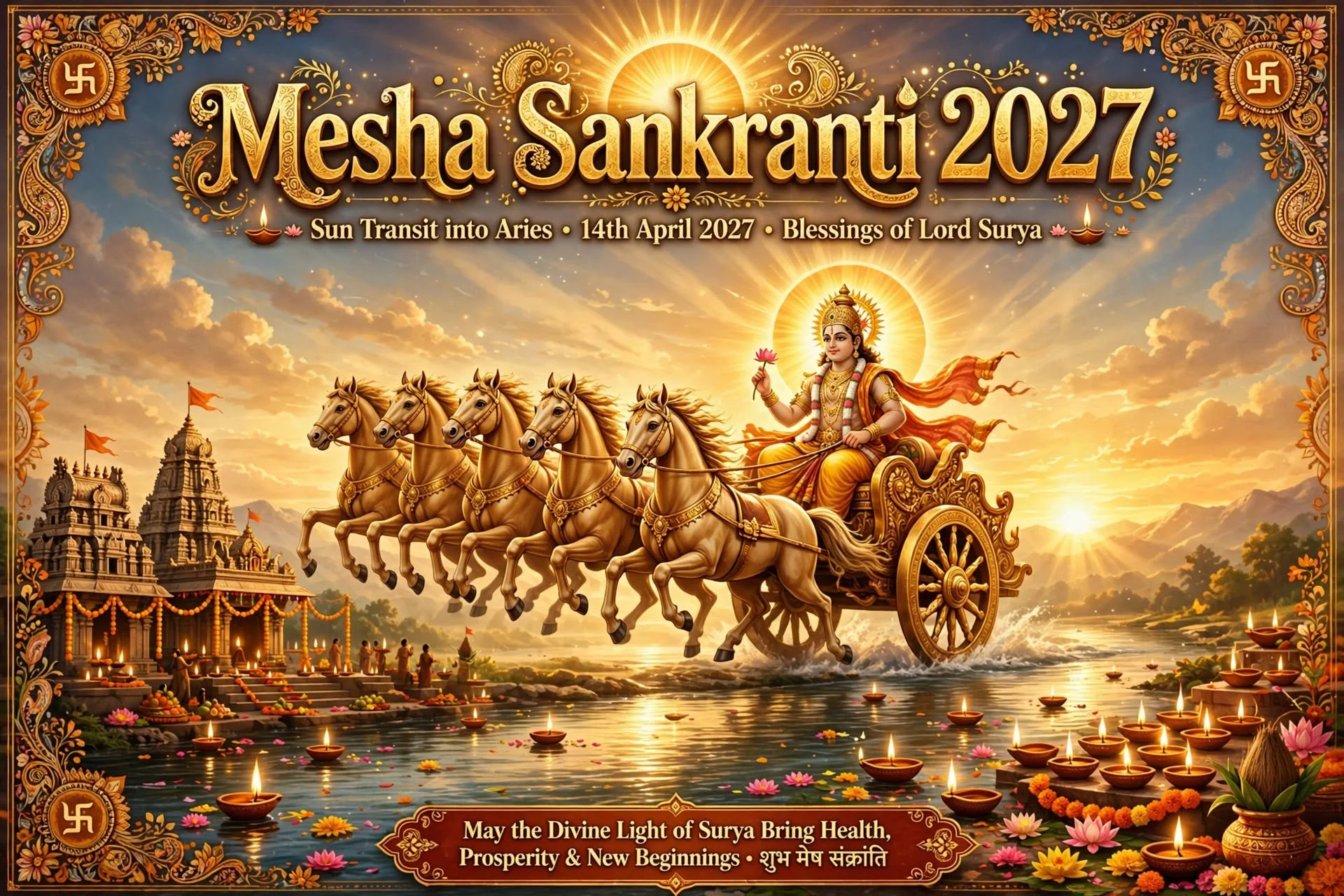
Wednesday, Apr 14, 2027
Mesha Sankranti
Mesha Sankranti marks the majestic astronomical ingress of Lord Surya (the Sun God) into Mesha Rashi (the zodiac sign of Aries), the first constellation of the sidereal zodiac. Occurring typically in mid-April, this celestial event represents the cardinal beginning of the solar calendar year in Sanatana Dharma. In Vedic astrology, Aries is the exalted sign (Uccha Rashi) of the Sun, wherein the solar deity radiates his supreme life-giving warmth, vigor, and spiritual illumination upon the earth.
View Festival Guide
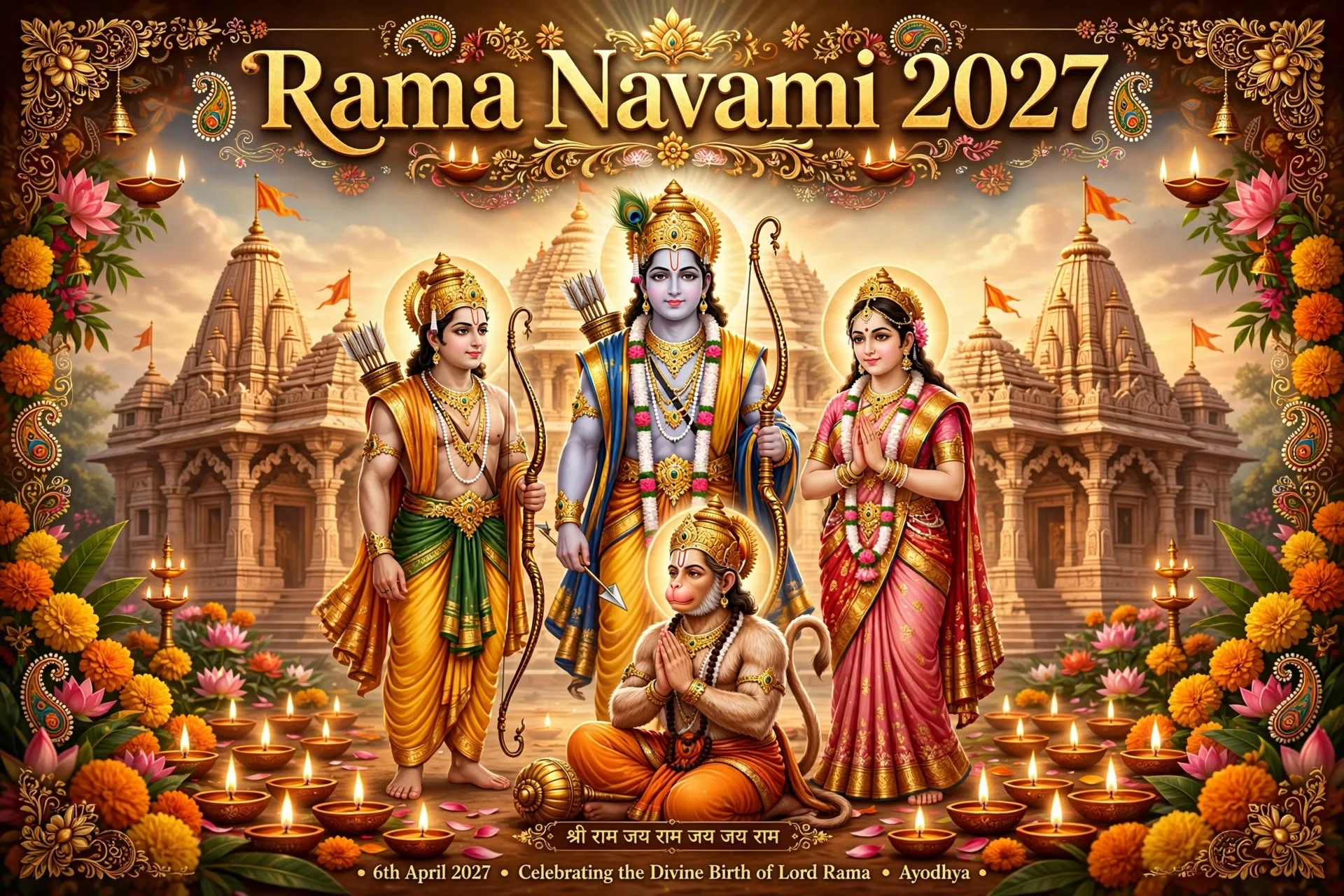
Thursday, Apr 15, 2027
Rama Navami
Rama Navami is one of the most sublime and universally revered festivals in Sanatana Dharma, celebrating the auspicious appearance (Janmotsav) of Maryada Purushottam Lord Sri Rama—the seventh incarnation of Lord Vishnu. Falling on the ninth day of the waxing moon (Shukla Paksha Navami) in the sacred month of Chaitra, it marks the grand culmination of the nine-day Chaitra Navratri festival. Born at high noon during the sacred Abhijit Muhurta in the ancient holy city of Ayodhya, Lord Rama incarnated to restore righteousness, establish exemplary moral standards (Dharma), and vanquish demonic forces across the earth.
View Festival Guide
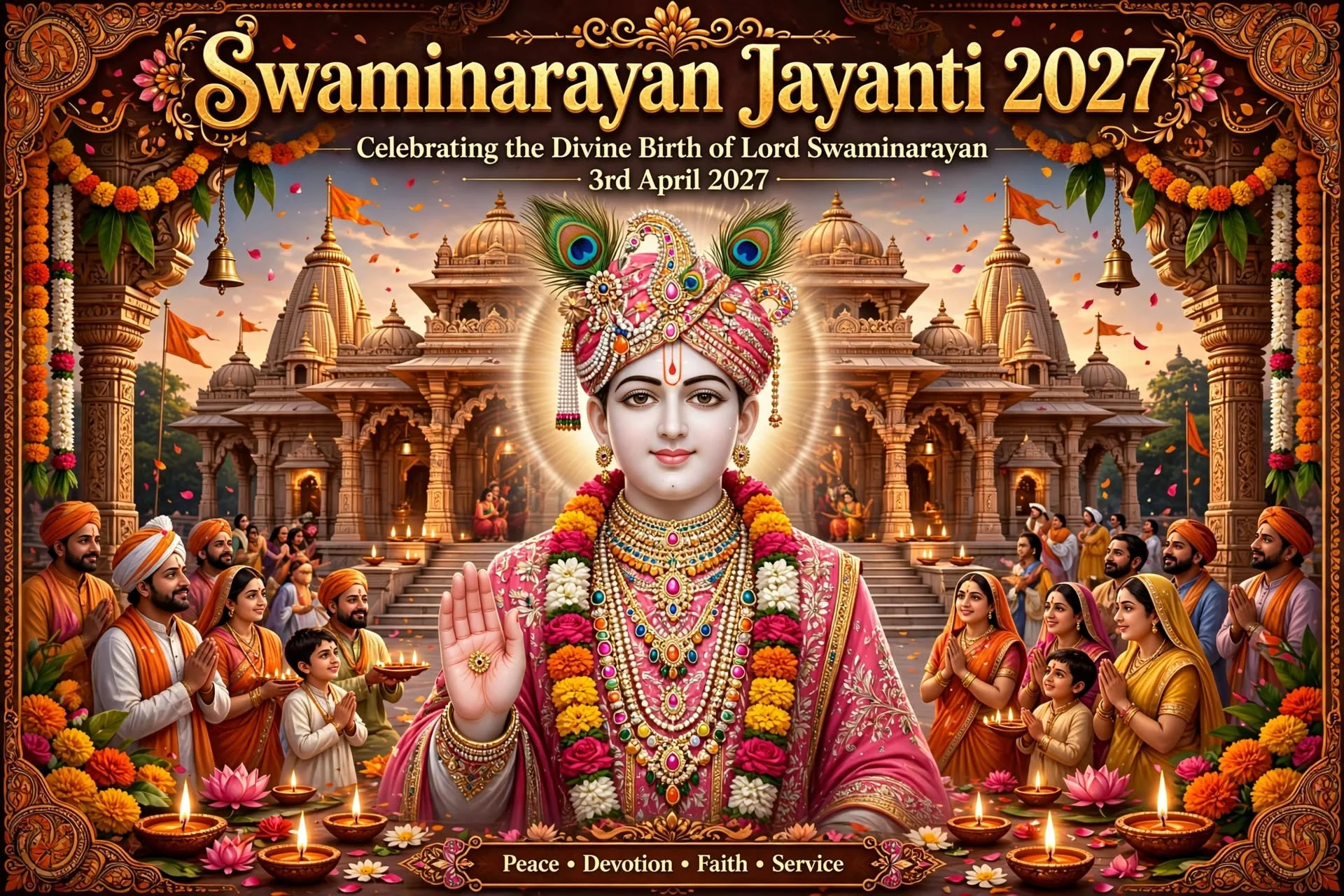
Thursday, Apr 15, 2027
Swaminarayan Jayanti
Swaminarayan Jayanti marks the auspicious birth anniversary of Bhagwan Swaminarayan (1781–1830 CE), the founder of the Swaminarayan Sampradaya and revered as a supreme divine manifestation in modern Sanatana Dharma. Celebrated on the ninth lunar day of the bright fortnight (Shukla Paksha Navami) in the month of Chaitra, this holy observance coincides precisely with Rama Navami. Manifesting at the sacred hour of 10:10 PM in the village of Chhapaiya near Ayodhya, Bhagwan Swaminarayan descended to establish moral rectitude, spiritual purity, social reform, and unconditional devotion to God.
View Festival Guide
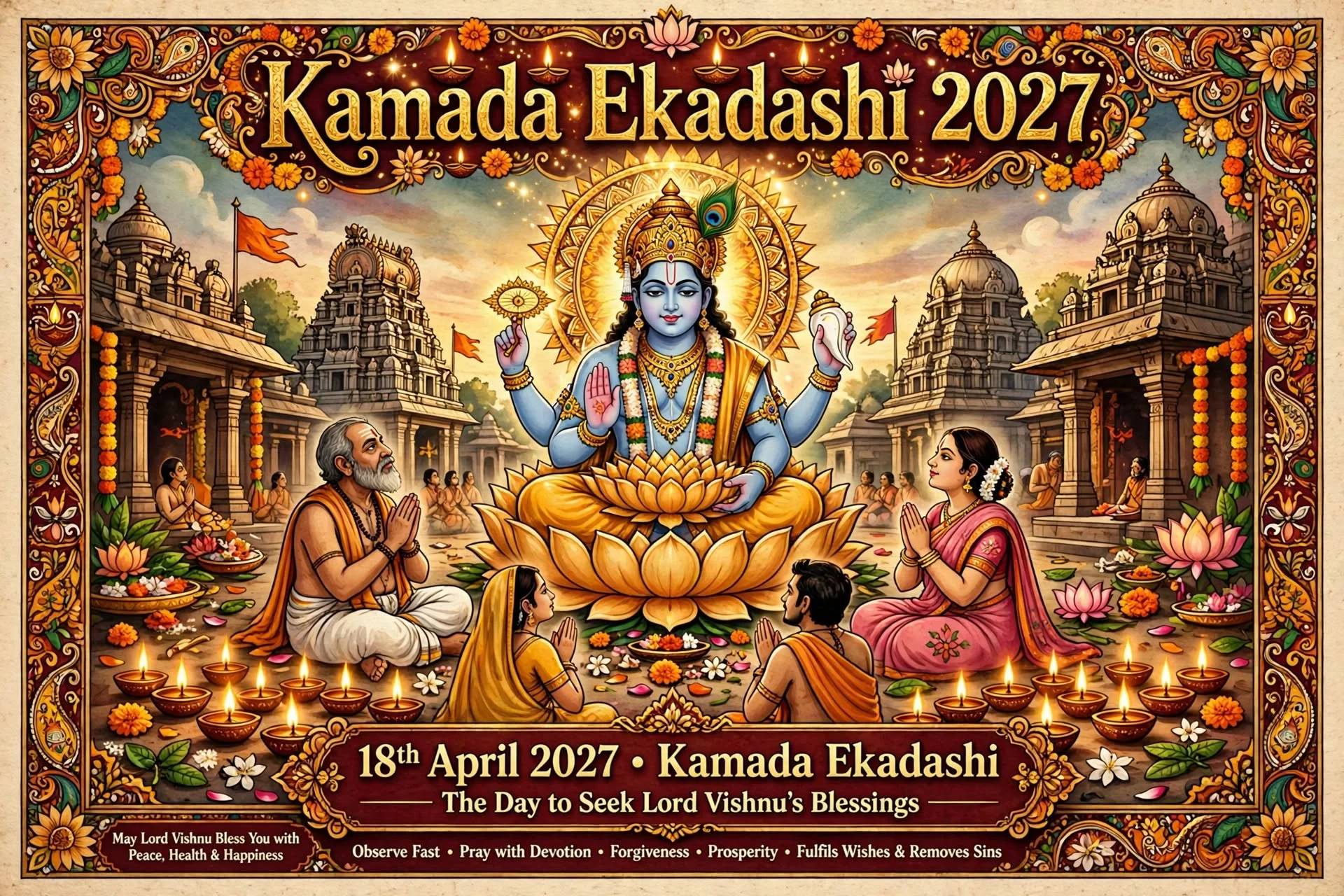
Saturday, Apr 17, 2027
Kamada Ekadashi
Kamada Ekadashi holds a uniquely exalted position in the Hindu spiritual calendar as the very first Ekadashi of the new Hindu lunar year. Falling on the eleventh day of the waxing moon (Shukla Paksha Ekadashi) in the sacred month of Chaitra, this divine observance is celebrated as the supreme fulfiller of all righteous desires. The Sanskrit word 'Kamada' literally signifies 'the granter of cherished aspirations' (Kama meaning desire, and Da meaning giver), possessing the extraordinary spiritual power to dissolve the deepest karmic stains and liberate souls from severe curses.
View Festival Guide
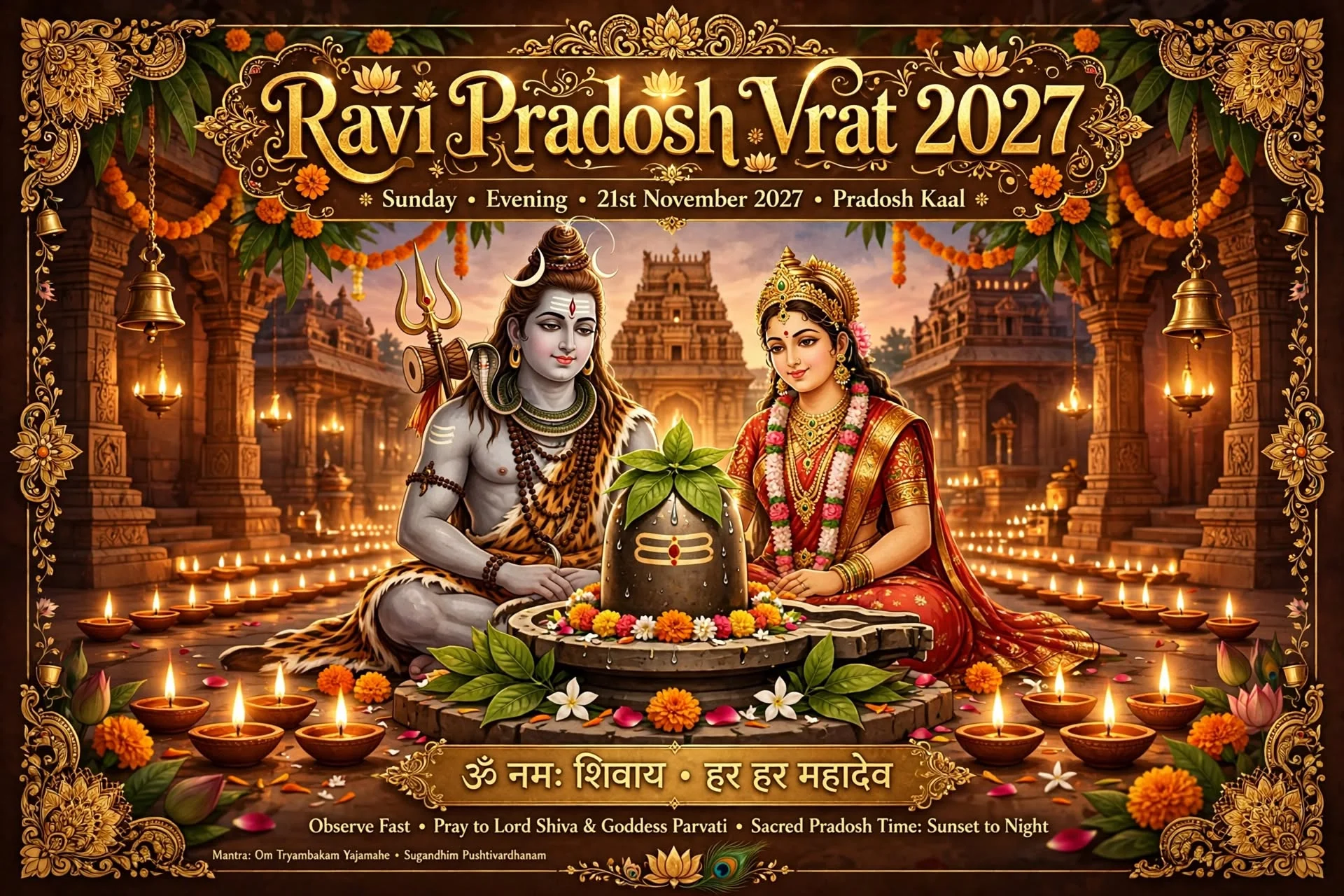
Sunday, Apr 18, 2027
Ravi Pradosh Vrat
Ravi Pradosh Vrat is an exceptionally sacred fasting day observed on the thirteenth lunar day (Trayodashi) that coincides with a Sunday (Ravivara). Dedicated to Lord Shiva, the cosmic dissolver of sorrow, this bimonthly vow unites the healing radiance of Surya Bhagavan with the boundless compassion of Mahadeva. Observed during the twilight Sandhya period, it is believed to banish physical ailments, clear karmic obstructions, and bestow vitality and longevity.
View Festival Guide
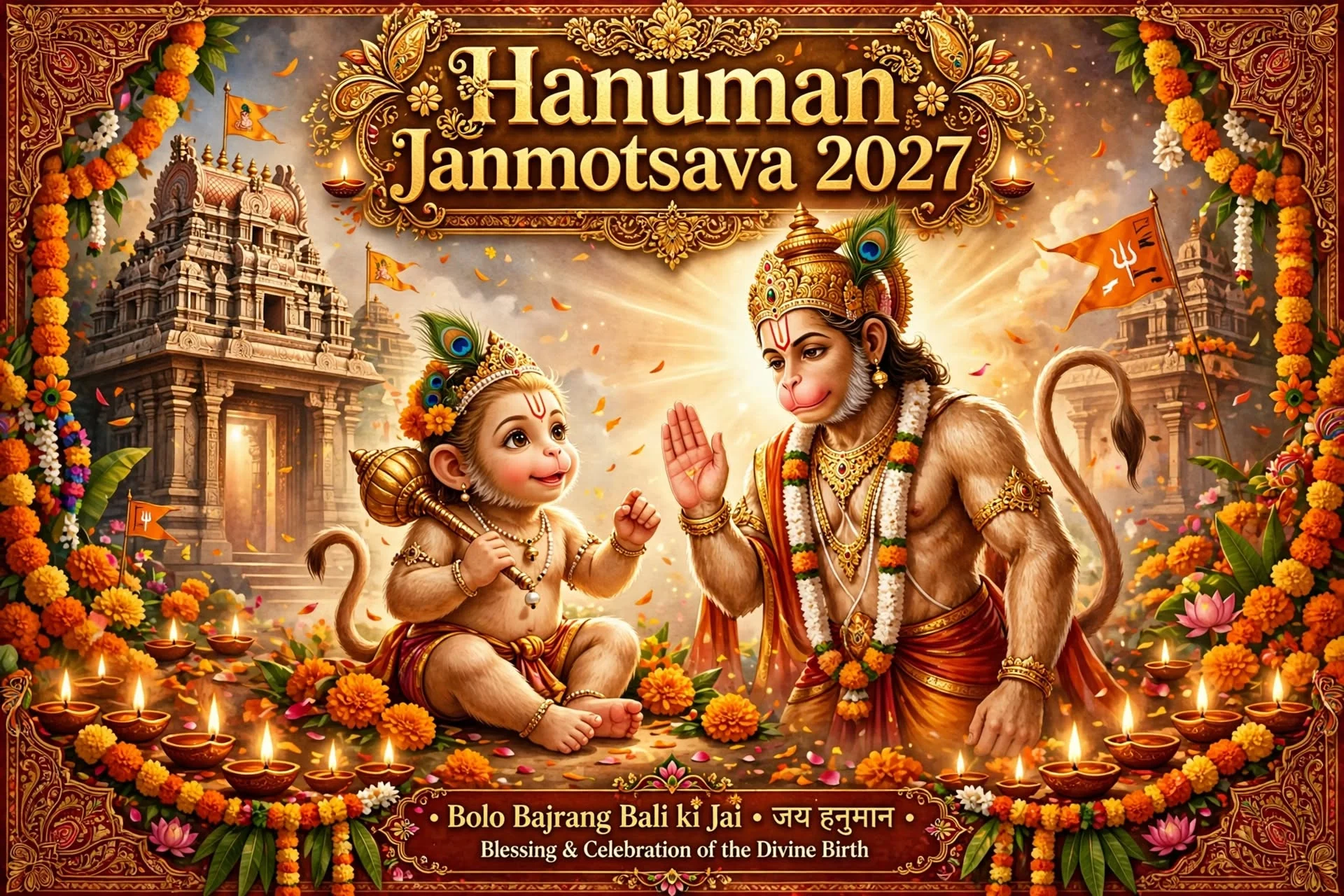
Tuesday, Apr 20, 2027
Hanuman Janmotsava
Hanuman Janmotsava marks the glorious birth celebration of Sri Hanuman, the immortal Rudra avatar of Lord Shiva and the supreme paragon of unalloyed devotion (Dasa Bhakti) to Lord Sri Rama. Celebrated with profound reverence on the full moon day (Purnima) of the sacred month of Chaitra, this divine occasion honors the eternal presence of Bajrangbali on earth. Traditional Vedic scholars and Vaishnava acharyas specifically designate this holy day as 'Janmotsava' (the celebration of birth) rather than 'Jayanti', because Sri Hanuman is one of the seven sacred Chiranjivis (deathless immortals) who eternally resides on earth wherever the holy name of Rama is chanted.
View Festival Guide

Tuesday, Apr 20, 2027
Anvadhan
Anvadhan (अन्वाधान) is an ancient, highly revered Vedic ritual and spiritual observance in Sanatana Dharma performed on the day immediately preceding the New Moon (Amavasya) or Full Moon (Purnima). Rooted in the pristine traditions of the Shrauta and Grihya Sutras, Anvadhan literally translates to 'the solemn placing and replenishment of sacred fuel wood into the consecrated Vedic fires'. In traditional Vedic ritualism, householders (Grihasthas) and priests who maintain the sacred Agnihotra fires perform Anvadhan to prepare the sacrificial altars for the grand Darsha Yajna (New Moon sacrifice) or Paurnamasa Yajna (Full Moon sacrifice) scheduled for the following day.
View Festival Guide
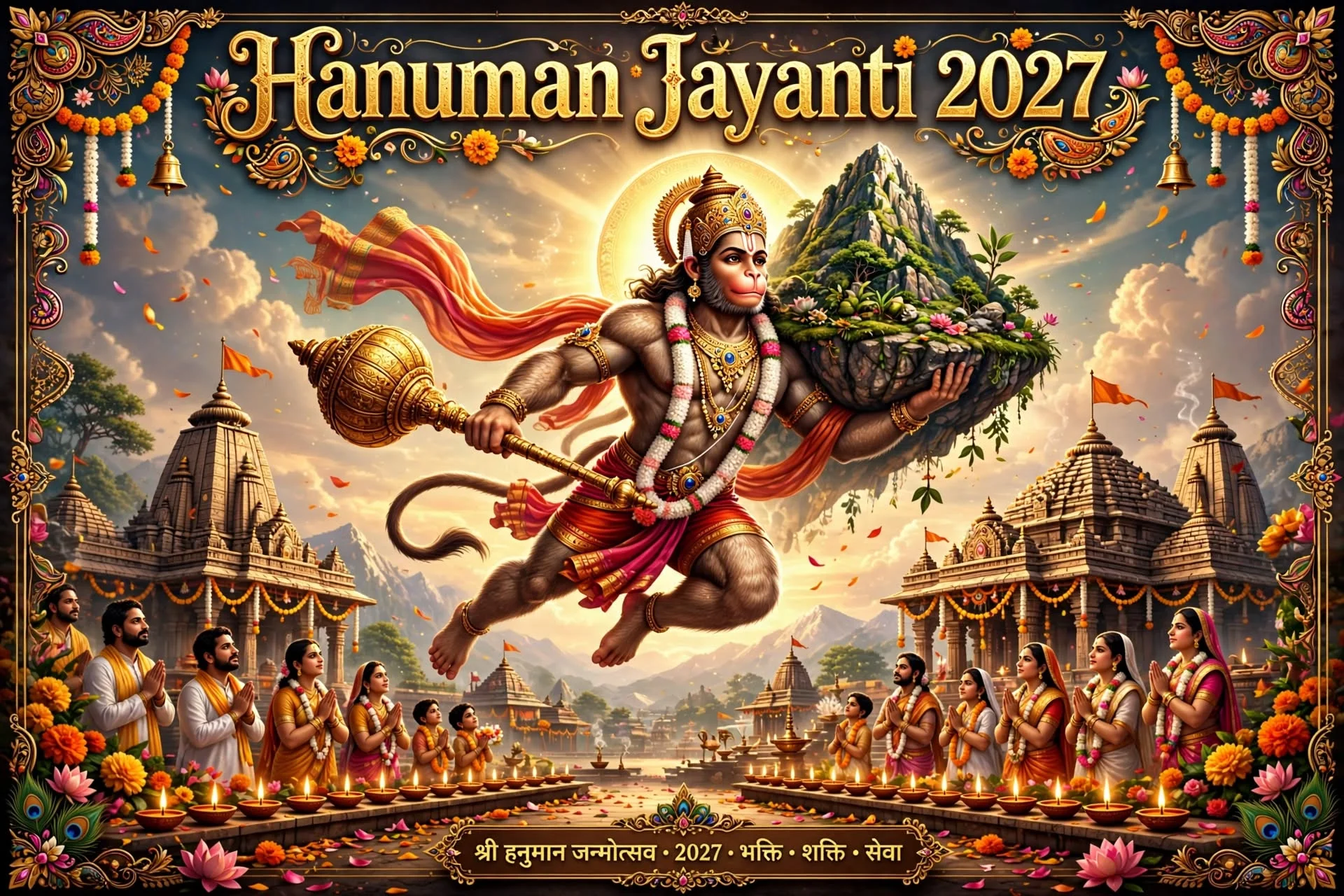
Tuesday, Apr 20, 2027
Hanuman Jayanti
Hanuman Jayanti marks the glorious appearance anniversary of Sri Hanuman, the Rudra avatar of Lord Shiva, the foremost servant of Lord Sri Rama, and the eternal epitome of selfless devotion (Seva), valor, and spiritual strength. Celebrated on the full moon day (Purnima) of the sacred month of Chaitra, this auspicious festival commemorates the auspicious moment when Lord Hanuman manifested on earth to assist Lord Rama in vanquishing the forces of evil and establishing the eternal kingdom of righteousness (Dharma).
View Festival Guide