




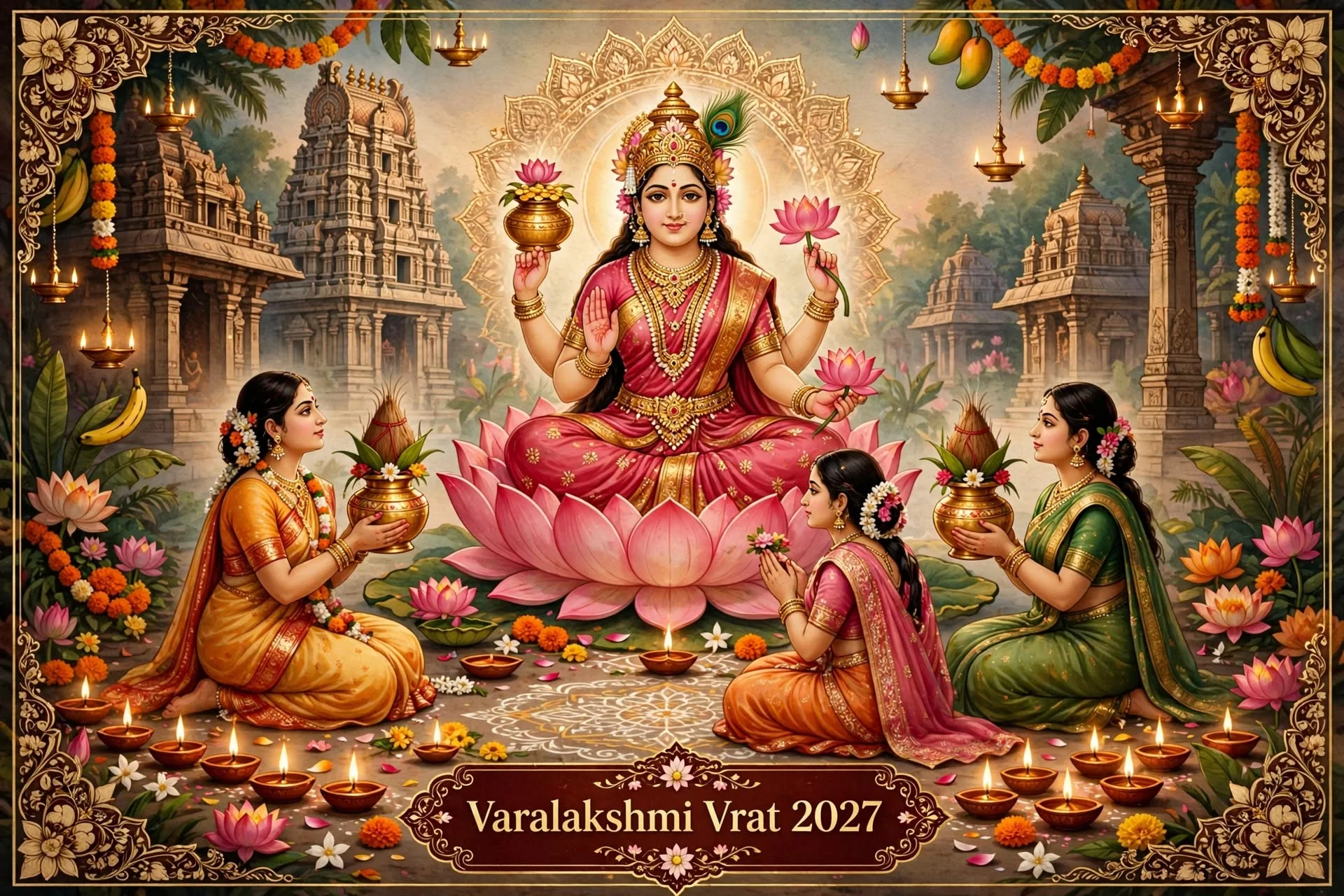
Varalakshmi Vrat, also known as Varalakshmi Nombu, is a revered Hindu festival dedicated to Goddess Varalakshmi—an auspicious manifestation of Sri Mahalakshmi who bestows boons ('Varam') upon Her sincere devotees. Celebrated predominantly by married women (Sumangalis) and young maidens across South India (Andhra Pradesh, Telangana, Karnataka, and Tamil Nadu) as well as Maharashtra and surrounding regions, this sacred vrata falls on the Friday immediately preceding the Full Moon day (Shravana Purnima) in the holy monsoon month of Shravana.
Varalakshmi Vrat 2027: Date, Puja Timings, Rituals & Stories
Varalakshmi Vrat Timings & Panchang
Important festival dates and auspicious timings
Usha Arghya (Sunrise)
05:49 am
Sandhya Arghya (Sunset)
07:03 pm
Start Date
Friday, 13 Aug 2027
Puja Muhurat
02:59 am – 05:21 am
Varalakshmi Vrat
The observance of Varalakshmi Vrata is celebrated with the belief that worshiping Goddess Varalakshmi on this sanctified day is equivalent to propitiating the Ashta Lakshmis—the eight cosmic manifestations of wealth, namely Adi Lakshmi (primeval protector), Dhanya Lakshmi (agricultural abundance), Dhairya Lakshmi (courage), Gaja Lakshmi (royalty and power), Santana Lakshmi (virtuous progeny), Vijaya Lakshmi (triumph over obstacles), Vidya Lakshmi (sacred knowledge), and Dhana Lakshmi (material prosperity).
Central to the celebration is the establishment of the sacred Kalash (pot), artfully adorned with yellow turmeric, red vermilion (kumkum), fresh mango leaves, and a husked coconut painted or sculpted with the serene visage of the Goddess, draped in a miniature silk sari. Devotees tie a sacred nine-knot yellow thread (Nombu Saradu or Dorak) to their right wrists, chant ancient stotrams such as the Sri Suktam and Lakshmi Ashtottara Shatanamavali, and distribute auspicious mangal-dravyas to ensure peace, longevity of husbands, health of children, and universal prosperity.
Why is Varalakshmi Vrat Celebrated?
Varalakshmi Vrat is celebrated to invoke the loving maternal grace of Goddess Lakshmi, welcoming divine light, peace, harmony, and unshakeable prosperity into households.
According to the Skanda Purana, the vrata was revealed by Lord Shiva Himself to Goddess Parvati when She requested a sovereign, easily accessible spiritual penance that would grant women worldly bliss, virtuous children, marital harmony, and freedom from economic distress.
Devotees believe that sincere observance of this single vrat on the sacred Friday of Shravana bestows blessings equal to performing dedicated pujas for all eight divine forms of Sri Lakshmi throughout the year.
- Invoking the supreme blessings of Goddess Varalakshmi for familial peace, prosperity, and longevity of the husband.
- Attaining the collective spiritual boons of the Ashta Lakshmis through a single unified vrata.
- Honoring the virtues of devotion, selflessness, and familial dedication exemplified by Charumati.
- Strengthening sisterhood and community solidarity through the exchange of turmeric, kumkum, and traditional gifts (Vayana).
- Purifying the domestic hearth and inviting positive cosmic vibrations during the holy month of Shravana.
Scriptural Origins and the Puranic Legend of Charumati
The Dialogue Between Lord Shiva and Goddess Parvati
In the sacred verses of the Skanda Purana, Goddess Parvati approaches Lord Shiva in the celestial abode of Mount Kailash and asks: 'O Lord of lords, please reveal an auspicious and accessible vrata that can be observed by women in the mortal realm to protect their families, secure the longevity and well-being of their husbands, bestow worthy children, and banish poverty from their households.'
Lord Shiva smiles benevolently and responds: 'O Devi, listen to the supreme secret of the Varalakshmi Vrata. It is celebrated on the Friday before the Full Moon of the Shravana month. To demonstrate its boundless power, I shall narrate to you the ancient history of a pious woman named Charumati.'
The Virtuous Life of Charumati in Kundinapura
Lord Shiva recounts that in the ancient and prosperous kingdom of Magadha, there was a beautiful town named Kundinapura (Kundina). In this town lived a deeply virtuous Brahmin woman named Charumati. Charumati was the embodiment of devotion, patience, and humility. She served her elderly in-laws with deep reverence, honored her husband with unreserved love, treated every wandering guest and mendicant as the supreme God, and never uttered an untruthful or harsh word.
Deeply pleased with Charumati's pure character and selfless conduct, Goddess Mahalakshmi manifested in her dream one night during the sacred month of Shravana. The radiant Goddess revealed Her divine identity: 'O Charumati, I am Varalakshmi, the granter of all boons. I am immensely pleased with your steadfast devotion to your household and your righteous living. On the Friday preceding the Shravana Purnima, establish a sacred pot in your home and worship Me according to the scriptural rites. I shall fulfill every pure desire of your heart and bless your household with inexhaustible wealth.'
The Observance of the Vrata and the Divine Transformation
Charumati awoke with tears of spiritual joy streaming down her face. She immediately bowed before her family and shared the divine dream with her husband and in-laws, who encouraged her with deep faith. When the auspicious Friday arrived, Charumati swept and purified the courtyard with cow dung and drew intricate rangolis. She invited the women of the village to join in the sacred worship.
The Metaphysics of Divine Grace and the Eight Aspects of Abundance
Ashta Lakshmi Manifestation in Daily Consciousness
In Vedic spirituality, wealth is not merely physical currency; it encompasses vital energy (Prana), moral integrity (Dharma), courage (Dhairya), agricultural nourishment (Dhanya), and spiritual wisdom (Vidya). Worshiping Goddess Varalakshmi awakens all eight dimensions of wealth within the aspirant.
By establishing the sacred pot (Kalash), the practitioner recognizes the human heart as the sanctum where cosmic energy takes physical form.
The Symbolism of the Nine-Knot Dorak Thread
The sacred yellow thread with nine knots tied to the wrist is an energetic talisman (Raksha Sutra). The nine knots correspond to nine divine virtues: truth, love, patience, purity, detachment, compassion, charity, devotion, and surrender.
Wearing the thread anchors the practitioner's consciousness in divine protection against domestic strife and negative planetary influences.
Domestic Preparations, Kalash Decoration, and Puja Vidhi
Household Purification on Thursday Evening
On Thursday evening preceding the vrata, the house is thoroughly cleaned and purified with water infused with turmeric and holy cow dung. All brass, bronze, and silver puja vessels are polished until they shine brilliantly.
Intricate geometric Kolams (Rangolis) using rice flour are drawn at the main entrance to welcome the Goddess.
The Sacred Friday Worship and Tamboolam Distribution
On Friday morning, the Kalash is assembled and consecrated. Devotees observe fasting while performing shodashopachara puja, reciting the Sri Suktam and the 108 names of Mahalakshmi.
In the evening, neighboring married women are invited to the house, where camphor aarti is performed and auspicious gift sets (Tamboolam) comprising betel leaves, turmeric, kumkum, fruits, and sweets are distributed.
Varalakshmi Vrat Puja Vidhi (Step by Step)
- 1
Brahma Muhurta Snana & Kolam Decoration
Wake early before sunrise, take a purificatory bath, wear traditional silk garments, and draw auspicious rice-flour rangolis at the entrance of the house.
- 2
Vighneshwara Puja (Ganesha Invocation)
Fashion a small cone of wet turmeric powder representing Lord Ganesha, invoke Him with flowers and akshata, and pray for the obstacle-free execution of the vrata.
- 3
Kalash Sthapana & Alankaram
Seat a bronze or silver Kalash on a bed of raw unbroken rice, fill it with water or grain, place five mango leaves, seat a coconut anointed with turmeric, and drape it with a miniature silk sari and jewels.
- 4
Prana Pratishtha (Invocation of the Goddess)
Invoke the presence of Goddess Varalakshmi into the Kalash by chanting Vedic invocation verses, welcoming Her into the household with folded hands.
- 5
Padya, Arghya, and Achamana
Offer pure water for washing the Goddess's feet, hands, and for sipping, accompanied by fragrant floral petals.
Varalakshmi Vrat Puja Samagri List
Kalash and Altar Installation Essentials
- Silver, bronze, or brass Kalash pot and base brass plate
- Unbroken whole coconut with intact fibrous tuft
- Five fresh green mango twigs (Amra Pallava)
- Raw unbroken rice grains (Akshata) for base plate
- Miniature silk sari, golden necklace, bangles, and Goddess face mask (Amman Mugam)
Anointing, Floral, and Thread Articles
- Nine-knot yellow sacred cotton threads (Nombu Saradu) smeared with turmeric
- Pure turmeric powder, red kumkum, and fragrant sandalwood paste
- Fresh fragrant flowers: red lotuses, jasmine strings, marigolds, and red roses
- Pure cow ghee brass lamps, cotton wicks, and natural camphor tablets
- Aromatic dhoop, agarbattis, and sambrani incense
Naivedyam and Tamboolam Offerings
- Traditional sweet dishes: Paruppu Payasam, Appam, and Modak (Kozhukattai)
- Savory offerings: Medu Vada and boiled spiced Sundal (chickpeas)
- Fresh betel leaves, areca nuts (supari), turmeric roots, and raw coconuts
- Seasonal fresh fruits: bananas, pomegranates, apples, and sweet oranges
Mantras and Prayers for Varalakshmi Vrat
Varalakshmi Vrat Vrat Rules and Fasting Guidelines
Dietary Injunctions and Vrata Discipline
Women observing the fast abstain from regular meals from dawn until the conclusion of the main puja, Kalash worship, and thread tying ceremony. Pregnant women, elderly mothers, and nursing women may consume milk, fruits, and light sattvic foods.
- Total abstinence from non-vegetarian foods, alcohol, onions, and garlic in the household.
- Fasting is maintained until the sacred Dorak thread is tied and naivedyam is offered.
- A festive sattvic meal is shared with the family in the afternoon following prayers.
- The sacred Kalash must not be moved or disturbed until Saturday morning.
Auspicious Conduct and Charity
Maintain a peaceful, joyful home atmosphere free from quarrels and harsh speech. Welcome visiting women with respect and distribute turmeric, kumkum, and sweets generously.
Dos and Don'ts of Varalakshmi Vrat
Good Practices (Do's)
- Wake up before sunrise, purify the house, and draw colorful rangolis at the entrance.
- Establish the sacred Kalash facing East or North on an auspicious muhurta.
- Tie the sacred nine-knot yellow thread on the right wrist with devotion and prayers.
- Distribute turmeric, kumkum, and prasad generously to visiting women and neighbors.
- Recite the Sri Suktam and the 108 names of Goddess Lakshmi with heartfelt devotion.
Varalakshmi Vrat Across Regions
| Region | Local Name |
|---|---|
| Tamil Nadu | Varalakshmi Nombu |
| Andhra Pradesh & Telangana | Varalakshmi Vratam |
| Karnataka | Varamahalakshmi Habba |
| Maharashtra | Varalakshmi Vrat |
Varalakshmi Vrat FAQs
When is Varalakshmi Vrat celebrated?
Varalakshmi Vrat is celebrated on the Friday immediately preceding the Shravana Purnima (Full Moon) in the Hindu monsoon month of Shravana.
Who can observe the Varalakshmi Vrata?
The vrata is traditionally observed by married women (Sumangalis) for the welfare, health, and longevity of their families. Unmarried girls also observe it under maternal guidance to pray for virtuous character and a noble spouse.
What do the nine knots on the Nombu Saradu thread signify?
The nine knots represent the nine forms of wealth and protection, and the nine sacred attributes of Sri Mahalakshmi invoked to shield the devotee and household from adversity.
Upcoming Festivals
View All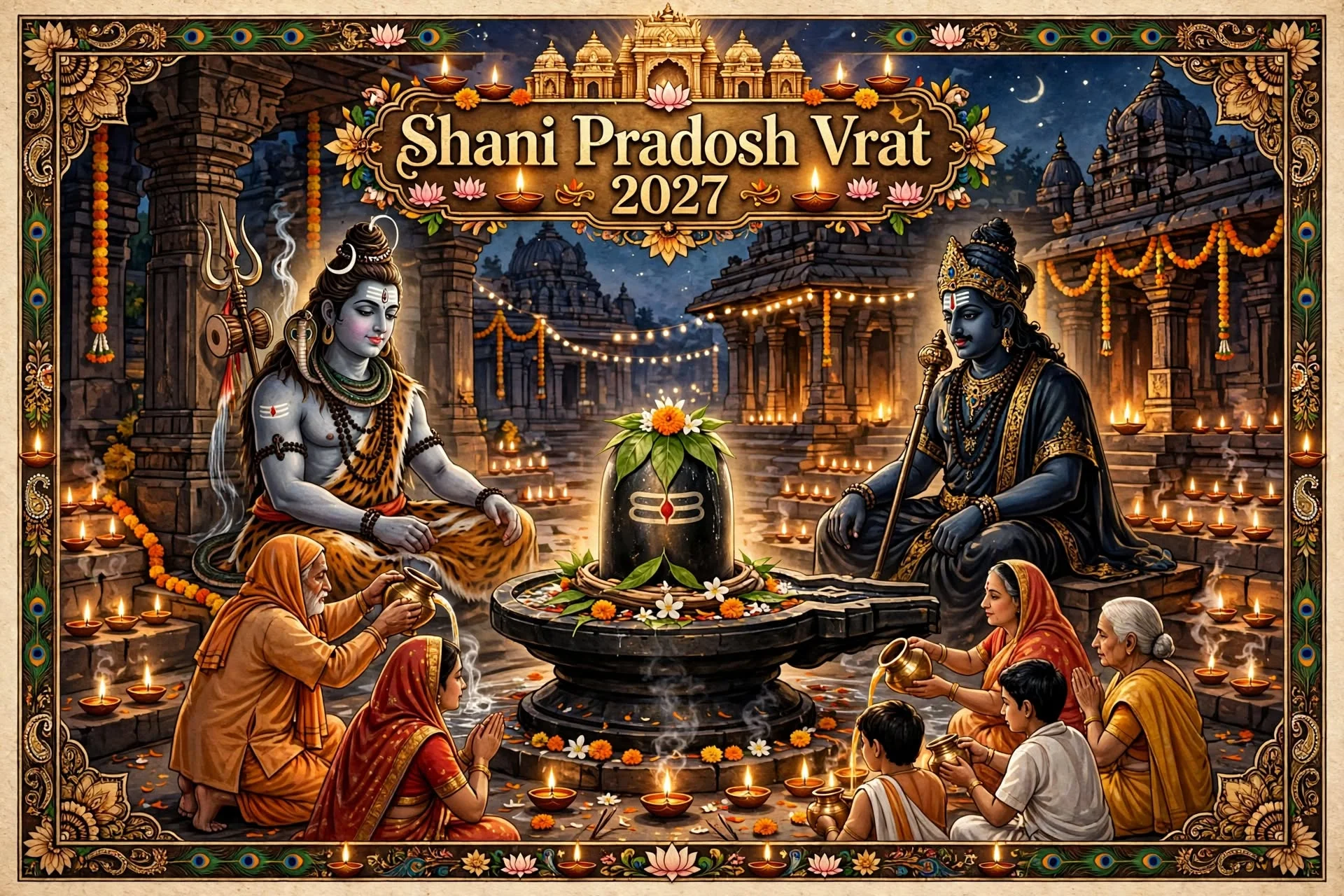
Saturday, Aug 14, 2027
Shani Pradosh Vrat
Shani Pradosh Vrat is an exceptionally potent, revered, and astrologically transformative bi-monthly Hindu fasting observance dedicated to Lord Shiva, Goddess Parvati, and Lord Shani Deva (the planetary deity of Saturn). Occurring on the thirteenth day (Trayodashi tithi) of either the waxing (Shukla) or waning (Krishna) lunar fortnight when it coincides with a Saturday (Shanivara), this sacred vow is lauded across Vedic and Puranic literature as the supreme, infallible spiritual remedy for dissolving chronic karmic impediments, neutralizing severe planetary afflictions, and securing profound peace and prosperity.
View Festival Guide
Tuesday, Aug 17, 2027
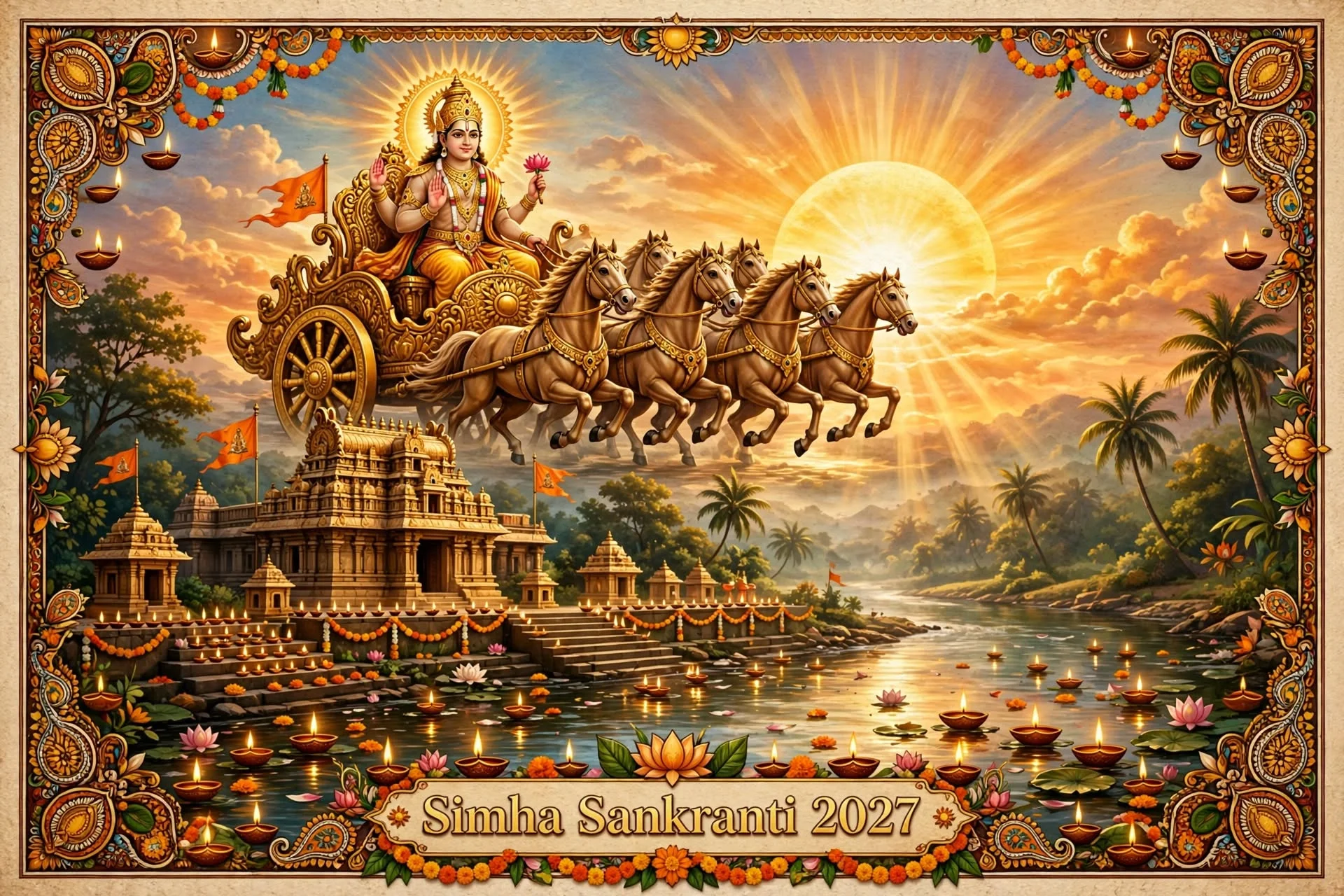
Simha Sankranti
Simha Sankranti marks the momentous astronomical and astrological transit (Sankramana) when Surya Deva, the radiant Sun God, enters the regal zodiac sign of Simha (Leo). In Vedic astrology, Simha is the Sun's own moolatrikona and swakshetra (domicile sign), making this celestial ingress exceptionally powerful, revitalizing, and spiritually auspicious. Occurring in mid-August in the traditional solar calendar, Simha Sankranti inaugurates the solar month of Simha (known as Chingam in Kerala and Bhadra / Avani in other solar calendars).
View Festival Guide
Tuesday, Aug 17, 2027
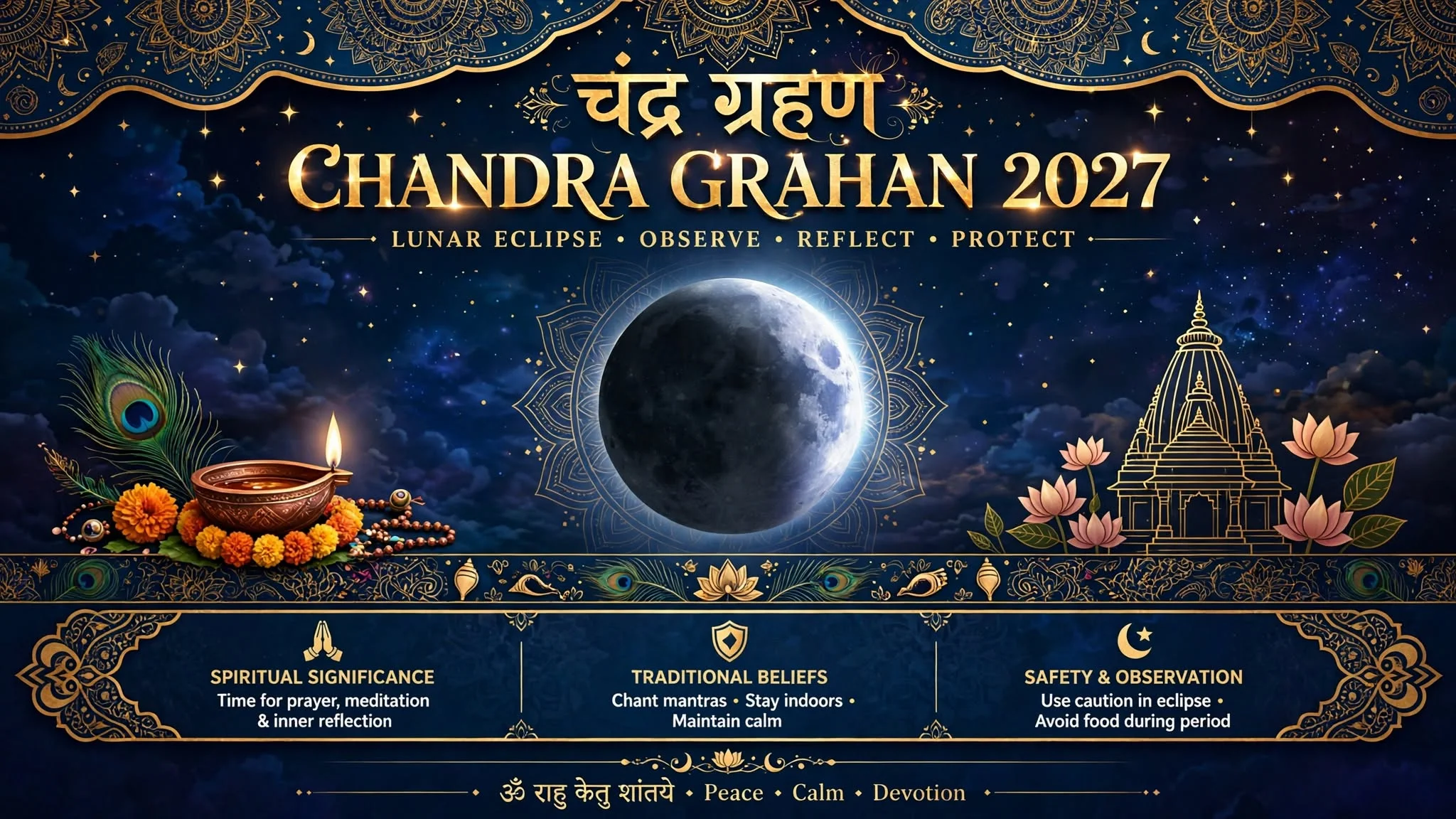
Chandra Grahan
Chandra Grahan (Lunar Eclipse) is a sacred cosmic and spiritual juncture (Parva Kaal) in Sanatana Dharma occurring exclusively on Purnima (the full moon day) when the Earth moves directly between the Sun and the Moon, casting its conical shadow across the lunar orb. In Vedic philosophy and Jyotisha, the Moon presides over the mind, subconscious emotions, and water elements (Chandrama Manaso Jatah - Rigveda Purusha Sukta). The temporary obscuration of the Moon by the shadowy nodes Rahu or Ketu induces profound subtle energetic shifts across terrestrial nature and human consciousness.
View Festival Guide
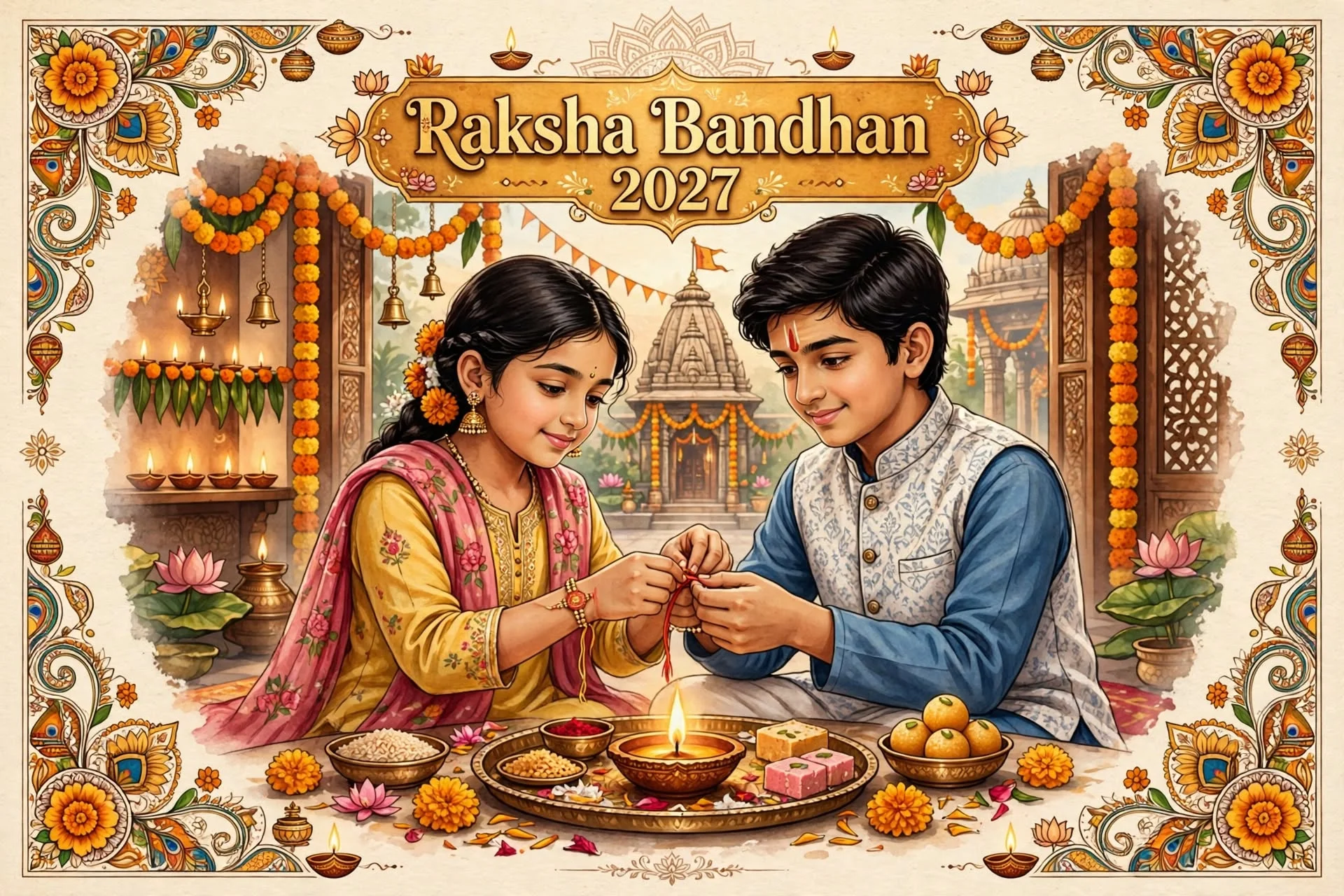
Tuesday, Aug 17, 2027
Raksha Bandhan
Raksha Bandhan, celebrated on the sacred Full Moon day (Purnima) of the holy Hindu month of Shravana, is one of the most cherished, ancient, and emotionally resonant festivals of India. Translated literally as 'the bond of protection', Raksha Bandhan honors the sacred relationship between brothers and sisters while simultaneously encapsulating broader cosmic and moral principles of mutual duty, chivalric honor, spiritual righteousness, and universal solidarity.
View Festival Guide
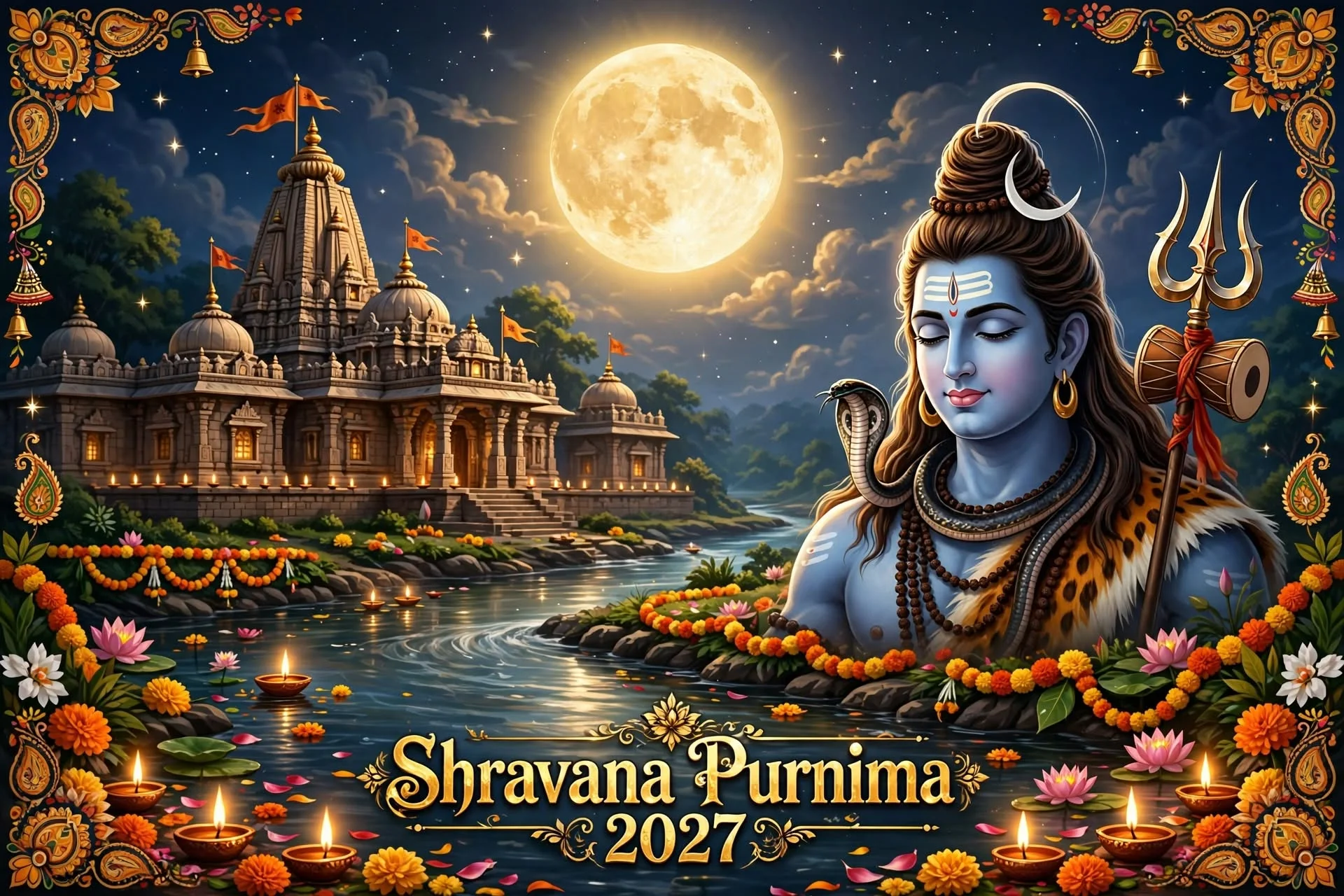
Tuesday, Aug 17, 2027
Shravana Purnima
Shravana Purnima is the radiant Full Moon day of the sacred Hindu month of Shravana, representing one of the most spiritually vibrant, multifaceted, and revered junctures of the entire Hindu calendar. Illuminating the night sky during the heart of the rejuvenating monsoon, this sanctified tithi marks the confluence of numerous historic, ascetic, familial, and astronomical observances across the length and breadth of the Indian subcontinent.
View Festival Guide
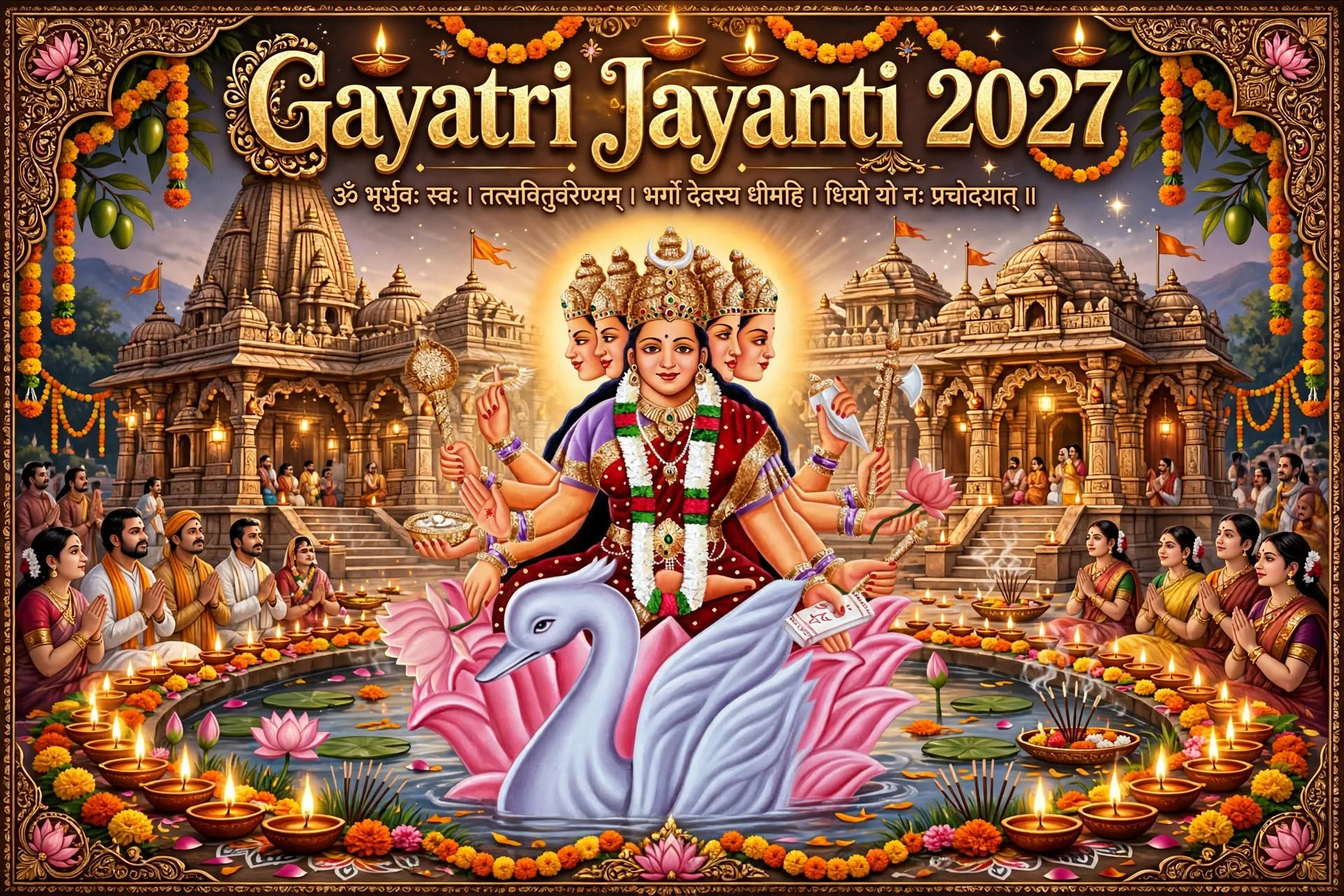
Tuesday, Aug 17, 2027
Gayatri Jayanti
Gayatri Jayanti is a sacred Hindu festival dedicated to Goddess Gayatri, revered as Ved Mata, the Mother of the Vedas. She represents divine wisdom, spiritual illumination, purity and the power of sacred knowledge. Devotees worship her as the personification of the Gayatri Mantra, one of the most revered prayers in the Vedic tradition.
View Festival Guide

Tuesday, Aug 17, 2027
Anvadhan
Anvadhan (अन्वाधान) is an ancient, highly revered Vedic ritual and spiritual observance in Sanatana Dharma performed on the day immediately preceding the New Moon (Amavasya) or Full Moon (Purnima). Rooted in the pristine traditions of the Shrauta and Grihya Sutras, Anvadhan literally translates to 'the solemn placing and replenishment of sacred fuel wood into the consecrated Vedic fires'. In traditional Vedic ritualism, householders (Grihasthas) and priests who maintain the sacred Agnihotra fires perform Anvadhan to prepare the sacrificial altars for the grand Darsha Yajna (New Moon sacrifice) or Paurnamasa Yajna (Full Moon sacrifice) scheduled for the following day.
View Festival Guide

Wednesday, Aug 18, 2027
Ishti
Ishti is a foundational Vedic ritual observance appearing prominently in Hindu Panchangs on the Pratipada tithi (the first lunar day) following either Amavasya (new moon) or Purnima (full moon), marking the prescribed performance day for the fortnightly Vedic Darsha-Purnamasa sacrifices.
View Festival Guide