




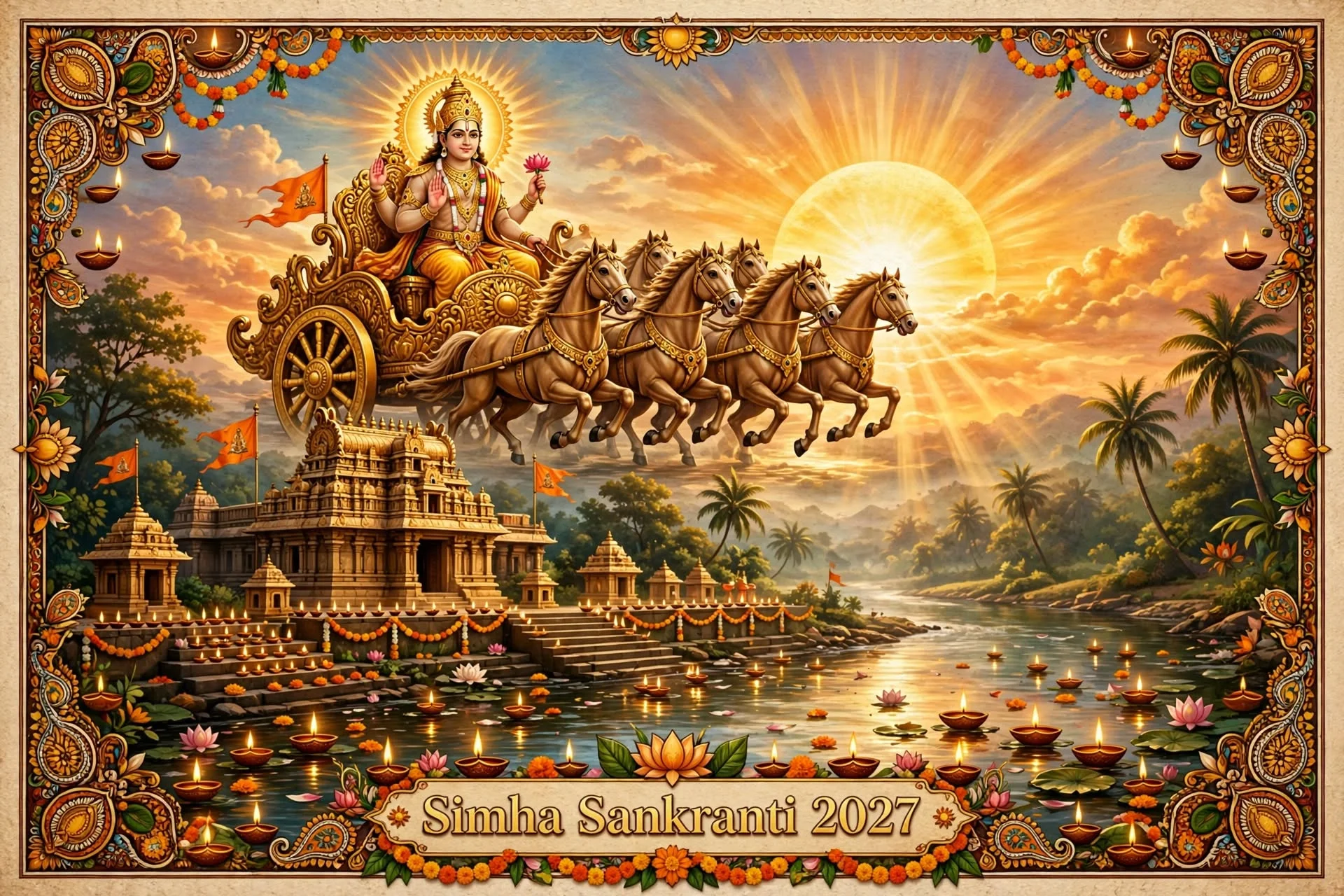
Simha Sankranti marks the momentous astronomical and astrological transit (Sankramana) when Surya Deva, the radiant Sun God, enters the regal zodiac sign of Simha (Leo). In Vedic astrology, Simha is the Sun's own moolatrikona and swakshetra (domicile sign), making this celestial ingress exceptionally powerful, revitalizing, and spiritually auspicious. Occurring in mid-August in the traditional solar calendar, Simha Sankranti inaugurates the solar month of Simha (known as Chingam in Kerala and Bhadra / Avani in other solar calendars).
Simha Sankranti 2027: Date, Puja Timings, Rituals & Stories
Simha Sankranti Timings & Panchang
Important festival dates and auspicious timings
Usha Arghya (Sunrise)
05:51 am
Sandhya Arghya (Sunset)
06:59 pm
Start Date
Tuesday, 17 Aug 2027
Puja Muhurat
10:29 am – 12:58 pm
Simha Sankranti
Celebrated across India with solar worship, sacred river bathing, and charitable acts, this festival holds unique cultural prominence in the mountainous regions of Uttarakhand (Kumaon and Garhwal), where it is traditionally observed as 'Ghee Sankranti' or 'Ghrit Sankranti'. In the Himalayan foothills, Simha Sankranti is an agrarian festival of gratitude honoring the bountiful harvest, livestock, and lush green pastures nourished by the monsoon rains.
The observance of Simha Sankranti is also intimately linked to the worship of Lord Vishnu in His ferocious yet protective incarnation as Bhagwan Narasimha (the half-man, half-lion avatar), as well as Lord Shiva. Devotees perform Aditya Hridaya Stotra recitation, offer fresh cow ghee, donate copper vessels and golden-hued grains to the needy, and consume wholesome traditional dishes prepared with pure desi ghee to fortify physical vitality, mental brilliance, and spiritual endurance.
Why is Simha Sankranti Celebrated?
Simha Sankranti is celebrated to honor Surya Deva as the visible eye of the cosmic divinity (Pratyaksha Devata) and the sustainer of all life on Earth as He enters His most potent astrological home.
In Vedic wisdom, the Sun represents the cosmic soul (Surya Atma Jagatas Tasthushashcha), intellect, health, willpower, and righteousness. Its transit into Leo re-energizes nature, fortifies human vitality, and disperses physical and mental inertia.
In agrarian traditions, it serves as a joyous festival of thanksgiving where farmers celebrate the blossoming of their crops, express gratitude to milch cows and bullocks, and invoke divine protection for future harvests.
- Propitiating Surya Deva during His entry into His own zodiac sign of Simha (Leo).
- Celebrating 'Ghee Sankranti' in the Himalayas to ensure physical strength, health, and sharp intellect.
- Offering Tarpana, sacred bath, and charity along the banks of holy rivers like the Ganga and Yamuna.
- Worshiping Lord Narasimha and Lord Shiva for liberation from fear, inner enemies, and existential distress.
- Welcoming the auspicious new agricultural and cultural cycle in southern states like Kerala (Chingam).
Scriptural Origins in the Bhavishya Purana and Himalayan Traditions
Surya Deva's Ingress in the Bhavishya Purana
In the Brahma Parva of the Bhavishya Purana, Sage Sumantu explains to King Shatanika the immense celestial and spiritual significance of the twelve Sankrantis. Among them, the Sun's transit into the northern signs, particularly into its own house of Simha (Leo), is declared to possess extraordinary spiritual and physical efficacy.
The scriptures state: 'When the magnificent Sun, the maker of day and king of planets, enters the sign of Simha, the celestial energies align to bestow radiant health (Arogya), administrative victory, and spiritual illumination upon mankind. Those who take a holy bath at dawn, offer libations of water mixed with red flowers and sandalwood, and feed pure ghee to Brahmins are freed from all past physical afflictions.'
The Folk Legend of Ghee Sankranti in Uttarakhand
In the Himalayan regions of Kumaon and Garhwal, ancient folklore links Simha Sankranti directly to the consumption of pure cow ghee. An ancient belief warns that anyone who fails to eat cow ghee on the day of Ghee Sankranti is doomed to be reincarnated in the next life as a snail, slug, or leech (Garela).
While articulated as a cautionary myth, this tradition carried profound agricultural and nutritional wisdom. During the monsoon months, the alpine meadows (Bugyals) produce rich, medicinal grasses, causing cows and buffaloes to yield exceptionally rich and nourishing milk. Churning this milk into fresh ghee and consuming it on Simha Sankranti fortified hill communities against the damp chill of the monsoon and prepared their bodies for the approaching winter.
The Lion Avatar and Lord Narasimha Worship
The sign of Leo (Simha) is symbolized by the regal lion, the king of the animal kingdom. Spiritual commentators connect this zodiacal symbolism with the divine appearance of Bhagwan Narasimha, the fourth avatar of Lord Vishnu who manifested with a lion's face and a human torso to vanquish the demon Hiranyakashipu and protect the child devotee Prahlada.
Solar Vitality, Manipura Awakening, and the Fire of Consciousness
Activation of the Manipura Chakra (Solar Plexus)
In yogic physiology, the Sun represents the internal fire of digestion and spiritual will seated in the Manipura chakra. As the physical Sun enters its sovereign sign of Leo, internal prana surges, providing seekers with renewed determination, digestive power (Jatharagni), and clarity of purpose.
Meditating on the golden solar disc at dawn burns away subconscious lethargy (Tamas) and fills the astral body with radiant vigor (Tejas).
The Spiritual Purity of Cow Ghrita (Ghee)
Pure desi cow ghee is revered in Vedic texts as the liquid essence of Agni. It nourishes Ojas—the supreme subtle essence of bodily vitality and spiritual glow.
Consuming and offering ghee on Simha Sankranti symbolizes dedicating one's vital essence to the cosmic source of light, securing longevity and mental lucidity.
Dawn Arghya, Ghee Rituals, and Charity Manual
Dawn Ablutions and Copper Vessel Arghya
Seekers wake during the Arunodaya period before sunrise, bathe in clean running waters, and wear clean saffron or red garments. Standing waist-deep in water or on clean earth facing East, they pour libations of water from a pure copper pot toward the rising Sun.
Water is infused with red sandalwood paste, unbroken rice (akshata), and fresh red hibiscus flowers while reciting the Surya Gayatri.
Himalayan Ghee Rituals and Community Gatherings
In the Himalayan villages, elders place a small drop of fresh cow ghee on the crown of each family member's head, invoking sharp intellect and protection from ailments.
Sumptuous meals featuring bedmi puris stuffed with urad dal, steamed colocasia leaves (pindalu), and sweet kheer are shared among neighbors and agricultural workers.
Simha Sankranti Puja Vidhi (Step by Step)
- 1
Arunodaya Snana (Dawn Holy Bath)
Wake before dawn, take a purifying bath chanting sacred river mantras, and wear clean saffron, red, or white traditional garments.
- 2
Sankranti Sankalpa
Stand facing East holding water, red flowers, and unbroken rice in a copper pot, resolving to perform solar worship for physical health, intellect, and spiritual merit.
- 3
Surya Arghya Samarpan (Solar Water Libation)
Pour sanctified water mixed with red sandalwood and red hibiscus flowers toward the rising Sun in three unbroken streams above eye level.
- 4
Surya Namaskar (Sun Salutations)
Perform the twelve classical postures of Surya Namaskar with synchronized breath and mental recitation of the twelve divine solar names.
- 5
Altar Setup and Deepa Prajvalana
Clean the home altar, establish an image of Surya Deva or Lord Narasimha, and ignite a pure cow-ghee lamp in a clean brass or copper vessel.
Simha Sankranti Puja Samagri List
Solar Arghya and Copper Utensils
- Pure copper pot (Tamra Patra) for offering dawn Arghya
- Red sandalwood paste (Rakta Chandan) and rolli
- Fresh red hibiscus flowers (Java Pushpa) or red roses
- Unbroken white raw rice grains mixed with turmeric (Akshata)
- Clean river, spring, or Ganga water
Altar and Ghee Worship Articles
- Freshly churned pure desi cow ghee (Ghrita)
- Brass or copper lamps with pure cotton wicks
- Aditya Hridaya Stotra or Surya Purana scripture book
- Sandalwood incense sticks (agarbatti) and natural camphor
- Red silk cloth for decorating the altar
Naivedyam and Donation Articles
- Whole wheat flour halwa prepared with desi ghee and organic jaggery
- Bedmi puris stuffed with seasoned urad dal paste
- Fresh seasonal fruits (pomegranate, apples, bananas)
- Copper utensils, jars of pure cow ghee, and jaggery blocks for donation
- Red cotton garments and financial dakshina for charity
Mantras and Prayers for Simha Sankranti
Simha Sankranti Vrat Rules and Fasting Guidelines
Sankranti Observances and Fasting Rules
Devotees observe a partial fast, consuming only a single wholesome meal in the afternoon consisting of dishes cooked in pure desi cow ghee. Fasting from sunrise until the morning solar puja is concluded is strictly maintained.
- Offer the morning Arghya promptly at sunrise during the auspicious Sankramana period.
- Mandatory consumption of pure desi cow ghee across all family members.
- Avoid stale, sour, non-vegetarian food, alcohol, onions, and garlic completely.
- Donate copper, wheat, jaggery, or ghee to deserving persons before taking food.
Purity and Conduct
Honor cows, bullocks, and farmers on this day. Avoid starting angry disputes or legal battles, channeling energy toward physical vitality and spiritual composure.
Dos and Don'ts of Simha Sankranti
Good Practices (Do's)
- Wake up before sunrise and offer Arghya to Surya Deva in a clean copper vessel.
- Recite the Aditya Hridaya Stotram or the Gayatri Mantra with concentration.
- Eat pure desi cow ghee with your meals to honor the Himalayan Ghee Sankranti tradition.
- Donate copper vessels, red garments, wheat, and jaggery to the underprivileged.
- Express gratitude to cattle, farmers, and the natural elements for sustaining life.
Simha Sankranti Across Regions
| Region | Local Name |
|---|---|
| Uttarakhand (Kumaon and Garhwal) | Ghee Sankranti / Olgia |
| Kerala | Chingam 1 (Simha Masam) |
| Odisha & Bengal | Simha Sankranti |
| Tamil Nadu | Aavani Masam Pirappu |
Simha Sankranti FAQs
What is Simha Sankranti?
Simha Sankranti is the astronomical day when the Sun transitions from Karka (Cancer) into Simha (Leo), its own planetary domicile sign, marking a period of heightened vitality and solar energy.
Why is it celebrated as Ghee Sankranti in Uttarakhand?
In the Himalayan regions, it is celebrated as Ghee Sankranti because eating fresh cow ghee on this day is believed to ensure physical stamina, sharp intellect, and prevention of illness during the damp monsoon season.
Which deities are worshiped on Simha Sankranti?
Surya Deva (the Sun God) is the primary deity, along with Bhagwan Narasimha (the lion incarnation of Lord Vishnu) and Lord Shiva.
Upcoming Festivals
View All
Tuesday, Aug 17, 2027
Shravana Purnima
Shravana Purnima is the radiant Full Moon day of the sacred Hindu month of Shravana, representing one of the most spiritually vibrant, multifaceted, and revered junctures of the entire Hindu calendar. Illuminating the night sky during the heart of the rejuvenating monsoon, this sanctified tithi marks the confluence of numerous historic, ascetic, familial, and astronomical observances across the length and breadth of the Indian subcontinent.
View Festival Guide

Tuesday, Aug 17, 2027
Anvadhan
Anvadhan (अन्वाधान) is an ancient, highly revered Vedic ritual and spiritual observance in Sanatana Dharma performed on the day immediately preceding the New Moon (Amavasya) or Full Moon (Purnima). Rooted in the pristine traditions of the Shrauta and Grihya Sutras, Anvadhan literally translates to 'the solemn placing and replenishment of sacred fuel wood into the consecrated Vedic fires'. In traditional Vedic ritualism, householders (Grihasthas) and priests who maintain the sacred Agnihotra fires perform Anvadhan to prepare the sacrificial altars for the grand Darsha Yajna (New Moon sacrifice) or Paurnamasa Yajna (Full Moon sacrifice) scheduled for the following day.
View Festival Guide
Tuesday, Aug 17, 2027
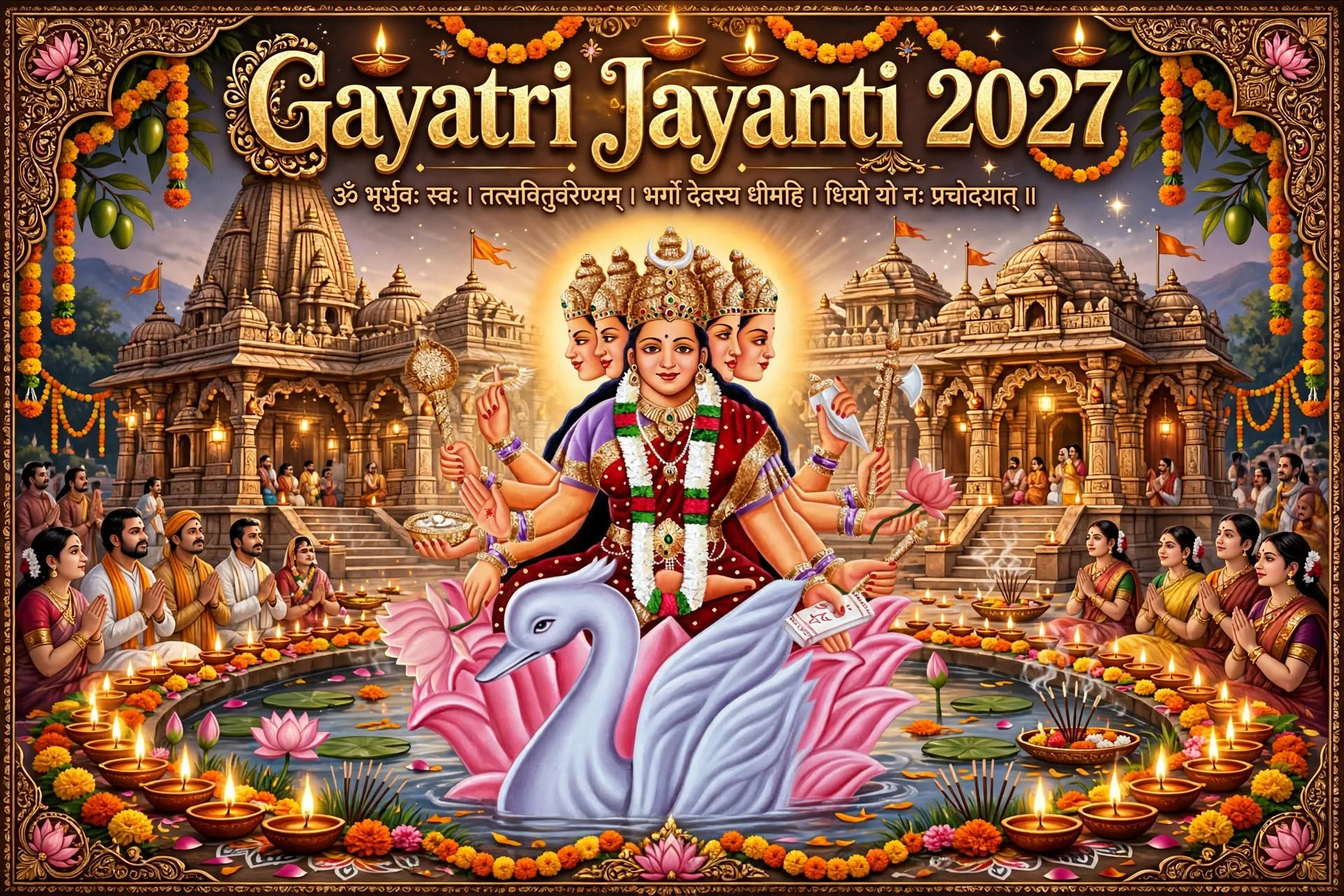
Gayatri Jayanti
Gayatri Jayanti is a sacred Hindu festival dedicated to Goddess Gayatri, revered as Ved Mata, the Mother of the Vedas. She represents divine wisdom, spiritual illumination, purity and the power of sacred knowledge. Devotees worship her as the personification of the Gayatri Mantra, one of the most revered prayers in the Vedic tradition.
View Festival Guide
Tuesday, Aug 17, 2027
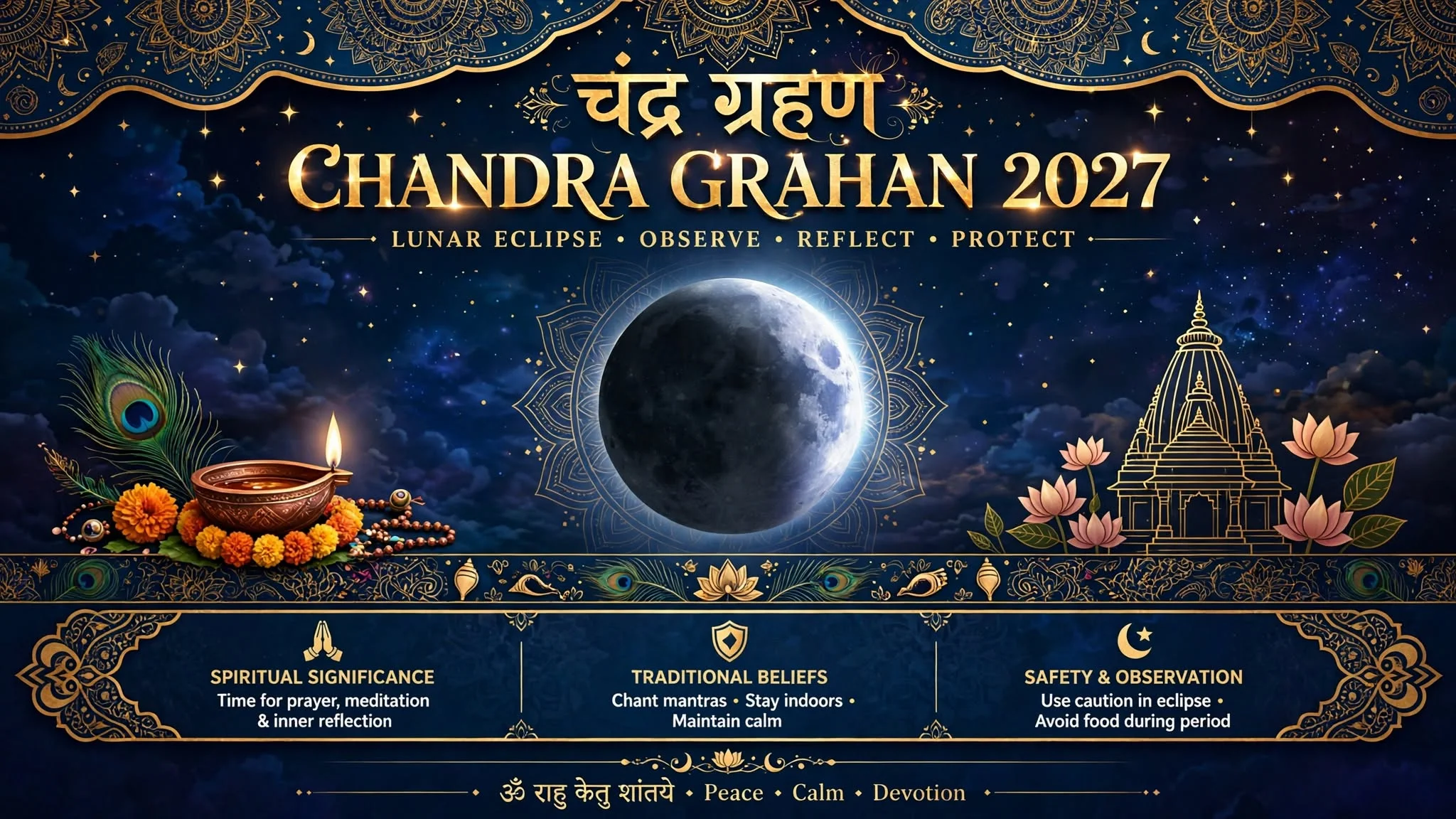
Chandra Grahan
Chandra Grahan (Lunar Eclipse) is a sacred cosmic and spiritual juncture (Parva Kaal) in Sanatana Dharma occurring exclusively on Purnima (the full moon day) when the Earth moves directly between the Sun and the Moon, casting its conical shadow across the lunar orb. In Vedic philosophy and Jyotisha, the Moon presides over the mind, subconscious emotions, and water elements (Chandrama Manaso Jatah - Rigveda Purusha Sukta). The temporary obscuration of the Moon by the shadowy nodes Rahu or Ketu induces profound subtle energetic shifts across terrestrial nature and human consciousness.
View Festival Guide
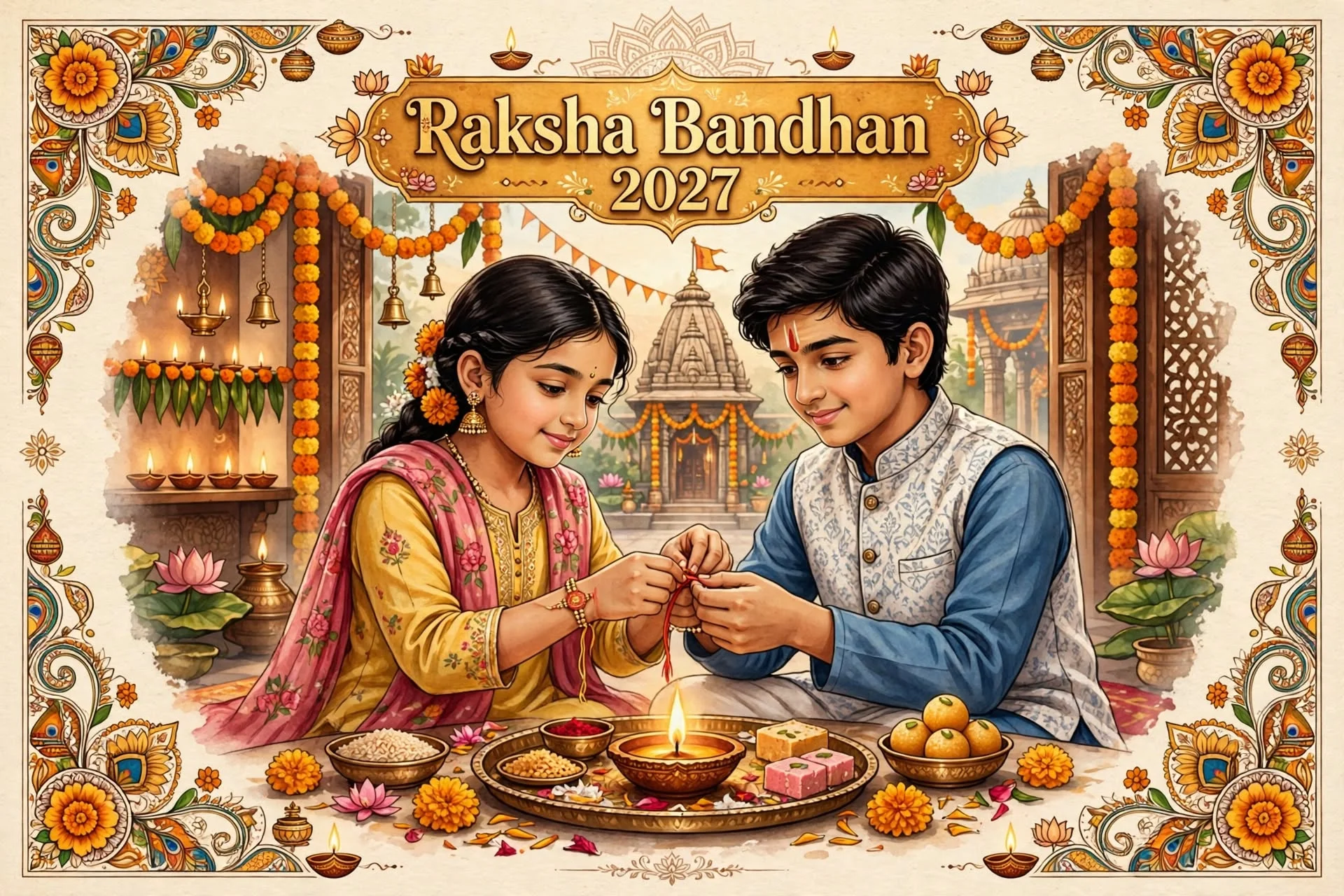
Tuesday, Aug 17, 2027
Raksha Bandhan
Raksha Bandhan, celebrated on the sacred Full Moon day (Purnima) of the holy Hindu month of Shravana, is one of the most cherished, ancient, and emotionally resonant festivals of India. Translated literally as 'the bond of protection', Raksha Bandhan honors the sacred relationship between brothers and sisters while simultaneously encapsulating broader cosmic and moral principles of mutual duty, chivalric honor, spiritual righteousness, and universal solidarity.
View Festival Guide

Wednesday, Aug 18, 2027
Ishti
Ishti is a foundational Vedic ritual observance appearing prominently in Hindu Panchangs on the Pratipada tithi (the first lunar day) following either Amavasya (new moon) or Purnima (full moon), marking the prescribed performance day for the fortnightly Vedic Darsha-Purnamasa sacrifices.
View Festival Guide
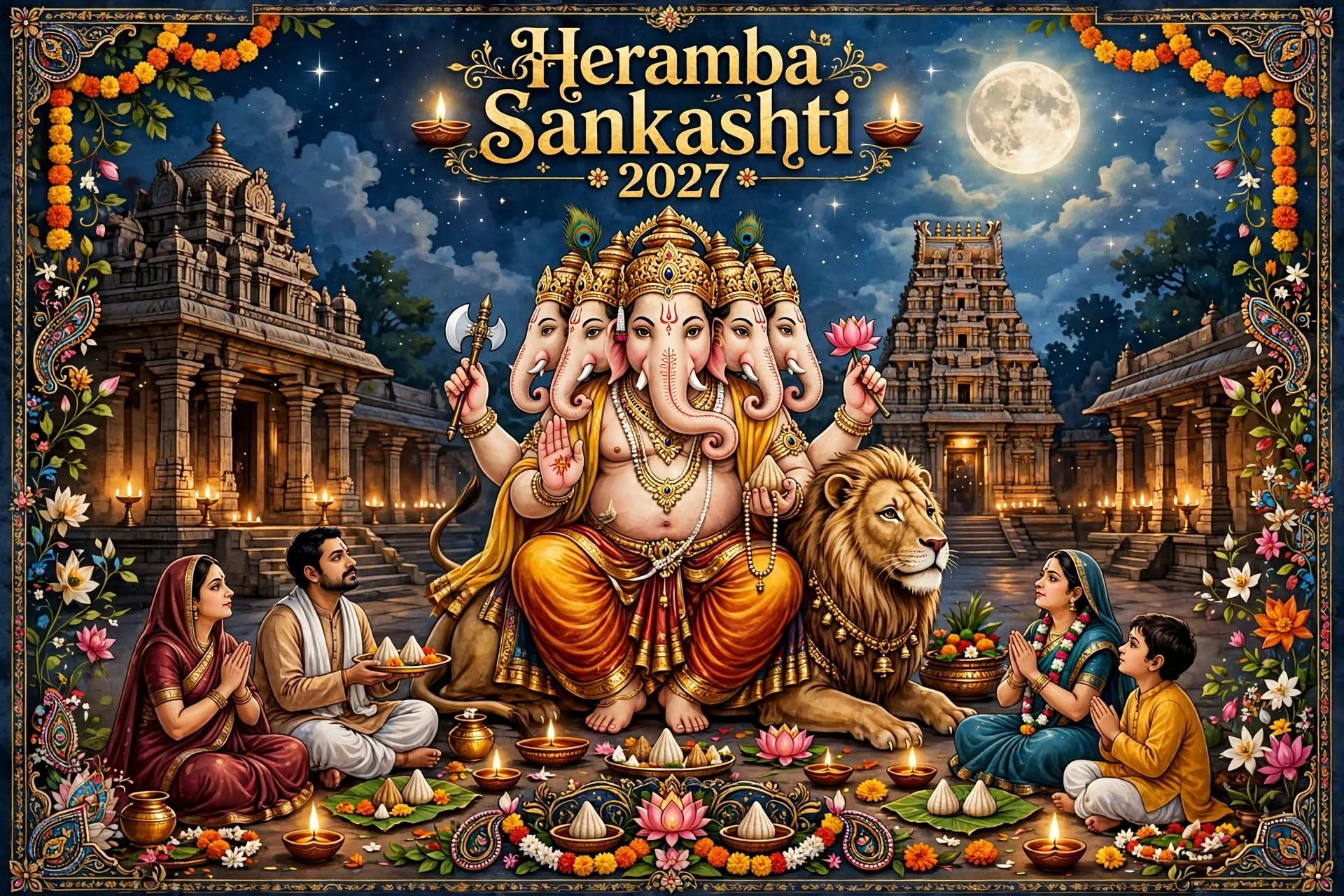
Friday, Aug 20, 2027
Heramba Sankashti
Heramba Sankashti Chaturthi, also celebrated with profound veneration as Heramba Sankashtahara Chaturthi, falls on the fourth lunar day (Chaturthi) of the Krishna Paksha (waning fortnight) in the sacred monsoon month of Bhadrapada (or Shravana in the Amanta calendar). Dedicated to Heramba Ganapati—one of the thirty-two classical iconographic forms of Lord Ganesha—this sacred day is celebrated as an extraordinary spiritual penance for overcoming seemingly insurmountable existential distress, severe financial distress, health catastrophes, and deep karmic obstacles.
View Festival Guide
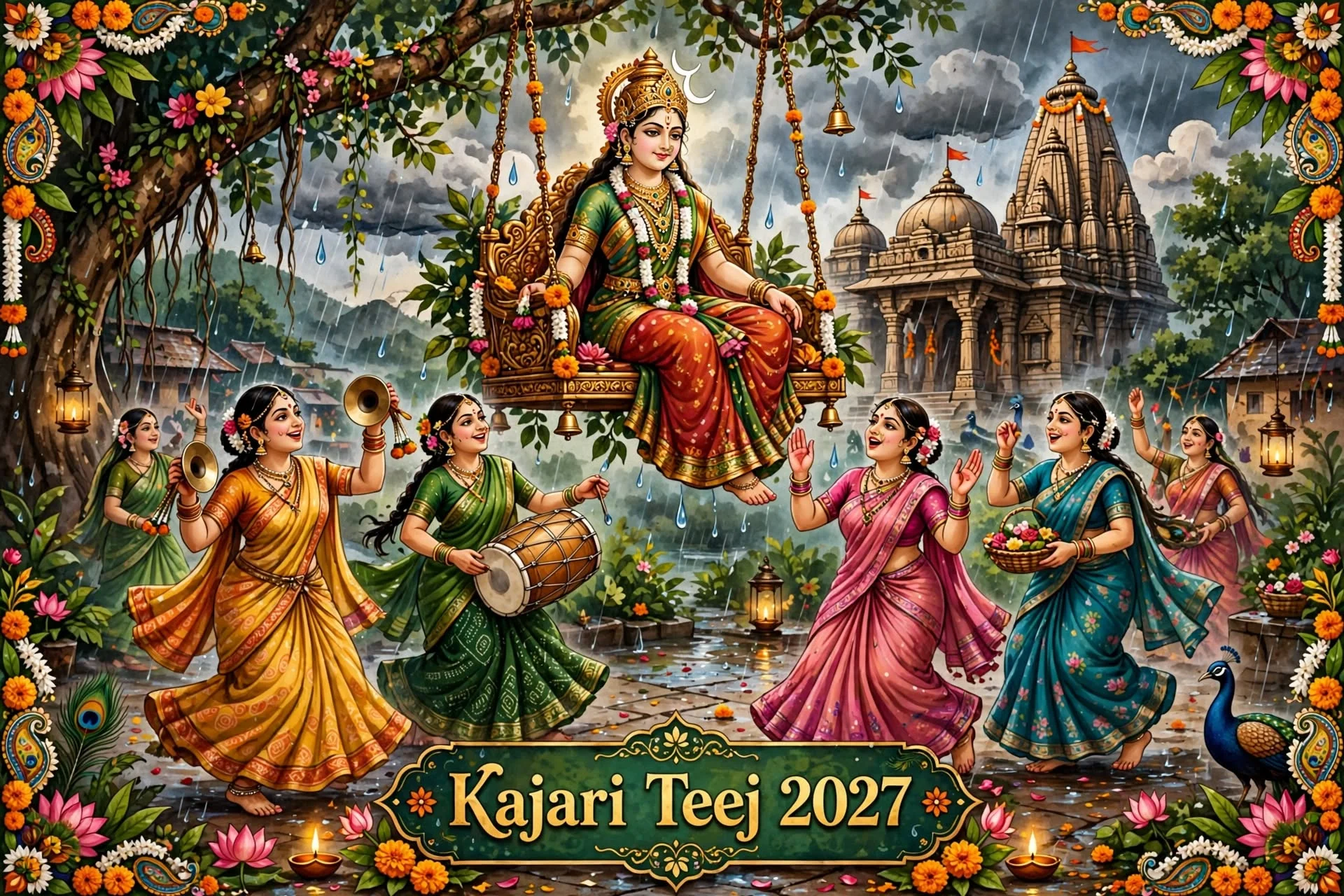
Friday, Aug 20, 2027
Kajari Teej
Kajari Teej, also reverently celebrated as Badi Teej, Satva Teej, or Kajali Teej, is one of the three principal Teej festivals in the Hindu calendar, alongside Hariyali Teej and Hartalika Teej. Falling on the Tritiya tithi (third lunar day) of the Krishna Paksha (dark waning fortnight) in the sacred monsoon month of Bhadrapada (corresponding to Shravana in the Amanta calendar scheme), this vibrant festival is dedicated to the divine union of Lord Shiva and Goddess Parvati, embodying marital fidelity, female austerity, and the lush romantic beauty of the monsoon season.
View Festival Guide