




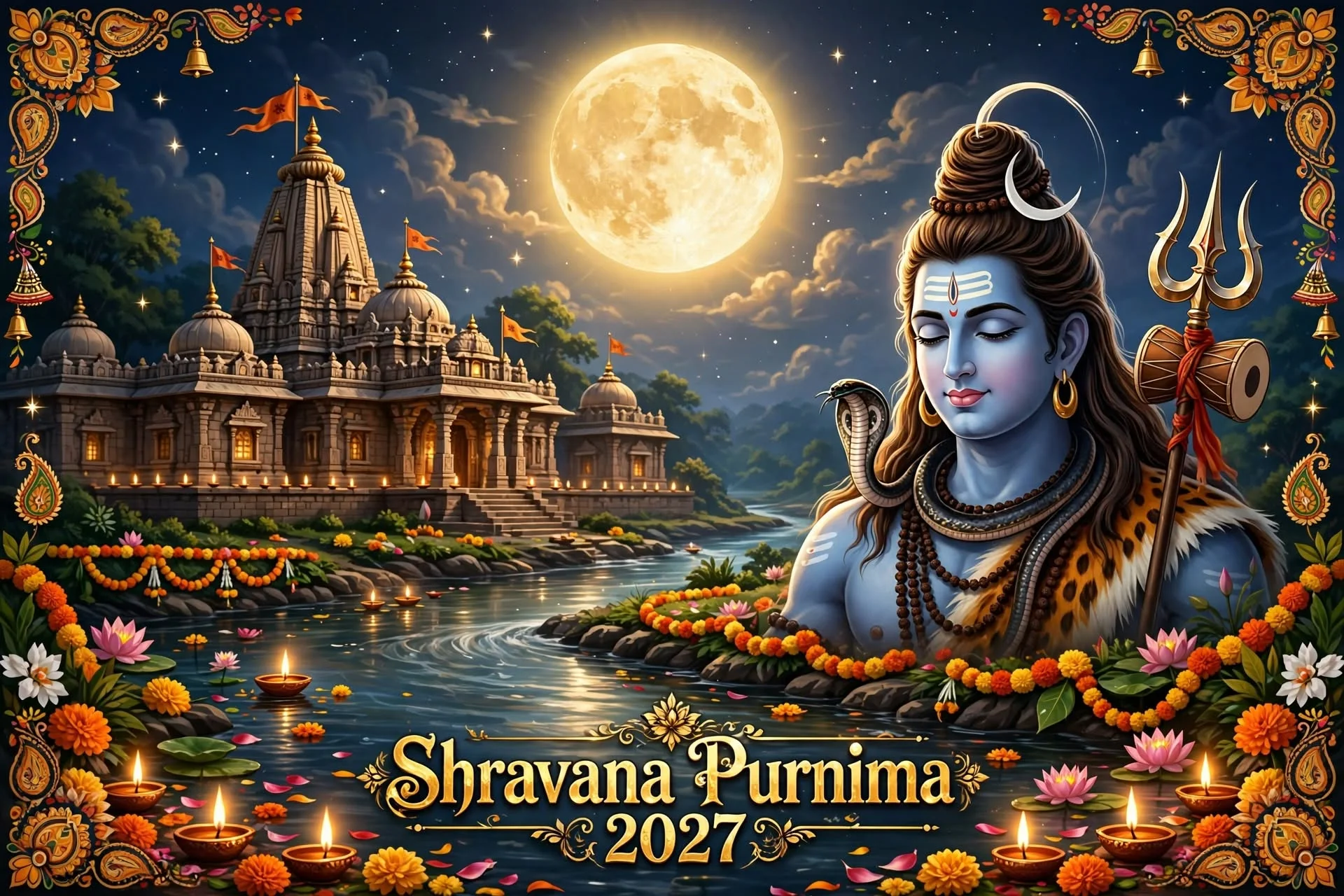
Shravana Purnima is the radiant Full Moon day of the sacred Hindu month of Shravana, representing one of the most spiritually vibrant, multifaceted, and revered junctures of the entire Hindu calendar. Illuminating the night sky during the heart of the rejuvenating monsoon, this sanctified tithi marks the confluence of numerous historic, ascetic, familial, and astronomical observances across the length and breadth of the Indian subcontinent.
Shravana Purnima 2027: Date, Puja Timings, Rituals & Stories
Shravana Purnima Timings & Panchang
Important festival dates and auspicious timings
Usha Arghya (Sunrise)
05:51 am
Sandhya Arghya (Sunset)
06:59 pm
Start Date
Tuesday, 17 Aug 2027
Puja Muhurat
10:29 am – 12:58 pm
Shravana Purnima
In the Vedic and scholarly tradition, Shravana Purnima is celebrated as Upakarma (also known as Avani Avittam in South India and Jandhyam Purnima in Andhra Pradesh and Telangana). On this day, initiates and Brahmins gather at sacred riverbanks to perform spiritual atonement (Prayashchitta), pay homage to the ancient seers through Rishi Tarpana, and renew their sacred triple thread (Yajnopavita). Concurrently, across northern, central, and western India, it is joyfully observed as Raksha Bandhan, celebrating fraternal love, mutual protection, and the chivalric duty of shielding the vulnerable.
Furthermore, Shravana Purnima holds monumental significance in major Vaishnava, Shaiva, and coastal traditions. It marks Hayagriva Jayanti—the advent of Lord Vishnu's horse-headed incarnation who rescued the sacred Vedas from the demons Madhu and Kaitabha; the historic culmination of the arduous Amarnath Yatra in Kashmir with the arrival of the holy Chhari Mubarak at the ice Shiva Lingam cave; the grand conclusion of the ecstatic Jhulan Yatra (swing festival) of Sri Sri Radha-Krishna; and Narali Purnima, where coastal fishermen offer golden coconuts to Lord Varuna to calm the turbulent monsoon seas.
Why is Shravana Purnima Celebrated?
Shravana Purnima is celebrated to commemorate the regeneration of Vedic knowledge, moral purity, spiritual oaths, and divine cosmic protection.
As the full moon culminates in the Shravana nakshatra (the asterism presided over by Lord Vishnu, symbolizing 'hearing' or the oral transmission of Vedic truth), seekers dedicate themselves to listening to scripture, atoning for intellectual lapses, and renewing their commitment to Dharma.
It simultaneously serves as a day of joyous familial bonding, agrarian gratitude, coastal communion with the ocean god Varuna, and devotional surrender to Lord Shiva and Sri Krishna.
- Performing Upakarma and Yajnopavita Dharanam for Vedic purification and intellectual rejuvenation.
- Celebrating Raksha Bandhan to affirm the sacred bond of mutual affection and protective responsibility.
- Honoring Hayagriva Jayanti to invoke divine wisdom, supreme memory, and intellectual mastery.
- Culminating the holy Amarnath Yatra with the ceremonial worship of the natural ice Shiva Lingam.
- Observing Narali Purnima along the western coastline to propitiate Varuna Deva before commencing sea voyages.
Scriptural Origins and Diverse Puranic Legends of Shravana Purnima
The Advent of Lord Hayagriva in the Brahmanda Purana
In the sacred narratives of the Brahmanda Purana and Devi Bhagavata Purana, the terrifying demons Madhu and Kaitabha arose from the cosmic ocean while Lord Vishnu was in Yoga Nidra. The demons stole the sacred four Vedas from Lord Brahma, plunging the created cosmos into spiritual blindness and chaotic darkness. Bereft of cosmic knowledge, Brahma implored the Supreme Lord for assistance.
Lord Vishnu manifested His extraordinary Hayagriva incarnation—possessing a majestic, brilliant white human body crowned with the head of a divine horse, radiating effulgence brighter than a thousand suns. Lord Hayagriva entered the netherworld, defeated the demon hordes, restored the sacred Vedas to Lord Brahma, and re-established the cosmic foundations of spiritual learning on Shravana Purnima. Ever since, this day is revered as the birthday of the Lord of Wisdom, celebrated by students, poets, and scholars.
The Ritual of Upakarma and the Saptarshi Tarpana
The Grihya Sutras and Dharma Shastras instruct that Shravana Purnima is the designated cosmic time for Upakarma—the formal commencement of Vedic study. In ancient hermitage traditions, students and sages commenced the study of Vedic hymns during the monsoon season when travel was restricted.
Before beginning new scriptural studies, initiates perform extensive expiatory rituals (Kamo-karshit Manyur-akarshit Japa) to cleanse any unintentional errors in speech, thought, or deed committed during the past year. They offer oblations of water and sesame seeds (Tarpana) to the great Saptarshis—Kashyapa, Atri, Bharadvaja, Vishwamitra, Gautama, Jamadagni, and Vashistha—and discard their old sacred thread, wearing a newly consecrated Yajnopavita.
The Holy Amarnath Cave and Lord Shiva's Eternal Discourse
The Shiva Purana and Amarnath Mahatmya recount that in the deep Himalayan cave of Amarnath, Lord Shiva revealed the supreme secret of immortality (Amar Katha) to Goddess Parvati. On the day of Shravana Purnima, the natural ice formation of the Shiva Lingam attains its complete, magnificent fullness, corresponding with the full moon.
Vedic Regeneration, Intellectual Purification, and Lunar Illumination
The Sacred Yajnopavita and the Three Debts (Rinas)
The triple strands of the sacred thread (Yajnopavita) worn over the shoulder symbolize the three primary cosmic debts owed by every human being: Deva Rina (debt to the Divine), Rishi Rina (debt to the ancient sages and teachers), and Pitri Rina (debt to ancestors and parents).
Renewing the thread on Shravana Purnima reaffirms the practitioner's lifelong commitment to spiritual study, self-discipline, and reverence for lineage.
Lord Hayagriva and Transcendental Wisdom
Lord Hayagriva represents the stainless crystal clarity of divine knowledge. The horse symbol embodies lightning-swift comprehension and the sonic reverberation of the Vedic sound syllables.
Worshiping Hayagriva on Shravana Purnima cleanses the intellect of ignorance, awakens dormant memory, and bestows proficiency in speech and sacred learning.
Riverbank Upakarma Rites, Thread Renewal, and Moonrise Offerings
Morning Riverbank Ablutions and Prayashchitta
Initiates and priests gather early at sacred riverbanks, seashores, or temple tanks. They perform purificatory ablutions with sacred clays, herbs, and cow dung, followed by the Kamo-karshit Manyur-akarshit Japa, repeating the verse 1008 times to atone for sins committed through anger and passion.
They offer libations of water and sesame seeds (Tarpana) to the Saptarshis, Devas, and Pitris.
Yajnopavita Dharana and Concluding Feasts
The new sacred cotton thread is energized with Gayatri japa and donned across the left shoulder, while the old worn thread is discarded with reverence into flowing waters.
In the evening, offerings of sweet payasam and coconuts are made to Lord Varuna and Chandra Deva under the full moon, followed by shared festive meals.
Shravana Purnima Puja Vidhi (Step by Step)
- 1
Brahma Muhurta Snana & Mahasankalpa
Wake before dawn, bathe in a sacred river or water infused with holy Ganga water, and take the solemn Mahasankalpa for spiritual renewal and Vedic study.
- 2
Pavitra Dharanam & Achamana
Wear a sacred ring of Kusha grass (Pavitram) on the right ring finger, sip water thrice with divine names, and invoke ritual purity.
- 3
Kamo-karshit Manyur-akarshit Japa
Perform the Vedic expiatory japa, repeating 1008 times the sacred verse acknowledging that passion and anger lead to human errors, purifying the subconscious mind.
- 4
Saptarshi & Deva-Rishi Tarpana
Offer sanctified libations of water mixed with black sesame seeds and akshata to the Saptarshis, ancient Vedic preceptors, and ancestral forefathers.
- 5
Nootana Yajnopavita Dharanam
Consecrate the new sacred triple-strand cotton thread with the Gayatri Mantra, don it across the left shoulder, and let it rest on the right waist.
Shravana Purnima Puja Samagri List
Upakarma and Thread Consecration Essentials
- New triple-strand hand-spun cotton sacred threads (Yajnopavita / Poonal)
- Kusha grass rings (Pavitram) and holy Kusha grass blades
- Black sesame seeds (Krishna Tila) and unbroken white raw rice (Akshata)
- Brass or copper Panchapatra, Achamani spoon, and Tarpana vessel
- Pure Malayagiri white sandalwood paste and sacred Bhasma / Vibhuti
Hayagriva Puja and Floral Articles
- Idol or image of Lord Hayagriva or Shaligram Shila
- Handcrafted garland of whole green cardamom pods (Elaichi Mala)
- Fresh white lotus blossoms, white jasmine strings, and Tulsi leaves
- Pure cow milk, curd, honey, ghee, and rock sugar for Abhishekam
- Brass cow-ghee lamp, cotton wicks, and natural camphor
Varuna and Chandra Offerings
- Whole unbroken coconuts painted with turmeric and vermilion (for Narali Purnima)
- Sweet rice pudding (Payasam) prepared with milk, rice, and jaggery
- Silver or brass conch (Shankha) for offering milk Arghya to the Full Moon
- Traditional sweet coconut rice (Narali Bhaat)
Mantras and Prayers for Shravana Purnima
Shravana Purnima Vrat Rules and Fasting Guidelines
Upakarma Protocol and Fasting Guidelines
Initiates performing Upakarma maintain a strict fast from sunrise until all expiatory rites, Tarpana, and sacred thread changes are completed. Devotees observing Satyanarayana Vrata fast until the evening moonrise.
- Perform thread renewal strictly during auspicious daytime muhurtas.
- Chant the Gayatri Mantra at least 108 or 1008 times after wearing the new thread.
- Immerse the old sacred thread with utmost reverence into natural flowing waters.
- Total abstinence from non-vegetarian food, alcohol, onions, and garlic.
Lunar Contemplation and Purity
Spend the evening under the full moon engaged in peaceful scriptural recitation, chanting, and meditation, avoiding noisy secular distractions.
Dos and Don'ts of Shravana Purnima
Good Practices (Do's)
- Take a purifying bath early in the morning and take a solemn vow of righteousness.
- Change the sacred Yajnopavita thread following the full Vedic scriptural procedure.
- Recite the Gayatri Mantra and Hayagriva Stotram with concentrated devotion.
- Offer Arghya to Chandra Deva at moonrise using milk and pure water.
- Distribute food, clothes, and financial dakshina to Vedic scholars and the poor.
Shravana Purnima Across Regions
| Region | Local Name |
|---|---|
| Tamil Nadu & Kerala | Avani Avittam |
| Andhra Pradesh & Telangana | Jandhyam Purnima |
| Maharashtra & Konkan Coast | Narali Purnima |
| Odisha | Gamha Purnima |
Shravana Purnima FAQs
Why is Shravana Purnima called Avani Avittam in South India?
In the Tamil solar calendar, the month of Shravana corresponds to Avani, and the full moon day (or the day when the moon is in the asterism of Avittam / Shravana) is when the community observes Upakarma; hence it is termed Avani Avittam.
What is the spiritual significance of the triple strands of the Yajnopavita?
The three strands symbolize the three fundamental debts (Rinas) owed by every human being: Deva Rina (debt to God), Rishi Rina (debt to the sages/teachers), and Pitri Rina (debt to ancestors and parents).
Who is Lord Hayagriva, and why is He worshiped on this day?
Lord Hayagriva is the horse-headed incarnation of Lord Vishnu who defeated the demons Madhu and Kaitabha and rescued the stolen Vedas, restoring divine wisdom to the cosmos. His advent anniversary is celebrated on Shravana Purnima.
Upcoming Festivals
View All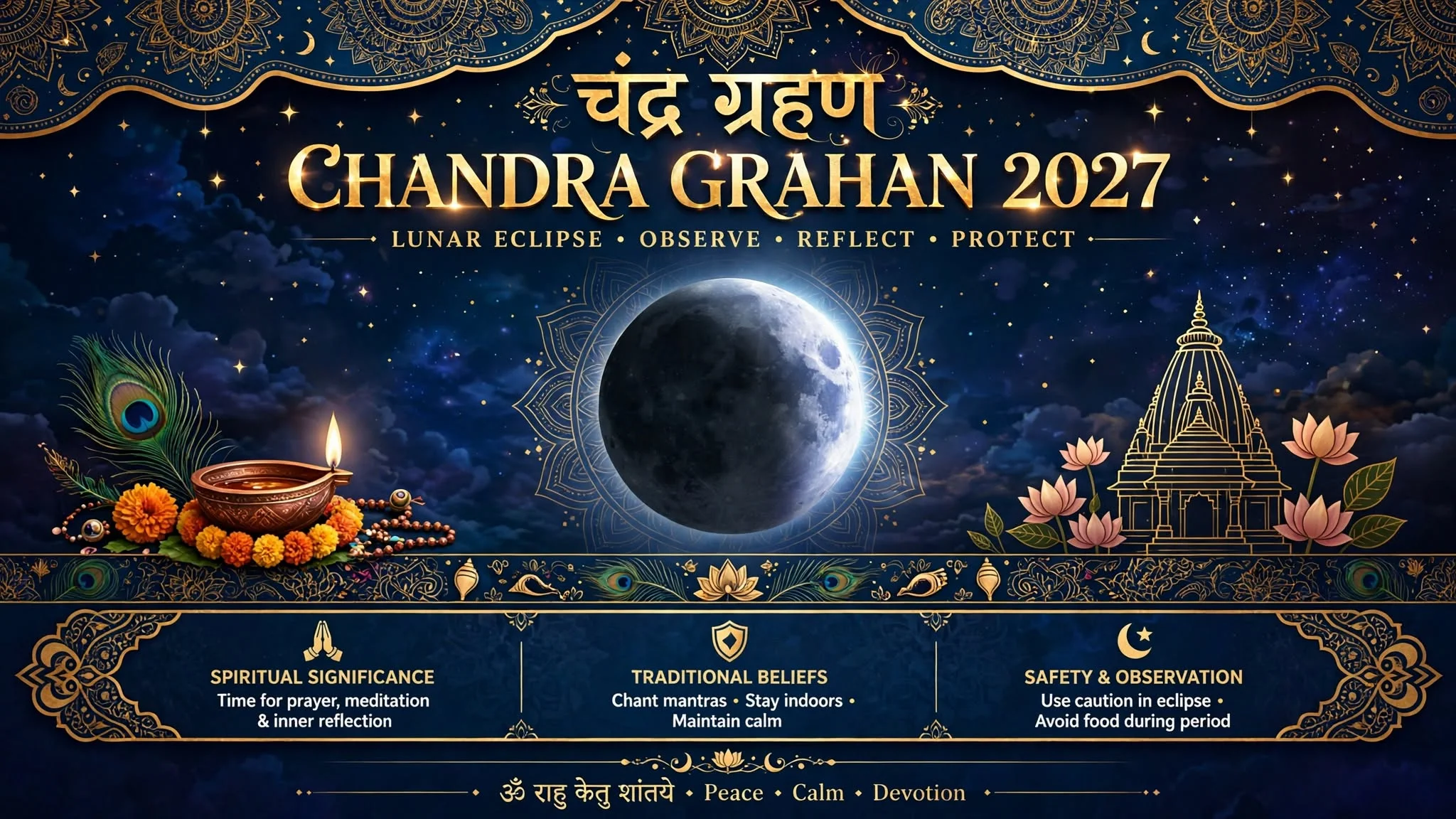
Tuesday, Aug 17, 2027
Chandra Grahan
Chandra Grahan (Lunar Eclipse) is a sacred cosmic and spiritual juncture (Parva Kaal) in Sanatana Dharma occurring exclusively on Purnima (the full moon day) when the Earth moves directly between the Sun and the Moon, casting its conical shadow across the lunar orb. In Vedic philosophy and Jyotisha, the Moon presides over the mind, subconscious emotions, and water elements (Chandrama Manaso Jatah - Rigveda Purusha Sukta). The temporary obscuration of the Moon by the shadowy nodes Rahu or Ketu induces profound subtle energetic shifts across terrestrial nature and human consciousness.
View Festival Guide

Tuesday, Aug 17, 2027
Anvadhan
Anvadhan (अन्वाधान) is an ancient, highly revered Vedic ritual and spiritual observance in Sanatana Dharma performed on the day immediately preceding the New Moon (Amavasya) or Full Moon (Purnima). Rooted in the pristine traditions of the Shrauta and Grihya Sutras, Anvadhan literally translates to 'the solemn placing and replenishment of sacred fuel wood into the consecrated Vedic fires'. In traditional Vedic ritualism, householders (Grihasthas) and priests who maintain the sacred Agnihotra fires perform Anvadhan to prepare the sacrificial altars for the grand Darsha Yajna (New Moon sacrifice) or Paurnamasa Yajna (Full Moon sacrifice) scheduled for the following day.
View Festival Guide
Tuesday, Aug 17, 2027
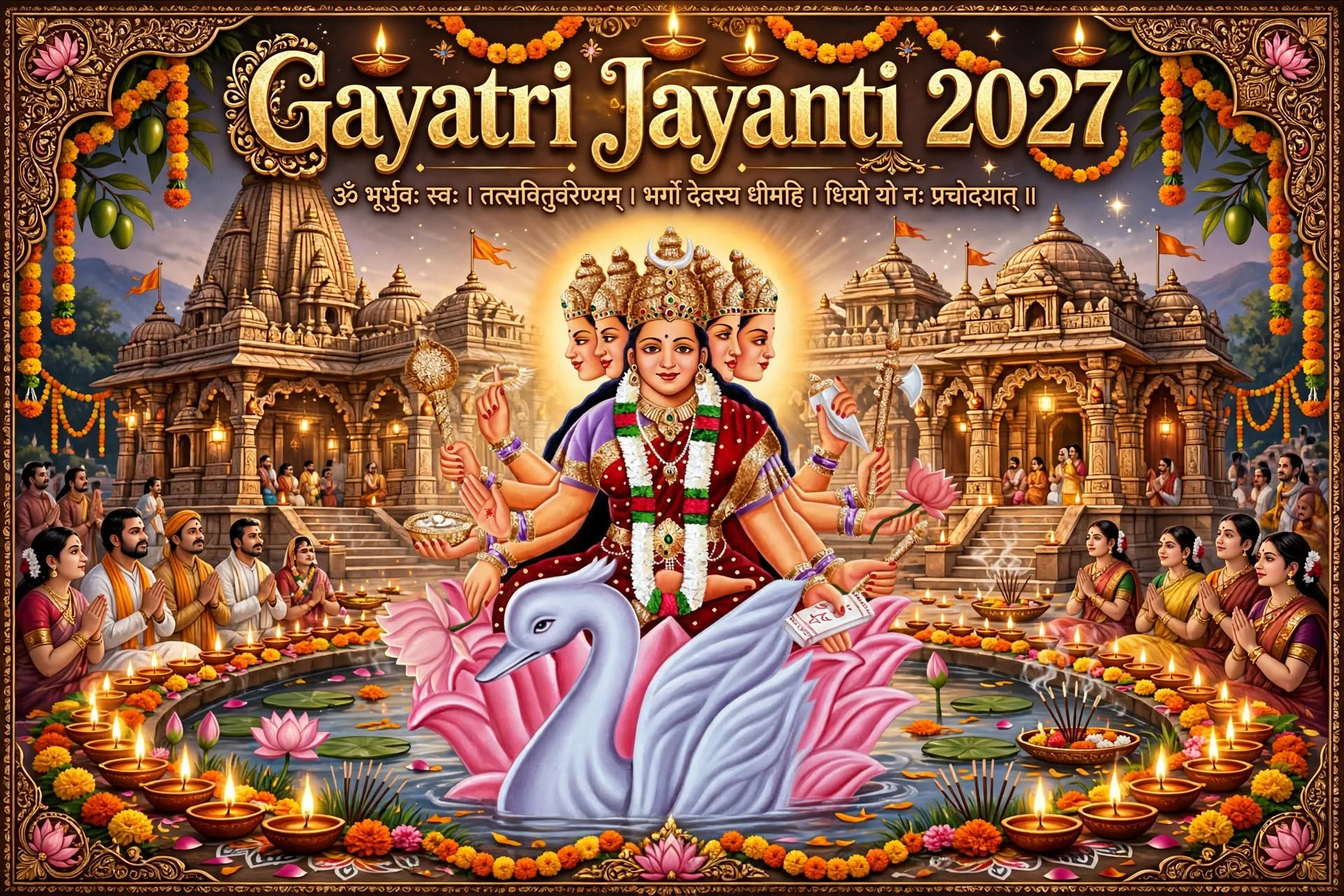
Gayatri Jayanti
Gayatri Jayanti is a sacred Hindu festival dedicated to Goddess Gayatri, revered as Ved Mata, the Mother of the Vedas. She represents divine wisdom, spiritual illumination, purity and the power of sacred knowledge. Devotees worship her as the personification of the Gayatri Mantra, one of the most revered prayers in the Vedic tradition.
View Festival Guide
Tuesday, Aug 17, 2027
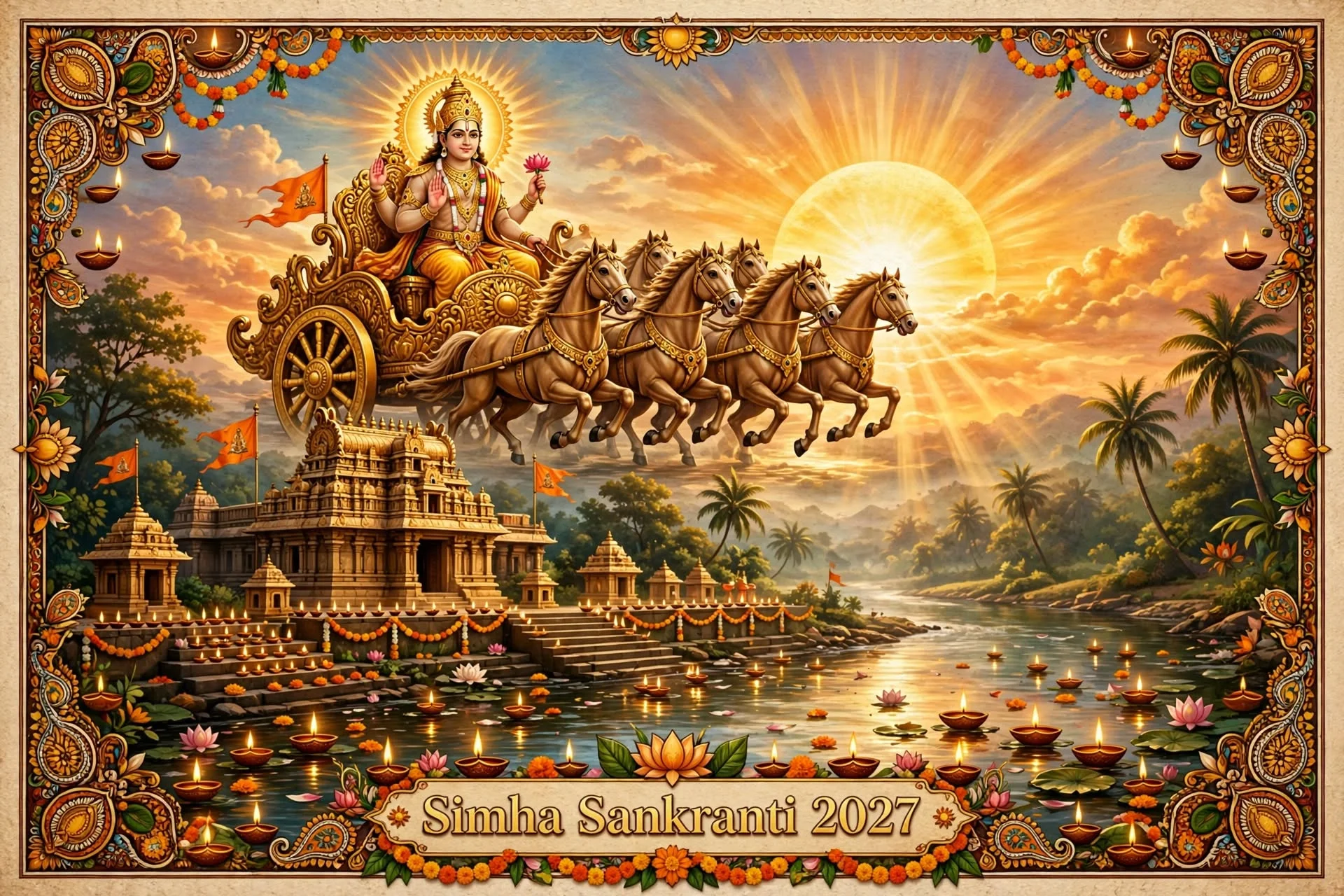
Simha Sankranti
Simha Sankranti marks the momentous astronomical and astrological transit (Sankramana) when Surya Deva, the radiant Sun God, enters the regal zodiac sign of Simha (Leo). In Vedic astrology, Simha is the Sun's own moolatrikona and swakshetra (domicile sign), making this celestial ingress exceptionally powerful, revitalizing, and spiritually auspicious. Occurring in mid-August in the traditional solar calendar, Simha Sankranti inaugurates the solar month of Simha (known as Chingam in Kerala and Bhadra / Avani in other solar calendars).
View Festival Guide
Tuesday, Aug 17, 2027
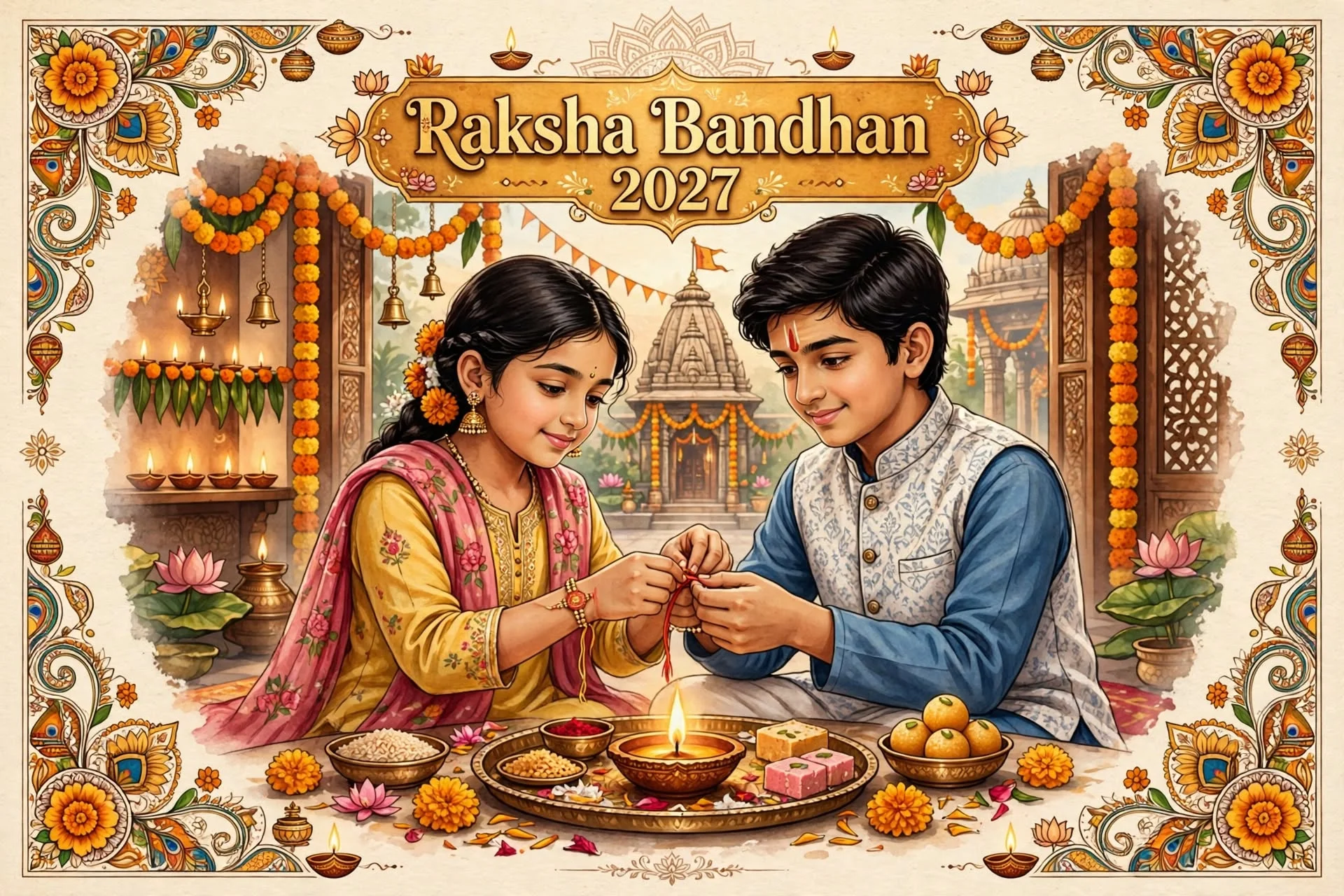
Raksha Bandhan
Raksha Bandhan, celebrated on the sacred Full Moon day (Purnima) of the holy Hindu month of Shravana, is one of the most cherished, ancient, and emotionally resonant festivals of India. Translated literally as 'the bond of protection', Raksha Bandhan honors the sacred relationship between brothers and sisters while simultaneously encapsulating broader cosmic and moral principles of mutual duty, chivalric honor, spiritual righteousness, and universal solidarity.
View Festival Guide

Wednesday, Aug 18, 2027
Ishti
Ishti is a foundational Vedic ritual observance appearing prominently in Hindu Panchangs on the Pratipada tithi (the first lunar day) following either Amavasya (new moon) or Purnima (full moon), marking the prescribed performance day for the fortnightly Vedic Darsha-Purnamasa sacrifices.
View Festival Guide
Friday, Aug 20, 2027
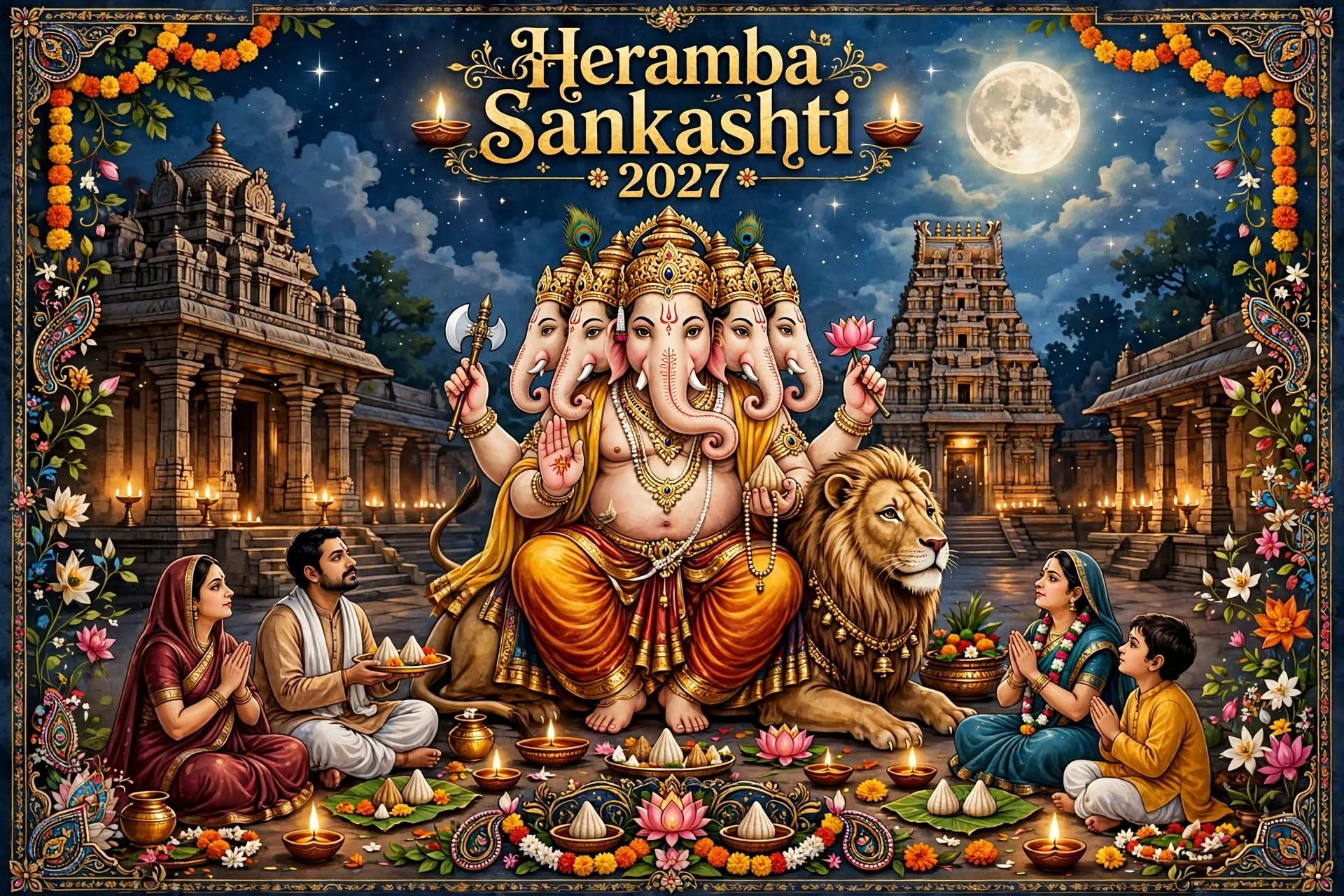
Heramba Sankashti
Heramba Sankashti Chaturthi, also celebrated with profound veneration as Heramba Sankashtahara Chaturthi, falls on the fourth lunar day (Chaturthi) of the Krishna Paksha (waning fortnight) in the sacred monsoon month of Bhadrapada (or Shravana in the Amanta calendar). Dedicated to Heramba Ganapati—one of the thirty-two classical iconographic forms of Lord Ganesha—this sacred day is celebrated as an extraordinary spiritual penance for overcoming seemingly insurmountable existential distress, severe financial distress, health catastrophes, and deep karmic obstacles.
View Festival Guide
Friday, Aug 20, 2027
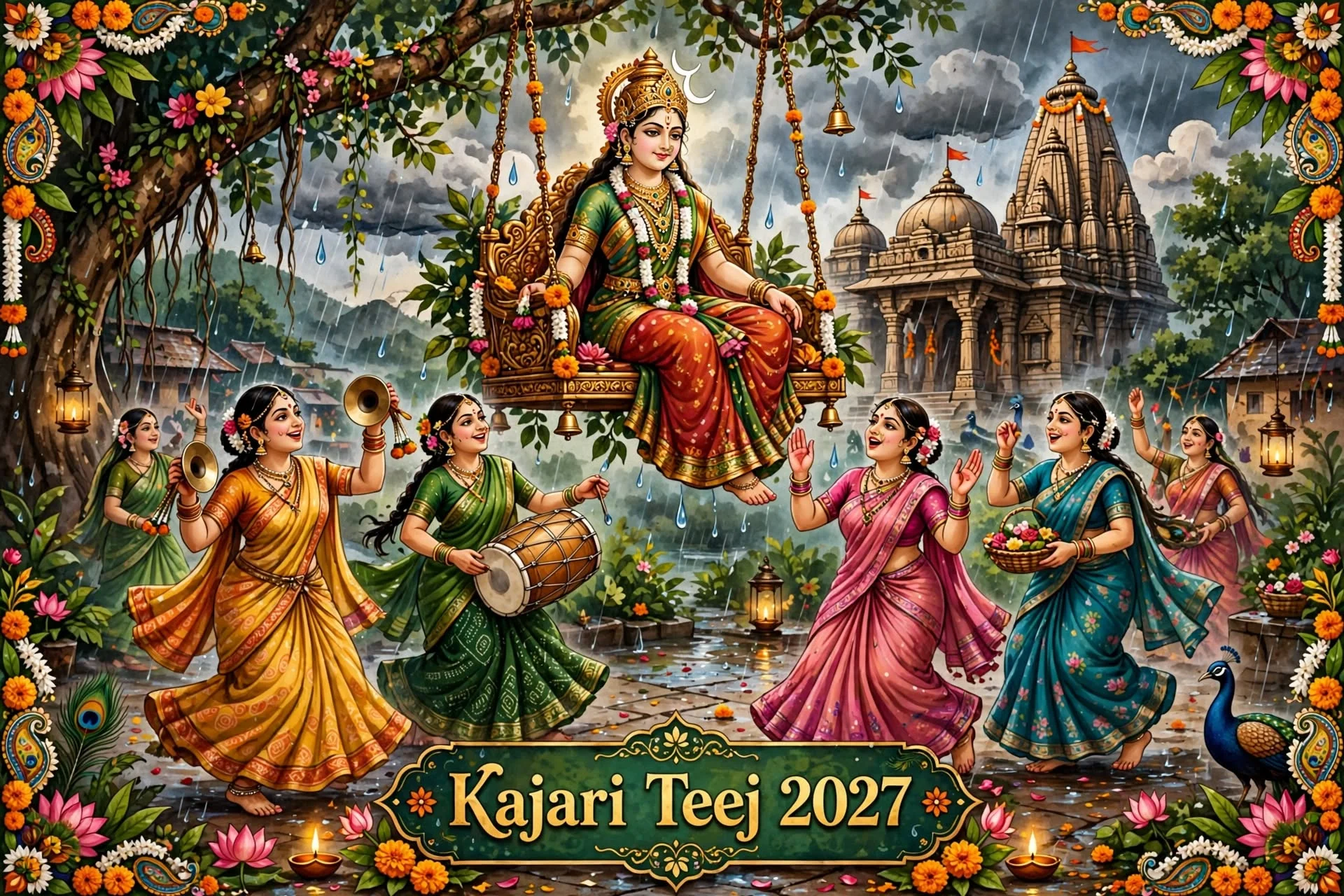
Kajari Teej
Kajari Teej, also reverently celebrated as Badi Teej, Satva Teej, or Kajali Teej, is one of the three principal Teej festivals in the Hindu calendar, alongside Hariyali Teej and Hartalika Teej. Falling on the Tritiya tithi (third lunar day) of the Krishna Paksha (dark waning fortnight) in the sacred monsoon month of Bhadrapada (corresponding to Shravana in the Amanta calendar scheme), this vibrant festival is dedicated to the divine union of Lord Shiva and Goddess Parvati, embodying marital fidelity, female austerity, and the lush romantic beauty of the monsoon season.
View Festival Guide