




Chandra Grahan (Lunar Eclipse) is a sacred cosmic and spiritual juncture (Parva Kaal) in Sanatana Dharma occurring exclusively on Purnima (the full moon day) when the Earth moves directly between the Sun and the Moon, casting its conical shadow across the lunar orb. In Vedic philosophy and Jyotisha, the Moon presides over the mind, subconscious emotions, and water elements (Chandrama Manaso Jatah - Rigveda Purusha Sukta). The temporary obscuration of the Moon by the shadowy nodes Rahu or Ketu induces profound subtle energetic shifts across terrestrial nature and human consciousness.
Chandra Grahan 2027: Date, Puja Timings, Rituals & Stories
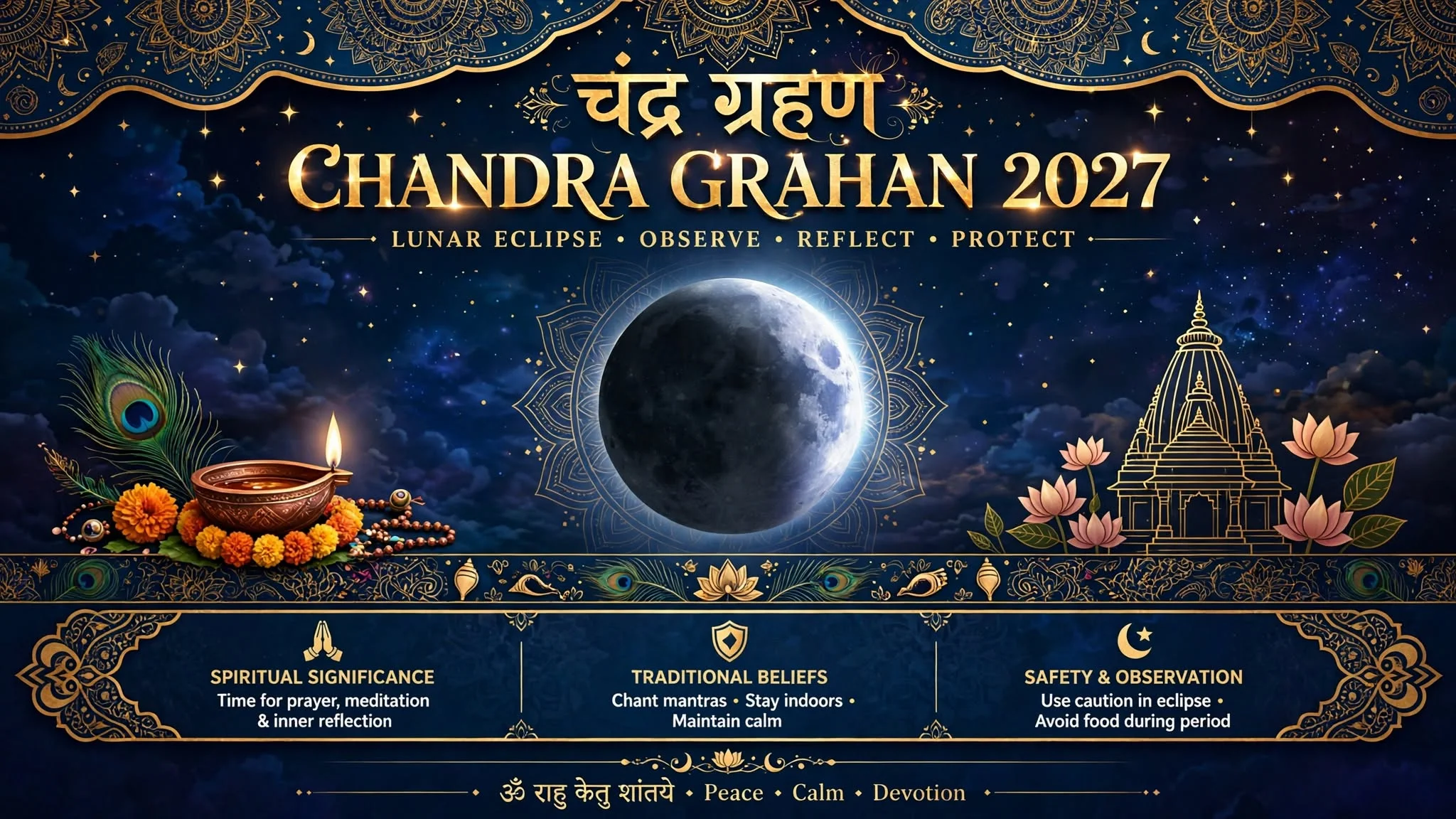
Chandra Grahan Timings & Panchang
Important festival dates and auspicious timings
Usha Arghya (Sunrise)
05:51 am
Sandhya Arghya (Sunset)
06:59 pm
Start Date
Tuesday, 17 Aug 2027
Puja Muhurat
10:29 am – 12:58 pm
Chandra Grahan
Far from being an occasion for fear or idle leisure, Vedic tradition institutes this celestial alignment as an elevated period for deep introspection, strict penance, and inward spiritual sadhana. The period preceding the eclipse, known as Sutak Kaal, commences three Prahars (approximately 9 hours) prior to the moment of eclipse contact (Sparsha). During this time, cooking, dining, and physical temple idol worship are suspended, while sacred Kusha (Darbha) grass is placed over potable water and stored foodstuffs to shield them against subtle negative radiation.
Devotees dedicate the entire duration of the eclipse to uninterrupted mantra japa, particularly the Mahamrityunjaya Mantra, Chandra Beej Mantra, and Shiva Panchakshari. Scriptural texts like the Skanda Purana and Kurma Purana declare that spiritual merits of japa, dhyana, and charity performed during Grahan are multiplied millions of times compared to normal days, granting fast karmic purification.
Following the culmination (Moksha) of the eclipse, ritual cleansing (Moksha Snana) is performed, homes are sanctified with holy Gangajal, and generous charity (Dana) of white sesame, rice, milk, silver, and clothing is distributed to attain liberation from afflictions and harmonize mental serenity.
Why is Chandra Grahan Celebrated?
Chandra Grahan is observed as an exalted Parva Kaal (sacred cosmic event) instituted through Vedic and Puranic revelation to purify individual consciousness and honor the cosmic balance between light and shadow.
The Puranas recount that during the churning of the cosmic ocean (Samudra Manthan), Lord Vishnu assumed the Mohini Avatar to distribute the divine nectar of immortality (Amrita) to the Devas. The Asura Svarbhanu disguised himself and sat between Surya and Chandra to ingest the nectar. Exposed by the Sun and Moon, Lord Vishnu severed his throat with the Sudarshana Chakra, splitting him into Rahu (the head) and Ketu (the tail). Their periodic confrontation with the luminaries manifests as eclipses.
Observing vows, spiritual bathing, continuous mantra recitation, and charitable offerings during Chandra Grahan neutralizes malefic planetary influences, purges accumulated negative karmas, and invokes the supreme grace of Lord Shiva—who holds the crescent moon upon His crest—and Lord Vishnu.
Scriptural Chronicles and Astronomical Foundations of Chandra Grahan
The Samudra Manthan Lore and the Creation of Rahu and Ketu
The foundational theological chronicle of eclipses is recorded in the Srimad Bhagavatam (Canto 8, Chapters 9-10), the Vishnu Purana (Book 1, Chapter 9), and the Mahabharata (Adi Parva). During the cosmic churning of the Milk Ocean (Ksheera Sagara) by Devas and Asuras, Kamadhenu, Kalpavriksha, Goddess Lakshmi, and divine physician Dhanvantari bearing the urn of Amrita emerged.
To safeguard the cosmic order, Lord Vishnu assumed the enchanting form of Mohini and distributed the nectar exclusively to the Devas. The astute Asura Svarbhanu disguised himself as a celestial god and seated himself between Surya Deva and Chandra Deva. As Svarbhanu took a drop of Amrita, Surya and Chandra discerned his deceptive identity and alerted Mohini. Instantly, Lord Vishnu dispatched the Sudarshana Chakra, severing Svarbhanu's head.
Because the immortal nectar had touched his throat, both severed portions remained endowed with eternal life. Lord Brahma assigned the head as the shadowy node Rahu and the serpentine torso as Ketu. Bearing an enduring enmity toward the celestial luminaries, Rahu and Ketu periodically engulf Surya and Chandra during precise astronomical alignments. However, as Rahu has a severed neck, the celestial body emerges safely, symbolizing the eternal triumph of cosmic righteousness over dark forces.
Vedic Astronomical Insight in Surya Siddhanta and Brihat Samhita
Centuries prior to modern astronomical formulations, ancient Indian rishis established mathematically exact treatises on lunar eclipses. In the Surya Siddhanta (Chapter 4, Grahana Adhikara) and Acharya Varahamihira's Brihat Samhita (Chapter 5, Rahu Chara), the physical reality of Chandra Grahan is expounded with scientific precision alongside metaphysical significance.
Varahamihira explicitly recorded that a lunar eclipse is not caused by a mythological demon swallowing the physical orb, but occurs when the Moon enters the dark conical shadow of the Earth (Bha-chchhaya) while in direct opposition to the Sun at Purnima near the lunar nodes. The ancient seers recognized that the intense gravitational and electromagnetic interactions between the Sun, Earth, and Moon exert profound bio-energetic effects on terrestrial water bodies, human physiology, cellular fluids, and mental states, establishing specific behavioral and spiritual disciplines during the event.
Metaphysical and Subtle Dimensions of Chandra Grahan
Harmonization of the Mind and Emotional Equilibrium (Manas Tattva)
The Rigveda (Purusha Sukta: 'Chandrama Manaso Jatah') establishes that the Moon is the presiding deity of the human mind, emotions, and subtle psychological currents. During Chandra Grahan, the obscuration of lunar radiance disrupts the subtle electromagnetic and pranic flows governing the mental faculty.
Ancient rishis observed that agitated or negative thoughts multiply rapidly during this juncture if left unrestrained. Conversely, dedicating this period to silent contemplation, meditation, and continuous Japa channels this high-energy field inward, transforming potential emotional turbulence into profound meditative absorption and spiritual illumination.
Exponential Multiplication of Mantra Siddhi (Mantra Chaitanya)
The Skanda Purana, Kurma Purana, and Devi Bhagavata Purana proclaim that during an eclipse, the spiritual efficacy of any mantra initiated or recited is magnified a hundred thousand to a million times. It is revered as a golden window for aspirants to awaken the dormant potency (Chaitanya) of their Guru Mantra, Gayatri Mantra, or Ishta Devata Mantra.
Japa performed while sitting peacefully upon an insulated Kusha grass mat or standing in sacred waters during the eclipse period yields immediate spiritual merit, dissolving deep-rooted karmic blocks and accelerating inner evolution.
Purification through Triple Snana (Sparsha, Madhya, and Moksha Snana)
Vedic tradition institutes three primary ritual baths during an eclipse: Sparsha Snana (taken at the moment the eclipse touches the lunar disc), Madhya Snana (at the midpoint of maximum obscuration), and Moksha Snana (taken immediately upon total release).
Water, being chemically and astrologically linked to the Moon (Soma), acts as an energetic conduit. Performing snana with cold sanctified water mixed with Gangajal, Kusha grass, and Tulsi leaves cleanses the aura, resets circadian rhythms, and removes environmental impurities accumulated during the shadow phase.
Ritual Protocol and Traditional Conduct for Chandra Grahan
Observance of Sutak Kaal (Pre-Eclipse Inauspicious Window)
Sutak Kaal for Chandra Grahan commences 3 Prahars (approximately 9 hours) prior to the eclipse contact time (Sparsha Kaal). During Sutak, cooked meals are neither prepared nor consumed by healthy adults, with compassionate exceptions granted to children, the elderly, pregnant women, and patients.
Hindu temples close their sanctum sanctorum doors, and physical touching of murtis is strictly halted. Devotees preserve foodstuffs with Darbha grass and direct their focus toward mental prayers and scriptural reading.
Contemplative Sadhana and Japa during Parva Kaal
From the exact moment of eclipse contact (Sparsha) through maximum coverage (Madhya) to total separation (Moksha), devotees maintain strict physical silence (Mauna) or vocal chanting.
Practitioners sit on an insulated wool or Kusha mat facing North or East, chanting the Mahamrityunjaya Mantra, Shiva Panchakshara Stotra, Vishnu Sahasranama, or the Chandra Beej Mantra. No external cooking, eating, drinking, sleeping, or sensual indulgence is undertaken.
Safeguarding Expectant Mothers (Garbhavati Niyama)
Expectant mothers are advised to remain indoors throughout the eclipse duration in a peaceful, sattvic atmosphere. They should refrain from using sharp instruments like knives, scissors, or needles, and avoid bending or gazing at the eclipsed moon.
Chanting the Santana Gopala Mantra or listening to elevating Vedic recitations promotes calmness, health, and auspicious energy for both the mother and the unborn child.
Moksha Snana, Home Shuddhi, and Sacred Dana
Immediately after the eclipse concludes (Moksha), all householders take a complete purificatory head bath (Moksha Snana) wearing their existing clothes, which are subsequently washed or donated.
Chandra Grahan Puja Vidhi (Step by Step)
- 1
Preparation and Kusha Placement Before Sutak
Before the onset of Sutak Kaal (9 hours before eclipse contact), bathe in fresh water and place freshly plucked blades of sacred Kusha (Darbha) grass or Tulsi leaves on all vessels containing potable water, milk, curd, and grain containers to preserve their sattvic purity.
- 2
Securing the Home Mandir and Altar
Clean the puja altar thoroughly before Sutak. Light an oil or ghee lamp, offer incense and namaskara, and draw the sacred curtains or close the mandir doors. Physical touching of deities and ritual offerings of flowers or water are strictly suspended during the eclipse.
- 3
Sparsha Snana (Initial Contact Bath)
At the exact astronomical moment when the lunar eclipse touches the Moon (Sparsha Kaal), take a head-to-toe purificatory bath using fresh water mixed with holy Gangajal, reciting: 'Gange Cha Yamune Chaiva Godavari Saraswati Narmade Sindhu Kaveri Jalesmin Sannidhim Kuru'.
- 4
Asana Shuddhi and Sacred Seating
Don clean, unstitched or freshly washed cotton clothes (preferably white or pale yellow). Spread a Kusha grass mat or pure wool blanket on the floor, facing towards the North (Uttara) or East (Purva), and perform Asana Shuddhi to consecrate your seated posture.
Chandra Grahan Puja Samagri List
Purification and Protection Items
Botanical and water sanctification essentials used before and during the eclipse window.
- Sacred Kusha (Darbha) grass bundle to place over water, milk, and food containers
- Pure Gangajal bottle for mixing into bathing water and house purification
- Fresh Tulsi leaves plucked before Sutak for safeguarding dairy and foodstuffs
Sadhana and Japa Essentials
Sacred implements required for concentrated mantra meditation and seated spiritual practice.
- Kusha grass mat or thick wool asana for non-conductive energetic seating
- Sphatik (crystal) or Rudraksha rosary (108 beads) for japa counting
- White sandalwood paste (Shweta Chandan) for cooling tilak after Moksha snana
Moksha Puja and Dana (Charity) Items
Specific sattvic items, food grains, and metals distributed to seekers and Brahmins following eclipse culmination.
- Pure Desi cow ghee and cotton wicks for lighting the post-eclipse altar lamp
- Raw white rice (Akshata) - 2 kg and white sesame seeds (Safed Til) - 250 grams
- Pure cow milk and sugar / Batashe for Chandra Arghya and charity
- Silver coin or small silver token symbolizing Chandra Tattva (optional but highly auspicious)
Mantras and Prayers for Chandra Grahan
Chandra Grahan Vrat Rules and Fasting Guidelines
Sutak Fasting Regulations
Sutak rules for Chandra Grahan come into force three Prahars (9 hours) prior to the eclipse touch:
- Healthy adults must abstain from cooking, dining, or drinking liquids from Sutak onset until total eclipse Moksha.
- Pregnant women, young children, senior citizens, and patients under medication are exempt from rigorous waterless fasting.
- Temple doors must remain closed and home shrines shielded with cloth curtains without physical contact with deities.
- Place fresh blades of Kusha grass or Tulsi leaves on all drinking water and milk reserves before Sutak begins.
Conduct During the Eclipse (Parva Kaal)
During the active eclipse hours from Sparsha to Moksha, rigorous sattvic discipline is maintained:
- Devotees must avoid sleeping, reclining idly, or indulging in sensory entertainments.
- Maintain complete silence (Mauna) or vocal chanting of holy mantras on an insulated woolen or Kusha mat.
- Expectant mothers should rest peacefully indoors and avoid using sharp instruments like knives or scissors.
- No auspicious mundane undertakings like housewarmings, weddings, or business agreements should be initiated.
Culmination and Purification (Moksha Rites)
Following the total release of the lunar eclipse, precise purificatory rites must be conducted:
Dos and Don'ts of Chandra Grahan
Good Practices (Do's)
- Place sacred Kusha (Darbha) grass or Tulsi leaves on all drinking water, milk, and foodstuffs before Sutak begins.
- Engage in uninterrupted Japa of the Mahamrityunjaya Mantra, Chandra Beej Mantra, or your Guru Mantra throughout the eclipse.
- Take a head-to-toe bath at the exact moment of eclipse contact (Sparsha) and again immediately following culmination (Moksha).
- Remain seated on a non-conductive Kusha or woolen mat while chanting to retain generated spiritual energy.
- Distribute generous Dana (charity) of white sesame seeds, rice, milk, silver, or warm clothing to the poor after the eclipse.
Chandra Grahan Across Regions
| Region | Local Name |
|---|---|
| Varanasi and Haridwar (North India) | Ganga Snana and Ghat Maha Aarti |
| Tirupati and Tamil Nadu (South India) | Temple Samprokshanam and Shuddhi |
| Odisha (Puri Jagannath Temple) | Mahaprabhu Grahan Niti |
| Maharashtra and Gujarat | Dana-Punya and Goshala Seva |
Chandra Grahan FAQs
What is Chandra Grahan in Hinduism?
Chandra Grahan is the lunar eclipse, a sacred celestial event occurring on a Purnima (full moon) when the Earth casts its shadow upon the Moon. In Hindu philosophy, it is a sanctified 'Parva Kaal' designated for inward contemplation, intense mantra recitation, fasting, and purificatory charity.
When does Sutak Kaal start for Chandra Grahan and how long does it last?
Sutak Kaal for Chandra Grahan starts precisely 3 Prahars (approximately 9 hours) prior to the astronomical contact (Sparsha) of the eclipse, and it concludes as soon as the eclipse fully ends (Moksha).
Can pregnant women drink water or eat during Chandra Grahan?
Yes. While scriptures prescribe strict fasting for healthy adults, pregnant women, young children, sick individuals, and the elderly are explicitly granted relaxation (Apaddharma). Pregnant women may consume water or light fruits if needed, ensuring such items have been protected with Tulsi or Kusha grass.
Upcoming Festivals
View All
Tuesday, Aug 17, 2027
Shravana Purnima
Shravana Purnima is the radiant Full Moon day of the sacred Hindu month of Shravana, representing one of the most spiritually vibrant, multifaceted, and revered junctures of the entire Hindu calendar. Illuminating the night sky during the heart of the rejuvenating monsoon, this sanctified tithi marks the confluence of numerous historic, ascetic, familial, and astronomical observances across the length and breadth of the Indian subcontinent.
View Festival Guide

Tuesday, Aug 17, 2027
Anvadhan
Anvadhan (अन्वाधान) is an ancient, highly revered Vedic ritual and spiritual observance in Sanatana Dharma performed on the day immediately preceding the New Moon (Amavasya) or Full Moon (Purnima). Rooted in the pristine traditions of the Shrauta and Grihya Sutras, Anvadhan literally translates to 'the solemn placing and replenishment of sacred fuel wood into the consecrated Vedic fires'. In traditional Vedic ritualism, householders (Grihasthas) and priests who maintain the sacred Agnihotra fires perform Anvadhan to prepare the sacrificial altars for the grand Darsha Yajna (New Moon sacrifice) or Paurnamasa Yajna (Full Moon sacrifice) scheduled for the following day.
View Festival Guide
Tuesday, Aug 17, 2027
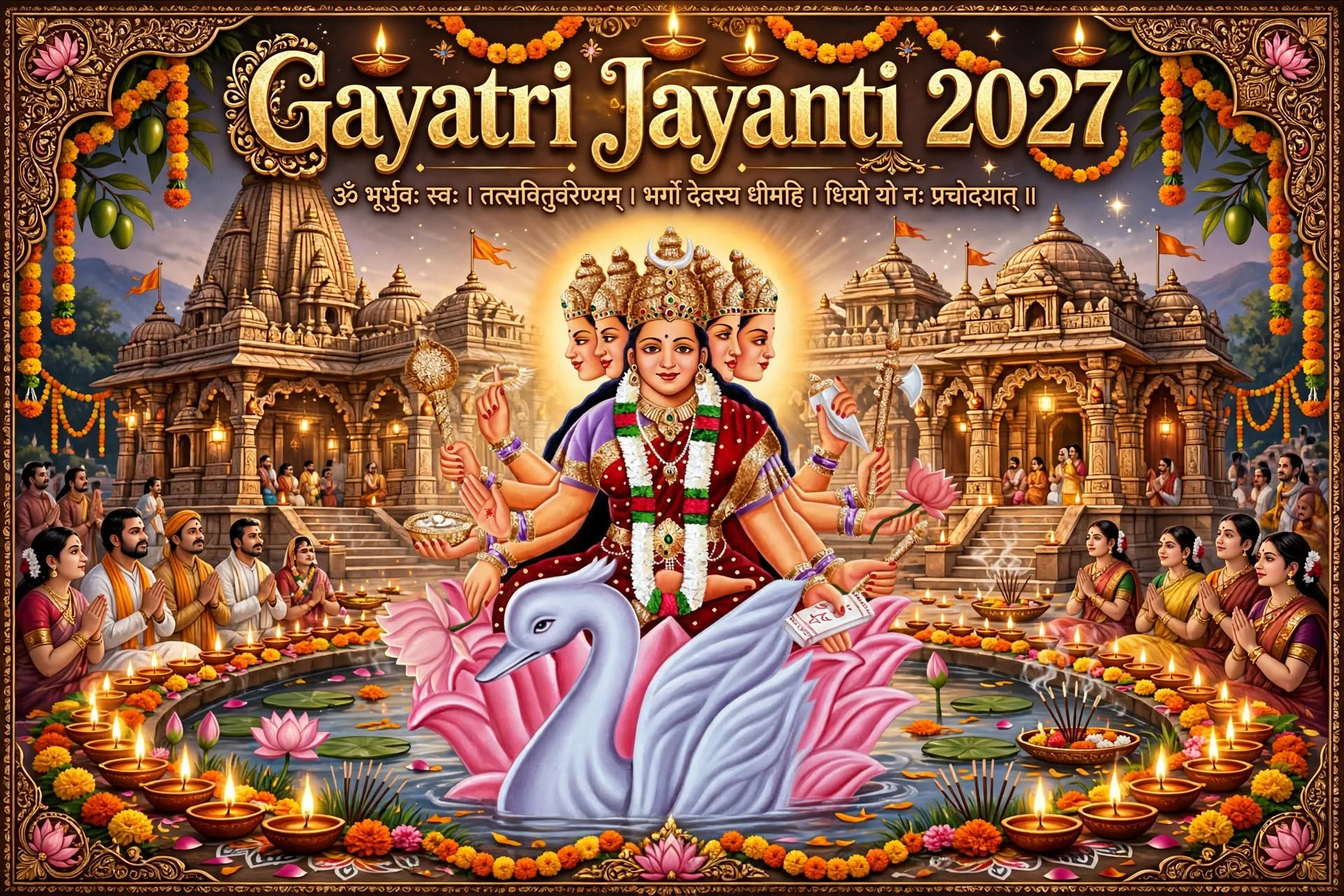
Gayatri Jayanti
Gayatri Jayanti is a sacred Hindu festival dedicated to Goddess Gayatri, revered as Ved Mata, the Mother of the Vedas. She represents divine wisdom, spiritual illumination, purity and the power of sacred knowledge. Devotees worship her as the personification of the Gayatri Mantra, one of the most revered prayers in the Vedic tradition.
View Festival Guide
Tuesday, Aug 17, 2027
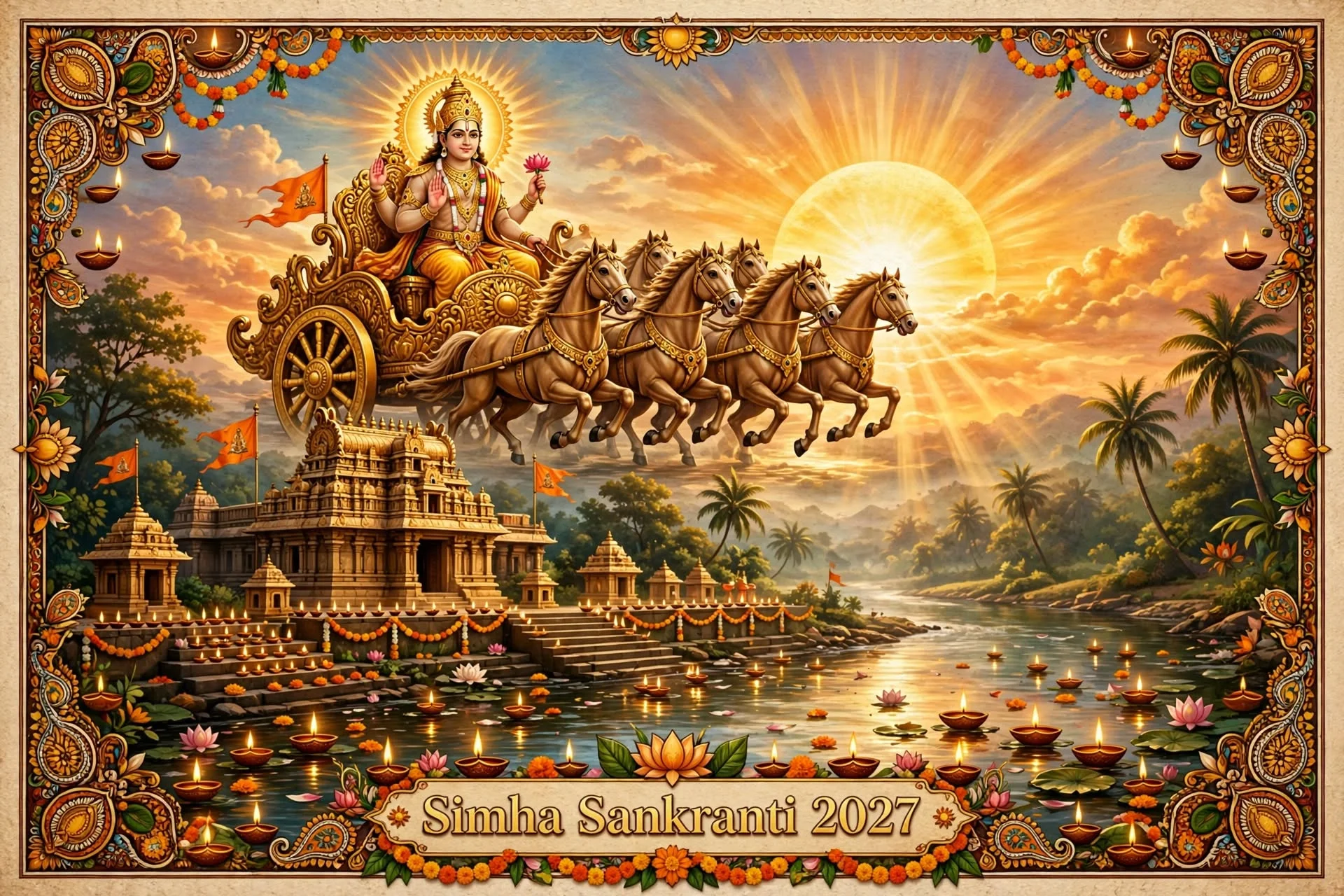
Simha Sankranti
Simha Sankranti marks the momentous astronomical and astrological transit (Sankramana) when Surya Deva, the radiant Sun God, enters the regal zodiac sign of Simha (Leo). In Vedic astrology, Simha is the Sun's own moolatrikona and swakshetra (domicile sign), making this celestial ingress exceptionally powerful, revitalizing, and spiritually auspicious. Occurring in mid-August in the traditional solar calendar, Simha Sankranti inaugurates the solar month of Simha (known as Chingam in Kerala and Bhadra / Avani in other solar calendars).
View Festival Guide
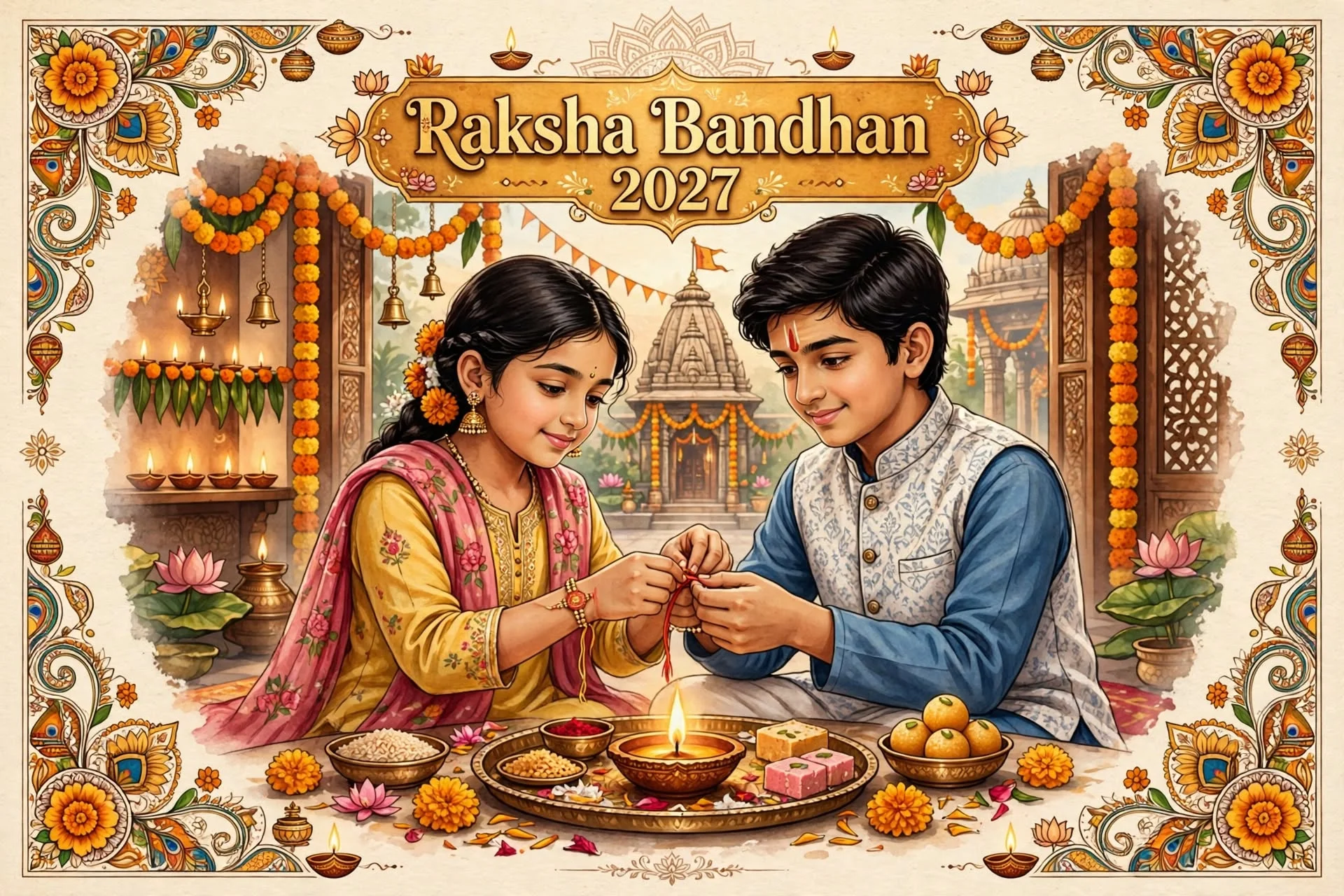
Tuesday, Aug 17, 2027
Raksha Bandhan
Raksha Bandhan, celebrated on the sacred Full Moon day (Purnima) of the holy Hindu month of Shravana, is one of the most cherished, ancient, and emotionally resonant festivals of India. Translated literally as 'the bond of protection', Raksha Bandhan honors the sacred relationship between brothers and sisters while simultaneously encapsulating broader cosmic and moral principles of mutual duty, chivalric honor, spiritual righteousness, and universal solidarity.
View Festival Guide

Wednesday, Aug 18, 2027
Ishti
Ishti is a foundational Vedic ritual observance appearing prominently in Hindu Panchangs on the Pratipada tithi (the first lunar day) following either Amavasya (new moon) or Purnima (full moon), marking the prescribed performance day for the fortnightly Vedic Darsha-Purnamasa sacrifices.
View Festival Guide
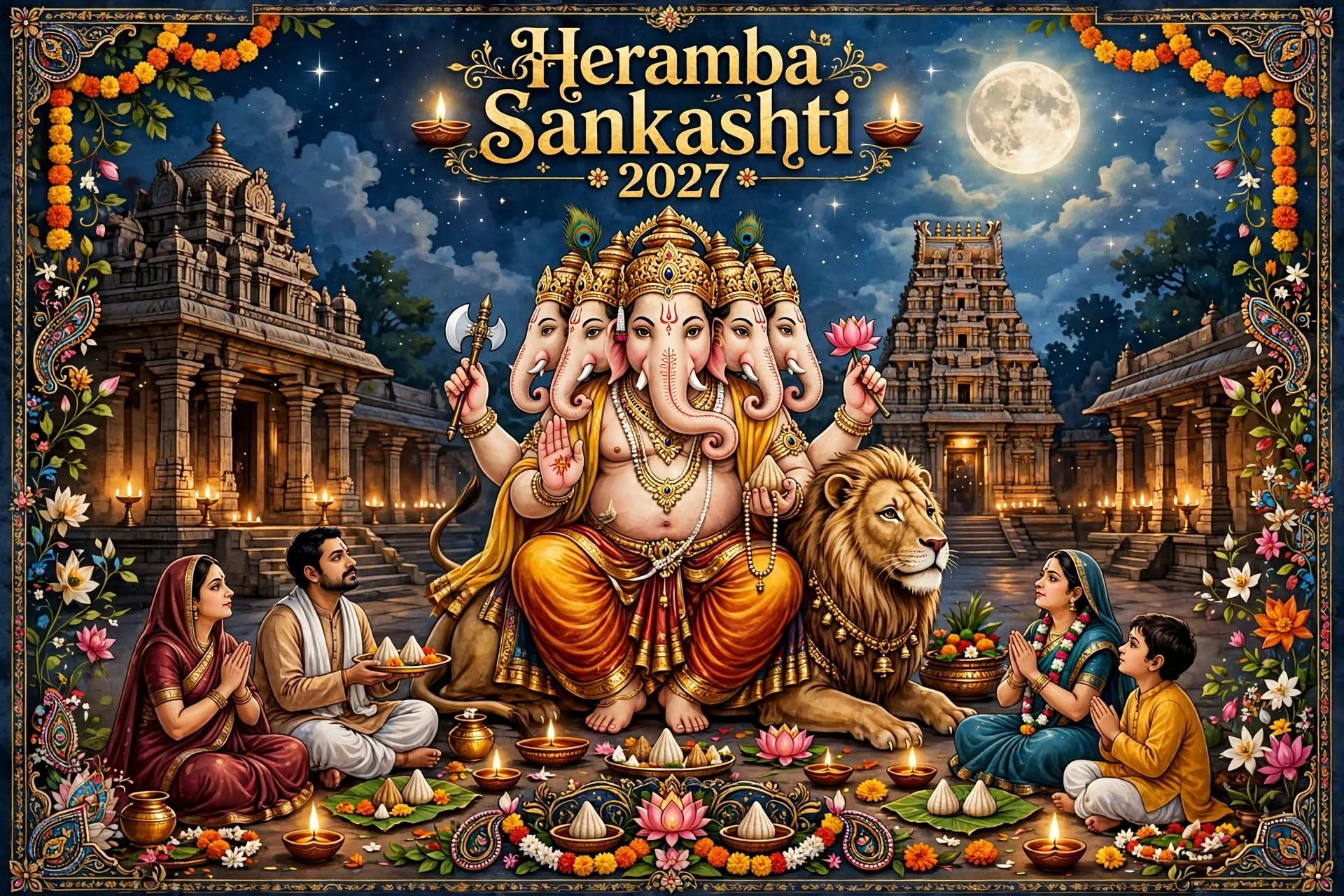
Friday, Aug 20, 2027
Heramba Sankashti
Heramba Sankashti Chaturthi, also celebrated with profound veneration as Heramba Sankashtahara Chaturthi, falls on the fourth lunar day (Chaturthi) of the Krishna Paksha (waning fortnight) in the sacred monsoon month of Bhadrapada (or Shravana in the Amanta calendar). Dedicated to Heramba Ganapati—one of the thirty-two classical iconographic forms of Lord Ganesha—this sacred day is celebrated as an extraordinary spiritual penance for overcoming seemingly insurmountable existential distress, severe financial distress, health catastrophes, and deep karmic obstacles.
View Festival Guide
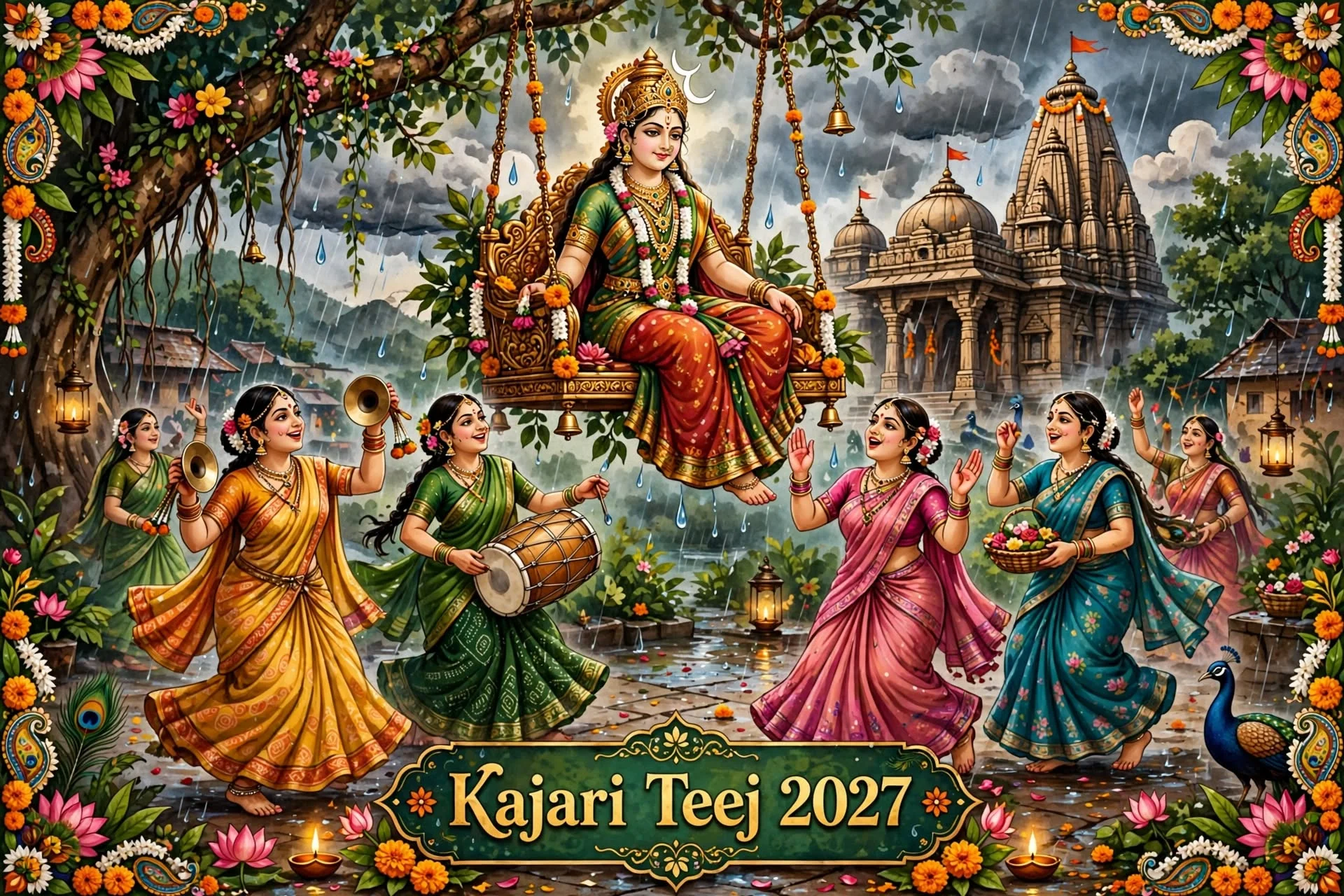
Friday, Aug 20, 2027
Kajari Teej
Kajari Teej, also reverently celebrated as Badi Teej, Satva Teej, or Kajali Teej, is one of the three principal Teej festivals in the Hindu calendar, alongside Hariyali Teej and Hartalika Teej. Falling on the Tritiya tithi (third lunar day) of the Krishna Paksha (dark waning fortnight) in the sacred monsoon month of Bhadrapada (corresponding to Shravana in the Amanta calendar scheme), this vibrant festival is dedicated to the divine union of Lord Shiva and Goddess Parvati, embodying marital fidelity, female austerity, and the lush romantic beauty of the monsoon season.
View Festival Guide