




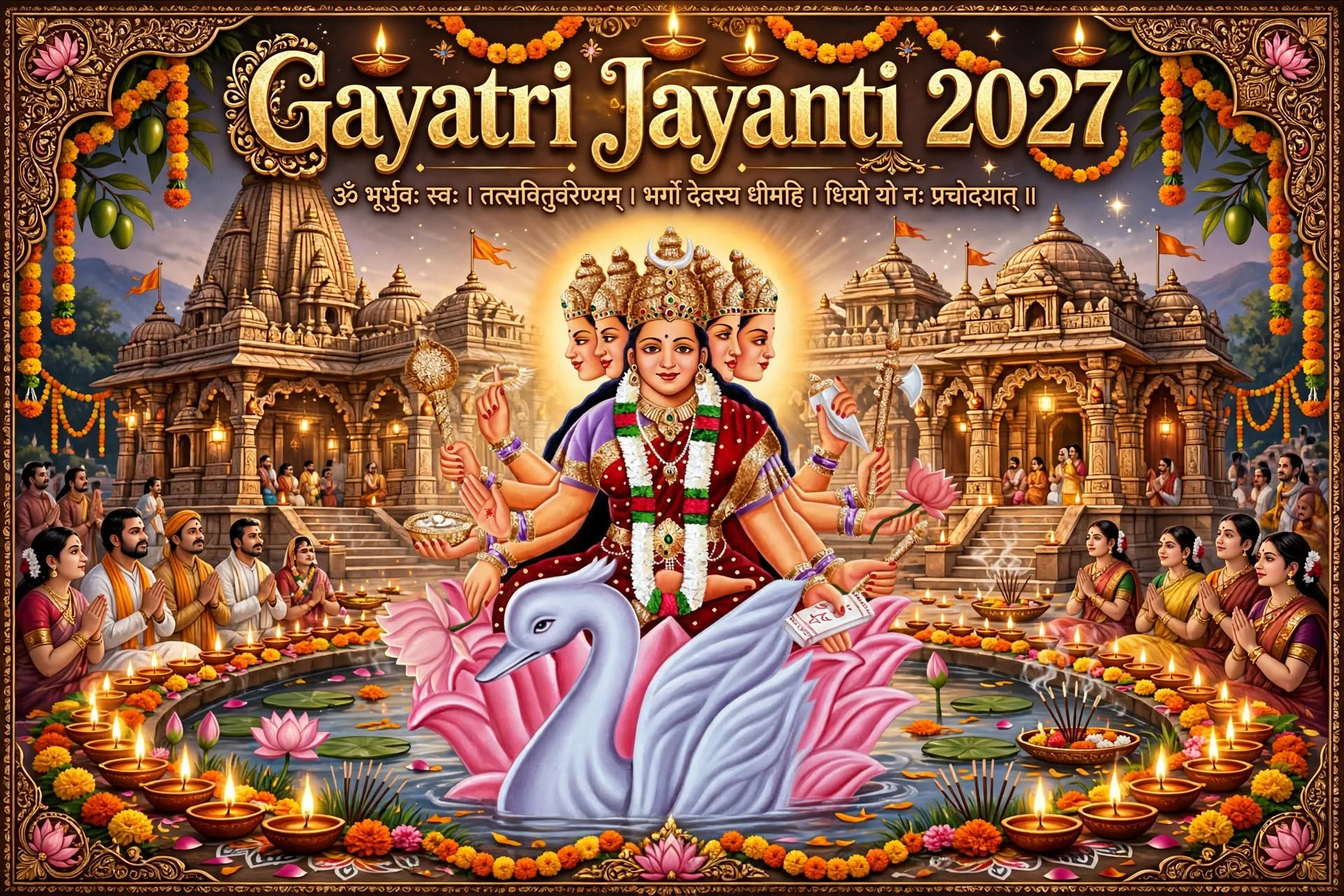
Gayatri Jayanti is a sacred Hindu festival dedicated to Goddess Gayatri, revered as Ved Mata, the Mother of the Vedas. She represents divine wisdom, spiritual illumination, purity and the power of sacred knowledge. Devotees worship her as the personification of the Gayatri Mantra, one of the most revered prayers in the Vedic tradition.
Gayatri Jayanti 2027: Date, Puja Timings, Rituals & Stories
Gayatri Jayanti Timings & Panchang
Important festival dates and auspicious timings
Usha Arghya (Sunrise)
05:51 am
Sandhya Arghya (Sunset)
06:59 pm
Start Date
Tuesday, 17 Aug 2027
Puja Muhurat
10:29 am – 12:58 pm
Gayatri Jayanti
The Gayatri Mantra is found in the Rigveda (3.62.10) and is traditionally associated with Savitr, the Vedic solar deity. It is a prayer seeking the illumination of the human intellect and guidance towards the righteous path. Over time, the mantra itself came to be personified and worshipped as Goddess Gayatri.
Gayatri Jayanti is commonly observed on Jyeshtha Shukla Ekadashi, the eleventh day of the waxing lunar fortnight in the Hindu month of Jyeshtha. This observance generally falls around the time of Nirjala Ekadashi and shortly after Ganga Dussehra. Some traditions observe Gayatri Jayanti on Shravana Purnima, reflecting differences in religious calendars and customary interpretations.
Devotees celebrate the occasion through Gayatri Mantra Japa, meditation, Vedic prayers, worship of Goddess Gayatri, charity and spiritual study. Many people perform special mantra recitation during the three Sandhya periods: morning, midday and evening.
The festival reminds devotees that true spiritual progress comes through knowledge, disciplined conduct, devotion and the purification of the intellect. It encourages people to seek wisdom, overcome ignorance and use their knowledge for the welfare of society.
Why is Gayatri Jayanti Celebrated?
Gayatri Jayanti is celebrated to honour Goddess Gayatri and the spiritual significance of the Gayatri Mantra. She is worshipped as Ved Mata, the divine source of Vedic wisdom and sacred knowledge. The festival provides an opportunity for devotees to deepen their spiritual practice through mantra recitation, meditation, prayer and the study of sacred teachings.
- To worship Goddess Gayatri as Ved Mata and the personification of divine wisdom.
- To honour the sacred Gayatri Mantra found in the Rigveda (3.62.10).
- To seek clarity of intellect, wisdom and spiritual understanding.
- To overcome ignorance, negative tendencies and confusion through prayer and self-discipline.
- To strengthen devotion through Gayatri Mantra Japa and meditation.
- To remember the importance of Vedic knowledge and the spiritual traditions associated with it.
- To cultivate purity of thought, speech and action.
- To encourage education, self-improvement and the responsible use of knowledge.
The History and Sacred Significance of Goddess Gayatri
The history of Goddess Gayatri is closely connected with the development and veneration of the Gayatri Mantra, also known as the Savitri Mantra. The mantra is a celebrated Vedic verse from the Rigveda and is addressed to Savitr, the divine solar power associated with inspiration and illumination. Its later personification as Goddess Gayatri reflects the development of devotional and theological traditions in Hinduism.
The Origin of the Gayatri Mantra
The Gayatri Mantra appears in the Rigveda, Mandala 3, Sukta 62, Mantra 10. The hymn is traditionally associated with the Vedic seer Vishvamitra, while its deity is Savitr and its metre is Gayatri. The mantra is therefore also called the Savitri Mantra.
The prayer asks devotees to meditate upon the divine radiance of Savitr and seek inspiration for their intellect. Rather than being a prayer for material prosperity alone, its central intention is spiritual and intellectual illumination. It has consequently become one of the most widely respected mantras in Hindu religious practice.
Maharishi Vishvamitra and the Gayatri Mantra
Maharishi Vishvamitra is traditionally regarded as the seer associated with the Rigvedic hymn containing the Gayatri Mantra. Hindu narratives remember him as a sage who attained extraordinary spiritual stature through determination, austerity and disciplined practice.
His association with the mantra has made him an important figure in Gayatri worship. Devotees remember his spiritual journey as an example of perseverance, self-control and the transformative power of sincere spiritual effort.
Gayatri as Ved Mata
Goddess Gayatri is revered as Ved Mata, meaning the Mother of the Vedas. This title expresses the understanding that the Gayatri Mantra represents the essence of sacred knowledge and spiritual wisdom.
In later Hindu devotional traditions, the mantra came to be worshipped as a divine feminine presence. Goddess Gayatri is often depicted as a radiant deity associated with knowledge, purity and the illumination of consciousness. Her iconography and number of faces or arms vary across religious traditions and artistic representations.
Spiritual Significance of Gayatri Jayanti
Gayatri Jayanti represents the pursuit of divine wisdom, inner purity and spiritual awakening. Goddess Gayatri symbolises the power of knowledge that removes ignorance and guides human consciousness towards truth. Worshipping her is an expression of devotion to the divine source of illumination and the desire to develop a clear, disciplined and compassionate intellect.
The Power of the Gayatri Mantra
The Gayatri Mantra is a prayer for the illumination of the intellect. Its central message is to meditate upon the divine radiance of Savitr and seek inspiration to think and act wisely. Devotees believe that regular, sincere recitation supports concentration, self-discipline and spiritual awareness.
The mantra is traditionally arranged in three lines of eight syllables each, following the Gayatri metre. The familiar recitation begins with Om and the three sacred utterances Bhur, Bhuvah and Svah before the principal Vedic verse.
Goddess Gayatri as the Mother of the Vedas
The title Ved Mata expresses the association of Goddess Gayatri with sacred knowledge and the spiritual foundation of Vedic learning. She represents the wisdom that helps individuals distinguish between truth and falsehood, right and wrong, and knowledge and ignorance.
Her worship encourages devotees to respect learning, study sacred texts and apply knowledge with humility and responsibility.
Purification of the Intellect
The Gayatri Mantra seeks the illumination of the human intellect rather than merely the fulfilment of worldly desires. Its recitation is traditionally understood as a way of cultivating clarity, discernment and a steady mind.
Devotees use the occasion to reflect on their thoughts, habits and decisions. They pray for the strength to overcome ignorance, selfishness, anger and confusion.
How Gayatri Jayanti Is Celebrated
Gayatri Jayanti is observed through mantra recitation, meditation, Goddess Gayatri worship, Vedic prayers, spiritual study and charity. Devotees may visit temples, participate in group chanting or perform a simple puja at home. The emphasis is on understanding the meaning of the Gayatri Mantra and cultivating wisdom, purity and disciplined conduct.
Early Morning Bath and Preparation
Devotees traditionally wake up early, take a bath and wear clean clothes before beginning their prayers. The place of worship is cleaned and decorated with flowers. Many people begin the day with a short meditation or a prayer seeking the blessings of Goddess Gayatri.
Worship of Goddess Gayatri
A picture or idol of Goddess Gayatri is placed at the worship area. Devotees offer flowers, sandalwood paste, incense, a lamp, fruits and sweets. They pray for knowledge, concentration, purity of thought and spiritual progress.
Gayatri Mantra Japa
Mantra Japa is one of the principal practices associated with Gayatri Jayanti. Devotees recite the Gayatri Mantra with attention and devotion, often using a japa mala to maintain the count. Some people undertake an extended recitation according to their spiritual tradition or the guidance of their teacher.
The number of repetitions is not identical for every devotee. Sincere concentration and correct understanding of the practice are more important than competing over a particular count.
Meditation and Sandhya Prayer
Devotees may perform prayer and meditation during the morning, midday and evening Sandhya periods. The practice may include the recitation of the Gayatri Mantra, silent contemplation and prayers for the welfare of all beings.
Those who follow a specific Vedic tradition perform Sandhyavandana according to the procedure taught by their family or spiritual teacher.
Gayatri Jayanti Puja Vidhi (Step by Step)
- 1
Wake Up Early and Prepare for Worship
Wake up early, clean the home and take a bath. Wear clean clothes and prepare a quiet place for worship. If possible, begin the day with a short period of meditation and a prayer for wisdom and spiritual clarity.
- 2
Prepare the Puja Area
Place an image or idol of Goddess Gayatri on a clean platform. Decorate the area with fresh flowers and arrange a water vessel, incense, a lamp, sandalwood paste, fruits and other offerings.
- 3
Take a Sankalpa
Sit comfortably before the Goddess, calm your mind and take a personal sankalpa to perform the worship with devotion. Pray for wisdom, purity of intellect, self-discipline and the ability to follow a righteous path.
- 4
Invoke Goddess Gayatri
Fold your hands and respectfully invoke Goddess Gayatri. Chant 'Om Shri Gayatryai Namah' and remember her as Ved Mata, the divine embodiment of sacred knowledge and spiritual illumination.
- 5
Offer Water and Flowers
Gayatri Jayanti Puja Samagri List
Goddess Gayatri Worship Essentials
These items are used to prepare the worship area and offer prayers to Goddess Gayatri.
- Image or idol of Goddess Gayatri
- Clean puja cloth
- Kalash or water vessel
- Fresh flowers
- Akshata (unbroken rice grains)
- Sandalwood paste
- Kumkum
- Turmeric
- Sacred thread, according to family tradition
Lighting and Aarti Materials
These materials are used for offering light and fragrance during the puja.
- Ghee or oil diya
- Cotton wicks
- Incense sticks
- Camphor
- Aarti thali
- Bell
- Matchbox or lighter
Naivedya and Prasad
Simple vegetarian food and fresh offerings may be presented to the Goddess and distributed as prasad.
Mantras and Prayers for Gayatri Jayanti
Gayatri Jayanti Vrat Rules and Fasting Guidelines
Purity and Preparation
Devotees traditionally begin Gayatri Jayanti with cleanliness, prayer and a peaceful state of mind.
- Wake up early and take a bath.
- Wear clean clothes for worship.
- Keep the prayer area clean and organised.
- Begin the observance with a sincere sankalpa.
- Maintain truthful, respectful and disciplined behaviour.
Gayatri Mantra Recitation
Mantra Japa is an important practice associated with the festival. Devotees should approach the recitation with attention, sincerity and respect for their tradition.
- Recite the Gayatri Mantra calmly and with concentration.
- Understand the meaning of the mantra instead of treating it as a mechanical repetition.
- Follow the pronunciation and practice taught by your teacher or family tradition.
- Use a japa mala if it is part of your established practice.
- Avoid comparing the number of repetitions performed by different devotees.
Sandhya and Meditation
The three Sandhya periods are traditionally associated with Gayatri recitation and prayer. Devotees may use these times for meditation and spiritual reflection.
- Offer prayers during dawn, midday and dusk according to your tradition.
Dos and Don'ts of Gayatri Jayanti
Good Practices (Do's)
- Begin the day with cleanliness, prayer and a peaceful state of mind.
- Worship Goddess Gayatri with devotion.
- Recite the Gayatri Mantra with concentration and respect.
- Understand the meaning and spiritual intention of the mantra.
- Practise meditation and self-reflection.
- Offer prayers during the Sandhya periods according to your tradition.
Gayatri Jayanti Across Regions
| Region | Local Name |
|---|---|
| North India | Gayatri Jayanti |
| Rajasthan | Gayatri Jayanti |
| Uttar Pradesh | Gayatri Jayanti |
| Madhya Pradesh | Gayatri Jayanti |
| Maharashtra | Gayatri Jayanti |
| Gujarat | Gayatri Jayanti |
| West Bengal | Gayatri Jayanti |
| South India | Gayatri Jayanti / Gayatri Japam |
Gayatri Jayanti FAQs
What is Gayatri Jayanti?
Gayatri Jayanti is a Hindu festival dedicated to Goddess Gayatri, revered as Ved Mata and the personification of the sacred Gayatri Mantra. Devotees observe it through mantra recitation, meditation, worship and spiritual study.
Who is Goddess Gayatri?
Goddess Gayatri is worshipped as the Mother of the Vedas and the divine embodiment of wisdom, knowledge and spiritual illumination. She is closely associated with the Gayatri Mantra, a revered Vedic prayer addressed to Savitr.
When is Gayatri Jayanti celebrated?
Many North Indian traditions observe Gayatri Jayanti on Jyeshtha Shukla Ekadashi. Some traditions observe it on Shravana Purnima. The date should be determined according to the calendar and regional tradition being followed.
Upcoming Festivals
View All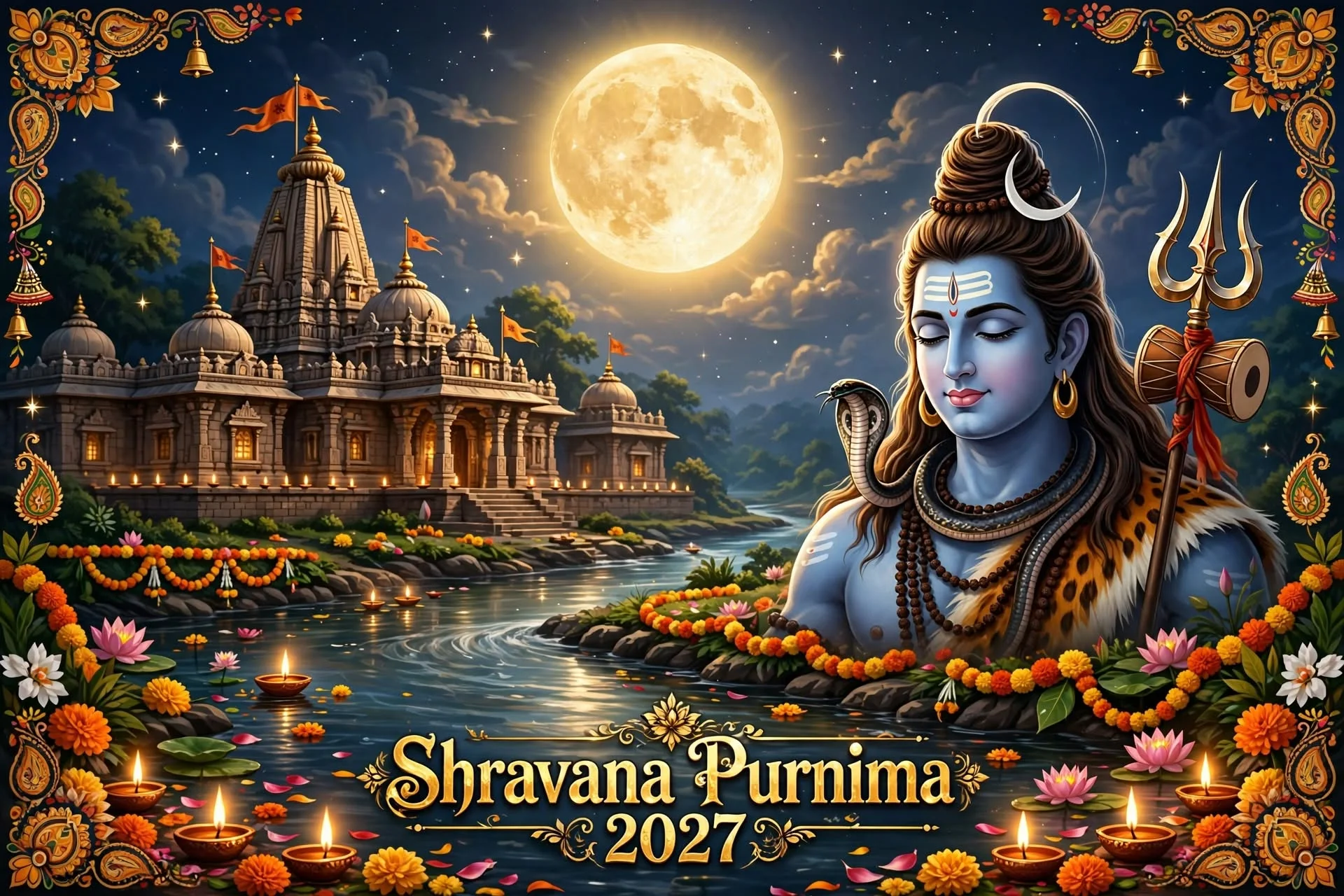
Tuesday, Aug 17, 2027
Shravana Purnima
Shravana Purnima is the radiant Full Moon day of the sacred Hindu month of Shravana, representing one of the most spiritually vibrant, multifaceted, and revered junctures of the entire Hindu calendar. Illuminating the night sky during the heart of the rejuvenating monsoon, this sanctified tithi marks the confluence of numerous historic, ascetic, familial, and astronomical observances across the length and breadth of the Indian subcontinent.
View Festival Guide

Tuesday, Aug 17, 2027
Anvadhan
Anvadhan (अन्वाधान) is an ancient, highly revered Vedic ritual and spiritual observance in Sanatana Dharma performed on the day immediately preceding the New Moon (Amavasya) or Full Moon (Purnima). Rooted in the pristine traditions of the Shrauta and Grihya Sutras, Anvadhan literally translates to 'the solemn placing and replenishment of sacred fuel wood into the consecrated Vedic fires'. In traditional Vedic ritualism, householders (Grihasthas) and priests who maintain the sacred Agnihotra fires perform Anvadhan to prepare the sacrificial altars for the grand Darsha Yajna (New Moon sacrifice) or Paurnamasa Yajna (Full Moon sacrifice) scheduled for the following day.
View Festival Guide
Tuesday, Aug 17, 2027
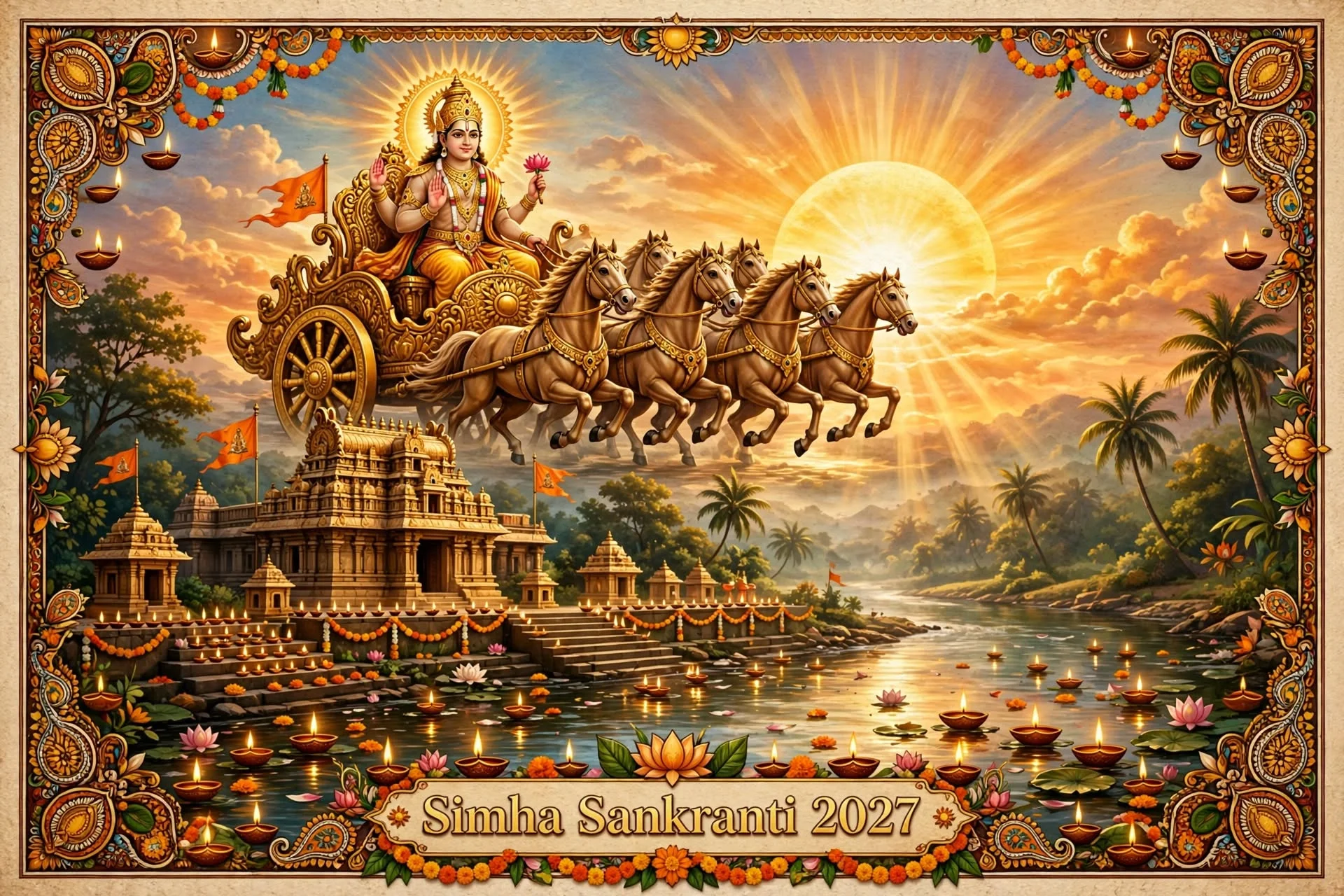
Simha Sankranti
Simha Sankranti marks the momentous astronomical and astrological transit (Sankramana) when Surya Deva, the radiant Sun God, enters the regal zodiac sign of Simha (Leo). In Vedic astrology, Simha is the Sun's own moolatrikona and swakshetra (domicile sign), making this celestial ingress exceptionally powerful, revitalizing, and spiritually auspicious. Occurring in mid-August in the traditional solar calendar, Simha Sankranti inaugurates the solar month of Simha (known as Chingam in Kerala and Bhadra / Avani in other solar calendars).
View Festival Guide
Tuesday, Aug 17, 2027
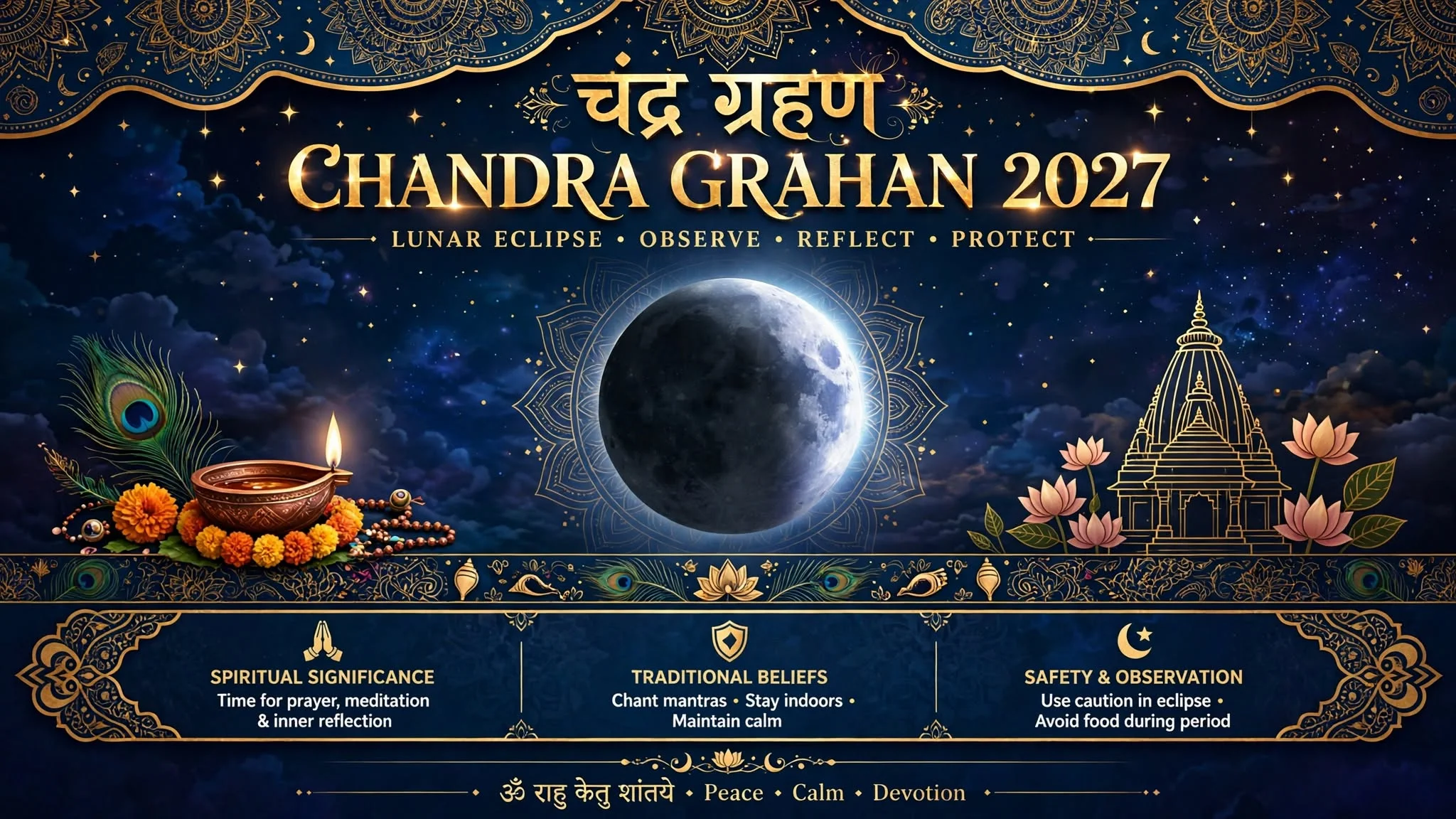
Chandra Grahan
Chandra Grahan (Lunar Eclipse) is a sacred cosmic and spiritual juncture (Parva Kaal) in Sanatana Dharma occurring exclusively on Purnima (the full moon day) when the Earth moves directly between the Sun and the Moon, casting its conical shadow across the lunar orb. In Vedic philosophy and Jyotisha, the Moon presides over the mind, subconscious emotions, and water elements (Chandrama Manaso Jatah - Rigveda Purusha Sukta). The temporary obscuration of the Moon by the shadowy nodes Rahu or Ketu induces profound subtle energetic shifts across terrestrial nature and human consciousness.
View Festival Guide
Tuesday, Aug 17, 2027
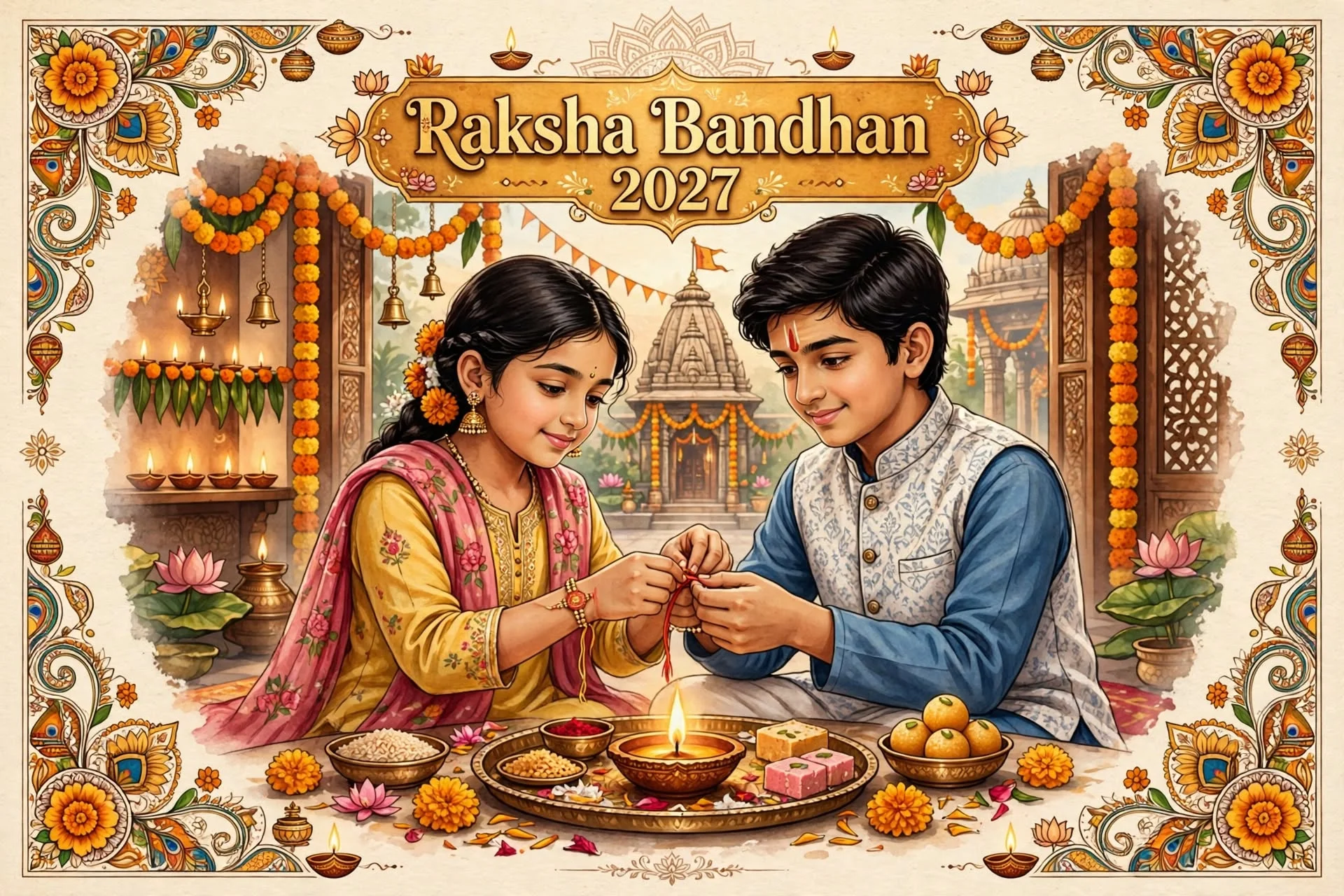
Raksha Bandhan
Raksha Bandhan, celebrated on the sacred Full Moon day (Purnima) of the holy Hindu month of Shravana, is one of the most cherished, ancient, and emotionally resonant festivals of India. Translated literally as 'the bond of protection', Raksha Bandhan honors the sacred relationship between brothers and sisters while simultaneously encapsulating broader cosmic and moral principles of mutual duty, chivalric honor, spiritual righteousness, and universal solidarity.
View Festival Guide

Wednesday, Aug 18, 2027
Ishti
Ishti is a foundational Vedic ritual observance appearing prominently in Hindu Panchangs on the Pratipada tithi (the first lunar day) following either Amavasya (new moon) or Purnima (full moon), marking the prescribed performance day for the fortnightly Vedic Darsha-Purnamasa sacrifices.
View Festival Guide
Friday, Aug 20, 2027
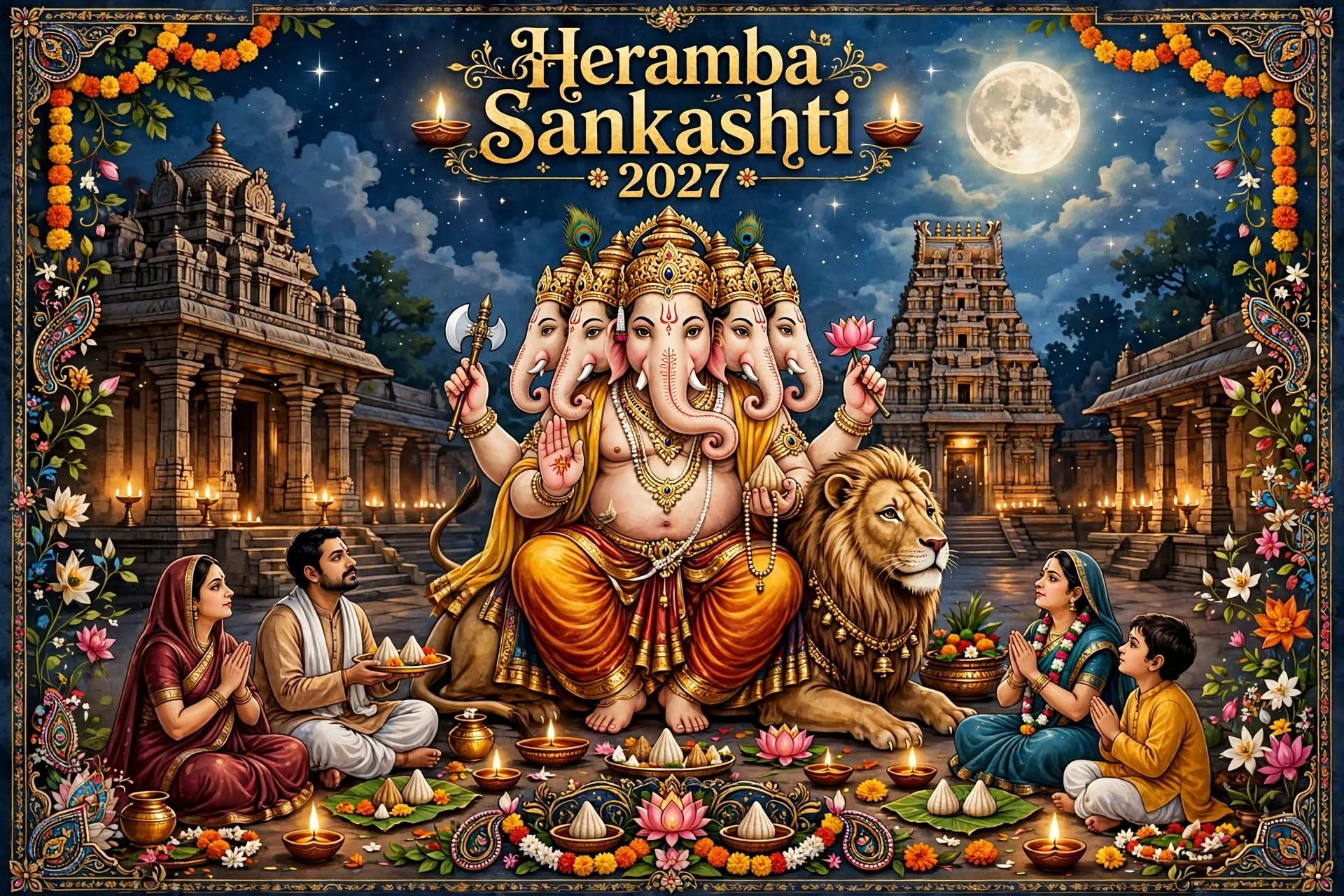
Heramba Sankashti
Heramba Sankashti Chaturthi, also celebrated with profound veneration as Heramba Sankashtahara Chaturthi, falls on the fourth lunar day (Chaturthi) of the Krishna Paksha (waning fortnight) in the sacred monsoon month of Bhadrapada (or Shravana in the Amanta calendar). Dedicated to Heramba Ganapati—one of the thirty-two classical iconographic forms of Lord Ganesha—this sacred day is celebrated as an extraordinary spiritual penance for overcoming seemingly insurmountable existential distress, severe financial distress, health catastrophes, and deep karmic obstacles.
View Festival Guide
Friday, Aug 20, 2027
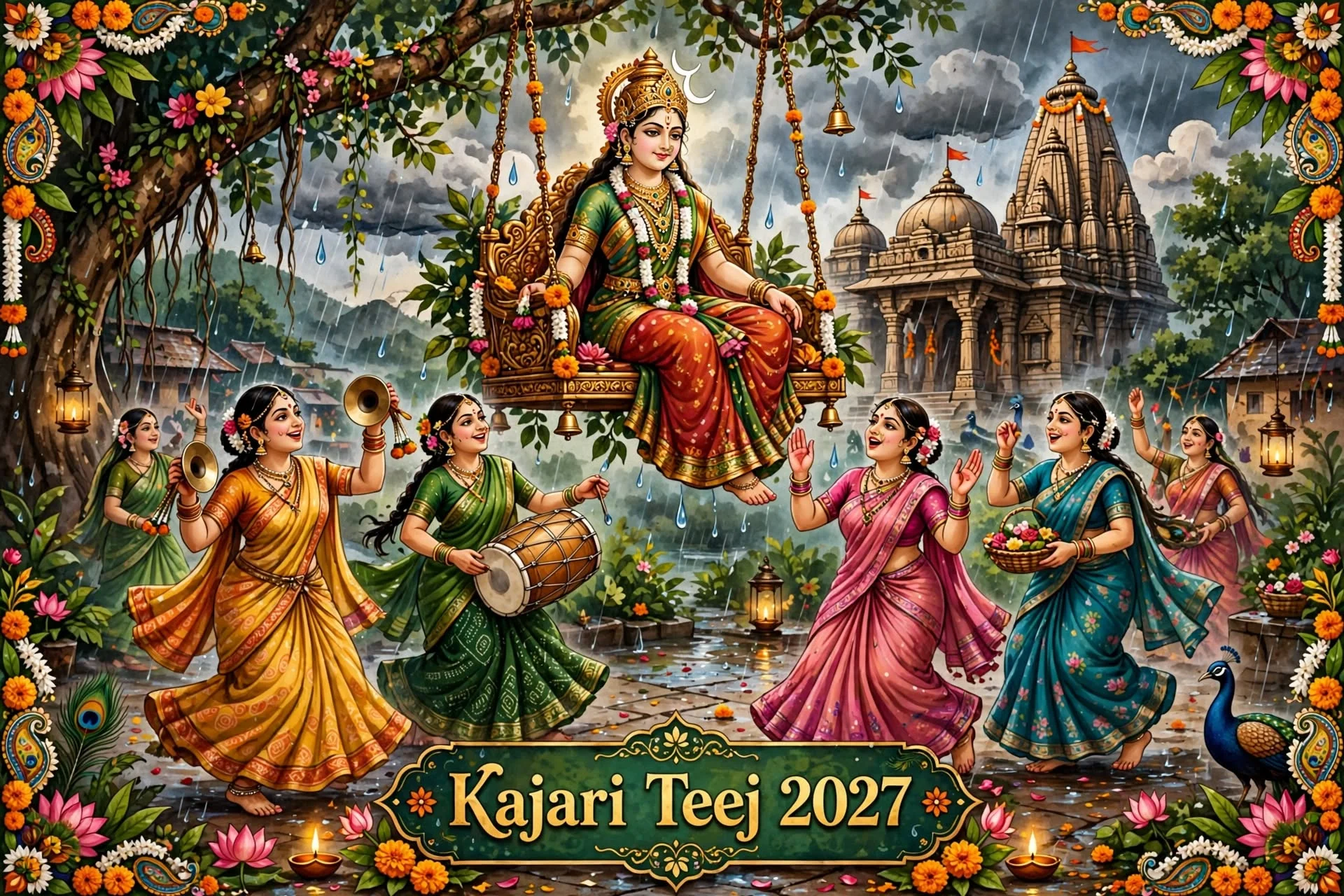
Kajari Teej
Kajari Teej, also reverently celebrated as Badi Teej, Satva Teej, or Kajali Teej, is one of the three principal Teej festivals in the Hindu calendar, alongside Hariyali Teej and Hartalika Teej. Falling on the Tritiya tithi (third lunar day) of the Krishna Paksha (dark waning fortnight) in the sacred monsoon month of Bhadrapada (corresponding to Shravana in the Amanta calendar scheme), this vibrant festival is dedicated to the divine union of Lord Shiva and Goddess Parvati, embodying marital fidelity, female austerity, and the lush romantic beauty of the monsoon season.
View Festival Guide