




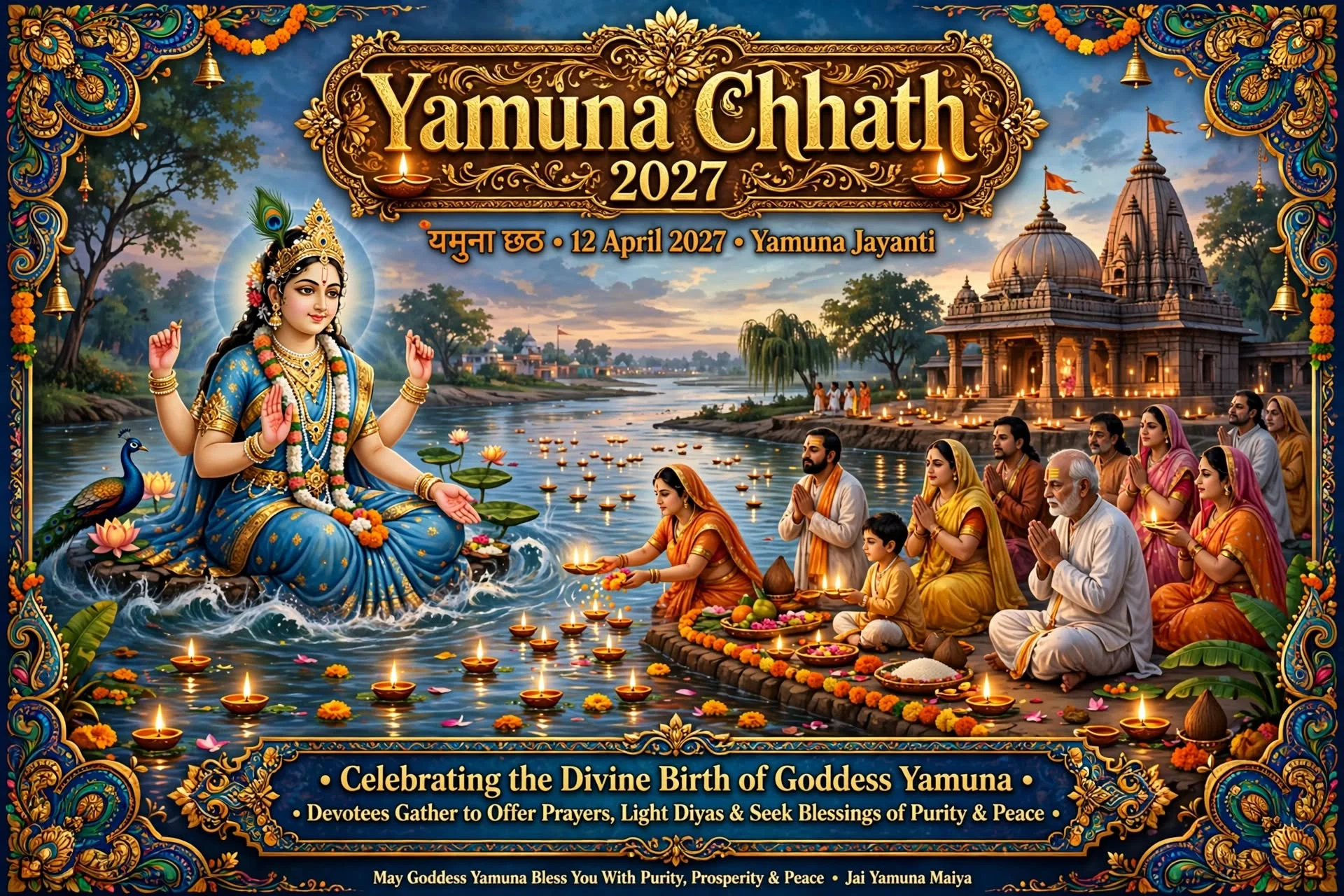
Yamuna Chhath, celebrated with immense spiritual fervor on the sixth lunar day of the bright fortnight (Shukla Paksha Shashthi) in the month of Chaitra, marks the auspicious appearance day (Jayanti) of the sacred River Yamuna. Revered in Sanatana Dharma as Goddess Kalindi, the celestial daughter of the Sun God Surya and Sanjna, and the beloved sister of Yama (the god of death), River Yamuna holds a supreme, intimately tender place in Hindu devotional consciousness, especially within the sacred geography of Braj Mandala and the Pushtimarg tradition.
Yamuna Chhath 2027: Date, Puja Timings, Rituals & Stories
Yamuna Chhath Timings & Panchang
Important festival dates and auspicious timings
Usha Arghya (Sunrise)
06:00 am
Sandhya Arghya (Sunset)
06:45 pm
Start Date
Monday, 12 Apr 2027
Puja Muhurat
09:39 pm – 07:35 pm
Yamuna Chhath
The divine glory of Goddess Yamuna is extolled extensively across sacred scriptures including the Srimad Bhagavatam, Padma Purana, and Garga Samhita. As the divine consort (Pattrani) of Lord Sri Krishna, the Yamuna river provided the sublime backdrop for the Lord's childhood pastimes (Bal-lilas) in Gokul, the subduing of the venomous serpent Kaliya, and the transcendent Maha-Rasa in the groves of Vrindavan. The scriptures declare that while a dip in the Ganga purifies one of sins, bathing in or even reverently sipping the waters of the Yamuna awakens pure, unalloyed love (Prema Bhakti) for Lord Krishna.
On Yamuna Chhath, thousands of pilgrims and devotees congregate along the historic ghats of Mathura, Vrindavan, Bateshwar, Prayagraj, and Delhi to take holy snana. Worshippers perform elaborate Yamuna Pujan, offering raw milk, fragrant red flower garlands, and silk sarees (Chunri Manorath) across the river, while chanting the nectar-like Sri Yamunashtakam composed by Jagadguru Mahaprabhu Vallabhacharya and floating thousands of illuminated oil lamps (Deep Daan) upon the tranquil evening waters.
Why is Yamuna Chhath Celebrated?
Yamuna Chhath is celebrated to commemorate the descent of Goddess Yamuna to the earthly plane, express boundless gratitude to this holy lifeline of northern India, and invoke her maternal blessings for liberation from the fear of death and the awakening of pure devotion to Lord Sri Krishna.
- Descent of Goddess Yamuna: Commemorates the appearance of the celestial river on earth to purify living beings and sanctify the land of Braj.
- Protection from Yama's Torments: Honors the sibling bond between Yamuna and Yama; worshipping Yamuna frees devotees from the fear of hellish suffering.
- Awakening of Krishna Prema: Spiritual seekers revere Yamuna as the embodiment of divine love (Bhakti Svaroopa) that grants entrance into Krishna's pastimes.
- Ecological Vow of River Preservation: Inspires communities to clean, protect, and restore the ecological purity and unhindered flow of the holy river.
Cosmic Descent & Scriptural Lore of Goddess Yamuna
Celestial Birth as the Daughter of Surya
According to the Puranas, Goddess Yamuna manifested as the divine daughter of Surya Dev (the Sun God) and his wife Sanjna. She is the twin sister of Yama, the god of cosmic justice and death. Due to her deep affection for her brother and her compassionate nature, Yamuna prayed to descend to earth as a sacred river to redeem suffering mortals.
Surya Bhagavan granted her boon, and she descended from the celestial heights of Kalinda mountain (earning her the revered name Kalindi). Her waters carried the purifying luster of the Sun and the deep dark blue hue reminiscent of Lord Krishna's divine complexion.
The Eternal Consort of Lord Sri Krishna in Braj
The Garga Samhita and Bhagavata Purana celebrate Yamuna as one of the eight principal queen-consorts (Ashta-patranis) of Lord Krishna in Dvaraka, having practiced severe tapasya on the river bank to win the Lord. Long before, in Gokul, when Vasudeva carried the newborn infant Krishna across the raging Yamuna during a midnight tempest, the river reverently touched the Lord's lotus feet, immediately parting its waters to provide safe passage.
Throughout Krishna's youth, the Yamuna witnessed the divine Rasa Lila upon her soft sandy shores (Pulina) and the chastisement of the Kaliya serpent, rendering every drop of her water perpetually saturated with divine ecstasy.
Source: Garga Samhita, Srimad Bhagavatam & Padma Purana
Metaphysical & Devotional Sanctity of Yamuna
The Fourfold Sanctifying Power of Yamuna
In the sublime philosophical treatise Sri Yamunashtakam, Mahaprabhu Vallabhacharya extols Goddess Yamuna as possessing four divine virtues: she destroys all sins through mere physical contact (Snana), purifies the mind through her darshana, removes the fear of death through her sibling connection to Yama, and elevates the conditioned soul to become worthy of divine service (Seva) to Lord Krishna.
While holy rivers like the Ganga bestow liberation (Mukti), Yamuna bestows something far higher in Vaishnava theology—divine devotional love (Bhakti), transforming the human heart into a blossoming garden of selfless surrender.
Ecological Reverence for Water as Divine Life
In Vedic thought, rivers are not mere physical waterways, but living cosmic mothers (Devis). Celebrating Yamuna Chhath re-establishes humanity's sacred bond with nature, instilling a moral duty to keep water bodies pristine, unpolluted, and free-flowing for future generations.
Festive Traditions & Pilgrimage Rituals of Yamuna Chhath
Holy Snana and the Magnificent Chunri Manorath
Pilgrims gather before dawn at revered ghats such as Vishram Ghat in Mathura and Kesi Ghat in Vrindavan. Devotees take ritual dips, offer water oblations to Surya Dev, and perform worship to Goddess Yamuna with milk, kumkum, and fresh lotus blossoms.
A celebrated ritual in Braj is the 'Chunri Manorath', wherein devotees tie hundreds of colorful sarees end-to-end and stretch them across the entire breadth of the river on boats, symbolically clothing Mother Yamuna in an opulent divine garment.
Grand Evening Yamuna Aarti and Deepa Daan
As twilight approaches, the riverbanks reverberate with conch shells, bells, and devotional singing of the Sri Yamunashtakam. Priests wave magnificent multi-tiered brass lamps filled with camphor and ghee in the grand Yamuna Maha Aarti.
Thousands of devotees gently float illuminated earthen diyas placed in leaf cups filled with flower petals onto the water, transforming the dark surface of the river into a shimmering constellation of floating stars.
Yamuna Chhath Puja Vidhi (Step by Step)
- 1
Brahma Muhurta Snana & Sankalpa
Awaken before sunrise, take a holy dip in the River Yamuna or bathe at home with water infused with holy Yamunajal and Gangajal, taking a solemn vow of worship.
- 2
Surya Dev Arghya
Offer water mixed with red chandan and flower petals to Lord Surya, the celestial father of Goddess Yamuna, seeking health and spiritual radiance.
- 3
Altar & Peetha Preparation
Spread a clean yellow or blue silk cloth on a wooden chauki, place a consecrated picture or idol of Goddess Yamuna alongside Lord Krishna, and sanctify the space.
- 4
Kalash Sthapana
Establish a sacred copper Kalash filled with pure river water, betel nut, silver coin, and mango leaves, placing an unblemished coconut on top.
- 5
Dhyanam & Avahana
Meditate on Goddess Yamuna, dark-complexioned, radiant, clad in celestial ornaments, seated gracefully upon a lotus, holding water and lotus blossoms.
Yamuna Chhath Puja Samagri List
Sanctum & River Worship Materials
Sacred articles required to perform Yamuna Pujan at riverbanks or domestic altars.
- Idol or sacred framed picture of Goddess Yamuna and Lord Sri Krishna
- Pure Yamunajal or Gangajal, copper Kalash, and fresh mango leaves
- Raw cow milk (at least one liter for Dugdha Abhishekam) and honey
- Curd, cow ghee, raw sugar, and pure rose water for Panchamrit
Textiles, Adornments & Botanicals
Sacred clothing and floral offerings beloved by Goddess Yamuna.
- Bright silk saree or Chunri (blue, yellow, or red) for Chunri Manorath
- Kumkum (sindoor), Chandan paste, and unbroken raw rice (Akshata)
- Fresh blue lotus flowers, red roses, marigold garlands, and Tulsi leaves
- Earthen lamps (diyas), leaf cups (Dronas), cotton wicks, and pure camphor
Naivedya & Festive Prasad Items
Traditional sweet offerings beloved by Lord Krishna and Goddess Yamuna.
- Fresh white butter mixed with rock sugar (Makkhan Mishri)
- Mathura Peda, milk kheer, and traditional fasting sweets
- Seasonal fruits (bananas, apples, pomegranates) and dry fruits
Mantras and Prayers for Yamuna Chhath
Yamuna Chhath Vrat Rules and Fasting Guidelines
Observance Guidelines for Yamuna Chhath
Specific devotional protocols to be followed on Yamuna Jayanti.
- Early Bathing: Bathe in the River Yamuna or use water mixed with Yamunajal before sunrise.
- Water Purity: Never throw plastic, chemicals, soaps, or garbage into the sacred river; respect the waterway as a living goddess.
- Fasting Discipline: Devotees maintain a sattvic fast until evening twilight, taking only milk and fruits.
- Devotional Reading: Recite the Sri Yamunashtakam and meditate on Lord Krishna's pastimes with sincere absorption.
Dos and Don'ts of Yamuna Chhath
Good Practices (Do's)
- Wake early, bathe in holy river water, and offer Arghya to the Sun God.
- Recite the Sri Yamunashtakam and offer milk, flowers, and chunri to the river.
- Participate in evening Deepa Daan by floating biodegradable earthen lamps.
- Maintain high ecological cleanliness and protect the purity of water bodies.
Things to Avoid (Don'ts)
Yamuna Chhath Across Regions
| Region | Local Name |
|---|---|
| Braj Region (Mathura & Vrindavan) | Yamuna Jayanti |
| Gujarat & Western India (Pushtimargiya Centers) | Yamuna Chhath |
| Prayagraj (Sangam) | Yamuna Pujan |
Yamuna Chhath FAQs
What is Yamuna Chhath?
Yamuna Chhath (Yamuna Jayanti) is the appearance day of the holy River Yamuna, celebrated on Chaitra Shukla Shashthi with holy baths, prayers, and deepa daan.
Who are the divine parents of Goddess Yamuna?
Goddess Yamuna is the celestial daughter of Surya Dev (the Sun God) and his consort Sanjna, making her the twin sister of Yama, the god of death.
What is Chunri Manorath?
Chunri Manorath is a famous ritual in Mathura and Vrindavan where hundreds of sarees are tied together and stretched across the Yamuna to honor the river goddess.
Upcoming Festivals
View All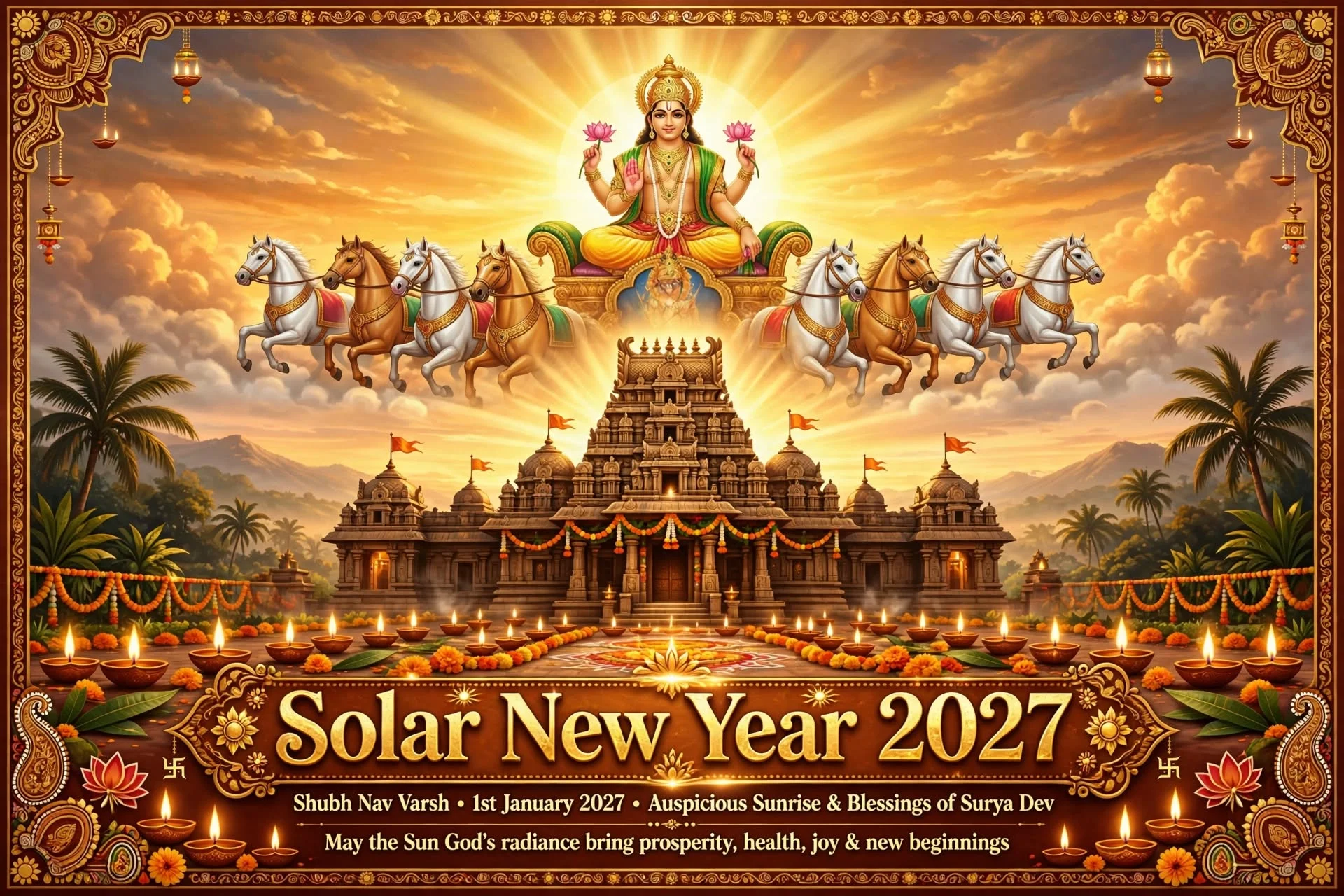
Wednesday, Apr 14, 2027
Solar New Year
The Solar New Year (Maha Vishuba Sankranti or Mesha Sankranti) marks the grand beginning of the sidereal solar calendar across diverse states and cultures of India. Celebrated when the Sun God (Surya Bhagavan) enters Mesha Rashi (the zodiac sign of Aries) in mid-April, this pan-Indian festival is celebrated under glorious regional names: Puthandu in Tamil Nadu, Vishu in Kerala, Pohela Boishakh in Bengal, Pana Sankranti in Odisha, Bohag Bihu in Assam, and Baisakhi in Punjab.
View Festival Guide
Wednesday, Apr 14, 2027
Mesha Sankranti
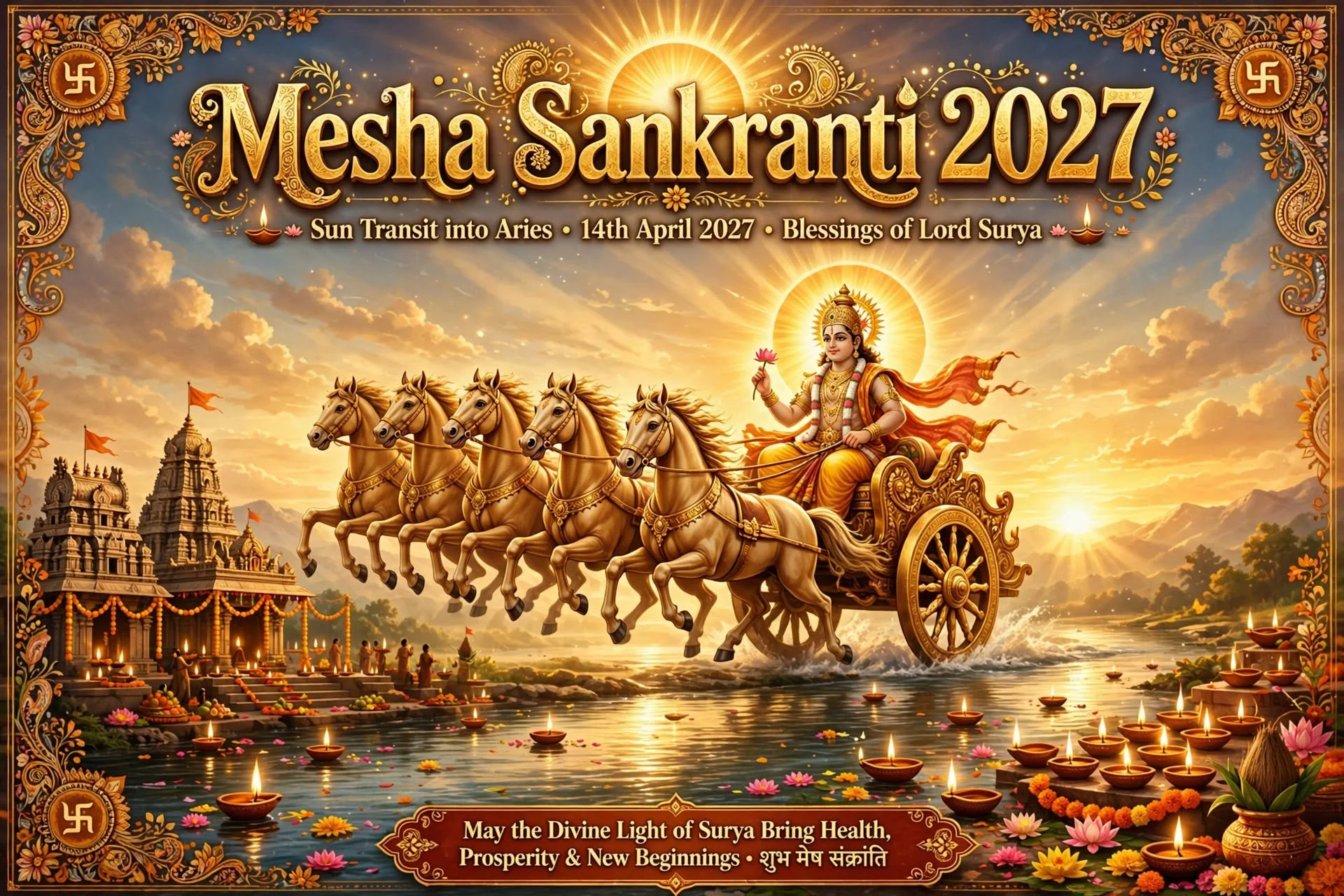
Mesha Sankranti marks the majestic astronomical ingress of Lord Surya (the Sun God) into Mesha Rashi (the zodiac sign of Aries), the first constellation of the sidereal zodiac. Occurring typically in mid-April, this celestial event represents the cardinal beginning of the solar calendar year in Sanatana Dharma. In Vedic astrology, Aries is the exalted sign (Uccha Rashi) of the Sun, wherein the solar deity radiates his supreme life-giving warmth, vigor, and spiritual illumination upon the earth.
View Festival Guide
Thursday, Apr 15, 2027
Rama Navami
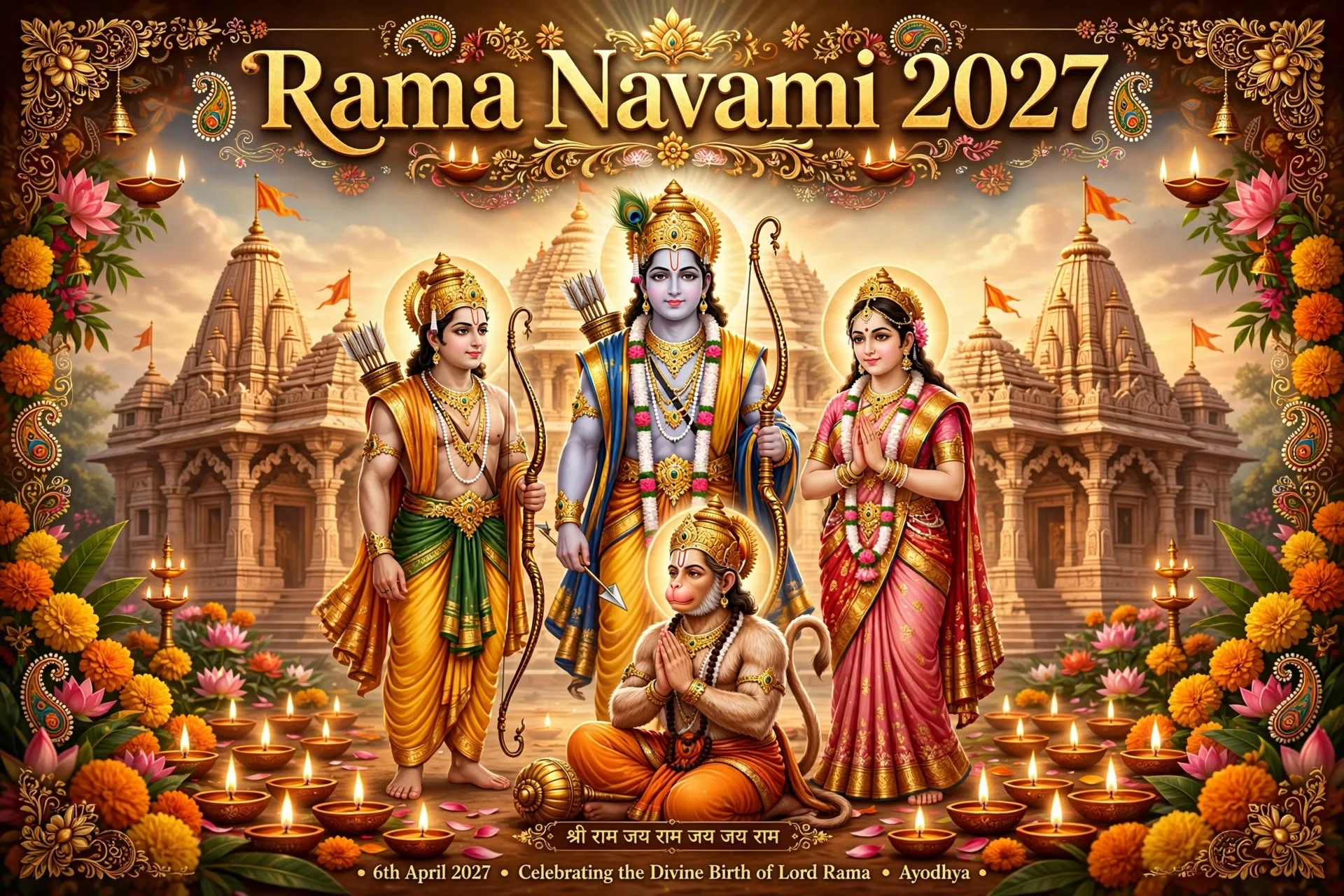
Rama Navami is one of the most sublime and universally revered festivals in Sanatana Dharma, celebrating the auspicious appearance (Janmotsav) of Maryada Purushottam Lord Sri Rama—the seventh incarnation of Lord Vishnu. Falling on the ninth day of the waxing moon (Shukla Paksha Navami) in the sacred month of Chaitra, it marks the grand culmination of the nine-day Chaitra Navratri festival. Born at high noon during the sacred Abhijit Muhurta in the ancient holy city of Ayodhya, Lord Rama incarnated to restore righteousness, establish exemplary moral standards (Dharma), and vanquish demonic forces across the earth.
View Festival Guide
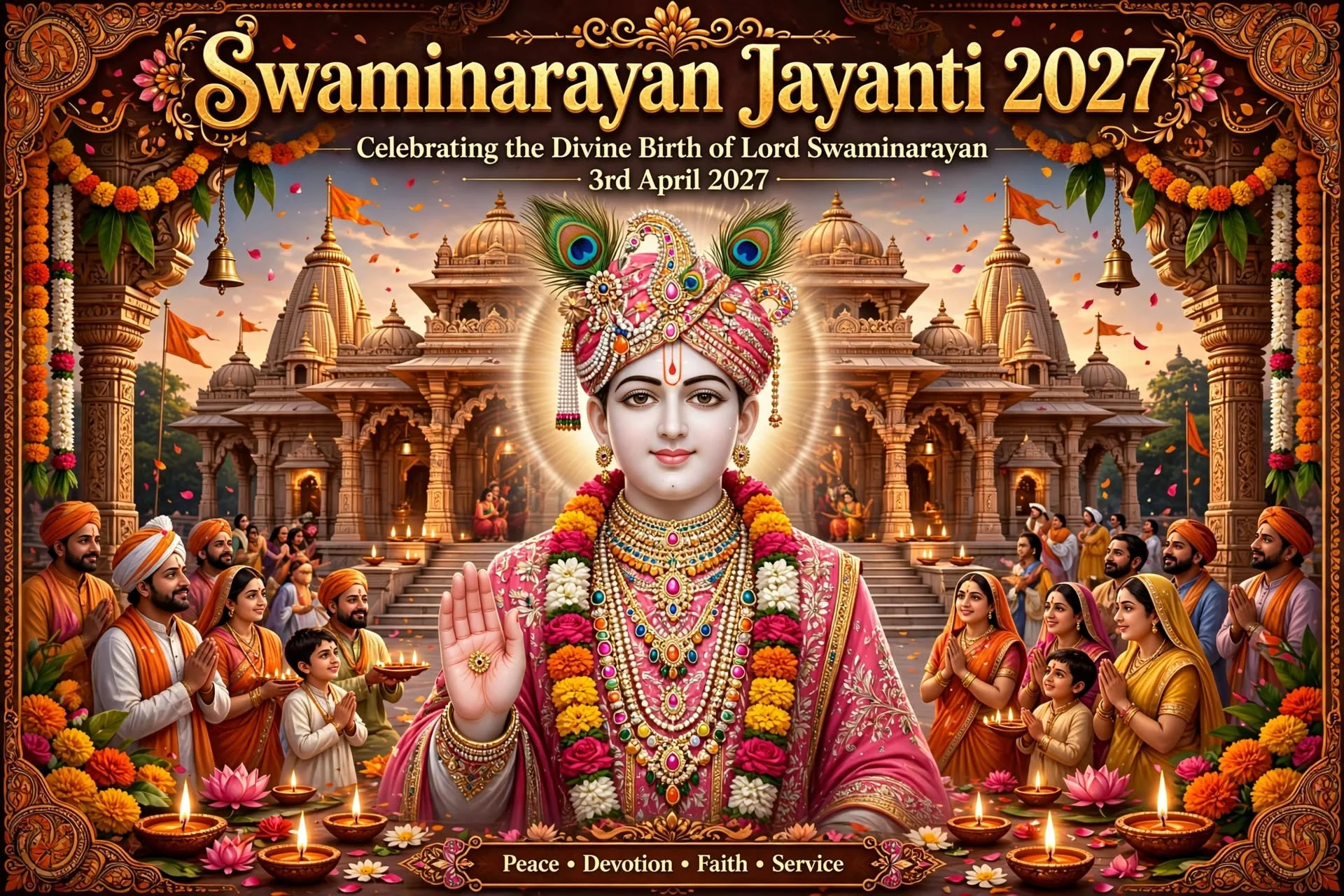
Thursday, Apr 15, 2027
Swaminarayan Jayanti
Swaminarayan Jayanti marks the auspicious birth anniversary of Bhagwan Swaminarayan (1781–1830 CE), the founder of the Swaminarayan Sampradaya and revered as a supreme divine manifestation in modern Sanatana Dharma. Celebrated on the ninth lunar day of the bright fortnight (Shukla Paksha Navami) in the month of Chaitra, this holy observance coincides precisely with Rama Navami. Manifesting at the sacred hour of 10:10 PM in the village of Chhapaiya near Ayodhya, Bhagwan Swaminarayan descended to establish moral rectitude, spiritual purity, social reform, and unconditional devotion to God.
View Festival Guide
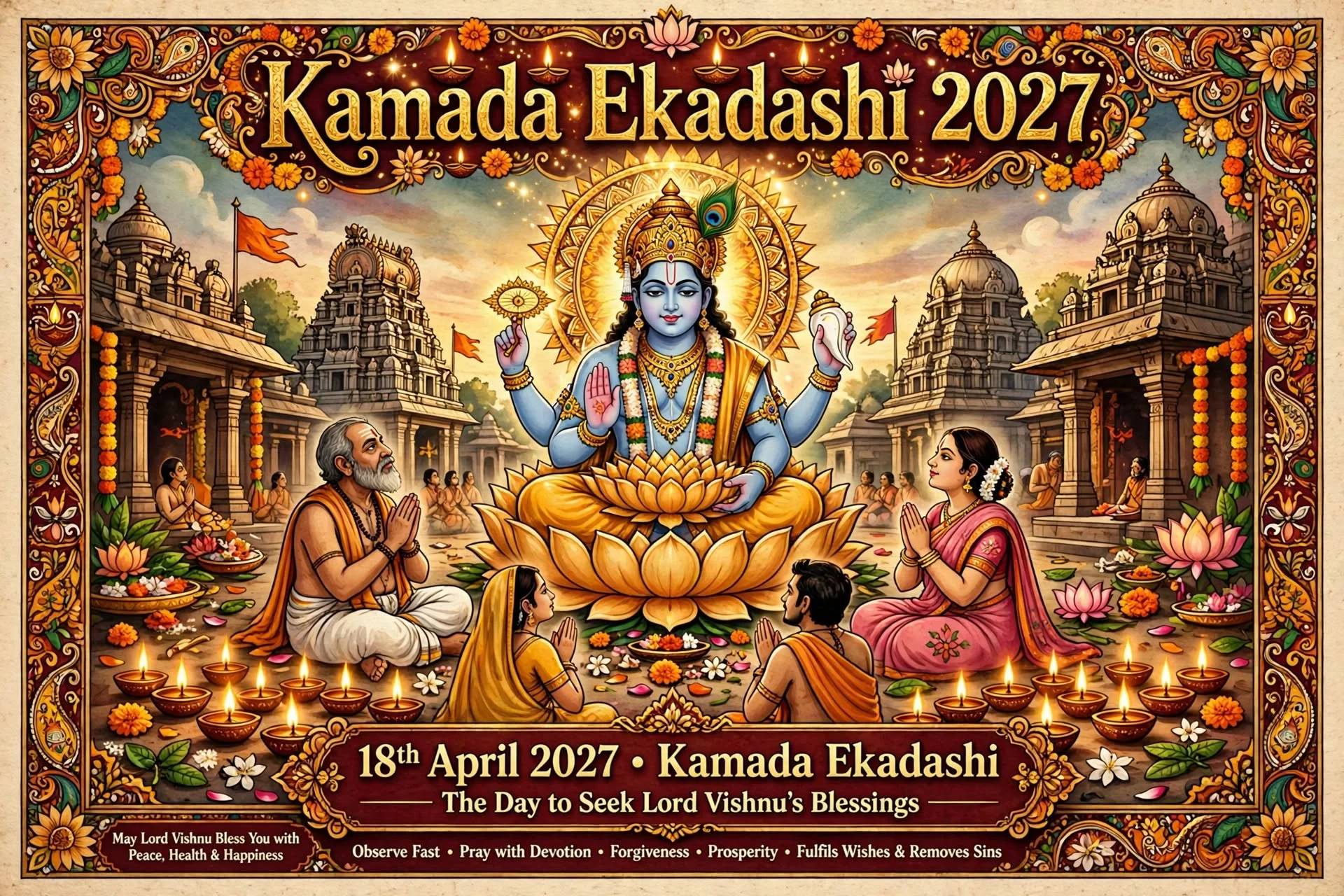
Saturday, Apr 17, 2027
Kamada Ekadashi
Kamada Ekadashi holds a uniquely exalted position in the Hindu spiritual calendar as the very first Ekadashi of the new Hindu lunar year. Falling on the eleventh day of the waxing moon (Shukla Paksha Ekadashi) in the sacred month of Chaitra, this divine observance is celebrated as the supreme fulfiller of all righteous desires. The Sanskrit word 'Kamada' literally signifies 'the granter of cherished aspirations' (Kama meaning desire, and Da meaning giver), possessing the extraordinary spiritual power to dissolve the deepest karmic stains and liberate souls from severe curses.
View Festival Guide
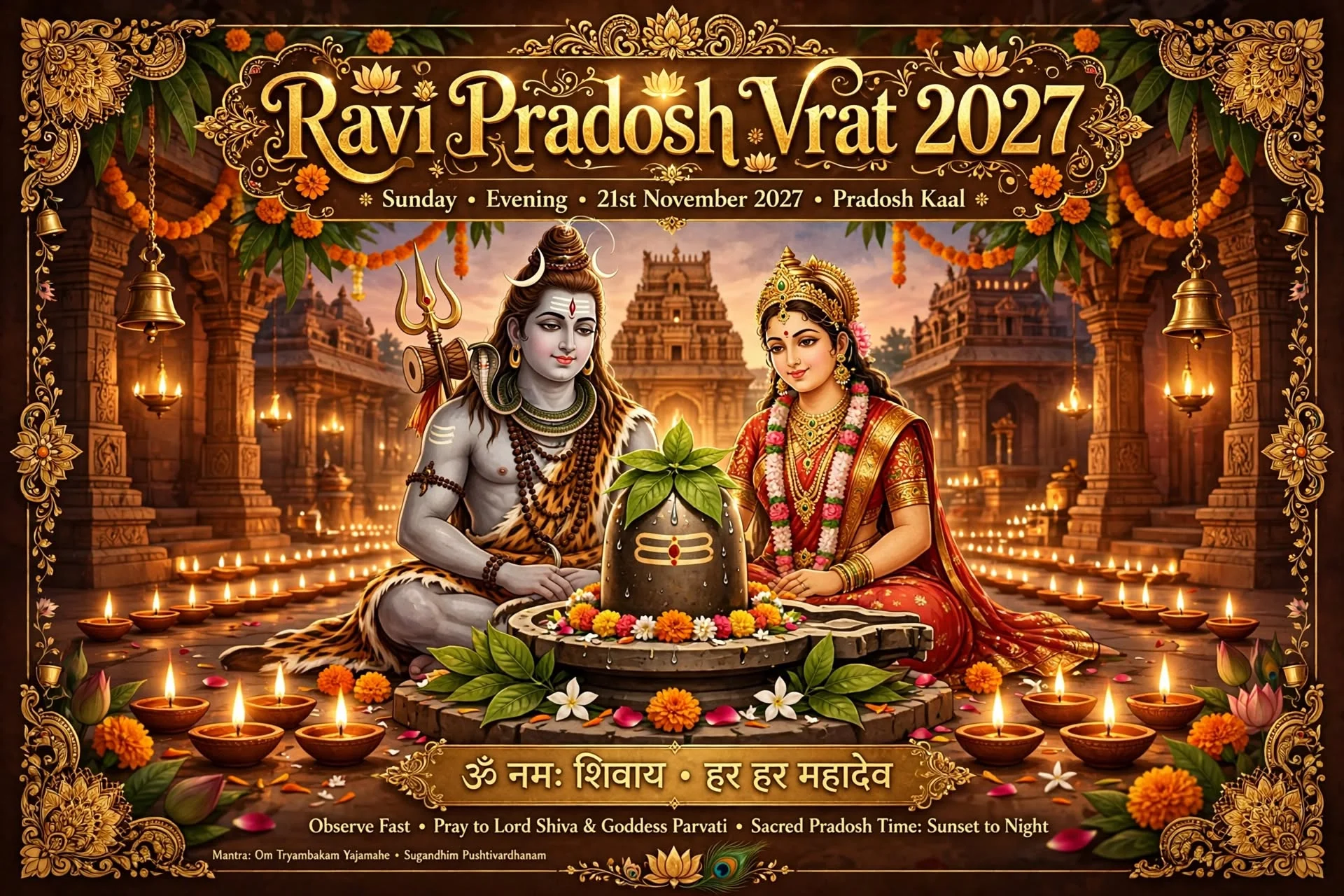
Sunday, Apr 18, 2027
Ravi Pradosh Vrat
Ravi Pradosh Vrat is an exceptionally sacred fasting day observed on the thirteenth lunar day (Trayodashi) that coincides with a Sunday (Ravivara). Dedicated to Lord Shiva, the cosmic dissolver of sorrow, this bimonthly vow unites the healing radiance of Surya Bhagavan with the boundless compassion of Mahadeva. Observed during the twilight Sandhya period, it is believed to banish physical ailments, clear karmic obstructions, and bestow vitality and longevity.
View Festival Guide

Tuesday, Apr 20, 2027
Anvadhan
Anvadhan (अन्वाधान) is an ancient, highly revered Vedic ritual and spiritual observance in Sanatana Dharma performed on the day immediately preceding the New Moon (Amavasya) or Full Moon (Purnima). Rooted in the pristine traditions of the Shrauta and Grihya Sutras, Anvadhan literally translates to 'the solemn placing and replenishment of sacred fuel wood into the consecrated Vedic fires'. In traditional Vedic ritualism, householders (Grihasthas) and priests who maintain the sacred Agnihotra fires perform Anvadhan to prepare the sacrificial altars for the grand Darsha Yajna (New Moon sacrifice) or Paurnamasa Yajna (Full Moon sacrifice) scheduled for the following day.
View Festival Guide
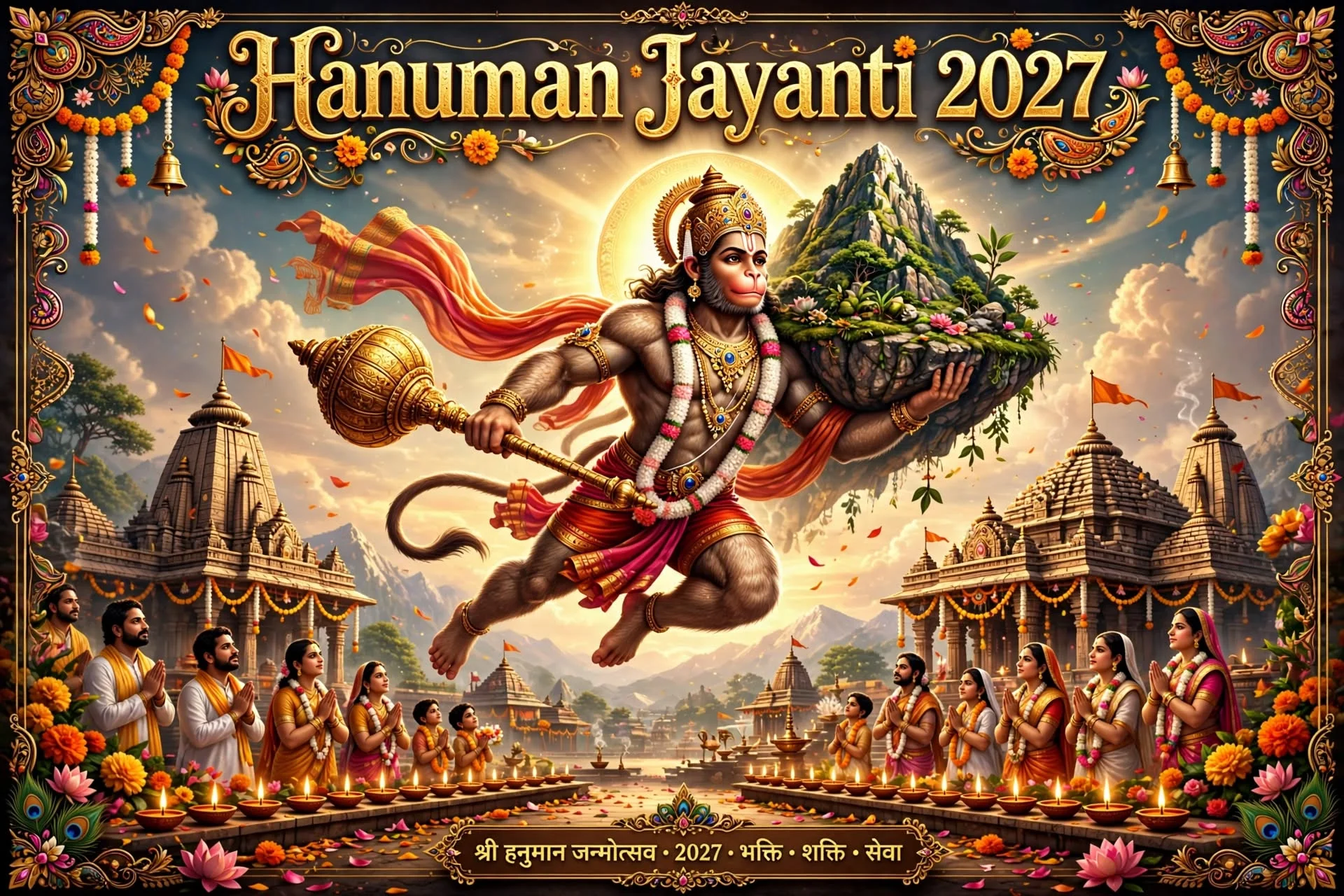
Tuesday, Apr 20, 2027
Hanuman Jayanti
Hanuman Jayanti marks the glorious appearance anniversary of Sri Hanuman, the Rudra avatar of Lord Shiva, the foremost servant of Lord Sri Rama, and the eternal epitome of selfless devotion (Seva), valor, and spiritual strength. Celebrated on the full moon day (Purnima) of the sacred month of Chaitra, this auspicious festival commemorates the auspicious moment when Lord Hanuman manifested on earth to assist Lord Rama in vanquishing the forces of evil and establishing the eternal kingdom of righteousness (Dharma).
View Festival Guide