




Anvadhan (अन्वाधान) is an ancient, highly revered Vedic ritual and spiritual observance in Sanatana Dharma performed on the day immediately preceding the New Moon (Amavasya) or Full Moon (Purnima). Rooted in the pristine traditions of the Shrauta and Grihya Sutras, Anvadhan literally translates to 'the solemn placing and replenishment of sacred fuel wood into the consecrated Vedic fires'. In traditional Vedic ritualism, householders (Grihasthas) and priests who maintain the sacred Agnihotra fires perform Anvadhan to prepare the sacrificial altars for the grand Darsha Yajna (New Moon sacrifice) or Paurnamasa Yajna (Full Moon sacrifice) scheduled for the following day.
Anvadhan 2027: Date, Puja Timings, Rituals & Stories

Anvadhan Timings & Panchang
Important festival dates and auspicious timings
Usha Arghya (Sunrise)
05:35 am
Sandhya Arghya (Sunset)
07:20 pm
Start Date
Sunday, 18 Jul 2027
Puja Muhurat
06:48 pm – 09:14 pm
Anvadhan
The metaphysical essence of Anvadhan is expounded in core Vedic literature, including the Shatapatha Brahmana (Kanda 1), the Taittiriya Samhita of the Krishna Yajurveda, the Katyayana Shrautasutra, and the Asvalayana Grihyasutra. The scriptures define Anvadhan not merely as a mechanical preparation of dry kindling (Samidha), but as a profound internal consecration of the human psyche and prana. By adding consecrated wooden sticks into the Garhapatya, Ahavaniya, and Dakshinagni fires, the practitioner symbolically rekindles their own inner spiritual vitality and dedication to cosmic order (Rta).
On the day of Anvadhan, the practitioner observes strict fasting (Upavasa), unbroken celibacy (Brahmacharya), control of speech (Vak Samyama), and detachment from worldly transactions. The term 'Upavasa' itself is defined in the Shatapatha Brahmana as 'dwelling in close proximity to the divine deities' (Upa = near, Vāsa = dwelling). Because the celestial gods and ancestral Pitrus are invited to descend into the household altar for the next day's sacrifices, Anvadhan serves as the spiritual purification threshold ensuring that neither impurities nor careless thoughts defile the divine reception.
In contemporary Hindu practice, Anvadhan is diligently calculated in traditional Panchangs to mark the auspicious eve of major Amavasya or Purnima observances. Devotees observe Anvadhan by cleansing their home mandirs, collecting pure ritual materials, observing light sattvic or fruit-based diets, performing evening Agnihotra or homa with pure cow ghee and samidha, chanting Vedic fire hymns (Agni Sukta), and maintaining mental tranquility to prepare for the deep ancestral oblations and worship of the following morning.
Why is Anvadhan Celebrated?
Anvadhan is celebrated to conscientiously prepare the three consecrated Vedic sacrificial fires (Garhapatya, Ahavaniya, and Dakshinagni) for the forthcoming Darsha or Paurnamasa sacrifices, honoring the continuous chain of Vedic Yajna.
The observance provides a consecrated transitional window for householders to practice Upavasa (living close to God), sanctifying their body, speech, and mind through celibacy, silence, and self-restraint.
It invokes Agni Deva, the primordial divine messenger (Havya-vahana), ensuring that all subsequent oblations offered on Amavasya or Purnima are accepted by the Devas and departed ancestors (Pitrus) to bestow peace, longevity, and prosperity.
Scriptural Chronicles and Vedic Foundations of Anvadhan
The Shatapatha Brahmana on the Meaning of Upavasa and Anvadhan
The profound scriptural authority for Anvadhan is established in the Shatapatha Brahmana (First Kanda, First Adhyaya). The sacred text explains that when a mortal being undertakes the vow of sacrifice, the celestial deities visit their dwelling. To welcome these divine visitors, the sacrificer must not consume ordinary meals that night.
The Shatapatha Brahmana declares: 'The gods do not dwell with a man who eats before them; therefore, one must abstain from food and dwell in their proximity—this indeed is the true meaning of Upavasa.' The replenishment of the fires during Anvadhan symbolizes keeping the divine hearth blazing continuously so that the celestial presences encounter pure, welcoming radiance upon their arrival.
The Injunctions of the Taittiriya Samhita and Shrauta Sutras
In the Taittiriya Samhita of the Krishna Yajurveda and the Katyayana Shrautasutra, detailed procedural rules for Anvadhan are prescribed. In the late afternoon preceding Amavasya or Purnima, the Yajamana (sacrificer) collects sacred Samidha (dry twigs of Palasha, Shami, or Khadira trees) that are free from insects and decay.
Chanting specific Yajurvedic mantras, the priest inspects the sacred altars (Vedi), sweeps the perimeter, sprinkles consecrated water around the hearths (Pari-sechana), and places three sacred sticks of wood into each of the three fires. This ensures that the Agnihotra fires do not extinguish during the night and maintain an even, smoke-free flame for the major dawn oblations.
The Covenant between King Harishchandra and Sage Vasishtha
In the Aitareya Brahmana and Puranic commentaries, the observance of Anvadhan is linked to the righteous kings of the Solar Dynasty (Suryavamsha). King Harishchandra and Emperor Dilipa never undertook an Amavasya ancestral rite or Purnima Yajna without first observing complete Anvadhan on the preceding eve.
Sage Vasishtha instructed that any sacrifice performed on the New Moon or Full Moon without prior Anvadhan loses half of its spiritual potency, because the mind must be purified before the hands can offer ghee into the flames. Honoring this ancient royal and sage tradition, Anvadhan has been preserved through millennia as an indispensable foundation of Vedic ritual integrity.
Esoteric, Pranic, and Metaphysical Dimensions of Anvadhan
Igniting the Internal Digestive and Spiritual Fire (Jatharagni & Yogagni)
In the esoteric symbolism of the Upanishads (Prashna and Chandogya), the three external sacrificial fires correspond to the three internal fires of the human organism: Jatharagni (the digestive fire), Prānāgni (the fire of vital life-force), and Jñānāgni (the fire of spiritual discrimination).
By fasting and reducing heavy food intake during Anvadhan, the biological system rests and cleanses toxins, allowing the internal Pranic fire to burn away mental lethargy and awaken heightened spiritual perception.
Alignment with Cosmic Lunar Transitions (Sandhi Kaal)
The day preceding Amavasya represents the delicate celestial juncture (Sandhi) where the moon's subtle influence reaches its lowest ebb, while the day preceding Purnima marks its swelling peak.
Anvadhan provides an anchoring spiritual ritual that stabilizes the nervous system and subtle pranas during these astronomical transitions, insulating the seeker against emotional instability or lethargy.
Preparation of the Sthula and Sukshma Sharira for Ancestral Grace
For Amavasya rites, the departed ancestors (Pitrus) perceive the descendant's aura. Anvadhan ensures that the practitioner's physical (Sthula) and subtle (Sukshma) bodies are purged of rajasic agitations and tamasic heaviness.
When the ancestral tarpan and pinda daan are performed the following morning after Anvadhan, the ancestors receive the oblations joyfully, bestowing blessings of lineage continuity, health, and spiritual peace.
The Sanctity of Sacred Wood (Samidha) and Environmental Harmony
The ritual placement of natural botanical wood like Palasha (Butea monosperma) and Shami (Prosopis cineraria) with pure cow ghee into the fire purifies the surrounding atmosphere, destroying harmful airborne pathogens.
Practical Worship and Observance Protocol for Anvadhan
Morning Purification and Collection of Sacred Samidha
Rise early during Brahma Muhurta, take a purifying bath with clean water mixed with Gangajal, and don clean, traditional unstitched cotton garments. Cleanse the household worship area thoroughly.
Gather clean, dry twigs of sacred trees (Palasha, Shami, Peepal, or Mango) that are free from fungus, rot, or insects, cutting them into uniform finger-length sticks (Samidha). Prepare pure desi cow ghee and akshata.
Observing Upavasa and Vak Samyama (Silence of Speech)
Throughout the day of Anvadhan, observe fasting. Householders may consume a single light sattvic fruit meal or milk, avoiding all heavy grains, cereals, pulses, garlic, onions, and processed foods.
Practice restraint of speech (Vak Samyama), abstaining from loud talk, worldly debates, anger, and gossip. Spend the daylight hours reading the Bhagavad Gita, Upanishads, or chanting Agni mantras.
Evening Altar Purification and Fire Rekindling
In the late afternoon before sunset, bathe or perform ceremonial cleansing of hands and feet. Prepare the Havan Kund or sacred home altar.
Sweep and purify the perimeter of the hearth with cow dung or holy water. Sprinkle water around the four cardinal directions (Pari-sechana), light the pure cow ghee lamp, and place the consecrated Samidha sticks into the fire while chanting the prescribed Vedic Agni Sukta.
Devotional Vigil and Transition to Next Day's Sacrifices
Offer gentle libations of pure cow ghee into the flame, invoking Agni, Prajapati, and Vishnu to accept the preparation for the forthcoming New Moon or Full Moon rites.
Sleep upon a clean mat on the floor or a simple bed, maintaining continuous remembrance of God to wake up pure and energised for the major dawn rituals of Amavasya or Purnima.
Anvadhan Puja Vidhi (Step by Step)
- 1
Brahma Muhurta Snana and Pratah Sankalpa
Wake before dawn during Brahma Muhurta. Recite morning prayers to Lord Vishnu and Agni Deva, take a purificatory bath with fresh water and Gangajal, and take a solemn vow (Sankalpa) to observe Anvadhan with self-discipline and purity.
- 2
Altar Cleansing and Vedi Shuddhi
Thoroughly wash and mop the worship area. Smear the altar floor with cow dung paste or holy Gangajal mixed with turmeric. Draw auspicious swastika markings using unbroken rice grains (akshata).
- 3
Samidha Sangraha (Collection of Sacred Fuel Sticks)
Carefully inspect and arrange dry, unblemished twigs of Palasha, Shami, or Mango wood. Wash them gently with Gangajal, dry them, and tie them into small bundles of three sacred sticks each.
- 4
Achamana and Pranayama
Sit facing East upon a clean Kusha or woolen mat. Perform Achamana by ceremonially sipping consecrated water thrice with the names of Lord Vishnu and regulate your breath through Pranayama to steady the mind.
- 5
Anvadhan Puja Samagri List
Fire Consecration and Botanical Samidha
Sacred botanical woods and fire kindling essentials prescribed in Vedic texts.
- Dry Samidha twigs (Palasha, Shami, Peepal, or Mango wood) - 21 uniform sticks
- Pure desi cow ghee (250 grams) prepared from indigenous cow milk
- Havan Kund (copper or brass) or clean consecrated home fireplace
- Wooden sruk or copper spoon for offering ghee libations
Purification and Ritual Waters
Water vessels and cleansing substances for the perimeter and altar.
- Copper Lota and Panchapatra with spoon (Achamani)
- Pure holy Gangajal bottle and clean filtered water
- Kusha (Darbha) grass blades for water sprinkling and rings (Pavitri)
- Pure unbroken white rice (Akshata) and turmeric powder (Haldi)
Aromatic Offerings and Altar Items
Fragrances and lamps for invoking divine presence.
- Earthen or brass lamp with pure cow ghee and cotton wicks
- Natural guggul, camphor (Bhimseni), and sandalwood incense
- Clean yellow or white unstitched cotton cloth for the altar seat
Mantras and Prayers for Anvadhan
Anvadhan Vrat Rules and Fasting Guidelines
Dietary Discipline during Upavasa
Dietary injunctions prescribed for the day of Anvadhan:
- Devotees observe fasting (Upavasa), abstaining from full cooked meals throughout the day.
- If complete waterless fast is not feasible, consume single fruit or milk servings in the afternoon.
- Complete abstention from grains, rice, wheat, pulses, onions, garlic, and non-vegetarian items.
- Do not consume food prepared with common sea salt; maintain pure sattvic consumption.
Behavioral and Mental Conduct
Purity of mind and speech required on Anvadhan:
- Observe celibacy (Brahmacharya) and sleep upon a clean floor mat or simple bedding.
- Practice Vak Samyama (restraint of speech), avoiding anger, harsh speech, arguments, and gossip.
- Do not cut hair, shave, trim nails, or oil the body on Anvadhan.
- Dedicate evening hours to quiet scriptural reflection, Vedic chanting, or meditation.
Fire Maintenance Protocols
Rules for handling sacred fire and fuel sticks:
- Only dry, clean botanical twigs from non-poisonous, sacred trees (Palasha, Shami, Peepal) may be used.
- Never blow into the sacred fire directly with the mouth; use a clean hollow pipe or hand-fan.
Dos and Don'ts of Anvadhan
Good Practices (Do's)
- Wake early during Brahma Muhurta, take a purificatory bath with Gangajal, and make a sincere Sankalpa.
- Cleanse and consecrate the household worship area and fire altar thoroughly.
- Collect dry, unblemished Samidha sticks from sacred trees like Palasha, Shami, or Mango.
- Observe strict fasting (Upavasa) and practice restraint of speech (Vak Samyama).
- Offer pure desi cow ghee and samidha into the fire while reciting the Agni Sukta.
Anvadhan Across Regions
| Region | Local Name |
|---|---|
| Varanasi and Uttar Pradesh (North India) | Vedic Agnihotra & Sandhya Upasana |
| Tamil Nadu and Kerala (South India) | Darsha-Paurnamasa Anvadhanam |
| Maharashtra and Western India | Agnihotri Anvadhana |
| Karnataka (Udupi and Sringeri) | Shrauta Yajna Purva Riti |
Anvadhan FAQs
What is Anvadhan in Hindu tradition?
Anvadhan is an ancient Vedic ritual and fasting observance performed on the day immediately preceding Amavasya (New Moon) or Purnima (Full Moon), wherein sacred fuel wood (Samidha) is placed into consecrated fires to prepare for the next day's sacrifices.
What does the word 'Anvadhan' literally mean?
'Anvadhan' is composed of 'Anu' (subsequently or following) and 'Adhana' (placing or depositing). It signifies the subsequent addition and replenishment of sacred fuel wood into the consecrated sacrificial fires.
Why is fasting (Upavasa) observed on Anvadhan?
According to the Shatapatha Brahmana, 'Upavasa' means dwelling close to the deities. Since gods and ancestors visit the household on the eve of the sacrifice, the sacrificer fasts and maintains purity to receive the divine presence.
Upcoming Festivals
View All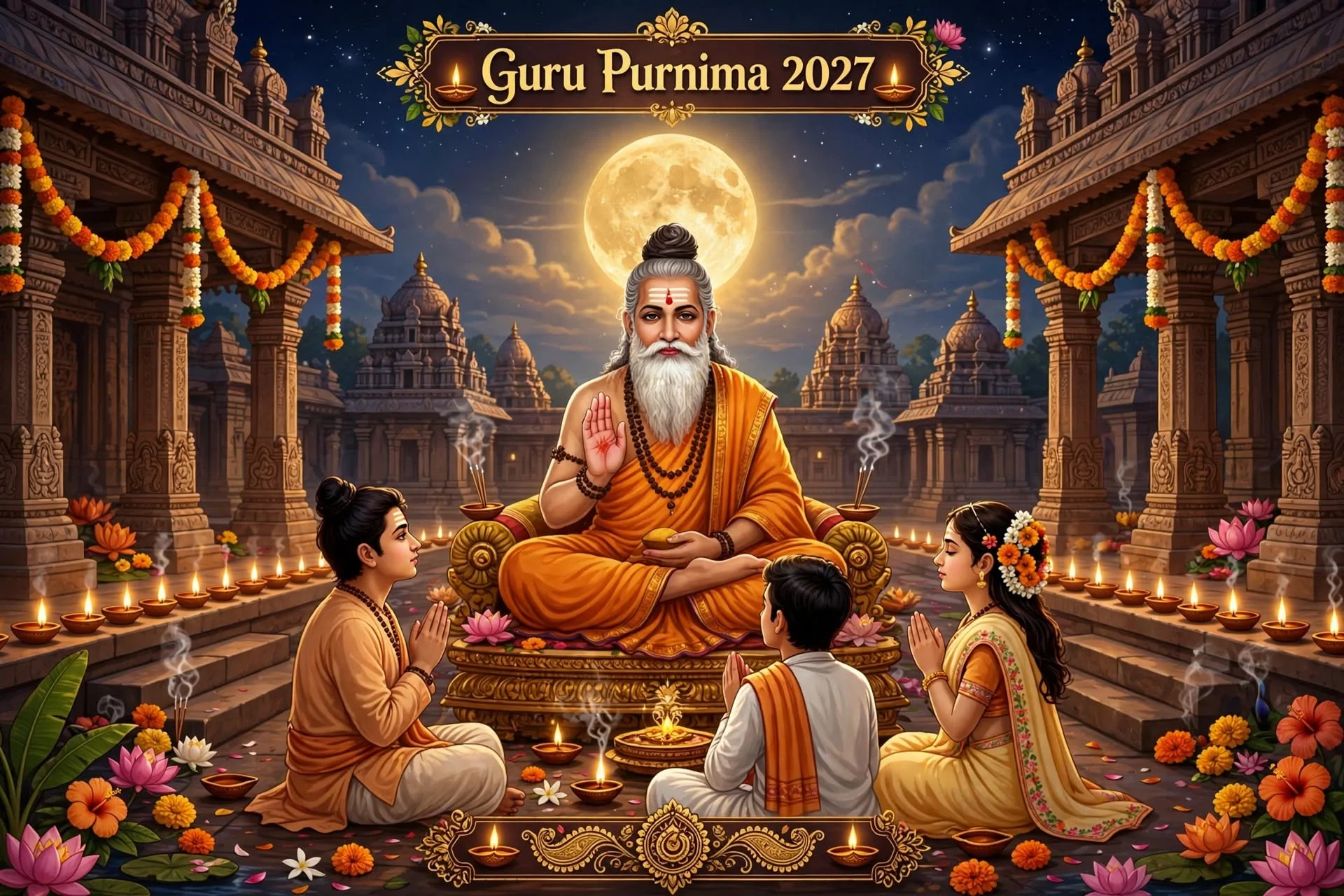
Sunday, Jul 18, 2027
Guru Purnima
Guru Purnima, celebrated on the full moon day (Purnima) in the Hindu lunar month of Ashadha, is one of the most sacred and venerable festivals across Sanatana Dharma, Buddhism, and Jainism. Dedicated to the eternal lineage of spiritual preceptors (Guru Parampara), this day honors the divine principle that dispels the darkness of ignorance (Gu) and illumines the radiance of self-realization and wisdom (Ru).
View Festival Guide
Sunday, Jul 18, 2027
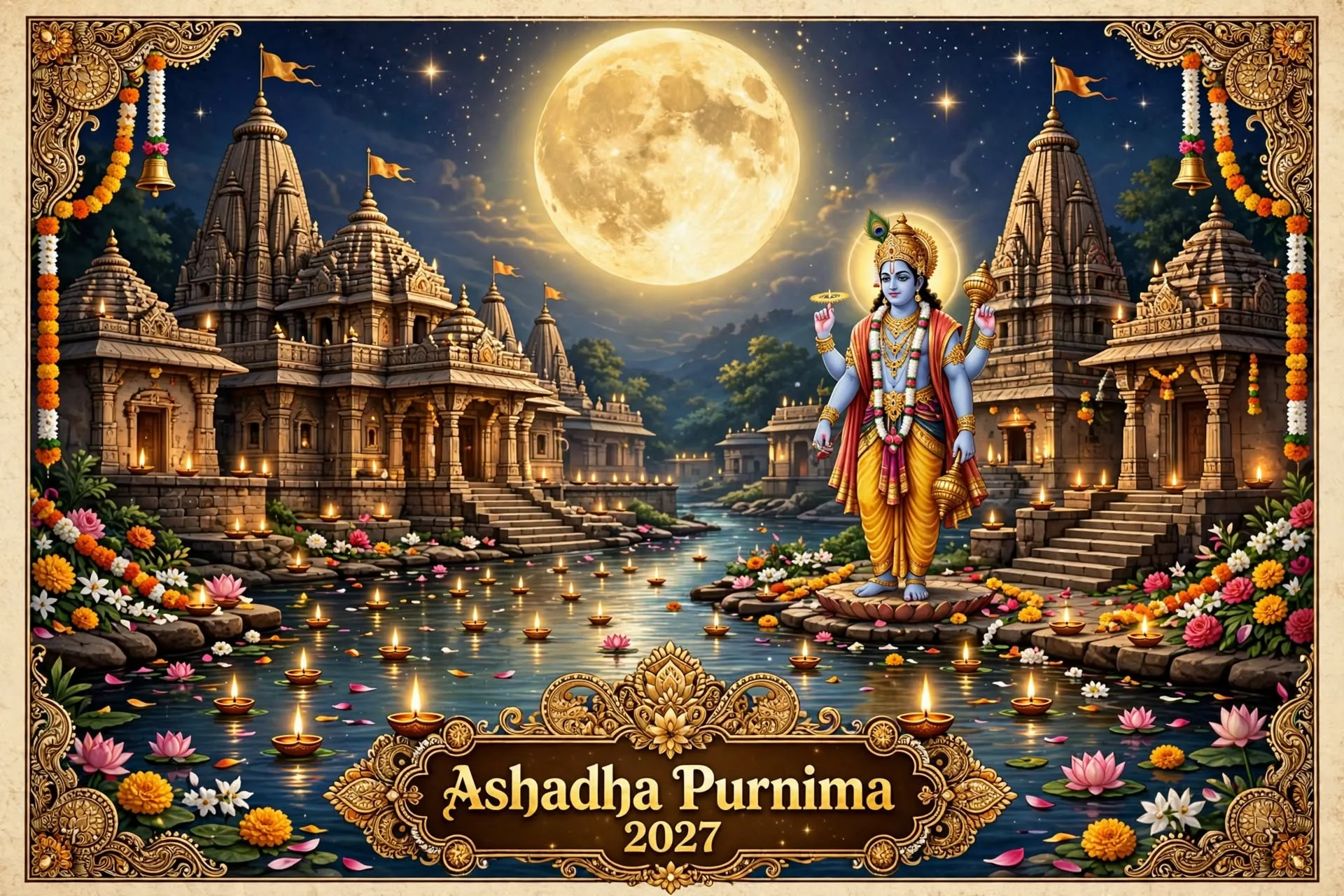
Ashadha Purnima
Ashadha Purnima is the radiant full moon tithi culminating the Shukla Paksha of the Hindu lunar month of Ashadha (occurring in July). Illuminating the mid-monsoon night sky with celestial brilliance, this sacred tithi represents one of the most auspicious spiritual junctures in Sanatana Dharma, Buddhism, and Jainism. As the full moon reaches its astrological peak in the constellations of Purva Ashadha and Uttara Ashadha, cosmic lunar and solar forces align to produce an atmosphere of profound mental clarity, devotional receptivity, and spiritual illumination.
View Festival Guide
Sunday, Jul 18, 2027
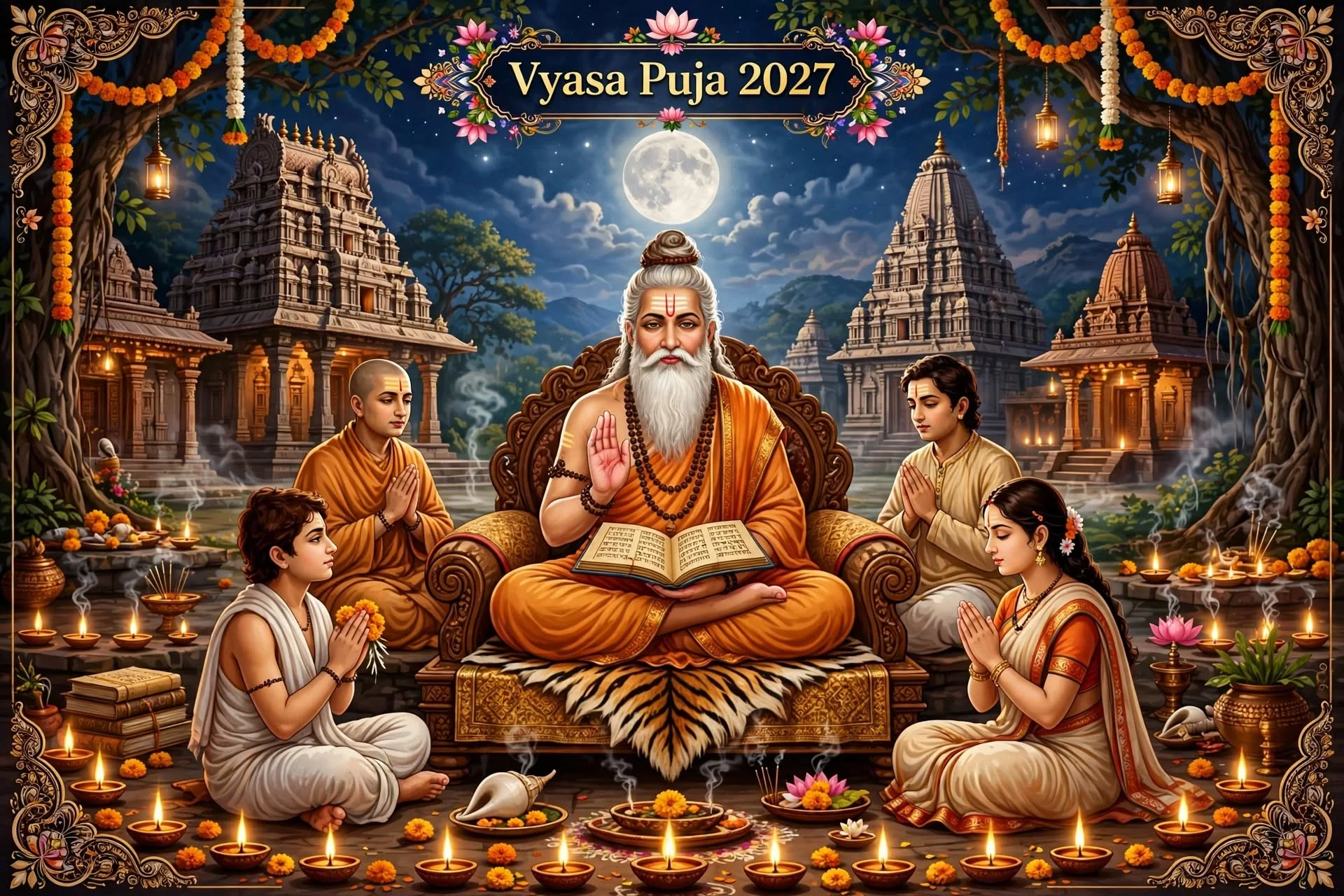
Vyasa Puja
Vyasa Puja is the paramount ritual celebration and liturgical solemnity observed on the Purnima (full moon day) of the Hindu lunar month of Ashadha (occurring in July), dedicated exclusively to Maharishi Krishna Dvaipayana Veda Vyasa—the immortal compiler of the four Vedas, author of the eighteen Mahapuranas, the monumental 100,000-verse Mahabharata, and the profound Brahma Sutras. While commonly celebrated in conjunction with Guru Purnima, Vyasa Puja specifically refers to the formal, highly codified liturgical ritual of worshiping the Vyasa Peetha (the sacred seat of scriptural authority) and honoring the unbroken Guru Parampara (lineage of enlightened masters) from Lord Narayana and Lord Sadashiva down to one's living spiritual preceptor.
View Festival Guide

Monday, Jul 19, 2027
Ishti
Ishti is a foundational Vedic ritual observance appearing prominently in Hindu Panchangs on the Pratipada tithi (the first lunar day) following either Amavasya (new moon) or Purnima (full moon), marking the prescribed performance day for the fortnightly Vedic Darsha-Purnamasa sacrifices.
View Festival Guide
Wednesday, Jul 21, 2027
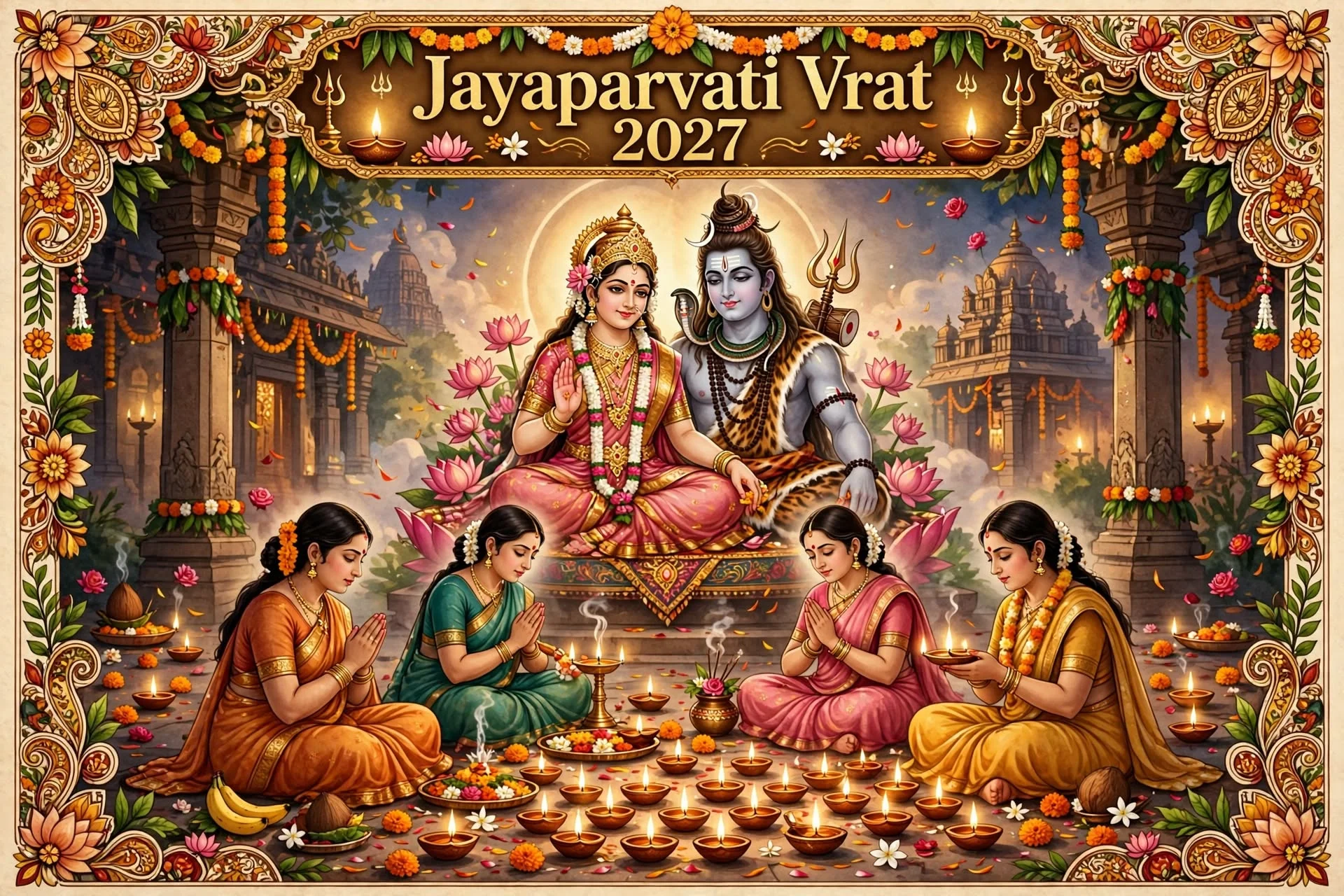
Jayaparvati Vrat
Jayaparvati Vrat, also known as Gauri Vrat or Jaya-Vijaya Vrata, is an ancient, highly revered five-day spiritual observance commencing on the Trayodashi tithi (thirteenth lunar day) of Shukla Paksha in the holy Hindu month of Ashadha (occurring in July) and concluding on Krishna Tritiya. Celebrated with immense piety and joy across Western India—predominantly in Gujarat and parts of Rajasthan and Maharashtra—the vrata is dedicated to Goddess Parvati (in Her victorious aspect as Jaya) and Lord Shiva. It is observed primarily by unmarried maidens praying for a virtuous, long-lived, and loving husband, as well as by married women seeking enduring marital bliss (Akhanda Saubhagya), domestic peace, and the welfare of their family lineage.
View Festival Guide
Thursday, Jul 22, 2027
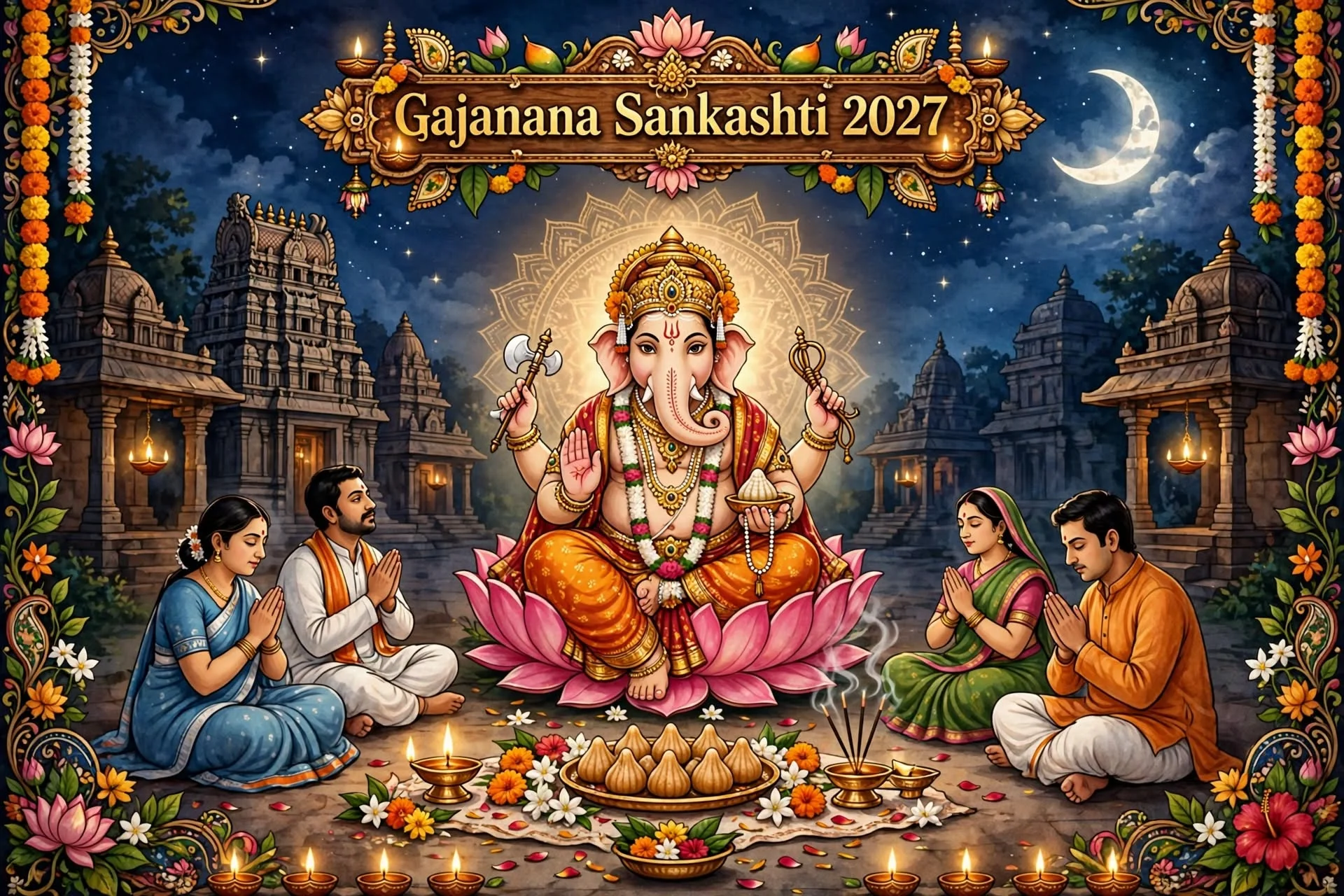
Gajanana Sankashti
Gajanana Sankashti, celebrated on the fourth lunar day (Chaturthi) of the Krishna Paksha in the holy Hindu month of Ashadha according to the Amavasyanta calendar, or Shravana Krishna Chaturthi in the Purnimanta calendar (occurring in late July), is an immensely powerful fasting day dedicated to Bhagwan Ganesha in His divine elephant-faced form of Gajanana. Revered across the Bhavishya Purana, Ganesha Purana, and Mudgala Purana, the word 'Sankashti' originates from 'Sankata-Nashana', denoting the miraculous divine potency of this tithi to dissolve, uproot, and eradicate all insurmountable worldly crises, emotional anxieties, and spiritual obstacles.
View Festival Guide
Thursday, Jul 29, 2027
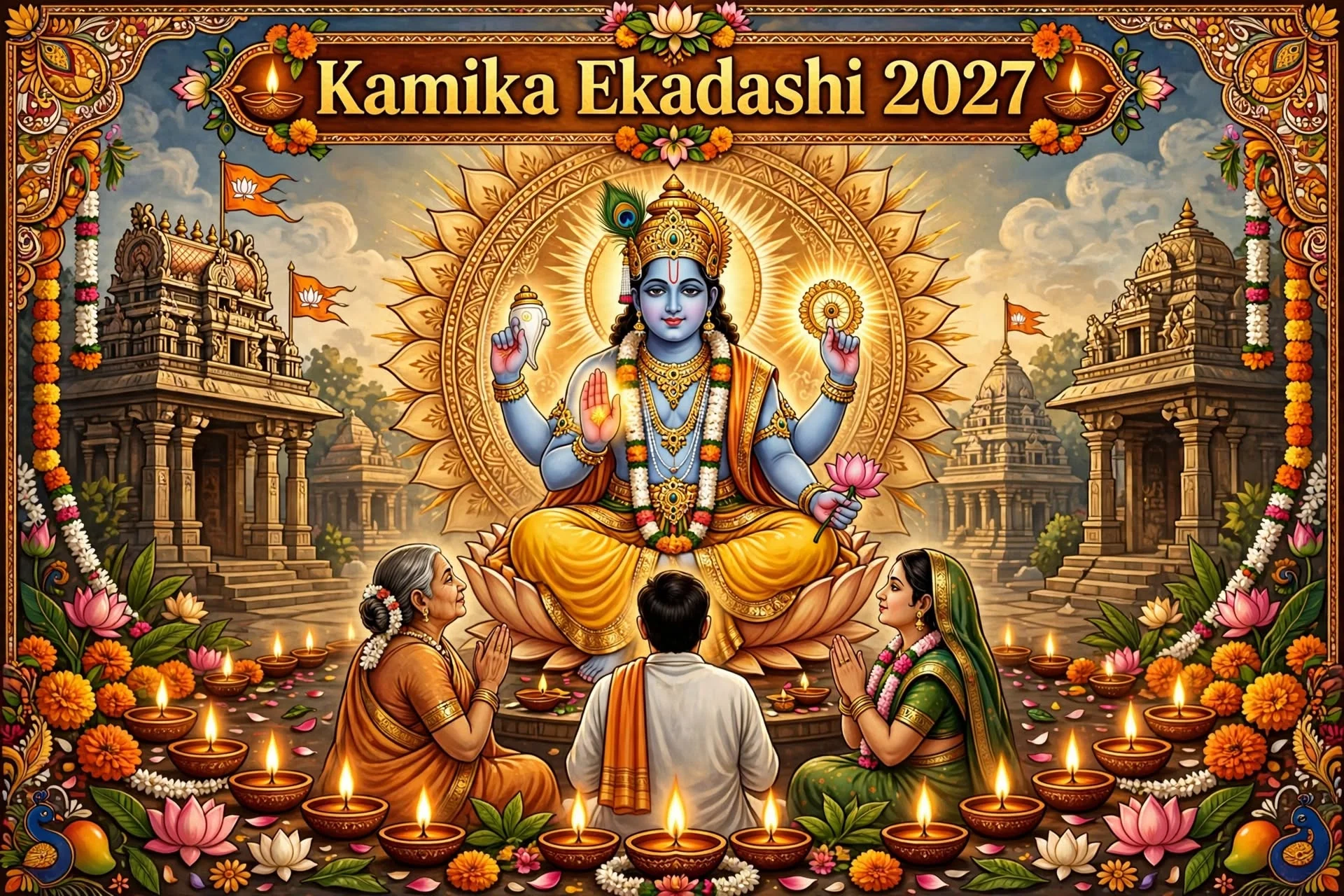
Kamika Ekadashi
Kamika Ekadashi is an immensely sacred fast observed on the eleventh lunar day (Ekadashi) of the Krishna Paksha (waning phase of the moon) in the Hindu month of Shravana according to the Amavasyanta calendar, or Ashadha Krishna Paksha in the North Indian Purnimanta calendar (occurring in mid-July). It is the first Ekadashi to fall within the holy rainy season of Chaturmas.
View Festival Guide
Friday, Jul 30, 2027
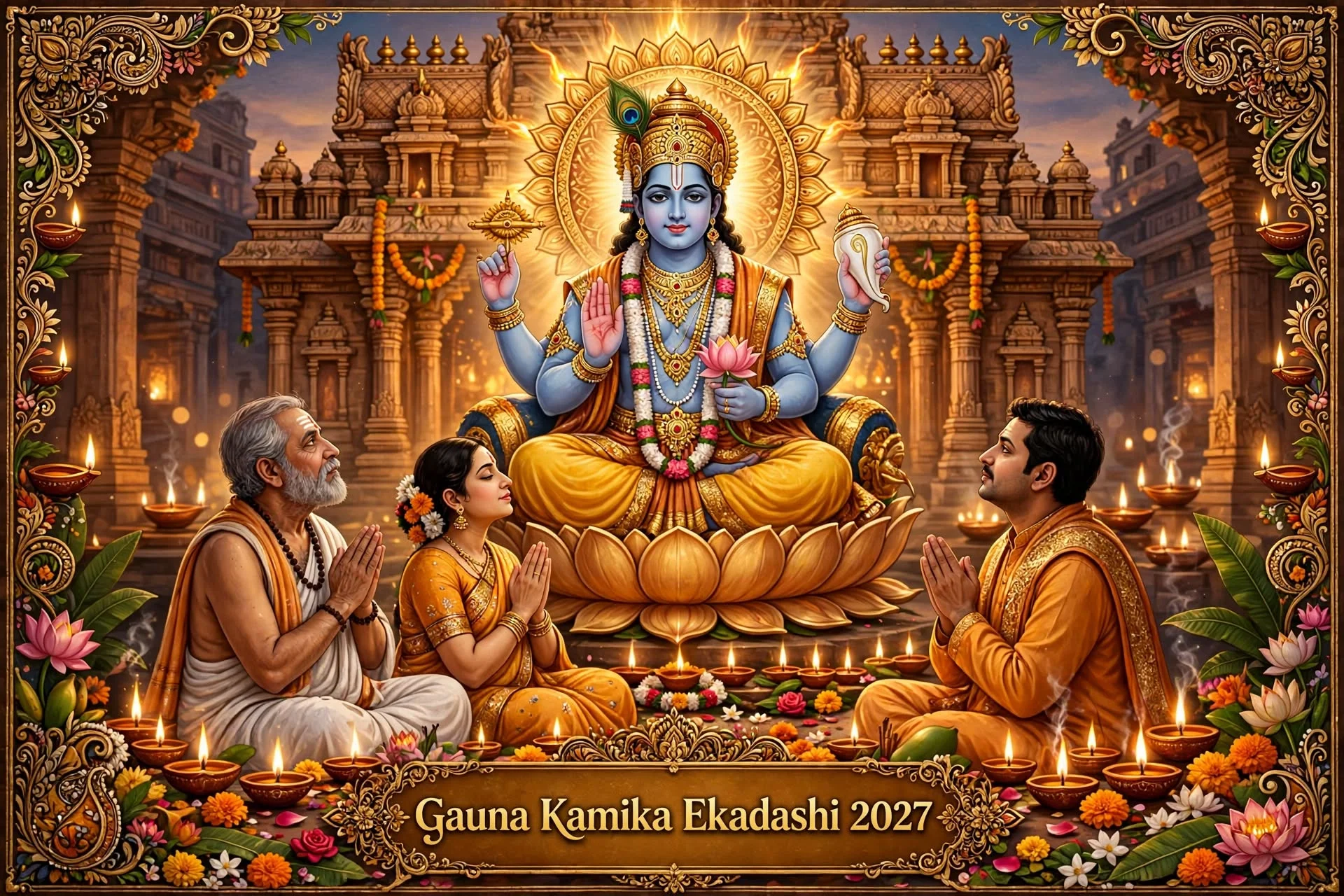
Gauna Kamika Ekadashi
Gauna Kamika Ekadashi is the specialized, highly disciplined secondary observance of Kamika Ekadashi falling on the Dwadashi tithi (twelfth lunar day) or the subsequent sunrise of the Krishna Paksha in the holy Hindu month of Shravana (Ashadha Krishna in Purnimanta reckoning, occurring in late July). While Smarta householders observe Ekadashi on the primary day when the eleventh tithi is devoid of Dashami overlap, ascetic renunciates (Sannyasis), widows, and disciples belonging to specific orthodox monastic lineages observe the fast on the 'Gauna' (secondary or subsequent) day, strictly adhering to the rigorous mathematical and scriptural injunctions of the Hari Bhakti Vilasa, Dharma Sindhu, and Nirnaya Sindhu.
View Festival Guide