




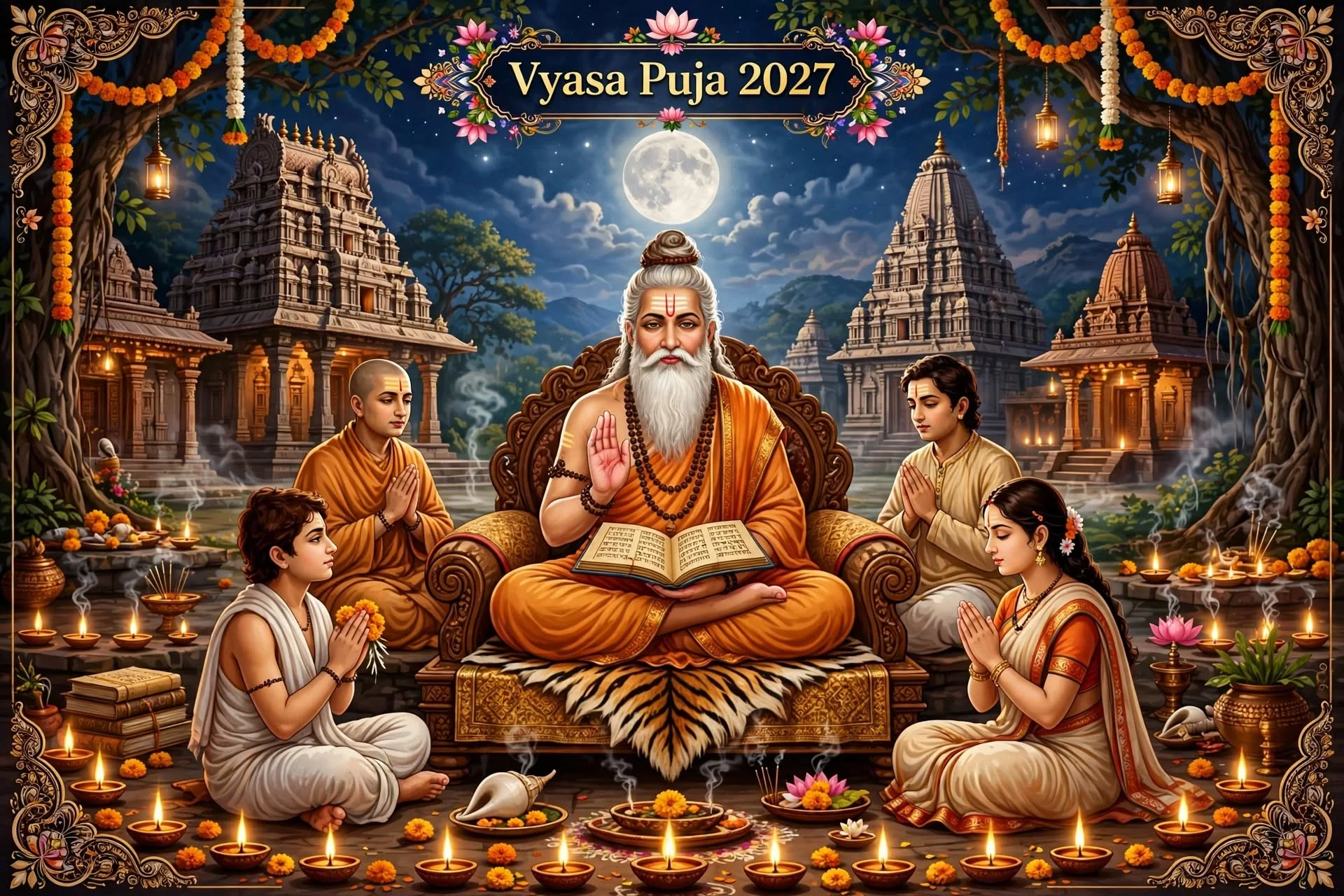
Vyasa Puja is the paramount ritual celebration and liturgical solemnity observed on the Purnima (full moon day) of the Hindu lunar month of Ashadha (occurring in July), dedicated exclusively to Maharishi Krishna Dvaipayana Veda Vyasa—the immortal compiler of the four Vedas, author of the eighteen Mahapuranas, the monumental 100,000-verse Mahabharata, and the profound Brahma Sutras. While commonly celebrated in conjunction with Guru Purnima, Vyasa Puja specifically refers to the formal, highly codified liturgical ritual of worshiping the Vyasa Peetha (the sacred seat of scriptural authority) and honoring the unbroken Guru Parampara (lineage of enlightened masters) from Lord Narayana and Lord Sadashiva down to one's living spiritual preceptor.
Vyasa Puja 2027: Date, Puja Timings, Rituals & Stories
Vyasa Puja Timings & Panchang
Important festival dates and auspicious timings
05:35 am
07:20 pm
Sunday, 18 Jul 2027
06:48 pm – 09:14 pm
Vyasa Puja
The observance of Vyasa Puja holds foundational importance within the traditional monastic orders (Dashanami Sannyasis) established by Jagadguru Adi Shankaracharya, as well as across the Dvaita, Vishishtadvaita, and Gaudiya Vaishnava traditions. For monks and wandering ascetics, performing Vyasa Puja on Ashadha Purnima is the mandatory preliminary liturgical rite that initiates the solemn four-month vow of Chaturmasya. During this sacred ceremony, Sannyasis re-pledge their life vows of renunciation (Tyaga), harmlessness (Ahimsa), celibacy (Brahmacharya), and truthfulness (Satya), committing to remain stationed in one hermitage or village for four months to meditate and instruct seekers in the Upanishads.
In domestic shrines, academic seats, and Vedic gurukulas, Vyasa Puja is conducted with elaborate Shodashopachara rituals. The altar is arranged with representations of Sage Vyasa, the four Vedas, and his four primary disciples—Paila (Rigveda), Vaishampayana (Yajurveda), Jaimini (Samaveda), and Sumantu (Atharvaveda)—alongside the authors of the Brahma Sutra commentaries. Devotees wash the sacred Padukas (wooden sandals) of the Guru, offer yellow flowers, chant the Brahma Sutras and the Guru Gita, and seek the awakening of supreme Vedantic wisdom (Jnana).
Why is Vyasa Puja Celebrated?
The celebration of Vyasa Puja is anchored in the universal recognition that without Maharishi Veda Vyasa, the vast, timeless spiritual heritage of Sanatana Dharma would have been fractured and lost to human memory with the onset of the moral and intellectual decline of the Kali Yuga.
According to the Skanda Purana and Vishnu Purana, Sage Vyasa was an empowered incarnation (Shaktyavesha Avatara) of Lord Narayana, appearing at the close of Dvapara Yuga specifically to systematize cosmic knowledge. Seeing that human beings in Kali Yuga would possess abbreviated lifespans, fragile memories, and scattered focus, Vyasa divided the singular primordial Veda into four distinct collections, composed the Puranas to make metaphysical truths accessible through inspiring stories, and crystallized the essence of the Upanishads into the 555 aphorisms of the Brahma Sutras.
Celebrating Vyasa Puja is the supreme expression of human gratitude toward the architect of Hindu spiritual culture. It ensures that the flame of sacred knowledge is kept burning across generations, honoring the teachers who dismantle the darkness of ignorance and guide humanity across the ocean of worldly delusion (Samsara).
- Honoring Maharishi Krishna Dvaipayana Veda Vyasa as the supreme primordial teacher of Vedic wisdom.
- Worshiping the unbroken lineage of preceptors (Guru Parampara) from the Supreme Divine to the living master.
- Initiating the formal four-month monastic retreat of Chaturmasya across Shankaracharya Mathas and ashrams.
- Consecrating the Vyasa Peetha and recommitting to the study of the Upanishads, Bhagavad Gita, and Brahma Sutras.
- Expressing heartfelt discipleship through Guru Pada Puja, scriptural recitation, and the offering of Guru Dakshina.
Scriptural Origins in the Mahabharata, Skanda Purana, and Shankara Tradition
The Divine Advent and Classification of the Vedas by Vyasa
The Mahabharata records that Sage Parashara, while crossing the Yamuna River, perceived an extraordinarily auspicious cosmic alignment that could produce a divine being capable of preserving the Vedic wisdom for future eons. From his spiritual union with the virtuous maiden Satyavati, Krishna Dvaipayana was born on an island (Dvipa) in the Yamuna.
Endowed with omniscience from birth, Vyasa grew instantly into an enlightened sage. Recognizing the spiritual incapacity of the approaching Kali Yuga, he systematically organized the single primordial Veda into four: Rigveda (hymns of praise), Yajurveda (sacrificial rituals), Samaveda (musical melodies), and Atharvaveda (practical and esoteric sciences), entrusting each to his four great disciples: Paila, Vaishampayana, Jaimini, and Sumantu.
The Composition of the Mahabharata, Puranas, and Srimad Bhagavatam
To benefit common householders, women, and laborers who were not trained in complex Sanskrit Vedic grammar, Vyasa composed the epic Mahabharata, incorporating the nectar of the Bhagavad Gita, and compiled the eighteen Mahapuranas. However, even after completing these monumental works, Vyasa felt an inexplicable void in his heart.
Sage Narada arrived at his hermitage on the banks of the Saraswati River and advised him: 'O Vyasa, you have described rituals, dharma, and royal politics, but you have not yet described the unalloyed, ecstatic devotional glories of Lord Sri Krishna!' Inspiringly, Vyasa sat in profound samadhi and composed the twelve cantos of the Srimad Bhagavatam, attaining absolute, blissful fulfillment.
Adi Shankaracharya and the Formalization of the Vyasa Puja Paddhati
In the 8th century CE, Jagadguru Adi Shankaracharya formalized the liturgical manual of Vyasa Puja. When Shankaracharya met Sage Vyasa in Varanasi, Vyasa blessed his non-dual (Advaita) commentary on the Brahma Sutras.
Shankaracharya instituted the ritual structure followed to this day in the four cardinal monastic seats (Sringeri, Puri, Dwarka, and Joshimath), where the Jagadgurus establish a mandala representing Vyasa, Krishna, and the seers on Ashadha Purnima, offering five-color powders, fragrant flowers, and taking the solemn vow of Chaturmasya.
The Guru Parampara, The Vyasa Peetha, and the Realization of Non-Duality
The Sacred Chain of the Guru Parampara
In Sanatana Dharma, spiritual wisdom is not a human invention; it is an eternal revelation transmitted through an unbroken golden chain of masters known as the Guru Parampara: 'Narayanam Padmabhavam Vashishtham Shaktim Cha Tatputra Parasharam Cha, Vyasam Shukam Gaudapadam Mahantam Govinda Yogindra Mathasya Shishyam, Sri Shankaracharyam Mathasya Padmapadam Cha Hastamalakam Cha Shishyam, Tam Trotakam Vartikakaramanyaan Asmad Gurun Santatamanatosmi.'
Vyasa Puja reminds the seeker that no individual stands alone; every student is linked through their Guru directly to the cosmic fountainhead of Lord Narayana and Lord Shiva.
The Sanctity of the Vyasa Peetha
The raised wooden seat from which spiritual discourses on the scriptures are delivered is revered as the Vyasa Peetha. The speaker seated upon it is regarded not as a private individual, but as an instrument speaking on behalf of Sage Vyasa.
Worshiping the Vyasa Peetha on Ashadha Purnima reinforces the supreme ethical responsibility of teachers to speak only truth (Satya), free from personal ego, commercial greed, or sectarian prejudice, preserving the sanctity of divine revelation.
The Pada Puja: Surrender of Ahankara
The ritual washing of the Guru's holy feet (Pada Puja) is an act of supreme surrender. In yogic physiology, the culmination of all spiritual energy nadis radiates from the feet. By touching the master's feet with devotion, the disciple willingly dismantles the false pride of intellect and caste, opening their subtle heart to receive Shaktipat (spiritual awakening).
Ashram Liturgical Structure, Mandala Puja, and Monastic Vows
Mandala Preparation and Invocation of the Lineage
In monastic ashrams and traditional gurukulas, priests prepare an elaborate sacred geometric mandala on a clean raised platform using rice powder, turmeric, kumkum, and fragrant flower petals. The mandala contains designated squares representing Lord Krishna, Sage Vyasa, Sage Shuka, the four Vedas, the Brahma Sutras, and the principal acharyas of the lineage.
The reigning Pontiff or spiritual master takes his seat before the mandala, and senior disciples commence the elaborate invocations accompanied by thunderous Vedic chanting from the Rigveda and Yajurveda.
Vyasa Pada Puja and Panchamrita Abhishekam
The sacred wooden sandals (Padukas) of the lineage founders are placed upon a silver pedestal. Disciples perform Abhishekam with pure water, raw cow milk, curd, wild honey, cow ghee, and raw cane sugar, followed by fragrant rose water and sandalwood paste. Garlands of fresh white jasmine and yellow marigolds are draped over the Padukas while chanting the 108 names of Sage Vyasa and the Sadguru.
The Recitation of the Chaturmasya Sankalpa
Following the puja, the head monk recites the ancient Chaturmasya Sankalpa: 'Praninam hita-kamartham vasami nagare hyasmin' (For the welfare and protection of all living beings, and to practice deep scriptural study, I shall remain stationed in this locality for four months). The lay disciples and householders formally pray to the monks: 'Nivasantu sukham sarve' (May you reside here happily and instruct us in dharma), pledging to provide food and shelter to the ascetics throughout the monsoon season.
Vyasa Puja Puja Vidhi (Step by Step)
- 1
Brahma Muhurta Snana and Shuddhi (Morning Purification)
Wake before dawn during Brahma Muhurta, take a sacred bath chanting river purification mantras, wear clean saffron, yellow, or white unstitched traditional garments, and sanctify the altar with Gangajal.
- 2
Mandala Rachana (Drawing the Sacred Geometric Grid)
Draw an ornate geometric Mandala using clean rice flour, turmeric, and kumkum on a raised wooden platform, establishing quadrants for the Vedas, Puranas, Vyasa, and the Acharyas.
- 3
Vyasa Peetha Sthapana and Avahana (Invoking Sage Vyasa)
Install the sacred Padukas or portrait of Maharishi Veda Vyasa in the central quadrant of the mandala, invoking his divine presence with flowers, akshata, and Vedic chants.
- 4
Chatur-Veda and Shishya Avahana (Invoking the Four Vedas and Disciples)
Invoke the four Vedas and Vyasa's four principal disciples—Paila (Rigveda), Vaishampayana (Yajurveda), Jaimini (Samaveda), and Sumantu (Atharvaveda)—around the central altar.
- 5
Vyasa Puja Puja Samagri List
Mandala and Altar Materials
- Consecrated wooden Padukas (sandals) of Maharishi Veda Vyasa and the Guru lineage
- Raised wooden chowki (pedestal) covered with fresh saffron or yellow silk fabric
- Organic rice flour, turmeric powder, and red kumkum for preparing the geometric Mandala
- Five sacred metal vessels: Panchapatra, Achamani spoon, Abhisheka tray, and Arghya patra
- Pure Gangajal and fragrant rose water in clean brass or copper containers
Aromatic Pastes and Floral Offerings
- Pure Malayagiri white sandalwood paste, sacred Ashtagandha, and Kumkum
- Fresh white lotuses, yellow marigold garlands, white jasmine (Mogra), and rose blossoms
- Fresh holy Tulsi leaves and Bilva leaves for deity worship
- Large five-wick brass Aarti lamp with pure cow ghee and unbleached cotton wicks
- Bhimseni natural camphor and fragrant natural incense sticks (Loban and Guggulu)
Naivedya and Gurudakshina Items
- Panchamrita ingredients: pure raw cow milk, curd, wild honey, cow ghee, and raw sugar
- Sweet rice pudding (Kheer) prepared with basmati rice, milk, saffron, and cardamom
- Fresh seasonal fruits: yellow bananas, mangoes, pomegranates, and apples
Mantras and Prayers for Vyasa Puja
Vyasa Puja Vrat Rules and Fasting Guidelines
Disciplinary Code for Disciples and Seekers
Devotees observe a pure sattvic fast on Vyasa Puja. While monks partake of a single monastic meal provided by disciples, householders observe fasting until the completion of the afternoon Vyasa Puja and scriptural discourses. The evening meal is purely vegetarian, prepared without onions, garlic, mushrooms, or heavy spices. The day is sanctified through study of the Upanishads and silent meditation.
- Total abstinence from non-vegetarian food, alcohol, tobacco, onions, and garlic.
- Practicing internal silence (Mauna) during the forenoon hours of worship.
- Engaging in Seva (selfless service) by cleaning the ashram or temple grounds and serving holy food to seekers.
Chaturmasya Rules for Monastics
For Dashanami Sannyasis, Vyasa Puja initiates the strict four-month retreat. Monks vow not to cross large flowing bodies of water, remain in one designated residence, give daily public lectures on the Vedanta Sutras, and refrain from shaving their beards or cutting hair until the conclusion of the vrata on Kartika Purnima.
Dos and Don'ts of Vyasa Puja
Good Practices (Do's)
- Wake up during Brahma Muhurta, bathe, and meditate upon the lotus feet of your Guru and Sage Vyasa.
- Perform ceremonial Pada Puja of the Guru's sacred sandals (Padukas) with sandalwood paste and flowers.
- Read and recite the Brahma Sutras, the Bhagavad Gita, and the Guru Gita.
- Offer sincere Guru Dakshina in the form of seva, humility, and dedication to spiritual study.
- Show heartfelt respect to all teachers, parents, and scholars who illuminate the path of knowledge.
Vyasa Puja Across Regions
| Region | Local Name |
|---|---|
| All India / Shankaracharya Mathas (Sringeri, Puri, Dwarka, Badari) | Chaturmasya Vyasa Puja |
| Varanasi and Haridwar | Ganga Ghat Vyasa Aradhana |
| Udupi and Madhwa Peethams (Karnataka) | Udupi Ashta Matha Vyasa Puja |
Vyasa Puja FAQs
What is the specific distinction between Guru Purnima and Vyasa Puja?
Guru Purnima is the broad socio-religious celebration honoring all personal spiritual teachers and educators. Vyasa Puja is the precise, formal liturgical ritual specifically worshiping Maharishi Veda Vyasa, the Vyasa Peetha, and the unbroken Guru Parampara, marking the start of the monastic Chaturmasya.
Who was Maharishi Krishna Dvaipayana Veda Vyasa?
Sage Vyasa was the great seer born to Sage Parashara and Satyavati on an island in the Yamuna. He compiled the four Vedas, authored the eighteen Mahapuranas, the Mahabharata, the Brahma Sutras, and the Srimad Bhagavatam, becoming the primary preceptor of Hindu thought.
What is the 'Vyasa Peetha'?
The Vyasa Peetha is the consecrated seat of scriptural authority from which discourses on the Upanishads, Puranas, and Gita are delivered. The speaker seated upon it is regarded as an instrument speaking on behalf of Sage Vyasa.
Upcoming Festivals
View All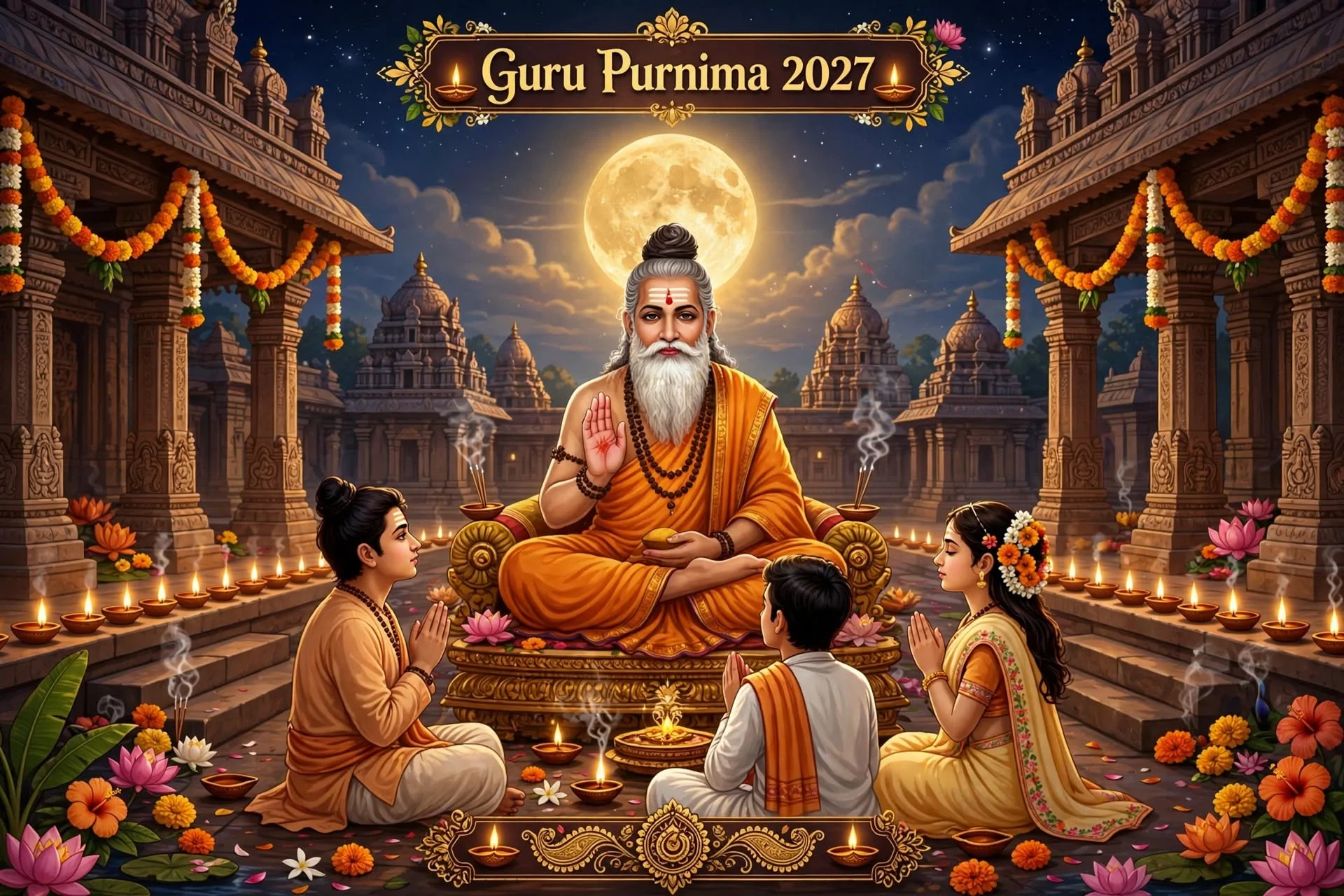
Guru Purnima
Guru Purnima, celebrated on the full moon day (Purnima) in the Hindu lunar month of Ashadha, is one of the most sacred and venerable festivals across Sanatana Dharma, Buddhism, and Jainism. Dedicated to the eternal lineage of spiritual preceptors (Guru Parampara), this day honors the divine principle that dispels the darkness of ignorance (Gu) and illumines the radiance of self-realization and wisdom (Ru).

Anvadhan
Anvadhan (अन्वाधान) is an ancient, highly revered Vedic ritual and spiritual observance in Sanatana Dharma performed on the day immediately preceding the New Moon (Amavasya) or Full Moon (Purnima). Rooted in the pristine traditions of the Shrauta and Grihya Sutras, Anvadhan literally translates to 'the solemn placing and replenishment of sacred fuel wood into the consecrated Vedic fires'. In traditional Vedic ritualism, householders (Grihasthas) and priests who maintain the sacred Agnihotra fires perform Anvadhan to prepare the sacrificial altars for the grand Darsha Yajna (New Moon sacrifice) or Paurnamasa Yajna (Full Moon sacrifice) scheduled for the following day.
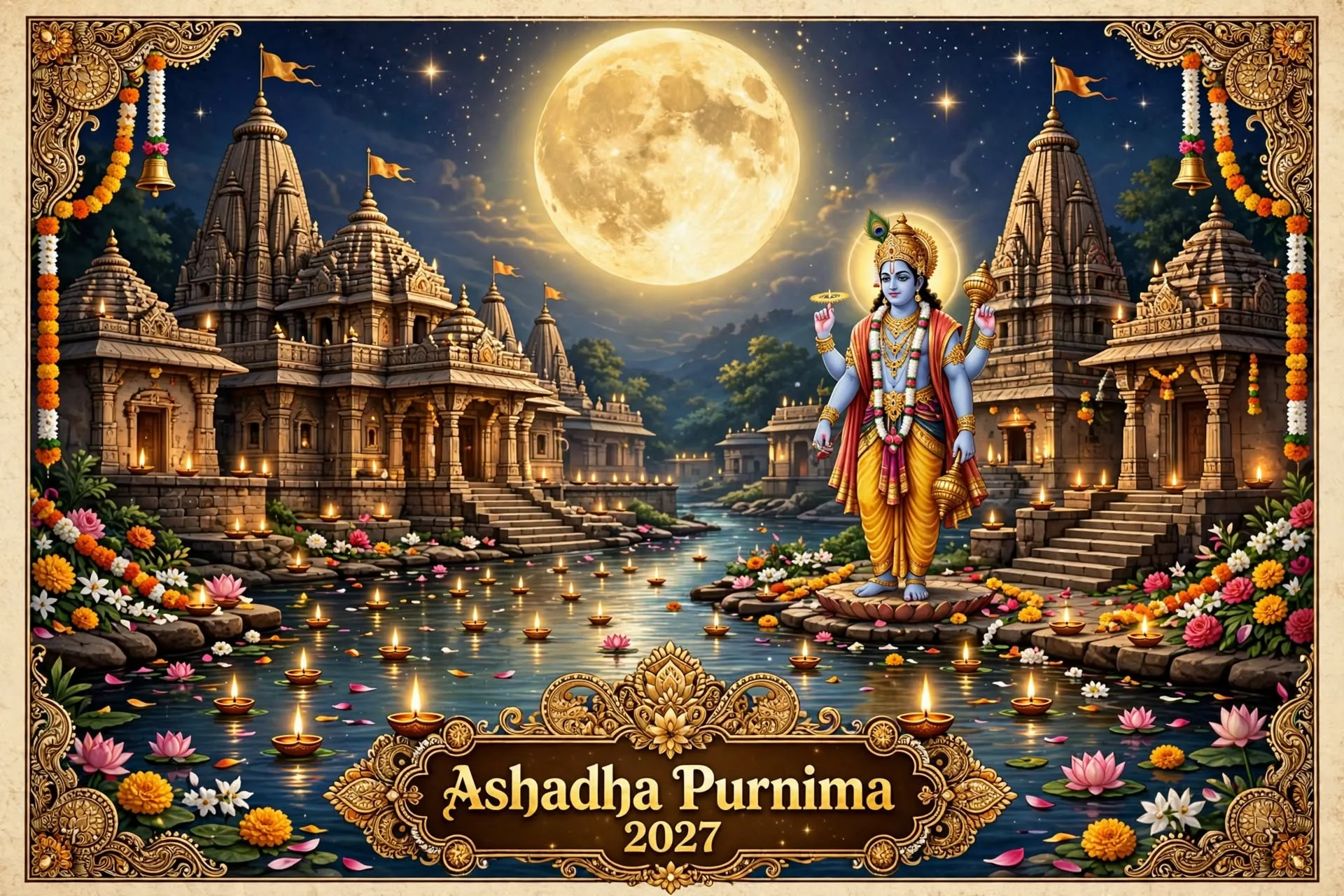
Ashadha Purnima
Ashadha Purnima is the radiant full moon tithi culminating the Shukla Paksha of the Hindu lunar month of Ashadha (occurring in July). Illuminating the mid-monsoon night sky with celestial brilliance, this sacred tithi represents one of the most auspicious spiritual junctures in Sanatana Dharma, Buddhism, and Jainism. As the full moon reaches its astrological peak in the constellations of Purva Ashadha and Uttara Ashadha, cosmic lunar and solar forces align to produce an atmosphere of profound mental clarity, devotional receptivity, and spiritual illumination.

Ishti
Ishti is a foundational Vedic ritual observance appearing prominently in Hindu Panchangs on the Pratipada tithi (the first lunar day) following either Amavasya (new moon) or Purnima (full moon), marking the prescribed performance day for the fortnightly Vedic Darsha-Purnamasa sacrifices.
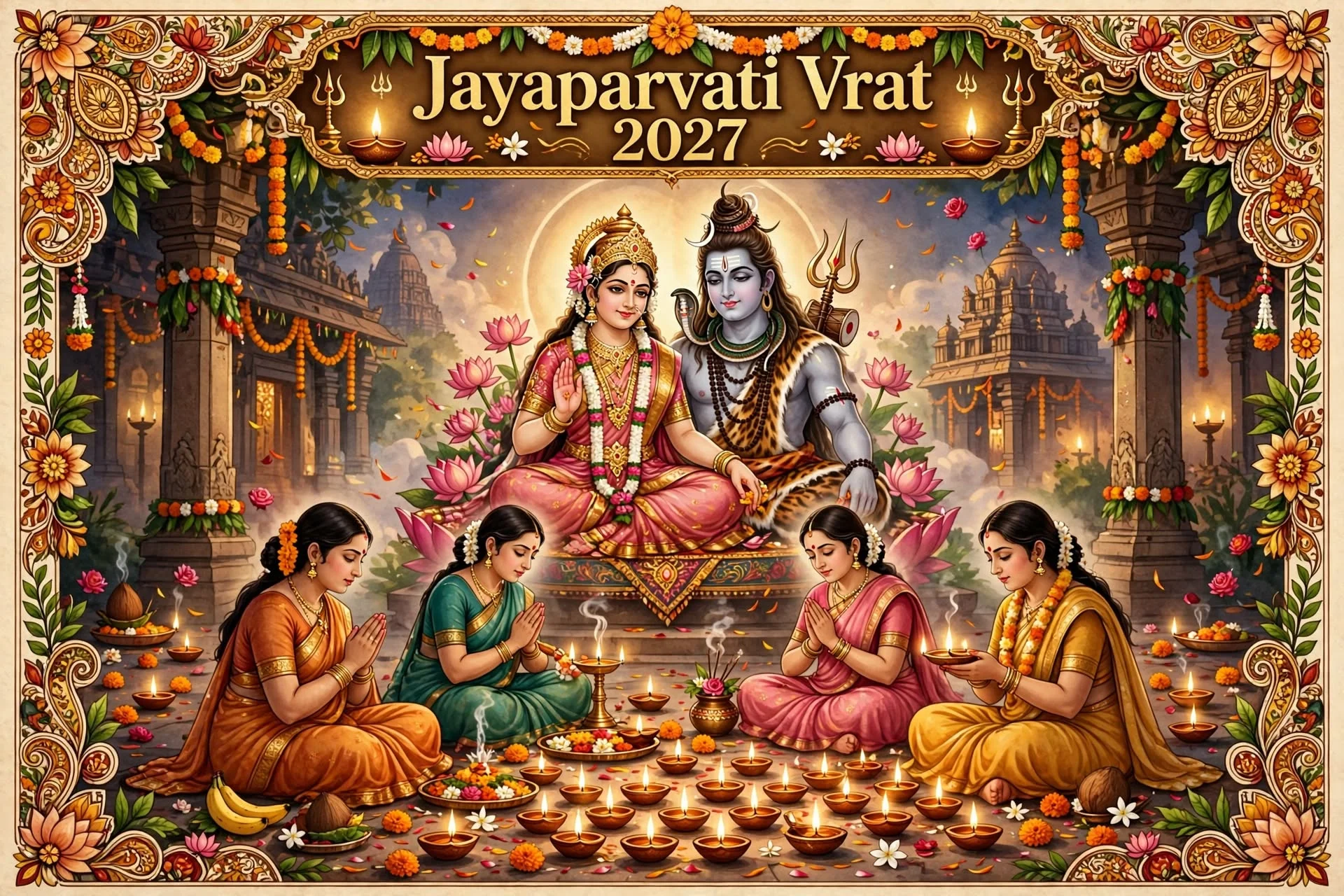
Jayaparvati Vrat
Jayaparvati Vrat, also known as Gauri Vrat or Jaya-Vijaya Vrata, is an ancient, highly revered five-day spiritual observance commencing on the Trayodashi tithi (thirteenth lunar day) of Shukla Paksha in the holy Hindu month of Ashadha (occurring in July) and concluding on Krishna Tritiya. Celebrated with immense piety and joy across Western India—predominantly in Gujarat and parts of Rajasthan and Maharashtra—the vrata is dedicated to Goddess Parvati (in Her victorious aspect as Jaya) and Lord Shiva. It is observed primarily by unmarried maidens praying for a virtuous, long-lived, and loving husband, as well as by married women seeking enduring marital bliss (Akhanda Saubhagya), domestic peace, and the welfare of their family lineage.
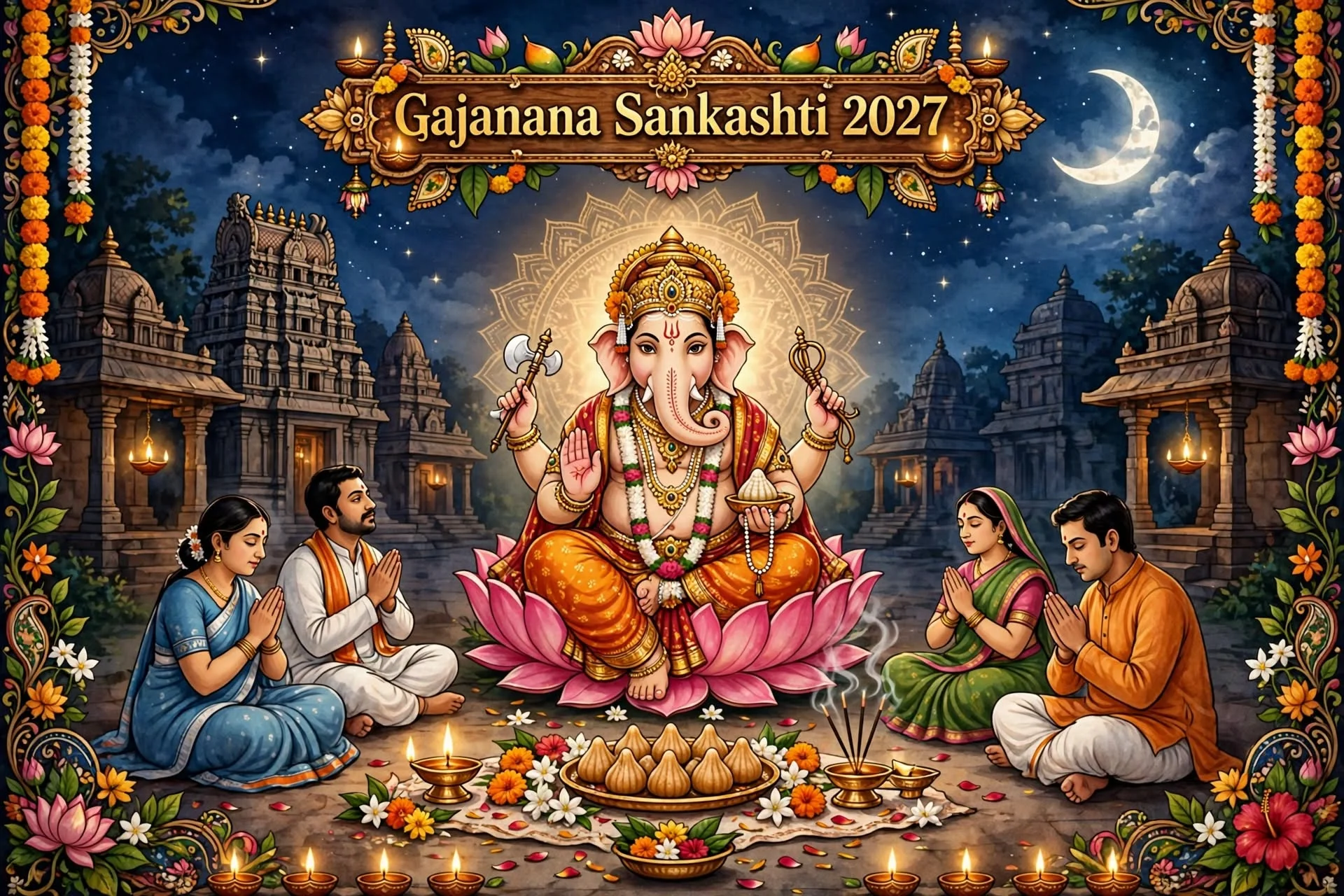
Gajanana Sankashti
Gajanana Sankashti, celebrated on the fourth lunar day (Chaturthi) of the Krishna Paksha in the holy Hindu month of Ashadha according to the Amavasyanta calendar, or Shravana Krishna Chaturthi in the Purnimanta calendar (occurring in late July), is an immensely powerful fasting day dedicated to Bhagwan Ganesha in His divine elephant-faced form of Gajanana. Revered across the Bhavishya Purana, Ganesha Purana, and Mudgala Purana, the word 'Sankashti' originates from 'Sankata-Nashana', denoting the miraculous divine potency of this tithi to dissolve, uproot, and eradicate all insurmountable worldly crises, emotional anxieties, and spiritual obstacles.
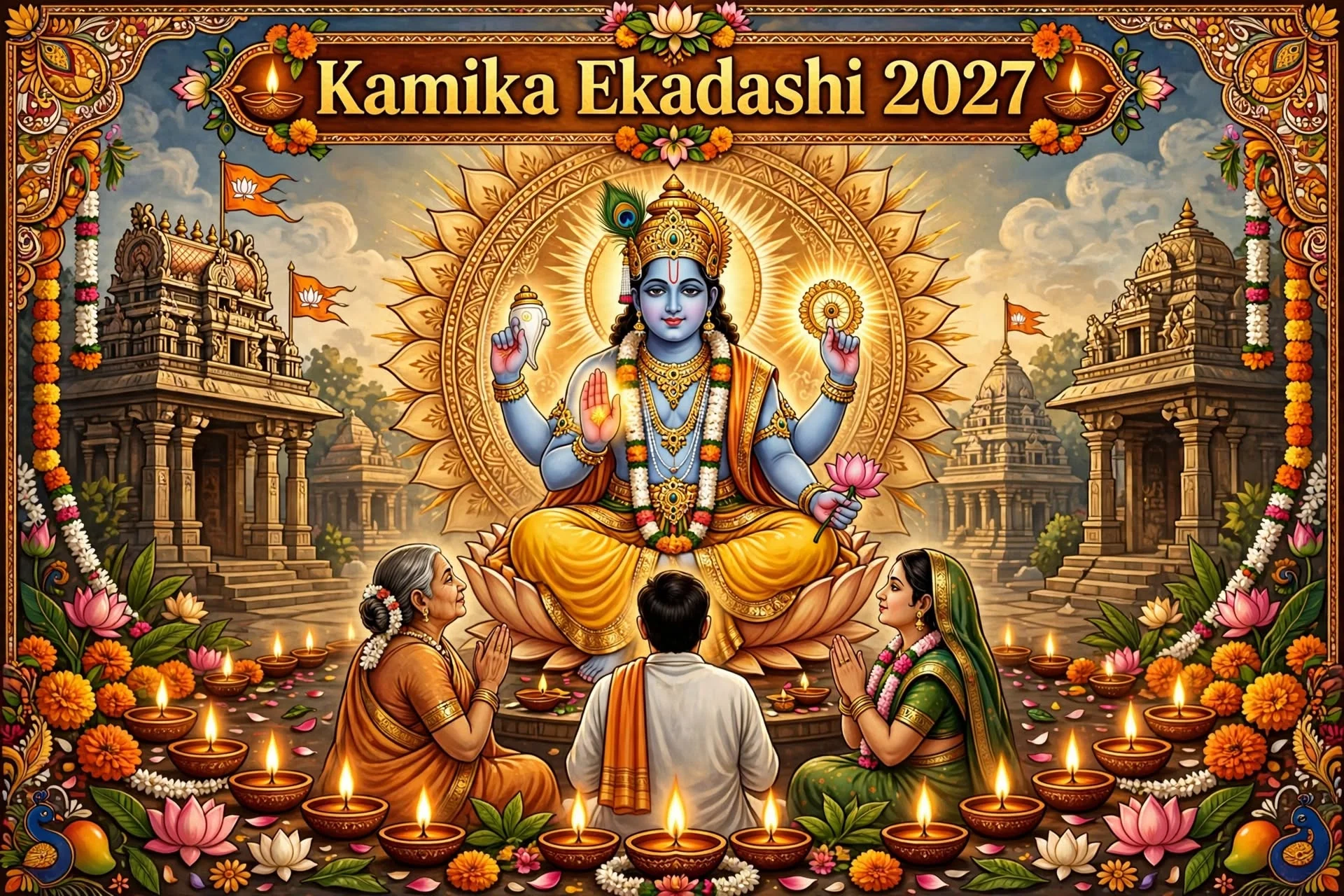
Kamika Ekadashi
Kamika Ekadashi is an immensely sacred fast observed on the eleventh lunar day (Ekadashi) of the Krishna Paksha (waning phase of the moon) in the Hindu month of Shravana according to the Amavasyanta calendar, or Ashadha Krishna Paksha in the North Indian Purnimanta calendar (occurring in mid-July). It is the first Ekadashi to fall within the holy rainy season of Chaturmas.
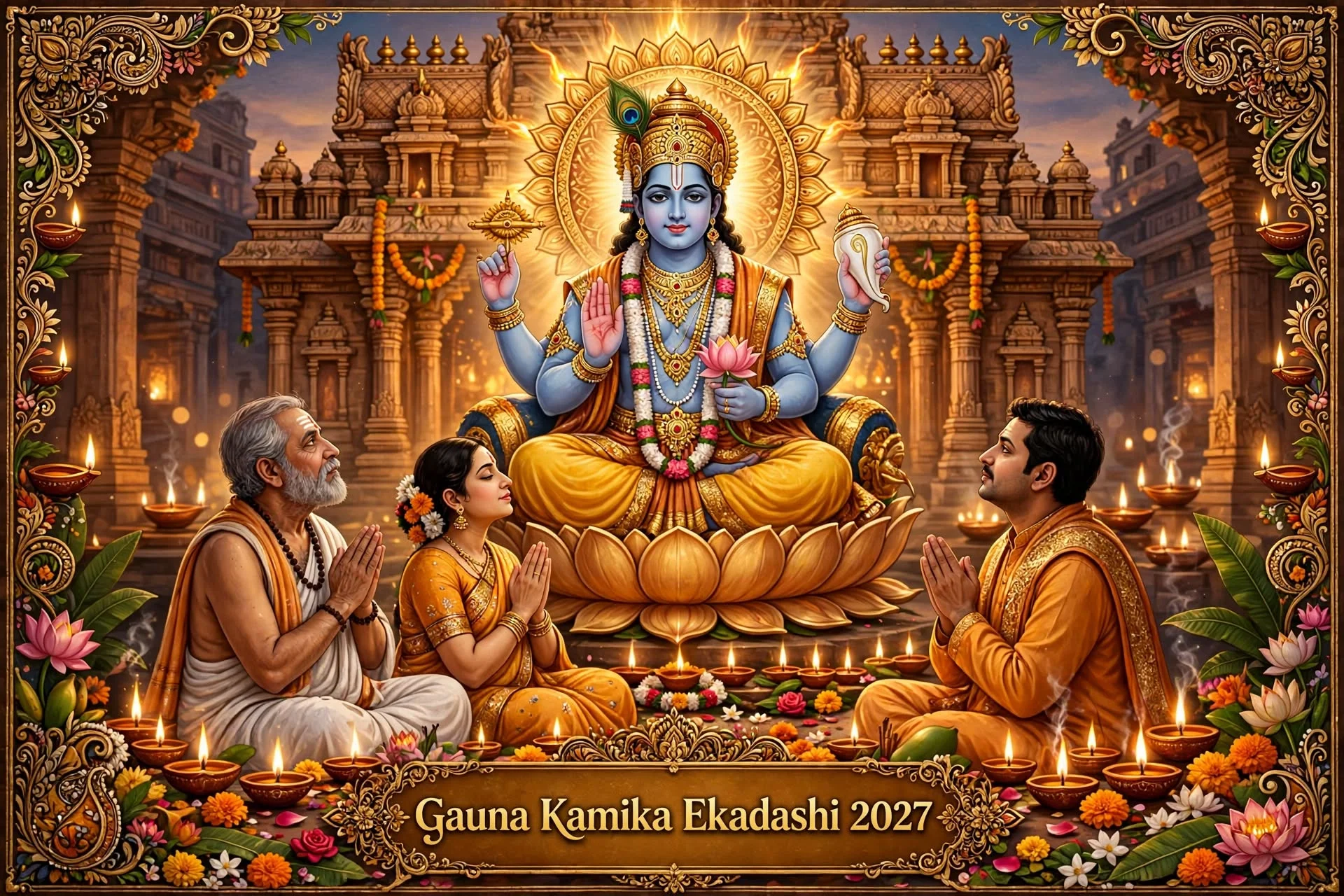
Gauna Kamika Ekadashi
Gauna Kamika Ekadashi is the specialized, highly disciplined secondary observance of Kamika Ekadashi falling on the Dwadashi tithi (twelfth lunar day) or the subsequent sunrise of the Krishna Paksha in the holy Hindu month of Shravana (Ashadha Krishna in Purnimanta reckoning, occurring in late July). While Smarta householders observe Ekadashi on the primary day when the eleventh tithi is devoid of Dashami overlap, ascetic renunciates (Sannyasis), widows, and disciples belonging to specific orthodox monastic lineages observe the fast on the 'Gauna' (secondary or subsequent) day, strictly adhering to the rigorous mathematical and scriptural injunctions of the Hari Bhakti Vilasa, Dharma Sindhu, and Nirnaya Sindhu.