




Ashadha Purnima is the radiant full moon tithi culminating the Shukla Paksha of the Hindu lunar month of Ashadha (occurring in July). Illuminating the mid-monsoon night sky with celestial brilliance, this sacred tithi represents one of the most auspicious spiritual junctures in Sanatana Dharma, Buddhism, and Jainism. As the full moon reaches its astrological peak in the constellations of Purva Ashadha and Uttara Ashadha, cosmic lunar and solar forces align to produce an atmosphere of profound mental clarity, devotional receptivity, and spiritual illumination.
Ashadha Purnima 2027: Date, Puja Timings, Rituals & Stories

Ashadha Purnima Timings & Panchang
Important festival dates and auspicious timings
Usha Arghya (Sunrise)
05:35 am
Sandhya Arghya (Sunset)
07:20 pm
Start Date
Sunday, 18 Jul 2027
Puja Muhurat
06:48 pm – 09:14 pm
Ashadha Purnima
The observance of Ashadha Purnima is universally celebrated as the crown of monastic and devotional calendars. It encompasses several momentous observances: it serves as the celestial date of Guru Purnima and Vyasa Puja, commemorates the commencement of the four-month monastic retreat (Chaturmasya), marks the sacred Kokila Vrat dedicated to Goddess Sati, and is observed in Buddhist tradition as Asalha Puja (Dhamma Day), celebrating Gautama Buddha's first sermon at Sarnath. For householders, Ashadha Purnima is dedicated to the worship of Lord Satyanarayana, sacred river bathing, and the offering of lunar libations (Chandra Arghya).
Pilgrims gather in their hundreds of thousands at sacred river confluences (Tirthas) such as the Triveni Sangam in Prayagraj, the Ganga ghats of Varanasi and Haridwar, and the holy Chandrabhaga River in Pandharpur to perform holy cleansing baths. By observing strict fasting, reciting the Satyanarayan Vrata Katha, and distributing food (Anna Dana) and cool water to the poor, devotees seek the expiation of accumulated sins, domestic prosperity, peace, and the awakening of supreme spiritual consciousness.
Why is Ashadha Purnima Celebrated?
The celebration of Ashadha Purnima is deeply expounded in the Skanda Purana (Reva Khanda), Bhavishya Purana, Matsya Purana, and the Vishnu Dharmottara Purana.
According to the Skanda Purana, the full moon day of Ashadha is an inherently sacred portal when the water bodies of the earth are charged with celestial nectar (Amrita). Because the monsoon clouds cover the sun during this season, the unobstructed brilliance of the Ashadha full moon provides profound biological and psychic healing to living beings, dispelling depressive lethargy and restoring vitality.
Furthermore, it is celebrated as the auspicious day when the divine merchant Sadhu and King Tungadhwaja were delivered from immense misfortune by observing the Sri Satyanarayan Vrata. Seekers observe this day to express unreserved gratitude to the cosmos, honor their spiritual lineage, and foster domestic harmony and abundance.
- Performing the sacred Sri Satyanarayan Vrata Katha to invoke divine prosperity, peace, and truth.
- Taking holy ablutions in sacred rivers to wash away physical and psychological impurities during the Purnima tithi.
- Offering Chandra Arghya (milk and water oblations to the full moon) to balance emotional and mental energies.
- Celebrating the sacred convergence of Guru Purnima, Vyasa Puja, and the commencement of Chaturmasya.
- Distributing food grains, clothes, and charity to the destitute and conducting Anna Dana in holy ashrams.
Puranic Origins in the Skanda Purana and the Legend of Lord Satyanarayana
Sage Narada's Query and Lord Narayana's Revelation
In the Reva Khanda of the Skanda Purana, Sage Narada, wandering through the mortal world (Bhuloka), was deeply moved by the widespread suffering, poverty, and anxiety afflicting human beings in Kali Yuga. Ascending to Vaikuntha, he prostrated before Lord Narayana, asking: 'O Lord, please reveal an uncomplicated yet supremely potent vow through which ordinary mortals can quickly overcome their sorrows, attain prosperity, and achieve spiritual liberation.'
Lord Narayana smilingly replied: 'O Narada, there is a sacred vrata named Sri Satyanarayan Vrata. Whosoever observes this vow with deep faith on the day of Purnima, worshiping Me as the embodiment of Truth (Satya) with fruits, milk, wheat flour, and sugar, shall be freed from all worldly tribulations and attain eternal peace.'
The Deliverance of the Poor Brahmin Shatananda and the Woodcutter
Lord Narayana narrated how an impoverished Brahmin named Shatananda lived in the city of Kashi, wandering hungry each day. The Lord appeared to him in the guise of an elderly ascetic and instructed him to perform the Satyanarayan Puja on Purnima. Following the instruction, the Brahmin attained immense peace and abundant wealth.
Witnessing the Brahmin's transformation, a poor woodcutter entered his home, drank the holy water, and resolved to observe the vow with the day's earnings. Selling his firewood for double its usual price, the woodcutter purchased the simple puja ingredients, performed the worship with tears of gratitude, and was blessed with prosperity, joy, and spiritual fulfillment.
The Deliverance of Merchant Sadhu and King Tungadhwaja
The scripture further details the historical account of the wealthy merchant Sadhu, who initially doubted the vow and promised to perform it only upon being blessed with a child. When a daughter (Kalavati) was born, he postponed the vow out of commercial greed until her marriage. Consequently, he and his son-in-law were falsely imprisoned for theft in a distant kingdom, and their wealth was confiscated.
Satya as the Supreme Reality, Lunar Psychology, and Gratitude
Satya (Truth) as the Embodiment of the Divine
In the Taittiriya Upanishad, the supreme definition of Brahman is given as: 'Satyam Jnanam Anantam Brahma' (Brahman is Truth, Knowledge, and the Infinite). In the Satyanarayan tradition, Truth is not merely an abstract moral code; Truth is the living, conscious Divine Being.
Observing Ashadha Purnima through the Satyanarayan Vrata is an inner commitment to align one's thoughts, words, and actions with uncompromised truthfulness. In a world fraught with deceit and illusion (Maya), anchoring the mind in Satya provides an unshakable foundation of inner peace.
The Full Moon (Purnima) and Mental Harmony
In yogic physiology, the moon governs the mind, emotions, and subtle fluids of the body (Ida Nadi). On Purnima, the ocean tides surge under the moon's maximum gravitational pull; similarly, human emotional energies swell.
By observing a fast, meditating, and offering Chandra Arghya on Ashadha Purnima, the seeker harmonizes these emotional surges, transmuting emotional instability into creative, devotional, and meditative ecstasy.
The Power of Consecrated Food (Prasada Mahatmya)
The Satyanarayan narrative emphasizes that rejecting or disrespecting the consecrated food offering (Prasada) out of arrogance invites instant karmic downfall, while partaking of it with humility brings immediate grace. Symbolically, Prasada represents the divine gifts of life: food, breath, relationships, and wisdom. Honoring Prasada is an expression of cosmic humility and gratitude.
Morning River Bathing, Satyanarayan Puja, and Moonrise Arghya
Morning Tirtha Snana and Cleansing
Devotees wake during Brahma Muhurta, cleanse their homes thoroughly, and travel to a nearby holy river or lake to perform ceremonial three-fold immersion. If observing at home, clean bath water is infused with Gangajal while chanting the sacred names of the seven holy rivers.
Wearing clean white or yellow garments, the devotee takes the formal Purnima Sankalpa to observe a day-long fast and worship Lord Satyanarayana and Chandra Deva.
The Evening Sri Satyanarayan Vrata Puja
In the late afternoon or twilight (Godhuli vela), the family gathers around a consecrated wooden mandap decorated with fresh banana tree trunks, mango leaf festoons, and colorful rangoli. A copper Kalash is installed with a coconut, and an idol or framed portrait of Lord Satyanarayana is consecrated.
The five sacred chapters of the Satyanarayan Vrata Katha are recited with musical cadence. The unique five-ingredient prasad (Panchamrita and Panjiri/Prasadam made of roasted wheat flour, ghee, sugar, chopped bananas, and tulsi leaves) is offered with deep devotion.
Chandra Arghya at Moonrise and Community Feasting
When the brilliant full moon rises in the eastern horizon, devotees fill a silver or brass vessel with clean water, raw cow milk, white sandalwood paste, and white flowers. Standing facing the moon, they offer Arghya three times, praying for peace, mental tranquility, and freedom from depression. Following the aarti, the sacred prasad is distributed to all family members, neighbors, and guests before concluding the fast with a sattvic meal.
Ashadha Purnima Puja Vidhi (Step by Step)
- 1
Pratah Snana and Pavitri Dharana (Purification and Vow)
Wake early on Ashadha Purnima, take a purifying bath with holy river water or Gangajal, wear clean traditional yellow or white clothing, and wear a sacred thread and kusha grass ring.
- 2
Mandapa Nirmana (Erecting the Banana Tree Canopy)
Set up a clean wooden chowki covered in yellow silk fabric, tying four small fresh banana plantain trunks to its four corners, decorating the threshold with mango leaf toranas.
- 3
Kalash Sthapana (Consecration of the Sacred Pot)
Place a brass or copper Kalash filled with Gangajal, supari, and a coin on a bed of raw rice grains. Place mango leaves around its neck and seat a coconut wrapped in red thread on top.
- 4
Ganesha and Navagraha Puja (Invoking Ganesha and Planets)
Invoke Lord Ganesha with red flowers and durva grass to remove all obstacles, followed by invoking the Navagrahas and Ashta Dikpalas for cosmic protection.
- 5
Lord Satyanarayana Avahana and Dhyana (Invocation of Lord of Truth)
Ashadha Purnima Puja Samagri List
Altar Setup and Decorative Materials
- Four fresh small banana tree trunks (Kele ke Khamb) for the altar pavilion
- Wooden chowki draped in fresh yellow or red silk fabric
- Copper or brass Kalash with matching metal lid and Gangajal
- Fresh mango tree leaves (Aam ke Patte) for the Kalash garland
- Unbroken coconut with husk (Shriphal) wrapped in red sacred thread (Mauli)
- Uncooked raw white rice grains (Akshata) and supari (areca nuts)
Deity Adornments and Floral Samagri
- Consecrated metal idol or framed portrait of Lord Sri Satyanarayana
- Abundant fresh Tulsi leaves (basil sprigs, plucked on the day prior)
- Yellow marigold garlands, yellow chrysanthemums, and fresh lotus blossoms
- Malayagiri yellow sandalwood paste, Kumkum, and turmeric powder
- Pure cow ghee lamp with cotton wicks, natural camphor, and fragrant dhoop sticks
Sapada Bhoga and Chandra Arghya Ingredients
- Pure wheat flour (sooji or atta) roasted in fragrant cow ghee
- Raw cane sugar (Bura or Shakkar) and fresh cow milk
- Ripe yellow bananas chopped into small pieces for the prasad mixture
Mantras and Prayers for Ashadha Purnima
Ashadha Purnima Vrat Rules and Fasting Guidelines
Fasting Injunctions and Dietary Protocol
Devotees observe fasting on Ashadha Purnima until the conclusion of the evening Satyanarayan Puja and moonrise Chandra Arghya. Some observe a strict waterless (Nirjala) fast, while householders typically observe a fruit and milk fast (Phalahari). After offering the Sapada prasad to Lord Satyanarayana, family members partake of the prasad followed by a pure sattvic meal prepared without onions, garlic, or excessive spices.
- Strict avoidance of all non-vegetarian food, alcohol, tobacco, onions, and garlic.
- Prasad must be partaken of with deep humility; rejecting prasad is considered a serious spiritual offense.
- Consumption of regular food is permitted only after completing Chandra Arghya at moonrise.
Conduct and Moral Restraint
Devotees maintain absolute truthfulness in speech and transactions throughout the day, honoring the name of Satyanarayana. Deceit, false promises, anger, gossip, and harsh speech are strictly avoided, cultivating an attitude of peace, hospitality, and universal goodwill.
Dos and Don'ts of Ashadha Purnima
Good Practices (Do's)
- Wake up early and take a purifying holy bath in a sacred river or water mixed with Gangajal.
- Perform the Sri Satyanarayan Vrata Katha with family members and distribute prasad generously.
- Offer Chandra Arghya with raw milk and water to the rising full moon at nightfall.
- Speak truth gently and maintain absolute honesty in all interactions.
- Feed cows, birds, and poor people through generous Anna Dana.
- Partake of the sacred Satyanarayan prasad with reverent devotion and humility.
Ashadha Purnima Across Regions
| Region | Local Name |
|---|---|
| North India (Uttar Pradesh, Bihar, Rajasthan, Delhi) | Satyanarayan Vrat and Ganga Snana |
| Maharashtra and Karnataka | Ashadha Pournima and Pandharpur Snana |
| Bengal and Odisha | Satyanarayan Puja and Purnima Snan |
Ashadha Purnima FAQs
Why is Ashadha Purnima considered especially sacred?
Ashadha Purnima is the convergence of several major spiritual observances: Guru Purnima, Vyasa Puja, the initiation of Chaturmasya, Kokila Vrat, and Asalha Puja, making it a uniquely powerful day for spiritual purification and divine grace.
What is the Sri Satyanarayan Vrata?
The Sri Satyanarayan Vrata is a sacred worship of Lord Vishnu as the embodiment of Truth (Satya), narrated in the Skanda Purana. It is celebrated to overcome worldly sorrows, achieve domestic harmony, and gain spiritual liberation.
What are the ingredients of the traditional Satyanarayan Prasad?
The traditional prasad (Sapada) is prepared using roasted wheat flour, pure cow ghee, sugar, chopped bananas, fresh milk, and tulsi leaves, combined in harmonious proportions.
Upcoming Festivals
View All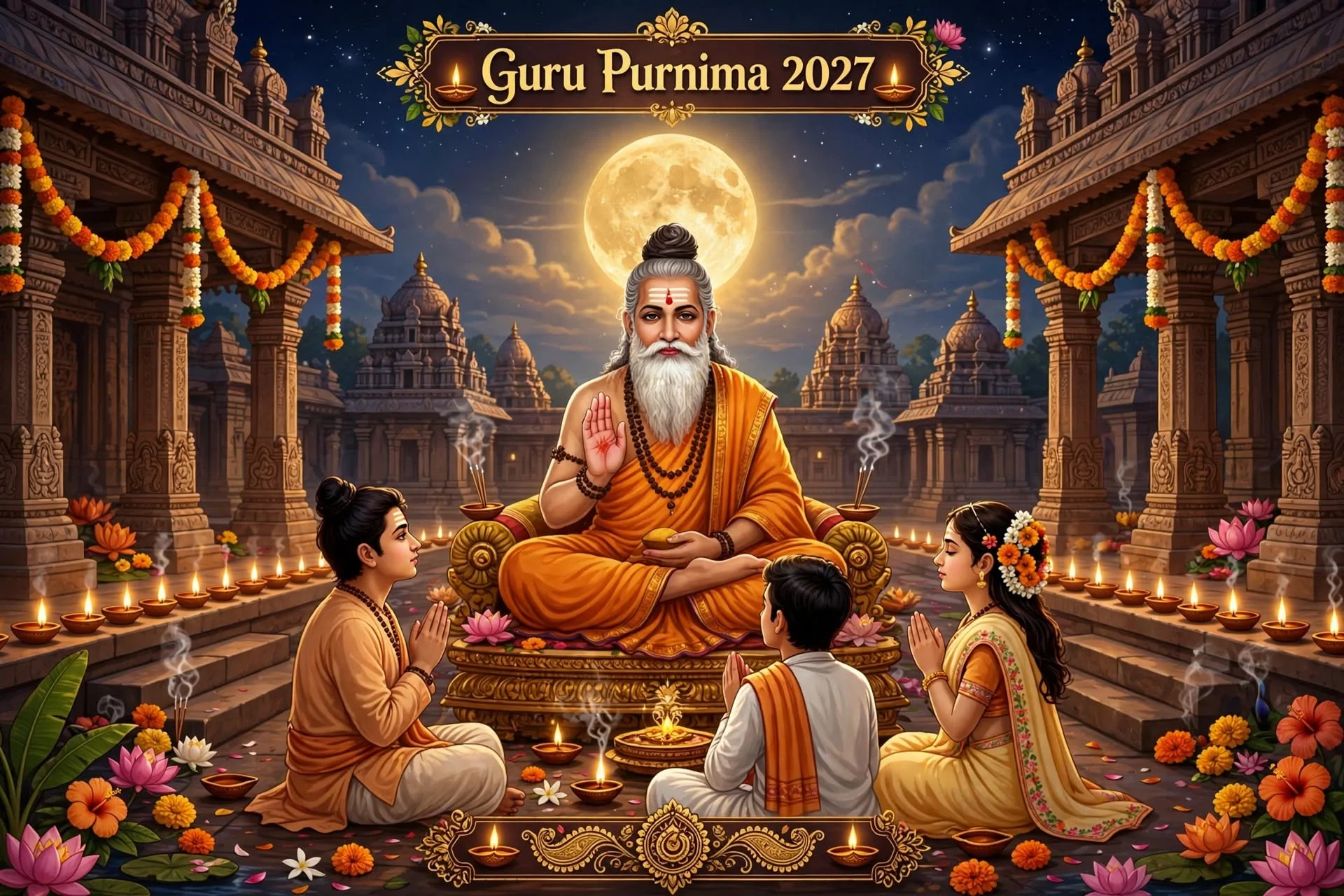
Sunday, Jul 18, 2027
Guru Purnima
Guru Purnima, celebrated on the full moon day (Purnima) in the Hindu lunar month of Ashadha, is one of the most sacred and venerable festivals across Sanatana Dharma, Buddhism, and Jainism. Dedicated to the eternal lineage of spiritual preceptors (Guru Parampara), this day honors the divine principle that dispels the darkness of ignorance (Gu) and illumines the radiance of self-realization and wisdom (Ru).
View Festival Guide

Sunday, Jul 18, 2027
Anvadhan
Anvadhan (अन्वाधान) is an ancient, highly revered Vedic ritual and spiritual observance in Sanatana Dharma performed on the day immediately preceding the New Moon (Amavasya) or Full Moon (Purnima). Rooted in the pristine traditions of the Shrauta and Grihya Sutras, Anvadhan literally translates to 'the solemn placing and replenishment of sacred fuel wood into the consecrated Vedic fires'. In traditional Vedic ritualism, householders (Grihasthas) and priests who maintain the sacred Agnihotra fires perform Anvadhan to prepare the sacrificial altars for the grand Darsha Yajna (New Moon sacrifice) or Paurnamasa Yajna (Full Moon sacrifice) scheduled for the following day.
View Festival Guide
Sunday, Jul 18, 2027
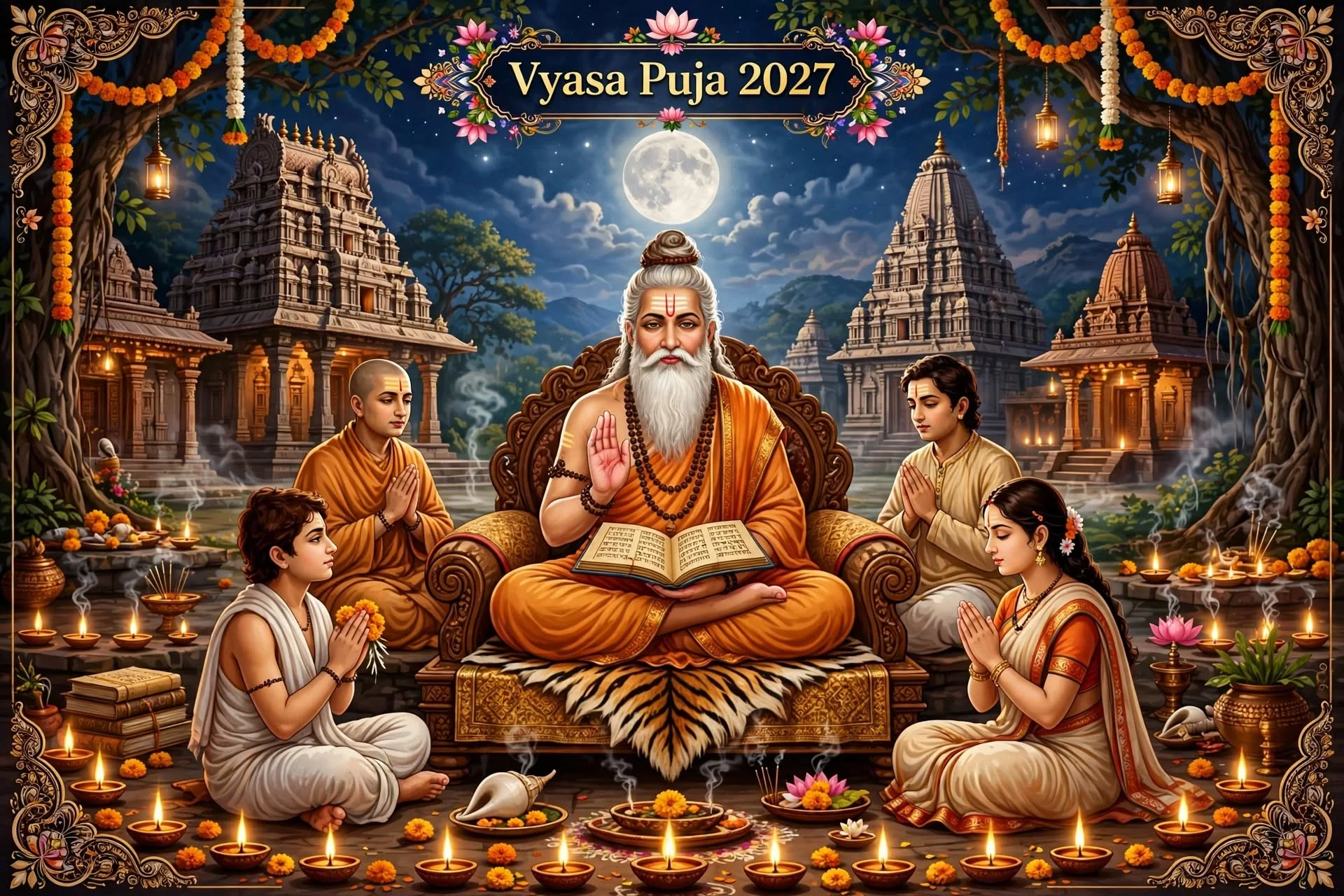
Vyasa Puja
Vyasa Puja is the paramount ritual celebration and liturgical solemnity observed on the Purnima (full moon day) of the Hindu lunar month of Ashadha (occurring in July), dedicated exclusively to Maharishi Krishna Dvaipayana Veda Vyasa—the immortal compiler of the four Vedas, author of the eighteen Mahapuranas, the monumental 100,000-verse Mahabharata, and the profound Brahma Sutras. While commonly celebrated in conjunction with Guru Purnima, Vyasa Puja specifically refers to the formal, highly codified liturgical ritual of worshiping the Vyasa Peetha (the sacred seat of scriptural authority) and honoring the unbroken Guru Parampara (lineage of enlightened masters) from Lord Narayana and Lord Sadashiva down to one's living spiritual preceptor.
View Festival Guide

Monday, Jul 19, 2027
Ishti
Ishti is a foundational Vedic ritual observance appearing prominently in Hindu Panchangs on the Pratipada tithi (the first lunar day) following either Amavasya (new moon) or Purnima (full moon), marking the prescribed performance day for the fortnightly Vedic Darsha-Purnamasa sacrifices.
View Festival Guide
Wednesday, Jul 21, 2027
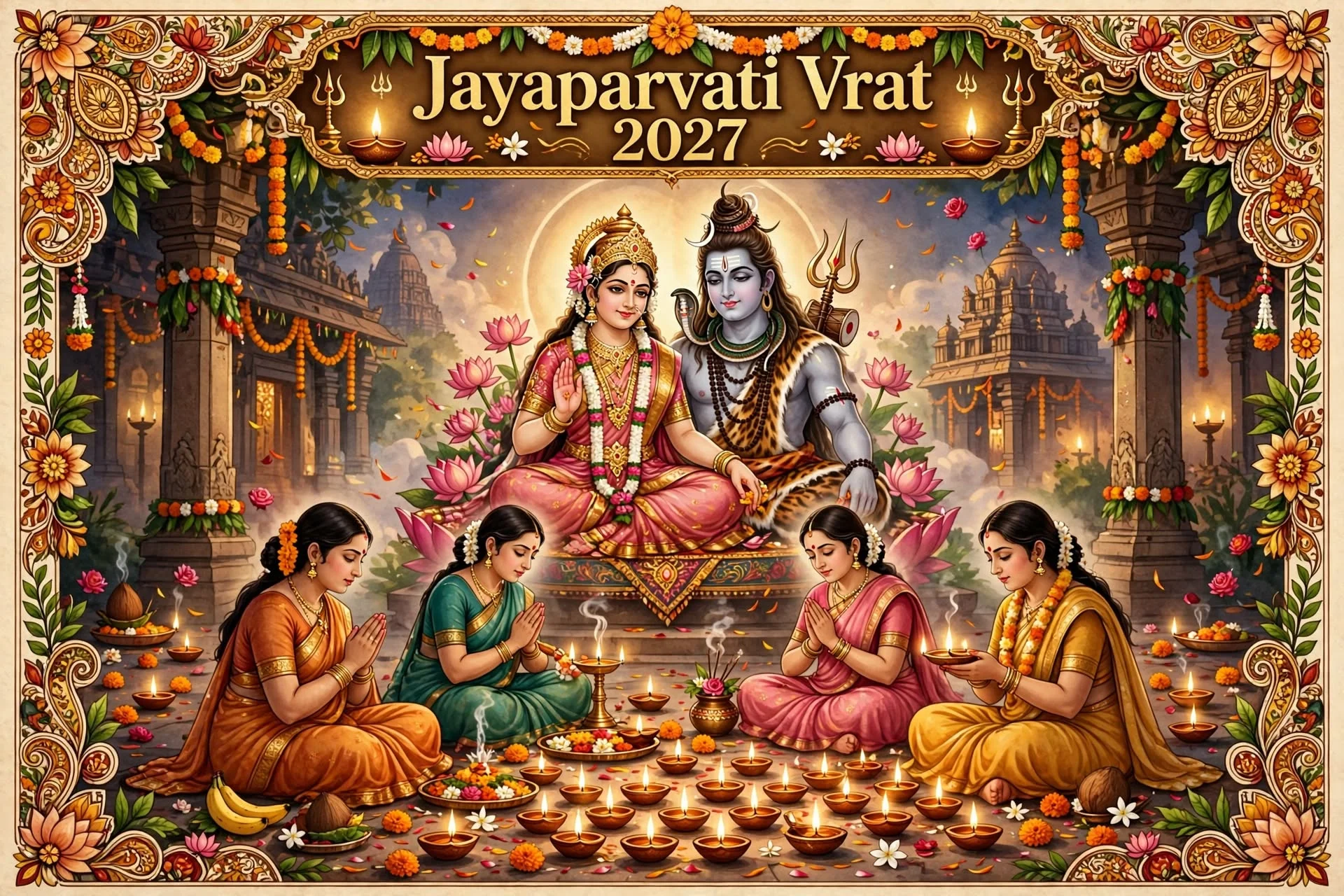
Jayaparvati Vrat
Jayaparvati Vrat, also known as Gauri Vrat or Jaya-Vijaya Vrata, is an ancient, highly revered five-day spiritual observance commencing on the Trayodashi tithi (thirteenth lunar day) of Shukla Paksha in the holy Hindu month of Ashadha (occurring in July) and concluding on Krishna Tritiya. Celebrated with immense piety and joy across Western India—predominantly in Gujarat and parts of Rajasthan and Maharashtra—the vrata is dedicated to Goddess Parvati (in Her victorious aspect as Jaya) and Lord Shiva. It is observed primarily by unmarried maidens praying for a virtuous, long-lived, and loving husband, as well as by married women seeking enduring marital bliss (Akhanda Saubhagya), domestic peace, and the welfare of their family lineage.
View Festival Guide
Thursday, Jul 22, 2027
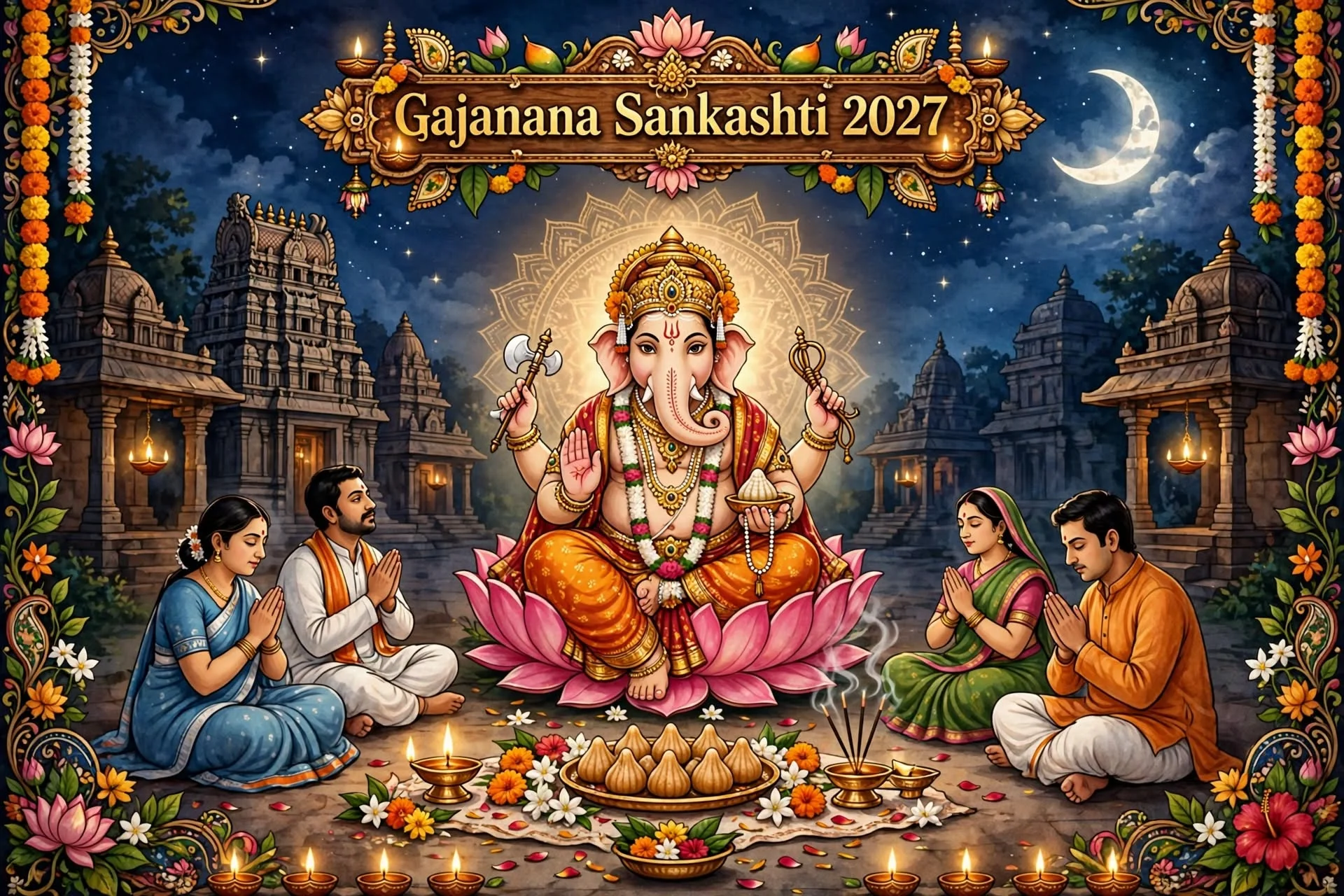
Gajanana Sankashti
Gajanana Sankashti, celebrated on the fourth lunar day (Chaturthi) of the Krishna Paksha in the holy Hindu month of Ashadha according to the Amavasyanta calendar, or Shravana Krishna Chaturthi in the Purnimanta calendar (occurring in late July), is an immensely powerful fasting day dedicated to Bhagwan Ganesha in His divine elephant-faced form of Gajanana. Revered across the Bhavishya Purana, Ganesha Purana, and Mudgala Purana, the word 'Sankashti' originates from 'Sankata-Nashana', denoting the miraculous divine potency of this tithi to dissolve, uproot, and eradicate all insurmountable worldly crises, emotional anxieties, and spiritual obstacles.
View Festival Guide
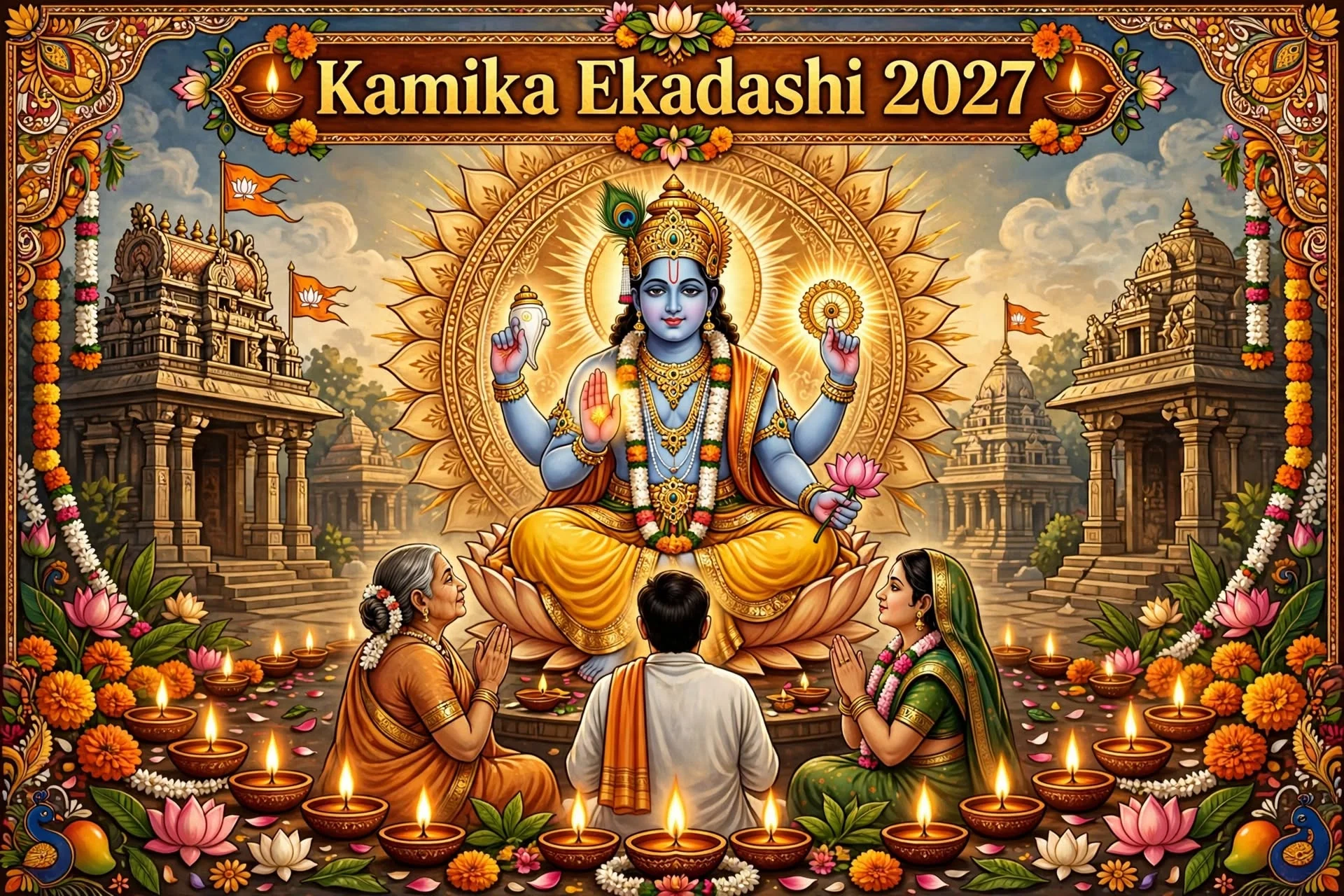
Thursday, Jul 29, 2027
Kamika Ekadashi
Kamika Ekadashi is an immensely sacred fast observed on the eleventh lunar day (Ekadashi) of the Krishna Paksha (waning phase of the moon) in the Hindu month of Shravana according to the Amavasyanta calendar, or Ashadha Krishna Paksha in the North Indian Purnimanta calendar (occurring in mid-July). It is the first Ekadashi to fall within the holy rainy season of Chaturmas.
View Festival Guide
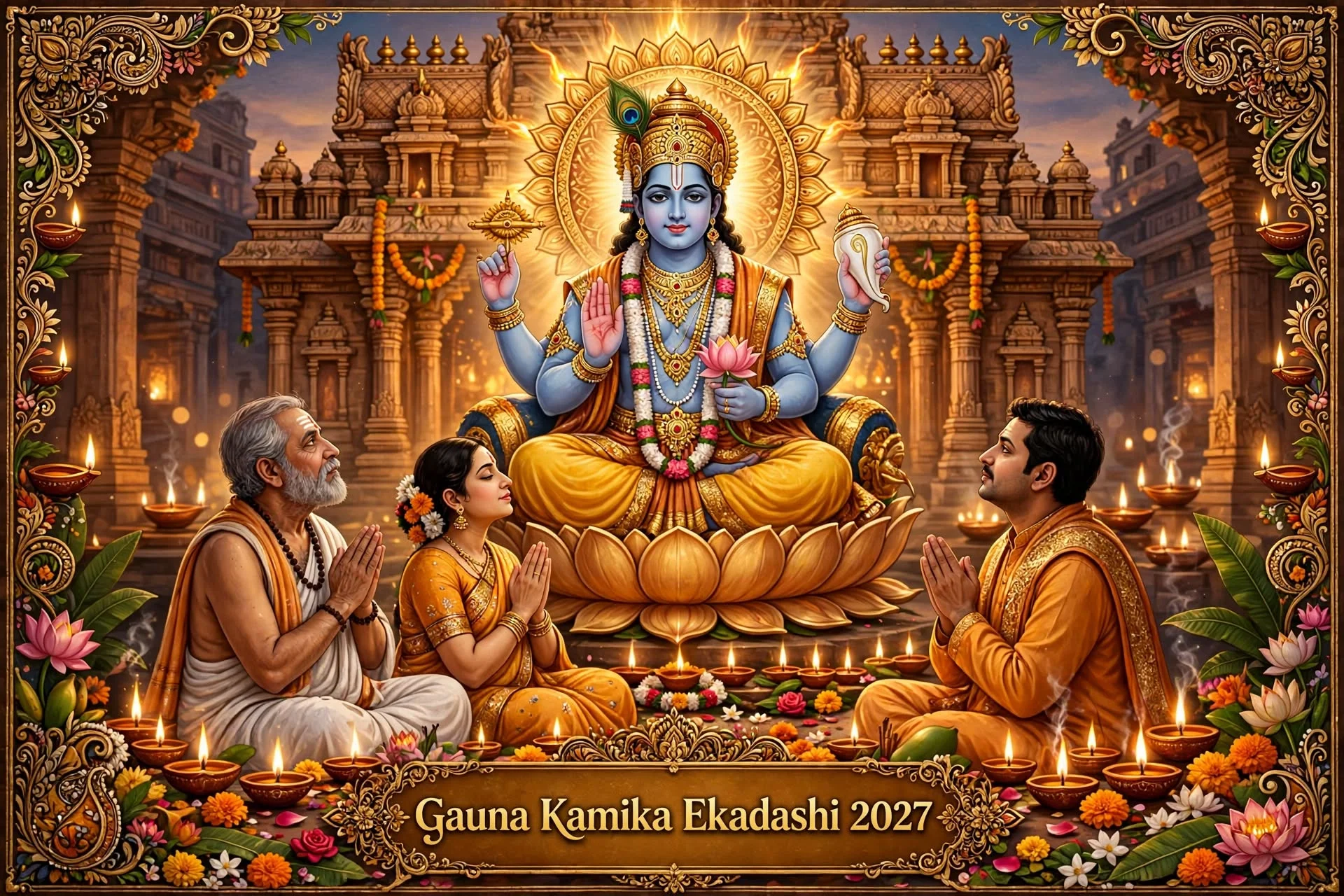
Friday, Jul 30, 2027
Gauna Kamika Ekadashi
Gauna Kamika Ekadashi is the specialized, highly disciplined secondary observance of Kamika Ekadashi falling on the Dwadashi tithi (twelfth lunar day) or the subsequent sunrise of the Krishna Paksha in the holy Hindu month of Shravana (Ashadha Krishna in Purnimanta reckoning, occurring in late July). While Smarta householders observe Ekadashi on the primary day when the eleventh tithi is devoid of Dashami overlap, ascetic renunciates (Sannyasis), widows, and disciples belonging to specific orthodox monastic lineages observe the fast on the 'Gauna' (secondary or subsequent) day, strictly adhering to the rigorous mathematical and scriptural injunctions of the Hari Bhakti Vilasa, Dharma Sindhu, and Nirnaya Sindhu.
View Festival Guide