




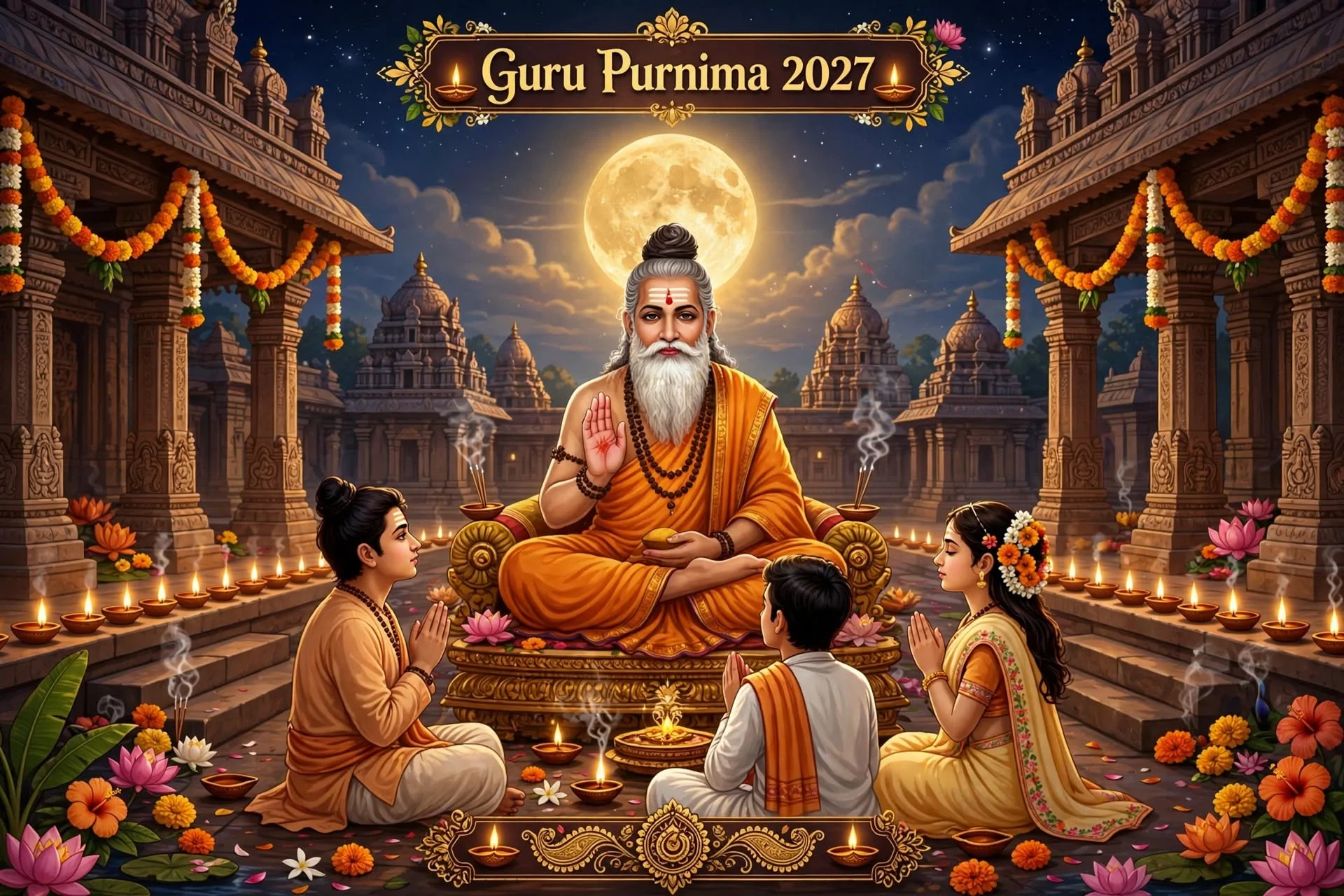
Guru Purnima, celebrated on the full moon day (Purnima) in the Hindu lunar month of Ashadha, is one of the most sacred and venerable festivals across Sanatana Dharma, Buddhism, and Jainism. Dedicated to the eternal lineage of spiritual preceptors (Guru Parampara), this day honors the divine principle that dispels the darkness of ignorance (Gu) and illumines the radiance of self-realization and wisdom (Ru).
Guru Purnima 2027: Date, Puja Timings, Rituals & Stories
Guru Purnima Timings & Panchang
Important festival dates and auspicious timings
Usha Arghya (Sunrise)
05:35 am
Sandhya Arghya (Sunset)
07:20 pm
Start Date
Sunday, 18 Jul 2027
Puja Muhurat
06:48 pm – 09:14 pm
Guru Purnima
Also venerated as Vyasa Purnima, this auspicious date marks the sacred appearance anniversary (Jayanti) of Maharishi Krishna Dvaipayana Veda Vyasa, the illustrious compiler of the four Vedas, author of the eighteen Mahapuranas, the Mahabharata, and the monumental Brahma Sutras. In Shaivite traditions, Guru Purnima commemorates Lord Shiva as the Adi Guru (the First Guru or Dakshinamurti), who transmitted the supreme non-dual wisdom of Yoga to the Saptarishis on the banks of Lake Mansarovar.
Beyond ritual homage, Guru Purnima marks the formal entry of Hindu sannyasis, ascetics, and spiritual seekers into the four-month vow of Chaturmasya. In ashrams, temples, and homes worldwide, disciples perform Vyasa Puja and Pada Puja, expressing profound gratitude to their spiritual teachers and rededicating their lives to truth, selfless service (Seva), and moral rectitude.
Why is Guru Purnima Celebrated?
The observance of Guru Purnima is rooted in the timeless recognition that spiritual enlightenment cannot be attained through intellectual speculation alone; it requires the transmission of living wisdom from an enlightened master (Guru).
Scriptural records in the Guru Gita (part of the Skanda Purana) declare that the Guru is non-different from the Divine Trinity—Brahma, Vishnu, and Maheshwara—serving as the direct doorway to Parabrahman. Guru Purnima is celebrated to express boundless reverence to spiritual guides who dismantle egoic delusions and guide souls across the ocean of transmigration (Samsara).
Historically, it celebrates the life work of Maharishi Veda Vyasa, who preserved cosmic Vedic wisdom for humankind at the onset of Kali Yuga, and marks the auspicious occasion when monastics begin their monsoon scriptural retreats.
- Commemorating the birth anniversary and monumental literary compilation of Maharishi Veda Vyasa.
- Honoring Lord Shiva as the Adi Guru who instructed the Saptarishis in the science of Yoga and Self-knowledge.
- Expressing heartfelt devotion and gratitude to personal spiritual masters and teachers through Pada Puja.
- Initiating the solemn monastic vows of Chaturmasya across Shankaracharya Peethams and monastic orders.
Puranic Origins, Sage Vyasa, and the First Transmission of Yoga
The Manifestation and Literary Mission of Sage Veda Vyasa
In the Dvapara Yuga, Sage Parashara and Satyavati were blessed with a divine son, Krishna Dvaipayana, born on an island in the Yamuna River. Endowed with omniscient vision, Vyasa foresaw the moral decline, fractured memory, and spiritual distress of humanity in the approaching Kali Yuga.
To safeguard the divine cosmic knowledge, Vyasa divided the singular primordial Veda into four manageable collections: Rigveda, Yajurveda, Samaveda, and Atharvaveda, entrusting each to his principal disciples (Paila, Vaishampayana, Jaimini, and Sumantu). He subsequently composed the 18 Mahapuranas, the monumental 100,000-verse Mahabharata, and the philosophical synthesis known as the Brahma Sutras. Guru Purnima celebrates both his divine advent and the commencement of the Brahma Sutra recitations.
Lord Shiva as the Adi Guru and the Saptarishis
Shaivite tradition recounts that countless millennia ago, an unknown yogi appeared in the upper regions of the Himalayas. For months, He sat in unmoving samadhi, exhibiting neither heartbeat nor external respiration. Enraptured by His boundless aura, seven seekers (who became the Saptarishis: Agastya, Atri, Bharadvaja, Gautama, Jamadagni, Kashyapa, and Vashistha) sat before Him, imploring Him to reveal the secret of His transcendental state.
After testing their perseverance for 84 years of intense preparation, on the full moon day of Ashadha, as the sun turned from northern to southern solstitial course (Dakshinayana), the Yogi turned south and became Sri Dakshinamurti, the Adi Guru. In profound silence and through silent initiation (Chin-Mudra), He transmitted the complete science of Yoga and inner evolution.
The Buddhist First Sermon at Sarnath
In Buddhist sacred history, Guru Purnima is celebrated as Asalha Puja. It commemorates the momentous day when Gautama Buddha, five weeks after attaining supreme enlightenment under the Bodhi tree in Bodh Gaya, delivered His first discourse (Dhammacakkappavattana Sutta) to His five former ascetic companions at the Deer Park in Sarnath, setting in motion the Wheel of Dhamma.
The Guru Tattva and the Alchemical Transformation of Consciousness
The Etymology and Metaphysics of the Guru Principle
The syllable 'Gu' signifies darkness, primordial ignorance (Avidya), and worldly attachment; the syllable 'Ru' signifies the brilliant light of knowledge that banishes that darkness. Therefore, the Guru is not merely a human mortal or physical instructor, but an embodied manifestation of the divine grace of Brahman.
The Guru Gita affirms: 'Gurur Brahma Gurur Vishnur Gurur Devo Maheshwarah; Guruh Sakshat Param Brahma Tasmai Shri Gurave Namah.' The preceptor creates the aspirant's spiritual awakening (Brahma), sustains and nurtures their spiritual evolution (Vishnu), and destroys the deep-seated impurities of ego and delusion (Maheshwara).
Pada Puja and the Surrender of Ego
The ritual washing of the Guru's holy feet (Pada Puja) is a deeply symbolic act. In yogic physiology, the subtle nadis and energy meridians culminate in the feet. By placing one's head at the Guru's feet, the disciple willingly surrenders Ahankara (pride of intellect, wealth, and status).
This act of humility aligns the seeker's receptive energy to receive Shaktipat—the silent, transformative transmission of spiritual consciousness and divine grace.
Chaturmasya and the Tradition of Contemplative Study
For monastics belonging to the Dashanami orders founded by Adi Shankaracharya, Guru Purnima marks the Vyasa Puja that initiates the Chaturmasya Vrata. By pledging to remain in one hermitage or village for four months, sadhus avoid trampling emerging insects and offer daily spiritual discourses to the community, nurturing collective moral strength.
Celebration Traditions and Devotional Protocols of Guru Purnima
Morning Cleansing and Invocation of the Guru Parampara
Devotees awake before sunrise during Brahma Muhurta, perform sacred ablutions, and dress in pure, modest traditional clothing (white or saffron). At home or in ashrams, the altar is cleaned and adorned with portraits or Padukas (wooden sandals) of the Guru and Maharishi Veda Vyasa.
Disciples chant invocatory verses saluting the unbroken lineage of preceptors from Lord Sadashiva, Lord Narayana, and Sage Vyasa down to their personal living master.
Vyasa Puja and Guru Pada Puja
Disciples gather at their Guru's ashram or assemble around a consecrated pedestal. With deep devotion, they wash the Guru's feet or sacred Padukas with fragrant waters, milk, curd, honey, and rose water, followed by anointing them with sandalwood paste and offering fresh flowers, betel leaves, and fruits.
Those whose gurus have attained Mahasamadhi visit the sacred Samadhi shrine or meditate upon their teachings, reciting the Guru Stotram and Guru Gita.
Satsang, Seva, and Distribution of Maha Prasadam
The afternoon and evening are illuminated by inspiring discourses on the Upanishads and Bhagavad Gita, soul-stirring kirtans, and community service (Anna Dana). Thousands of seekers partake of sanctified vegetarian feast (Maha Prasadam), renewing their inner vows of truthfulness, devotion, and compassion.
Guru Purnima Puja Vidhi (Step by Step)
- 1
Guru Dhyana and Parampara Smarana (Meditation on Guru Lineage)
Sit on a clean kusha mat facing East or North. Close eyes, meditate on the radiant form of the Guru seated in the Sahasrara chakra, and chant the opening slokas of the Guru Stotram with deep reverence.
- 2
Shuddhi and Achamana (Purification and Sipping Water)
Sprinkle holy Ganga water over yourself and the worship items while chanting the Pavitra mantra. Perform Achamana three times with clean water in the right palm invoking Achyuta, Ananta, and Govinda.
- 3
Vyasa Peetha Sthapana and Avahana (Invoking Sage Vyasa and Guru)
Place a clean wooden chowki covered with red or yellow silk cloth. Place the holy Padukas or portrait of Maharishi Veda Vyasa and the Sadguru, invoking their living divine presence with flowers and akshata.
- 4
Padya and Arghya (Washing Feet and Offering Scented Water)
Offer pure fragrant water at the lotus feet of the Guru (or sacred Padukas) to wash them, followed by offering scented water with sandalwood, flowers, and rice to their hands.
- 5
Guru Purnima Puja Samagri List
Essential Guru and Vyasa Puja Items
- Consecrated Padukas (wooden or silver sandals), portrait of Sadguru and Maharishi Veda Vyasa
- Consecrated wooden chowki (pedestal) draped in fresh yellow or saffron silk fabric
- Copper or brass Panchapatra, Achamani spoon, and holy Ganga water
- Pure brass Aarti lamp with five wicks, pure cow ghee, and unbleached cotton wicks
- Bhimseni natural camphor, aromatic dhoop sticks, and dhoop holder
Aromatic Pastes and Floral Offerings
- Pure Malayagiri sandalwood paste, sacred Ashtagandha, and organic Kumkum
- Fresh white jasmine (Mogra), yellow marigolds, white lotuses, and fresh rose garlands
- Fresh Tulsi leaves and Bilva leaves for deity offerings
- Akshata (unbroken raw rice mixed with turmeric powder)
Holy Food and Dakshina Offerings
- Panchamrita ingredients: pure cow milk, curd, wild forest honey, cow ghee, and raw sugar
- Seasonal fresh fruits (bananas, apples, mangoes, pomegranates)
- Homemade sattvic sweets (Kheer, Peda, or Ladaoo) prepared with cow milk and cardamom
- Betel leaves (Paan), whole betel nuts (Supari), cloves, and cardamom
Mantras and Prayers for Guru Purnima
Guru Purnima Vrat Rules and Fasting Guidelines
Observance Guidelines and Spiritual Discipline
Guru Purnima is traditionally observed through spiritual discipline rather than agonizing physical austerity. Seekers observe a sattvic fast, either consuming only milk and fresh fruits (Phalahar) or eating a single light meal after concluding the evening Guru Puja and Aarti. Disciples take vows of silence (Mauna) during the morning hours, engage in uninterrupted japa of the Guru mantra, and spend the day studying scriptures.
- Abstinence from meat, fish, alcohol, onions, garlic, and processed food.
- Maintaining mental stillness and silence (Mauna) during morning meditation sessions.
- Practicing Seva (selfless service) in ashrams, feeding the poor, or serving elderly masters.
Initiation of Chaturmasya Vrata for Monastics
For Sannyasis and spiritual renunciates, Guru Purnima marks the formal recitation of the Chaturmasya Sankalpa. Swamis vow to remain stationed in one locality for two fortnights (representing four months in solar counting) to conduct scriptural studies and avoid stepping on monsoon life.
Dos and Don'ts of Guru Purnima
Good Practices (Do's)
- Wake up during Brahma Muhurta and meditate deeply upon your spiritual master.
- Perform ceremonial Pada Puja or offer sincere prostrations to your living or departed Guru.
- Read and recite the Guru Gita, Guru Stotram, or chapters from the Bhagavad Gita.
- Offer traditional Guru Dakshina in the form of dedication, seva, or financial support to spiritual institutions.
- Feed the poor, cows (Go-seva), and seekers of truth through Anna Dana.
Guru Purnima Across Regions
| Region | Local Name |
|---|---|
| All India / Shankara Mathas (Sringeri, Puri, Dwarka, Badrikashram) | Vyasa Puja and Sannyasi Chaturmasya Sankalpa |
| Varanasi and Himalayan Ashrams (Rishikesh, Haridwar) | Ganga Snana and Ashram Guru Mahotsav |
| Buddhist Traditions (Ladakh, Sikkim, Bodh Gaya) | Asalha Puja / Dhamma Day |
Guru Purnima FAQs
Why is Guru Purnima also called Vyasa Purnima?
It is called Vyasa Purnima because it marks the birth anniversary of Maharishi Krishna Dvaipayana Veda Vyasa, who classified the Vedas, authored the eighteen Mahapuranas, the Mahabharata, and the Brahma Sutras, making him the supreme historic preceptor of Sanatana Dharma.
Can someone who does not have a formal living Guru celebrate Guru Purnima?
Yes, absolutely. Those without a living personal guru can worship Lord Shiva as the Adi Guru, Lord Krishna as the Jagadguru ('Krishnam Vande Jagadgurum'), Maharishi Veda Vyasa, Lord Dattatreya, or their own parents and foundational academic teachers who ignited the flame of knowledge in their lives.
What is Guru Dakshina on Guru Purnima?
Guru Dakshina is a traditional offering of gratitude made by a disciple to their teacher. While it often includes monetary support, clothing, or food, the highest Guru Dakshina is the sincere pledge to live according to the Guru's teachings, giving up ego, vices, and negative habits.
Upcoming Festivals
View All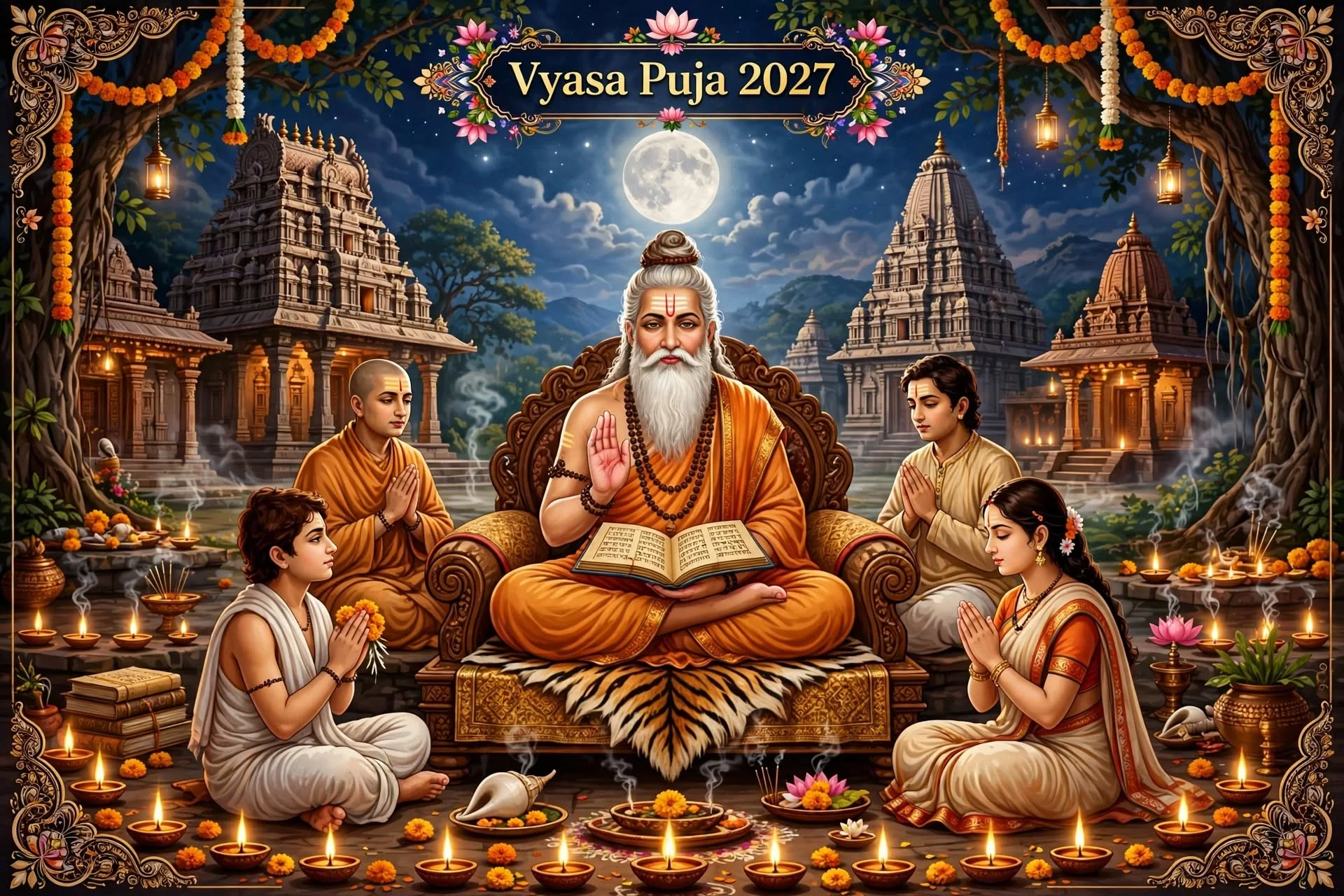
Sunday, Jul 18, 2027
Vyasa Puja
Vyasa Puja is the paramount ritual celebration and liturgical solemnity observed on the Purnima (full moon day) of the Hindu lunar month of Ashadha (occurring in July), dedicated exclusively to Maharishi Krishna Dvaipayana Veda Vyasa—the immortal compiler of the four Vedas, author of the eighteen Mahapuranas, the monumental 100,000-verse Mahabharata, and the profound Brahma Sutras. While commonly celebrated in conjunction with Guru Purnima, Vyasa Puja specifically refers to the formal, highly codified liturgical ritual of worshiping the Vyasa Peetha (the sacred seat of scriptural authority) and honoring the unbroken Guru Parampara (lineage of enlightened masters) from Lord Narayana and Lord Sadashiva down to one's living spiritual preceptor.
View Festival Guide

Sunday, Jul 18, 2027
Anvadhan
Anvadhan (अन्वाधान) is an ancient, highly revered Vedic ritual and spiritual observance in Sanatana Dharma performed on the day immediately preceding the New Moon (Amavasya) or Full Moon (Purnima). Rooted in the pristine traditions of the Shrauta and Grihya Sutras, Anvadhan literally translates to 'the solemn placing and replenishment of sacred fuel wood into the consecrated Vedic fires'. In traditional Vedic ritualism, householders (Grihasthas) and priests who maintain the sacred Agnihotra fires perform Anvadhan to prepare the sacrificial altars for the grand Darsha Yajna (New Moon sacrifice) or Paurnamasa Yajna (Full Moon sacrifice) scheduled for the following day.
View Festival Guide
Sunday, Jul 18, 2027
Ashadha Purnima
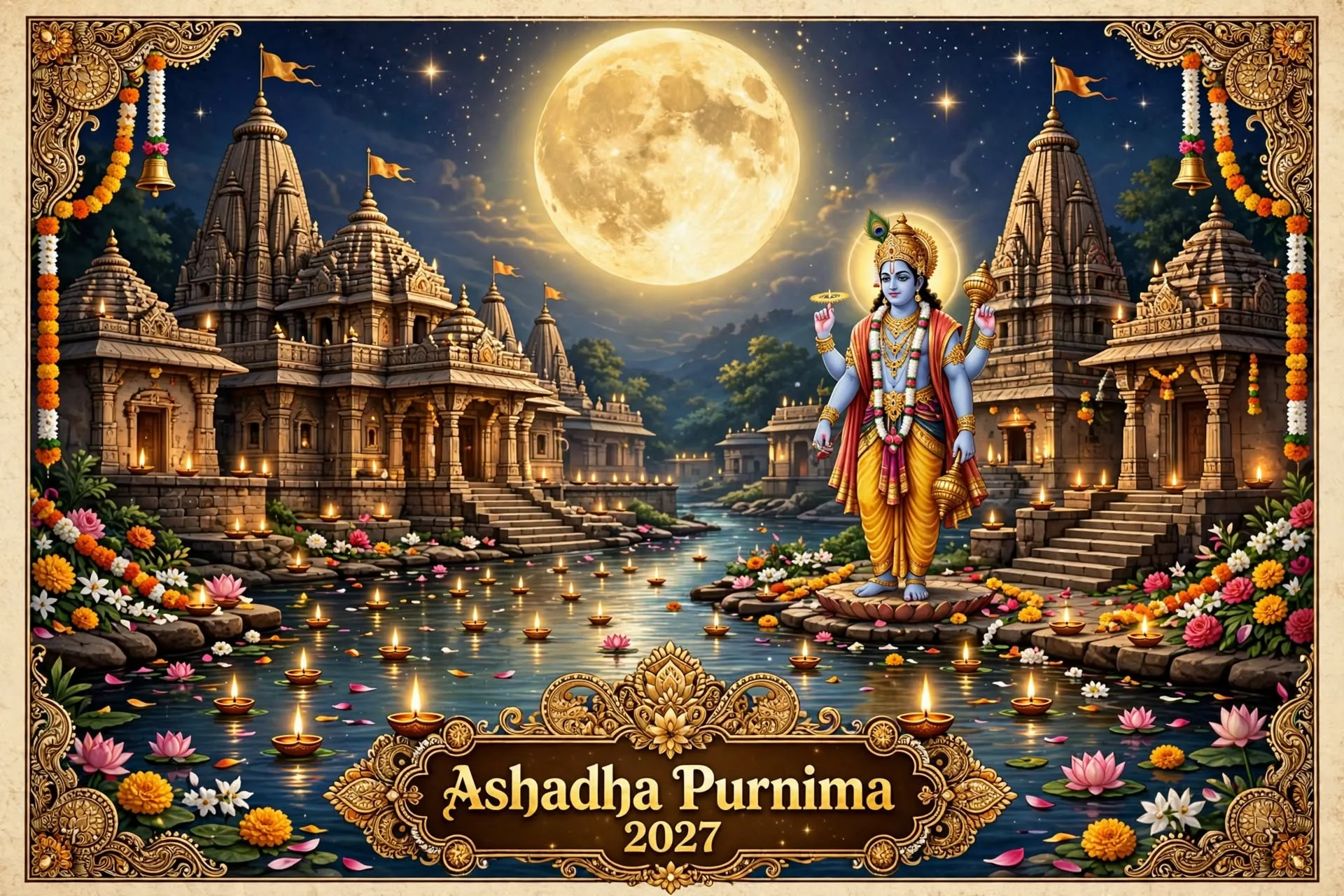
Ashadha Purnima is the radiant full moon tithi culminating the Shukla Paksha of the Hindu lunar month of Ashadha (occurring in July). Illuminating the mid-monsoon night sky with celestial brilliance, this sacred tithi represents one of the most auspicious spiritual junctures in Sanatana Dharma, Buddhism, and Jainism. As the full moon reaches its astrological peak in the constellations of Purva Ashadha and Uttara Ashadha, cosmic lunar and solar forces align to produce an atmosphere of profound mental clarity, devotional receptivity, and spiritual illumination.
View Festival Guide

Monday, Jul 19, 2027
Ishti
Ishti is a foundational Vedic ritual observance appearing prominently in Hindu Panchangs on the Pratipada tithi (the first lunar day) following either Amavasya (new moon) or Purnima (full moon), marking the prescribed performance day for the fortnightly Vedic Darsha-Purnamasa sacrifices.
View Festival Guide
Wednesday, Jul 21, 2027
Jayaparvati Vrat
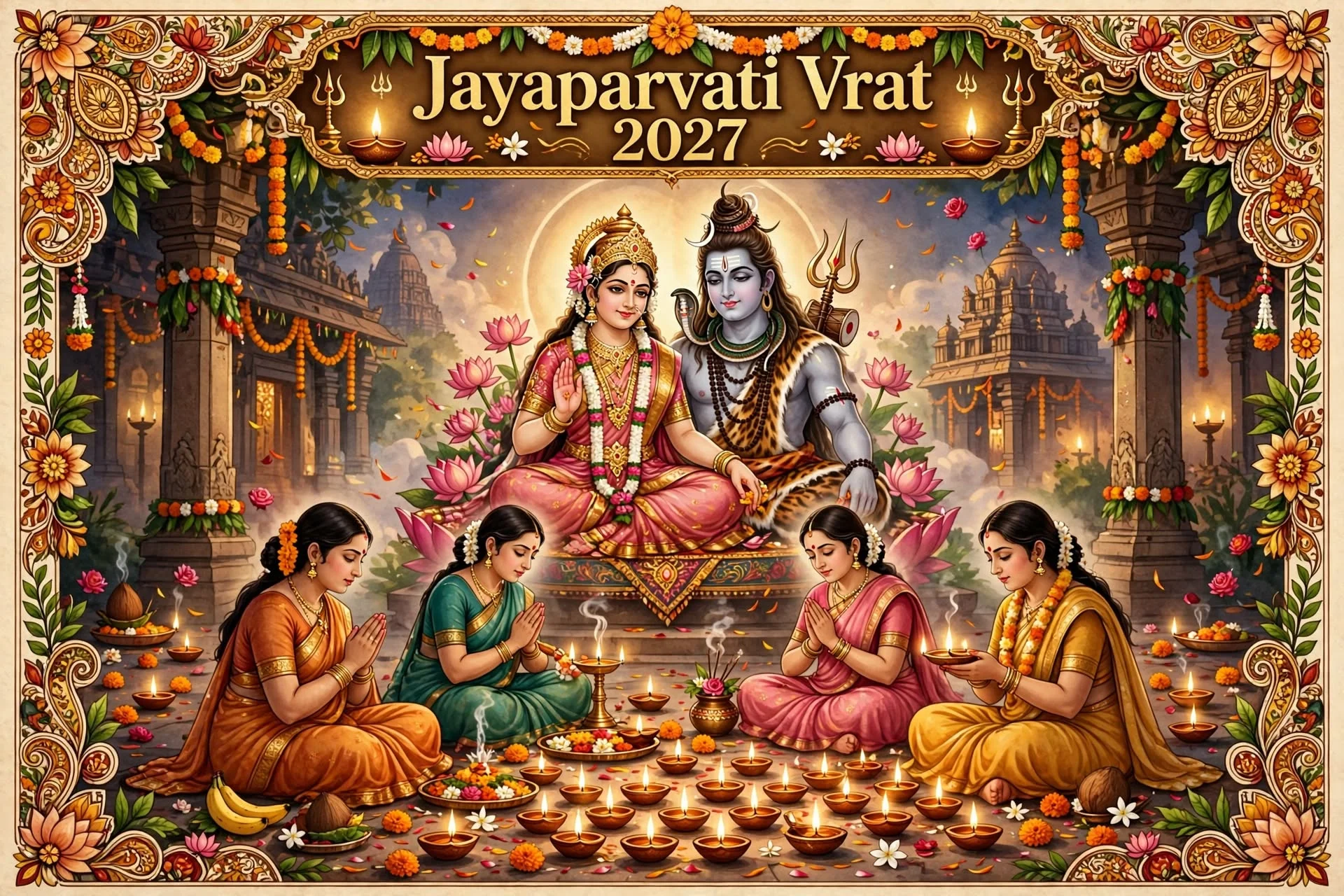
Jayaparvati Vrat, also known as Gauri Vrat or Jaya-Vijaya Vrata, is an ancient, highly revered five-day spiritual observance commencing on the Trayodashi tithi (thirteenth lunar day) of Shukla Paksha in the holy Hindu month of Ashadha (occurring in July) and concluding on Krishna Tritiya. Celebrated with immense piety and joy across Western India—predominantly in Gujarat and parts of Rajasthan and Maharashtra—the vrata is dedicated to Goddess Parvati (in Her victorious aspect as Jaya) and Lord Shiva. It is observed primarily by unmarried maidens praying for a virtuous, long-lived, and loving husband, as well as by married women seeking enduring marital bliss (Akhanda Saubhagya), domestic peace, and the welfare of their family lineage.
View Festival Guide
Thursday, Jul 22, 2027
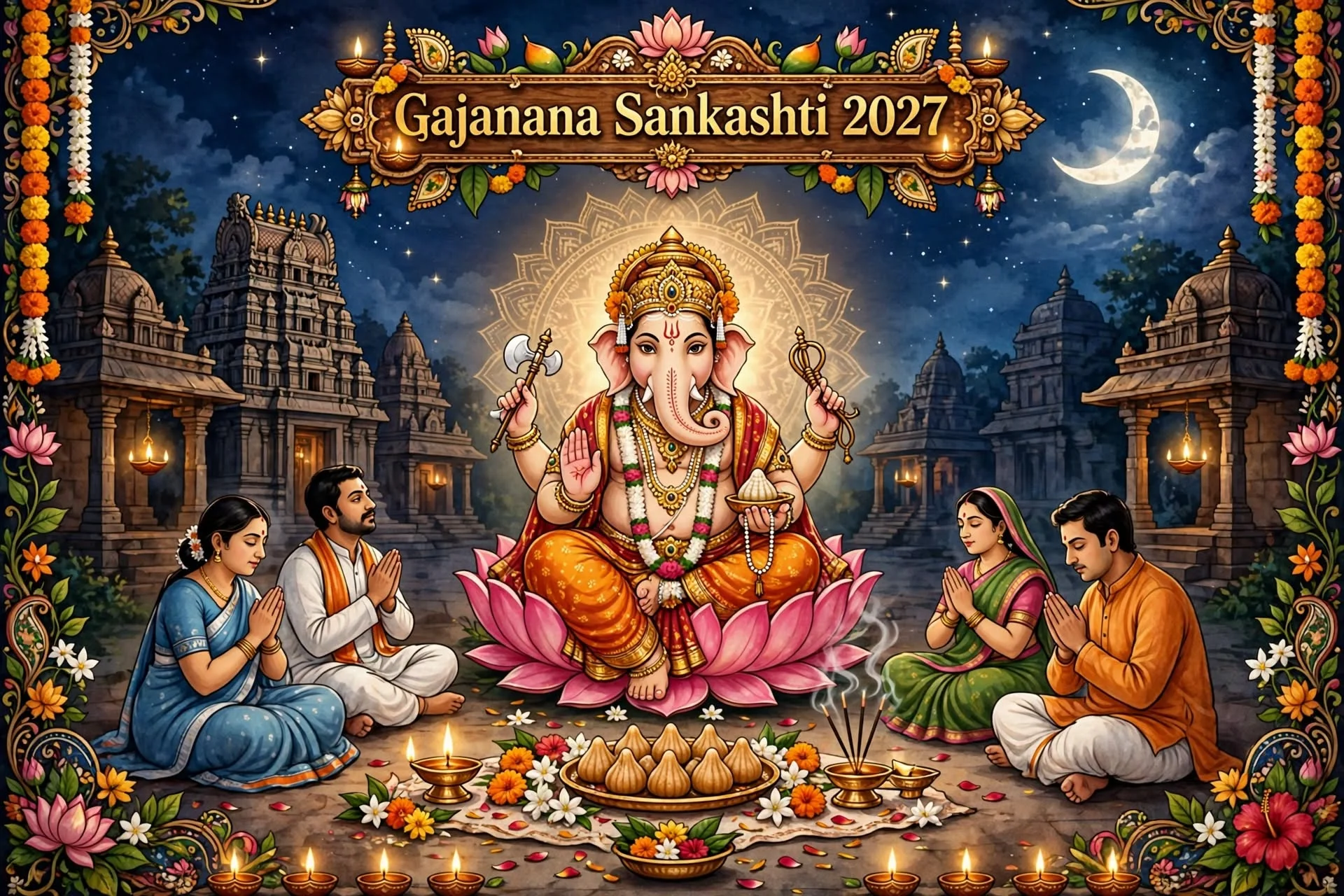
Gajanana Sankashti
Gajanana Sankashti, celebrated on the fourth lunar day (Chaturthi) of the Krishna Paksha in the holy Hindu month of Ashadha according to the Amavasyanta calendar, or Shravana Krishna Chaturthi in the Purnimanta calendar (occurring in late July), is an immensely powerful fasting day dedicated to Bhagwan Ganesha in His divine elephant-faced form of Gajanana. Revered across the Bhavishya Purana, Ganesha Purana, and Mudgala Purana, the word 'Sankashti' originates from 'Sankata-Nashana', denoting the miraculous divine potency of this tithi to dissolve, uproot, and eradicate all insurmountable worldly crises, emotional anxieties, and spiritual obstacles.
View Festival Guide
Thursday, Jul 29, 2027
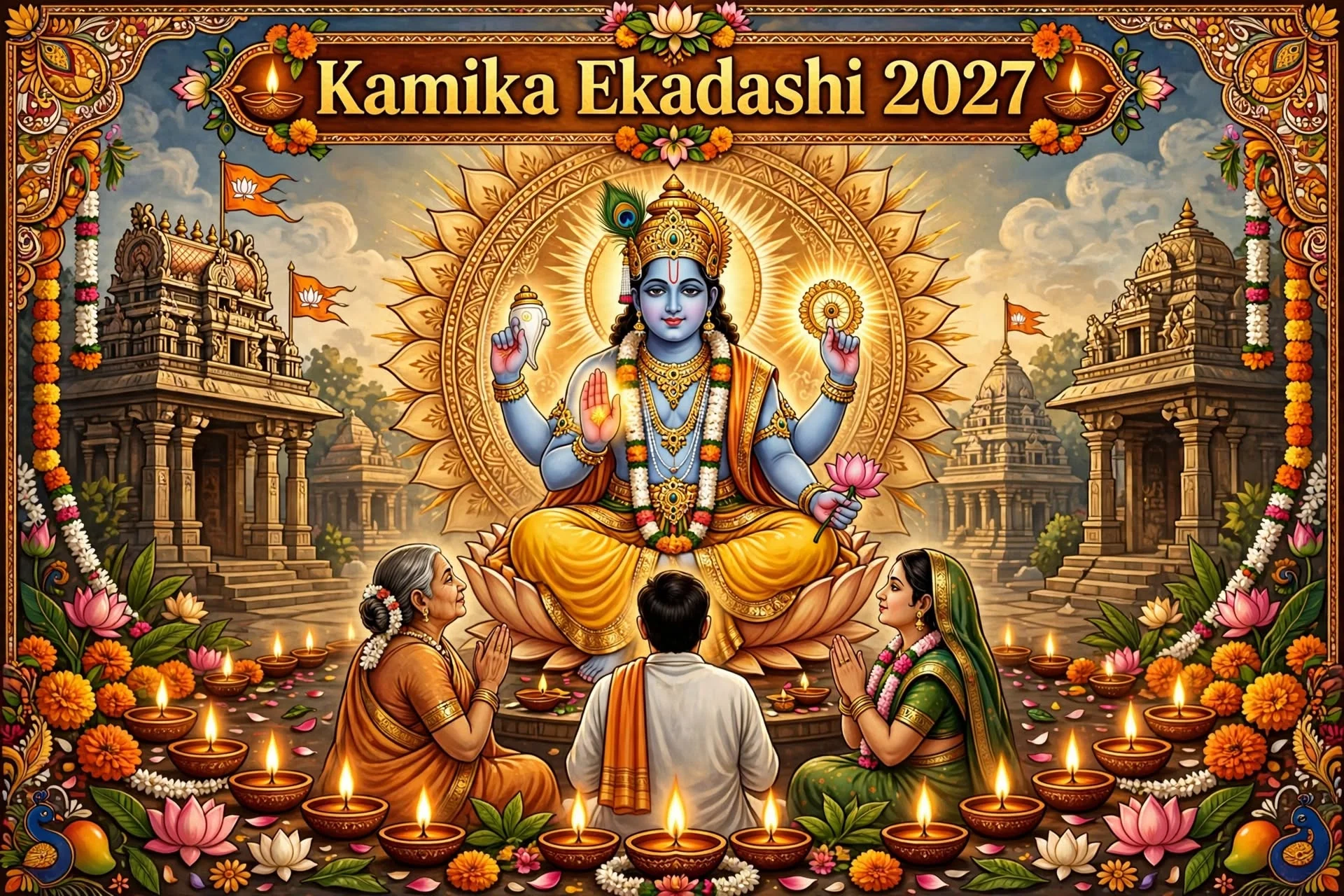
Kamika Ekadashi
Kamika Ekadashi is an immensely sacred fast observed on the eleventh lunar day (Ekadashi) of the Krishna Paksha (waning phase of the moon) in the Hindu month of Shravana according to the Amavasyanta calendar, or Ashadha Krishna Paksha in the North Indian Purnimanta calendar (occurring in mid-July). It is the first Ekadashi to fall within the holy rainy season of Chaturmas.
View Festival Guide
Friday, Jul 30, 2027
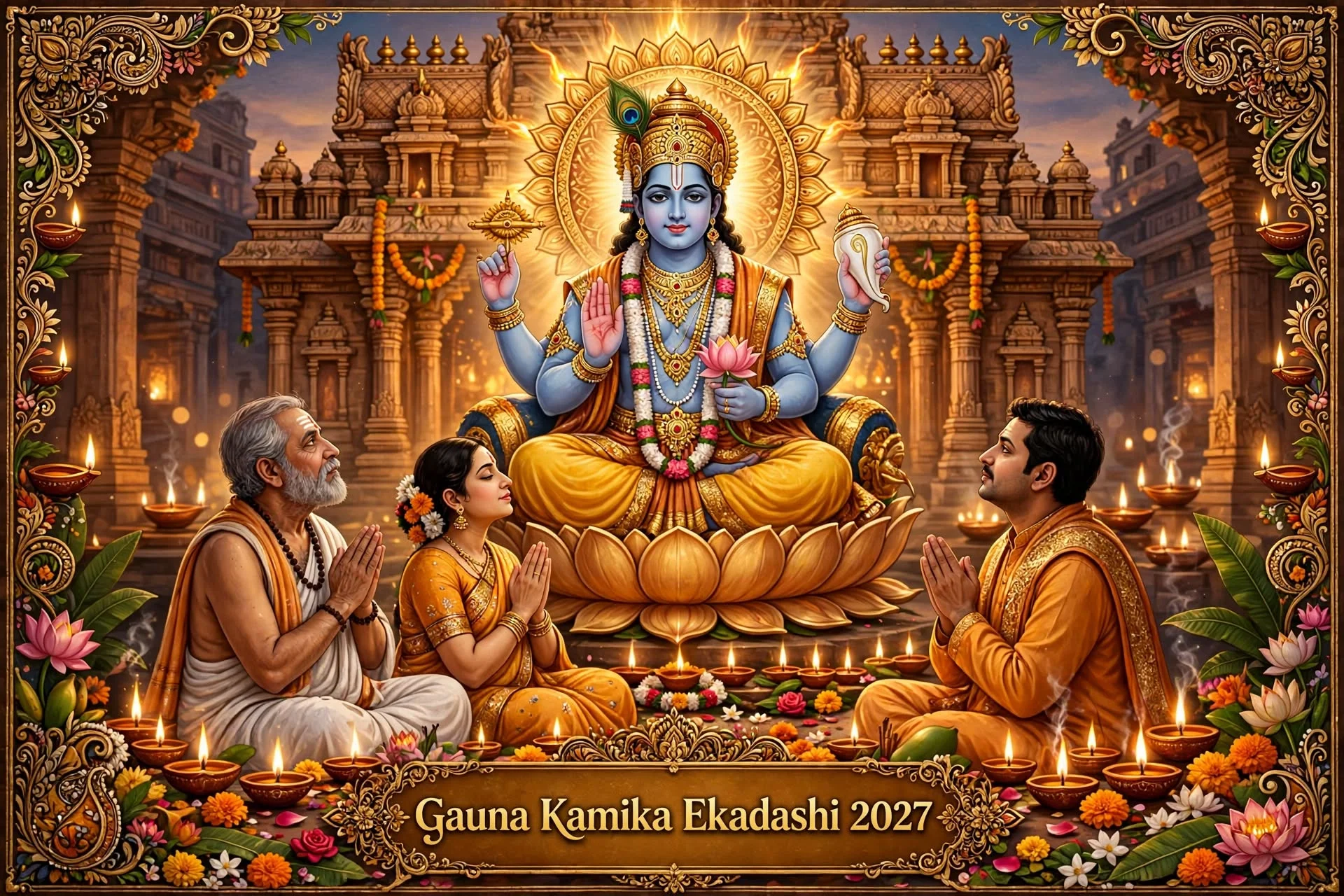
Gauna Kamika Ekadashi
Gauna Kamika Ekadashi is the specialized, highly disciplined secondary observance of Kamika Ekadashi falling on the Dwadashi tithi (twelfth lunar day) or the subsequent sunrise of the Krishna Paksha in the holy Hindu month of Shravana (Ashadha Krishna in Purnimanta reckoning, occurring in late July). While Smarta householders observe Ekadashi on the primary day when the eleventh tithi is devoid of Dashami overlap, ascetic renunciates (Sannyasis), widows, and disciples belonging to specific orthodox monastic lineages observe the fast on the 'Gauna' (secondary or subsequent) day, strictly adhering to the rigorous mathematical and scriptural injunctions of the Hari Bhakti Vilasa, Dharma Sindhu, and Nirnaya Sindhu.
View Festival Guide