




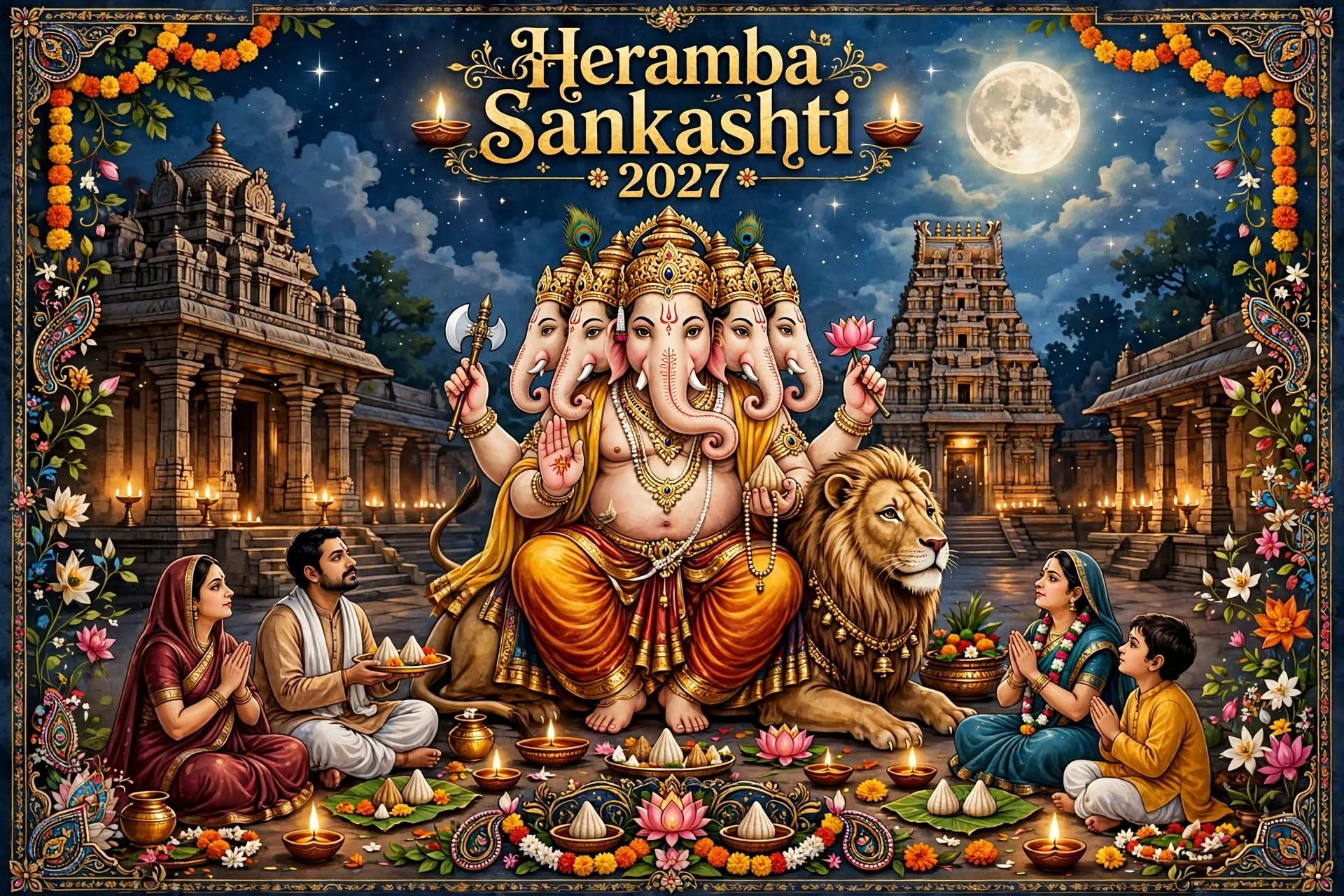
Heramba Sankashti Chaturthi, also celebrated with profound veneration as Heramba Sankashtahara Chaturthi, falls on the fourth lunar day (Chaturthi) of the Krishna Paksha (waning fortnight) in the sacred monsoon month of Bhadrapada (or Shravana in the Amanta calendar). Dedicated to Heramba Ganapati—one of the thirty-two classical iconographic forms of Lord Ganesha—this sacred day is celebrated as an extraordinary spiritual penance for overcoming seemingly insurmountable existential distress, severe financial distress, health catastrophes, and deep karmic obstacles.
Heramba Sankashti 2027: Date, Puja Timings, Rituals & Stories
Heramba Sankashti Timings & Panchang
Important festival dates and auspicious timings
Usha Arghya (Sunrise)
06:52 am
Sandhya Arghya (Sunset)
06:17 pm
Start Date
Wednesday, 24 Feb 2027
Puja Muhurat
06:17 pm – 07:33 pm
Heramba Sankashti
In the sacred iconography detailed in the Mudgala Purana and Ganesha Purana, Heramba Ganapati is depicted with five majestic elephant heads (Pancha-mukhi) radiating a golden or molten ruby effulgence. Uniquely among the forms of Ganesha, Heramba rides not upon a tiny mouse (Mushaka), but atop a fearless, roaring lion (Simha-vahana), symbolizing supreme sovereignty, transcendent courage, and absolute mastery over primal predatory instincts. The Sanskrit name 'Heramba' is a sacred compound where 'He' signifies helplessness or distress, and 'Ramba' denotes protective guardianship; thus, Heramba is the eternal 'protector of the helpless'.
Devotees observe this holy day through rigorous fasting from sunrise until moonrise, continuous recitation of the Ganesha Atharvashirsha, and offering of fresh Durva grass blades and steamed modaks. As the moon ascends in the night sky, seekers offer consecrated Arghya to Chandra Deva and Lord Heramba, praying for the dissolution of all planetary malefic effects (especially Rahu and Ketu doshas), fearlessness in spiritual pursuits, and divine triumph in righteous endeavors.
Why is Heramba Sankashti Celebrated?
Heramba Sankashti is celebrated to invoke Lord Ganesha in His most powerful, regal, and protective five-headed manifestation to vanquish crippling life obstacles and karmic distress.
According to the Mudgala Purana, when devotees find themselves utterly helpless and surrounded by adversities that cannot be overcome by human strength alone, seeking refuge in Heramba Ganapati dissolves all fears and shields them with divine armor.
The festival also commemorates the removal of curses and the restoration of spiritual righteousness, celebrating the lion-riding deity who grants fearlessness (Abhaya) and boons (Varada) to all living beings.
- Worshiping the five-headed Heramba Ganapati riding a lion for absolute protection and courage.
- Dissolving deep-seated karmic obstacles, chronic illnesses, and intense financial hardships.
- Observing a day-long fast culminating in late evening moonrise Arghya libations.
- Chanting the Ganesha Atharvashirsha and Mudgala Purana stotrams with focused devotion.
- Pacifying the malefic planetary afflictions of Chandra, Rahu, and Saturn (Shani).
Scriptural Origins in the Mudgala Purana and Ganesha Purana
The Manifestation of the Five-Headed Heramba Ganapati
In the Mudgala Purana, Sage Mudgala reveals the celestial emergence of Heramba Ganapati. During an ancient cosmic cycle, the terrible demon Matsaryasura (the personification of envy and destructive jealousy) conquered the three worlds, subjugating the gods and plunging the universe into moral decay. The Devas, stripped of their power and glory, fled to the Himalayas and performed deep penances to Lord Ganesha.
Moved by their helpless cries, Lord Ganesha manifested as Heramba—radiant with five elephant countenances representing the five elements (Pancha Mahabhutas) and the five sheaths of the soul (Pancha Koshas). Mounted upon a ferocious lion presented by His divine mother Parvati, Heramba Ganapati roared across the cosmos, disarmed Matsaryasura, dissolved his venomous envy, and turned him into a humble devotee.
The Rescue of King Shurasena from Durvasa's Curse
The Ganesha Purana recounts the history of King Shurasena, an illustrious monarch who inadvertently offended the volatile Sage Durvasa. Cursed with immediate loss of his kingdom, physical leprosy, and unbearable mental anguish, Shurasena wandered through the forests in total despair. He encountered Sage Brihaspati, who instructed him in the sacred fast of Heramba Sankashti Chaturthi.
King Shurasena observed the vrat on Bhadrapada Krishna Chaturthi with spotless devotion, meditating on the five heads of Heramba and offering Durva grass. At moonrise, as he poured the sacred Arghya, Lord Heramba appeared on His celestial lion. His radiant glance cleansed the king's leprosy, restored his vibrant health, and returned his kingdom with tenfold splendor.
The Esoteric Meaning of the Name 'Heramba'
Traditional commentators dissect the sacred syllable 'Heramba' from the Agamas: 'He' represents the cry of the soul in deep helplessness and crisis, while 'Ramba' signifies the loving parent who rushes forward to embrace and protect the vulnerable child.
Thus, Heramba is worshiped as the unfailing guardian of those who have no other refuge in the universe.
The Five Countenances, The Cosmic Lion, and Fearlessness
Esoteric Symbolism of the Five Elephant Heads
The five elephant heads of Heramba Ganapati symbolize complete mastery over the five cosmic elements (Earth, Water, Fire, Air, and Space) and the five senses of perception. Each face radiates a distinct spiritual virtue: dispassion, knowledge, supreme power, universal compassion, and eternal peace.
Meditating on the five faces elevates the seeker's consciousness above the five sheaths (Koshas), uniting the individual soul with transcendental Brahman.
The Lion Vehicle (Simha Vahana) and Mastery of Ego
While Ganesha's customary mouse vehicle represents the restless flickering intellect, the roaring lion represents primal, ferocious animal power, raw strength, and predatory ego. Heramba seated serenely atop the lion signifies that divine wisdom effortlessly commands and redirects all wild, chaotic energies in nature.
Seekers pray to Heramba to conquer internal predators—such as anger, pride, and fear—transforming them into vehicles of spiritual courage.
Morning Fasting, Atharvashirsha Recitation, and Moonrise Rites
Altar Setup and Durva Grass Offerings
Devotees wake during Brahma Muhurta, bathe, and set up a consecrated altar draped in bright red silk fabric. An idol or image of Heramba Ganapati (or Ganesha riding a lion) is installed and anointed with red vermilion (Sindoor) and red sandalwood paste.
Twenty-one knotted blades of fresh green Durva grass are offered with focused devotion, each pair accompanied by the sacred names of Ganesha.
The Evening Moonrise Arghya Ceremony
The fast is maintained throughout the day, drinking only water or milk if observing Phalahar. In the late evening, when the moon rises on Chaturthi, devotees step out to view Chandra Deva, offering water, raw milk, red flowers, and unbroken rice from a conch or brass vessel.
After offering Arghya to the Moon and Lord Heramba, the family breaks the fast by sharing steamed modaks, sesame ladoos, and sattvic prasad.
Heramba Sankashti Puja Vidhi (Step by Step)
- 1
Brahma Muhurta Snana & Sankalpa
Wake early before sunrise, take a purificatory bath chanting holy river mantras, wear fresh red or saffron unstitched garments, and make the solemn vow to observe the Sankashti fast.
- 2
Altar Sthapana & Kalash Pujan
Spread a clean red silk cloth on a wooden chauki, install the idol or yantra of Lord Ganesha / Heramba, and establish a Kalash filled with water, mango leaves, and a coconut.
- 3
Avahana and Dhyana (Invocation of Heramba)
Meditate upon the golden, five-headed Heramba Ganapati seated majestically on a roaring lion, welcoming His divine presence onto the consecrated altar with flowers.
- 4
Panchamrita Abhishekam
Bathe the idol of Lord Ganesha with the five sacred nectars: cow milk, curd, honey, ghee, and sugar, followed by pure water infused with fragrant rosewater.
- 5
Sindoor and Chandan Samarpan
Anoint the forehead and limbs of Lord Ganesha with sacred red vermilion (sindoor) and cooling red sandalwood paste, His favorite auspicious embellishments.
Heramba Sankashti Puja Samagri List
Deity Representations and Altar Items
- Idol or framed portrait of Lord Ganesha (preferably five-headed Heramba form)
- Wooden chowki covered with fresh bright red silk fabric
- Copper or brass Kalash, unbroken coconut, and five fresh mango leaves
- Pure brass five-wick cow-ghee lamp, cotton wicks, and natural camphor
- Brass bell (Ghanti) and shankha (conch shell) for offering moon Arghya
Botanical, Anointing, and Floral Articles
- Twenty-one pairs of fresh green Durva grass blades (washed thoroughly)
- Fresh red hibiscus flowers (Java Pushpa) and red marigold garlands
- Pure red vermilion (Sindoor) and fragrant red sandalwood paste
- Unbroken white raw rice grains mixed with kumkum (Akshata)
- Aromatic guggulu dhoop, sandalwood incense sticks, and rosewater
Naivedyam and Arghya Offerings
- Twenty-one freshly steamed sweet Modaks (coconut-jaggery stuffing)
- Sesame seed ladoos (Til ke Ladoo) and pure jaggery blocks
- Fresh seasonal fruits: bananas, pomegranates, and sweet guavas
- Raw unboiled cow milk, pure water, and white flowers for Chandra Arghya
Mantras and Prayers for Heramba Sankashti
Heramba Sankashti Vrat Rules and Fasting Guidelines
Fasting Injunctions and Lunar Timing
Devotees observe a strict fast from dawn until the moon rises in the late night sky. Those observing waterless fasting abstain from food and water; householders typically consume milk, water, and fruits (Phalahar).
- Fasting is broken strictly after the moon rises and Arghya is offered.
- Total avoidance of grains, wheat, rice, pulses, onions, and garlic.
- Offer Arghya to Chandra Deva using milk, clean water, and akshata.
- Partake of steamed modak or sesame sweets as the first morsel of food.
Mental Discipline and Devotion
Chant the Ganesha Atharvashirsha throughout the day. Avoid anger, impatience, and negativity, anchoring the mind in fearlessness and divine surrender.
Dos and Don'ts of Heramba Sankashti
Good Practices (Do's)
- Wake up during Brahma Muhurta, bathe, and make the solemn fast sankalpa.
- Offer 21 blades of fresh, green Durva grass and red hibiscus flowers to Ganesha.
- Recite the Ganesha Atharvashirsha or the Sankata Nashana Stotram with devotion.
- Offer Arghya to Chandra Deva at night with milk, water, and unbroken rice.
- Distribute freshly steamed modaks generously to children and family members.
Heramba Sankashti Across Regions
| Region | Local Name |
|---|---|
| Maharashtra | Sankashti Chaturthi / Heramba Upasana |
| Tamil Nadu & Karnataka | Sankatahara Chaturthi |
| North India (Uttar Pradesh, Rajasthan, Madhya Pradesh) | Sakat Chauth / Heramba Vrat |
Heramba Sankashti FAQs
What is Heramba Sankashti Chaturthi?
Heramba Sankashti Chaturthi is a sacred monthly fast observed on the fourth lunar day of Krishna Paksha, dedicated to the five-headed Heramba Ganapati who rides a lion to dispel insurmountable life obstacles.
What makes the Heramba form of Ganesha unique?
Unlike other forms of Ganesha who ride a mouse, Heramba Ganapati has five elephant countenances and rides atop a fierce, roaring lion, symbolizing supreme courage, majesty, and fearlessness.
Why is Arghya offered to the moon on Sankashti Chaturthi?
According to scripture, Lord Ganesha blessed the Moon God Chandra that worshiping Ganesha and offering Arghya to the moon on Sankashti Chaturthi would remove all mental afflictions and karmic curses.
Upcoming Festivals
View All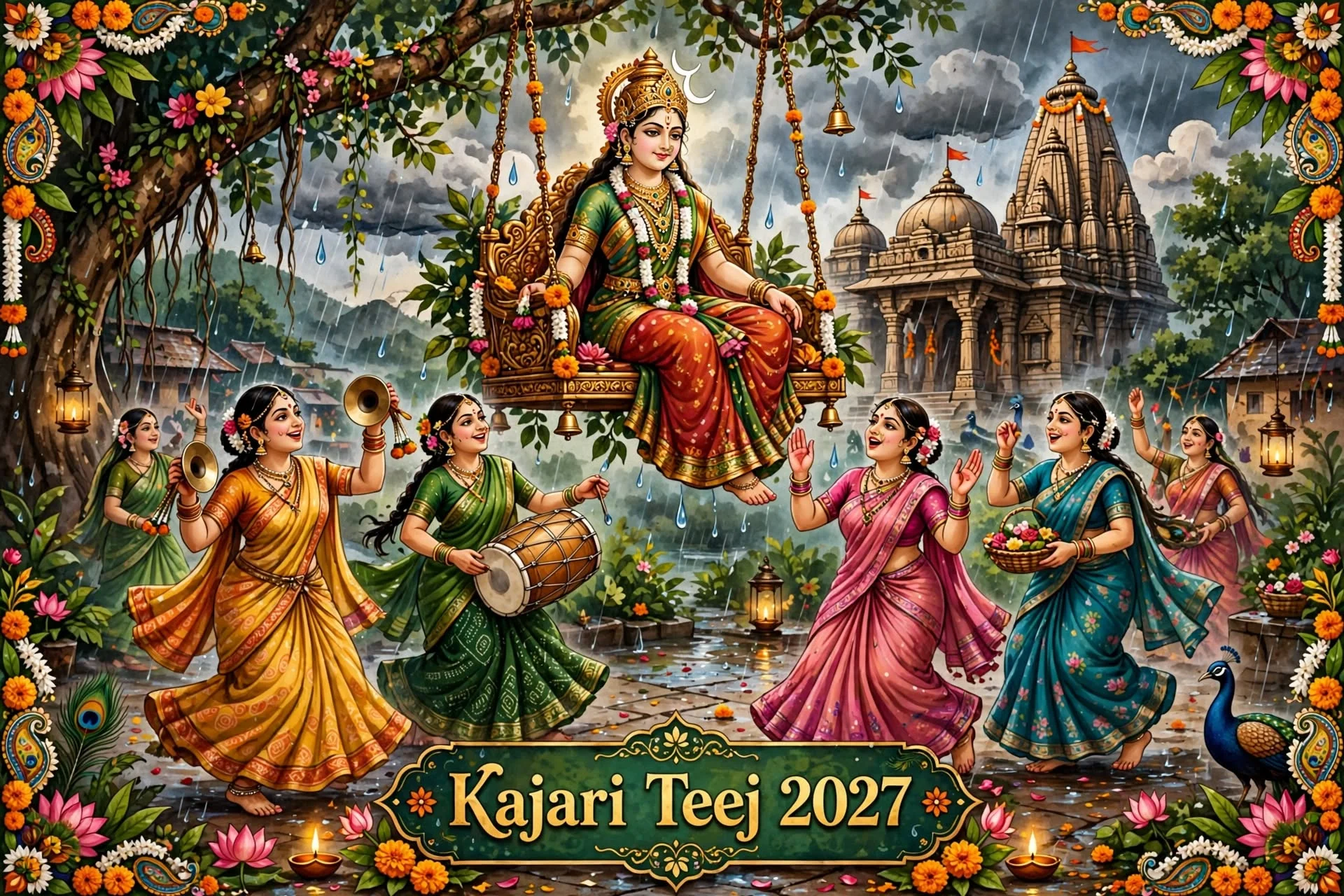
Friday, Aug 20, 2027
Kajari Teej
Kajari Teej, also reverently celebrated as Badi Teej, Satva Teej, or Kajali Teej, is one of the three principal Teej festivals in the Hindu calendar, alongside Hariyali Teej and Hartalika Teej. Falling on the Tritiya tithi (third lunar day) of the Krishna Paksha (dark waning fortnight) in the sacred monsoon month of Bhadrapada (corresponding to Shravana in the Amanta calendar scheme), this vibrant festival is dedicated to the divine union of Lord Shiva and Goddess Parvati, embodying marital fidelity, female austerity, and the lush romantic beauty of the monsoon season.
View Festival Guide
Saturday, Aug 21, 2027
Bahula Chaturthi
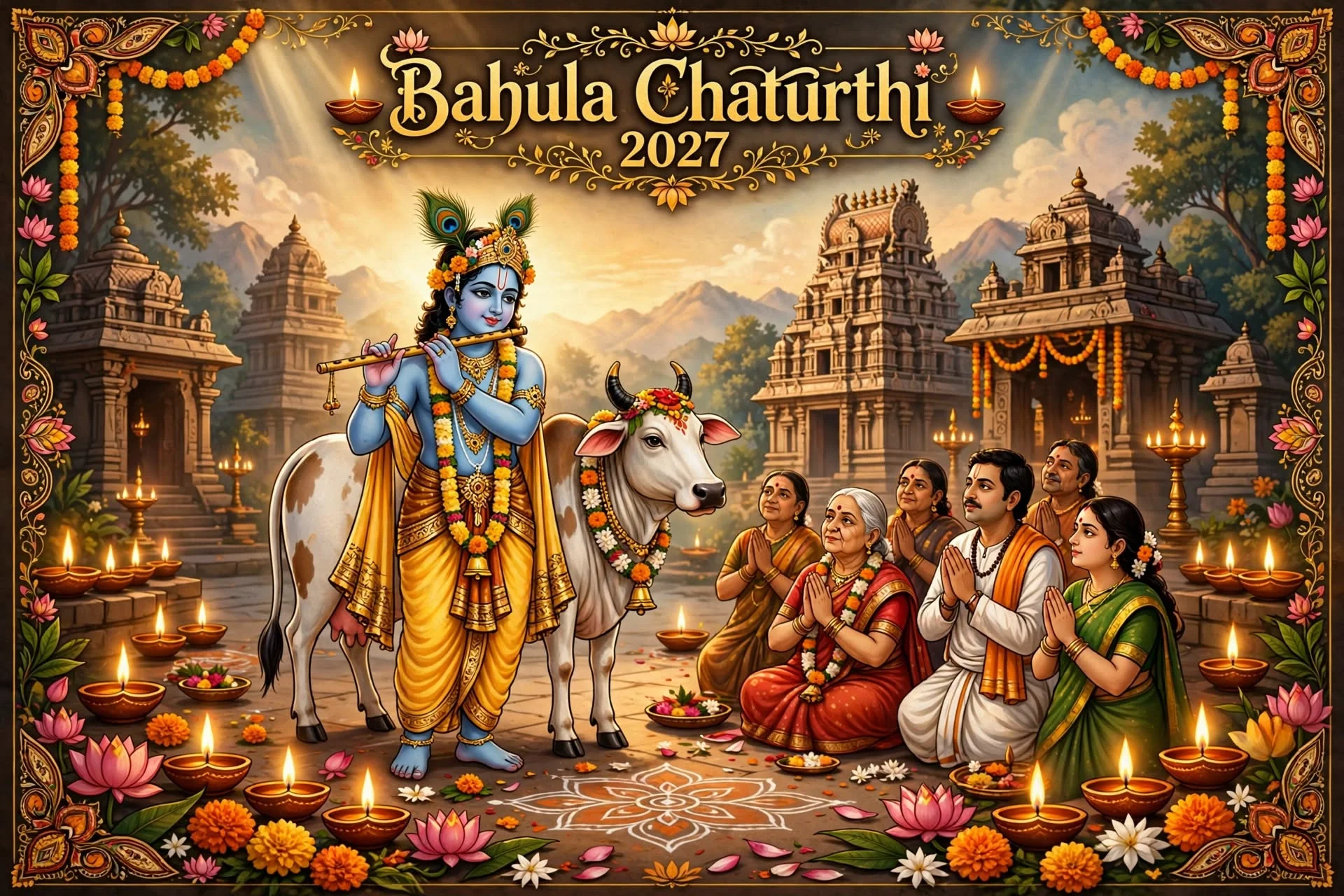
Bahula Chaturthi, also celebrated as Bol Choth or Bahula Chauth, is an ancient and heartwarming Hindu festival observed on the fourth lunar day (Chaturthi) of the Krishna Paksha (waning fortnight) in the sacred monsoon month of Bhadrapada (or Shravana in the Amanta calendar). Dedicated jointly to Bhagwan Sri Krishna and the sacred cow Bahula (Gau Mata), this unique festival celebrates the supreme virtues of absolute truthfulness (Satya), maternal love, unconditional self-sacrifice, and non-violence toward animals.
View Festival Guide
Monday, Aug 23, 2027
Hala Shashthi
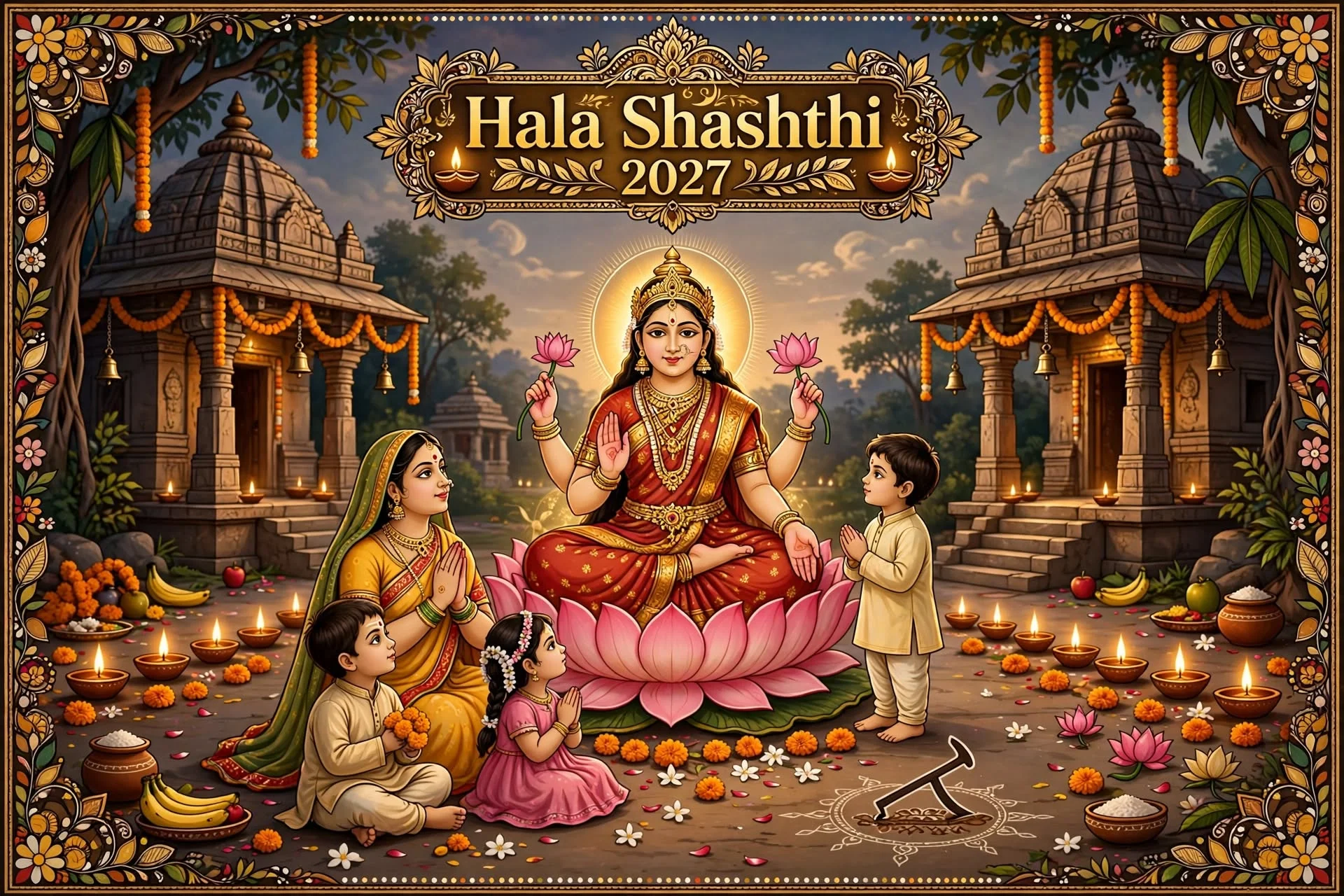
Hala Shashthi, also reverently celebrated across India as Balarama Jayanti, Harshath, Hal Chhath, Tin-chhathi, or Chandan Chhath, falls on the sixth lunar day (Shashthi tithi) of the Krishna Paksha (waning fortnight) in the sacred monsoon month of Bhadrapada (or Shravana in the Amanta calendar). This sanctified day marks the auspicious appearance anniversary (Avatara Jayanti) of Bhagwan Balarama, the elder brother of Lord Sri Krishna and the seventh incarnation of Lord Vishnu, who manifested as the direct embodiment of the primordial thousand-headed serpent Adishesha.
View Festival Guide
Wednesday, Aug 25, 2027
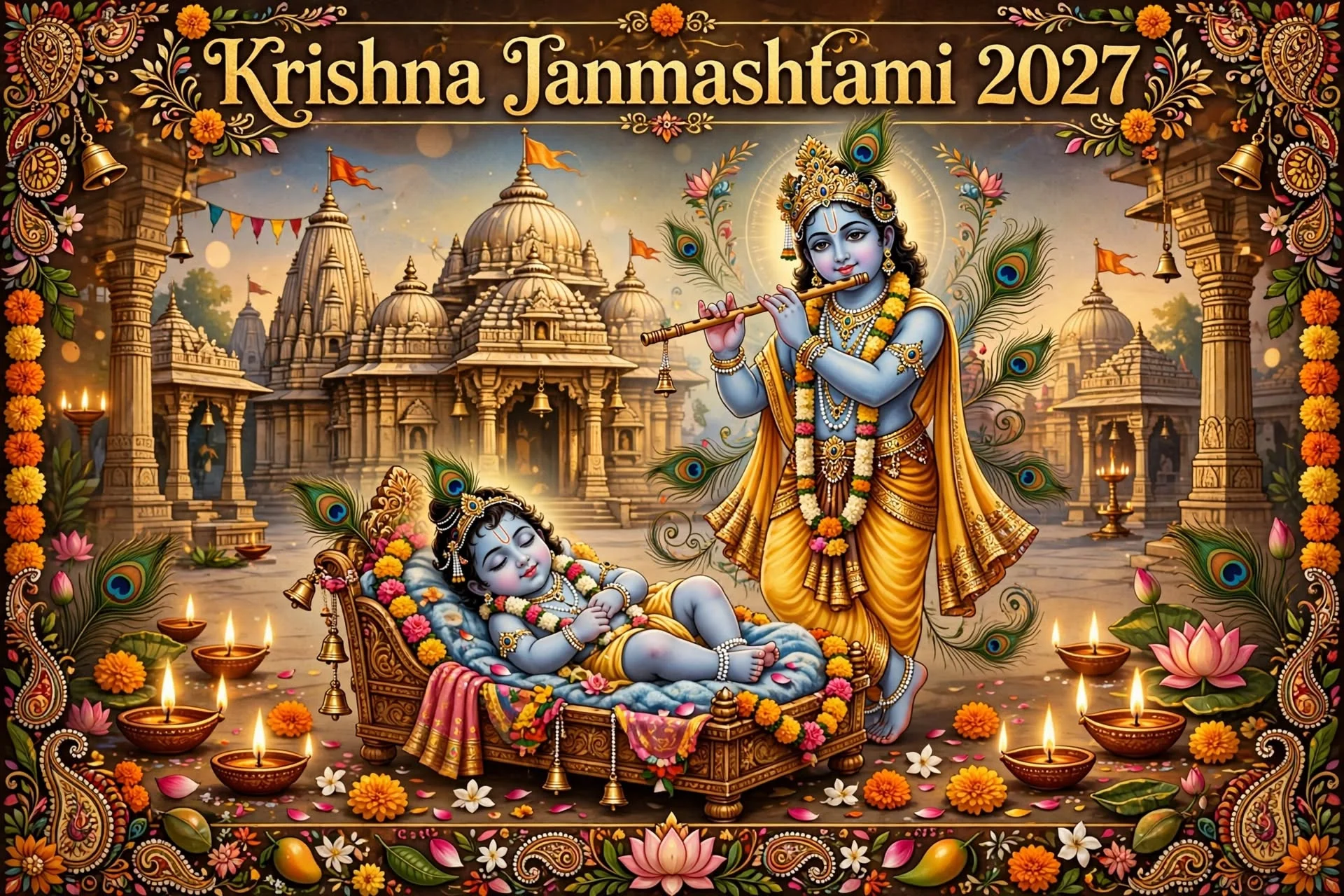
Krishna Janmashtami
Krishna Janmashtami, also celebrated worldwide as Gokulashtami, Krishnashtami, Saatam-Aatham, or Janmashtami, is the supreme, ecstatic celebration marking the divine advent (Avatara Jayanti) of Bhagwan Sri Krishna—revered in the Srimad Bhagavatam as 'Krishnas Tu Bhagavan Svayam' (Sri Krishna is the Supreme Divine Personality of Godhead Himself in His complete, plenary fullness). Occurring on the eighth lunar day (Ashtami tithi) of the Krishna Paksha in the sacred monsoon month of Bhadrapada (or Shravana in the Amanta calendar) at the stroke of midnight under the auspicious Rohini Nakshatra, this festival commemorates the celestial moment when the dark midnight sky was illuminated by the birth of the cosmic protector.
View Festival Guide
Thursday, Aug 26, 2027
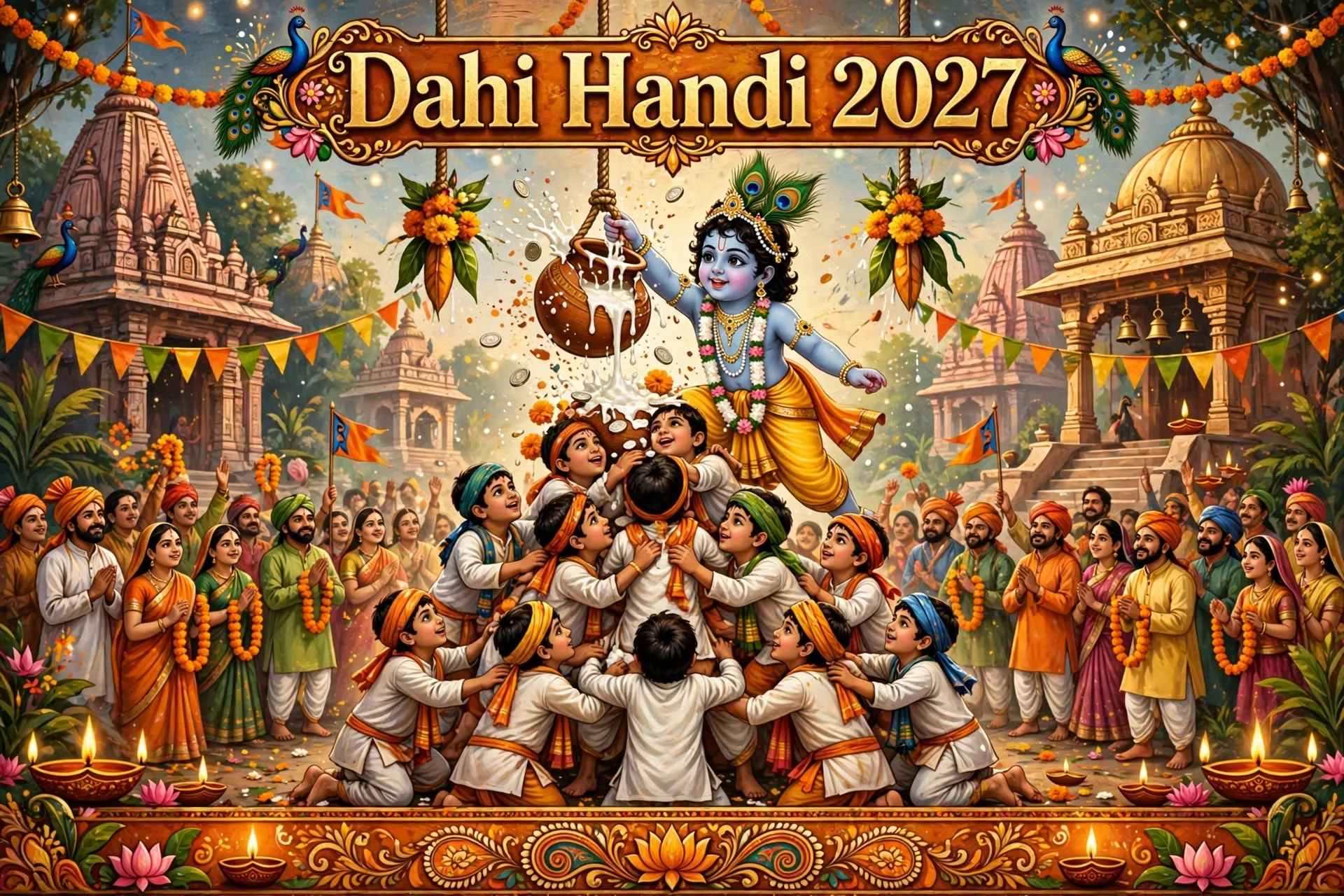
Dahi Handi
Dahi Handi, also celebrated as Gopalakala, Utlotsavam, or the Curd Pot Festival, is an exuberant, high-energy festival celebrated on the Navami tithi (ninth lunar day) of Krishna Paksha in the sacred monsoon month of Bhadrapada (or Shravana in the Amanta calendar). Occurring on the morning immediately following Krishna Janmashtami, Dahi Handi commemorates the enchanting childhood pastimes (Baal Leelas) of Bhagwan Sri Krishna in the pastoral village of Gokul, where the young Lord and His cowherd companions (Gopas) formed ingenious human pyramids to reach and break earthen pots filled with freshly churned curd, butter, and milk hung from the high ceilings of gopis' houses.
View Festival Guide
Saturday, Aug 28, 2027
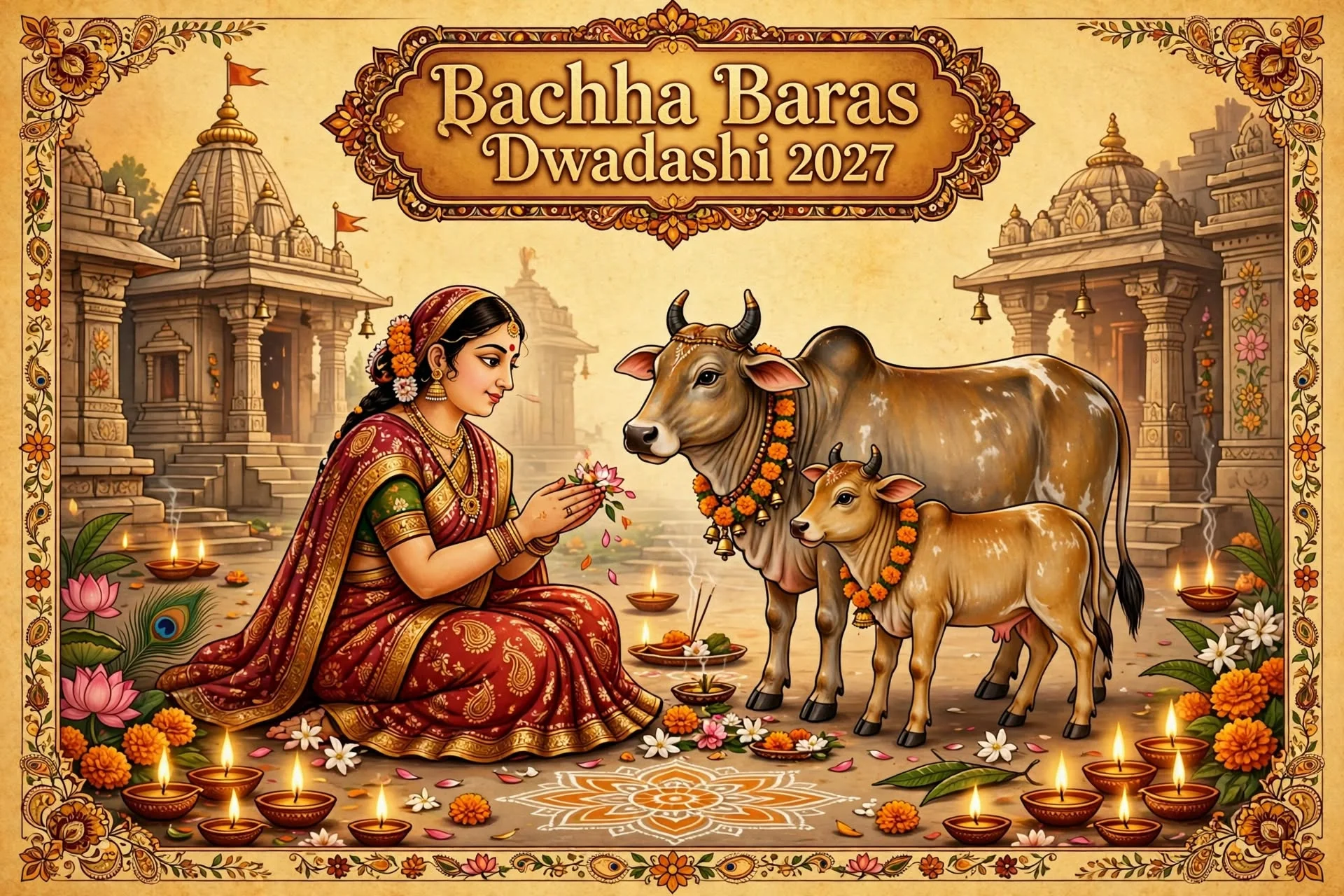
Bachha Baras Dwadashi
Bachha Baras Dwadashi, also reverently celebrated as Govatsa Dwadashi, Vasu Baras, or Vatsa Dwadashi, is observed on the twelfth lunar day (Dwadashi tithi) of Krishna Paksha in the sacred monsoon month of Bhadrapada (or Shravana in the Amanta calendar scheme). Falling four days after Krishna Janmashtami, this heartwarming festival is dedicated exclusively to the adoration of Kamadhenu's celestial daughter, the divine cow Nandini, and her young suckling calf (Bachha / Vatsa), celebrating maternal devotion, rural cattle welfare, and the sacred spiritual bond between humanity and the animal kingdom.
View Festival Guide
Saturday, Aug 28, 2027
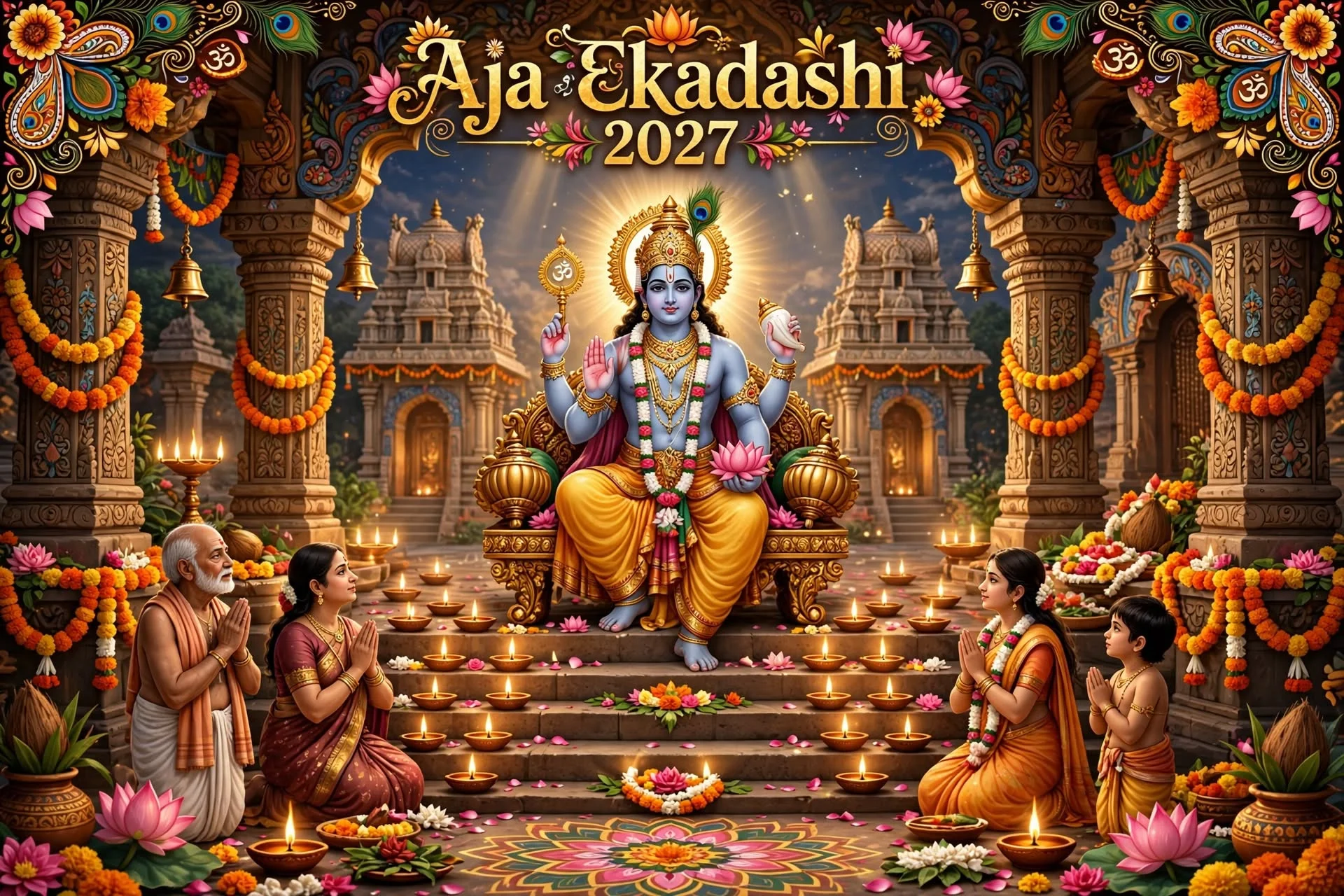
Aja Ekadashi
Aja Ekadashi, also celebrated with immense spiritual reverence as Ananda Ekadashi, is observed on the eleventh lunar day (Ekadashi tithi) of the Krishna Paksha (dark waning fortnight) in the sacred monsoon month of Bhadrapada (or Shravana in the Amanta calendar). Dedicated to Bhagwan Vishnu in His divine form as Hrishikesha (the supreme master of the senses), this sanctified vrata is extolled in the Brahmavaivarta Purana and Padma Purana as an extraordinary spiritual penance capable of destroying all accumulated sins, reversing catastrophic worldly misfortunes, and bestowing liberation (Moksha).
View Festival Guide
Sunday, Aug 29, 2027
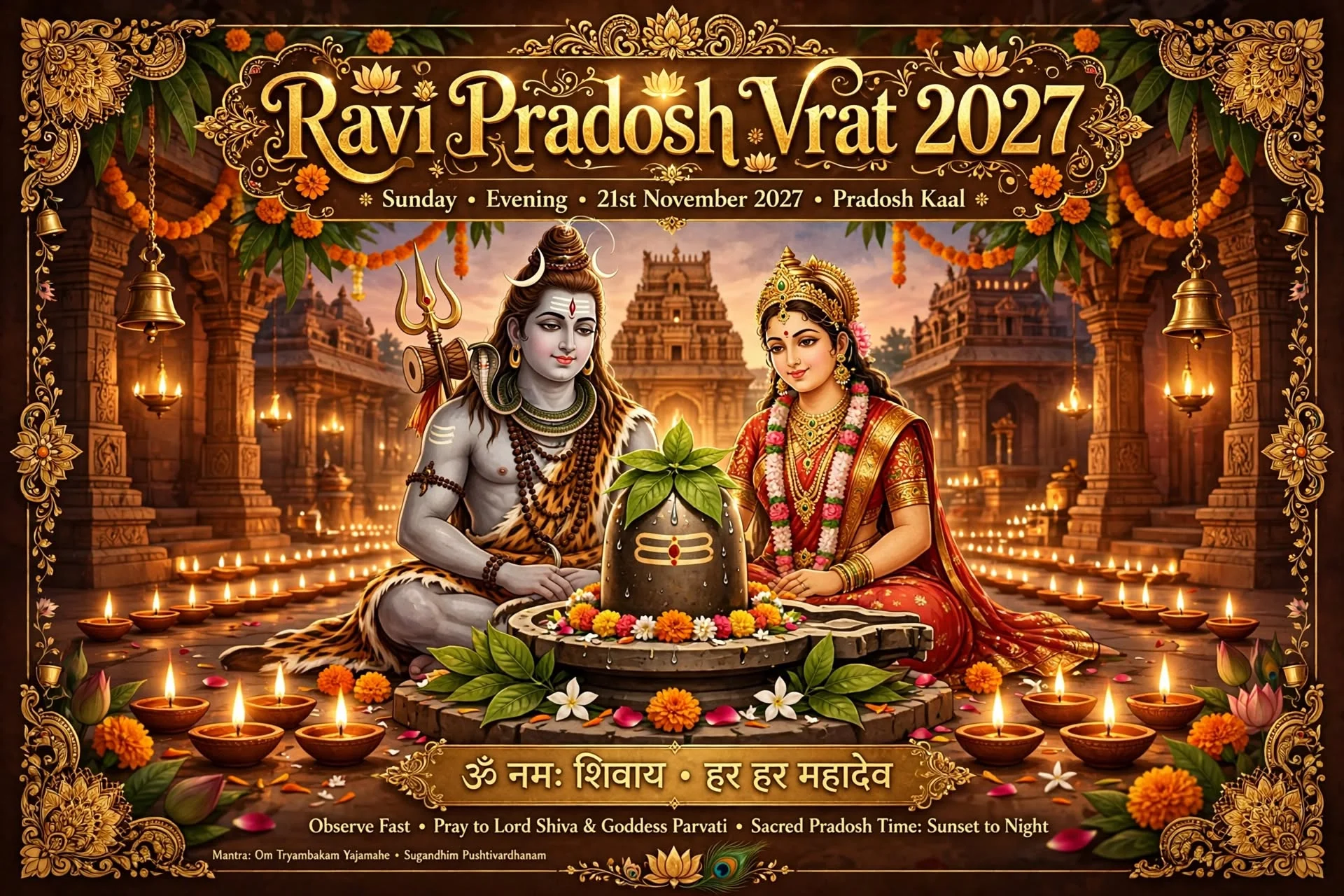
Ravi Pradosh Vrat
Ravi Pradosh Vrat is an exceptionally sacred fasting day observed on the thirteenth lunar day (Trayodashi) that coincides with a Sunday (Ravivara). Dedicated to Lord Shiva, the cosmic dissolver of sorrow, this bimonthly vow unites the healing radiance of Surya Bhagavan with the boundless compassion of Mahadeva. Observed during the twilight Sandhya period, it is believed to banish physical ailments, clear karmic obstructions, and bestow vitality and longevity.
View Festival Guide