




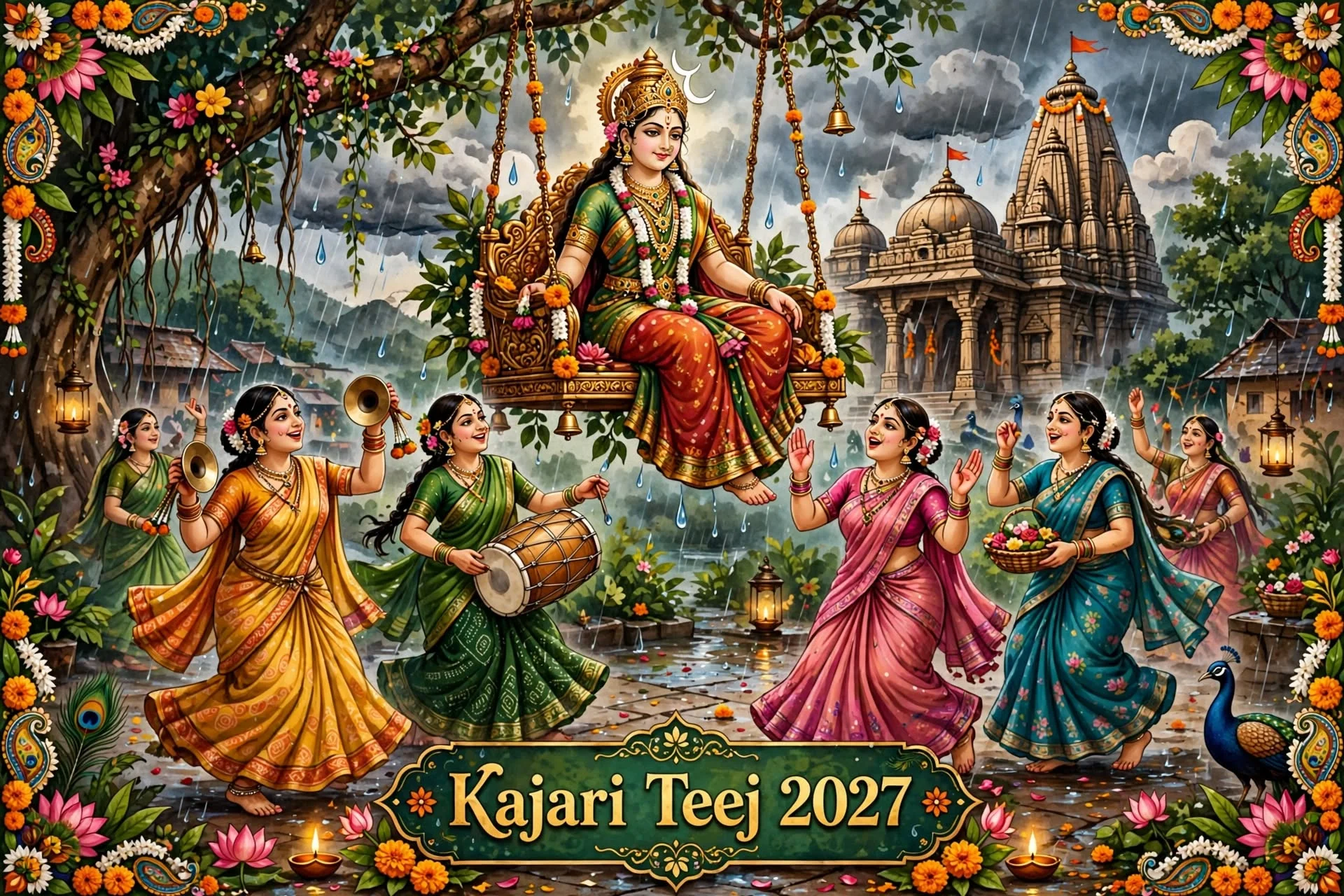
Kajari Teej, also reverently celebrated as Badi Teej, Satva Teej, or Kajali Teej, is one of the three principal Teej festivals in the Hindu calendar, alongside Hariyali Teej and Hartalika Teej. Falling on the Tritiya tithi (third lunar day) of the Krishna Paksha (dark waning fortnight) in the sacred monsoon month of Bhadrapada (corresponding to Shravana in the Amanta calendar scheme), this vibrant festival is dedicated to the divine union of Lord Shiva and Goddess Parvati, embodying marital fidelity, female austerity, and the lush romantic beauty of the monsoon season.
Kajari Teej 2027: Date, Puja Timings, Rituals & Stories
Kajari Teej Timings & Panchang
Important festival dates and auspicious timings
Usha Arghya (Sunrise)
05:53 am
Sandhya Arghya (Sunset)
06:56 pm
Start Date
Friday, 20 Aug 2027
Puja Muhurat
05:16 pm – 06:53 pm
Kajari Teej
Predominantly celebrated with magnificent cultural splendor in Rajasthan (especially in the historic royal city of Bundi), Uttar Pradesh, Bihar, and Madhya Pradesh, Kajari Teej is marked by intense fasting observed by married women (seeking their husbands' long life, prosperity, and family happiness) and unmarried maidens (praying for an ideal, noble life partner). The festival derives its evocative name from 'Kajal' (kohl) and the melancholic yet sweet folk songs known as 'Kajali'—lyrical ballads sung by women expressing deep yearning for beloveds, the rhythm of falling rain, and the blossoming of dark monsoon clouds.
Central to the day's sacred rituals is the worship of 'Neemdi Mata'—a consecrated branch of the sacred Neem tree planted beside a miniature artificial pond constructed with cow dung and clay, filled with milk and holy water. Women break their rigorous waterless fast (Nirjala Vrata) only after the late evening moonrise, offering sacred Arghya libations to Chandra Deva through a sifter or ring, and partaking of consecrated 'Sattu'—a roasted multigrain sweet confection specially prepared and decorated for this holy occasion.
Why is Kajari Teej Celebrated?
Kajari Teej is celebrated to honor the unwavering devotion and tapasya of Goddess Parvati, who underwent rigorous penances across 108 lifetimes to win the heart and hand of Lord Shiva as Her eternal consort.
According to sacred tradition, it was during the monsoon that Lord Shiva, moved by Parvati's spotless dedication, accepted Her as His divine equal and half (Ardhanarishvara), blessing all women who observe this fast with marital bliss and protection from domestic discord.
The festival also provides cultural expression to the pastoral poetry of India, celebrating nature's monsoon fertility, the replenishment of soil and waters, and the emotional bonds of womanhood and sisterhood.
- Commemorating the cosmic marriage of Lord Shiva and Goddess Parvati and invoking marital longevity (Akhanda Saubhargya).
- Worshiping Neemdi Mata as a manifestation of divine protective nature and health.
- Offering late evening lunar Arghya to Chandra Deva to pacify the mind and receive cooling blessings.
- Singing traditional Kajari folk ballads that celebrate love, devotion, and the monsoon rains.
- Preparing and sharing consecrated Sattu sweet cakes (Pindas) among extended families.
Scriptural Origins in the Bhavishyottara Purana and Bundi Royal Folklore
The Dialogue of Shiva and Parvati in the Puranas
In the sacred pages of the Bhavishyottara Purana, Lord Shiva Himself narrates the glory of the three Teej festivals to Goddess Parvati, recounting: 'O Devi, among all vratas observed by women in the mortal realm, the fast of Krishna Tritiya in the monsoon is dear to My heart. Whosoever worships You and Me with unswerving faith on this sacred day receives the boon of uninterrupted marital harmony, noble progeny, and freedom from widowhood.'
Goddess Parvati's profound penances—undertaking waterless fasts amidst freezing mountain streams and scorching forest fires—are commemorated on this day as the supreme ideal of spiritual dedication overcoming insurmountable worldly obstacles.
The Royal Teej Procession of Bundi
Historically, Kajari Teej is celebrated with unmatched grandeur in Bundi, Rajasthan. Folklore relates that during the medieval era, King Rao Raja Chhatrasal of Bundi defeated the ruler of Amber and brought a magnificent gold idol of Teej Mata to Bundi.
Ever since, an extravagant two-day royal procession features decorated elephants, camels, folk dancers, and musicians accompanying the palanquin of Goddess Teej through the city's historic streets, drawing pilgrims and tourists from across the world.
The Origin of Kajali Folk Melodies
In the folk traditions of eastern Uttar Pradesh (especially Mirzapur and Varanasi), legends state that King Kantit Naresh's kingdom witnessed great tragedy when their beloved ruler died during the monsoon. His grieving queen sang heart-rending songs of separation (Biraha) at his funeral pyre, which evolved into the 'Kajari' musical genre.
Over time, these melancholic strains merged with devotional hymns celebrating Radha-Krishna's divine love in Vrindavan and Shiva-Parvati's cosmic reunion on Mount Kailash.
Source: Bhavishyottara Purana, Skanda Purana, and Rajasthan Folk Archives
Austerity, Lunar Balance, and Sacred Ecology
Tapasya and the Power of Willpower (Sankalpa Shakti)
The waterless fast (Nirjala) observed by women on Kajari Teej is a profound exercise in conscious self-mastery. By abstaining from water and food during the humid monsoon heat, the practitioner burns physical impurities and focuses mental energy upon divine love.
This voluntary austerity aligns the soul with Goddess Parvati's transcendent endurance, proving that unshakeable determination can reshape destiny.
Neemdi Mata and Environmental Reverence
The worship of the Neem tree (Azadirachta indica) represents the sacred ecological consciousness of Hinduism. Neem is revered for its potent antibacterial, antiviral, and air-purifying qualities, which are essential during the monsoon when water-borne diseases flourish.
By worshiping Neem as a mother goddess and offering unboiled milk at its roots, devotees sanctify nature and pray for physical immunity and familial protection.
Neemdi Puja Setup, Sattu Preparation, and Moonrise Arghya
Neemdi Altar and Artificial Pond Creation
On the day of Kajari Teej, women clean an auspicious courtyard or room corner, using wet clay and cow dung to construct a miniature square pond (Pal). Beside the pond, a fresh leafy twig of the sacred Neem tree (Neemdi) is firmly planted.
A small ghee lamp (diya) is lit, and offerings of turmeric, vermilion, mehendi, unbroken rice, fruits, and sattu are arranged on the bank of the clay pond.
Sattu Making and Moonrise Arghya Vidhi
Women roast Bengal gram (chana dal) or barley (jau) and grind it into fine flour, blending it with pure desi cow ghee, rock sugar, and crushed dry fruits to shape large conical cakes known as 'Sattu ke Pinde'. These are decorated with silver foil (vark) and nuts.
At night, after sighting the moon, women pour milk and water into the pond, observe the moon's reflection in the milky water, offer Arghya to Chandra Deva, and break the fast by eating a portion of Sattu gifted by their mother-in-law or husband.
Kajari Teej Puja Vidhi (Step by Step)
- 1
Brahma Muhurta Snana & Shringara
Wake before dawn, bathe in water mixed with sacred herbs, wear auspicious red or green traditional Rajasthani attire, and apply henna (mehendi) and glass bangles.
- 2
Nirjala Vrata Sankalpa
Sit facing East before the home shrine, hold water and rice grains, resolving to observe the strict waterless fast for the longevity of the husband and family prosperity.
- 3
Construction of the Neemdi Pond
Fashion a small miniature pond using clean clay or dough against a wall, erecting a small rim around it to hold holy water, raw milk, and vermilion.
- 4
Neemdi Mata Sthapana
Plant a fresh, leafy branch of the Neem tree on the bank of the pond, draping it with a small red chunri symbolizing the divine mother.
- 5
Avahana and Deepa Prajvalana
Invoke Goddess Parvati and Neemdi Mata with folded hands, lighting a pure cow-ghee lamp placed securely beside the sacred pond.
Kajari Teej Puja Samagri List
Neemdi Altar and Pond Articles
- Fresh leafy twig of a sacred Neem tree (Neemdi dhal)
- Clean clay, unboiled cow milk, and Ganga water for the pond
- Small red chunri or odhani for draping Neemdi Mata
- Pure cow-ghee lamp, cotton wicks, and natural camphor
- Brass bell, plate, and Achamani spoon
Cosmetics, Anointing, and Floral Items
- Rolli (kumkum), turmeric powder, and sandalwood paste
- Fresh green henna (mehendi) cone or paste
- Unbroken white raw rice grains (Akshata) and sacred red thread (Moli)
- Fresh seasonal flowers, marigold garlands, and green leaves
- Solah Shringara items: glass bangles, bindi, alta, and kajal
Naivedyam and Sattu Offerings
- Traditional Sattu cakes (prepared from roasted chana or barley with ghee and sugar)
- Silver foil (vark), crushed almonds, and pistachios for decorating Sattu
- Fresh whole cucumber, lemons, bananas, and sweet seasonal fruits
- Clean cow milk and water in a silver or brass lota for Chandra Arghya
Mantras and Prayers for Kajari Teej
Kajari Teej Vrat Rules and Fasting Guidelines
Fasting Discipline and Observances
Married women and maidens observe a complete waterless fast (Nirjala Vrata) from sunrise until the moon is sighted late at night. Food, water, and sleep during daytime are strictly prohibited.
- Maintain absolute waterless fasting until sighting the moon at night.
- Offer Arghya to Chandra Deva before taking even a drop of water.
- Break the fast exclusively with consecrated Sattu and pure water.
- Avoid domestic anger, disputes, or negative speech throughout the fast.
Neemdi Reverence and Shringara
Women wear festive traditional attire with Solah Shringara (sixteen adornments). The Neemdi pond must be treated with reverence and kept clean until morning.
Dos and Don'ts of Kajari Teej
Good Practices (Do's)
- Wake up before sunrise, bathe, and take the solemn vow of Nirjala fasting.
- Construct the clay pond and install a fresh branch of the sacred Neem tree.
- Sing traditional Kajari songs celebrating divine love and monsoon blessings.
- Offer Arghya to the moon using unboiled cow milk and pure water at night.
- Seek the heartfelt blessings of your mother-in-law and elders by touching their feet.
Kajari Teej Across Regions
| Region | Local Name |
|---|---|
| Rajasthan (Bundi, Jaipur, Kota) | Kajari Teej / Satva Teej |
| Uttar Pradesh & Bihar | Kajali Teej |
| Madhya Pradesh (Malwa and Bundelkhand) | Badi Teej |
Kajari Teej FAQs
How is Kajari Teej different from Hariyali Teej?
Hariyali Teej occurs in the Shukla Paksha (waxing moon) of Shravana celebrating green nature, while Kajari Teej (Badi Teej) occurs fifteen days later in the Krishna Paksha (waning moon) of Bhadrapada, centered around Neemdi worship and Sattu offerings.
Why is Neemdi Mata worshiped on Kajari Teej?
The Neem tree is revered as a manifestation of Goddess Parvati and Sheetala Mata, providing medicinal protection, antibacterial immunity, and cooling energies during the humid monsoon season.
What is Sattu, and why is it eaten on this day?
Sattu is a wholesome flour made of roasted Bengal gram or barley kneaded with pure desi ghee, sugar, and dry fruits into decorative cakes (Pindas), eaten to provide gentle nutrition after the waterless fast.
Upcoming Festivals
View All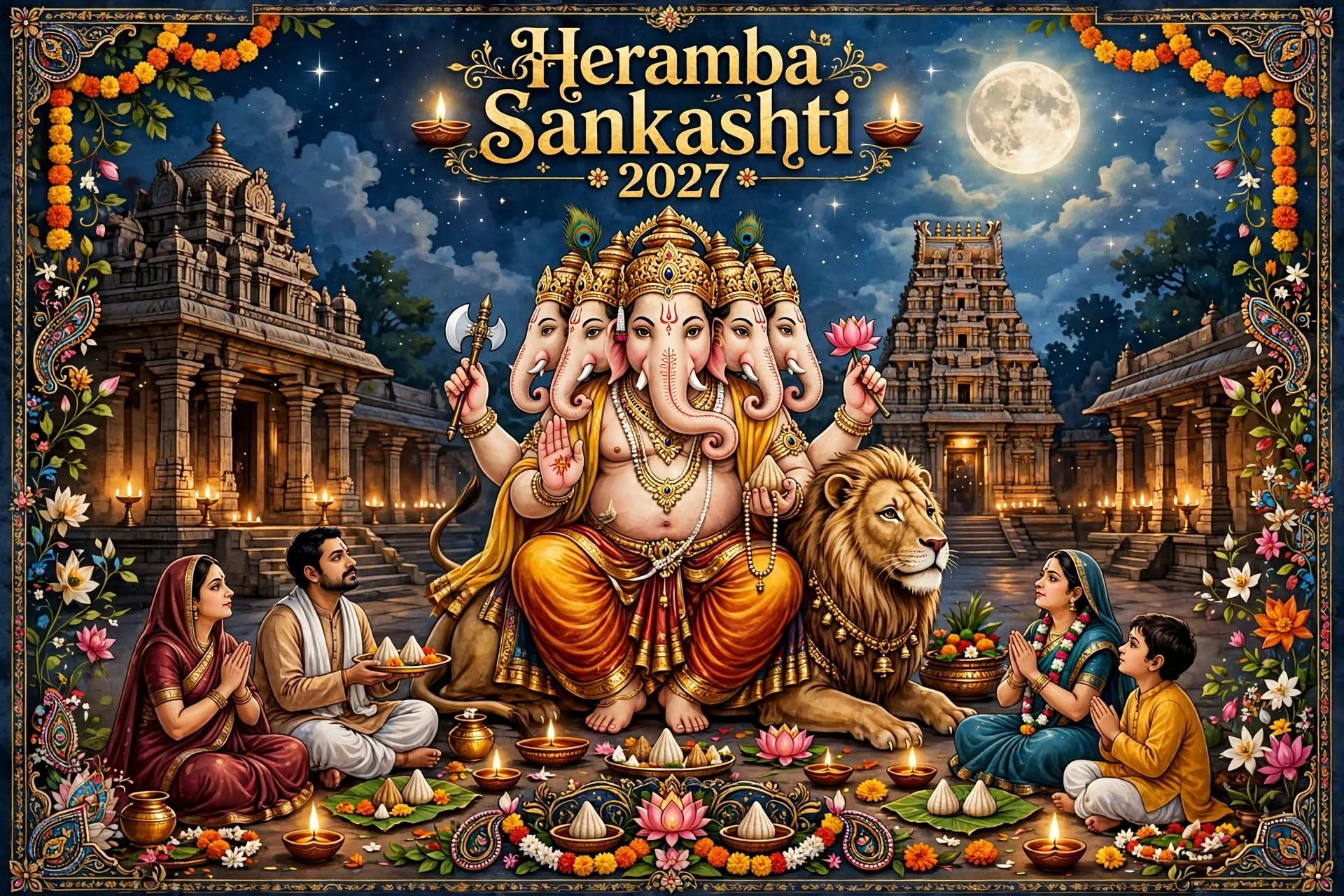
Friday, Aug 20, 2027
Heramba Sankashti
Heramba Sankashti Chaturthi, also celebrated with profound veneration as Heramba Sankashtahara Chaturthi, falls on the fourth lunar day (Chaturthi) of the Krishna Paksha (waning fortnight) in the sacred monsoon month of Bhadrapada (or Shravana in the Amanta calendar). Dedicated to Heramba Ganapati—one of the thirty-two classical iconographic forms of Lord Ganesha—this sacred day is celebrated as an extraordinary spiritual penance for overcoming seemingly insurmountable existential distress, severe financial distress, health catastrophes, and deep karmic obstacles.
View Festival Guide
Saturday, Aug 21, 2027
Bahula Chaturthi
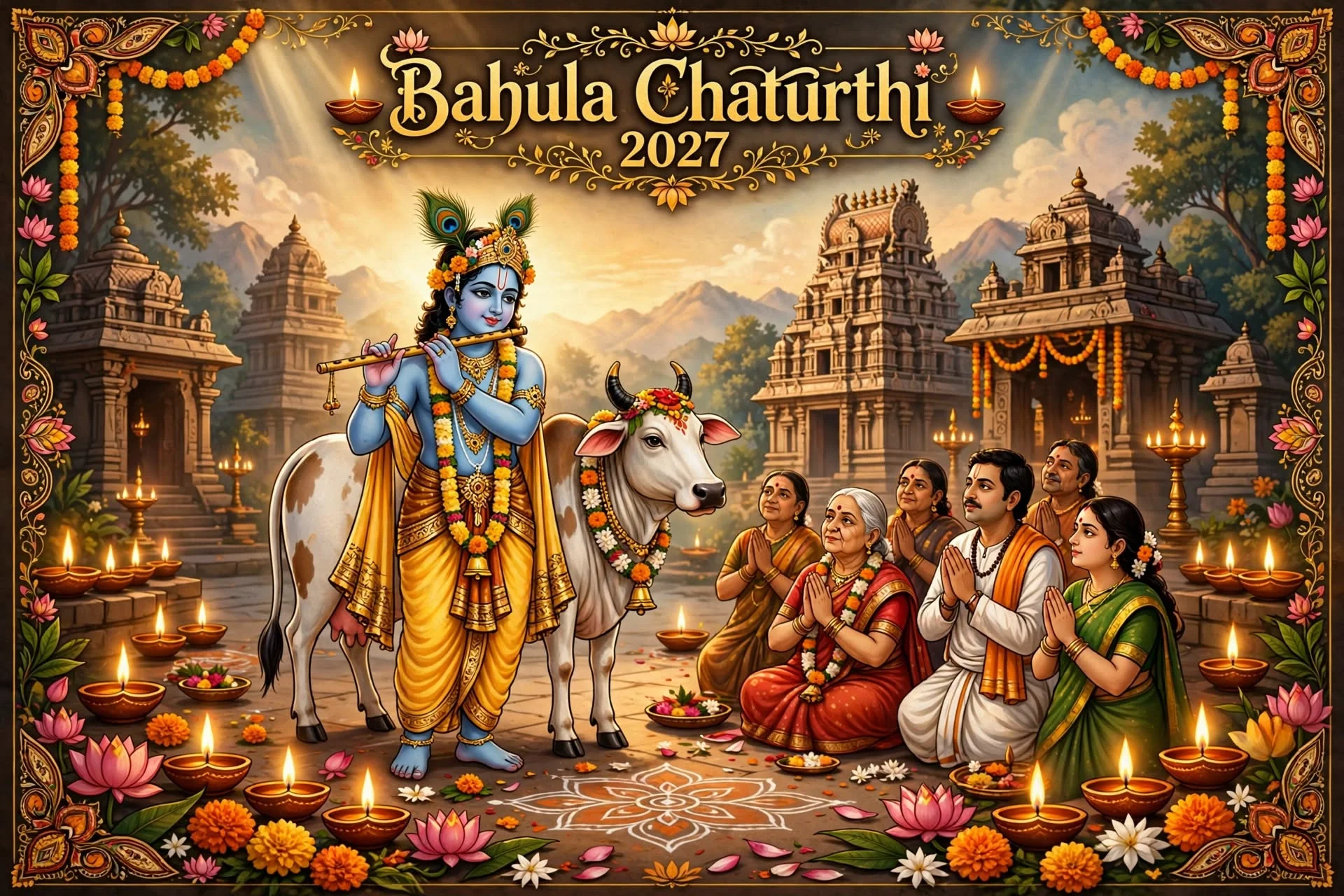
Bahula Chaturthi, also celebrated as Bol Choth or Bahula Chauth, is an ancient and heartwarming Hindu festival observed on the fourth lunar day (Chaturthi) of the Krishna Paksha (waning fortnight) in the sacred monsoon month of Bhadrapada (or Shravana in the Amanta calendar). Dedicated jointly to Bhagwan Sri Krishna and the sacred cow Bahula (Gau Mata), this unique festival celebrates the supreme virtues of absolute truthfulness (Satya), maternal love, unconditional self-sacrifice, and non-violence toward animals.
View Festival Guide
Monday, Aug 23, 2027
Hala Shashthi
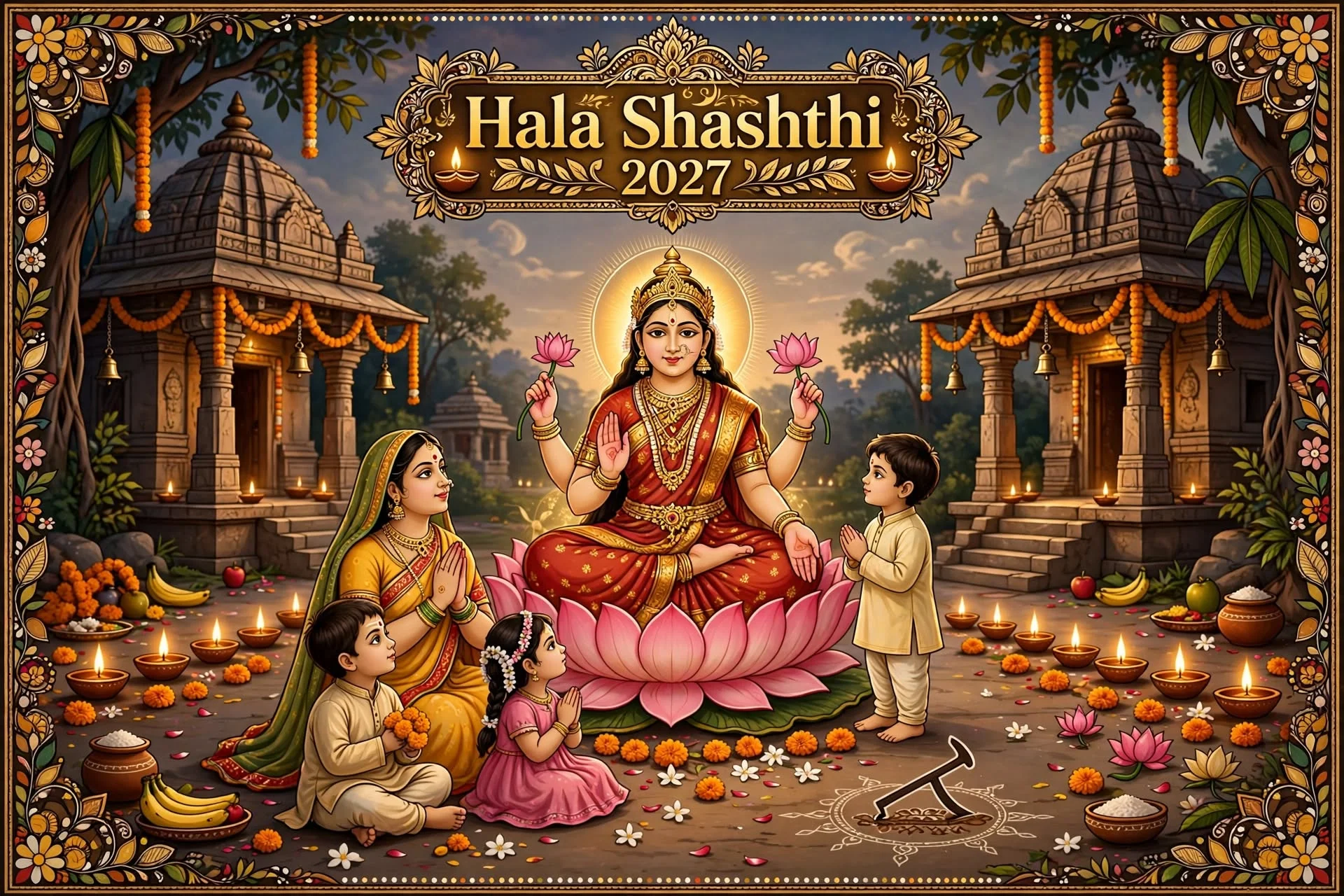
Hala Shashthi, also reverently celebrated across India as Balarama Jayanti, Harshath, Hal Chhath, Tin-chhathi, or Chandan Chhath, falls on the sixth lunar day (Shashthi tithi) of the Krishna Paksha (waning fortnight) in the sacred monsoon month of Bhadrapada (or Shravana in the Amanta calendar). This sanctified day marks the auspicious appearance anniversary (Avatara Jayanti) of Bhagwan Balarama, the elder brother of Lord Sri Krishna and the seventh incarnation of Lord Vishnu, who manifested as the direct embodiment of the primordial thousand-headed serpent Adishesha.
View Festival Guide
Wednesday, Aug 25, 2027
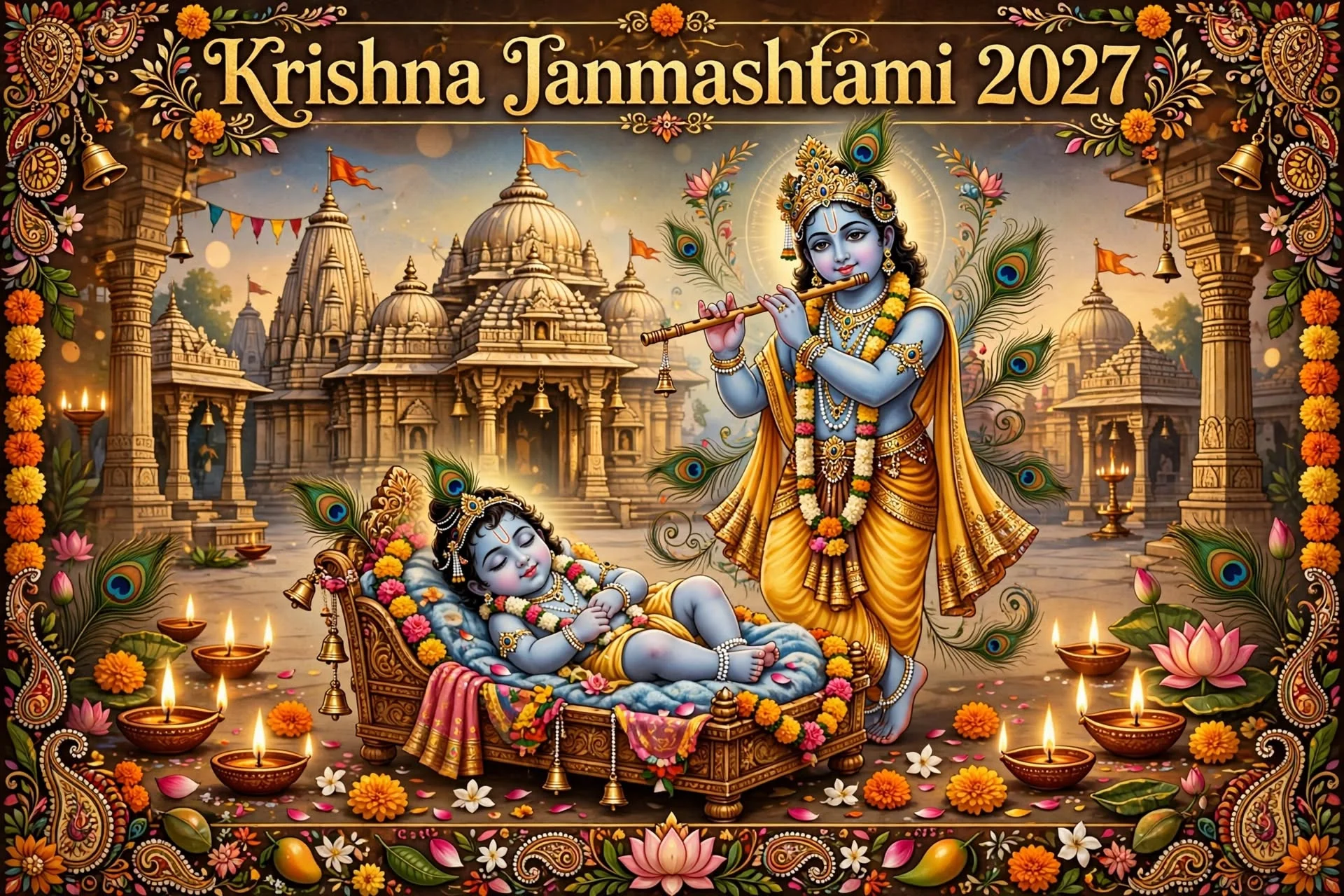
Krishna Janmashtami
Krishna Janmashtami, also celebrated worldwide as Gokulashtami, Krishnashtami, Saatam-Aatham, or Janmashtami, is the supreme, ecstatic celebration marking the divine advent (Avatara Jayanti) of Bhagwan Sri Krishna—revered in the Srimad Bhagavatam as 'Krishnas Tu Bhagavan Svayam' (Sri Krishna is the Supreme Divine Personality of Godhead Himself in His complete, plenary fullness). Occurring on the eighth lunar day (Ashtami tithi) of the Krishna Paksha in the sacred monsoon month of Bhadrapada (or Shravana in the Amanta calendar) at the stroke of midnight under the auspicious Rohini Nakshatra, this festival commemorates the celestial moment when the dark midnight sky was illuminated by the birth of the cosmic protector.
View Festival Guide
Thursday, Aug 26, 2027
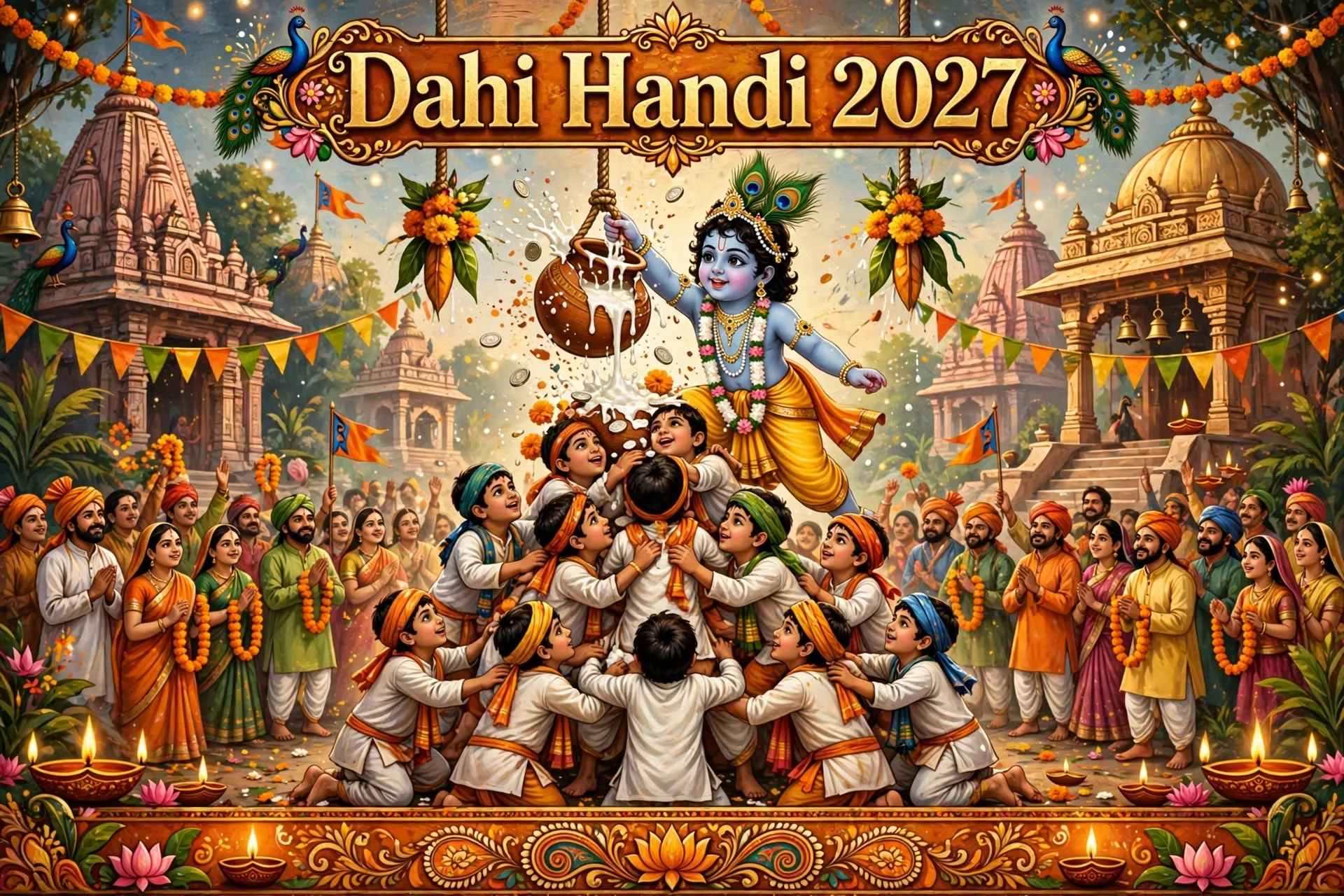
Dahi Handi
Dahi Handi, also celebrated as Gopalakala, Utlotsavam, or the Curd Pot Festival, is an exuberant, high-energy festival celebrated on the Navami tithi (ninth lunar day) of Krishna Paksha in the sacred monsoon month of Bhadrapada (or Shravana in the Amanta calendar). Occurring on the morning immediately following Krishna Janmashtami, Dahi Handi commemorates the enchanting childhood pastimes (Baal Leelas) of Bhagwan Sri Krishna in the pastoral village of Gokul, where the young Lord and His cowherd companions (Gopas) formed ingenious human pyramids to reach and break earthen pots filled with freshly churned curd, butter, and milk hung from the high ceilings of gopis' houses.
View Festival Guide
Saturday, Aug 28, 2027
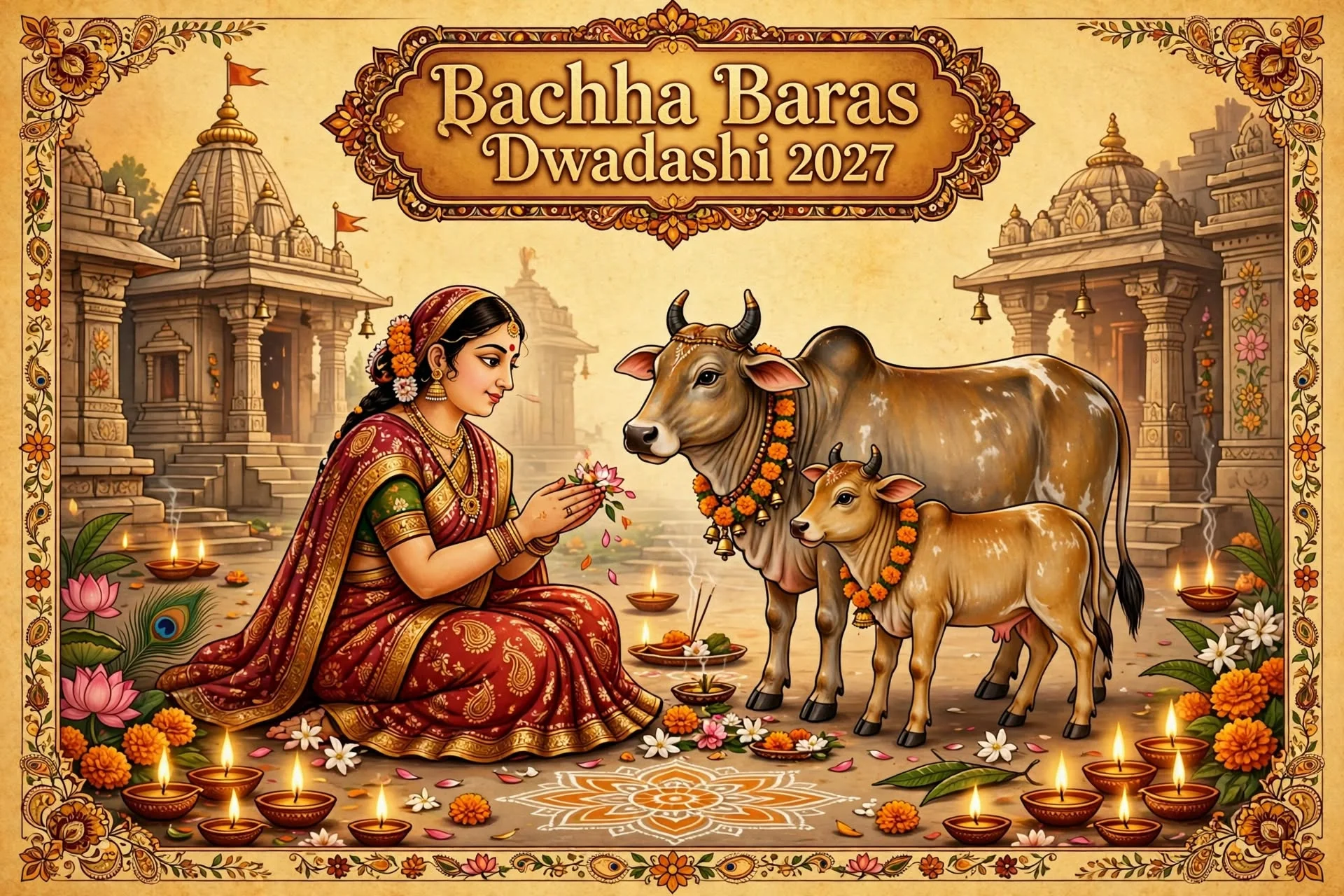
Bachha Baras Dwadashi
Bachha Baras Dwadashi, also reverently celebrated as Govatsa Dwadashi, Vasu Baras, or Vatsa Dwadashi, is observed on the twelfth lunar day (Dwadashi tithi) of Krishna Paksha in the sacred monsoon month of Bhadrapada (or Shravana in the Amanta calendar scheme). Falling four days after Krishna Janmashtami, this heartwarming festival is dedicated exclusively to the adoration of Kamadhenu's celestial daughter, the divine cow Nandini, and her young suckling calf (Bachha / Vatsa), celebrating maternal devotion, rural cattle welfare, and the sacred spiritual bond between humanity and the animal kingdom.
View Festival Guide
Saturday, Aug 28, 2027
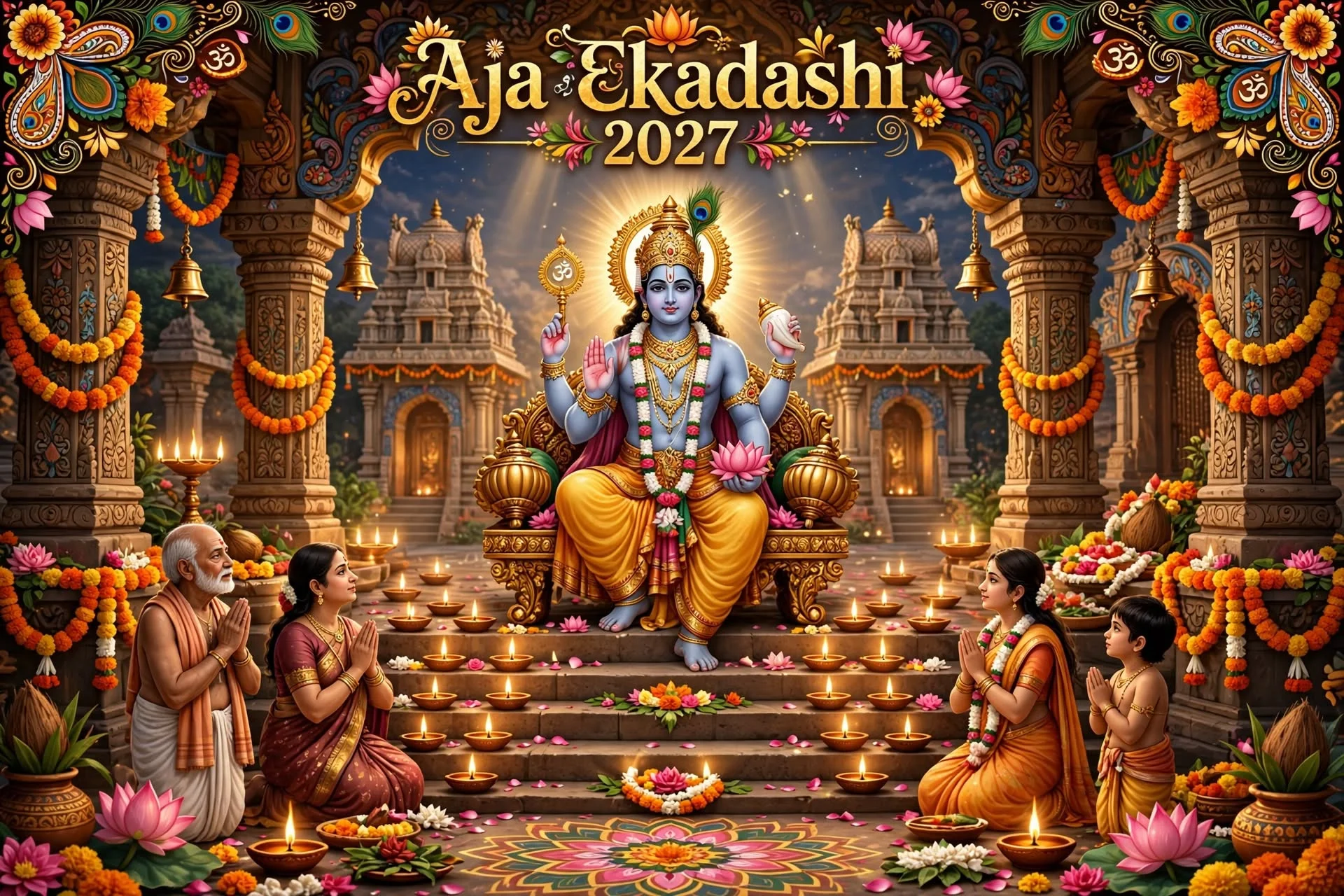
Aja Ekadashi
Aja Ekadashi, also celebrated with immense spiritual reverence as Ananda Ekadashi, is observed on the eleventh lunar day (Ekadashi tithi) of the Krishna Paksha (dark waning fortnight) in the sacred monsoon month of Bhadrapada (or Shravana in the Amanta calendar). Dedicated to Bhagwan Vishnu in His divine form as Hrishikesha (the supreme master of the senses), this sanctified vrata is extolled in the Brahmavaivarta Purana and Padma Purana as an extraordinary spiritual penance capable of destroying all accumulated sins, reversing catastrophic worldly misfortunes, and bestowing liberation (Moksha).
View Festival Guide
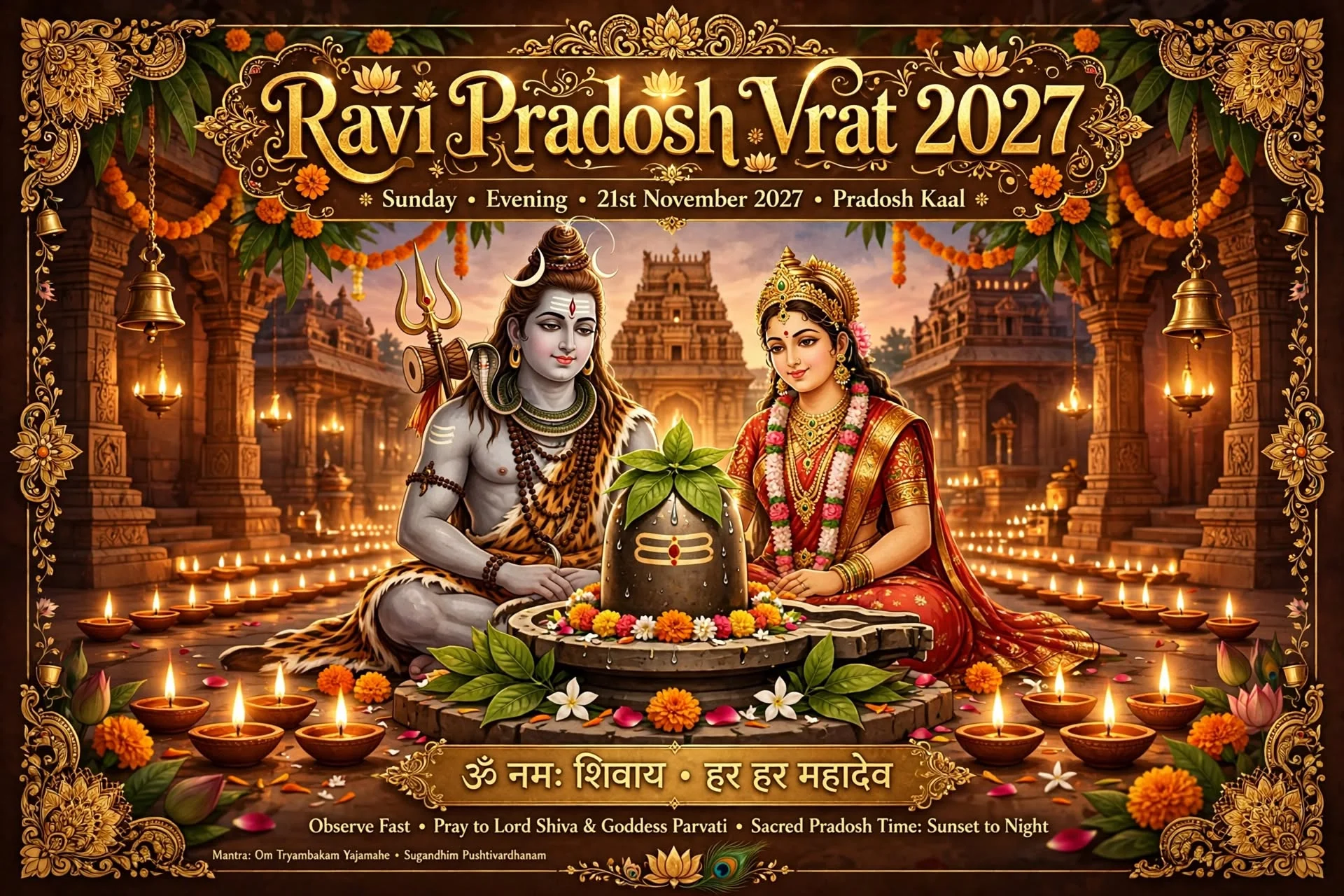
Sunday, Aug 29, 2027
Ravi Pradosh Vrat
Ravi Pradosh Vrat is an exceptionally sacred fasting day observed on the thirteenth lunar day (Trayodashi) that coincides with a Sunday (Ravivara). Dedicated to Lord Shiva, the cosmic dissolver of sorrow, this bimonthly vow unites the healing radiance of Surya Bhagavan with the boundless compassion of Mahadeva. Observed during the twilight Sandhya period, it is believed to banish physical ailments, clear karmic obstructions, and bestow vitality and longevity.
View Festival Guide