




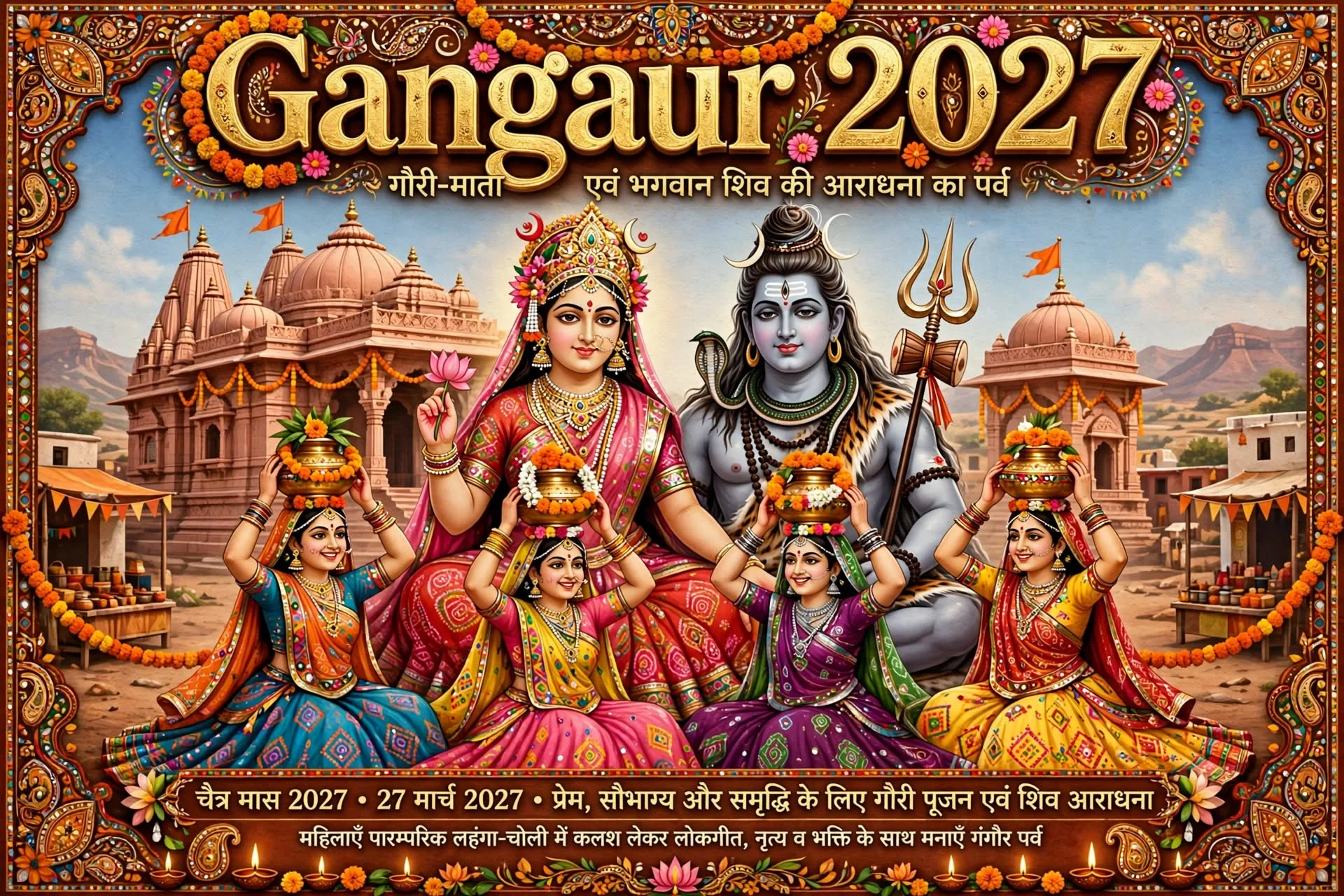
Gangaur is one of the most vibrant, emotionally poignant, and culturally majestic festivals of Rajasthan, celebrated also with great enthusiasm in parts of Gujarat, Madhya Pradesh (Malwa), and Haryana. The word 'Gangaur' is a compound of 'Gana' (a title of Lord Shiva) and 'Gaur' (Goddess Gauri or Parvati). Commencing immediately following Holika Dahan on the first day of Chaitra Krishna Paksha, this elaborate celebration spans eighteen days, reaching its glorious zenith on the third day of Chaitra Shukla Paksha (Tritiya).
Gangaur (Gauri Tritiya) 2027: Date, Puja Timings, Rituals & Stories
Gangaur (Gauri Tritiya) Timings & Panchang
Important festival dates and auspicious timings
Usha Arghya (Sunrise)
06:03 am
Sandhya Arghya (Sunset)
06:43 pm
Start Date
Friday, 9 Apr 2027
Puja Muhurat
03:10 am – 01:32 am
Gangaur (Gauri Tritiya)
Deeply rooted in regional folklore and classical Puranic traditions, Gangaur celebrates the divine marital bond of Lord Shiva and Goddess Parvati. According to lore, Goddess Gauri returns to her maternal home during this period to bless her childhood companions, followed by Lord Shiva (Isar Ji) who arrives to escort her back to Mount Kailash. The festival honors womanhood, marital fidelity, and the arrival of the rejuvenating spring season (Vasanta Ritu).
During Gangaur, newlywed brides, married women, and young maidens craft splendid clay or wooden statues of Isar and Gauri, dressing them in exquisite royal Rajasthani attire, glittering turbans, and authentic jewelry. Women observe fasts, sing timeless folk songs such as 'Gor Gor Gomti' and 'Khelat Baari Gor', and participate in magnificent royal processions carrying the divine idols on their heads toward sacred water bodies (Baoris, lakes, and rivers) for the poignant immersion (Visarjan) ceremony.
Why is Gangaur (Gauri Tritiya) Celebrated?
Gangaur is celebrated to revere the ideal divine marriage of Lord Shiva and Goddess Parvati, seeking their eternal blessings for marital longevity, conjugal bliss, and family welfare. For newly married women, it represents an auspicious rite of passage cementing bond and fertility, while young maidens observe it to pray for virtuous, loving husbands.
- Conjugal Harmony & Saubhagya: Invokes the divine grace of Goddess Gauri to bless married women with unbroken marital happiness (Akhand Saubhagya).
- Celebration of Rajput & Rajasthani Heritage: Showcases centuries-old folk traditions, royal pageantry, and exquisite Rajasthani artistry.
- Auspicious Boons for Maidens: Young girls observe the vow to receive cultured, compassionate, and valiant husbands like Lord Shiva.
- Welcoming Spring & Harvest: Celebrates the vibrant blooming of mustard fields, wheat harvest, and natural abundance across rural lands.
Legendary Origin & Folk Lore of Isar and Gauri
The Divine Visit of Lord Shiva and Goddess Gauri
Ancient Rajasthani lore recounts that Lord Shiva, accompanied by Goddess Parvati and Sage Narada, visited the earth realm to observe the lives of mortal beings. Learning of the divine couple's arrival, women from all walks of life gathered in excitement. Humble rural women arrived first, offering simple forest flowers, clean water, and unblemished devotion.
Deeply moved by their sincere love, Goddess Gauri sprinkled the nectar of immortality (Suhag Ras) over them, blessing them with lifelong marital happiness. When aristocratic women arrived later with lavish golden trays and jewel-encrusted offerings, the Suhag Ras had been exhausted. Undaunted, Goddess Gauri pricked her own finger and sprinkled her sacred divine blood upon them, ensuring that both noble and humble women were eternally blessed.
Gauri's Farewell and the Royal Traditions of Mewar
Following this boon, Goddess Gauri returned to her parental home for several days to celebrate with her maiden friends. Lord Shiva arrived as the royal groom Isar Ji to escort her back. Their joyful reunion and subsequent departure to Mount Kailash forms the emotional heart of Gangaur.
Historically, the Maharanas of Mewar in Udaipur elevated Gangaur into an opulent royal spectacle. The royal family sailed upon Lake Pichola aboard magnificent royal barges (Gangaur Ghat), accompanying the city's populace in royal procession, a grand tradition preserved to this day.
Source: Rajasthani Folk Lore & Shiva Purana
Metaphysical & Cultural Depth of Gangaur
The Inseparable Cosmic Principle of Gana and Gaur
In spiritual philosophy, 'Gana' represents the infinite transcendent consciousness of Lord Shiva, while 'Gaur' represents the vibrant, dynamic, and manifest energy (Shakti) of Goddess Parvati. Gangaur is the celebration of their eternal cosmic marriage. Neither can exist without the other; together they maintain universal balance.
By worshipping both idols in unified splendor, the devotee honors the synthesis of intellect and emotion, discipline and compassion, within human consciousness.
The Sacred Earth and Sowing of Wheat Sprouts (Jawara)
A core element of the 18-day Gangaur observance is collecting sanctified clay from a potter's wheel and sowing wheat or barley sprouts (Jawara) in small earthen pots. Women tenderly water these sprouts daily, singing devotional songs as the seeds germinate into vibrant green shoots.
The flourishing Jawara symbolizes biological fertility, agricultural prosperity, and the continuous renewal of life under the benevolent protection of Mother Nature.
Eighteen-Day Observance & Grand Processions of Gangaur
Daily Fasting, Folk Songs, and Suhag Offerings
The observance begins on the day following Holika Dahan. Women gather daily in colorful traditional Bandhani or Leheriya poshaqs, crafting and adorning clay idols of Isar Ji and Gauri Ji. Every morning, women visit local gardens carrying pots of green grass and flowers, singing traditional folk melodies such as 'Gor Gor Gomti'.
Devotees observe a strict single-meal fast (Ekabhukta) or phalahari fast. They prepare traditional sweets such as Ghevar, Gunja, and sweet Mathri, offering them to the deities with betel leaves and vermilion.
The Grand Royal Procession and Lake Visarjan
On the final day (Chaitra Shukla Tritiya), towns and cities like Jaipur, Udaipur, Jodhpur, and Bikaner burst into spectacular celebration. Women balance the gorgeously decorated idols of Gauri and Isar on their heads, marching through historic streets accompanied by royal brass bands, caparisoned elephants, folk dancers, and camel chariots.
As dusk falls, the procession reaches a serene water body (such as Lake Pichola in Udaipur or the Gauri Sarovar). After the final Arati and touching farewell songs, the idols are gently immersed (Visarjan), bidding a tearful yet loving farewell to Goddess Gauri until the next spring.
Gangaur (Gauri Tritiya) Puja Vidhi (Step by Step)
- 1
Pratah Snan & Traditional Shringar
Wake before sunrise, bathe with herb-infused water, apply traditional mehndi on hands and feet, and dress in a vibrant Rajasthani Leheriya or Bandhani poshaq.
- 2
Pavitra Mrittika Sthapana
Collect clean clay from a potter's wheel or sacred garden, shape small auspicious idols of Isar (Shiva) and Gauri (Parvati), and place them on a decorated altar.
- 3
Jawara (Wheat Sprout) Sthapana
Place the earthen pots containing lush green wheat sprouts (Jawara) grown over the preceding fortnight beside the divine couple.
- 4
Kalash Sthapana
Establish a sacred copper Kalash filled with holy water, betel nut, coin, and mango leaves, crowned by a coconut wrapped in red mauli.
- 5
Avahana & Dhyanam
Invoke Lord Shiva and Goddess Gauri into the consecrated murtis, singing devotional songs welcoming the divine couple into the home.
Gangaur (Gauri Tritiya) Puja Samagri List
Idol Crafting & Sanctum Materials
Authentic items needed to sculpt, assemble, and sanctify the Isar-Gauri altar.
- Handcrafted clay or wooden idols of Isar Ji (Lord Shiva) and Gauri Ji (Parvati)
- Earthen pots with fresh green sprouted wheat/barley shoots (Jawara)
- Wooden chowki, rich red silk altar cloth, and copper Kalash with coconut
- Gangajal, raw milk, honey, cow ghee, and sacred red Moli thread
Cosmetics & Floral Offerings
Traditional bridal cosmetics and botanical adornments for Goddess Gauri.
- Sixteen Shringar items: red glass bangles, sindoor, bindi, kajal, mehndi, comb, mirror
- Roli, Haldi powder, Chandan paste, and unbroken raw rice (Akshata)
- Fresh Durva grass, yellow marigold garlands, and fragrant rose petals
- Pure cow-ghee brass lamp, cotton wicks, and aromatic Guggul incense
Traditional Sweets & Festive Prasad
Authentic Rajasthani festive delicacies prepared for naivedya and distribution.
- Authentic honeycomb Ghevar (plain and mawa topped)
- Sweet fried Gunjas (Karanji) and sweet wheat Mathris (Pindis)
Mantras and Prayers for Gangaur (Gauri Tritiya)
Gangaur (Gauri Tritiya) Vrat Rules and Fasting Guidelines
Observance Guidelines for Gangaur
Specific cultural codes and fasting disciplines observed during the Gangaur festival.
- Fasting Protocol: Devotees observe strict single-meal fasts (Ekabhukta) or phalahari fasts during the concluding three days.
- Confidential Suhag Prasad: The sweet Ghevar and Mathri offered to Gauri Ji during worship is traditionally eaten only by the fasting woman or shared exclusively with her husband.
- Water Sanctity: The immersion of idols must be carried out only in clean, natural water bodies with high reverence.
- Traditional Attire: Wearing festive Rajasthani attire and auspicious colors (red, pink, orange, green) is customary; black is avoided.
Dos and Don'ts of Gangaur (Gauri Tritiya)
Good Practices (Do's)
- Wake early, bathe, and wear traditional colorful Rajasthani attire.
- Craft and worship clay idols of Isar Ji (Shiva) and Gauri Ji (Parvati).
- Offer sixteen traditional cosmetics (Solah Shringar) and Ghevar to Gauri Ji.
- Participate in the evening Visarjan procession with respectful folk songs.
Things to Avoid (Don'ts)
Gangaur (Gauri Tritiya) Across Regions
| Region | Local Name |
|---|---|
| Rajasthan (Udaipur & Jaipur) | Gangaur |
| Madhya Pradesh (Malwa & Nimar) | Ranubai Gangaur |
| Gujarat & Borderlands | Gauri Vrat |
Gangaur (Gauri Tritiya) FAQs
What is the meaning and significance of Gangaur?
Gangaur is a compound of 'Gana' (Lord Shiva) and 'Gaur' (Goddess Gauri/Parvati). It celebrates their divine marital union, marital bliss, and the arrival of spring.
How long does the Gangaur festival last?
The festival begins the day after Holika Dahan and lasts for eighteen days, reaching its primary celebratory climax on Chaitra Shukla Tritiya.
What are the divine idols worshipped during Gangaur called?
The divine idols are worshipped as 'Isar Ji' (Lord Shiva) and 'Gauri Ji' (Goddess Parvati), beautifully sculpted from clay or wood and dressed in royal attire.
Upcoming Festivals
View All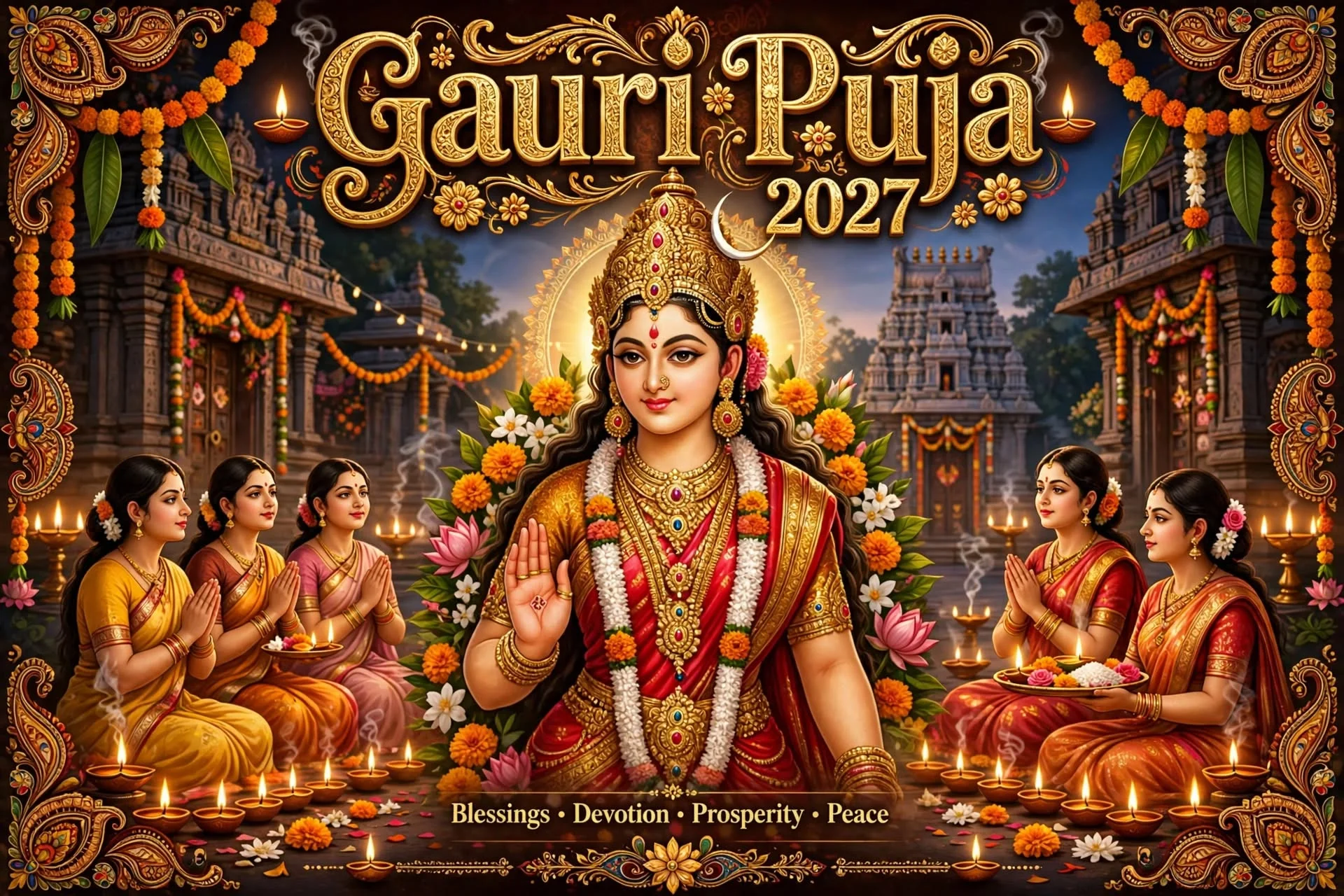
Friday, Apr 9, 2027
Gauri Puja
Gauri Puja, celebrated with profound devotion on the third day of the waxing moon (Shukla Paksha Tritiya) in the sacred month of Chaitra, is a revered festival dedicated to Goddess Gauri, the compassionate and radiant consort of Lord Shiva. Also celebrated as Sowbhagya Tritiya or Gauri Tritiya during the vibrant spring season of Chaitra Navratri, this sacred day invokes the maternal benevolence of the Divine Mother to bestow marital longevity, domestic harmony, and boundless prosperity.
View Festival Guide
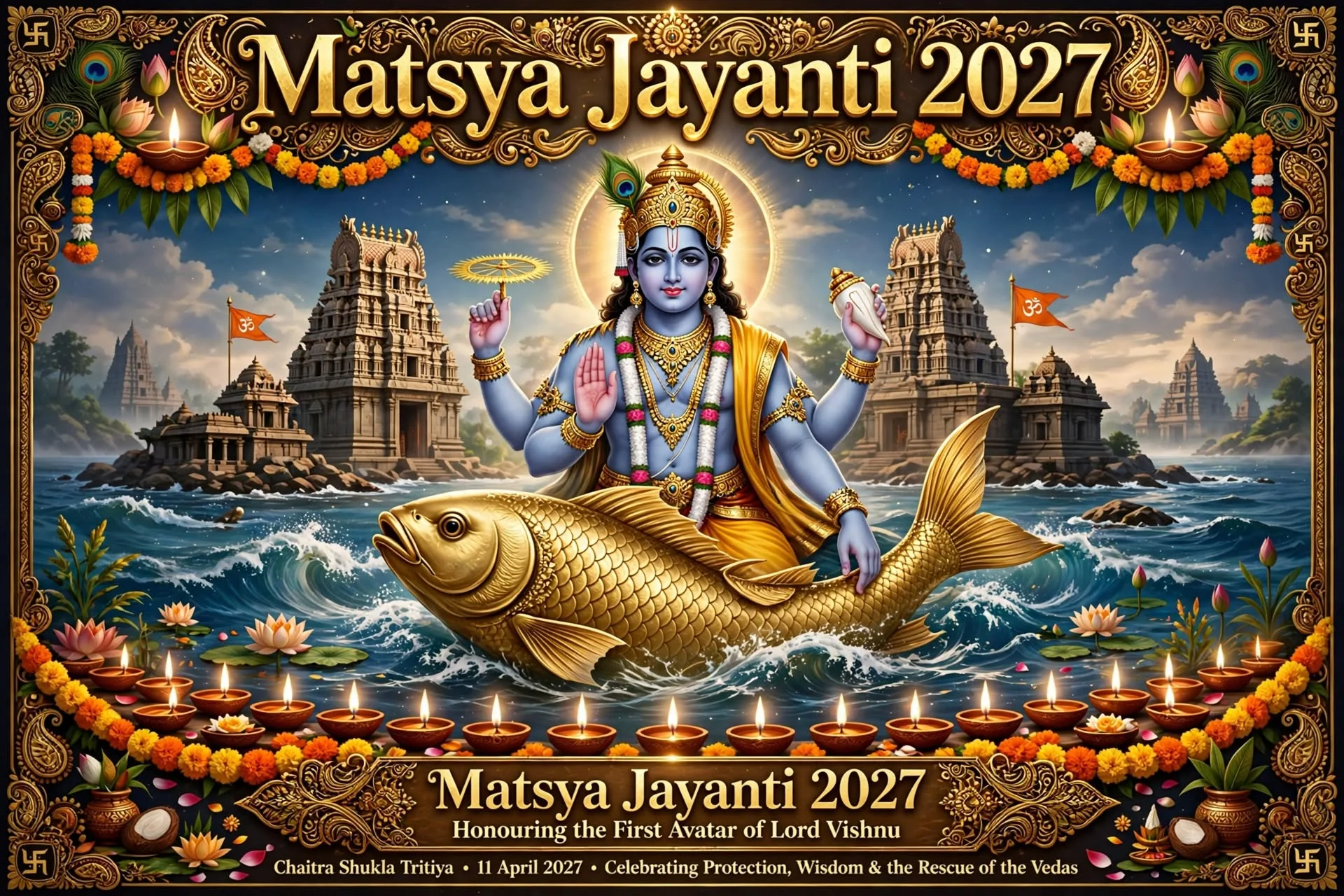
Friday, Apr 9, 2027
Matsya Jayanti
Matsya Jayanti commemorates the auspicious appearance day of Lord Vishnu in his foundational first incarnation—the Matsya Avatar (the divine horned fish). Celebrated on the third lunar day of the bright fortnight (Shukla Paksha Tritiya) in the sacred month of Chaitra, this holy observance honors the cosmic savior who rescued the sacred Vedas, safeguarded the progenitors of humanity, and preserved the seeds of all living organisms during the catastrophic cosmic deluge (Pralaya).
View Festival Guide
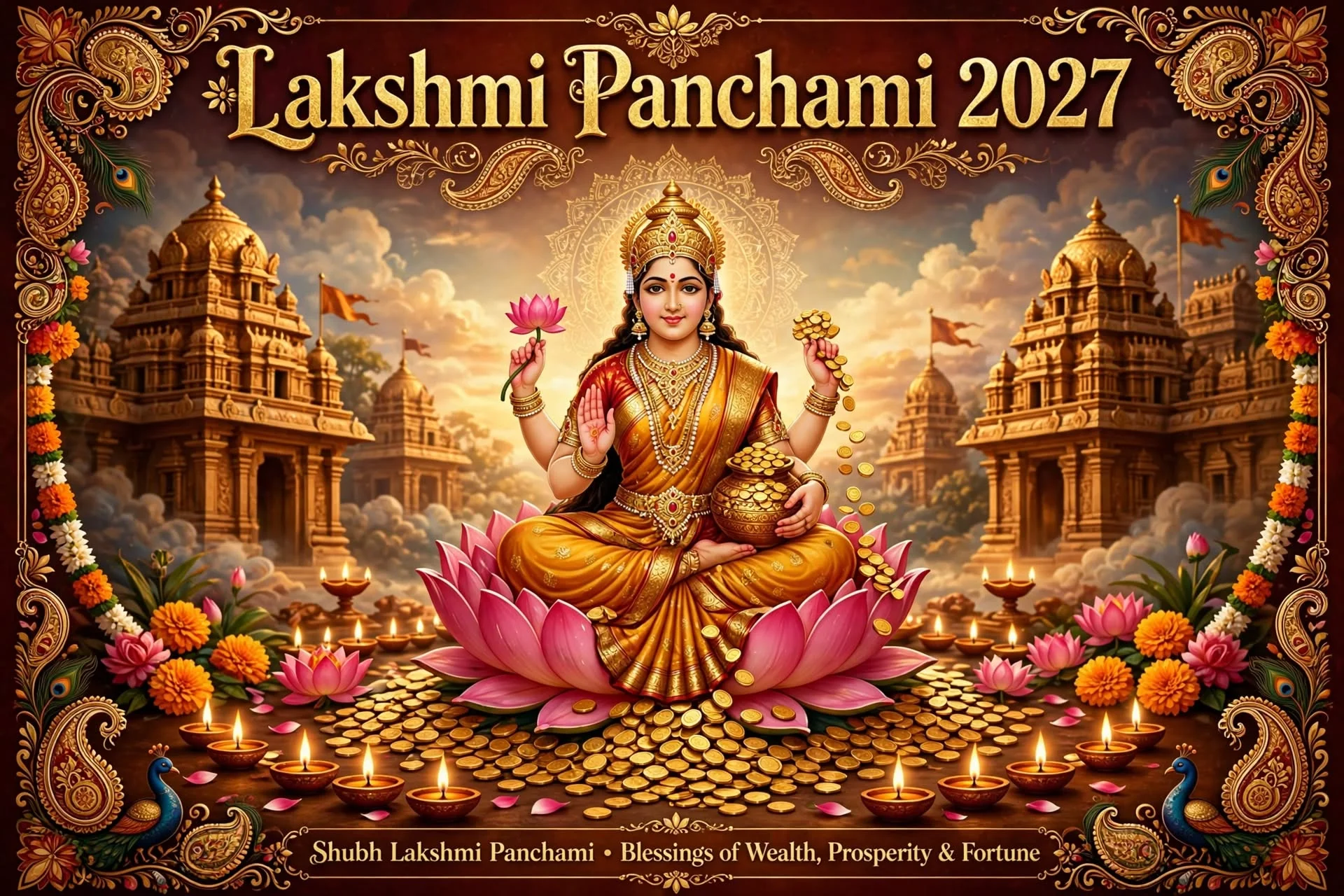
Sunday, Apr 11, 2027
Lakshmi Panchami
Lakshmi Panchami, also reverently observed as Shri Panchami or Kalpadi Tithi, is a supremely auspicious fasting day dedicated to Goddess Mahalakshmi, the divine personification of spiritual abundance, wealth, prosperity, and supreme grace. Celebrated on the fifth day of the bright fortnight (Shukla Paksha Panchami) in the month of Chaitra during the sacred spring festival of Chaitra Navratri, this holy day is celebrated by spiritual seekers and householders to dispel poverty, debt, and misfortune while inviting inexhaustible fortune (Akshaya Lakshmi) into their lives.
View Festival Guide
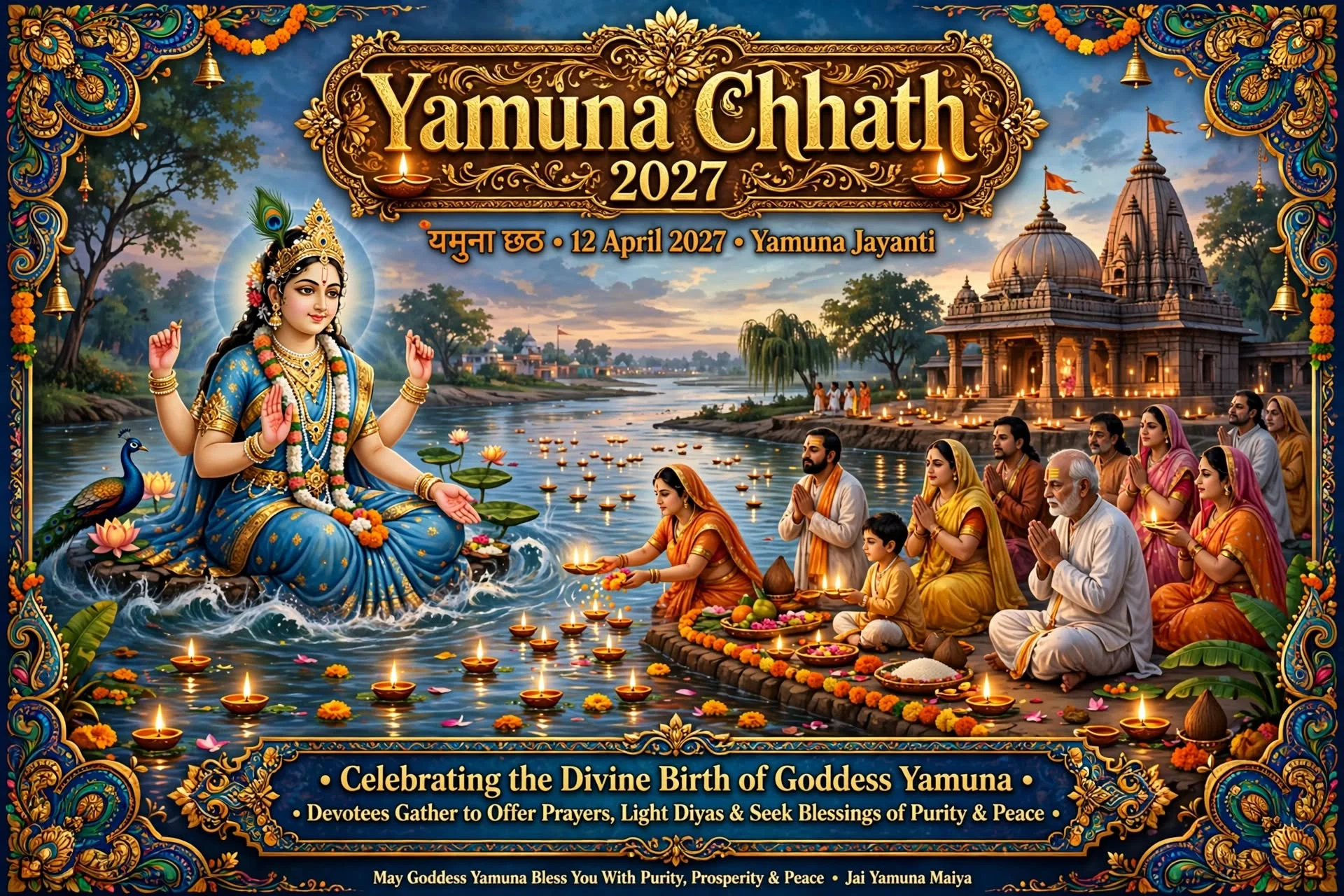
Monday, Apr 12, 2027
Yamuna Chhath
Yamuna Chhath, celebrated with immense spiritual fervor on the sixth lunar day of the bright fortnight (Shukla Paksha Shashthi) in the month of Chaitra, marks the auspicious appearance day (Jayanti) of the sacred River Yamuna. Revered in Sanatana Dharma as Goddess Kalindi, the celestial daughter of the Sun God Surya and Sanjna, and the beloved sister of Yama (the god of death), River Yamuna holds a supreme, intimately tender place in Hindu devotional consciousness, especially within the sacred geography of Braj Mandala and the Pushtimarg tradition.
View Festival Guide
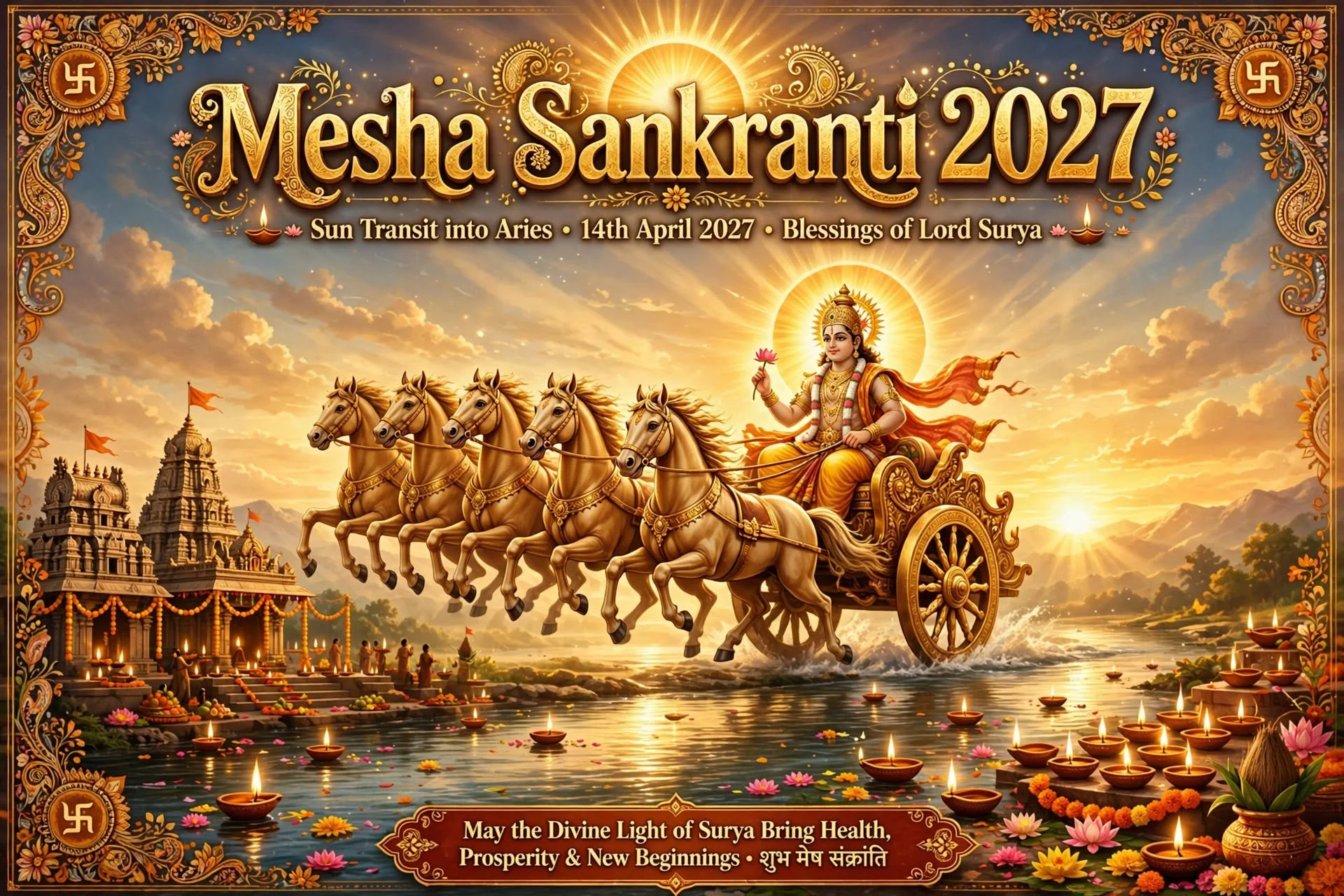
Wednesday, Apr 14, 2027
Mesha Sankranti
Mesha Sankranti marks the majestic astronomical ingress of Lord Surya (the Sun God) into Mesha Rashi (the zodiac sign of Aries), the first constellation of the sidereal zodiac. Occurring typically in mid-April, this celestial event represents the cardinal beginning of the solar calendar year in Sanatana Dharma. In Vedic astrology, Aries is the exalted sign (Uccha Rashi) of the Sun, wherein the solar deity radiates his supreme life-giving warmth, vigor, and spiritual illumination upon the earth.
View Festival Guide
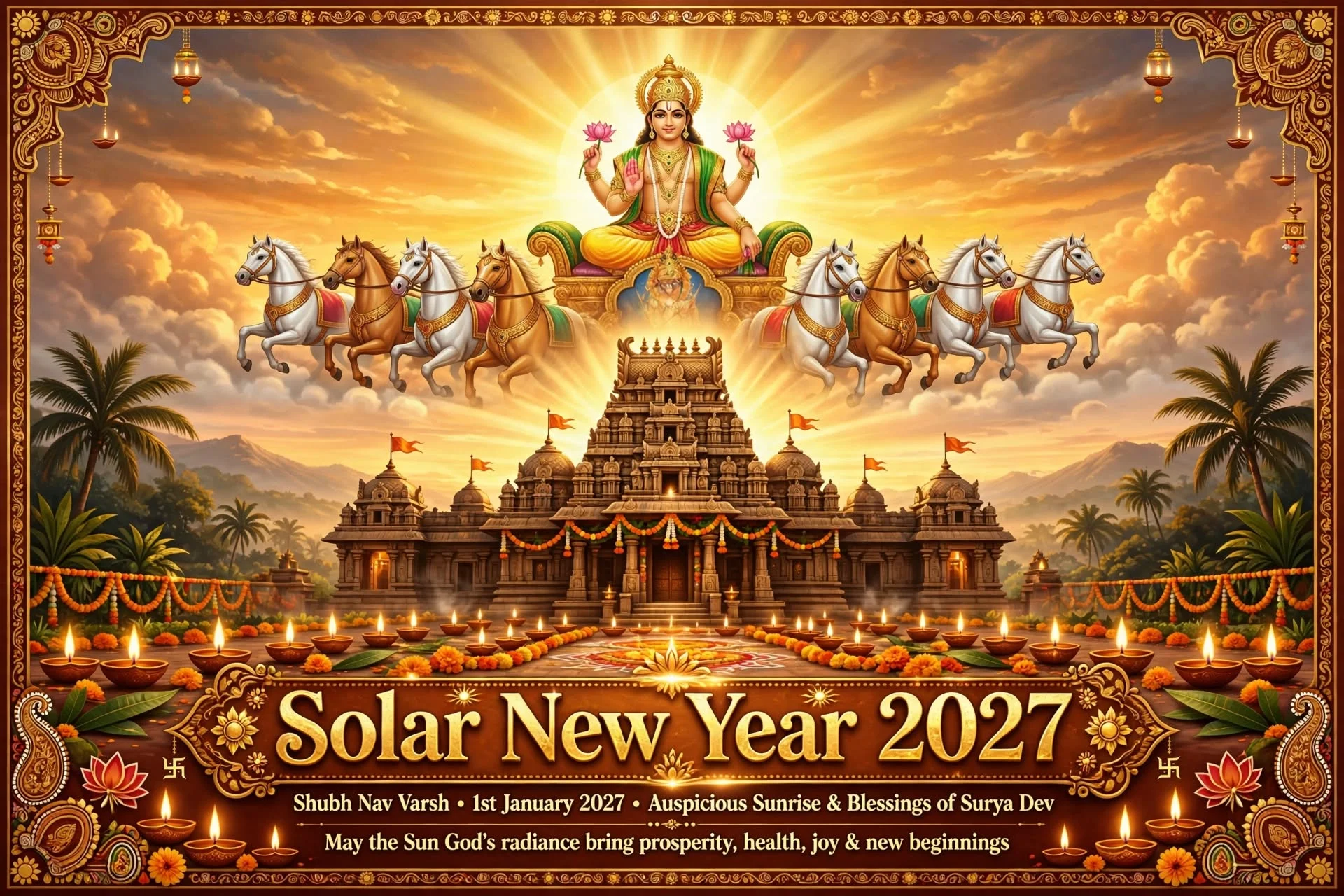
Wednesday, Apr 14, 2027
Solar New Year
The Solar New Year (Maha Vishuba Sankranti or Mesha Sankranti) marks the grand beginning of the sidereal solar calendar across diverse states and cultures of India. Celebrated when the Sun God (Surya Bhagavan) enters Mesha Rashi (the zodiac sign of Aries) in mid-April, this pan-Indian festival is celebrated under glorious regional names: Puthandu in Tamil Nadu, Vishu in Kerala, Pohela Boishakh in Bengal, Pana Sankranti in Odisha, Bohag Bihu in Assam, and Baisakhi in Punjab.
View Festival Guide
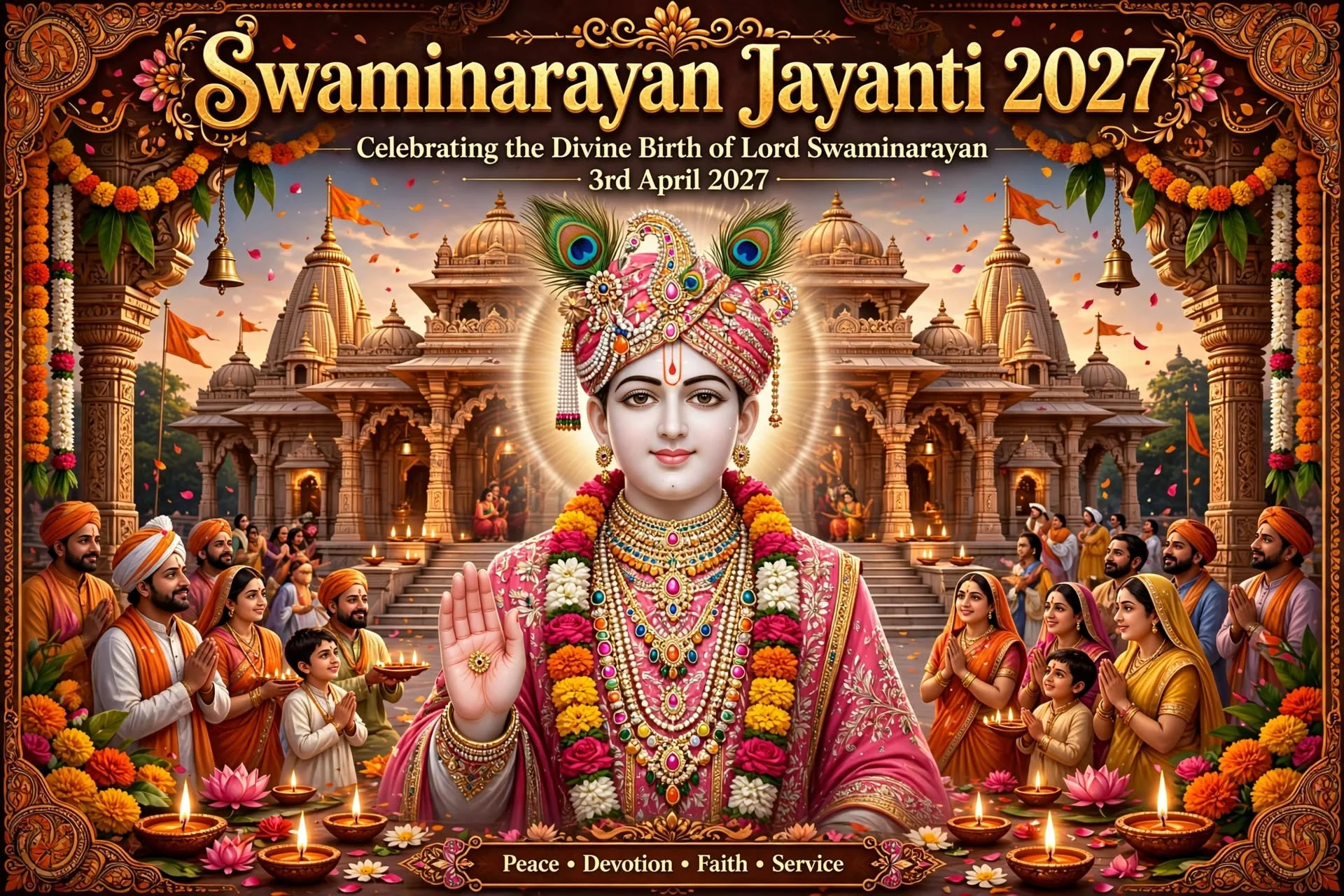
Thursday, Apr 15, 2027
Swaminarayan Jayanti
Swaminarayan Jayanti marks the auspicious birth anniversary of Bhagwan Swaminarayan (1781–1830 CE), the founder of the Swaminarayan Sampradaya and revered as a supreme divine manifestation in modern Sanatana Dharma. Celebrated on the ninth lunar day of the bright fortnight (Shukla Paksha Navami) in the month of Chaitra, this holy observance coincides precisely with Rama Navami. Manifesting at the sacred hour of 10:10 PM in the village of Chhapaiya near Ayodhya, Bhagwan Swaminarayan descended to establish moral rectitude, spiritual purity, social reform, and unconditional devotion to God.
View Festival Guide
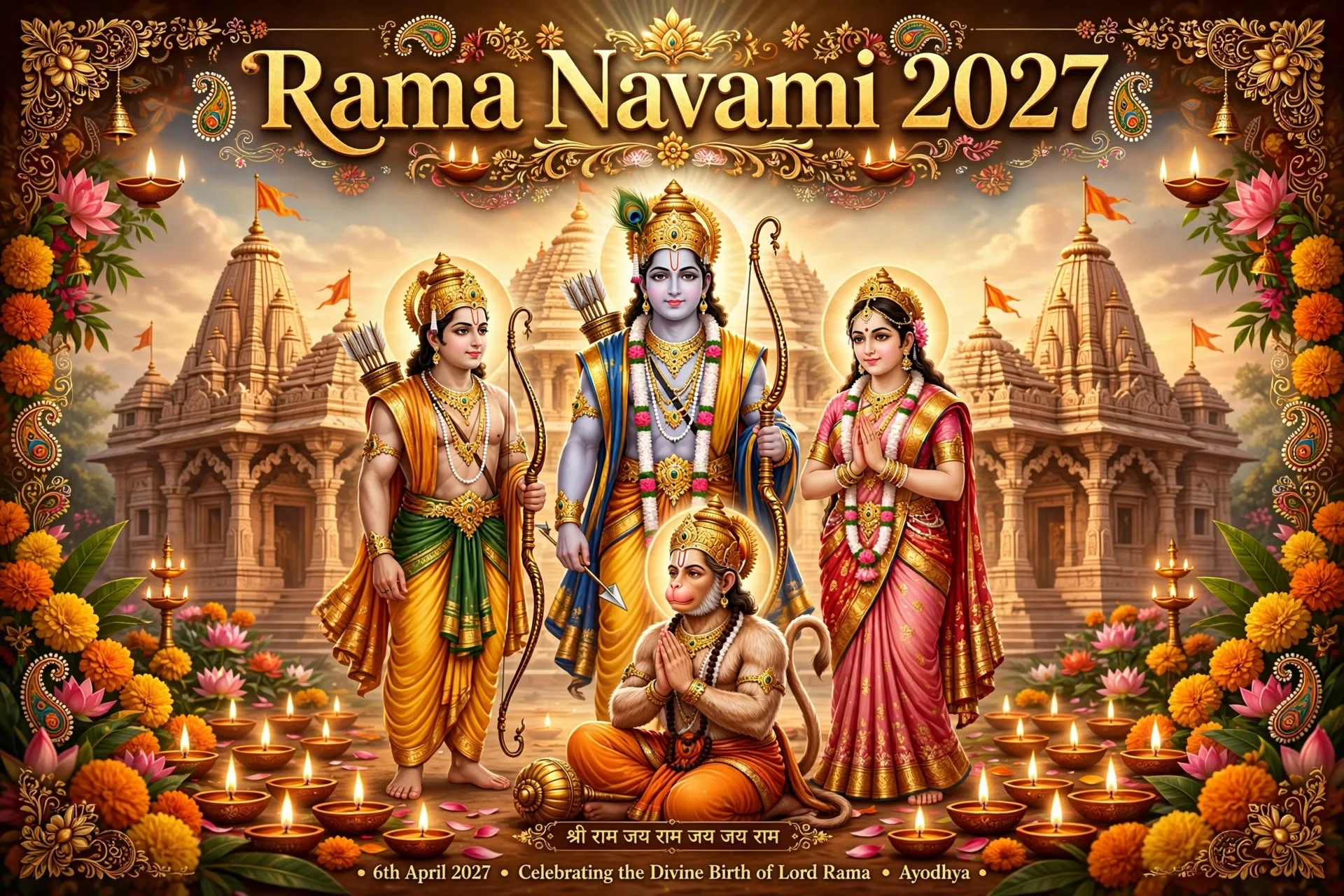
Thursday, Apr 15, 2027
Rama Navami
Rama Navami is one of the most sublime and universally revered festivals in Sanatana Dharma, celebrating the auspicious appearance (Janmotsav) of Maryada Purushottam Lord Sri Rama—the seventh incarnation of Lord Vishnu. Falling on the ninth day of the waxing moon (Shukla Paksha Navami) in the sacred month of Chaitra, it marks the grand culmination of the nine-day Chaitra Navratri festival. Born at high noon during the sacred Abhijit Muhurta in the ancient holy city of Ayodhya, Lord Rama incarnated to restore righteousness, establish exemplary moral standards (Dharma), and vanquish demonic forces across the earth.
View Festival Guide