




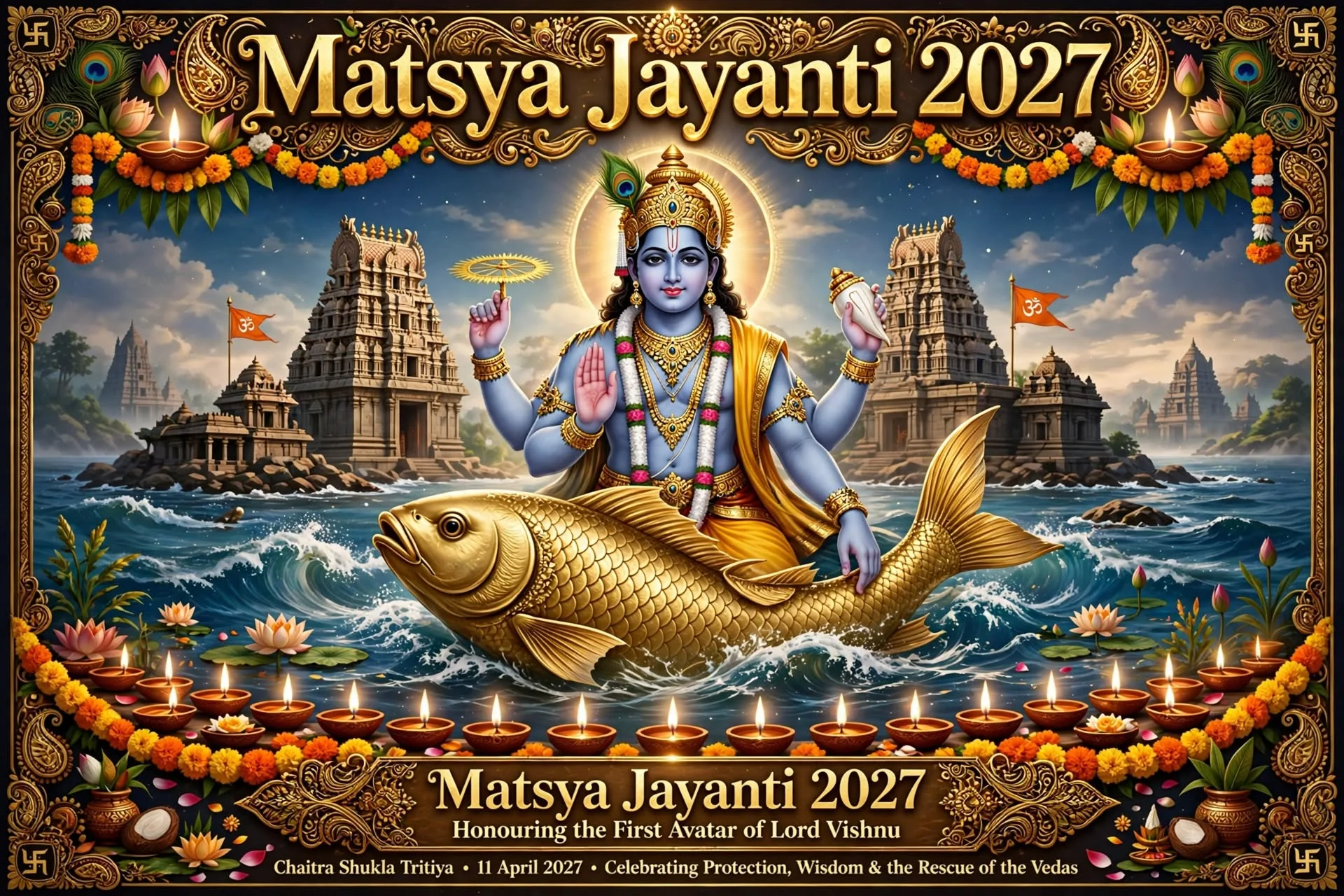
Matsya Jayanti commemorates the auspicious appearance day of Lord Vishnu in his foundational first incarnation—the Matsya Avatar (the divine horned fish). Celebrated on the third lunar day of the bright fortnight (Shukla Paksha Tritiya) in the sacred month of Chaitra, this holy observance honors the cosmic savior who rescued the sacred Vedas, safeguarded the progenitors of humanity, and preserved the seeds of all living organisms during the catastrophic cosmic deluge (Pralaya).
Matsya Jayanti 2027: Date, Puja Timings, Rituals & Stories
Matsya Jayanti Timings & Panchang
Important festival dates and auspicious timings
Usha Arghya (Sunrise)
06:03 am
Sandhya Arghya (Sunset)
06:43 pm
Start Date
Friday, 9 Apr 2027
Puja Muhurat
03:10 am – 01:32 am
Matsya Jayanti
The momentous narrative of Matsya Avatar is extensively glorified across classical Puranas, including the Matsya Purana, Bhagavata Purana, and Shatapatha Brahmana. The Supreme Lord assumed the form of a radiant golden fish with a magnificent horn to rescue King Satyavrata (who became Sraddhadeva Manu) and the seven celestial sages (Saptarishis). Fastening their celestial ark to his divine horn using the serpent king Vasuki as a rope, Lord Vishnu navigated the turbulent deluge, imparted transcendental wisdom, and retrieved the stolen Vedas from the demon Shankhasura.
Devotees observe Matsya Jayanti by keeping a holy dawn-to-dusk fast, taking purifying dips in sacred rivers, and worshipping Lord Vishnu with lotus blossoms, Tulsi leaves, and fragrant sandalwood. Reciting the sacred Matsya Purana and the Dashavatara Stotra on this day is believed to eliminate the fear of untimely death, grant protection against natural calamities, and bestow profound spiritual wisdom and salvation.
Why is Matsya Jayanti Celebrated?
Matsya Jayanti is celebrated to commemorate the primordial incarnation of Lord Vishnu, who intervened at the conclusion of the cosmic era to save knowledge, morality, and biological life from total extinction. Observing this festival reminds humanity of divine vigilance, the eternal nature of Vedic wisdom, and God's compassionate protection of righteous souls during cosmic crises.
- Preservation of the Sacred Vedas: Celebrates Lord Vishnu retrieving the eternal Vedas after vanquishing the demon Shankhasura beneath the cosmic ocean.
- Protection of the Saptarishis and Manu: Honors the rescue of King Satyavrata (Manu) and the seven cosmic sages aboard the divine ark during the great deluge.
- Preservation of Life's Genetic Seeds: Acknowledges the miraculous safeguarding of all flora, fauna, and medicinal herb seeds for the repopulation of the world.
- Dissolution of Sins and Fear of Death: Devout observance shields the practitioner from drowning, accidental demise, and spiritual ignorance.
Scriptural Chronicle of the Great Deluge & Matsya Avatar
King Satyavrata and the Little Horned Fish
In the ancient era, the pious King Satyavrata (later known as Vaivasvata Manu) was performing morning water oblations (Arghya) on the banks of the sacred river Kritamala. As he cupped water in his palms, a tiny golden fish appeared, pleading for protection from larger aquatic predators.
Compassionate by nature, the king placed the fish in a small water pot. Astonishingly, the fish expanded overnight, outgrowing the pot, then a large cistern, then a temple pond, and finally the river itself. Realizing that this was no ordinary creature, Satyavrata surrendered with folded hands, recognizing the fish as the Supreme Lord Narayana.
The Cosmic Deluge and Retrieval of the Vedas
Lord Vishnu revealed to Satyavrata that in seven days, a catastrophic deluge (Mahapralaya) would submerge the three worlds. The Lord instructed him to gather the seven holy sages (Saptarishis), pairs of all living creatures, and the seeds of all medicinal plants onto a massive ship provided by the heavens.
When the oceans rose, Lord Vishnu appeared as an enormous horned fish with dazzling golden scales. Using the cosmic serpent Vasuki as a tether, King Satyavrata tied the ship to the Lord's horn. While sailing upon the deluge, the Lord imparted the timeless transcendental philosophy of the Matsya Purana, subsequently descended into the oceanic abyss, slew the demon Shankhasura, and restored the sacred Vedas to Lord Brahma.
Source: Matsya Purana & Bhagavata Purana (Canto 8)
Metaphysical & Evolutionary Symbolism of Matsya Avatar
Cosmic Evolution and Aquatic Genesis
The Matsya Avatar is deeply aligned with both Vedic cosmology and modern evolutionary biology, marking life's origin in the primordial waters. As the first among the Dashavataras, it establishes that when darkness and dissolution threaten the universe, divine consciousness manifests at the very foundation of biological life to preserve continuity.
Water in spiritual symbology represents the subconscious mind and unmanifest potential. Lord Matsya navigating the tumultuous ocean symbolizes the intellect anchoring itself to divine consciousness to steer safely across the stormy sea of worldly existence (Samsara Sagara).
The Preservation of Divine Knowledge
The demon Shankhasura represents the forces of ignorance and greed that conceal spiritual truth (Vedas) in the dark depths of delusion. Lord Matsya slaying the demon symbolizes the illumination of the mind by divine wisdom, retrieving higher spiritual knowledge from the clutches of ego and animalistic desires.
Rituals & Devotional Protocol for Matsya Jayanti
Holy Bathing and Sacred River Rituals
The day commences before sunrise with a purifying bath in a sacred river, lake, or holy tank. Pilgrims throng revered shrines dedicated to Matsya Avatar, such as the ancient Matsya Narayana Temple at Nagalapuram in Andhra Pradesh.
Devotees establish a consecrated altar, placing an idol or depiction of Lord Vishnu emerging from the mouth of a golden fish. Worship is conducted with yellow flowers, Tulsi leaves, and fragrant chandan, maintaining an unbroken fast until twilight.
Recitation of Matsya Purana and Charitable Deeds
Devotees dedicate the afternoon to reciting the sacred Matsya Purana, the Dashavatara Stotra of Jayadeva, and the Vishnu Sahasranama. Feeding fish in clean ponds and rivers with flour balls is regarded as an exceptionally auspicious act of compassion.
The observance concludes with evening Aarti, followed by charitable donations of food grains, gold or brass fish tokens, umbrellas, and warm clothing to saintly Brahmins and seekers.
Matsya Jayanti Puja Vidhi (Step by Step)
- 1
Brahma Muhurta Snana
Wake before dawn and take a ceremonial bath in a sacred river or water infused with Gangajal and Tulsi leaves while chanting Vishnu mantras.
- 2
Surya & Matsya Sankalpa
Offer Arghya to the rising Sun God, hold holy water, Akshata, and flowers in the right palm, and take a solemn vow to observe the Matsya Jayanti fast.
- 3
Altar & Peetha Preparation
Cover a clean wooden pedestal with a rich yellow silk cloth, establish a brass or bronze idol of Lord Matsya Narayana, and sanctify the area.
- 4
Kalash Sthapana
Place a sacred Kalash filled with holy water, betel nut, coin, and mango leaves near the altar, wrapping an unbroken coconut in red sacred thread on top.
- 5
Avahana & Dhyanam
Invoke the divine golden Matsya Avatar holding Shankha, Chakra, Gada, and Padma in his upper hands, with his lower torso in divine aquatic form.
Matsya Jayanti Puja Samagri List
Altar Consecration & Deity Materials
Sacred articles required to prepare the altar and install the Matsya Narayana deity.
- Idol or sacred painting of Lord Matsya Narayana
- Yellow altar cloth (Pitamvara) and clean wooden chauki
- Brass or copper Kalash, whole coconut, and fresh mango leaves
- Gangajal, raw milk, curd, honey, cow ghee, and sugar for Panchamrit
Worship Offerings & Fragrances
Botanical items, perfumes, and sacred threads for Shodashopachara worship.
- Fragrant yellow sandalwood paste (Chandan), Kumkum, and Akshata
- Fresh yellow marigold flowers, blue lotus blossoms, and sacred Tulsi manjaris
- Yajnopavita (sacred thread) and red moli thread
- Pure cow-ghee brass lamp, cotton wicks, aromatic dhoop, and camphor
Naivedya & Compassionate Charity Items
Food offerings for the deity, aquatic life, and charitable gifts for Brahmins.
- Pure milk kheer, mishri, soaked dry fruits, and fresh seasonal fruits
- Clean wheat flour and barley dough balls to feed fish in ponds and rivers
- Betel leaves (Paan), supari, cloves, and cardamom
Mantras and Prayers for Matsya Jayanti
Matsya Jayanti Vrat Rules and Fasting Guidelines
Observance Guidelines for Matsya Jayanti
Specific devotional disciplines to be observed during the sacred appearance day of Lord Matsya.
- Daytime Fasting: Maintain a strict fast from dawn until evening twilight, taking only water or light milk and fruits if medically needed.
- Water Sanctity: Treat all water bodies with utmost reverence; do not pollute rivers, ponds, or lakes on this sacred day.
- Aquatic Compassion: Feeding fish and aquatic life with wheat dough balls is regarded as a primary merit-earning duty.
- Scripture Reading: Dedicate time to reading the Matsya Purana or Vishnu Sahasranama with focused contemplation.
Dos and Don'ts of Matsya Jayanti
Good Practices (Do's)
- Wake early during Brahma Muhurta and bathe in a sacred river or with Gangajal.
- Chant the Matsya Gayatri Mantra and the Dashavatara Stotra.
- Offer yellow flowers, chandan, and sacred Tulsi leaves to Lord Vishnu.
- Feed flour balls to fish in clean ponds, rivers, or lakes with compassion.
Things to Avoid (Don'ts)
Matsya Jayanti Across Regions
| Region | Local Name |
|---|---|
| Andhra Pradesh | Matsya Jayanti Utsavam |
| Northern India | Matsya Jayanti |
| Coastal Karnataka & Kerala | Matsya Narayana Puja |
Matsya Jayanti FAQs
What is Matsya Jayanti?
Matsya Jayanti is the appearance anniversary of Lord Vishnu's first incarnation, Matsya Avatar (the divine horned fish), celebrated on Chaitra Shukla Tritiya.
Why did Lord Vishnu take the Matsya Avatar?
Lord Vishnu incarnated as Matsya to rescue the Vedas from the demon Shankhasura and protect King Satyavrata, the Saptarishis, and life's seeds during the cosmic deluge.
Which famous temple is dedicated to Matsya Avatar?
The Vedanarayana Temple at Nagalapuram in Andhra Pradesh is one of the rare and celebrated ancient shrines dedicated specifically to Matsya Avatar.
Upcoming Festivals
View All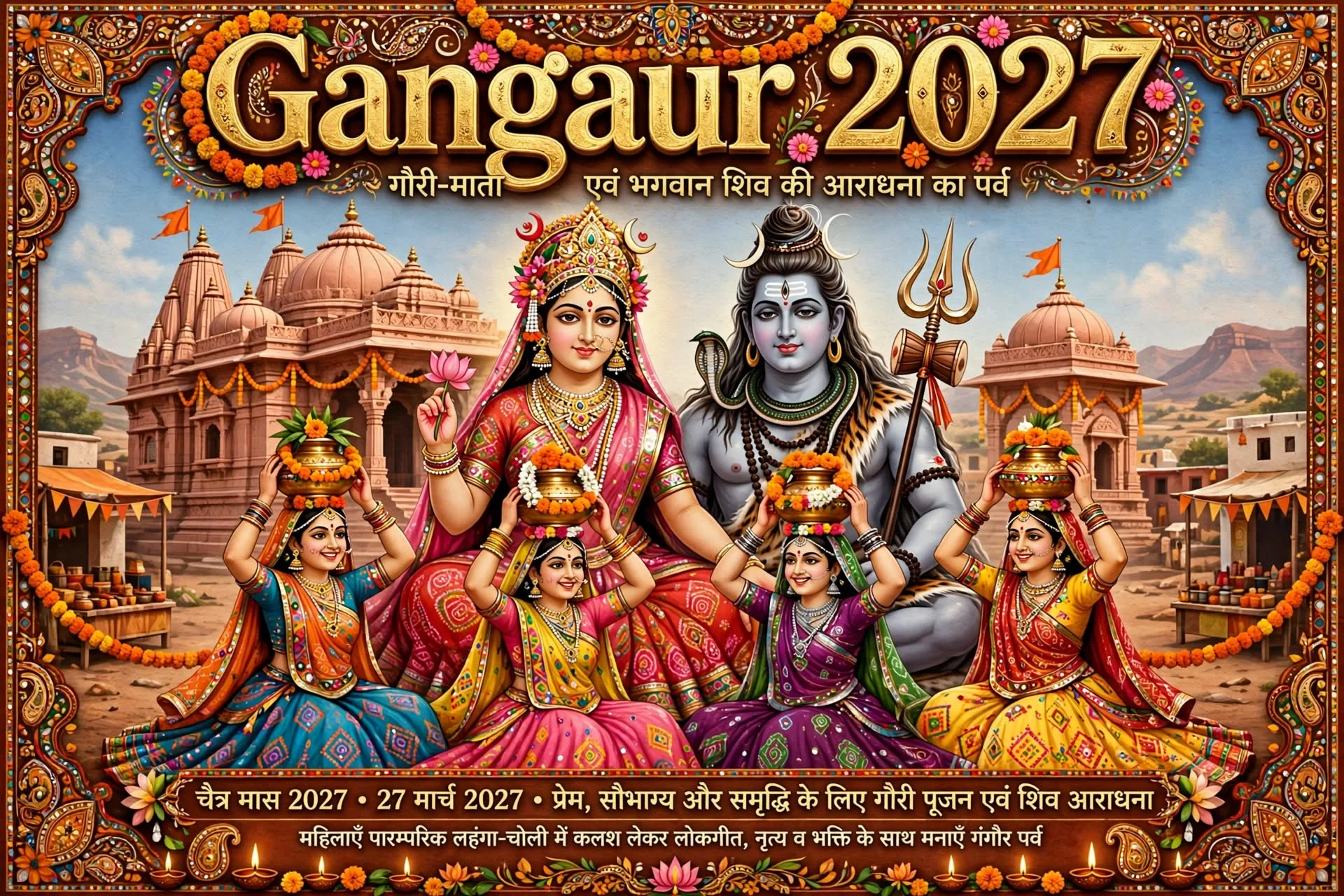
Friday, Apr 9, 2027
Gangaur (Gauri Tritiya)
Gangaur is one of the most vibrant, emotionally poignant, and culturally majestic festivals of Rajasthan, celebrated also with great enthusiasm in parts of Gujarat, Madhya Pradesh (Malwa), and Haryana. The word 'Gangaur' is a compound of 'Gana' (a title of Lord Shiva) and 'Gaur' (Goddess Gauri or Parvati). Commencing immediately following Holika Dahan on the first day of Chaitra Krishna Paksha, this elaborate celebration spans eighteen days, reaching its glorious zenith on the third day of Chaitra Shukla Paksha (Tritiya).
View Festival Guide
Friday, Apr 9, 2027
Gauri Puja
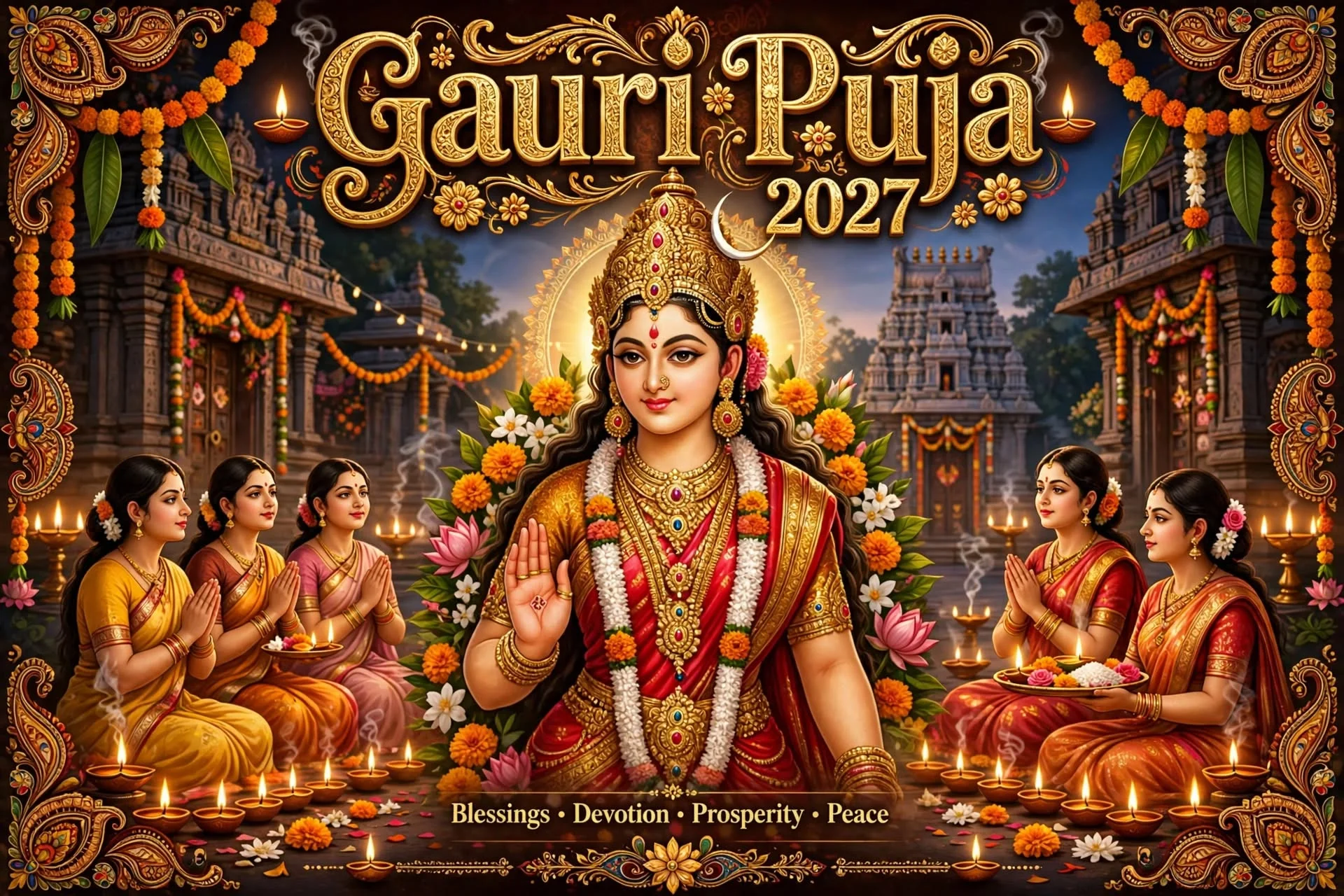
Gauri Puja, celebrated with profound devotion on the third day of the waxing moon (Shukla Paksha Tritiya) in the sacred month of Chaitra, is a revered festival dedicated to Goddess Gauri, the compassionate and radiant consort of Lord Shiva. Also celebrated as Sowbhagya Tritiya or Gauri Tritiya during the vibrant spring season of Chaitra Navratri, this sacred day invokes the maternal benevolence of the Divine Mother to bestow marital longevity, domestic harmony, and boundless prosperity.
View Festival Guide
Sunday, Apr 11, 2027
Lakshmi Panchami
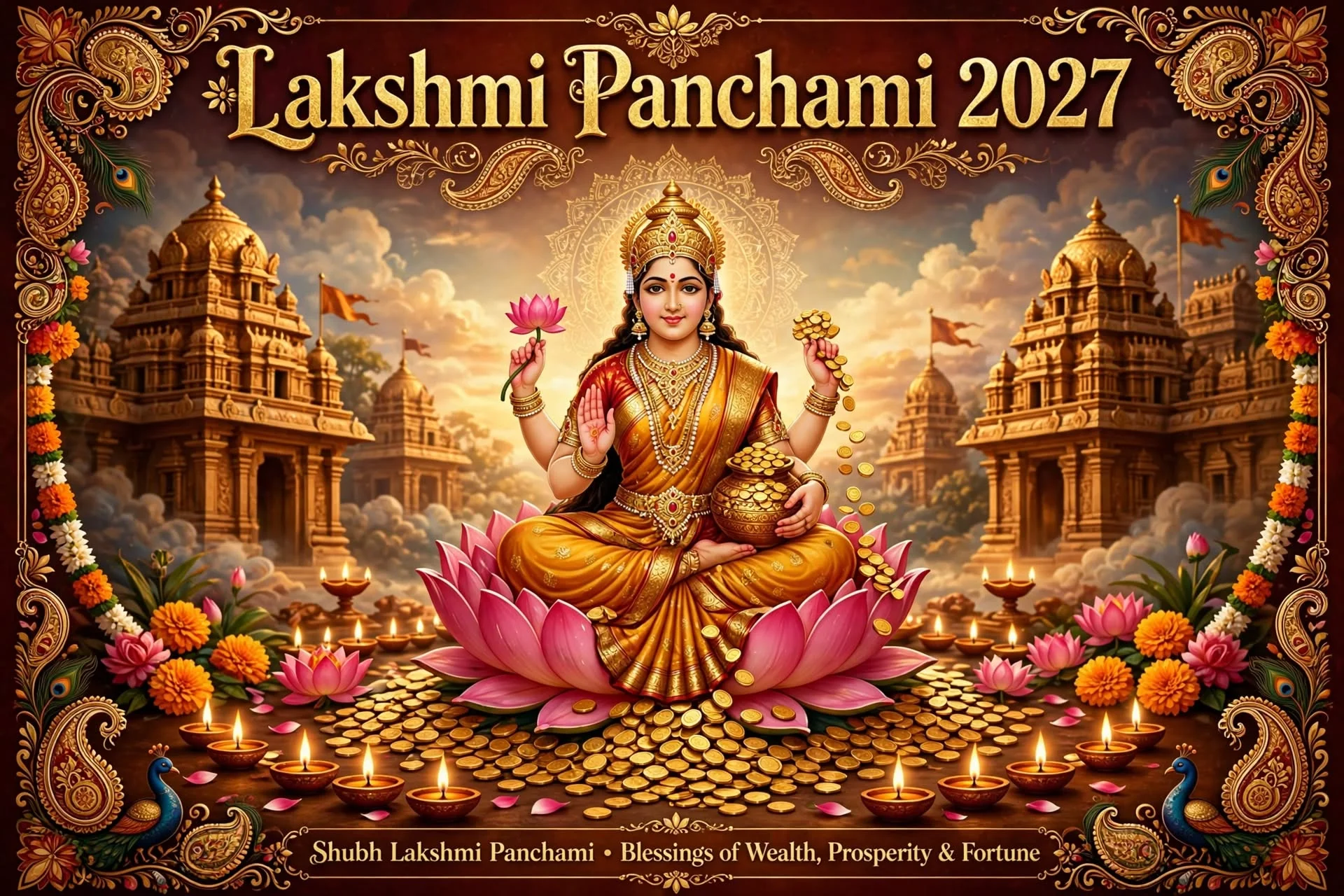
Lakshmi Panchami, also reverently observed as Shri Panchami or Kalpadi Tithi, is a supremely auspicious fasting day dedicated to Goddess Mahalakshmi, the divine personification of spiritual abundance, wealth, prosperity, and supreme grace. Celebrated on the fifth day of the bright fortnight (Shukla Paksha Panchami) in the month of Chaitra during the sacred spring festival of Chaitra Navratri, this holy day is celebrated by spiritual seekers and householders to dispel poverty, debt, and misfortune while inviting inexhaustible fortune (Akshaya Lakshmi) into their lives.
View Festival Guide
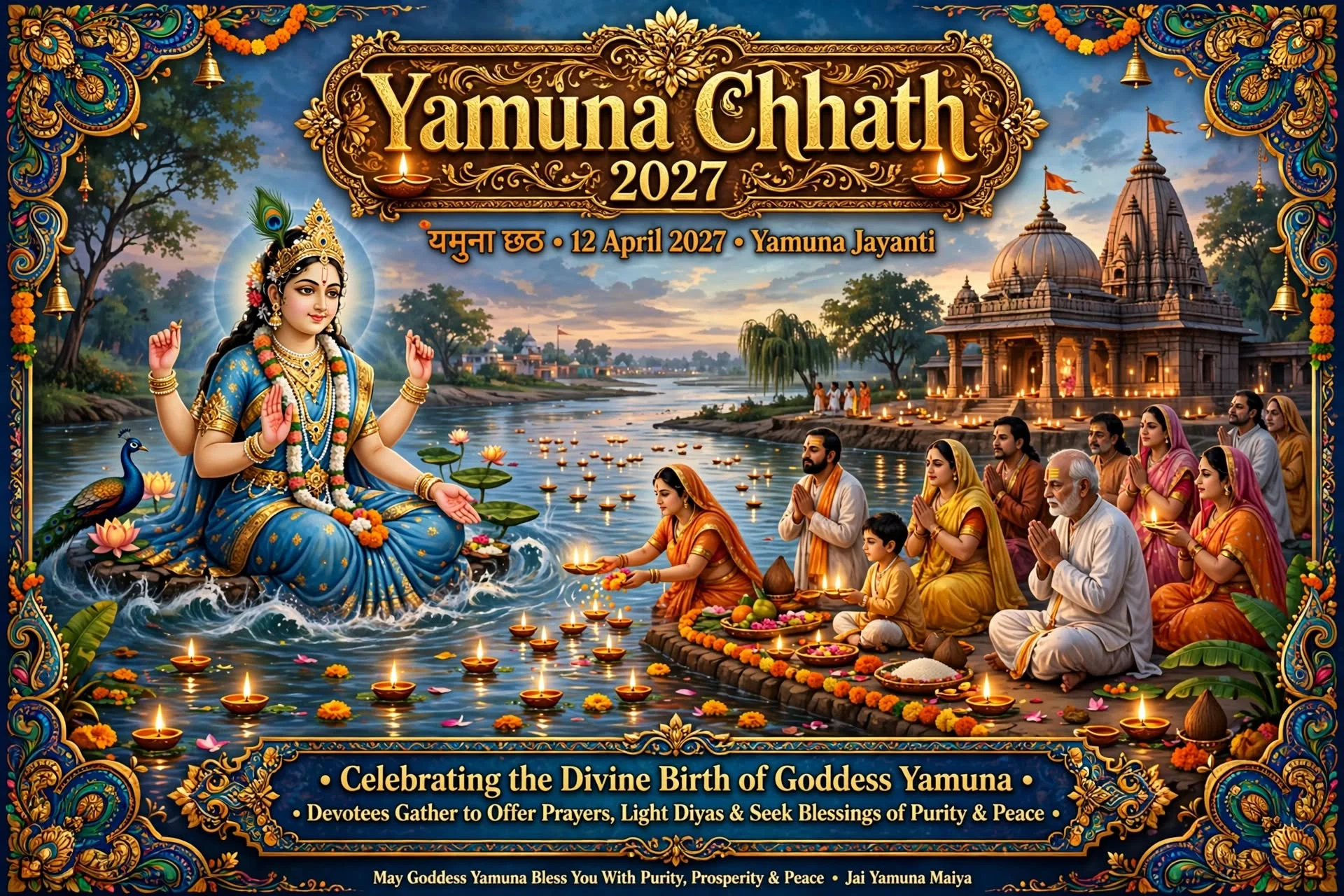
Monday, Apr 12, 2027
Yamuna Chhath
Yamuna Chhath, celebrated with immense spiritual fervor on the sixth lunar day of the bright fortnight (Shukla Paksha Shashthi) in the month of Chaitra, marks the auspicious appearance day (Jayanti) of the sacred River Yamuna. Revered in Sanatana Dharma as Goddess Kalindi, the celestial daughter of the Sun God Surya and Sanjna, and the beloved sister of Yama (the god of death), River Yamuna holds a supreme, intimately tender place in Hindu devotional consciousness, especially within the sacred geography of Braj Mandala and the Pushtimarg tradition.
View Festival Guide
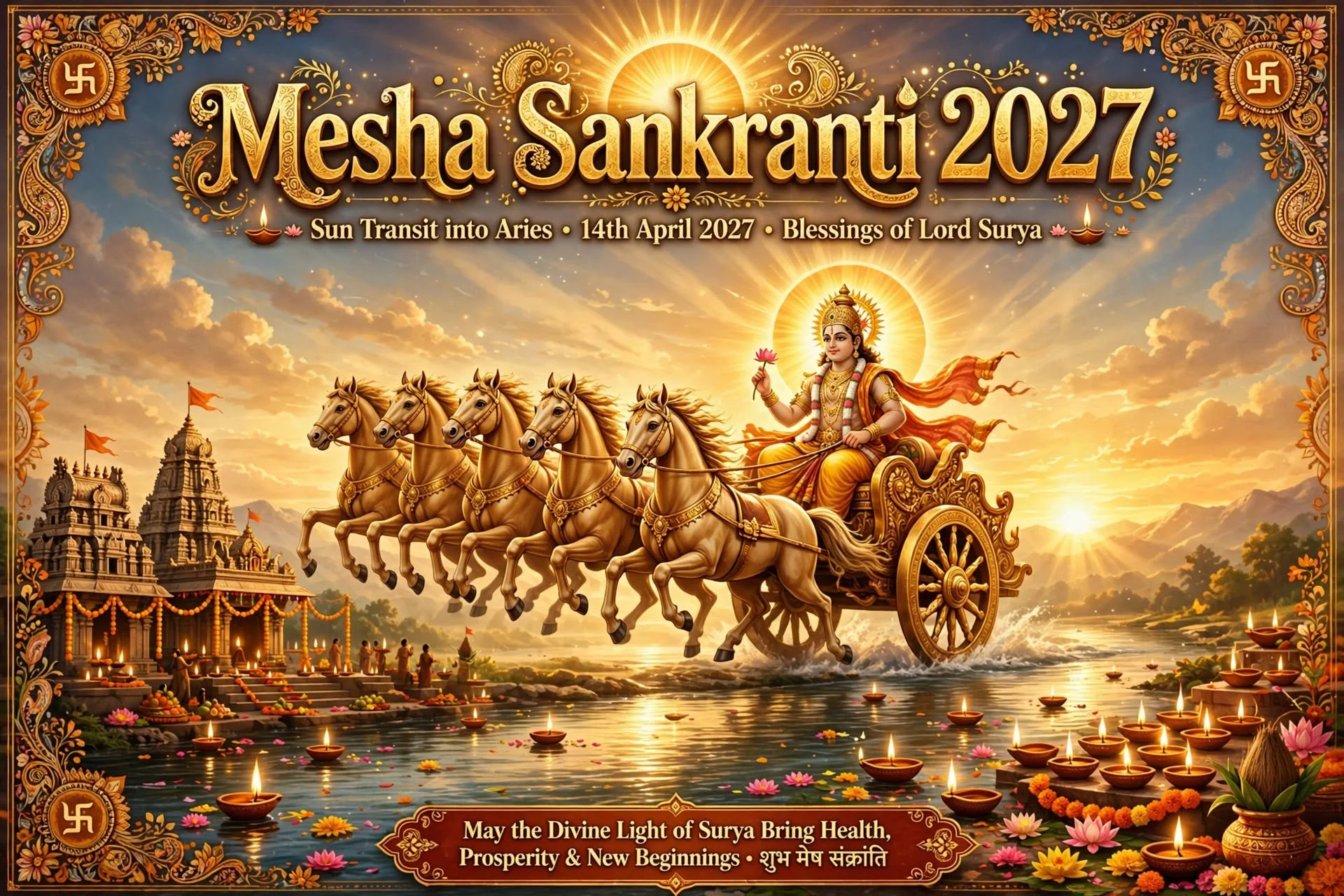
Wednesday, Apr 14, 2027
Mesha Sankranti
Mesha Sankranti marks the majestic astronomical ingress of Lord Surya (the Sun God) into Mesha Rashi (the zodiac sign of Aries), the first constellation of the sidereal zodiac. Occurring typically in mid-April, this celestial event represents the cardinal beginning of the solar calendar year in Sanatana Dharma. In Vedic astrology, Aries is the exalted sign (Uccha Rashi) of the Sun, wherein the solar deity radiates his supreme life-giving warmth, vigor, and spiritual illumination upon the earth.
View Festival Guide
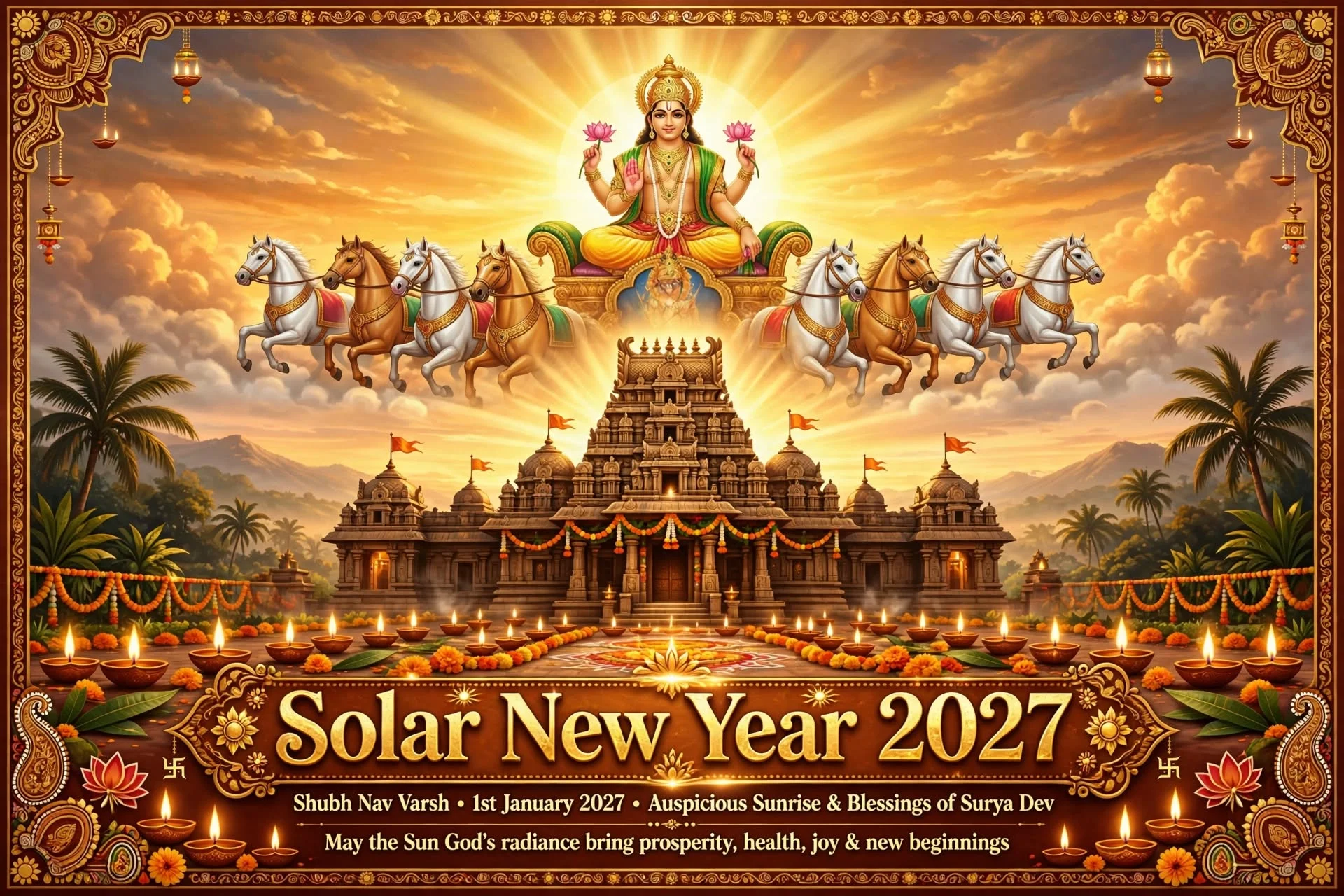
Wednesday, Apr 14, 2027
Solar New Year
The Solar New Year (Maha Vishuba Sankranti or Mesha Sankranti) marks the grand beginning of the sidereal solar calendar across diverse states and cultures of India. Celebrated when the Sun God (Surya Bhagavan) enters Mesha Rashi (the zodiac sign of Aries) in mid-April, this pan-Indian festival is celebrated under glorious regional names: Puthandu in Tamil Nadu, Vishu in Kerala, Pohela Boishakh in Bengal, Pana Sankranti in Odisha, Bohag Bihu in Assam, and Baisakhi in Punjab.
View Festival Guide
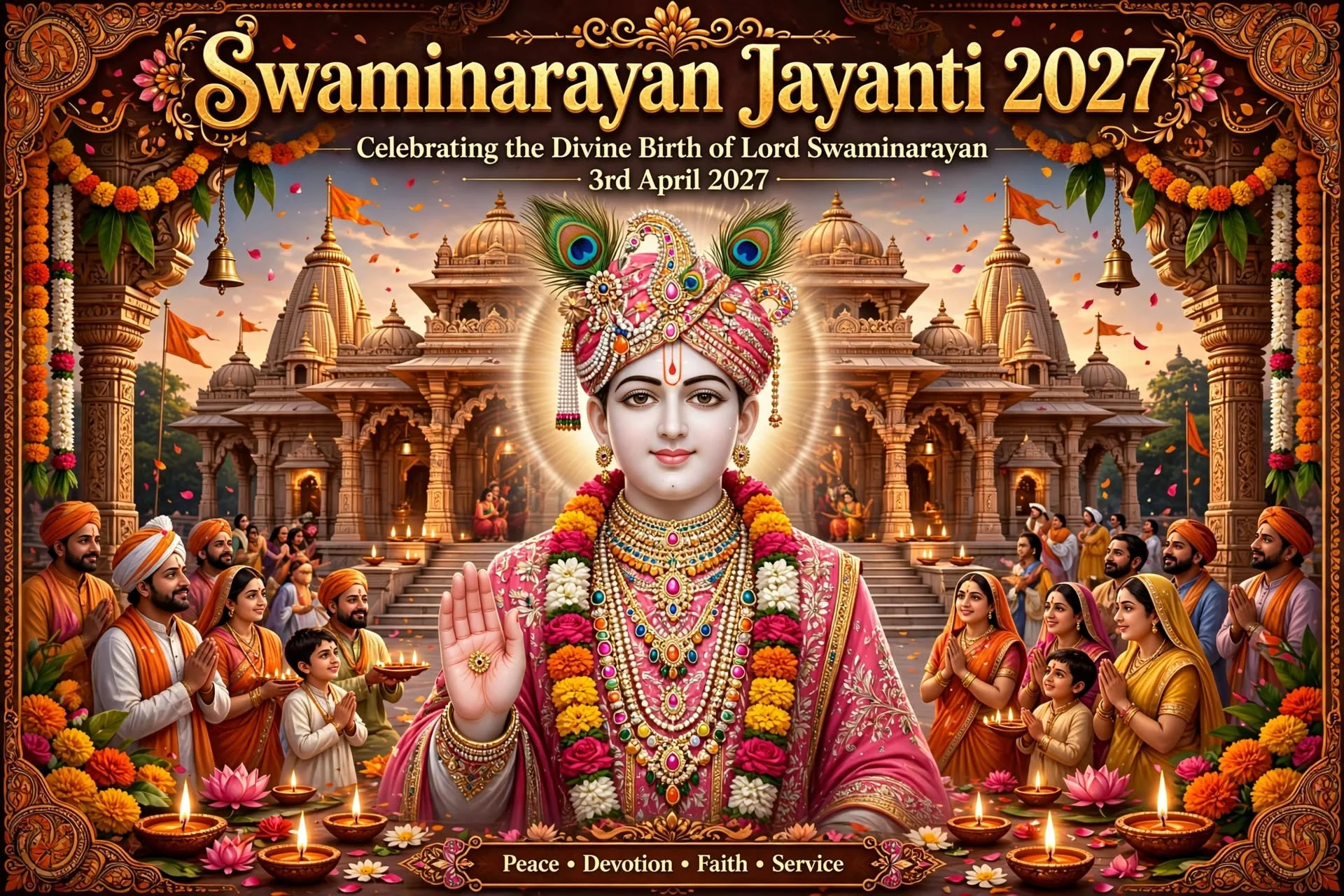
Thursday, Apr 15, 2027
Swaminarayan Jayanti
Swaminarayan Jayanti marks the auspicious birth anniversary of Bhagwan Swaminarayan (1781–1830 CE), the founder of the Swaminarayan Sampradaya and revered as a supreme divine manifestation in modern Sanatana Dharma. Celebrated on the ninth lunar day of the bright fortnight (Shukla Paksha Navami) in the month of Chaitra, this holy observance coincides precisely with Rama Navami. Manifesting at the sacred hour of 10:10 PM in the village of Chhapaiya near Ayodhya, Bhagwan Swaminarayan descended to establish moral rectitude, spiritual purity, social reform, and unconditional devotion to God.
View Festival Guide
Thursday, Apr 15, 2027
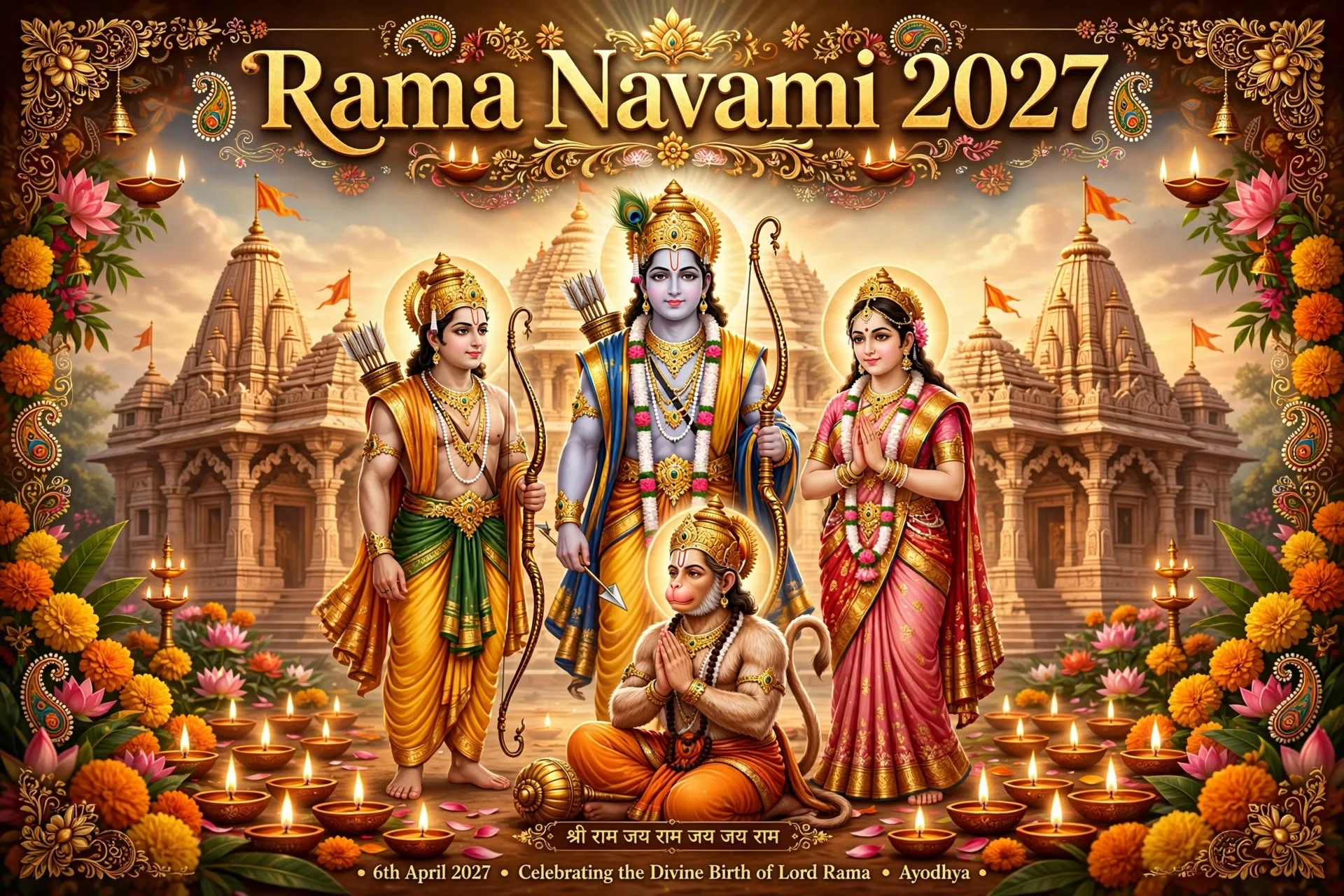
Rama Navami
Rama Navami is one of the most sublime and universally revered festivals in Sanatana Dharma, celebrating the auspicious appearance (Janmotsav) of Maryada Purushottam Lord Sri Rama—the seventh incarnation of Lord Vishnu. Falling on the ninth day of the waxing moon (Shukla Paksha Navami) in the sacred month of Chaitra, it marks the grand culmination of the nine-day Chaitra Navratri festival. Born at high noon during the sacred Abhijit Muhurta in the ancient holy city of Ayodhya, Lord Rama incarnated to restore righteousness, establish exemplary moral standards (Dharma), and vanquish demonic forces across the earth.
View Festival Guide