




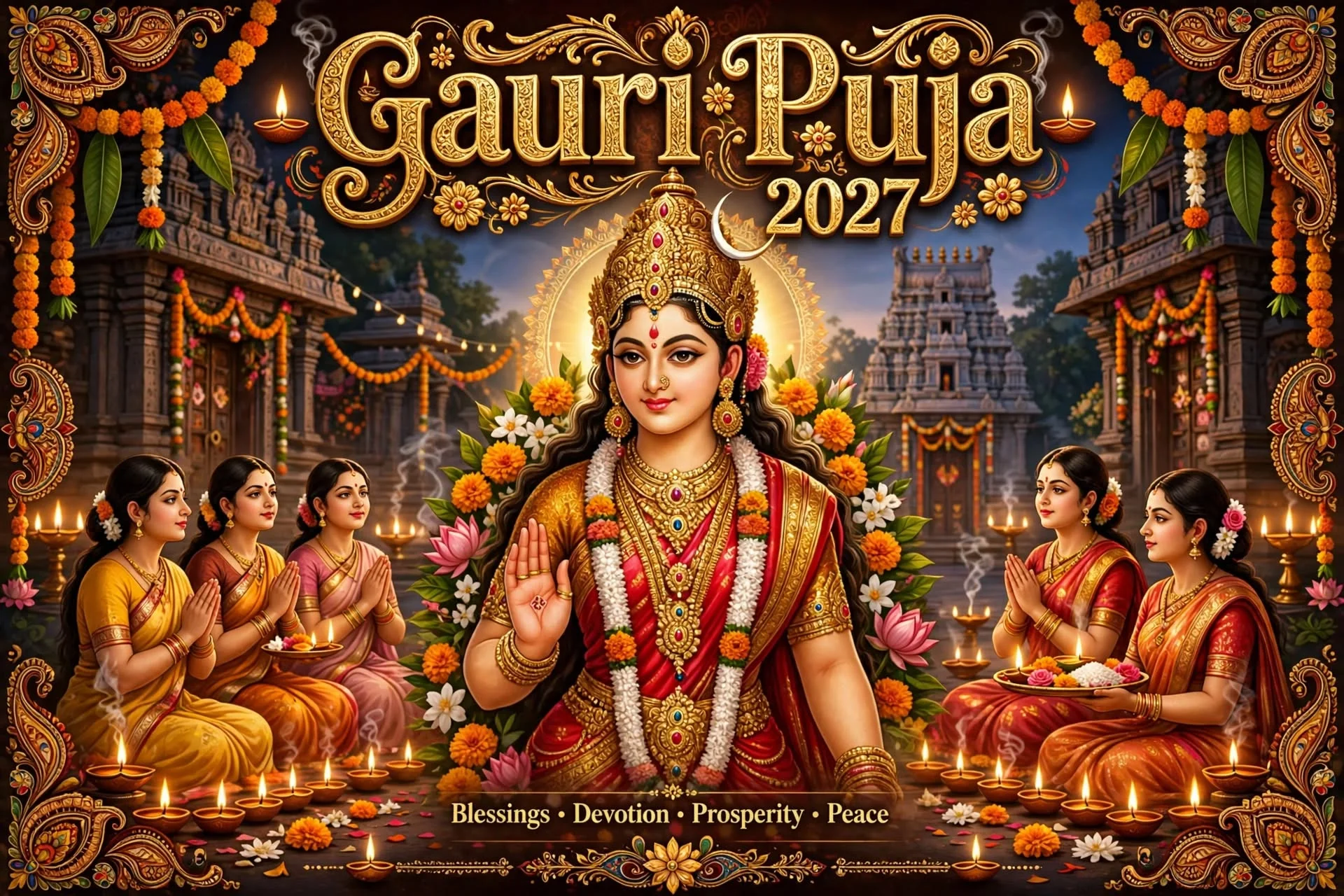
Gauri Puja, celebrated with profound devotion on the third day of the waxing moon (Shukla Paksha Tritiya) in the sacred month of Chaitra, is a revered festival dedicated to Goddess Gauri, the compassionate and radiant consort of Lord Shiva. Also celebrated as Sowbhagya Tritiya or Gauri Tritiya during the vibrant spring season of Chaitra Navratri, this sacred day invokes the maternal benevolence of the Divine Mother to bestow marital longevity, domestic harmony, and boundless prosperity.
Gauri Puja 2027: Date, Puja Timings, Rituals & Stories
Gauri Puja Timings & Panchang
Important festival dates and auspicious timings
Usha Arghya (Sunrise)
06:03 am
Sandhya Arghya (Sunset)
06:43 pm
Start Date
Friday, 9 Apr 2027
Puja Muhurat
03:10 am – 01:32 am
Gauri Puja
The religious foundations of Gauri Puja are glorified in the Shiva Purana, Skanda Purana, and Bhavishya Purana. The scriptures recount that Goddess Parvati undertook intense ascetic penances (Tapasya) for thousands of years to win Lord Shiva as her divine husband. On this auspicious Tritiya tithi, Lord Shiva was deeply gratified by her steadfast devotion, granting her the boon of eternal union and declaring that women who worship Gauri on this day would be blessed with unbroken marital fortune (Akhand Saubhagya) and virtuous progeny.
Devotees, particularly married women and unmarried maidens, observe this holy day by sculpting small idols of Goddess Gauri from clean clay or pure turmeric paste. Worshippers offer sixteen traditional adornments (Solah Shringar), fresh seasonal flowers, sweet delicacies, and turmeric-infused rice, while participating in joyous communal Haldi-Kumkum ceremonies and reciting sacred hymns celebrating the eternal grace of Mother Parvati.
Why is Gauri Puja Celebrated?
Gauri Puja is celebrated to honor the supreme penance, maternal grace, and marital fidelity of Goddess Gauri. It serves as an auspicious occasion for women to seek blessings for the health, prosperity, and longevity of their husbands, while unmarried maidens pray for righteous and loving life companions embodying the virtuous qualities of Lord Shiva.
- Bestowal of Akhand Saubhagya: Blesses married women with enduring marital bliss, mutual affection, and protection from untimely separation.
- Auspicious Life Partner: Empowers unmarried maidens to attract virtuous, wise, and devoted husbands through dedicated worship.
- Commemoration of Shiva-Parvati Union: Honors the divine divine marriage and cosmic harmony between Purusha (Shiva) and Prakriti (Gauri).
- Domestic Peace & Prosperity: Invites the maternal presence of Goddess Annapurna and Gauri to eradicate poverty, strife, and illness from the home.
Scriptural Chronicle of Parvati's Penance & Divine Boon
The Severe Tapasya of Goddess Parvati
Following the self-immolation of Sati at Daksha's sacrifice, the Divine Mother reincarnated as Parvati, the daughter of the mountain king Himavan. From tender childhood, she held unshakeable devotion for Lord Shiva, who had retreated into deep, secluded meditation on Mount Kailash.
To awaken the ascetic lord, Parvati renounced royal comforts, discarded silken robes for garments of tree bark, and engaged in rigorous austerities in the high Himalayas. She subsisted initially on wild fruits, then on fallen dry leaves (becoming known as Aparna), and ultimately on pure air alone through blazing summers and freezing winters.
Lord Shiva's Acceptance on Chaitra Tritiya
Lord Shiva tested her steadfastness by appearing in the guise of an old Brahmin who disparaged Shiva's ascetic nature, ash-smeared body, and skull garlands. Parvati fiercely defended Shiva's transcendent glory, refusing to entertain any lesser suitor.
Delighted by her pristine purity, unyielding willpower, and profound love, Lord Shiva manifested in his glorious four-armed cosmic form on Chaitra Shukla Tritiya, accepting her hand in marriage. The celestial beings showered blossoms, and the day was consecrated as an eternal festival of marital blessedness.
Source: Shiva Purana & Skanda Purana
Metaphysical Symbolism of Goddess Gauri's Grace
The Luminescent Energy of Gauri
The word 'Gauri' literally signifies the golden, fair, and radiant one. In metaphysical philosophy, Gauri represents the illuminated aspect of cosmic energy that dispels the darkness of ignorance (Tamas) and brings the golden light of wisdom, beauty, and righteousness (Sattva) into the human heart.
Worshipping Gauri on this day awakens the virtues of patience, tolerance, unselfish devotion, and moral strength, teaching devotees that spiritual attainment requires persistent inner discipline and unwavering faith.
Harmonizing the Shiva and Shakti Polarities
In Yogic science, Shiva represents pure unmoving consciousness, while Shakti is dynamic kinetic energy. Without Shakti, consciousness remains unmanifest. Gauri Puja is the spiritual celebration of their divine balance.
Observing this ritual harmonizes the masculine and feminine polarities within the seeker's mind, creating peaceful domestic relationships, emotional stability, and spiritual evolution.
Rituals & Devotional Protocol for Gauri Puja
Preparation of the Gauri Idol and Solah Shringar
Women begin the sacred day before dawn with a fragrant oil bath, wearing traditional silk sarees in auspicious shades of red, yellow, or green. An idol of Goddess Gauri is lovingly sculpted from clean river clay or fashioned from pure turmeric paste mixed with rose water.
The idol is placed upon a decorated wooden altar draped in red cloth. Sixteen traditional beauty articles (Solah Shringar)—including red bangles, vermilion, bindi, kajal, mehndi, red ribbons, toe rings, and mirrors—are reverently offered to the Goddess, symbolizing marital completeness.
Haldi-Kumkum Gathering and Sattvic Feast
In the afternoon, women host joyful Haldi-Kumkum gatherings, inviting married women and young maidens from the neighborhood. Guests are anointed with fragrant sandalwood, turmeric, and kumkum on their foreheads, and presented with coconuts, betel leaves, fresh fruits, and sweet treats.
Devotees observe a strict fast throughout the day, taking only milk, fruits, or specific fasting sweets, and break their fast in the evening after reciting the Gauri Vrat Katha and performing camphor Aarti.
Gauri Puja Puja Vidhi (Step by Step)
- 1
Pratah Snan & Sankalpa
Rise before sunrise, take a holy bath with water infused with Gangajal and rose water, wear auspicious traditional red attire, and take the vow of Gauri Puja.
- 2
Altar & Peetha Sthapana
Cover a clean wooden chauki with fresh red silk cloth, draw an ashtadal lotus with rice flour and kumkum, and prepare the sanctum.
- 3
Gauri Murti Sthapana
Install the clay or turmeric idol of Goddess Gauri, accompanied by an idol or picture of Lord Shiva, on the consecrated pedestal.
- 4
Kalash Consecration
Establish a sacred copper Kalash filled with holy water, betel nut, coin, and mango leaves, placing a coconut wrapped in red mauli on top.
- 5
Dhyan & Avahana
Meditate upon the serene, golden-complexioned Mother Gauri adorned with celestial jewels, invoking her divine maternal presence into the idol.
Gauri Puja Puja Samagri List
Altar Consecration & Deity Materials
Sacred articles required to establish the sanctum and prepare the Gauri idol.
- Clay or pure turmeric paste idol of Goddess Gauri and Lord Shiva
- Wooden altar stool (Chauki) and vibrant red silk cloth
- Copper or brass Kalash, raw coconut, and 5 fresh mango leaves
- Gangajal, raw milk, curd, honey, cow ghee, and sugar for Panchamrit
Solah Shringar & Floral Offerings
Complete bridal cosmetics and traditional botanical offerings beloved by Goddess Gauri.
- Sixteen Shringar items: red glass bangles, sindoor, bindi, kajal, mehndi, red ribbon, comb, mirror, toe rings
- Kumkum, fragrant yellow turmeric powder (Haldi), and unbroken rice (Akshata)
- Fresh red hibiscus blossoms, red rose garlands, and fresh Bilva leaves
- Pure cow-ghee brass lamp, cotton wicks, and aromatic dhoop sticks
Naivedya & Haldi-Kumkum Gift Items
Festive delicacies and auspicious gifts to distribute among married women.
- Pure milk kheer, sooji halwa, dry fruits, and seasonal fruits
- Betel leaves (Paan), supari, cloves, and cardamom
Mantras and Prayers for Gauri Puja
Gauri Puja Vrat Rules and Fasting Guidelines
Observance Guidelines for Gauri Puja
Specific cultural and ritual disciplines to be maintained for the fruition of the Gauri vow.
- Early Bathing & Attire: Rise before dawn and dress in auspicious traditional attire (avoid black or dull colors).
- Fasting Discipline: Observe a complete fast from dawn until the completion of evening Aarti and Haldi-Kumkum rituals.
- Honoring Women: Treat all female guests with utmost courtesy, applying kumkum and offering prasad respectfully.
- Marital Harmony: Maintain peaceful speech, express love and respect toward spouse and elders, and avoid quarrels.
Dos and Don'ts of Gauri Puja
Good Practices (Do's)
- Wake early, bathe, and wear auspicious red, yellow, or green clothing.
- Offer sixteen Shringar items and fresh red flowers to Goddess Gauri.
- Organize or attend Haldi-Kumkum ceremonies to share auspicious blessings.
- Chant the Gauri Gayatri Mantra and read the sacred Vrat Katha.
Things to Avoid (Don'ts)
Gauri Puja Across Regions
| Region | Local Name |
|---|---|
| Northern India | Gauri Tritiya / Gangaur |
| Maharashtra & Karnataka | Chaitra Gauri Haldi-Kumkum |
| Southern India (Tamil Nadu & Andhra) | Sowbhagya Gauri Vratam |
Gauri Puja FAQs
What is Gauri Puja?
Gauri Puja is a sacred Hindu festival celebrated on Chaitra Shukla Tritiya, dedicated to Goddess Gauri (Parvati) for marital longevity, health, and family happiness.
Why do women offer Solah Shringar to Goddess Gauri?
Offering sixteen traditional beauty articles symbolizes unbroken marital bliss (Akhand Saubhagya) and honors the Goddess as the divine bride of Lord Shiva.
Can unmarried maidens observe Gauri Puja?
Yes, unmarried girls observe Gauri Puja with devotion to seek the blessings of Goddess Gauri for a virtuous, noble, and loving life partner like Lord Shiva.
Upcoming Festivals
View All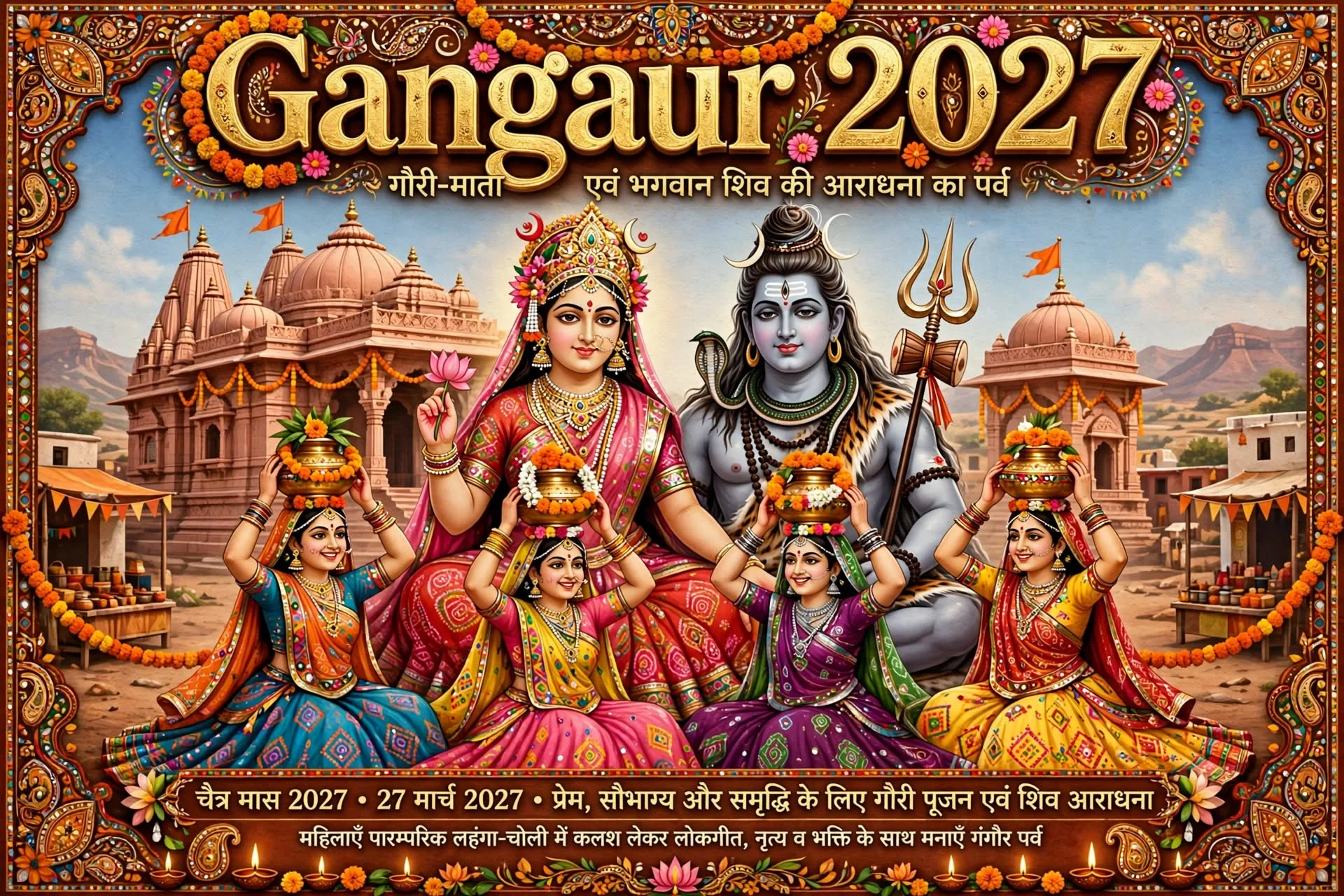
Friday, Apr 9, 2027
Gangaur (Gauri Tritiya)
Gangaur is one of the most vibrant, emotionally poignant, and culturally majestic festivals of Rajasthan, celebrated also with great enthusiasm in parts of Gujarat, Madhya Pradesh (Malwa), and Haryana. The word 'Gangaur' is a compound of 'Gana' (a title of Lord Shiva) and 'Gaur' (Goddess Gauri or Parvati). Commencing immediately following Holika Dahan on the first day of Chaitra Krishna Paksha, this elaborate celebration spans eighteen days, reaching its glorious zenith on the third day of Chaitra Shukla Paksha (Tritiya).
View Festival Guide

Friday, Apr 9, 2027
Matsya Jayanti
Matsya Jayanti commemorates the auspicious appearance day of Lord Vishnu in his foundational first incarnation—the Matsya Avatar (the divine horned fish). Celebrated on the third lunar day of the bright fortnight (Shukla Paksha Tritiya) in the sacred month of Chaitra, this holy observance honors the cosmic savior who rescued the sacred Vedas, safeguarded the progenitors of humanity, and preserved the seeds of all living organisms during the catastrophic cosmic deluge (Pralaya).
View Festival Guide
Sunday, Apr 11, 2027
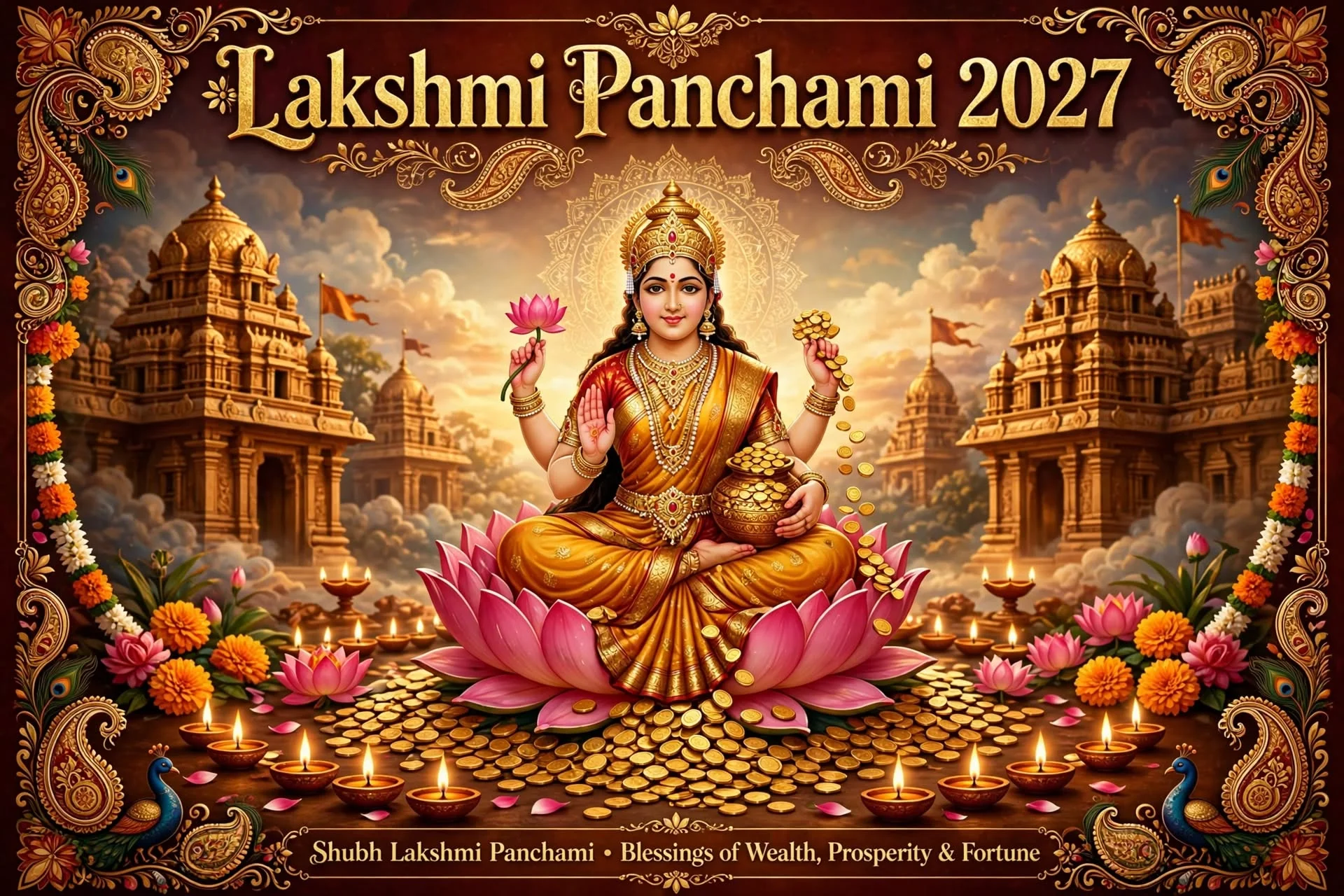
Lakshmi Panchami
Lakshmi Panchami, also reverently observed as Shri Panchami or Kalpadi Tithi, is a supremely auspicious fasting day dedicated to Goddess Mahalakshmi, the divine personification of spiritual abundance, wealth, prosperity, and supreme grace. Celebrated on the fifth day of the bright fortnight (Shukla Paksha Panchami) in the month of Chaitra during the sacred spring festival of Chaitra Navratri, this holy day is celebrated by spiritual seekers and householders to dispel poverty, debt, and misfortune while inviting inexhaustible fortune (Akshaya Lakshmi) into their lives.
View Festival Guide
Monday, Apr 12, 2027
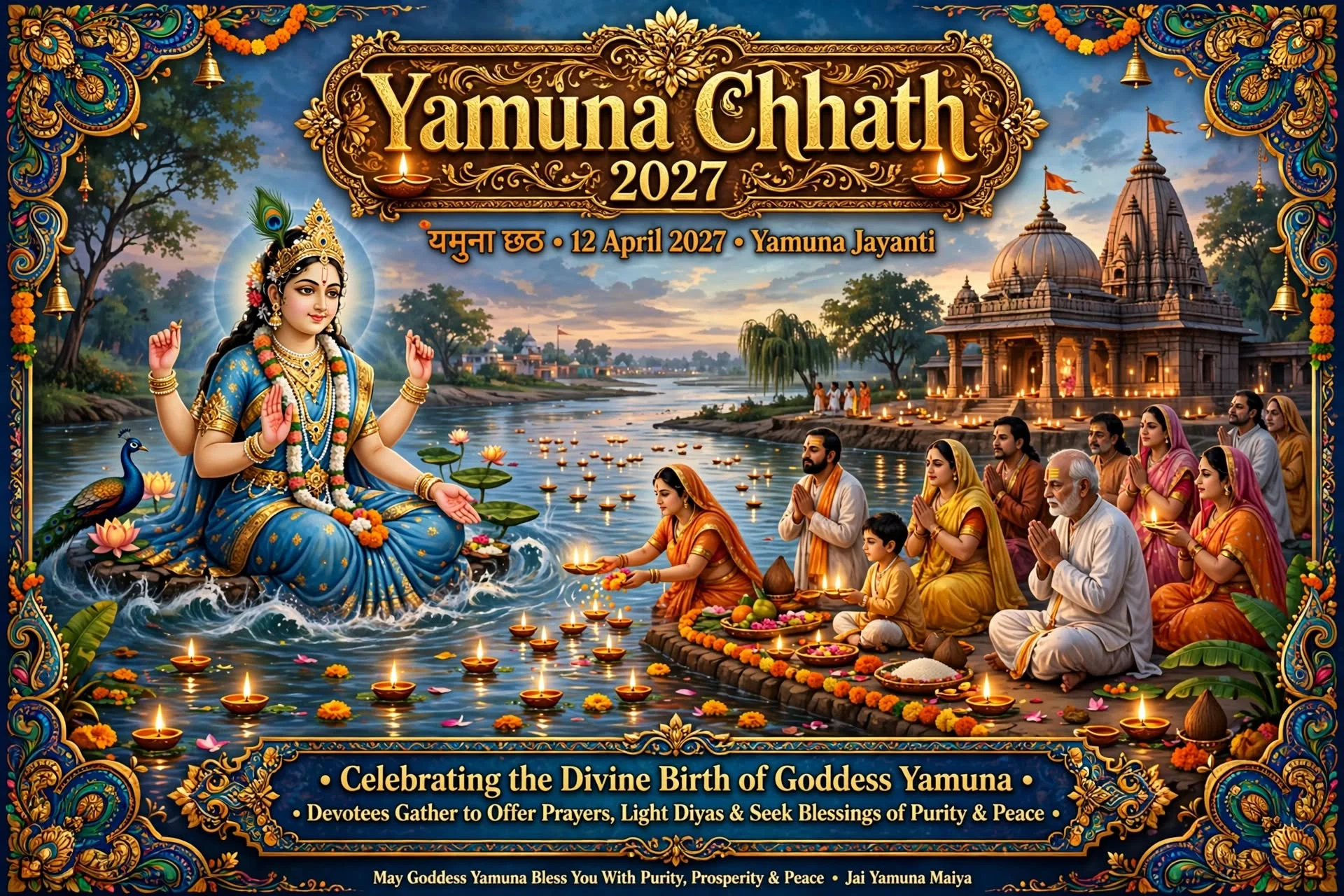
Yamuna Chhath
Yamuna Chhath, celebrated with immense spiritual fervor on the sixth lunar day of the bright fortnight (Shukla Paksha Shashthi) in the month of Chaitra, marks the auspicious appearance day (Jayanti) of the sacred River Yamuna. Revered in Sanatana Dharma as Goddess Kalindi, the celestial daughter of the Sun God Surya and Sanjna, and the beloved sister of Yama (the god of death), River Yamuna holds a supreme, intimately tender place in Hindu devotional consciousness, especially within the sacred geography of Braj Mandala and the Pushtimarg tradition.
View Festival Guide
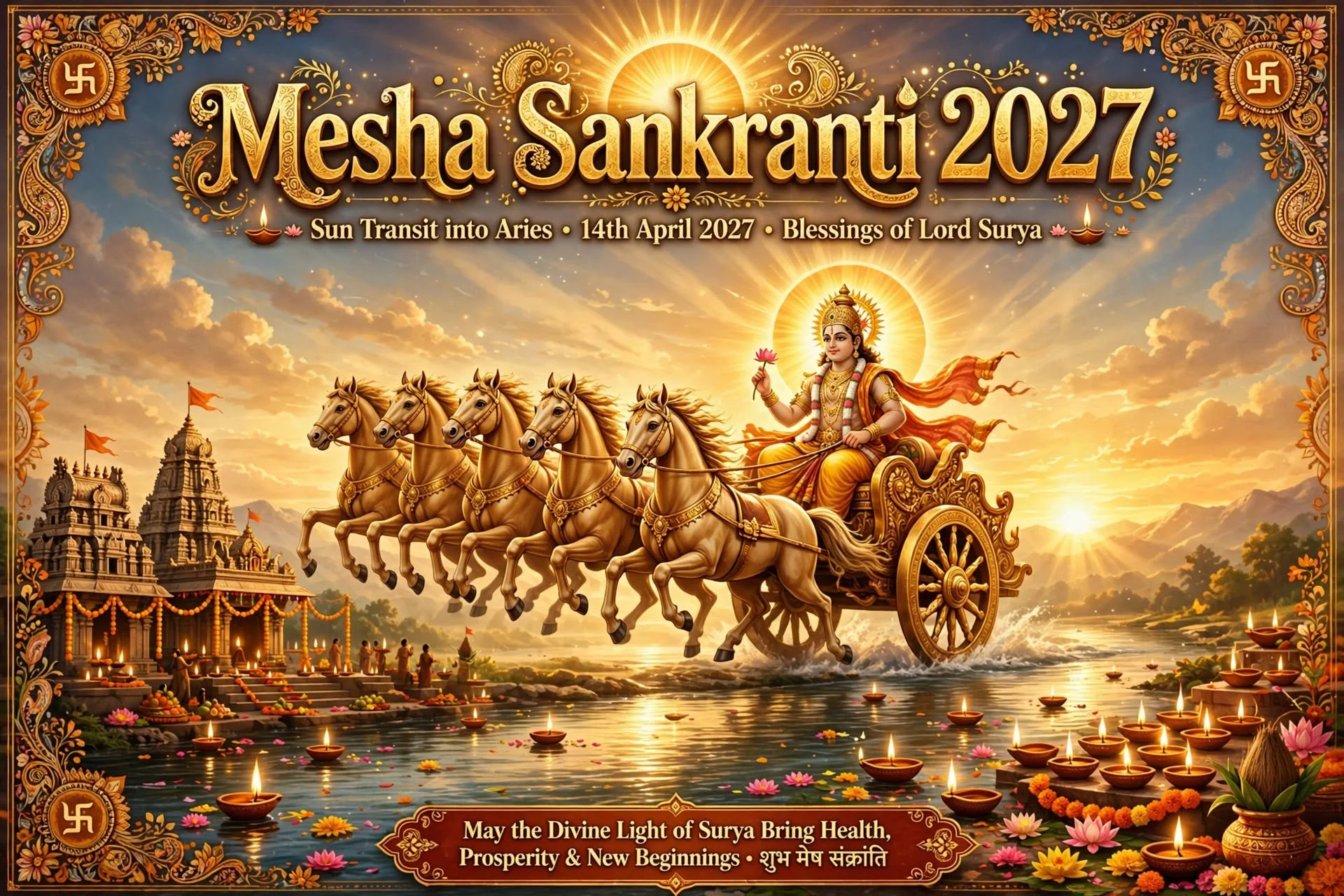
Wednesday, Apr 14, 2027
Mesha Sankranti
Mesha Sankranti marks the majestic astronomical ingress of Lord Surya (the Sun God) into Mesha Rashi (the zodiac sign of Aries), the first constellation of the sidereal zodiac. Occurring typically in mid-April, this celestial event represents the cardinal beginning of the solar calendar year in Sanatana Dharma. In Vedic astrology, Aries is the exalted sign (Uccha Rashi) of the Sun, wherein the solar deity radiates his supreme life-giving warmth, vigor, and spiritual illumination upon the earth.
View Festival Guide

Wednesday, Apr 14, 2027
Solar New Year
The Solar New Year (Maha Vishuba Sankranti or Mesha Sankranti) marks the grand beginning of the sidereal solar calendar across diverse states and cultures of India. Celebrated when the Sun God (Surya Bhagavan) enters Mesha Rashi (the zodiac sign of Aries) in mid-April, this pan-Indian festival is celebrated under glorious regional names: Puthandu in Tamil Nadu, Vishu in Kerala, Pohela Boishakh in Bengal, Pana Sankranti in Odisha, Bohag Bihu in Assam, and Baisakhi in Punjab.
View Festival Guide
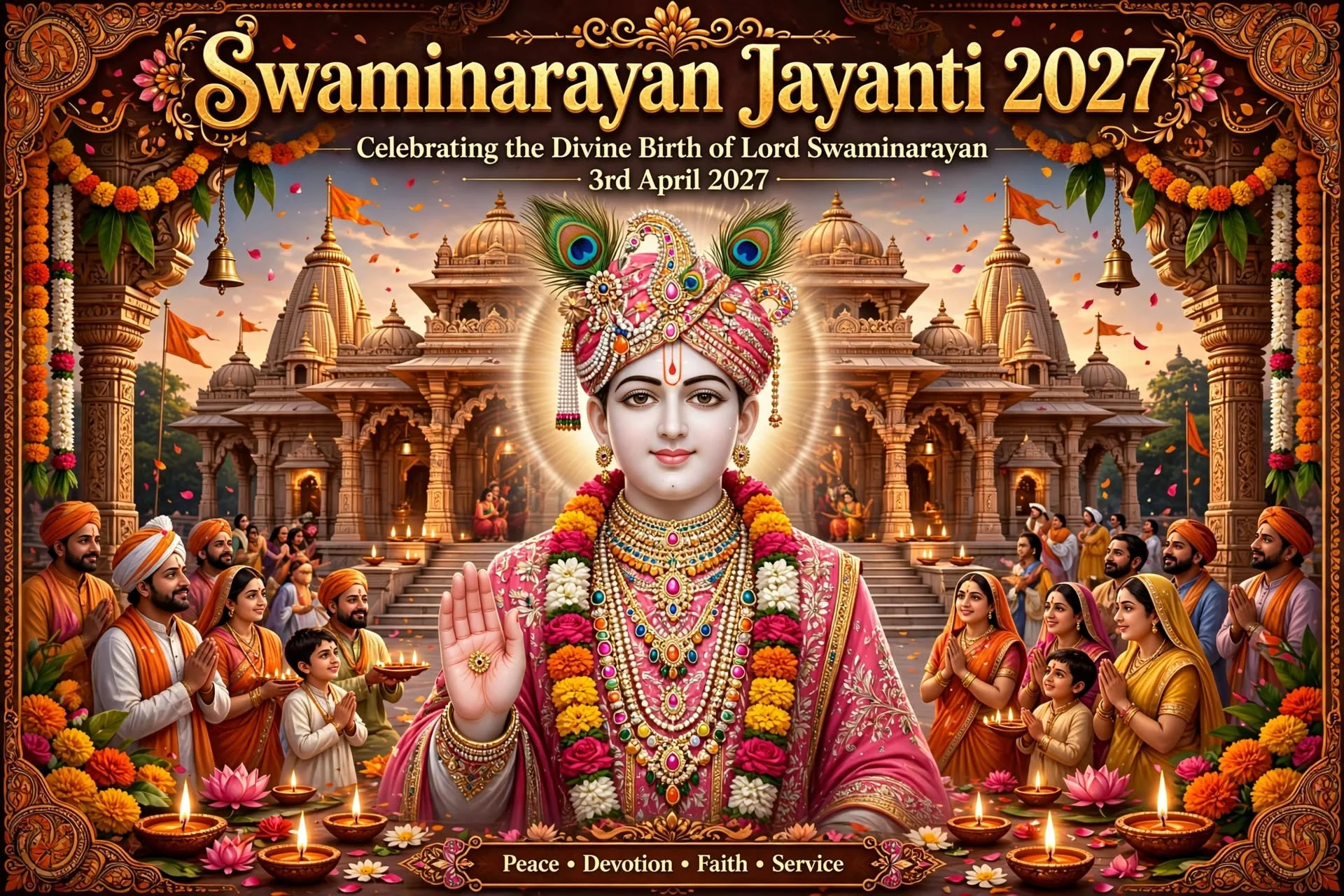
Thursday, Apr 15, 2027
Swaminarayan Jayanti
Swaminarayan Jayanti marks the auspicious birth anniversary of Bhagwan Swaminarayan (1781–1830 CE), the founder of the Swaminarayan Sampradaya and revered as a supreme divine manifestation in modern Sanatana Dharma. Celebrated on the ninth lunar day of the bright fortnight (Shukla Paksha Navami) in the month of Chaitra, this holy observance coincides precisely with Rama Navami. Manifesting at the sacred hour of 10:10 PM in the village of Chhapaiya near Ayodhya, Bhagwan Swaminarayan descended to establish moral rectitude, spiritual purity, social reform, and unconditional devotion to God.
View Festival Guide
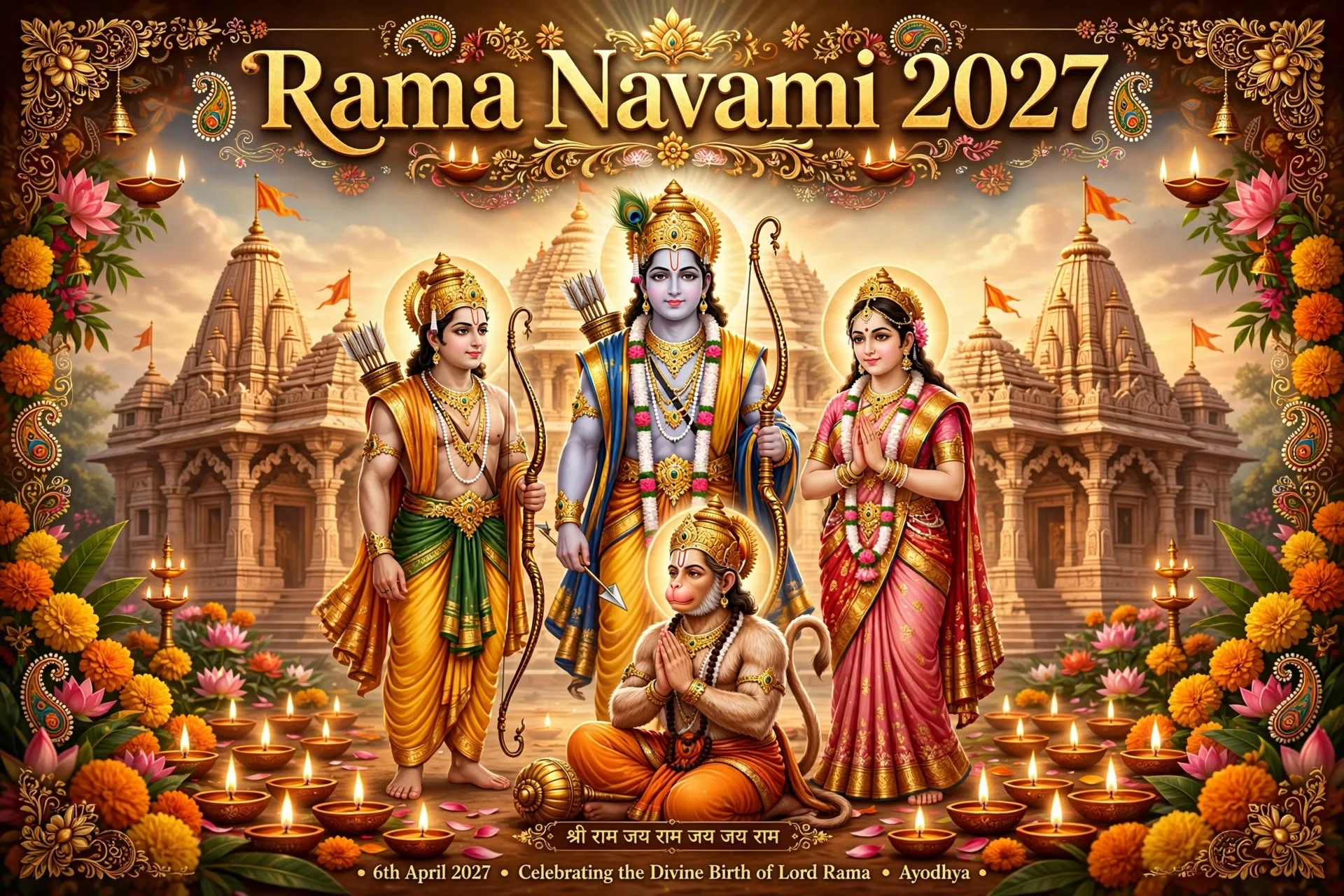
Thursday, Apr 15, 2027
Rama Navami
Rama Navami is one of the most sublime and universally revered festivals in Sanatana Dharma, celebrating the auspicious appearance (Janmotsav) of Maryada Purushottam Lord Sri Rama—the seventh incarnation of Lord Vishnu. Falling on the ninth day of the waxing moon (Shukla Paksha Navami) in the sacred month of Chaitra, it marks the grand culmination of the nine-day Chaitra Navratri festival. Born at high noon during the sacred Abhijit Muhurta in the ancient holy city of Ayodhya, Lord Rama incarnated to restore righteousness, establish exemplary moral standards (Dharma), and vanquish demonic forces across the earth.
View Festival Guide