




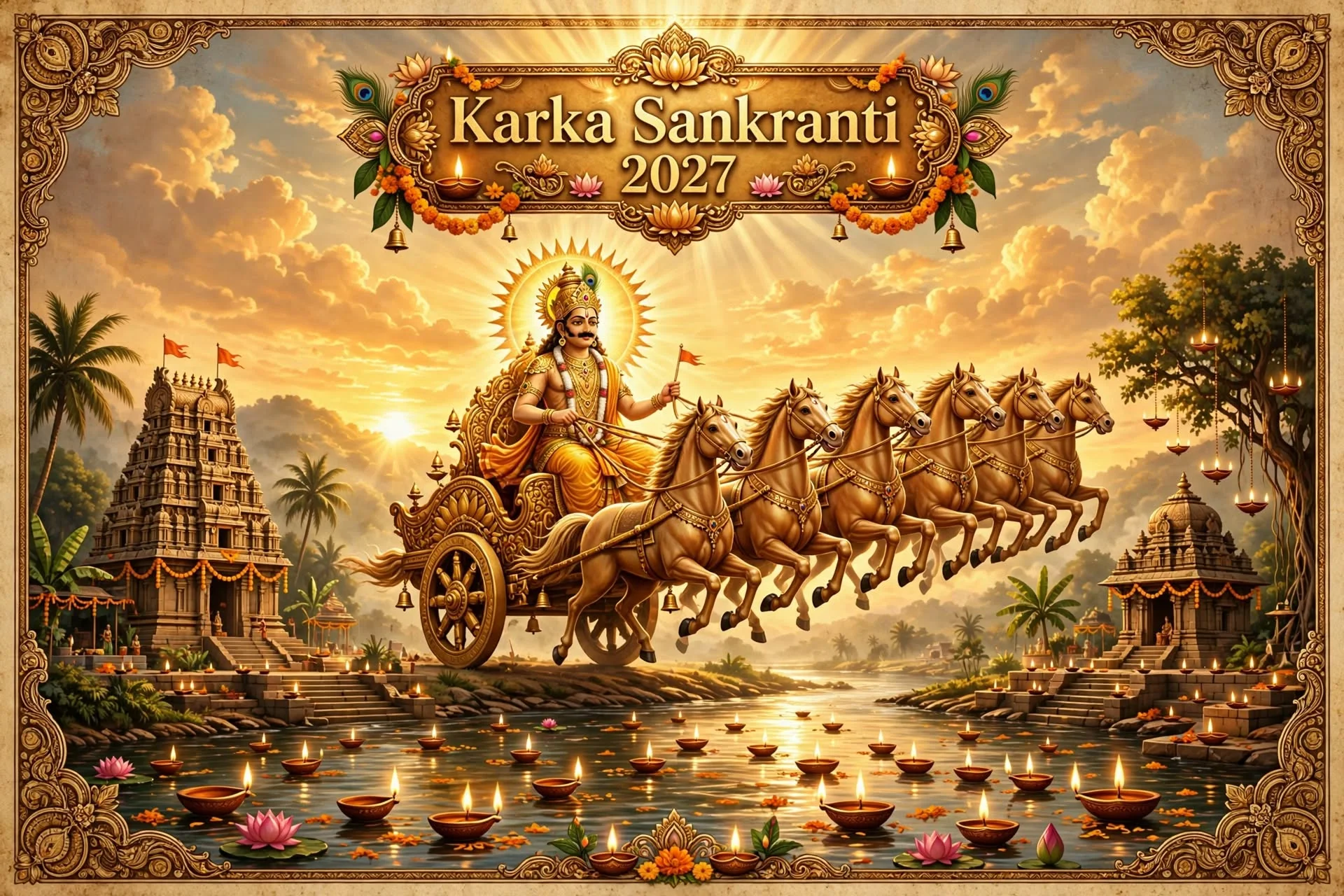
Karka Sankranti, occurring in mid-July, is an astronomically and spiritually momentous date marking the celestial ingress (transit) of the Sun (Surya Deva) into the zodiac sign of Cancer (Karka Rashi). In the Vedic astronomical calendar, this transit represents the pivotal turning point known as the commencement of Dakshinayana—the six-month period when the Sun moves southward along the celestial sphere, concluding the northern transit (Uttarayana).
Karka Sankranti 2027: Date, Puja Timings, Rituals & Stories
Karka Sankranti Timings & Panchang
Important festival dates and auspicious timings
Usha Arghya (Sunrise)
05:34 am
Sandhya Arghya (Sunset)
07:20 pm
Start Date
Saturday, 17 Jul 2027
Puja Muhurat
04:35 pm – 06:48 pm
Karka Sankranti
In Hindu cosmology, the annual solar cycle mirrors the cosmic day and night of the celestial deities (Devas). Uttarayana constitutes the daytime of the gods (Deva Divasa), while Dakshinayana signifies the nighttime of the gods (Deva Ratri) and simultaneously represents the daytime of the departed ancestral spirits (Pitru Divasa). Because the celestial beings enter an inward-focused meditative state and the ancestors awaken to receive earthly oblations, Karka Sankranti is dedicated to austere self-restraint, holy river bathing, ancestral libations (Pitru Tarpana), and the propitiation of Lord Vishnu, Lord Shiva, and Surya Deva.
Occurring during the peak of the Indian monsoon, Karka Sankranti also initiates the sacred four-month ascetic season of Chaturmas. Spiritual seekers and householders observe this transition by giving up Tamasic habits, engaging in charity (Dana)—particularly donating umbrellas, hand fans, water pots, and food grains—and seeking divine protection against the biological and planetary upheavals associated with the shift in cosmic solar rays.
Why is Karka Sankranti Celebrated?
The observance of Karka Sankranti is expounded in the Surya Siddhanta, Matsya Purana, Vishnu Purana, and the Kurma Purana as a vital transition of macrocosmic solar energy.
According to Vedic astronomical lore, the Sun is the visible soul of the universe (Surya Atma Jagatas Tasthushashcha). When the Sun crosses the celestial equator and enters the watery, lunar sign of Cancer (governed by the Moon), solar energy softens, rains descend abundantly upon the parched earth, and biological prana becomes reflective and inward-looking.
Because Dakshinayana is the period when departed ancestors (Pitrus) draw close to the earth realm, performing Shraddha, Tarpana, and charitable offerings on Karka Sankranti fulfills the fundamental moral debt of Pitri Rina, bestowing peace upon departed souls and safeguarding the living lineage from spiritual afflictions.
- Marking the astronomical ingress of the Sun into Karka Rashi and the start of Dakshinayana.
- Performing Pitru Tarpana and Shraddha to satisfy ancestors during their celestial daytime.
- Bathing in holy river tirthas to wash away accumulated karmic sins during the auspicious Punya Kaal.
- Donating essential summer and monsoon items including umbrellas, water vessels, clothing, and food grains.
- Initiating seasonal disciplines and prayers for health, agricultural abundance, and spiritual illumination.
Astronomical Treatise, Puranic Lore, and the Cosmic Day of the Devas
The Division of the Cosmic Year in the Surya Siddhanta
In the ancient astronomical treatise Surya Siddhanta, the motion of the Sun is classified into two six-month solar cycles: Uttarayana (from Makara Sankranti in Capricorn to Gemini) and Dakshinayana (from Karka Sankranti in Cancer to Sagittarius).
The treatise explains that for the celestial beings residing in the higher spiritual dimensions (Svargaloka), one human solar year equals a single day and night. The northern movement of the Sun constitutes their active daytime, while the southern movement starting at Karka Sankranti constitutes their peaceful, introspective nighttime. Consequently, humans mirror this cosmic pause by avoiding secular ostentation and focusing on inward sadhana.
The Ancestral Channel: The Daytime of the Pitrus
The Matsya Purana elaborates on the metaphysical resonance between Dakshinayana and Pitruloka. While the deities enter repose, the departed ancestral souls awaken to their active diurnal cycle. The southern direction (Dakshina) is presided over by Lord Yama, the righteous guardian of the dead.
When the Sun turns south at Karka Sankranti, an energetic highway opens between the earthly sphere and the ancestral planes. Oblations of pure water and black sesame seeds offered on this day are directly absorbed by the Pitrus, liberating them from astral thirst and granting them profound satisfaction.
The Dialogue between Sage Vasishtha and King Sagara
In the Vishnu Purana, Sage Vasishtha instructs King Sagara on the supreme importance of Sankranti Punya Kaal: 'O King, whenever the glorious Sun transitions from one zodiacal sign to another, that sacred juncture is named Sankranti. The hours surrounding Karka Sankranti are immensely meritorious. Whosoever bathes in sacred waters and donates cows, gold, umbrellas, and food on this day attains the merit of a thousand royal sacrifices.'
Source: Surya Siddhanta, Matsya Purana, and Vishnu Purana
The Shift from Solar to Lunar Prana, Inward Sadhana, and Gratitude
The Dance of Prana and Rayi in the Prashna Upanishad
In the first chapter of the Prashna Upanishad, Sage Pippalada explains the dual cosmic principles of creation: Prana (the solar principle of fire, life, and spirit) and Rayi (the lunar principle of water, matter, and form). Uttarayana corresponds to Prana, the path of the sun (Devayana); Dakshinayana corresponds to Rayi, the path of the moon (Pitriyana).
At Karka Sankranti, the solar principle enters the watery domain of Rayi. This transition teaches humanity that physical action must be balanced by emotional receptivity, intellectual study must be balanced by devotional surrender, and outgoing ambition must be balanced by introspective silence.
Ayurvedic Health Wisdom during Seasonal Transition (Ritu Sandhi)
Karka Sankranti marks the peak of the monsoon transition (Varsha Ritu), when the biological digestive fire (Jatharagni) weakens due to atmospheric dampness and humidity. Traditional Ayurvedic treatises recommend fasting, consuming light sattvic meals, avoiding heavy leafy vegetables, and drinking herbal decoctions.
The religious austerities associated with Karka Sankranti thus serve a profound prophylactic biological purpose, safeguarding the immune system from waterborne infections and seasonal lethargy.
The Ethos of Ancestral Gratitude (Pitri Rina)
Remembering ancestors at Karka Sankranti cultivates profound humility. Modern human beings often suffer from the illusion of self-made independence. By offering Tarpana to ancestors, the seeker consciously honors the sacrifices of previous generations who preserved knowledge, values, and biological life.
Punya Kaal Bathing, Pitru Tarpana, and Mahadana Protocols
Punya Kaal Timing and Sacred River Bathing
Puranas demarcate a specific window of hours surrounding the precise astronomical moment of solar ingress as the 'Punya Kaal' (and 'Maha Punya Kaal'). During these hours, spiritual actions bear infinitely multiplied fruits.
Pilgrims travel to sacred river ghats—such as Haridwar, Prayagraj, Varanasi, Nashik, and Rameswaram—to take purifying holy dips. Standing waist-deep in water facing the rising Sun, they offer three handfuls of sacred water to Surya Deva.
Afternoon Pitru Tarpana and Shraddha
During the afternoon (Aparahna kaal), householders sit facing South on a kusha grass mat. Holding water, black sesame seeds, and white barley in their palms, they chant ancestral Vedic mantras, offering libations to three generations of paternal and maternal forebears.
Cooked food portions are set aside for cows (Go Grass) and crows, ensuring that all creatures of nature are fed before human consumption.
Distribution of Monsoon Charity (Mahadana)
Charity (Dana) is the supreme virtue of Karka Sankranti. Devotees distribute black umbrellas to protect laborers and the poor from monsoon rains, handheld bamboo fans, clay water pots (Ghada) filled with camphor water, unstitched cotton garments, jaggery, salt, and food grains to impoverished communities and religious ascetics.
Karka Sankranti Puja Vidhi (Step by Step)
- 1
Punya Kaal Snana (Auspicious Solar Bath)
Wake before dawn during Brahma Muhurta, take a purifying bath in holy river water or clean water infused with Gangajal and black sesame seeds, chanting the sacred Tirtha Avahana mantras.
- 2
Surya Arghya and Dhyana (Solar Oblation)
Face East at sunrise, hold pure water mixed with red sandalwood paste, red flowers, and unbroken rice in a copper vessel, offering Arghya to Surya Deva while chanting the Aditya Hridaya Stotram or Gayatri Mantra.
- 3
Vishnu-Shiva Puja (Worship of the Supreme Preserver and Auspicious Lord)
Consecrate the domestic shrine, light a pure cow-ghee lamp, and worship Lord Vishnu with yellow flowers and Tulsi leaves, and Lord Shiva with Bilva leaves, praying for protection throughout Dakshinayana.
- 4
Pancha Upachara Deity Worship (Fivefold Offerings)
Offer fragrant sandalwood paste (Gandha), fresh seasonal blossoms (Pushpa), fragrant dhoop (Dhupa), cow-ghee lamp (Dipa), and fresh fruits/sweets (Naivedya) to the presiding deities.
- 5
Karka Sankranti Puja Samagri List
Surya and Deity Worship Materials
- Pure copper vessel (Surya Arghya Patra) and Panchapatra with spoon
- Red sandalwood powder (Rakta Chandana), Kumkum, and unbroken rice (Akshata)
- Fresh red hibiscus flowers, yellow marigolds, and sacred Tulsi sprigs
- Pure brass cow-ghee lamp with cotton wicks, natural camphor, and dhoop sticks
Pitru Tarpana Samagri
- Kusha grass mats and kusha finger rings (Pavitri)
- Unpolished black sesame seeds (Kala Til) and white barley grains (Jau)
- Clean copper or brass basin for collecting water oblations
- Cooked white rice mixed with honey, milk, and ghee for Pinda offerings
Mahadana and Charitable Kit
- Sturdy black rain umbrellas for distribution to the needy
- Earthen clay water pots (Mitti ka Ghada) and bamboo hand fans
- Dry food kits containing wheat flour, rice, jaggery, salt, and edible oils
- Clean unstitched cotton dhoti, towels, and clothing for monks and the poor
Mantras and Prayers for Karka Sankranti
Karka Sankranti Vrat Rules and Fasting Guidelines
Dietary Code and Seasonal Austerity
Devotees observe fasting during the Punya Kaal hours of Karka Sankranti until the conclusion of river bathing, Surya Arghya, and Pitru Tarpana. In the late afternoon, a single sattvic vegetarian meal prepared without onions, garlic, or excessive oil is consumed. To honor the transition into Chaturmas, many practitioners voluntarily renounce specific foods (such as green leafy vegetables during Shravana) to maintain optimal digestion and health.
- Fasting is observed until the conclusion of Surya Arghya and ancestral Tarpana rituals.
- Strict abstinence from meat, fish, alcohol, onions, garlic, and processed food.
- Charity of food must precede the householder's own meal.
Moral Discipline and Secular Injunctions
Because Dakshinayana represents the night of the gods, traditional astrology pauses the initiation of major secular milestone celebrations (such as Hindu weddings and housewarmings) during the four months of Chaturmas, focusing energy instead on spiritual discourse, mantra japa, and charitable service.
Dos and Don'ts of Karka Sankranti
Good Practices (Do's)
- Take a holy bath in a sacred river or water consecrated with Gangajal during the Punya Kaal.
- Offer Arghya to Surya Deva in a copper vessel with red sandalwood paste and red flowers.
- Perform Pitru Tarpana using black sesame seeds and clean water during the afternoon.
- Donate black umbrellas, earthen water pots, hand fans, and food grains to the poor.
- Feed cows, crows, and domestic animals before partaking of your own meal.
Karka Sankranti Across Regions
| Region | Local Name |
|---|---|
| All India / Ganga Ghats (Haridwar, Varanasi, Prayagraj) | Karka Sankranti Snana and Dana |
| Odisha and Coastal Eastern India | Karkata Sankranti / Dakhinayana Yatra |
| Kerala and Tamil Nadu | Karkidaka Masam / Karkataka Sankramam |
Karka Sankranti FAQs
What is Karka Sankranti?
Karka Sankranti is the astronomical transit of the Sun from Gemini (Mithuna) into Cancer (Karka Rashi), marking the commencement of the six-month southern solar course known as Dakshinayana.
What is the difference between Uttarayana and Dakshinayana?
Uttarayana is the six-month period when the Sun travels northward (from Makara Sankranti in January to July), representing the daytime of the gods. Dakshinayana is the six-month period when the Sun moves southward (from Karka Sankranti in July to January), representing the nighttime of the gods and daytime of the ancestors.
Why is Pitru Tarpana performed on Karka Sankranti?
In Hindu cosmology, Dakshinayana represents the active daytime of the departed ancestors (Pitrus). Performing Tarpana on Karka Sankranti provides deep nourishment and solace to ancestors, clearing ancestral debts (Pitri Rina).
Upcoming Festivals
View All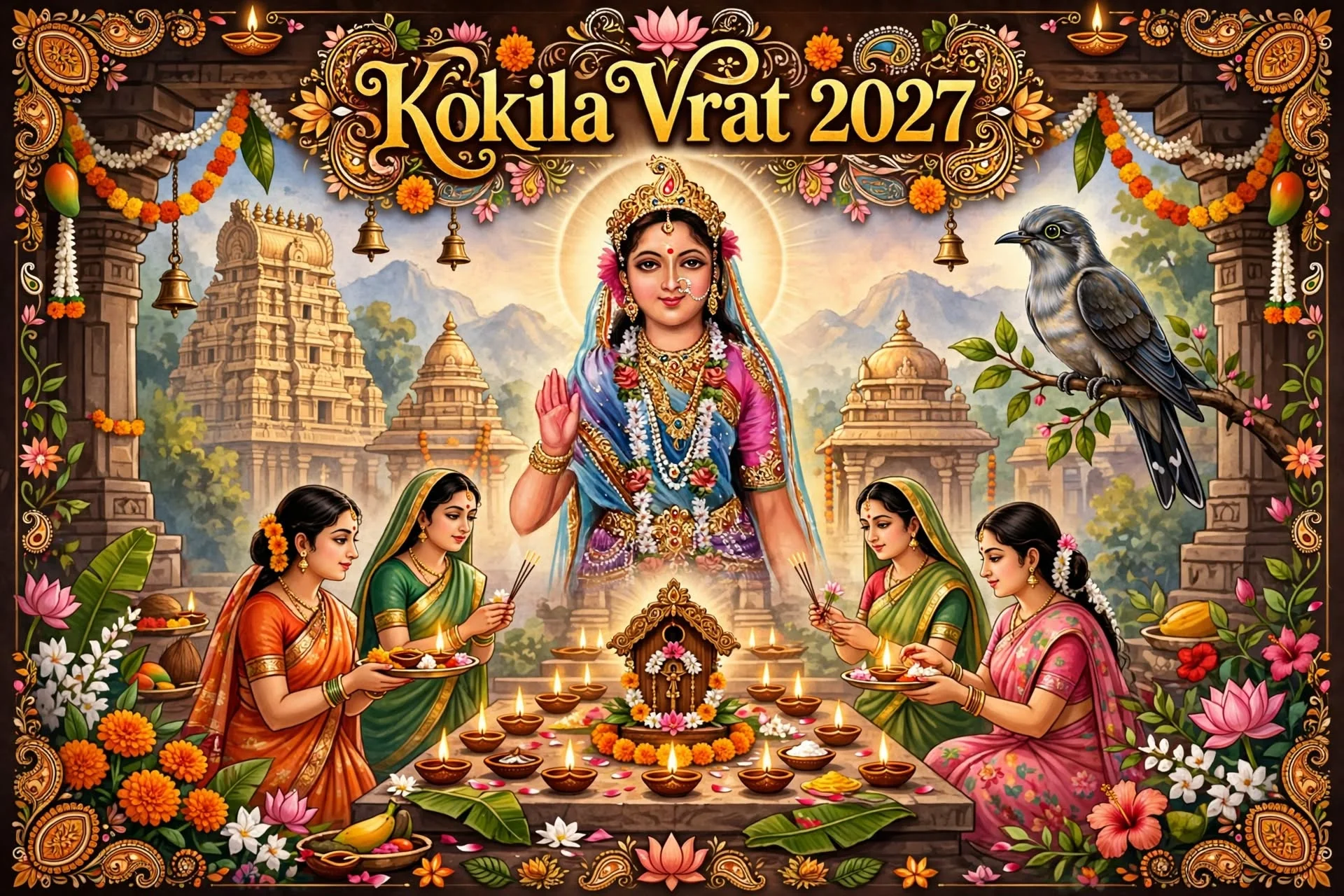
Saturday, Jul 17, 2027
Kokila Vrat
Kokila Vrat is a rare, mystical, and deeply revered Hindu fasting observance celebrated on the Purnima (full moon day) of the Hindu lunar month of Ashadha, often extending into the sacred monsoon month of Shravana (falling in July). Dedicated to Goddess Parvati (in Her form as Sati) and Lord Shiva, this sanctified vrata derives its name from 'Kokila' (the Indian cuckoo bird), commemorating the poignant cosmological epoch when Goddess Sati incarnated as a divine cuckoo bird for ten thousand celestial years in the sacred groves of Nandanavana to perform austere, single-minded penance to reunite with Lord Shiva.
View Festival Guide
Sunday, Jul 18, 2027
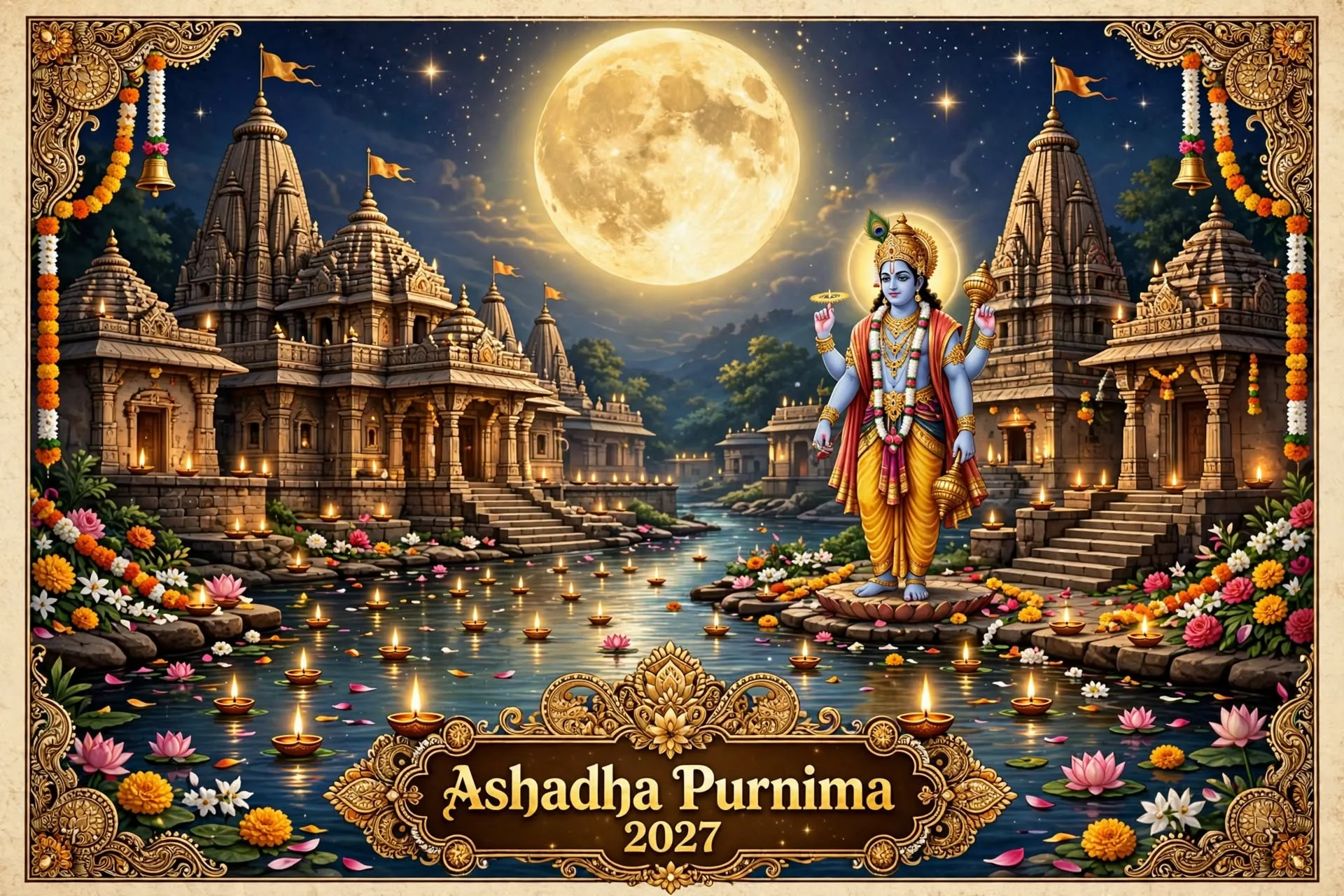
Ashadha Purnima
Ashadha Purnima is the radiant full moon tithi culminating the Shukla Paksha of the Hindu lunar month of Ashadha (occurring in July). Illuminating the mid-monsoon night sky with celestial brilliance, this sacred tithi represents one of the most auspicious spiritual junctures in Sanatana Dharma, Buddhism, and Jainism. As the full moon reaches its astrological peak in the constellations of Purva Ashadha and Uttara Ashadha, cosmic lunar and solar forces align to produce an atmosphere of profound mental clarity, devotional receptivity, and spiritual illumination.
View Festival Guide

Sunday, Jul 18, 2027
Anvadhan
Anvadhan (अन्वाधान) is an ancient, highly revered Vedic ritual and spiritual observance in Sanatana Dharma performed on the day immediately preceding the New Moon (Amavasya) or Full Moon (Purnima). Rooted in the pristine traditions of the Shrauta and Grihya Sutras, Anvadhan literally translates to 'the solemn placing and replenishment of sacred fuel wood into the consecrated Vedic fires'. In traditional Vedic ritualism, householders (Grihasthas) and priests who maintain the sacred Agnihotra fires perform Anvadhan to prepare the sacrificial altars for the grand Darsha Yajna (New Moon sacrifice) or Paurnamasa Yajna (Full Moon sacrifice) scheduled for the following day.
View Festival Guide
Sunday, Jul 18, 2027
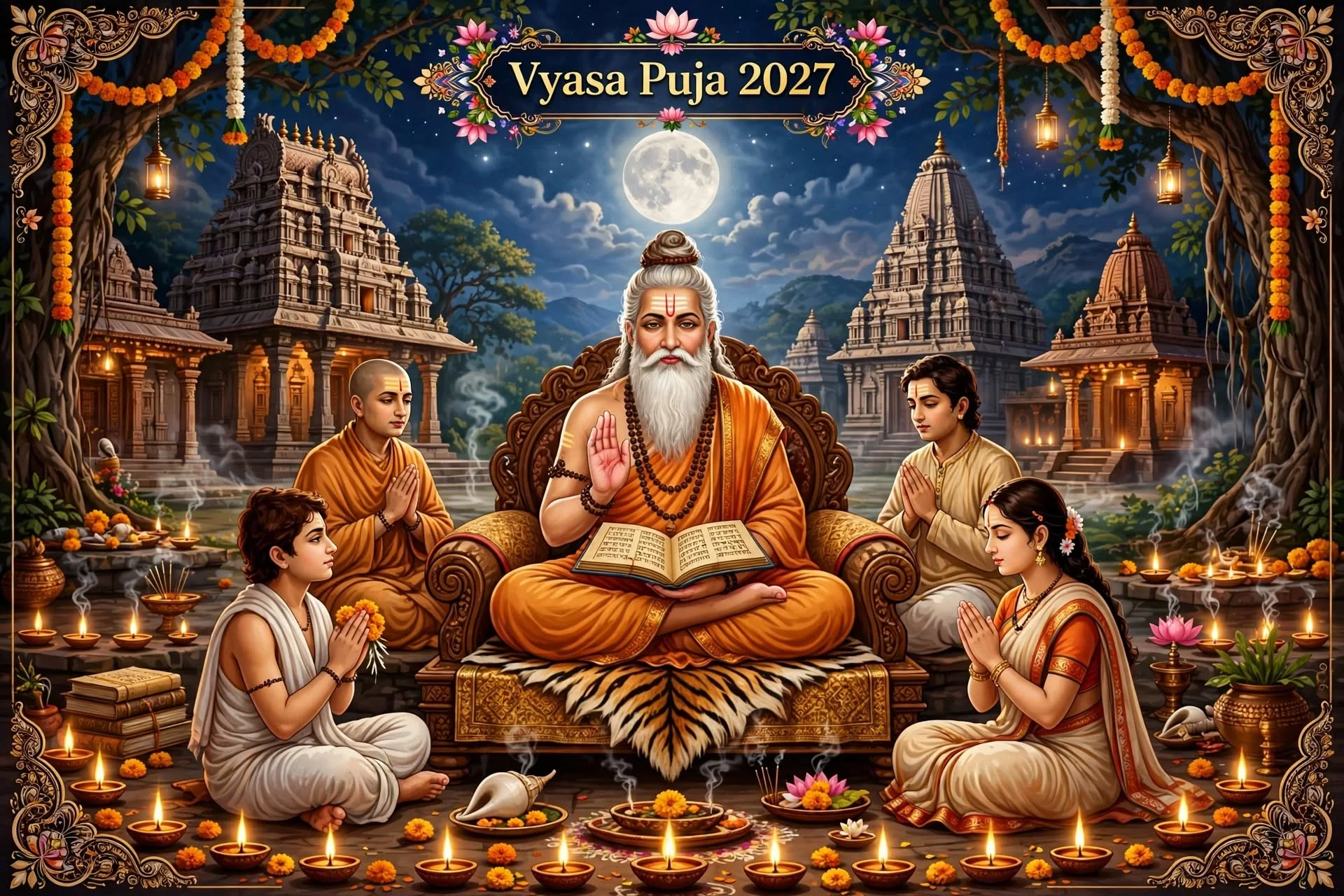
Vyasa Puja
Vyasa Puja is the paramount ritual celebration and liturgical solemnity observed on the Purnima (full moon day) of the Hindu lunar month of Ashadha (occurring in July), dedicated exclusively to Maharishi Krishna Dvaipayana Veda Vyasa—the immortal compiler of the four Vedas, author of the eighteen Mahapuranas, the monumental 100,000-verse Mahabharata, and the profound Brahma Sutras. While commonly celebrated in conjunction with Guru Purnima, Vyasa Puja specifically refers to the formal, highly codified liturgical ritual of worshiping the Vyasa Peetha (the sacred seat of scriptural authority) and honoring the unbroken Guru Parampara (lineage of enlightened masters) from Lord Narayana and Lord Sadashiva down to one's living spiritual preceptor.
View Festival Guide
Sunday, Jul 18, 2027
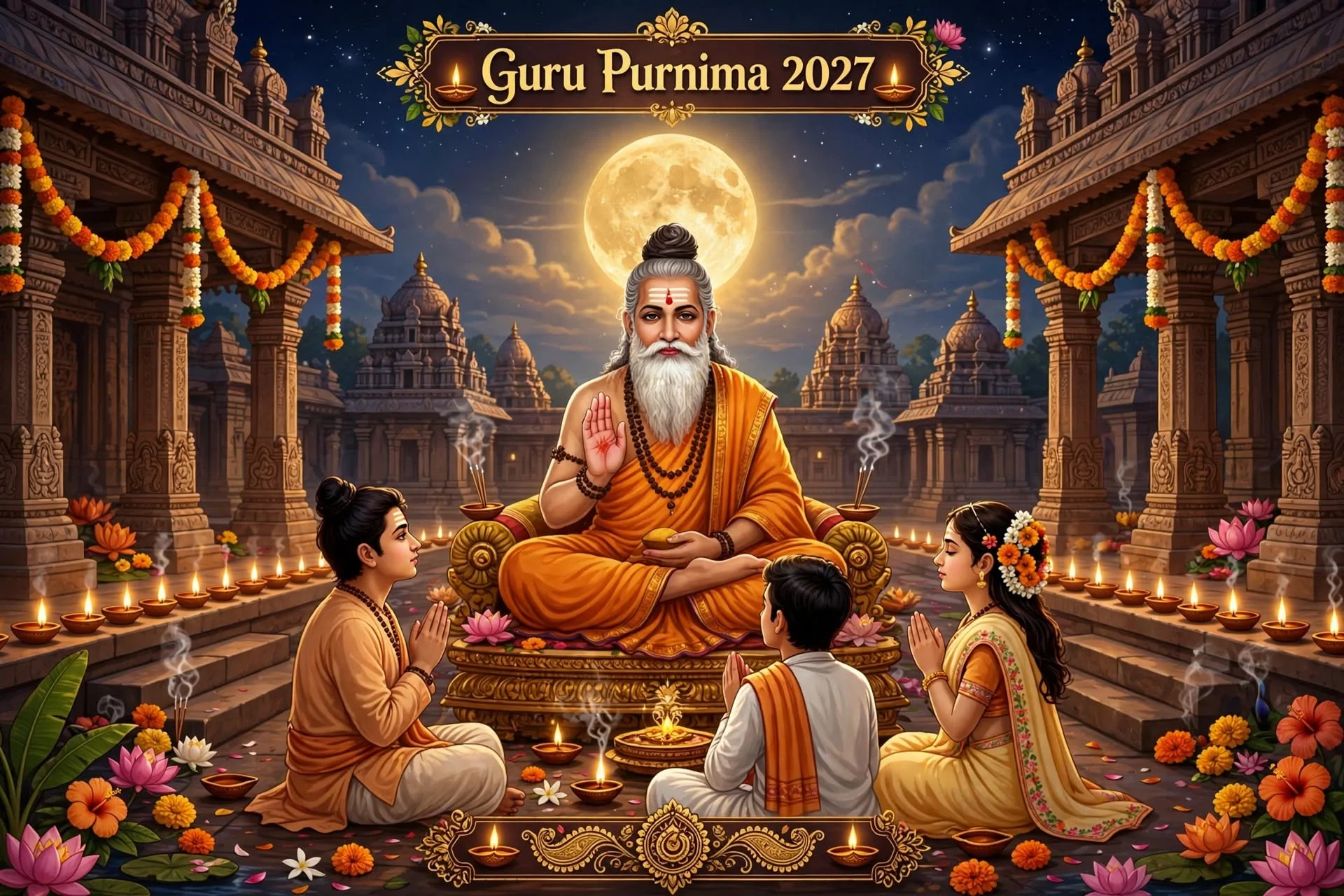
Guru Purnima
Guru Purnima, celebrated on the full moon day (Purnima) in the Hindu lunar month of Ashadha, is one of the most sacred and venerable festivals across Sanatana Dharma, Buddhism, and Jainism. Dedicated to the eternal lineage of spiritual preceptors (Guru Parampara), this day honors the divine principle that dispels the darkness of ignorance (Gu) and illumines the radiance of self-realization and wisdom (Ru).
View Festival Guide

Monday, Jul 19, 2027
Ishti
Ishti is a foundational Vedic ritual observance appearing prominently in Hindu Panchangs on the Pratipada tithi (the first lunar day) following either Amavasya (new moon) or Purnima (full moon), marking the prescribed performance day for the fortnightly Vedic Darsha-Purnamasa sacrifices.
View Festival Guide
Wednesday, Jul 21, 2027
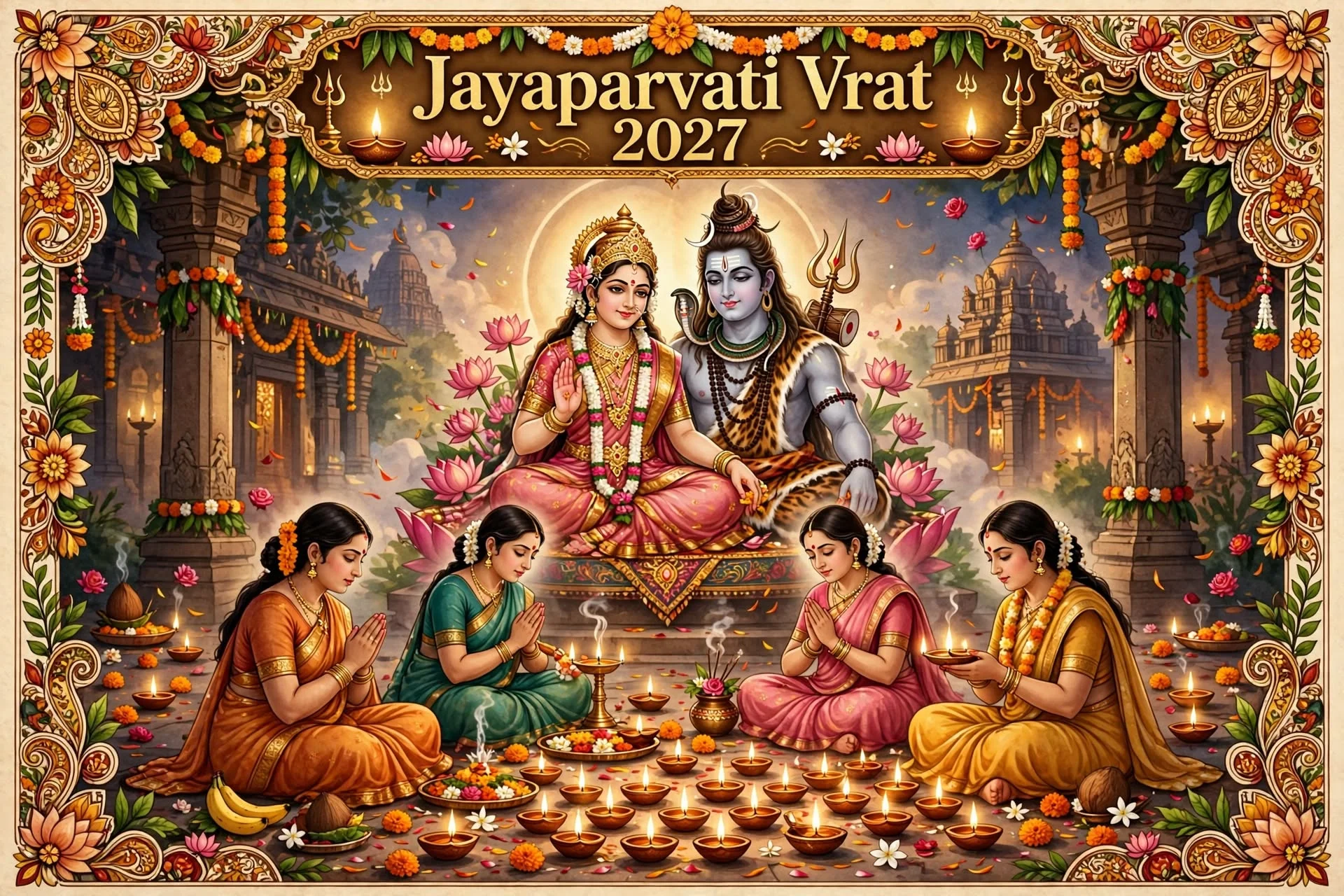
Jayaparvati Vrat
Jayaparvati Vrat, also known as Gauri Vrat or Jaya-Vijaya Vrata, is an ancient, highly revered five-day spiritual observance commencing on the Trayodashi tithi (thirteenth lunar day) of Shukla Paksha in the holy Hindu month of Ashadha (occurring in July) and concluding on Krishna Tritiya. Celebrated with immense piety and joy across Western India—predominantly in Gujarat and parts of Rajasthan and Maharashtra—the vrata is dedicated to Goddess Parvati (in Her victorious aspect as Jaya) and Lord Shiva. It is observed primarily by unmarried maidens praying for a virtuous, long-lived, and loving husband, as well as by married women seeking enduring marital bliss (Akhanda Saubhagya), domestic peace, and the welfare of their family lineage.
View Festival Guide
Thursday, Jul 22, 2027
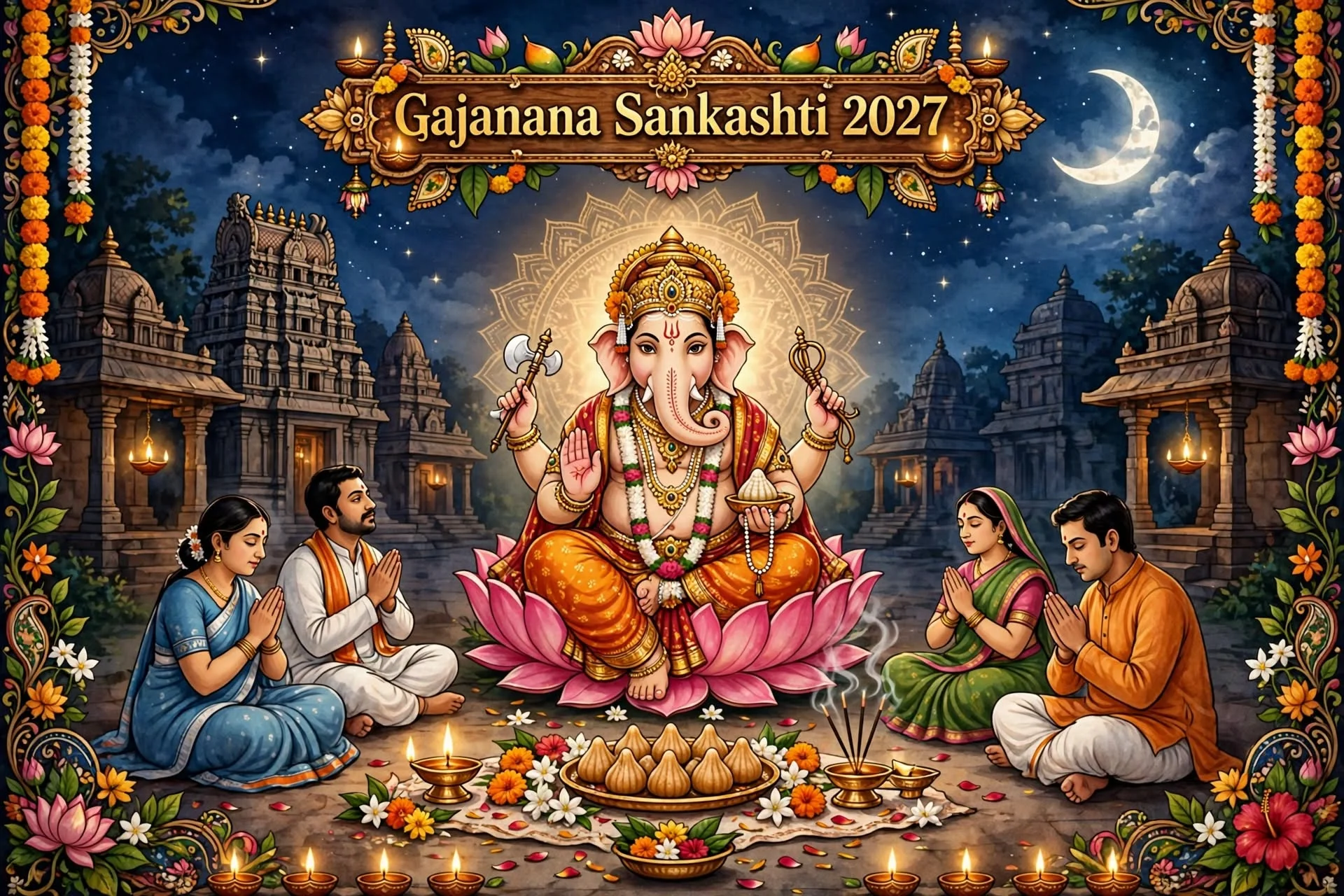
Gajanana Sankashti
Gajanana Sankashti, celebrated on the fourth lunar day (Chaturthi) of the Krishna Paksha in the holy Hindu month of Ashadha according to the Amavasyanta calendar, or Shravana Krishna Chaturthi in the Purnimanta calendar (occurring in late July), is an immensely powerful fasting day dedicated to Bhagwan Ganesha in His divine elephant-faced form of Gajanana. Revered across the Bhavishya Purana, Ganesha Purana, and Mudgala Purana, the word 'Sankashti' originates from 'Sankata-Nashana', denoting the miraculous divine potency of this tithi to dissolve, uproot, and eradicate all insurmountable worldly crises, emotional anxieties, and spiritual obstacles.
View Festival Guide