




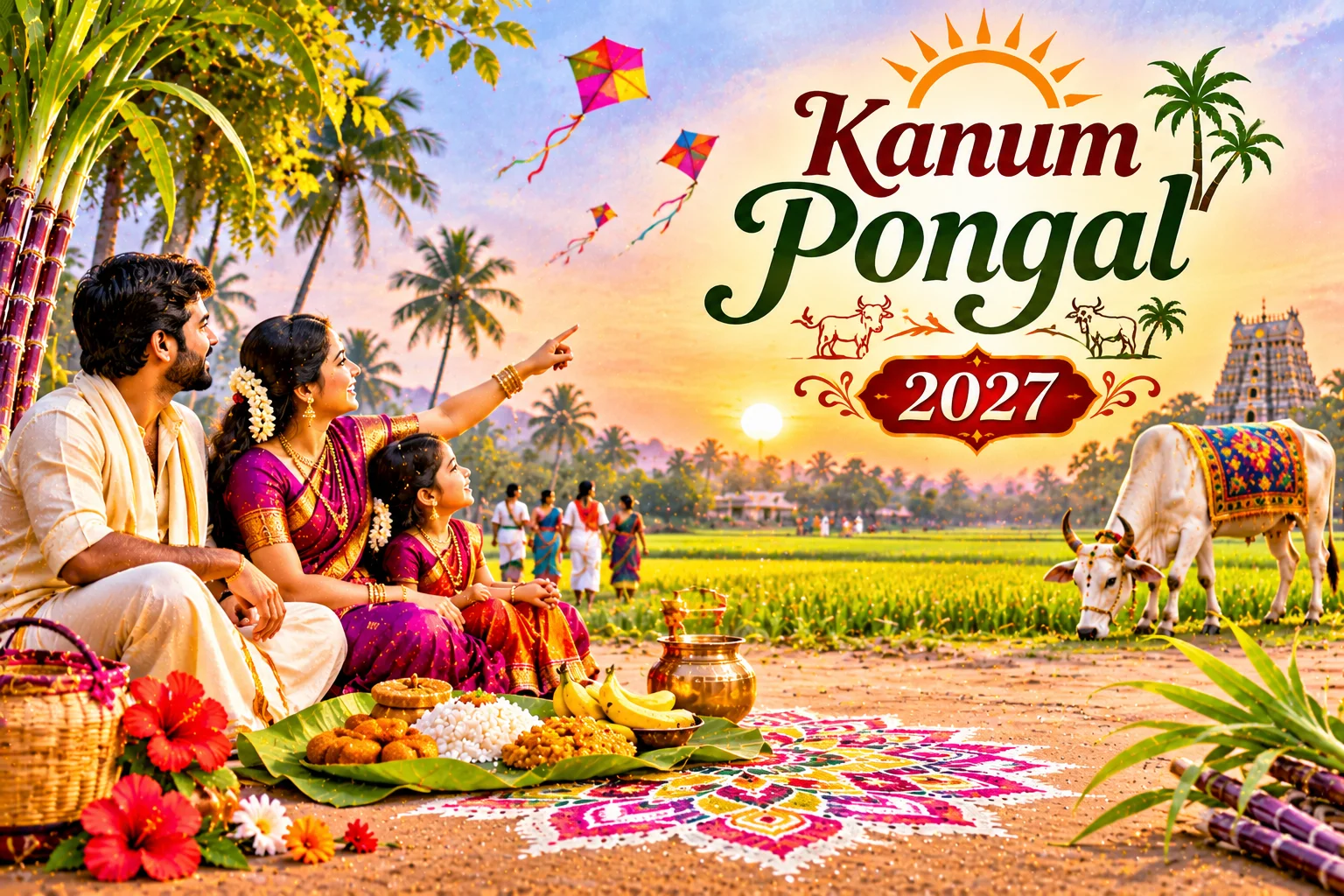
Kanum Pongal, also known as Kaanum Pongal or Kannum Pongal, is the fourth and final day of the traditional four-day Tamil Pongal harvest festival. It is primarily associated with family reunions, visiting relatives, receiving blessings from elders, community gatherings, and spending time with loved ones.
Kanum Pongal 2027: Date, Puja Timings, Rituals & Stories
Kanum Pongal Timings & Panchang
Important festival dates and auspicious timings
Usha Arghya (Sunrise)
07:15 am
Sandhya Arghya (Sunset)
05:48 pm
Start Date
Sunday, 17 Jan 2027
Puja Muhurat
01:43 pm – 12:27 pm
Kanum Pongal
The Tamil word Kaanum is commonly understood as seeing, meeting, or visiting. Accordingly, this day encourages people to step outside their homes, meet family members and friends, visit temples, enjoy public gatherings, and strengthen relationships.
Kanum Pongal follows Mattu Pongal, the day dedicated to honouring cattle for their contribution to agriculture. While the earlier days of Pongal focus on household renewal, the Sun, the harvest, and livestock, Kanum Pongal places special emphasis on human relationships and social harmony.
Families traditionally visit parents, grandparents, relatives, and friends. Younger members seek blessings from elders, while family members share festive meals and spend time together. In many places, people visit beaches, riverbanks, parks, gardens, temples, and other public places for family outings.
Some Tamil households also observe Kanu Pidi, a traditional food offering performed by women and girls. Small portions of coloured rice and other festive foods are arranged on leaves and offered to birds, especially crows, with prayers for the well-being of brothers and family unity. The timing and customs of Kanu Pidi vary between households and should not be confused with the wider meaning of Kanum Pongal.
In Tamil Nadu, Kanum Pongal is also associated with community celebrations, traditional folk performances, festive gatherings, and shared meals. Traditional dances such as Kummi and Kolattam may be performed during cultural programmes.
Why is Kanum Pongal Celebrated?
Kanum Pongal is celebrated to strengthen family relationships, encourage social interaction, and bring communities together after the harvest festivities. It provides an opportunity for relatives and friends to meet, exchange greetings, share meals, and seek blessings from elders.
The day also recognises the importance of family unity and social harmony in Tamil cultural life. Through visits, gatherings, traditional food, and community activities, people celebrate the relationships that support their personal and collective well-being.
- To strengthen family bonds: Relatives gather, visit one another, and spend meaningful time together.
- To receive blessings from elders: Younger family members visit parents, grandparents, and respected elders to seek their blessings and good wishes.
- To celebrate friendship: People meet friends, neighbours, and extended family members and exchange festive greetings.
- To encourage community harmony: Village gatherings, public celebrations, cultural programmes, and shared meals bring people together.
- To enjoy family outings: Families visit beaches, parks, riverbanks, gardens, temples, and other places for recreation and togetherness.
- To express gratitude: The day continues the harvest festival's spirit of appreciation for food, nature, family, and community.
- To preserve Tamil cultural traditions: Traditional food, folk dances, kolam designs, family customs, and festive gatherings help preserve cultural heritage.
- To honour sibling relationships: Some households observe Kanu Pidi, during which women and girls pray for the well-being of their brothers and family members.
- To share prosperity: Families exchange food, gifts, greetings, and blessings as expressions of affection and goodwill.
History and Origins of Kanum Pongal
Origins in Tamil Harvest Culture
Kanum Pongal is part of the broader Tamil harvest festival known as Pongal. Its traditions are connected with agricultural life, seasonal celebrations, household customs, and the importance of relationships within Tamil communities.
Agriculture historically shaped the social and economic life of Tamil villages. Harvesting was not simply an individual household activity; it involved families, agricultural workers, neighbours, cattle owners, and wider village communities.
The harvest season therefore provided an important opportunity for people to celebrate together, visit relatives, share food, and strengthen relationships. Kanum Pongal reflects this social dimension of agricultural life.
Although the modern four-day Pongal sequence is widely recognised, it is important not to assign an exact ancient origin date to every present-day custom. Different traditions developed and changed across regions and generations.
The Four-Day Pongal Tradition
Pongal is traditionally celebrated over four days, with each observance highlighting a different aspect of agricultural and community life.
Bhogi Pongal is associated with household renewal and welcoming a fresh beginning. Thai Pongal is the principal harvest celebration, during which families prepare Pongal and offer gratitude to Lord Surya. Mattu Pongal honours cattle for their contribution to agriculture. Kanum Pongal concludes the festival by focusing on family relationships, social gatherings, and community activities.
This sequence reflects the interconnected nature of Tamil agricultural culture. Household life, sunlight, food production, animals, and human relationships all contribute to the celebration.
Kanum Pongal gives particular importance to the social side of the harvest season, bringing relatives and communities together after the main agricultural thanksgiving observances.
Spiritual Significance of Kanum Pongal
Family Unity and Togetherness
The central spiritual value of Kanum Pongal is family unity. The observance encourages people to maintain relationships with parents, grandparents, siblings, relatives, and friends.
Family visits and shared meals express affection, gratitude, and a sense of belonging. These activities remind people that relationships require attention, understanding, and care.
The festival encourages families to celebrate together and strengthen the bonds that support emotional and social well-being.
Respect for Parents and Elders
Visiting elders and receiving their blessings is an important tradition associated with Kanum Pongal.
The custom reflects respect for parents, grandparents, and senior members of the family. Their experience, guidance, and blessings are valued as sources of wisdom and encouragement.
The practice reminds younger generations to express gratitude towards those who have supported and guided them.
The Spirit of Gratitude
Kanum Pongal continues the spirit of gratitude established throughout the Pongal festival.
After honouring the harvest, the Sun, and cattle, the final day turns attention towards people and relationships. It recognises that family support, friendship, cooperation, and community participation contribute to a fulfilling life.
The observance encourages people to appreciate the relationships and social support they often take for granted.
Hospitality and Generosity
Welcoming relatives and sharing meals are important expressions of hospitality during Kanum Pongal.
How Kanum Pongal Is Celebrated
Kanum Pongal is primarily celebrated through family visits, receiving elders' blessings, shared meals, public outings, and community activities. The exact customs differ between households and regions, but togetherness remains the central theme.
1. Begin the Day with Cleanliness
- Wake up early and begin the day with a bath and clean clothes.
- Clean the entrance and surroundings of the house.
- Draw a traditional kolam using rice flour or suitable kolam powder.
- Light a lamp at the household shrine according to family tradition.
- Offer a simple prayer for family happiness, health, and prosperity.
2. Offer Prayers at Home
Families may begin the day with a simple prayer at their household shrine. Lord Surya, Lord Ganesha, and family deities may be remembered according to individual customs.
The prayer expresses gratitude for the harvest, family well-being, and the happiness of loved ones. Kanum Pongal does not have one universally prescribed special puja that every household must perform.
3. Observe Kanu Pidi if It Is a Family Tradition
Some Tamil households observe Kanu Pidi during the Pongal period. Women and girls arrange small portions of coloured rice and other festive foods on turmeric leaves or suitable leaves.
The offerings may include sweet Pongal, plain rice, turmeric rice, curd rice, and other household preparations. They are traditionally placed outdoors for crows and other birds.
Prayers are offered for the well-being of brothers and family unity. The timing and exact ritual details vary between communities, so families may follow their established custom.
Kanum Pongal Puja Vidhi (Step by Step)
- 1
Clean the Household
Clean the house and entrance area before beginning the day's observances. Arrange the household shrine neatly and prepare a welcoming environment for family members and visitors.
- 2
Draw a Traditional Kolam
Create a kolam at the entrance using rice flour or suitable kolam powder. Traditional designs may include flowers, geometric patterns, sugarcane, and Pongal symbols.
- 3
Take a Bath and Wear Clean Clothes
Begin the day with personal cleanliness and wear clean or traditional festive clothing. Family members may gather for a short prayer according to their household customs.
- 4
Light the Household Lamp
Light a diya at the household shrine and offer a simple prayer for the happiness, health, and prosperity of family members.
- 5
Offer Flowers and Traditional Prayers
Offer flowers, fruits, and other suitable items to the family deity. Devotees may remember Lord Surya, Lord Ganesha, or their preferred deity according to household tradition.
Kanum Pongal Puja Samagri List
Household Puja Samagri
- Diya
- Cotton wicks
- Ghee or suitable diya oil
- Flowers
- Turmeric
- Kumkum
- Akshat (unbroken rice grains)
- Sandalwood paste
- Incense sticks
- Camphor
- Clean water
- Puja plate
Traditional Food Offerings
- Sweet Pongal
- Ven Pongal
- Fresh fruits
- Bananas
- Sugarcane
- Coconut
- Jaggery
- Milk
- Rice preparations
- Traditional sweets
Kanu Pidi Samagri
Mantras and Prayers for Kanum Pongal
Kanum Pongal Vrat Rules and Fasting Guidelines
Fasting on Kanum Pongal
Kanum Pongal does not have a universally prescribed fasting requirement. It is primarily a social and family-oriented observance focused on visiting relatives, receiving blessings, sharing meals, and strengthening community relationships.
Some individuals may follow personal religious practices or family-specific observances, but fasting is not the central requirement of this festival. Families generally focus on gratitude, hospitality, and togetherness.
Traditional Observances
- Begin the day with cleanliness and a positive mindset.
- Draw a traditional kolam at the entrance of the house.
- Light a lamp at the household shrine if customary.
- Offer prayers for the well-being of family members.
- Visit parents, grandparents, and respected elders.
- Seek blessings and exchange festive greetings.
- Share traditional Pongal dishes with relatives and friends.
- Participate in community gatherings and cultural programmes.
- Observe Kanu Pidi if it is part of the household tradition.
- Treat visitors with hospitality and respect.
- Maintain family harmony and strengthen relationships.
- Keep public spaces clean during family outings.
Family and Community Values
Dos and Don'ts of Kanum Pongal
Good Practices (Do's)
- Visit parents, grandparents, and respected elders.
- Seek blessings from senior family members.
- Spend quality time with relatives, friends, and neighbours.
- Welcome guests with warmth and hospitality.
- Prepare and share traditional Pongal dishes.
- Exchange festive greetings and good wishes.
Kanum Pongal Across Regions
| Region | Local Name |
|---|---|
| Tamil Nadu | Kaanum Pongal |
| Chennai | Kaanum Pongal |
| Madurai | Kaanum Pongal |
| Thanjavur | Kaanum Pongal |
| Coimbatore | Kaanum Pongal |
| Tiruchirappalli | Kaanum Pongal |
| Tirunelveli | Kaanum Pongal |
| Puducherry | Kaanum Pongal |
| Sri Lanka | Kaanum Pongal |
| Singapore | Kaanum Pongal |
| Malaysia | Kaanum Pongal |
| Tamil Diaspora | Kaanum Pongal |
Kanum Pongal FAQs
What is Kanum Pongal?
Kanum Pongal, also called Kaanum Pongal, is the fourth and final day of the Tamil Pongal harvest festival. It is associated with visiting relatives, meeting friends, receiving blessings from elders, sharing meals, and enjoying family outings.
What does Kanum Pongal mean?
The Tamil word Kaanum is commonly associated with seeing, meeting, or visiting. Kanum Pongal is therefore known as a day for meeting relatives and friends and spending time with loved ones.
When is Kanum Pongal celebrated in the Pongal festival?
Kanum Pongal is traditionally the fourth and final day of the four-day Pongal celebration. It follows Bhogi Pongal, Thai Pongal, and Mattu Pongal.
Upcoming Festivals
View All
Monday, Jan 18, 2027
Pausha Putrada Ekadashi
Pausha Putrada Ekadashi is a sacred Hindu fasting day observed on the Ekadashi, or eleventh lunar day, of the Shukla Paksha (waxing fortnight) in the Hindu month of Pausha. It is dedicated to Lord Vishnu and is traditionally associated with prayers for children, family well-being, prosperity, and spiritual blessings.
View Festival Guide
Tuesday, Jan 19, 2027
Gauna Pausha Putrada Ekadashi
Gauna Pausha Putrada Ekadashi is the alternate Vaishnava observance of Pausha Putrada Ekadashi, the sacred Ekadashi occurring during the Shukla Paksha of the Hindu month of Pausha. It is dedicated to Lord Vishnu and is traditionally associated with prayers for children, family happiness, prosperity, and spiritual well-being.
View Festival Guide
Wednesday, Jan 20, 2027
Shukla Pradosh Vrat
Shukla Pradosh Vrat is a sacred Hindu observance dedicated to Lord Shiva and Goddess Parvati. It is observed on the Trayodashi Tithi, the thirteenth lunar day of the Shukla Paksha, or waxing phase of the Moon.
View Festival Guide
Friday, Jan 22, 2027
Pausha Purnima (Shakambhari Jayanti)
Pausha Purnima, also known as Paush Purnima, is an important Hindu observance celebrated on the full moon day of the Shukla Paksha in the lunar month of Pausha. It is traditionally associated with sacred bathing, fasting, charity, devotion and spiritual purification.
View Festival Guide
Friday, Jan 22, 2027
Shakambhari Jayanti
Shakambhari Jayanti is a sacred Hindu festival celebrating the divine appearance of Goddess Shakambhari, a compassionate manifestation of Goddess Durga and Adi Shakti. She is worshipped as the Goddess of vegetation, nourishment, food and the natural resources that sustain life.
View Festival Guide
Friday, Jan 22, 2027
Thai Poosam
Thai Poosam, also known as Thaipusam or Thai Poosam Thiruvizha, is an important Hindu festival dedicated to Lord Murugan, the divine son of Lord Shiva and Goddess Parvati. It is celebrated with great devotion by Tamil Hindu communities in India and across the world.
View Festival Guide
Monday, Jan 25, 2027
Sankashti Chaturthi
Sankashti Chaturthi is an important Hindu fasting observance dedicated to Lord Ganesha, the remover of obstacles and the giver of wisdom, prosperity and auspicious beginnings. It is observed on Chaturthi, the fourth lunar day of Krishna Paksha, the waning phase of the Moon, every month.
View Festival Guide
Monday, Jan 25, 2027
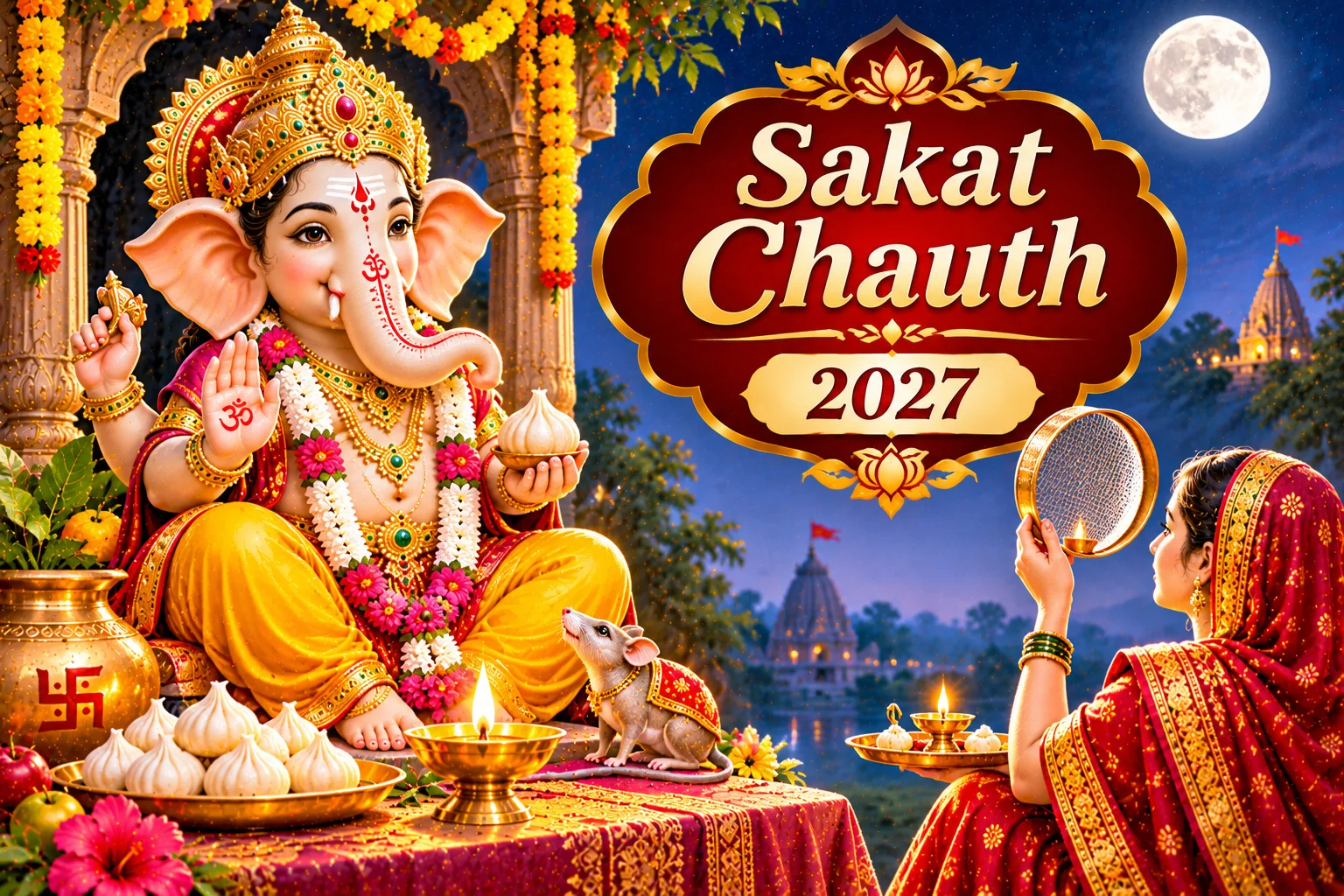
Sakat Chauth
Sakat Chauth is an important Hindu fasting festival dedicated primarily to Lord Ganesha and Goddess Sakat Mata. It is observed on Krishna Paksha Chaturthi, the fourth day of the waning lunar fortnight, during the month traditionally known as Magha in North Indian calendars.
View Festival Guide