




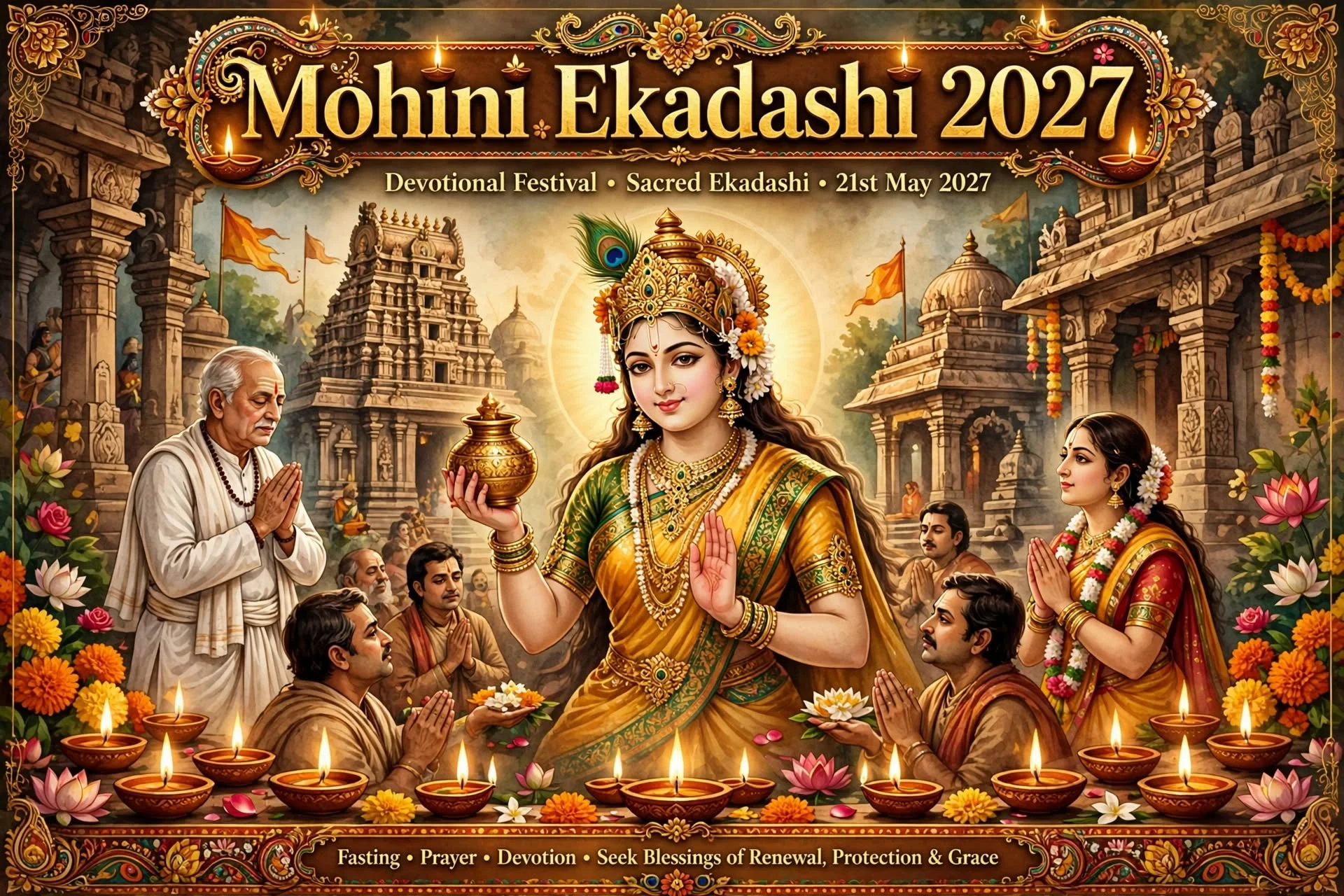
Mohini Ekadashi is an extraordinarily celebrated and sacred fasting observance occurring during the Shukla Paksha (waxing lunar phase) of the auspicious Hindu month of Vaishakha. This holy tithi commemorates the divine manifestation of Lord Vishnu's only female incarnation—the mesmerizing, enchantingly beautiful enchantress Mohini. Manifesting during the cosmic churning of the celestial ocean (Samudra Manthan), Mohini Avatar protected cosmic balance by distributing the nectar of immortality (Amrita) to the benevolent devas while outwitting the aggressive asuras.
Mohini Ekadashi 2027: Date, Puja Timings, Rituals & Stories
Mohini Ekadashi Timings & Panchang
Important festival dates and auspicious timings
Usha Arghya (Sunrise)
05:30 am
Sandhya Arghya (Sunset)
07:05 pm
Start Date
Sunday, 16 May 2027
Puja Muhurat
06:17 pm – 05:13 pm
Mohini Ekadashi
According to the Surya Purana and Bhavishya Purana, the sacred katha of Mohini Ekadashi was narrated by Sage Vasishtha to Lord Sri Ramachandra when the Lord, in His human lila, was lamenting the separation from Mother Sita in the forest, and later reiterated by Lord Sri Krishna to King Yudhishthira. The scripture affirms that observing this single vrata dissolves even the most severe karmas of illusion, attachment, and past-life transgressions.
Devotees observe complete or partial fasts, worship Lord Vishnu in His serene and compassionate form, and read the sacred Samudra Manthan chronicles. The festival serves as an annual spiritual reminder of the power of divine intellect and discernment (Viveka) over worldly infatuation (Moha).
Why is Mohini Ekadashi Celebrated?
Mohini Ekadashi is celebrated to seek deliverance from the blinding web of worldly delusions (Maya and Moha), cultivate spiritual clarity, and receive the eternal grace of Lord Vishnu. When the demonic forces seized the vessel of Amrita after the ocean churning, threatening to subjugate all righteous beings, Lord Vishnu assumed the Mohini form to restore the nectar to the gods, upholding cosmic order.
It is also celebrated to liberate souls from intense suffering and karmic entrapments, as demonstrated in the famous Pauranic history of Prince Dhrishtabuddhi, who was rescued from moral degradation and destitution by observing this sacred vow.
- Commemorates the appearance of Lord Vishnu as Mohini Avatar during Samudra Manthan.
- Dissolves attachments, delusions (Moha), and sins accumulated over numerous lifetimes.
- Restores spiritual intellect (Viveka) and discernment over materialistic sensory infatuations.
- Grants boundless merit, mental peace, and ultimate residence in Vaikuntha Dhama.
The Enchantment of the Demons and the Deliverance of Dhrishtabuddhi
The Cosmic Churning and the Distribution of Amrita
As chronicled in the Srimad Bhagavatam (Eighth Canto) and the Vishnu Purana, when the golden pot of Amrita emerged from the churning of the milky ocean, the ferocious asuras forcefully snatched it from Dhanvantari. Recognizing that if the tyrannical demons consumed immortality, creation would be plunged into permanent darkness, Lord Vishnu assumed the form of Mohini, a maiden of incomparable beauty, grace, and sweet speech.
Enamored by her divine charm, the bewitched demons voluntarily surrendered the pot of nectar to her, asking her to distribute it impartially. Smiling gracefully, Mohini seated the devas and asuras in separate rows and systematically served the ambrosia to the devas, preserving cosmic harmony and dharma.
The Deliverance of Dhrishtabuddhi by Sage Kaundinya
In the Bhavishya Purana, Sage Vasishtha narrated to Lord Rama the story of the ancient city of Bhadravati, ruled by King Dyutiman. A wealthy merchant named Dhanapala had five sons, the youngest of whom, Dhrishtabuddhi, was extremely wicked, squandering wealth on vice, gambling, and disreputable company. Cast out by his family and reduced to poverty, he wandered destitute in the forest hunting animals.
One day in the month of Vaishakha, drenched in misery and despair, he happened upon the hermitage of Sage Kaundinya by the river Ganga. Drops of sacred water shaken from the sage's garments fell upon Dhrishtabuddhi, awakening remorse in his heart. Weeping, he begged for deliverance. The compassionate sage instructed him to observe the upcoming Mohini Ekadashi with rigorous devotion, through which his immense sins were completely incinerated, and he attained a divine form ascending to Vaikuntha.
Source: Bhavishya Purana, Uttara Parva & Srimad Bhagavata Purana, Skandha 8
The Illusion of Sensory Attachment and the Triumph of Discernment
Moha as the Root of Worldly Bondage
In Advaita and Vaishnava philosophy, "Moha" signifies the delusive identification of the immortal soul with the transient physical body and sensory pleasures. Mohini Avatar demonstrates that the material world lures the undisciplined senses into fascination, blinding them to true immortality. The demons were distracted by external form and lost the nectar; the devas remained focused on divine duty and received immortality.
Viveka (Discernment) as the Divine Protector
Observing Mohini Ekadashi teaches the spiritual seeker to cultivate Viveka—the sharp razor of spiritual discernment that distinguishes between the pleasant (Preyas) and the genuinely good (Shreyas). Fasting calms the turbulent senses, allowing true spiritual wisdom to shine.
Observance Protocol, Altar Worship, and Night Vigil
Preparations from Dashami and Fasting Sankalpa
Observance begins on Dashami evening with a light sattvic meal. On Ekadashi morning, devotees bathe early during Brahma Muhurta, don clean yellow garments, and take the sacred Sankalpa. Devotees refrain from grains, beans, and tamasic spices, choosing between waterless (nirjala) or fruit-and-milk fasting.
Katha Shravana and Akhanda Kirtan
The entire day is sanctified by reading the Mohini Ekadashi Vrat Katha, chanting the Vishnu Sahasranama, and participating in temple Harinam sankirtan. Keeping a night vigil (Jagran) in devotional singing is considered particularly auspicious for burning residual karmas.
Mohini Ekadashi Puja Vidhi (Step by Step)
- 1
Pratah Snana and Shaucha
Rise in Brahma Muhurta, bathe in pure water infused with Gangajal and Tulasi leaves, wearing clean yellow traditional attire.
- 2
Sankalpa
Hold pure water, yellow flowers, and akshata in hand, pledging to observe Mohini Ekadashi with mental purity and devotion.
- 3
Altar Preparation
Prepare a wooden altar facing east, drape with vibrant yellow cloth, and install the idol of Lord Vishnu / Shaligram and Goddess Lakshmi.
- 4
Deepa Sthapana and Dhoop
Light a pure cow ghee lamp representing divine knowledge and burn fragrant sandalwood incense to purify the surroundings.
- 5
Lord Vishnu Avahana
Invoke the presence of Lord Vishnu with folded hands, meditating upon His serene, all-pervading form holding conch, discus, mace, and lotus.
Mohini Ekadashi Puja Samagri List
Deity Worship and Consecration Articles
Materials required for bathing and adorning Lord Vishnu.
- Idol of Lord Vishnu or Shaligram Shila
- Yellow silk cloth for altar and deity
- Panchamrita ingredients
- Gangajal in copper vessel
- Fresh Tulasi leaves and manjaris
- Malayagiri yellow sandalwood paste and kumkum
Aromatics and Lighting Materials
Substances for purifying the prayer sanctuary.
- Brass or silver Diya
- Pure cow ghee and cotton wicks
- Bhimseni camphor
- Natural dhoop cones and agarbatti
- Fresh yellow marigold garlands
Naivedya and Fasting Offerings
Sattvic food offerings acceptable for Ekadashi.
- Fresh seasonal fruits (Mangoes, Apples, Melons)
- Makhana (Fox nuts) and dry fruits
- Panchamrita offering in silver/copper cup
Mantras and Prayers for Mohini Ekadashi
Mohini Ekadashi Vrat Rules and Fasting Guidelines
Fasting Restrictions and Dietary Discipline
The fast begins from sunrise on Ekadashi and lasts until the Parana period on Dwadashi.
- Strictly refrain from consuming grains, rice, wheat, pulses, corn, and beans
- Avoid onions, garlic, non-vegetarian food, and commercial table salt
- Those unable to observe nirjala may consume fruits, milk, and light phalahar
Parana (Fast Conclusion) Regulations
Breaking the fast must take place on Dwadashi tithi before the tithi expires.
- Bathe early on Dwadashi, perform morning Vishnu puja, and offer dakshina to a priest
- Break the fast with charanamrita, water, and simple sattvic meal
- Avoid sleeping during the day on Dwadashi or indulging in heavy meals
Dos and Don'ts of Mohini Ekadashi
Good Practices (Do's)
- Wake up during Brahma Muhurta, bathe, and wear fresh yellow attire.
- Offer fragrant Tulasi leaves to Lord Vishnu with genuine devotion.
- Spend the day in peaceful contemplation, reading the Gita or Vishnu Sahasranama.
- Observe complete truthfulness, gentle speech, and compassion toward all beings.
- Perform charity of food, water, or clothes to the needy on Dwadashi.
Mohini Ekadashi Across Regions
| Region | Local Name |
|---|---|
| Northern India (Uttar Pradesh, Rajasthan, Madhya Pradesh) | Mohini Ekadashi / Mohini Gyaras |
| Western India (Gujarat & Maharashtra) | Mohini Agiyaras |
| Southern India (Andhra Pradesh, Karnataka, Tamil Nadu) | Mohini Ekadasi |
Mohini Ekadashi FAQs
Who was Mohini and why did Lord Vishnu assume this female form?
Mohini is the only female avatar of Lord Vishnu, assumed during Samudra Manthan to enchant the demons and successfully distribute the pot of divine immortality (Amrita) to the devas.
What is the special spiritual benefit of observing Mohini Ekadashi?
Scriptures declare that Mohini Ekadashi burns away the blinding illusions of sensory attachment (Moha), purifies past sins, and grants spiritual clarity, peace, and liberation.
What foods are permissible during the fast on Mohini Ekadashi?
Fresh fruits, milk, curd, makhana, sabudana, kuttu (buckwheat) flour, and potatoes cooked in cow ghee with rock salt (sendha namak) are permissible.
Upcoming Festivals
View All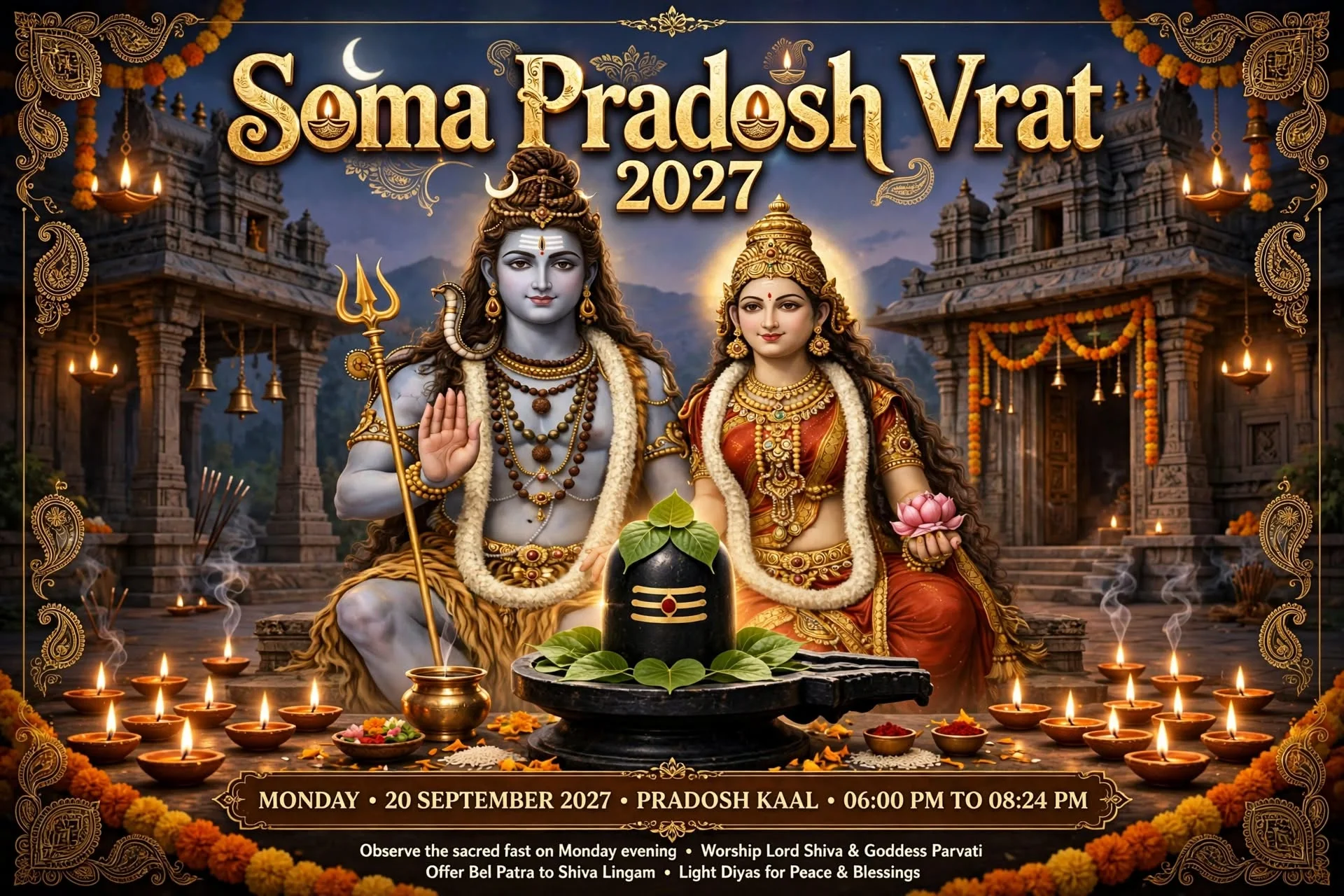
Monday, May 17, 2027
Soma Pradosh Vrat
Soma Pradosh Vrat, also known as Som Pradosh Vrat or Soma Trayodashi, is a Hindu fasting and worship observance dedicated primarily to Lord Shiva. It is observed when Trayodashi, the thirteenth lunar day of either Shukla Paksha or Krishna Paksha, coincides with Monday. Monday is traditionally associated with Lord Shiva, which gives this Pradosh observance its name.
View Festival Guide
Tuesday, May 18, 2027
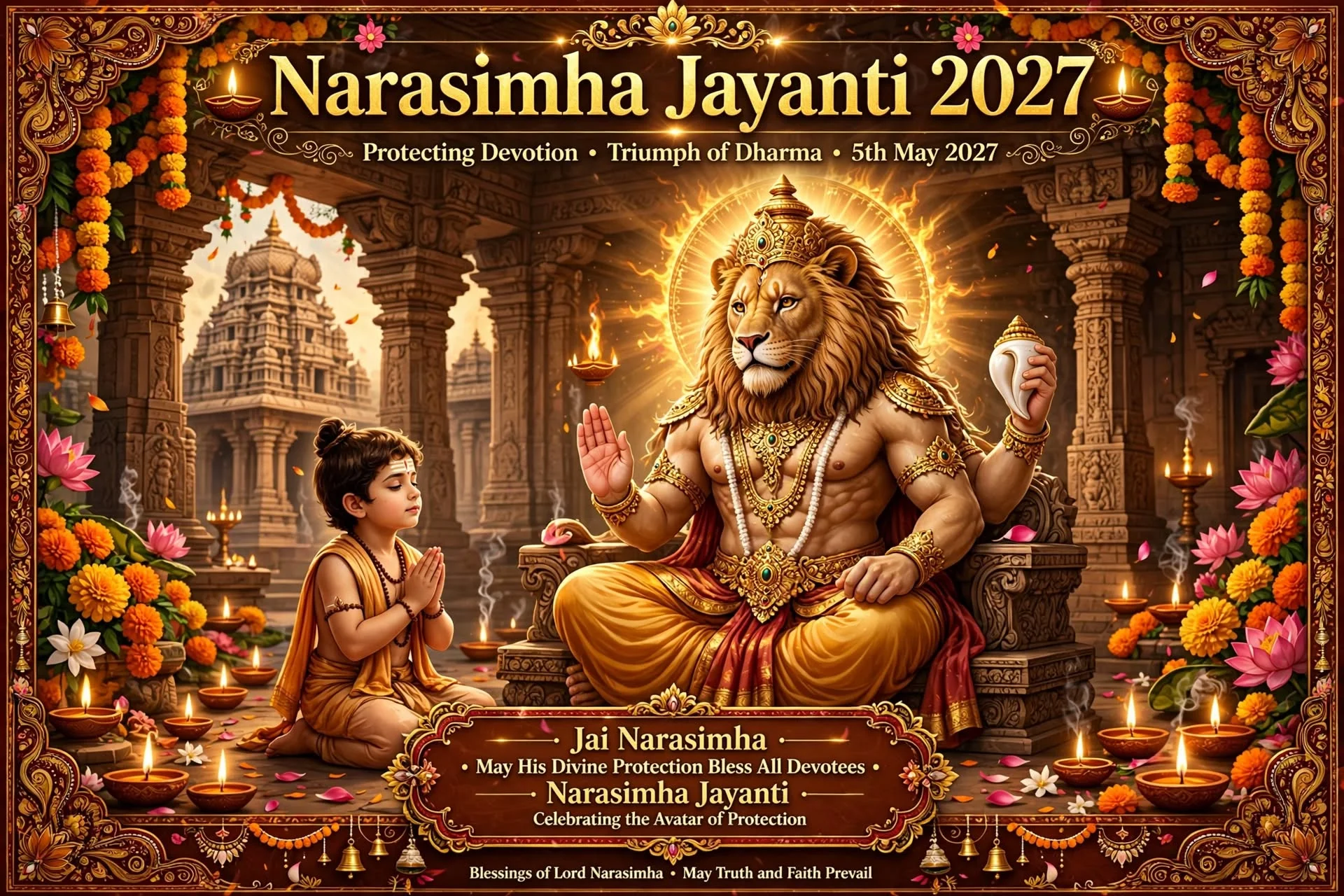
Narasimha Jayanti
Narasimha Jayanti marks the ferocious yet intensely protective divine manifestation of Lord Narasimha—the fourth incarnation (Avatar) of Lord Vishnu—who descended in an extraordinary half-man, half-lion form to vanquish the despotic demon king Hiranyakashipu and protect His unswerving young devotee Bhakta Prahlada. Celebrated on the Shukla Paksha Chaturdashi (fourteenth lunar day) of the holy month of Vaishakha, this festival represents the triumph of innocent devotion over tyrannical power and the omnipresence of God across creation.
View Festival Guide
Wednesday, May 19, 2027
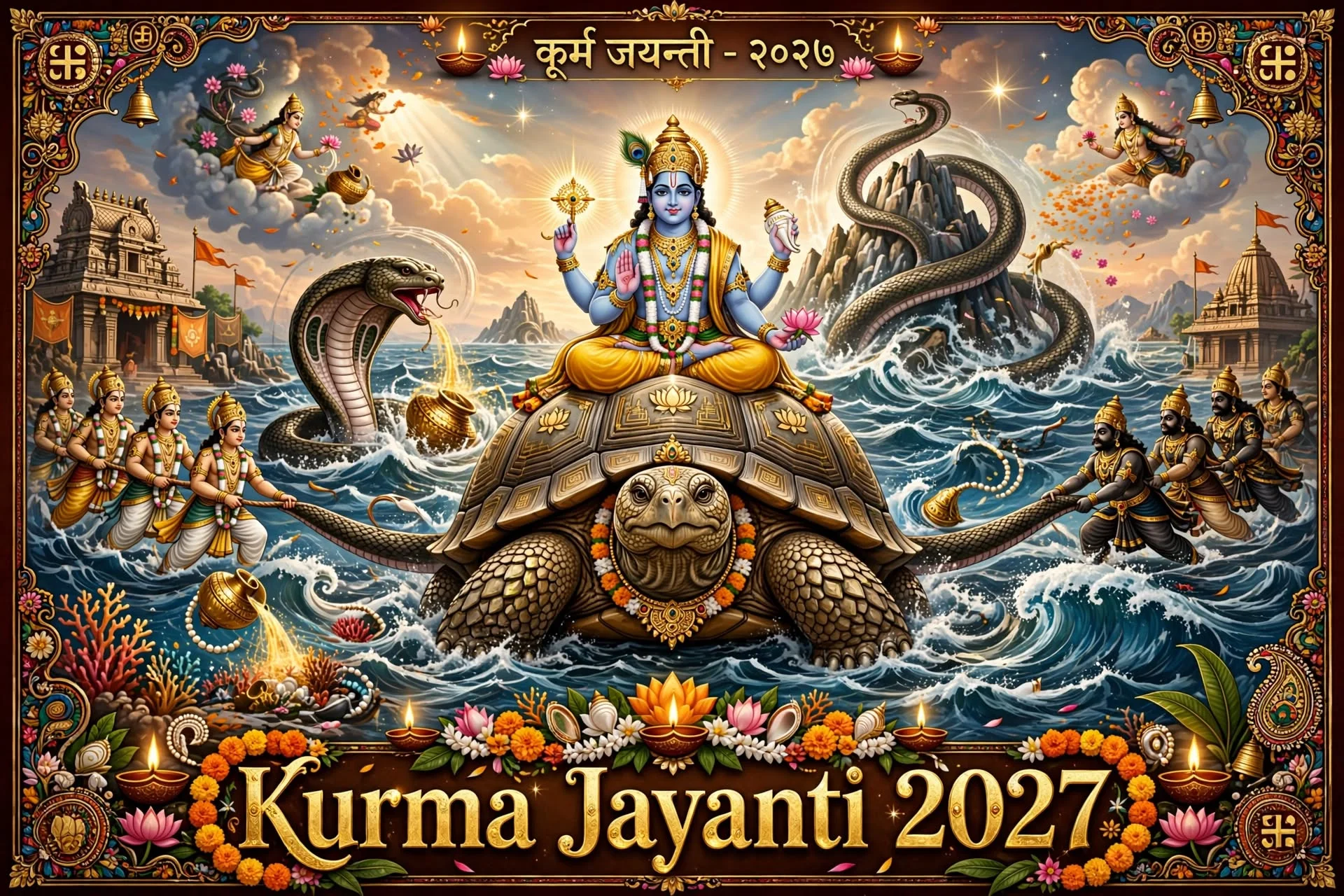
Kurma Jayanti
Kurma Jayanti marks the divine appearance anniversary of Bhagavan Kurma, the second divine incarnation (Avatar) of Lord Vishnu, manifesting in the form of a gigantic tortoise during the Satya Yuga on the auspicious tithi of Vaishakha Shukla Purnima (the full moon day of Vaishakha). Manifesting during the monumental cosmic churning of the celestial ocean (Samudra Manthan), Lord Kurma provided His massive, unyielding shell as the bedrock pivot to support the sinking Mount Mandara, saving the cosmic endeavor and enabling the extraction of the nectar of immortality (Amrita) and Goddess Mahalakshmi.
View Festival Guide
Thursday, May 20, 2027
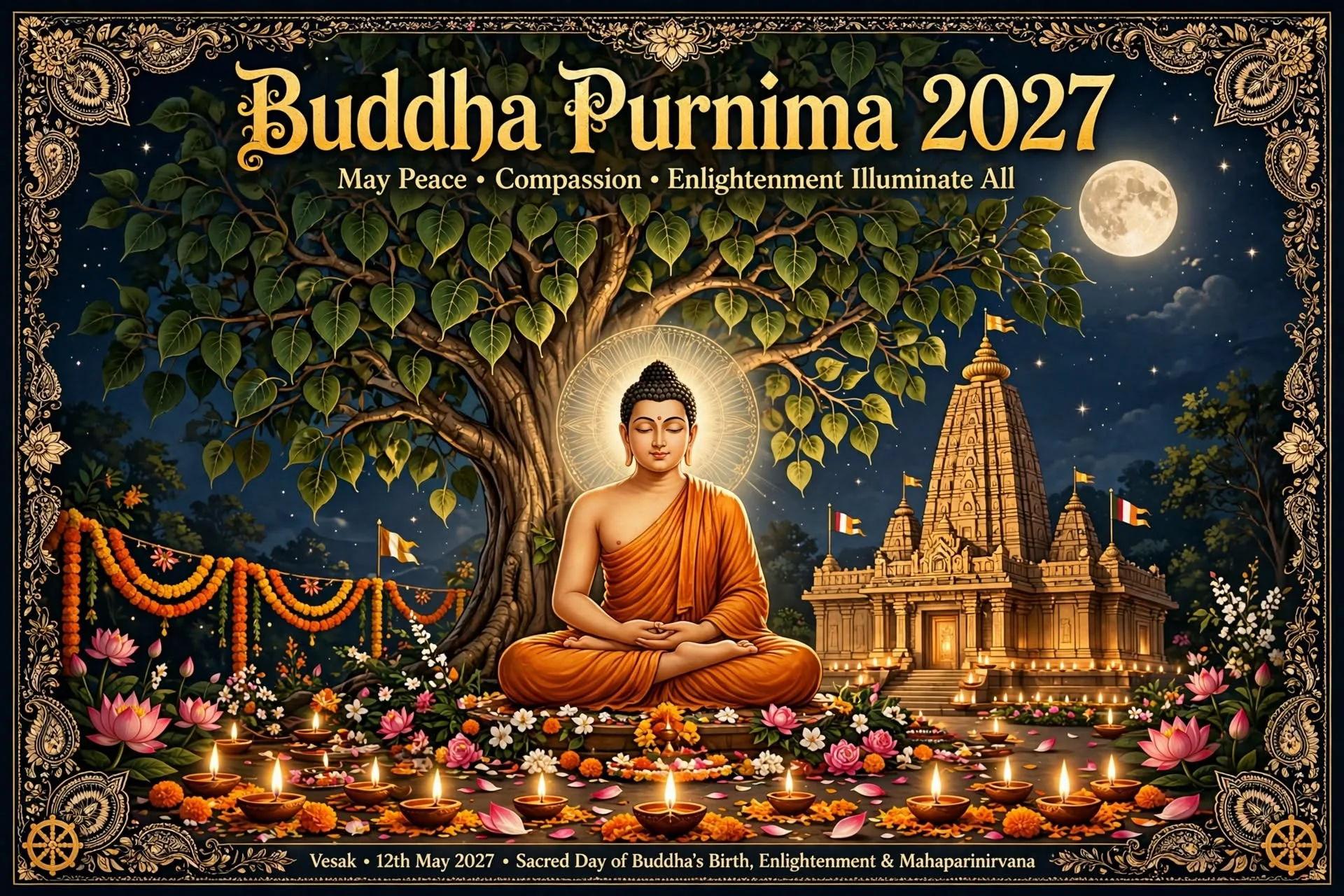
Buddha Purnima
Buddha Purnima, internationally celebrated as Buddha Jayanti or Vesak, is one of the most sublime and universally revered spiritual festivals, falling on the sacred full moon day (Purnima) of the holy month of Vaishakha. This momentous tithi commemorates the thrice-blessed milestone (Thrice-Holy Vesak) in the life of Gautama Buddha: his miraculous birth as Prince Siddhartha in Lumbini, his supreme enlightenment (Bodhi) beneath the Bodhi tree in Bodh Gaya, and his ultimate transition into final liberation (Mahaparinirvana) in Kushinagar.
View Festival Guide
Thursday, May 20, 2027
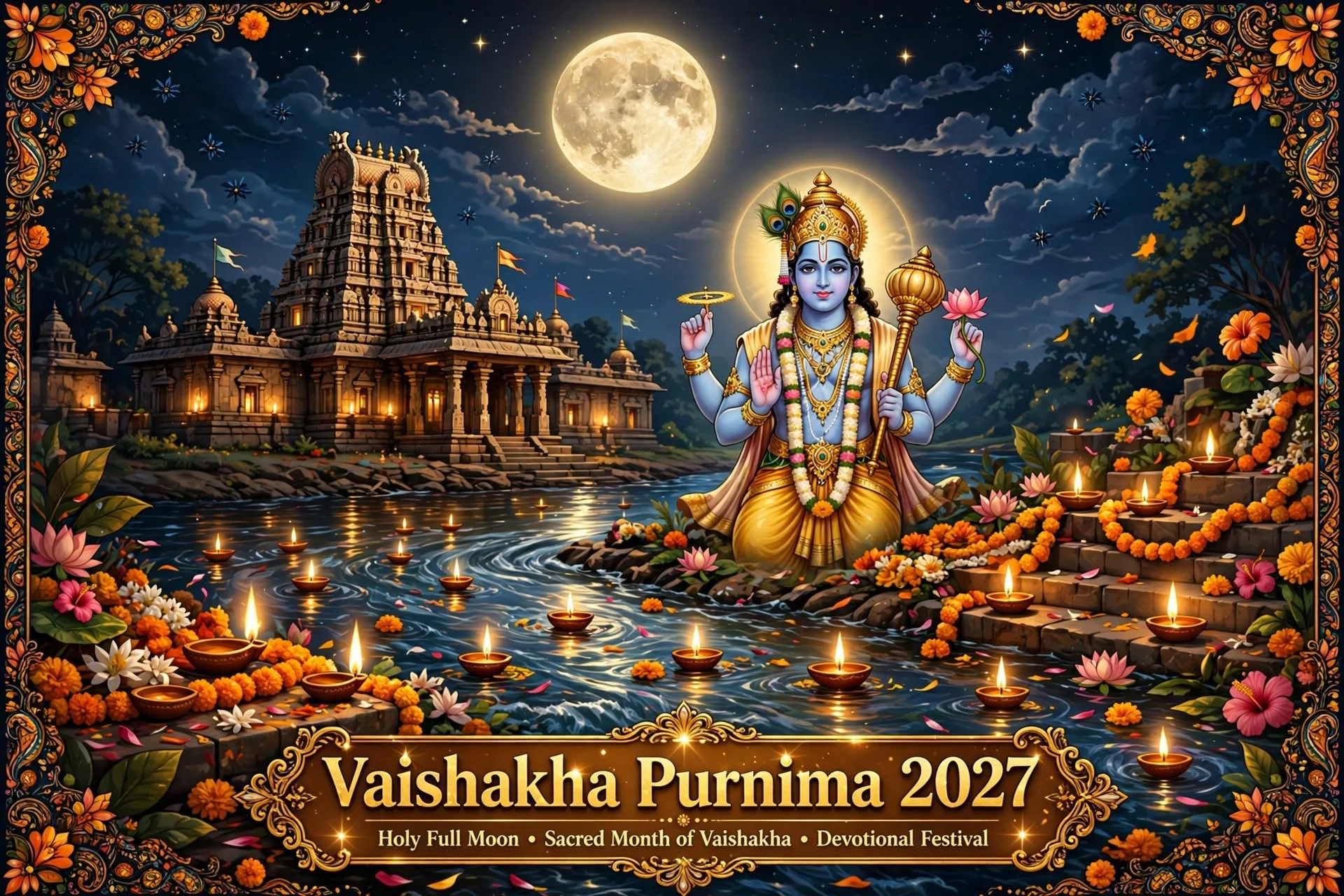
Vaishakha Purnima
Vaishakha Purnima is the sacred full-moon day occurring on the Purnima Tithi of Shukla Paksha in the Hindu lunar month of Vaishakha. It is one of the spiritually significant Purnima observances in the Hindu calendar and is associated with sacred bathing, charity, worship of Lord Vishnu, remembrance of ancestors, and spiritual discipline. The word Purnima refers to the full-moon phase, symbolizing completeness, illumination, and the culmination of the lunar fortnight. Vaishakha is traditionally regarded as a particularly meritorious month for religious observances, making its concluding full moon an important occasion for devotees.
View Festival Guide

Thursday, May 20, 2027
Anvadhan
Anvadhan (अन्वाधान) is an ancient, highly revered Vedic ritual and spiritual observance in Sanatana Dharma performed on the day immediately preceding the New Moon (Amavasya) or Full Moon (Purnima). Rooted in the pristine traditions of the Shrauta and Grihya Sutras, Anvadhan literally translates to 'the solemn placing and replenishment of sacred fuel wood into the consecrated Vedic fires'. In traditional Vedic ritualism, householders (Grihasthas) and priests who maintain the sacred Agnihotra fires perform Anvadhan to prepare the sacrificial altars for the grand Darsha Yajna (New Moon sacrifice) or Paurnamasa Yajna (Full Moon sacrifice) scheduled for the following day.
View Festival Guide

Friday, May 21, 2027
Ishti
Ishti is a foundational Vedic ritual observance appearing prominently in Hindu Panchangs on the Pratipada tithi (the first lunar day) following either Amavasya (new moon) or Purnima (full moon), marking the prescribed performance day for the fortnightly Vedic Darsha-Purnamasa sacrifices.
View Festival Guide
Friday, May 21, 2027
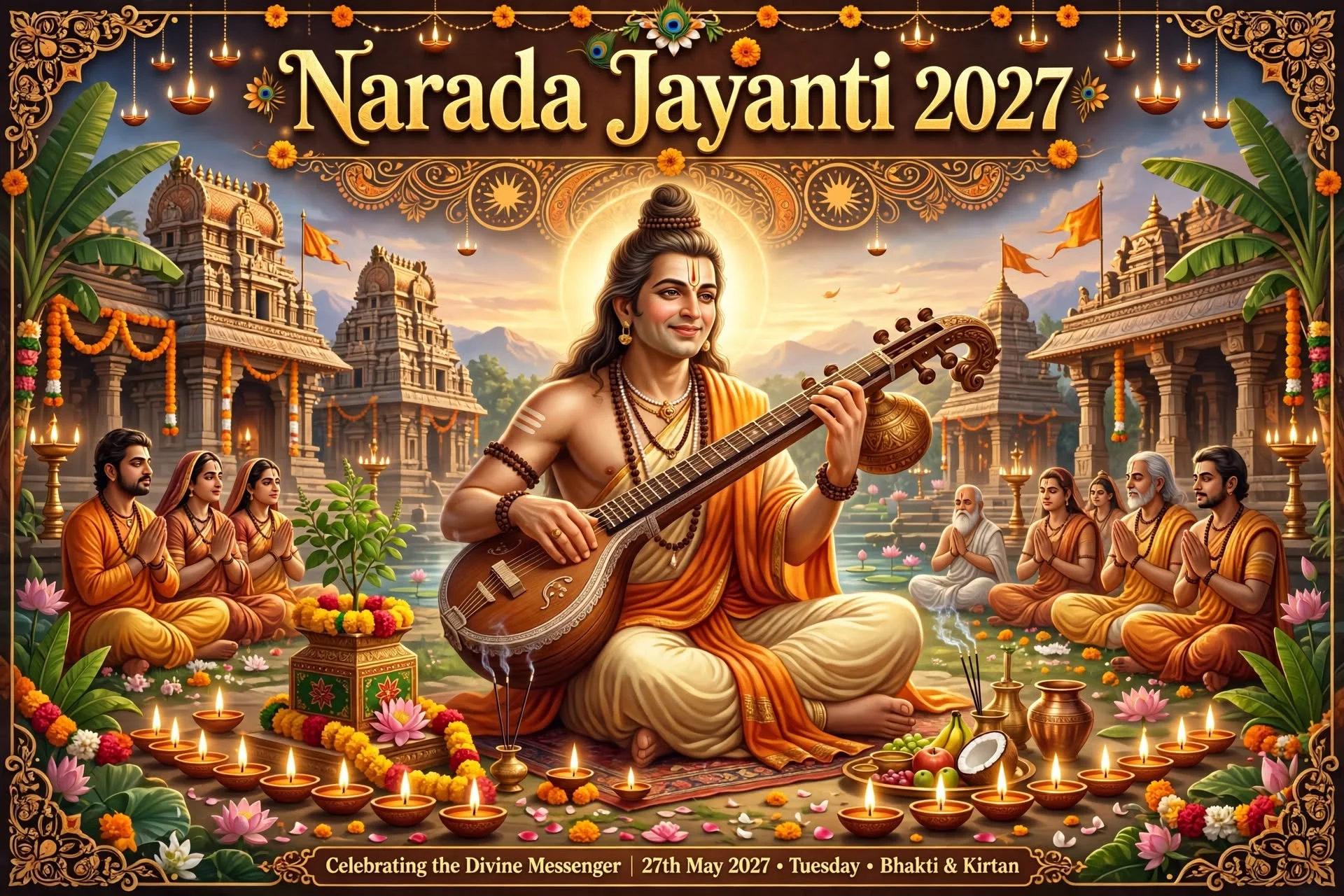
Narada Jayanti
Narada Jayanti marks the appearance anniversary of Devarshi Narada, the supreme celestial sage, divine messenger of the cosmos, master of the Veena, and eternal pioneer of Harinama Sankirtana. Celebrated on the Pratipada tithi (first lunar day) of the Krishna Paksha directly following Vaishakha Purnima (in the month of Jyeshtha in the Purnimanta system, or Vaishakha Krishna Pratipada), this festival commemorates the appearance of the great Manasaputra (mind-born son) of Lord Brahma who traverses the three cosmic worlds unobstructed, singing the praises of Lord Narayana upon his celestial lute, the Mahati Veena.
View Festival Guide