




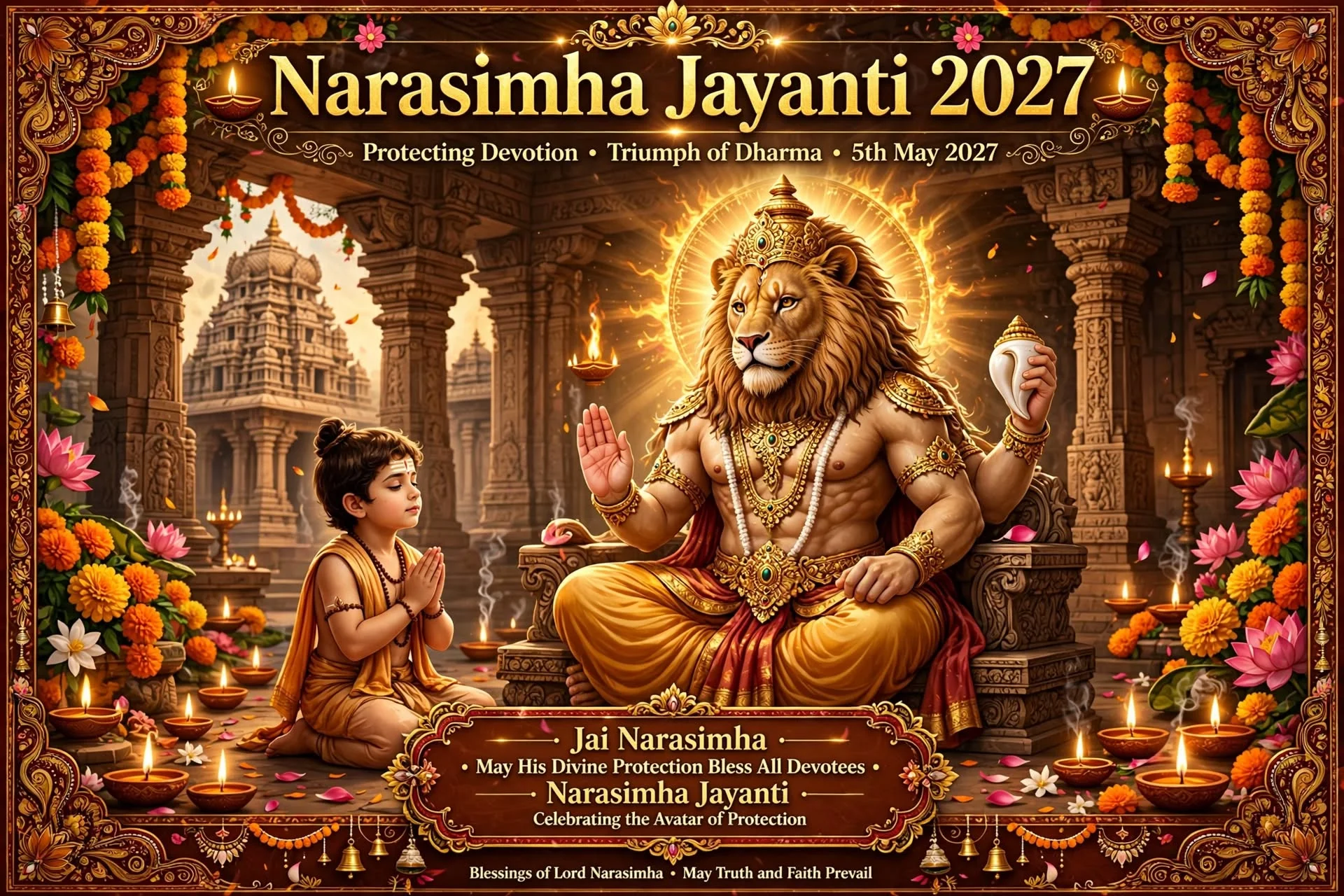
Narasimha Jayanti marks the ferocious yet intensely protective divine manifestation of Lord Narasimha—the fourth incarnation (Avatar) of Lord Vishnu—who descended in an extraordinary half-man, half-lion form to vanquish the despotic demon king Hiranyakashipu and protect His unswerving young devotee Bhakta Prahlada. Celebrated on the Shukla Paksha Chaturdashi (fourteenth lunar day) of the holy month of Vaishakha, this festival represents the triumph of innocent devotion over tyrannical power and the omnipresence of God across creation.
Narasimha Jayanti 2027: Date, Puja Timings, Rituals & Stories
Narasimha Jayanti Timings & Panchang
Important festival dates and auspicious timings
Usha Arghya (Sunrise)
05:29 am
Sandhya Arghya (Sunset)
07:07 pm
Start Date
Wednesday, 19 May 2027
Puja Muhurat
04:04 pm – 04:03 pm
Narasimha Jayanti
According to the Srimad Bhagavatam, Lord Narasimha manifested precisely at the twilight hour (Sayankala / Sandhya) from a shattered stone pillar in the demon's palace, demonstrating that divine grace knows no boundaries of space, form, or time. Hiranyakashipu had obtained an intricate boon from Lord Brahma making him nearly invincible—he could not be killed by man or beast, inside or outside, during day or night, on the ground or in the sky, or by any weapon. Lord Vishnu respected the boon by incarnating as Narasimha (neither human nor animal) and slaying him at dusk, upon the palace threshold (neither inside nor outside), placing him on His lap (neither earth nor sky), and tearing him with His claws (no manufactured weapon).
Devotees observe a strict daytime fast extending until dusk, performing elaborate abhishekam with panchamrita, offering cooling drinks like panakam to soothe the Lord's fierce anger, and reciting the Narasimha Kavacha Stotram for supreme protection against evil, inner fear, and spiritual obstacles.
Why is Narasimha Jayanti Celebrated?
Narasimha Jayanti is celebrated to honor the omnipresent, protective reality of God and to celebrate the vindication of sincere, unwavering faith over tyrannical arrogance. Prahlada's courageous proclamation that the Lord resides everywhere—even within a stone pillar—was proven true when the Lord burst forth to shield His child devotee.
It is also celebrated to destroy deep-seated internal demons such as ego, anger, hatred, and doubt, invoking the ferocious grace of Narasimha that consumes all darkness and establishes spiritual fearlessnes (Abhaya).
- Commemorates the descent of the fourth Vishnu avatar, the half-man half-lion Lord Narasimha.
- Vindicates the pure, steadfast devotion of child Prahlada over totalitarian oppression.
- Destroys demonic arrogance, fear, negative energetic influences, and internal weaknesses.
- Bestows divine fearlessness, spiritual protection, and ultimate liberation.
The Pillar of Faith and the Vanquishing of Hiranyakashipu
Prahlada's Devotion and Hiranyakashipu's Torment
As chronicled in the Seventh Canto of the Srimad Bhagavatam and the Vishnu Purana, King Hiranyakashipu ruled the universe with ruthless tyranny, banning the worship of Vishnu and declaring himself God. However, his young son Prahlada, blessed by Sage Narada while still in his mother's womb, became an unwavering devotee of Lord Narayana.
Infuriated by his son's refusal to renounce Vishnu, Hiranyakashipu subjected the child to horrific ordeals: throwing him into pits of venomous serpents, trampling him beneath maddened war elephants, hurling him from towering cliffs, and burning him in fire with his demon aunt Holika. Through every ordeal, Prahlada remained completely unharmed, his heart absorbed in unbroken remembrance of the Lord.
The Bursting Pillar and Divine Twilight Justice
Driven to violent fury, Hiranyakashipu dragged Prahlada into the royal assembly hall, demanding: "Where is this Lord of yours? Is He in this pillar?" Prahlada replied with calm certainty: "He is everywhere; He is in you, in me, and in this pillar." Roaring in derision, the demon struck the pillar with his heavy mace.
With a deafening cosmic roar that reverberated across all realms, the stone pillar shattered, and Lord Narasimha sprang forth with eyes blazing like molten gold, sharp claws, matted golden mane, and terrifying jaws. Seizing the demon at the twilight hour, He carried him to the palace threshold, laid him across His lap, and ripped open his chest with His claws, fulfilling every condition of Brahma's boon while restoring cosmic peace.
Source: Srimad Bhagavata Purana, Skandha 7 & Narasimha Purana
Omnipresence, the Twilight Balance, and Divine Protection
The Lord Residing in All Matter
Lord Narasimha emerging from a stone pillar establishes the ultimate theological truth of Sanatana Dharma: God is not an abstract distant entity, but an immanent reality permeating every atom of creation ("Sarvam Vishnumayam Jagat"). To the arrogant demon, the pillar was cold dead stone; to the faithful devotee Prahlada, it was vibrating with the living heartbeat of God.
Fierce to Ignorance, Gentle to Love
While all the devas, including Brahma and Shiva, trembled before Narasimha's blazing wrath and dared not approach, the child Prahlada walked forward without fear and bowed down. Instantly, the terrifying lion roared softly, licked the tears from the child's face, and placed His lotus hand upon his head. God is fierce destruction to ego, yet infinite tenderness to pure love.
Observance Protocol, Twilight Puja, and Cooling Offerings
Daytime Fasting and Spiritual Focus
Devotees observe a strict fast throughout the day, drinking only water or observing nirjala fast. The daylight hours are spent reciting the Narasimha Kavacha Stotram, reading Prahlada Charita from the Bhagavatam, and meditating upon divine protection.
Twilight Puja (Sayankala Pujan)
The central worship takes place specifically during the twilight hour (Sandhyakala) when the Lord manifested. Devotees perform extensive abhishekam of the Lakshmi-Narasimha murti with panchamrita, tender coconut water, and sandalwood, offering cooling drinks like Panakam (jaggery-cardamom beverage) to soothe the Lord's fierce heat.
Narasimha Jayanti Puja Vidhi (Step by Step)
- 1
Pratah Snana
Take a dawn bath using water infused with sesame seeds and gangajal, wearing fresh yellow or silk clothing.
- 2
Sankalpa
Hold water, akshata, and flowers in hand, making a formal vow to observe Narasimha Jayanti fast until twilight with single-minded devotion.
- 3
Altar Preparation
Cleanse the wooden altar, drape with red and yellow cloth, placing images or murtis of Lord Narasimha with Goddess Lakshmi and Bhakta Prahlada.
- 4
Deepa Sthapana and Dhoop
Light two pure cow ghee lamps representing the Sun and Moon eyes of Lord Narasimha, and burn fragrant sandalwood incense.
- 5
Lord Narasimha Avahana
Invoke the presence of Sri Lakshmi Narasimha at the twilight hour with folded hands, reciting the powerful Narasimha Dhyanam.
Narasimha Jayanti Puja Samagri List
Abhisheka and Cooling Offerings
Cooling substances essential for pacifying the ferocious energy of Lord Narasimha.
- Pure cow milk, curd, honey, ghee, and sugar
- Tender coconut water and rose water
- Malayagiri white and red sandalwood paste
- Saffron (Kesar) and pure camphor
- Copper Abhisheka vessel and Gangajal
Floral and Altar Articles
Vibrant flowers and traditional altar decorations.
- Idol of Lakshmi Narasimha and Prahlada
- Fresh red hibiscus and yellow marigolds
- Fresh Tulasi leaves and manjaris
- Red and yellow silk cloths
- Brass or silver ghee deepaks
Traditional Naivedya and Beverages
Customary cooling drinks and sattvic foods for dusk offering.
- Panakam (sweet jaggery water with cardamom and pepper)
- Majjiga / Chhachh (spiced cooling buttermilk)
- Soaked green gram (Moong dal / Kosambari)
Mantras and Prayers for Narasimha Jayanti
Narasimha Jayanti Vrat Rules and Fasting Guidelines
Daytime Fasting Guidelines
Fasting on Narasimha Jayanti begins at sunrise and continues unbroken until dusk (Sayankala).
- Observe absolute purity in thought, word, and deed throughout the day
- Abstain from all cereals, grains, beans, and tamasic substances
- Those with health challenges may consume water, milk, or fruit juice
Twilight Worship and Parana
The fast is concluded after the twilight puja and offering of Panakam.
- Perform the full abhishekam and aarti exactly during the sunset window
- Break the fast by drinking the sanctified Panakam and partaking of fruits or phalahar
- A light sattvic meal can be taken after nightfall following charitable distribution
Dos and Don'ts of Narasimha Jayanti
Good Practices (Do's)
- Observe a strict daytime fast and perform puja precisely during the twilight hour.
- Offer cooling Panakam (jaggery water), sandalwood paste, and Tulasi leaves.
- Chant the Narasimha Maha-Mantra and read the story of Bhakta Prahlada.
- Protect and show kindness to children, innocents, and animals.
- Donate cooling drinks, food, and clothes to the poor and hardworking laborers.
Narasimha Jayanti Across Regions
| Region | Local Name |
|---|---|
| Southern India (Andhra Pradesh, Telangana, Karnataka, Tamil Nadu) | Narasimha Jayanthi |
| Northern India (Varanasi, Mathura, Rajasthan) | Narasimha Jayanti / Narsingh Jayanti |
| Eastern India (Odisha & West Bengal) | Nrusingha Jayanti |
Narasimha Jayanti FAQs
Why did Lord Narasimha manifest specifically at twilight (Sandhyakala)?
Hiranyakashipu had received a boon that he could not be killed during either the day or the night. To honor this boon while executing justice, the Lord manifested during the twilight threshold when day and night merge.
What is Panakam and why is it the primary offering on Narasimha Jayanti?
Panakam is a traditional beverage prepared with water, jaggery, black pepper, and crushed cardamom. Because Lord Narasimha embodies fierce, fiery energy, sweet cooling drinks are offered to pacify His heat.
What is the significance of the half-man, half-lion form?
The demon's boon prevented him from being killed by either human or beast. The Lord assumed the divine synthesis of human intellect and leonine strength to honor the letter and spirit of Brahma's boon.
Upcoming Festivals
View All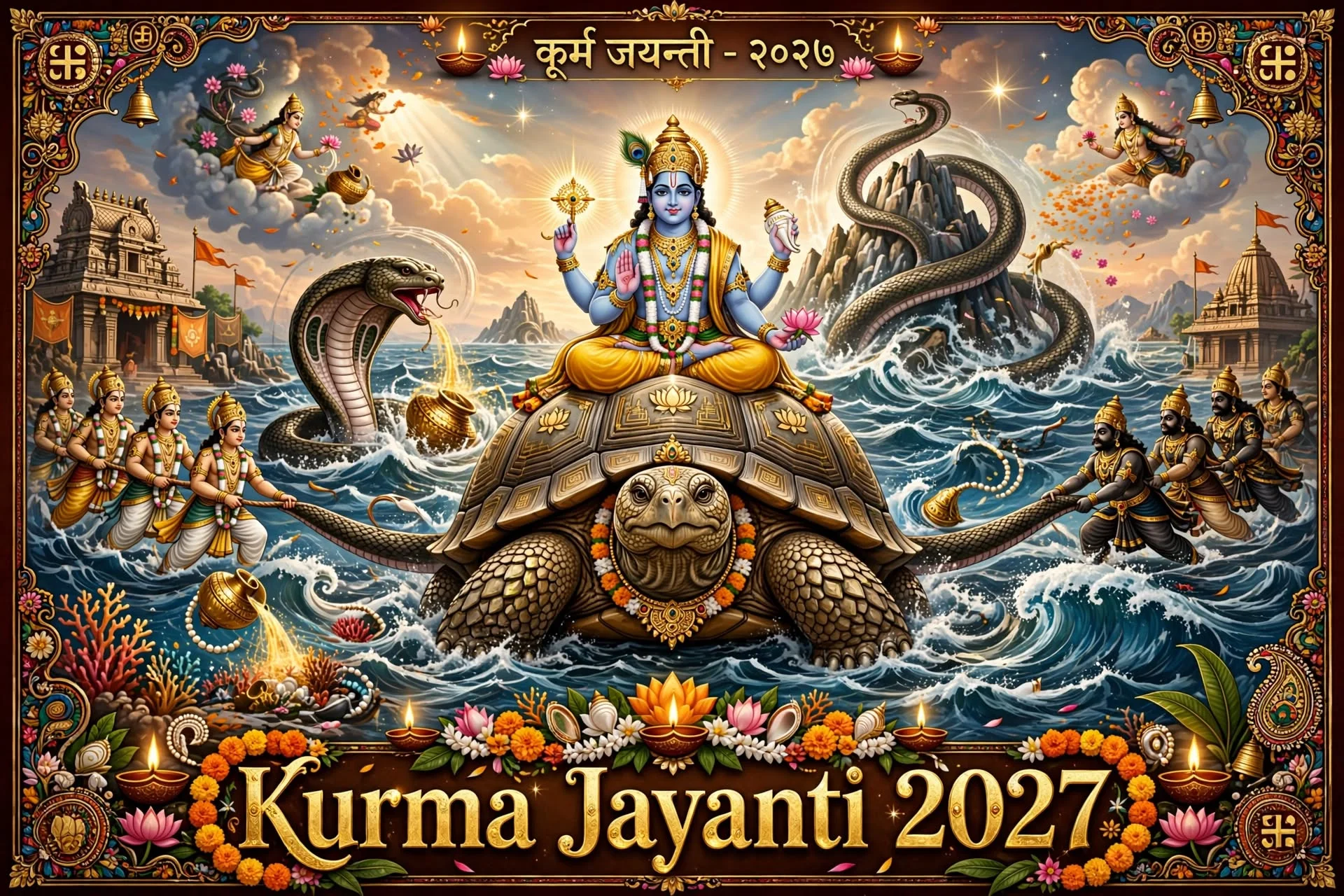
Wednesday, May 19, 2027
Kurma Jayanti
Kurma Jayanti marks the divine appearance anniversary of Bhagavan Kurma, the second divine incarnation (Avatar) of Lord Vishnu, manifesting in the form of a gigantic tortoise during the Satya Yuga on the auspicious tithi of Vaishakha Shukla Purnima (the full moon day of Vaishakha). Manifesting during the monumental cosmic churning of the celestial ocean (Samudra Manthan), Lord Kurma provided His massive, unyielding shell as the bedrock pivot to support the sinking Mount Mandara, saving the cosmic endeavor and enabling the extraction of the nectar of immortality (Amrita) and Goddess Mahalakshmi.
View Festival Guide
Thursday, May 20, 2027
Vaishakha Purnima
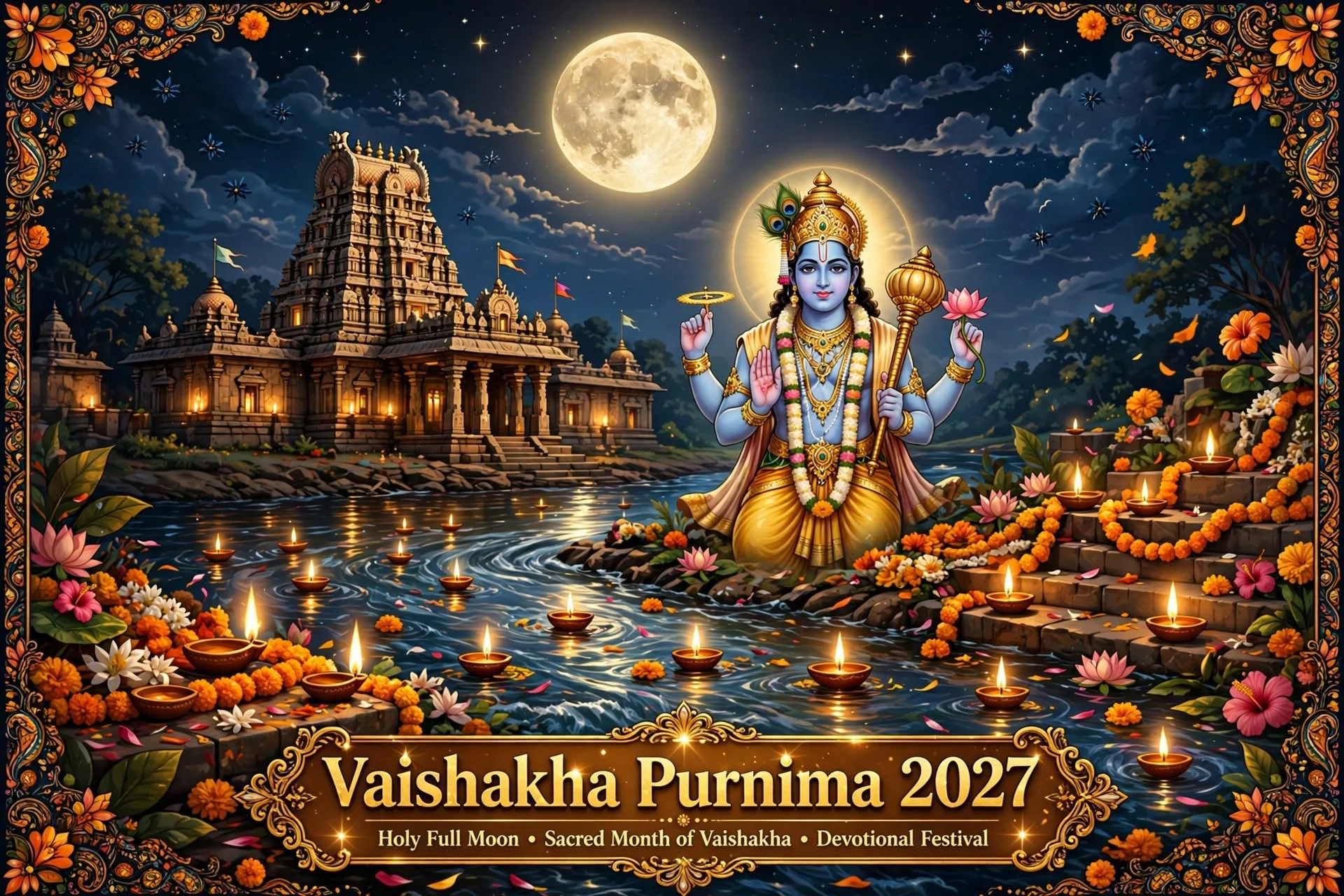
Vaishakha Purnima is the sacred full-moon day occurring on the Purnima Tithi of Shukla Paksha in the Hindu lunar month of Vaishakha. It is one of the spiritually significant Purnima observances in the Hindu calendar and is associated with sacred bathing, charity, worship of Lord Vishnu, remembrance of ancestors, and spiritual discipline. The word Purnima refers to the full-moon phase, symbolizing completeness, illumination, and the culmination of the lunar fortnight. Vaishakha is traditionally regarded as a particularly meritorious month for religious observances, making its concluding full moon an important occasion for devotees.
View Festival Guide

Thursday, May 20, 2027
Anvadhan
Anvadhan (अन्वाधान) is an ancient, highly revered Vedic ritual and spiritual observance in Sanatana Dharma performed on the day immediately preceding the New Moon (Amavasya) or Full Moon (Purnima). Rooted in the pristine traditions of the Shrauta and Grihya Sutras, Anvadhan literally translates to 'the solemn placing and replenishment of sacred fuel wood into the consecrated Vedic fires'. In traditional Vedic ritualism, householders (Grihasthas) and priests who maintain the sacred Agnihotra fires perform Anvadhan to prepare the sacrificial altars for the grand Darsha Yajna (New Moon sacrifice) or Paurnamasa Yajna (Full Moon sacrifice) scheduled for the following day.
View Festival Guide
Thursday, May 20, 2027
Buddha Purnima
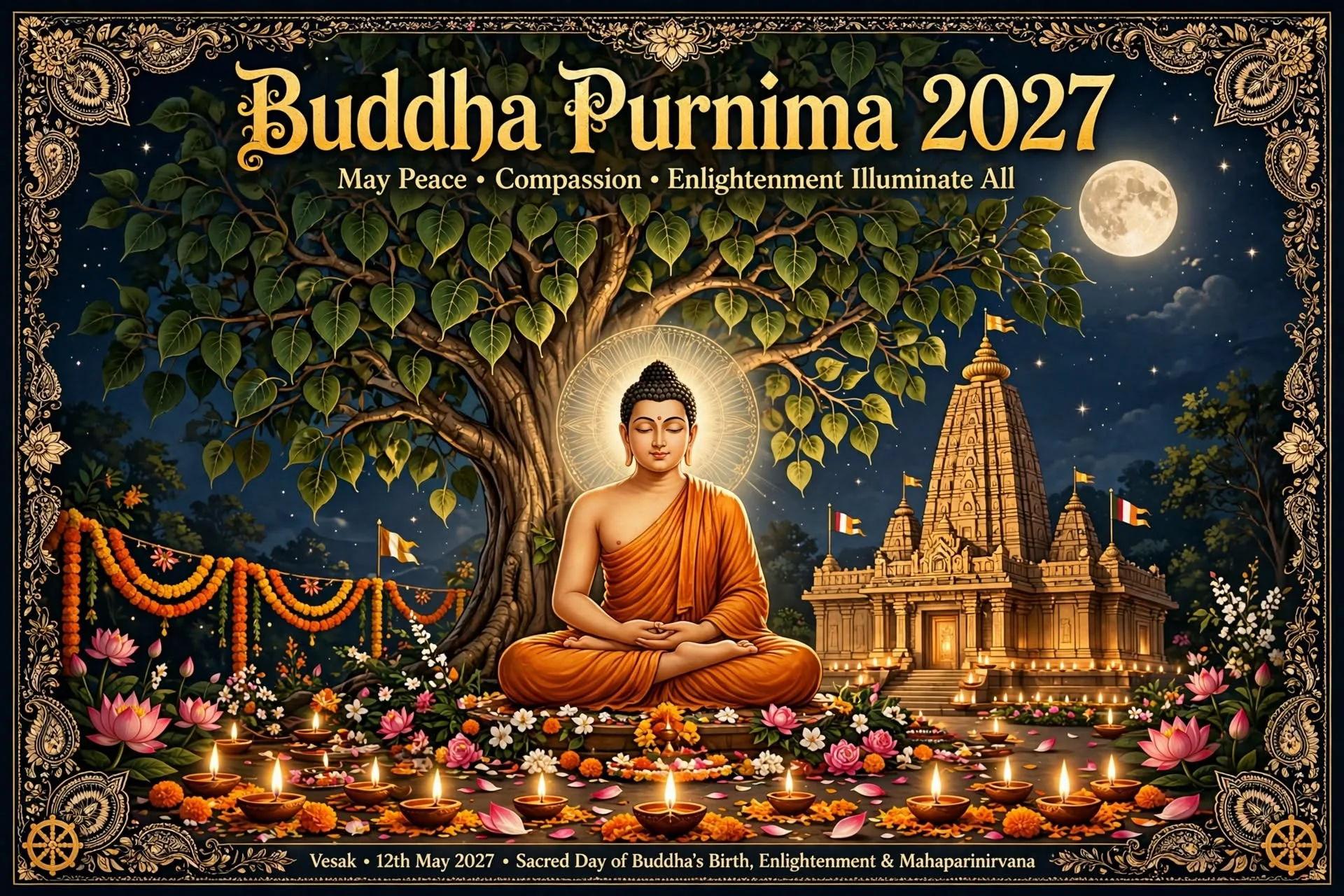
Buddha Purnima, internationally celebrated as Buddha Jayanti or Vesak, is one of the most sublime and universally revered spiritual festivals, falling on the sacred full moon day (Purnima) of the holy month of Vaishakha. This momentous tithi commemorates the thrice-blessed milestone (Thrice-Holy Vesak) in the life of Gautama Buddha: his miraculous birth as Prince Siddhartha in Lumbini, his supreme enlightenment (Bodhi) beneath the Bodhi tree in Bodh Gaya, and his ultimate transition into final liberation (Mahaparinirvana) in Kushinagar.
View Festival Guide
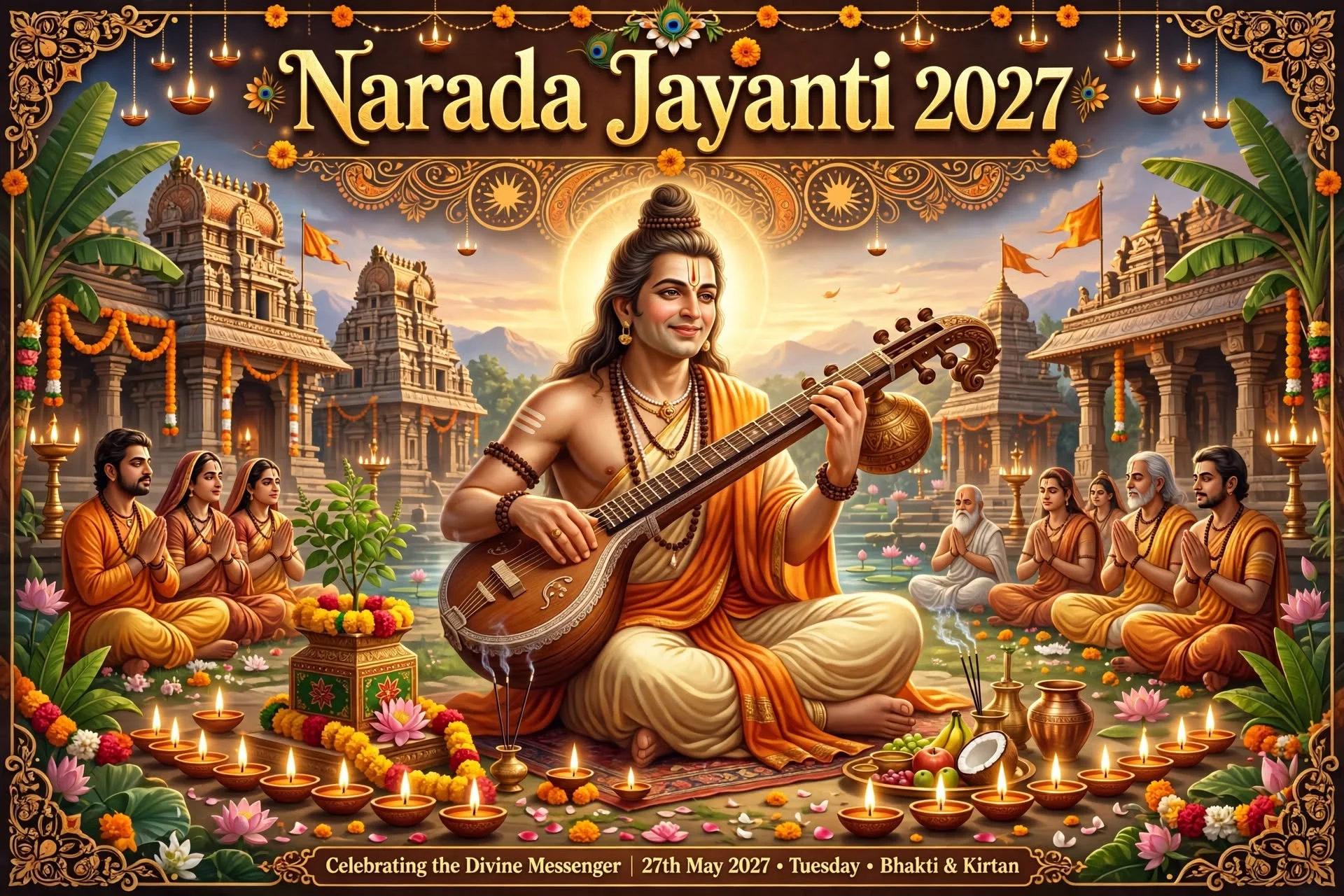
Friday, May 21, 2027
Narada Jayanti
Narada Jayanti marks the appearance anniversary of Devarshi Narada, the supreme celestial sage, divine messenger of the cosmos, master of the Veena, and eternal pioneer of Harinama Sankirtana. Celebrated on the Pratipada tithi (first lunar day) of the Krishna Paksha directly following Vaishakha Purnima (in the month of Jyeshtha in the Purnimanta system, or Vaishakha Krishna Pratipada), this festival commemorates the appearance of the great Manasaputra (mind-born son) of Lord Brahma who traverses the three cosmic worlds unobstructed, singing the praises of Lord Narayana upon his celestial lute, the Mahati Veena.
View Festival Guide

Friday, May 21, 2027
Ishti
Ishti is a foundational Vedic ritual observance appearing prominently in Hindu Panchangs on the Pratipada tithi (the first lunar day) following either Amavasya (new moon) or Purnima (full moon), marking the prescribed performance day for the fortnightly Vedic Darsha-Purnamasa sacrifices.
View Festival Guide
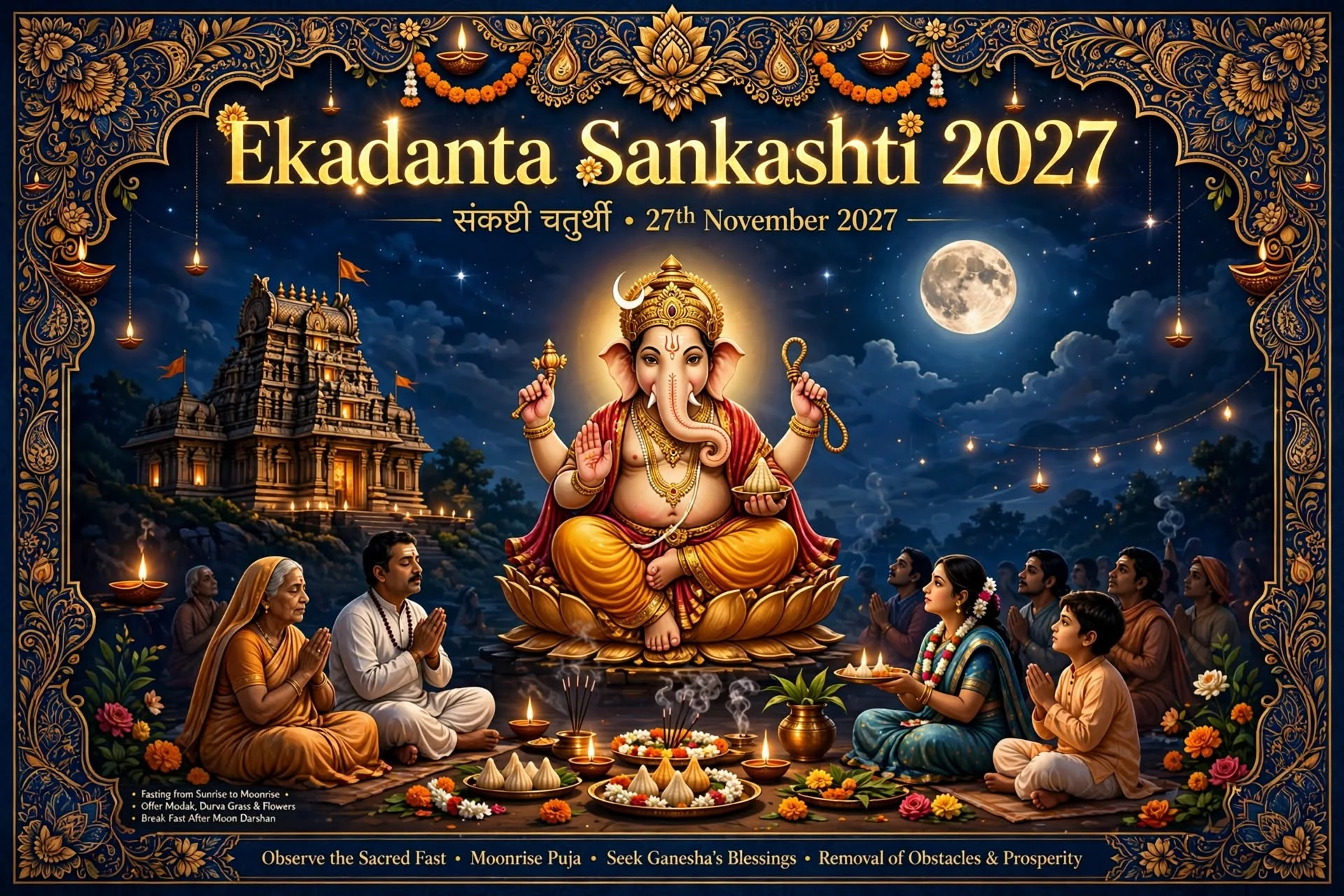
Sunday, May 23, 2027
Ekadanta Sankashti
Ekadanta Sankashti Chaturthi, also celebrated as Ekadanta Sankashti Vrat, is a powerful monthly observance dedicated to Lord Ganesha, occurring during the Krishna Paksha (waning fortnight) on the fourth lunar day (Chaturthi tithi) of the Hindu lunar month of Vaishakha (or Jyeshtha in the Purnimanta system). The term "Sankashti" translates to "deliverance from distress or crisis" (Sankat-Nivaran), signifying that this sacred vrata removes formidable obstacles, clears karmic debts, and brings peace and success to the devotee's life.
View Festival Guide
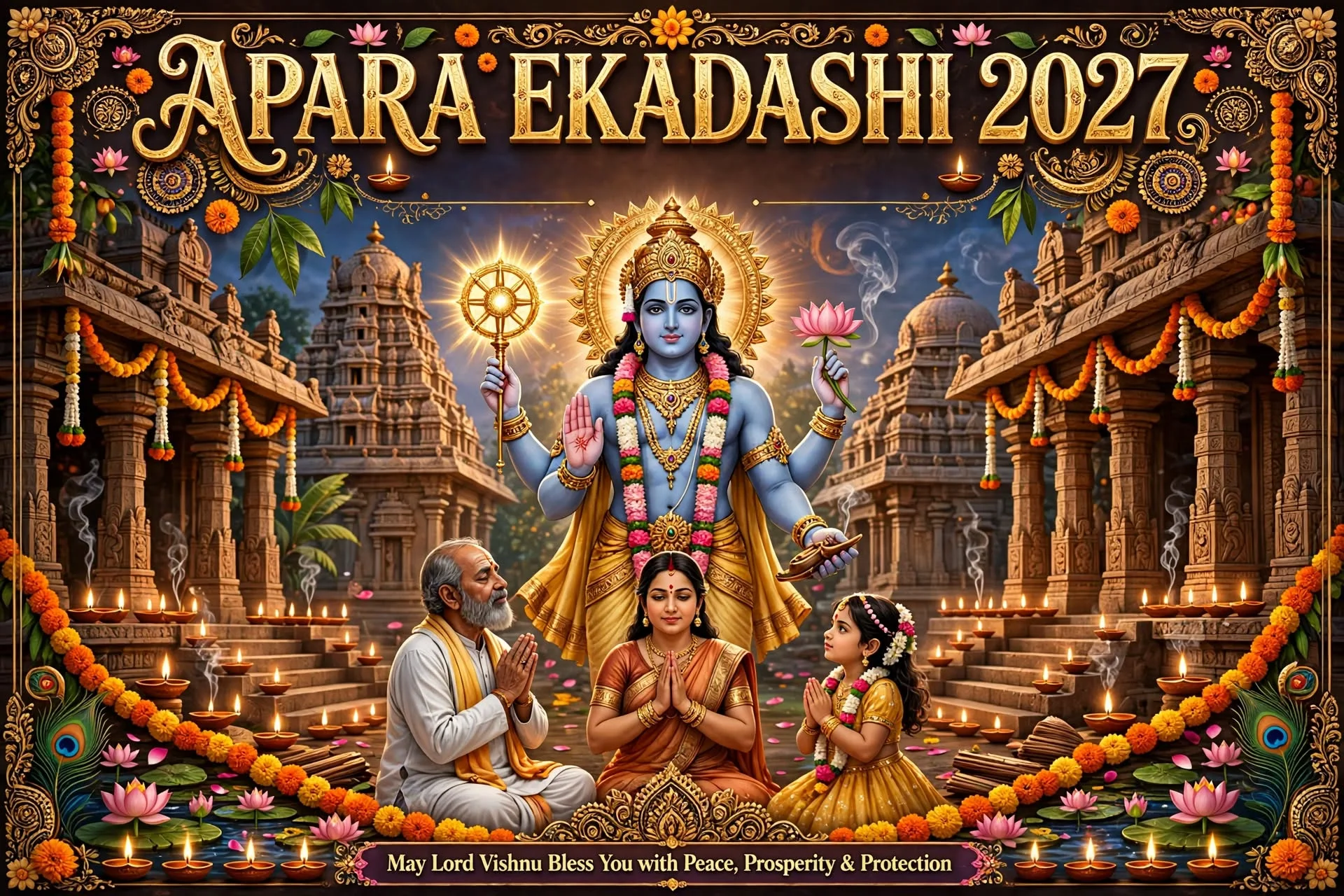
Tuesday, Jun 1, 2027
Apara Ekadashi
Apara Ekadashi, also known as Achala Ekadashi, is a sacred Hindu fasting observance dedicated to Lord Vishnu. It falls on the Ekadashi Tithi, the eleventh lunar day of Krishna Paksha in the month of Jyeshtha according to the Purnimanta calendar. In the Amanta calendar followed in several western and southern Indian regions, the same observance is associated with Vaishakha Krishna Paksha.
View Festival Guide