




Soma Pradosh Vrat, also known as Som Pradosh Vrat or Soma Trayodashi, is a Hindu fasting and worship observance dedicated primarily to Lord Shiva. It is observed when Trayodashi, the thirteenth lunar day of either Shukla Paksha or Krishna Paksha, coincides with Monday. Monday is traditionally associated with Lord Shiva, which gives this Pradosh observance its name.
Soma Pradosh Vrat 2027: Date, Puja Timings, Rituals & Stories
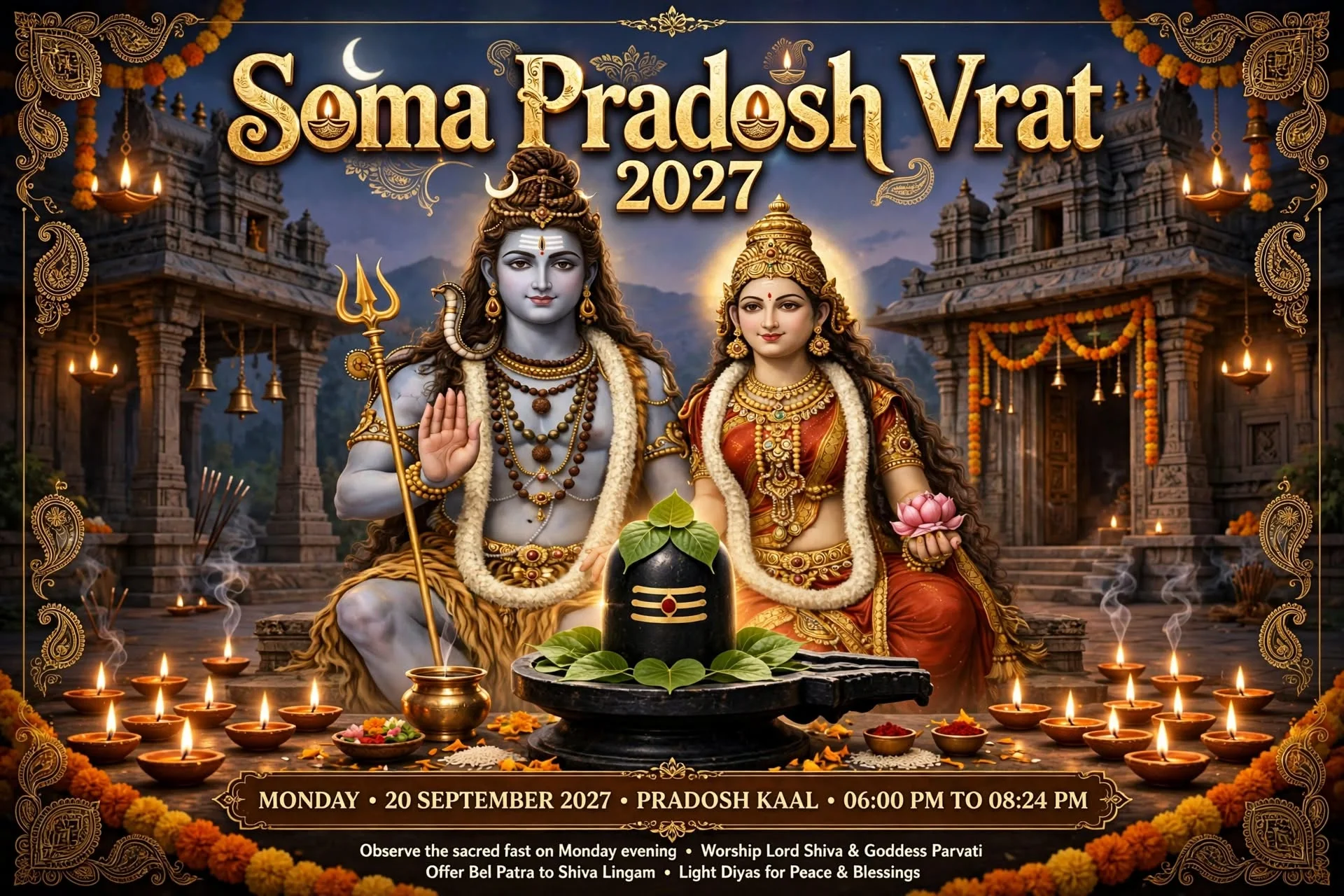
Soma Pradosh Vrat Timings & Panchang
Important festival dates and auspicious timings
Usha Arghya (Sunrise)
07:15 am
Sandhya Arghya (Sunset)
05:37 pm
Start Date
Monday, 4 Jan 2027
Puja Muhurat
04:08 pm – 06:16 pm
Soma Pradosh Vrat
Pradosh refers to the evening twilight period associated with the transition from day to night. In the Pradosha Mahatmya tradition of the Skanda Purana, the evening of Trayodashi is described as an especially significant time for worshipping Mahadeva. Devotees perform Shiva Puja, chant sacred mantras, offer Bilva leaves and listen to the Pradosh Vrat Katha during this period.
Soma is a traditional name associated with the Moon. Monday is called Somavara in Sanskrit and is connected with Soma. Lord Shiva is also known as Chandrashekhara and Someshvara because the crescent Moon is traditionally depicted on His head. These associations contribute to the devotional significance of Soma Pradosh.
The observance generally includes a morning bath, a religious resolution or sankalpa, fasting according to one's capacity, remembrance of Lord Shiva and Goddess Parvati, and evening worship during Pradosh Kaal. Devotees may perform Abhishek with water or other traditional offerings, chant Om Namah Shivaya and read the Soma Pradosh Vrat Katha.
The Soma Pradosh Katha published by Drik Panchang narrates the story of a poor Brahmin widow who raises her son and an orphaned prince from Vidarbha. Through her observance of Pradosh Vrat, the prince eventually regains his father's kingdom with the assistance of a Gandharva king. The story highlights compassion, devotion, faith and the traditional belief in the blessings of Lord Shiva.
Soma Pradosh is not a festival with one fixed Gregorian date. It occurs whenever the relevant Trayodashi observance falls on Monday. The exact observance date and puja period depend on the lunar Tithi and local Panchang calculations.
Why is Soma Pradosh Vrat Celebrated?
Soma Pradosh Vrat is observed to worship Lord Shiva during the sacred Pradosh period when Trayodashi coincides with Monday. Devotees consider this combination particularly meaningful because Monday is traditionally dedicated to Shiva worship. The observance provides an opportunity to practise devotion, self-discipline, prayer and remembrance of the divine.
The Pradosha Mahatmya tradition associated with the Skanda Purana identifies the evening of Trayodashi as Pradosha and emphasizes the worship of Mahadeva during that time. The text describes worship, mantra recitation, sacred stories and praise of Shiva as important devotional activities.
- To worship Lord Shiva during Pradosh Kaal and seek His blessings.
- To observe a traditional Monday fast dedicated to Shiva when Trayodashi coincides with Somavara.
- To cultivate devotion, patience, self-control and spiritual discipline.
- To pray for peace, harmony and well-being within the family.
- To remember the traditional Soma Pradosh Katha and its message of compassion and faith.
- To participate in Shiva worship through Abhishek, Bilva leaf offerings, mantra chanting and prayer.
- To practise charity and offer assistance to people in need according to one's ability.
The religious benefits associated with the vrat belong to Hindu devotional belief. They should be understood as traditional spiritual teachings rather than guaranteed material, medical or astrological outcomes.
History and Traditional Story of Soma Pradosh Vrat
The Soma Pradosh Katha
The Soma Pradosh Vrat Katha is traditionally narrated as a conversation between the sages led by Shaunaka and the sage Suta. After hearing the account of Ravi Pradosha, the sages request Suta to explain the glory of Soma Trayodashi Pradosha. Suta describes the observance and explains that devotees worship Lord Shiva and Goddess Parvati, perform their daily religious duties and chant the sacred name of Shiva.
The narrative introduces a Brahmin widow who lives in a town with her young son. Her husband has passed away, leaving her without financial support. To maintain herself and her child, she goes from house to house seeking alms. She uses whatever she receives to provide for their basic needs.
One day, while returning after collecting alms, the widow notices a young boy in a miserable condition. Moved by compassion, she brings him home and begins raising him along with her own son. The boy is not an ordinary child. He is the prince of Vidarbha, whose father has lost his kingdom after an attack by a neighbouring ruler.
The widow does not turn the prince away because of his circumstances. She gives him shelter and treats him like her own child. The two boys grow up together, sharing their daily lives despite their different backgrounds. Her kindness becomes an important part of the story's moral message.
The Prince Meets Anshumati
One day, while the widow's son and the prince are playing, a Gandharva maiden named Anshumati encounters the prince and becomes interested in him. The widow's son eventually returns home, while the prince remains behind speaking with Anshumati.
The following day, Anshumati brings her parents to meet the young prince. They are impressed by him and become interested in the possibility of a marriage between their daughter and the prince. The prince's difficult circumstances do not prevent them from recognising his character and royal background.
According to the Soma Pradosh Katha presented by Drik Panchang, Lord Shiva later appears in the dream of Anshumati's parents and instructs them to arrange the marriage. Following this divine instruction, they marry Anshumati to the prince.
Spiritual Significance of Soma Pradosh Vrat
Worship of Lord Shiva
The central spiritual purpose of Soma Pradosh Vrat is the worship of Lord Shiva during Pradosh Kaal. Shiva is revered as Mahadeva, the supreme deity in Shaiva traditions, and as the divine presence who represents transformation, detachment, compassion and spiritual knowledge.
The Pradosha Mahatmya of the Skanda Purana identifies the evening of Trayodashi as the Pradosha period and emphasizes the worship of Mahadeva at that time. Devotees therefore regard the evening puja as the central part of the observance.
Importance of Monday
Monday is known as Somavara and is traditionally associated with Lord Shiva. Soma is also a name connected with the Moon. When Trayodashi coincides with Monday, the Pradosh observance is called Soma Pradosh.
The crescent Moon on Shiva's head is an important symbol in Hindu iconography. Shiva is worshipped in forms such as Chandrashekhara and Someshvara. Devotees may reflect on these associations while praying for steadiness of mind, calmness and spiritual clarity. These are devotional interpretations rather than guaranteed effects.
Meaning of Pradosh Kaal
Pradosh refers to the evening period associated with Trayodashi. The Skanda Purana describes this time as an occasion for worshipping Mahadeva, reciting His names, performing japa and listening to sacred accounts.
The text also describes Shiva as dancing at Kailasa during Pradosha while the gods praise Him. This imagery gives the period a special place in Shaiva devotional practice and reminds devotees to approach worship with concentration and reverence.
Compassion and Faith
The Soma Pradosh Katha places compassion at the centre of its narrative. The Brahmin widow provides shelter to a child who is not related to her, even though she herself struggles to maintain her household. Her actions show that kindness and service are meaningful expressions of religious life.
How to Celebrate Soma Pradosh Vrat
Preparation Before the Vrat
Devotees may prepare for Soma Pradosh by cleaning the home and arranging the worship materials in advance. The place of worship should be clean and peaceful. A Shiva Lingam, Shiva-Parvati image or picture of Lord Shiva can be arranged according to the household's tradition.
Devotees may decide in advance whether they will observe a complete fast, a fruit-based fast or a simpler devotional observance. The choice should take personal health, age and family customs into consideration.
Morning Observance
On the day of Soma Pradosh, devotees traditionally wake up, bathe and wear clean clothes. They remember Lord Shiva and Goddess Parvati and take a sankalpa to observe the vrat according to their capacity.
Some devotees perform a short morning Shiva Puja, offer water and flowers, and chant Om Namah Shivaya. Others reserve their principal worship for the evening Pradosh period.
Fasting During the Day
Fasting practices differ between families and regions. Some devotees avoid grains and pulses and consume fruits, milk or permitted vrat foods. Others observe a stricter fast. A waterless fast is not compulsory for every devotee and should not be attempted when it could affect health.
The devotional purpose of fasting is self-discipline and remembrance of Shiva. A person who cannot fast may still participate through prayer, mantra chanting, reading the Katha and performing the evening worship.
Evening Shiva Puja
The main worship takes place during Pradosh Kaal, the evening period associated with Trayodashi. Devotees should consult their local Panchang for the relevant Tithi and puja timing. The exact clock time changes with the date and location.
The Shiva Lingam or image of Lord Shiva is worshipped with water, Bilva leaves, flowers, incense and a lamp. Devotees may perform Abhishek using the materials followed in their family tradition. Mantra chanting and the reading of the Soma Pradosh Vrat Katha are common parts of the observance.
Soma Pradosh Vrat Puja Vidhi (Step by Step)
- 1
Clean the Worship Area
Clean the place of worship and arrange a Shiva Lingam, Shiva-Parvati image or picture of Lord Shiva on a clean platform. Keep the puja materials ready before the evening worship.
- 2
Take a Bath and Wear Clean Clothes
Take a bath according to your daily routine and wear clean clothes. Many devotees prefer simple and traditional clothing for the vrat and puja.
- 3
Take the Sankalpa
Sit peacefully before Lord Shiva and mentally resolve to observe Soma Pradosh Vrat with devotion. Pray for the strength to follow the observance according to your capacity.
- 4
Remember Lord Ganesha
Begin the household puja by remembering Lord Ganesha and seeking His blessings for the successful completion of the worship. Follow the invocation practice used in your family tradition.
- 5
Invoke Lord Shiva and Goddess Parvati
Meditate on Lord Shiva and Goddess Parvati. Offer prayers and invite the divine presence into the worship. Keep your attention on the purpose of the vrat.
Soma Pradosh Vrat Puja Samagri List
Main Worship Items
- Shiva Lingam or picture of Lord Shiva
- Picture or idol of Goddess Parvati
- Clean puja cloth
- Puja thali
- Kalash
- Clean water
- Roli or kumkum
- Sandalwood paste
- Akshat (unbroken rice)
- Fresh flowers
- Bilva leaves
- Cotton wicks
- Diya
- Ghee or oil
- Incense sticks
- Camphor
Arrange the materials according to the form of worship you follow. A simple home puja does not require every item in this list.
Abhishek Materials
- Clean water
- Milk
- Curd
- Honey
- Ghee
Mantras and Prayers for Soma Pradosh Vrat
Soma Pradosh Vrat Vrat Rules and Fasting Guidelines
Sankalpa and Daily Conduct
Devotees traditionally begin the vrat with a sincere resolution to worship Lord Shiva during Soma Pradosh. The observance should be undertaken with devotion and according to one's physical capacity.
- Take a bath and wear clean clothes.
- Keep the worship area clean.
- Remember Lord Shiva and Goddess Parvati.
- Maintain a peaceful and disciplined state of mind.
- Avoid anger, dishonesty and harmful behaviour.
- Spend time in prayer, mantra chanting or devotional reading.
Fasting Practices
Fasting practices vary among families and regions. Some devotees observe a complete fast, some follow a fruit-based fast and others take a permitted meal. A strict or waterless fast is not a universal requirement for every person.
- Choose a fasting method appropriate to your health.
- Some traditions avoid grains and pulses during the fast.
- Fruits, milk, nuts and permitted vrat foods may be consumed in a partial fast.
- Some devotees avoid onion, garlic and non-vegetarian food.
- Follow the food restrictions of your family tradition.
- Do not undertake restrictive fasting if it creates a health risk.
Foods Commonly Avoided
Dos and Don'ts of Soma Pradosh Vrat
Good Practices (Do's)
- Worship Lord Shiva with devotion during Pradosh Kaal.
- Remember Goddess Parvati as part of the household worship tradition.
- Consult the local Panchang for the correct Trayodashi and evening puja period.
- Offer clean water, Bilva leaves and flowers according to the chosen puja method.
- Chant Om Namah Shivaya with concentration.
- Read or listen to the Soma Pradosh Vrat Katha.
Soma Pradosh Vrat Across Regions
| Region | Local Name |
|---|---|
| North India | Som Pradosh Vrat |
| Rajasthan and Western India | Som Pradosh |
| Tamil Nadu and South India | Soma Pradosham or Somavara Pradosham |
| Other Indian Regions | Som Pradosh Vrat |
Soma Pradosh Vrat FAQs
What is Soma Pradosh Vrat?
Soma Pradosh Vrat is a Hindu observance dedicated to Lord Shiva. It is observed when Trayodashi coincides with Monday. Devotees worship Shiva during Pradosh Kaal and may observe fasting, mantra chanting and Katha recitation.
Why is it called Soma Pradosh?
It is called Soma Pradosh because the Pradosh observance falls on Monday, known as Somavara. Soma is a traditional name associated with the Moon.
When is Soma Pradosh Vrat observed?
It is observed when Trayodashi, the thirteenth lunar day of either Shukla Paksha or Krishna Paksha, coincides with Monday. The exact observance date should be checked using a local Panchang.
Upcoming Festivals
View All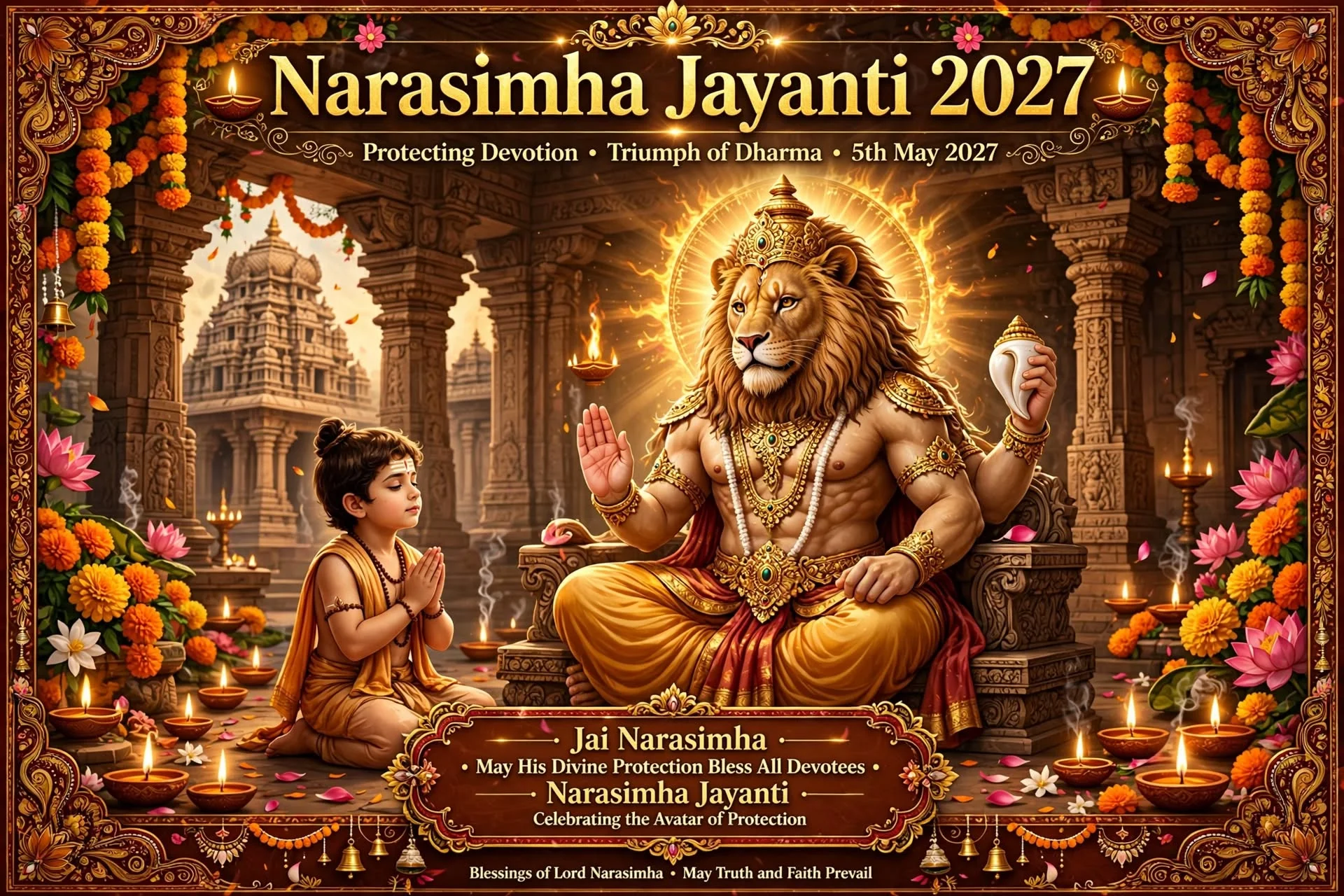
Tuesday, May 18, 2027
Narasimha Jayanti
Narasimha Jayanti marks the ferocious yet intensely protective divine manifestation of Lord Narasimha—the fourth incarnation (Avatar) of Lord Vishnu—who descended in an extraordinary half-man, half-lion form to vanquish the despotic demon king Hiranyakashipu and protect His unswerving young devotee Bhakta Prahlada. Celebrated on the Shukla Paksha Chaturdashi (fourteenth lunar day) of the holy month of Vaishakha, this festival represents the triumph of innocent devotion over tyrannical power and the omnipresence of God across creation.
View Festival Guide
Wednesday, May 19, 2027
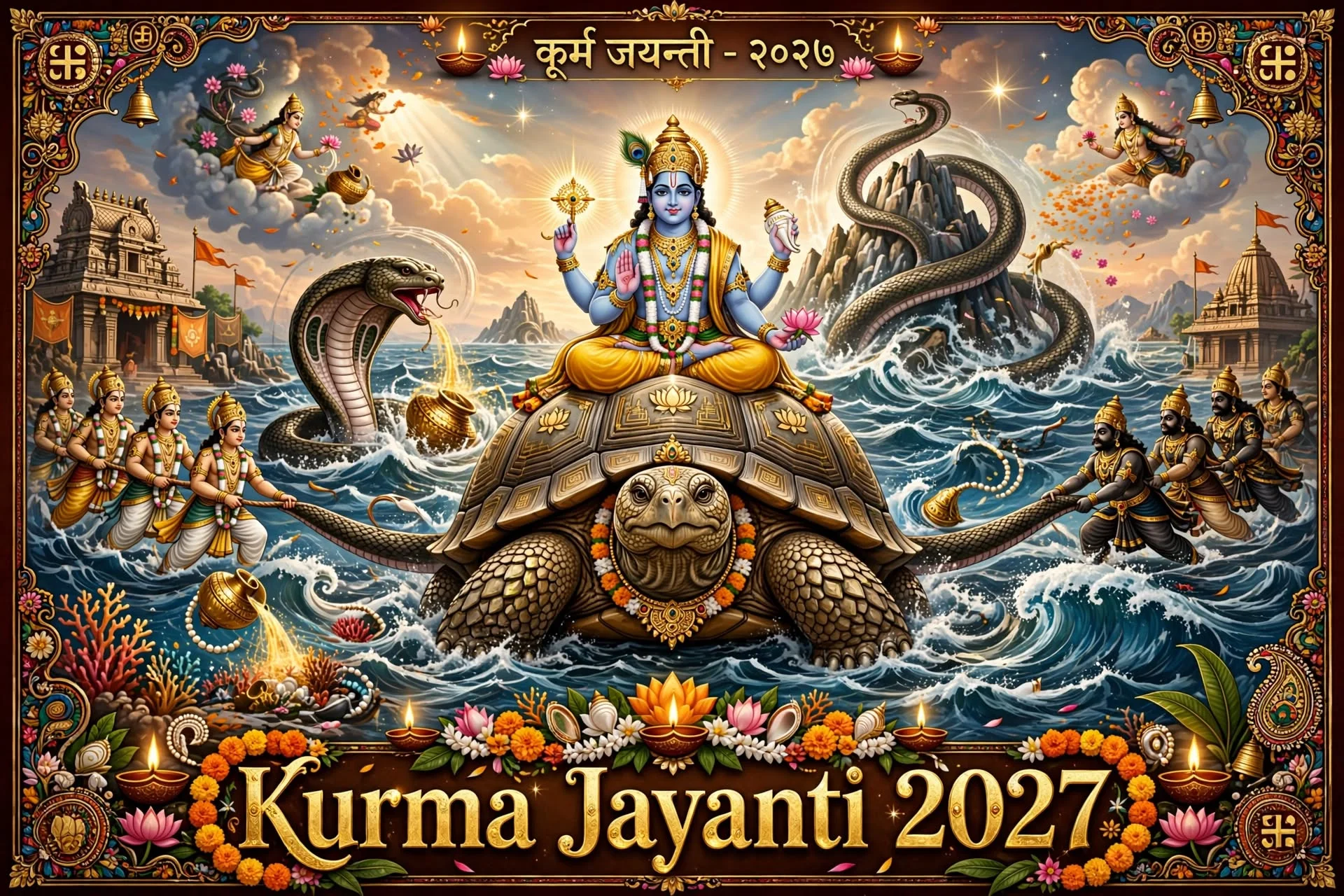
Kurma Jayanti
Kurma Jayanti marks the divine appearance anniversary of Bhagavan Kurma, the second divine incarnation (Avatar) of Lord Vishnu, manifesting in the form of a gigantic tortoise during the Satya Yuga on the auspicious tithi of Vaishakha Shukla Purnima (the full moon day of Vaishakha). Manifesting during the monumental cosmic churning of the celestial ocean (Samudra Manthan), Lord Kurma provided His massive, unyielding shell as the bedrock pivot to support the sinking Mount Mandara, saving the cosmic endeavor and enabling the extraction of the nectar of immortality (Amrita) and Goddess Mahalakshmi.
View Festival Guide
Thursday, May 20, 2027
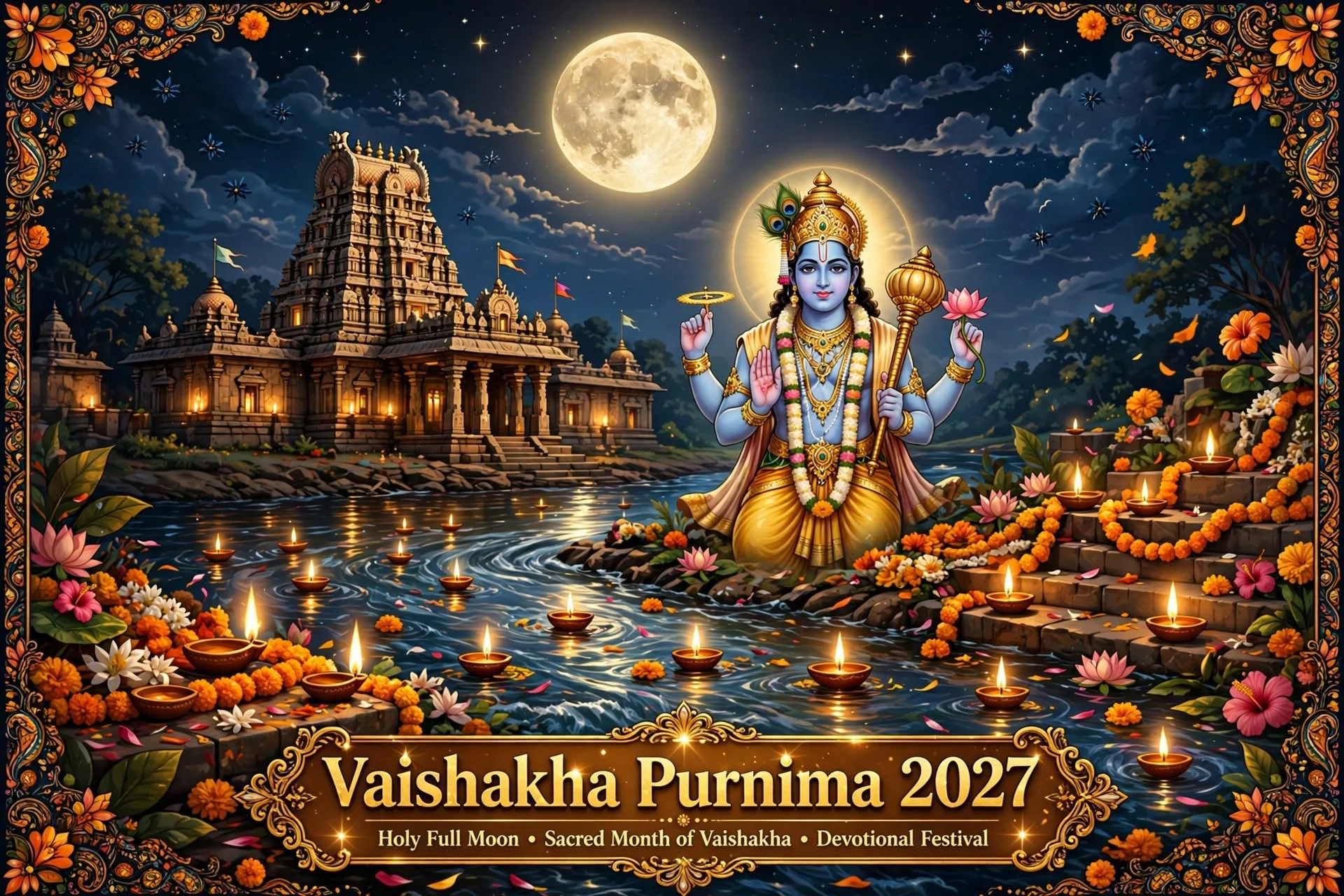
Vaishakha Purnima
Vaishakha Purnima is the sacred full-moon day occurring on the Purnima Tithi of Shukla Paksha in the Hindu lunar month of Vaishakha. It is one of the spiritually significant Purnima observances in the Hindu calendar and is associated with sacred bathing, charity, worship of Lord Vishnu, remembrance of ancestors, and spiritual discipline. The word Purnima refers to the full-moon phase, symbolizing completeness, illumination, and the culmination of the lunar fortnight. Vaishakha is traditionally regarded as a particularly meritorious month for religious observances, making its concluding full moon an important occasion for devotees.
View Festival Guide

Thursday, May 20, 2027
Anvadhan
Anvadhan (अन्वाधान) is an ancient, highly revered Vedic ritual and spiritual observance in Sanatana Dharma performed on the day immediately preceding the New Moon (Amavasya) or Full Moon (Purnima). Rooted in the pristine traditions of the Shrauta and Grihya Sutras, Anvadhan literally translates to 'the solemn placing and replenishment of sacred fuel wood into the consecrated Vedic fires'. In traditional Vedic ritualism, householders (Grihasthas) and priests who maintain the sacred Agnihotra fires perform Anvadhan to prepare the sacrificial altars for the grand Darsha Yajna (New Moon sacrifice) or Paurnamasa Yajna (Full Moon sacrifice) scheduled for the following day.
View Festival Guide
Thursday, May 20, 2027
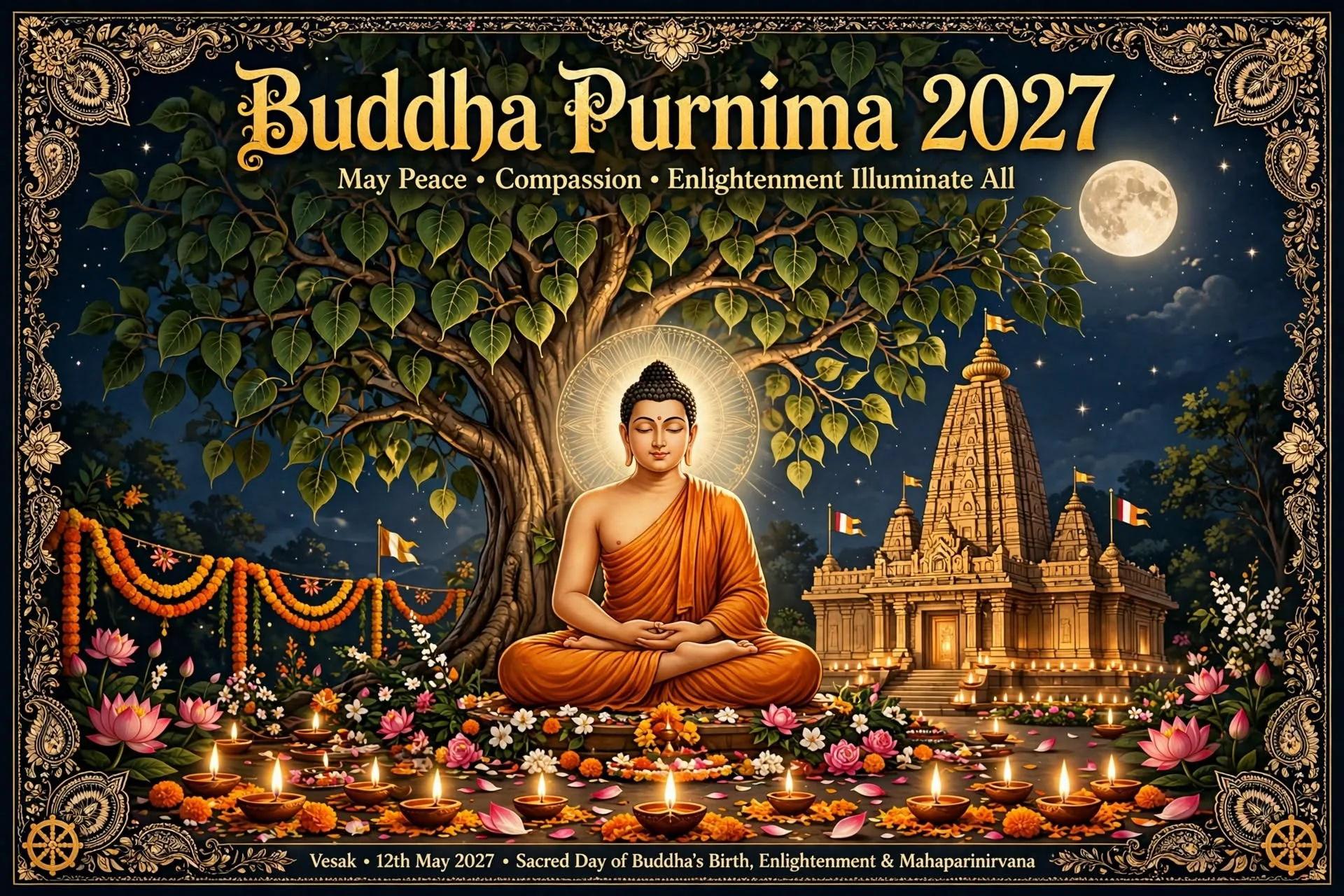
Buddha Purnima
Buddha Purnima, internationally celebrated as Buddha Jayanti or Vesak, is one of the most sublime and universally revered spiritual festivals, falling on the sacred full moon day (Purnima) of the holy month of Vaishakha. This momentous tithi commemorates the thrice-blessed milestone (Thrice-Holy Vesak) in the life of Gautama Buddha: his miraculous birth as Prince Siddhartha in Lumbini, his supreme enlightenment (Bodhi) beneath the Bodhi tree in Bodh Gaya, and his ultimate transition into final liberation (Mahaparinirvana) in Kushinagar.
View Festival Guide
Friday, May 21, 2027
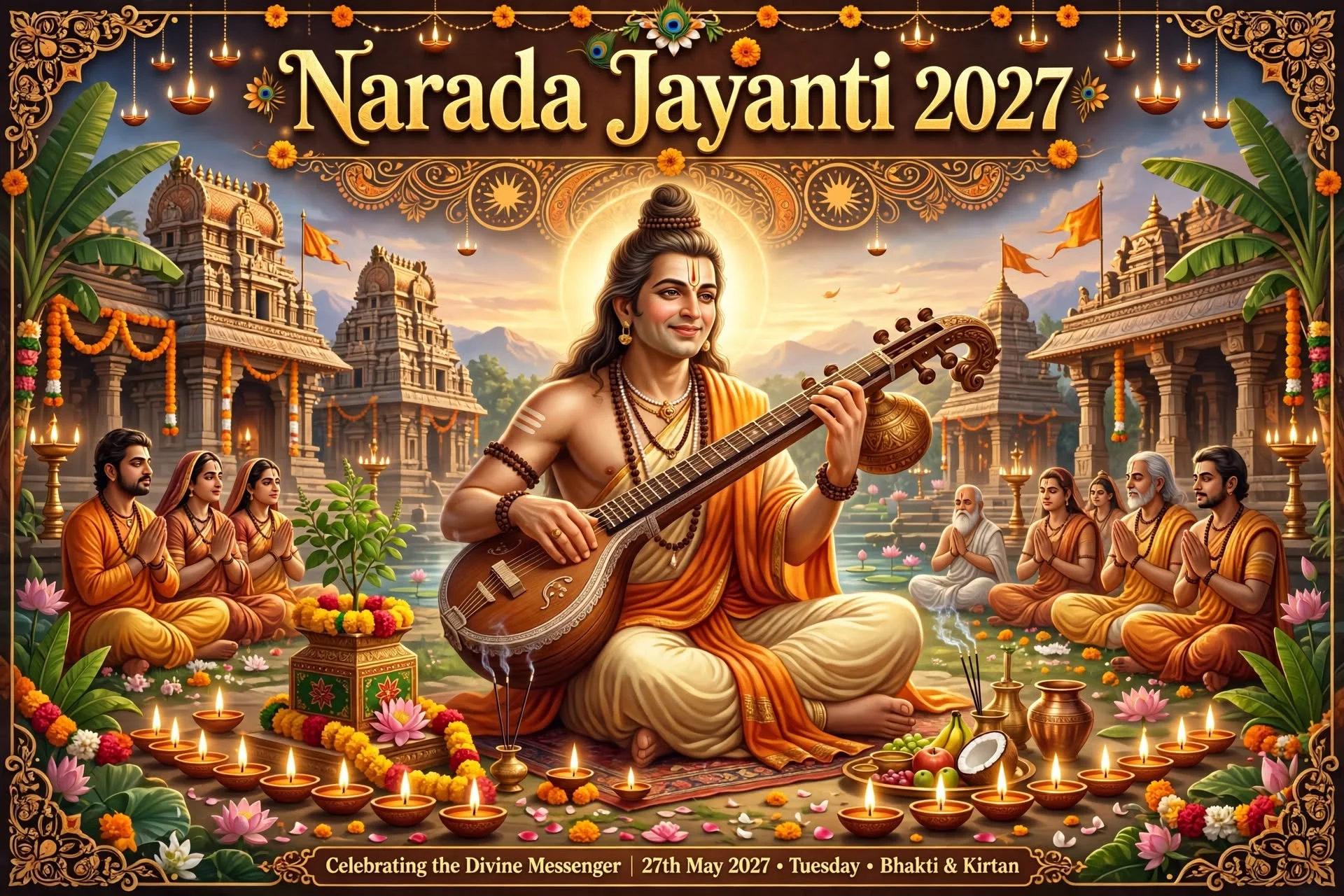
Narada Jayanti
Narada Jayanti marks the appearance anniversary of Devarshi Narada, the supreme celestial sage, divine messenger of the cosmos, master of the Veena, and eternal pioneer of Harinama Sankirtana. Celebrated on the Pratipada tithi (first lunar day) of the Krishna Paksha directly following Vaishakha Purnima (in the month of Jyeshtha in the Purnimanta system, or Vaishakha Krishna Pratipada), this festival commemorates the appearance of the great Manasaputra (mind-born son) of Lord Brahma who traverses the three cosmic worlds unobstructed, singing the praises of Lord Narayana upon his celestial lute, the Mahati Veena.
View Festival Guide

Friday, May 21, 2027
Ishti
Ishti is a foundational Vedic ritual observance appearing prominently in Hindu Panchangs on the Pratipada tithi (the first lunar day) following either Amavasya (new moon) or Purnima (full moon), marking the prescribed performance day for the fortnightly Vedic Darsha-Purnamasa sacrifices.
View Festival Guide
Sunday, May 23, 2027
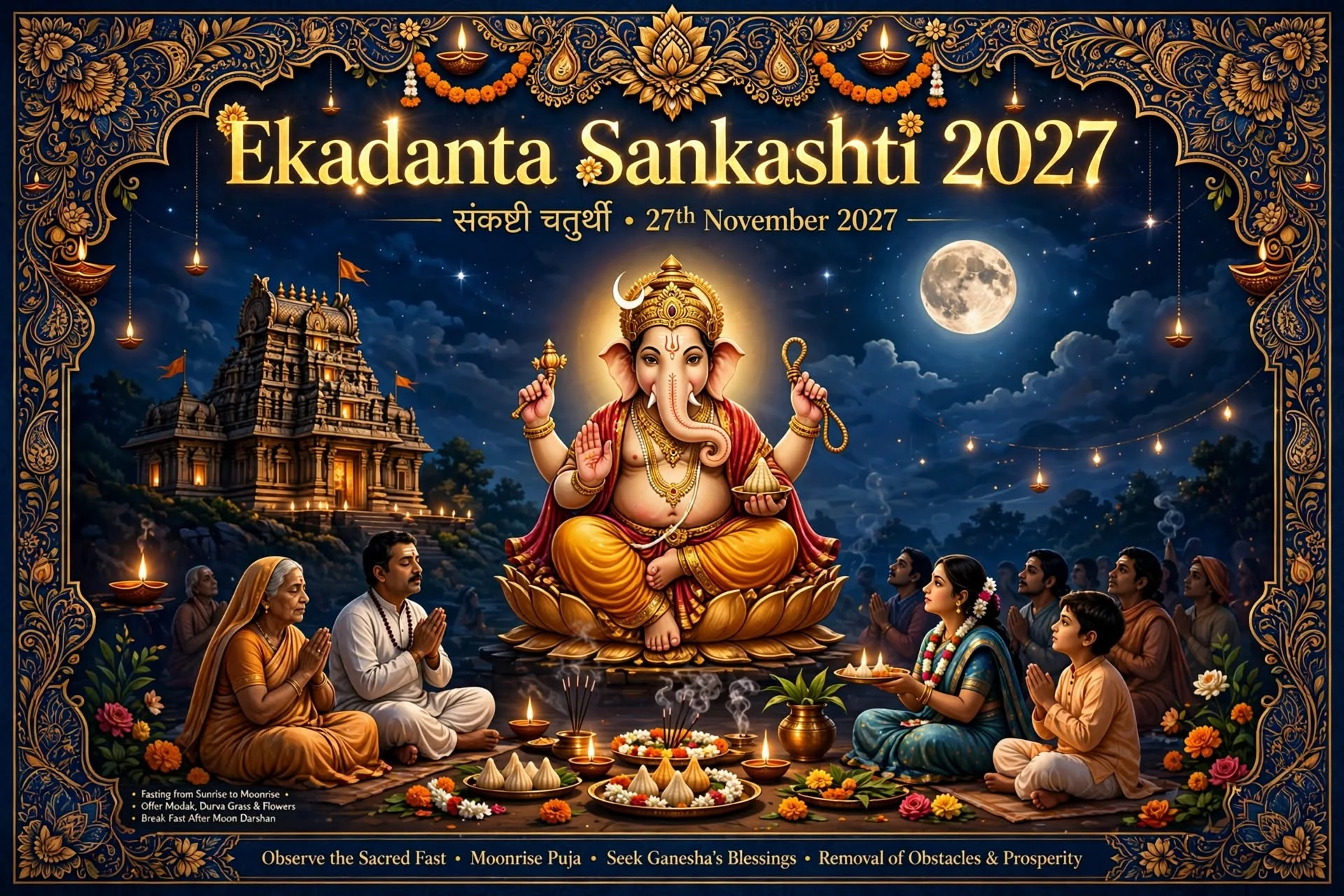
Ekadanta Sankashti
Ekadanta Sankashti Chaturthi, also celebrated as Ekadanta Sankashti Vrat, is a powerful monthly observance dedicated to Lord Ganesha, occurring during the Krishna Paksha (waning fortnight) on the fourth lunar day (Chaturthi tithi) of the Hindu lunar month of Vaishakha (or Jyeshtha in the Purnimanta system). The term "Sankashti" translates to "deliverance from distress or crisis" (Sankat-Nivaran), signifying that this sacred vrata removes formidable obstacles, clears karmic debts, and brings peace and success to the devotee's life.
View Festival Guide