




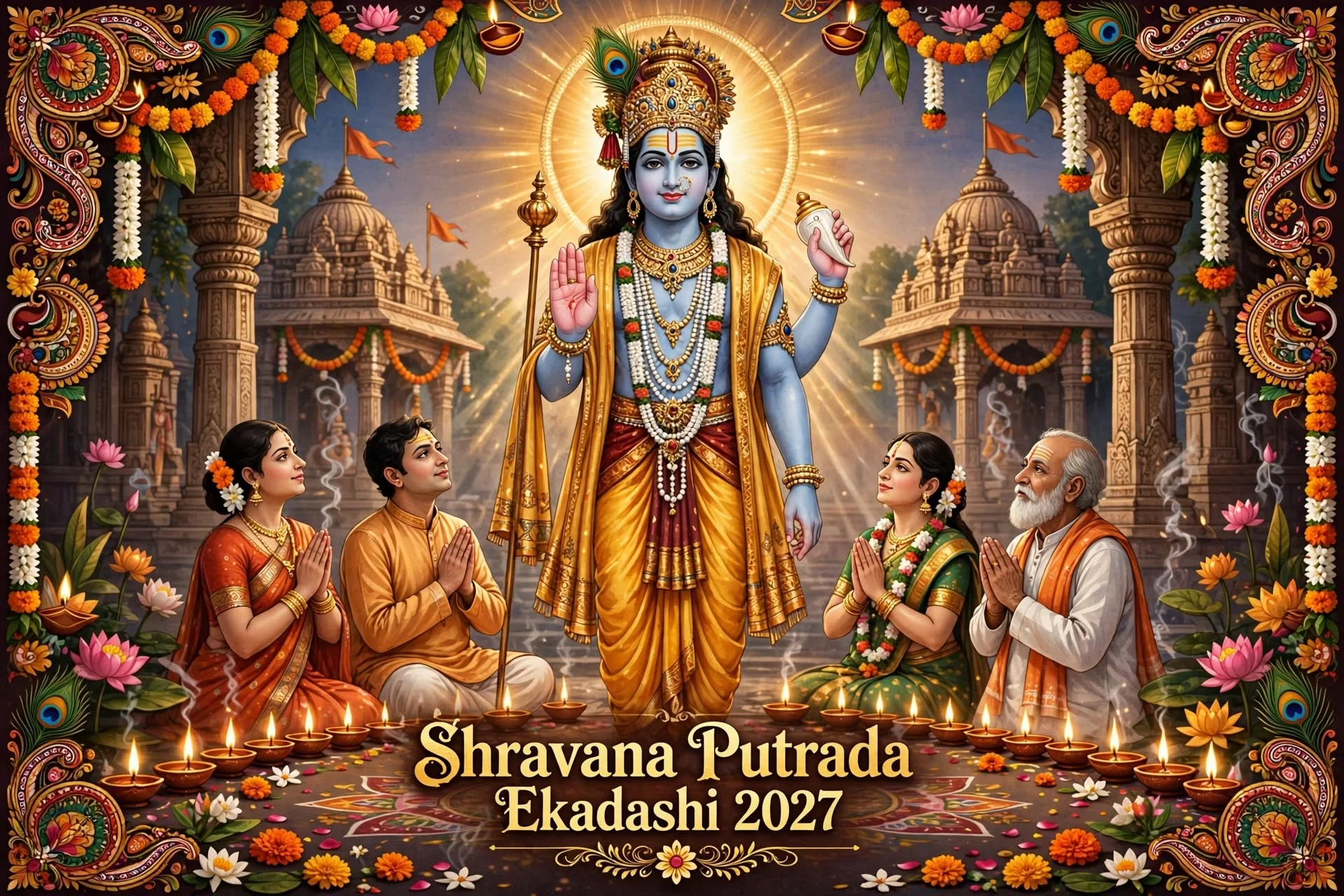
Shravana Putrada Ekadashi, also reverently designated as Pavitra Ekadashi or Pavitropana Ekadashi, is observed on the auspicious eleventh lunar day (Ekadashi) of the Shukla Paksha (waxing moon) in the sacred monsoon month of Shravana. Dedicated exclusively to Bhagwan Vishnu in His divine forms as Sri Krishna, Madhusudana, and Damodara, this sanctified vrata is revered in Puranic literature as a supreme spiritual remedy for childless couples seeking virtuous progeny, as well as an extraordinary fast for the eradication of past-life karmic impediments and the attainment of spiritual liberation.
Shravana Putrada Ekadashi 2027: Date, Puja Timings, Rituals & Stories
Shravana Putrada Ekadashi Timings & Panchang
Important festival dates and auspicious timings
Usha Arghya (Sunrise)
05:49 am
Sandhya Arghya (Sunset)
07:04 pm
Start Date
Thursday, 12 Aug 2027
Puja Muhurat
12:59 am – 02:59 am
Shravana Putrada Ekadashi
Falling in the midst of the ascetic Chaturmas season—when Lord Vishnu rests in mystical meditation (Yoga Nidra) upon the celestial serpent Shesha in the Milk Ocean—Shravana Putrada Ekadashi carries doubled spiritual potency. The word 'Putrada' translates literally as 'the giver of a son' (or righteous lineage), reflecting the Vedic understanding that righteous descendants preserve ancestral spiritual rites (Pitri Kriya), offering libations that sustain past generations and preserve the family's spiritual heritage.
According to scriptural guidance in the Bhavishya Purana and Padma Purana, this sacred fast offers profound spiritual benefits not only to couples praying for children, but to all devout seekers who seek spiritual purity, inner tranquility, liberation from sorrow, and eventual entry into the eternal abode of Vaikuntha. Observance of this day includes continuous nama-japa, recitation of the Vishnu Sahasranama, night-long devotional vigils (Jagaran), and the offering of sacred basil (Tulsi) leaves to Lord Vishnu.
Why is Shravana Putrada Ekadashi Celebrated?
The observance of Shravana Putrada Ekadashi is celebrated primarily to honor the divine compassion of Lord Vishnu, who grants the blessing of righteous progeny and dissolves ancient karmic debts accrued across countless past lifetimes.
In Vedic philosophy, the continuity of family lineage is viewed as a sacred duty (Pitri Rina) that ensures the continued offering of oblation and spiritual remembrance to ancestors. When past misdeeds block the birth of a child, this Ekadashi acts as an unfailing expiatory spiritual penance (Prayashchitta).
Furthermore, this holy day is celebrated as Pavitropana Ekadashi, an occasion on which devotees offer specially sanctified sacred threads made of cotton or silk (Pavitra) to Lord Vishnu, Shiva, and other deities, seeking to atone for any ritual mistakes, shortcomings, or lapses in worship committed throughout the preceding year.
- Fulfilling the cherished desire of childless couples for virtuous, wise, and healthy progeny.
- Absolving deep-seated karmic offenses from past lifetimes that obstruct family prosperity and peace.
- Offering sacred Pavitra threads to Lord Vishnu and Sri Krishna as ritual purification.
- Attaining the supreme spiritual merit equivalent to the performance of the Rajasuya and Ashvamedha Yajnas.
- Strengthening spiritual surrender and securing liberation (Moksha) in the divine presence of Narayana.
Scriptural Origins and the Puranic Legend of King Mahijit
The Grief of the Childless King Mahijit of Mahishmati
In the Bhavishya Purana, Dharmaraja Yudhishthira inquires of Lord Sri Krishna: 'O Janardana, what is the name of the Ekadashi occurring during the waxing fortnight of the sacred month of Shravana? What are its specific virtues and rites? Please narrate this to me out of your boundless compassion.'
Lord Krishna responds by narrating an ancient historical event that unfolded in the prosperous kingdom of Mahishmati. The kingdom was ruled by a noble, benevolent, and generous monarch named King Mahijit. The king administered justice with impartial wisdom, protected his subjects like his own children, distributed generous charity, and honored the sages and gods. However, despite his bounteous wealth and exemplary righteousness, King Mahijit was childless. As he grew older, the absence of an heir cast a long shadow of sorrow over his mind and the hearts of his devoted subjects.
The Gathering of Elders and the Counsel of Sage Lomasha
Deeply troubled that an unrighteous karmic past might be causing the king's childlessness, the ministers, priests, and senior elders of Mahishmati journeyed deep into the dense forests to seek guidance from enlightened ascetics. In a remote hermitage, they discovered the great venerable Sage Lomasha, whose austere body was covered in hair, each strand falling only after the passing of a cosmic cycle (Kalpa).
The delegation bowed before the sage and shared their sovereign's profound sorrow. Sage Lomasha entered deep yogic contemplation (Dhyana) to perceive King Mahijit's previous incarnation. Emerging from his trance, the sage revealed: 'In his previous life, this king was an ordinary merchant who hoarded wealth and committed a grievous offense against dharma. On the scorching tenth day of the waxing moon in Ashadha, parched with thirst, he arrived at a pond to drink water. Just as a thirsty cow and her newborn calf approached the water, the merchant selfishly drove them away with harsh blows to drink first. Due to that sin of tormenting a thirsty mother cow and her calf, he was born childless in this life, even though his charitable deeds made him a king.'
The Observance of Putrada Ekadashi and the Birth of the Prince
The Esoteric Significance of Lineage, Atonement, and Pavitropana
The Cosmic Law of Karma and Expiation
The legend of King Mahijit illustrates the subtle workings of karmic law: even minor acts of cruelty committed out of selfishness create energetic imprints (Samskaras) that obstruct future blessings. By observing Putrada Ekadashi, the aspirant willingly undertakes self-restraint and prayer, neutralizing negative karma through the supreme grace of Lord Vishnu.
Fasting cleanses the physical vessels, calms erratic desires, and elevates human consciousness to receive divine blessings.
The Mysticism of the Pavitra Sacred Thread
The offering of the Pavitra garland—a thread woven of silk or pure cotton with numerous sacred knots symbolizing cosmic principles—represents the renewal of devotion. It cleanses any unintentional ritual lapses, mantric mispronunciations, or mental distractions that occurred during worship throughout the year.
By offering the Pavitra to Lord Vishnu, the devotee is restored to a state of primal ritual purity and spiritual alignment.
Ritual Observance, Altar Setup, and Fasting Guidelines
Preliminary Purification on Dashami
The observance begins on Dashami (the tenth lunar day). Devotees consume only a single sattvic vegetarian meal before sunset, avoiding grains like rice and pulses. They maintain purity of thought, speech, and action, retiring early to prepare for the sacred dawn.
Tulsi leaves for the Ekadashi puja must be plucked on Dashami afternoon with prayers, as plucking Tulsi on Ekadashi is scripturally forbidden.
Ekadashi Worship and Night Vigil
On Ekadashi, devotees rise during Brahma Muhurta, take a sacred bath, and set up an altar draped in yellow silk. An idol of Lord Vishnu or Santan Gopala is installed and worshiped with Panchamrita, fragrant yellow flowers, Tulsi leaves, and yellow sandalwood paste.
A night-long vigil (Jagaran) is observed with kirtan, recitation of the Vishnu Sahasranama, and meditation upon the divine pastimes of the Lord.
Shravana Putrada Ekadashi Puja Vidhi (Step by Step)
- 1
Brahma Muhurta Snana (Morning Purification)
Wake early before sunrise, bathe in clean water infused with sacred Ganga water, and wear fresh yellow or white unstitched traditional garments.
- 2
Ekadashi Sankalpa (Solemn Devotional Vow)
Sit facing East before the home altar, hold water, unbroken rice (akshata), and a yellow flower in your right hand, reciting the formal vow to observe the Putrada Ekadashi fast with devotion.
- 3
Altar Sthapana and Kalash Pujan
Spread a fresh yellow silk cloth on a clean wooden chowki, place idols of Lord Vishnu, Goddess Lakshmi, and Sri Krishna, and establish a sanctified Kalash with mango leaves and a coconut.
- 4
Avahana and Dhyana (Divine Invocation)
Invoke the presence of Bhagwan Vishnu and Santan Gopala with folded hands, meditating upon His lotus eyes, four arms bearing conch and discus, and compassionate smile.
- 5
Panchamrita Abhishekam (Holy Nectar Bath)
Shravana Putrada Ekadashi Puja Samagri List
Deity and Altar Essentials
- Idol or image of Lord Vishnu, Goddess Lakshmi, or Santan Gopala
- Wooden chowki covered with fresh yellow silk fabric
- Brass or copper Kalash, coconut, and five fresh mango leaves
- Brass Panchapatra, Achamani spoon, and bell (Ghanti)
- Pure brass five-wick cow-ghee lamp, cotton wicks, and natural camphor
Floral, Botanical, and Fragrant Items
- Fresh Tulsi leaves and Manjari (plucked on Dashami)
- Yellow marigold garlands, yellow lotus flowers, and fragrant jasmine
- Malayagiri yellow sandalwood paste, rolli, and turmeric powder
- Pavitra sacred threads made of cotton or silk with nine knots
- Unbroken white raw rice grains mixed with turmeric (Akshata)
Naivedya and Panchamrita Offerings
- Panchamrita ingredients: fresh raw cow milk, curd, honey, ghee, and rock sugar
- Seasonal fresh fruits: bananas, apples, pomegranate, and sweet melons
- Yellow sweets: besan ladoo, peda, or makhana kheer
- Assorted dry fruits: soaked almonds, raisins, and cashews
Mantras and Prayers for Shravana Putrada Ekadashi
Shravana Putrada Ekadashi Vrat Rules and Fasting Guidelines
Dietary Code and Fasting Guidelines
Devotees observe a complete waterless fast (Nirjala) or consume only fruits, milk, and water (Phalahari) throughout the 24 hours of Ekadashi. All cereal grains, wheat, rice, lentils, beans, onions, and garlic are strictly prohibited.
- Strict avoidance of all food grains, pulses, cereals, and mustard seeds.
- Use only rock salt (Sendha Namak), black pepper, and cumin if preparing vrat foods.
- Do not pluck fresh Tulsi leaves on Ekadashi tithi.
- Break the fast (Parana) on Dvadashi morning during the prescribed muhurta.
Spiritual Conduct and Vows
Devotees observe celibacy, practice truthful speech, refrain from anger, and avoid day-sleeping. The night should be spent in devotional singing (Jagaran) and scriptural study.
Dos and Don'ts of Shravana Putrada Ekadashi
Good Practices (Do's)
- Bathe early during Brahma Muhurta and take a sincere vow of spiritual purity.
- Chant the Santan Gopala Mantra or the Dvadasakshari Mantra throughout the day.
- Donate food, clothes, umbrella, and grains to poor families and Brahmins on Dvadashi.
- Feed green grass and water to cows, honoring the divine mother Surabhi.
- Keep a night vigil (Jagaran) engaged in spiritual contemplation and singing kirtans.
Shravana Putrada Ekadashi Across Regions
| Region | Local Name |
|---|---|
| North India (Uttar Pradesh, Bihar, Rajasthan) | Putrada Ekadashi |
| South India (Andhra Pradesh, Karnataka, Tamil Nadu) | Pavitropana Ekadashi / Pavitra Ekadashi |
| Gujarat and Maharashtra | Pavitra Agiyaras |
Shravana Putrada Ekadashi FAQs
Why is this festival called Putrada Ekadashi?
The word 'Putrada' means 'giver of a son' or virtuous progeny. According to the Bhavishya Purana, observing this fast removes ancestral sins and blesses childless couples with noble and long-lived children.
How many Putrada Ekadashis occur in a Hindu year?
There are two Putrada Ekadashis in a year: Shravana Putrada Ekadashi in the monsoon month of Shravana and Pausha Putrada Ekadashi in the winter month of Pausha.
Can unmarried people or couples who already have children observe this fast?
Yes, anyone can observe this fast. While it grants progeny to childless couples, for others it purifies accumulated past sins, bestows peace of mind, and fosters spiritual liberation.
Upcoming Festivals
View All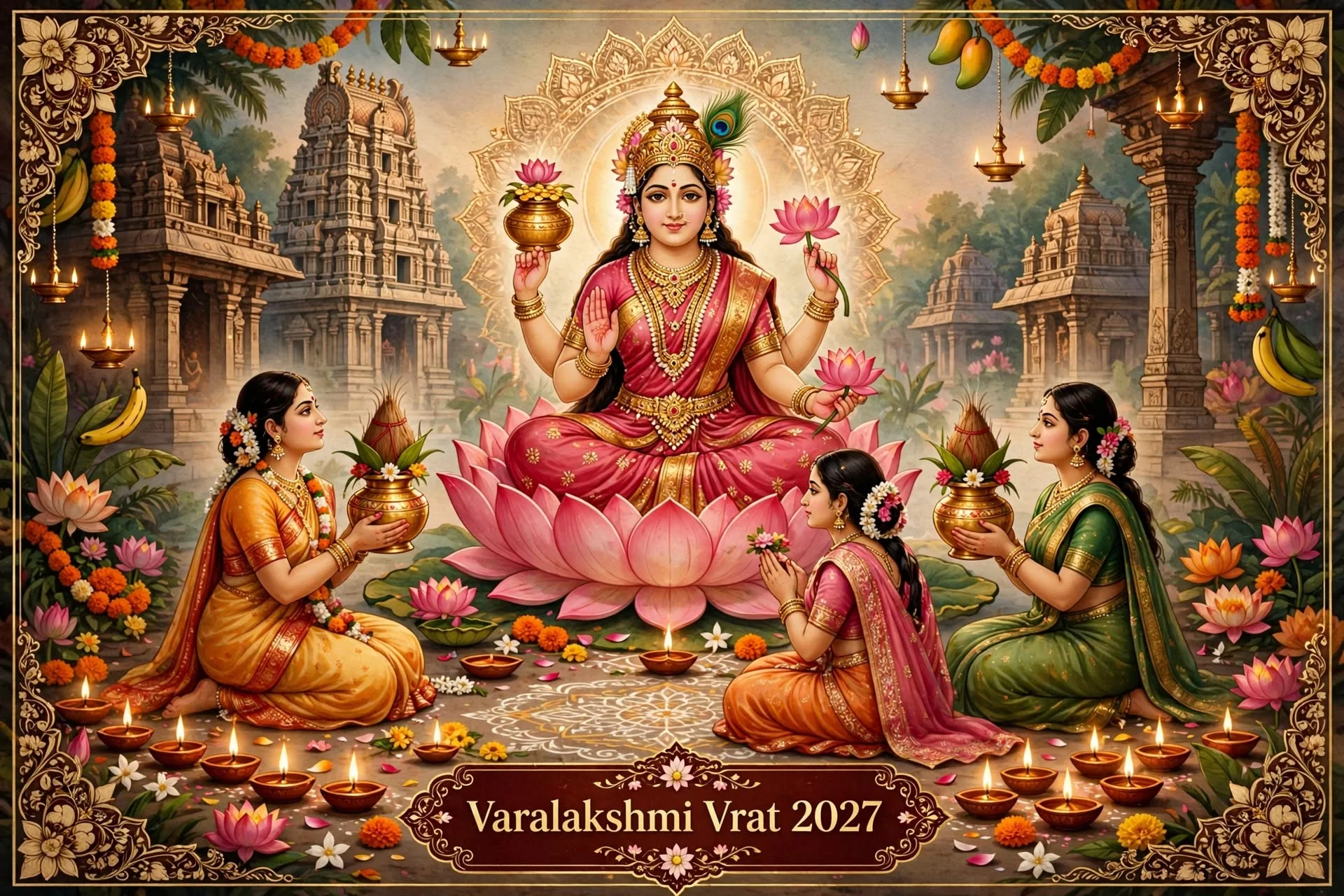
Friday, Aug 13, 2027
Varalakshmi Vrat
Varalakshmi Vrat, also known as Varalakshmi Nombu, is a revered Hindu festival dedicated to Goddess Varalakshmi—an auspicious manifestation of Sri Mahalakshmi who bestows boons ('Varam') upon Her sincere devotees. Celebrated predominantly by married women (Sumangalis) and young maidens across South India (Andhra Pradesh, Telangana, Karnataka, and Tamil Nadu) as well as Maharashtra and surrounding regions, this sacred vrata falls on the Friday immediately preceding the Full Moon day (Shravana Purnima) in the holy monsoon month of Shravana.
View Festival Guide
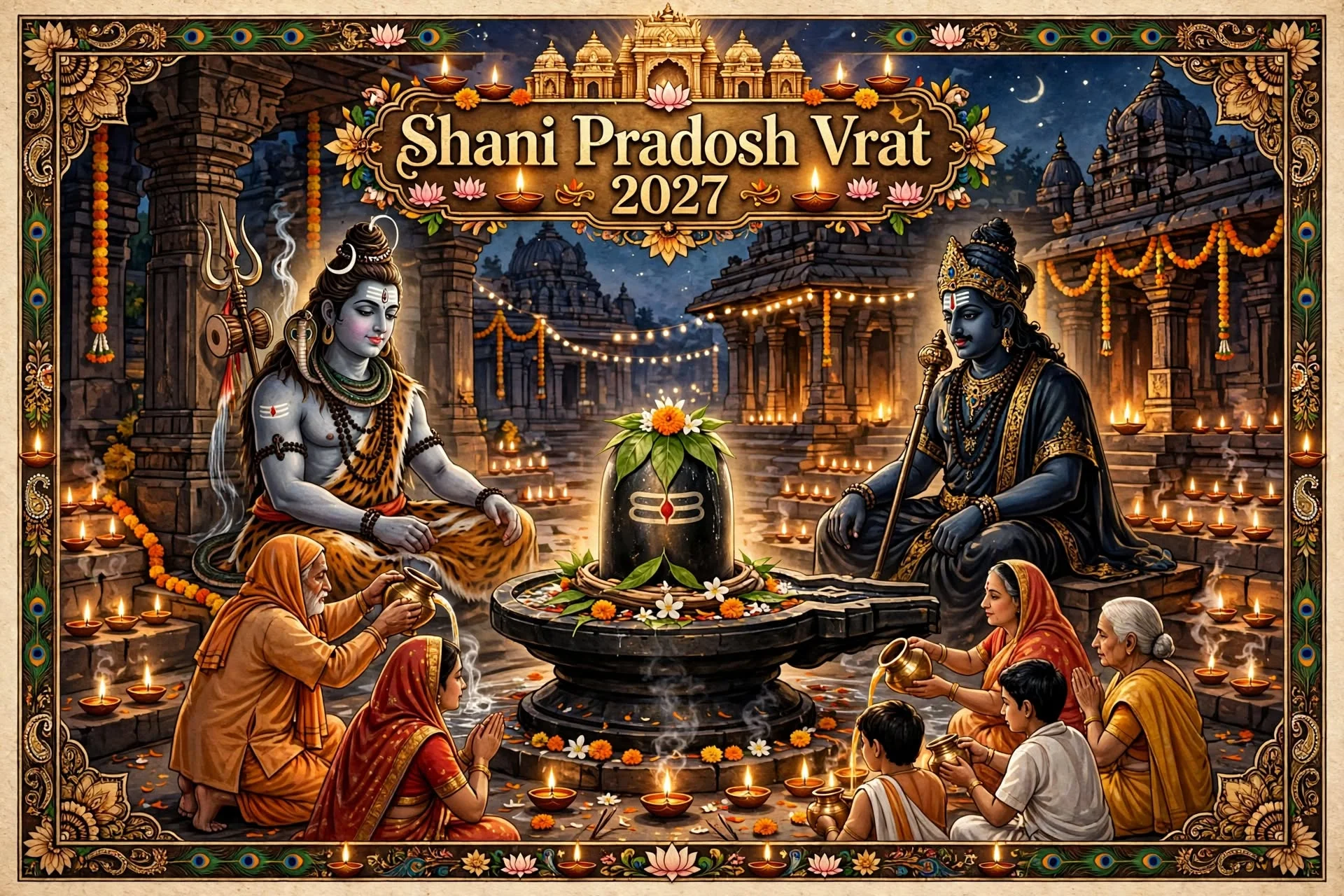
Saturday, Aug 14, 2027
Shani Pradosh Vrat
Shani Pradosh Vrat is an exceptionally potent, revered, and astrologically transformative bi-monthly Hindu fasting observance dedicated to Lord Shiva, Goddess Parvati, and Lord Shani Deva (the planetary deity of Saturn). Occurring on the thirteenth day (Trayodashi tithi) of either the waxing (Shukla) or waning (Krishna) lunar fortnight when it coincides with a Saturday (Shanivara), this sacred vow is lauded across Vedic and Puranic literature as the supreme, infallible spiritual remedy for dissolving chronic karmic impediments, neutralizing severe planetary afflictions, and securing profound peace and prosperity.
View Festival Guide

Tuesday, Aug 17, 2027
Anvadhan
Anvadhan (अन्वाधान) is an ancient, highly revered Vedic ritual and spiritual observance in Sanatana Dharma performed on the day immediately preceding the New Moon (Amavasya) or Full Moon (Purnima). Rooted in the pristine traditions of the Shrauta and Grihya Sutras, Anvadhan literally translates to 'the solemn placing and replenishment of sacred fuel wood into the consecrated Vedic fires'. In traditional Vedic ritualism, householders (Grihasthas) and priests who maintain the sacred Agnihotra fires perform Anvadhan to prepare the sacrificial altars for the grand Darsha Yajna (New Moon sacrifice) or Paurnamasa Yajna (Full Moon sacrifice) scheduled for the following day.
View Festival Guide
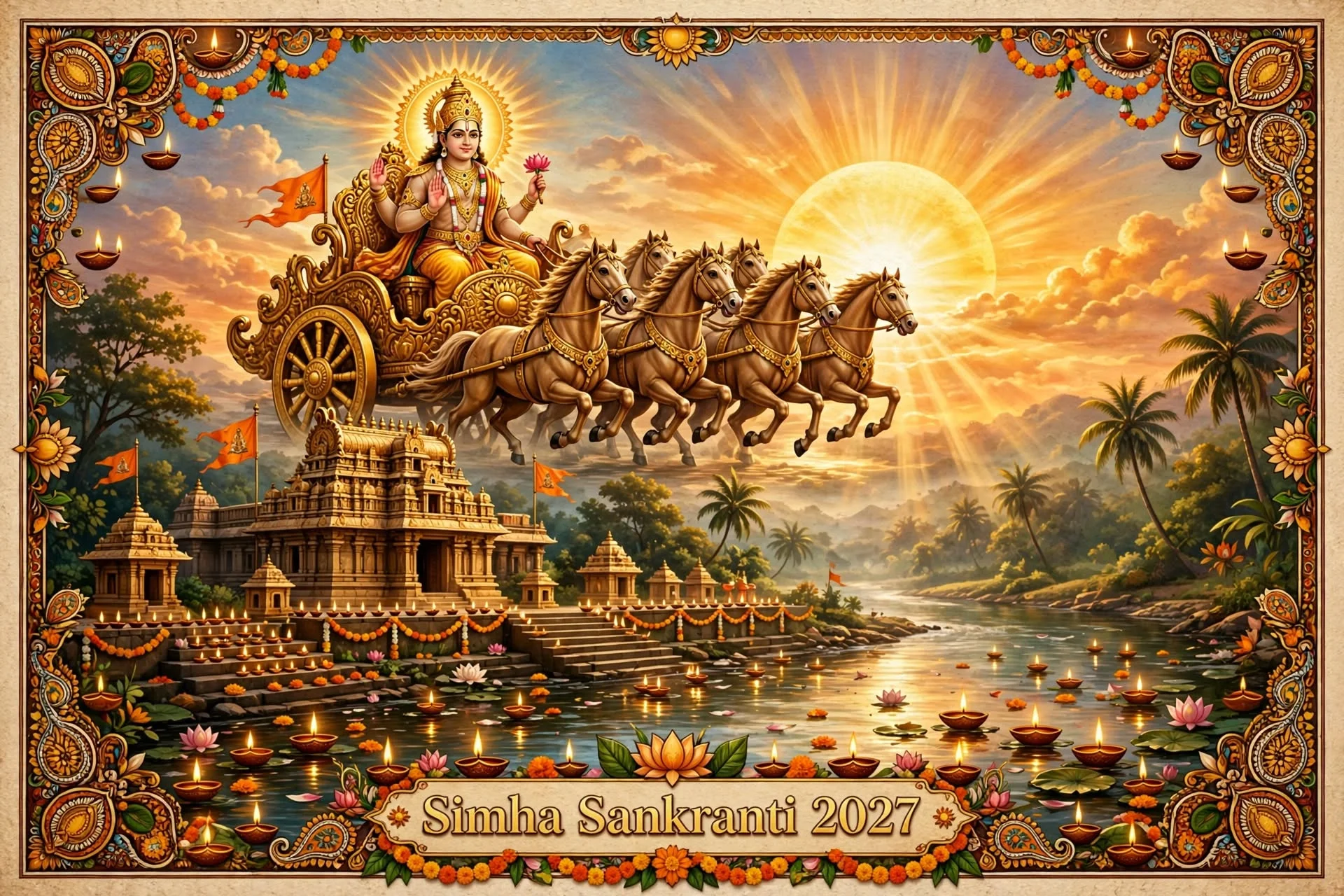
Tuesday, Aug 17, 2027
Simha Sankranti
Simha Sankranti marks the momentous astronomical and astrological transit (Sankramana) when Surya Deva, the radiant Sun God, enters the regal zodiac sign of Simha (Leo). In Vedic astrology, Simha is the Sun's own moolatrikona and swakshetra (domicile sign), making this celestial ingress exceptionally powerful, revitalizing, and spiritually auspicious. Occurring in mid-August in the traditional solar calendar, Simha Sankranti inaugurates the solar month of Simha (known as Chingam in Kerala and Bhadra / Avani in other solar calendars).
View Festival Guide
Tuesday, Aug 17, 2027
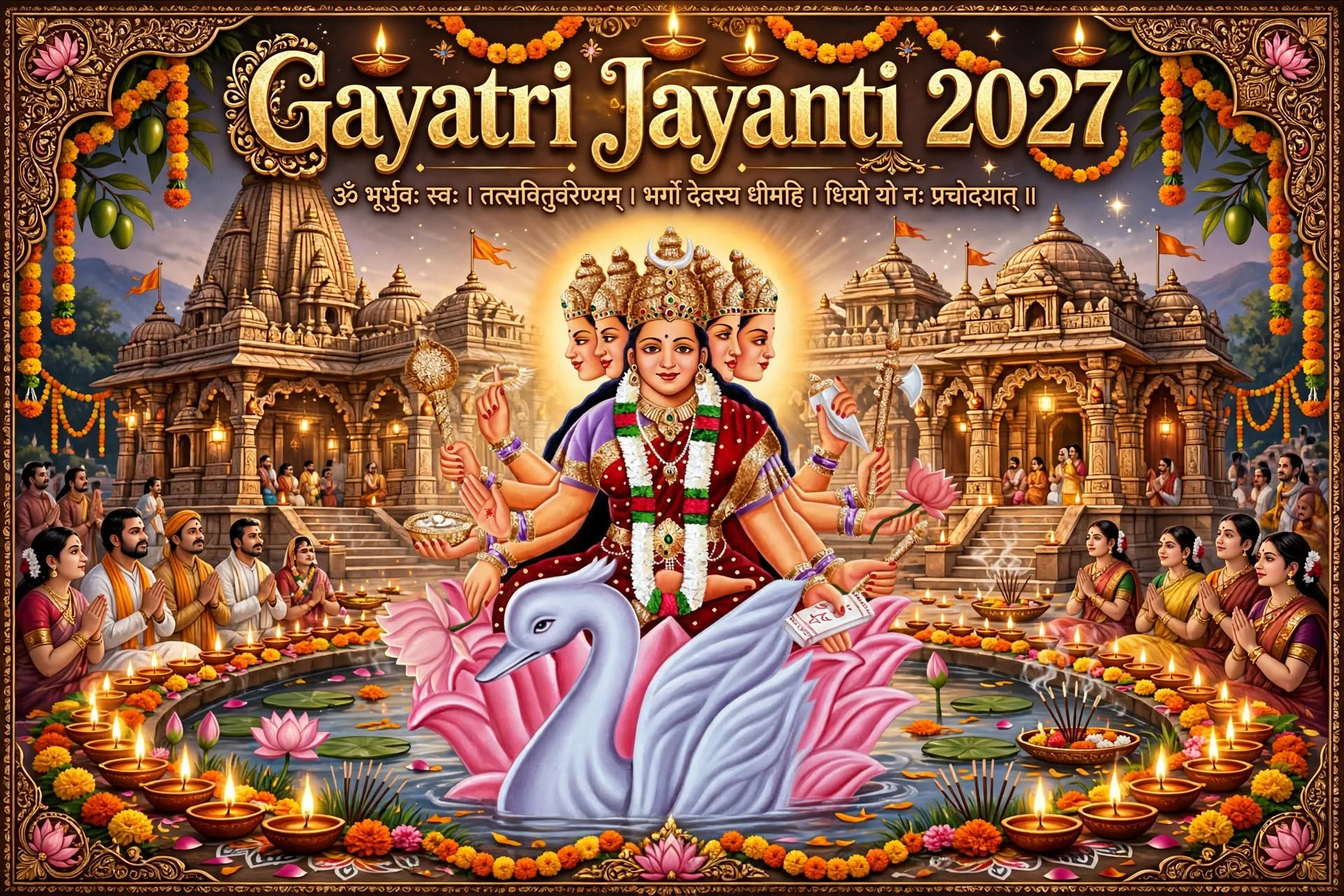
Gayatri Jayanti
Gayatri Jayanti is a sacred Hindu festival dedicated to Goddess Gayatri, revered as Ved Mata, the Mother of the Vedas. She represents divine wisdom, spiritual illumination, purity and the power of sacred knowledge. Devotees worship her as the personification of the Gayatri Mantra, one of the most revered prayers in the Vedic tradition.
View Festival Guide
Tuesday, Aug 17, 2027
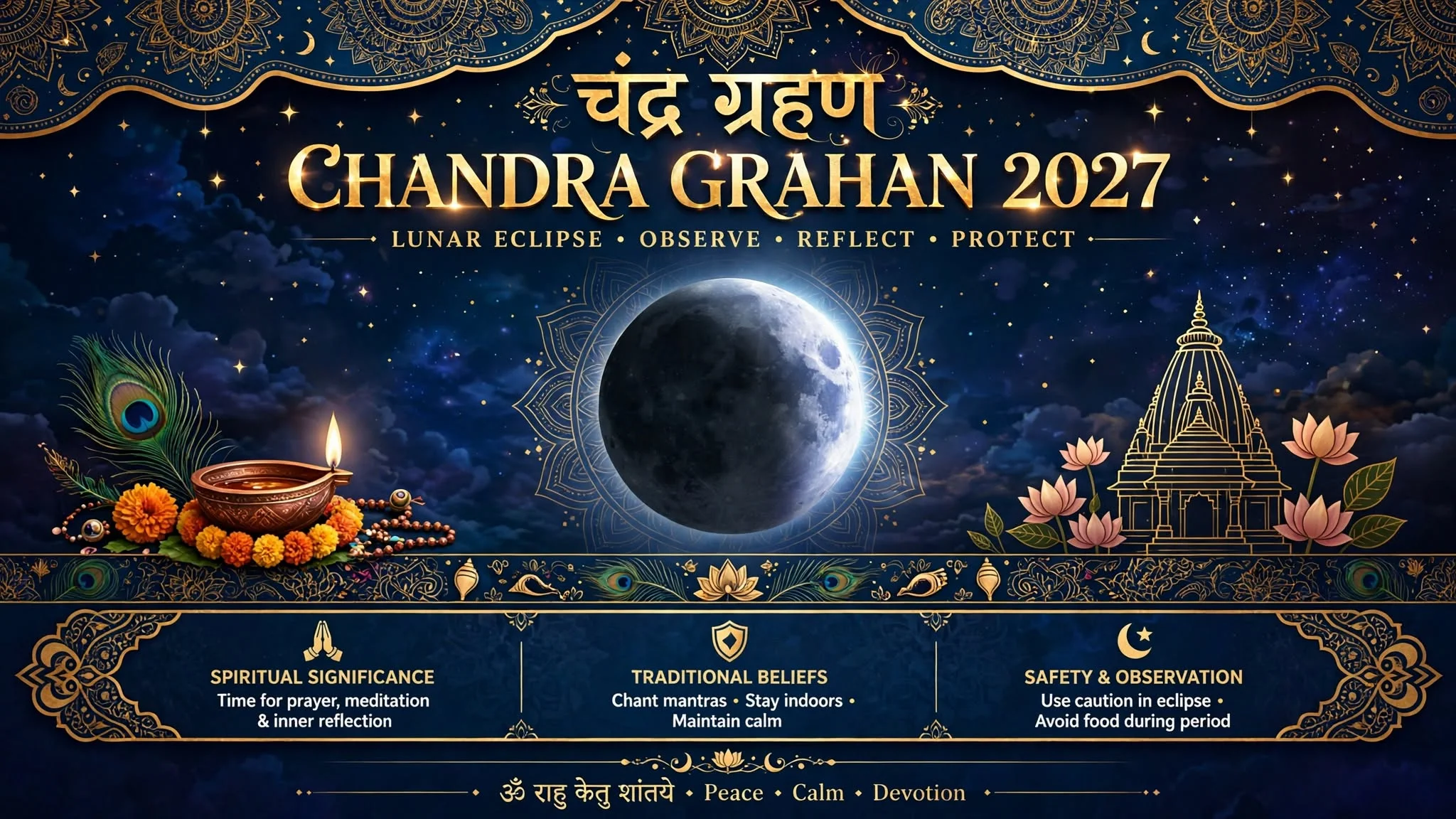
Chandra Grahan
Chandra Grahan (Lunar Eclipse) is a sacred cosmic and spiritual juncture (Parva Kaal) in Sanatana Dharma occurring exclusively on Purnima (the full moon day) when the Earth moves directly between the Sun and the Moon, casting its conical shadow across the lunar orb. In Vedic philosophy and Jyotisha, the Moon presides over the mind, subconscious emotions, and water elements (Chandrama Manaso Jatah - Rigveda Purusha Sukta). The temporary obscuration of the Moon by the shadowy nodes Rahu or Ketu induces profound subtle energetic shifts across terrestrial nature and human consciousness.
View Festival Guide
Tuesday, Aug 17, 2027
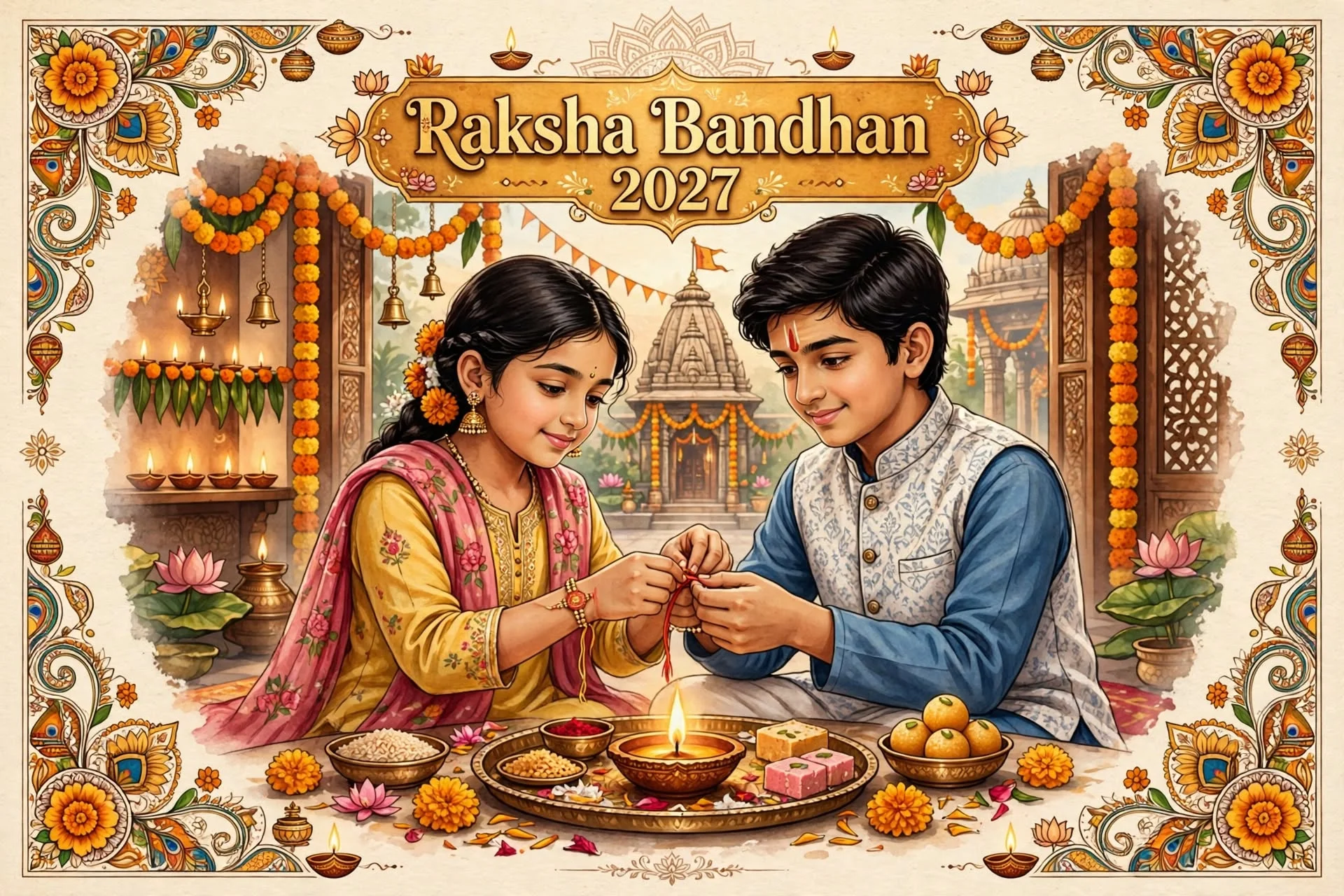
Raksha Bandhan
Raksha Bandhan, celebrated on the sacred Full Moon day (Purnima) of the holy Hindu month of Shravana, is one of the most cherished, ancient, and emotionally resonant festivals of India. Translated literally as 'the bond of protection', Raksha Bandhan honors the sacred relationship between brothers and sisters while simultaneously encapsulating broader cosmic and moral principles of mutual duty, chivalric honor, spiritual righteousness, and universal solidarity.
View Festival Guide
Tuesday, Aug 17, 2027
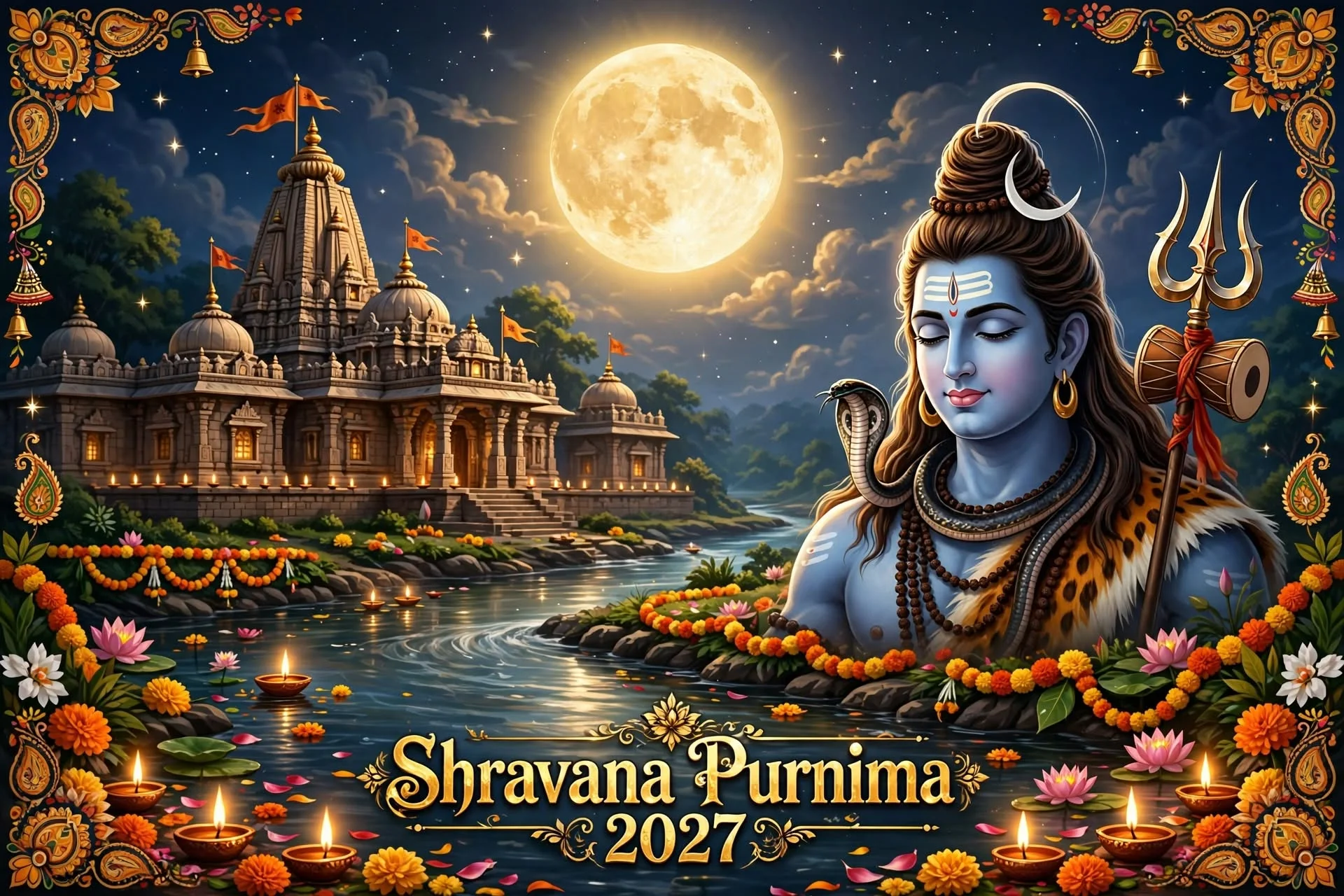
Shravana Purnima
Shravana Purnima is the radiant Full Moon day of the sacred Hindu month of Shravana, representing one of the most spiritually vibrant, multifaceted, and revered junctures of the entire Hindu calendar. Illuminating the night sky during the heart of the rejuvenating monsoon, this sanctified tithi marks the confluence of numerous historic, ascetic, familial, and astronomical observances across the length and breadth of the Indian subcontinent.
View Festival Guide