




Ahoi Ashtami, also revered as Ahoi Aathe, is a profoundly sacred and rigorous Hindu fasting festival observed by mothers on the eighth lunar day (Ashtami) of the dark fortnight (Krishna Paksha) in the sacred month of Kartika (or Ashwina in Amanta regional calendars). Falling approximately eight days prior to Diwali and four days after Karwa Chauth, this holy vrata is observed with deep maternal love, self-restraint, and prayers dedicated to Goddess Ahoi (an auspicious manifestation of Goddess Parvati) and Syahu Mata for the long life, radiant health, spiritual protection, and all-round prosperity of children.
Ahoi Ashtami 2026: Date, Puja Timings, Rituals & Stories
Ahoi Ashtami Timings & Panchang
Important festival dates and auspicious timings
Usha Arghya (Sunrise)
06:34 am
Sandhya Arghya (Sunset)
05:35 pm
Start Date
Monday, 2 Nov 2026
Puja Muhurat
02:52 pm – 01:10 pm
Ahoi Ashtami
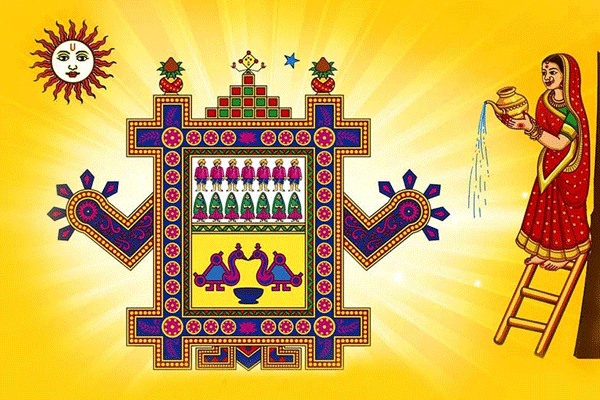
Rooted in ancient Puranic chronicles and liturgical Smriti traditions, the festival centers on the legendary narrative of a pious woman whose seven sons met untimely ends due to an accidental transgression—unintentionally striking an infant porcupine / cub while digging sacred earth for Diwali preparations. Guided by elderly ascetics, the grief-stricken mother observed the strict waterless fast of Ahoi Ashtami, appeasing Syahu Mata through selfless penance and the depiction of the sacred Ahoi mural, thereby resurrecting all seven sons to joyful life.
On this day, mothers maintain an unbroken Nirjala (waterless) fast from sunrise until twilight. In the evening, an auspicious mural depicting Goddess Ahoi, her seven sons, and the sacred lion or hedgehog is painted on the northern wall using geru (ochre) or wheat flour. The fast is broken only after sighting the evening stars (Taragan) or the rising Moon, offering sacred water libations (Arghya) from a copper pot, and wearing a consecrated silver beaded necklace known as the Ahoi Syahu Mala.
Why is Ahoi Ashtami Celebrated?
Ahoi Ashtami is celebrated by mothers to invoke the divine protective grace of Goddess Ahoi and Syahu Mata for the longevity, safety, and moral welfare of their sons and daughters.
According to classical Puranic folklore, the fast commemorates the redemption and resurrection of a mother's seven deceased sons after she atoned for the inadvertent harm caused to innocent forest creatures.
The observance also provides spiritual solace to childless couples who observe the Radha Kunda Snan and Ahoi Vrat to seek the divine blessing of righteous progeny.
- Observing a strict day-long waterless fast (Nirjala Upavasa) dedicated to Mother Ahoi.
- Drawing or installing the sacred Ahoi Ashtami mural depicting the Mother Goddess, children, and celestial symbols.
- Sighting the twinkling stars (Nakshatras) or Moon at dusk and offering sacred Arghya using a Karwa.
- Wearing and consecrating the silver Ahoi Syahu necklace, adding two silver beads with every child born.
- Distribute wholesome sattvic prasad including sweetened wheat puris, malpuas, and boiled water chestnuts.
Scriptural Chronicles and the Legend of Syahu Mata
The Accidental Transgression in the Sacred Forest
In ancient times, there lived a virtuous, god-fearing woman in a prosperous village who was blessed with seven handsome and dutiful sons. Just before the grand festival of Deepavali, the family prepared to renovate and whitewash their home. To procure fresh ochre clay (Mitti), the mother journeyed into the nearby forest with a spade and basket. While digging into the earth near an underground den, her spade inadvertently struck and killed a sleeping cub of a porcupine (Syahu).
Filled with intense remorse and horror, the weeping woman begged forgiveness from the forest deities, but the mother hedgehog (Syahu Mata) placed an agonizing curse upon her: 'Just as you have severed the life of my innocent cub, your own offspring shall be snatched away before your eyes!' Within the year, all seven of the woman's sons tragically met untimely ends. Crushed by unbearable grief, the mother and her husband resolved to renounce their lives through forest penance.
Sage Advice and the Vow of Ahoi Ashtami
While weeping in the wilderness, the couple was comforted by an enlightened wandering sage. The sage revealed: 'O mother, your grief is the result of past karmic debt and the curse of Syahu Mata. Suicide will only compound your suffering. Return to your home, and on the eighth lunar day of Kartika Krishna Paksha, observe a strict waterless fast in honor of Goddess Ahoi and Syahu Mata. Depict the divine mother on your wall, offer grain and milk, and atone with selfless devotion.'
Returning home with renewed hope, the mother observed the fast on Kartika Krishna Ashtami with rigorous penance. She fasted without water, painted the image of Syahu Mata alongside her cubs on the wall, bowed with tears of genuine repentance, and served the needy. Moved by her spotless humility, Goddess Ahoi appeared and revoked the curse, restoring all seven sons to vibrant, radiant life.
The Tradition of the Sacred Syahu Mala
Following the resurrection of the seven sons, the village women gathered to institutionalize the sacred vow. Mothers crafted pendants of pure silver depicting Goddess Ahoi, stringing them on red sacred thread alongside two round silver beads (Mankas).
Maternal Tapasya, Karmic Atonement, and Universal Harmony
The Power of Maternal Tapasya and Unconditional Love
In Sanatana Dharma, a mother's selfless penance is regarded as an impenetrable spiritual shield (Matru Kavacha). The physical austerity of abstaining from food and water during Ahoi Ashtami transforms ordinary affection into transcendental tapasya.
By bearing hunger and thirst with joyful surrender, the mother burns away lingering hereditary and planetary afflictions that may affect her children's longevity, education, and moral righteousness. Her silent prayer elevates the household atmosphere into a sanctuary of divine security.
Atonement and Reverence for the Animal Kingdom
A magnificent ethical lesson embedded in Ahoi Ashtami is the sacred sanctity of all sentient life. The original transgression occurred through inadvertence against a wild woodland creature; yet, cosmic law required repentance and reverence for the mother animal.
By painting Syahu Mata alongside her cubs and offering milk at the altar, the festival dissolves the barrier between human life and nature. It teaches children that true Dharma requires compassion toward animals, birds, and insects, establishing harmony across all living ecosystems.
Ritual Discipline and Sacred Observance Guidelines for Ahoi Ashtami
The Morning Sankalpa and Altar Mural Preparation
The observance begins at early dawn with a purifying bath in freshwater infused with Ganga water. The mother faces East in her household altar and recites the solemn Ahoi Ashtami Vrata Sankalpa, pledging to observe an unbroken waterless fast until twilight.
In the afternoon, the northern or eastern wall of the home is purified with cow dung or clean water. Using natural red ochre (Geru) and rice paste, the mother paints the traditional Ahoi Ashtami mural featuring Goddess Ahoi, eight sacred corners (Koshthas), seven sons, a daughter-in-law, a cow, a calf, the Sun, Moon, and the sacred Syahu. In modern urban homes, embossed printed portraits or silver plates of Ahoi Mata are ceremoniously established on a wooden Chowki covered with clean red silk cloth.
Twilight Star Sighting and Sacred Arghya Protocol
Unlike Karwa Chauth where the fast is broken exclusively after the late moonrise, Ahoi Ashtami permits breaking the fast after sighting the evening stars (Taragan / Nakshatras). Since Ashtami moonrise occurs very late at night (often past 11:30 PM), observing the first visible evening stars allows mothers to offer Arghya peacefully.
The mother takes a copper or brass Karwa filled with pure water and milk. Standing on the terrace or in an open courtyard facing the twinkling stars, she pours the libation through a sieve or directly, seeking divine blessings. She then touches the feet of her mother-in-law and elderly family members, distributes dry fruits and sweets, and consumes consecrated prasad to conclude the fast.
Ahoi Ashtami Puja Vidhi (Step by Step)
- 1
Pratah Snana and Shaucha
Awaken early at dawn during Brahma Muhurta, cleanse the home, take a purifying bath, and don fresh unstitched traditional attire in auspicious red, yellow, or pink hues. Avoid black or blue garments.
- 2
Nirjala Vrata Sankalpa
Sit facing East in the puja room, hold holy water, unbroken rice (Akshata), and yellow flowers in the right palm, and solemnly pronounce the Ahoi Ashtami Sankalpa for the longevity and welfare of children.
- 3
Ahoi Chitrankana (Mural Creation)
On the northern wall or on an elevated wooden Chowki, draw the sacred eight-cornered Ahoi Mata mural using geru and rice paste, or install a sanctified silver/paper Ahoi Yantra with reverence.
- 4
Deepa and Dhoop Prajvalana
Ignite a pure cow's ghee lamp and light fragrant sandalwood and guggul incense to sanctify the domestic sanctum and invoke divine vibrations.
- 5
Karwa and Kalash Sthapana
Fill a fresh earthen or copper Karwa with clean water, raw cow milk, and a coin. Place it beside the Ahoi mural, crowned with a small earthen saucer filled with raw wheat grains.
Ahoi Ashtami Puja Samagri List
Altar, Mural, and Vessel Essentials
- Natural red ochre (Geru) and rice flour paste for painting the wall mural
- Framed Ahoi Ashtami portrait or embossed silver/copper Ahoi plate
- Clean earthen or brass Karwa (water pot with nozzle) and Kalash
- Consecrated silver Ahoi Syahu necklace with strung silver beads
- Wooden pedestal (Chowki) and clean red silk altar fabric
- Brass deepa, pure desi cow ghee, cotton wicks, and pure camphor
Sacred Powders, Fragrances, and Flowers
- Bright red vermilion (Sindoor), sacred Kumkum, and turmeric powder
- Pure white and red sandalwood paste (Chandana)
- Unbroken sacred rice grains (Akshata) stained with turmeric
- Fresh seasonal red hibiscus, marigold garlands, and rose petals
- Fragrant guggul, natural loban, and sandalwood incense sticks (Dhoop)
- Clean raw cow's milk and holy Ganga water for libations
Naivedya, Seasonal Harvest, and Charity Articles
- Freshly fried eight sweet wheat puris (Atthavai) and malpuas
- Raw unhulled wheat grains (Gehun) placed in the saucer atop the Karwa
Mantras and Prayers for Ahoi Ashtami
Ahoi Ashtami Vrat Rules and Fasting Guidelines
Waterless Fasting and Food Restrictions
Mothers observe an unbroken Nirjala fast from sunrise until twilight. Not a single morsel of food or drop of water may be consumed during the daytime. If physical illness or medical conditions prevent a waterless fast, milk and light fruits may be taken after consulting family elders.
Avoidance of Cutting, Digging, and Sharp Tools
- In memory of the accidental forest transgression, women must strictly refrain from digging soil, cutting vegetables with sharp knives, or sewing with needles on Ahoi Ashtami.
- Prepare all festival sweets and food items without chopping vegetables on the day itself; break ingredients gently with hands where possible.
- Strictly avoid onions, garlic, non-vegetarian food, and alcohol in the entire household.
- Observe total celibacy (Brahmacharya) and maintain gentle, loving speech toward children and family members.
Honoring Elderly Women and Star Arghya
The fast is fulfilled only after offering Arghya to the evening stars or the moon. The mother must respectfully touch the feet of her mother-in-law or senior matron, offering her the dry wheat grains, sweets, and clothes placed upon the Karwa before breaking the fast.
Dos and Don'ts of Ahoi Ashtami
Good Practices (Do's)
- Take a morning purifying bath and make a heartfelt Sankalpa for your children's longevity and health.
- Draw or install the sacred Ahoi Mata mural and consecrate the silver Syahu Mala at the altar.
- Listen to the complete Ahoi Ashtami Vrat Katha holding seven wheat grains in your hand.
- Offer Arghya from a copper Karwa to the evening stars with devotion and humility.
- Seek blessings from your mother-in-law or family elders and gift them the consecrated grain and clothes.
Ahoi Ashtami Across Regions
| Region | Local Name |
|---|---|
| Northern India (Delhi, Punjab, Haryana, Western Uttar Pradesh) | Ahoi Aathe and Syahu Mata Pujan |
| Braj Region (Mathura, Vrindavan, Govardhan) | Radha Kunda Snan on Ahoi Ashtami |
| Rajasthan and Central India | Ahoi Ashtami Geru Lepana |
| Madhya Pradesh and Bundelkhand | Atthavai Puja and Karwa Dan |
Ahoi Ashtami FAQs
Why is Ahoi Ashtami observed approximately eight days before Diwali?
Ahoi Ashtami occurs on Kartika Krishna Ashtami, precisely eight lunar days after the full moon of Sharad Purnima and four days after Karwa Chauth. Occurring as homes are cleaned and renovated for Deepavali, it serves as a spiritual reminder to balance external preparations with inner maternal prayers for children's longevity.
What is the silver Syahu necklace and why are beads added to it?
The Syahu Mala is a consecrated silver pendant depicting Goddess Ahoi and her children, strung on red thread alongside round silver beads. Traditionally, two silver beads are added to the necklace whenever a child is born in the family, making it an evolving familial heirloom of maternal protection.
Can mothers with only daughters observe Ahoi Ashtami?
Yes, absolutely. While ancient vernacular folklore colloquially emphasizes sons ('Putra'), the true spiritual purpose of Ahoi Ashtami is the divine protection, health, and prosperity of all children, regardless of gender. Millions of mothers observe Ahoi Ashtami with equal fervor for their daughters.
Upcoming Festivals
View All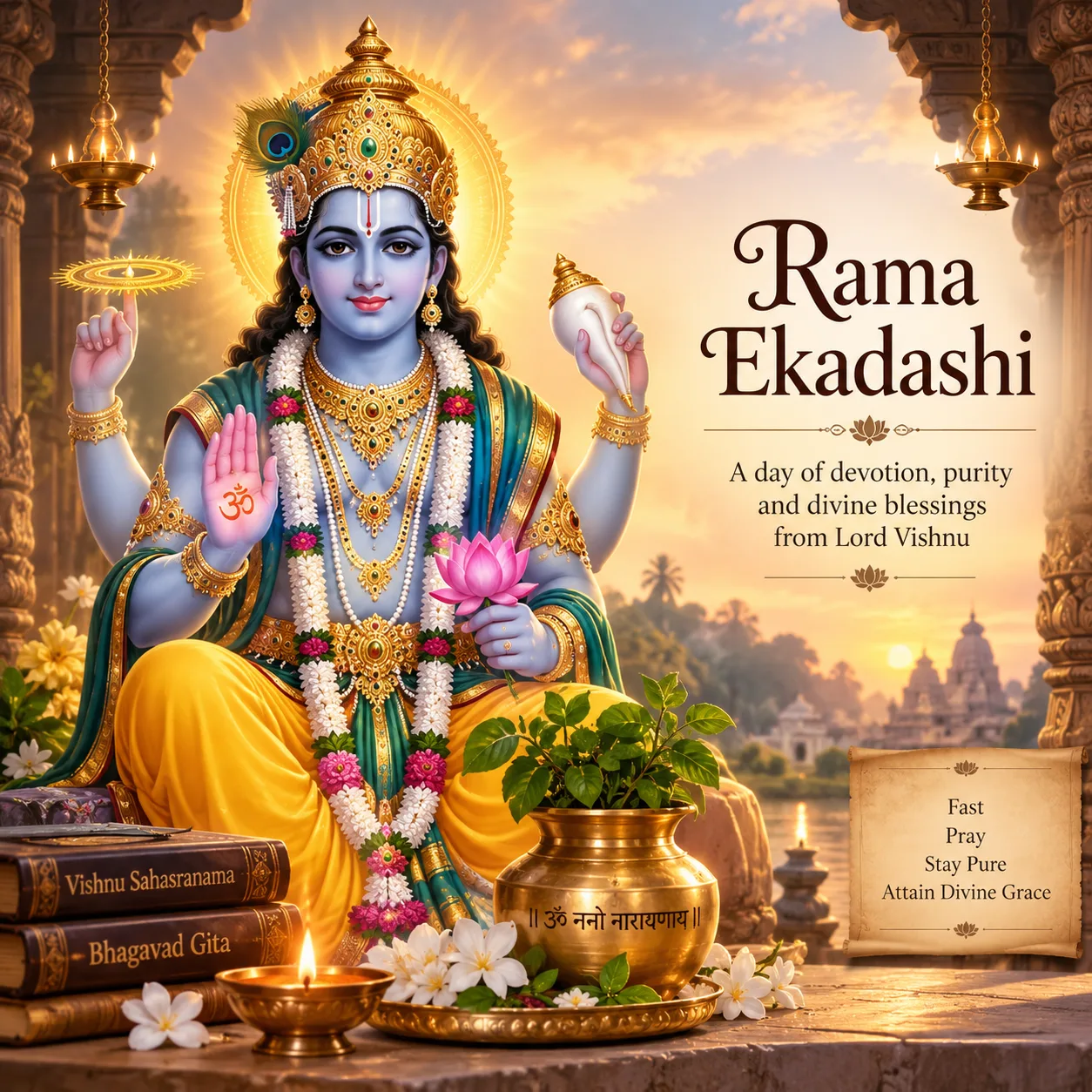
Thursday, Nov 5, 2026
Rama Ekadashi
Rama Ekadashi is an extraordinarily meritorious Vaishnava fast observed on the Krishna Paksha Ekadashi (eleventh lunar day of the waning moon) in the sacred month of Kartika. Occurring just four days before the grand celebration of Deepavali, this holy day is named in honour of 'Rama', one of the revered names of Goddess Mahalakshmi, the eternal divine consort of Lord Sri Hari Vishnu. Worshipping Lord Vishnu alongside Goddess Lakshmi on this day awakens divine grace, eradicates the darkest stains of past negative karmas, and bestows boundless material prosperity, physical vitality, and eternal spiritual liberation (Moksha) upon the sincere seeker.
View Festival Guide
Friday, Nov 6, 2026
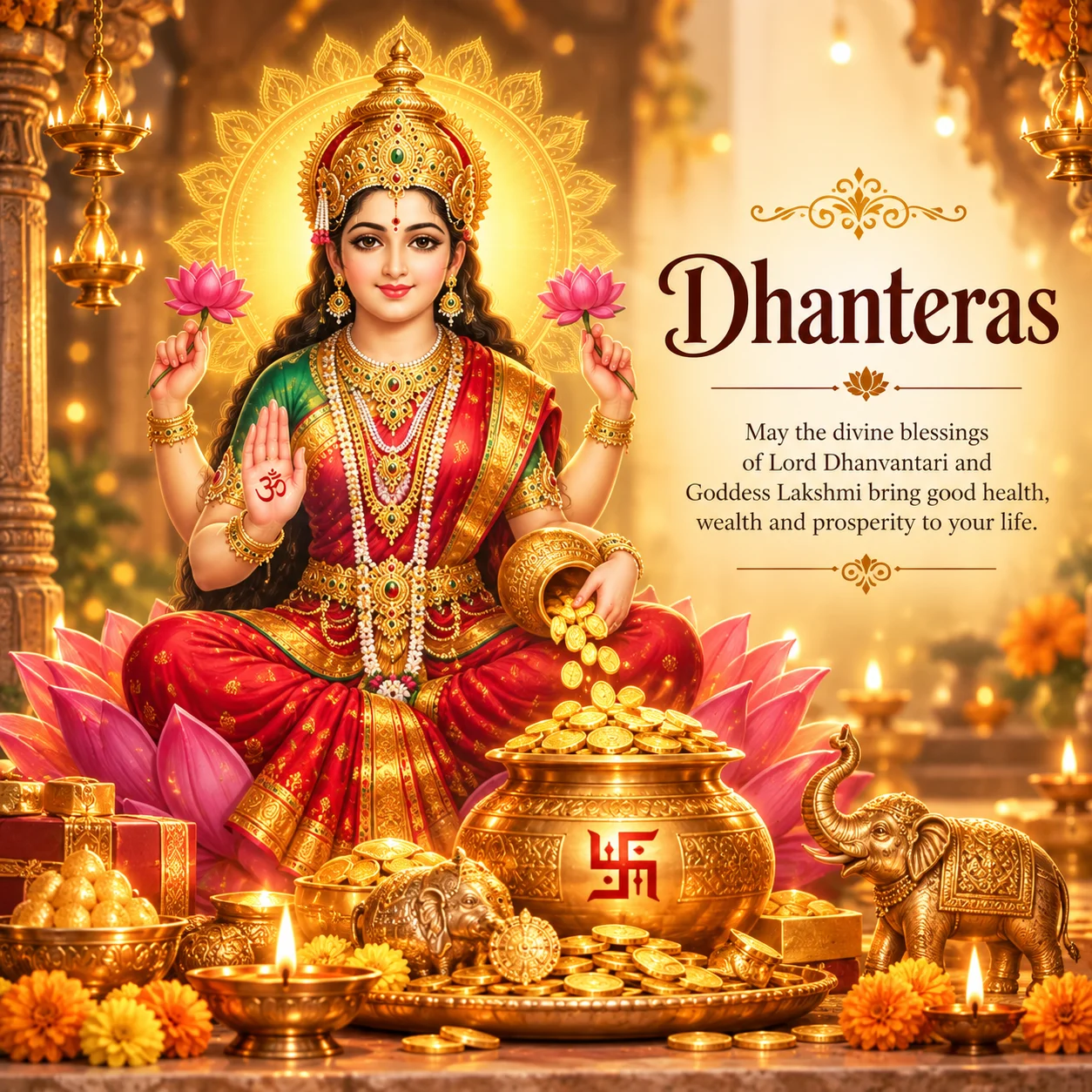
Dhanteras
Dhanteras, celebrated with immense auspiciousness, joy, and splendor across the Hindu world as Dhantrayodashi or Dhanwantari Jayanti, is the grand opening festival that marks the first day of the five-day Deepavali celebrations. Occurring on the thirteenth lunar day (Trayodashi tithi) of the dark fortnight (Krishna Paksha) in the sacred month of Kartika, this vibrant festival is dedicated to the worship of Lord Dhanvantari (the divine physician of the gods and founder of Ayurveda), Goddess Mahalakshmi (the deity of wealth and abundance), and Lord Kubera (the celestial treasurer of the cosmos).
View Festival Guide
Sunday, Nov 8, 2026
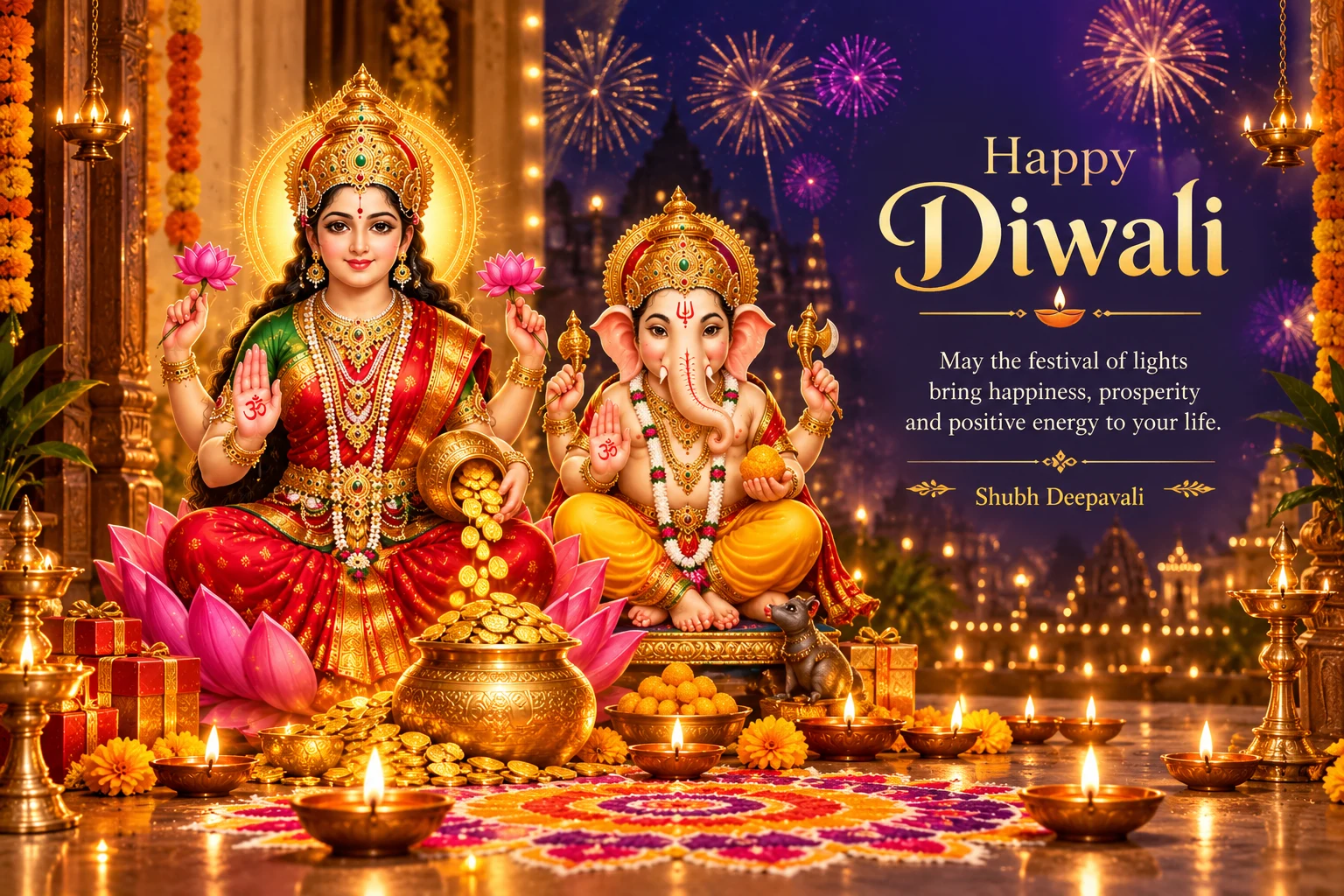
Diwali
Diwali, celebrated universally as Deepavali (meaning 'row of clay lamps'), is the crown jewel of Hindu festivals, celebrated on the darkest New Moon night (Amavasya) of the sacred month of Kartika. Spanning a radiant five-day festive arc, this transcendent festival of lights commemorates the eternal spiritual triumph of light over darkness, divine righteousness (Dharma) over cosmic iniquity (Adharma), knowledge over ignorance, and inner hope over despair. Across the Indian subcontinent and the worldwide diaspora, homes, streets, temples, and waterways are illuminated with millions of glowing earthen oil lamps (Diyas).
View Festival Guide
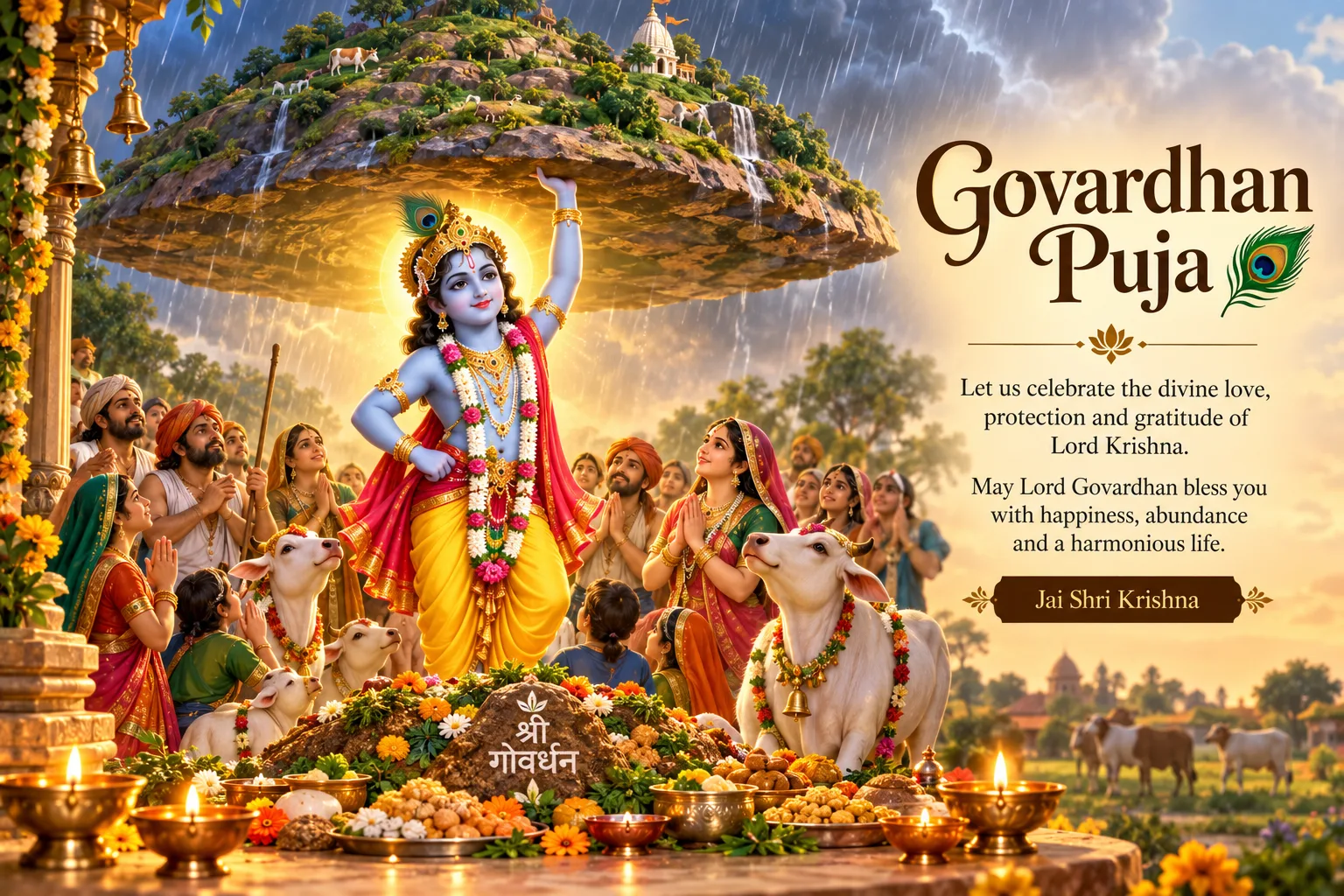
Monday, Nov 9, 2026
Govardhan Puja
Govardhan Puja, also celebrated with immense spiritual fervor, culinary magnificence, and pastoral joy as Annakut (meaning 'mountain of food') or Bali Pratipada, is celebrated on the first lunar day (Pratipada tithi) of the bright fortnight (Shukla Paksha) in the sacred month of Kartika. Occurring on the day immediately following Deepavali Amavasya, this monumental festival is dedicated to the worship of the sacred Govardhan Hill (Giriraj Ji), Lord Sri Krishna, indigenous cows (Go-mata), and the humble soil of Vraja.
View Festival Guide

Wednesday, Nov 11, 2026
Bhai Dooj
Bhai Dooj (also lovingly known as Holi Bhai Dooj or Chaitra Bhai Dooj) is an intensely affectionate, culturally sacred, and spiritually protective Hindu festival observed on the second day (Dwitiya tithi) of the Krishna Paksha in the month of Chaitra according to the traditional Hindu calendar. Occurring on the second day immediately following the vibrant festival of colors (Holi), this sacred observance mirrors the post-Diwali Bhai Dooj, serving to reaffirm, sanctify, and celebrate the pure, unconditional bond of love and protection between brothers and sisters across Sanatana Dharma.
View Festival Guide
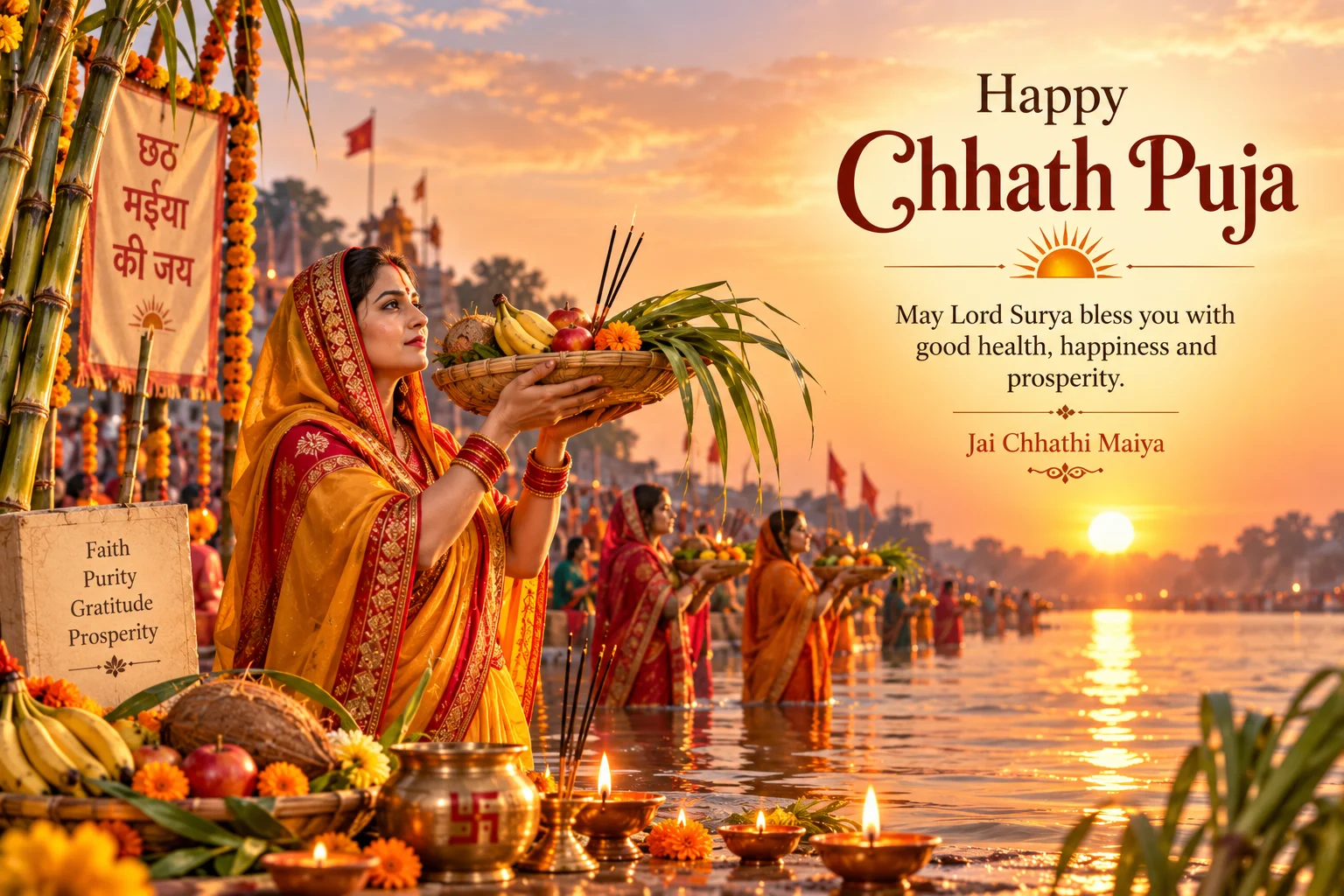
Sunday, Nov 15, 2026
Chhath Puja
Chhath Puja, celebrated with unparalleled spiritual asceticism, Vedic purity, and cosmic reverence from the Chaturthi to Saptami tithis of the Shukla Paksha in the sacred month of Kartika, is the grandest solar festival of the Indian subcontinent. Known classically as Surya Shashthi, Dala Chhath, Chhathi Maiya, and Mahaparva, this sublime four-day pilgrimage of the soul is dedicated exclusively to Bhagavan Surya (the visible Sun God, Pratyaksha Devata) and His divine female dynamic energy, Chhathi Maiya—revered scripturally as Usha (the cosmic dawn) and Pratyusha (the cosmic dusk), and identified in the Devi Bhagavata Purana as Goddess Devasena or Shashti Devi, the sixth cosmic manifestation of primordial Nature (Mula Prakriti). Originating in the ancient cultural heartland of Bihar, Jharkhand, and eastern Uttar Pradesh, Chhath Puja has expanded globally as a shining beacon of ecological harmony, community egalitarianism, and unshakeable yogic austerity.
View Festival Guide
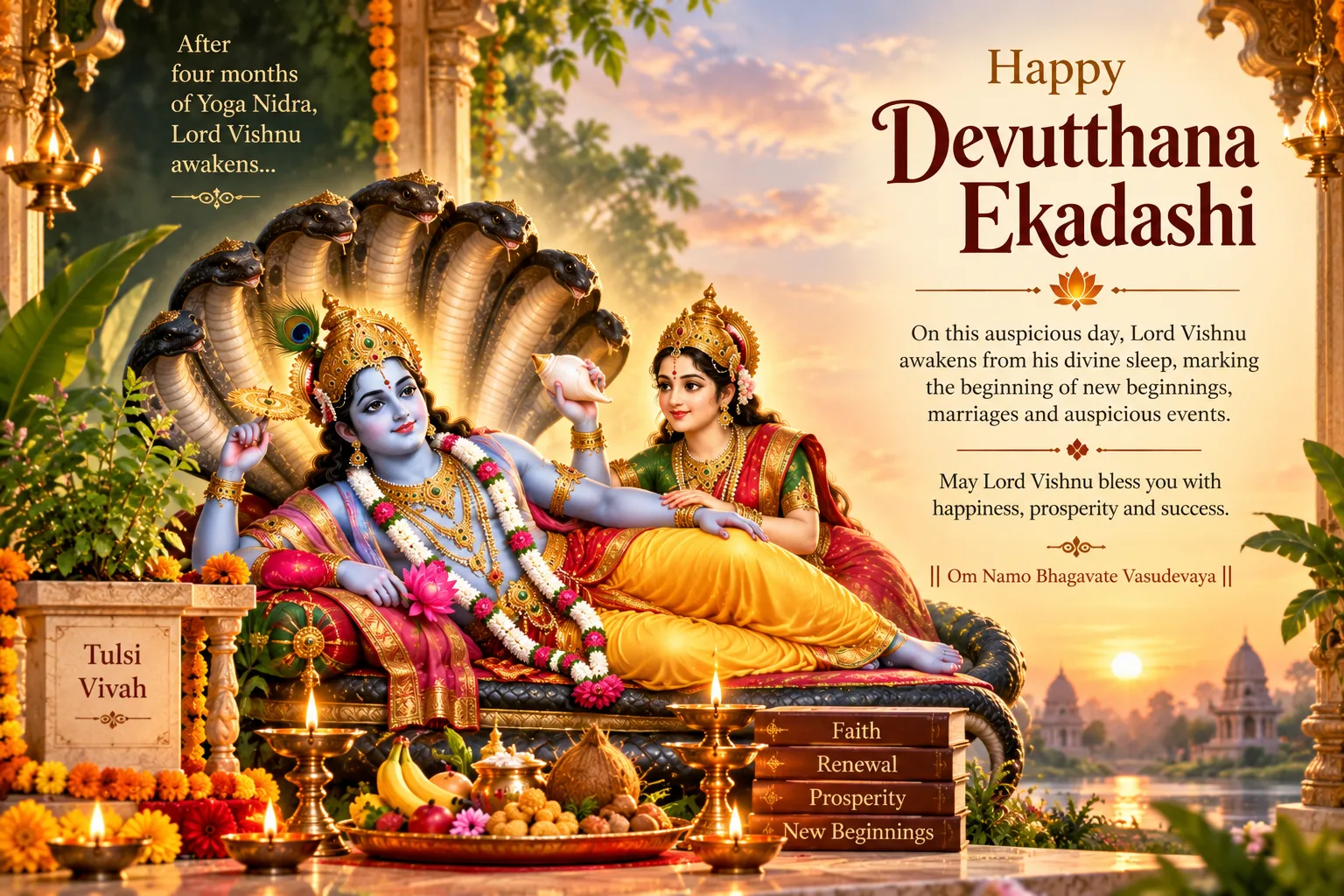
Friday, Nov 20, 2026
Devutthana Ekadashi
Devutthana Ekadashi, celebrated across the length and breadth of India as Prabodhini Ekadashi, Dev Uthani Gyaras, and Bodhini Ekadashi, is one of the most spiritually profound, joyous, and universally revered festivals in the Hindu calendar. Occurring on the Shukla Paksha Ekadashi (the eleventh lunar day of the waxing moon) in the sacred month of Kartika, this transcendental tithi marks the glorious awakening of the Supreme Preserver, Lord Sri Maha Vishnu, from His four-month mystic yogic slumber (Yoga Nidra). Lord Vishnu enters this cosmic meditative rest on Devshayani Ekadashi in the month of Ashadha, reclining upon the celestial serpent Ananta Shesha in the causal Milk Ocean (Kshirasagara). For four full lunar months—a sacred period known as Chaturmasya—the cosmos observes solemn quietude, and all auspicious life-cycle ceremonies such as marriages, housewarmings, and sacred thread initiations are held in abeyance. With the dawn of Devutthana Ekadashi, the universe awakens to boundless divine joy, celestial trumpets resound, and the sanctifying season of human marital unions and sacred sacraments officially resumes.
View Festival Guide
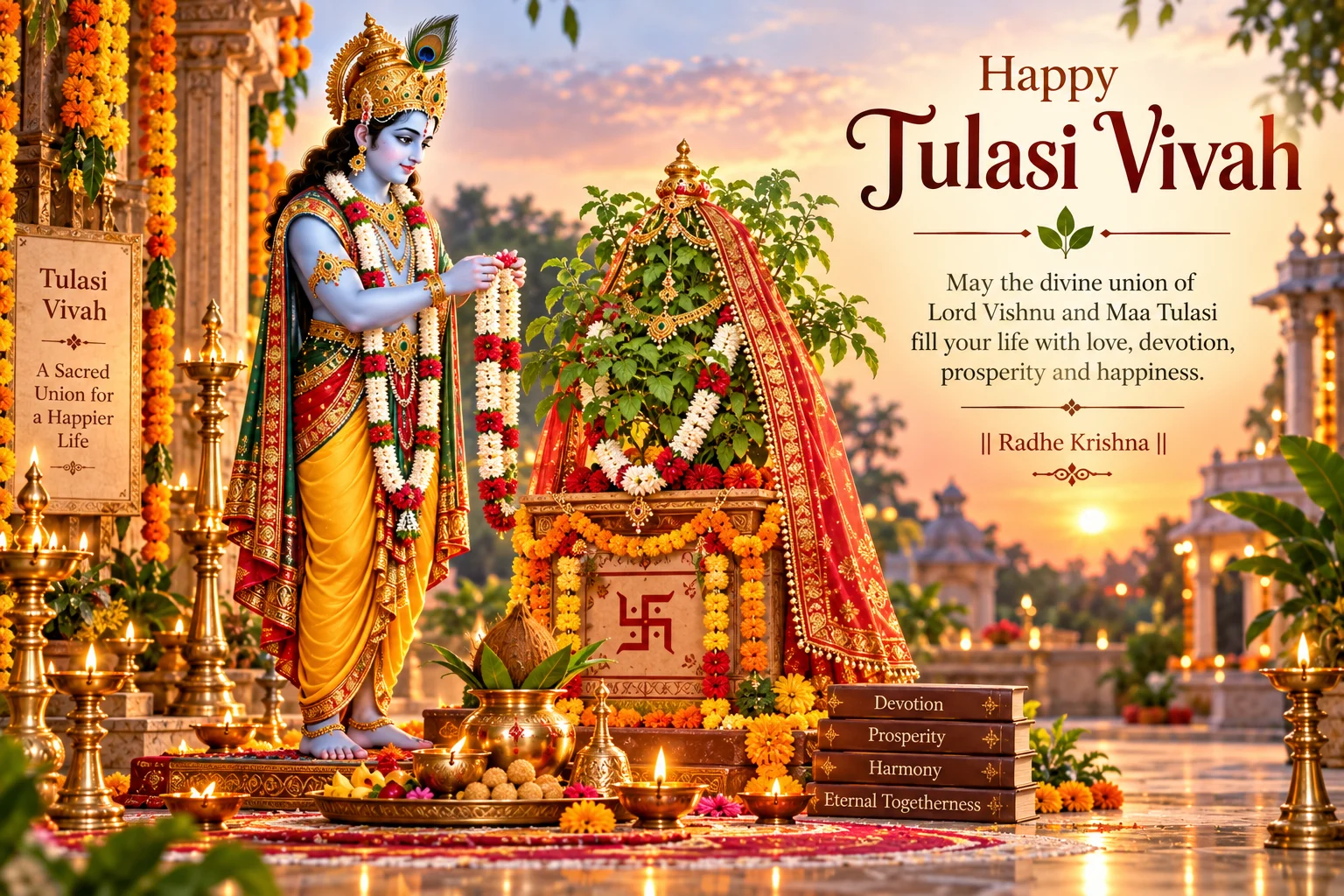
Saturday, Nov 21, 2026
Tulasi Vivah
Tulasi Vivah, observed with supreme aesthetic splendor, Vedic sanctity, and devotional grandeur across India, is the ceremonial divine wedding of Goddess Tulasi—the sacred basil plant personifying divine purity and unshakeable chastity—with Lord Sri Maha Vishnu in His sacred, self-manifested stone form of Sri Shaligram (or Sri Krishna / Damodara). Celebrated during the luminous waxing fortnight of the holy month of Kartika, most traditionally on Kartika Shukla Dwadashi (the twelfth lunar day immediately following Devutthana Ekadashi) or spanning the auspicious five-day window between Ekadashi and Kartika Purnima, this celestial nuptial ceremony marks the official, joyous inauguration of the Hindu wedding season (Vivaha Muhurats). Across millions of households and temples, courtyards are transformed into vibrant wedding pavilions where devotees perform every intricate Vedic marriage rite, establishing a sacred cosmic bridge between earthly devotion, environmental reverence, and transcendental love.
View Festival Guide