




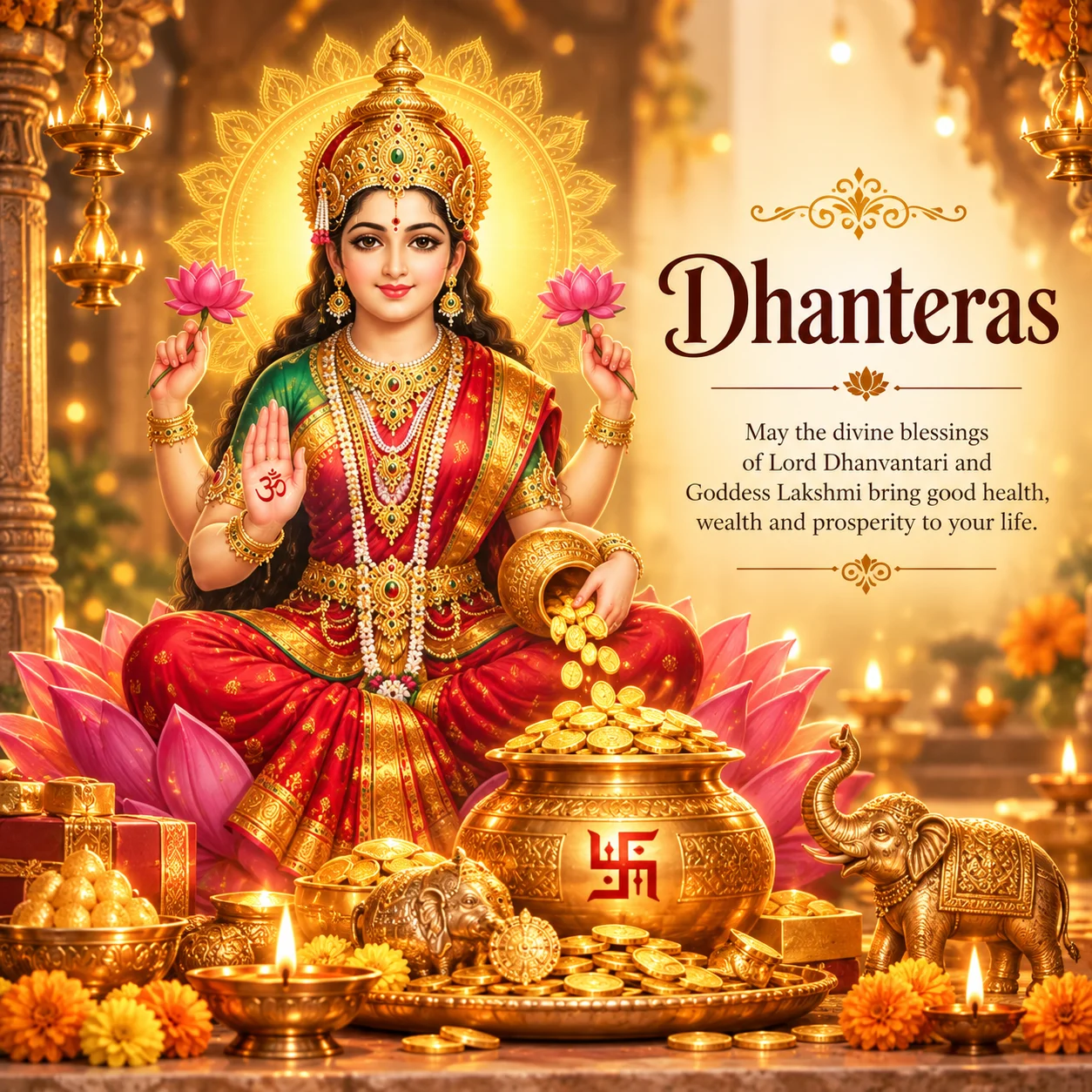
Dhanteras, celebrated with immense auspiciousness, joy, and splendor across the Hindu world as Dhantrayodashi or Dhanwantari Jayanti, is the grand opening festival that marks the first day of the five-day Deepavali celebrations. Occurring on the thirteenth lunar day (Trayodashi tithi) of the dark fortnight (Krishna Paksha) in the sacred month of Kartika, this vibrant festival is dedicated to the worship of Lord Dhanvantari (the divine physician of the gods and founder of Ayurveda), Goddess Mahalakshmi (the deity of wealth and abundance), and Lord Kubera (the celestial treasurer of the cosmos).
Dhanteras 2026: Date, Puja Timings, Rituals & Stories
Dhanteras Timings & Panchang
Important festival dates and auspicious timings
Usha Arghya (Sunrise)
06:37 am
Sandhya Arghya (Sunset)
05:33 pm
Start Date
Friday, 6 Nov 2026
Puja Muhurat
10:35 am – 10:30 am
Dhanteras
Rooted deeply in the monumental Puranic chronicles of the Srimad Bhagavatam, Vishnu Purana, and Agni Purana, Dhanteras commemorates the historic cosmic appearance of Lord Dhanvantari during the grand churning of the celestial ocean (Samudra Manthan). Emerging from the milky ocean holding a divine golden pitcher filled with the immortal nectar of life (Amrita Kalash), Lord Dhanvantari manifested to rid humanity of physical diseases, mental afflictions, and premature death. Simultaneously, Goddess Mahalakshmi emerged from the ocean, showering the cosmos with prosperity and grace.
On this day, millions of households and business establishments clean and illuminate their premises, purchasing auspicious items made of metal—especially gold, silver, brass, copper utensils, and broomsticks (Jhadu)—which symbolizes inviting Goddess Lakshmi into the home. At dusk, the solemn ritual of Yama Deepam is performed, where a four-faced oil lamp is lit outdoors facing South to shield family members from untimely death (Apamrityu), ushering in health, fortune, and spiritual radiance.
Why is Dhanteras Celebrated?
Dhanteras is celebrated to commemorate the divine appearance (Jayanti) of Lord Dhanvantari, the primordial father of Ayurveda and divine healer who emerged with the nectar of immortality (Amrita).
It marks the welcome of Goddess Mahalakshmi and Lord Kubera into households, celebrating both spiritual wealth (Arogya / health) and material abundance (Dhana).
The festival averts the tragedy of untimely death (Apamrityu) through the ancient twilight rite of Yama Deepam, protecting family members from accidents and fatal diseases.
- Purchasing auspicious gold, silver, brass utensils, vehicles, and sacred brooms (Jhadu).
- Worshipping Lord Dhanvantari with medicinal herbs, tulsi, and panchamrita for family health.
- Performing Kubera and Lakshmi Puja in businesses and homes for commercial and domestic prosperity.
- Lighting a four-faced mustard/sesame oil lamp (Yama Deepam) outdoors facing South at dusk.
- Decorating doorways with vibrant floral rangolis, mango leaves, and clay oil lamps.
Scriptural Chronicles in the Srimad Bhagavatam, Vishnu Purana, and Skanda Purana
The Churning of the Ocean and the Advent of Dhanvantari
The monumental narrative of Dhanteras is chronicled in the Eighth Canto of the Srimad Bhagavatam. When the Devas and Asuras united to churn the cosmic milk ocean (Ksheera Sagara) in search of immortality, fourteen divine treasures (Chaturdasha Ratnas) emerged. On Kartika Krishna Trayodashi, an extraordinary, radiant personality manifest from the swirling waters.
He was youthful, majestic, with long muscular arms, glowing with the golden effulgence of molten gold, dressed in yellow silk garments, adorned with celestial earrings and pearls. In His hands He held a divine golden pitcher brimming with the celestial nectar of immortality (Amrita Kalasha), alongside medicinal herbs, a leech (Jalauka), and the conch. This was Bhagwan Dhanvantari, an avatar of Lord Vishnu, sent to eradicate physical illness, teach the science of Ayurveda, and sustain cosmic health.
The Emergence of Goddess Mahalakshmi and Kubera's Treasury
From the same cosmic churning emerged Goddess Mahalakshmi, seated upon an exquisite blooming lotus. The celestial elephants of the four quarters bathed Her with holy waters from golden pots, and She placed the fragrant garland of victory around the neck of Lord Vishnu, accepting Him as Her eternal consort.
Lord Kubera, the sovereign king of the Yakshas, was appointed by Lord Shiva and Brahma as the supreme guardian of all celestial wealth and gems. Worshipping Dhanvantari, Lakshmi, and Kubera together on Dhanteras signifies the complete synthesis of physical health, moral righteousness, and economic prosperity.
The Legend of King Hima's Son and the Yama Deepam Rite
A popular folk narrative recorded in the Skanda Purana tells of the sixteen-year-old son of King Hima, whose horoscope predicted he would die of snakebite on the fourth day of his marriage. His young bride was determined to save him. On the predicted night of Kartika Krishna Trayodashi, she did not allow him to sleep.
She heaped all her gold, silver, brass ornaments, and coins in a gleaming pile at the doorway of the sleeping chamber and lit hundreds of clay lamps. When Lord Yama arrived in the guise of a lethal serpent, the dazzling brilliance of the lamps and metals blinded his eyes. Unable to enter, Yama coiled upon the pile of gold, listening through the night to the bride's melodious devotional songs. At dawn, the fatal hour passed safely, and Yama departed peacefully. This miraculous deliverance gave birth to the tradition of lighting Yama Deepam on Dhanteras.
Health as Prime Wealth, Auspicious Metallurgy, and Light over Fear
Arogyam Parama Bhagyam: Health as the Ultimate Wealth
Ancient Indian philosophy places health above all material possessions: 'Arogyam Parama Bhagyam, Swasthyam Sarvartha Sadhanam' (Health is the supreme fortune; without health, no purpose in life can be achieved). Dhanteras places Lord Dhanvantari first, reminding humanity that worldly gold and riches are meaningless if the physical body and mental faculties are crippled by disease.
Celebrating Dhanvantari Jayanti inspires householders to adopt Ayurvedic lifestyles: eating seasonal sattvic foods, honoring medicinal herbs, purifying living environments, and maintaining mental equanimity.
The Energetic Science of Purchasing Metals and the Sacred Broom
In Vedic metallurgy, metals carry distinct energetic vibrations. Gold carries the solar radiance of vital energy; silver carries the cooling lunar vibrations of mental tranquility; brass and copper conduct high spiritual energy and possess antimicrobial properties. Purchasing metals on Dhanteras invites positive electromagnetic energy into the home.
Similarly, purchasing a new broom (Jhadu) on Dhanteras is deeply symbolic. In folk tradition, the broom represents Goddess Alakshmi (poverty, dirt, inertia) being swept out of the house to welcome Goddess Lakshmi (cleanliness, order, abundance).
Celebration Traditions, Auspicious Shopping, and Evening Protocols
Auspicious Buying and Market Festivities
Markets remain brilliantly illuminated throughout Dhanteras day and night. Families flock to jewelry and utensil stores to purchase new gold ornaments, silver coins bearing images of Lakshmi and Ganesha, brass utensils, and new household appliances.
It is considered inauspicious to purchase iron, steel, sharp knives, scissors, or glass articles on Dhanteras, as they are astrologically associated with Rahu and Saturn. When bringing new metal utensils home, householders never bring them empty; they are traditionally filled with fresh water, rice, or sweets to symbolize arriving abundance.
The Yama Deepam Twilight Protocol and Dhanvantari Puja
During the evening Pradosha Muhurat, families gather in the household altar. Idols of Lord Dhanvantari, Goddess Lakshmi, and Lord Kubera are worshipped with vermilion, flowers, and sweets. The newly purchased metals and brooms are anointed with turmeric and placed beside the altar.
At dusk, the eldest woman or head of the household prepares a large four-faced earthen lamp (Yama Deepam) filled with mustard or sesame oil and four cotton wicks. A coin and yellow cowrie are placed inside. The lamp is lit and placed outdoors near the main entrance or rubbish area, facing directly toward the South direction, praying to Lord Yama to protect the family from accidents and untimely demise.
Dhanteras Puja Vidhi (Step by Step)
- 1
Pratah Snana and Shaucha
Awaken early at dawn, thoroughly clean and sweep the entire household, take a purifying bath with Ganga water, and wear fresh clean traditional festive garments.
- 2
Dhanvantari and Lakshmi Sankalpa
Sit facing East in the household altar, take holy water, rice, and yellow flowers in the right palm, and pronounce the solemn Dhanteras Sankalpa for family health, prosperity, and longevity.
- 3
Altar Sthapana and Rangoli
Draw an auspicious Swastika or lotus rangoli at the entrance. On a wooden Chauki covered with red or yellow silk cloth, establish the murtis or portraits of Lord Dhanvantari, Goddess Mahalakshmi, and Lord Kubera.
- 4
Deepa and Dhoop Prajvalana
Light a pure cow ghee lamp at the altar. Burn fragrant sandalwood, loban, and guggul incense to sanctify the home with positive vibrations.
- 5
Panchamrita Abhisheka
Bathe the metal murtis or coins with pure cow milk, curd, ghee, honey, and sugar, followed by Ganga water and rose water. Wipe gently with clean cloth.
Dhanteras Puja Samagri List
Altar, Deity, and Vessel Essentials
- Idol or framed portrait of Lord Dhanvantari holding the Amrita Kalasha
- Murtis or silver coins depicting Goddess Mahalakshmi and Lord Ganesha
- Lord Kubera photo or consecrated Kubera Yantra
- Wooden pedestal (Chowki) and clean red or yellow silk fabric
- Newly purchased brass, copper, or silver utensils and new broom (Jhadu)
- Brass deepa, pure desi cow ghee, long cotton wicks, and pure camphor
Yama Deepam and Ritual Powders
- Large four-faced earthen lamp (Choumukha Diya) for Yama Deepam
- Pure mustard oil or sesame oil for the outdoor Yama lamp
- Bright red vermilion (Sindoor), sacred Kumkum, and turmeric powder
- Pure yellow sandalwood paste (Chandana) and unbroken sacred rice (Akshata)
- Whole dry coriander seeds (Dhaniya ke beej) and raw jaggery (Gud)
- Clean raw cow's milk and holy Ganga water for libations
Herbs, Flowers, and Naivedya Items
- Fresh Tulsi leaves and sacred medicinal herbs (Neem, Giloy)
- Yellow and orange marigold garlands, red hibiscus blossoms, and rose petals
Mantras and Prayers for Dhanteras
Dhanteras Vrat Rules and Fasting Guidelines
Rules of Auspicious Purchasing
Purchasing on Dhanteras must be conducted strictly during the auspicious Choghadiya or Pradosha Muhurat. Purchase items made of gold, silver, brass, copper, or clay. Avoid purchasing iron utensils, aluminum, sharp knives, scissors, or dark synthetic items, as they represent inauspicious energies.
The Protocol of Yama Deepam
- The Yama Deepam must be lit strictly at twilight (Pradosha Kala) and placed outdoors, never inside the puja room or living area.
- Orient the four wicks or the lamp's main spout directly toward the South, the quarter governed by Lord Yama.
- Once the Yama lamp is placed outside, family members should not step over it or leave the house repeatedly.
- Clean the entire home thoroughly; never allow garbage or clutter to accumulate on Dhanteras.
Dietary Guidelines and Purity
Maintain strict dietary purity throughout Dhanteras. No non-vegetarian food, eggs, alcohol, onions, or garlic should be cooked or consumed. Prepare the naivedya with pure cow ghee and offer it with complete devotion.
Dos and Don'ts of Dhanteras
Good Practices (Do's)
- Purchase gold, silver, brass utensils, clay lamps, or a new broom on Dhanteras during auspicious Muhurat.
- Worship Lord Dhanvantari with fresh Tulsi leaves and medicinal herbs for family health and longevity.
- Light a four-faced lamp (Yama Deepam) outdoors facing South at dusk to ward off untimely death.
- Offer whole coriander seeds mixed with jaggery at the altar to attract lasting financial stability.
- Keep the entrance of your home clean, decorated with fresh rangoli and glowing oil lamps.
Dhanteras Across Regions
| Region | Local Name |
|---|---|
| Northern India (Delhi, Uttar Pradesh, Rajasthan, Punjab) | Dhantrayodashi and Utensil Market Rush |
| Gujarat and Western India | Dhanteras and Chopda Pujan Preparation |
| Maharashtra and Goa | Dhanatrayodashi and Coriander Seed Offering |
| Southern India (Tamil Nadu, Karnataka, Andhra Pradesh) | Dhanvantari Jayanti and Marundhu Preparation |
Dhanteras FAQs
Why is Lord Dhanvantari worshipped on Dhanteras before Goddess Lakshmi?
Lord Dhanvantari emerged from the celestial milk ocean on this day carrying the pitcher of immortal nectar (Amrita). In Hindu philosophy, health (Arogya) is the supreme wealth, without which material prosperity cannot be enjoyed. Therefore, worshipping Dhanvantari first prioritizes health and vitality.
What is the spiritual significance of purchasing a new broom (Jhadu) on Dhanteras?
In Hindu folklore, the broom is considered a physical embodiment of Goddess Mahalakshmi. Purchasing a broom symbolizes sweeping poverty, misery, and negative inertia (Alakshmi) out of the home, clearing the space for divine purity, order, and wealth to reside.
Why are whole dry coriander seeds (Dhaniya) offered on Dhanteras?
Coriander seeds are recognized as an ancient symbol of wealth and fertility in agrarian India. Offering coriander seeds to Goddess Lakshmi and later planting a portion in the garden represents sowing seeds of continuous financial growth and prosperity.
Upcoming Festivals
View All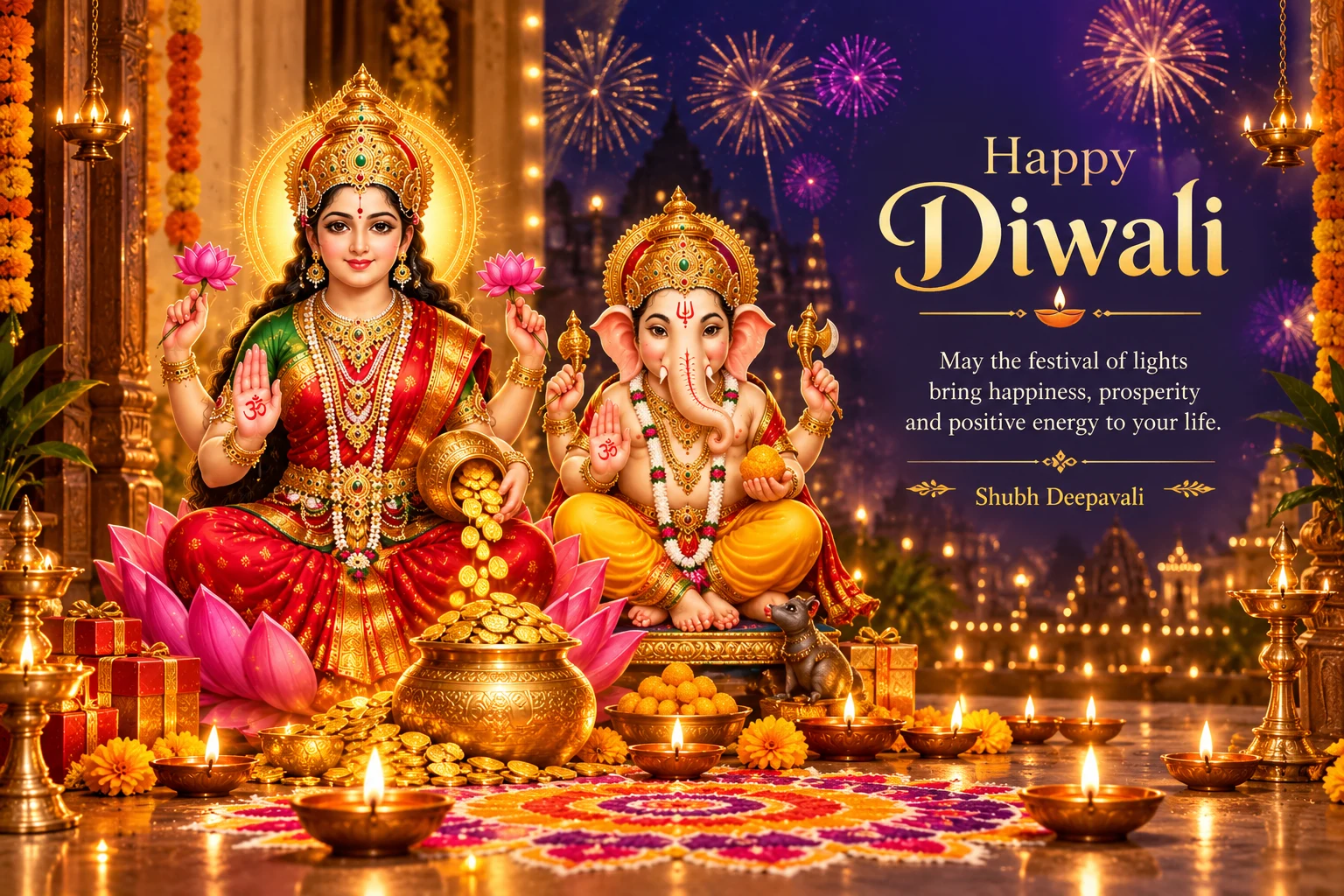
Sunday, Nov 8, 2026
Diwali
Diwali, celebrated universally as Deepavali (meaning 'row of clay lamps'), is the crown jewel of Hindu festivals, celebrated on the darkest New Moon night (Amavasya) of the sacred month of Kartika. Spanning a radiant five-day festive arc, this transcendent festival of lights commemorates the eternal spiritual triumph of light over darkness, divine righteousness (Dharma) over cosmic iniquity (Adharma), knowledge over ignorance, and inner hope over despair. Across the Indian subcontinent and the worldwide diaspora, homes, streets, temples, and waterways are illuminated with millions of glowing earthen oil lamps (Diyas).
View Festival Guide
Monday, Nov 9, 2026
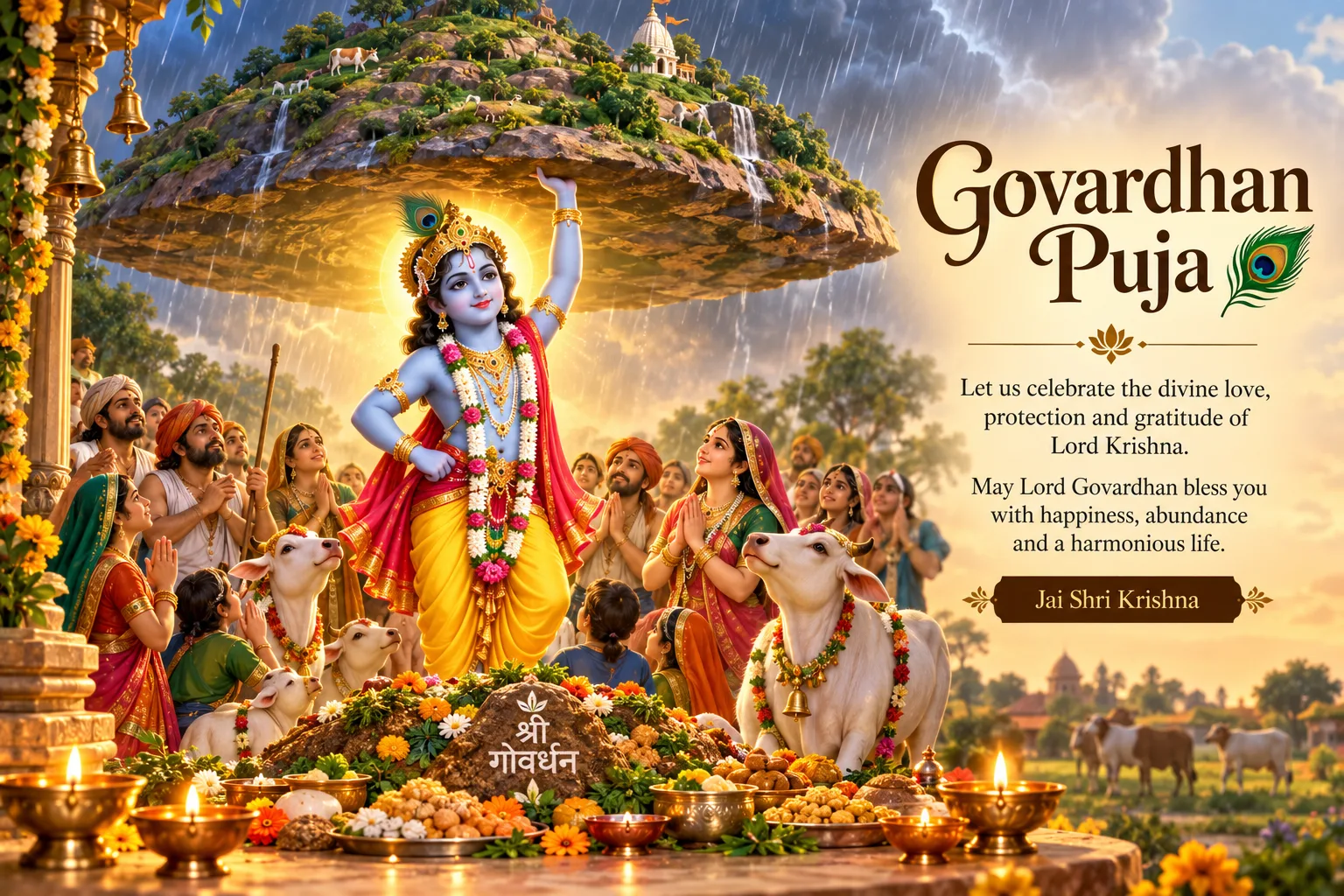
Govardhan Puja
Govardhan Puja, also celebrated with immense spiritual fervor, culinary magnificence, and pastoral joy as Annakut (meaning 'mountain of food') or Bali Pratipada, is celebrated on the first lunar day (Pratipada tithi) of the bright fortnight (Shukla Paksha) in the sacred month of Kartika. Occurring on the day immediately following Deepavali Amavasya, this monumental festival is dedicated to the worship of the sacred Govardhan Hill (Giriraj Ji), Lord Sri Krishna, indigenous cows (Go-mata), and the humble soil of Vraja.
View Festival Guide
Wednesday, Nov 11, 2026
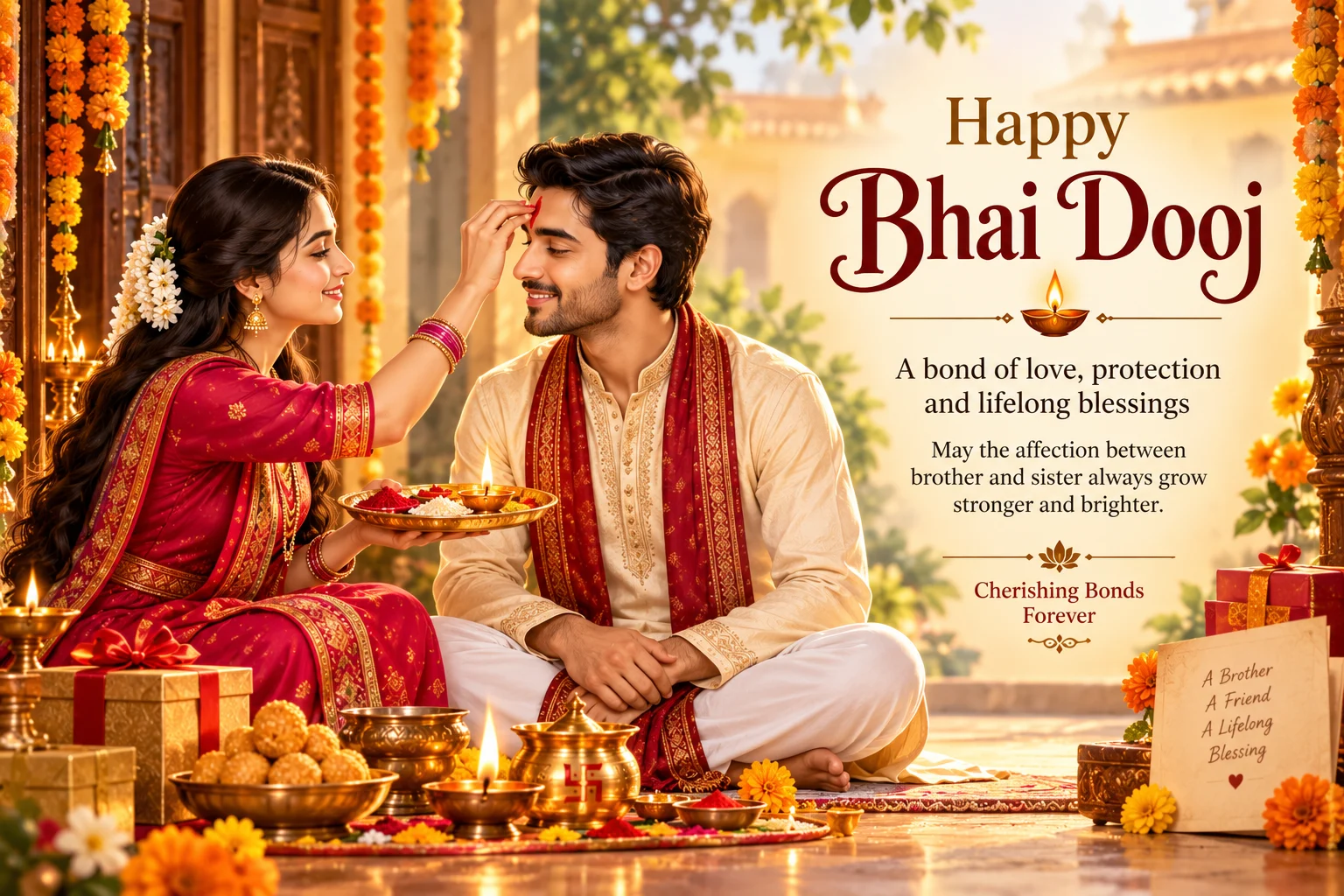
Bhai Dooj
Bhai Dooj (also lovingly known as Holi Bhai Dooj or Chaitra Bhai Dooj) is an intensely affectionate, culturally sacred, and spiritually protective Hindu festival observed on the second day (Dwitiya tithi) of the Krishna Paksha in the month of Chaitra according to the traditional Hindu calendar. Occurring on the second day immediately following the vibrant festival of colors (Holi), this sacred observance mirrors the post-Diwali Bhai Dooj, serving to reaffirm, sanctify, and celebrate the pure, unconditional bond of love and protection between brothers and sisters across Sanatana Dharma.
View Festival Guide
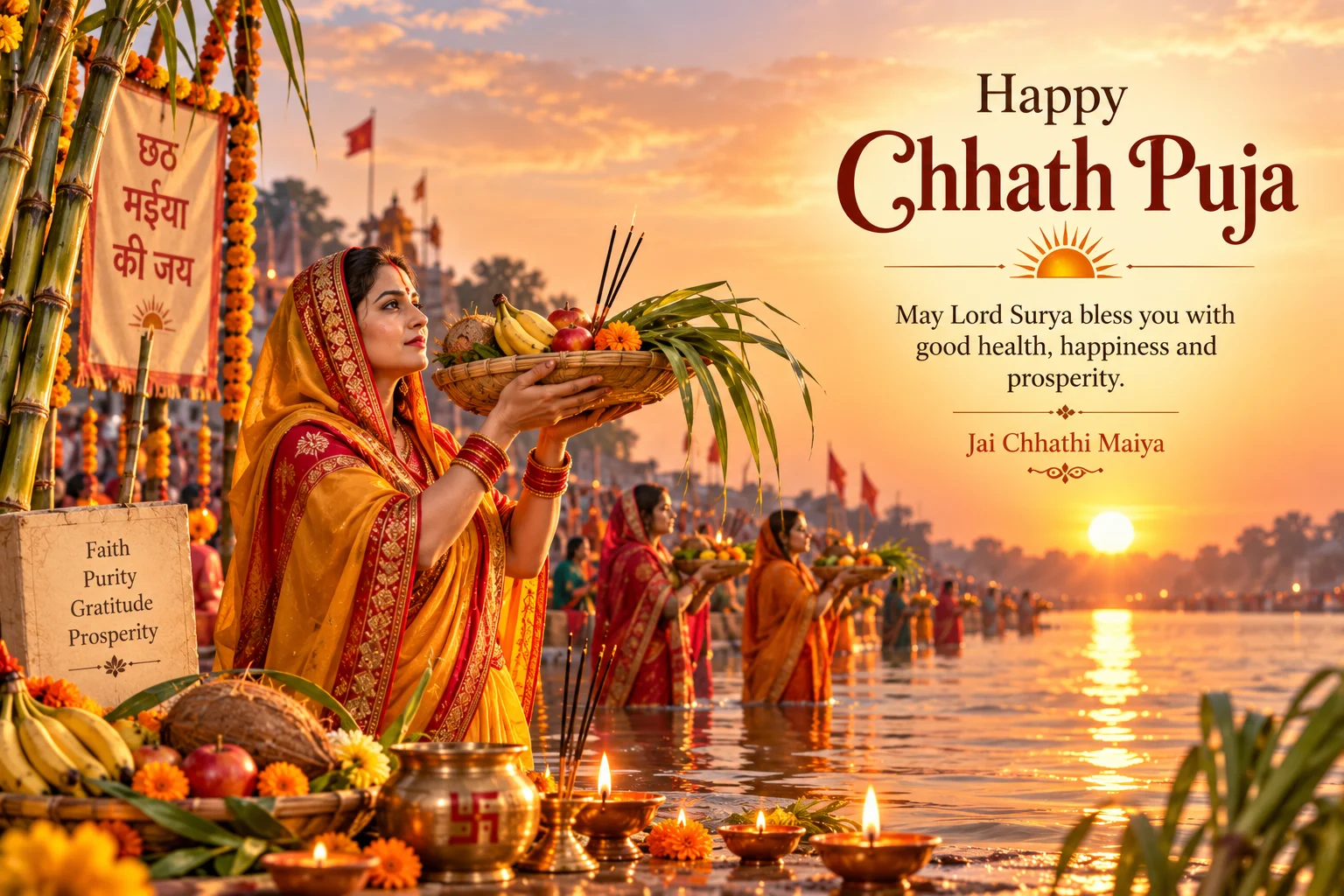
Sunday, Nov 15, 2026
Chhath Puja
Chhath Puja, celebrated with unparalleled spiritual asceticism, Vedic purity, and cosmic reverence from the Chaturthi to Saptami tithis of the Shukla Paksha in the sacred month of Kartika, is the grandest solar festival of the Indian subcontinent. Known classically as Surya Shashthi, Dala Chhath, Chhathi Maiya, and Mahaparva, this sublime four-day pilgrimage of the soul is dedicated exclusively to Bhagavan Surya (the visible Sun God, Pratyaksha Devata) and His divine female dynamic energy, Chhathi Maiya—revered scripturally as Usha (the cosmic dawn) and Pratyusha (the cosmic dusk), and identified in the Devi Bhagavata Purana as Goddess Devasena or Shashti Devi, the sixth cosmic manifestation of primordial Nature (Mula Prakriti). Originating in the ancient cultural heartland of Bihar, Jharkhand, and eastern Uttar Pradesh, Chhath Puja has expanded globally as a shining beacon of ecological harmony, community egalitarianism, and unshakeable yogic austerity.
View Festival Guide
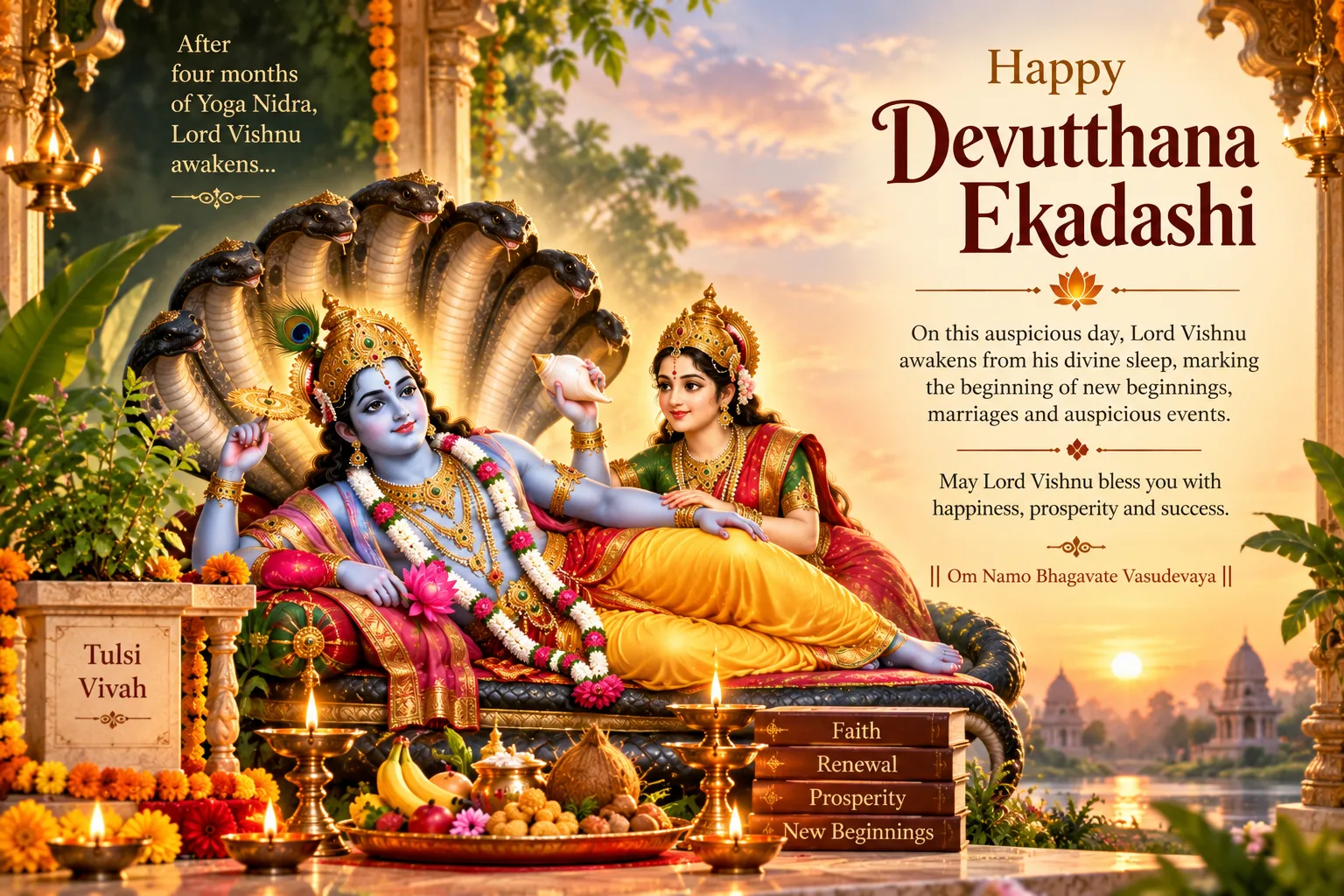
Friday, Nov 20, 2026
Devutthana Ekadashi
Devutthana Ekadashi, celebrated across the length and breadth of India as Prabodhini Ekadashi, Dev Uthani Gyaras, and Bodhini Ekadashi, is one of the most spiritually profound, joyous, and universally revered festivals in the Hindu calendar. Occurring on the Shukla Paksha Ekadashi (the eleventh lunar day of the waxing moon) in the sacred month of Kartika, this transcendental tithi marks the glorious awakening of the Supreme Preserver, Lord Sri Maha Vishnu, from His four-month mystic yogic slumber (Yoga Nidra). Lord Vishnu enters this cosmic meditative rest on Devshayani Ekadashi in the month of Ashadha, reclining upon the celestial serpent Ananta Shesha in the causal Milk Ocean (Kshirasagara). For four full lunar months—a sacred period known as Chaturmasya—the cosmos observes solemn quietude, and all auspicious life-cycle ceremonies such as marriages, housewarmings, and sacred thread initiations are held in abeyance. With the dawn of Devutthana Ekadashi, the universe awakens to boundless divine joy, celestial trumpets resound, and the sanctifying season of human marital unions and sacred sacraments officially resumes.
View Festival Guide
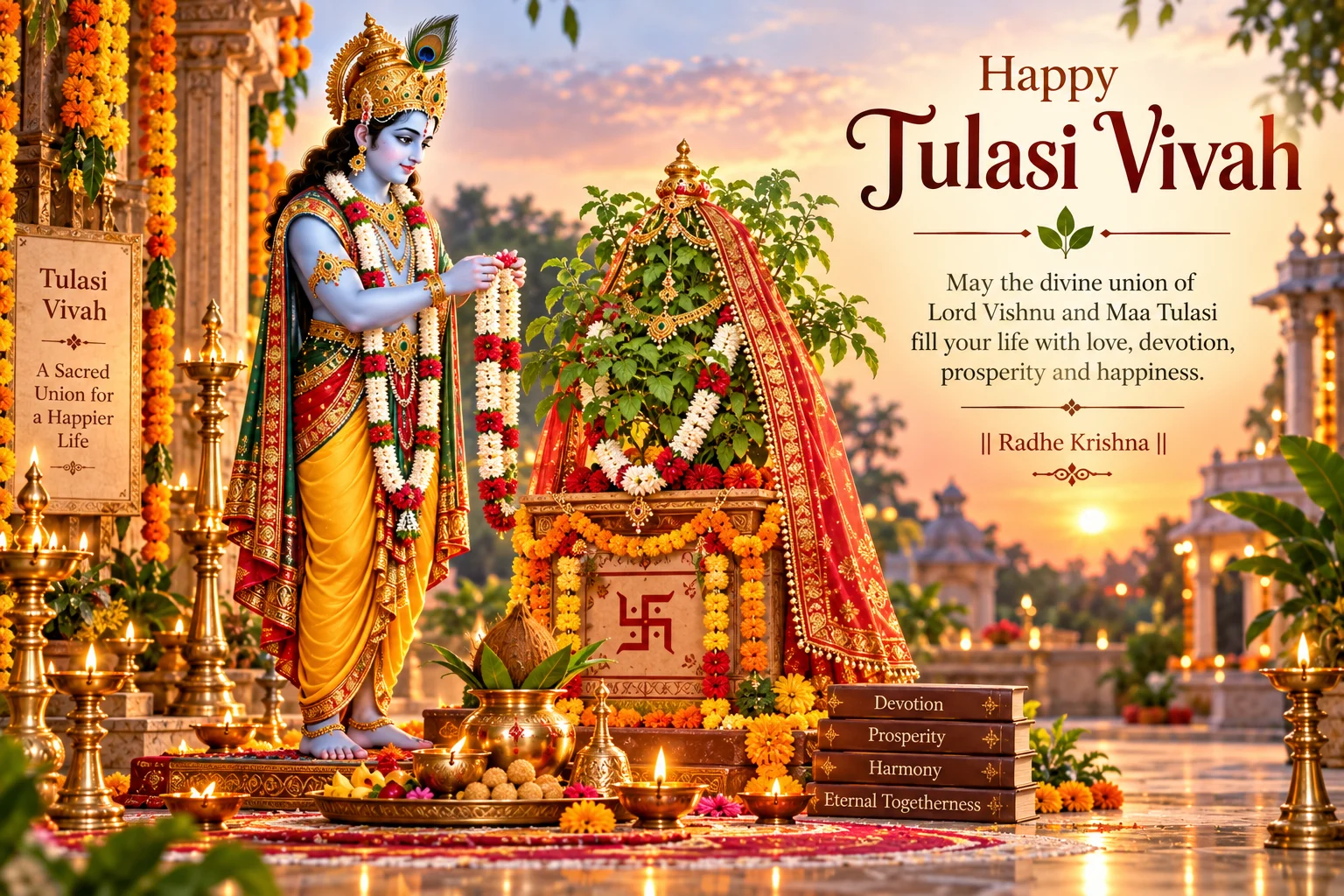
Saturday, Nov 21, 2026
Tulasi Vivah
Tulasi Vivah, observed with supreme aesthetic splendor, Vedic sanctity, and devotional grandeur across India, is the ceremonial divine wedding of Goddess Tulasi—the sacred basil plant personifying divine purity and unshakeable chastity—with Lord Sri Maha Vishnu in His sacred, self-manifested stone form of Sri Shaligram (or Sri Krishna / Damodara). Celebrated during the luminous waxing fortnight of the holy month of Kartika, most traditionally on Kartika Shukla Dwadashi (the twelfth lunar day immediately following Devutthana Ekadashi) or spanning the auspicious five-day window between Ekadashi and Kartika Purnima, this celestial nuptial ceremony marks the official, joyous inauguration of the Hindu wedding season (Vivaha Muhurats). Across millions of households and temples, courtyards are transformed into vibrant wedding pavilions where devotees perform every intricate Vedic marriage rite, establishing a sacred cosmic bridge between earthly devotion, environmental reverence, and transcendental love.
View Festival Guide
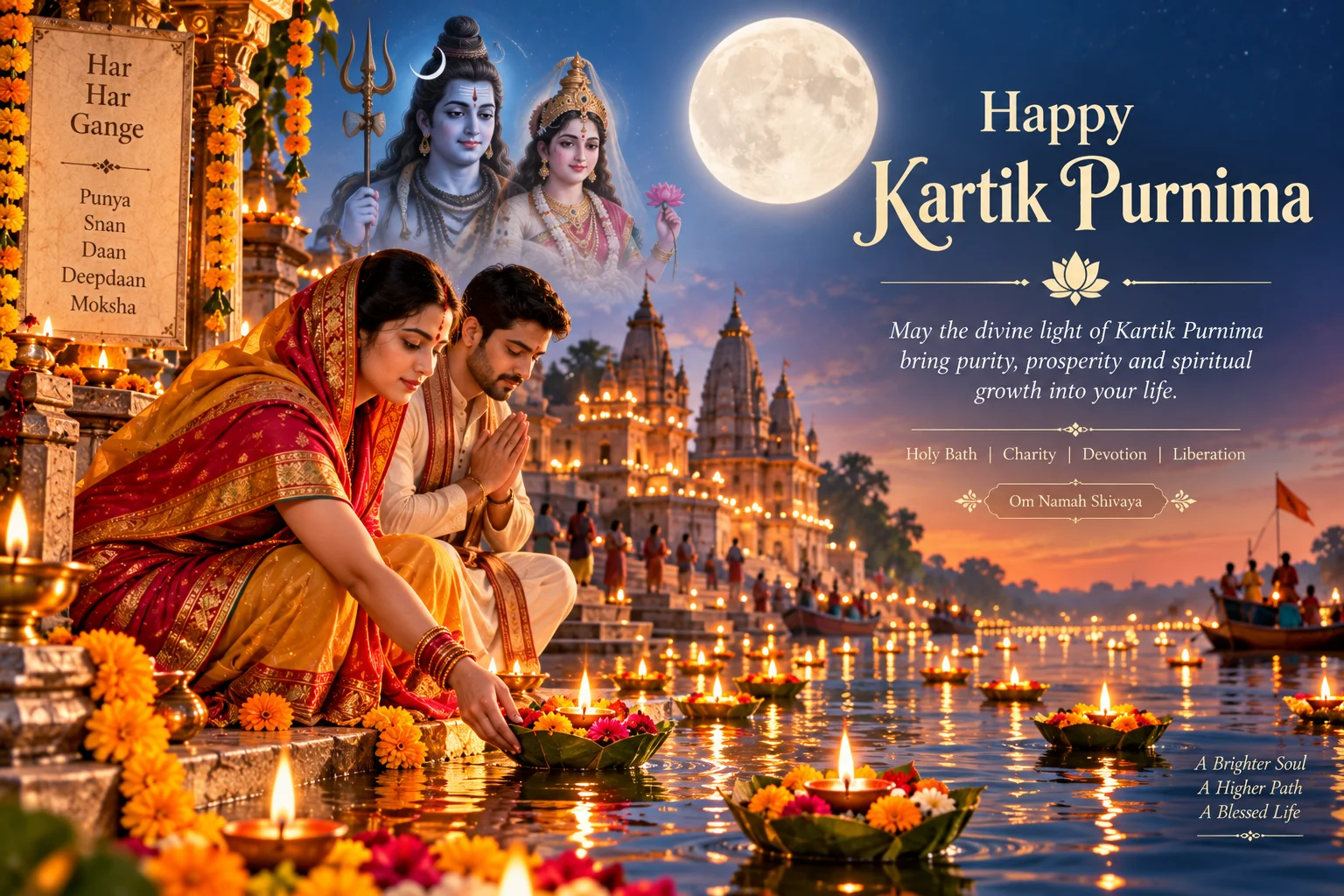
Tuesday, Nov 24, 2026
Kartik Purnima
View Festival Guide
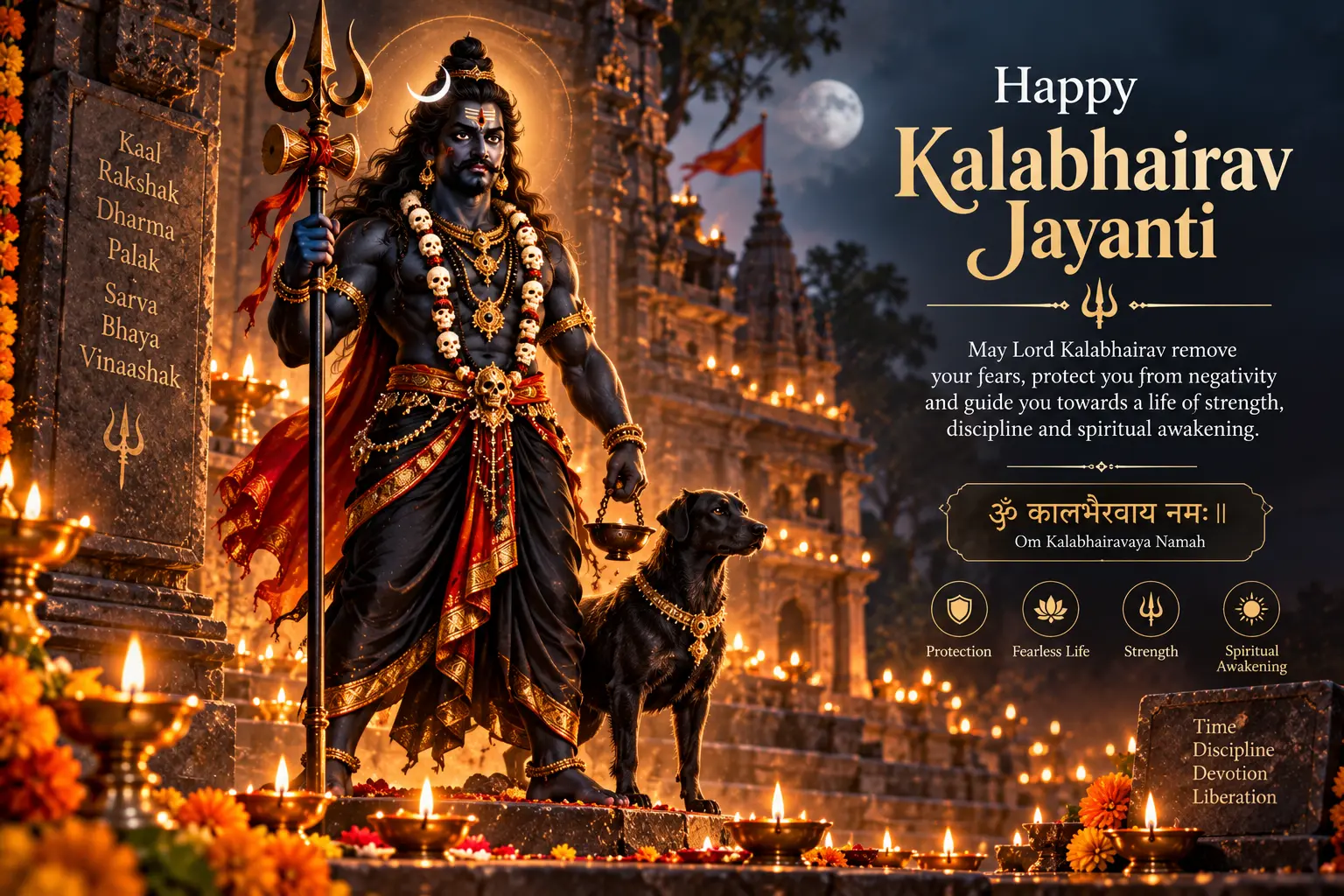
Tuesday, Dec 1, 2026
Kalabhairav Jayanti
Kalabhairav Jayanti, also celebrated with immense esoteric reverence, scriptural awe, and nocturnal solemnity as Bhairava Ashtami, Kalabhairav Ashtami, and Maha Bhairavashtami, marks the divine advent (Jayanti) of Lord Kalabhairava—the terrifying, fierce, and all-destroying manifestation of Lord Sadashiva who presides as the supreme master over all-consuming Time (Kala) and the invincible annihilator of fear (Bhaya-Nashaka). Occurring on the Krishna Paksha Ashtami (the eighth lunar day of the waning moon) in the sacred month of Margashirsha (or Kartika in the Purnimanta calendar prevalent across northern India), this sacred tithi commemorates the cosmic moment when the Supreme Mahadeva manifested His most awe-inspiring form from between His eyebrows to destroy pride, punish unrighteous arrogance, uphold cosmic order, and establish the sacred law of spiritual justice across the universe.
View Festival Guide