




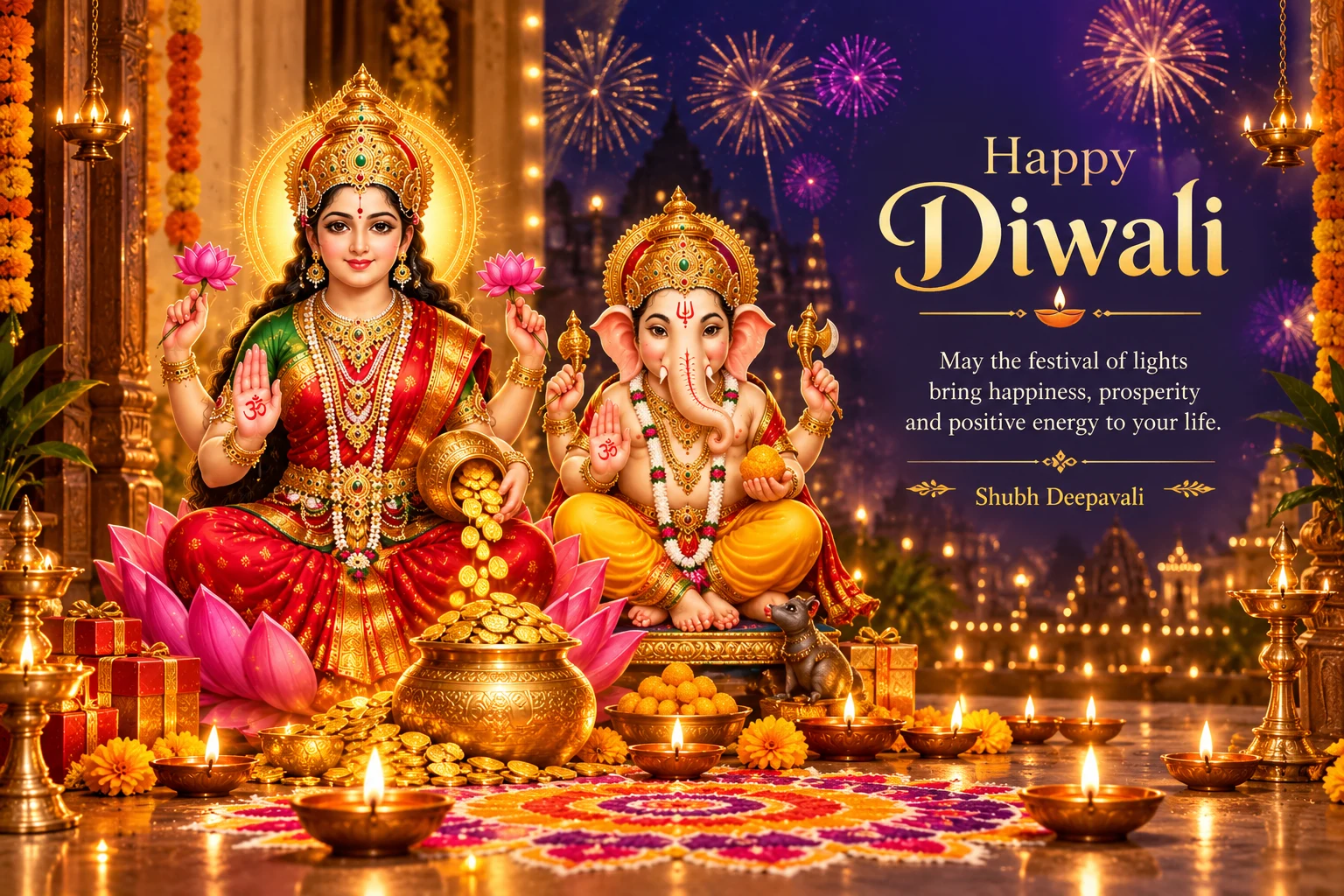
Diwali, celebrated universally as Deepavali (meaning 'row of clay lamps'), is the crown jewel of Hindu festivals, celebrated on the darkest New Moon night (Amavasya) of the sacred month of Kartika. Spanning a radiant five-day festive arc, this transcendent festival of lights commemorates the eternal spiritual triumph of light over darkness, divine righteousness (Dharma) over cosmic iniquity (Adharma), knowledge over ignorance, and inner hope over despair. Across the Indian subcontinent and the worldwide diaspora, homes, streets, temples, and waterways are illuminated with millions of glowing earthen oil lamps (Diyas).
Diwali 2026: Date, Puja Timings, Rituals & Stories
Diwali Timings & Panchang
Important festival dates and auspicious timings
Usha Arghya (Sunrise)
06:38 am
Sandhya Arghya (Sunset)
05:31 pm
Start Date
Sunday, 8 Nov 2026
Lakshmi Puja Muhurat
05:55 pm – 07:51 pm
Diwali
Deeply rooted in the epic and Puranic chronicles of the Ramayana, Mahabharata, and Skanda Purana, Diwali holds multifaceted spiritual layers. In northern and central India, it marks the joyous return of Bhagwan Sri Rama, Mother Sita, and Lakshmana to their ancestral capital of Ayodhya after fourteen years of forest exile and the historic vanquishing of the demon king Ravana, when the ecstatic citizens lit rows of earthen lamps to illuminate the dark night. Simultaneously, in the Puranas, Kartika Amavasya is celebrated as the auspicious appearance day (Avatara Jayanti) of Goddess Mahalakshmi, who emerged from the celestial milk ocean (Samudra Manthan) and chose Lord Vishnu as Her eternal consort.
Families celebrate by thoroughly cleaning and renovating homes, crafting vibrant rangoli designs, donning new festive clothes, and performing grand Lakshmi-Ganesha Puja during the auspicious evening Pradosha and Nishita Kaal muhurats. Sweet delicacies are exchanged, crackers illuminate the night sky, and traders inaugurate new commercial ledgers (Chopda Pujan), welcoming divine abundance, moral virtue, and collective harmony.
Why is Diwali Celebrated?
Diwali is celebrated to commemorate the return of Lord Sri Rama to Ayodhya after vanquishing the demon king Ravana, marking the triumph of divine truth over tyranny.
According to the Vishnu Purana and Skanda Purana, it marks the celestial emergence (Janma) of Goddess Mahalakshmi from the churning of the milky ocean.
It signifies the welcoming of divine light into human consciousness, dispelling the darkness of egoism, greed, and spiritual ignorance.
- Illuminating rows of earthen clay lamps (Diyas) filled with mustard or sesame oil across homes.
- Performing the grand Lakshmi-Ganesha and Kubera Puja during Pradosha and Nishita Kaal muhurats.
- Drawing colorful floral and geometric Rangoli patterns at domestic thresholds to welcome the Goddess.
- Exchanging festive sweets, dry fruits, and gifts to foster community love, forgiveness, and brotherhood.
- Inaugurating new financial accounts and ledgers (Chopda Pujan) for commercial enterprise prosperity.
Scriptural Chronicles in the Ramayana, Skanda Purana, and Mahabharata
The Triumphant Return of Sri Rama to Ayodhya
The foundational epic chronicle of Deepavali is enshrined in the Valmiki Ramayana. Following fourteen years of exile, the rescue of Sita Devi, and the destruction of Ravana and his demonic army in Lanka, Lord Rama, Mother Sita, and Lakshmana boarded the celestial Pushpaka Vimana and flew northward to Ayodhya.
They arrived on the New Moon day of Kartika. To welcome their beloved prince and dispelling the dense darkness of the Amavasya night, the citizens of Ayodhya placed glowing clay oil lamps atop every terrace, pathway, gateway, and palace parapet. The city shone like a constellation descended upon earth. King Bharata embraced his elder brother, and Lord Rama was formally coronated as the sovereign monarch of Ayodhya, establishing the golden era of Ramrajya.
The Emergence of Goddess Mahalakshmi from the Ocean
In the Skanda Purana and Vishnu Purana, Kartika Amavasya is documented as the divine appearance day of Goddess Mahalakshmi. During the Samudra Manthan, when the gods and demons churned the cosmic ocean of milk, Goddess Lakshmi manifest sitting upon a magnificent divine lotus, holding pink lotuses in Her hands.
The celestial guardians of the eight quarters (Ashta Dikpalas) poured sanctified waters over Her, and sages chanted the sacred Sri Sukta. Slighting all others, Goddess Lakshmi looked upon Lord Vishnu with boundless love and placed the Vanamala garland around His neck, taking Her permanent residence upon His chest. Therefore, Diwali night is venerated as the supreme window to propitiate Mahalakshmi.
The Return of the Pandavas from Forest Exile
In the Mahabharata, Diwali also marks the joyous return of the five Pandava brothers—Yudhishthira, Bhima, Arjuna, Nakula, and Sahadeva—along with Draupadi, following their twelve years of rigorous forest exile and one year of incognito exile (Agyatavasa).
The loyal subjects of Indraprastha celebrated the return of their righteous princes by illuminating the entire kingdom with earthen lamps, distributing sweets, and praising the triumph of righteousness over Kaurava deception.
Inner Illumination, Transmutation of Darkness, and Cosmic Abundance
Tamaso Ma Jyotirgamaya: The Journey from Darkness to Light
The ultimate philosophical essence of Deepavali is encapsulated in the celebrated Upanishadic prayer: 'Asato Ma Sadgamaya, Tamaso Ma Jyotirgamaya, Mrityor Ma Amritam Gamaya' (Lead me from falsehood to truth, from darkness to light, from mortality to immortality).
The earthen clay lamp (Diya) represents the human physical body; the oil represents the mind and devotion (Sneha); the cotton wick represents the focused intellect (Buddhi); and the flame represents the enlightened soul (Atman). When the flame of wisdom is ignited, the inner darkness of ignorance, fear, and desire is instantly annihilated.
The Symbiosis of Wisdom and Wealth (Ganesha and Lakshmi)
On Diwali, Goddess Lakshmi is worshipped alongside Lord Ganesha. In Hindu spiritual iconography, wealth without wisdom leads to arrogance, destruction, and spiritual ruin. Ganesha represents Buddhi (discrimination) and Siddhi (spiritual attainment), while Lakshmi represents pure prosperity (Shri).
Worshipping Ganesha before Lakshmi ensures that wealth accumulated by the householder is directed toward righteous charitable purposes (Dharma) rather than selfish indulgence.
Observance Guidelines, Pradosha Lakshmi Puja, and Festive Traditions
The Sacred Evening Pradosha and Nishita Kaal Puja
The central ritual of Diwali is the Maha Lakshmi-Ganesha Puja performed during the Pradosha Kaal (sunset to twilight) when the Sthira Lagna (fixed astrological sign, typically Vrishabha or Taurus) prevails. Businessmen and householders assemble in their prayer rooms or offices.
The altar is adorned with new red silk cloth, an earthen or silver Kalash, fresh idols of Lakshmi and Ganesha, and account ledgers (Chopda). Gold, silver coins, and currency are worshipped alongside coriander seeds, lotus seeds (Kamalgatta), and batashas. Following the resonant singing of the Maha Lakshmi Aarti, the lamps are carried outward to illuminate every corner of the house.
Illumination of Diyas and Festive Feasting
Traditional earthen clay lamps (Mitti ke Diye) are soaked in water, dried, filled with mustard or sesame oil, and fitted with hand-rolled cotton wicks. Householders place lamps in prime multiples (21, 51, or 108) at the main doorway, kitchen, Tulsi plant, terrace, and street corners.
Families share lavish festive feasts featuring regional sweets (Kaju Katli, Gujiya, Motichoor Laddoos, Mysore Pak) and savory treats (Murukku, Mathri). The night resounds with fireworks, laughter, and community camaraderie.
Diwali Puja Vidhi (Step by Step)
- 1
Pratah Snana and Shaucha
Awaken early at dawn, thoroughly clean and sweep the entire household, take an oil bath (Abhyanga Snana) with fragrant ubtan and Ganga water, and wear elegant new traditional attire.
- 2
Altar and Chauki Sthapana
Erect a clean wooden Chauki in the northeast or north corner of the room, cover it with pure red silk cloth, and draw a sacred Navagraha and Lakshmi Mandala using rice flour and turmeric.
- 3
Murti and Kalash Sthapana
Establish the idols of Goddess Mahalakshmi and Lord Ganesha (Ganesha on the left of Lakshmi). Place a consecrated copper Kalash filled with water, mango leaves, and a coconut beside them.
- 4
Deepa Prajvalana and Sankalpa
Light a large central ghee lamp and an oil lamp. Hold water, unbroken rice (Akshata), and flowers in the right hand to recite the solemn Diwali Lakshmi Puja Sankalpa.
- 5
Ganesha and Matrika Avahana
Invoke Lord Ganesha first with Durva grass and modaks to remove all obstacles, followed by invocations to the Navagrahas and Ashta Lakshmis.
Diwali Puja Samagri List
Altar, Murtis, and Vessel Essentials
- Idols or framed portraits of Goddess Mahalakshmi and Lord Ganesha
- Consecrated Lakshmi-Ganesha silver coins and Lord Kubera photo/yantra
- Wooden pedestal (Chowki) and clean red and yellow silk cloth
- Copper or brass Kalash with pure water, five mango leaves, and coconut
- Earthen clay lamps (Diyas) in large numbers (at least 21 to 108)
- Pure indigenous cow ghee, mustard oil or sesame oil, and cotton wicks
Sacred Powders, Fragrances, and Flowers
- Bright red vermilion (Roli / Sindoor), sacred Kumkum, and turmeric powder
- Pure white and red sandalwood paste (Chandana)
- Unbroken sacred rice grains (Akshata) stained with turmeric
- Fresh red blooming lotus blossoms, yellow and orange marigold garlands
- Fresh Durva grass blades for Lord Ganesha and fresh Tulsi for Vishnu
- Natural sandalwood dhoop sticks, pure camphor (Karpura), and brass bell
Naivedya, Offerings, and Financial Items
- Puffed rice (Kheel) and pure sugar drop candies (Batashas)
- Traditional festive sweets: Besan Laddoos, Kaju Katli, Mawa Barfi
Mantras and Prayers for Diwali
Diwali Vrat Rules and Fasting Guidelines
Puja Timing in Fixed Ascendant (Sthira Lagna)
Lakshmi Puja must be performed strictly during the auspicious Pradosha Kaal or Nishita Kaal while a fixed astrological sign (Sthira Lagna, such as Taurus/Vrishabha or Leo/Simha) prevails. Worshipping during a fixed ascendant ensures that Goddess Lakshmi's prosperity remains permanent and stable within the household.
Purity and House Cleanliness
- Every corner of the house must be swept, washed, and illuminated; Goddess Lakshmi never enters dark, dirty, or cluttered dwellings.
- Strictly avoid all non-vegetarian food, eggs, alcohol, onions, and garlic in the household.
- Do not blow out or extinguish any burning Diya with your breath; allow lamps to subside naturally with oil.
- Do not sleep during the evening hours of Diwali; remain awake in joyful prayer and fellowship.
Conduct and Speech
Practitioners must maintain complete peace of mind. Refrain entirely from harsh speech, domestic disputes, anger, and gambling for greed. Treat guests, elders, and domestic workers with profound generosity and respect.
Dos and Don'ts of Diwali
Good Practices (Do's)
- Clean, paint, and illuminate your entire home and workspace before the arrival of Diwali night.
- Perform Lakshmi-Ganesha Puja during the auspicious Pradosha Kaal in a fixed ascendant (Sthira Lagna).
- Light earthen clay lamps with pure mustard or sesame oil and place them at doorways, terraces, and temples.
- Offer fresh red lotus flowers, lotus seeds (Kamalgatta), puffed rice (Kheel), and batashas to Goddess Lakshmi.
- Share sweets, gifts, and food generously with domestic helpers, laborers, and the underprivileged.
Diwali Across Regions
| Region | Local Name |
|---|---|
| Northern India (Uttar Pradesh, Punjab, Haryana, Rajasthan, Delhi) | Deepavali and Chopda Pujan |
| West Bengal, Odisha, and Assam | Kali Puja and Shyama Puja |
| Western India (Gujarat and Maharashtra) | Diwali, Chopda Pujan, and New Year Eve |
| Southern India (Tamil Nadu, Karnataka, Andhra Pradesh) | Deepavali and Ganga Snanam |
Diwali FAQs
Why are clay oil lamps (Diyas) preferred over electric lights during Diwali?
Earthen lamps embody the five primordial elements (earth, water, fire, air, and ether). The burning of pure mustard or sesame oil in clay creates a natural thermal convection current that purifies the atmosphere of monsoon pathogens and radiates pure sattvic spiritual energy.
Why are puffed rice (Kheel) and sugar batashas offered to Goddess Lakshmi?
Kheel is prepared from freshly harvested autumn paddy, representing the first agrarian offering of the new crop to the Divine Mother. Batashas represent pure sweetness and joy. Offering them symbolizes presenting the fruits of the harvest and praying for continuous food security.
What is the significance of the fixed ascendant (Sthira Lagna) during Lakshmi Puja?
Goddess Lakshmi is famously known as 'Chanchala' (fickle and constantly moving). Astrologically, conducting Her puja during a fixed sign (like Vrishabha / Taurus) anchors Her divine presence, ensuring that wealth, health, and peace remain firmly established in the household.
Upcoming Festivals
View All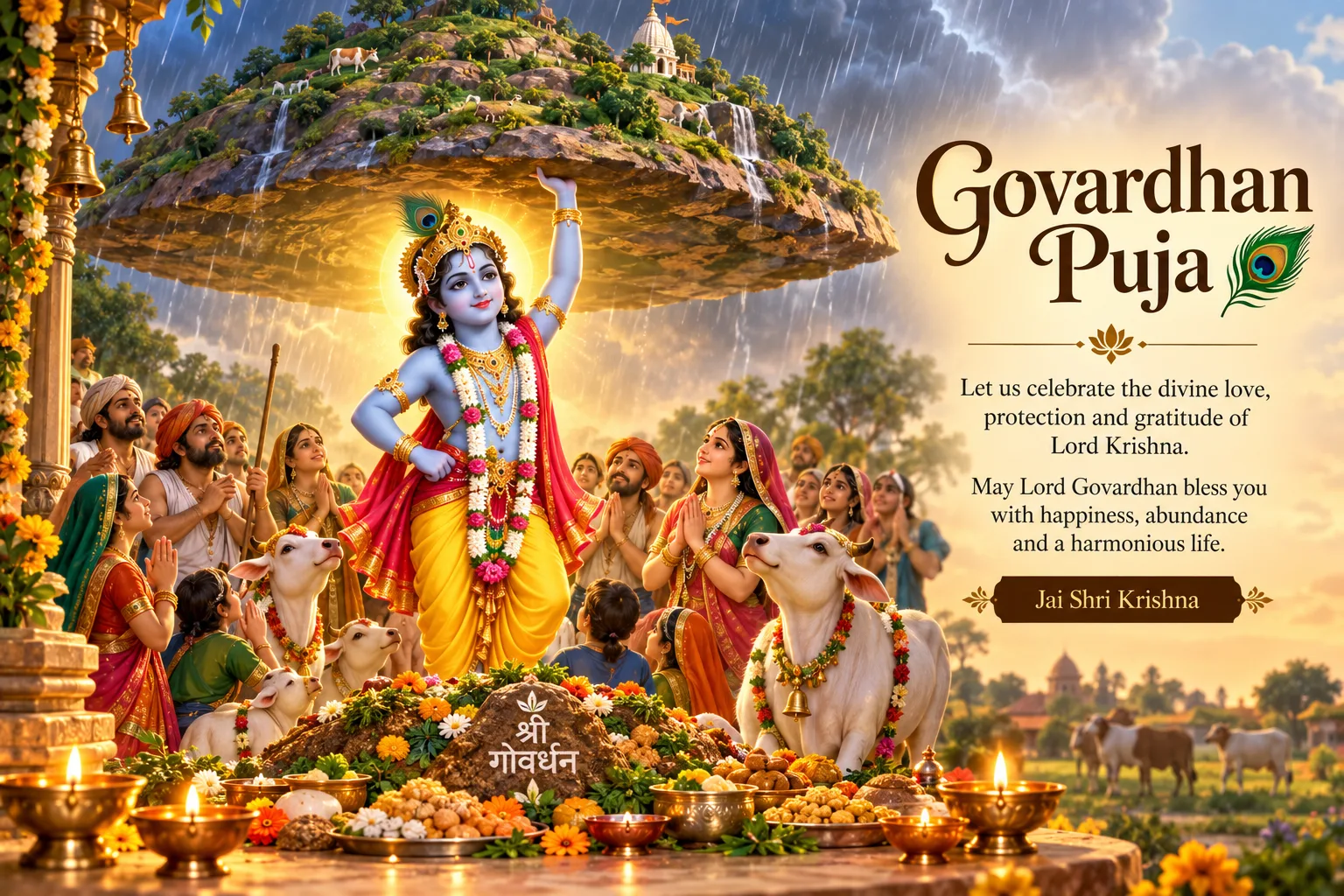
Monday, Nov 9, 2026
Govardhan Puja
Govardhan Puja, also celebrated with immense spiritual fervor, culinary magnificence, and pastoral joy as Annakut (meaning 'mountain of food') or Bali Pratipada, is celebrated on the first lunar day (Pratipada tithi) of the bright fortnight (Shukla Paksha) in the sacred month of Kartika. Occurring on the day immediately following Deepavali Amavasya, this monumental festival is dedicated to the worship of the sacred Govardhan Hill (Giriraj Ji), Lord Sri Krishna, indigenous cows (Go-mata), and the humble soil of Vraja.
View Festival Guide
Wednesday, Nov 11, 2026
Bhai Dooj
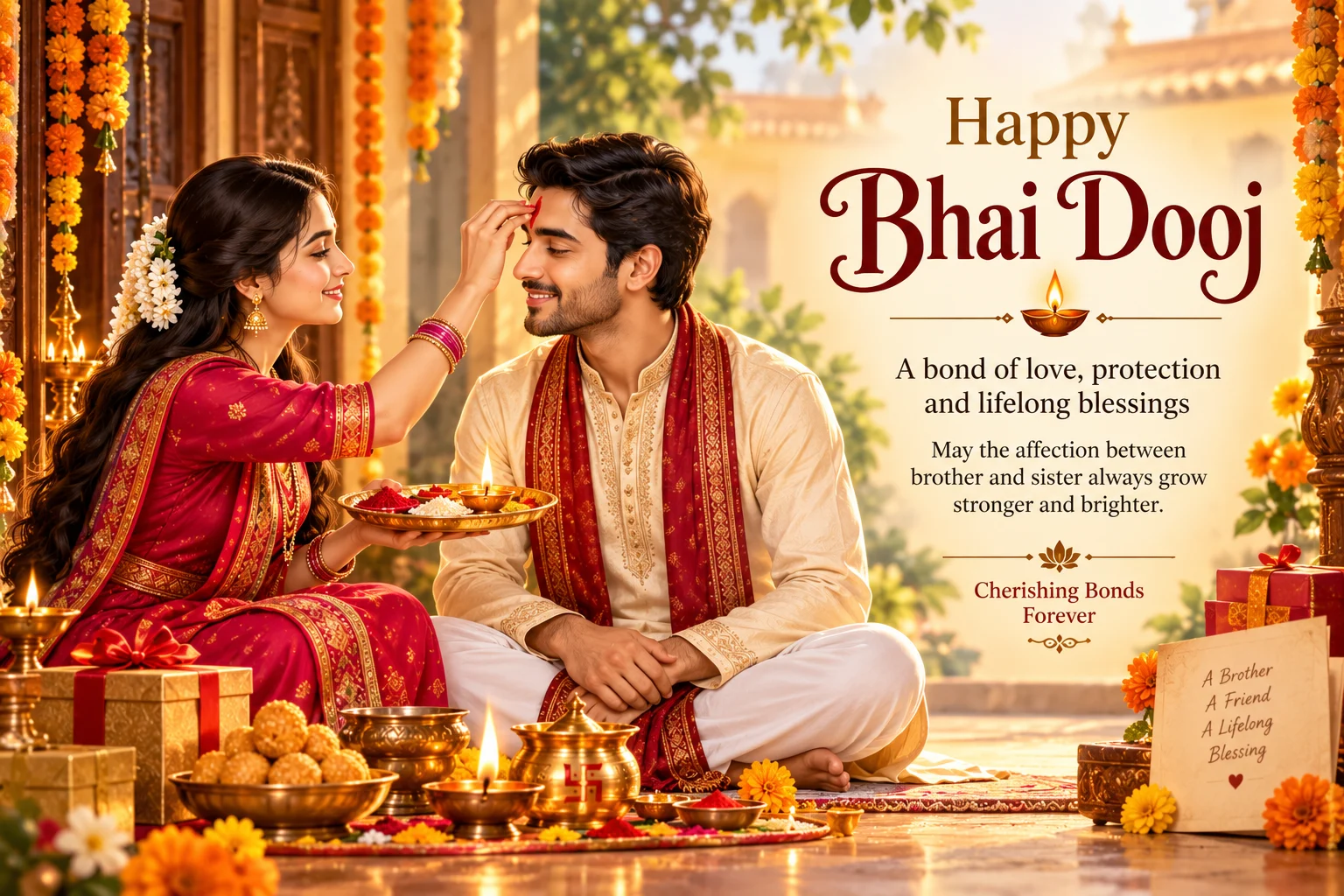
Bhai Dooj (also lovingly known as Holi Bhai Dooj or Chaitra Bhai Dooj) is an intensely affectionate, culturally sacred, and spiritually protective Hindu festival observed on the second day (Dwitiya tithi) of the Krishna Paksha in the month of Chaitra according to the traditional Hindu calendar. Occurring on the second day immediately following the vibrant festival of colors (Holi), this sacred observance mirrors the post-Diwali Bhai Dooj, serving to reaffirm, sanctify, and celebrate the pure, unconditional bond of love and protection between brothers and sisters across Sanatana Dharma.
View Festival Guide
Sunday, Nov 15, 2026
Chhath Puja
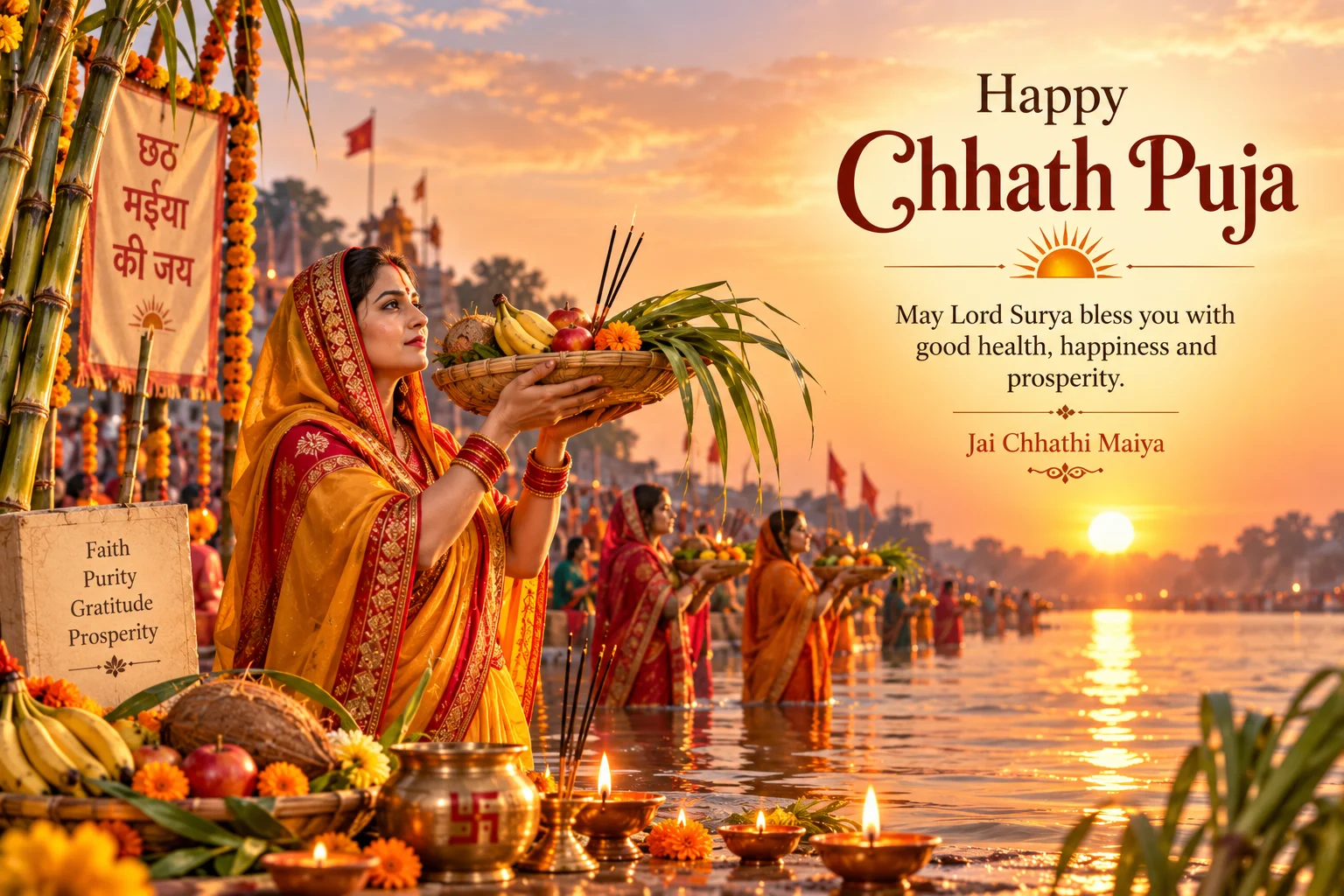
Chhath Puja, celebrated with unparalleled spiritual asceticism, Vedic purity, and cosmic reverence from the Chaturthi to Saptami tithis of the Shukla Paksha in the sacred month of Kartika, is the grandest solar festival of the Indian subcontinent. Known classically as Surya Shashthi, Dala Chhath, Chhathi Maiya, and Mahaparva, this sublime four-day pilgrimage of the soul is dedicated exclusively to Bhagavan Surya (the visible Sun God, Pratyaksha Devata) and His divine female dynamic energy, Chhathi Maiya—revered scripturally as Usha (the cosmic dawn) and Pratyusha (the cosmic dusk), and identified in the Devi Bhagavata Purana as Goddess Devasena or Shashti Devi, the sixth cosmic manifestation of primordial Nature (Mula Prakriti). Originating in the ancient cultural heartland of Bihar, Jharkhand, and eastern Uttar Pradesh, Chhath Puja has expanded globally as a shining beacon of ecological harmony, community egalitarianism, and unshakeable yogic austerity.
View Festival Guide
Friday, Nov 20, 2026
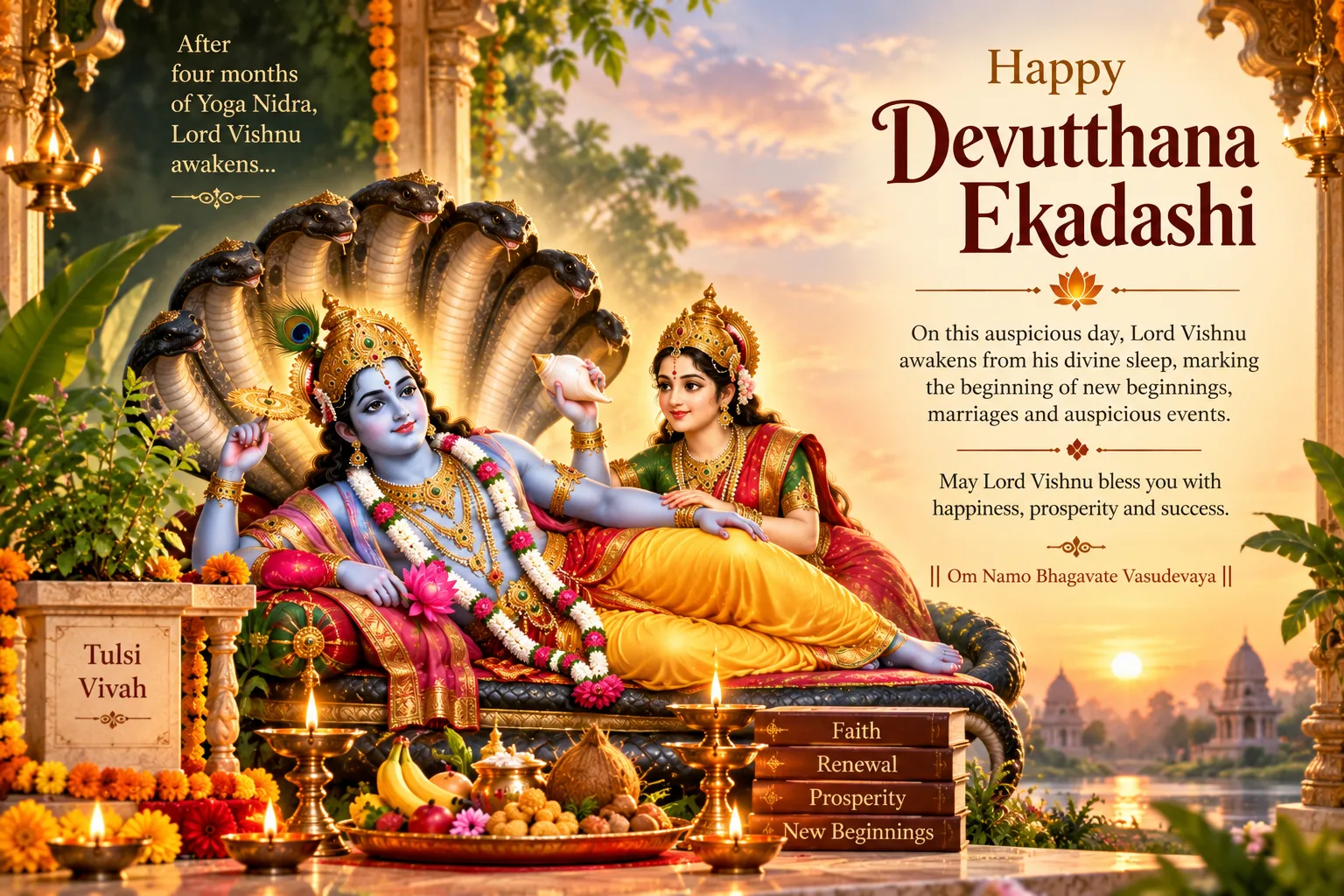
Devutthana Ekadashi
Devutthana Ekadashi, celebrated across the length and breadth of India as Prabodhini Ekadashi, Dev Uthani Gyaras, and Bodhini Ekadashi, is one of the most spiritually profound, joyous, and universally revered festivals in the Hindu calendar. Occurring on the Shukla Paksha Ekadashi (the eleventh lunar day of the waxing moon) in the sacred month of Kartika, this transcendental tithi marks the glorious awakening of the Supreme Preserver, Lord Sri Maha Vishnu, from His four-month mystic yogic slumber (Yoga Nidra). Lord Vishnu enters this cosmic meditative rest on Devshayani Ekadashi in the month of Ashadha, reclining upon the celestial serpent Ananta Shesha in the causal Milk Ocean (Kshirasagara). For four full lunar months—a sacred period known as Chaturmasya—the cosmos observes solemn quietude, and all auspicious life-cycle ceremonies such as marriages, housewarmings, and sacred thread initiations are held in abeyance. With the dawn of Devutthana Ekadashi, the universe awakens to boundless divine joy, celestial trumpets resound, and the sanctifying season of human marital unions and sacred sacraments officially resumes.
View Festival Guide
Saturday, Nov 21, 2026
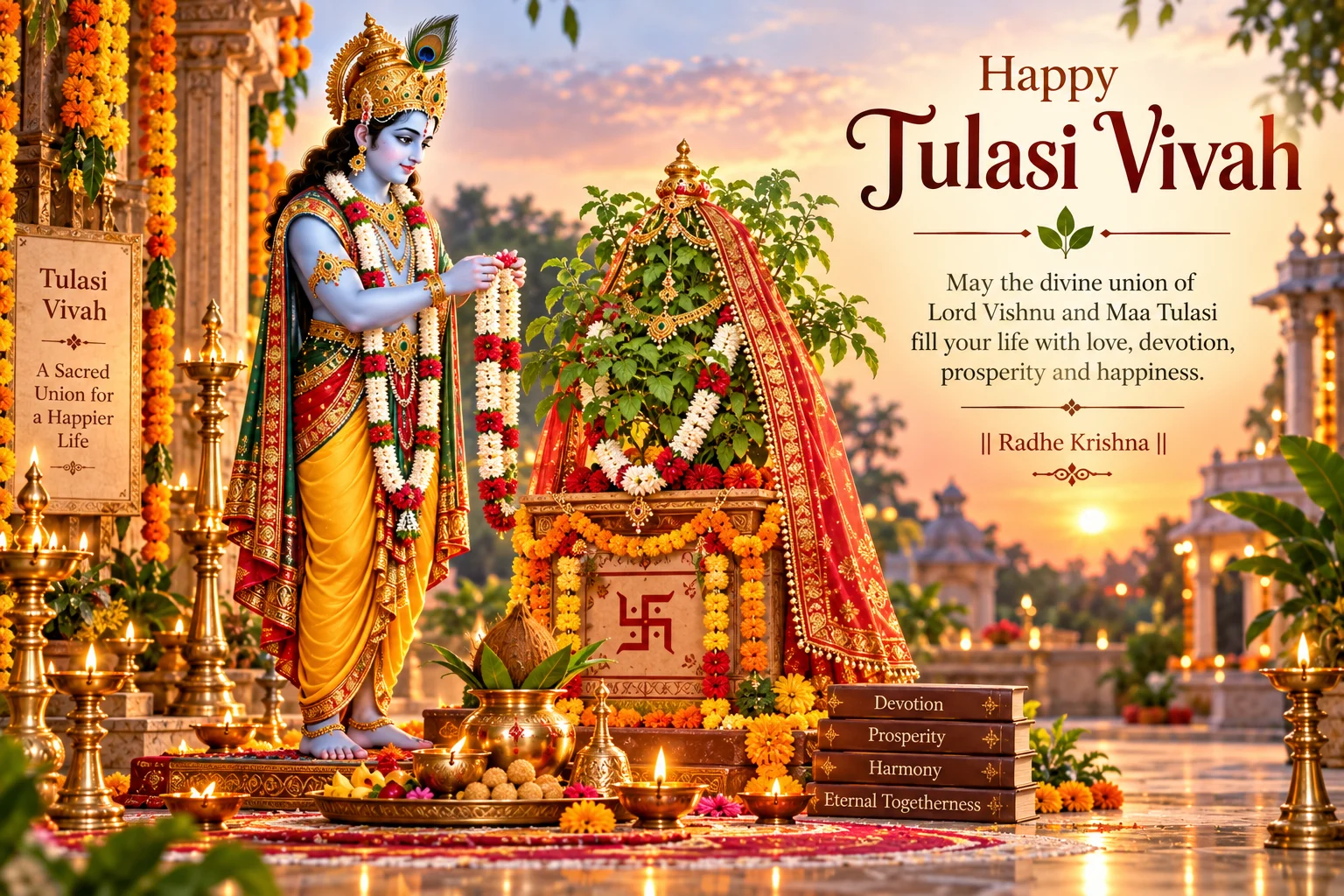
Tulasi Vivah
Tulasi Vivah, observed with supreme aesthetic splendor, Vedic sanctity, and devotional grandeur across India, is the ceremonial divine wedding of Goddess Tulasi—the sacred basil plant personifying divine purity and unshakeable chastity—with Lord Sri Maha Vishnu in His sacred, self-manifested stone form of Sri Shaligram (or Sri Krishna / Damodara). Celebrated during the luminous waxing fortnight of the holy month of Kartika, most traditionally on Kartika Shukla Dwadashi (the twelfth lunar day immediately following Devutthana Ekadashi) or spanning the auspicious five-day window between Ekadashi and Kartika Purnima, this celestial nuptial ceremony marks the official, joyous inauguration of the Hindu wedding season (Vivaha Muhurats). Across millions of households and temples, courtyards are transformed into vibrant wedding pavilions where devotees perform every intricate Vedic marriage rite, establishing a sacred cosmic bridge between earthly devotion, environmental reverence, and transcendental love.
View Festival Guide
Tuesday, Nov 24, 2026
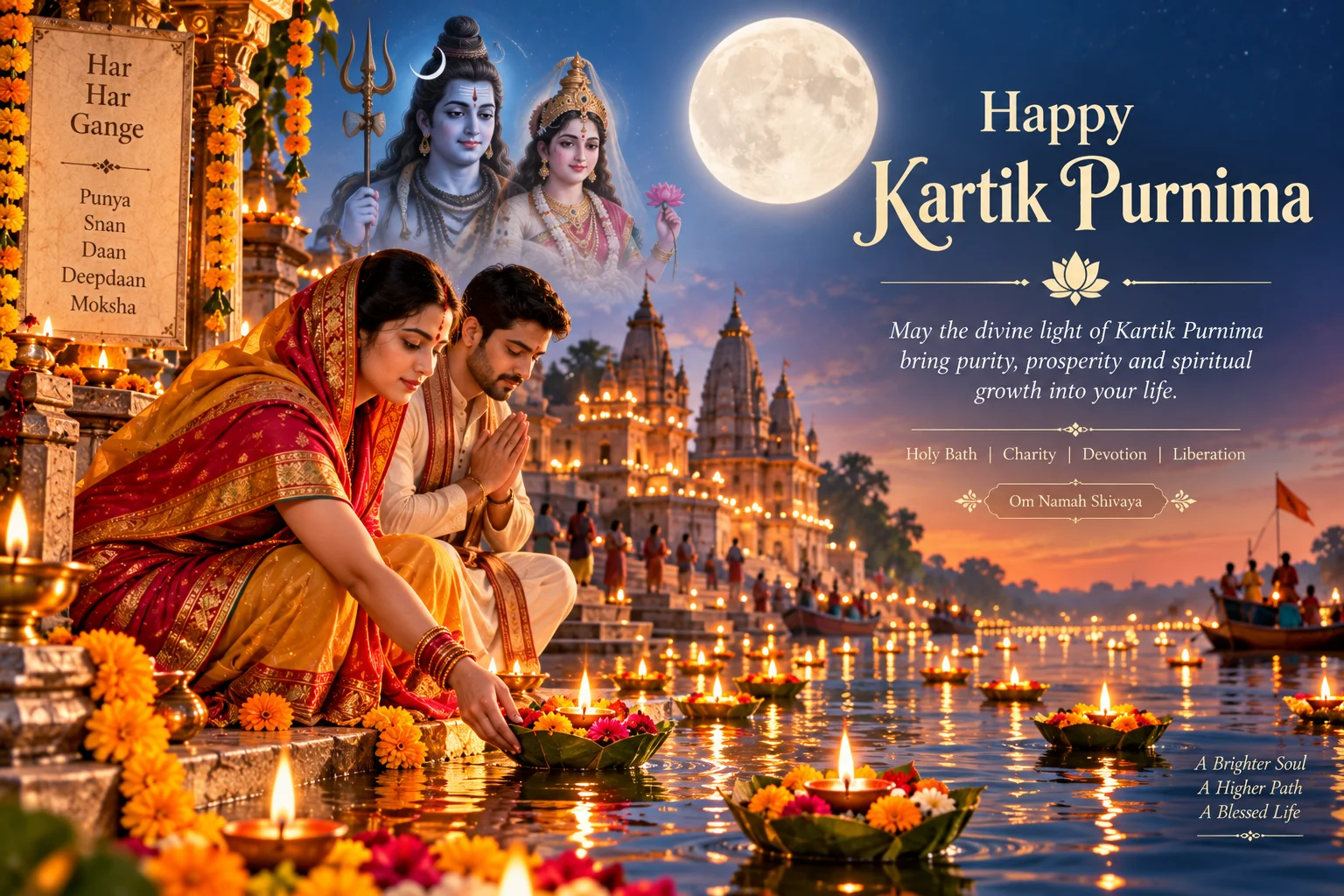
Kartik Purnima
View Festival Guide
Tuesday, Dec 1, 2026
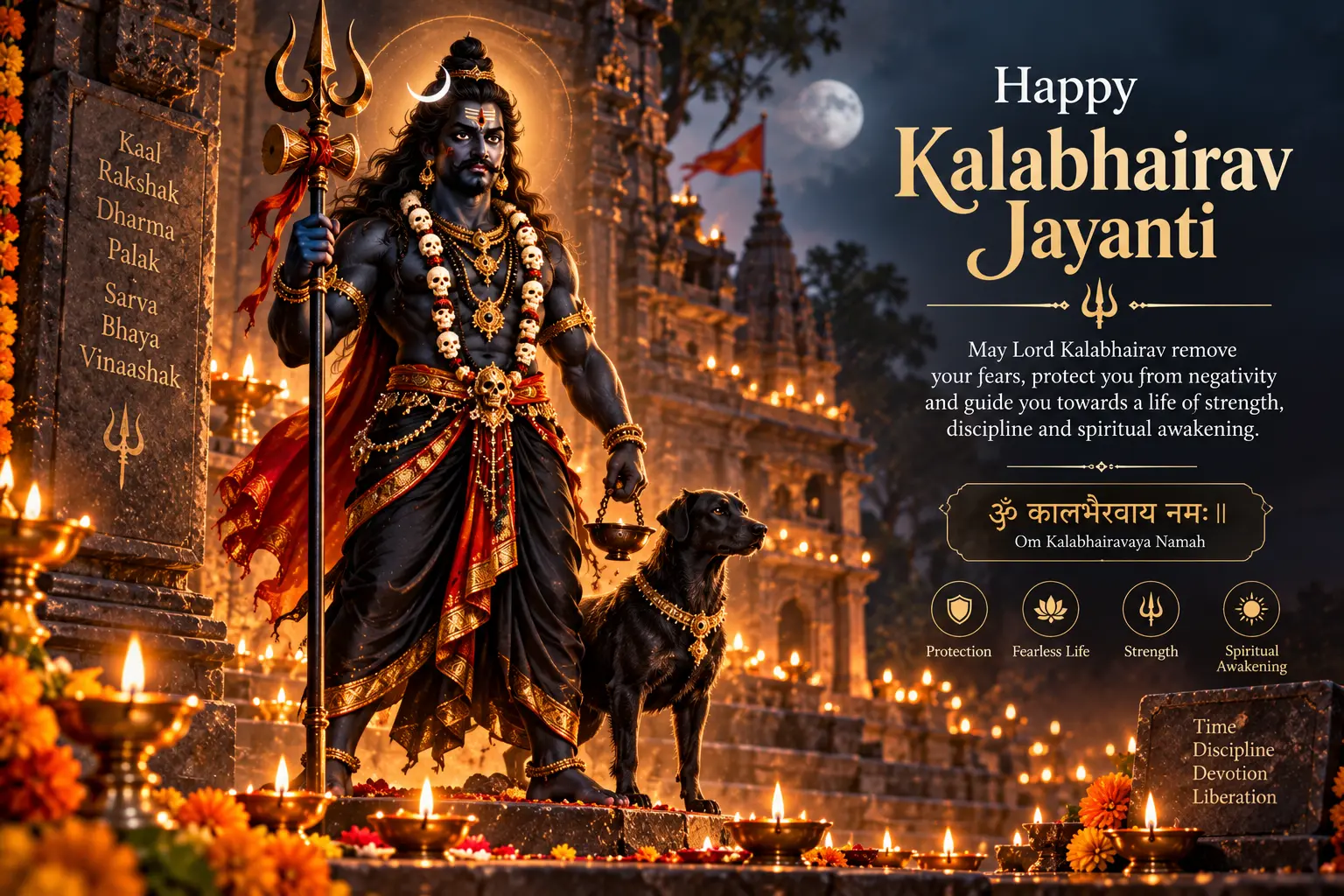
Kalabhairav Jayanti
Kalabhairav Jayanti, also celebrated with immense esoteric reverence, scriptural awe, and nocturnal solemnity as Bhairava Ashtami, Kalabhairav Ashtami, and Maha Bhairavashtami, marks the divine advent (Jayanti) of Lord Kalabhairava—the terrifying, fierce, and all-destroying manifestation of Lord Sadashiva who presides as the supreme master over all-consuming Time (Kala) and the invincible annihilator of fear (Bhaya-Nashaka). Occurring on the Krishna Paksha Ashtami (the eighth lunar day of the waning moon) in the sacred month of Margashirsha (or Kartika in the Purnimanta calendar prevalent across northern India), this sacred tithi commemorates the cosmic moment when the Supreme Mahadeva manifested His most awe-inspiring form from between His eyebrows to destroy pride, punish unrighteous arrogance, uphold cosmic order, and establish the sacred law of spiritual justice across the universe.
View Festival Guide
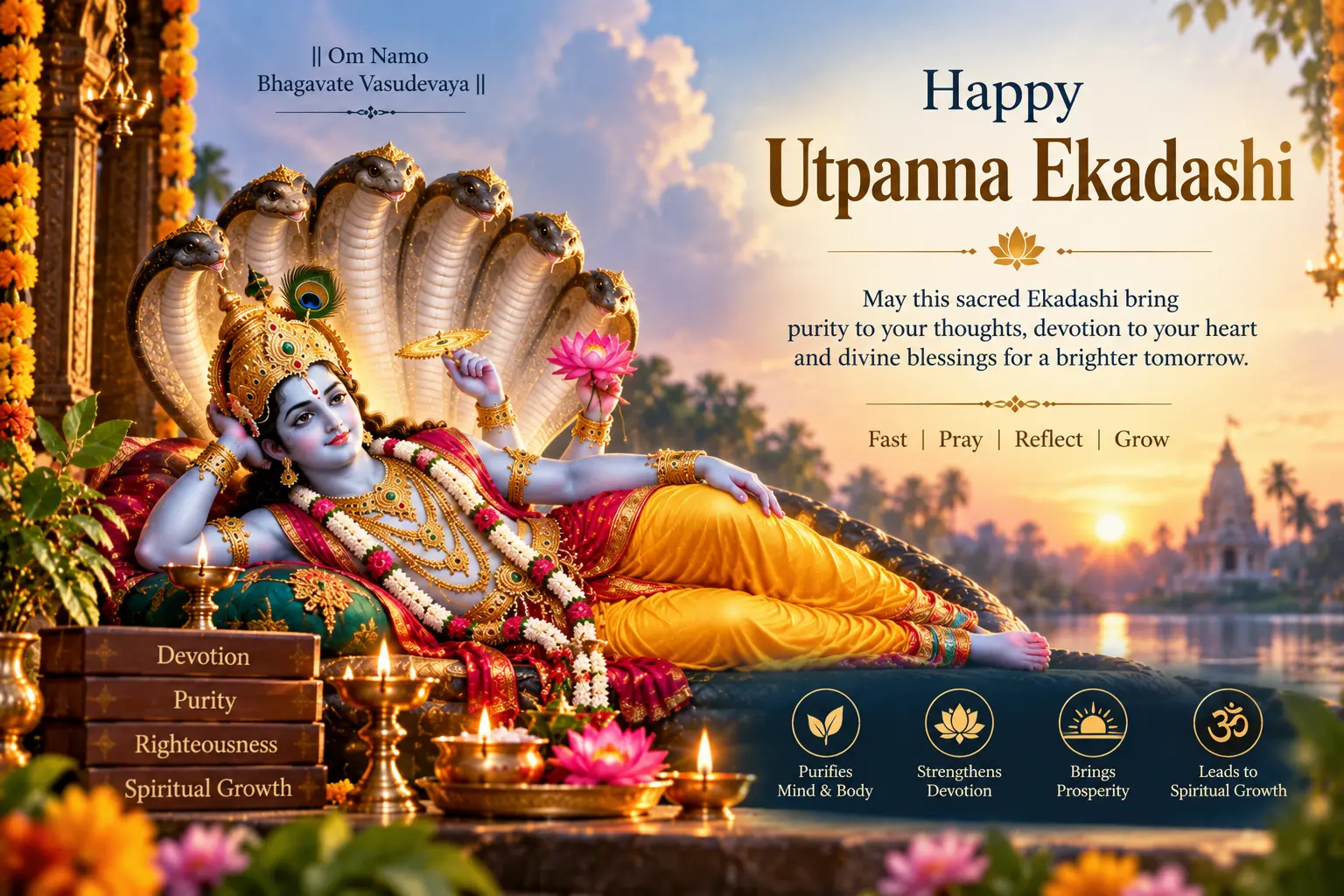
Friday, Dec 4, 2026
Utpanna Ekadashi
Utpanna Ekadashi, observed with supreme scriptural reverence, incandescent devotion, and profound spiritual joy across India, is the radiant advent anniversary (Utpatti / Jayanti) of Goddess Ekadashi herself—the divine, four-armed celestial maiden who personifies the transcendental fasting power and spiritual potency of the Supreme Preserver, Lord Sri Maha Vishnu. Occurring on the Krishna Paksha Ekadashi (the eleventh lunar day of the waning moon) in the sacred month of Margashirsha (or Kartika in the Purnimanta lunar calendar prevalent across northern India), this foundational tithi marks the divine origin and fountainhead of all twenty-four (and in leap years, twenty-six) Ekadashis of the Hindu liturgical year. It is celebrated as the mother of all Ekadashi vows, the spiritual bridge that initiates the annual cycle of Ekadashi fasting, and the supreme tithi wherein the observance of Ekadashi was forever consecrated as the most direct royal pathway to the transcendental abode of Vaikuntha.
View Festival Guide