




Govardhan Puja, also celebrated with immense spiritual fervor, culinary magnificence, and pastoral joy as Annakut (meaning 'mountain of food') or Bali Pratipada, is celebrated on the first lunar day (Pratipada tithi) of the bright fortnight (Shukla Paksha) in the sacred month of Kartika. Occurring on the day immediately following Deepavali Amavasya, this monumental festival is dedicated to the worship of the sacred Govardhan Hill (Giriraj Ji), Lord Sri Krishna, indigenous cows (Go-mata), and the humble soil of Vraja.
Govardhan Puja 2026: Date, Puja Timings, Rituals & Stories
Govardhan Puja Timings & Panchang
Important festival dates and auspicious timings
Usha Arghya (Sunrise)
06:40 am
Sandhya Arghya (Sunset)
05:30 pm
Start Date
Tuesday, 10 Nov 2026
Puja Muhurat
12:31 pm – 02:00 pm
Govardhan Puja
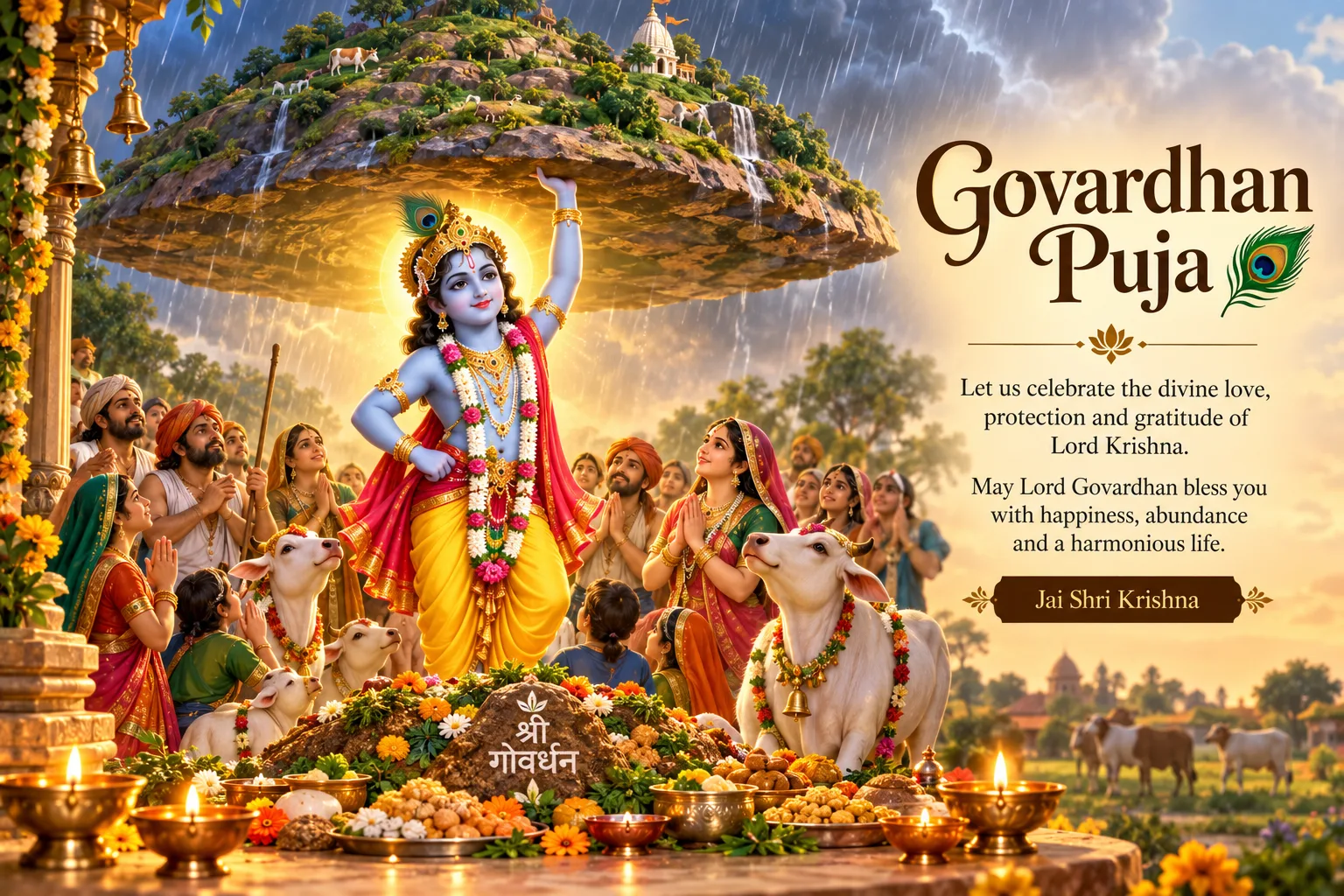
Rooted profoundly in the timeless chronicles of the Srimad Bhagavatam (Tenth Canto), Vishnu Purana, and Harivamsa, Govardhan Puja commemorates the historic divine pastimes of Bhagwan Sri Krishna in Vrindavan. When young Krishna convinced the Vrajavasis to abandon the traditional sacrificial yajna to Indra and instead honor Mount Govardhan—which provided grass for cattle, streams for drinking, and forests for shelter—an enraged Indra unleashed a terrifying, torrential deluge of catastrophic storm clouds (Samvartaka) to submerge Vraja. Lord Krishna effortlessly lifted the colossal Govardhan Hill upon the little finger of His left hand for seven continuous days and nights, shielding all humans, cows, and creatures beneath its umbrella, effortlessly shattering Indra's imperial pride.
Across India and global Vaishnava temples, devotees celebrate by sculpting miniature Govardhan hills out of fresh cow dung, decorating them with flowers and miniature clay cattle, and offering 'Annakut'—a magnificent feast of fifty-six traditional vegetarian preparations (Chhappan Bhog) arranged in towering culinary mountains. Families circumambulate the hill, feed and garland cows, and celebrate divine ecology and total surrender to the lotus feet of Krishna.
Why is Govardhan Puja Celebrated?
Govardhan Puja is celebrated to commemorate Lord Sri Krishna lifting the Govardhan Hill for seven days on His little finger to protect Vraja from Indra's torrential storm.
It marks the transition from ritualistic demigod appeasement to pure unalloyed loving devotion (Bhakti) and ecological gratitude toward nature.
According to the Srimad Bhagavatam, it establishes the supreme sanctity of cows (Go-Seva) and the pastoral agrarian heritage that sustains human society.
- Sculpting a symbolic Govardhan Hill out of pure cow dung in courtyards and decorating it with clay cowherds.
- Preparing and offering the colossal Annakut feast comprising fifty-six delicacies (Chhappan Bhog) to the deity.
- Circumambulating the sculpted Govardhan Hill clockwise (Parikrama) while chanting 'Giriraj Maharaj Ki Jai'.
- Bathing, decorating, feeding, and performing aarti for indigenous cows (Go-Puja) and working cattle.
- Distributing sanctified Annakut prasad to hundreds of devotees, pilgrims, and the underprivileged.
Scriptural Chronicles in the Srimad Bhagavatam, Vishnu Purana, and Harivamsa
The Cessation of the Indra Yajna in Vraja
In the Tenth Canto of the Srimad Bhagavatam, young Krishna observed His father Nanda Maharaja and the elder cowherds gathering vast quantities of clarified butter, grains, and sacrificial vessels for the annual sacrifice to Indra, the rain god. Krishna approached His father with charming humility and questioned the philosophical foundation of the ritual.
Krishna reasoned: 'O father, living beings take birth and experience the fruits of their own past karma. Indra is merely a cosmic administrator; rain falls naturally due to cosmic seasonal laws. As cowherds dwelling in the forest, our true benefactors are the cows, the fertile earth, and Mount Govardhan, which provides sweet spring water, lush pastures for our cattle, and timber. Let us divert these offerings to worship Govardhan Hill, honor the Brahmins, and feed the cows and the poor!' Convinced by Krishna's wisdom, Nanda Maharaja prepared an enormous mountain of cooked rice, sweets, and vegetables to circumambulate Govardhan Hill.
The Lifting of Govardhan Hill and Indra's Humbling
Watching his traditional sacrifice diverted, Lord Indra became furious with pride and commanded the Samvartaka storm clouds—ordinarily reserved for the cosmic dissolution—to drown Vraja. Blinding thunderbolts, torrential rain, and hurricane winds battered the land, terrifying the cowherds and freezing the trembling calves.
Lord Krishna smiled with divine calm. With the effortless ease of a child lifting a mushroom, the seven-year-old Lord uprooted the gigantic Govardhan Hill with His left hand and balanced it aloft on the tip of His little finger (Kanishtha Anguli). He invited all the cowherds, milkmaids, cows, and forest animals to take shelter beneath the mountain. For seven continuous days and nights, Krishna held the hill stationary without feeling the slightest fatigue. Baffled and exhausted, the clouds dispersed, and the sun broke through. Indra realized Krishna's supreme divinity, descended on His celestial elephant Airavata, fell prostrate at Krishna's feet, and bathed the Lord with celestial milk, naming Him Govinda (the protector of cows).
Krishna Assuming the Form of Mount Govardhan
Eco-Spirituality, Total Surrender (Sharanagati), and Pastoral Dharma
Sacred Ecology: Nature as the Direct Body of God
Govardhan Puja is humanity's most ancient environmental festival. Centuries before modern ecological awareness, Lord Krishna redirected human devotion away from celestial abstractions toward the immediate biosphere—mountains, forests, rivers, and cattle.
The festival teaches that sustaining nature and honoring the soil is the highest form of worship. Desecrating mountains and polluting rivers for greed destroys cosmic harmony, whereas revering natural resources brings seasonal rains and abundance.
Sharanagati: Shelter beneath the Umbrella of Grace
Govardhan Hill represents the ultimate shelter of divine grace (Sharanagati). The torrential storms of Indra symbolize the relentless hardships, karmic trials, and anxieties of material existence (Samsara).
When the seeker completely surrenders to Krishna, abandoning egoistic pride, the Lord lifts the divine umbrella of His protection, keeping the devotee safe, fearless, and joyful amidst external storms.
Observance Guidelines, Annakut Feast, and Go-Puja Traditions
Sculpting the Cow Dung Govardhan and Parikrama
On the morning of Kartika Pratipada, families clean their courtyards or terraces. Using pure cow dung, they sculpt a recumbent figure of Govardhan Hill, depicting Lord Krishna holding a flute, along with cowherds, trees, and small cattle pens. The hill is adorned with flower garlands, peacock feathers, and miniature earthen saucers representing water ponds.
In the afternoon, family members circumambulate the sculpted hill clockwise (Parikrama) four or seven times, pouring a thin unbroken stream of milk or water from a lota, holding incense and chanting 'Giriraj Maharaj Ki Jai!'.
The Annakut (Chhappan Bhog) and Cattle Veneration
The culinary highlight is Annakut. In Vaishnava temples (such as Nathdwara in Rajasthan and ISKCON temples worldwide), chefs prepare fifty-six distinct culinary dishes (Chhappan Bhog) comprising aromatic saffron rice, puris, dal, kadhi, mixed vegetables (Annakut ki Sabzi), halwa, malpua, and countless sweets arranged in towering stepped tiers.
Simultaneously, cows and bullocks are given purifying baths. Their horns are painted with bright vermilion, their hooves oiled, and floral garlands hung around their necks. Worshippers feed them jaggery, green fodder, and rotis, performing aarti to acknowledge cows as universal mothers (Go-Mata).
Govardhan Puja Puja Vidhi (Step by Step)
- 1
Pratah Snana and Shaucha
Awaken early at dawn, bathe in clean water mixed with holy Ganga water, don traditional yellow or saffron festive attire, and prepare the courtyard.
- 2
Govardhan Nirmana
Sculpt a miniature Govardhan Hill out of pure cow dung in the center of the courtyard, creating a figure of Krishna holding the hill, surrounded by cows and trees.
- 3
Deepa and Dhoop Prajvalana
Light a pure cow ghee lamp beside the sculpted hill. Burn natural guggul, camphor, and sandalwood incense sticks to sanctify the sacred space.
- 4
Giriraj Sthapana and Dhyana
Place a framed portrait of Sri Krishna or a sacred Govardhan Shila atop the hill, meditating upon His enchanting form holding the mountain on His little finger.
- 5
Panchamrita Abhisheka
Gently pour holy Ganga water, cow milk, curd, ghee, honey, and sugar over the central Govardhan Shila or Krishna idol, followed by cooling rose water.
Govardhan Puja Puja Samagri List
Hill Sculpting, Deity, and Vessel Essentials
- Fresh, clean indigenous cow dung for sculpting the Govardhan Hill
- Framed portrait of Lord Krishna lifting Govardhan or a sacred Govardhan Shila
- Peacock feathers (Mor Pankh) and fresh wooden twigs for decoration
- Brass deepa, pure indigenous cow ghee, long cotton wicks, and pure camphor
- Brass or copper Kalash/Lota for offering the unbroken stream of milk during Parikrama
- Wooden pedestal (Chowki) and clean yellow silk fabric
Sacred Powders, Leaves, and Go-Puja Articles
- Bright red vermilion (Sindoor), sacred Kumkum, and pure turmeric powder
- Yellow sandalwood paste (Hari Chandana) and unbroken sacred rice (Akshata)
- Fresh yellow and orange marigold garlands, red roses, and loose petals
- Abundant fresh Tulsi leaves and Tulsi Manjaris for Lord Krishna
- Cattle decoration items: Natural horn paint, colorful bells, and garlands
- Natural sandalwood dhoop sticks and pure loban incense
Annakut (Chhappan Bhog) and Feast Items
- Special Annakut mixed vegetable curry (cooked with seasonal vegetables)
Mantras and Prayers for Govardhan Puja
Govardhan Puja Vrat Rules and Fasting Guidelines
Purity of Cow Dung and Ingredients
The Govardhan Hill should be sculpted using only fresh, pure dung from indigenous Indian cows (Desi Gaumata). Do not use synthetic molds, contaminated soil, or chemical materials. The Annakut preparations must be strictly vegetarian, cooked in pure ghee without onions, garlic, or processed spices.
Reverence during Parikrama
- Always circumambulate the Govardhan Hill clockwise, never in a counter-clockwise direction.
- Pour an unbroken, continuous stream (Dhara) of milk or holy water during the Parikrama without stepping over the sculpted form.
- Treat all cows with extreme gentleness; never strike, push, or speak harshly to cattle on this day.
- Distribute the Annakut prasad freely to all visitors, neighbors, and the underprivileged without discrimination.
Total Surrender and Humility
Devotees must approach Govardhan Puja with utter humility, meditating on how Lord Krishna shattered Indra's imperial pride. Renounce all arrogance regarding personal wealth, knowledge, or status.
Dos and Don'ts of Govardhan Puja
Good Practices (Do's)
- Sculpt a miniature Govardhan Hill out of fresh cow dung and decorate it with flowers and peacocks.
- Prepare or offer the Annakut feast featuring mixed seasonal vegetable curry, rice, and sweets.
- Perform clockwise circumambulation (Parikrama) around the hill, offering an unbroken stream of milk.
- Wash, garland, feed, and perform affectionate aarti for cows and calves.
- Cultivate extreme humility, remembering that true devotion triumphs over worldly pride.
Govardhan Puja Across Regions
| Region | Local Name |
|---|---|
| Braj Region (Vrindavan, Govardhan, Mathura) | Govardhan Parikrama and Chhappan Bhog |
| Gujarat and Western India | Bestu Varas (New Year) and Annakut |
| Rajasthan and Central India | Nathdwara Annakut and Cow Run |
| Northern and Eastern India (Bihar, UP, Punjab) | Godiya and Bali Pratipada |
Govardhan Puja FAQs
Why did Lord Krishna lift Govardhan Hill with His little finger?
Lifting the massive Govardhan Hill upon the little finger (Kanishtha Anguli) of His left hand demonstrated that the Supreme Lord exercises His infinite cosmic omnipotence effortlessly, without the slightest strain, showing that material weight is weightless before God.
What is 'Chhappan Bhog' and why are fifty-six dishes offered?
Lord Krishna traditionally ate eight meals (Pahars) a day. Because He held Govardhan Hill for seven continuous days without eating or drinking, the grateful cowherds cooked fifty-six distinct delicacies (8 meals x 7 days = 56 dishes) to feed Him after the storm subsided.
Why is Govardhan Hill worshipped as a direct form of Lord Krishna?
During the first Annakut, Lord Krishna manifest a gigantic form atop the mountain and consumed the offerings, declaring 'I am Govardhan Hill'. In Vaishnava philosophy, Govardhan is worshipped as Haridasa-Varya (the foremost servant of Hari) and non-different from Krishna Himself.
Upcoming Festivals
View All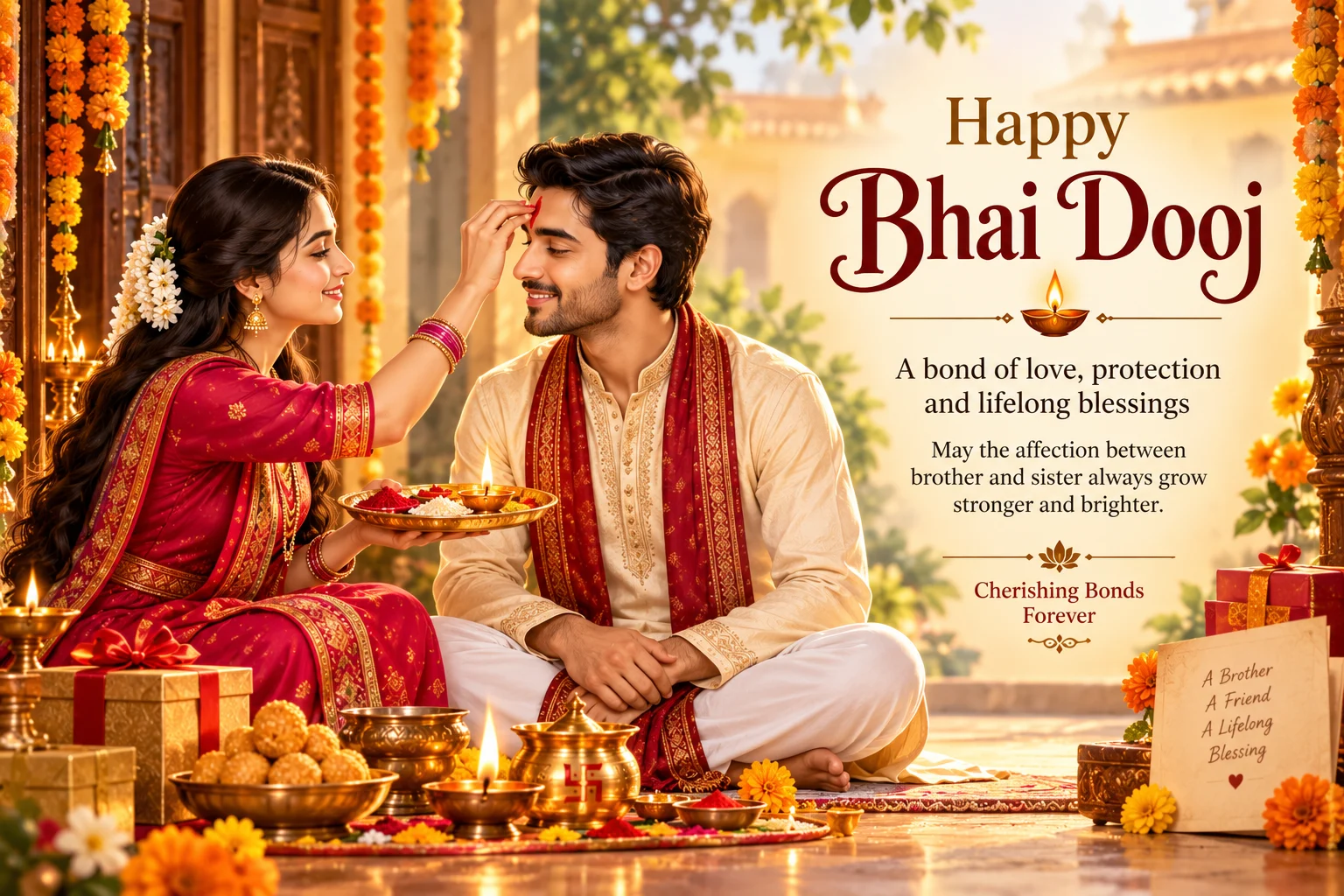
Wednesday, Nov 11, 2026
Bhai Dooj
Bhai Dooj (also lovingly known as Holi Bhai Dooj or Chaitra Bhai Dooj) is an intensely affectionate, culturally sacred, and spiritually protective Hindu festival observed on the second day (Dwitiya tithi) of the Krishna Paksha in the month of Chaitra according to the traditional Hindu calendar. Occurring on the second day immediately following the vibrant festival of colors (Holi), this sacred observance mirrors the post-Diwali Bhai Dooj, serving to reaffirm, sanctify, and celebrate the pure, unconditional bond of love and protection between brothers and sisters across Sanatana Dharma.
View Festival Guide
Sunday, Nov 15, 2026
Chhath Puja
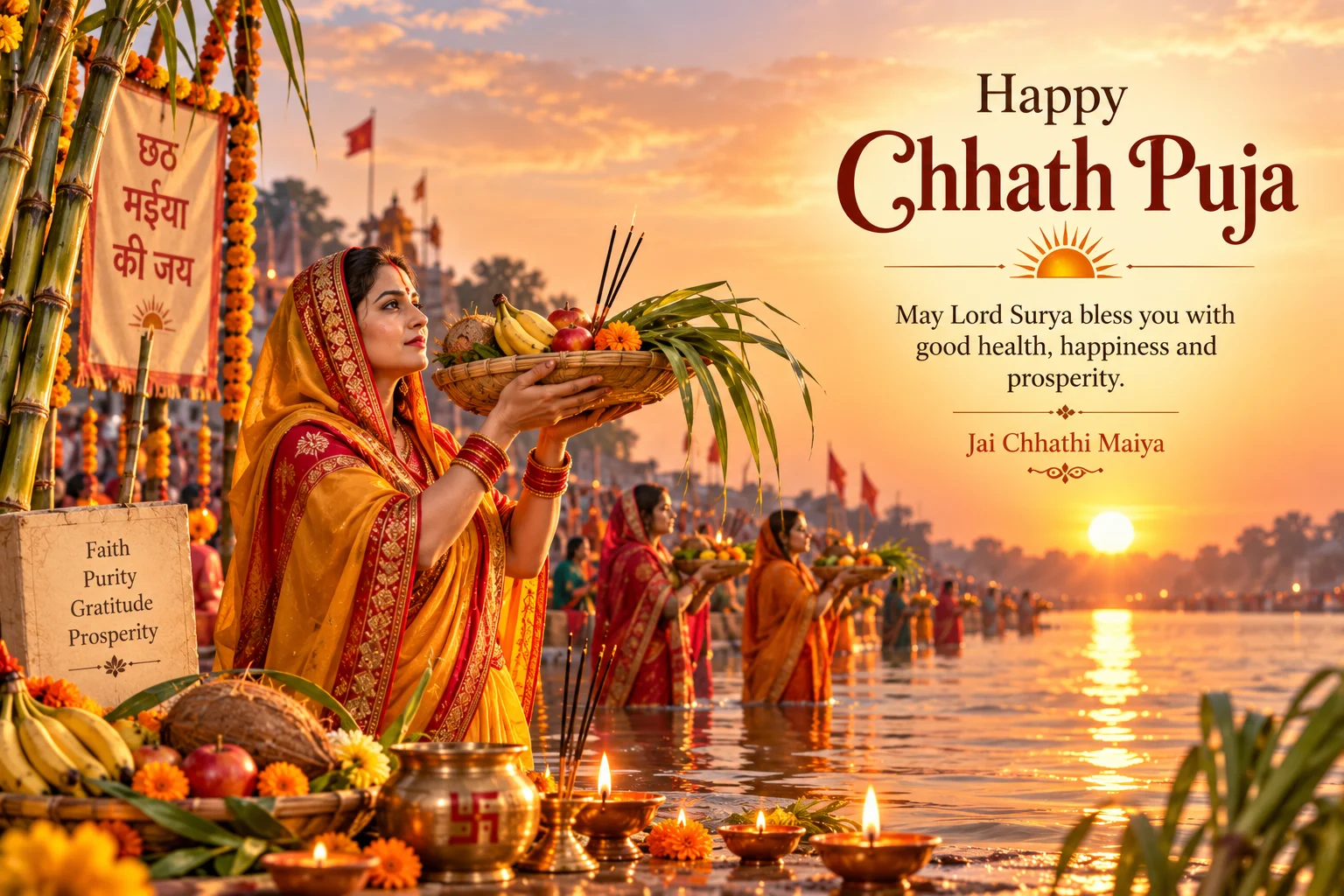
Chhath Puja, celebrated with unparalleled spiritual asceticism, Vedic purity, and cosmic reverence from the Chaturthi to Saptami tithis of the Shukla Paksha in the sacred month of Kartika, is the grandest solar festival of the Indian subcontinent. Known classically as Surya Shashthi, Dala Chhath, Chhathi Maiya, and Mahaparva, this sublime four-day pilgrimage of the soul is dedicated exclusively to Bhagavan Surya (the visible Sun God, Pratyaksha Devata) and His divine female dynamic energy, Chhathi Maiya—revered scripturally as Usha (the cosmic dawn) and Pratyusha (the cosmic dusk), and identified in the Devi Bhagavata Purana as Goddess Devasena or Shashti Devi, the sixth cosmic manifestation of primordial Nature (Mula Prakriti). Originating in the ancient cultural heartland of Bihar, Jharkhand, and eastern Uttar Pradesh, Chhath Puja has expanded globally as a shining beacon of ecological harmony, community egalitarianism, and unshakeable yogic austerity.
View Festival Guide
Friday, Nov 20, 2026
Devutthana Ekadashi
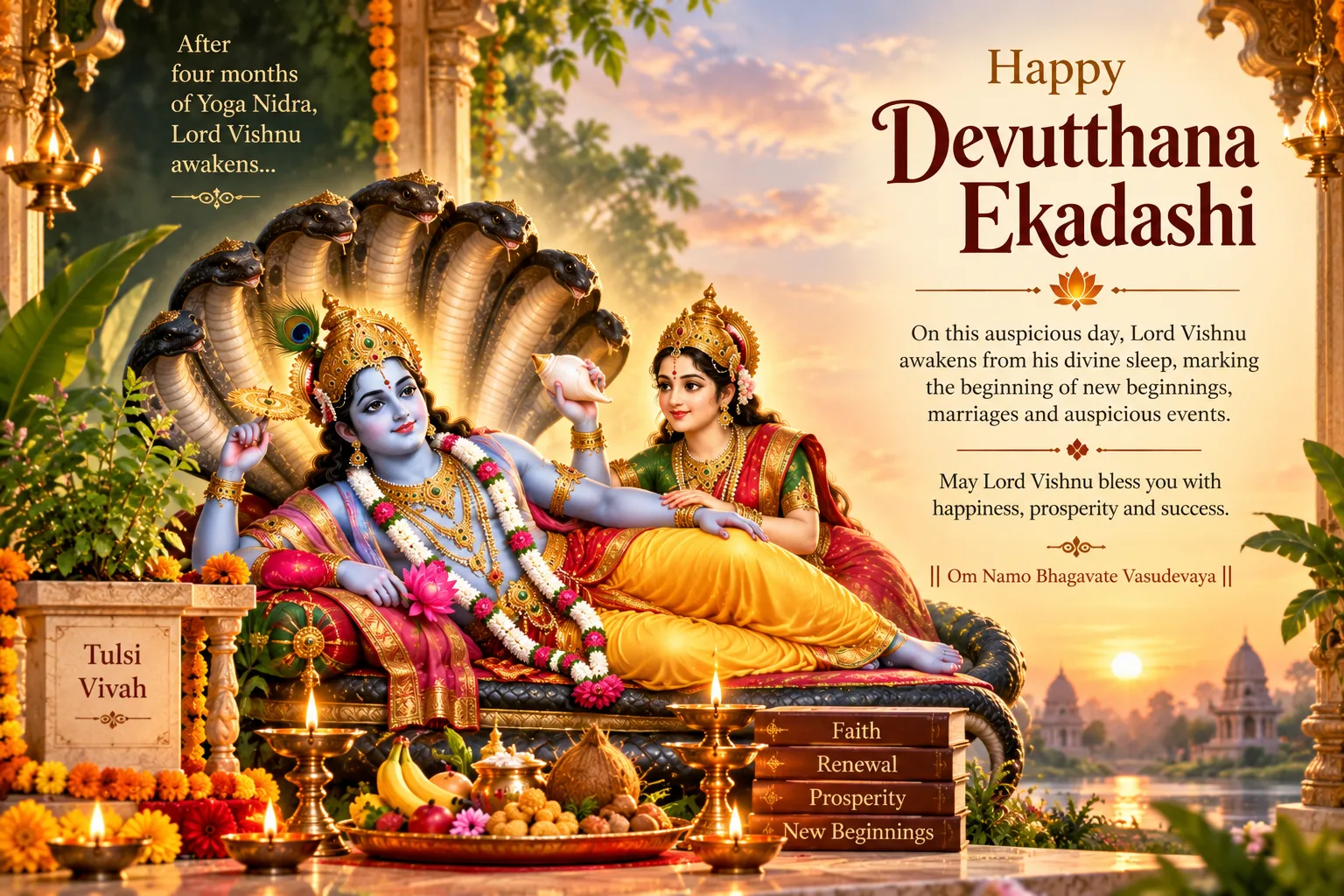
Devutthana Ekadashi, celebrated across the length and breadth of India as Prabodhini Ekadashi, Dev Uthani Gyaras, and Bodhini Ekadashi, is one of the most spiritually profound, joyous, and universally revered festivals in the Hindu calendar. Occurring on the Shukla Paksha Ekadashi (the eleventh lunar day of the waxing moon) in the sacred month of Kartika, this transcendental tithi marks the glorious awakening of the Supreme Preserver, Lord Sri Maha Vishnu, from His four-month mystic yogic slumber (Yoga Nidra). Lord Vishnu enters this cosmic meditative rest on Devshayani Ekadashi in the month of Ashadha, reclining upon the celestial serpent Ananta Shesha in the causal Milk Ocean (Kshirasagara). For four full lunar months—a sacred period known as Chaturmasya—the cosmos observes solemn quietude, and all auspicious life-cycle ceremonies such as marriages, housewarmings, and sacred thread initiations are held in abeyance. With the dawn of Devutthana Ekadashi, the universe awakens to boundless divine joy, celestial trumpets resound, and the sanctifying season of human marital unions and sacred sacraments officially resumes.
View Festival Guide
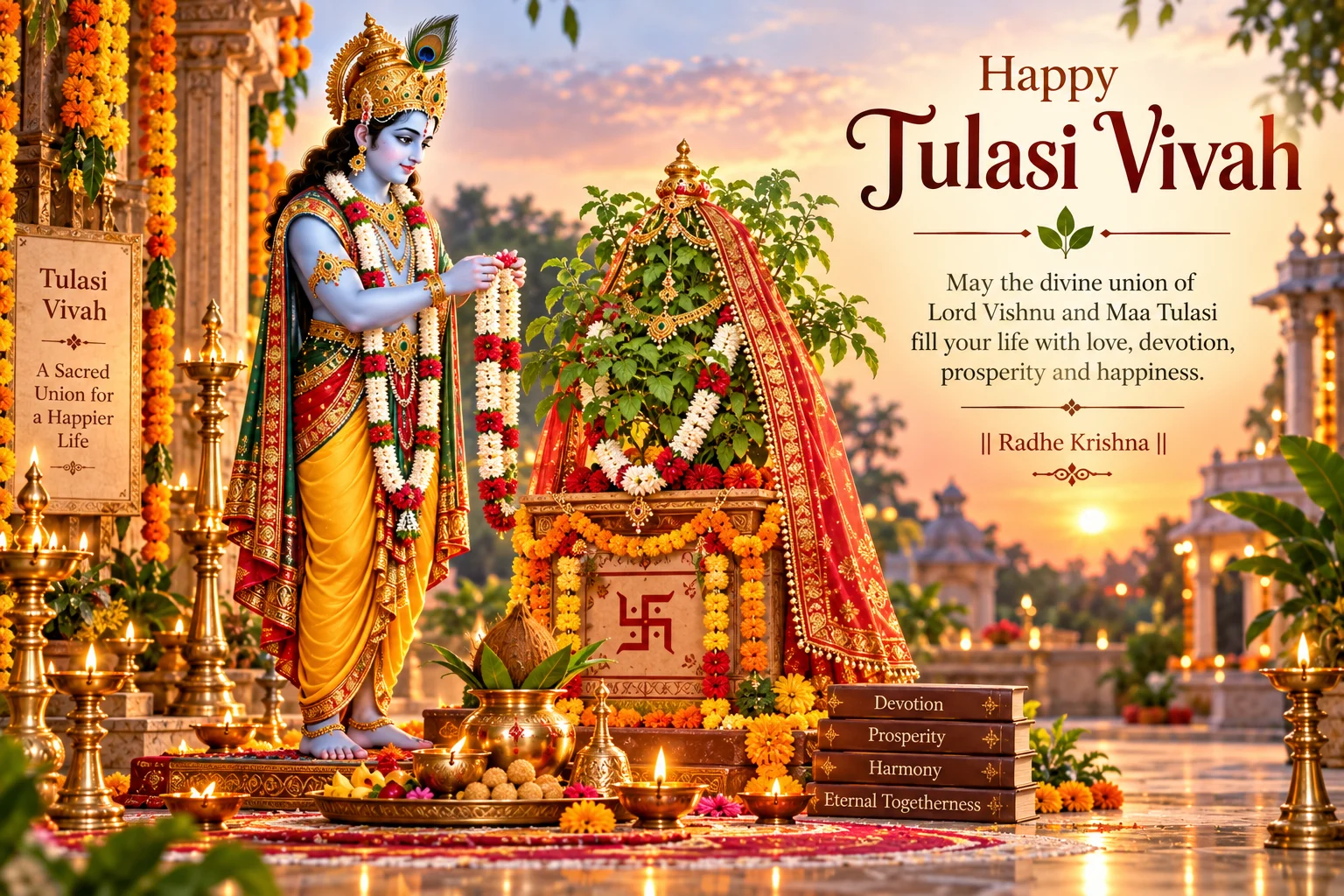
Saturday, Nov 21, 2026
Tulasi Vivah
Tulasi Vivah, observed with supreme aesthetic splendor, Vedic sanctity, and devotional grandeur across India, is the ceremonial divine wedding of Goddess Tulasi—the sacred basil plant personifying divine purity and unshakeable chastity—with Lord Sri Maha Vishnu in His sacred, self-manifested stone form of Sri Shaligram (or Sri Krishna / Damodara). Celebrated during the luminous waxing fortnight of the holy month of Kartika, most traditionally on Kartika Shukla Dwadashi (the twelfth lunar day immediately following Devutthana Ekadashi) or spanning the auspicious five-day window between Ekadashi and Kartika Purnima, this celestial nuptial ceremony marks the official, joyous inauguration of the Hindu wedding season (Vivaha Muhurats). Across millions of households and temples, courtyards are transformed into vibrant wedding pavilions where devotees perform every intricate Vedic marriage rite, establishing a sacred cosmic bridge between earthly devotion, environmental reverence, and transcendental love.
View Festival Guide
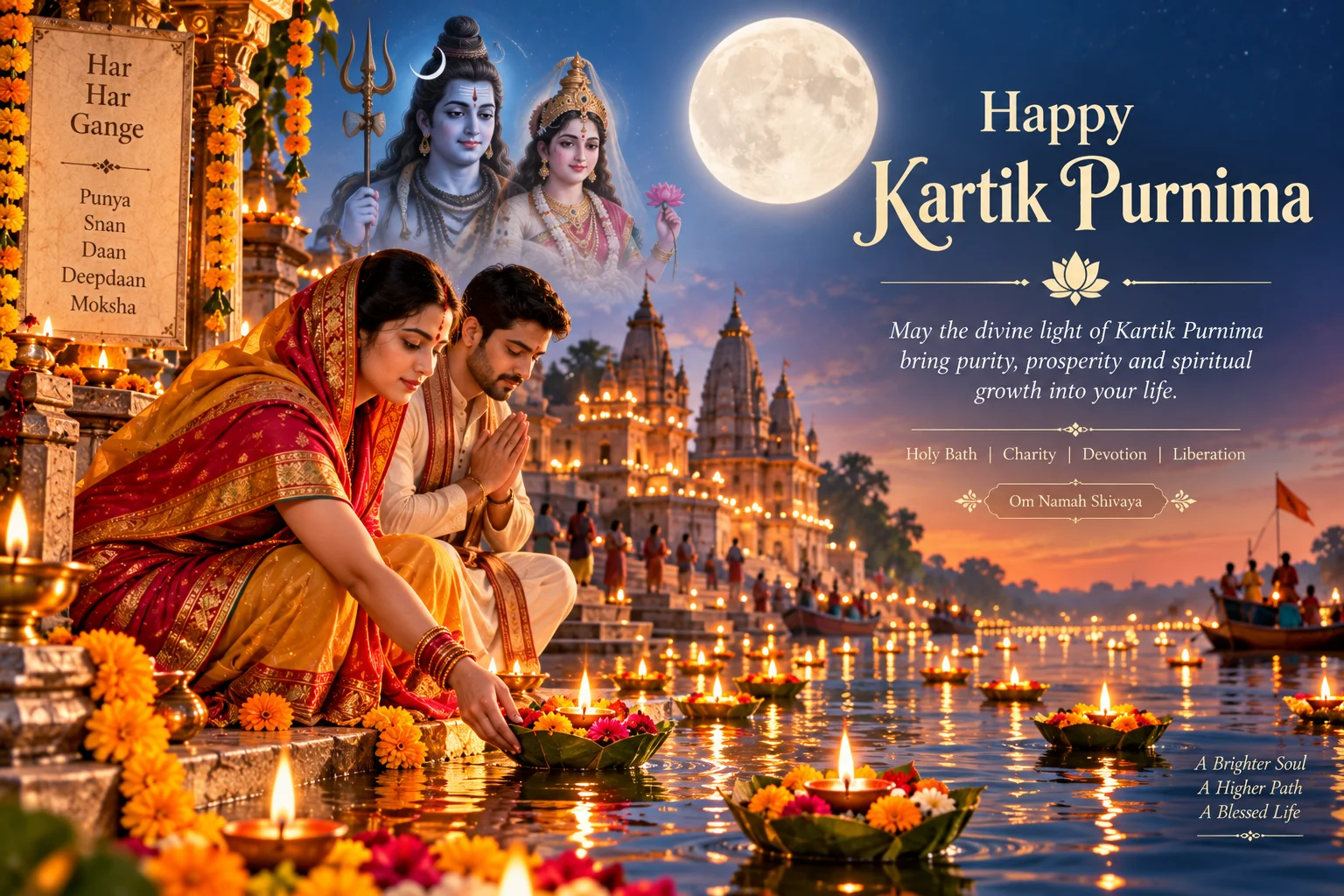
Tuesday, Nov 24, 2026
Kartik Purnima
View Festival Guide
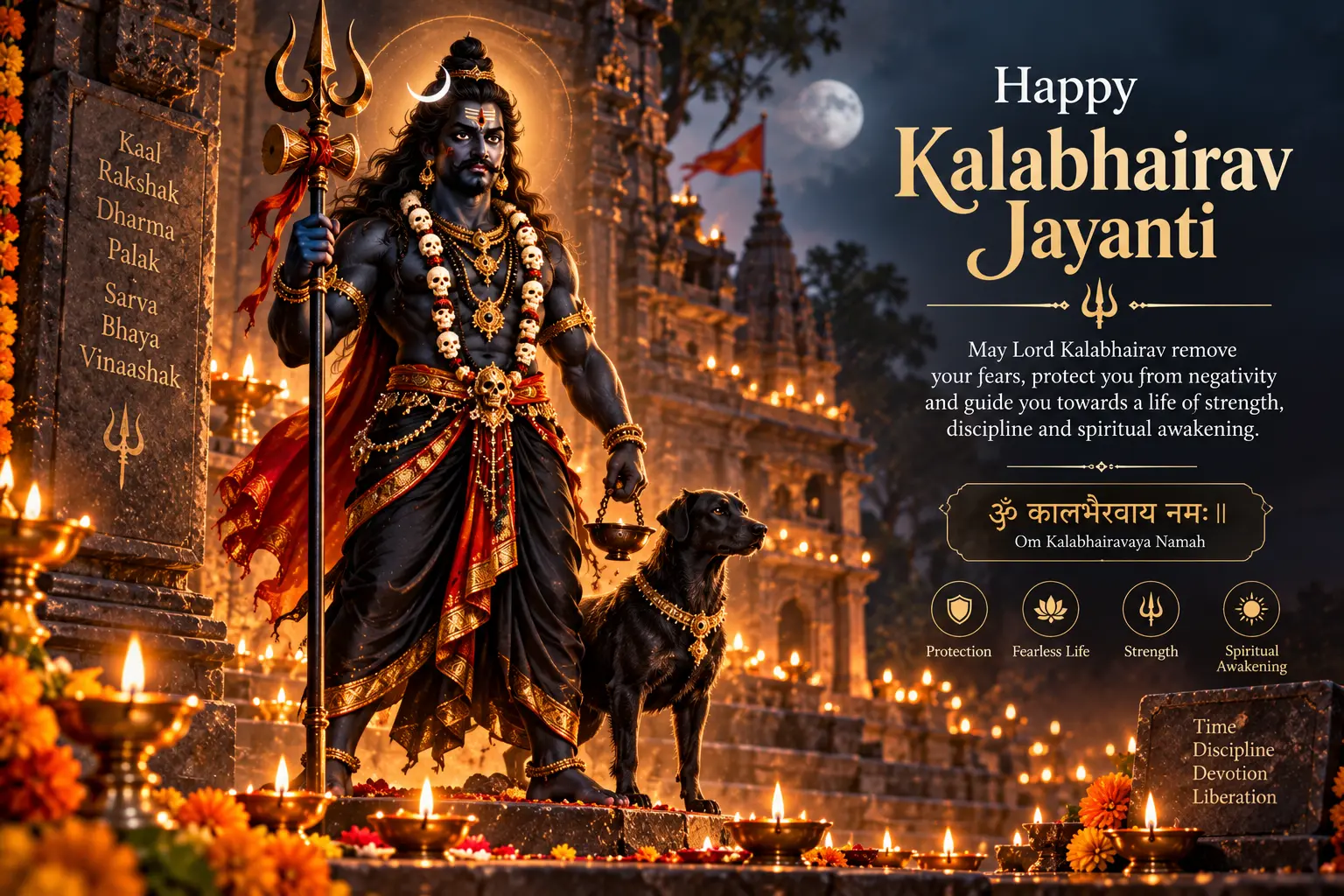
Tuesday, Dec 1, 2026
Kalabhairav Jayanti
Kalabhairav Jayanti, also celebrated with immense esoteric reverence, scriptural awe, and nocturnal solemnity as Bhairava Ashtami, Kalabhairav Ashtami, and Maha Bhairavashtami, marks the divine advent (Jayanti) of Lord Kalabhairava—the terrifying, fierce, and all-destroying manifestation of Lord Sadashiva who presides as the supreme master over all-consuming Time (Kala) and the invincible annihilator of fear (Bhaya-Nashaka). Occurring on the Krishna Paksha Ashtami (the eighth lunar day of the waning moon) in the sacred month of Margashirsha (or Kartika in the Purnimanta calendar prevalent across northern India), this sacred tithi commemorates the cosmic moment when the Supreme Mahadeva manifested His most awe-inspiring form from between His eyebrows to destroy pride, punish unrighteous arrogance, uphold cosmic order, and establish the sacred law of spiritual justice across the universe.
View Festival Guide
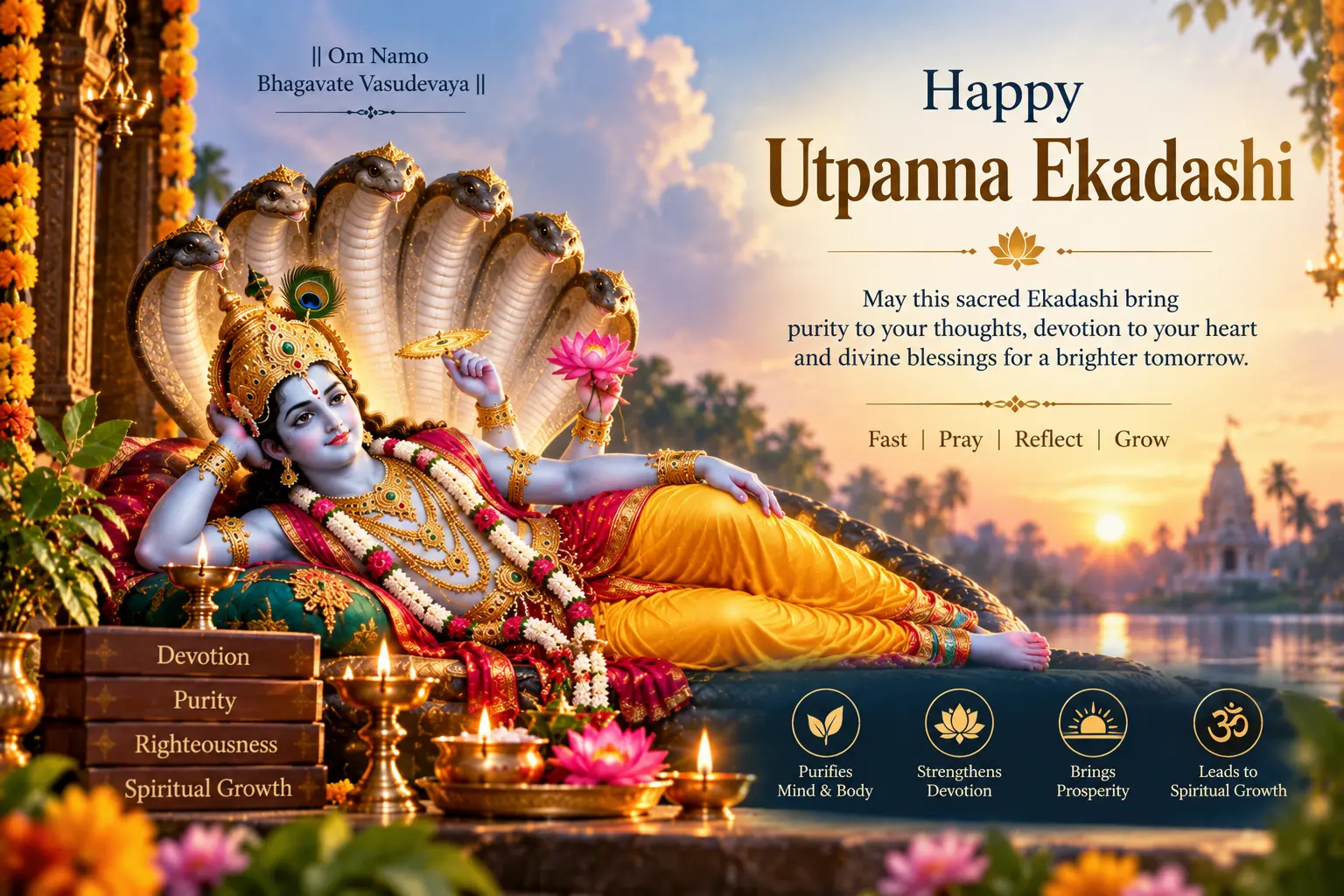
Friday, Dec 4, 2026
Utpanna Ekadashi
Utpanna Ekadashi, observed with supreme scriptural reverence, incandescent devotion, and profound spiritual joy across India, is the radiant advent anniversary (Utpatti / Jayanti) of Goddess Ekadashi herself—the divine, four-armed celestial maiden who personifies the transcendental fasting power and spiritual potency of the Supreme Preserver, Lord Sri Maha Vishnu. Occurring on the Krishna Paksha Ekadashi (the eleventh lunar day of the waning moon) in the sacred month of Margashirsha (or Kartika in the Purnimanta lunar calendar prevalent across northern India), this foundational tithi marks the divine origin and fountainhead of all twenty-four (and in leap years, twenty-six) Ekadashis of the Hindu liturgical year. It is celebrated as the mother of all Ekadashi vows, the spiritual bridge that initiates the annual cycle of Ekadashi fasting, and the supreme tithi wherein the observance of Ekadashi was forever consecrated as the most direct royal pathway to the transcendental abode of Vaikuntha.
View Festival Guide
Monday, Dec 14, 2026
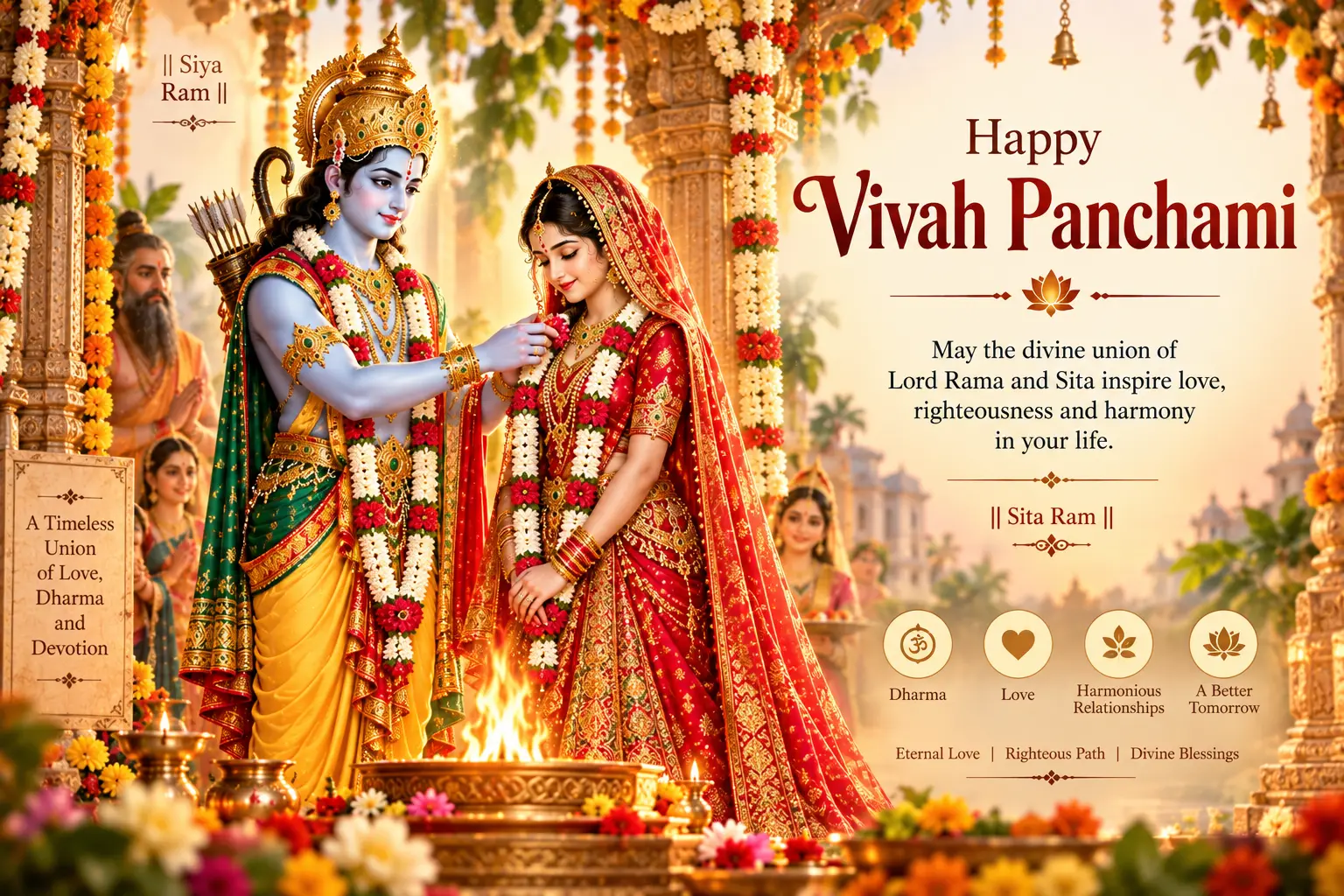
Vivah Panchami
Vivah Panchami, observed with supreme aesthetic elegance, devotional ecstasy, and epic scriptural splendor across the Indian subcontinent and Nepal, is the sacred wedding anniversary of Lord Sri Rama—the Maryada Purushottama and seventh transcendental incarnation of Lord Sri Maha Vishnu—and Goddess Sita, the beloved daughter of King Janaka and the earthly manifestation of Goddess Mahalakshmi. Occurring on the Shukla Paksha Panchami (the fifth lunar day of the waxing moon) in the holy winter month of Margashirsha (Agrahayana), this enchanting festival commemorates the divine nuptial union (Vivaha Samskara) solemnized in the ancient capital of Mithila (modern-day Janakpurdham). Across thousands of temples and domestic shrines, this auspicious tithi is celebrated as the cosmic benchmark of righteous matrimony, spiritual partnership, and unconditional fidelity, reuniting the hearts of devotees with the timeless ideals of the Valmiki Ramayana and the Ramcharitmanas.
View Festival Guide