




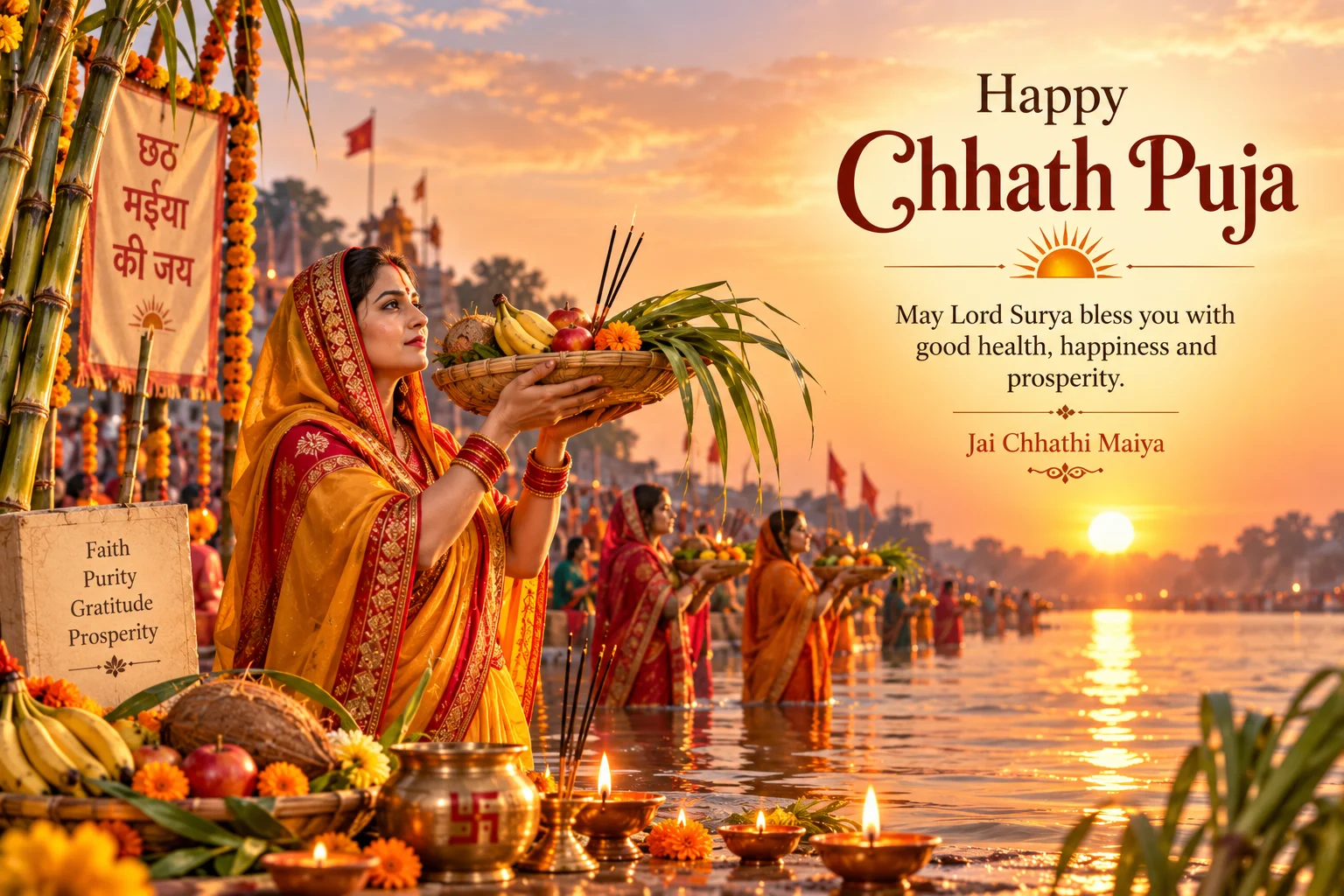
Chhath Puja, celebrated with unparalleled spiritual asceticism, Vedic purity, and cosmic reverence from the Chaturthi to Saptami tithis of the Shukla Paksha in the sacred month of Kartika, is the grandest solar festival of the Indian subcontinent. Known classically as Surya Shashthi, Dala Chhath, Chhathi Maiya, and Mahaparva, this sublime four-day pilgrimage of the soul is dedicated exclusively to Bhagavan Surya (the visible Sun God, Pratyaksha Devata) and His divine female dynamic energy, Chhathi Maiya—revered scripturally as Usha (the cosmic dawn) and Pratyusha (the cosmic dusk), and identified in the Devi Bhagavata Purana as Goddess Devasena or Shashti Devi, the sixth cosmic manifestation of primordial Nature (Mula Prakriti). Originating in the ancient cultural heartland of Bihar, Jharkhand, and eastern Uttar Pradesh, Chhath Puja has expanded globally as a shining beacon of ecological harmony, community egalitarianism, and unshakeable yogic austerity.
Chhath Puja 2026: Date, Puja Timings, Rituals & Stories
Chhath Puja Timings & Panchang
Important festival dates and auspicious timings
06:42 am
05:29 pm
Friday, 13 Nov 2026
06:09 pm – 08:42 pm
Chhath Puja
Unlike conventional Hindu festivals that rely heavily upon temple sanctums, intermediary priestly hierarchies, or complex Vedic fire altars, Chhath Puja is celebrated directly on the natural banks of living flowing rivers, vast lakes, and sacred water bodies under the open canopy of the celestial vault. It is unique in world religious history as the only festival where worshippers reverently offer their primary prostrations and sacred water oblations (Sandhya Arghya) to the setting sun (Astaachalgami Surya) before offering prayers to the rising sun (Udayaachalgami Surya) on the following dawn. This profound ritual sequence encapsulates a timeless philosophical insight: true spiritual maturity lies in honouring the fading, aging, and departing phases of existence with the identical devotion, gratitude, and wonder that one accords to youthful, ascending, and triumphant beginnings.
The four days of Chhath Puja demand a level of sensory restraint and physical endurance unmatched in global liturgical traditions. The festival unfolds through four rigorously defined ritual stages: Nahay-Khay (purificatory bath and sanctified feast on Chaturthi), Kharna or Lohanda (day-long waterless fast concluding with an evening offering of jaggery kheer on Panchami), Sandhya Arghya (standing waist-deep in cold river waters for hours to offer bamboo baskets filled with seasonal produce to the setting sun on Shashthi), and Usha Arghya (concluding dawn offerings to the rising sun on Saptami). Devotees observing this rigorous vow, affectionately termed Parvaitins (predominantly women, though embraced equally by men), maintain a continuous thirty-six-hour waterless fast (Nirjala Vrata), sleeping on bare floor mats, abstaining from anger and speech, and breathing the purest prayer for the longevity, health, and spiritual nobility of their offspring and community.
Why is Chhath Puja Celebrated?
Chhath Puja is celebrated to express profound, unreserved gratitude to Lord Surya for sustaining all biological life, agriculture, prana, and cosmic consciousness across the universe.
According to the Devi Bhagavata Purana and Brahma Vaivarta Purana, the festival propitiates Goddess Shashti (Chhathi Maiya), the divine protector of infants, who grants noble progeny and cures chronic illnesses.
It commemorates ancient scriptural histories from the Mahabharata and Ramayana, including Draupadi's solar worship during exile and Lord Rama and Sita's post-coronation Surya Yajna in Ayodhya.
Devotees observe the demanding thirty-six-hour waterless fast to cleanse the subtle energy channels (Nadis), awaken the Manipura chakra, and absorb direct solar prana.
The festival fosters cosmic ecological awareness, bringing communities together to clean sacred rivers and honor unpolluted, seasonal agricultural offerings in handmade bamboo baskets.
The Skanda Purana and Surya Purana affirm that solar worship conducted during the Shukla Paksha of Kartika cleanses deep-seated ocular and skin ailments, revitalizing the physical body through the absorption of divine prana.
Chhath Puja celebrates the supreme egalitarian democracy of nature, where rich and poor, king and laborer, stand shoulder-to-shoulder in identical river waters, offering the same seasonal fruits in identical bamboo baskets.
- Veneration of Pratyaksha Devata (The Visible Sun): Paying direct spiritual homage to the sun as the physical manifestation of divine radiance that illuminates the cosmos.
- Invocation of Chhathi Maiya (Goddess Devasena): Seeking the maternal protection of the sixth cosmic shakti for the longevity, health, and moral brilliance of children.
- Worship of the Setting Sun (Sandhya Arghya): Honoring the departing sun to celebrate patience, humility, and the inevitable cycles of cosmic completion.
Scriptural Foundations: Vedic Solar Worship, King Priyavrata's Deliverance, and Epic Lore
The Mythological Advent of Goddess Shashti and King Priyavrata
The cosmic origin of Goddess Shashti (Chhathi Maiya) is chronicled in the Ninth Skandha of the Devi Bhagavata Purana and the Brahma Vaivarta Purana. King Priyavrata, a mighty sovereign of the solar race, remained childless for decades despite ruling an empire of unmatched splendor. Accompanied by his devoted queen Malini, the king approached the revered preceptor Sage Kashyapa, who performed the sacred Putrakameshti Yajna to invoke divine grace.
In due time, Queen Malini gave birth to a son, but the child was stillborn, cold, and devoid of breath. Shattered by unbearable grief, King Priyavrata carried the infant to the cremation grounds. As he prepared to end his own life in sorrow, a radiant celestial chariot composed of solar rays descended from the heavens. Seated upon the chariot was a resplendent goddess, glowing like molten gold, adorned with divine gems and holding a radiant infant in Her lap. She proclaimed: 'O King! I am Devasena, the beloved consort of Lord Skanda (Kartikeya). I am Shashti, the sixth aspect of primordial Nature (Mula Prakriti). I grant children to the childless, health to the sick, and life to the faithful.'
The Resurrection of the Prince and the First Chhath Vrata
With maternal tenderness, Goddess Shashti touched the forehead of the stillborn prince, breathing life into his limbs. The infant smiled and sat up, blooming with radiant vitality. Overwhelmed with tears of devotion, King Priyavrata fell prostrate before the Mother of the Universe, praising Her divine majesty. Goddess Shashti commanded the king: 'Establish My worship throughout your empire on the sixth day (Shashthi) of the waxing moon, especially in the sacred month of Kartika. Whoever worships Me alongside Lord Surya with pure hearts and seasonal offerings shall be blessed with glorious offspring, freedom from disease, and heavenly liberation.'
King Priyavrata returned joyously to his capital and instituted the grand public festival of Surya Shashthi. Royal courtiers, farmers, merchants, and ascetics gathered on riverbanks, observed severe waterless fasts, and offered baskets of fruits and jaggery delicacies to the setting and rising sun, establishing the unbroken liturgical lineage of Chhath Puja across North India.
Metaphysical Wisdom: The Bio-Energetic Science of Surya Upasana and Shashti Shakti
The Science of Pratyaksha Devata and Solar Bio-Rhythms
In the Suryopanishad of the Atharvaveda, the Sun God is declared to be the soul of all moving and unmoving beings (Surya Atma Jagatas Tasthushashcha). Unlike philosophical abstractions, Lord Surya is visible, tangible, and directly perceptible. He is the master of time (Kala Chakra), the dispenser of photosynthesis, the regulator of cosmic seasons, and the fountainhead of cellular vitality. Human life is entirely dependent upon solar radiation; without the sun, planetary life collapses into frozen void within minutes.
Chhath Puja is an exquisite liturgical harmonization with solar rhythms. During the autumn month of Kartika, the earth moves along an orbital plane where ultraviolet and infrared wavelengths are particularly soothing and therapeutic. By exposing the physical body to the morning and evening rays while standing immersed in conductive river waters, the seeker's bio-magnetic field is revitalized. The solar prana enters through the optic nerve and skin pores, stimulating the pineal gland, harmonizing melatonin and serotonin secretion, and balancing the autonomic nervous system.
The Philosophy of the Setting Sun (Sandhya Arghya)
The most revolutionary metaphysical teaching of Chhath Puja is the veneration of the setting sun (Astaachalgami Surya). In ordinary worldly life, human beings run after rising stars, celebrating only those who are young, wealthy, powerful, and ascending. Society often ignores, discards, and neglects that which is declining, aging, retiring, or setting.
Chhath Puja shatters this shallow human egoism. By gathering on the riverbanks to offer the primary Arghya to the setting sun, the Parvaitin proclaims that without sunset, there can be no night of rest, and without night, there can be no triumphant dawn. Sunset is not the death of light; it is the peaceful transition into latent potential. To honor the departing sun is to cultivate profound reverence for elders, past generations, and the inevitable twilight of mortal life, recognizing that every end carries the seed of an immortal resurrection.
The Kundalini Awakening and the Solar Plexus (Manipura Chakra)
The Four-Day Liturgical Pilgrimage: Nahay-Khay, Kharna, Sandhya Arghya, and Usha Arghya
Day 1 (Nahay-Khay) and Day 2 (Kharna / Lohanda)
The festival commences on Kartika Shukla Chaturthi with the ritual of Nahay-Khay (Bathe and Eat). The Parvaitin cleans the entire home with utmost scrupulousness, discards all old cookware, and travels to a sacred river or water tank for a purificatory holy bath. Returning home, a single sattvic meal is cooked using freshly harvested Arwa rice, split Bengal gram (Chana Dal), and bottle gourd (Kaddu or Lauki), cooked strictly in bronze or earthen pots over wooden clay stoves (Chulha) using pure rock salt (Sendha Namak). Family members partake in this meal only after the Parvaitin has eaten.
On the second day, Kartika Shukla Panchami, observed as Kharna or Lohanda, the Parvaitin begins an unbroken waterless fast from sunrise. Throughout the day, not a single drop of water or food touches their lips. At twilight, a sanctified sweet kheer prepared with raw cow milk, Basmati rice, and organic sugarcane jaggery (Gud ki Kheer) is prepared alongside thin whole-wheat rotis smeared with pure ghee. The Parvaitin offers this naivedyam in solitary prayer to Lord Surya and Chhathi Maiya. Once the prayers conclude, the Parvaitin consumes this as their final meal, marking the commencement of the grueling thirty-six-hour Nirjala fast.
Day 3 (Sandhya Arghya) and Day 4 (Usha Arghya / Paran)
On the third day, Kartika Shukla Shashthi, the household is immersed in devotional frenzy. Family elders wash whole wheat grains, grind them on stone mills, and fry the traditional crescent-shaped cookies known as Thekua in deep pots of pure cow ghee. Woven bamboo baskets (Daura and Soop) are decorated with vermilion and packed with seasonal offerings: whole sugarcanes, grapefruits, ginger, coconuts, bananas, and clay lamps. In the late afternoon, thousands of pilgrims march barefoot toward the riverbanks, carrying the heavy doli baskets on their heads while women sing soul-stirring Bhojpuri and Maithili Chhath geet.
At the riverbank (Ghat), the Parvaitin wades into the cool water until waist-deep, holding the bamboo Soop laden with offerings and a burning ghee lamp. As the crimson sun sinks below the western horizon, family members pour streams of unboiled cow milk and Ganga water across the basket into the river, chanting solar mantras. After sunset, families return home, leaving five sugarcane stalks tied as a canopy (Koshi) over an earthen lamp in the courtyard. Before daybreak on Saptami, the pilgrims return to the ghats. As the first golden rays of the rising sun pierce the eastern sky, the joyous Usha Arghya is offered, the thirty-six-hour fast is broken with raw ginger and soaked gram, and the sacred Thekua prasad is distributed to weeping, ecstatic crowds.
Chhath Puja Puja Vidhi (Step by Step)
- 1
Nahay-Khay Purificatory Bath and Kaddu-Bhat
Awaken early on Chaturthi, take bath in a holy river or with consecrated Ganga water, thoroughly clean the household, and prepare a pure meal of boiled rice, chana dal, and bottle gourd using rock salt and ghee.
- 2
Kharna Vrat Sankalpa and Day-Long Nirjala Fast
On Panchami morning, take the solemn Sankalpa pledging to observe the 36-hour waterless fast for the longevity of family, health of children, and universal peace. Abstain from food and water throughout the day.
- 3
Kharna Evening Puja and Jaggery Kheer Offering
At sunset on Panchami, cook jaggery-rice kheer and whole wheat rotis over a wood clay stove. Offer them to Lord Surya and Chhathi Maiya in quiet meditation, consume the prasad in solitude, and commence the unbroken waterless fast.
- 4
Preparation of Traditional Thekua and Kasar Prasad
On Shashthi morning, wash wheat grains, dry them under the sun, grind into flour, and knead with jaggery syrup, crushed cardamom, dried coconut, and fennel seeds. Shape with carved wooden molds (Saancha) and fry in pure cow ghee.
- 5
Chhath Puja Puja Samagri List
Traditional Bamboo and Clay Vessels
- Two large woven bamboo baskets (Daura / Tokri) with handles for carrying offerings
- Three to five flat woven bamboo trays (Soop) or brass/copper Soop trays
- Earthen clay lamps (Chhath Diyas) with deep wells, large earthen bowl (Koshi), and clay elephant lids
- Unused earthen stove (Chulha) and dry mango firewood for cooking festival prasad
- Brass or copper Kalasha vessel and copper spoon for pouring milk and water libations
Fresh Seasonal Fruits and Agricultural Produce
- Five whole sugarcane stalks (Ganna / Ikh) with fresh green leaves and roots intact
- Wild water caltrops (Singhara / Paniphal) and large citrus grapefruits (Gaghar Nimbu / Pomelo)
- Bunches of raw and ripe bananas, sweet coconuts with water intact, and fresh apples
- Whole turmeric rhizomes (Kachi Haldi) with leaves, fresh ginger roots, and radishes
- Sweet sweet-potatoes (Shakarkand), custard apples, betel leaves, and whole areca nuts (Supari)
Thekua Ingredients and Sacred Powders
- Coarsely ground stone-milled whole wheat flour (Atta) and unpolished raw rice flour (Kasar)
- Pure unrefined sugarcane jaggery (Gud) and organic crystal rock sugar
Mantras and Prayers for Chhath Puja
Chhath Puja Vrat Rules and Fasting Guidelines
Strict 36-Hour Waterless Fasting (Nirjala)
From the sunset meal of Kharna on Panchami until the conclusion of the Usha Arghya on Saptami, the Parvaitin must observe an unbroken, waterless fast spanning approximately thirty-six hours. Not a single drop of water, fruit, or tea may pass the lips during this sacred austerity.
Absolute Sanctity of Cooking and Separate Utensils
All festival prasad, especially the holy Thekua and Kheer, must be prepared using brand new, unwashed earthen or bronze pots over dedicated clay chulhas fueled exclusively by dried mango wood. Grains must be washed and dried on clean white cloths without being contaminated by birds or unwashed hands.
Barefoot Pilgrimage and Ground Sleeping
- During all four days of the festival, the Parvaitin must sleep on a clean mat spread upon the bare floor, avoiding raised cots, foam mattresses, or luxury bedding.
- Pilgrims and family members must walk completely barefoot when carrying the bamboo Daura baskets to and from the riverbanks.
- Strict celibacy (Brahmacharya) and mental silence must be maintained, avoiding all anger, gossip, falsehood, and worldly vanity.
- Never blow out an earthen lamp with the breath; let lamps burn continuously or gently touch the base with flower petals.
Total Prohibition of Impure Ingredients
The entire household must strictly eliminate onions, garlic, non-vegetarian food, alcohol, and refined table salt. Only pure Sendha Namak (rock salt) and organic jaggery are permitted in cooking.
Dos and Don'ts of Chhath Puja
Good Practices (Do's)
- Observe the 36-hour waterless fast with total spiritual surrender, mental quietude, and patience.
- Offer the primary evening Arghya to the setting sun with identical reverence as the morning rising sun.
- Prepare Thekua and prasad using dedicated clay stoves, dried mango wood, and pure cow ghee.
- Wash and clean the pathways leading to the river ghats so barefoot pilgrims walk on pure ground.
- Apply the traditional long vermilion mark (Kasturi Sindoor) from the nose to the hairline after morning Arghya.
Chhath Puja Across Regions
| Region | Local Name |
|---|---|
| Bihar and Jharkhand | Chhath Mahaparva / Dala Chhath |
| Eastern Uttar Pradesh (Purvanchal) | Surya Shashthi / Chhathi Maiya Puja |
| Terai Region of Nepal | Chhath Parva |
| Metropolitan Cities (Delhi, Mumbai, Kolkata) | Chhath Puja |
| Global Indian Diaspora (USA, UK, Mauritius, Fiji) | Global Chhath Mahaparva |
Chhath Puja FAQs
Why is the setting sun worshipped first during Chhath Puja?
Worshipping the setting sun (Astaachalgami Surya) shatters human egoism and teaches unconditional reverence for all phases of cosmic existence. It reminds humanity that twilight is not extinction, but the peaceful gateway to rebirth, teaching deep respect for aging, completion, and past generations.
Who is Chhathi Maiya according to scriptural texts?
Scriptures identify Chhathi Maiya as Goddess Devasena or Shashti Devi, the divine consort of Lord Kartikeya and the sixth manifestation of primordial Nature (Mula Prakriti). She is the supreme celestial protectress of infants, maternal wellness, and lineage longevity.
What is 'Thekua' and why is it prepared with strict purity?
Thekua is a sacred cookie made from stone-milled whole wheat flour, unrefined sugarcane jaggery, cardamom, and ghee, deep-fried in cow ghee. It represents the quintessential offering of the earth's winter harvest, prepared without artificial additives on wood fires to preserve absolute purity.
Upcoming Festivals
View All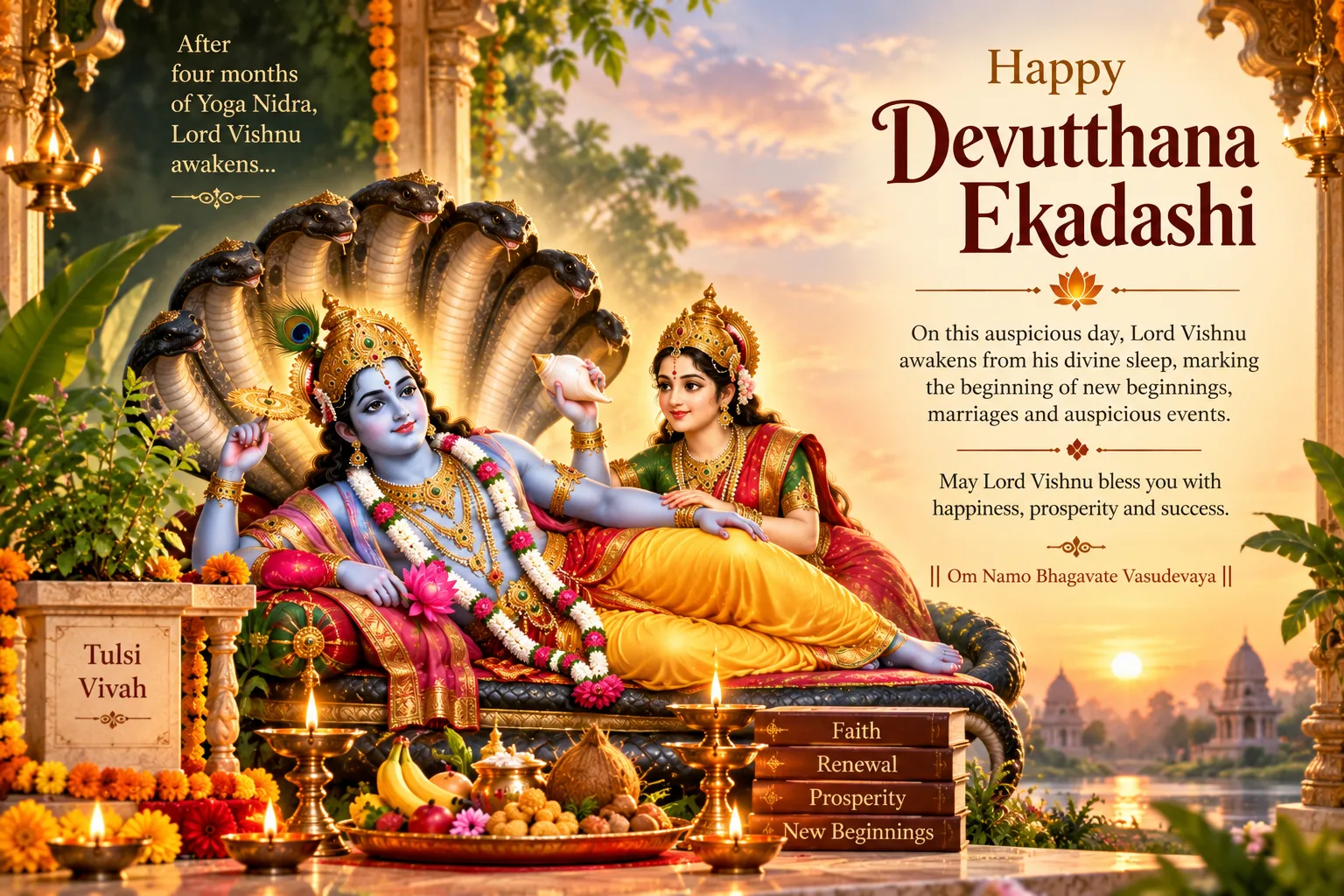
Devutthana Ekadashi
Devutthana Ekadashi, celebrated across the length and breadth of India as Prabodhini Ekadashi, Dev Uthani Gyaras, and Bodhini Ekadashi, is one of the most spiritually profound, joyous, and universally revered festivals in the Hindu calendar. Occurring on the Shukla Paksha Ekadashi (the eleventh lunar day of the waxing moon) in the sacred month of Kartika, this transcendental tithi marks the glorious awakening of the Supreme Preserver, Lord Sri Maha Vishnu, from His four-month mystic yogic slumber (Yoga Nidra). Lord Vishnu enters this cosmic meditative rest on Devshayani Ekadashi in the month of Ashadha, reclining upon the celestial serpent Ananta Shesha in the causal Milk Ocean (Kshirasagara). For four full lunar months—a sacred period known as Chaturmasya—the cosmos observes solemn quietude, and all auspicious life-cycle ceremonies such as marriages, housewarmings, and sacred thread initiations are held in abeyance. With the dawn of Devutthana Ekadashi, the universe awakens to boundless divine joy, celestial trumpets resound, and the sanctifying season of human marital unions and sacred sacraments officially resumes.
Tulasi Vivah
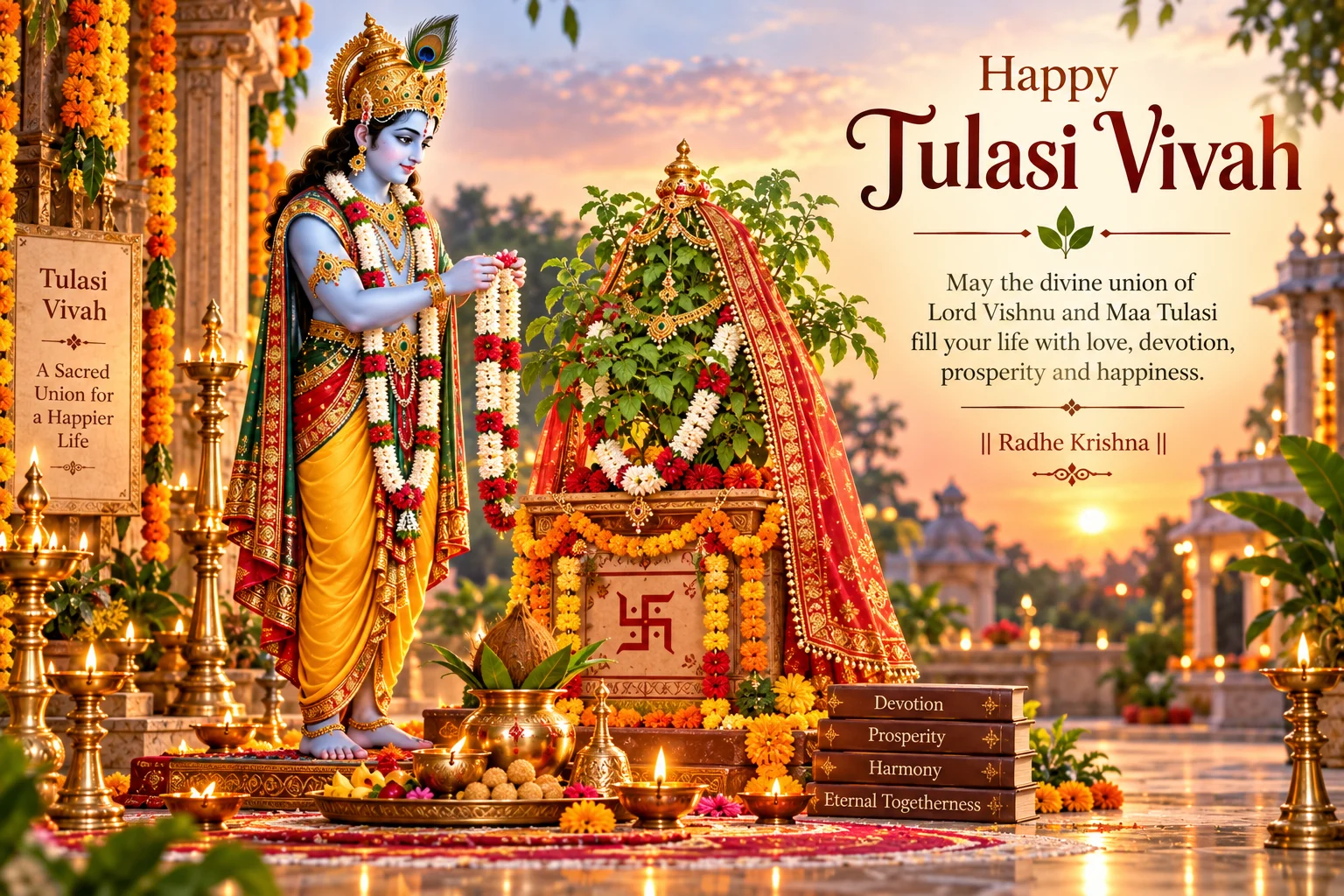
Tulasi Vivah, observed with supreme aesthetic splendor, Vedic sanctity, and devotional grandeur across India, is the ceremonial divine wedding of Goddess Tulasi—the sacred basil plant personifying divine purity and unshakeable chastity—with Lord Sri Maha Vishnu in His sacred, self-manifested stone form of Sri Shaligram (or Sri Krishna / Damodara). Celebrated during the luminous waxing fortnight of the holy month of Kartika, most traditionally on Kartika Shukla Dwadashi (the twelfth lunar day immediately following Devutthana Ekadashi) or spanning the auspicious five-day window between Ekadashi and Kartika Purnima, this celestial nuptial ceremony marks the official, joyous inauguration of the Hindu wedding season (Vivaha Muhurats). Across millions of households and temples, courtyards are transformed into vibrant wedding pavilions where devotees perform every intricate Vedic marriage rite, establishing a sacred cosmic bridge between earthly devotion, environmental reverence, and transcendental love.
Kartik Purnima
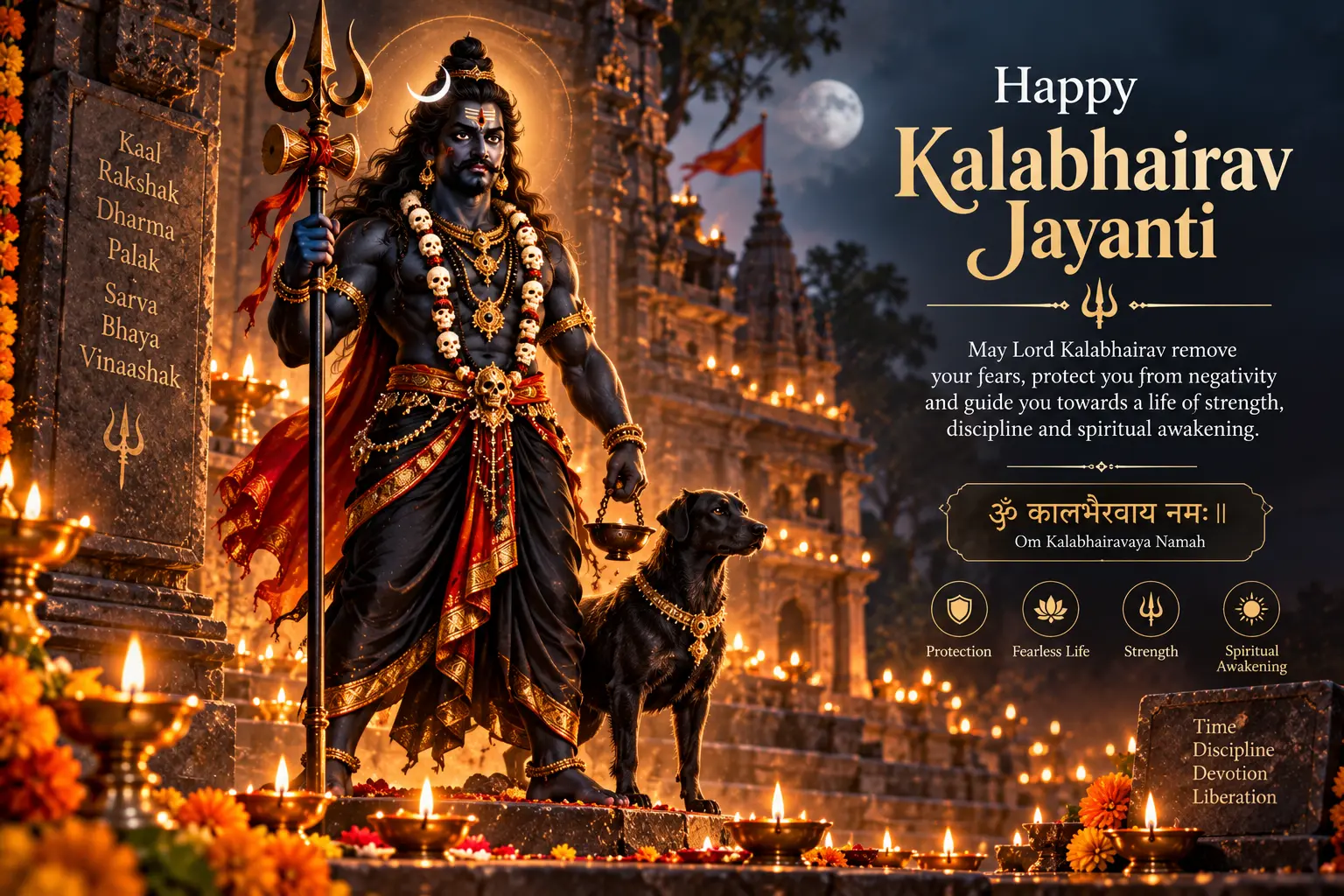
Kalabhairav Jayanti
Kalabhairav Jayanti, also celebrated with immense esoteric reverence, scriptural awe, and nocturnal solemnity as Bhairava Ashtami, Kalabhairav Ashtami, and Maha Bhairavashtami, marks the divine advent (Jayanti) of Lord Kalabhairava—the terrifying, fierce, and all-destroying manifestation of Lord Sadashiva who presides as the supreme master over all-consuming Time (Kala) and the invincible annihilator of fear (Bhaya-Nashaka). Occurring on the Krishna Paksha Ashtami (the eighth lunar day of the waning moon) in the sacred month of Margashirsha (or Kartika in the Purnimanta calendar prevalent across northern India), this sacred tithi commemorates the cosmic moment when the Supreme Mahadeva manifested His most awe-inspiring form from between His eyebrows to destroy pride, punish unrighteous arrogance, uphold cosmic order, and establish the sacred law of spiritual justice across the universe.
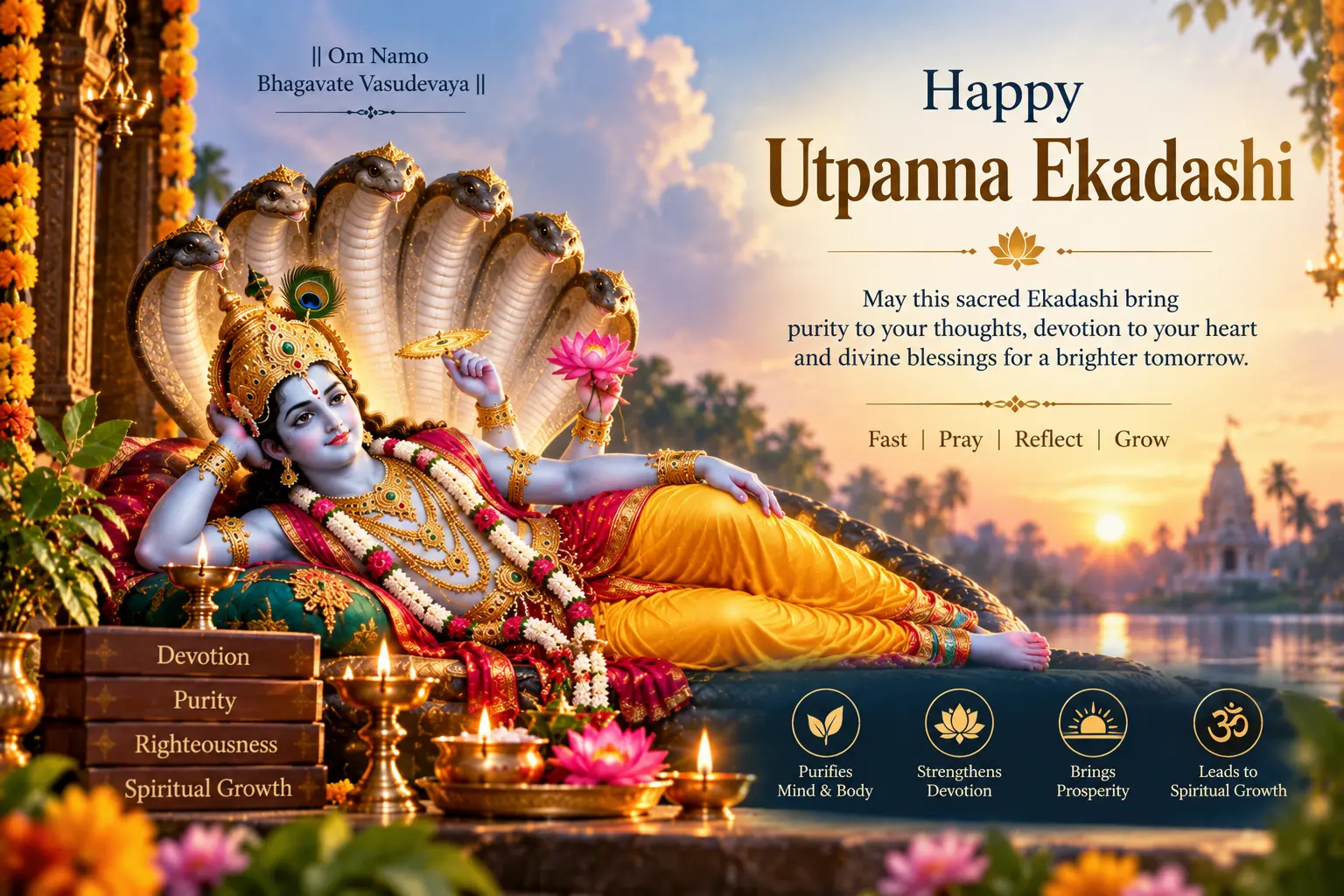
Utpanna Ekadashi
Utpanna Ekadashi, observed with supreme scriptural reverence, incandescent devotion, and profound spiritual joy across India, is the radiant advent anniversary (Utpatti / Jayanti) of Goddess Ekadashi herself—the divine, four-armed celestial maiden who personifies the transcendental fasting power and spiritual potency of the Supreme Preserver, Lord Sri Maha Vishnu. Occurring on the Krishna Paksha Ekadashi (the eleventh lunar day of the waning moon) in the sacred month of Margashirsha (or Kartika in the Purnimanta lunar calendar prevalent across northern India), this foundational tithi marks the divine origin and fountainhead of all twenty-four (and in leap years, twenty-six) Ekadashis of the Hindu liturgical year. It is celebrated as the mother of all Ekadashi vows, the spiritual bridge that initiates the annual cycle of Ekadashi fasting, and the supreme tithi wherein the observance of Ekadashi was forever consecrated as the most direct royal pathway to the transcendental abode of Vaikuntha.
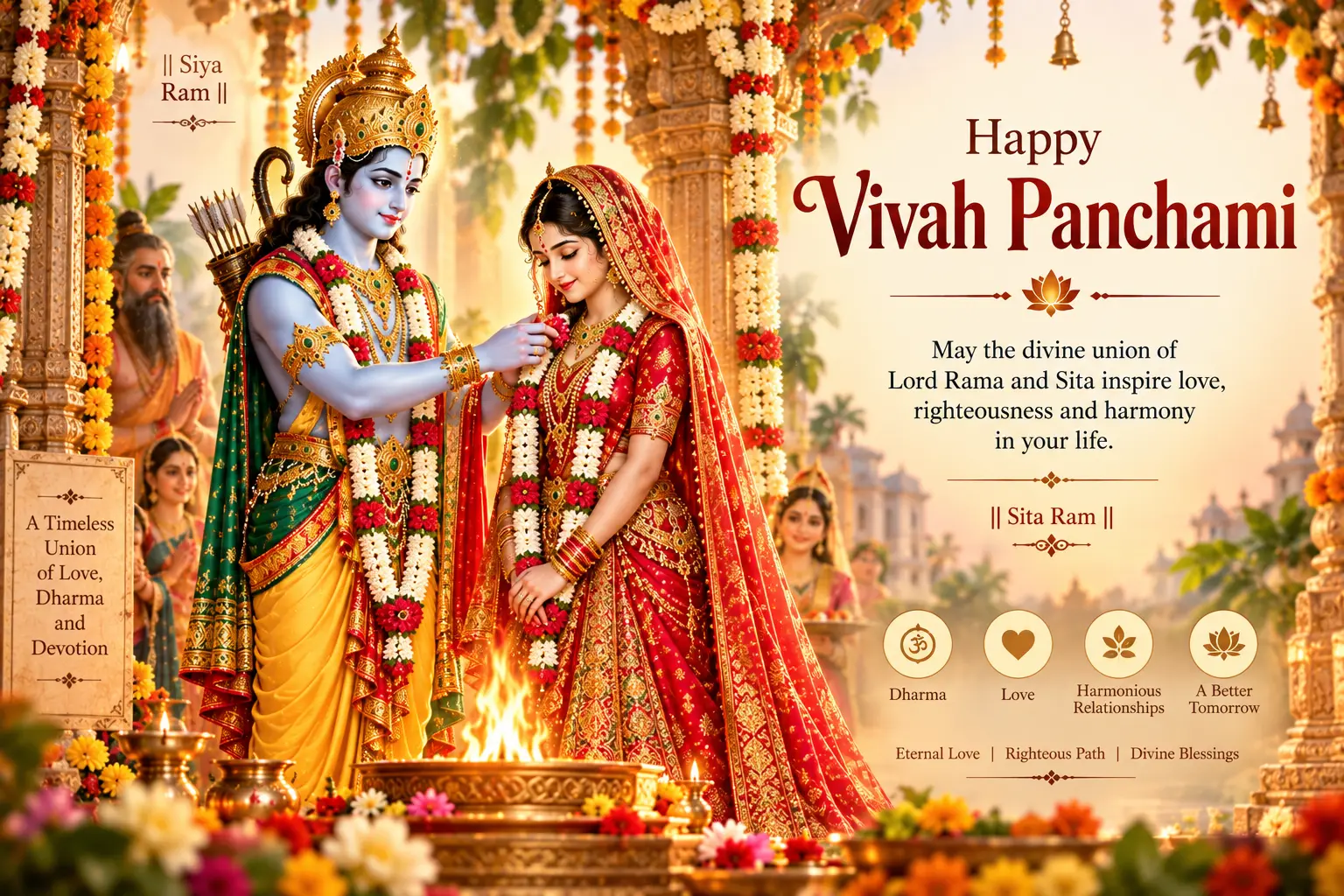
Vivah Panchami
Vivah Panchami, observed with supreme aesthetic elegance, devotional ecstasy, and epic scriptural splendor across the Indian subcontinent and Nepal, is the sacred wedding anniversary of Lord Sri Rama—the Maryada Purushottama and seventh transcendental incarnation of Lord Sri Maha Vishnu—and Goddess Sita, the beloved daughter of King Janaka and the earthly manifestation of Goddess Mahalakshmi. Occurring on the Shukla Paksha Panchami (the fifth lunar day of the waxing moon) in the holy winter month of Margashirsha (Agrahayana), this enchanting festival commemorates the divine nuptial union (Vivaha Samskara) solemnized in the ancient capital of Mithila (modern-day Janakpurdham). Across thousands of temples and domestic shrines, this auspicious tithi is celebrated as the cosmic benchmark of righteous matrimony, spiritual partnership, and unconditional fidelity, reuniting the hearts of devotees with the timeless ideals of the Valmiki Ramayana and the Ramcharitmanas.
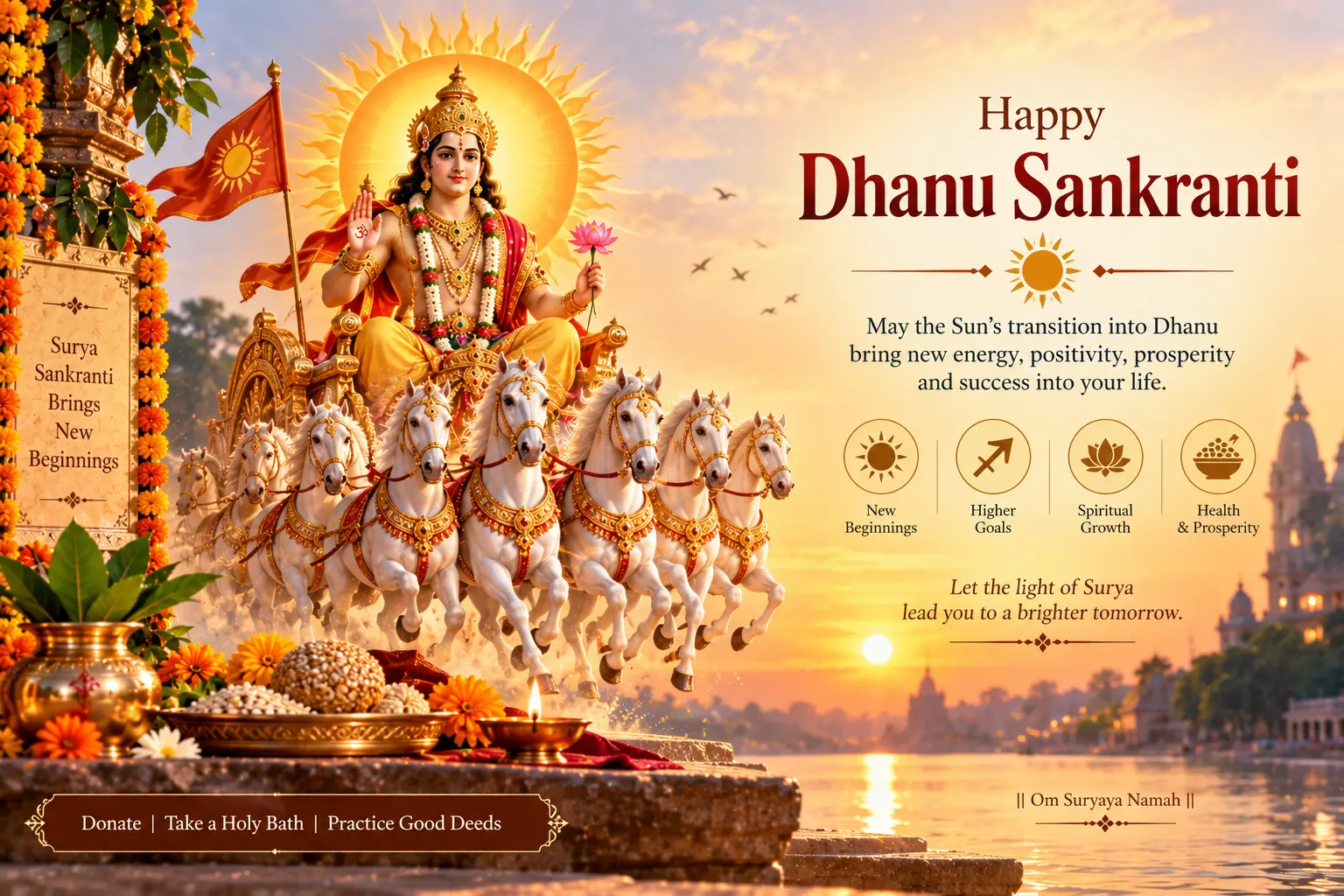
Dhanu Sankranti
Dhanu Sankranti, observed with profound astrological, agricultural, and devotional significance across the Indian subcontinent, marks the momentous astronomical ingress (Sankramana) of Lord Surya—the divine Sun God—from the water sign of Vrishchika (Scorpio) into the fiery, sattvic zodiac sign of Dhanu (Sagittarius), ruled by the celestial preceptor Guru (Jupiter). Occurring in the sacred month of Margashirsha or early Pausha (mid-December), this celestial transition marks the beginning of the solar month of Dhanu Masa and initiates the celebrated period known as Kharmas or Malmas across northern and eastern India. Revering the life-giving solar luminary as the visible eye of the Supreme Cosmic Being (Pratyaksha Devata), Dhanu Sankranti is dedicated to purifying the mind and body through sacred river snanam, Surya arghya, charitable donations, and intense scriptural study before the sun turns northward during Makar Sankranti.
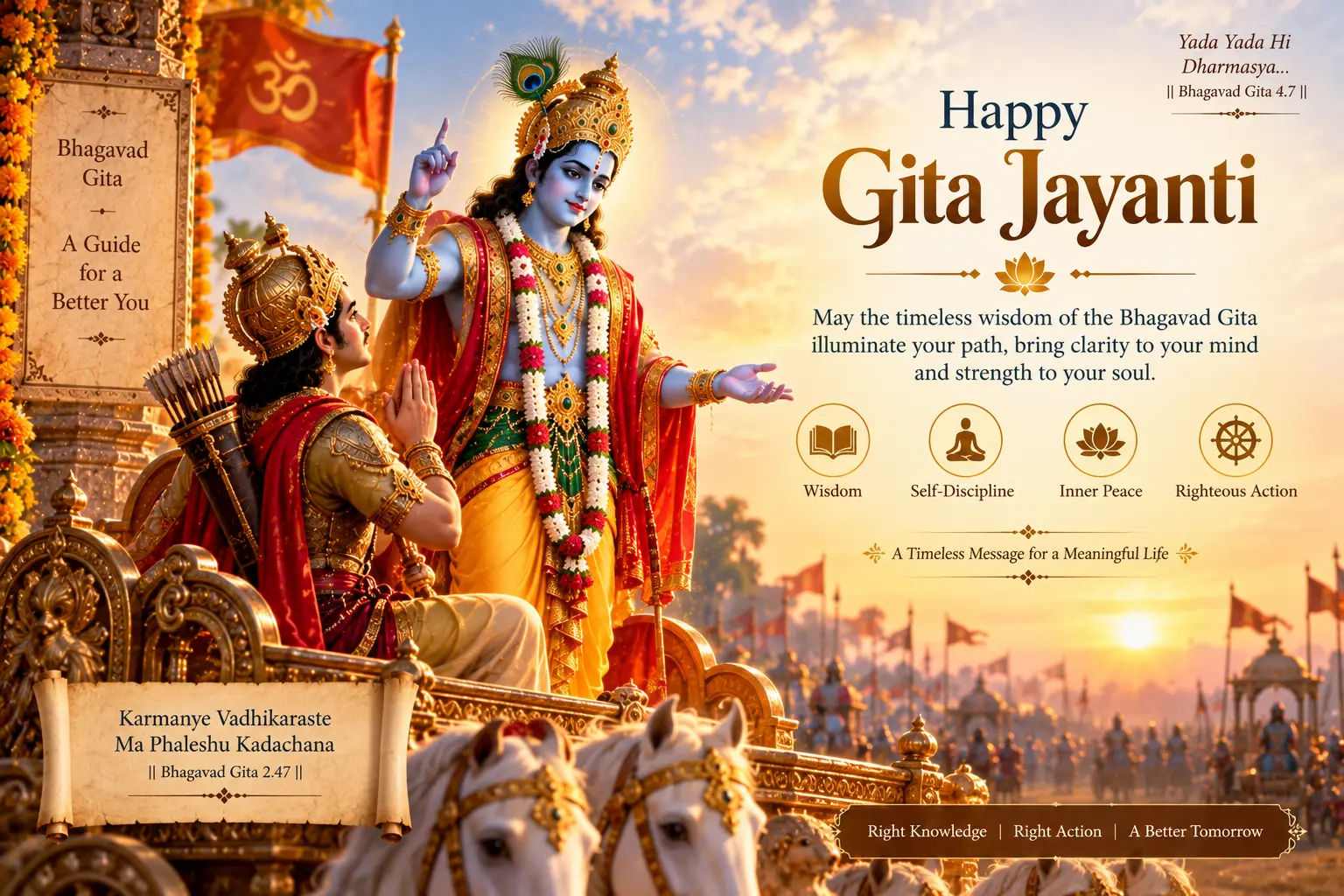
Gita Jayanti
Gita Jayanti is one of the most intellectually revered and spiritually profound festivals in Sanatana Dharma, celebrating the historic revelation of the Srimad Bhagavad Gita—the timeless song of the Supreme Personality of Godhead, Bhagavan Sri Krishna. Occurring on the auspicious Ekadashi tithi of Shukla Paksha in the holy winter month of Margashirsha (November–December), this sacred observance marks the hallowed occasion at Jyotisar in the ancient land of Kurukshetra where Sri Krishna imparted seven hundred verses of supreme spiritual wisdom to His bewildered friend and disciple, the Pandava prince Arjuna. Unlike conventional Hindu festivals that commemorate the earthly birthday or cosmic descent of deities, Gita Jayanti holds the unique distinction of celebrating the birth of a living philosophical scripture—a scripture that serves as the definitive manual for human existence, duty, self-realization, and devotion across all ages.