




Tulasi Vivah, observed with supreme aesthetic splendor, Vedic sanctity, and devotional grandeur across India, is the ceremonial divine wedding of Goddess Tulasi—the sacred basil plant personifying divine purity and unshakeable chastity—with Lord Sri Maha Vishnu in His sacred, self-manifested stone form of Sri Shaligram (or Sri Krishna / Damodara). Celebrated during the luminous waxing fortnight of the holy month of Kartika, most traditionally on Kartika Shukla Dwadashi (the twelfth lunar day immediately following Devutthana Ekadashi) or spanning the auspicious five-day window between Ekadashi and Kartika Purnima, this celestial nuptial ceremony marks the official, joyous inauguration of the Hindu wedding season (Vivaha Muhurats). Across millions of households and temples, courtyards are transformed into vibrant wedding pavilions where devotees perform every intricate Vedic marriage rite, establishing a sacred cosmic bridge between earthly devotion, environmental reverence, and transcendental love.
Tulasi Vivah 2026: Date, Puja Timings, Rituals & Stories
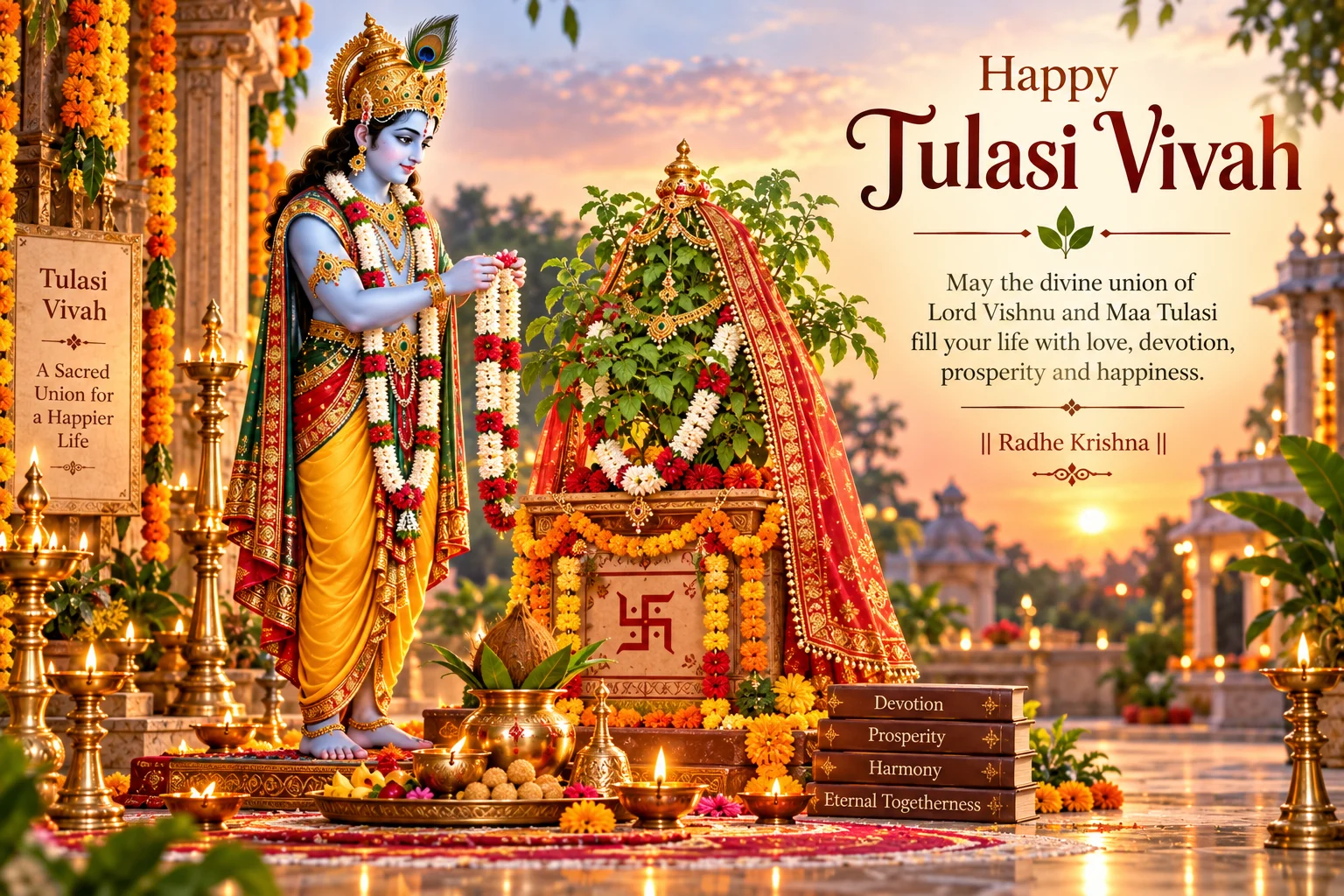
Tulasi Vivah Timings & Panchang
Important festival dates and auspicious timings
06:48 am
05:25 pm
Saturday, 21 Nov 2026
07:16 am – 04:56 am
Tulasi Vivah
The divine scriptural origin of Tulasi Vivah is chronicled in monumental detail across ancient Puranas, most notably in the Padma Purana (Uttara Khanda), Shiva Purana (Yuddha Khanda), Shrimad Devi Bhagavatam, and Brahmavaivarta Purana (Prakriti Khanda). The legend revolves around the tragic, heroic figure of Vrinda, the spotless and exceptionally devout daughter of the noble demon King Kalanemi. Vrinda was wedded to Jalandhara, an invincible demon king who emerged from the fierce fiery third eye of Lord Shiva when it plunged into the churning cosmic ocean. Blessed with tremendous strength and shielded by the impenetrable armor of Vrinda's flawless chastity (Pativrata Dharma), Jalandhara conquered the three worlds and defeated Indra and the devas in combat. When Jalandhara's hubris led him to attack Mount Kailash to challenge Lord Shiva Himself, the preservation of cosmic righteousness necessitated divine intervention.
Recognizing that Jalandhara could never be defeated as long as Vrinda's chastity remained unbroken, Lord Sri Maha Vishnu, responding to the desperate prayers of Lord Shiva and the devas, assumed the exact physical form and voice of Jalandhara and entered Vrinda's royal gardens. Seeing her beloved husband seemingly returning victorious from battle, Vrinda broke her protective meditative vow and joyfully embraced the disguised Lord. At that exact moment, the mystic shield protecting Jalandhara vanished on the battlefield of Kailash, and Lord Shiva's trident decapitated the demon king. When Vrinda discovered the cosmic deception, her righteous grief shook the three worlds. She confronted Lord Vishnu with tears of incandescent agony, demanding why the Supreme Preserver had compromised the chastity of a spotless devotee to secure a celestial victory.
Why is Tulasi Vivah Celebrated?
Tulasi Vivah is celebrated to commemorate the divine wedding of Goddess Tulasi (Vrinda) with Lord Sri Maha Vishnu in His sacred stone form of Sri Shaligram on Kartika Shukla Dwadashi.
According to the Padma Purana and Brahmavaivarta Purana, performing Tulasi Vivah grants householders the peerless spiritual merit of performing Kanyadan, freeing ancestral lineages from suffering.
It marks the official and sanctified commencement of the Hindu wedding season (Vivaha Muhurats), purifying domestic spaces and blessing prospective brides and grooms with marital harmony.
It honors the supreme spiritual status of the holy Tulsi plant, which Lord Vishnu declared to be dearer to Him than His divine consort Goddess Lakshmi, affirming that no Vishnu puja is complete without Tulsi leaves.
It celebrates the redemption of Vrinda's tragic sacrifice and eternalizes the promise made by Lord Vishnu to unite with her every year in the sacred month of Kartika.
- Celebration of Divine Nuptials: Reenacting the celestial marriage of Goddess Tulasi (the bride) and Sri Shaligram / Krishna (the groom) with complete Vedic rites.
- Attainment of Kanyadan Merit: Enabling householders, especially those without biological daughters, to perform the supreme charitable gift of Kanyadan.
- Inauguration of Hindu Marriage Season: Signaling the end of the Chaturmasya restriction and reopening the cosmic gates for auspicious human weddings.
- Ecological Sanctification: Venerating the sacred medicinal and spiritual virtues of the Tulsi plant as the earthly embodiment of divine motherly grace.
- Removal of Manglik and Marital Afflictions: Alleviating astrological doshas, marriage delays, and domestic discord through the grace of the divine couple.
- Fulfillment of Vrinda's Eternal Boon: Honoring the transcendental covenant between the Supreme Preserver and His spotless devotee Vrinda.
Scriptural Chronicles: The Churning of the Ocean, the Wrath of Shiva, and the Transcendental Boon of Vrinda
The Birth of Jalandhara and His Marriage to the Devout Vrinda
The epic history of Tulasi Vivah is detailed across multiple Puranic texts, beginning with the birth of the invincible demon king Jalandhara. In ancient eras, when Lord Indra displayed arrogance before Lord Shiva on Mount Kailash, the great Mahadeva unleashed a flash of incinerating fire from His third eye. Sensing Indra's mortal terror, Sage Brihaspati fell at Shiva's feet, begging for mercy. Lord Shiva spared Indra, but the blazing energy of His third eye was cast into the ocean. Upon entering the ocean, this fiery force transformed into a lustrous male child whose ferocious wailing shook the universe. The ocean god Varuna brought the child to Lord Brahma, who declared: 'Because he was born of water (Jala) and held by the ocean, he shall be named Jalandhara. He shall become an invincible emperor of the Asuras and can only be slain by Lord Shiva Himself.'
As Jalandhara grew into an all-conquering warrior, he was married to Vrinda, the exceptionally pious and chaste daughter of King Kalanemi. Vrinda was an ardent devotee of Lord Vishnu from her earliest childhood. Her unyielding chastity, steadfast character, and devotional austerity (Pativrata Dharma) created an impenetrable mystical fortress around Jalandhara. As long as Vrinda remained chaste and unwavering in her devotion, no weapon in the universe—neither Indra's thunderbolt nor Vishnu's Sudarshana discus—could pierce Jalandhara's flesh or claim his life.
Jalandhara's Hubris and the Cosmic Crisis at Mount Kailash
Drunk with power after vanquishing the devas and establishing his sovereign dominion over the three worlds, Jalandhara was incited by the celestial sage Narada, who described the matchless beauty and ascetic glory of Goddess Parvati on Mount Kailash. Blinded by uncontrollable pride, Jalandhara sent an emissary named Rahu to Lord Shiva, demanding that the great ascetic surrender Parvati to him. Enraged by this unforgivable insolence, Lord Shiva manifested the fierce entity Kirtimukha and sounded the celestial drums of war.
A cataclysmic war erupted between Lord Shiva's fierce Ganas and Jalandhara's formidable demon armies. Jalandhara fought with terrifying power, matching Shiva's fiercest astras. Realizing that the cosmic battle could not be resolved while Vrinda's unyielding chastity protected Jalandhara from death, the devas gathered at the lotus feet of Lord Sri Maha Vishnu. They wept: 'O Preserver of the cosmos! If Jalandhara cannot be slain, cosmic order (Dharma) will perish. Only you have the power to dismantle the mystical shield of Vrinda's chastity!' Lord Vishnu was deeply pained by the necessity of deceiving His own pure devotee, but recognized that the preservation of universal order demanded the ultimate personal sacrifice.
Metaphysical Wisdom: The Alchemy of Chastity, Devotional Surrender, and Cosmic Marriage
The Esoteric Meaning of the Divine Nuptials (Kalyana Utsava)
In the profound philosophical framework of Sanatana Dharma, the sacred marriage between Goddess Tulasi and Sri Shaligram is not an ordinary worldly union, but the supreme mystical marriage between Prakriti (the divine creative feminine energy represented by Tulasi) and Purusha (the supreme unmoving consciousness represented by the Shaligram stone). The Shaligram is silent, immovable, dense, and eternal; the Tulsi plant is fragrant, living, dynamic, and nurturing. When they are united through sacred mantras, cosmic balance is restored to the household and the universe.
Furthermore, Tulasi Vivah establishes the supreme truth that devotion (Bhakti) surpasses mere asceticism. Even though Lord Vishnu orchestrated Vrinda's tragedy for the cosmic good, He placed her above all celestial beings. He granted her a status wherein even Goddess Lakshmi must share the Lord's chest with Tulsi garlands. Through Tulasi Vivah, the seeker learns that genuine love for the divine never goes unrewarded; even pain and apparent betrayal in the service of cosmic dharma are ultimately transformed into immortal spiritual glory.
The Spiritual and Medicinal Sanctity of Goddess Tulasi
In the Skanda Purana, Lord Brahma proclaims: 'By beholding Tulsi, all sins are destroyed; by touching her, the body is purified; by praying to her, all diseases are eradicated; by watering her, the fear of death is dispelled; by planting her, one attains closeness to Lord Krishna; and by offering her at His lotus feet, one achieves liberation.' Tulsi is not merely a botanical specimen, but a living tirtha (pilgrimage site). The roots of Tulsi are said to house all the sacred pilgrimage waters, her stem holds all the devas, and her crown blossoms with the four Vedas.
Scientifically and ayurvedically, Tulasi (Ocimum sanctum) is known as the 'Queen of Herbs'. Its leaves emit powerful adaptogenic, antiviral, and antimicrobial phytoncides that purify the surrounding atmosphere and enhance human immunity. By centering the domestic worship of the autumn season around the living Tulsi plant, ancient Vedic seers seamlessly harmonized ecological preservation with spiritual transcendence.
Ritual Protocols: Courtyard Mandap Decoration, Bridal Adornment, and the Vedic Vivaha Samskara
Preparing the Courtyard and Adorning the Bride Tulasi
The domestic preparations for Tulasi Vivah begin at dawn on Kartika Shukla Dwadashi. The house courtyard, terrace, or domestic altar is thoroughly cleaned, sanctified with holy water, and decorated with elaborate colorful rangoli patterns depicting wedding motifs, peacocks, swastikas, and floral creepers. A charming wedding mandap is constructed around the central Tulsi Vrindavan (the masonry pot housing the sacred basil plant) using four fresh sugarcane stalks, banana stems, and fragrant mango leaf torans.
The Tulsi plant is lovingly bathed with sacred water and dressed as a radiant Hindu bride. The earthen pot is draped in a shimmering red or green silk saree (Chunari), anointed with fragrant turmeric paste and vermilion (sindoor), and adorned with exquisite golden jewelry, green glass bangles, a nose ring (nath), and anklets. A silver or brass crown (Mukut) is placed upon her foliage, and fragrant marigold and jasmine garlands are draped around her branches.
Welcoming the Celestial Groom (Shaligram Baraat)
Simultaneously, the groom—represented by the sacred black Shaligram stone, an idol of Lord Vishnu, or Sri Krishna—is prepared in a separate room or at a neighbor's house representing the groom's family. The idol is bathed with Panchamrita, anointed with yellow sandalwood paste, dressed in rich yellow silk robes (Pitambara), and adorned with a royal groom's turban (Pagdi) and sacred thread (Yajnopavita).
In an enchanting reenactment of a traditional Indian wedding procession (Baraat), the men and youth of the household carry the enthroned Shaligram on a palanquin or decorative brass platter towards the Tulsi mandap, accompanied by the joyous beating of drums, cymbals, conch blowing, and the singing of festive wedding songs. The mother of the household steps forward to perform the traditional Swagat and Aarti of the groom, applying tilak to His forehead and welcoming Him into the wedding pavilion.
The Nuptial Rites: Antarpat, Mangalashtaka, and Saptapadi
The Shaligram is placed upon a raised chowki directly opposite Goddess Tulasi. A white or yellow ceremonial curtain (Antarpat) embroidered with the sacred symbol 'Swastika' is held between the bride Tulasi and the groom Shaligram. The family priest and all assembled relatives begin chanting the traditional eight-stanza wedding benediction, the Sri Mangalashtaka. At the auspicious moment of union, accompanied by the chanting of 'Shubham Bhavatu, Savadhana!', the curtain is joyfully lowered, and guests shower sanctified yellow rice (Akshata) upon the divine couple.
Tulasi Vivah Puja Vidhi (Step by Step)
- 1
Pratah Snana and Shuddhi (Morning Purification)
Rise before sunrise during Brahma Muhurta. Sweep, wash, and purify the entire household and the courtyard around the Tulsi altar. Take a purifying bath in holy water, don clean festive garments, and apply sacred sandalwood or kumkum tilak on the forehead.
- 2
Mandap Sthapana and Rangoli Decoration
Erect a traditional wedding canopy (Vivaha Mandap) over the Tulsi plant using four tall sugarcane stalks and banana stems. Decorate the entrance and the floor around the altar with vibrant rangoli designs depicting conch shells, lotus flowers, and sacred swastikas.
- 3
Shringara of the Bride (Goddess Tulasi)
Bathe the Tulsi plant with pure water and rose water. Drape the earthen planter in a new red or green bridal silk chunari. Anoint the planter and branches with auspicious turmeric paste, red kumkum, and sandalwood. Adorn her with traditional jewelry: silver bangles, bindi, nose ring, anklets, and fresh flower garlands.
- 4
Abhishekam and Shringara of the Groom (Sri Shaligram)
Bathe the sacred Shaligram stone or idol of Lord Krishna with Panchamrita (cow milk, curd, ghee, honey, and raw sugar) followed by pure Ganga water. Adorn the Lord with yellow silk garments (Pitambara), a sacred thread (Yajnopavita), yellow sandalwood paste, a royal crown (Mukut), and fragrant flower garlands.
Tulasi Vivah Puja Samagri List
Bridal Adornment for Goddess Tulasi
- A healthy, flourishing sacred Tulsi plant housed in an earthen or masonry pot (Vrindavan)
- New red or green bridal silk chunari (saree cloth) with golden borders
- Auspicious bridal makeup: turmeric powder, pure red vermilion (sindoor), and red alta
- Traditional jewelry: miniature silver or gold mangalsutra, nose ring (nath), and green glass bangles
- Silver or decorative brass crown (Mukut) and fragrant jasmine and marigold garlands
- Fragrant rose water (Gulab Jal) and pure sandalwood paste for anointing
Groom Adornment for Sri Shaligram / Vishnu
- Sacred Sri Shaligram stone or brass/silver idol of Lord Sri Maha Vishnu or Sri Krishna
- Pure yellow silk cloth (Pitambara) and miniature groom's turban (Pagdi)
- Sacred white cotton thread (Yajnopavita)
- Panchamrita ingredients: raw cow milk, curd, desi cow ghee, forest honey, and sugar candy
- Fragrant Malayagiri yellow sandalwood paste and saffron (kesar)
- Tulsi flower garland (Vanamala) and a small silver palanquin or brass chowki
Mandap & Nuptial Ceremony Essentials
- Four tall, fresh sugarcane stalks with green leaves and banana plant stems
Mantras and Prayers for Tulasi Vivah
Tulasi Vivah Vrat Rules and Fasting Guidelines
Fasting and Dietary Observances for Hosts and Guests
The householders who perform the sacred role of Tulasi's parents (giving her away in Kanyadan) must observe strict fasting until the conclusion of the wedding rituals and the final Maha Aarti. Fasting individuals abstain from all grains, cereals, pulses, onions, garlic, and non-vegetarian food. A light meal of fresh fruits, milk, sweet potatoes, and singhara flour can be taken only after the wedding feast has been offered to the divine couple as naivedya. Guests attending the divine wedding partake of the sanctified feast with deep reverence, treating every sweet as divine prasada.
Vedic Nuptial Protocols and Auspicious Timing
Tulasi Vivah must be performed with the exact same solemnity, purity, and adherence to Vedic injunctions as a sacred human wedding. The ceremony should take place during an auspicious evening twilight (Godhuli Vela) or during the specific Dwadashi tithi. The sacred curtain (Antarpat) must be held between the bride and groom, the Mangalashtaka verses must be chanted with clear pronunciation, and the nuptial knot (Gathbandhan) must remain intact throughout the circumambulations (Saptapadi). Frivolous behavior, disputes, and impure thoughts should be strictly kept away from the wedding mandap.
Respectful Treatment of the Sacred Plant
During the bridal adornment of the Tulsi plant, great care must be taken never to damage, break, or bruise the delicate stems and leaves. Jewelry should be tied gently with soft cotton threads. Synthetic dyes, chemical perfumes, or excessively heavy ornaments that could harm the living foliage should never be applied. If vermilion or turmeric is applied, it should be offered delicately upon the masonry pot or at the base of the plant rather than smothering the living green leaves.
Charity and Dakshina Protocols
A vital scriptural injunction of Tulasi Vivah is the generous offering of gifts, new clothes, and monetary charity (Dakshina) to the officiating priests, cows, and the underprivileged. Just as a royal father lavishly distributes charity during his daughter's wedding, the householder who performs Tulasi's Kanyadan must feed hungry persons and offer cows fresh green fodder, jaggery, and water. Hoarding wealth or displaying miserliness during the divine wedding diminishes the spiritual fruits of the sacrament.
Dos and Don'ts of Tulasi Vivah
Good Practices (Do's)
- Clean and decorate the Tulsi Vrindavan with colorful rangoli, fresh flowers, and sugarcane stalks.
- Drape the sacred Tulsi plant in a fresh red bridal chunari and adorn the planter with auspicious jewelry.
- Perform the traditional Kanyadan with deep devotional surrender, dedicating Tulasi unto Sri Shaligram.
- Hold the sacred Antarpat curtain and shower fragrant yellow akshata during the Mangalashtaka recitation.
- Tie the sacred nuptial knot (Gathbandhan) and perform seven circumambulations (Saptapadi) around the altar.
Tulasi Vivah Across Regions
| Region | Local Name |
|---|---|
| Gujarat and Saurashtra | Tulsi Vivah / Thakorji Vivah |
| Maharashtra and Goa | Tulsi Vivah / Tulshiche Lagna |
| North India (Uttar Pradesh, Bihar, Rajasthan, Madhya Pradesh) | Tulasi Vivah / Dev Uthani Vivah |
| South India (Tamil Nadu, Karnataka, Andhra Pradesh) | Tulasi Kalyanam |
| Odisha (Puri Dham and Vaishnava Shrines) | Tulasi Bibaha / Panchaka Mahotsava |
Tulasi Vivah FAQs
What is Tulasi Vivah and on which tithi is it celebrated?
Tulasi Vivah is the ceremonial divine wedding of Goddess Tulasi (the sacred basil plant) with Lord Sri Maha Vishnu in His sacred stone form of Sri Shaligram. It is celebrated primarily on Kartika Shukla Dwadashi (the twelfth lunar day of the waxing moon in Kartika), though it can be performed on any auspicious day between Devutthana Ekadashi and Kartika Purnima.
Why does Lord Vishnu marry the Tulsi plant every year?
Lord Vishnu promised His spotless devotee Vrinda that in compensation for the cosmic deception He had to perform to break her husband Jalandhara's invincibility, she would be reborn as the sacred Tulsi plant, and He would marry her every year on Kartika Shukla Dwadashi in the form of the Shaligram stone.
What is the spiritual significance of performing Kanyadan in Tulasi Vivah?
Upcoming Festivals
View All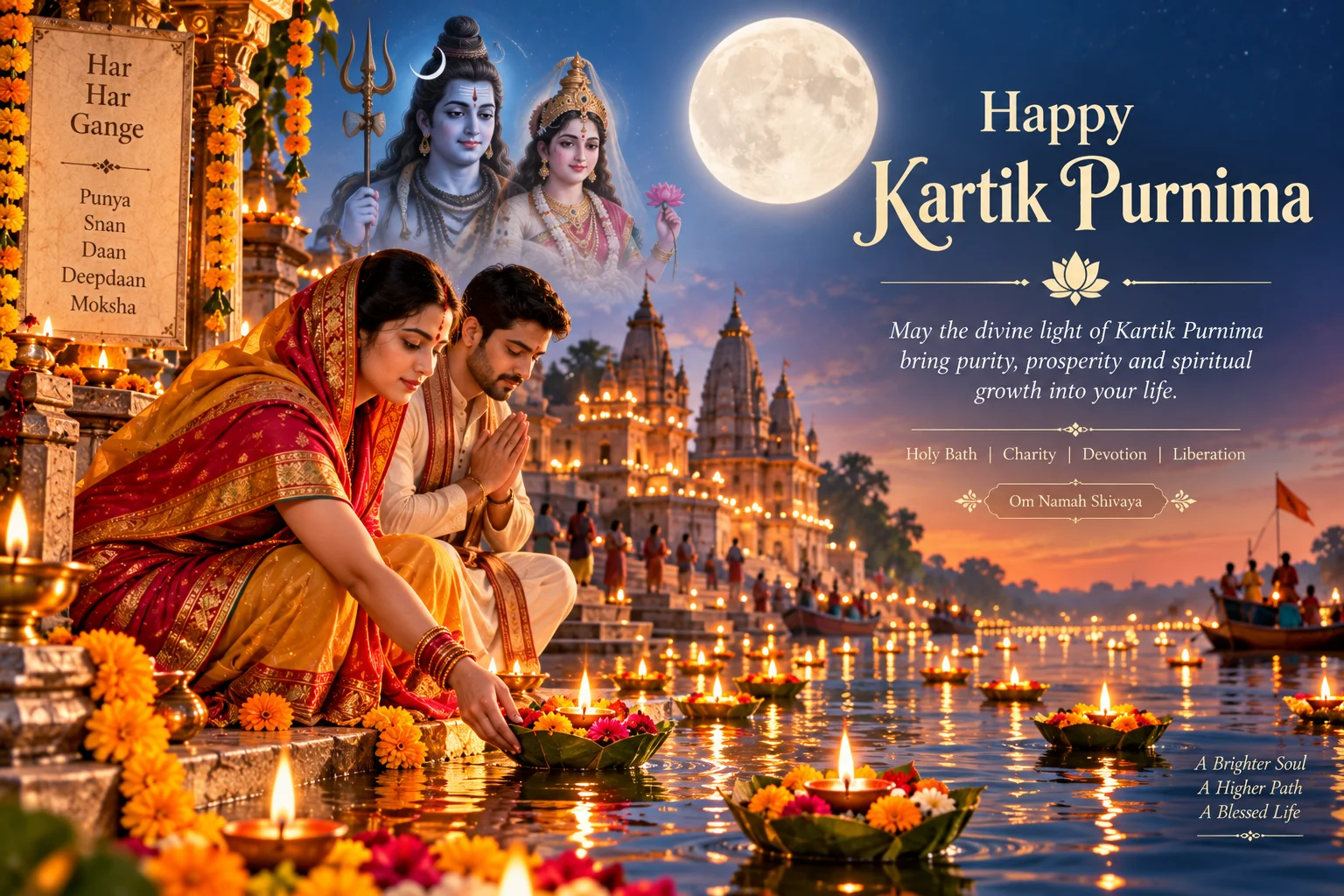
Kartik Purnima
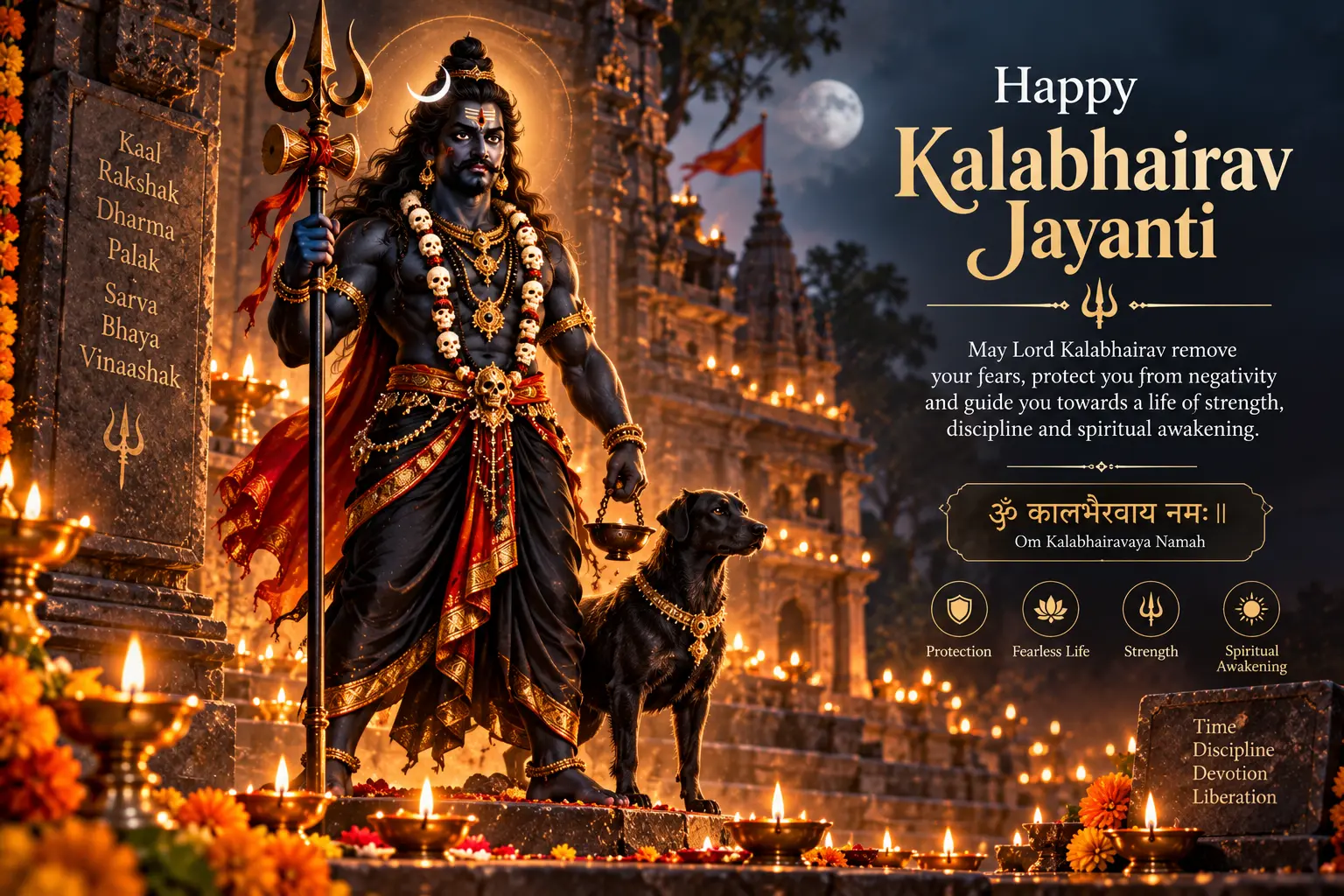
Kalabhairav Jayanti
Kalabhairav Jayanti, also celebrated with immense esoteric reverence, scriptural awe, and nocturnal solemnity as Bhairava Ashtami, Kalabhairav Ashtami, and Maha Bhairavashtami, marks the divine advent (Jayanti) of Lord Kalabhairava—the terrifying, fierce, and all-destroying manifestation of Lord Sadashiva who presides as the supreme master over all-consuming Time (Kala) and the invincible annihilator of fear (Bhaya-Nashaka). Occurring on the Krishna Paksha Ashtami (the eighth lunar day of the waning moon) in the sacred month of Margashirsha (or Kartika in the Purnimanta calendar prevalent across northern India), this sacred tithi commemorates the cosmic moment when the Supreme Mahadeva manifested His most awe-inspiring form from between His eyebrows to destroy pride, punish unrighteous arrogance, uphold cosmic order, and establish the sacred law of spiritual justice across the universe.
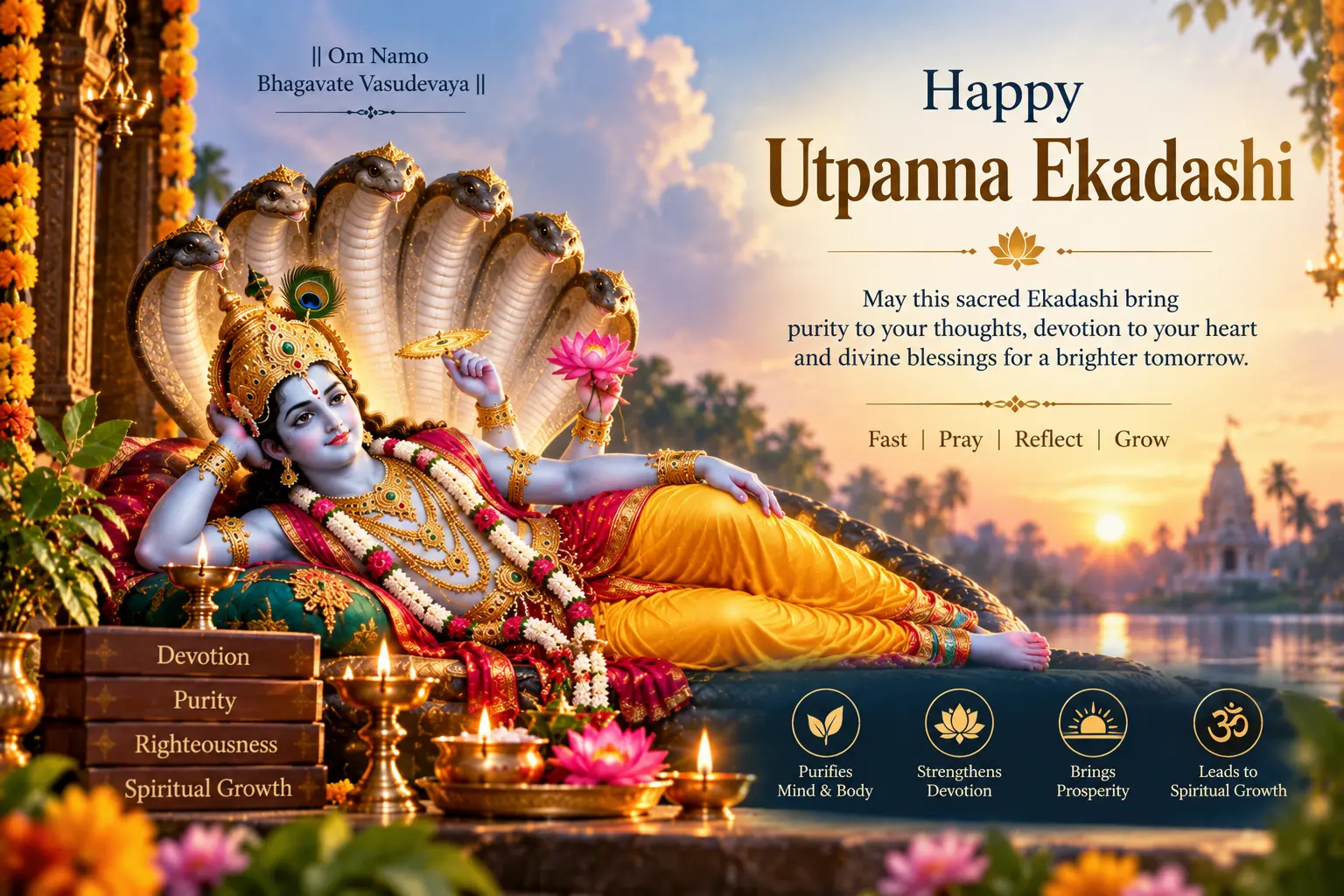
Utpanna Ekadashi
Utpanna Ekadashi, observed with supreme scriptural reverence, incandescent devotion, and profound spiritual joy across India, is the radiant advent anniversary (Utpatti / Jayanti) of Goddess Ekadashi herself—the divine, four-armed celestial maiden who personifies the transcendental fasting power and spiritual potency of the Supreme Preserver, Lord Sri Maha Vishnu. Occurring on the Krishna Paksha Ekadashi (the eleventh lunar day of the waning moon) in the sacred month of Margashirsha (or Kartika in the Purnimanta lunar calendar prevalent across northern India), this foundational tithi marks the divine origin and fountainhead of all twenty-four (and in leap years, twenty-six) Ekadashis of the Hindu liturgical year. It is celebrated as the mother of all Ekadashi vows, the spiritual bridge that initiates the annual cycle of Ekadashi fasting, and the supreme tithi wherein the observance of Ekadashi was forever consecrated as the most direct royal pathway to the transcendental abode of Vaikuntha.
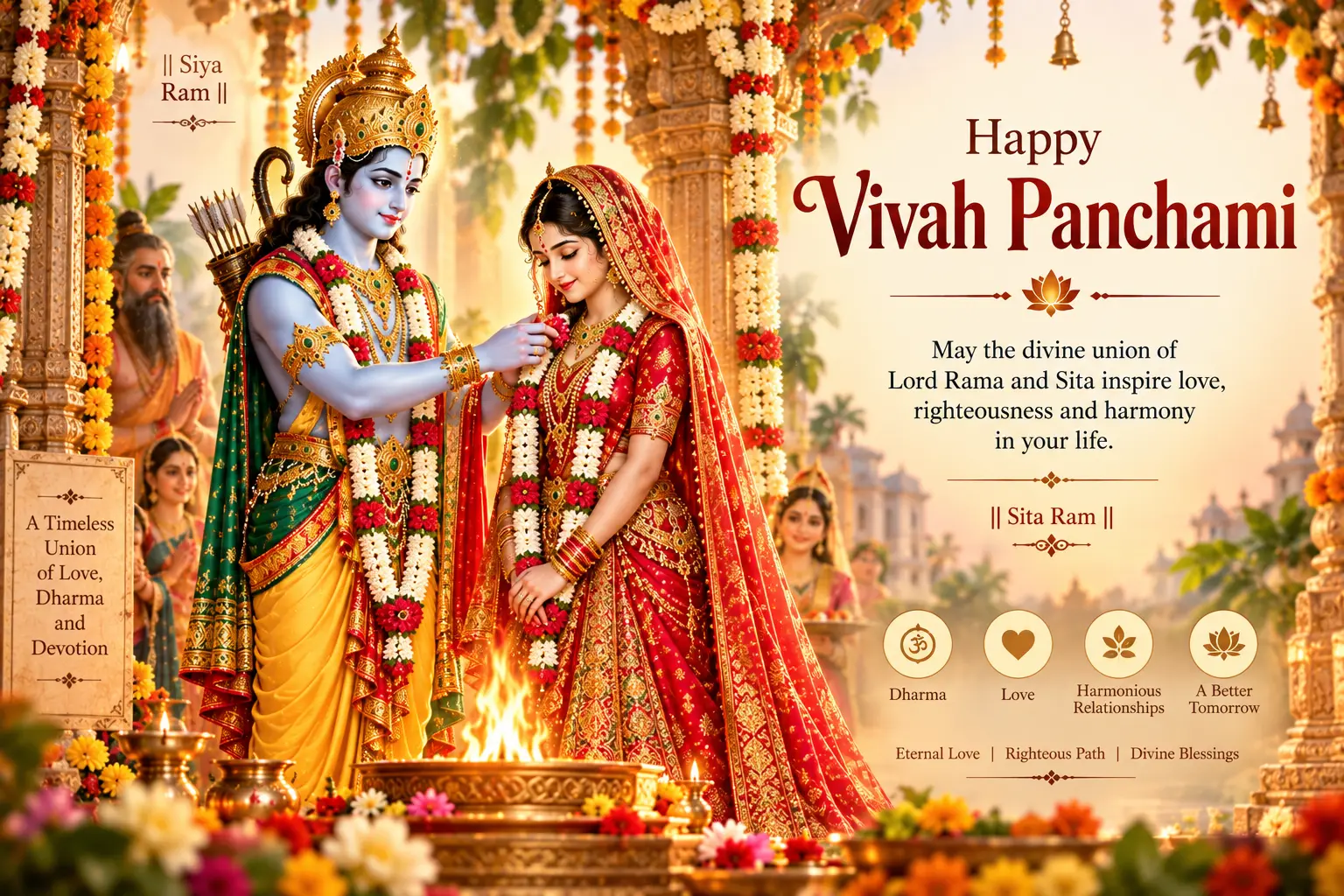
Vivah Panchami
Vivah Panchami, observed with supreme aesthetic elegance, devotional ecstasy, and epic scriptural splendor across the Indian subcontinent and Nepal, is the sacred wedding anniversary of Lord Sri Rama—the Maryada Purushottama and seventh transcendental incarnation of Lord Sri Maha Vishnu—and Goddess Sita, the beloved daughter of King Janaka and the earthly manifestation of Goddess Mahalakshmi. Occurring on the Shukla Paksha Panchami (the fifth lunar day of the waxing moon) in the holy winter month of Margashirsha (Agrahayana), this enchanting festival commemorates the divine nuptial union (Vivaha Samskara) solemnized in the ancient capital of Mithila (modern-day Janakpurdham). Across thousands of temples and domestic shrines, this auspicious tithi is celebrated as the cosmic benchmark of righteous matrimony, spiritual partnership, and unconditional fidelity, reuniting the hearts of devotees with the timeless ideals of the Valmiki Ramayana and the Ramcharitmanas.
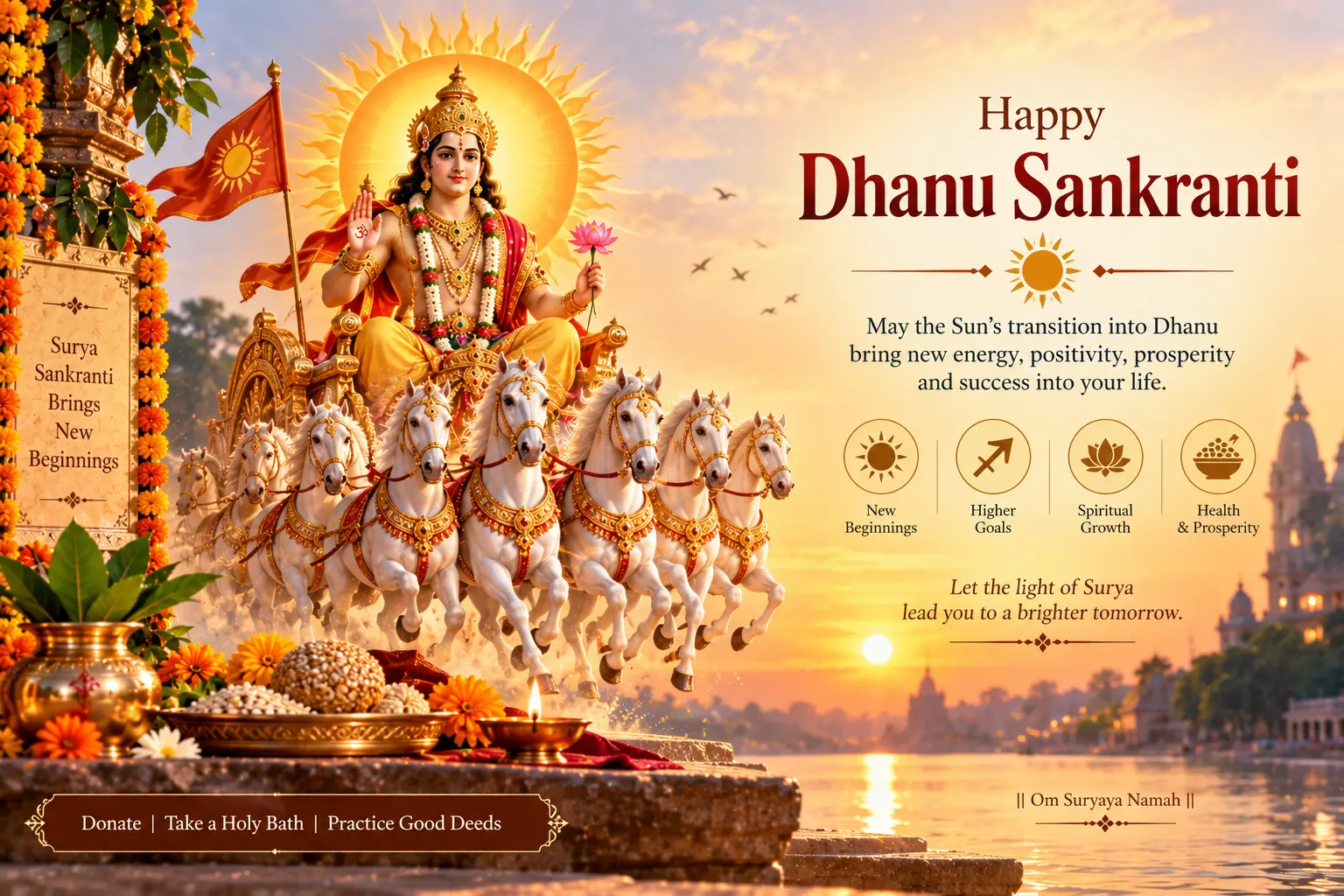
Dhanu Sankranti
Dhanu Sankranti, observed with profound astrological, agricultural, and devotional significance across the Indian subcontinent, marks the momentous astronomical ingress (Sankramana) of Lord Surya—the divine Sun God—from the water sign of Vrishchika (Scorpio) into the fiery, sattvic zodiac sign of Dhanu (Sagittarius), ruled by the celestial preceptor Guru (Jupiter). Occurring in the sacred month of Margashirsha or early Pausha (mid-December), this celestial transition marks the beginning of the solar month of Dhanu Masa and initiates the celebrated period known as Kharmas or Malmas across northern and eastern India. Revering the life-giving solar luminary as the visible eye of the Supreme Cosmic Being (Pratyaksha Devata), Dhanu Sankranti is dedicated to purifying the mind and body through sacred river snanam, Surya arghya, charitable donations, and intense scriptural study before the sun turns northward during Makar Sankranti.
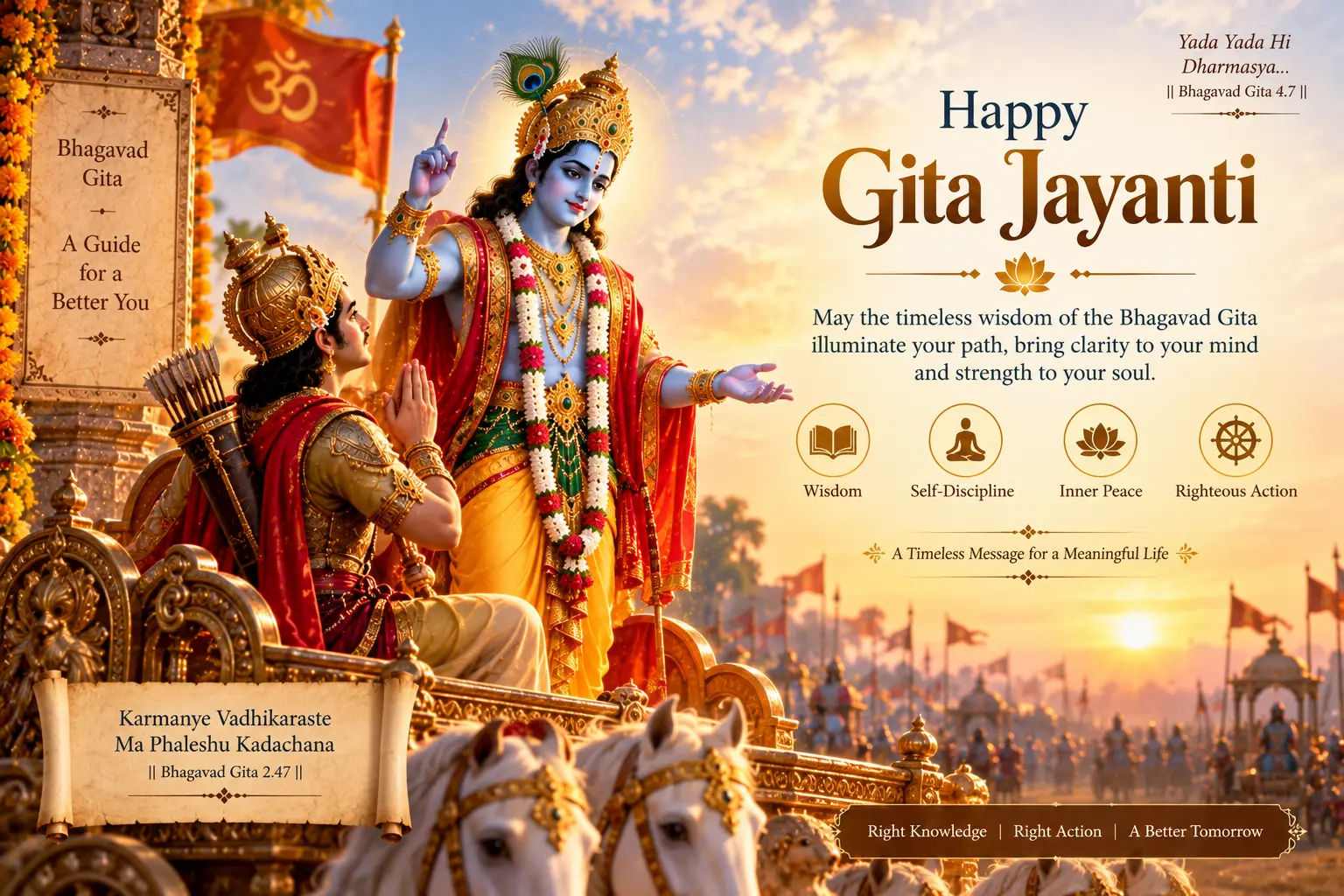
Gita Jayanti
Gita Jayanti is one of the most intellectually revered and spiritually profound festivals in Sanatana Dharma, celebrating the historic revelation of the Srimad Bhagavad Gita—the timeless song of the Supreme Personality of Godhead, Bhagavan Sri Krishna. Occurring on the auspicious Ekadashi tithi of Shukla Paksha in the holy winter month of Margashirsha (November–December), this sacred observance marks the hallowed occasion at Jyotisar in the ancient land of Kurukshetra where Sri Krishna imparted seven hundred verses of supreme spiritual wisdom to His bewildered friend and disciple, the Pandava prince Arjuna. Unlike conventional Hindu festivals that commemorate the earthly birthday or cosmic descent of deities, Gita Jayanti holds the unique distinction of celebrating the birth of a living philosophical scripture—a scripture that serves as the definitive manual for human existence, duty, self-realization, and devotion across all ages.
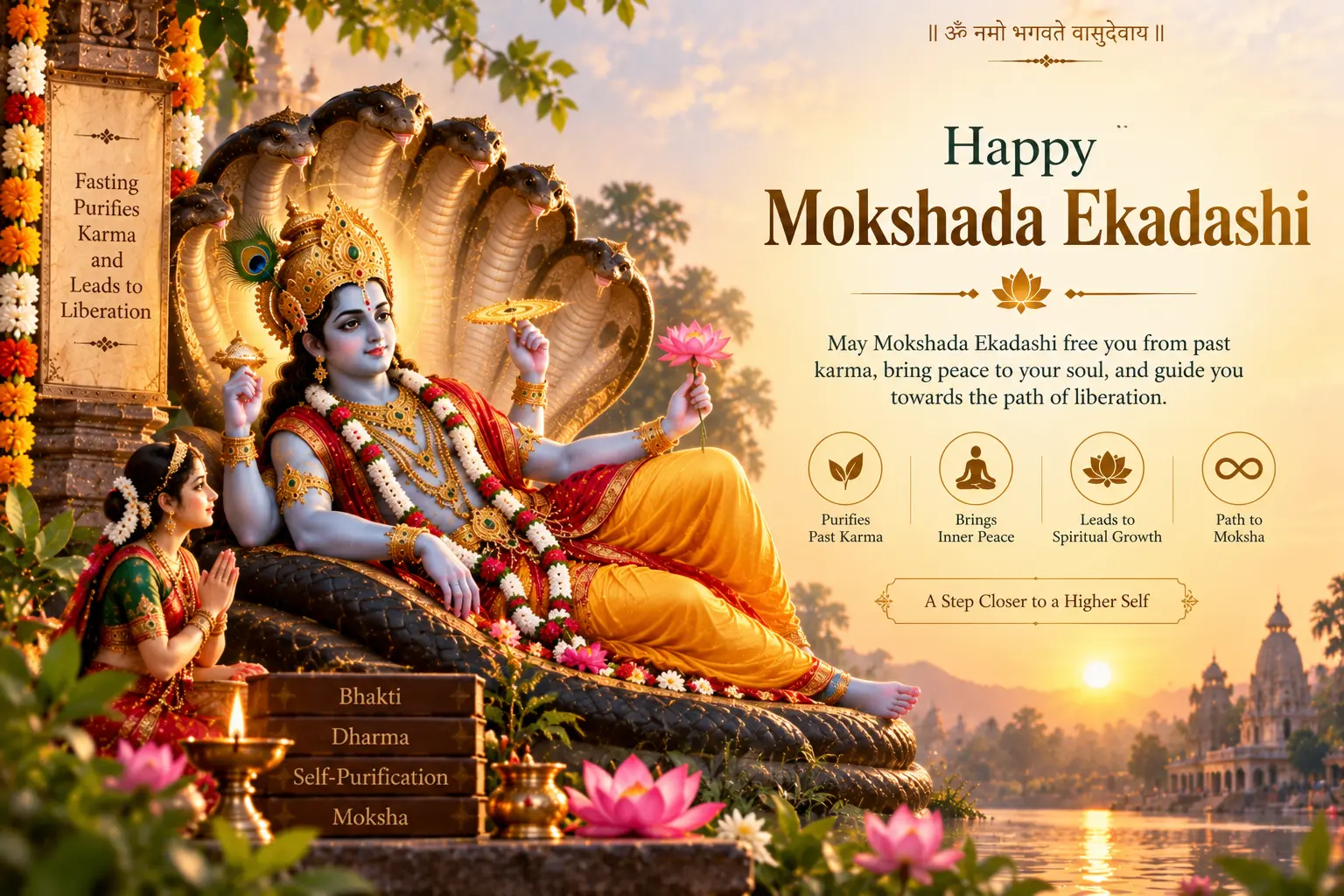
Mokshada Ekadashi
Mokshada Ekadashi, observed on the Shukla Paksha Ekadashi (the eleventh lunar day of the waxing moon) in the sacred winter month of Margashirsha (Agrahayana), is one of the most spiritually venerated and soteriologically potent fasting days in Sanatana Dharma. As its Sanskrit name unequivocally proclaims—'Mokshada', meaning 'the bestower of ultimate liberation (Moksha)'—this holy vrata possesses the extraordinary capacity to dissolve mountains of accumulated karmic transgressions, deliver departed ancestral souls from torment in lower realms (Naraka), and grant unalloyed devotion to Lord Sri Damodara-Krishna. Celebrated with intense ascetic discipline, scriptural recitation, and uninterrupted contemplation across India and Nepal, Mokshada Ekadashi holds supreme significance in both Smarta and Vaishnava traditions as an unshakeable bridge from the ocean of mortal sorrow to the eternal tranquility of Vaikuntha.
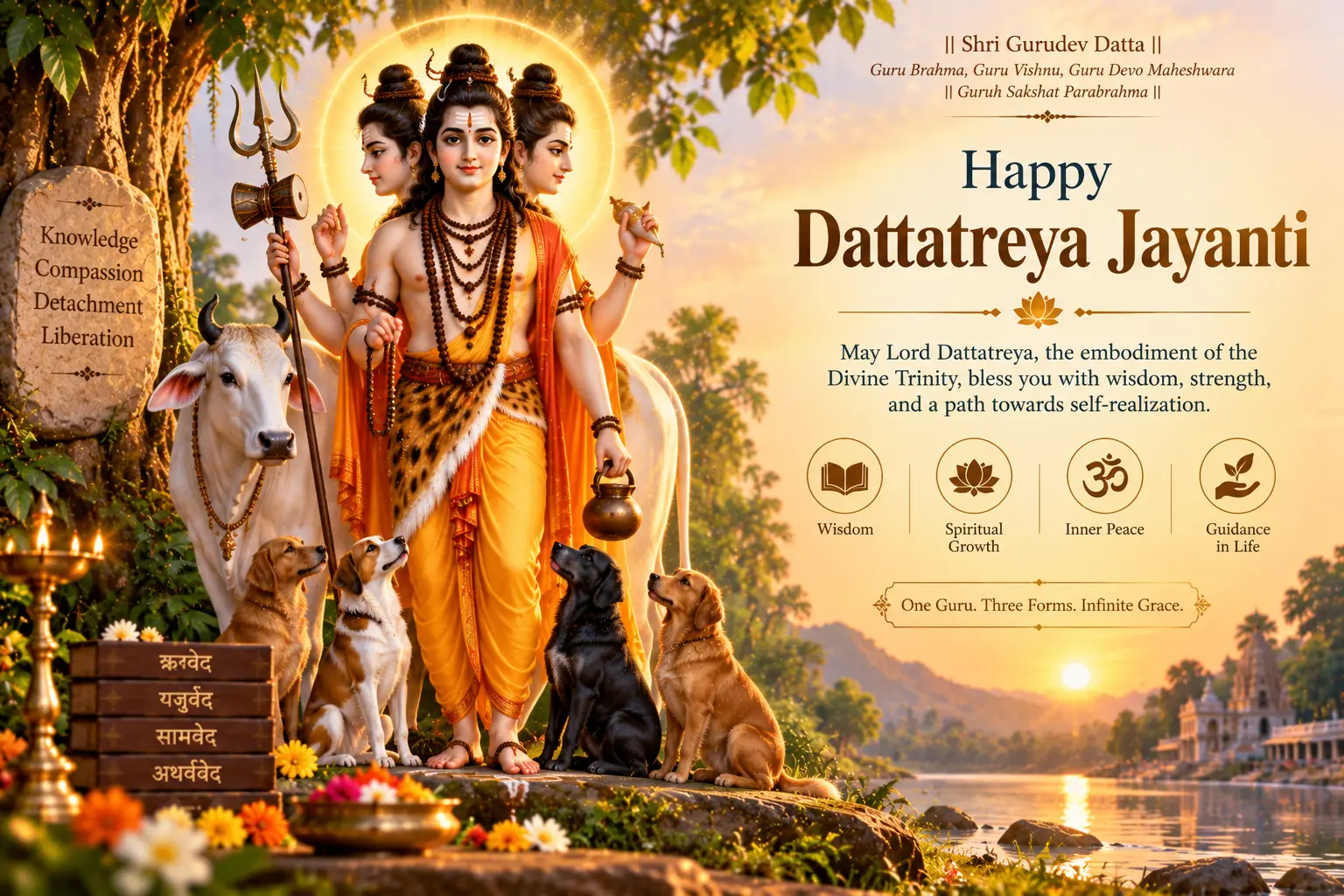
Dattatreya Jayanti
Dattatreya Jayanti, observed with profound esoteric reverence, ascetic contemplation, and devotional splendor across India, celebrates the auspicious divine advent of Lord Sri Dattatreya—the unified, primordial incarnation of the Hindu Supreme Trinity (Brahma, Vishnu, and Shiva). Occurring on the full moon day (Purnima tithi) of the sacred month of Margashirsha (November–December) under the radiant celestial influence of the Mrigashirsha nakshatra, this sacred festival commemorates the transcendental moment when the supreme archetypes of Creation (Brahma), Preservation (Vishnu), and Dissolution (Shiva) merged harmoniously into a singular transcendental form. Revering Dattatreya as the Adi Guru (the Primordial World Teacher), the Avadhuta of supreme renunciation, and the lord of all yogic wisdom, seekers celebrate this holy day to awaken inner discrimination, transcend the duality of earthly existence, and attain direct spiritual illumination.