




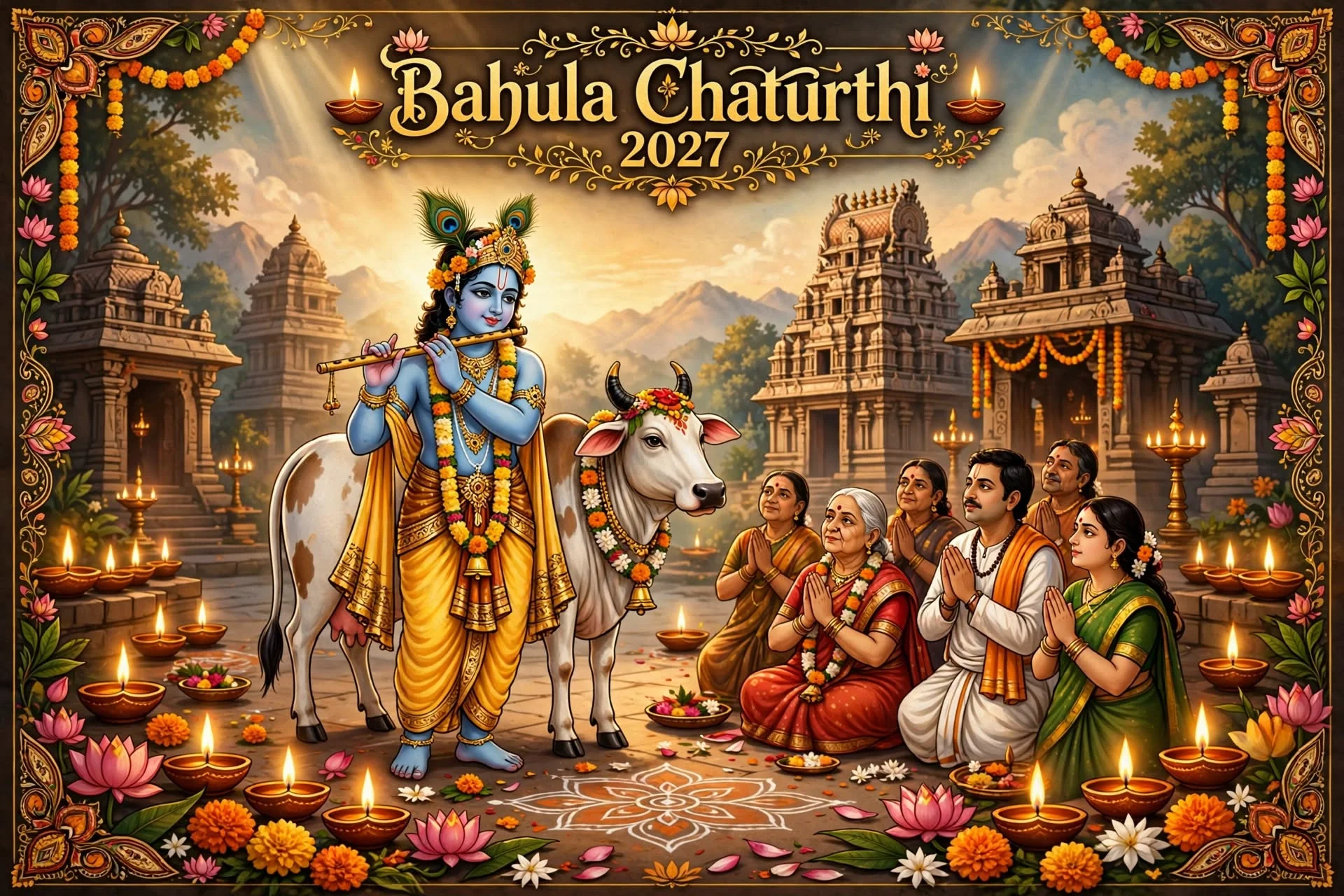
Bahula Chaturthi, also celebrated as Bol Choth or Bahula Chauth, is an ancient and heartwarming Hindu festival observed on the fourth lunar day (Chaturthi) of the Krishna Paksha (waning fortnight) in the sacred monsoon month of Bhadrapada (or Shravana in the Amanta calendar). Dedicated jointly to Bhagwan Sri Krishna and the sacred cow Bahula (Gau Mata), this unique festival celebrates the supreme virtues of absolute truthfulness (Satya), maternal love, unconditional self-sacrifice, and non-violence toward animals.
Bahula Chaturthi 2027: Date, Puja Timings, Rituals & Stories
Bahula Chaturthi Timings & Panchang
Important festival dates and auspicious timings
Usha Arghya (Sunrise)
05:53 am
Sandhya Arghya (Sunset)
06:55 pm
Start Date
Saturday, 21 Aug 2027
Puja Muhurat
06:53 pm – 08:05 pm
Bahula Chaturthi
Rooted in profound Puranic narratives from the Padma Purana and Bhavishya Purana, the festival commemorates the legendary test of Bahula—a gentle, virtuous Kamadhenu cow belonging to a pious Brahmin. When confronted by a famished lion in the deep jungle, Bahula pledged upon the eternal sacred power of truth to return to the lion's den as food after nursing her newborn calf one final time. Kept steadfast by her integrity, her return dissolved the ferocious hunger of the lion, who revealed himself as Lord Sri Krishna testing the purity of creation.
Predominantly observed by mothers across Gujarat, Rajasthan, Madhya Pradesh, and Uttar Pradesh, Bahula Chaturthi is marked by fasting for the longevity, health, and moral uprightness of children. In honor of Mother Cow and her calf, traditional households completely abstain from consuming cow's milk, cow curd, and cow ghee on this day, offering worship to living cows or beautifully sculpted clay figurines of Bahula and her calf, and sharing simple sattvic meals prepared with uncultivated grains.
Why is Bahula Chaturthi Celebrated?
Bahula Chaturthi is celebrated to honor the sacred bond between mother and child and to affirm that absolute truthfulness (Satya) possesses the supreme power to dissolve even the fiercest existential peril.
According to the Padma Purana, Lord Sri Krishna tests the hearts of living beings through difficult moral choices, and those who remain unswervingly committed to their righteous word, like the cow Bahula, receive His eternal divine protection.
The festival also elevates the sacred cow (Gau Mata) as the living embodiment of all celestial deities (Sarva Deva Mayi), fostering deep reverence, compassion, and non-violence toward all innocent domestic animals.
- Honoring the cow Bahula for her unmatched commitment to truthfulness, duty, and maternal devotion.
- Praying for the long life, virtuous character, and physical well-being of sons and children.
- Worshiping living cows and calves with flower garlands, sandalwood paste, and fresh fodder.
- Practicing dietary abstinence by refraining from all cow dairy products for a full day.
- Commemorating Lord Sri Krishna's divine leela as Govinda—the eternal protector of cows and righteousness.
Scriptural Origins in the Padma Purana and Bhavishya Purana
The Virtuous Life of Bahula the Cow
In the Srishti Khanda of the Padma Purana, Sage Vyasa recounts the wondrous history of a noble Brahmin named Suhotra who lived in a hermitage near Gokul. Suhotra reared a celestial cow named Bahula, who was gentle, obedient, and radiated spotless purity. Bahula had recently given birth to a beautiful, tender calf whom she loved dearly.
One afternoon during the late monsoon, Bahula wandered deep into the verdant forest along the Yamuna riverbank, immersed in grazing sweet grasses. Absorbed in grazing, she failed to notice the setting sun and found herself trapped in a deep ravine before the den of a ferocious, starving lion.
The Pledge of Truth to the Famished Lion
The lion leaped forward, ready to tear Bahula apart. Knowing her end was near, Bahula did not beg for her own life out of selfish fear. Instead, with tear-filled eyes, she pleaded: 'O king of the beasts, my body is gladly yours to satisfy your hunger. However, at home in the Brahmin's shed, my tiny newborn calf awaits me, hungry and weeping for milk. I give you my solemn oath on the sacred Vedas, on the merit of all ascetics, and on the eternal power of Truth (Satya), that I shall return to your cave the moment I have fed my child.'
The lion scoffed with cynical disbelief: 'Who has ever seen prey willingly walk into the jaws of a predator after escaping?' But Bahula solemnly swore: 'The universe is held together only by Truth. If I break my promise, may I suffer the hell reserved for the ungrateful and treacherous.' Struck by the cow's unshakeable serenity and majestic pledge, the lion stepped aside and permitted her to leave.
The Return, the Divine Revelation, and the Boon
Bahula hurried back to the hermitage, tenderly suckled her weeping calf, cleaned him with her tongue, and explained her solemn vow. The calf, weeping, insisted on accompanying his mother to offer his life as well. The Brahmin Suhotra also stepped forward, offering himself in Bahula's place.
Refusing to let anyone else bear the burden of her vow, Bahula returned to the forest den followed by her calf. Standing calmly before the roaring lion, she bowed: 'O lion, here I am as promised; take my body and satisfy your hunger.' At that miraculous instant, the lion vanished in a flash of transcendental light, and Lord Sri Krishna Himself stood revealed in His enchanting four-armed form, smiling with divine affection. The Lord embraced Bahula: 'O pure one, I assumed the form of the lion to test the power of truth in this world. Your spotless integrity has conquered even death. From this day forward, on Bhadrapada Krishna Chaturthi, the world shall celebrate your name, worshiping the cow and calf for the protection of their families.'
The Invincible Power of Satya and the Sanctity of Gau Seva
Satya (Truth) as the Ultimate Cosmic Anchor
The legend of Bahula demonstrates the profound Vedic doctrine: 'Satyameva Jayate' (Truth alone triumphs). Truth is not merely a social courtesy; it is the fundamental metaphysical fabric sustaining cosmic order (Rita).
When an individual remains uncompromisingly anchored in truthfulness, even the most terrifying natural instincts—such as a starving predator's fury—are neutralized by divine grace.
The Cow as Universal Mother (Gau Mata)
In Hindu cosmology, the cow represents selfless, unconditional giving. She converts wild grass and water into life-giving milk, sustaining humanity without demanding anything in return.
Worshiping Bahula and refraining from cow milk on this day teaches humility, reminding humans to practice gratitude, protect domestic animals, and cultivate non-exploitative relationships with nature.
Cow Worship Protocol, Clay Figurine Setup, and Fasting Rules
Worship of Living Cows or Sculpted Clay Figurines
In rural communities, families wash living cows and calves early in the morning, decorating their horns with turmeric and wrapping red sacred threads (Moli) around their necks. They are offered fresh green grass, soaked lentils, and jaggery.
In urban homes, women mold miniature figurines of the cow Bahula, her calf, the lion, and Lord Krishna using clean river clay or flour dough, installing them on a sanctified altar draped in yellow silk.
The Strict Dairy Abstinence Rule
On Bahula Chaturthi, a unique dietary rule is strictly maintained: no member of the household consumes cow's milk, cow curd, cow butter, or cow ghee. This abstinence symbolizes leaving all milk purely for the newborn calf.
Meals are prepared using sesame oil or vegetable oils, featuring coarse uncultivated millets, soaked gram, and seasonal vegetables cut without sharp blades in traditional homes.
Bahula Chaturthi Puja Vidhi (Step by Step)
- 1
Brahma Muhurta Snana & Sankalpa
Wake early before sunrise, take a purificatory bath chanting sacred river mantras, wear fresh yellow traditional clothing, and make the solemn vow to observe Bahula Chaturthi for children's welfare.
- 2
Altar Setup & Clay Figurine Sthapana
Spread a clean yellow cloth on a wooden chauki, install idols or clay figurines of cow Bahula, her calf, the lion, and Lord Sri Krishna, and establish a sacred Kalash.
- 3
Avahana and Dhyana
Invoke the divine presence of Mother Surabhi, Bahula, and Sri Krishna with folded hands, welcoming them into the domestic sanctum with flowers and unbroken rice.
- 4
Gau Mata Padya and Snana
Symbolically wash the hooves and forehead of the cow figurine with pure water mixed with fragrant sandalwood and rosewater.
- 5
Haridra, Kumkum, and Chandan Tilak
Apply auspicious golden turmeric paste, sacred vermilion (kumkum), and yellow sandalwood paste onto the foreheads and horns of the cow and calf.
Bahula Chaturthi Puja Samagri List
Deity and Figurine Essentials
- Idol or handcrafted clay figurines of cow Bahula, her calf, the lion, and Sri Krishna
- Wooden chowki draped in fresh yellow or red silk fabric
- Copper or brass Kalash, unbroken coconut, and mango leaves
- Earthen or brass diya with sesame oil and cotton wicks
- Brass bell (Ghanti) and water vessel (Lota)
Anointing, Floral, and Sacred Articles
- Golden turmeric powder, rolli (kumkum), and yellow sandalwood paste
- Unbroken white raw rice grains (Akshata) and red sacred thread (Moli)
- Fresh green Durva grass blades, marigold garlands, and lotus flowers
- Sandalwood incense sticks (agarbatti) and natural camphor tablets
- Clean river water infused with Gangajal
Fodder and Naivedyam Offerings
- Fresh green grass (chara/dub) and soaked Bengal gram (chana dal)
- Unrefined organic jaggery (gur) and whole wheat flour rotis
- Fresh seasonal fruits: bananas, apples, and pomegranates
- Sesame seeds (til) and uncultivated grain dishes for prasad
Mantras and Prayers for Bahula Chaturthi
Bahula Chaturthi Vrat Rules and Fasting Guidelines
Strict Dairy Abstinence and Dietary Code
Mothers observe fasting throughout the day until moonrise. The most critical rule of Bahula Chaturthi is complete abstinence from cow's milk, cow curd, cow butter, and cow ghee across the entire family.
- Strictly avoid all cow milk and cow dairy products for the entire day.
- Do not use knives or blades to cut vegetables; use hand-broken vegetables.
- Fast is observed until the late evening moonrise and cow puja are completed.
- Break the fast with coarse millets, soaked gram, or buffalo dairy if required.
Compassion and Cow Service
Treat all animals, especially cows and calves, with profound tenderness. Never strike, shout at, or neglect a cow on this day; feed living cows with your own hands.
Dos and Don'ts of Bahula Chaturthi
Good Practices (Do's)
- Wake up early, bathe, and resolve to observe the fast for the welfare of your children.
- Worship a living cow and calf or install their clean clay representations on the altar.
- Feed living cows with fresh green grass, soaked gram, and jaggery with your own hands.
- Read or listen to the Bahula Vrata Katha narrating the triumph of truthfulness.
- Offer Arghya to Chandra Deva at night with water, akshata, and white flowers.
Bahula Chaturthi Across Regions
| Region | Local Name |
|---|---|
| Gujarat | Bol Choth |
| Rajasthan & Madhya Pradesh | Bahula Chauth |
| Uttar Pradesh & Braj Region | Bahula Chaturthi |
Bahula Chaturthi FAQs
What is the primary spiritual message of Bahula Chaturthi?
The central message is that absolute truthfulness (Satya) and selfless maternal love hold supreme cosmic power, capable of transforming even a ferocious predator and invoking divine protection.
Why is cow milk strictly prohibited on Bahula Chaturthi?
Devotees abstain from cow milk, curd, and ghee to honor the cow's maternal love for her newborn calf, symbolizing that on this day, all milk belongs exclusively to the calf.
Why do women avoid cutting vegetables with knives on this day?
In traditional folk custom, avoiding sharp knives or blades symbolizes non-violence and praying that no harm or injury shall ever touch their children.
Upcoming Festivals
View All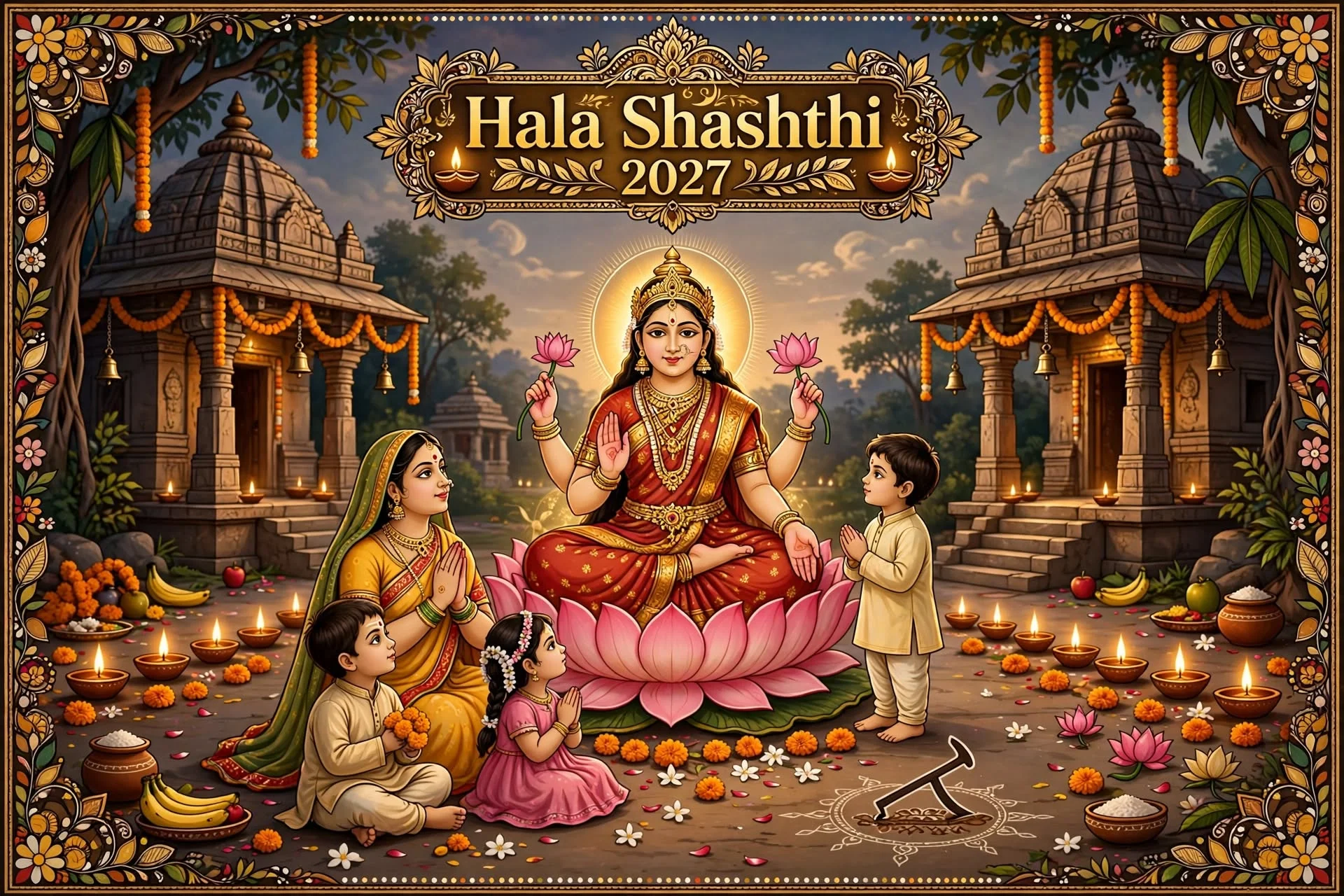
Monday, Aug 23, 2027
Hala Shashthi
Hala Shashthi, also reverently celebrated across India as Balarama Jayanti, Harshath, Hal Chhath, Tin-chhathi, or Chandan Chhath, falls on the sixth lunar day (Shashthi tithi) of the Krishna Paksha (waning fortnight) in the sacred monsoon month of Bhadrapada (or Shravana in the Amanta calendar). This sanctified day marks the auspicious appearance anniversary (Avatara Jayanti) of Bhagwan Balarama, the elder brother of Lord Sri Krishna and the seventh incarnation of Lord Vishnu, who manifested as the direct embodiment of the primordial thousand-headed serpent Adishesha.
View Festival Guide
Wednesday, Aug 25, 2027
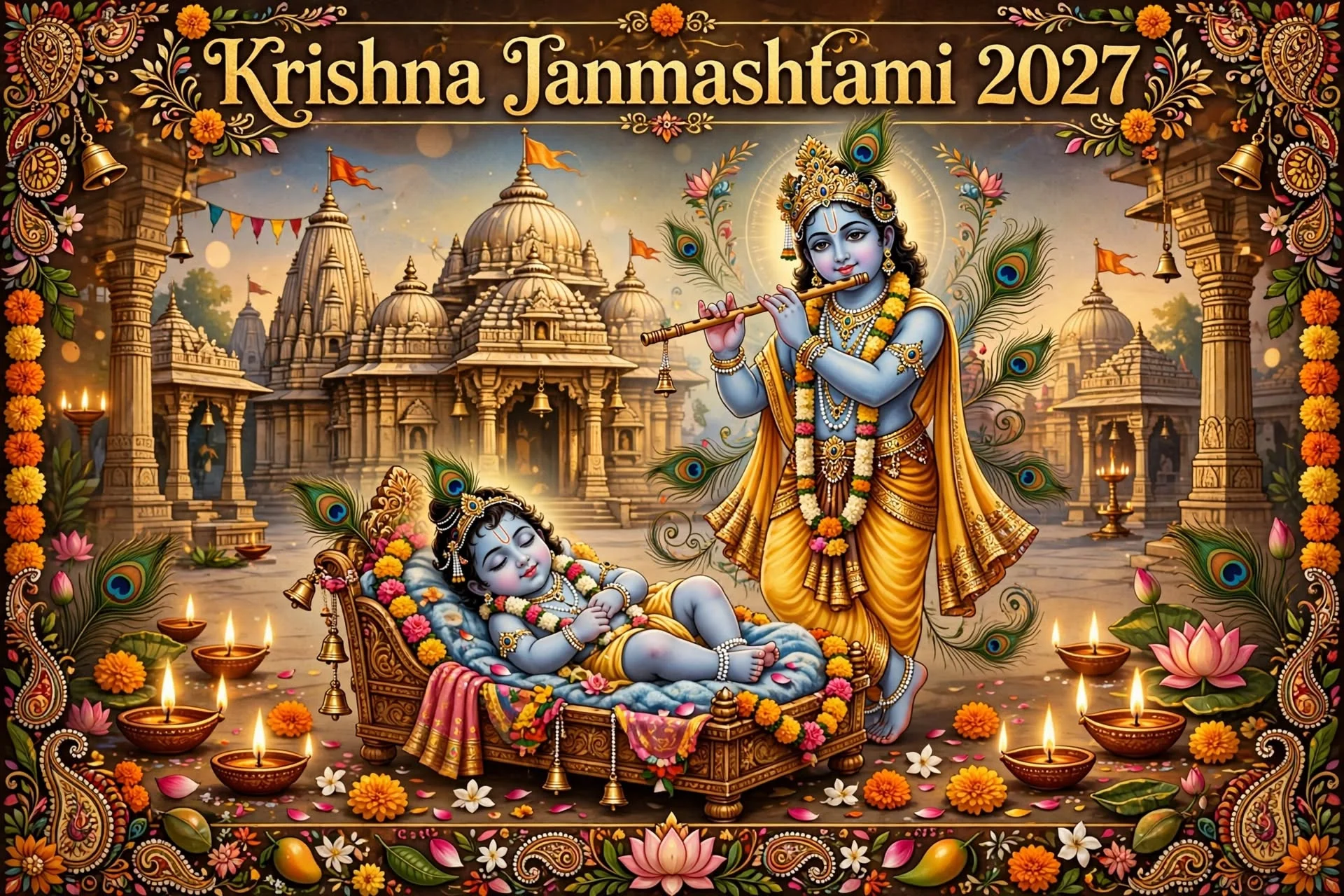
Krishna Janmashtami
Krishna Janmashtami, also celebrated worldwide as Gokulashtami, Krishnashtami, Saatam-Aatham, or Janmashtami, is the supreme, ecstatic celebration marking the divine advent (Avatara Jayanti) of Bhagwan Sri Krishna—revered in the Srimad Bhagavatam as 'Krishnas Tu Bhagavan Svayam' (Sri Krishna is the Supreme Divine Personality of Godhead Himself in His complete, plenary fullness). Occurring on the eighth lunar day (Ashtami tithi) of the Krishna Paksha in the sacred monsoon month of Bhadrapada (or Shravana in the Amanta calendar) at the stroke of midnight under the auspicious Rohini Nakshatra, this festival commemorates the celestial moment when the dark midnight sky was illuminated by the birth of the cosmic protector.
View Festival Guide
Thursday, Aug 26, 2027
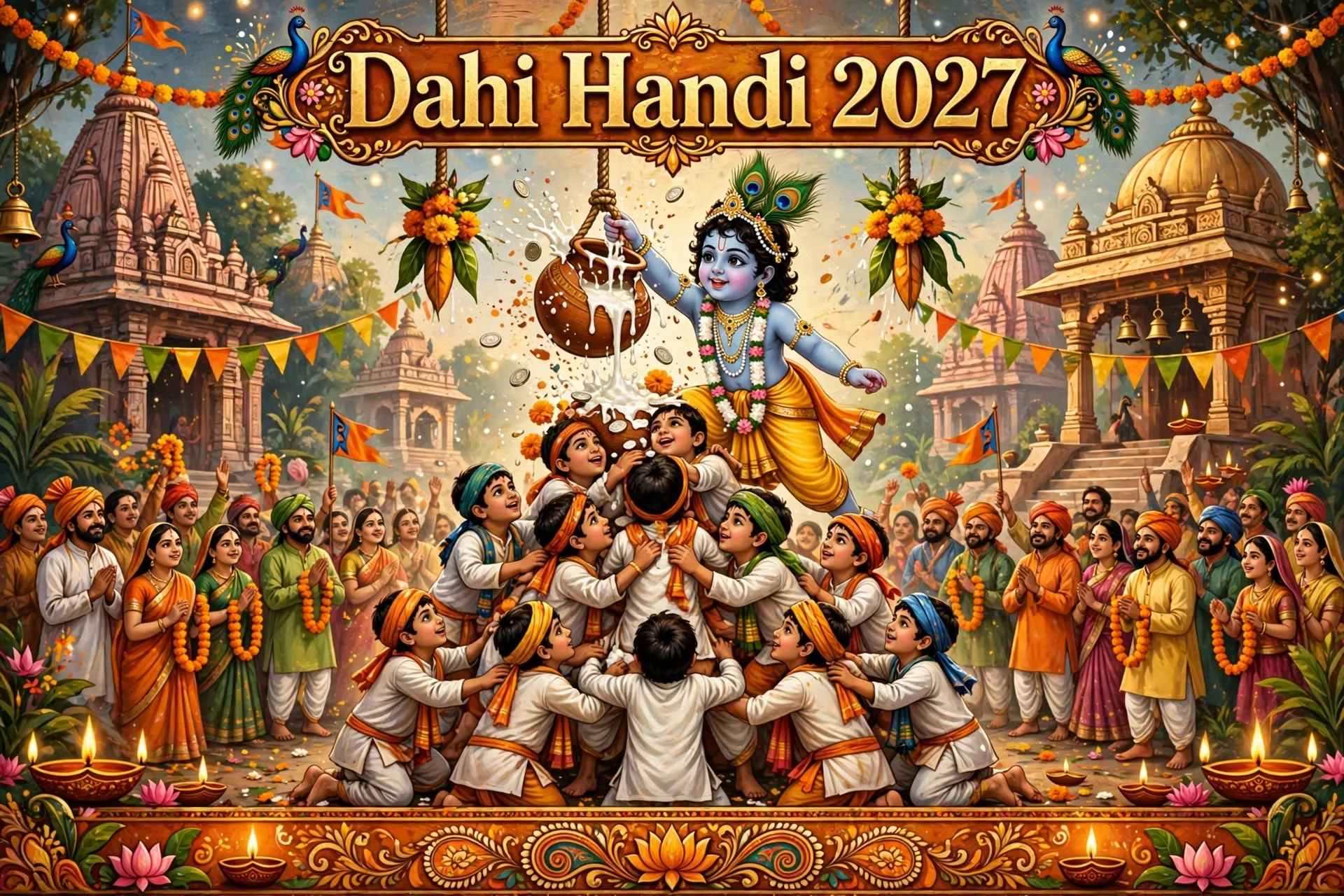
Dahi Handi
Dahi Handi, also celebrated as Gopalakala, Utlotsavam, or the Curd Pot Festival, is an exuberant, high-energy festival celebrated on the Navami tithi (ninth lunar day) of Krishna Paksha in the sacred monsoon month of Bhadrapada (or Shravana in the Amanta calendar). Occurring on the morning immediately following Krishna Janmashtami, Dahi Handi commemorates the enchanting childhood pastimes (Baal Leelas) of Bhagwan Sri Krishna in the pastoral village of Gokul, where the young Lord and His cowherd companions (Gopas) formed ingenious human pyramids to reach and break earthen pots filled with freshly churned curd, butter, and milk hung from the high ceilings of gopis' houses.
View Festival Guide
Saturday, Aug 28, 2027
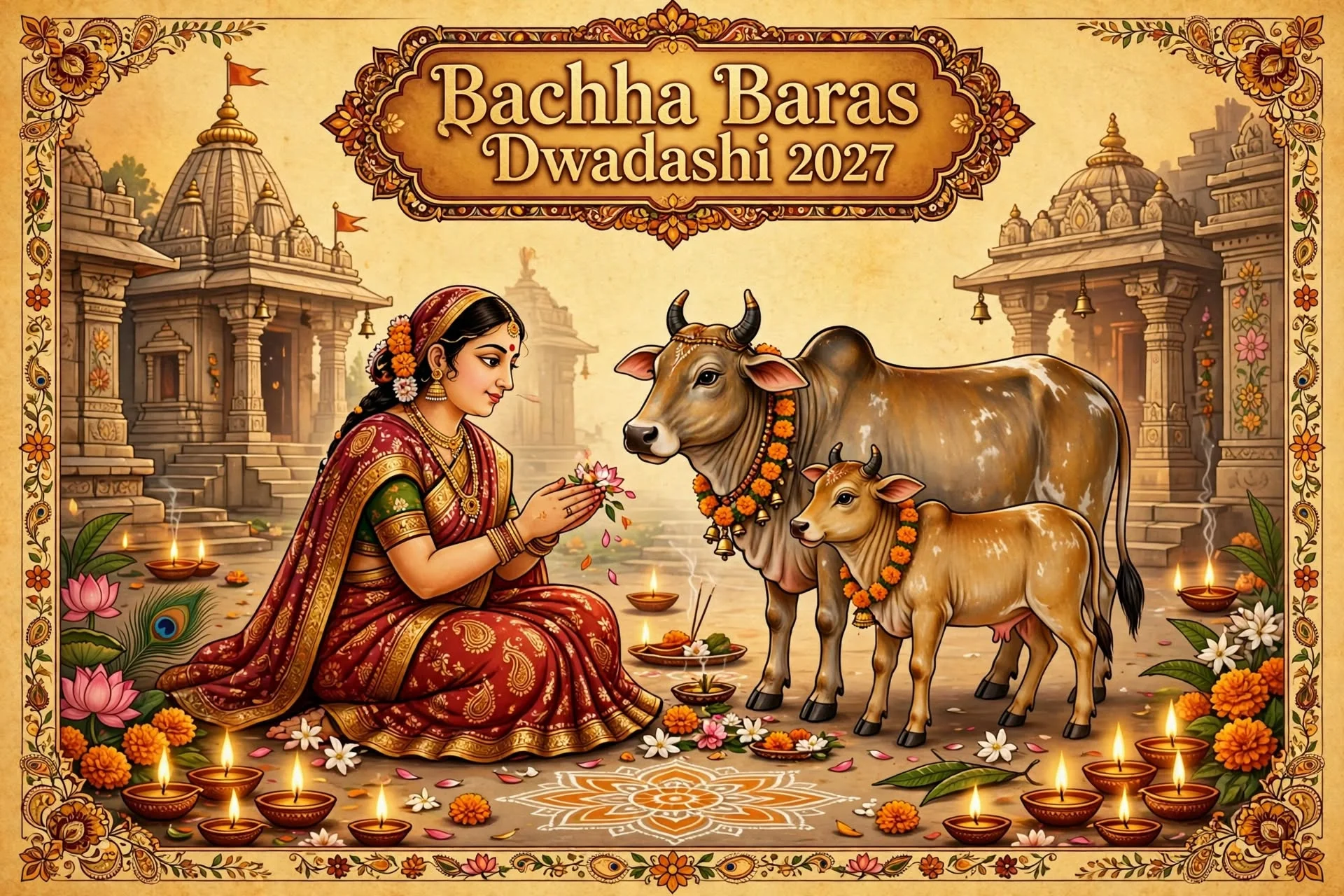
Bachha Baras Dwadashi
Bachha Baras Dwadashi, also reverently celebrated as Govatsa Dwadashi, Vasu Baras, or Vatsa Dwadashi, is observed on the twelfth lunar day (Dwadashi tithi) of Krishna Paksha in the sacred monsoon month of Bhadrapada (or Shravana in the Amanta calendar scheme). Falling four days after Krishna Janmashtami, this heartwarming festival is dedicated exclusively to the adoration of Kamadhenu's celestial daughter, the divine cow Nandini, and her young suckling calf (Bachha / Vatsa), celebrating maternal devotion, rural cattle welfare, and the sacred spiritual bond between humanity and the animal kingdom.
View Festival Guide
Saturday, Aug 28, 2027
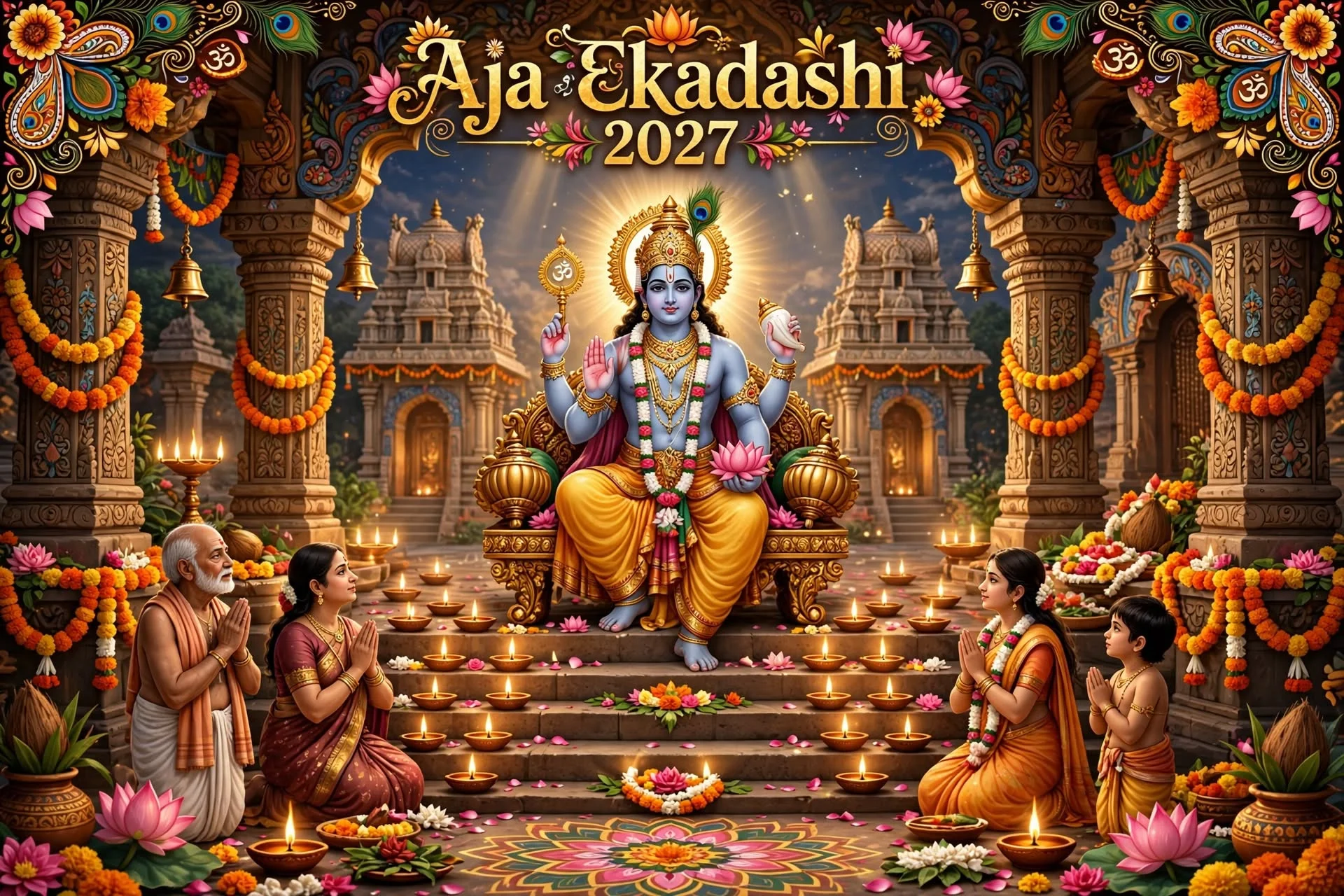
Aja Ekadashi
Aja Ekadashi, also celebrated with immense spiritual reverence as Ananda Ekadashi, is observed on the eleventh lunar day (Ekadashi tithi) of the Krishna Paksha (dark waning fortnight) in the sacred monsoon month of Bhadrapada (or Shravana in the Amanta calendar). Dedicated to Bhagwan Vishnu in His divine form as Hrishikesha (the supreme master of the senses), this sanctified vrata is extolled in the Brahmavaivarta Purana and Padma Purana as an extraordinary spiritual penance capable of destroying all accumulated sins, reversing catastrophic worldly misfortunes, and bestowing liberation (Moksha).
View Festival Guide
Sunday, Aug 29, 2027
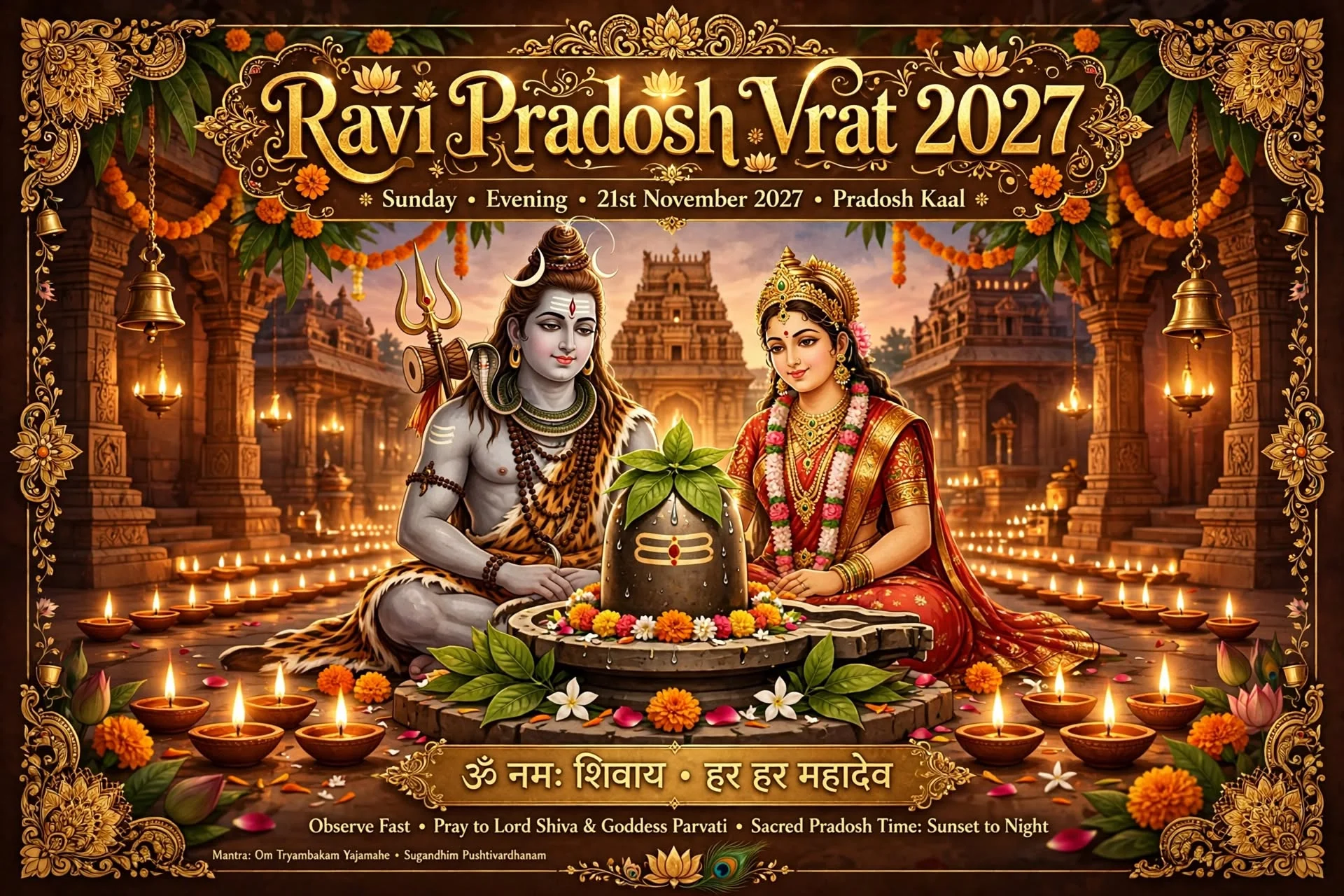
Ravi Pradosh Vrat
Ravi Pradosh Vrat is an exceptionally sacred fasting day observed on the thirteenth lunar day (Trayodashi) that coincides with a Sunday (Ravivara). Dedicated to Lord Shiva, the cosmic dissolver of sorrow, this bimonthly vow unites the healing radiance of Surya Bhagavan with the boundless compassion of Mahadeva. Observed during the twilight Sandhya period, it is believed to banish physical ailments, clear karmic obstructions, and bestow vitality and longevity.
View Festival Guide
Tuesday, Aug 31, 2027
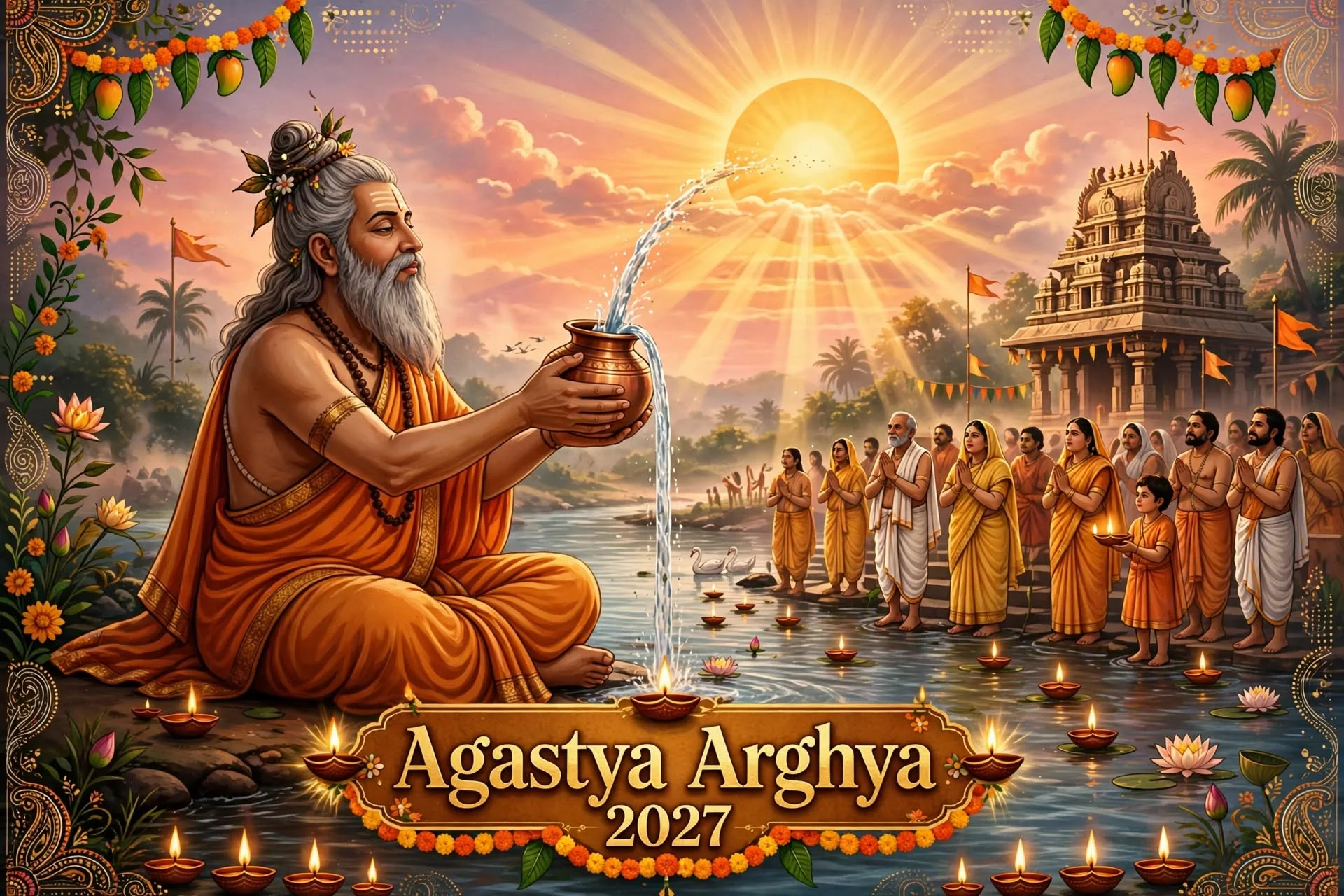
Agastya Arghya
Agastya Arghya, also known as Agastya Udaya Arghya, is a profound astronomical and Vedic ritual observed during the transition of late monsoon into early autumn (Sharad Ritu), when the celestial star Canopus (known in Sanskrit as the Agastya Nakshatra) first rises above the southern horizon at dawn. In ancient Indian astronomy (Surya Siddhanta) and Puranic literature, the dawn rising of Agastya is celebrated as an extraordinary cosmic event marking the physical and energetic purification of all terrestrial waters, the calming of turbulent monsoon rivers, and the pacification of atmospheric toxins.
View Festival Guide
Tuesday, Aug 31, 2027
Pithori Amavasya
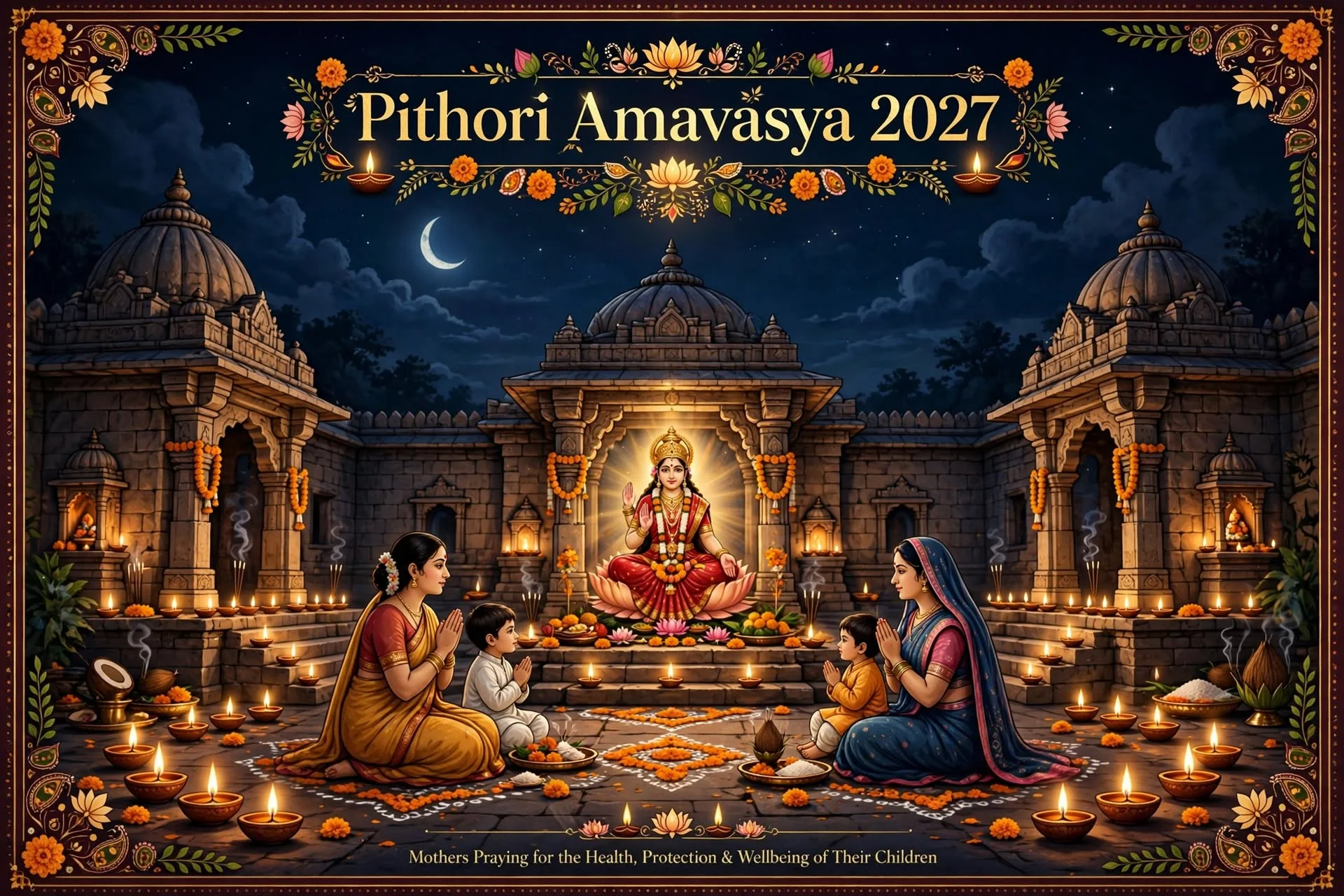
Pithori Amavasya, also reverently celebrated across India as Kushagrahani Amavasya, Pola Amavasya, or Pithori Vrat, is the sacred New Moon day concluding the holy monsoon month of Shravana (or Bhadrapada in the Purnimanta calendar scheme). Dedicated to Goddess Durga, Goddess Parvati, and the Sixty-Four Yoginis (Chausath Yogini), this ancient festival is celebrated with profound devotion by mothers for the longevity, health, moral strength, and spiritual protection of their children, as well as the pacification of ancestral souls (Pitrus).
View Festival Guide