




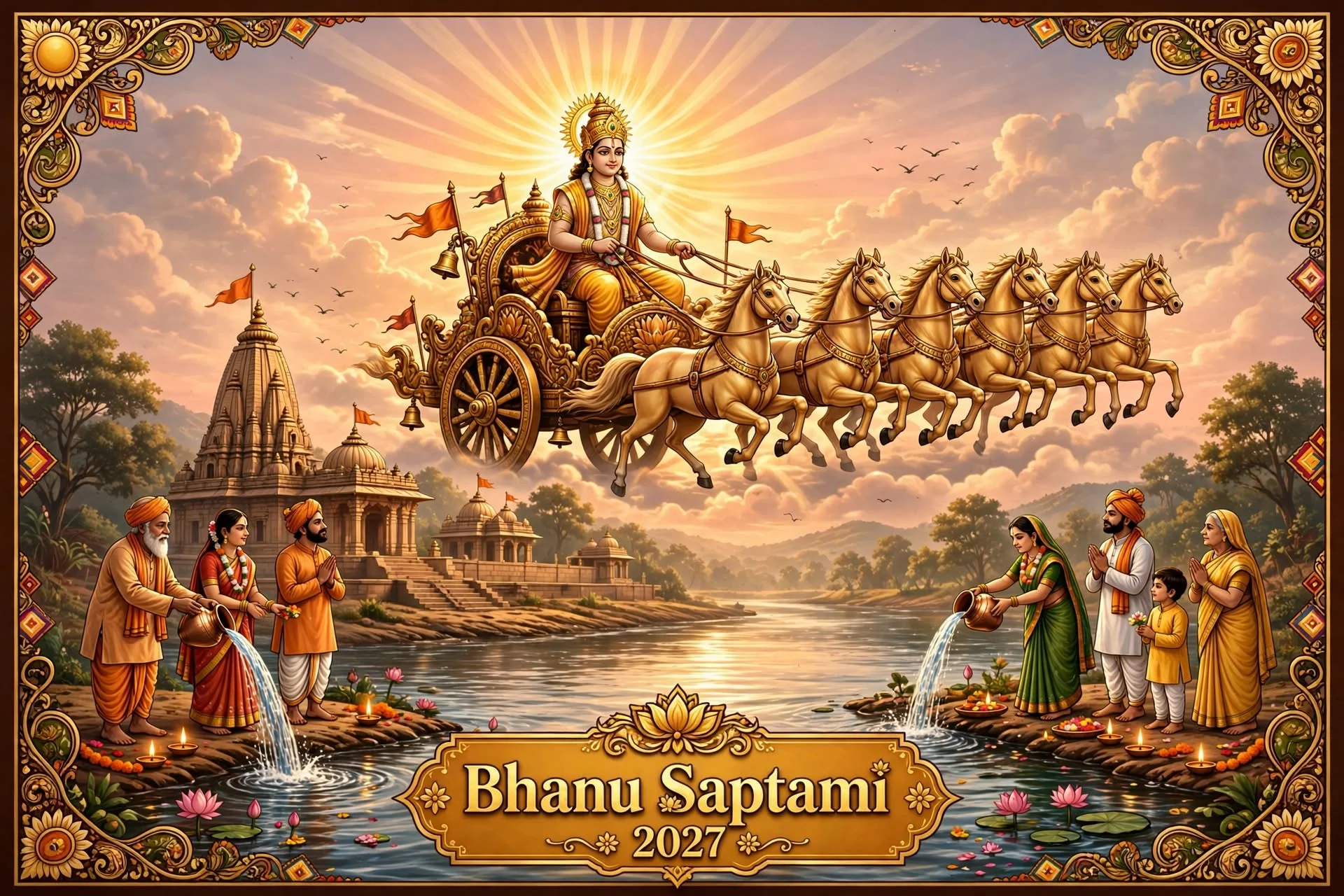
Bhanu Saptami, also renowned as Surya Saptami, Ravi Saptami, or Achala Saptami, is an astronomically and spiritually celebrated solar festival occurring when the sacred Saptami tithi (seventh lunar day) of Shukla Paksha coincides with a Sunday (Ravivar / Bhanuvar). In the Vedic astrological calendar, this magnificent alignment—occurring in the sacred monsoon month of Shravana—is considered extraordinarily auspicious, as both the seventh tithi and Sunday are directly governed by the Sun God, Bhagwan Surya (Bhanu), the visible manifestation of the Divine and the cosmic soul of the universe (Surya Atma Jagatas Tasthushashcha).
Bhanu Saptami 2027: Date, Puja Timings, Rituals & Stories
Bhanu Saptami Timings & Panchang
Important festival dates and auspicious timings
Usha Arghya (Sunrise)
05:46 am
Sandhya Arghya (Sunset)
07:07 pm
Start Date
Sunday, 8 Aug 2027
Puja Muhurat
11:01 pm – 10:24 pm
Bhanu Saptami
According to sacred Puranic lore documented in the Bhavishya Purana, Matsya Purana, and Brahma Purana, Bhanu Saptami is celebrated as the auspicious day when Surya Deva mounted His golden celestial chariot drawn by seven radiant horses (representing the seven colors of the solar spectrum and the seven Vedic poetic meters: Gayatri, Ushnik, Anushtubh, Brihati, Pankti, Trishtubh, and Jagati) driven by the divine charioteer Aruna, illuminating the cosmos with the light of life, order, and vitality.
Devotees observe Bhanu Saptami by rising during the pre-dawn Brahma Muhurta, taking a holy bath in sacred rivers or water infused with red sandalwood and seven Ark (calotropis) leaves placed upon the head and shoulders, and offering water oblations (Surya Arghya) in a pure copper vessel. Observing this fast with faith is revered across scriptures as a sovereign remedy to cure chronic eye ailments, skin disorders, and cardiac diseases, while bestowing sharp intellect, vitality (Ojas), longevity, and the dissolution of accumulated karmic sins.
Why is Bhanu Saptami Celebrated?
The observance of Bhanu Saptami is rooted in the sacred dialogues of the Bhavishya Purana (Brahma Parva), where Lord Krishna instructs King Yudhishthira on the peerless healing power of the Sun God.
According to the Bhavishya Purana, Lord Krishna's son Samba once incurred the severe wrath of Sage Durvasa through an arrogant prank, resulting in an immediate curse that afflicted his radiant body with incurable leprosy. Devastated, Samba sought shelter at the lotus feet of Lord Krishna, who advised him: 'O son, the sole deity who cures all physical diseases and restores bodily radiance is Bhagwan Surya. Go to the banks of the Chandrabhaga River and observe the Bhanu Saptami fast with total faith.'
Samba performed severe penance, bathing with Ark leaves and worshiping Surya Deva on Bhanu Saptami. Pleased by his sincere devotion, Surya Deva manifested in His golden orb, cured Samba of his leprosy, and restored his divine beauty. Ever since, devotees celebrate Bhanu Saptami to seek divine healing, physical longevity, and freedom from chronic infirmities.
- Commemorating the cosmic journey of Surya Deva mounting His seven-horse golden chariot.
- Curing chronic eye diseases, skin disorders, and physical ailments through solar blessings.
- Offering Surya Arghya in a copper vessel with red sandalwood paste, red flowers, and unbroken rice.
- Chanting the sacred Aditya Hridaya Stotram and the twelve holy names of the Sun God.
- Donating copper vessels, red clothing, jaggery, wheat, and gold to alleviate solar planetary afflictions.
Scriptural Origins in the Bhavishya Purana and the Healing of Prince Samba
The Curse of Sage Durvasa and the Agony of Samba
In the Brahma Parva of the Bhavishya Purana, Prince Samba, the son of Lord Krishna and Jambavati, was exceptionally handsome and athletic, but prone to youthful vanity. One day, when the hot-tempered Sage Durvasa visited the court of Dwarka, Samba played an impudent prank, mocking the ascetic's austere appearance. Enraged, Durvasa cursed Samba that his physical beauty would instantly rot and be replaced by debilitating leprosy.
Overnight, Samba's body erupted in agonizing sores. Ashamed and weakened, he sought the counsel of his divine father Krishna. Lord Krishna explained: 'O Samba, medicine alone cannot cure a curse born of disrespect to an ascetic. You must worship the supreme healer of all existence, Bhagwan Surya, who is the visible physician of the gods (Adityo va esha devalokasyadhi-bhaishajyam).'
The Penance at Mitravana and the Restoration of Health
Following Krishna's advice, Samba traveled to the sacred grove of Mitravana on the banks of the Chandrabhaga River. For twelve years, he performed rigorous solar penance, standing in the cold river waters, worshiping the Sun with Ark leaves, and observing the Bhanu Saptami fast without salt.
On a glorious Bhanu Saptami morning, as Samba offered Arghya with tears of repentance, Surya Deva manifested before him in a radiant golden chariot. The Sun God touched Samba with His healing rays, instantly dissolving all leprosy, restoring his flawless complexion, and bestowing upon him the status of a great solar devotee.
The Composition of the Samba Purana and the Sun Temples
In gratitude, Samba constructed the magnificent Sun Temple at Konark and Multan, inviting learned solar priests (Maga Brahmins from Shakadvipa) to inaugurate the liturgical worship of Surya Deva. The narrative was codified into the sacred Samba Purana, establishing the universal tradition of Bhanu Saptami worship across India.
Source: Bhavishya Purana (Brahma Parva), Matsya Purana, and Agni Purana
The Seven Horses, The Solar Prana, and The Science of Chromotherapy
The Seven Horses and the Seven Solar Rays
In the Rigvedic Surya Sukta, the Sun is depicted riding a chariot drawn by seven mares (Saptashva). Ancient Vedic rishis recognized thousands of years before modern physics that sunlight is composed of seven distinct colored rays (VIBGYOR).
Metaphysically, the seven horses also represent the seven metabolic tissues of the human body (Sapta Dhatus: lymph, blood, muscle, fat, bone, marrow, and semen) and the seven chakras. Absorbing early morning sunlight on Bhanu Saptami balances the endocrine glands, activates the solar plexus (Manipura Chakra), and infuses the subtle nervous system with radiant life-force (Prana).
Surya as the Witness of All Karma (Karmasakshi)
In Vedic philosophy, the Sun is the eternal, impartial cosmic witness (Karmasakshi) who sees all actions performed on earth without bias. He shines equally upon the saint and the sinner, teaching humanity the supreme virtues of equanimity, selfless duty (Nishkama Karma), and relentless punctuality.
Worshiping Surya on Bhanu Saptami inspires the devotee to burn away the darkness of sloth, self-pity, and procrastination, living with noble purpose and service to the world.
The Sacred Ark (Calotropis) Leaf Science
The Ark (Madar / Calotropis) plant is botanically consecrated to Surya Deva. In traditional Ayurvedic medicine, Ark leaves possess intense heating and detoxifying properties. Placing seven Ark leaves on the head, shoulders, and chest during the morning bath stimulates lymphatic drainage, cures headaches, and dispels sluggishness.
Ritual Protocols, Seven Ark Leaf Snana, and Copper Arghya
Pre-Dawn Bathing with Seven Ark Leaves
On Bhanu Saptami, devotees rise before dawn during Brahma Muhurta. Seven fresh Ark (calotropis) leaves are placed along with unbroken rice and red sandalwood paste on the body: one on the crown of the head, two on the shoulders, two on the knees, and two on the feet.
Standing in a flowing river or clean bath water, the devotee recites the sacred bathing sloka ('Yadjanma-janmacharitam mayaa paapam...'), praying for the destruction of sins accumulated across seven lifetimes, and pours water over the body, letting the leaves wash away.
The Offering of Copper Arghya to Surya Deva
As the golden orb of the Sun rises above the horizon, the devotee fills a pure copper vessel with clean water, raw cow milk, red sandalwood paste (Rakta Chandana), red hibiscus flowers, unbroken rice grains, and jaggery.
Raising the vessel above eye level so that the solar rays filter through the cascading stream of water, the devotee pours the water in three unbroken streams, chanting the Gayatri Mantra or Surya Ashtakam, focusing on the third eye (Ajna Chakra).
Aditya Hridaya Recitation, Fasting, and Mahadana
Devotees sit facing East to recite the sacred Aditya Hridaya Stotram (imparted by Sage Agastya to Lord Rama before vanquishing Ravana). A salt-free fast (Alona) is observed throughout the day. In the afternoon, devotees donate copper utensils, red cloth, wheat grains, and jaggery to pious Brahmins and laborers before breaking the fast with sweet porridge.
Bhanu Saptami Puja Vidhi (Step by Step)
- 1
Brahma Muhurta Jagaran and Shuddhi (Pre-Dawn Waking)
Wake up during Brahma Muhurta, cleanse the oral cavity, and prepare fresh clean water for bathing, meditating upon Lord Surya Narayana.
- 2
Sapta Arka Patra Snana (Bathing with Seven Calotropis Leaves)
Place seven fresh Ark (Madar) leaves on your head and body with unbroken rice and red sandalwood, taking a purifying bath while chanting the prayer for the destruction of seven lifetimes of karmic sins.
- 3
Surya Dhyana and Pranam (Morning Solar Meditation)
Dress in clean red or saffron traditional clothing, face East, bow low with folded hands, and visualize Surya Deva seated in His golden chariot surrounded by celestial sages.
- 4
Tamra Patra Surya Arghya (Copper Water Oblation)
Hold a pure copper vessel filled with water, red sandalwood paste, red flowers, unbroken rice, and jaggery above your head, pouring it in three continuous streams while chanting the Surya Gayatri.
- 5
Surya Mandala Puja (Worship of Solar Altar)
Bhanu Saptami Puja Samagri List
Surya Arghya and Bathing Materials
- Seven fresh, unblemished Ark (Madar / Calotropis) leaves
- Pure heavy copper vessel (Tamra Kalash) for offering Arghya
- Pure Malayagiri red sandalwood powder (Rakta Chandana) and saffron
- Uncooked raw unbroken rice grains (Akshata) and raw jaggery (Guda)
- Clean Gangajal or natural spring water in generous quantity
Deity Adornments and Floral Samagri
- Consecrated copper Surya Yantra or brass idol of Surya Narayana
- Wooden chowki draped in fresh red or saffron silk fabric
- Abundant fresh red hibiscus flowers (Jaba pushpa) and red rose garlands
- Pure brass cow-ghee lamp with cotton wicks, natural camphor, and dhoop sticks
Naivedya and Mahadana Offerings
- Fresh whole wheat flour, pure cow ghee, and organic jaggery for halwa
- Seasonal fresh fruits: red apples, pomegranates, and yellow bananas
- Copper plates or tumblers, red cotton towels/dhotis, and bags of wheat for charity
- Natural camphor (Bhimseni Karpura) for the concluding Maha Aarti
Mantras and Prayers for Bhanu Saptami
Bhanu Saptami Vrat Rules and Fasting Guidelines
Dietary Code and Saltless (Alona) Discipline
Devotees observe a strict salt-free fast (Alona) on Bhanu Saptami. Consuming common salt or salty foods on Sunday is strictly prohibited in solar scriptures, as salt counteracts the cooling, purifying solar energies. The devotee consumes a single meal in the late afternoon, consisting strictly of sweet wheat porridge, sweet wheat puris, cow milk, and jaggery.
- Total prohibition of all forms of salt, salty snacks, spices, onions, and garlic.
- Strict abstinence from non-vegetarian food, alcohol, tobacco, and commercial snacks.
- Food must be consumed only once after offering Arghya and charity, before sunset.
Conduct and Mental Equanimity
Devotees practice punctuality, truthfulness, and humility throughout the day, emulating the reliable, selfless nature of the Sun. Sleeping during the daytime, criticizing others, and harboring lethargy or anger are strictly avoided.
Dos and Don'ts of Bhanu Saptami
Good Practices (Do's)
- Wake up during Brahma Muhurta and take an herbal bath with seven Ark (calotropis) leaves.
- Offer Arghya to Surya Deva in a pure copper vessel with red sandalwood paste and red flowers.
- Recite the Aditya Hridaya Stotram and chant the twelve names of the Sun God.
- Observe an uncompromising salt-free fast (Alona) throughout the day.
- Donate copper utensils, wheat, jaggery, and red cloth to the needy and priests.
Bhanu Saptami Across Regions
| Region | Local Name |
|---|---|
| Odisha (Konark and Puri) | Magha / Shravana Surya Saptami |
| Andhra Pradesh and Telangana | Ratha Saptami / Bhanu Saptami |
| North India (Uttar Pradesh, Bihar, Rajasthan) | Bhanu Saptami and Aditya Aradhana |
Bhanu Saptami FAQs
What is Bhanu Saptami?
Bhanu Saptami is the sacred alignment occurring whenever the seventh lunar day (Saptami) of the bright fortnight coincides with a Sunday (Ravivar / Bhanuvar). Both the tithi and the weekday are ruled by the Sun God, magnifying its spiritual power.
Why are seven Ark (calotropis) leaves placed on the body during the bath?
The Ark plant is botanically consecrated to Surya Deva. Placing seven leaves on the body along with water and mantras stimulates detoxification, balances bodily doshas, and symbolically purifies karmic transgressions committed across seven lifetimes.
Why is salt strictly avoided on Bhanu Saptami?
Salt is a Rajasic substance that stimulates bodily passion and water retention. Avoiding salt (Alona Vrata) on Sundays purifies the blood, enhances mental vitality (Ojas), and aligns the body with solar healing energies.
Upcoming Festivals
View All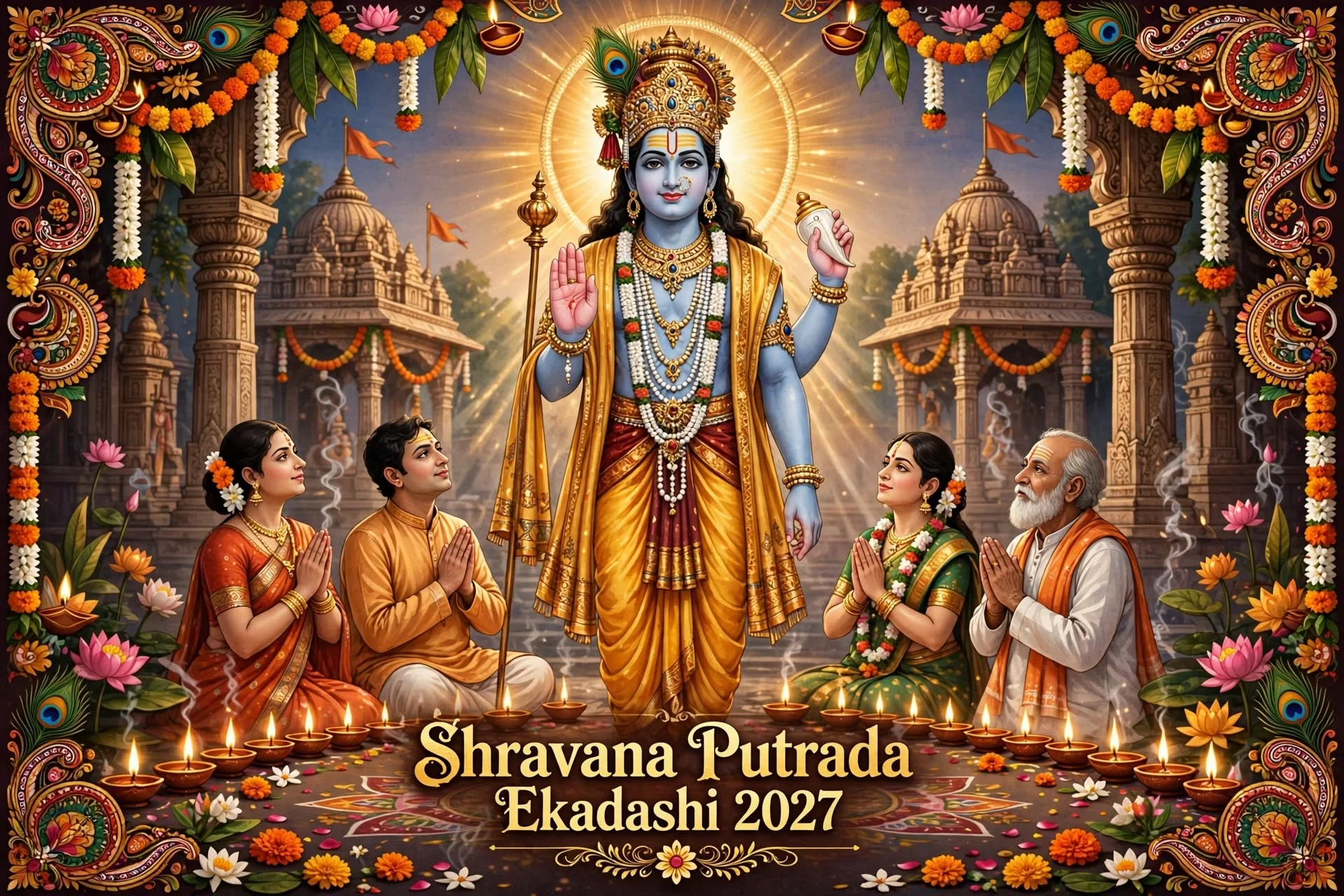
Thursday, Aug 12, 2027
Shravana Putrada Ekadashi
Shravana Putrada Ekadashi, also reverently designated as Pavitra Ekadashi or Pavitropana Ekadashi, is observed on the auspicious eleventh lunar day (Ekadashi) of the Shukla Paksha (waxing moon) in the sacred monsoon month of Shravana. Dedicated exclusively to Bhagwan Vishnu in His divine forms as Sri Krishna, Madhusudana, and Damodara, this sanctified vrata is revered in Puranic literature as a supreme spiritual remedy for childless couples seeking virtuous progeny, as well as an extraordinary fast for the eradication of past-life karmic impediments and the attainment of spiritual liberation.
View Festival Guide
Friday, Aug 13, 2027
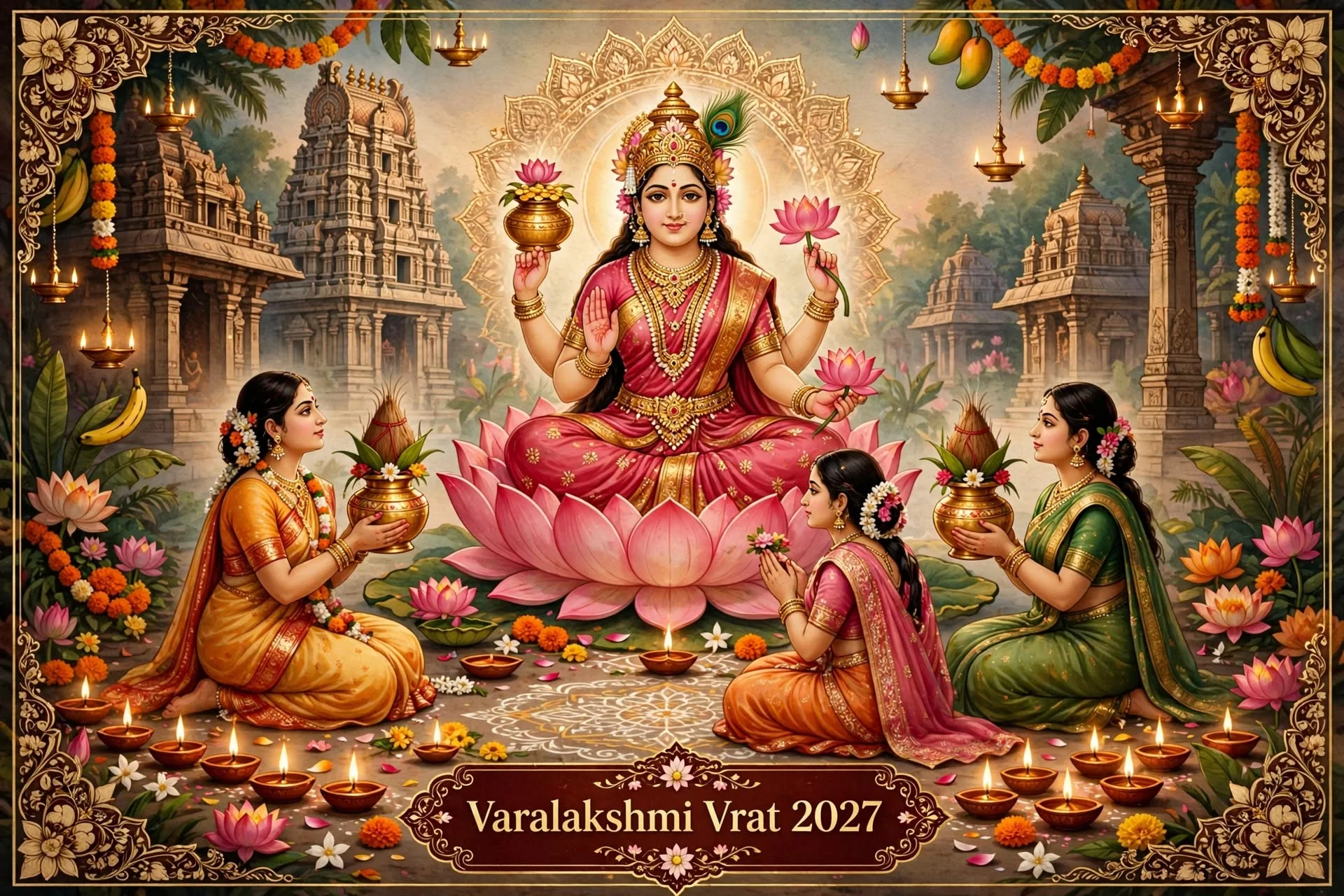
Varalakshmi Vrat
Varalakshmi Vrat, also known as Varalakshmi Nombu, is a revered Hindu festival dedicated to Goddess Varalakshmi—an auspicious manifestation of Sri Mahalakshmi who bestows boons ('Varam') upon Her sincere devotees. Celebrated predominantly by married women (Sumangalis) and young maidens across South India (Andhra Pradesh, Telangana, Karnataka, and Tamil Nadu) as well as Maharashtra and surrounding regions, this sacred vrata falls on the Friday immediately preceding the Full Moon day (Shravana Purnima) in the holy monsoon month of Shravana.
View Festival Guide
Saturday, Aug 14, 2027
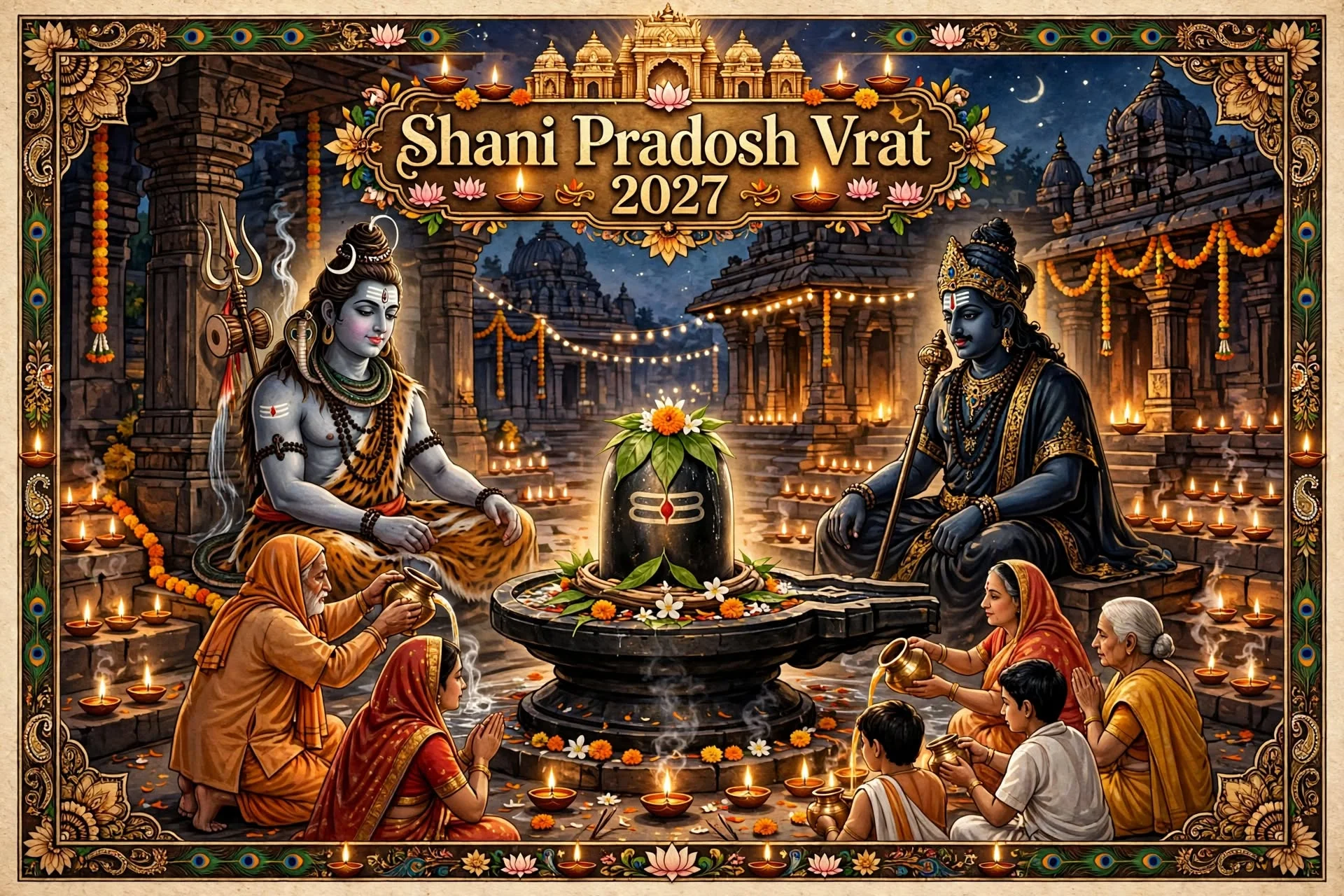
Shani Pradosh Vrat
Shani Pradosh Vrat is an exceptionally potent, revered, and astrologically transformative bi-monthly Hindu fasting observance dedicated to Lord Shiva, Goddess Parvati, and Lord Shani Deva (the planetary deity of Saturn). Occurring on the thirteenth day (Trayodashi tithi) of either the waxing (Shukla) or waning (Krishna) lunar fortnight when it coincides with a Saturday (Shanivara), this sacred vow is lauded across Vedic and Puranic literature as the supreme, infallible spiritual remedy for dissolving chronic karmic impediments, neutralizing severe planetary afflictions, and securing profound peace and prosperity.
View Festival Guide
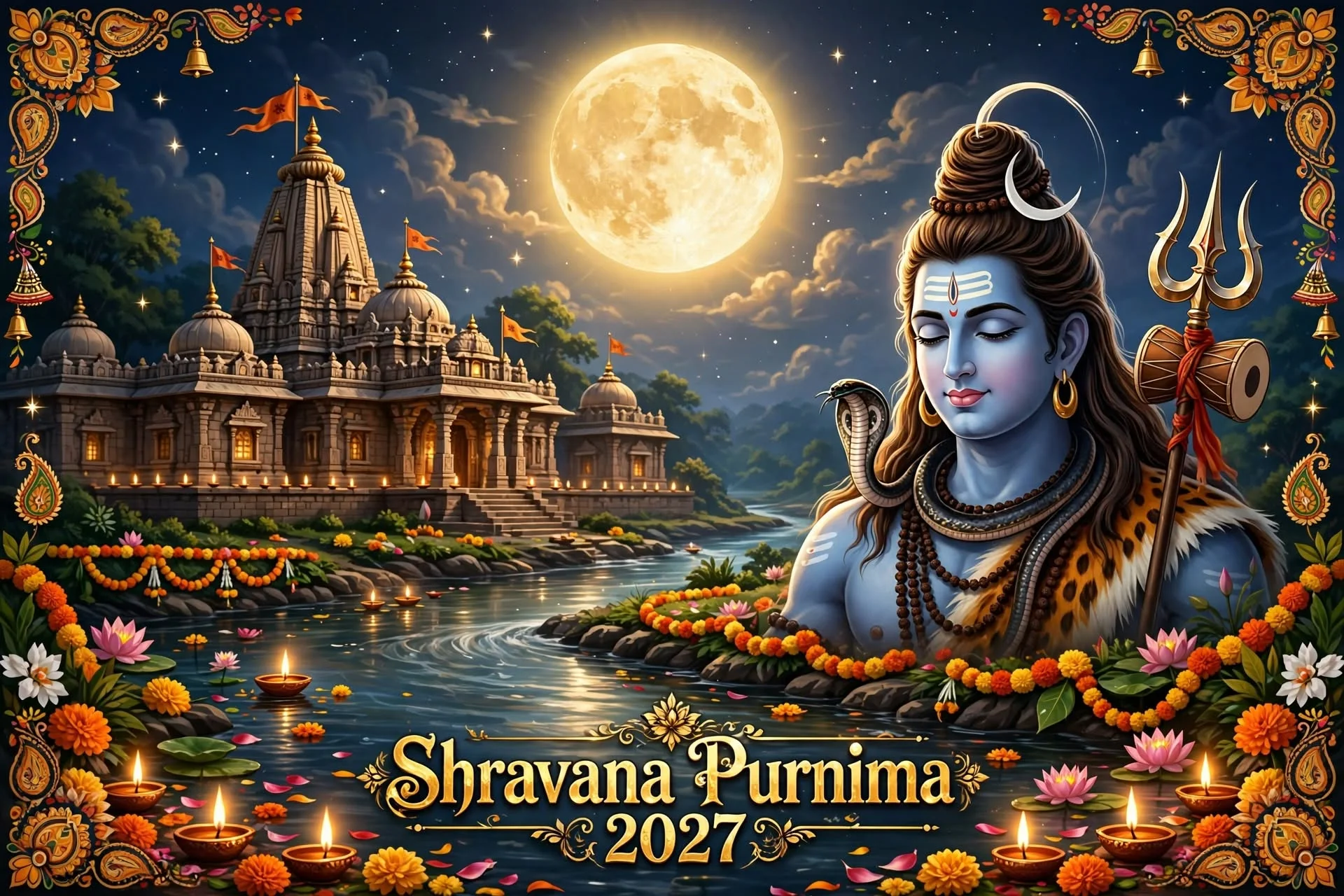
Tuesday, Aug 17, 2027
Shravana Purnima
Shravana Purnima is the radiant Full Moon day of the sacred Hindu month of Shravana, representing one of the most spiritually vibrant, multifaceted, and revered junctures of the entire Hindu calendar. Illuminating the night sky during the heart of the rejuvenating monsoon, this sanctified tithi marks the confluence of numerous historic, ascetic, familial, and astronomical observances across the length and breadth of the Indian subcontinent.
View Festival Guide
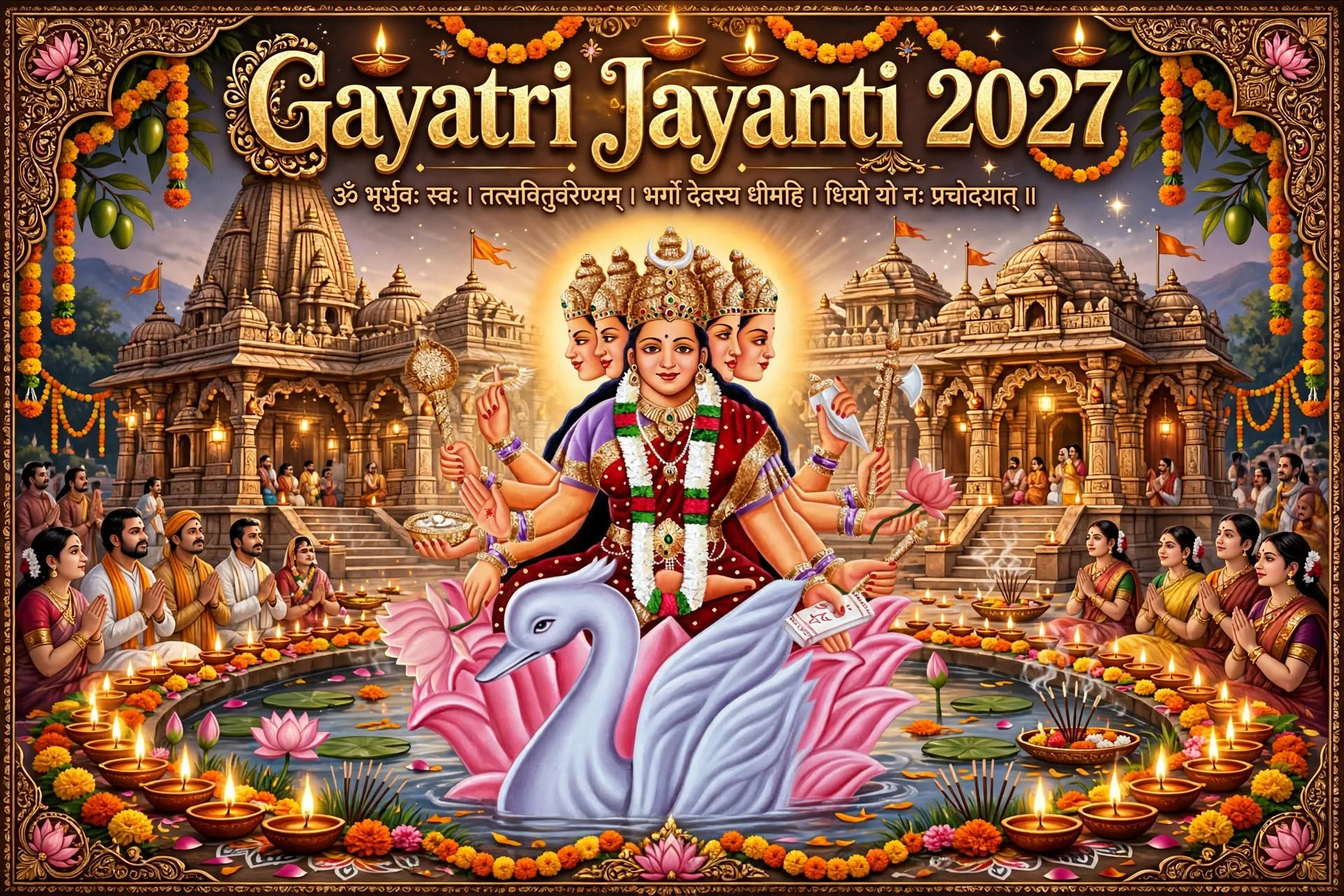
Tuesday, Aug 17, 2027
Gayatri Jayanti
Gayatri Jayanti is a sacred Hindu festival dedicated to Goddess Gayatri, revered as Ved Mata, the Mother of the Vedas. She represents divine wisdom, spiritual illumination, purity and the power of sacred knowledge. Devotees worship her as the personification of the Gayatri Mantra, one of the most revered prayers in the Vedic tradition.
View Festival Guide
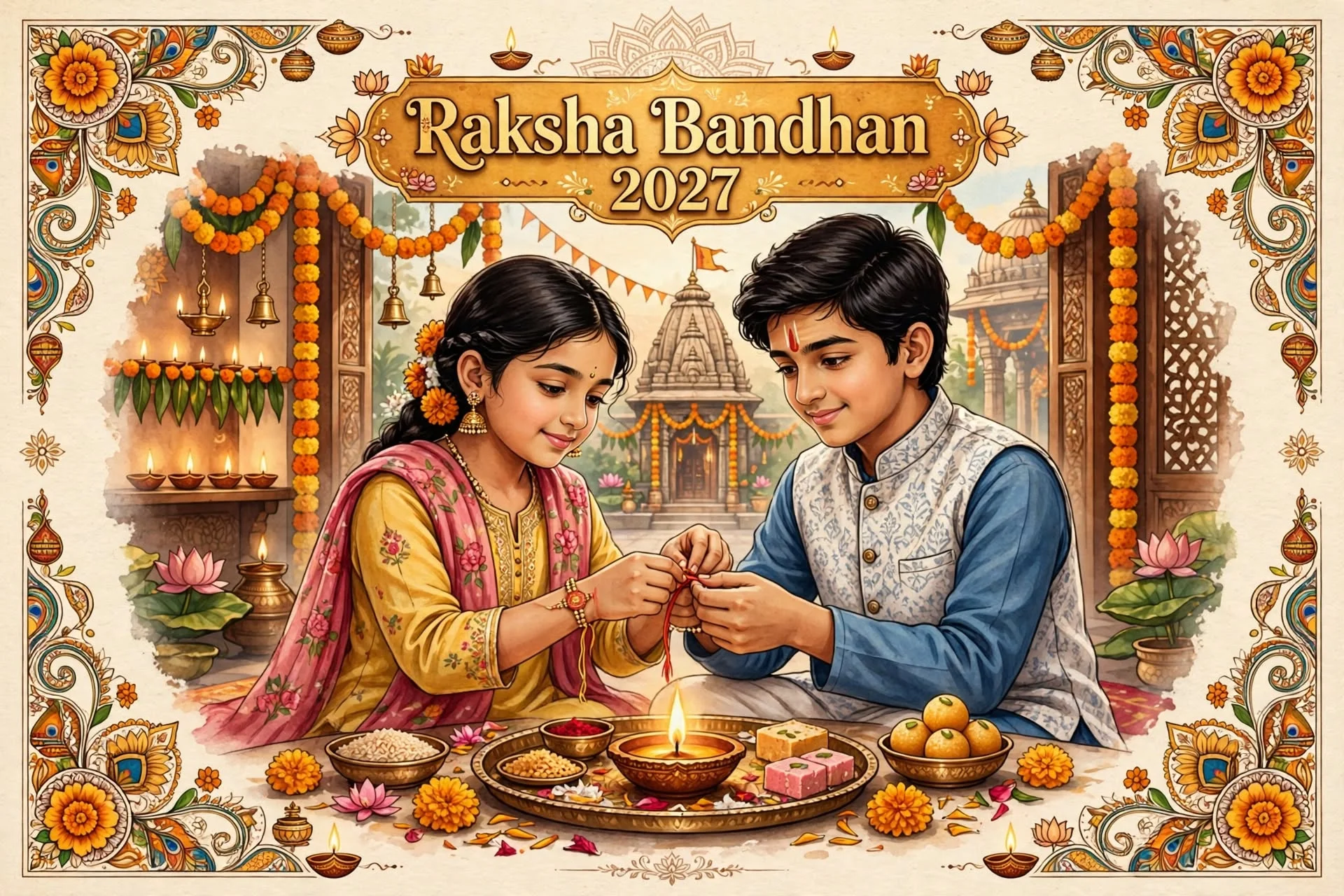
Tuesday, Aug 17, 2027
Raksha Bandhan
Raksha Bandhan, celebrated on the sacred Full Moon day (Purnima) of the holy Hindu month of Shravana, is one of the most cherished, ancient, and emotionally resonant festivals of India. Translated literally as 'the bond of protection', Raksha Bandhan honors the sacred relationship between brothers and sisters while simultaneously encapsulating broader cosmic and moral principles of mutual duty, chivalric honor, spiritual righteousness, and universal solidarity.
View Festival Guide
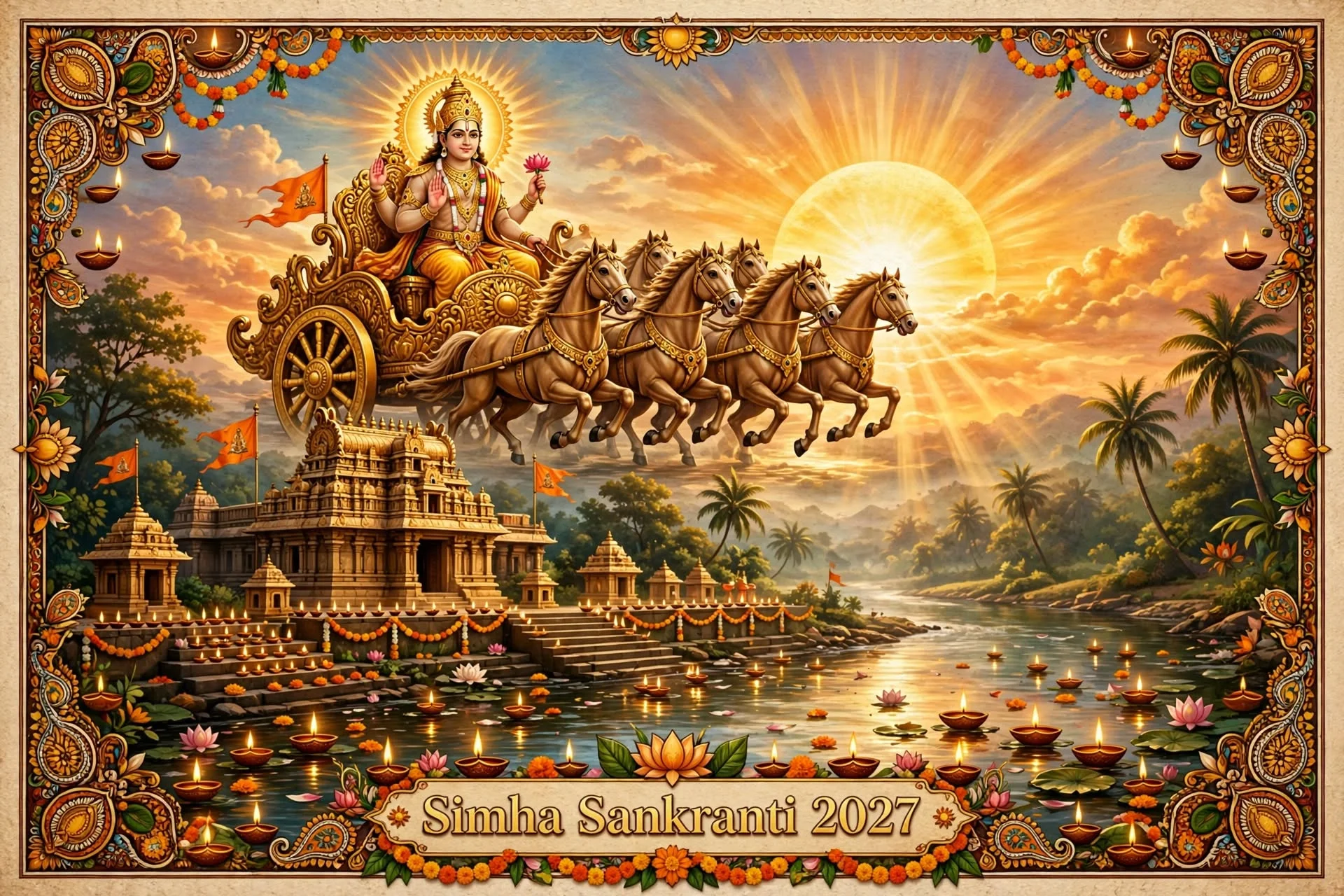
Tuesday, Aug 17, 2027
Simha Sankranti
Simha Sankranti marks the momentous astronomical and astrological transit (Sankramana) when Surya Deva, the radiant Sun God, enters the regal zodiac sign of Simha (Leo). In Vedic astrology, Simha is the Sun's own moolatrikona and swakshetra (domicile sign), making this celestial ingress exceptionally powerful, revitalizing, and spiritually auspicious. Occurring in mid-August in the traditional solar calendar, Simha Sankranti inaugurates the solar month of Simha (known as Chingam in Kerala and Bhadra / Avani in other solar calendars).
View Festival Guide
Tuesday, Aug 17, 2027
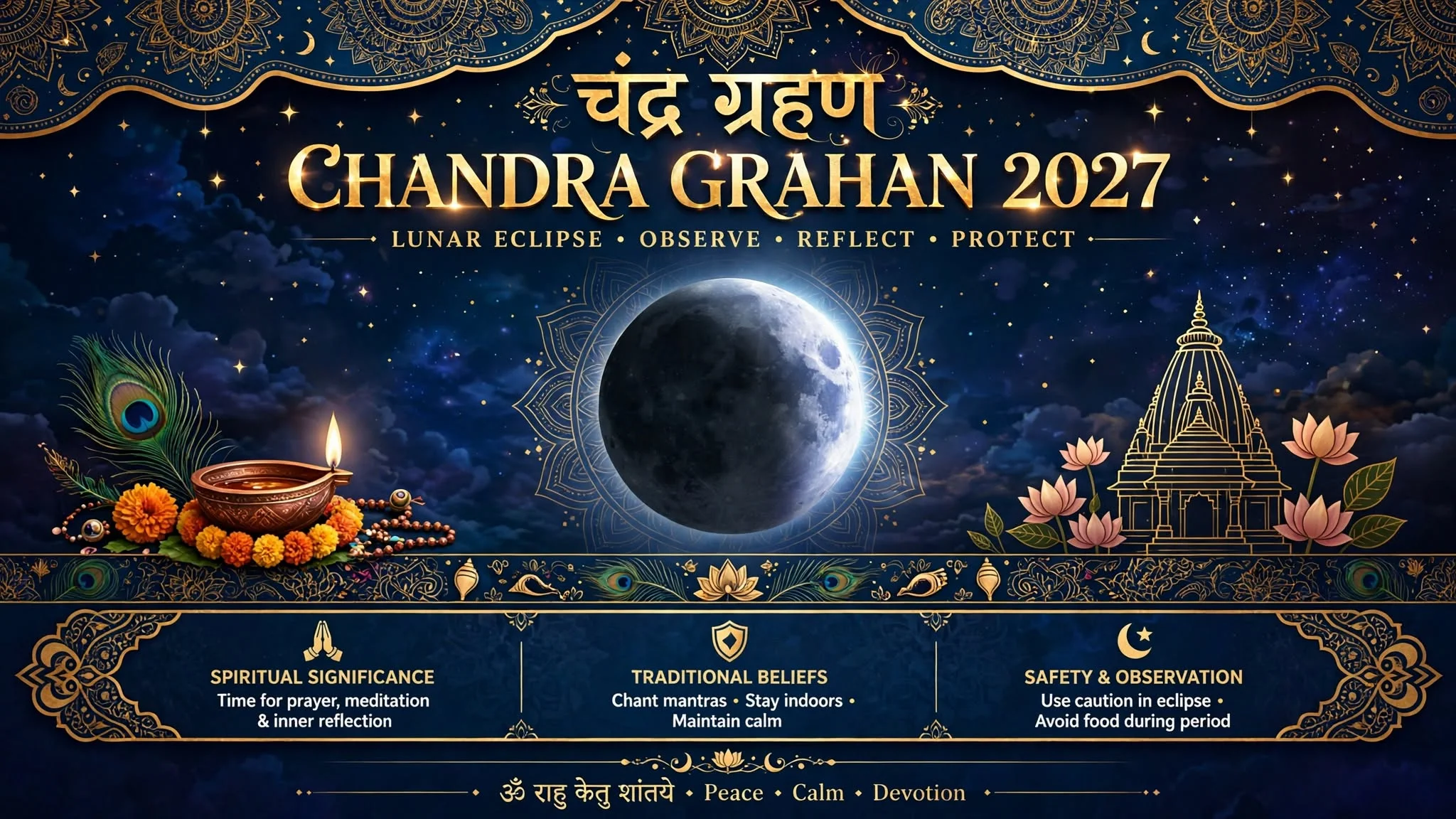
Chandra Grahan
Chandra Grahan (Lunar Eclipse) is a sacred cosmic and spiritual juncture (Parva Kaal) in Sanatana Dharma occurring exclusively on Purnima (the full moon day) when the Earth moves directly between the Sun and the Moon, casting its conical shadow across the lunar orb. In Vedic philosophy and Jyotisha, the Moon presides over the mind, subconscious emotions, and water elements (Chandrama Manaso Jatah - Rigveda Purusha Sukta). The temporary obscuration of the Moon by the shadowy nodes Rahu or Ketu induces profound subtle energetic shifts across terrestrial nature and human consciousness.
View Festival Guide