




Kartik Purnima is one of the most sacred full-moon observances in the Hindu calendar. It is celebrated on the full moon of the Hindu month of Kartika and is associated with Lord Shiva, Lord Vishnu, sacred bathing, charity, pilgrimage, temple worship, and the lighting of lamps. The festival has several important religious traditions. In Shaiva traditions, Kartik Purnima is associated with Tripurari Purnima and Lord Shiva's victory over the three demon cities known as Tripura. According to the traditional story, the demons Tripurasura and his brothers had created powerful fortified cities and caused widespread trouble. Lord Shiva ultimately destroyed the three cities with a single divine arrow, restoring cosmic order. The festival is therefore interpreted as the victory of divine knowledge and righteousness over destructive forces. Kartik Purnima is also deeply important in Vaishnava traditions. The entire month of Kartika is regarded as highly sacred for Vishnu and Krishna devotion. Devotees may perform special prayers, light lamps, observe fasting, visit temples, and participate in devotional activities throughout the month. One of the most important practices is taking a sacred bath in a river or other holy water body. Pilgrims traditionally travel to sacred locations to bathe on Kartik Purnima. The Ganges and other sacred rivers become especially important during this period. Lighting lamps is another defining feature. Devotees may light rows of diyas in temples, homes, riverbanks, and sacred places. In Varanasi, the famous Dev Deepawali celebration occurs around Kartik Purnima, when the ghats are illuminated by thousands of lamps. The festival is also associated with charity. Devotees may donate food, clothing, money, lamps, or other necessities. Charity is considered particularly meaningful during sacred lunar observances. Kartik Purnima has a strong pilgrimage dimension. Major temples and sacred cities experience large gatherings. In some places, fairs and cultural events accompany the religious observance. The full moon itself has symbolic importance. The complete moon represents illumination and fullness, while the lighting of lamps represents spiritual knowledge. Kartik Purnima also marks the end of the highly sacred Kartika month. Devotees who have observed special practices throughout Kartika may conclude their vrata on this day. The festival's spiritual meaning extends beyond mythology. It encourages purification, devotion, generosity, and the pursuit of knowledge. Sacred bathing represents physical and symbolic purification, while lighting lamps represents illumination of consciousness. The observance also emphasizes pilgrimage and community. People travel together, visit temples, participate in religious gatherings, and share food and charity. In 2026, Kartik Purnima falls on Tuesday, November 24 according to the Hindu calendar. The festival is sometimes called Dev Diwali in specific regional contexts, especially in Varanasi, although Dev Diwali and Kartik Purnima can have distinct local observance traditions. Kartik Purnima therefore brings together several major Hindu themes: the victory of dharma, sacred water, divine worship, charity, pilgrimage, light, and spiritual purification. For families, the festival can be observed through a simple lamp-lighting ceremony, Vishnu or Shiva worship, charity, temple visits, and remembrance of the spiritual significance of the Kartika month. The full moon of Kartika provides a natural conclusion to a month characterized by devotion and discipline. It reminds devotees that spiritual progress involves both purification and illumination. Kartik Purnima is consequently one of the most significant Hindu full-moon festivals of the year and holds importance across Shaiva, Vaishnava, and broader Hindu traditions.
Kartik Purnima 2026: Date, Puja Timings, Rituals & Stories
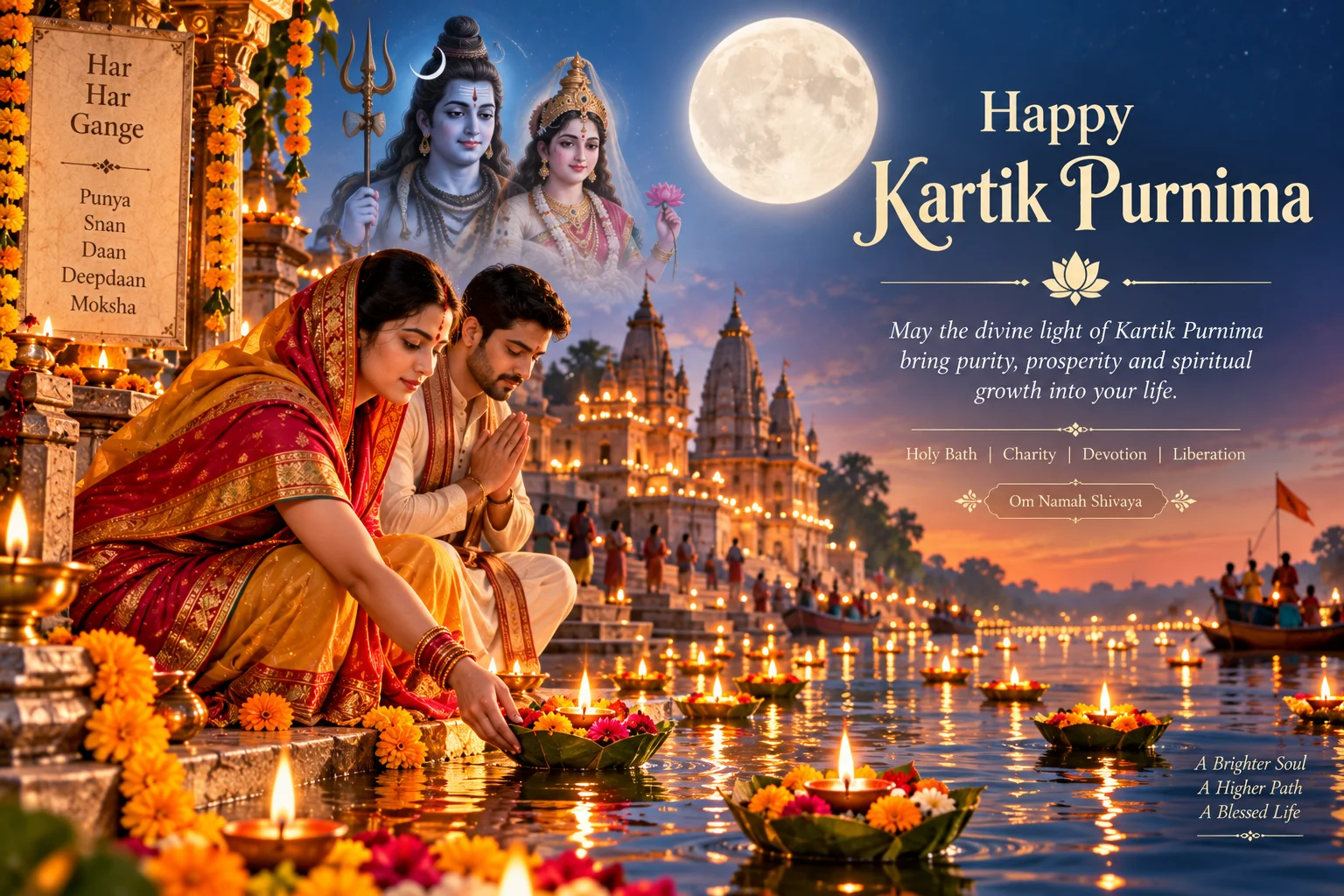
Kartik Purnima Timings & Panchang
Important festival dates and auspicious timings
06:51 am
05:25 pm
Tuesday, 24 Nov 2026
11:42 pm – 08:23 pm
Kartik Purnima
Upcoming Festivals
View All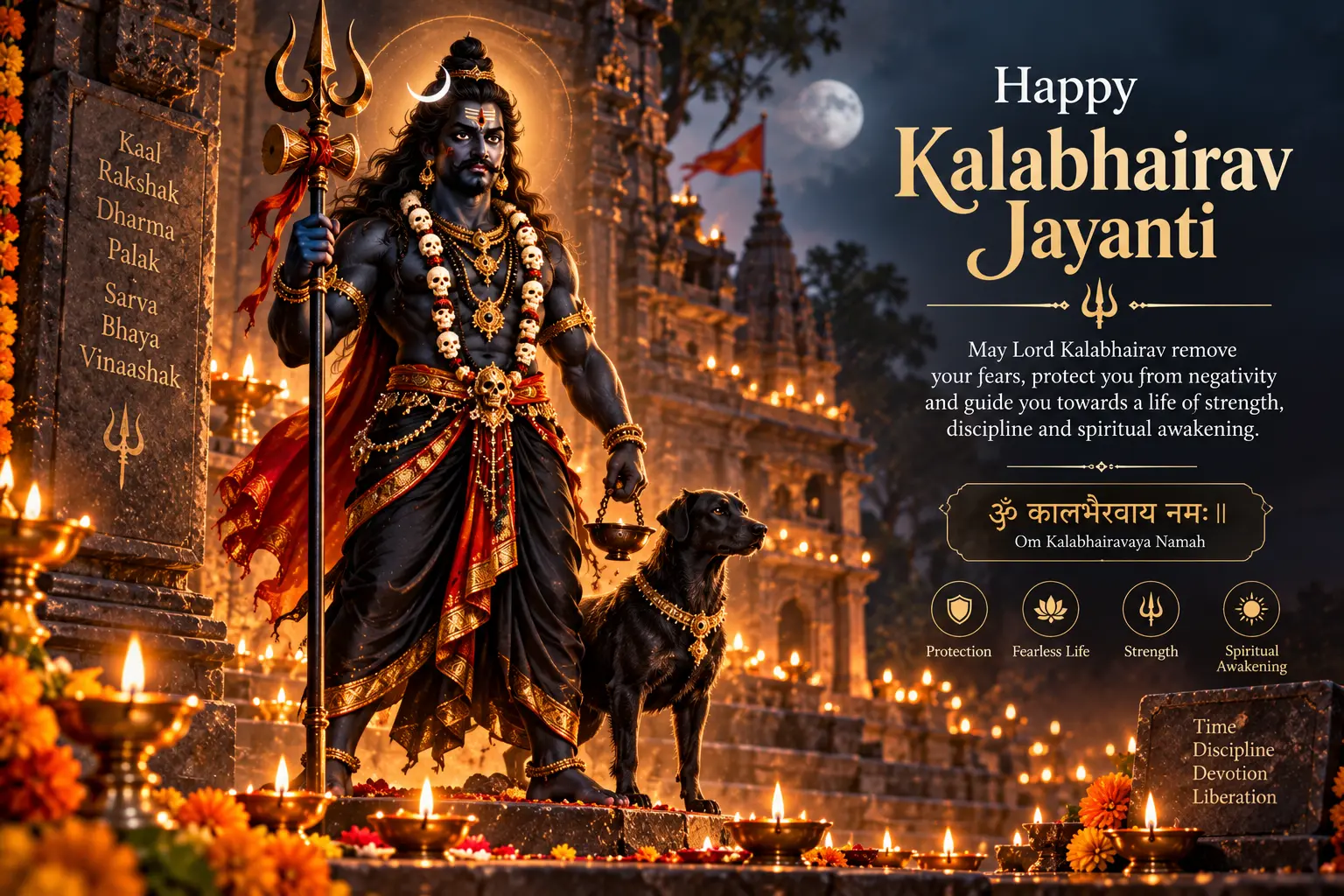
Kalabhairav Jayanti
Kalabhairav Jayanti, also celebrated with immense esoteric reverence, scriptural awe, and nocturnal solemnity as Bhairava Ashtami, Kalabhairav Ashtami, and Maha Bhairavashtami, marks the divine advent (Jayanti) of Lord Kalabhairava—the terrifying, fierce, and all-destroying manifestation of Lord Sadashiva who presides as the supreme master over all-consuming Time (Kala) and the invincible annihilator of fear (Bhaya-Nashaka). Occurring on the Krishna Paksha Ashtami (the eighth lunar day of the waning moon) in the sacred month of Margashirsha (or Kartika in the Purnimanta calendar prevalent across northern India), this sacred tithi commemorates the cosmic moment when the Supreme Mahadeva manifested His most awe-inspiring form from between His eyebrows to destroy pride, punish unrighteous arrogance, uphold cosmic order, and establish the sacred law of spiritual justice across the universe.
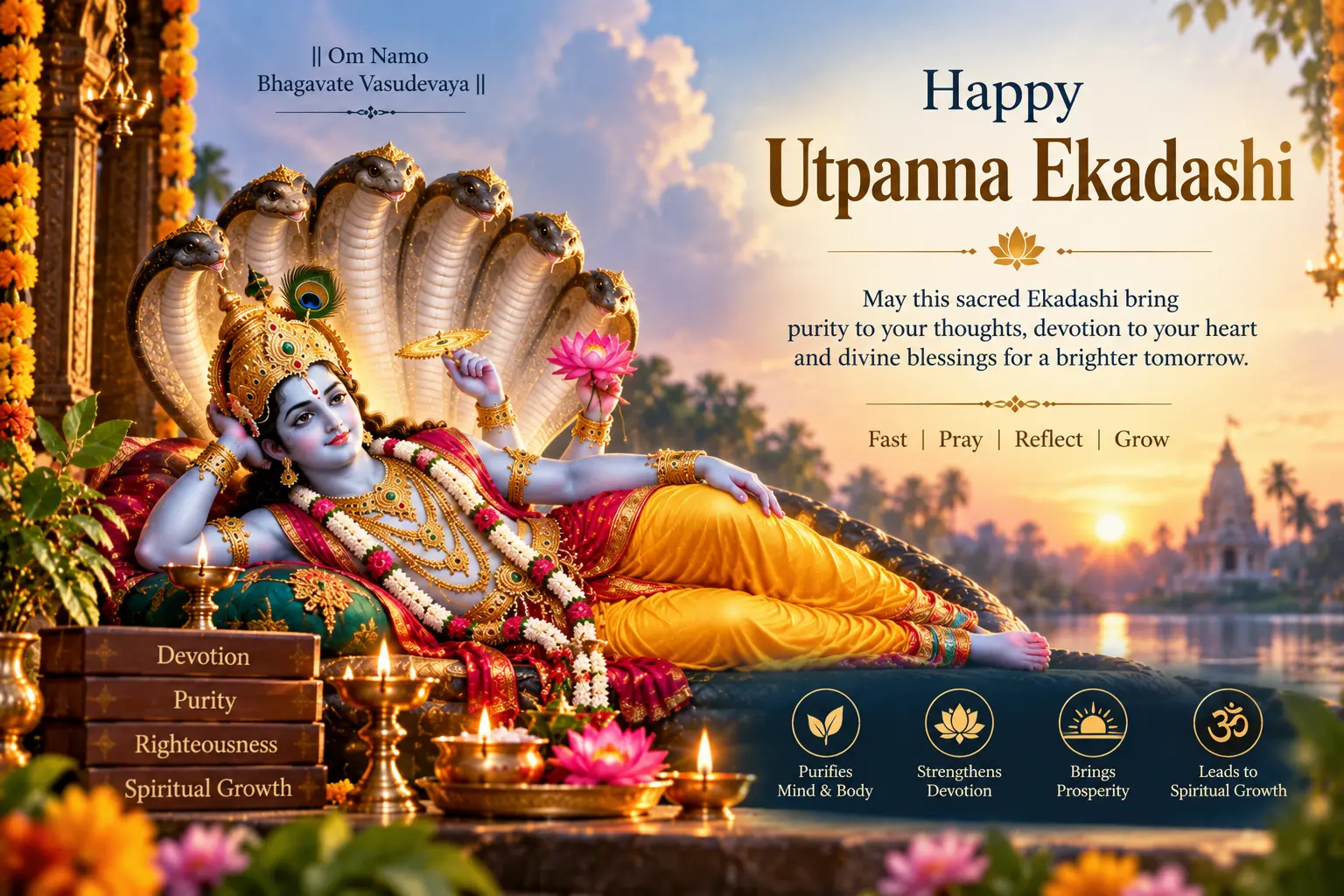
Utpanna Ekadashi
Utpanna Ekadashi, observed with supreme scriptural reverence, incandescent devotion, and profound spiritual joy across India, is the radiant advent anniversary (Utpatti / Jayanti) of Goddess Ekadashi herself—the divine, four-armed celestial maiden who personifies the transcendental fasting power and spiritual potency of the Supreme Preserver, Lord Sri Maha Vishnu. Occurring on the Krishna Paksha Ekadashi (the eleventh lunar day of the waning moon) in the sacred month of Margashirsha (or Kartika in the Purnimanta lunar calendar prevalent across northern India), this foundational tithi marks the divine origin and fountainhead of all twenty-four (and in leap years, twenty-six) Ekadashis of the Hindu liturgical year. It is celebrated as the mother of all Ekadashi vows, the spiritual bridge that initiates the annual cycle of Ekadashi fasting, and the supreme tithi wherein the observance of Ekadashi was forever consecrated as the most direct royal pathway to the transcendental abode of Vaikuntha.
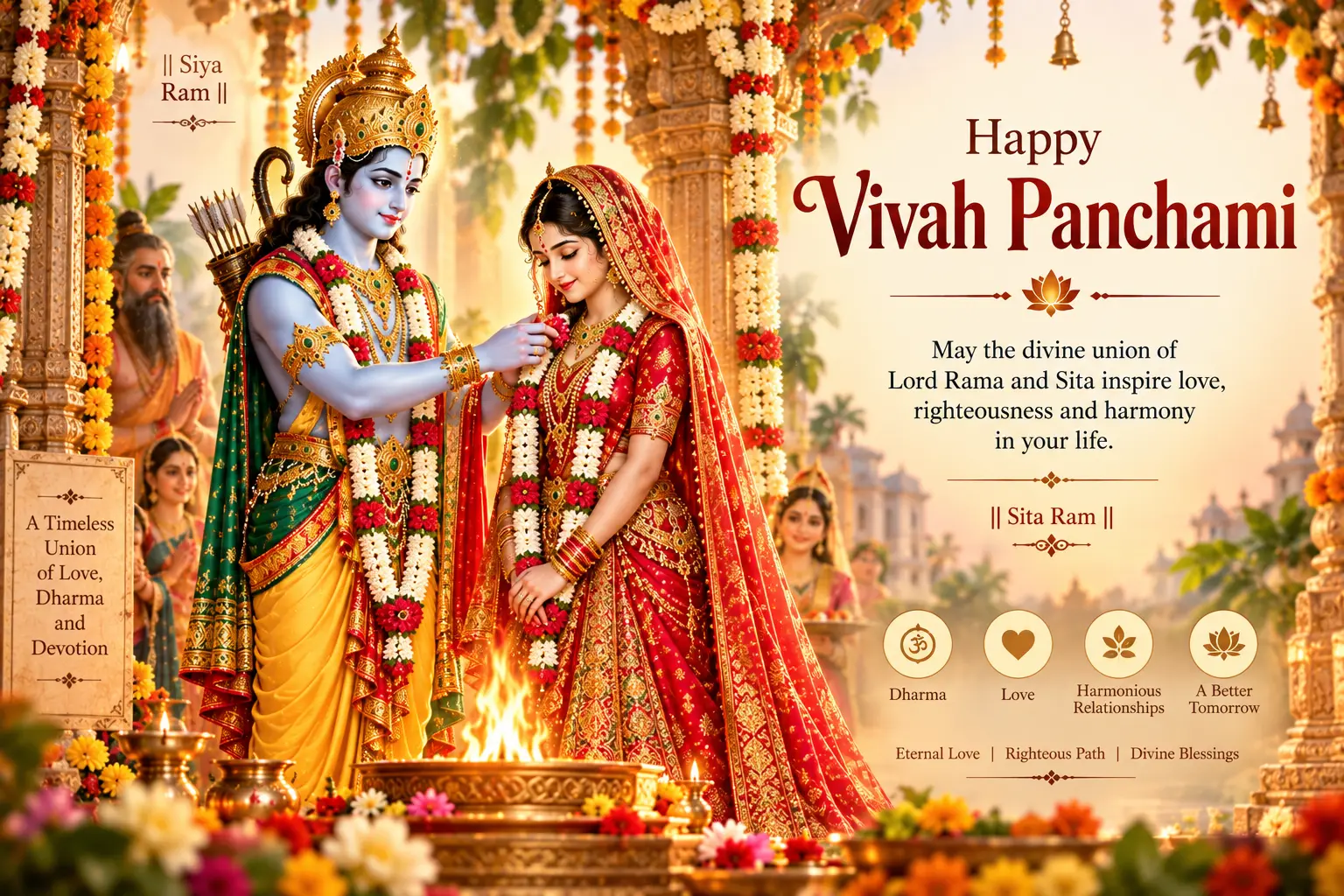
Vivah Panchami
Vivah Panchami, observed with supreme aesthetic elegance, devotional ecstasy, and epic scriptural splendor across the Indian subcontinent and Nepal, is the sacred wedding anniversary of Lord Sri Rama—the Maryada Purushottama and seventh transcendental incarnation of Lord Sri Maha Vishnu—and Goddess Sita, the beloved daughter of King Janaka and the earthly manifestation of Goddess Mahalakshmi. Occurring on the Shukla Paksha Panchami (the fifth lunar day of the waxing moon) in the holy winter month of Margashirsha (Agrahayana), this enchanting festival commemorates the divine nuptial union (Vivaha Samskara) solemnized in the ancient capital of Mithila (modern-day Janakpurdham). Across thousands of temples and domestic shrines, this auspicious tithi is celebrated as the cosmic benchmark of righteous matrimony, spiritual partnership, and unconditional fidelity, reuniting the hearts of devotees with the timeless ideals of the Valmiki Ramayana and the Ramcharitmanas.
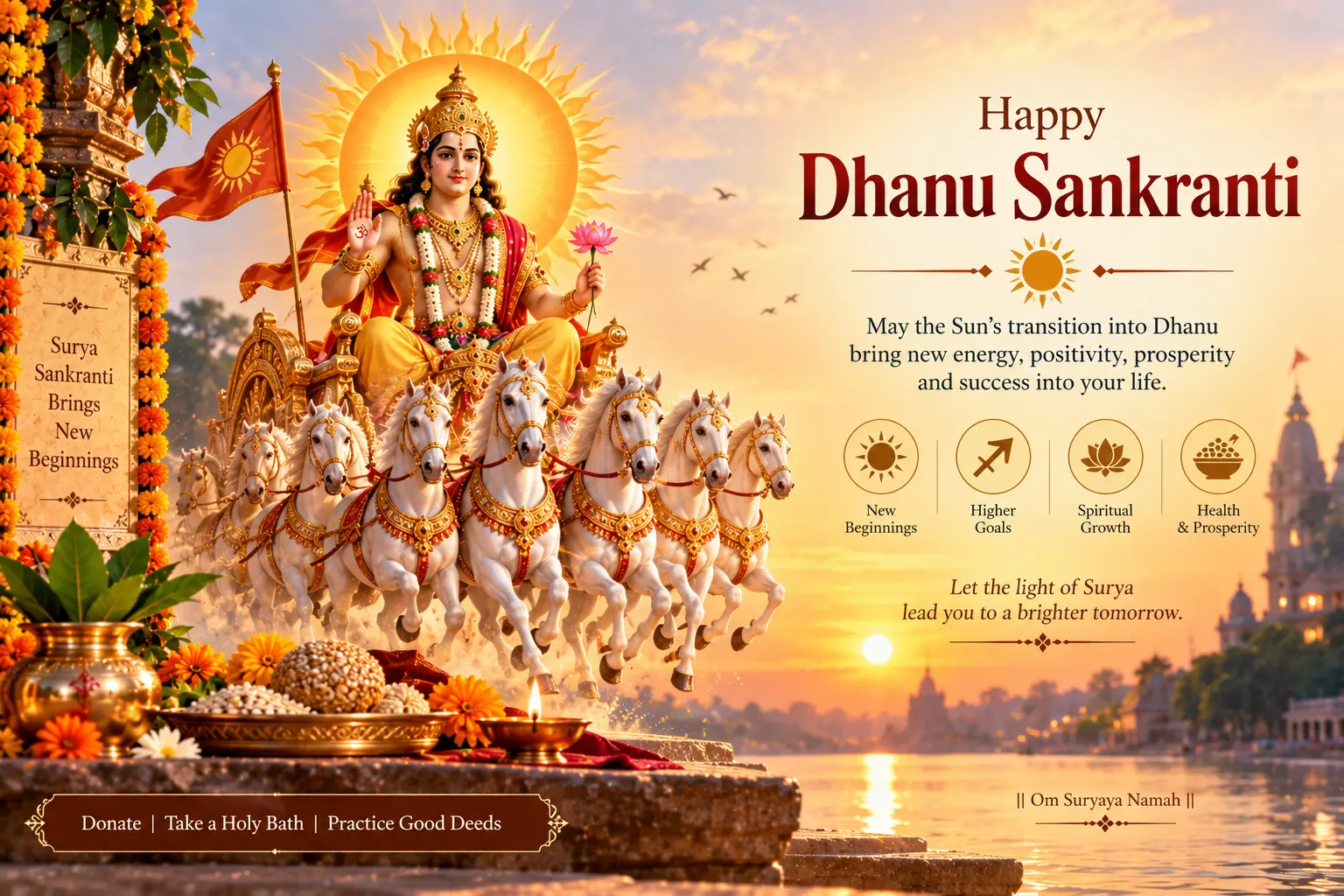
Dhanu Sankranti
Dhanu Sankranti, observed with profound astrological, agricultural, and devotional significance across the Indian subcontinent, marks the momentous astronomical ingress (Sankramana) of Lord Surya—the divine Sun God—from the water sign of Vrishchika (Scorpio) into the fiery, sattvic zodiac sign of Dhanu (Sagittarius), ruled by the celestial preceptor Guru (Jupiter). Occurring in the sacred month of Margashirsha or early Pausha (mid-December), this celestial transition marks the beginning of the solar month of Dhanu Masa and initiates the celebrated period known as Kharmas or Malmas across northern and eastern India. Revering the life-giving solar luminary as the visible eye of the Supreme Cosmic Being (Pratyaksha Devata), Dhanu Sankranti is dedicated to purifying the mind and body through sacred river snanam, Surya arghya, charitable donations, and intense scriptural study before the sun turns northward during Makar Sankranti.
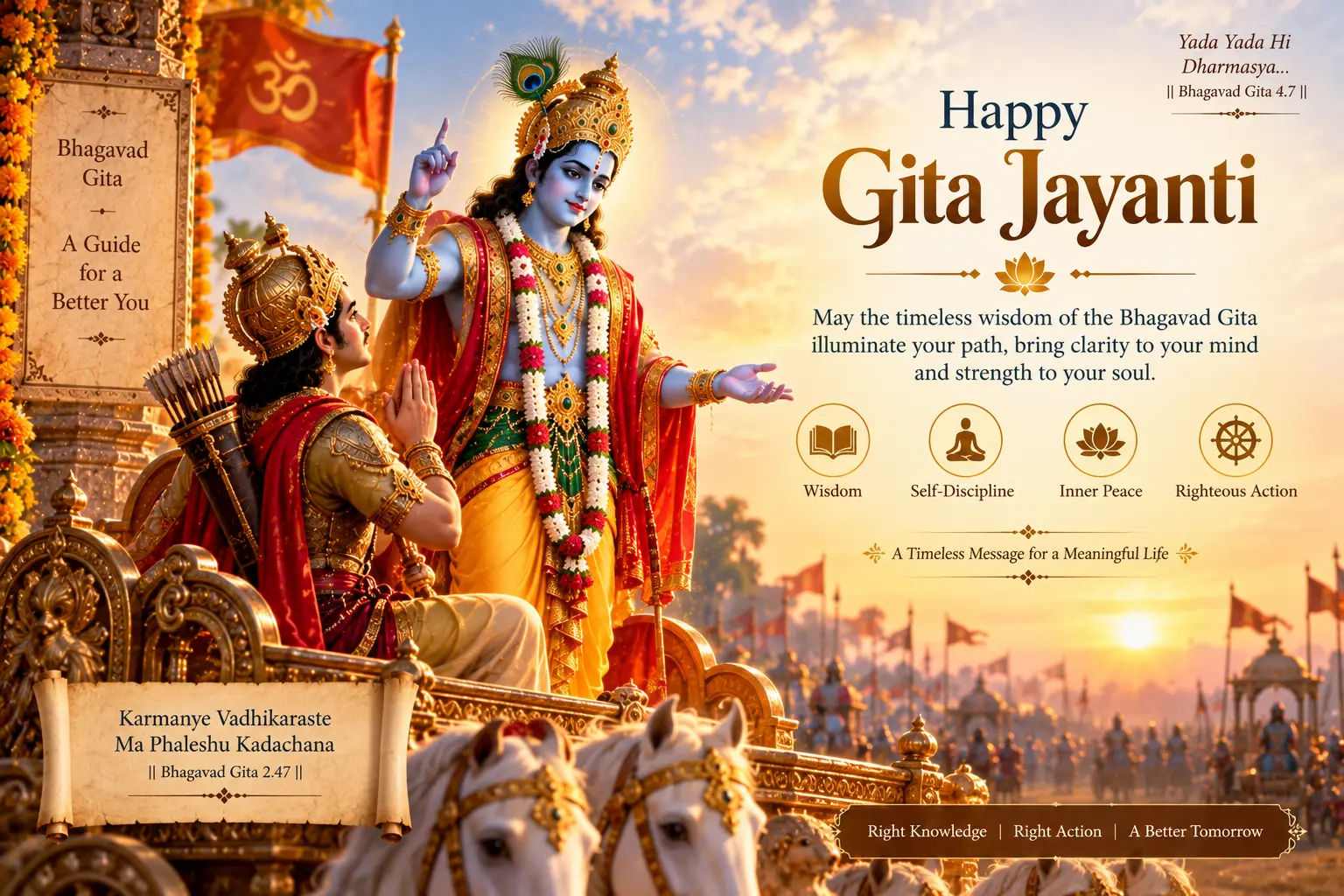
Gita Jayanti
Gita Jayanti is one of the most intellectually revered and spiritually profound festivals in Sanatana Dharma, celebrating the historic revelation of the Srimad Bhagavad Gita—the timeless song of the Supreme Personality of Godhead, Bhagavan Sri Krishna. Occurring on the auspicious Ekadashi tithi of Shukla Paksha in the holy winter month of Margashirsha (November–December), this sacred observance marks the hallowed occasion at Jyotisar in the ancient land of Kurukshetra where Sri Krishna imparted seven hundred verses of supreme spiritual wisdom to His bewildered friend and disciple, the Pandava prince Arjuna. Unlike conventional Hindu festivals that commemorate the earthly birthday or cosmic descent of deities, Gita Jayanti holds the unique distinction of celebrating the birth of a living philosophical scripture—a scripture that serves as the definitive manual for human existence, duty, self-realization, and devotion across all ages.
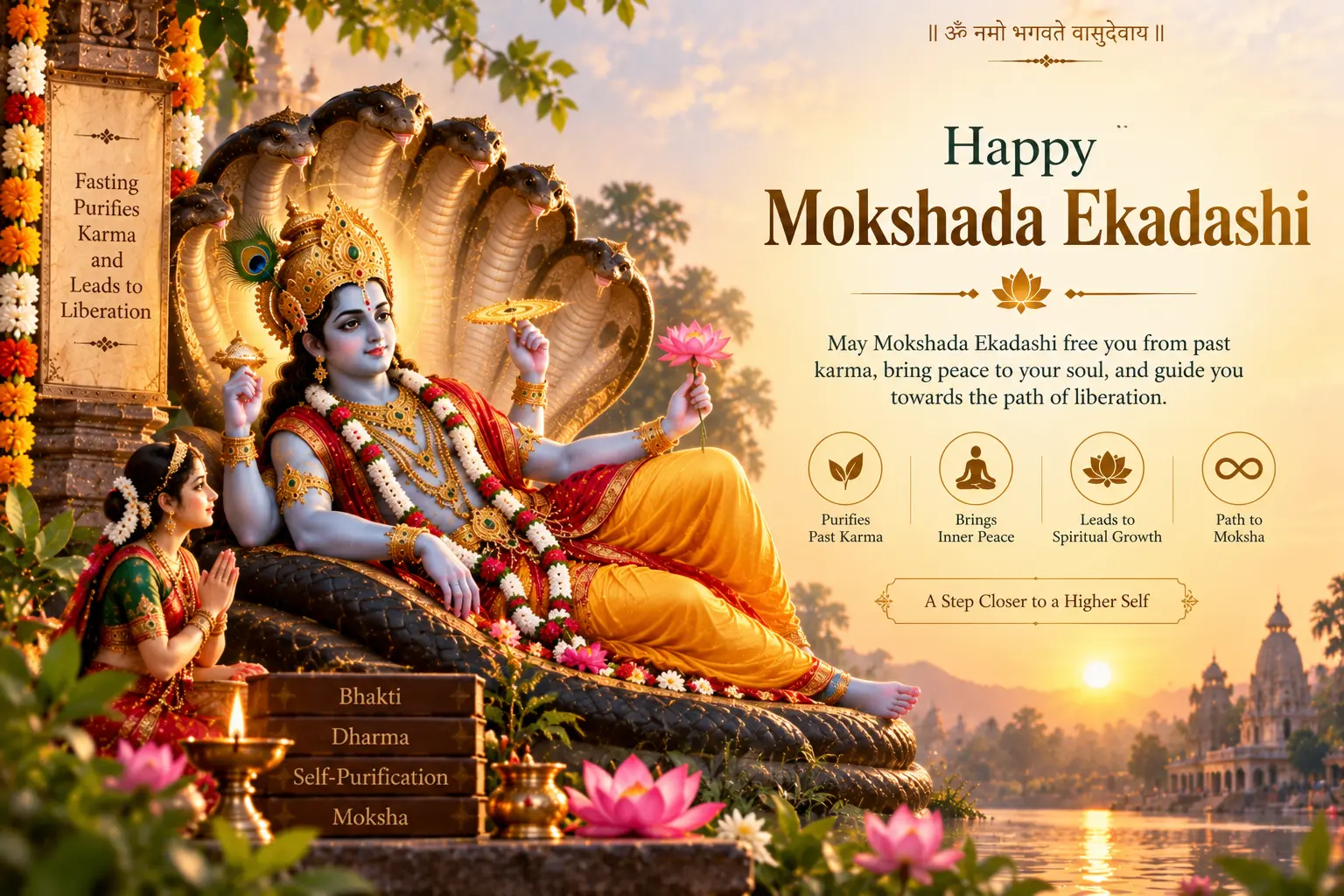
Mokshada Ekadashi
Mokshada Ekadashi, observed on the Shukla Paksha Ekadashi (the eleventh lunar day of the waxing moon) in the sacred winter month of Margashirsha (Agrahayana), is one of the most spiritually venerated and soteriologically potent fasting days in Sanatana Dharma. As its Sanskrit name unequivocally proclaims—'Mokshada', meaning 'the bestower of ultimate liberation (Moksha)'—this holy vrata possesses the extraordinary capacity to dissolve mountains of accumulated karmic transgressions, deliver departed ancestral souls from torment in lower realms (Naraka), and grant unalloyed devotion to Lord Sri Damodara-Krishna. Celebrated with intense ascetic discipline, scriptural recitation, and uninterrupted contemplation across India and Nepal, Mokshada Ekadashi holds supreme significance in both Smarta and Vaishnava traditions as an unshakeable bridge from the ocean of mortal sorrow to the eternal tranquility of Vaikuntha.
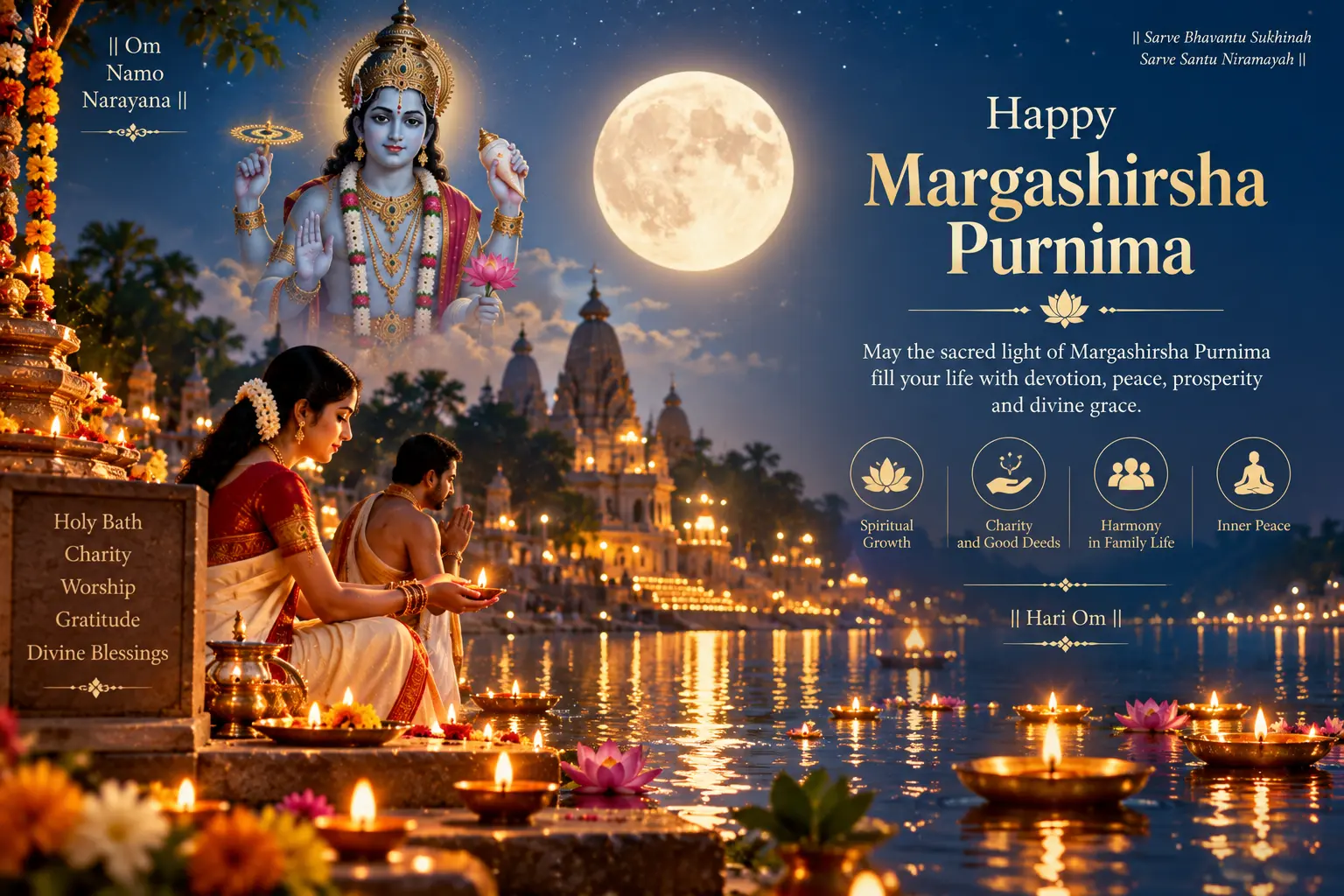
Margashirsha Purnima
Margashirsha Purnima, celebrated on the full moon day of the sacred month of Margashirsha (Agrahayana), is one of the most spiritually illuminating and astrologically auspicious full moon festivals in Sanatana Dharma. Occurring when the full moon shines in the constellation of Mrigashirsha (the celestial deer's head ruled by the planet Mars and presided over by Soma, the Moon God), this holy tithi marks the supreme spiritual culmination of the month that Lord Sri Krishna Himself declared to be His own transcendental self in the Bhagavad Gita ('Masanang Margashirsho'ham'). Popularly known in various regional cultures as Battisi Purnima, Moksha Purnima, and Korvai Deepam, this sacred day unites the worship of Lord Sri Satyanarayan, the divine advent of Lord Dattatreya, the celestial Cosmic Dance of Lord Nataraja (Arudra Darshan), and ancient river-bathing rites.
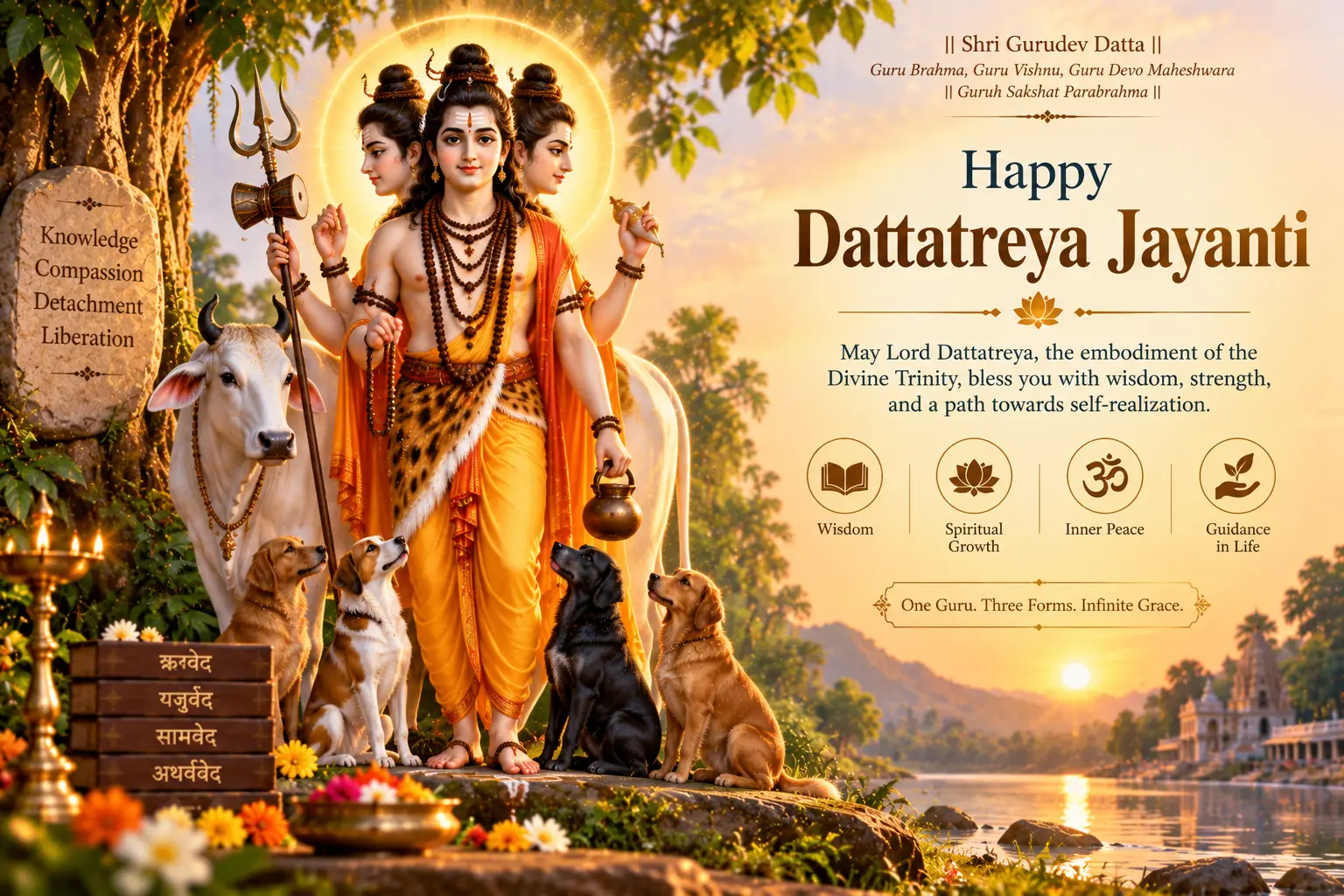
Dattatreya Jayanti
Dattatreya Jayanti, observed with profound esoteric reverence, ascetic contemplation, and devotional splendor across India, celebrates the auspicious divine advent of Lord Sri Dattatreya—the unified, primordial incarnation of the Hindu Supreme Trinity (Brahma, Vishnu, and Shiva). Occurring on the full moon day (Purnima tithi) of the sacred month of Margashirsha (November–December) under the radiant celestial influence of the Mrigashirsha nakshatra, this sacred festival commemorates the transcendental moment when the supreme archetypes of Creation (Brahma), Preservation (Vishnu), and Dissolution (Shiva) merged harmoniously into a singular transcendental form. Revering Dattatreya as the Adi Guru (the Primordial World Teacher), the Avadhuta of supreme renunciation, and the lord of all yogic wisdom, seekers celebrate this holy day to awaken inner discrimination, transcend the duality of earthly existence, and attain direct spiritual illumination.