




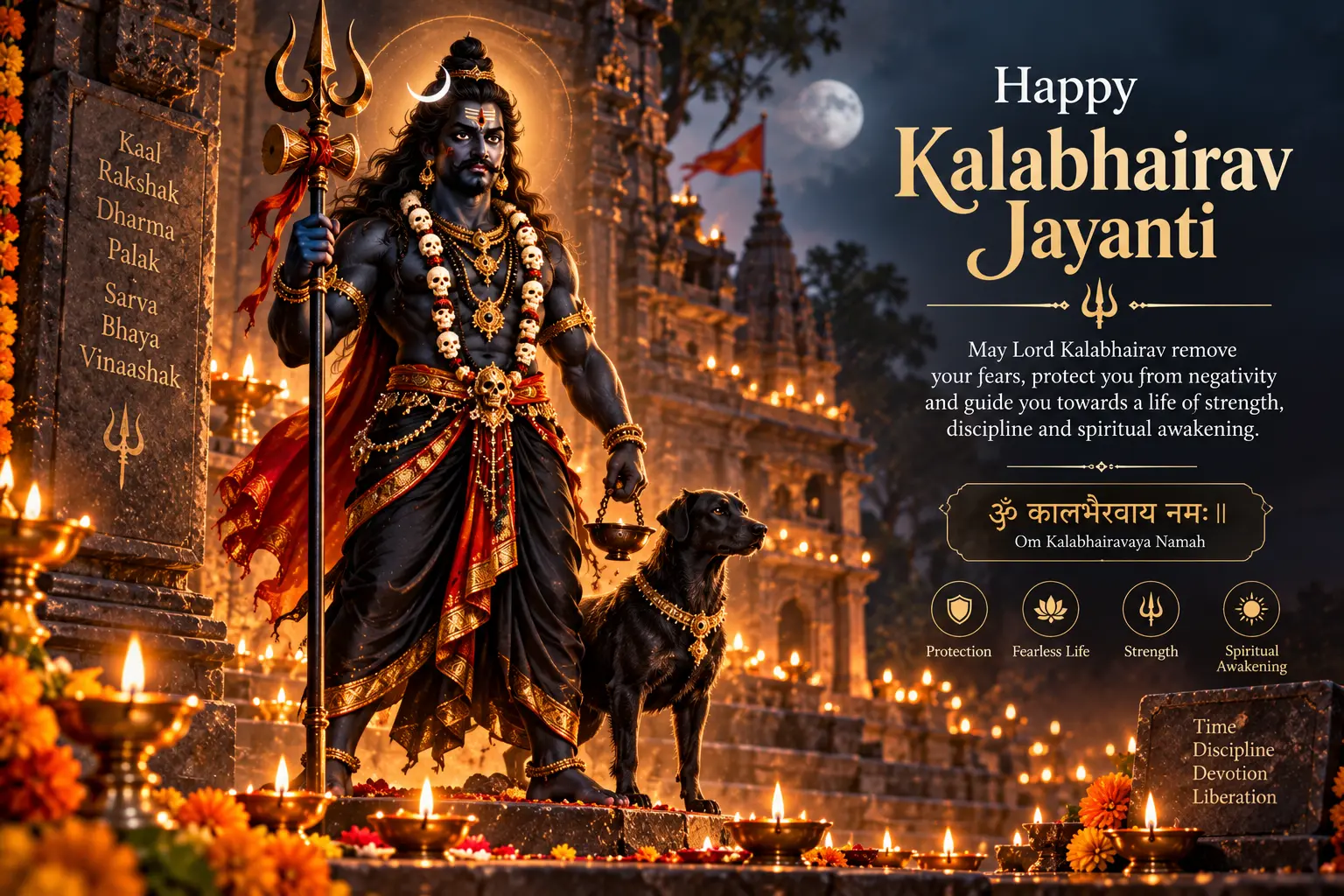
Kalabhairav Jayanti, also celebrated with immense esoteric reverence, scriptural awe, and nocturnal solemnity as Bhairava Ashtami, Kalabhairav Ashtami, and Maha Bhairavashtami, marks the divine advent (Jayanti) of Lord Kalabhairava—the terrifying, fierce, and all-destroying manifestation of Lord Sadashiva who presides as the supreme master over all-consuming Time (Kala) and the invincible annihilator of fear (Bhaya-Nashaka). Occurring on the Krishna Paksha Ashtami (the eighth lunar day of the waning moon) in the sacred month of Margashirsha (or Kartika in the Purnimanta calendar prevalent across northern India), this sacred tithi commemorates the cosmic moment when the Supreme Mahadeva manifested His most awe-inspiring form from between His eyebrows to destroy pride, punish unrighteous arrogance, uphold cosmic order, and establish the sacred law of spiritual justice across the universe.
Kalabhairav Jayanti 2026: Date, Puja Timings, Rituals & Stories
Kalabhairav Jayanti Timings & Panchang
Important festival dates and auspicious timings
06:56 am
05:24 pm
Tuesday, 1 Dec 2026
12:12 am – 11:14 pm
Kalabhairav Jayanti
The transcendental scriptural genesis of Kalabhairav Jayanti is chronicled in monumental detail across ancient Puranic texts, most notably within the Shiva Purana (Shatarudra Samhita), the Skanda Purana (specifically throughout the celebrated Kashi Khanda), the Linga Purana, and the Kurma Purana. According to cosmic chronicles, an unprecedented debate arose atop the celestial summit of Mount Meru among the greatest sages regarding who among the holy trinity was the supreme, primeval creator and source of the universe. When Lord Brahma's fifth head spoke with arrogant hubris, falsely claiming ultimate supremacy and speaking words of insolence against Lord Shiva, the Great God's wrath manifested as a terrifying, dark cosmic entity holding the trident and skull-bowl—Lord Kalabhairava. With a mere flick of His sharp fingernail, Kalabhairava severed Brahma's prideful fifth head, establishing that egoism, vanity, and untruth have no place before the infinite Supreme Truth (Parabrahman).
However, to teach the universe the inviolable law of Karma and the necessity of expiation (Prayashchitta), the severed skull of Brahma permanently clung to Kalabhairava's hand due to the cosmic sin of Brahmahatya (slaying of a creator/brahmana). Lord Shiva commanded Kalabhairava to observe the severe penance of the Kapalika vow—wandering the three worlds as a mendicant holding the skull-bowl, subsisting only on alms, until He reached the sacred city of Kashi. The moment Kalabhairava stepped onto the holy soil of Varanasi, the cosmic sin departed into the underworld, and the skull fell from His hand at the sacred pond known as Kapalamochana Tirtha. Lord Shiva embraced His fierce son, declaring that Kashi was His eternal realm and appointing Kalabhairava as the eternal Kotwal (spiritual police chief, guardian, and supreme magistrate) of Kashi, ruling that no soul could enter, dwell in, or achieve liberation in Kashi without the gracious sanction of Kalabhairava.
Why is Kalabhairav Jayanti Celebrated?
Kalabhairav Jayanti is celebrated on Margashirsha Krishna Ashtami to commemorate the cosmic appearance (advent) of Lord Kalabhairava from the wrath of Lord Sadashiva to destroy pride and uphold righteousness.
According to the Shiva Purana and Skanda Purana, it marks the historic moment when Kalabhairava severed the arrogant fifth head of Lord Brahma with His fingernail, demonstrating that vanity cannot survive before absolute truth.
It commemorates the absolution of the Brahmahatya sin at Kapalamochana Tirtha in Kashi and the appointment of Lord Kalabhairava as the eternal Kotwal (spiritual guardian and magistrate) of Varanasi.
Devotees observe midnight fasting, offer worship with mustard oil lamps and black sesame, and feed black dogs to overcome fear of death, dissolve chronic illnesses, and eradicate negative energies.
It provides spiritual seekers with an auspicious gateway to master the illusion of Time (Kala), transcend psychological anxieties, and attain unshakeable inner courage and liberation.
- Advent of Lord Kalabhairava: Commemorating the appearance of the fierce protector form of Shiva to establish cosmic justice and destroy ignorance.
- Severing of Brahma's Fifth Head: Honoring the symbolic annihilation of intellectual arrogance, egotism, and untruth by the sharp claw of divine truth.
- Appointment as the Kotwal of Kashi: Celebrating Lord Shiva's decree establishing Kalabhairava as the eternal guardian and spiritual judge of Varanasi.
- Observance of the Midnight Nishita Kala Vrata: Undertaking deep nocturnal prayers and meditation during the eighth lunar night to destroy karmic obstacles.
- Feeding of Sacred Black Dogs: Serving the divine vahana of Lord Bhairava with sweet malpuas, milk, and bread to invoke protective cosmic grace.
- Attainment of Bhairavatva (Fearlessness): Liberating the human consciousness from the paralyzing fear of mortality, time, and negative influences.
Scriptural Chronicles: The Debate on Mount Meru, the Claw of Justice, and the Kapalamochana Tirtha
The Great Debate of the Sages on Mount Meru
The epic history of Kalabhairava's manifestation is chronicled in the Shatarudra Samhita of the Shiva Purana. In ancient cosmological epochs, the greatest celestial sages and rishis gathered atop the golden summit of Mount Meru to debate a fundamental metaphysical question: 'Who is the supreme, primordial cause and eternal creator of this manifest universe?' To resolve the debate, the sages approached Lord Brahma, the creator, and Lord Vishnu, the preserver.
Lord Brahma, swayed by the subtle illusion of His creative role, declared: 'I am the supreme origin of all existence! From me the cosmos has emerged, and I am the master of all living beings.' Lord Vishnu gently smiled and corrected Him, stating that Lord Sadashiva, the unmanifest Supreme Brahman, was the true transcendent source from which Brahma, Vishnu, and Rudra emerged. The four Vedas personified manifested before the assembly, proclaiming in unison: 'Rudra is the supreme truth; Shiva is the eternal reality wherein all things dwell.' Yet, Lord Brahma's fifth head, clouded by immense egoism, refused to accept the verdict and uttered harsh, disrespectful words against Lord Shiva.
The Manifestation of Kalabhairava from Shiva's Brow
Hearing Brahma's disrespectful words, the unmanifest Lord Shiva blazed with incandescent spiritual energy. Between His dark, furrowed eyebrows, the fiery pillar of cosmic fury coalesced into a colossal, terrifying transcendental form of jet-black complexion, blazing red eyes, carrying the trident, noose, drum, and skull-bowl, naked and fierce—the divine form of Kalabhairava. Lord Shiva commanded Him: 'O Bhairava! You are called Bhairava because You protect those in fear (Bhiru) and terrify those who oppose Dharma. You are Kala because even the God of Death (Yama) trembles before You. Punish this arrogant fifth head of Brahma that has spoken falsehood!'
Moving with the speed of thought, Lord Kalabhairava stepped forward and, with the razor-sharp tip of His left thumb's fingernail, effortlessly severed the prideful fifth head of Brahma. The remaining four heads of Brahma trembled in mortal terror. Recognizing the supreme supremacy of Mahadeva, Brahma surrendered with folded hands, composing hymns of repentance. Lord Shiva granted forgiveness to Brahma, who returned to his heavenly realm purged of all arrogance.
Metaphysical Wisdom: The Alchemy of Time, the Annihilation of Ego, and the Fearless Self
The Philosophy of Kala: Time as the Ultimate Purifier
In the sublime non-dual philosophy of Kashmir Shaivism and the Vijnana Bhairava Tantra, the word 'Bhairava' carries a deeply esoteric metaphysical meaning. It is composed of three primal seed syllables: 'Bha' (signifying Bharana or maintenance of creation), 'Ra' (signifying Ravana or withdrawal/dissolution of the universe), and 'Va' (signifying Vamana or projection of the manifest world). Bhairava is thus the non-dual totality of the Supreme Reality that continuously projects, sustains, and dissolves all cosmic phenomena within its own infinite awareness.
Furthermore, Lord Kalabhairava represents Time (Kala) in its unconditioned, absolute nature. Human beings experience time as an agonizing linear progression moving toward aging, loss, and death. This creates existential anxiety and neurotic grasping for transient material security. Kalabhairava shatters this illusion: by contemplating the Lord of Time, the seeker learns that time is not an enemy to be feared, but the divine scalpel of Lord Shiva that cuts away all transient illusions, leaving only the eternal, indestructible Atman intact.
The Esoteric Meaning of Severing the Fifth Head
Lord Brahma's fifth head, which faced upward toward the heavens, symbolizes intellectual pride, dogmatic arrogance, and the false sense of doership (Kartritva Ahankara). In human psychology, intellectual knowledge often becomes an impediment rather than a vehicle for spiritual awakening. When a scholar or practitioner becomes infatuated with their own theoretical learning, rituals, or social status, the fifth head of ego begins to speak falsehood, claiming superiority over others.
Lord Kalabhairava's severing of this head with His fingernail represents the lightning-fast intervention of divine grace. True spiritual liberation cannot occur through mere intellectual accumulation; it requires the ruthless decapitation of the ego. When the false 'I' is dismantled by the grace of Bhairava, the four remaining heads of pure perception, humility, creativity, and devotion are restored to their pristine divine function.
The Mystery of the Black Dog: Fidelity and Instinctual Purity
Ritual Protocols: Midnight Nishita Kala Puja, Mustard Oil Illumination, and Dog Feeding
The Midnight Nishita Kala Worship and Altar Consecration
The paramount liturgical ceremony of Kalabhairav Jayanti takes place during the mystical midnight hours (Nishita Kala). Devotees prepare a sanctified altar draped in deep blue, black, or red silk cloth. An idol or framed image of Lord Kalabhairava (or a consecrated Batuk Bhairava Yantra) is reverently installed upon a bed of black sesame seeds (Kala Til) and whole black gram (Urad Dal).
The worshipper lights an unbroken lamp filled with pure mustard oil (Sarson ka Tel) or sesame oil, which burns throughout the night. The deity is bathed with holy Ganga water and rose water, and anointed with fragrant red sandalwood paste, pure sindoor, and sacred ash (vibhuti). Devotees offer garlands of fresh red hibiscus flowers, unblemished bilva leaves, and black threads (Bhairav Kavach) consecrated with mantras.
The Offering of Traditional Bhairava Naivedya
The naivedya presented to Lord Kalabhairava reflects His fierce, protective nature and ancient tantric tradition. Devotees prepare savory fritters made from soaked black gram (Urad Dal Vada), sweet fried wheat bread (Malpuas), roasted gram, jaggery, raw milk, and seasonal fruits like pomegranates and bananas. In traditional temple shrines, betel leaves prepared with aromatic spices and natural liquor or holy sanctified liquids are offered in accordance with Agamic prescriptions.
The family gathers around the altar to chant the powerful eight stanzas of the Sri Kalabhairava Ashtakam composed by Jagadguru Adi Shankaracharya: 'Deva-raja-sevyamana-pavananghri-pankajam, Vyala-yajna-sutram-indu-shekharam-kripakaram'. The air resonates with the clashing of brass bells, blowing of conches, and beating of damarus, concluding with a blazing camphor aarti.
The Sacred Ritual of Feeding Black Dogs (Shvan Seva)
A mandatory and deeply joyful observance of Kalabhairav Jayanti is Shvan Seva—feeding wandering black dogs in the neighborhood. Early in the morning and again following the midnight puja, devotees carry large platters of sweet wheat malpuas, rotis generously smeared with pure ghee or mustard oil, boiled rice mixed with milk, and jaggery into the streets.
Kalabhairav Jayanti Puja Vidhi (Step by Step)
- 1
Pratah Snana and Bhairavashtami Sankalpa
Rise before sunrise during Brahma Muhurta. Cleanse the residence and take a purifying bath with water infused with Ganga water and black sesame seeds. Wear clean black, dark blue, or unstitched red cotton garments. Facing north or east, take holy water, black sesame seeds, and red flowers in your right palm, reciting the Kalabhairav Jayanti Sankalpa: 'Om Hreem Kalabhairavaya Namah! On this sacred Margashirsha Krishna Ashtami, to eradicate all fear of death, dissolve planetary afflictions, and attain spiritual courage, I resolve to observe fasting, midnight worship, and dog feeding.'
- 2
Altar Consecration and Mustard Oil Lamp Lighting
Clean the puja platform and spread a clean red, black, or dark blue silk cloth over a wooden chowki. Form an eight-petaled lotus using black sesame seeds and whole black gram (urad dal). Light an unbroken earthen or brass lamp filled with pure mustard oil (Sarson ka Tel) using a thick cotton wick, ringing the brass bell.
- 3
Kalasha Sthapana and Sacred River Invocation
Establish a copper or brass Kalasha filled with pure water, mango leaves, betel nut, a silver coin, and crowned with a thread-wrapped coconut. Invoke the sacred rivers into the water, reciting Vedic purification mantras.
- 4
Ganesha and Guru Dhyana
Kalabhairav Jayanti Puja Samagri List
Altar Consecration & Deity Essentials
- Idol of Lord Kalabhairava (brass, silver, stone, or clay) or consecrated Batuk Bhairava Yantra
- Wooden chowki (altar platform) and clean red, dark blue, or black silk altar cloth
- Black sesame seeds (Kala Til) and whole black gram (Sabut Urad Dal) to form the altar bed
- Pure copper or brass Kalasha, mango leaves, coconut wrapped in red thread, and betel nut
- Sacred black cotton thread (Bhairav Raksha Sutra) to be energized as a protective amulet
Abhishekam Liquids & Sacred Pastes
- Panchamrita ingredients: raw cow milk, fresh curd, pure cow ghee, forest honey, and sugar candy
- Pure holy Ganga water and natural fragrant rose water in a spouted abhishekam vessel
- Pure mustard oil (Sarson ka Tel) of pure, unadulterated cold-pressed quality
- Consecrated sacred ash (Vibhuti / Bhasma) from an authentic homa fire and pure red vermilion (Sindoor)
- Pure Malayagiri red sandalwood paste, white sandalwood paste, and natural loban / guggulu dhoop
Sacred Foliage, Bilva Leaves & Floral Offerings
- Fresh red hibiscus blossoms (Java Kusuma / Gudhal), intensely cherished by Lord Bhairava
- Dark blue Aparajita flowers (Clitoria ternatea) and fragrant red marigold garlands
Mantras and Prayers for Kalabhairav Jayanti
Kalabhairav Jayanti Vrat Rules and Fasting Guidelines
Fasting Discipline from Sunrise to Midnight
The fast of Kalabhairav Jayanti begins at sunrise on Margashirsha Krishna Ashtami and continues unbroken through the day and evening until the conclusion of the midnight Nishita Kala puja. Devotees strive to observe a Nirjala fast (without water) or consume only water and fresh fruits (Phalahari) in the afternoon. The consumption of grains, cereals, pulses, wheat, rice, onions, garlic, non-vegetarian food, and alcohol (outside of strictly prescribed tantric temple rites) is completely prohibited.
Mandatory Midnight Nishita Kala Puja
The central spiritual merit of Kalabhairav Jayanti is obtained during the midnight hour (Nishita Kala). Sleeping before or during midnight diminishes the spiritual fruits of the vow. The devotee must remain awake in a brightly illuminated room or temple sanctum, chanting the Kalabhairava Ashtakam, lighting mustard oil lamps, and meditating upon the transcendental form of the Lord of Time.
Compulsory Feeding of Dogs (Shvan Seva)
Scriptures state that observing Kalabhairav Jayanti without feeding dogs leaves the vrata incomplete. Devotees must locate stray dogs—especially black dogs—and lovingly feed them sweet wheat malpuas, rotis smeared with mustard oil or ghee, milk, and jaggery. Under no circumstances should a dog be kicked, struck, scolded, or driven away on this day, as Lord Bhairava resides within them.
Charity of Winter and Protective Articles
Before concluding the fast on Navami morning, the householder must distribute charity (Dana) to the needy and ascetics. Donating warm black woolen blankets, mustard oil cans, black umbrellas, whole black gram (urad dal), and monetary dakshina dispels the malefic planetary influences of Saturn (Shani), Mars (Mangala), and Rahu, granting long life and health.
Dos and Don'ts of Kalabhairav Jayanti
Good Practices (Do's)
- Wake up during Brahma Muhurta and take a purificatory bath with water infused with black sesame seeds.
- Observe strict fasting throughout the day and stay awake for the midnight Nishita Kala worship.
- Light earthen lamps filled with pure mustard oil or sesame oil before Lord Kalabhairava.
- Lovingly feed neighborhood dogs—especially black dogs—with sweet malpuas, rotis, and milk.
- Recite the Sri Kalabhairava Ashtakam composed by Adi Shankaracharya with deep faith and focus.
Kalabhairav Jayanti Across Regions
| Region | Local Name |
|---|---|
| Varanasi (Kashi, Uttar Pradesh) | Kalabhairav Ashtami / Kotwal Jayanti |
| Ujjain (Madhya Pradesh) | Kal Bhairav Jayanti / Mahakal Kotwal Parva |
| Delhi and North India (Batuk Bhairav Shrines) | Bhairava Ashtami / Batuk Bhairav Puja |
| South India (Tamil Nadu, Karnataka, Kerala) | Bhairava Ashtami / Vairavar Jayanthi |
| Himachal Pradesh and Uttarakhand | Bhairav Jayanti / Kshetrapala Parva |
Kalabhairav Jayanti FAQs
Who is Lord Kalabhairava and what does He represent?
Lord Kalabhairava is the fierce, all-destroying manifestation of Lord Sadashiva who presides over all-consuming Time (Kala) and destroys fear. He represents the supreme reality of absolute truth, justice, and the dissolution of egoism.
Why is Kalabhairav Jayanti celebrated on Margashirsha Krishna Ashtami?
According to the Shiva Purana and Skanda Purana, Lord Kalabhairava manifested from the third eye and brow of Lord Shiva on this exact eighth lunar day of the waning moon in the month of Margashirsha to punish the arrogance of Brahma.
Why did Kalabhairava sever the fifth head of Lord Brahma?
Brahma's fifth head had grown prideful and spoke words of falsehood and disrespect against Lord Shiva. To destroy egoism and protect cosmic truth, Kalabhairava severed the head with the tip of His fingernail.
Upcoming Festivals
View All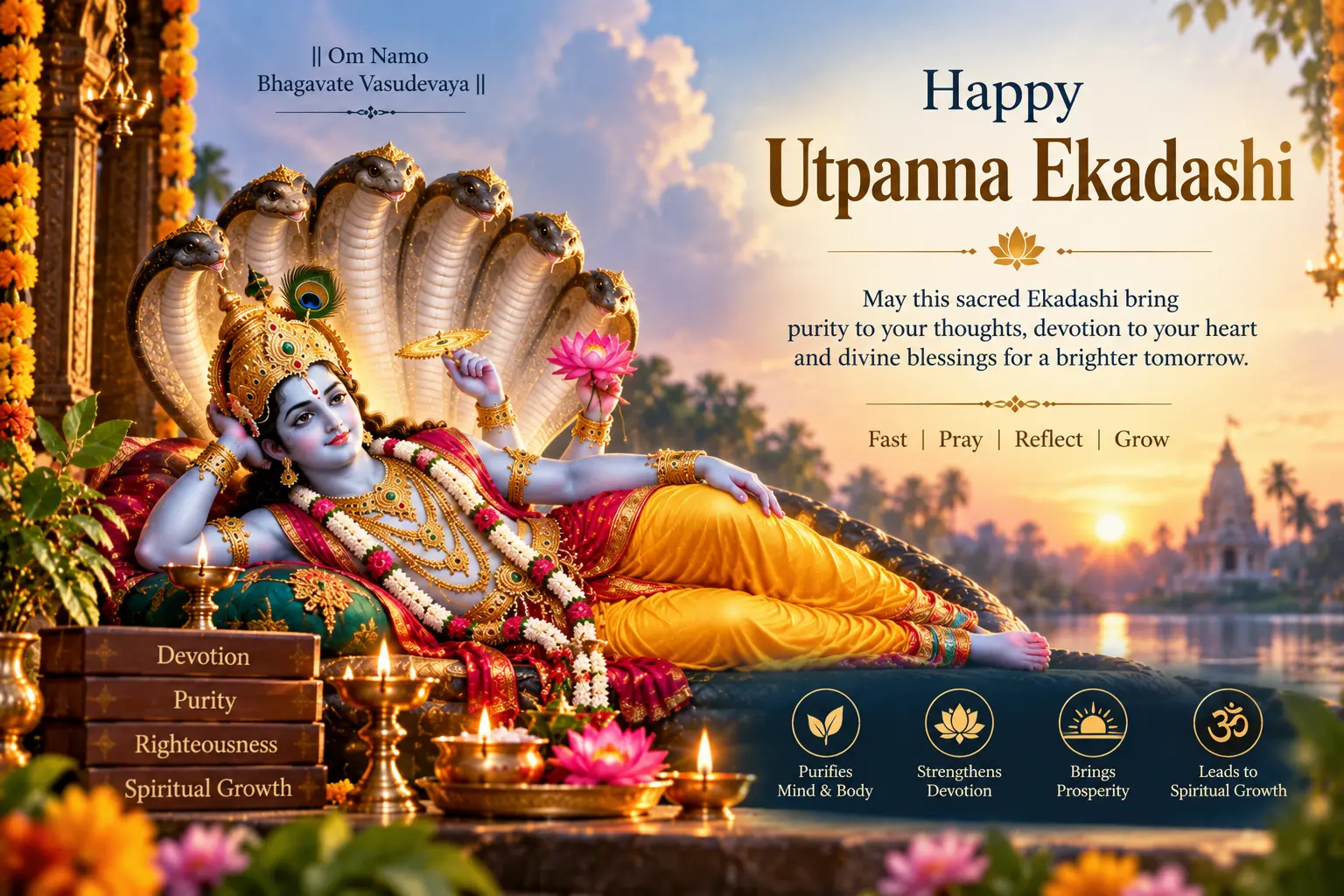
Utpanna Ekadashi
Utpanna Ekadashi, observed with supreme scriptural reverence, incandescent devotion, and profound spiritual joy across India, is the radiant advent anniversary (Utpatti / Jayanti) of Goddess Ekadashi herself—the divine, four-armed celestial maiden who personifies the transcendental fasting power and spiritual potency of the Supreme Preserver, Lord Sri Maha Vishnu. Occurring on the Krishna Paksha Ekadashi (the eleventh lunar day of the waning moon) in the sacred month of Margashirsha (or Kartika in the Purnimanta lunar calendar prevalent across northern India), this foundational tithi marks the divine origin and fountainhead of all twenty-four (and in leap years, twenty-six) Ekadashis of the Hindu liturgical year. It is celebrated as the mother of all Ekadashi vows, the spiritual bridge that initiates the annual cycle of Ekadashi fasting, and the supreme tithi wherein the observance of Ekadashi was forever consecrated as the most direct royal pathway to the transcendental abode of Vaikuntha.
Vivah Panchami
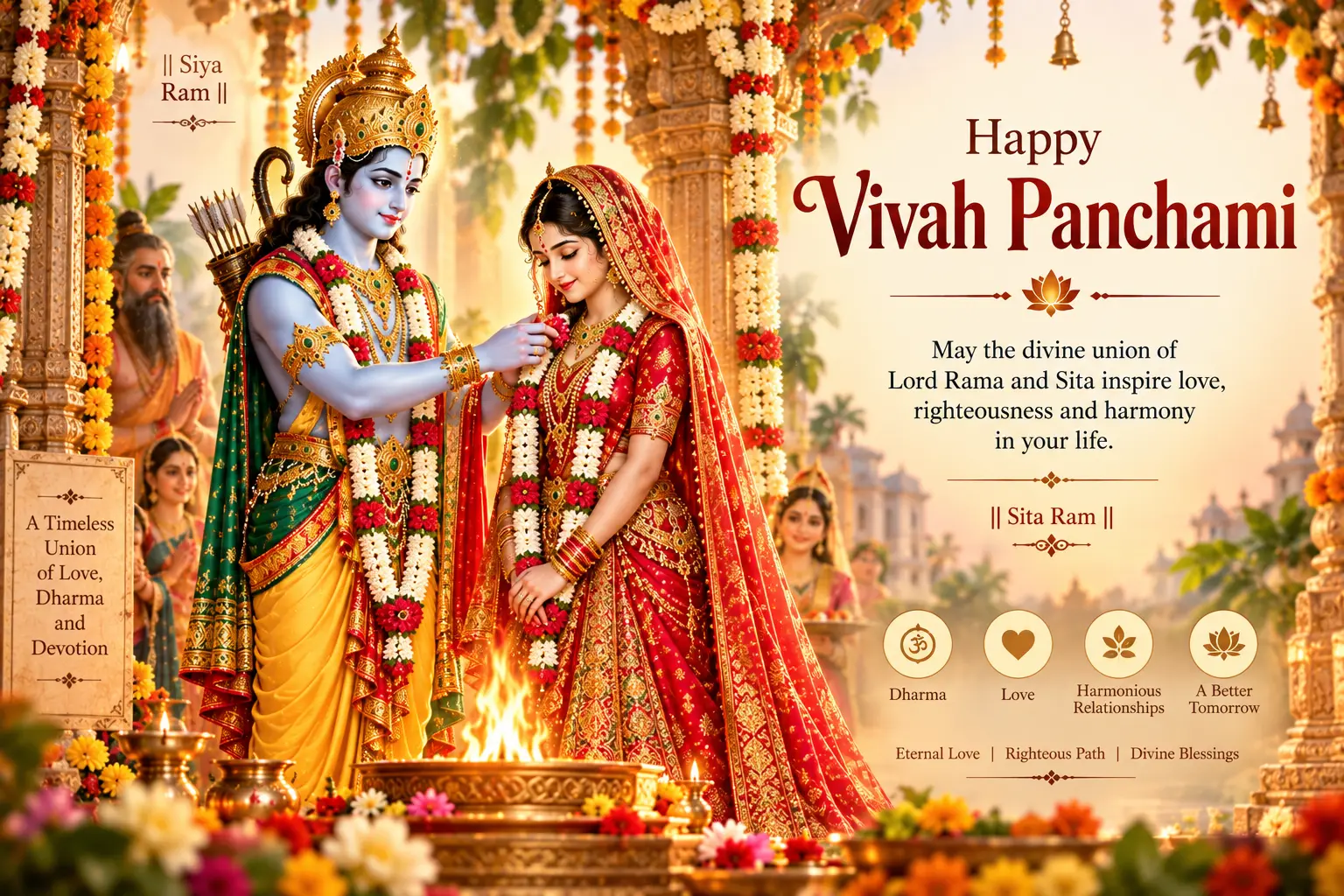
Vivah Panchami, observed with supreme aesthetic elegance, devotional ecstasy, and epic scriptural splendor across the Indian subcontinent and Nepal, is the sacred wedding anniversary of Lord Sri Rama—the Maryada Purushottama and seventh transcendental incarnation of Lord Sri Maha Vishnu—and Goddess Sita, the beloved daughter of King Janaka and the earthly manifestation of Goddess Mahalakshmi. Occurring on the Shukla Paksha Panchami (the fifth lunar day of the waxing moon) in the holy winter month of Margashirsha (Agrahayana), this enchanting festival commemorates the divine nuptial union (Vivaha Samskara) solemnized in the ancient capital of Mithila (modern-day Janakpurdham). Across thousands of temples and domestic shrines, this auspicious tithi is celebrated as the cosmic benchmark of righteous matrimony, spiritual partnership, and unconditional fidelity, reuniting the hearts of devotees with the timeless ideals of the Valmiki Ramayana and the Ramcharitmanas.
Dhanu Sankranti
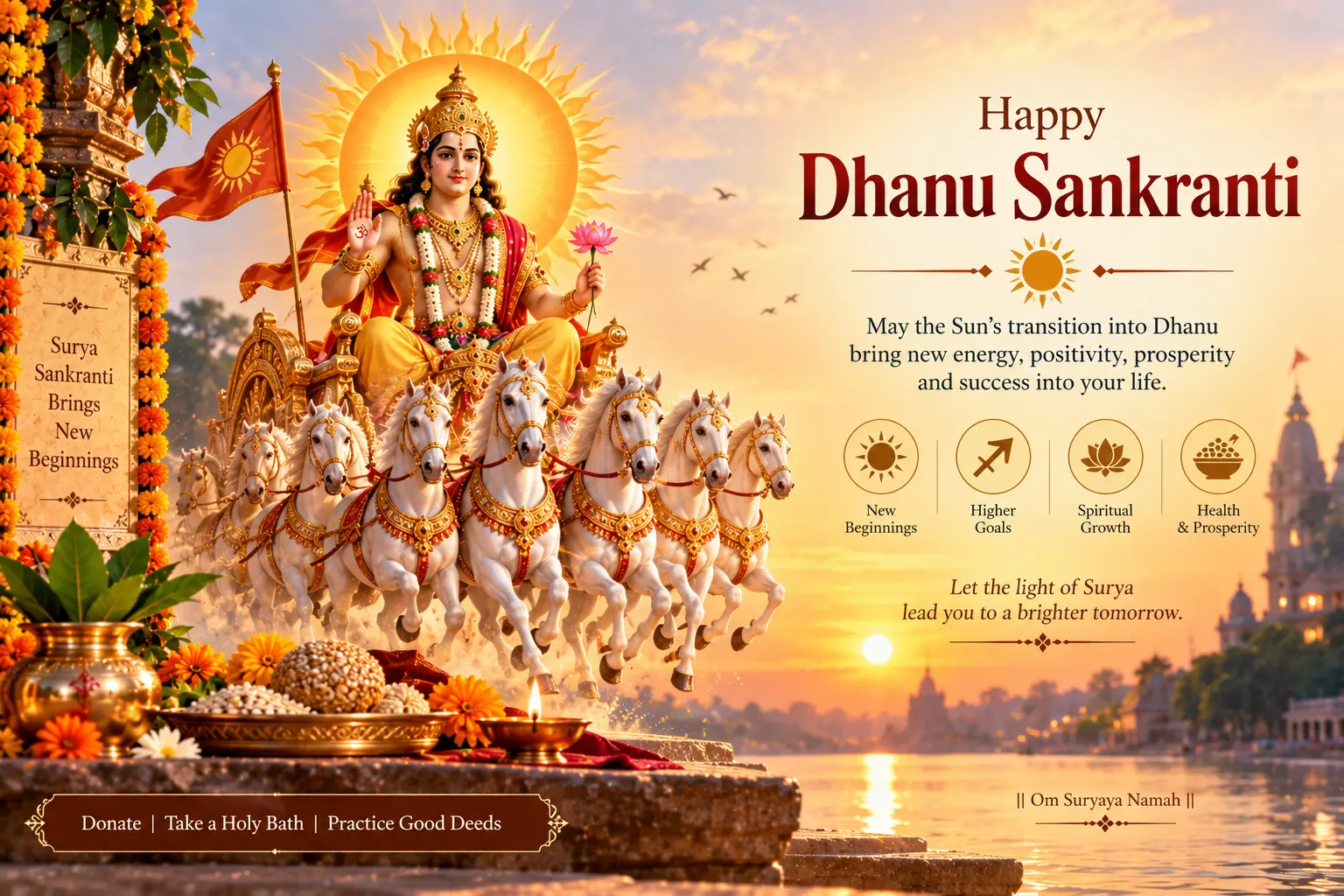
Dhanu Sankranti, observed with profound astrological, agricultural, and devotional significance across the Indian subcontinent, marks the momentous astronomical ingress (Sankramana) of Lord Surya—the divine Sun God—from the water sign of Vrishchika (Scorpio) into the fiery, sattvic zodiac sign of Dhanu (Sagittarius), ruled by the celestial preceptor Guru (Jupiter). Occurring in the sacred month of Margashirsha or early Pausha (mid-December), this celestial transition marks the beginning of the solar month of Dhanu Masa and initiates the celebrated period known as Kharmas or Malmas across northern and eastern India. Revering the life-giving solar luminary as the visible eye of the Supreme Cosmic Being (Pratyaksha Devata), Dhanu Sankranti is dedicated to purifying the mind and body through sacred river snanam, Surya arghya, charitable donations, and intense scriptural study before the sun turns northward during Makar Sankranti.
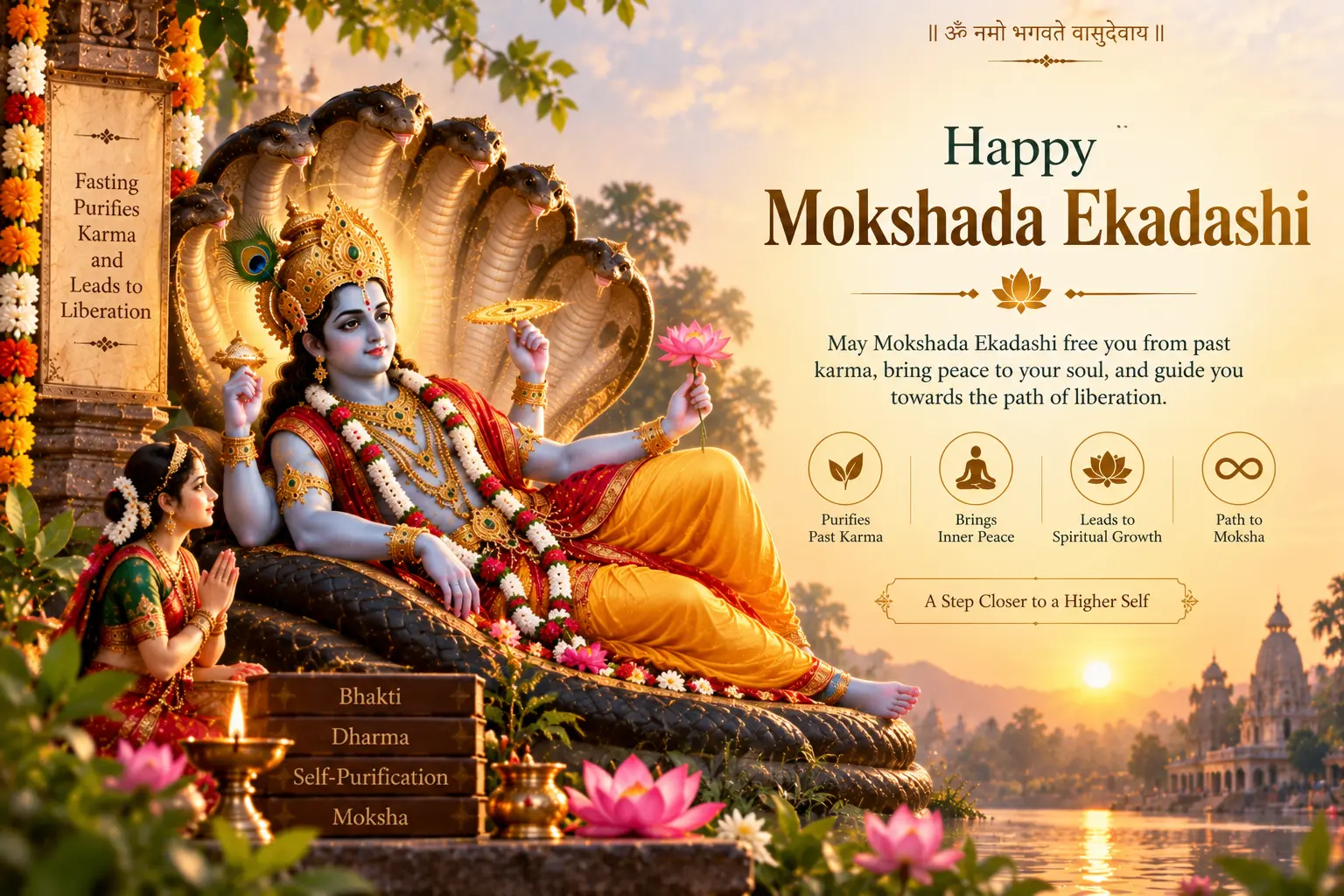
Mokshada Ekadashi
Mokshada Ekadashi, observed on the Shukla Paksha Ekadashi (the eleventh lunar day of the waxing moon) in the sacred winter month of Margashirsha (Agrahayana), is one of the most spiritually venerated and soteriologically potent fasting days in Sanatana Dharma. As its Sanskrit name unequivocally proclaims—'Mokshada', meaning 'the bestower of ultimate liberation (Moksha)'—this holy vrata possesses the extraordinary capacity to dissolve mountains of accumulated karmic transgressions, deliver departed ancestral souls from torment in lower realms (Naraka), and grant unalloyed devotion to Lord Sri Damodara-Krishna. Celebrated with intense ascetic discipline, scriptural recitation, and uninterrupted contemplation across India and Nepal, Mokshada Ekadashi holds supreme significance in both Smarta and Vaishnava traditions as an unshakeable bridge from the ocean of mortal sorrow to the eternal tranquility of Vaikuntha.
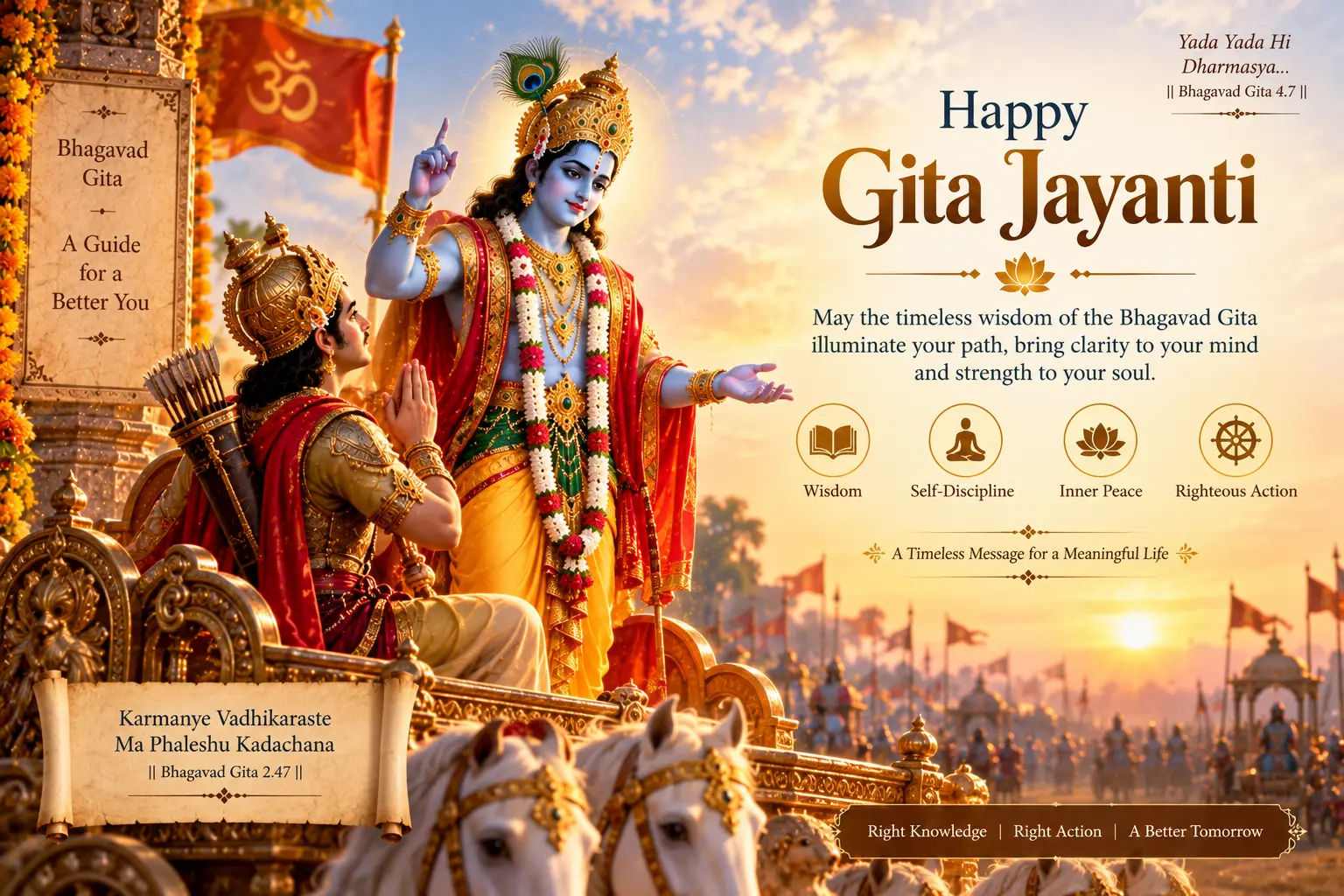
Gita Jayanti
Gita Jayanti is one of the most intellectually revered and spiritually profound festivals in Sanatana Dharma, celebrating the historic revelation of the Srimad Bhagavad Gita—the timeless song of the Supreme Personality of Godhead, Bhagavan Sri Krishna. Occurring on the auspicious Ekadashi tithi of Shukla Paksha in the holy winter month of Margashirsha (November–December), this sacred observance marks the hallowed occasion at Jyotisar in the ancient land of Kurukshetra where Sri Krishna imparted seven hundred verses of supreme spiritual wisdom to His bewildered friend and disciple, the Pandava prince Arjuna. Unlike conventional Hindu festivals that commemorate the earthly birthday or cosmic descent of deities, Gita Jayanti holds the unique distinction of celebrating the birth of a living philosophical scripture—a scripture that serves as the definitive manual for human existence, duty, self-realization, and devotion across all ages.
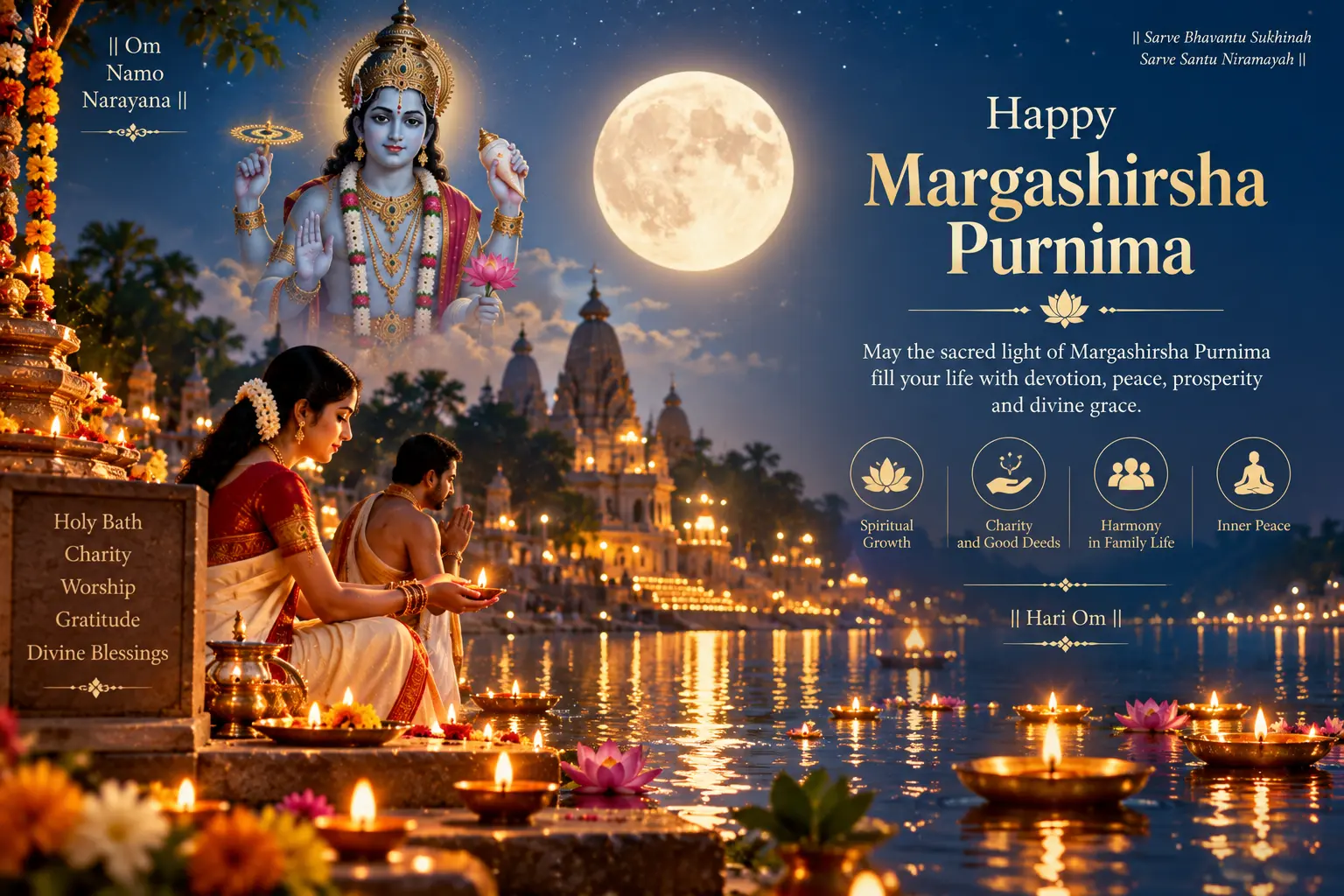
Margashirsha Purnima
Margashirsha Purnima, celebrated on the full moon day of the sacred month of Margashirsha (Agrahayana), is one of the most spiritually illuminating and astrologically auspicious full moon festivals in Sanatana Dharma. Occurring when the full moon shines in the constellation of Mrigashirsha (the celestial deer's head ruled by the planet Mars and presided over by Soma, the Moon God), this holy tithi marks the supreme spiritual culmination of the month that Lord Sri Krishna Himself declared to be His own transcendental self in the Bhagavad Gita ('Masanang Margashirsho'ham'). Popularly known in various regional cultures as Battisi Purnima, Moksha Purnima, and Korvai Deepam, this sacred day unites the worship of Lord Sri Satyanarayan, the divine advent of Lord Dattatreya, the celestial Cosmic Dance of Lord Nataraja (Arudra Darshan), and ancient river-bathing rites.
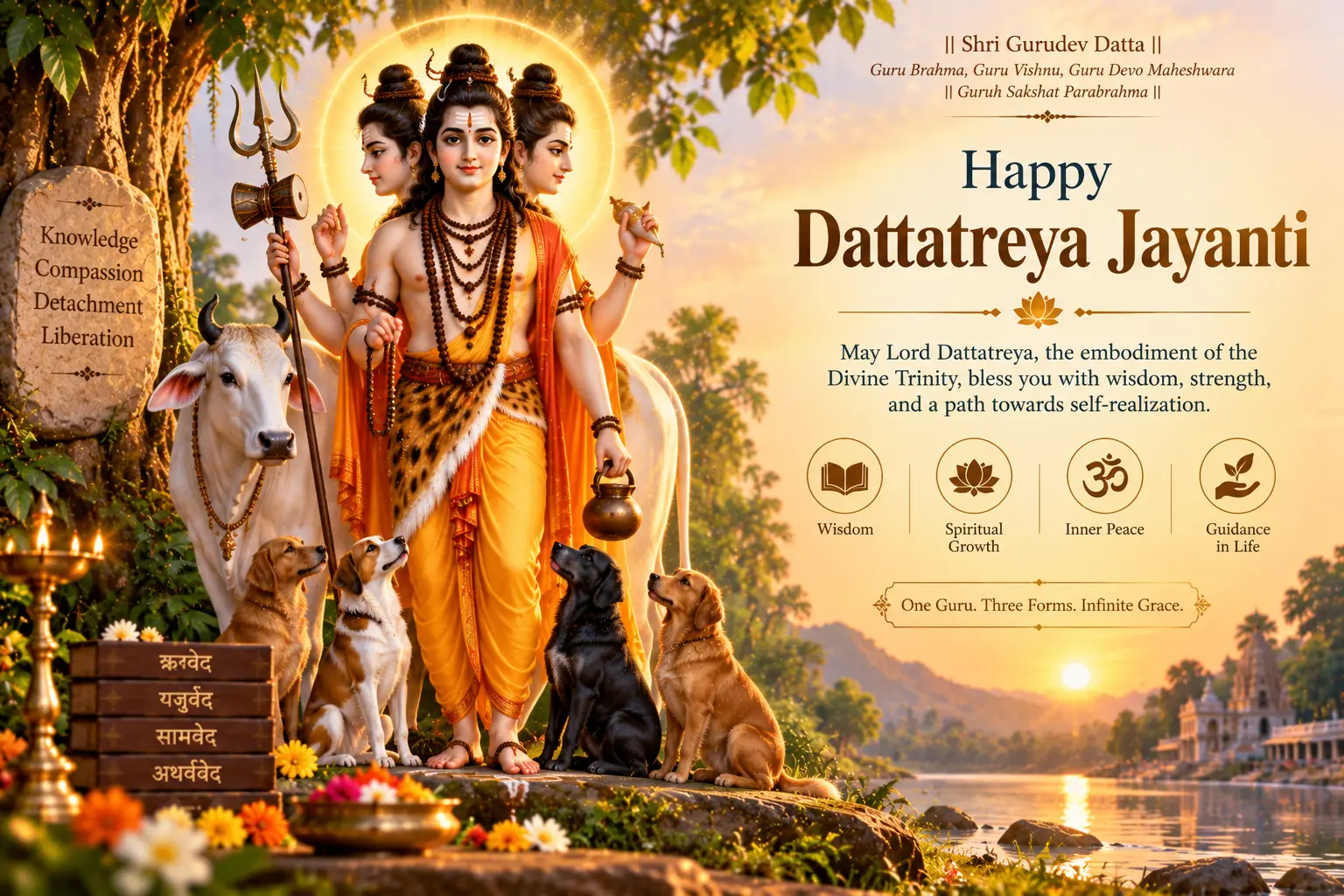
Dattatreya Jayanti
Dattatreya Jayanti, observed with profound esoteric reverence, ascetic contemplation, and devotional splendor across India, celebrates the auspicious divine advent of Lord Sri Dattatreya—the unified, primordial incarnation of the Hindu Supreme Trinity (Brahma, Vishnu, and Shiva). Occurring on the full moon day (Purnima tithi) of the sacred month of Margashirsha (November–December) under the radiant celestial influence of the Mrigashirsha nakshatra, this sacred festival commemorates the transcendental moment when the supreme archetypes of Creation (Brahma), Preservation (Vishnu), and Dissolution (Shiva) merged harmoniously into a singular transcendental form. Revering Dattatreya as the Adi Guru (the Primordial World Teacher), the Avadhuta of supreme renunciation, and the lord of all yogic wisdom, seekers celebrate this holy day to awaken inner discrimination, transcend the duality of earthly existence, and attain direct spiritual illumination.
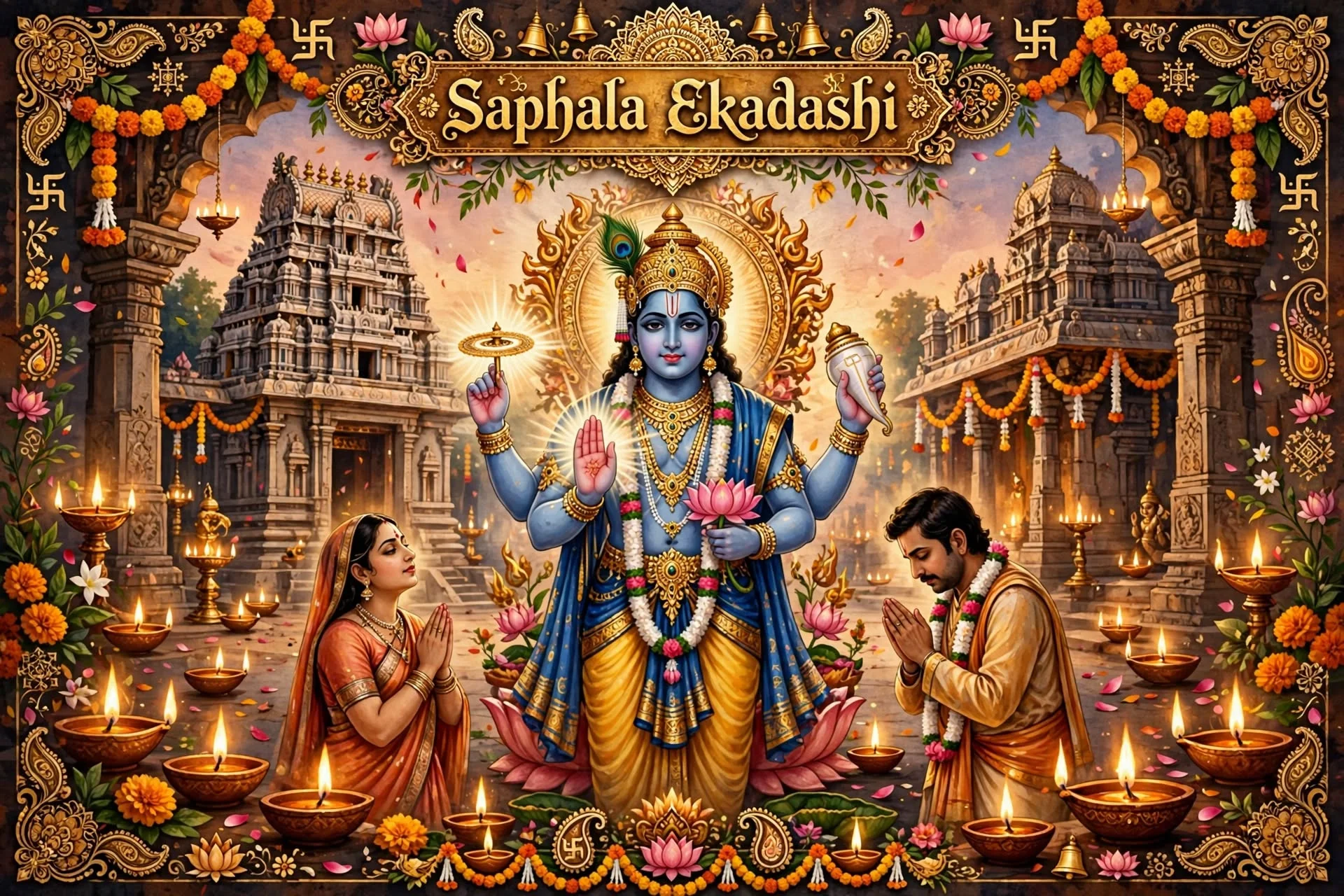
Saphala Ekadashi Vrat
Saphala Ekadashi, also known as Safala Ekadashi, is an important Hindu fasting day dedicated to Lord Vishnu. It is observed on the Ekadashi Tithi of Krishna Paksha in the month of Pausha according to the Purnimanta calendar. In the Amanta calendar, it falls in the Krishna Paksha of Margashirsha.