




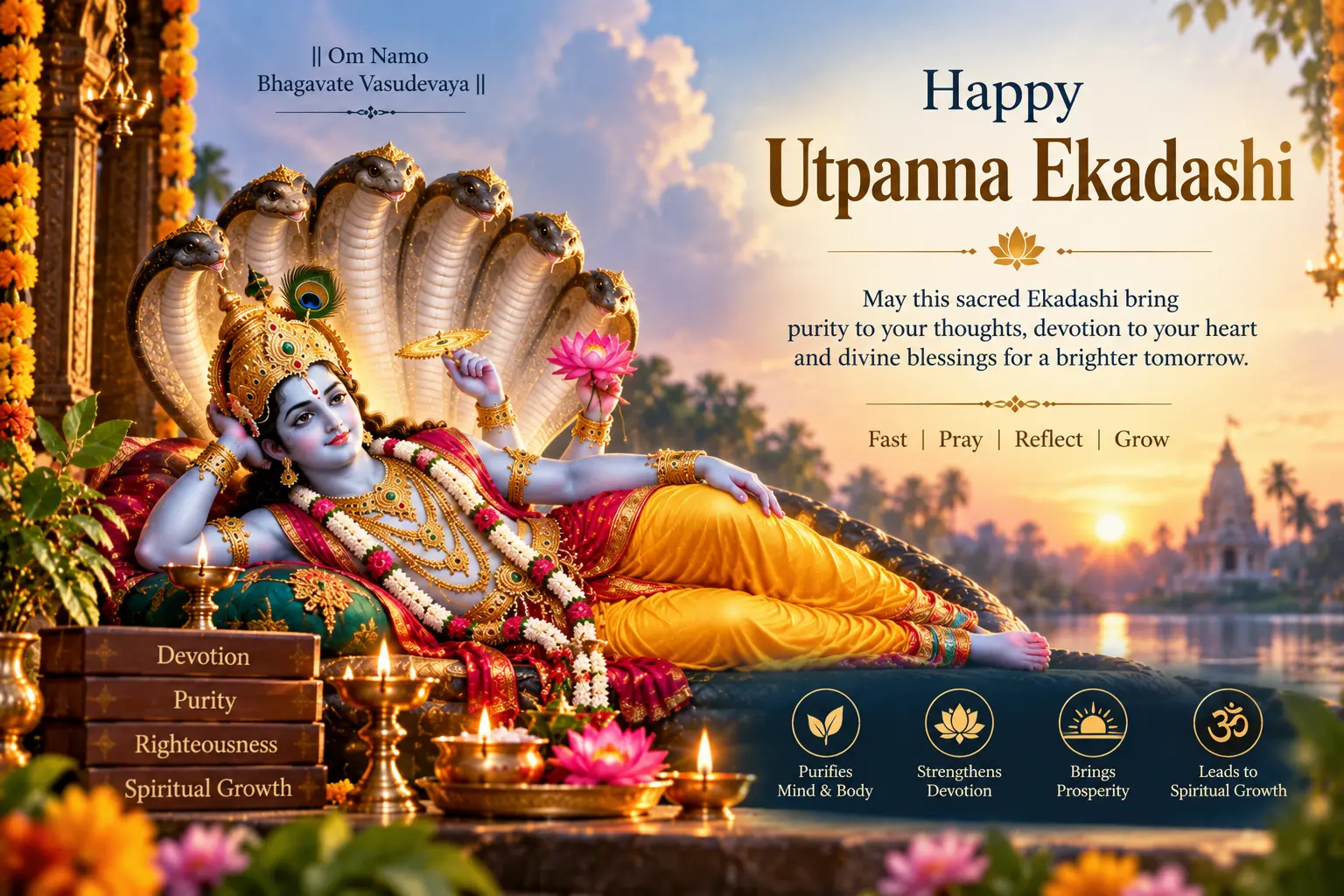
Utpanna Ekadashi, observed with supreme scriptural reverence, incandescent devotion, and profound spiritual joy across India, is the radiant advent anniversary (Utpatti / Jayanti) of Goddess Ekadashi herself—the divine, four-armed celestial maiden who personifies the transcendental fasting power and spiritual potency of the Supreme Preserver, Lord Sri Maha Vishnu. Occurring on the Krishna Paksha Ekadashi (the eleventh lunar day of the waning moon) in the sacred month of Margashirsha (or Kartika in the Purnimanta lunar calendar prevalent across northern India), this foundational tithi marks the divine origin and fountainhead of all twenty-four (and in leap years, twenty-six) Ekadashis of the Hindu liturgical year. It is celebrated as the mother of all Ekadashi vows, the spiritual bridge that initiates the annual cycle of Ekadashi fasting, and the supreme tithi wherein the observance of Ekadashi was forever consecrated as the most direct royal pathway to the transcendental abode of Vaikuntha.
Utpanna Ekadashi 2026: Date, Puja Timings, Rituals & Stories
Utpanna Ekadashi Timings & Panchang
Important festival dates and auspicious timings
06:36 am
05:33 pm
Thursday, 5 Nov 2026
11:03 am – 10:35 am
Utpanna Ekadashi
The divine scriptural origin and metaphysical glories of Utpanna Ekadashi are chronicled in glorious detail within the Padma Purana (Uttara Khanda), the Skanda Purana, and the Narada Purana. In an immortal dialogue between Lord Sri Krishna and King Yudhishthira following the Kurukshetra war, King Yudhishthira inquired with folded hands: 'O Janardana! What is the origin of this sacred day called Ekadashi? Who created this tithi, which devas are pleased by its observance, and what is the specific spiritual fruit attained by those who fast on this day?' Lord Sri Krishna smiled with boundless compassion and revealed the awe-inspiring narrative of the ancient Satya Yuga, when a terrifying demon emperor named Mura—the son of Nadijangha—terrorized the three worlds, vanquished Lord Indra, drove the thirty-three crore devas from the heavenly realms of Amaravati, and established his tyrannical dominion over the universe.
Unable to bear the demon's reign of terror, the devas gathered at the lotus feet of Lord Sri Maha Vishnu on the shores of the Milk Ocean. Lord Vishnu mounted His celestial eagle Garuda and waged a ferocious war against Mura's demonic armies that raged for thousands of divine years. When all of Mura's generals were slain, Lord Vishnu engaged the demon king in prolonged personal combat. To demonstrate that the divine victory would be achieved through spiritual potency rather than mere physical force, Lord Vishnu retreated to the sacred Himalayan sanctuary of Badarikashrama and entered a magnificent cave named Himavati (or Hemavati), where the Lord reclined in deep mystic slumber (Yoga Nidra). The arrogant demon Mura followed the Lord into the cave, raising his colossal sword to decapitate the sleeping Lord.
Why is Utpanna Ekadashi Celebrated?
Utpanna Ekadashi is celebrated on Margashirsha Krishna Ekadashi to commemorate the divine appearance (advent) of Goddess Ekadashi from the transcendental body of Lord Sri Maha Vishnu.
According to the Padma Purana, it marks the historic slaying of the invincible demon Mura, who attempted to kill the sleeping Lord Vishnu inside the Himavati cave in Badarikashrama.
It celebrates the origin and fountainhead of all twenty-four Ekadashis of the Hindu calendar, serving as the recommended starting point for seekers undertaking the lifelong Ekadashi vrata.
Devotees observe complete fasting, scriptural study, and all-night vigils to cleanse lifetimes of accumulated sins, attain mental clarity, and secure direct entrance into Vaikuntha.
It honors the supreme spiritual boon granted by Lord Vishnu to Goddess Ekadashi, decreeing that no sacrifice, pilgrimage, or austerity on earth equals the spiritual merit of fasting on Ekadashi.
- Advent of Goddess Ekadashi: Celebrating the birth anniversary of the divine personification of fasting and spiritual austerity.
- Slaying of the Demon Mura: Commemorating the destruction of the tyrannical demon who terrorized the devas and threatened Lord Vishnu.
- Inauguration of the Annual Ekadashi Cycle: Providing the ideal, auspicious starting date for seekers beginning the lifelong Ekadashi vrata.
- Attainment of Vaikuntha Liberation: Reaping the supreme scriptural boon that fasting on this day guarantees freedom from the cycle of rebirth.
- Purification of Past Karmas: Incinerating centuries of deep-seated karmic residues through the observance of strict dietary restraint.
- Awakening of Atma-Shakti: Realizing the inner divine strength of the soul to conquer the internal demons of lust, anger, and delusion.
Scriptural Chronicles: The Dialogue of Krishna and Yudhishthira, the Tyranny of Mura, and the Himavati Cave
The Inquiry of King Yudhishthira on Kurukshetra
The epic history and theological foundation of Utpanna Ekadashi are recorded in the Uttara Khanda of the Padma Purana. Following the conclusion of the monumental Mahabharata war, Emperor Yudhishthira sat at the feet of Lord Sri Krishna, seeking the essence of all dharmic duties. Yudhishthira inquired with deep humility: 'O Janardana! O supreme master of the universe! Please enlighten me: what is the true origin of Ekadashi? Why is this eleventh lunar day celebrated above all other days of the calendar, which deity is worshipped, and what is the divine history of its manifestation?'
Lord Sri Krishna smiled with transcendental warmth and replied: 'O righteous king! Listen attentively to this ancient, sacred history from the golden age of Satya Yuga. The mere hearing of the glories of Utpanna Ekadashi bestows the spiritual merit of performing a thousand horse sacrifices (Ashwamedha Yajna) and donating a hundred thousand cows adorned with gold to noble brahmanas. In ancient eras, the cosmos was threatened by an invincible demon named Mura.'
The Invincible Demon Mura and the Cosmic Crisis
In ancient Satya Yuga, a formidable demon named Mura, born as the son of the demon Nadijangha, established his capital in the subterranean city of Chandravati. Emboldened by severe boons of near-invincibility granted by Lord Brahma, Mura launched a cataclysmic war against the heavenly realms. He defeated the planetary rulers, dethroned Lord Indra, subdued Agni, Varuna, Vayu, and Yama, and assumed sovereign control over the three worlds. The devas were expelled from their celestial palaces and forced to wander the earth in mortal disguise.
Led by Lord Shiva and Lord Indra, the weeping devas sought refuge at the shore of the Milk Ocean (Kshirasagara), where Lord Sri Maha Vishnu reclined upon Ananta Shesha. Indra fell at the Lord's feet, crying: 'O Lord of the Universe! The demon Mura has conquered the three worlds, desecrated all Vedic sacrifices, and driven the devas into hiding! Save us, O Madhava, from this terrifying destruction!' Lord Vishnu's eyes flared with divine righteousness. Mounting Garuda, the Supreme Lord launched an immediate counter-offensive against Mura's strongholds.
Metaphysical Wisdom: The Inner Himavati Cave, the Slaying of Mohasura, and the Power of Atma-Shakti
The Esoteric Symbolism of the Demon Mura (Mohasura)
In the profound spiritual allegories of the Puranas, the external battle between Lord Vishnu and the demon Mura represents the perpetual internal struggle between spiritual awareness and worldly delusion within the human mind. The name 'Mura' derives from the Sanskrit root signifying delusion, stupor, and attachment (Moha). Mura is the personification of worldly ignorance—the false identification with the mortal physical body and the insatiable craving for sensory gratification.
The demon Mura cannot be defeated through external intellectual arguments or physical strength alone; just as Lord Vishnu's weapons could not pierce Mura's armor, mere book learning cannot eradicate deep-seated egoism. It is only when the human seeker retreats into the inner sanctuary of the spiritual heart—the 'Himavati cave' of quiet introspection and meditation—that the divine power of the soul awakens to dissolve the illusion.
The Awakening of Atma-Shakti: The Maiden Within
Goddess Ekadashi, manifesting from the transcendental limbs of the sleeping Lord Vishnu, represents the awakening of Atma-Shakti—the inherent spiritual power of the Divine indwelling every human being. When Lord Vishnu enters Yoga Nidra, it symbolizes the withdrawal of the senses from external worldly objects into the tranquil, undisturbed depth of the Self.
From that state of meditative stillness emerges the pure, unblemished feminine energy of devotion, discipline, and discernment. Goddess Ekadashi is four-armed because she wields the four supreme virtues: Satya (truthfulness), Tapas (austerity), Shaucha (purity), and Daya (compassion). With the discus of sharp discernment (Viveka), she severs the head of the ego, liberating the soul from worldly bondage.
The Science of Fasting (Upavasa): Dwelling Near the Divine
The Sanskrit term for fasting, 'Upavasa', literally translates to 'dwelling close to the Divine' (Upa = near, Vasa = to reside). Fasting on Ekadashi is not a punitive starvation of the physical body, but a conscious redirection of vital energy away from digestive processing toward spiritual contemplation and cellular regeneration.
Ritual Protocols: Dashami Preparation, Ekadashi Fasting, and Dwadashi Parana
The Dashami Preparations and Purificatory Vow
The observance of Utpanna Ekadashi begins on the preceding day, Dashami (the tenth lunar day). On Dashami, the devotee consumes only a single, simple satvic vegetarian meal before sunset, strictly avoiding grains, beans, onions, garlic, heavy spices, and non-vegetarian food. The devotee rinses the mouth thoroughly after the meal, practices celibacy (Brahmacharya), and sleeps on a clean mat on the floor, entering into a prayerful state of mind.
On the morning of Ekadashi, the devotee rises during Brahma Muhurta (around 4:30 AM), cleanses the residence, and takes a purifying bath in a sacred river or with clean water infused with holy Ganga Jal and sesame seeds. Wearing clean yellow garments, the devotee stands before the domestic altar, holds holy water, unbroken rice, and flowers in the right palm, and solemnly recites the Ekadashi Vrata Sankalpa, dedicating the day's fasting entirely to Lord Sri Maha Vishnu.
The Shodashopachara Worship and Recitation of the Mahatmya
The domestic worship of Lord Vishnu and Goddess Ekadashi is conducted with elaborate Shodashopachara rites. The sacred Shaligram stone or idol of Lord Vishnu is placed upon a wooden chowki draped in yellow silk. The devotee lights an unbroken pure cow ghee lamp and fragrant incense, and bathes the deity with Panchamrita followed by holy Ganga water.
The deity is anointed with fragrant yellow sandalwood paste, adorned with fresh yellow marigold garlands, and offered pristine Tulsi leaves dipped in sandalwood paste. Devotees sit together to read or listen to the sacred Utpanna Ekadashi Mahatmya from the Padma Purana, reciting the thousand names of Vishnu (Sri Vishnu Sahasranama Stotram) and chanting the twelve-syllable mantra 'Om Namo Bhagavate Vasudevaya' on Tulsi rosaries.
The Sacred Night Vigil (Jagran) and Dwadashi Parana
A mandatory scriptural rule of Utpanna Ekadashi is the observance of Jagran—staying awake throughout the night in spiritual contemplation. Sleeping during the daytime on Ekadashi or sleeping through the holy night diminishes the spiritual fruit of the vow. The family maintains an unbroken ghee lamp, singing devotional bhajans, chanting the Hare Krishna Maha Mantra, and reciting the Bhagavad Gita until dawn.
Utpanna Ekadashi Puja Vidhi (Step by Step)
- 1
Pratah Snana and Utpanna Ekadashi Sankalpa
Rise before dawn during Brahma Muhurta. Cleanse the residence and take a purifying bath with water infused with holy Ganga Jal and sesame seeds. Wear clean yellow or white unstitched cotton garments. Facing east, hold holy water, akshata, flowers, and kusha grass in your right hand, reciting the Utpanna Ekadashi Sankalpa: 'Om Namo Bhagavate Vasudevaya! On this sacred Margashirsha Krishna Ekadashi, to honor the advent of Goddess Ekadashi and please Lord Janardana, I resolve to observe complete fasting, scriptural study, and all-night vigil.'
- 2
Altar Consecration and Kalasha Sthapana
Clean the puja altar and spread a clean yellow silk cloth over a wooden platform (chowki). Establish a sacred copper or brass Kalasha filled with pure water, mango leaves, betel nut, a silver coin, and crowned with a thread-wrapped coconut. Invoke the seven sacred rivers into the water.
- 3
Deepa Prajvalana and Ganesha Dhyana
Light an unbroken multi-wick cow ghee lamp and fragrant dhoop sticks before the altar. Offer red vermilion, fresh durva grass, and sweets to Lord Vignaharta Ganesha to remove all impediments from the sacred vrata.
- 4
Avahana and Asana of Lord Vishnu and Goddess Ekadashi
Meditate upon the four-armed transcendental form of Lord Sri Maha Vishnu holding the conch, discus, mace, and lotus, alongside the effulgent four-armed Goddess Ekadashi. Invoke their living presence into the Shaligram stone or deity vigraha chanting 'Om Namo Bhagavate Vasudevaya'.
Utpanna Ekadashi Puja Samagri List
Altar Consecration & Deity Essentials
- Sacred Sri Shaligram stone or brass/silver idol of Lord Sri Maha Vishnu and Goddess Mahalakshmi
- Wooden chowki (altar platform) and clean yellow silk altar cloth
- Pure copper or brass Kalasha, mango leaf bunch, coconut wrapped in red thread, and betel nut
- Unbroken sacred white rice grains (Akshata) and sacred white cotton thread (Yajnopavita)
- Brass bell (ghanti), ceremonial conch shell (shankha), and aarti thali
Abhishekam Liquids & Sacred Pastes
- Panchamrita ingredients: raw cow milk, fresh curd, pure cow ghee, forest honey, and sugar candy
- Pure holy Ganga water and natural fragrant rose water in a spouted abhishekam vessel
- Pure Malayagiri yellow sandalwood paste, white sandalwood paste, and Kashmiri saffron
- Pure red kumkum and kasturi for applying sacred tilak on the deity
- Pure camphor tablets (Karpura) and natural fragrant guggulu/sambrani dhoop sticks
Sacred Foliage, Tulsi Leaves & Floral Offerings
- Fresh, unblemished sacred Tulsi leaves and Tulsi blossom spikes (manjaris) gathered respectfully prior to Ekadashi
- Fragrant yellow marigold garlands, white jasmine blossoms, and fresh lotus blossoms
Mantras and Prayers for Utpanna Ekadashi
Utpanna Ekadashi Vrat Rules and Fasting Guidelines
Fasting Discipline and Complete Grain Abstinence
The fundamental scriptural rule of Utpanna Ekadashi is the absolute avoidance of all grains, rice, wheat, pulses, barley, corn, lentils, beans, onions, garlic, mustard oil, and non-vegetarian food. Puranas declare that on Ekadashi tithis, negative karmic energies (Papa Purusha) dwell within food grains. Devotees strive to observe a Nirjala fast (without water) or consume only water and fresh seasonal fruits (Phalahari) in the afternoon. The fast begins on Dashami evening and concludes on Dwadashi morning.
Sensory Restraint, Truthfulness, and Mental Equanimity
The essence of Ekadashi fasting lies in elevating consciousness beyond physical hunger through rigorous mental and sensual discipline. Devotees observe strict truthfulness (Satya), non-violence (Ahimsa), emotional equanimity (Kshama), and celibacy (Brahmacharya) throughout the day. Gossip, slander, loud arguments, anger, commercial deceit, and mundane entertainment must be completely shunned, consecrating the mind to scripture reading and meditation.
The Mandatory Night Vigil (Akhanda Jagran)
A paramount injunction of Utpanna Ekadashi is the observance of Jagran—staying awake throughout the entire night in the presence of the home altar. Sleeping during the daytime on Ekadashi or sleeping through the holy night diminishes the spiritual fruit of the vow. Devotees illuminate an unbroken cow ghee lamp that burns continuously through the night, singing devotional bhajans, chanting the Hare Krishna Maha Mantra, and reciting the glories of Lord Vishnu until sunrise.
Strict Adherence to Dwadashi Parana Timing
The fast must be broken on Dwadashi morning strictly within the prescribed astronomical window (Parana Muhurta), taking care to avoid the concluding quarter of Ekadashi known as Harivasara. Breaking the fast either before sunrise or after the expiry of Dwadashi tithi nullifies the spiritual fruit of the vow. The devotee must first bathe at dawn, perform morning deity worship, offer green grass to a cow, donate grains and dakshina to deserving persons, and then break the fast by consuming charanamrita and satvic prasada.
Dos and Don'ts of Utpanna Ekadashi
Good Practices (Do's)
- Wake up during Brahma Muhurta and take a purificatory bath with holy Ganga water and sesame seeds.
- Observe strict fasting (Nirjala, Sajala, or Phalahari) avoiding all grains, pulses, onions, and garlic.
- Reverently offer fresh unblemished Tulsi leaves dipped in sandalwood paste to Lord Vishnu.
- Read or listen to the sacred Utpanna Ekadashi Mahatmya from the Padma Purana with family members.
- Observe the all-night spiritual vigil (Jagran), singing devotional kirtans and chanting Vishnu mantras.
Utpanna Ekadashi Across Regions
| Region | Local Name |
|---|---|
| North and Central India (Uttar Pradesh, Bihar, Madhya Pradesh, Rajasthan) | Utpanna Ekadashi / Ekadashi Utpatti Vrat |
| Gujarat and Saurashtra | Utpanna Agiyaras |
| Maharashtra (Pandharpur & Alandi) | Utpanna Ekadashi / Vitthala Vrata |
| South India (Tamil Nadu, Karnataka, Andhra Pradesh) | Utpanna Ekadashi / Vaikuntha Ekadashi Prelude |
| Odisha and Bengal (Puri Dham & Gaudiya Shrines) | Utpanna Ekadashi / Mahaprasad Vrata |
Utpanna Ekadashi FAQs
What is Utpanna Ekadashi and why is it considered the mother of all Ekadashis?
Utpanna Ekadashi marks the divine advent (birth anniversary) of Goddess Ekadashi from the transcendental body of Lord Sri Maha Vishnu. It is considered the mother of all Ekadashis because it originated the annual cycle of Ekadashi fasting and is the ideal starting point for lifelong vows.
Who was the demon Mura and why did Goddess Ekadashi slay him?
Mura was a powerful demon king who conquered the three worlds and attempted to slay the sleeping Lord Vishnu inside the Himavati cave in Badarikashrama. Goddess Ekadashi manifested from Vishnu's body and severed Mura's head to protect the Lord and restore cosmic Dharma.
Why are grains and rice strictly forbidden on Ekadashi?
Puranas state that on Ekadashi, negative karmic residues (Papa Purusha) dwell within food grains. Consuming grains on Ekadashi absorbs these negative karmas, whereas abstaining from grains purifies the subtle body and awakens spiritual consciousness.
Upcoming Festivals
View All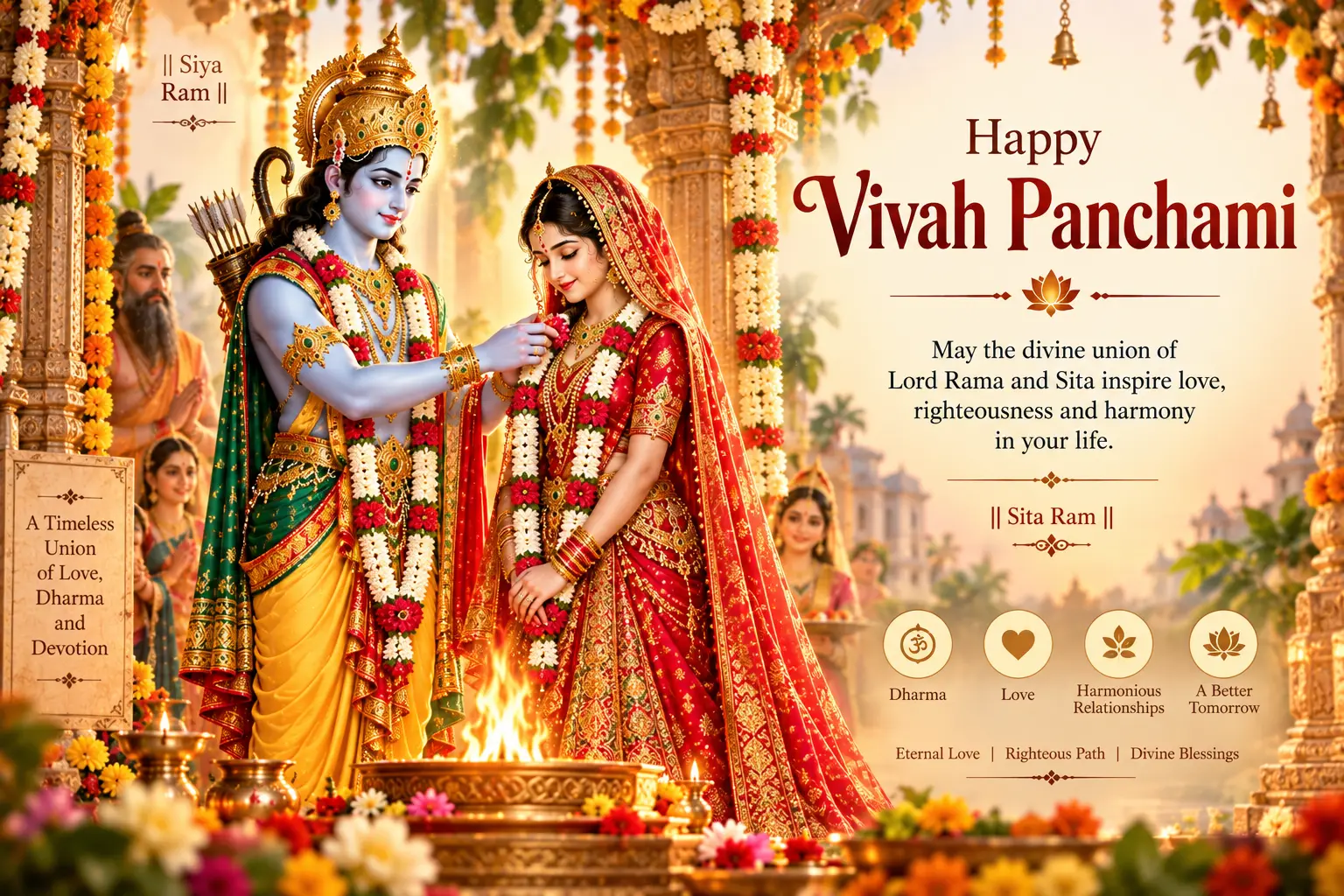
Vivah Panchami
Vivah Panchami, observed with supreme aesthetic elegance, devotional ecstasy, and epic scriptural splendor across the Indian subcontinent and Nepal, is the sacred wedding anniversary of Lord Sri Rama—the Maryada Purushottama and seventh transcendental incarnation of Lord Sri Maha Vishnu—and Goddess Sita, the beloved daughter of King Janaka and the earthly manifestation of Goddess Mahalakshmi. Occurring on the Shukla Paksha Panchami (the fifth lunar day of the waxing moon) in the holy winter month of Margashirsha (Agrahayana), this enchanting festival commemorates the divine nuptial union (Vivaha Samskara) solemnized in the ancient capital of Mithila (modern-day Janakpurdham). Across thousands of temples and domestic shrines, this auspicious tithi is celebrated as the cosmic benchmark of righteous matrimony, spiritual partnership, and unconditional fidelity, reuniting the hearts of devotees with the timeless ideals of the Valmiki Ramayana and the Ramcharitmanas.
Dhanu Sankranti
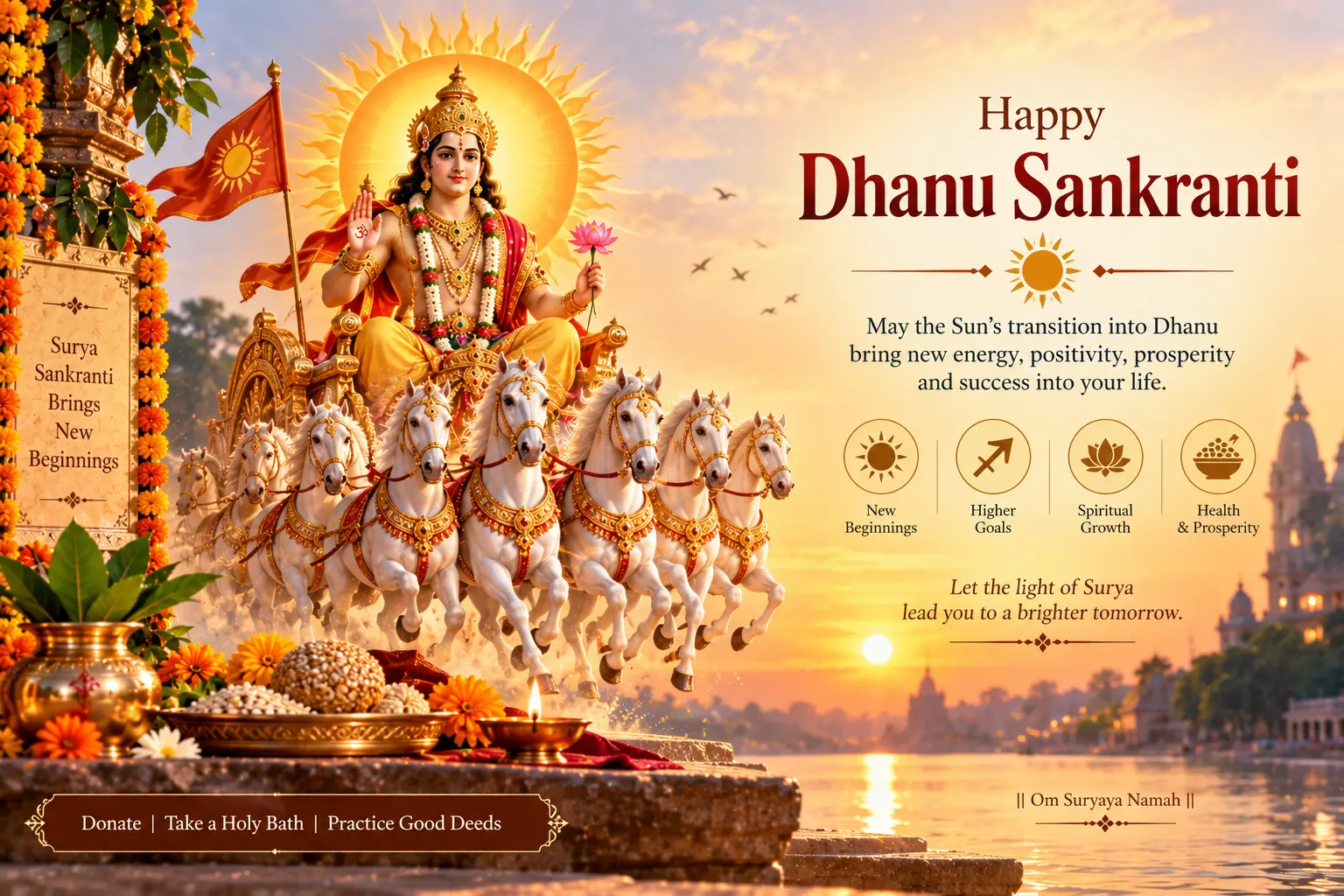
Dhanu Sankranti, observed with profound astrological, agricultural, and devotional significance across the Indian subcontinent, marks the momentous astronomical ingress (Sankramana) of Lord Surya—the divine Sun God—from the water sign of Vrishchika (Scorpio) into the fiery, sattvic zodiac sign of Dhanu (Sagittarius), ruled by the celestial preceptor Guru (Jupiter). Occurring in the sacred month of Margashirsha or early Pausha (mid-December), this celestial transition marks the beginning of the solar month of Dhanu Masa and initiates the celebrated period known as Kharmas or Malmas across northern and eastern India. Revering the life-giving solar luminary as the visible eye of the Supreme Cosmic Being (Pratyaksha Devata), Dhanu Sankranti is dedicated to purifying the mind and body through sacred river snanam, Surya arghya, charitable donations, and intense scriptural study before the sun turns northward during Makar Sankranti.
Mokshada Ekadashi
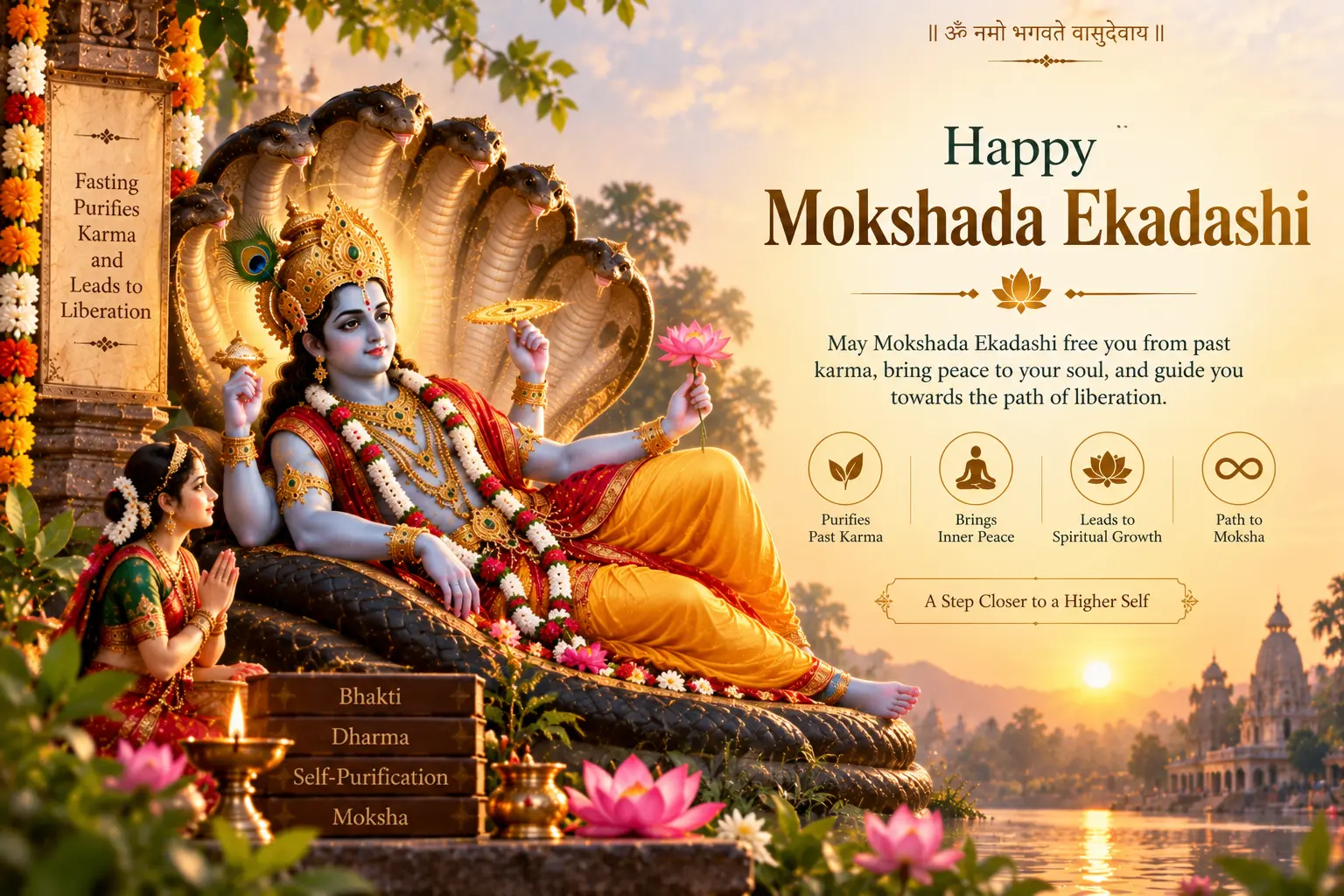
Mokshada Ekadashi, observed on the Shukla Paksha Ekadashi (the eleventh lunar day of the waxing moon) in the sacred winter month of Margashirsha (Agrahayana), is one of the most spiritually venerated and soteriologically potent fasting days in Sanatana Dharma. As its Sanskrit name unequivocally proclaims—'Mokshada', meaning 'the bestower of ultimate liberation (Moksha)'—this holy vrata possesses the extraordinary capacity to dissolve mountains of accumulated karmic transgressions, deliver departed ancestral souls from torment in lower realms (Naraka), and grant unalloyed devotion to Lord Sri Damodara-Krishna. Celebrated with intense ascetic discipline, scriptural recitation, and uninterrupted contemplation across India and Nepal, Mokshada Ekadashi holds supreme significance in both Smarta and Vaishnava traditions as an unshakeable bridge from the ocean of mortal sorrow to the eternal tranquility of Vaikuntha.
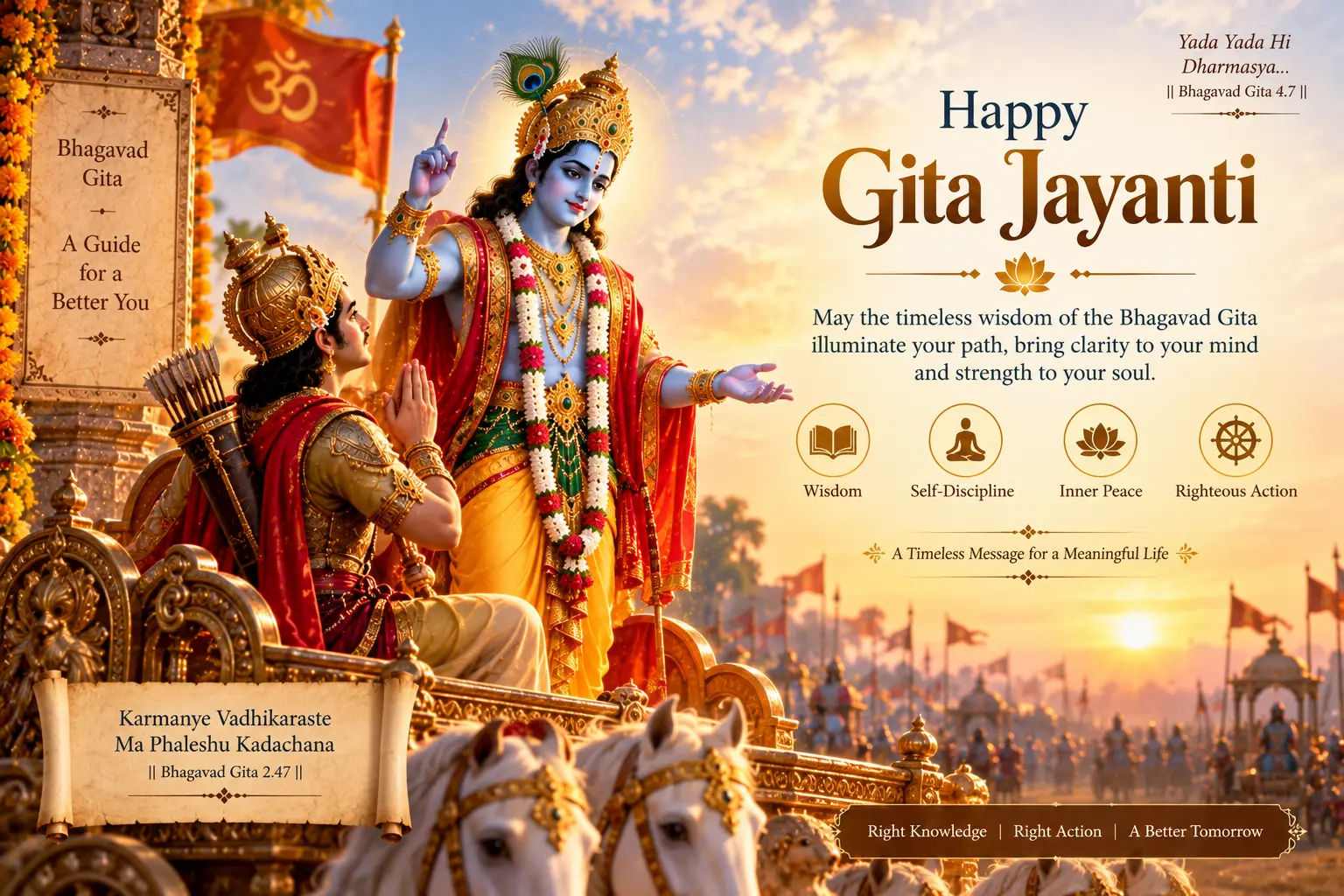
Gita Jayanti
Gita Jayanti is one of the most intellectually revered and spiritually profound festivals in Sanatana Dharma, celebrating the historic revelation of the Srimad Bhagavad Gita—the timeless song of the Supreme Personality of Godhead, Bhagavan Sri Krishna. Occurring on the auspicious Ekadashi tithi of Shukla Paksha in the holy winter month of Margashirsha (November–December), this sacred observance marks the hallowed occasion at Jyotisar in the ancient land of Kurukshetra where Sri Krishna imparted seven hundred verses of supreme spiritual wisdom to His bewildered friend and disciple, the Pandava prince Arjuna. Unlike conventional Hindu festivals that commemorate the earthly birthday or cosmic descent of deities, Gita Jayanti holds the unique distinction of celebrating the birth of a living philosophical scripture—a scripture that serves as the definitive manual for human existence, duty, self-realization, and devotion across all ages.
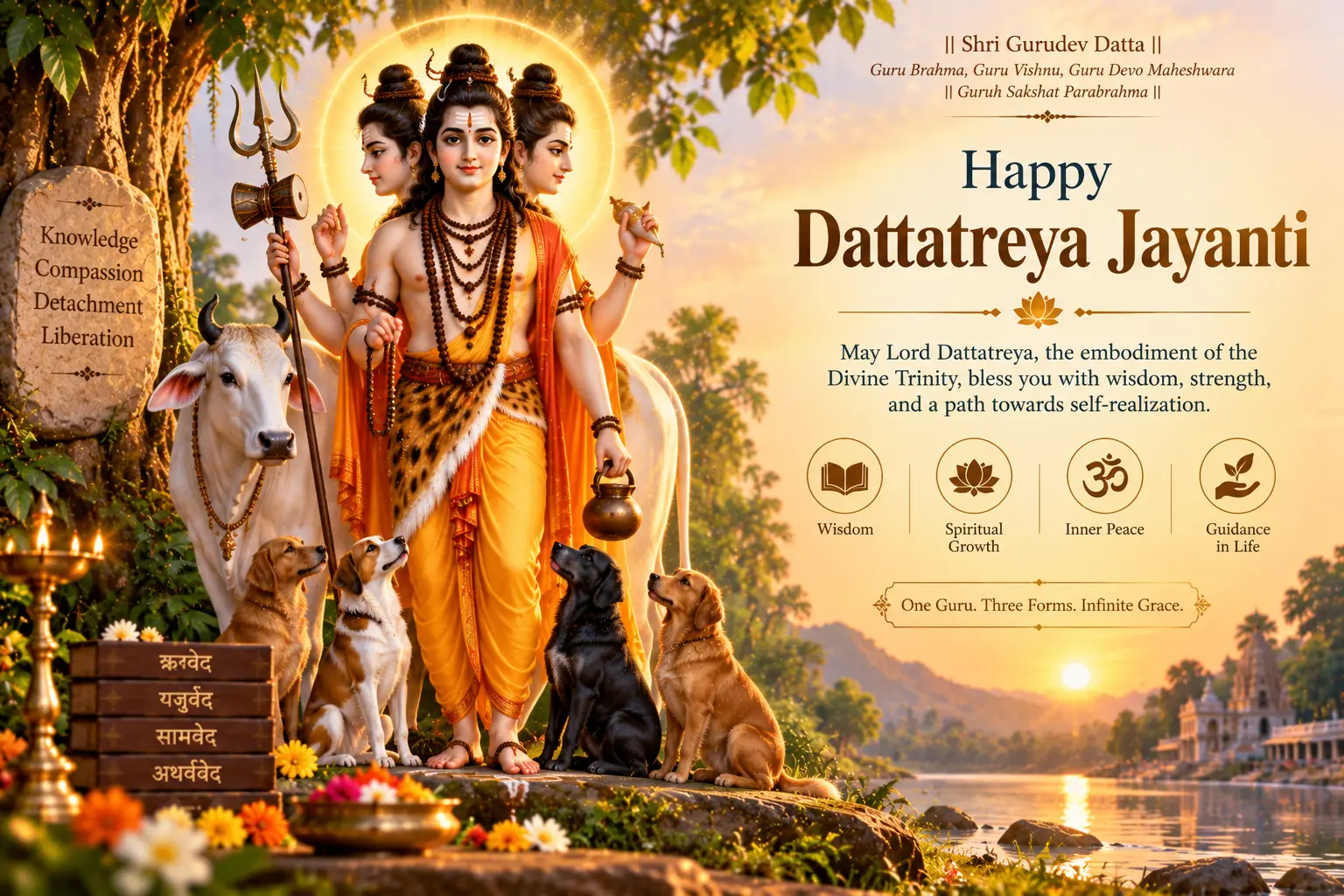
Dattatreya Jayanti
Dattatreya Jayanti, observed with profound esoteric reverence, ascetic contemplation, and devotional splendor across India, celebrates the auspicious divine advent of Lord Sri Dattatreya—the unified, primordial incarnation of the Hindu Supreme Trinity (Brahma, Vishnu, and Shiva). Occurring on the full moon day (Purnima tithi) of the sacred month of Margashirsha (November–December) under the radiant celestial influence of the Mrigashirsha nakshatra, this sacred festival commemorates the transcendental moment when the supreme archetypes of Creation (Brahma), Preservation (Vishnu), and Dissolution (Shiva) merged harmoniously into a singular transcendental form. Revering Dattatreya as the Adi Guru (the Primordial World Teacher), the Avadhuta of supreme renunciation, and the lord of all yogic wisdom, seekers celebrate this holy day to awaken inner discrimination, transcend the duality of earthly existence, and attain direct spiritual illumination.
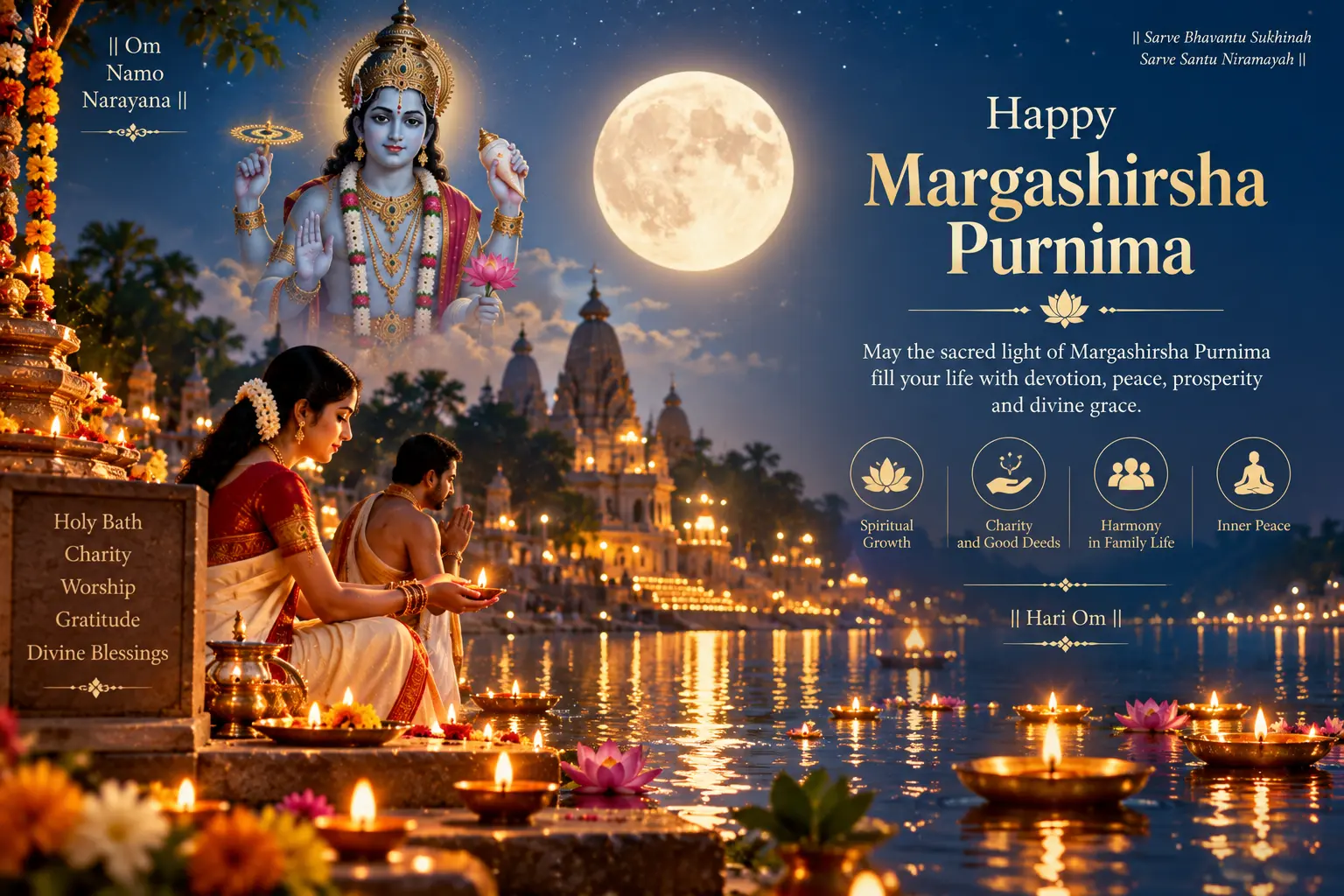
Margashirsha Purnima
Margashirsha Purnima, celebrated on the full moon day of the sacred month of Margashirsha (Agrahayana), is one of the most spiritually illuminating and astrologically auspicious full moon festivals in Sanatana Dharma. Occurring when the full moon shines in the constellation of Mrigashirsha (the celestial deer's head ruled by the planet Mars and presided over by Soma, the Moon God), this holy tithi marks the supreme spiritual culmination of the month that Lord Sri Krishna Himself declared to be His own transcendental self in the Bhagavad Gita ('Masanang Margashirsho'ham'). Popularly known in various regional cultures as Battisi Purnima, Moksha Purnima, and Korvai Deepam, this sacred day unites the worship of Lord Sri Satyanarayan, the divine advent of Lord Dattatreya, the celestial Cosmic Dance of Lord Nataraja (Arudra Darshan), and ancient river-bathing rites.
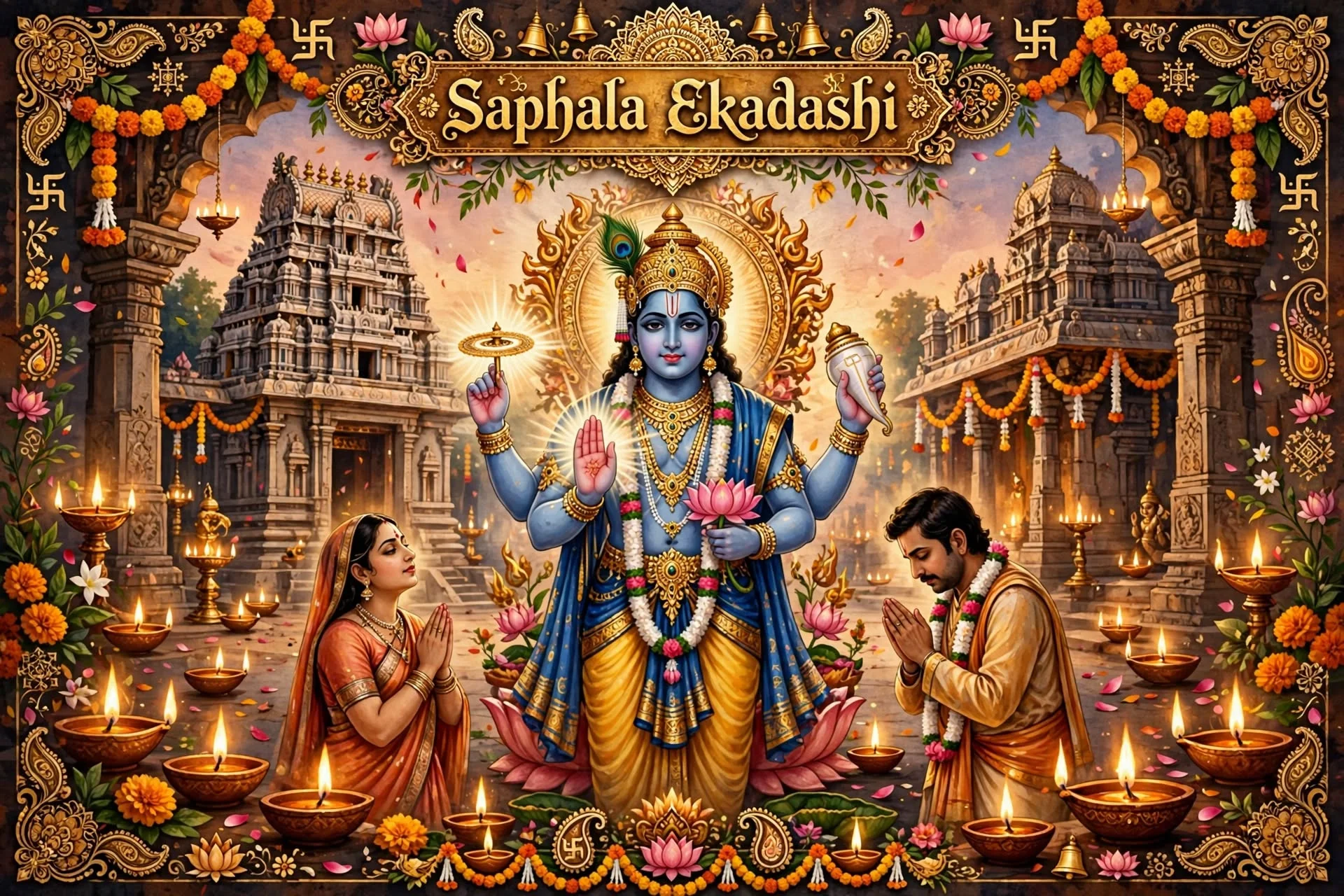
Saphala Ekadashi Vrat
Saphala Ekadashi, also known as Safala Ekadashi, is an important Hindu fasting day dedicated to Lord Vishnu. It is observed on the Ekadashi Tithi of Krishna Paksha in the month of Pausha according to the Purnimanta calendar. In the Amanta calendar, it falls in the Krishna Paksha of Margashirsha.
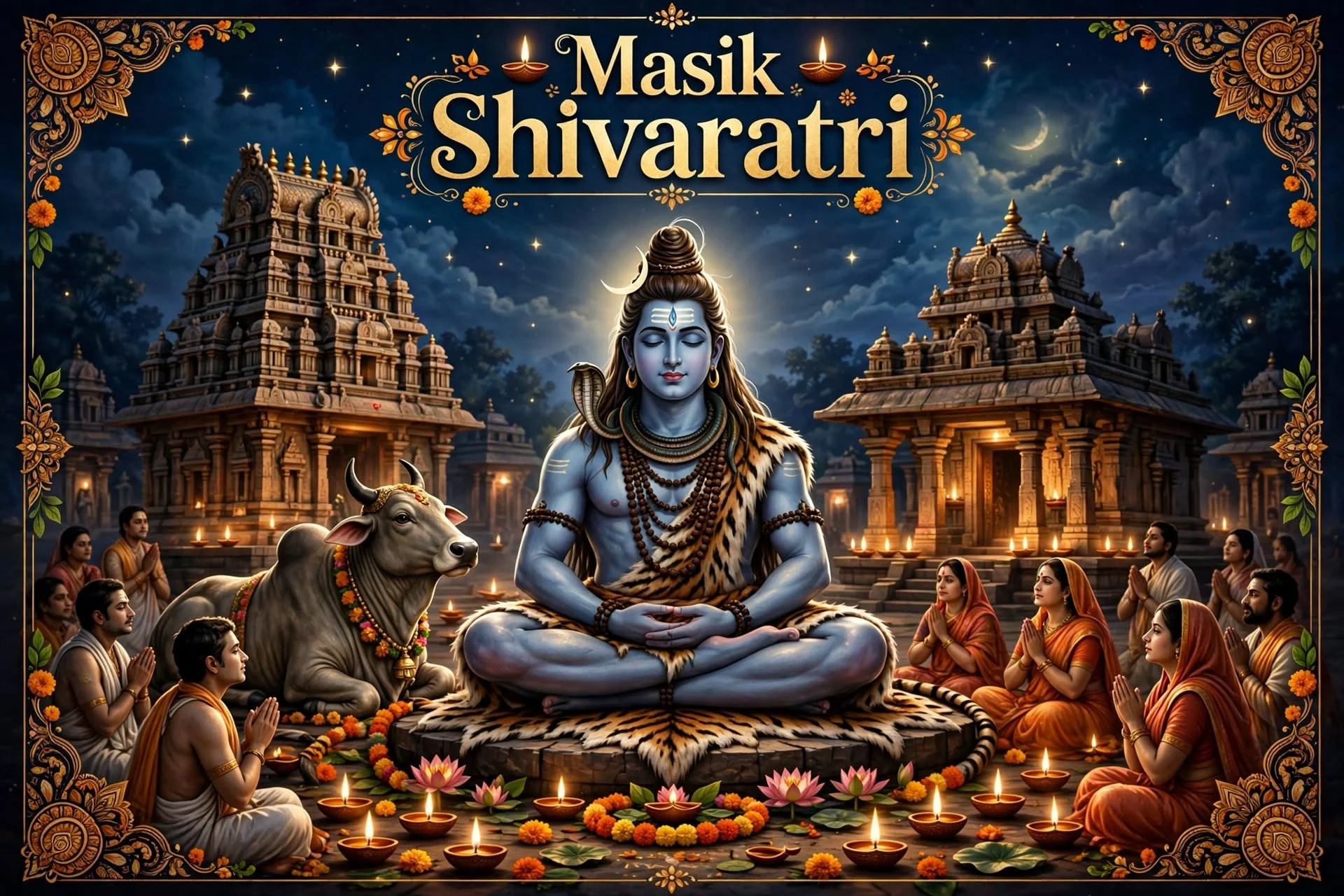
Masik Shivaratri
Masik Shivaratri, also known as Monthly Shivaratri or Masa Shivaratri, is a sacred Hindu observance dedicated to Lord Shiva. It is observed every lunar month on Krishna Paksha Chaturdashi, the fourteenth lunar day of the waning fortnight. Devotees worship Lord Shiva and Goddess Parvati, observe a vrat, perform Shiva Lingam Abhishek, chant sacred mantras and remain engaged in prayer during the night.