




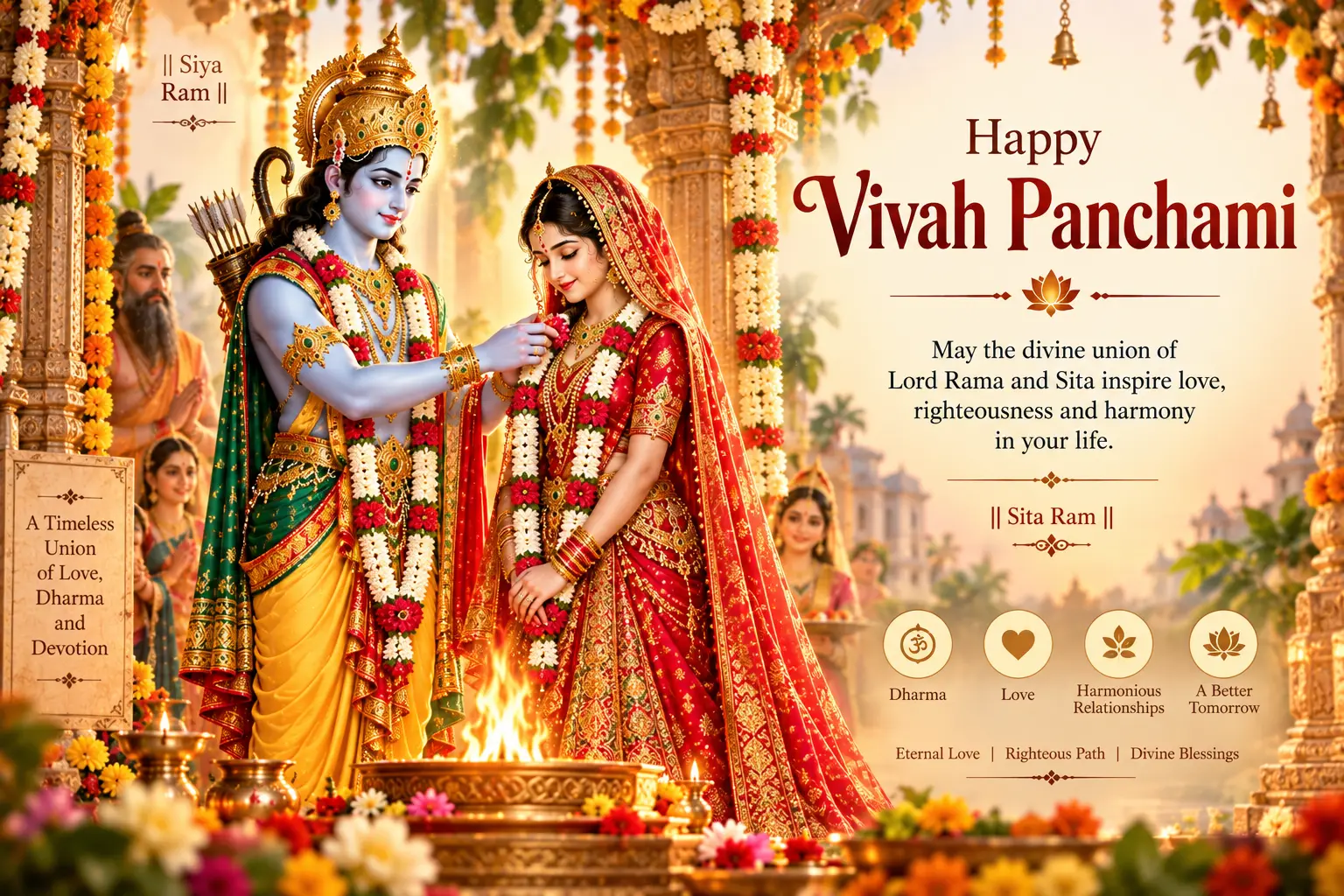
Vivah Panchami, observed with supreme aesthetic elegance, devotional ecstasy, and epic scriptural splendor across the Indian subcontinent and Nepal, is the sacred wedding anniversary of Lord Sri Rama—the Maryada Purushottama and seventh transcendental incarnation of Lord Sri Maha Vishnu—and Goddess Sita, the beloved daughter of King Janaka and the earthly manifestation of Goddess Mahalakshmi. Occurring on the Shukla Paksha Panchami (the fifth lunar day of the waxing moon) in the holy winter month of Margashirsha (Agrahayana), this enchanting festival commemorates the divine nuptial union (Vivaha Samskara) solemnized in the ancient capital of Mithila (modern-day Janakpurdham). Across thousands of temples and domestic shrines, this auspicious tithi is celebrated as the cosmic benchmark of righteous matrimony, spiritual partnership, and unconditional fidelity, reuniting the hearts of devotees with the timeless ideals of the Valmiki Ramayana and the Ramcharitmanas.
Vivah Panchami 2026: Date, Puja Timings, Rituals & Stories
Vivah Panchami Timings & Panchang
Important festival dates and auspicious timings
07:05 am
05:26 pm
Monday, 14 Dec 2026
04:47 pm – 07:16 pm
Vivah Panchami
The divine scriptural origin of Vivah Panchami is immortalized across the immortal verses of the Bala Kanda of the Valmiki Ramayana, the Ramcharitmanas of Goswami Tulsidas, the Adhyatma Ramayana, and the Ananda Ramayana. In ancient eras, the saintly philosopher-king Maharaja Janaka of Videha organized a grand Swayamvara to find a worthy consort for his divine daughter, Sita, who had effortlessly lifted the colossal, thunderous bow of Lord Sadashiva (Pinaka) during her childhood. King Janaka proclaimed a formidable challenge: whoever could lift, string, and draw the mighty Pinaka bow would receive the hand of Princess Sita in marriage. Mighty emperors, celestial warriors, and arrogant kings from all corners of the earth attempted to move the bow, but failed to budge it even by a fraction of a hair. At the command of his spiritual preceptor, Brahmarshi Vishwamitra, the youthful Prince Sri Rama of Ayodhya stepped forward with serene humility, lifted the celestial bow effortlessly with a single hand, and strung it. As the Lord drew the bowstring, the ancient weapon snapped in two with a cataclysmic roar that shook the cosmos, proclaiming the eternal triumph of divine righteousness.
Following the breaking of the Shiva Dhanush, King Janaka dispatched royal envoys to Ayodhya to invite King Dasharatha, who arrived in Mithila accompanied by his royal court, Sage Vasishtha, and Rama's three brothers—Bharata, Lakshmana, and Shatrughna. On the sacred fifth day of the waxing moon in Margashirsha, the divine marriage was solemnized under an astronomical canopy of boundless auspiciousness. In a quadruple wedding ceremony that united two glorious solar dynasties, Rama was wedded to Sita, Lakshmana to Sita's sister Urmila, Bharata to King Janaka's brother Kushadhwaja's daughter Mandavi, and Shatrughna to Kushadhwaja's younger daughter Shrutakirti. The celestial devas showered fragrant parijata blossoms from the heavens, celestial apsaras danced, and the sages chanted the sacred Vedic marriage hymns, consecrating the union as the eternal archetype of cosmic harmony.
Why is Vivah Panchami Celebrated?
Vivah Panchami is celebrated on Margashirsha Shukla Panchami to commemorate the historic divine marriage of Lord Sri Rama and Goddess Sita in the ancient city of Janakpur.
According to the Valmiki Ramayana, it marks the glorious moment when Prince Sri Rama lifted and broke Lord Shiva's mighty Pinaka bow at King Janaka's Swayamvara.
It honors the quadruple royal wedding of the four sons of Dasharatha—Rama, Lakshmana, Bharata, and Shatrughna—uniting the dynasties of Ayodhya and Mithila.
Devotees observe fasting, recite the Ramcharitmanas, perform the divine wedding ceremony (Ram-Sita Vivaha), and sing traditional wedding songs to receive marital harmony.
It celebrates the supreme ideals of Maryada (righteous conduct), unwavering mutual devotion, and the non-dual union of Purusha (Rama) and Prakriti (Sita).
- Commemoration of Ram-Sita Vivaha: Celebrating the divine wedding of the seventh Vishnu avatar and Goddess Lakshmi with complete Vedic rituals.
- The Breaking of the Shiva Dhanush: Honoring Prince Rama's effortless lifting and stringing of the celestial Pinaka bow at King Janaka's court.
- Reenactment of the Janakpur Baraat: Welcoming the ceremonial wedding procession that travels from Ayodhya to the Janaki Mandir in Janakpur, Nepal.
- The Quadruple Marriage Union: Honoring the simultaneous weddings of Rama-Sita, Lakshmana-Urmila, Bharata-Mandavi, and Shatrughna-Shrutakirti.
- Singing of Traditional Maithili Wedding Folk Songs: Celebrating the cultural richness of Mithila through songs, wedding dishes, and bridal decor.
- Attainment of Marital Harmony and Peace: Blessing married couples with mutual fidelity, enduring domestic affection, and spiritual companionship.
Scriptural Chronicles: The Swayamvara of Videha, the Breaking of Pinaka, and the Quadruple Wedding
The Finding of Sita and the Cosmic Pinaka Bow
The epic history of Vivah Panchami begins with the miraculous appearance of Goddess Sita in the kingdom of Videha. While plowing a sacred field to perform an ancient yajna for rain, Maharaja Janaka discovered a golden casket buried in the furrow. Within the casket lay an extraordinarily radiant baby girl. Because she was discovered in the furrow (Sita) of the plow, the king lovingly named her Sita and adopted her as his daughter. When Sita grew into young womanhood, she playfully lifted the colossal, eight-wheeled iron chest containing Lord Shiva's divine bow (Pinaka), an instrument so heavy that thousands of muscular warriors could barely drag it.
Witnessing her effortless divine power, Maharaja Janaka realized that Sita was no ordinary mortal maiden, but the Mother of the Universe. The king took a solemn vow: 'Only a warrior who possesses divine spiritual stature and can string this celestial bow of Lord Shiva shall be worthy of taking Sita's hand in marriage!' The king proclaimed a universal Swayamvara, inviting monarchs, princes, and warriors from across the earth to the capital city of Mithila.
The Swayamvara Assembly and the Breaking of the Bow
Kings and warriors arrived in Mithila filled with arrogance and pride. One by one, renowned emperors stepped forward to lift the Pinaka bow, but even when hundreds of warriors combined their strength, the celestial bow remained motionless as a mountain. Maharaja Janaka stood in his royal court, grief-stricken, and cried out in anguish: 'Has the earth become bereft of brave men? Must my beloved daughter Sita remain unmarried forever?' Hearing the king's sorrowful lament, Prince Lakshmana arose with righteous fury, declaring that in the presence of the scion of the Raghu dynasty, no one could question the earth's valor.
Brahmarshi Vishwamitra turned to Prince Sri Rama with a benevolent smile and commanded: 'Arise, Rama! String this bow of Shiva and relieve the grief of Maharaja Janaka!' With serene grace, walking like a majestic young lion, Sri Rama approached the iron chest. He lifted the colossal bow effortlessly with a single hand, resting its lower tip upon the earth. As the Lord drew the bowstring toward His ear with effortless power, the tension surpassed cosmic limits; the bow snapped in two at the middle with a thunderous roar that shook the earth and heavens. The assembled kings lowered their heads in shame, while Princess Sita stepped forward with downcast, joyful eyes, placing the fragrant victory garland (Jaimala) around Rama's neck.
Metaphysical Wisdom: The Union of Purusha and Prakriti, the Stringing of the Mind, and True Maryada
The Esoteric Meaning of Purusha-Prakriti Union
In the profound non-dual philosophy of the Adhyatma Ramayana, the wedding of Lord Sri Rama and Goddess Sita is not merely an external historical marriage between two royal personalities, but the supreme cosmic union between Purusha (the unchanging, eternal, unmanifest Supreme Consciousness represented by Rama) and Prakriti (the dynamic, creative, nurturing cosmic energy represented by Sita). Without Purusha, Prakriti remains dormant; without Prakriti, Purusha cannot manifest the wonders of creation, sustenance, and cosmic righteousness.
When Rama takes Sita's hand, cosmic balance is permanently restored to creation. The marriage demonstrates that human life attains fulfillment only when the active outer energy of daily life (Prakriti) is anchored in unbroken alignment with the inner spiritual consciousness (Purusha). By meditating upon this divine marriage, the seeker integrates their external worldly duties with their inner contemplative awareness.
The Symbolism of the Pinaka Bow and the Stringing of the Ego
The celestial bow of Lord Shiva represents the stiff, unyielding human ego (Ahankara) and the rigid mental constructs that bind mortal souls. The various proud kings who attempted to lift the bow represent the various prideful faculties of human life: worldly wealth, physical strength, lineage, and political dominance. None of these worldly assets can lift the bow of Shiva, because pride only adds weight to the ego.
Prince Sri Rama represents pure spiritual humility, non-violence, and effortless surrender. When Rama lifts the bow, He does not struggle or strain; He approaches it with reverence, strings it with natural poise, and breaks it. The breaking of the bow signifies the complete shattering of the false ego before the supreme reality of divine love. Only when the rigid bow of the ego is broken can the soul (the Jivatman) be united in sacred marriage with divine grace (Sita).
The Meaning of Sahadharmachari: Equal Spiritual Partnership
When King Janaka hands Sita to Rama, he does not describe her as a subordinate or dependent, but as a 'Sahadharmachari'—an equal, sovereign companion in the pursuit of cosmic righteousness (Dharma). In Hindu sociology and spiritual metaphysics, marriage is not an economic contract or a vehicle for mere sensory gratification, but a sacred sacrament (Samskara) designed to facilitate mutual spiritual evolution.
Ritual Protocols: Altar Setup, the Ram-Sita Vivaha Reenactment, and Maithili Traditions
Constructing the Wedding Mandap and Altar Adornment
The domestic and temple celebrations of Vivah Panchami begin at dawn. Devotees clean and sanctify their courtyards or domestic shrines, painting elaborate colorful rangolis depicting wedding motifs, lotus flowers, pairs of peacocks, and auspicious Swastikas. A charming wedding mandap is constructed using four fresh sugarcane stalks or banana stems decorated with fragrant mango leaf torans.
Under the canopy, an elevated wooden chowki draped in vibrant yellow or red silk is installed. Idols or framed portraits of Lord Sri Rama and Goddess Sita are lovingly placed. Rama is dressed as a royal groom in a yellow silk Pitambara, adorned with a miniature golden crown, pearl necklaces, and a sacred thread. Goddess Sita is dressed as a radiant Hindu bride in a shimmering red or green silk saree (Chunari), adorned with a gold necklace, nose ring (nath), bangles, and vermilion.
The Reenactment of Nuptial Rites (Vivaha Paddhati)
The domestic ceremony reenacts the complete sequence of Vedic marriage rites. The devotee or family priest acts as the father of the bride, welcoming Lord Rama with traditional Arghya, sweet milk, and aarti. A ceremonial white or yellow cloth (Antarpat) is held between Rama and Sita while the priest recites the auspicious wedding verses (Mangalashtaka). When the verses conclude, the curtain is lowered, and guests shower yellow akshata and rose petals upon the divine couple.
The sacred Jaimala (exchange of fresh marigold and jasmine garlands) is performed. The householder performs the solemn rite of Kanyadan, pouring holy Ganga water from a conch over the hands of the couple. The sacred nuptial knot (Gathbandhan) is tied between Rama's yellow shawl and Sita's red chunari, containing unbroken rice, turmeric root, and betel nut. The deities are carried around the sacred fire or altar in seven clockwise circumambulations (Saptapadi), sealing their cosmic covenant.
Singing of Maithili Folk Songs and Community Feast
Throughout the ceremony, women sing traditional Maithili and Awadhi wedding folk songs passed down through generations. These songs, full of tender maternal love and affectionate humor, playful tease both the groom's side (Ayodhya) and the bride's side (Mithila), capturing the cultural richness of the Ramayana.
Vivah Panchami Puja Vidhi (Step by Step)
- 1
Pratah Snana and Shuddhi (Morning Purification)
Rise before sunrise during Brahma Muhurta. Cleanse the residence and take a purifying bath with water infused with holy Ganga Jal and sesame seeds. Wear clean festive yellow or unstitched silk garments, meditating upon Lord Sri Rama and Goddess Sita.
- 2
Vivah Panchami Vrata Sankalpa
Facing east, hold holy water, unbroken white rice (akshata), flowers, and kusha grass in your right hand. Solemnly recite the Vivah Panchami Sankalpa: 'On this sacred Margashirsha Shukla Panchami, to celebrate the divine marriage of Sri Rama and Sita Devi and receive the blessings of domestic harmony and spiritual peace, I resolve to perform the sacred wedding rites and worship.'
- 3
Vivaha Mandap and Altar Sthapana
Erect a charming wedding canopy using four fresh sugarcane stalks or banana stems decorated with mango leaves and marigold garlands. Place a wooden chowki draped in yellow silk under the canopy and establish the sacred Kalasha filled with holy water, mango leaves, betel nut, a silver coin, and crowned with a red-threaded coconut.
- 4
Ganesha and Gauri Dhyana
Begin the wedding sacrament by invoking Lord Vignaharta Ganesha and Mother Gauri to remove all impediments. Offer red vermilion, fresh durva grass blades, and jaggery while chanting 'Om Gam Ganapataye Namah'.
Vivah Panchami Puja Samagri List
Altar Consecration & Mandap Essentials
- Four fresh sugarcane stalks or banana stems for erecting the wedding canopy
- Wooden chowki (altar platform) and clean yellow and red silk altar cloths
- Ceremonial white or yellow curtain cloth (Antarpat) embroidered with Swastika
- Pure copper or brass Kalasha, mango leaf bunch, coconut wrapped in red thread, and betel nut
- Unbroken sacred white rice grains mixed with turmeric (Akshata) for showering
Bridal Shringara for Sita Devi
- Idol of Goddess Sita (crafted from brass, silver, or ashta-dhatu)
- Rich red or green bridal silk chunari (saree cloth) with golden borders
- Pure red vermilion powder (Sindoor) and red alta for feet decoration
- Traditional jewelry: miniature gold or silver mangalsutra, bangles, and nose ring (nath)
- Fragrant jasmine garlands, red rose petals, and pure rose water
Groom Shringara for Lord Sri Rama
- Idol of Lord Sri Rama holding bow and arrow
- Fine yellow silk garments (Pitambara) and miniature royal crown (Mukut)
- Sacred white cotton thread (Yajnopavita) and pearl necklaces
Mantras and Prayers for Vivah Panchami
Vivah Panchami Vrat Rules and Fasting Guidelines
Fasting and Dietary Regulations for the Vrata
Devotees observing the fast of Vivah Panchami begin their vow at sunrise and maintain it until the completion of the evening wedding rituals and the final Maha Aarti. Pious seekers observe a Nirjala fast (without drinking water) or consume only water and fresh seasonal fruits (Phalahari) in the afternoon. The consumption of any grains, rice, wheat, pulses, onions, garlic, non-vegetarian food, and alcohol is strictly prohibited. The fast is broken in the evening after offering the wedding feast to the Divine Couple.
Adherence to Vedic Nuptial Protocols
The ritual reenactment of Ram-Sita Vivaha must be performed with the exact same solemnity, purity, and adherence to Vedic injunctions as a sacred human wedding. The sacred curtain (Antarpat) must be held between the bride and groom, the Mangalashtaka verses must be chanted with clear pronunciation, and the nuptial knot (Gathbandhan) must remain intact throughout the circumambulations (Saptapadi). Frivolous behavior, disputes, and impure thoughts should be strictly kept away from the wedding mandap.
Empathy and Reverence: Why Human Weddings are Avoided
A vital cultural understanding of Vivah Panchami is that while the day is celebrated with overwhelming religious devotion in temples, traditional Hindu families in Mithila and Ayodhya avoid scheduling human weddings on this tithi. This ancient custom is observed out of deep empathy for the subsequent trials endured by Sita and Rama during their fourteen-year forest exile. Devotees dedicate the day entirely to worshipping the Divine Couple rather than performing personal human marriages.
Charity and Hospitality Protocols
Just as Maharaja Janaka lavishly distributed charity during his daughter's wedding, the householder observing Vivah Panchami must offer generous gifts, new clothes, and monetary charity (Dakshina) to priests, ascetics, and the underprivileged. Cows must be fed with fresh green fodder, jaggery, and water. Hoarding wealth or displaying miserliness during the divine wedding diminishes the spiritual fruits of the sacrament.
Dos and Don'ts of Vivah Panchami
Good Practices (Do's)
- Wake up during Brahma Muhurta and take a purificatory bath with holy Ganga water.
- Construct a beautiful sugarcane mandap and decorate the altar with lotus motifs and rangoli.
- Drape Lord Rama in yellow pitambara and Goddess Sita in a radiant red bridal chunari.
- Recite the sacred Bala Kanda chapters of the Ramcharitmanas or Valmiki Ramayana.
- Perform the Jaimala, Kanyadan, and Saptapadi circumambulations with deep reverence.
Vivah Panchami Across Regions
| Region | Local Name |
|---|---|
| Janakpurdham (Mithila, Nepal) | Vivah Mahotsav / Sitaram Vivaha |
| Ayodhya (Uttar Pradesh) | Vivah Panchami / Ram Vivah Utsav |
| Bihar and Eastern Uttar Pradesh (Mithila Region) | Ram Vivah / Sita Kalyanam |
| South India (Tamil Nadu, Karnataka, Andhra Pradesh) | Sita Kalyanam Utsavam |
| Maharashtra and Gujarat | Ram Sita Vivaha Parva |
Vivah Panchami FAQs
What is Vivah Panchami and why is it celebrated?
Vivah Panchami is the sacred wedding anniversary of Lord Sri Rama and Goddess Sita. It is celebrated on the Shukla Paksha Panchami (fifth waxing lunar day) of Margashirsha to commemorate their divine marriage in Janakpur after the breaking of Lord Shiva's bow.
Why do traditional Hindu families avoid organizing human weddings on Vivah Panchami?
Traditional families, particularly in Mithila and Ayodhya, avoid human weddings on this day out of deep empathy for Goddess Sita's subsequent trials during her fourteen-year forest exile and separation. The day is reserved exclusively for adoring the Divine Couple.
How did Lord Rama win Goddess Sita's hand in marriage?
King Janaka organized a Swayamvara with the condition that whoever could lift and string Lord Shiva's mighty Pinaka bow would marry Sita. Lord Rama lifted the bow effortlessly and strung it, breaking it in two with a roar that shook the cosmos.
Upcoming Festivals
View All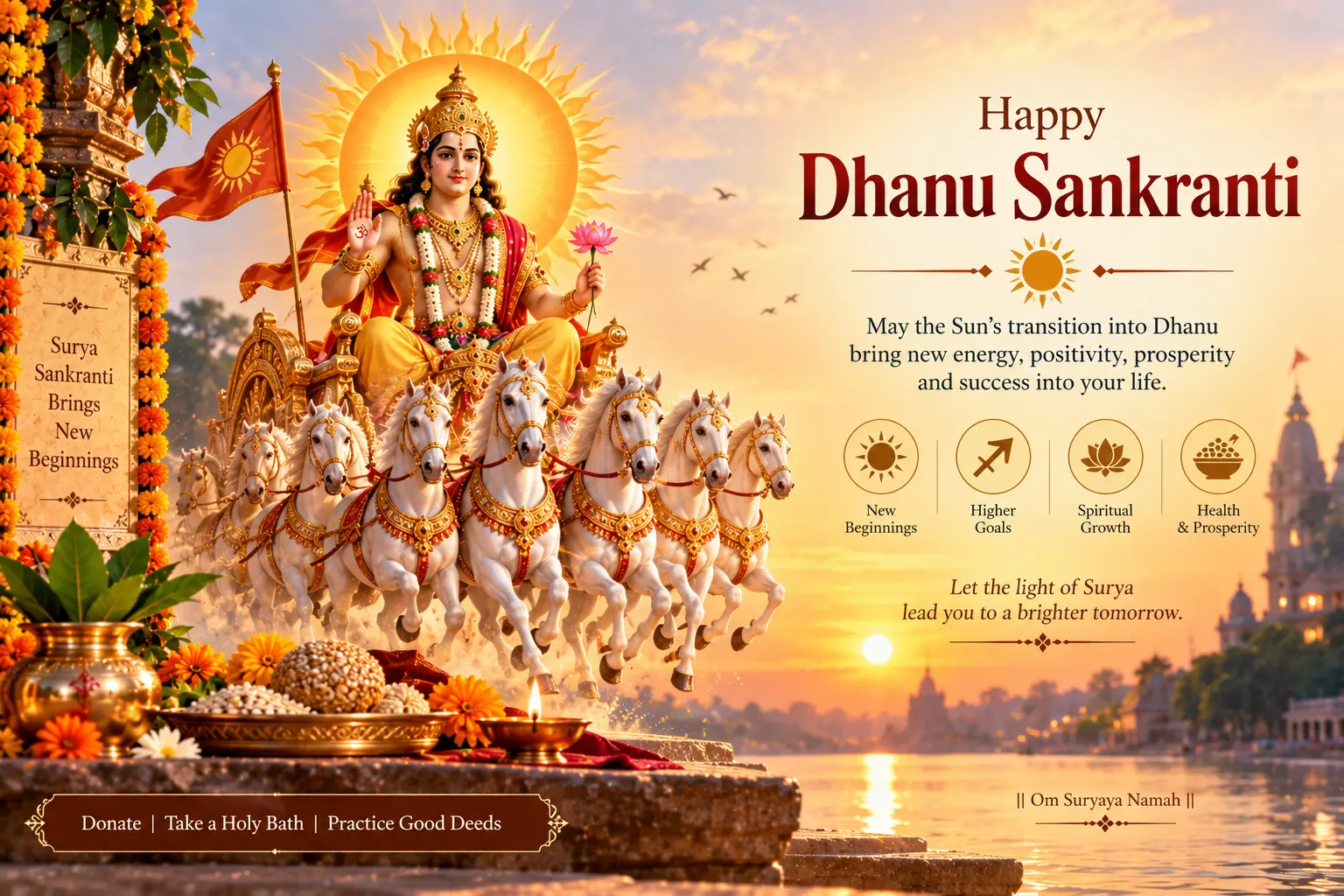
Dhanu Sankranti
Dhanu Sankranti, observed with profound astrological, agricultural, and devotional significance across the Indian subcontinent, marks the momentous astronomical ingress (Sankramana) of Lord Surya—the divine Sun God—from the water sign of Vrishchika (Scorpio) into the fiery, sattvic zodiac sign of Dhanu (Sagittarius), ruled by the celestial preceptor Guru (Jupiter). Occurring in the sacred month of Margashirsha or early Pausha (mid-December), this celestial transition marks the beginning of the solar month of Dhanu Masa and initiates the celebrated period known as Kharmas or Malmas across northern and eastern India. Revering the life-giving solar luminary as the visible eye of the Supreme Cosmic Being (Pratyaksha Devata), Dhanu Sankranti is dedicated to purifying the mind and body through sacred river snanam, Surya arghya, charitable donations, and intense scriptural study before the sun turns northward during Makar Sankranti.
Mokshada Ekadashi
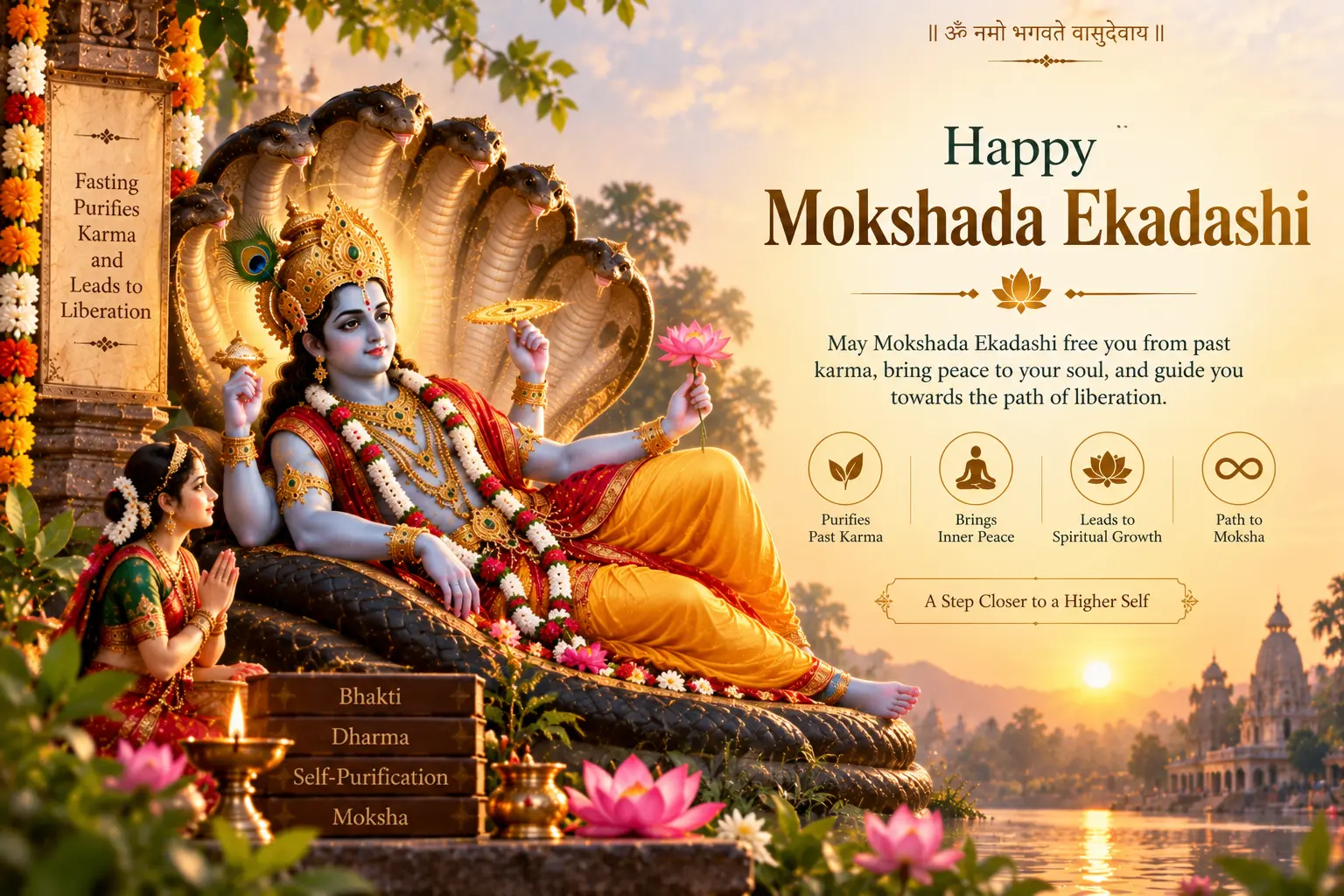
Mokshada Ekadashi, observed on the Shukla Paksha Ekadashi (the eleventh lunar day of the waxing moon) in the sacred winter month of Margashirsha (Agrahayana), is one of the most spiritually venerated and soteriologically potent fasting days in Sanatana Dharma. As its Sanskrit name unequivocally proclaims—'Mokshada', meaning 'the bestower of ultimate liberation (Moksha)'—this holy vrata possesses the extraordinary capacity to dissolve mountains of accumulated karmic transgressions, deliver departed ancestral souls from torment in lower realms (Naraka), and grant unalloyed devotion to Lord Sri Damodara-Krishna. Celebrated with intense ascetic discipline, scriptural recitation, and uninterrupted contemplation across India and Nepal, Mokshada Ekadashi holds supreme significance in both Smarta and Vaishnava traditions as an unshakeable bridge from the ocean of mortal sorrow to the eternal tranquility of Vaikuntha.
Gita Jayanti
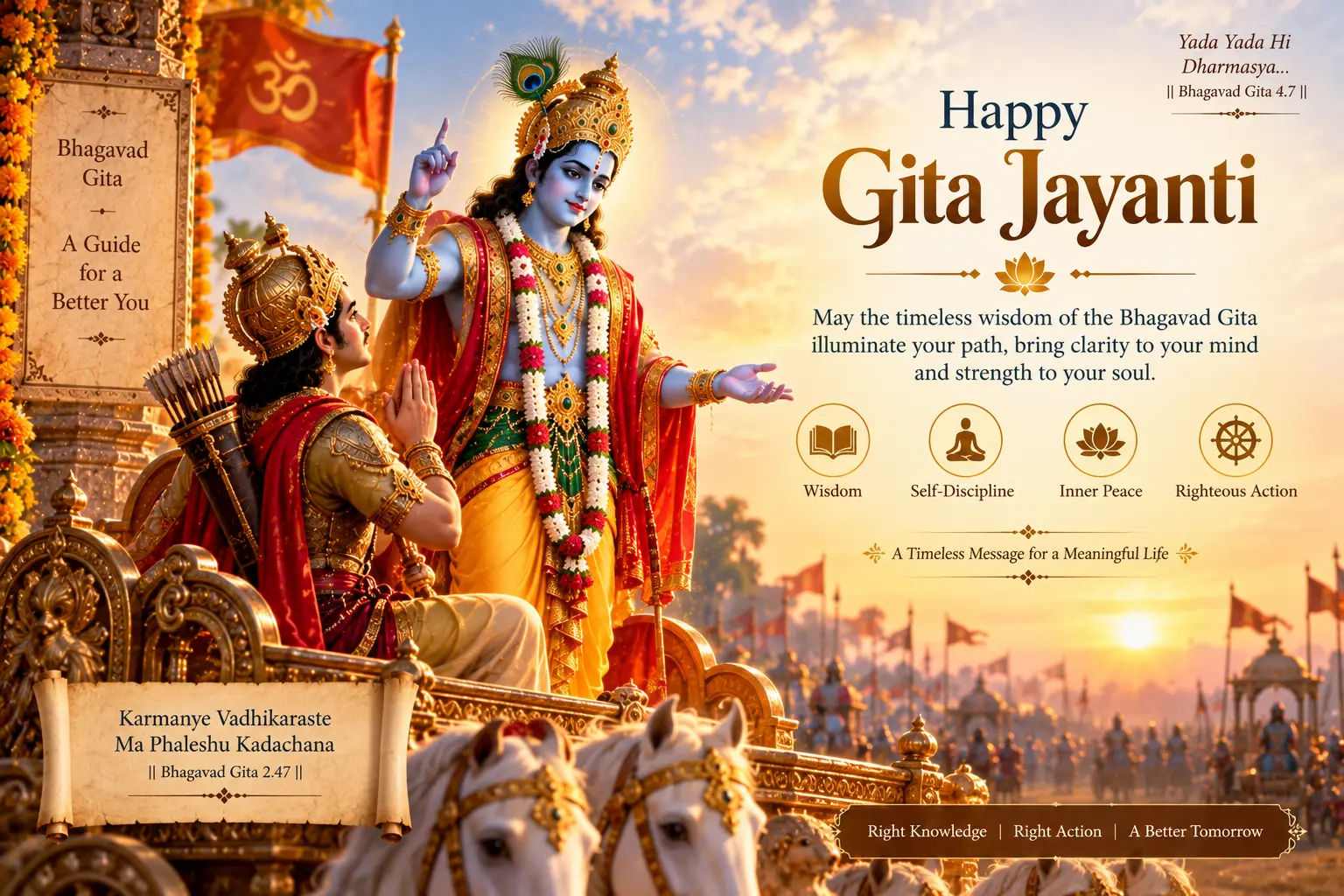
Gita Jayanti is one of the most intellectually revered and spiritually profound festivals in Sanatana Dharma, celebrating the historic revelation of the Srimad Bhagavad Gita—the timeless song of the Supreme Personality of Godhead, Bhagavan Sri Krishna. Occurring on the auspicious Ekadashi tithi of Shukla Paksha in the holy winter month of Margashirsha (November–December), this sacred observance marks the hallowed occasion at Jyotisar in the ancient land of Kurukshetra where Sri Krishna imparted seven hundred verses of supreme spiritual wisdom to His bewildered friend and disciple, the Pandava prince Arjuna. Unlike conventional Hindu festivals that commemorate the earthly birthday or cosmic descent of deities, Gita Jayanti holds the unique distinction of celebrating the birth of a living philosophical scripture—a scripture that serves as the definitive manual for human existence, duty, self-realization, and devotion across all ages.
Margashirsha Purnima
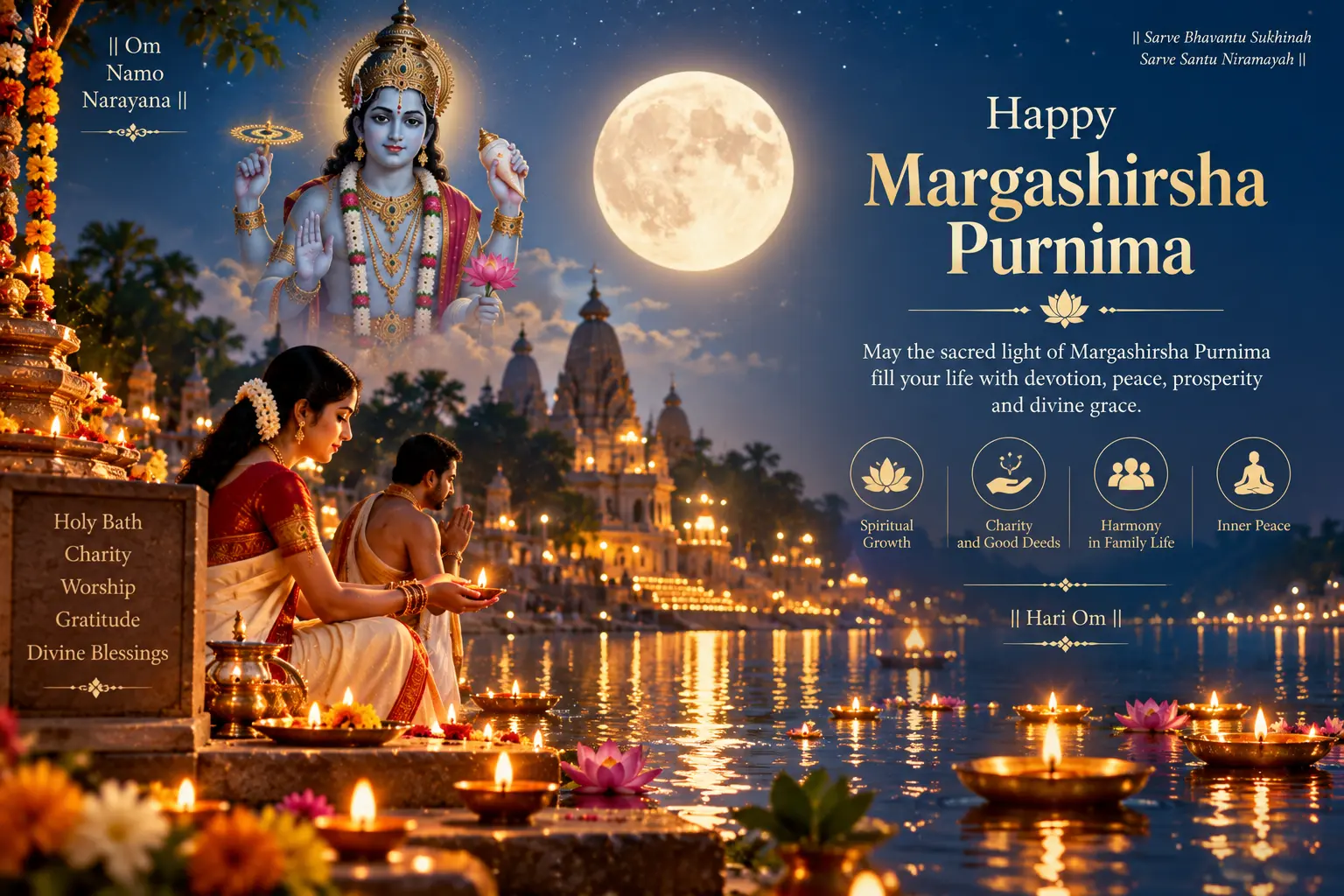
Margashirsha Purnima, celebrated on the full moon day of the sacred month of Margashirsha (Agrahayana), is one of the most spiritually illuminating and astrologically auspicious full moon festivals in Sanatana Dharma. Occurring when the full moon shines in the constellation of Mrigashirsha (the celestial deer's head ruled by the planet Mars and presided over by Soma, the Moon God), this holy tithi marks the supreme spiritual culmination of the month that Lord Sri Krishna Himself declared to be His own transcendental self in the Bhagavad Gita ('Masanang Margashirsho'ham'). Popularly known in various regional cultures as Battisi Purnima, Moksha Purnima, and Korvai Deepam, this sacred day unites the worship of Lord Sri Satyanarayan, the divine advent of Lord Dattatreya, the celestial Cosmic Dance of Lord Nataraja (Arudra Darshan), and ancient river-bathing rites.
Dattatreya Jayanti
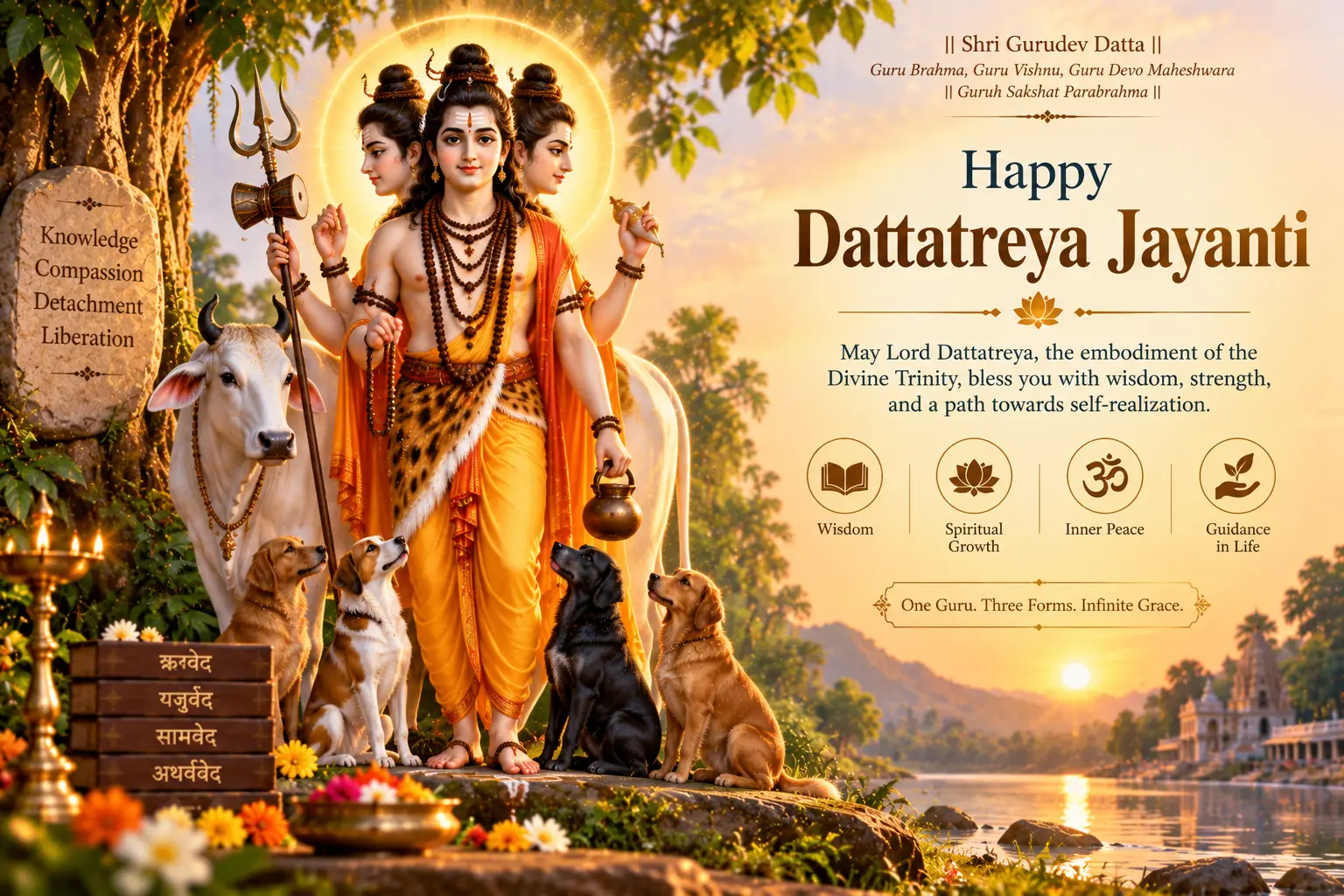
Dattatreya Jayanti, observed with profound esoteric reverence, ascetic contemplation, and devotional splendor across India, celebrates the auspicious divine advent of Lord Sri Dattatreya—the unified, primordial incarnation of the Hindu Supreme Trinity (Brahma, Vishnu, and Shiva). Occurring on the full moon day (Purnima tithi) of the sacred month of Margashirsha (November–December) under the radiant celestial influence of the Mrigashirsha nakshatra, this sacred festival commemorates the transcendental moment when the supreme archetypes of Creation (Brahma), Preservation (Vishnu), and Dissolution (Shiva) merged harmoniously into a singular transcendental form. Revering Dattatreya as the Adi Guru (the Primordial World Teacher), the Avadhuta of supreme renunciation, and the lord of all yogic wisdom, seekers celebrate this holy day to awaken inner discrimination, transcend the duality of earthly existence, and attain direct spiritual illumination.
Saphala Ekadashi Vrat
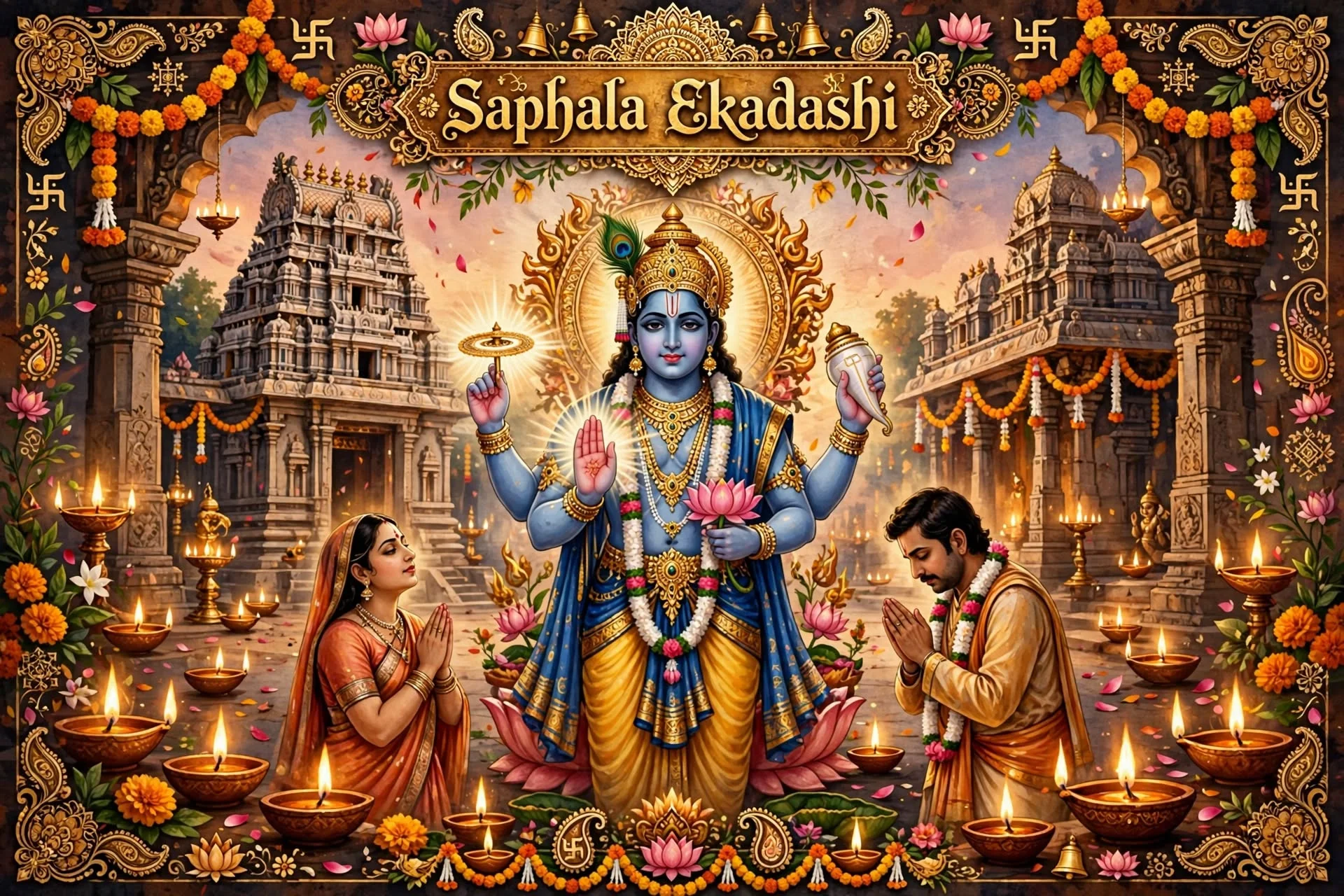
Saphala Ekadashi, also known as Safala Ekadashi, is an important Hindu fasting day dedicated to Lord Vishnu. It is observed on the Ekadashi Tithi of Krishna Paksha in the month of Pausha according to the Purnimanta calendar. In the Amanta calendar, it falls in the Krishna Paksha of Margashirsha.
Krishna Pradosh Vrat
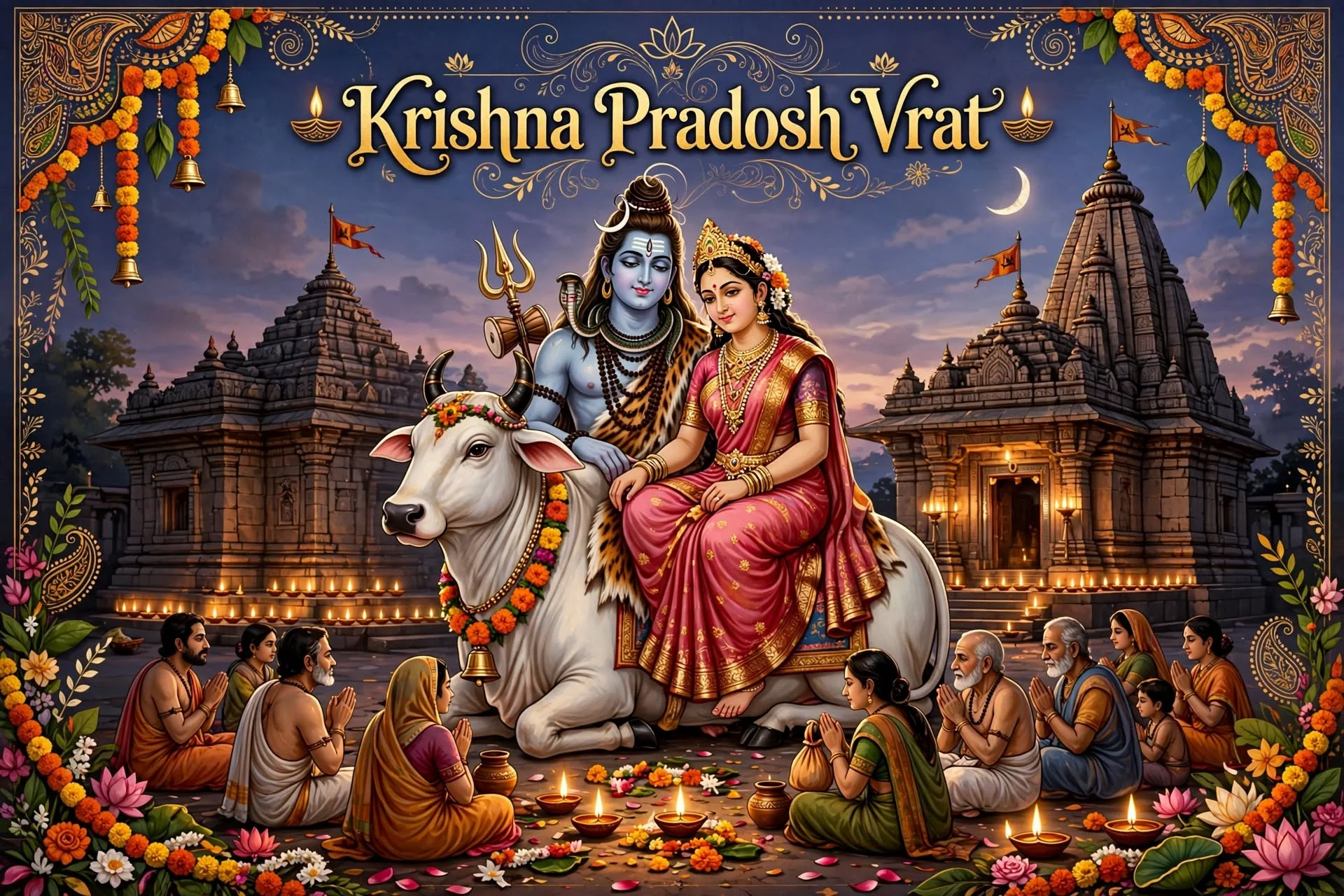
Masik Shivaratri is a monthly Hindu observance dedicated to Lord Shiva. It is observed on the Chaturdashi Tithi of Krishna Paksha, the fourteenth lunar day during the waning phase of the Moon. Devotees worship Lord Shiva with faith, observe a fast and perform night-time prayers to seek spiritual strength, peace and divine blessings.
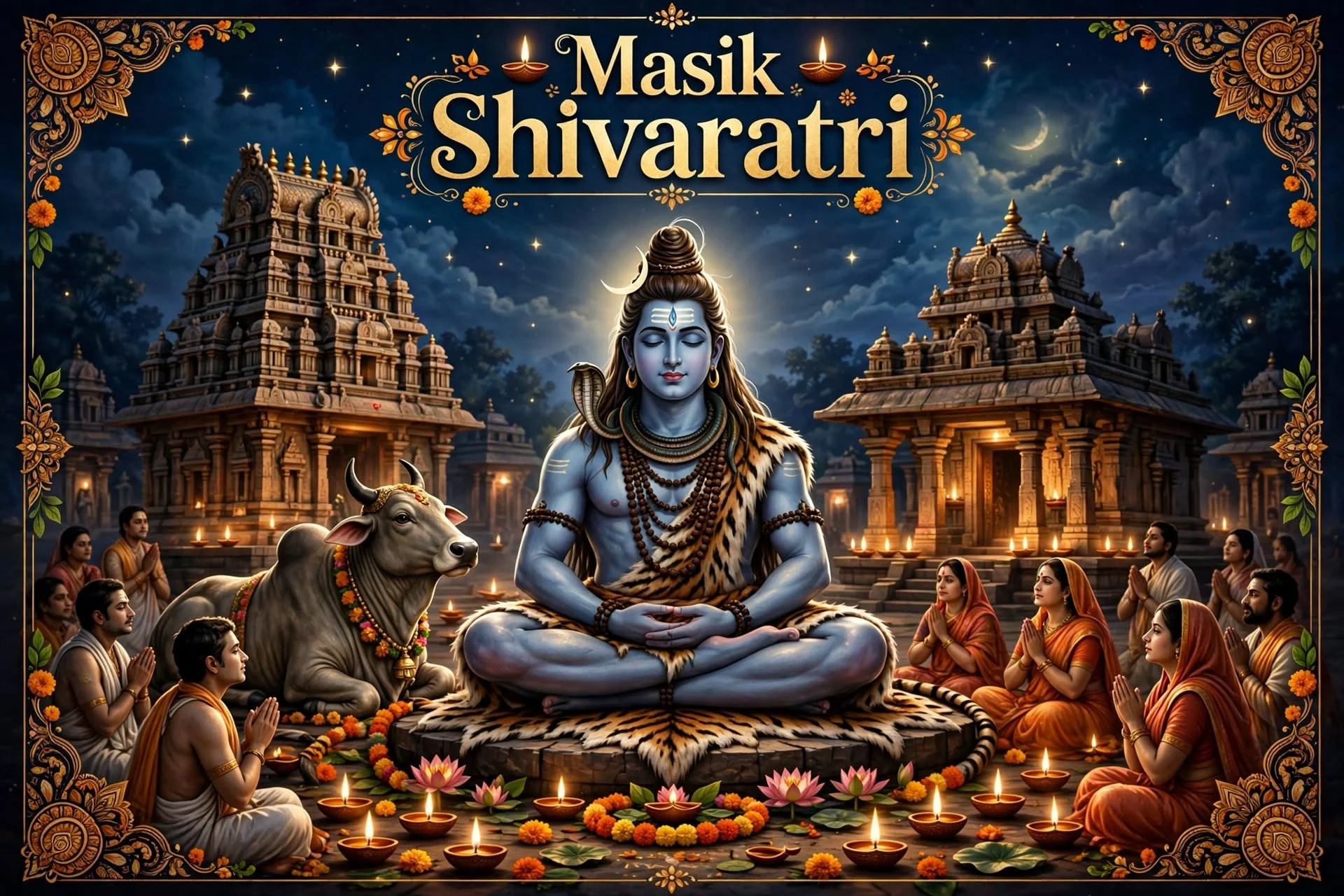
Masik Shivaratri
Masik Shivaratri, also known as Monthly Shivaratri or Masa Shivaratri, is a sacred Hindu observance dedicated to Lord Shiva. It is observed every lunar month on Krishna Paksha Chaturdashi, the fourteenth lunar day of the waning fortnight. Devotees worship Lord Shiva and Goddess Parvati, observe a vrat, perform Shiva Lingam Abhishek, chant sacred mantras and remain engaged in prayer during the night.