




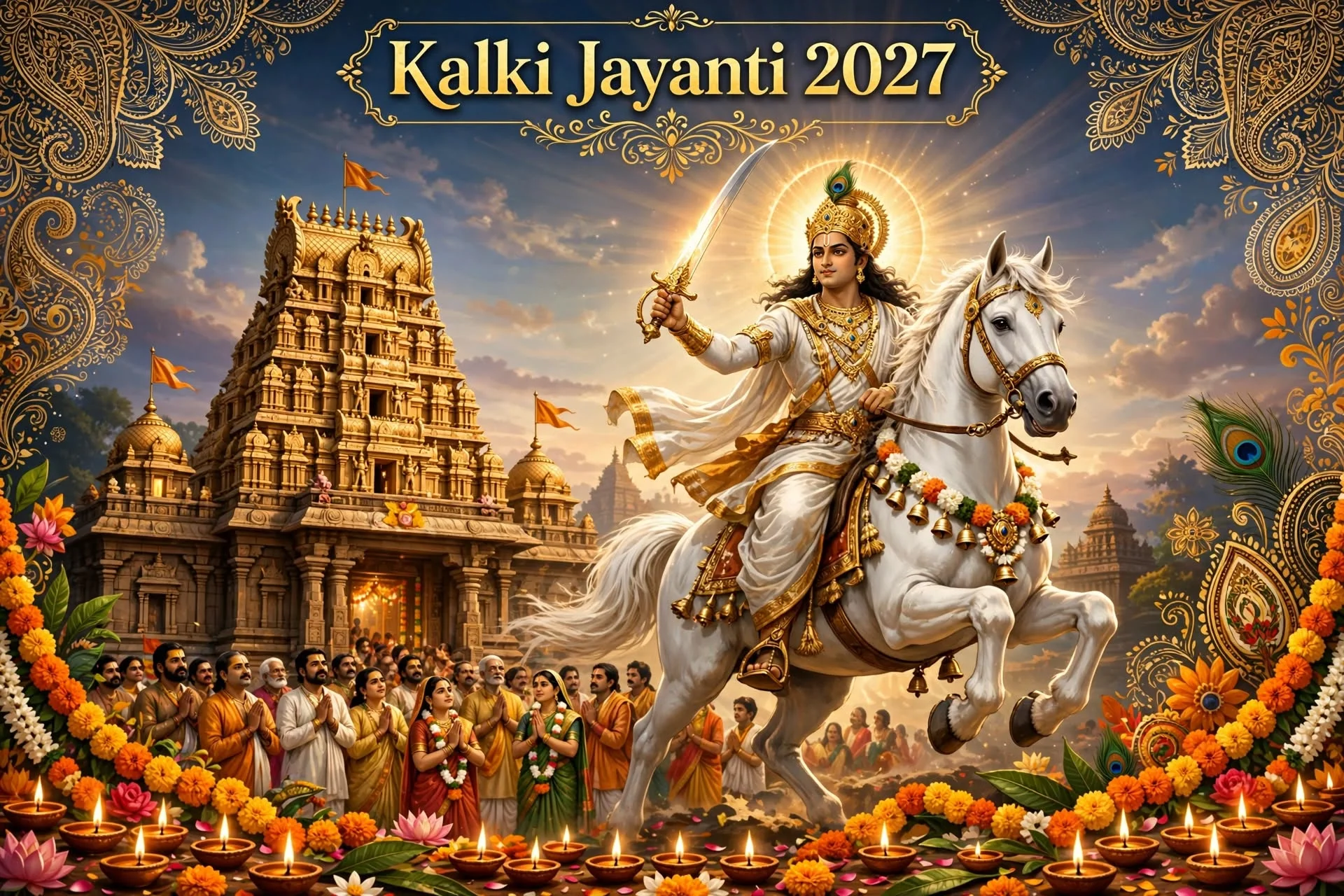
Kalki Jayanti is a profound and unique Hindu festival celebrated on the Shashthi tithi (sixth lunar day) of Shukla Paksha in the holy monsoon month of Shravana. Unlike other avatar appearance anniversaries—which commemorate incarnations that have already taken place in past historical yugas—Kalki Jayanti marks the anticipated future advent (Avatara Jayanti) of Bhagwan Kalki, the tenth and final Maha-Avatara of Lord Vishnu, as prophesied in the Srimad Bhagavatam, Kalki Purana, Agni Purana, Vishnu Purana, and the Mahabharata.
Kalki Jayanti 2027: Date, Puja Timings, Rituals & Stories
Kalki Jayanti Timings & Panchang
Important festival dates and auspicious timings
Usha Arghya (Sunrise)
05:46 am
Sandhya Arghya (Sunset)
07:08 pm
Start Date
Saturday, 7 Aug 2027
Puja Muhurat
12:23 am – 11:01 pm
Kalki Jayanti
According to ancient Puranic chronology, when the moral fabric of the universe collapses under the corrupting influence of Kali Yuga—when unrighteousness reigns supreme, rulers become thieves, religious hypocrisy abounds, and truth disappears—Lord Vishnu will manifest as Kalki in the sacred village of Shambhala. Born into the pious Brahmin family of Vishnuyasha and Sumati, instructed in the warrior arts by the immortal Chiranjivi Sage Parashurama, and gifted the swift celestial white winged horse Devadatta by Lord Shiva, Kalki will wield a blazing divine sword of cosmic justice (Ratnamala) to vanquish the demonic forces of adharma and inaugurate the golden age of truth, Satya Yuga (Krita Yuga).
Celebrated across Vaishnava shrines and spiritual ashrams, devotees observe Kalki Jayanti through introspective fasting, recitation of the Kalki Purana, congregational chanting of the Vishnu Sahasranama, and meditation upon the preservation of personal integrity (Dharma). Seekers pray for the purification of modern human consciousness, moral regeneration of society, divine protection against existential chaos, and the establishment of universal peace and spiritual righteousness.
Why is Kalki Jayanti Celebrated?
The observance of Kalki Jayanti is rooted in the eternal cosmic promise articulated by Lord Sri Krishna in the Bhagavad Gita (4.7-8): 'Yada yada hi dharmasya glanir bhavati bharata, abhyutthanam adharmasya tadatmanam srijamyaham' (Whenever righteousness declines and unrighteousness ascends, I manifest Myself from age to age to protect the virtuous, destroy the wicked, and firmly re-establish dharma).
The Kalki Purana details that as the Kali Yuga progresses toward its culmination, human lifespan diminishes, sacred scriptures are distorted for commercial gain, families fracture, and innocent beings suffer under oppressive tyrants. To prevent the complete moral degeneration of the universe, Lord Vishnu incarnates as the blazing warrior-philosopher Kalki to annihilate the personified demon Kali and his cohorts, restoring dharma to its pristine four-legged foundation.
Devotees celebrate Kalki Jayanti not merely as an anticipation of future cosmic warfare, but as an urgent moral reminder to embody the virtues of truth, compassion, courage, and self-restraint in one's daily life, becoming conscious conduits of the golden age (Satya Yuga) within one's own community.
- Commemorating the prophesied advent of Lord Vishnu's tenth Maha-Avatara to conclude Kali Yuga.
- Praying for the moral and spiritual regeneration of society and the eradication of corruption and greed.
- Reciting sacred prophecies from the Kalki Purana and the twelfth canto of the Srimad Bhagavatam.
- Seeking divine protection from existential anxiety, planetary afflictions, and spiritual degradation.
- Channeling inner discipline to live by the pristine ethical principles of Satya Yuga in contemporary times.
Prophetic Foundations in the Srimad Bhagavatam and the Kalki Purana
The Prophecy of Shambhala and Family Lineage
In the twelfth canto of the Srimad Bhagavatam (Chapter 2, verses 18-24), Sage Shukadeva Goswami reveals the future to King Parikshit: 'In the village of Shambhala, in the home of the exalted Brahmin Vishnuyasha and his virtuous wife Sumati, the Supreme Lord of the universe, Bhagwan Vishnu, will manifest His transcendental form as Kalki.'
Endowed with eight supernatural mystic perfections (Ashta Siddhis) and peerless martial prowess, the young Kalki will receive sacred thread initiation from Sage Parashara and journey to the Mahendra mountains to master the complete science of Vedic weaponry (Dhanurveda) under the immortal avatar Sage Parashurama.
The Divine Gifts from Lord Shiva and the Cleansing of the Earth
The Kalki Purana recounts that pleased by Kalki's intense devotion and yogic tapasya in the Himalayas, Lord Shiva manifests before Him. Shiva presents Kalki with the invincible, swift, and immortal white horse named Devadatta, a brilliant jeweled sword capable of cutting through cosmic illusions, and an all-knowing parrot named Shuka who serves as His wise scout.
Mounting Devadatta, accompanied by kings who adhere to truth, Lord Kalki traverses the globe at lightning speed, subduing corrupt tyrants, dismantling criminal networks, and vanquishing the demonic general Koka and Vikoka. His presence emanates a transcendental fragrance from His divine limbs that purifies the minds of all living beings who inhale the breeze.
The Dawn of Satya Yuga and the Lineage Restoration
Following the destruction of adharma, Lord Kalki meets the immortal kings Maru (of the Solar dynasty) and Devapi (of the Lunar dynasty), who have lived concealed in the Himalayas in deep samadhi. Kalki crowns them to re-establish righteous monarchies on earth.
With the mind of humanity cleansed of Tamasic inertia and Rajasic greed, the golden age of Satya Yuga dawns once again. The earth flourishes with abundant grain, pure rivers, clean air, and joyful spiritual seekers living for centuries in harmony with divine truth.
The White Horse, The Blazing Sword, and Internal Moral Rebirth
The Esoteric Symbolism of Devadatta and the Sword
In yogic metaphysics, the white horse Devadatta ('God-given') represents pure, unblemished Prana (vital life-force) and the purified senses moving under absolute mastery. The horse's wings signify the transcendence of physical limitations.
The blazing sword (Ratnamala) represents Viveka (spiritual discrimination) and Jnana (transcendental knowledge). With this sword of discriminative wisdom, the spiritual aspirant slays the internal demons of lust, anger, greed, envy, and pride residing within the subconscious mind.
Shambhala: The Spiritual Abode of Inner Purity
The village of Shambhala ('abode of peace and auspiciousness') is not merely a geographic location; it represents the purified heart chakra (Anahata). When human consciousness becomes like Shambhala—peaceful, truthful, and free from hypocrisy—the divine presence of Kalki spontaneously awakens within the soul.
Kalki Jayanti invites seekers to cultivate internal Shambhala, transforming their own lives into fertile sanctuaries for spiritual illumination.
The Inevitable Triumph of Truth (Satyameva Jayate)
During times of rampant cynicism, corruption, and moral decay, Kalki Jayanti instills unconquerable hope. It affirms the cosmic truth that evil and delusion are fundamentally temporary and fragile. No matter how dark the Kali Yuga appears, the light of divine truth is destined to triumph and restore universal balance.
Morning Fasting, Kalki Puja Vidhi, and Scriptural Study
Morning Ablutions and Sthapana
Devotees awake during Brahma Muhurta, bathe in clean water mixed with Gangajal, and wear clean white or yellow unstitched traditional garments. In the domestic shrine, a wooden chowki covered in white or yellow silk is prepared.
An idol or framed portrait of Lord Vishnu in His four-armed form or as Kalki riding a white horse is installed, accompanied by a small brass conch and a symbol of a sword.
Panchamrita Abhishekam and Floral Offerings
Devotees perform an elaborate Shodashopachara worship, bathing the deity with Panchamrita (cow milk, curd, honey, ghee, sugar) and scented rose water. White flowers, particularly white lotus blossoms, white jasmine, and sacred green Tulsi leaves, are offered at the Lord's feet.
The 108 names of Lord Vishnu and the Kalki Stotram from the Kalki Purana are recited with focused devotion.
Scriptural Recitation, Fasting, and Evening Aarti
Devotees observe a day-long fast, consuming only fruits and milk (Phalahari). In the afternoon, families sit together to read the twelfth canto of the Srimad Bhagavatam or the Kalki Purana. In the evening, grand camphor Aarti is performed, praying for universal peace and righteous governance, followed by breaking the fast with sattvic food.
Kalki Jayanti Puja Vidhi (Step by Step)
- 1
Brahma Muhurta Snana (Purifying Morning Bath)
Wake early before dawn, take a purifying bath chanting sacred river mantras, and wear clean white or yellow traditional clothing symbolizing truth and purity.
- 2
Kalki Jayanti Sankalpa (Solemn Devotional Vow)
Sit facing East before the altar, hold clean water, akshata, and a white flower in your right palm, reciting the Sanskrit Sankalpa pledging to observe the fast for moral renewal and Vishnu's grace.
- 3
Kalki Avahana and Dhyana (Invocation of Lord Kalki)
Meditate upon Bhagwan Kalki mounted on the white horse Devadatta, holding the blazing sword and conch shell, welcoming His divine presence onto the consecrated altar with flowers.
- 4
Asana and Padya (Offering Seat and Washing Feet)
Offer a consecrated seat draped in white silk to Lord Kalki, followed by offering fresh water in an achamani spoon to symbolically wash His holy feet.
- 5
Panchamrita Abhishekam (Holy Nectar Bath)
Kalki Jayanti Puja Samagri List
Deity Representations and Altar Items
- Consecrated idol or framed portrait of Lord Vishnu / Kalki riding the white horse
- Wooden chowki draped in fresh white or yellow silk fabric
- Copper or brass Panchapatra, Achamani spoon, and Abhisheka tray
- Small miniature metallic sword or ceremonial dagger symbolizing divine discrimination
- Pure brass five-wick cow-ghee lamp, cotton wicks, and natural camphor
Botanical, Floral, and Anointing Items
- Pure Malayagiri white sandalwood paste, sacred Ashtagandha, and Kumkum
- Fresh white lotus blossoms, white jasmine (Mogra), and white rose garlands
- Abundant fresh holy Tulsi leaves (plucked on the day prior with permission)
- Uncooked raw white rice mixed with turmeric powder (Akshata)
Naivedya and Panchamrita Ingredients
- Panchamrita ingredients: pure raw cow milk, curd, wild honey, cow ghee, and raw sugar
- Sweet rice pudding (Kheer) prepared with milk, basmati rice, cardamom, and saffron
- Fresh seasonal fruits: bananas, apples, pomegranate, and sweet pears
- Assorted dry fruits: soaked almonds, cashews, raisins, and lotus seeds (Makhana)
Mantras and Prayers for Kalki Jayanti
Kalki Jayanti Vrat Rules and Fasting Guidelines
Dietary Code and Fasting Injunctions
Devotees observe a pure sattvic fast on Kalki Jayanti. Many observe a water-only fast until sunset, while householders typically consume fresh fruits, cow milk, sweet curd, and dry fruits (Phalahar). All grains, wheat, rice, pulses, onions, and garlic are strictly prohibited throughout the fasting hours. The evening meal following aarti is purely vegetarian, prepared with rock salt (Sendha Namak).
- Total avoidance of non-vegetarian food, alcohol, tobacco, onions, garlic, and processed food.
- Strict fasting until the completion of evening Kalki puja and scriptural recitation.
- Breaking of the fast should be initiated with sanctified charanamrita and fruits.
Moral Discipline and Conduct
Because Kalki embodies truth and righteousness, seekers observe absolute honesty in their business transactions and speech. Gossiping, slandering, harboring anger, and exploiting others are strictly avoided, consciously embodying the conduct of the golden age (Satya Yuga).
Dos and Don'ts of Kalki Jayanti
Good Practices (Do's)
- Wake up during Brahma Muhurta, bathe, and meditate upon the divine white horse and sword of Kalki.
- Offer pure white sandalwood paste, white lotus flowers, and fresh Tulsi leaves to Lord Vishnu.
- Read or listen to the twelfth canto of the Srimad Bhagavatam and the Kalki Purana.
- Practice absolute truthfulness, moral courage, and fairness in all personal interactions.
- Feed cows, stray animals, and the poor with generous charitable offerings.
Kalki Jayanti Across Regions
| Region | Local Name |
|---|---|
| North India (Uttar Pradesh, Rajasthan, Madhya Pradesh) | Kalki Jayanti and Shambhala Aradhana |
| South India (Tamil Nadu, Karnataka, Andhra Pradesh) | Kalki Jayanti / Dashavatara Aradhana |
| Odisha (Puri) | Kalki Avatara Smarana |
Kalki Jayanti FAQs
What is Kalki Jayanti?
Kalki Jayanti is the appearance day of Lord Vishnu's prophesied tenth and final Maha-Avatara, Bhagwan Kalki, who will incarnate at the end of Kali Yuga to destroy unrighteousness and establish the golden age of Satya Yuga.
Why is an avatar that has not yet occurred celebrated with a Jayanti?
In Hindu philosophy, divine time is cyclical and transcendental. Celebrating Kalki Jayanti honors the eternal cosmic promise of divine intervention, awakening hope, moral vigilance, and spiritual integrity in the present moment.
Where is Lord Kalki prophesied to appear?
The Srimad Bhagavatam and Kalki Purana state that Lord Kalki will appear in the sacred village of Shambhala in the home of the pious Brahmin Vishnuyasha and his wife Sumati.
Upcoming Festivals
View All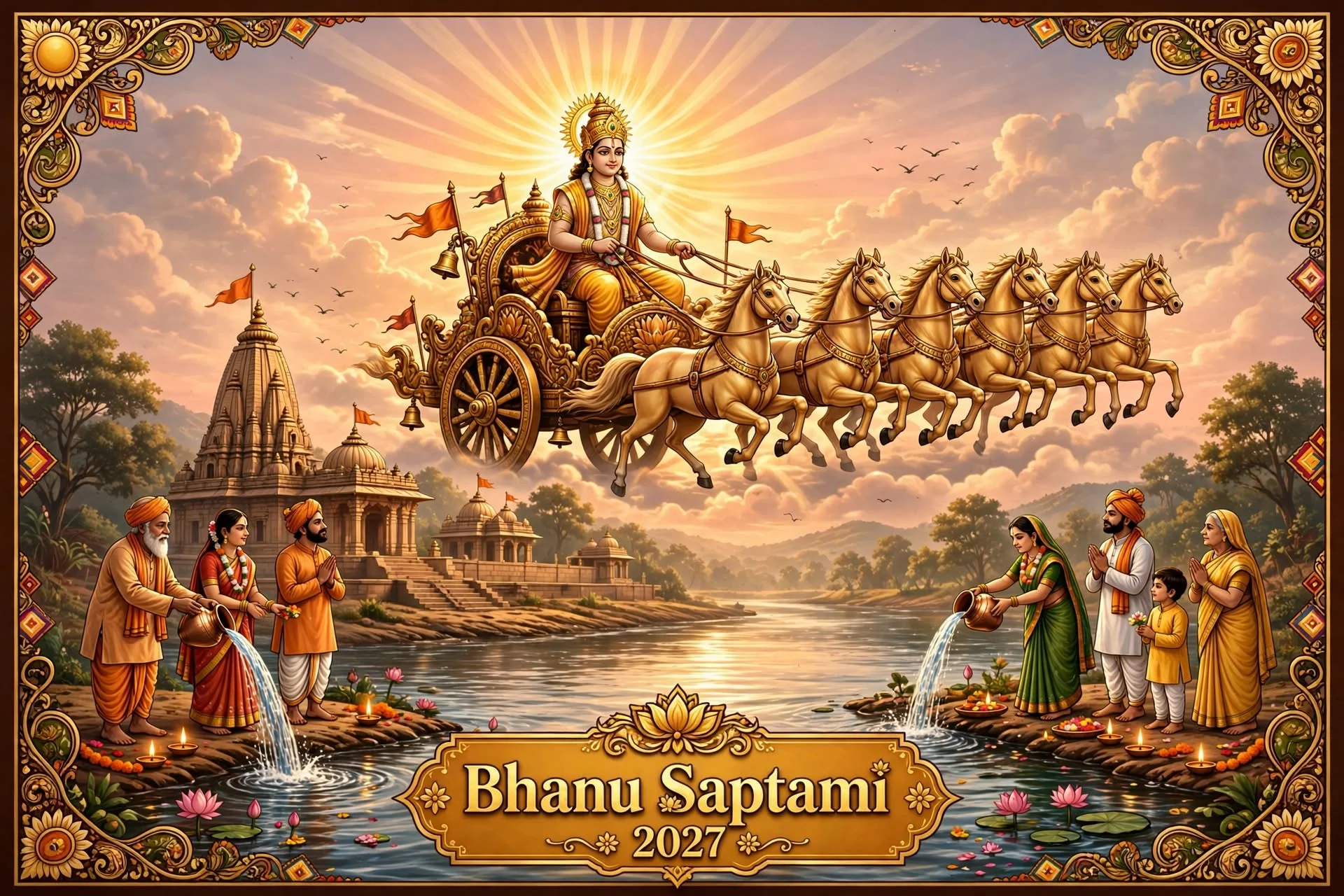
Sunday, Aug 8, 2027
Bhanu Saptami
Bhanu Saptami, also renowned as Surya Saptami, Ravi Saptami, or Achala Saptami, is an astronomically and spiritually celebrated solar festival occurring when the sacred Saptami tithi (seventh lunar day) of Shukla Paksha coincides with a Sunday (Ravivar / Bhanuvar). In the Vedic astrological calendar, this magnificent alignment—occurring in the sacred monsoon month of Shravana—is considered extraordinarily auspicious, as both the seventh tithi and Sunday are directly governed by the Sun God, Bhagwan Surya (Bhanu), the visible manifestation of the Divine and the cosmic soul of the universe (Surya Atma Jagatas Tasthushashcha).
View Festival Guide
Thursday, Aug 12, 2027
Shravana Putrada Ekadashi
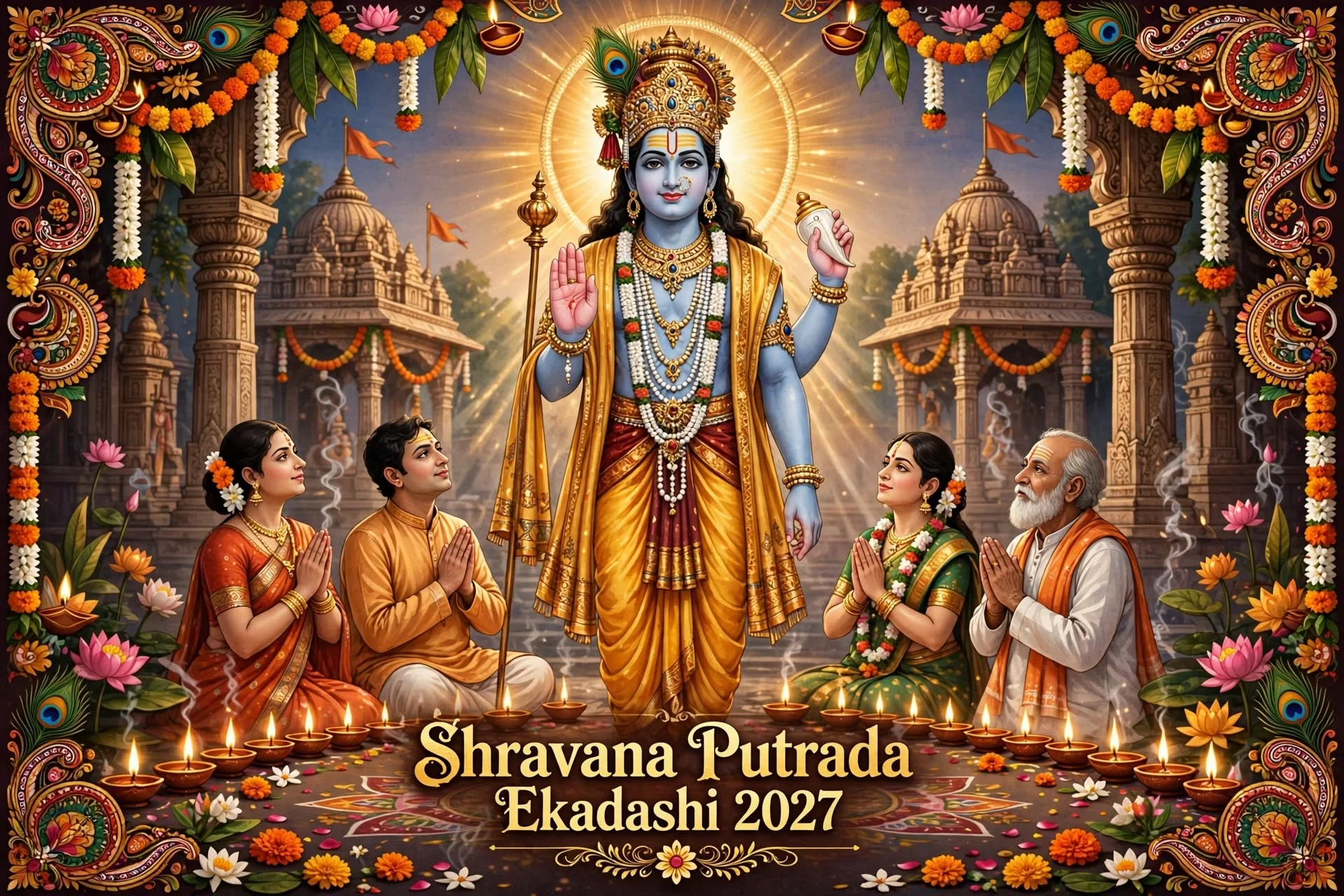
Shravana Putrada Ekadashi, also reverently designated as Pavitra Ekadashi or Pavitropana Ekadashi, is observed on the auspicious eleventh lunar day (Ekadashi) of the Shukla Paksha (waxing moon) in the sacred monsoon month of Shravana. Dedicated exclusively to Bhagwan Vishnu in His divine forms as Sri Krishna, Madhusudana, and Damodara, this sanctified vrata is revered in Puranic literature as a supreme spiritual remedy for childless couples seeking virtuous progeny, as well as an extraordinary fast for the eradication of past-life karmic impediments and the attainment of spiritual liberation.
View Festival Guide
Friday, Aug 13, 2027
Varalakshmi Vrat
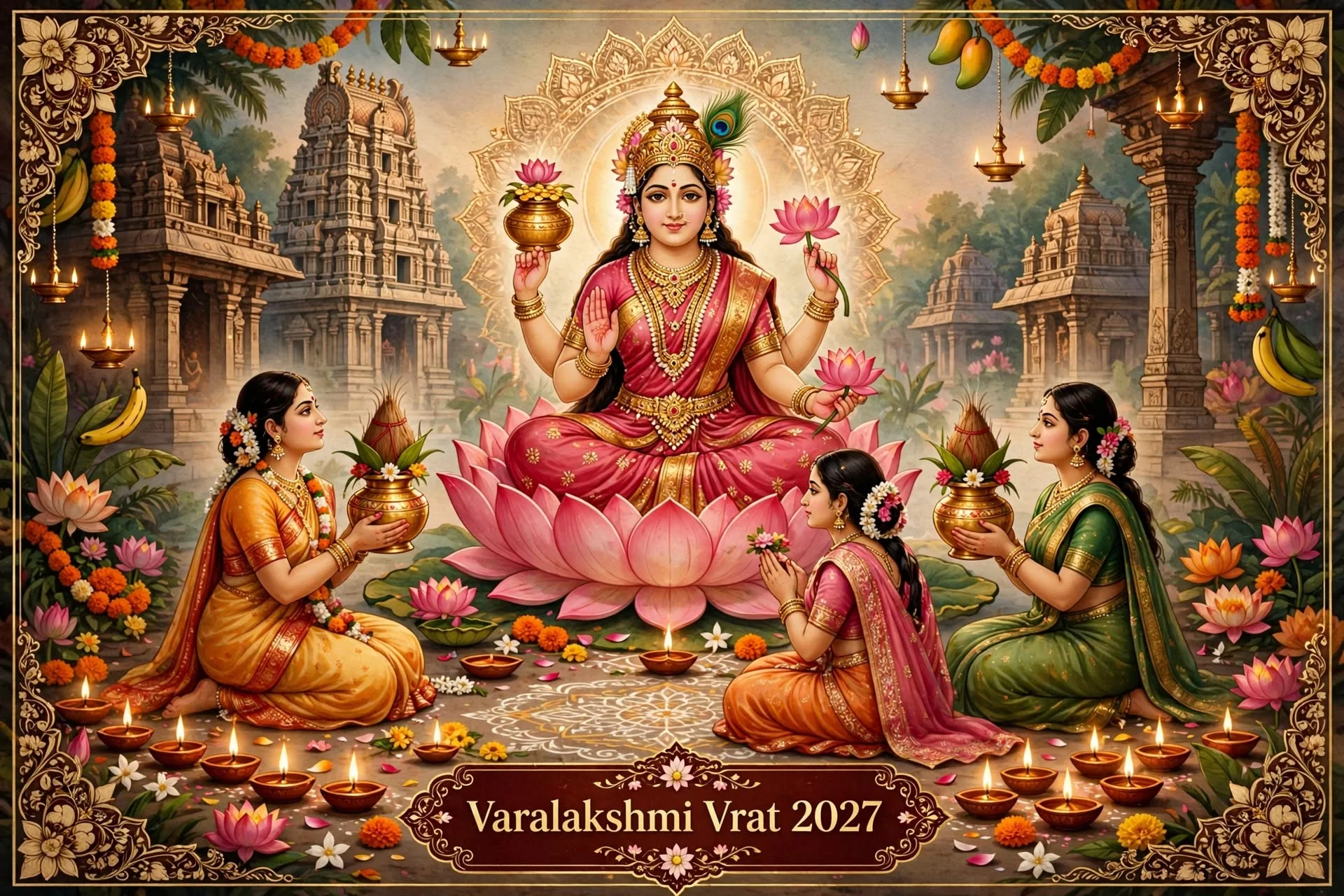
Varalakshmi Vrat, also known as Varalakshmi Nombu, is a revered Hindu festival dedicated to Goddess Varalakshmi—an auspicious manifestation of Sri Mahalakshmi who bestows boons ('Varam') upon Her sincere devotees. Celebrated predominantly by married women (Sumangalis) and young maidens across South India (Andhra Pradesh, Telangana, Karnataka, and Tamil Nadu) as well as Maharashtra and surrounding regions, this sacred vrata falls on the Friday immediately preceding the Full Moon day (Shravana Purnima) in the holy monsoon month of Shravana.
View Festival Guide
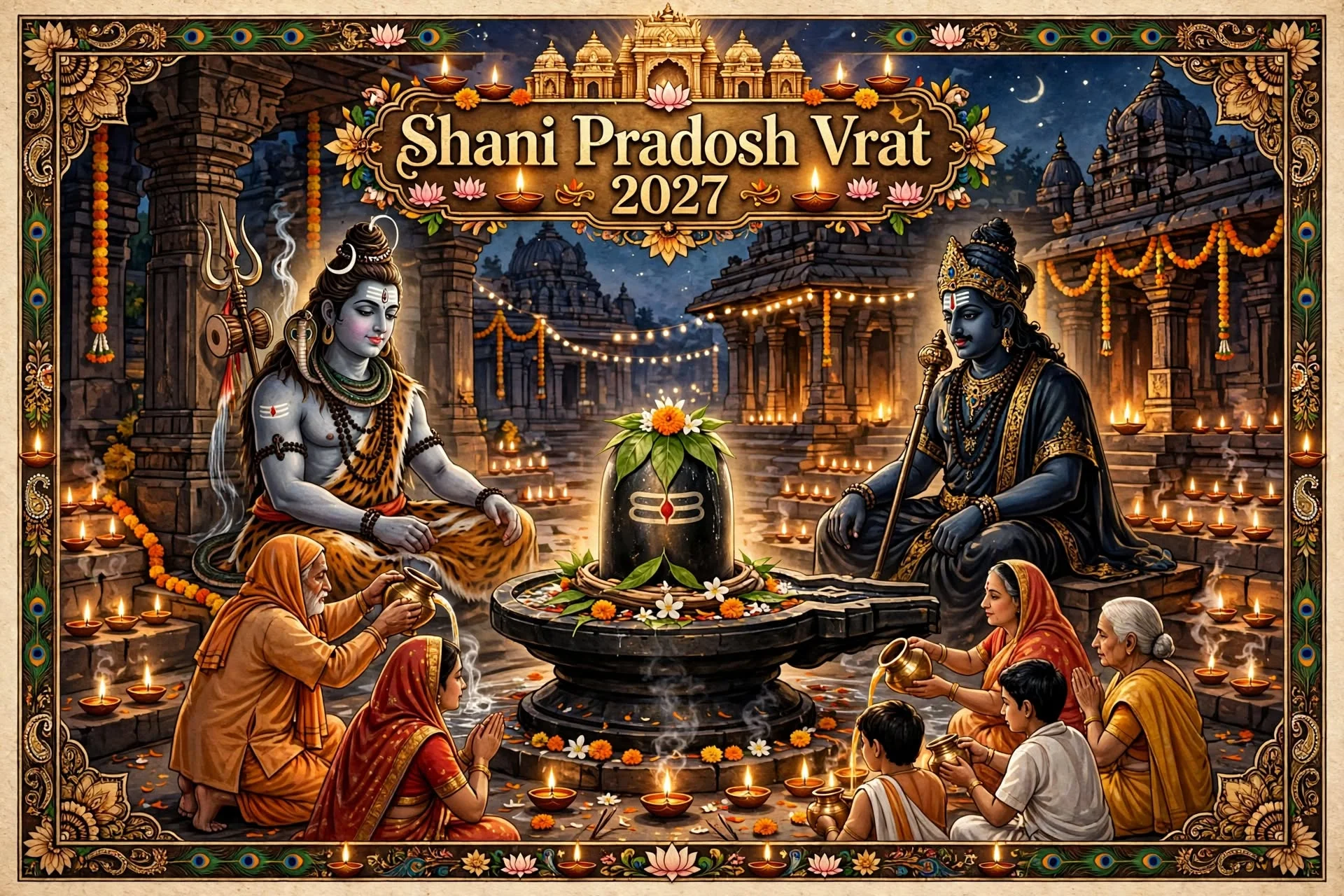
Saturday, Aug 14, 2027
Shani Pradosh Vrat
Shani Pradosh Vrat is an exceptionally potent, revered, and astrologically transformative bi-monthly Hindu fasting observance dedicated to Lord Shiva, Goddess Parvati, and Lord Shani Deva (the planetary deity of Saturn). Occurring on the thirteenth day (Trayodashi tithi) of either the waxing (Shukla) or waning (Krishna) lunar fortnight when it coincides with a Saturday (Shanivara), this sacred vow is lauded across Vedic and Puranic literature as the supreme, infallible spiritual remedy for dissolving chronic karmic impediments, neutralizing severe planetary afflictions, and securing profound peace and prosperity.
View Festival Guide
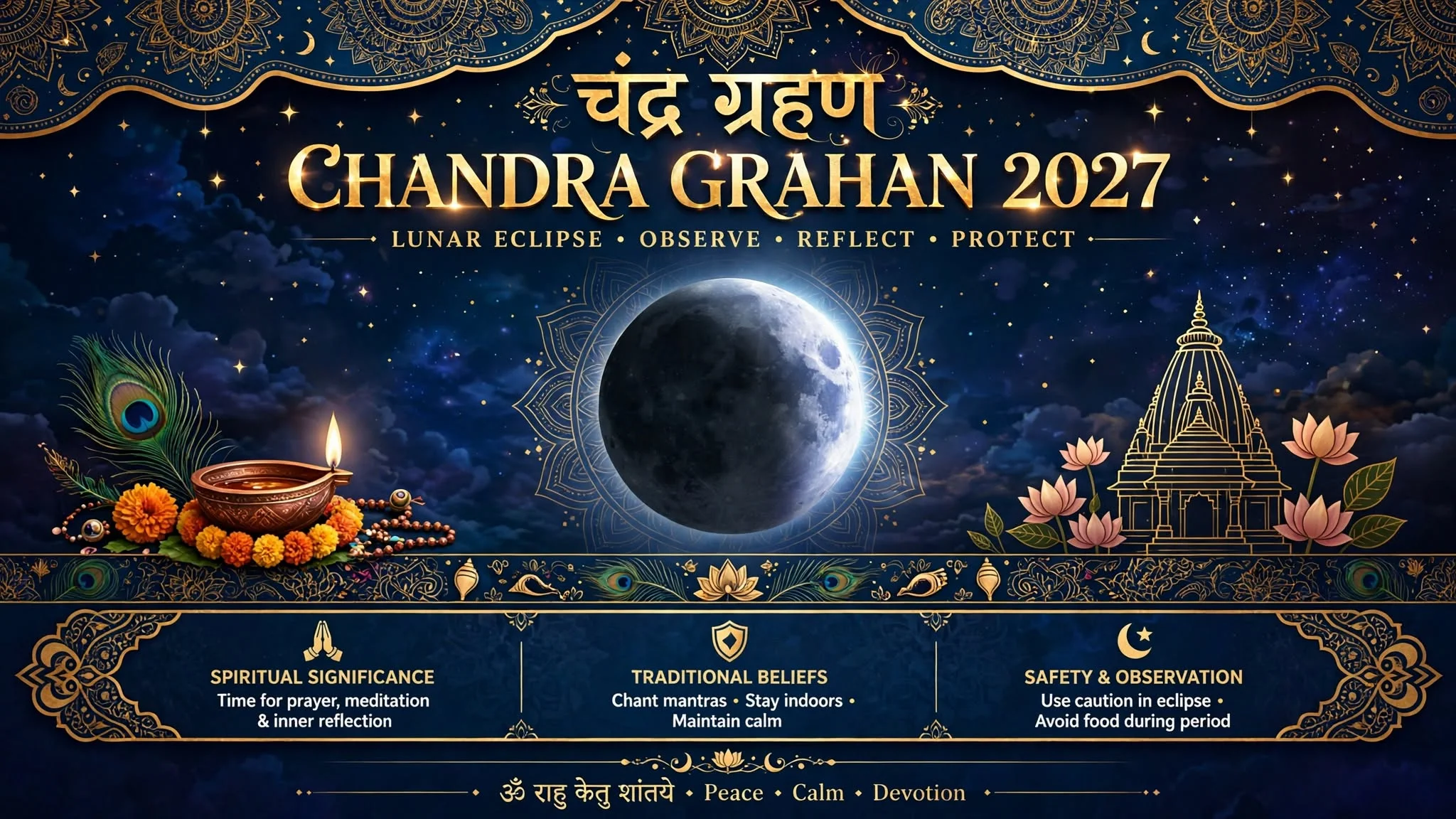
Tuesday, Aug 17, 2027
Chandra Grahan
Chandra Grahan (Lunar Eclipse) is a sacred cosmic and spiritual juncture (Parva Kaal) in Sanatana Dharma occurring exclusively on Purnima (the full moon day) when the Earth moves directly between the Sun and the Moon, casting its conical shadow across the lunar orb. In Vedic philosophy and Jyotisha, the Moon presides over the mind, subconscious emotions, and water elements (Chandrama Manaso Jatah - Rigveda Purusha Sukta). The temporary obscuration of the Moon by the shadowy nodes Rahu or Ketu induces profound subtle energetic shifts across terrestrial nature and human consciousness.
View Festival Guide
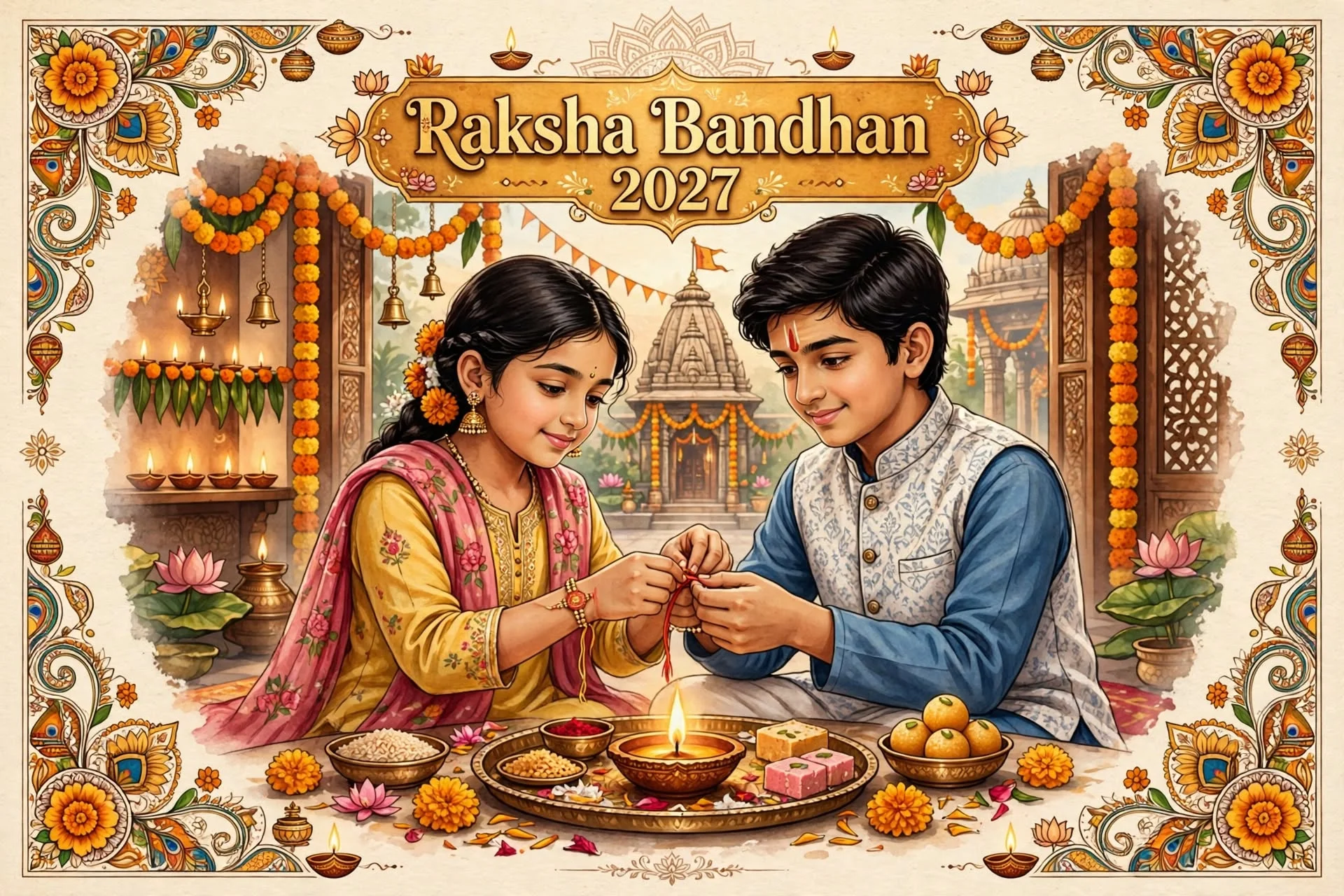
Tuesday, Aug 17, 2027
Raksha Bandhan
Raksha Bandhan, celebrated on the sacred Full Moon day (Purnima) of the holy Hindu month of Shravana, is one of the most cherished, ancient, and emotionally resonant festivals of India. Translated literally as 'the bond of protection', Raksha Bandhan honors the sacred relationship between brothers and sisters while simultaneously encapsulating broader cosmic and moral principles of mutual duty, chivalric honor, spiritual righteousness, and universal solidarity.
View Festival Guide
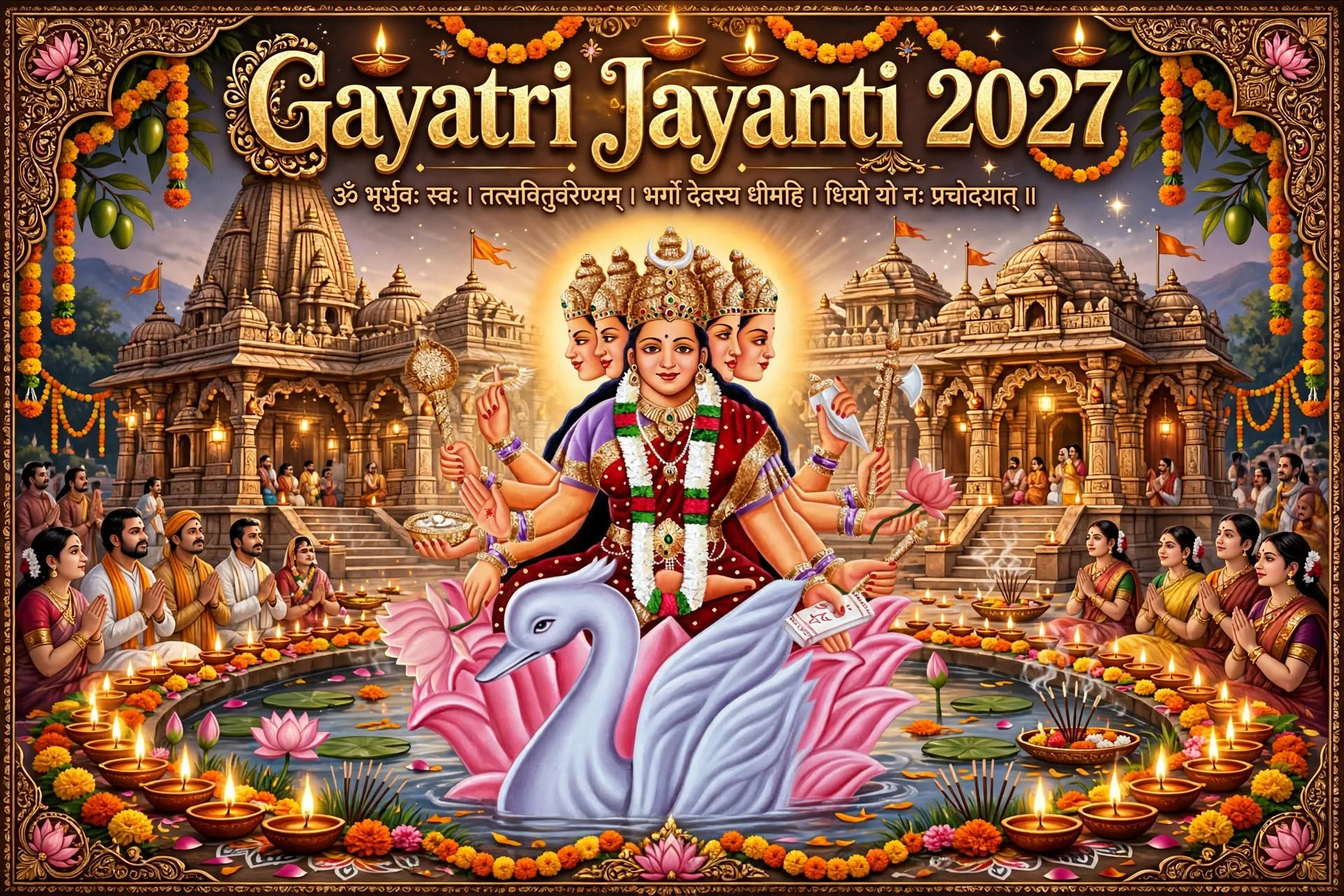
Tuesday, Aug 17, 2027
Gayatri Jayanti
Gayatri Jayanti is a sacred Hindu festival dedicated to Goddess Gayatri, revered as Ved Mata, the Mother of the Vedas. She represents divine wisdom, spiritual illumination, purity and the power of sacred knowledge. Devotees worship her as the personification of the Gayatri Mantra, one of the most revered prayers in the Vedic tradition.
View Festival Guide
Tuesday, Aug 17, 2027
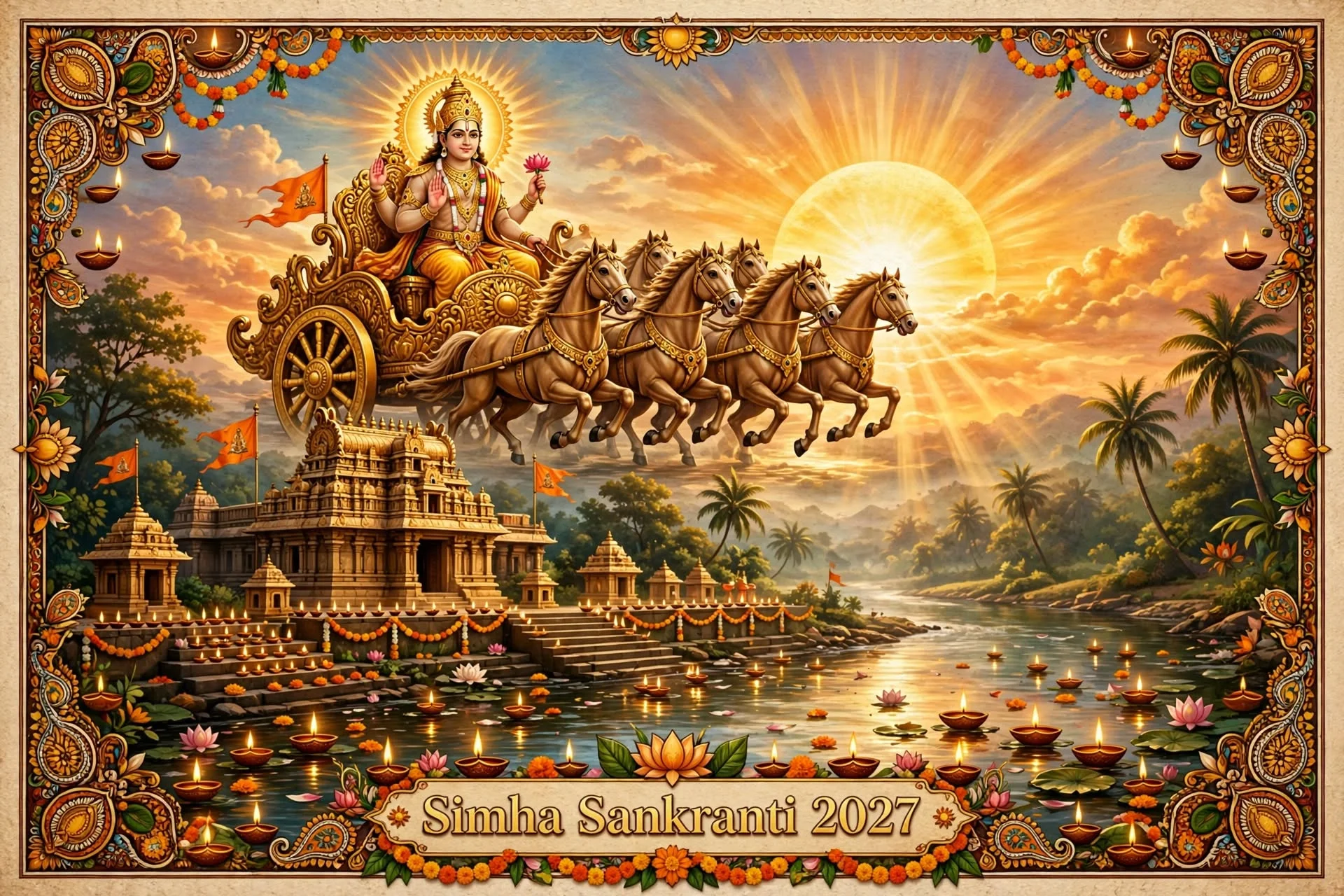
Simha Sankranti
Simha Sankranti marks the momentous astronomical and astrological transit (Sankramana) when Surya Deva, the radiant Sun God, enters the regal zodiac sign of Simha (Leo). In Vedic astrology, Simha is the Sun's own moolatrikona and swakshetra (domicile sign), making this celestial ingress exceptionally powerful, revitalizing, and spiritually auspicious. Occurring in mid-August in the traditional solar calendar, Simha Sankranti inaugurates the solar month of Simha (known as Chingam in Kerala and Bhadra / Avani in other solar calendars).
View Festival Guide